Sermon for Sunday, September 3, 2023 || Proper 17A || Exodus 3:1-15
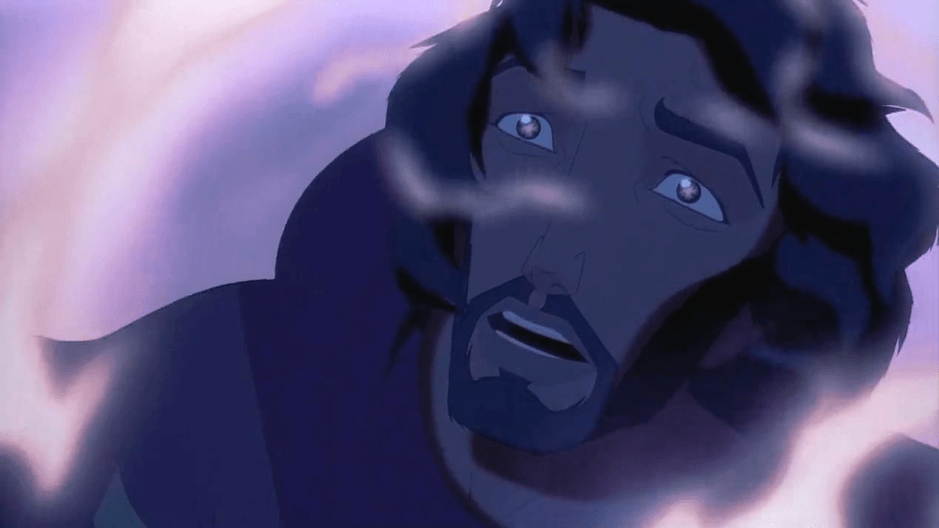
After such a heady and confusing sermon last Sunday, I thought today would be a good time for something completely different. About twice a year, I preach from the perspective of a character in the scripture. Today, I am going to be Moses. Please imagine with me Moses near the end of his life, talking to his protege Joshua, who is fretting about taking on the role of leader upon Moses’s death.
“I will be with you.” That’s what God promised me all those years ago. “I will be with you.” The memory is as fresh as if it had happened yesterday. God spoke to me, called me to my life’s work, and made me that singular promise: “I will be with you.”
Sermon for Sunday, September 13, 2020 || Proper 19A || Romans 14:1-12
Today’s sermon is a meditation. In a minute, I’m going to invite you to find a relaxing sitting position, which will be easier on your couch than if you were here sitting on a hard pew. I decided to offer a meditation today because recently I’ve been feeling my jaw clenching more and more. Sleep isn’t restful. I’m on edge all the time. I’d wager you are responding to the abnormally high level of stress in our society in similar ways. A friend of mine has a newborn in the NICU whom he says is there because he has to “remember to breathe.” I think that goes for all of us right now.
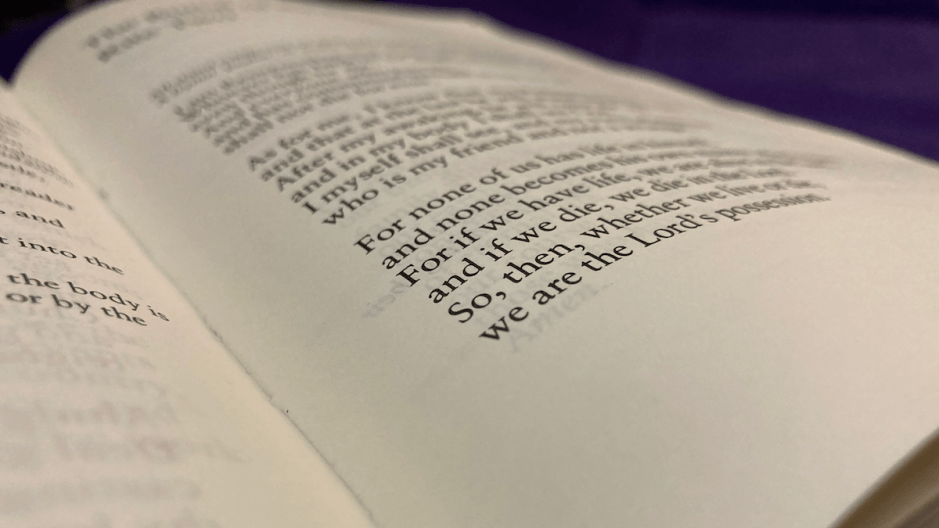
So, in lieu of my regularly scheduled sermon, I’d like to lead us all through a meditation designed to bring our ultimate future into this present moment. This is a meditation about God’s presence and promise when death is an ever-present reality. I’m offering it because today’s reading from Paul’s letter to the Romans includes a paragraph that we read as the third stanza of the opening anthem at the beginning of every Episcopal funeral. All four stanzas are quotations from scripture, and I’d like to meditate on them with you this morning. This might seem like a strange thing to do – focus on words spoken after someone has died. But these words are shared with those who remain, and I believe these scriptural truths actually help to bring us more fully alive.
Sermon for Sunday, March 29, 2020 || Lent 5A || John 11:1-45
Here we are. Week three of our church dispersed to the four corners of our community. The pews that you normally inhabit are empty, but we still gather together in prayer and worship of God this day. When my daughter was smaller than she is now, she couldn’t quite make her fingers do the “This is the church, this is the steeple, open the doors, and see all the people.” Her fingers wouldn’t interlock inside the church, so when she did the motion along with the rhyme, the people were outside the doors of the church. Appropriate for today, I think. We are still the church, even when we are unable to gather in a particular building.
I’m reminded of our distance from each other today, not just because of the empty pews, but because of the beginning of our long Gospel story. Jesus receives a message from Martha and Mary about Lazarus being ill. Then Jesus waits where he is two days worth of social distancing for two days before heading to Bethany, where he finds Lazarus has been in the tomb four days. After meeting with Martha and then Mary, the Gospel says this: “When Jesus saw [Mary] weeping, and the Jews who came with her also weeping, he was greatly disturbed in spirit and deeply moved. He said, “Where have you laid him?” They said to him, “Lord, come and see.” Jesus began to weep.”
I usually listen to really upbeat music when I’m writing my sermons, often the Piano Guys, who do instrumental mash-ups of pop and classical music. Their driving rhythms mixed with familiar melodies propel me forward as I write. I’m sure I bop my head along, my fingers click-clacking across the keyboard in time with the percussion. When I sat down to write this sermon, I put on the Piano Guys like normal. But about thirty seconds into the first song, I had to switch to something else.
Because today is not normal. Today is about as far from normal as I can remember since the days following September 11, 2001. As I thought and prayed my way into today’s sermon, I noticed just how un-calm I was. I had not slept well in several nights. I had pain in my jaw, always a sign of stress. I had a thick knot of anxiety in my chest. I looked beyond the anxiety and felt a roiling mix of other emotions, which I’ll get into in a moment. Realizing my state on un-calm, I changed the music. I selected a setting of the mass in Latin by the Renaissance composer Palestrina, who never fails to help me take deep breaths.
In her last sermon with us Pastor Stacey Kohl reminded us that stories are powerful things. Sharing stories helps us make meaning, pass on tradition, teach lessons, deepen relationships, learn from one another’s experience, and grow closer to God. Today, I’d like to share with you three stories, all sparked by a single verse from today’s reading from the Letter to the Hebrews: “Jesus Christ is the same yesterday, today, and forever.” I’d like to share with you a story about Jesus Christ yesterday, a story about Jesus Christ today, and a story about Jesus Christ forever. Each of these stories is about Jesus and about me, and if I do my job right, each will also be about you.
Sermon for Sunday, August 25, 2019 || Proper 16C || Luke 13:10-17
When I was a freshman in high school, I had back problems. I grew an entire foot during the first two years of high school, from five feet to six feet. And it hurt. A lot. The bones in my legs grew faster than my ligaments could stretch. This caused my hamstrings to tighten, and the extra taut ligaments connected to my lower vertebrae caused my lower back to be thrown out of alignment. The growing pains were bad, but the worst part was that I couldn’t run. And since I couldn’t run, I couldn’t play soccer. (I did musical theatre instead…and it was awesome, but that’s beside the point.)
When I read the story of the woman with the crippled back, the memory of my back pain tingles and reminds me to stretch those hamstrings that are still really tight to this day. My back issues only lasted a year during a major growth spurt. I can’t begin to comprehend the debilitating nature of this woman’s eighteen years of back problems. I mean, we need our backs, right? Without the use of our backs, the rest of our bodies fall out of commission pretty quickly.
Sermon for Sunday, April 21, 2019 || Easter Day C || JOHN 20:1-18
Here we are at long last: Easter Sunday, a long wait this year, two-thirds of the way through the month of April. But it could have been longer. April 25th is the latest Easter can be, but that hasn’t happened since 1943 and won’t happen again until 2038, which coincidentally is the year I’ll be eligible to retire. Unlike most holidays, which are fixed on a particular date or day of the month, the date of Easter (and the Jewish Passover) springs from something much grander – the motion of celestial bodies. We start with the vernal equinox, the day in March when the earth is tilted just so in relation to the sun to make day and night the same exact length. Then we find the next full moon, and the Sunday following is this day of Resurrection.
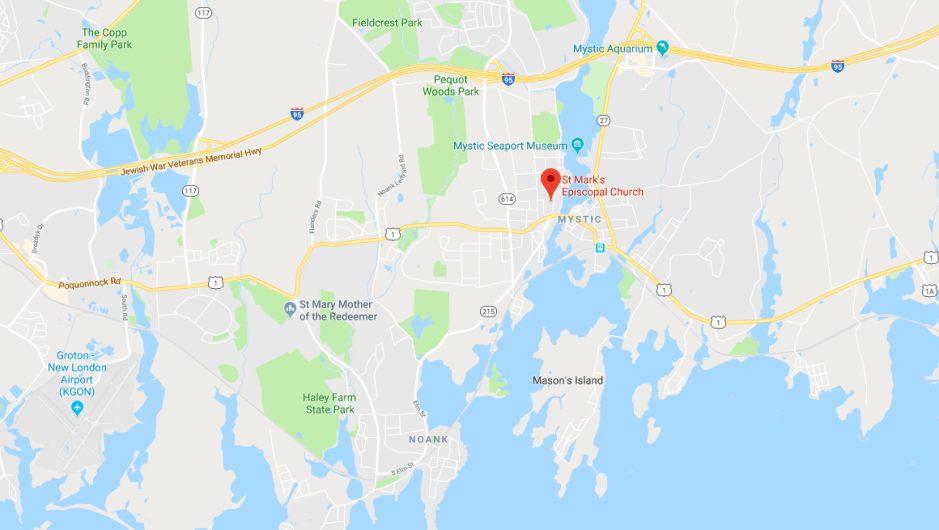
This article first appeared in the Pentecost 2018 issue of The Lion’s Tale, the seasonal magazine of my church, St. Mark’s in Mystic, CT.
This article starts way back. I mean waaaay back – over three thousand years ago, when two people left their home city and journeyed off into the wilderness. Their names were Abram and Sarai (soon to be Abraham and Sarah), and we read their story in the book of Genesis. The reason I need to start so far back is that Abram and Sarai discovered something that no one else in their land had discovered. They realized (a) there was only one true God and (b) God was already present wherever they went.
These were revolutionary ideas in their day. Most people in their neck of the woods assumed that each mountain and each river and each city had their own gods. Those gods stayed put: they were tied to particular places. Then Abram and Sarai ventured into the wilderness to find a new home, and they found God out in the wilderness. They set up altars to worship God wherever they found God, and soon the desert was littered with their shrines. God was everywhere! How amazing! Continue reading “Where God Is, A Brief History”→
Sermon for Sunday, May 15, 2016 || Pentecost C || Acts 2:1-21
I can’t tell you the number of times I’ve started describing God’s presence while writing a sermon and then realized that I accidentally quoted Obi-Wan Kenobi from the original Star Wars movie. It has happened at least a dozen times. So today, instead of accidentally quoting him, I’m just going to quote the dialogue delivered by the legendary Alec Guinness in 1977. He says this about the mysterious energy field that gives the Jedi their power: “The Force…surrounds us and penetrates us. It binds the galaxy together.” Continue reading “On the Holy Spirit (With Help From Obi-Wan Kenobi)”→
Sermon for Sunday, August 9, 2015 || Proper 14B || John 6:35, 41-51
It’s great to be back with you after three weeks away. I spent much of my vacation traveling to Massachusetts, North Carolina, and Tennessee. I visited a friend going through an agonizing medical issue and reconnected with an old friend from college. I got to shoot a bow and arrow, which I haven’t done since I earned the archery merit badge about twenty years ago. And I got to hang out with the now one-year-old twins and their mother a lot. It was a good vacation. But I’m glad to be back with you ready to preach a sermon about six of my favorite words in the Gospel. Those six words are: “I am the bread of life.” Embedded in these words are three things that so often dance beneath the surface of what Jesus says: a promise, an invitation, and a mission.
But before we get to these three things, we need to mention one of the idiosyncrasies of the Gospel according to John. In John, Jesus desires to tell everyone exactly who he is. In Matthew, Mark, and Luke, he is more circumspect about his identity: he keeps it secret for the most part, preferring instead to let others draw their own conclusions when they witness his actions and hear his words. But John’s Jesus keeps no secrets; instead, he presents truth wrapped in deep mystery and captivating imagery. The enigmatic quality of some of Jesus’ statements can make it seem like he’s keeping secrets, but the difference between secret and mystery is that secrets want to stay hidden and mysteries want to be revealed.
John lets us know of this desire for revelation right from the start with these poetic lines: “The Word became flesh and made his home among us. We have seen his glory, glory like that of a father’s only son, full of grace and truth… No one has ever seen God. God the only Son, who is at the Father’s side, has made God known” (1:14, 18 CEB). With these two beautiful verses of poetry, John presents Jesus’ task. Jesus Christ – God the only Son, the Word made flesh – came to make God known to us by making his home among us. By revealing his own identity, Jesus reveals God’s identity, and when we encounter this revelation, we discover who we are, too.
Jesus signals when he is disclosing this divine revelation with a pair of code words: “I Am.” He says these words a couple dozen times in the Gospel according to John, and each time they hearken back to God’s encounter with Moses at the burning bush. When Moses asks God for God’s name, God responds, “I Am Who I Am.” Jesus borrows these words in his conversation with the crowd the day after the feeding of the five thousand. Their minds are still on yesterday’s bread, so he runs with that image. “I am the bread of life,” he says. These words are so much greater than mere metaphor; they reveal a piece of Jesus’ divine identity. And remember: when we encounter this revelation, we discover who we are, too.
To make this discovery, let’s return to the three things dancing beneath the surface of Jesus words: “I am the bread of life.” There’s a promise, an invitation, and a mission all squeezed in those six words. First, the promise.
Jesus links his identity as the bread of life to his people’s communal memory of the flight from Egypt many hundreds of years prior. Reading Exodus Chapter 16, you might notice how the people begin complaining to Moses about their hunger as soon as the threat of the Egyptians has vanished. If the situation weren’t so dire, it would be comical: the moment the threat is gone, they realize their stomachs are rumbling. And then the histrionics start: “Oh, how we wish that the Lord had just put us to death while we were still in the land of Egypt…You’ve brought us out into this desert to starve this whole assembly to death” (16:3 CEB). Of course, God has other plans and begins providing for them immediately with manna that appears like dew six mornings a week. Each day they collect enough to sustain them for that day, and they receive a warning not to store up the manna for tomorrow because it will spoil. They had to trust the manna would appear the next day, too. And you know what? It did.* That’s the promise Jesus makes when he names himself the “bread of life.” He promises to be the daily source of nourishment for his people, as the manna was during the wandering in the desert.
We receive this daily nourishment when we respond to Jesus’ invitation. As he talks to the crowd, Jesus tries to move them away from focusing on their physical craving for the barley loaves they received the day before and toward a deeper craving – the desire for relationship. When we take in the “bread of life,” Jesus becomes a part of us, as close to us as we are to ourselves. He invites us into the intimacy of this relationship, a relationship built on daily trust that we stand in his sustaining presence whether or not we have the eyes and heart to notice it. Think of the manna clinging to the grass like dew. How easy would it have been to trample right over it, too caught up in our hunger to notice our nourishment all around us? When he says, “I am the bread of life,” Jesus invites us to stop, to notice, and to take him in.
Because we’re not too good at that stopping and noticing, the church ritualized this taking him in. We call it Holy Communion, and when we come to the altar rail in a few minutes, we’ll find that Jesus’ promise and invitation have blossomed into our mission. We kneel together as the Body of Christ to receive the Body of Christ. We are knit one to another and all to God through Christ who dwells in us as we dwell in him. We rediscover that we are stronger together than we are alone. The “bread of life” provides us nourishment in order that together we may become nourishment to a hungry world. In the book of Genesis, God blesses Abraham to be a blessing – not so that he can be rich and famous and secure – but so that he will be a blessing. In the same way, our relationship with Christ, our reliance on his sustaining presence, is not for ourselves alone. We are blessed to be blessings, as well. We are nourished to be nourishment.
When we encounter Jesus’ revelation of his identity, we discover who we are, too. Our identity is wrapped up in the promise, invitation, and mission Jesus reveals when he says, “I am the bread of life.” By naming himself the “bread of life,” Jesus promises to sustain us like the manna in the desert. By eating of his bread, we accept the invitation to be in relationship with him. By sharing it together, we participate in the deeper reality of being members of the Body of Christ. We remember we’re not in this alone. We remember that God calls us to serve and to be served. We remember that the harvest is plentiful and the laborers are participating in God’s mission of healing and reconciliation in this world. That is where our true identity finds its home. “I am the bread of life,” Jesus promises. “Come to me. Be fed so you might feed others. Be blessed to be a blessing.”
—
* Well, there was one day a week (the day before the Sabbath) in which they collected two days worth so they didn’t have to work on the Sabbath. But explaining that in the sermon would have wrecked my flow.





 I can’t tell you the number of times I’ve started describing God’s presence while writing a sermon and then realized that I accidentally quoted Obi-Wan Kenobi from the original Star Wars movie. It has happened at least a dozen times. So today, instead of accidentally quoting him, I’m just going to quote the dialogue delivered by the legendary Alec Guinness in 1977. He says this about the mysterious energy field that gives the Jedi their power: “The Force…surrounds us and penetrates us. It binds the galaxy together.”
 It’s great to be back with you after three weeks away. I spent much of my vacation traveling to Massachusetts, North Carolina, and Tennessee. I visited a friend going through an agonizing medical issue and reconnected with an old friend from college. I got to shoot a bow and arrow, which I haven’t done since I earned the archery merit badge about twenty years ago. And I got to hang out with the now one-year-old twins and their mother a lot. It was a good vacation. But I’m glad to be back with you ready to preach a sermon about six of my favorite words in the Gospel. Those six words are: “I am the bread of life.” Embedded in these words are three things that so often dance beneath the surface of what Jesus says: a promise, an invitation, and a mission.
