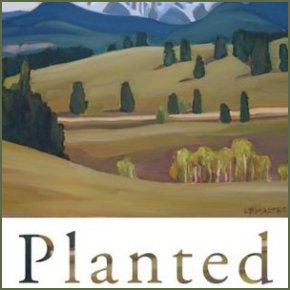
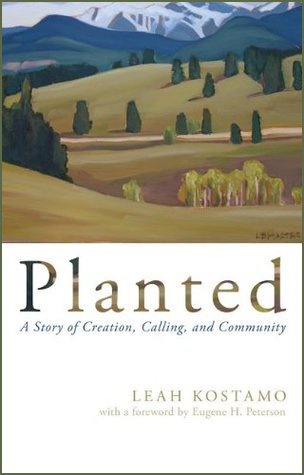
Note: I haven’t done book reviews on WheretheWind.com in the past, but I am now dipping my toe in those waters. What a joy to have been contacted to review Planted right at the time I was thinking about reviewing books!
 “In theological terms naming is the first step in moving from an ‘I-It’ relationship with something or someone to an ‘I-Thou’ relationship, a relationship where a person or creature or even an object becomes known not just for its usefulness, but for its innate worth. It’s the first step in the kind of understanding that leads to caring.”
I marked this and many other passages in my copy of Planted by Leah Kostamo with a green pen, and when I was done with the book, I had run into a common problem when reading a book as meaningful, memorable, and thought-provoking as this one. I had underlined so many passages that my green markings did very little to help me sift through them all.
Such is the nature of this delightful and quick read by the cofounder of the first dedicated Christian environmental center in Canada. Kostamo dedicates a good portion of the book to anecdotes about the sometimes wacky, sometimes dirty, always sacred life at the A Rocha center in British Columbia. These stories of interns, guests, and workers ground the tale in real life and experience. But the balance of the book is where the true depth lies. Kostamo integrates into the anecdotal narrative honest and thoughtful theological reflection on creation care, stewardship, and vocation.
While none of the theological reflection breaks new ground, Kostamo quirky sense of humor and gracious storytelling style invites the reader to hear anew the call of God to be a faithful steward of creation. Many times while reading I found myself underlining a sentence and realizing I had had the same thought myself in the past. But unlike me, Kostamo did something with it! Her experience lends a humble authenticity to her reflection that makes me both remember things I had forgotten and long to take further steps to align my life so it resonates more fully with God’s call to stewardship of creation.
For example, here Kostamo is talking about the value of being in nature: “…North American media has turned information into entertainment, rendering it impotent when it comes to motivating change. We live in a deluge of information – awash in statistics that should have us running hell-bent through the streets to some constructive action. But we don’t. It seems that fear tactics and empirical knowledge have a short shelf life when it comes to inspiring change. What lasts is wonder.” *
The notion that wonder, not fear or statistics, inspires change has been percolating in me since I read it and I’m excited to see how God is inviting me to use this new idea in my life.
Planted begins with more stories of the A Rocha center and less theological reflection, but about halfway through the ratio flips. If you find yourself grazing through the stories but not getting much out of the book, please stick with it. The stories help ground the reflection to come and both are important for the integrity of the book as a whole. Kostamo sows stories in the first half and reaps theological reflection in the second. And the harvest is bountiful.
—
*Italics mine.
My thanks to Leah Kostamo for the complimentary copy of this book, which I received for purposes of review.