
Sermon for Sunday, October 4, 2026 || Proper 22A || A Reading of “Seeds of life and hope”
from Ladder to the Light by Bp. Steven Charleston
Today we conclude our Season of Creation with a final sermon in our series about humanity’s relationship to the natural world. We began this series a month ago with the reminder that humanity is one with nature, part of nature, not over it or against it. We then asked nature for forgiveness for human exploitation and chose repentance, the changing of our hearts and minds as we interact with the more-than-human world. Then in the last two weeks, we practiced awe, awareness, and gratitude in our interactions with God’s Creation. In all these reflections, we have been guided by Pope Leo, Bishop Steven Charleston, Wendell Berry, and Meister Eckhart.
We return to Bishop Charleston today, who shares with us a message of hope in the midst of the “gathering darkness” of this “windswept moment in history.” He says, “We are not afraid because we have seeds of life and hope in our pockets. Our task is to cast them as far and wide as we can. The breath of the Spirit will do the rest.” With this hope in our hearts, let’s conclude this series of sermons by pondering the nature of seeds and by locating our trust in the breath of the Spirit.
When I was a kid, I was terrified of accidentally swallowing a watermelon seed. (This is back in the days when watermelons had seeds in them.) I was convinced that, if I let one of those little black seeds make its way into my stomach, a watermelon would spontaneously start to grow. I would have this huge green fruit inside me, and I’d have to have surgery to get it out! Needless to say, I didn’t really understand how seeds work, that they need a host of factors to grow and none of those factors is stomach acid.
Fast forward about thirty years, and I’m building raised garden beds in the rectory’s small side yard. Leah is “lasagna gardening,” which, unfortunately does not mean what I hoped it meant at the time. Rather, lasagna gardening is a method of intentionally stacking compost and paper and sticks and other organic material in order to make good soil for growing. Once, Charlie planted a sunflower seed, and the resulting plant must have been as tall as a basketball hoop. The rhubarb still thrives. But we had as many, if not more, gardening failures in those beds than successes: one year we had too many tomatoes, but most we got four or five total.
That’s the thing about gardening. Some folks have green thumbs; others don’t. But no matter one’s facility with living plants, humans can only approximate the superior fecundity of nature’s own processes. Imagine all the organisms and environmental factors that are necessary to make a seed grow:
- A bird eats the seed and then flies away. Later the seed lands on the ground, along with a convenient supply of natural fertilizer.
- The seed sinks into the soil that has been aerated by worms.
- Millions upon millions of microorganisms bring fertility to the soil.
- The seed sprouts when conditions are right: the right amount of water, the right temperature, the right season.
- The seedling reaches its first tender tendrils of green towards the sun, drinking in the energy of light. At the same time, hair-thin roots seek their place in the web of life below the ground.
The seed can do none of this on its own. Like everything else in the vast array of ecosystems that makes up the biomes of Planet Earth, life in all its dizzying variety depends on other life to thrive. The more scientists study the biological processes of life on Earth, the more we learn about the interdependence of all things: the communal relationships of trees in a forest, the networks of fungi spread below ground, the delicate balance of food chains and webs.
Due to infamy of social Darwinism, the term “survival of the fittest” has been misunderstood for more than a century. The powerful justify their dominance by asserting their ability to survive within a zero-sum worldview that devalues the societal contributions of those seen as less “fit.” But the evolutionary idea of survival of the fittest has nothing to do with dominance. In nature, the “fittest” are not necessarily the strongest or most dominant; they are the ones best adapted to their environment, the ones who best “fit” in the web of relationships that make up their ecosystem.
For us to survive at all, humanity needs to reclaim this more accurate definition of the “fittest” because it helps us to see how much we depend on other forms of life to thrive. It helps us to see how humanity fits into the web of life. The seed’s journey to flowering shows the complex interdependencies built into God’s Creation. These myriad relationships all spring from the creativity of God, who formed Creation as an outpouring of the perfect loving relationship of the Holy Trinity. For us to fulfill God’s command to be stewards of Creation, we humans must reclaim the story of deep relational connection with one another, with all other life, with our planet, and with the Creator who breathes life into it all.
The challenge is that all we can do is plant seeds, both literal and figurative. Very little of what we do today to sustain life on this planet will be noticeable until we’re gone. And the reverse is more devastatingly true. All of the ways humanity is destroying the planet will not be fully felt until our children and our children’s children are left to endure our mess. The climate crisis is hard for us to face because, until recently, the effects were projected into the future. But that future is now very much present.
And yet, all we tend to feel is a deep malaise, a fatalism born of economic forces too big for us to influence. This feeling, this right here, is where we need the Breath of the Spirit to take the seeds we sow and, as Bishop Charleston says, “do the rest.” The Breath of the Spirit has been breathing Creation into being since the beginning. This Breath of God, the divine I AM, transcends our limited human vision, in which we have trouble seeing or caring about how our actions affect the future. All we can do is breathe and believe the Breath of God is breathing through us, a literal inspiration to help us fight for the future of our planet.
When you feel discouraged or apathetic about the sinful direction human greed is taking our planet, remember to breathe. Remember that your breath is a gift from God, a gift made manifest by the specific cocktail of elements that make up our atmosphere, an atmosphere made breathable by billions of years of bacteria and phytoplankton and plant life turning carbon dioxide into oxygen. As we breathe in and out, we join our respiration to God’s inspiration. We breathe and we reject the death-dealing model of infinite economic growth. We breathe and we embrace human interdependence with all other life. We breathe, and the Spirit breathes with us, turning our respiration into inspiration into aspiration into perspiration, as we work together to make all of Creation flourish.
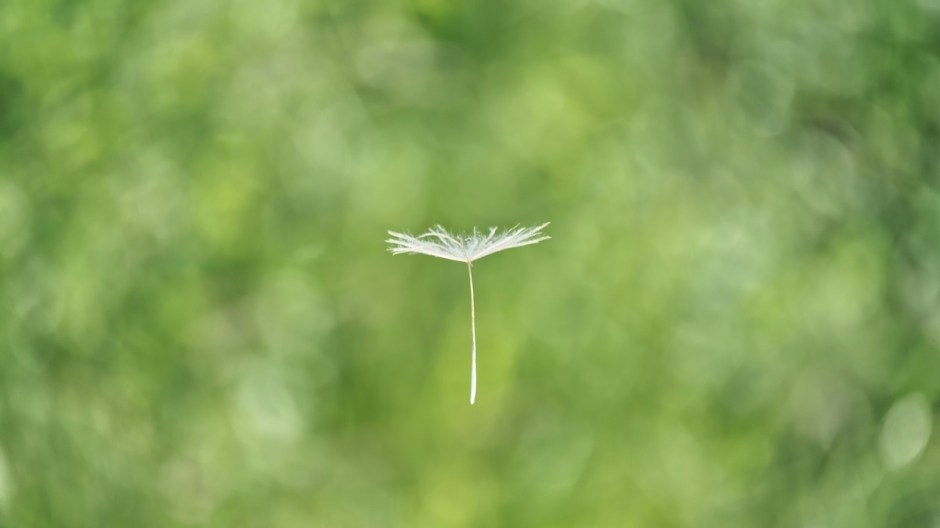
Photo by Wolfgang Hasselmann on Unsplash.

