
Sermon for Sunday, September 13, 2026 || Proper 19A || Matthew 18:21-35; Steven Charleston, excerpt from “Nothing is Lost” from Ladder to the Light
Last Sunday we began our Season of Creation with a reminder from Pope Francis that we are not apart from or above nature. We are nature. The natural world is neither simply the scenery for our lives, nor an object for us carelessly to use and discard. The natural world is a subject unto itself, a subject filled with other subjects, each a piece of the creativity of God. Today, we’re going to zoom way out so we can see humanity’s place in Creation, and then we will ask forgiveness for choosing domination over stewardship.
We’ll start with some perspective. Using cool science stuff like cosmic background radiation, scientists estimate the universe is about 13.8 billion (with a B) years old. Our solar system, including planet Earth, has been around for the most recent 4.5 billion (also with a B) years of that time. After about 200 million years, Earth achieved conditions necessary for life as we know it to exist, but the fossil record does not begin until about 3.7 billion years ago, so there’s about half a billion years there where life might have had some false starts before finally getting going.
Prokaryotes – cells without nuclei – came first, then a billion or two years later they started swallowing each other to make eukaryotes. (By the way, I think it is so cool that the mitochondria in our cells were once their own organisms. Can you imagine what Genesis 1 would have sounded like if the ancient Hebrews had known that? “And God saw all the tiny cells engulfing one another to make more complicated forms of life, and God saw that it was good.”)
Okay, this is taking too long. Let’s skip to the end of the page. Other species of hominids preceded homo sapiens, but just counting our species, humans have been around for only 300,000 years. That is 0.006% of Planet Earth’s total existence. If Earth’s existence were squished into a single calendar year, homo sapiens would not show up until about 11:25pm on December 31st. Human civilization with written records wouldn’t show up until halfway through the minute between 11:59 and midnight.
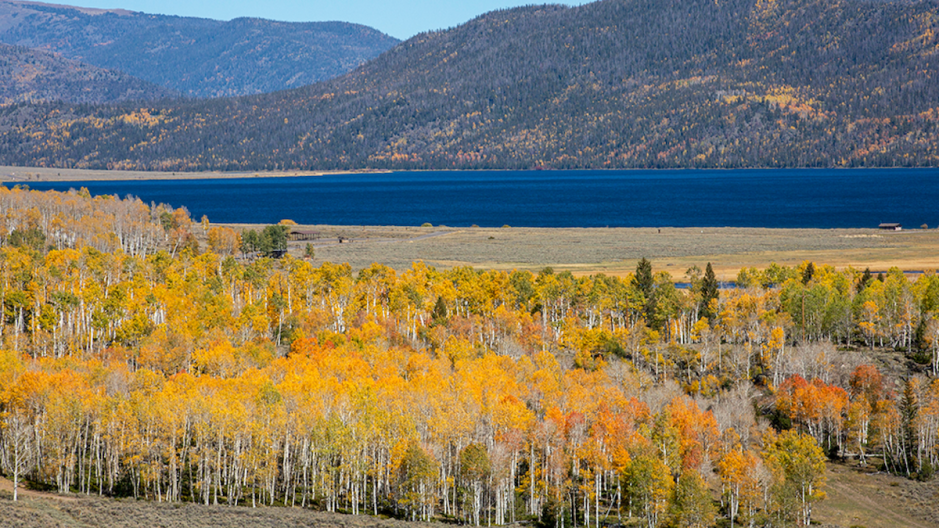
There are living trees in the world, like a nearly 5,000 year old bristlecone pine in California (named Methuselah), that are about as old as recorded human history. While researching this sermon, I came across the Pando, the largest living organism on earth, which scientists estimate is between 60,000 and 80,000 years old. The Pando is a clonal aspen with some 40,000 trunks. What looks likes a lakeside forest in Utah is actually one single organism. (How cool is that!?)
All this to say, humans are latecomers to the story of Planet Earth. Once we arrived on the scene, we lived for thousands upon thousands of years within the circle of life, as part of the natural order: birth and death, growth and decay, evolution and extinction. The Indigenous story that Bishop Steven Charleston laments losing remembers this way of life. Charleston says, “The wisdom of the ancestors is a mist over the valley, a cloud passing before the moon. The teachings of the elders can be heard in the rain, the message of the poets seen in the first stars that put the sun to bed. Nothing is finally lost. The ancient visions are within us. The old dreams are part of us.”
Such visions and dreams existed the world over. No one had yet forgotten that humans are nature. But as human borders began expanding, a few decided God had destined them to dominate the many. The domination of other humans then spread to the domination of the Earth itself. In all of the planet’s 4.5 billion year story, only in the last hundred years or so has humanity developed the technological capacity truly to dominate the world in destructive ways: hunting animals to extinction, habitat loss, mountaintop removal mining, deforestation, massive agribusiness, fossil fuel pollution, even sucking up the sand of beaches and the ocean floor to make the concrete for skyscrapers. All of this destruction is directly attributable to insatiable human consumption, especially that of people in the industrialized world, our part of the world.
As the desire for resources has grown and grown (indeed, as capitalism’s need for perpetual growth persists), moral clarity about the Earth’s victimhood has all but vanished: urban development is more important than spotted owls; booming stock markets are more important than reversing human-made climate change.
The good news for Planet Earth is that it will outlive humanity. All you have to do is google “reclaimed civilization” to see how quickly other forms of life return when humans abandon a place. As Bishop Charleston says, “Life is still growing beneath the concrete. The sound of the earth is breathing beneath the glass and steel.” The bad news is that through our action and inaction, humanity will destroy so much of God’s creativity before we exit the stage. For that, we lament. For that, we must ask the rest of Creation for forgiveness.
As far as our planet is concerned, humanity as a whole (and especially those of us living in resource-hoarding places) are like the servant in the Gospel who owes his master 10,000 talents. That is an astonishing amount of money. Earning the standard daily wage, it would take that servant 150,000 years to pay off that amount. (For those of you keeping track, that’s half the time homo sapiens have existed on Earth.) Jesus uses such a shocking hyperbole in the parable to make his point. There is no debt too large that God will not forgive. But the parable doesn’t stop there. The servant who has had this 150,000 year debt written off refuses to forgive a paltry three-month debt to someone else. The master finds out and says, “You wicked slave! I forgave you all that debt because you pleaded with me. Should you not have had mercy on your fellow slave, as I had mercy on you?”
Forgiveness is not simply a boon bestowed by one upon another. Forgiveness is a state of being. Forgiveness is a way of life. The act of forgiving stops cycles of violence, halts the passing on of generational trauma, and sets free the heart of the aggrieved. Forgiveness is serious business. It does not downplay the fracture; rather, forgiveness shines a bright light on the break in relationship and seeks a fresh beginning.
In order to return to right relationship with the Earth, the kind of relationship that Bishop Charleston’s ancestors had with our planet, we must ask the Earth for forgiveness. We must say to Methuselah the bristlecone pine and to the Pando aspen forest and to every other creature on this Earth, “We are sorry and we humbly repent.” And then we must take our repentance seriously. Repentance is the act of turning around, the act of changing our heart and our lives. We repent and pull ourselves off the treadmill of mindless consumerism. We repent and embrace green energy and smaller carbon footprints. We repent and vote for elected officials who take climate change seriously. We repent and choose stewardship of Creation instead domination over it.
This week, I invite you to ask God for perspective. See yourself set within Creation instead of above it. Recognize that humanity showed up half an hour ’til midnight on the last day of Earth’s metaphorical year. We’re late to the party, but we need not be party crashers. Repent. Ask the Earth for forgiveness. And then, with God’s help, change your life so it aligns with God’s dream for all of Creation.
Banner image: The Pando clonal aspen.

