Secret Names

Sermon for Sunday, June 15, 2014 || Trinity Sunday, Year A || Genesis 1:1 – 2:4a
secretnamesAs most of you know, Leah and I are expecting twins in just a couple of weeks. I’ll let you in on a little secret. I am so excited. And terrified. And excited. Whenever I think of the immensity of the change that is about to take place in our lives, I get this “deer in the headlights” look on my face for a minute. But then I remember to breath, and I remember that we’re going to have a lot of help and support, and I remember what Jesus says at the end of today’s Gospel reading: “I am with you always.” And all that helps.

But I’m getting off topic. You all know we’re expecting twins. You know we’re hoping for six more weeks of gestational time, and you know we’re having a boy and a girl. But there’s one thing Leah and I have been keeping to ourselves – one thing we barely whisper even to each other. We’ve been keeping their names a secret.

(Now, before you get all excited, I’m not going to tell you their names today. You’ll have to wait until they’re born.)

As I sat down to ponder this Trinity Sunday sermon, I found myself wondering why we’ve been keeping their names secret. We don’t even use them when we’re alone. We still call them “Baby Girl” and “Baby Boy,” which took over a few months ago from their original codenames “Alpha” and “Bravo.”

All of this was on my mind while reading the creation story from Genesis that we heard a few minutes ago, and something struck me that I’ve never noticed before. Did you catch how many things God names in the first three days of creation? God calls the light “Day” and the darkness “Night.” God calls the dome “Sky,” the dry land “Earth,” and the gathered waters “Seas.” Likewise, in the second creation story, which follows what we read this morning, God invites the first human to name all the living creatures of the earth.

Thus, as Genesis tells the story, one of the things God creates is the act of naming. And God passes this act to the first human and by extension to us. Have you ever stopped to think how important names are? The simple act of naming causes us to value things in new and greater ways.

Think of it like this. I don’t know anything about trees, but you do. We go for a hike in the woods. I see a bunch of trees. But you see an Oak and a Chestnut and a Birch. You appreciate the curves of the boughs and the shape of the leaves. You know which root goes with which tree and which bird prefers to nest on which branch. I still just see a bunch of trees. But then you teach me the name of the Chestnut and how to recognize it. And suddenly, I see Chestnut trees all around me. I appreciate them in a new way because I can see them and name them.

Naming something brings out that something’s intrinsic value: value it always had, but which we don’t necessarily appreciate until we name it.

So what’s all this have to do with the Trinity? I’m glad you asked. Our understanding of God springs directly from our desire to name God. Yes, we have the word “God,” but in our experience those three letters do not do justice to the sublime coherence of grace and love and communion that we feel when we stumble into God’s presence.

So let’s train our imaginations to look back before God said, “Let there be light”; back before there was a creation for God to call God’s own. We believe that “God is love,” as the First Letter of John puts it, but if there was no creation to fill the role of the Beloved, then how could this be? Well, if there was nothing else to love, then God loved God. But we can’t stop there because true love always manifests as a relationship. And so in our futile attempt to find the right word to name God, we latch on to relational language and name God “Father.” We could just as easily use the word, “Mother,” as well. This sets up one side of a loving relationship, that of parent to child.

But the relationship is incomplete without the second person. And so we also name God “Son” to acknowledge the complete relationship between loving parent and beloved child. In the Gospel according to John, Jesus says that God “loved me before the foundation of the world.” This love between parent and child is so palpable that the love itself is the third member of the Trinity, which we name the Holy Spirit. Indeed, Paul tells the church in Rome that “God’s love has been poured into our hearts through the Holy Spirit that has been given to us.”

This loving relationship between parent and child existed before anything else. Nothing existed that could substitute for or diminish the relationship. The love was pure, perfect, unsullied by deficiencies such as lust or anger or apathy or dominance. In fact, the perfection of the relationship meant that, while there was a Trinity of persons, a Unity of being was the ultimate reality. This Unity of being was the home in which the three persons dwelt: the Parent, the Child, and the Love between them.

When we name God as Father, Son, and Holy Spirit, we show our willingness – our desire – to resonate to a deeper degree with God’s movement in our lives. Just like learning the name of the Chestnut tree and suddenly seeing them everywhere, when we name God with the relational words of the Trinity, we set ourselves up to notice God moving in our lives in myriad ways: as the Father, the Son, the Spirit; as the Parent, Child, and Love between them – Love that brings us into the relationship and ushers us back home.

As I contemplate the secret names of our nascent children, as I lift those five syllables daily to the heart of God, I remember the importance of names. Names reveal the intrinsic value of things. Names pulls us deeper and deeper into relationship. Names help us notice things our eyes have never seen before. This is why we have three names for One God. This is why God has given us the gift of revealing God’s personhood as a thrice-named Trinity.

As I pray the names of our unborn children silently to God, I continue to wonder why we are keeping them secret. And I think the reason is this: we are saving their names for the new and joyous relationship that will begin at birth. Right now, they are ultrasound photo and pulsing heartbeat and kick on the belly and empty car seat waiting to be filled. And they are hope. I feel so much love gathering up inside of me – more love than my heart can hold because my heart is too small right now. I think this is a piece of the kind of love God felt in that moment before creation when there was only a Parent, a Child, and the Love between them. This new love is overflowing the banks of my heart, flooding me, waiting for the rapidly approaching day when I will hold my children in my arms, smell the tops of their heads, kiss their tiny fingers, and whisper their names.

And the moment I do, my heart will grow. These two new creations, these two incarnations of the love of God will hear their names. And pieces of my heart will exit my chest, enter theirs, and beat in tandem with their new hearts.

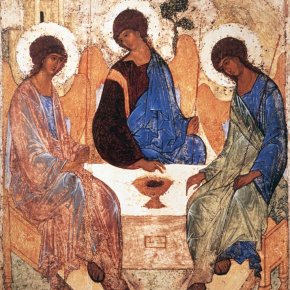
* ART: Detail from “Trinity” by Andrei Rublev (c. 1410)

Spark. Fuel. Fire.

Sermon for Sunday, June 8, 2014 || Pentecost, Year A || Acts 2:1-21

sparkfuelfireBeing a creative type, I have found myself relating to the Holy Spirit more readily than most people do. Whenever I sit down to write or play my guitar, I try to acknowledge the Holy Spirit’s presence in that creative activity. I’ve always thought of the Holy Spirit as God’s creativity in the act of making and molding and speaking existence into being. And I’ve always thought of my own creativity as my response to the Holy Spirit moving in my life. The Holy Spirit, then, is the in-spir-ation for my creativity. The Spirit inspires. The two words even come from the same Latin root!
But after many, many conversations with parishioners across several churches, anecdotal evidence suggests that most people gravitate to God the Father or God the Son, rather than to God the Holy Spirit. For a long time, I’ve honestly felt a bit strange due to my affinity for the Holy Spirit. After all, so many people have told me they have real difficulty relating in any meaningful way to this creative force, this inspirer, the Holy Spirit.

But here I must confess something. I’ve come to realize that my process of anecdotal evidence gathering has been totally flawed. For years, I’ve been shortchanging the Holy Spirit when conversing with people about their relationships with God. I’ve been shortchanging the Holy Spirit because in those conversations, I’ve described how I relate to the Holy Spirit as if it’s the only viable option. If the other people didn’t relate to the Holy Spirit in the way I do – in the creative, inspirational way – then I failed to help them name the way the Holy Spirit was, in fact, relating to them. And they assumed they just had no share in the Holy Spirit.

So the rest of this sermon is the beginning of my own remedial training in how the Holy Spirit moves, apart from the raw creativity I’m used to. When I was in college, I often studied by recounting aloud to other people what I had learned, so consider the next several minutes a study session on the Holy Spirit’s movement. As this is a remedial course, I’m going to stick close to our textbook and even to the word “Spirit” itself.

Here goes. We’ve already talked about in-spir-ation, the creative spark that I mistakenly reduced the Holy Spirit to. But what about a-spir­-ation. Each and every one of us experiences the Holy Spirit because each and every one of us has aspirations – goals, dreams, hopes for the future. The Holy Spirit fires these aspirations within us, and gives us strength and support to realize our own potential.

The Holy Spirit was present at creation as the wind that swept over the face of the waters. In the tremulous moment before God said, “Let there be light,” there was nothing. But there was aspiration. There was God’s dream for creation. In that tremulous moment, the Holy Spirit gathered the potential energy of all that would be.

We are each of us small pieces of that potential energy. We are each of us small pieces of God’s aspirations. When we set goals, when we dream, when we aspire to accomplish all that God invites us to do, then we are resonating with the Holy Spirit’s movement. It’s no wonder then, that after the Spirit descends in the rushing wind and tongues of fire, the apostle Peter quotes from the prophet Joel: “I will pour out my Spirit upon all flesh, and your sons and your daughters shall prophesy, and your young men shall see visions, and your old men shall dream dreams.”

Are you beginning to see how much bigger the Spirit’s movement is than my pigeonholing it to simple creativity? We have inspiration. And we have aspiration. How about per-spir-ation? Each and every one of us experiences the Holy Spirit because each and every one us has worked hard to achieve something worthwhile. We’ve put our backs into it. We’ve used our elbow grease. We’ve sweated, perspired.

The Holy Spirit, as our constant companion, gives us the perseverance and endurance to see things through. Those tongues of fire that descended on the heads of the apostles didn’t vanish. No, they kept descending and lodged in their guts. Have you ever heard the expression “a fire in your belly?” The fire of the Holy Spirit catalyzed the apostles to spread the good news of Jesus Christ far and wide, and to be witnesses for the love and grace of God, come what may. It’s no secret that most of Jesus’ original followers came to untimely and grisly ends, but they did so with the fire un-extinguished. They kept perspiring for the sake of the Gospel because the Holy Spirit kept fueling their fire.

When we sweat for things, when we put our hearts and souls into a worthwhile project, then we are ever so much more invested in the outcome. Habitat for Humanity calls the work their homeowners put into their own homes “sweat equity.” Their perspiration gives them a deeper sense of ownership when the work is done. And so does ours when we partner with the Holy Spirit and perspire for the coming of God’s kingdom on earth as it is in heaven.

We have inspiration. We have aspiration. We have perspiration. Finally, in our remedial course on the Holy Spirit’s movement, we have re-spir-ation. Each and every one of us experiences the Holy Spirit because each and every one of us breathes. It’s that simple. Each breath we take is a gift from God. We inhale this gift. The breath of the Holy Spirit infuses us; keeps our bodies, souls, and spirits intact and integrated; and animates us with the desire to serve God in our day-to-day lives. Then we exhale the gift of the Holy Spirit in our actions, in our service, in our love.

The Church calls the Holy Spirit the “sustainer” and the “comforter.” The “sustainer” evokes the constancy of the Spirit’s presence; the “comforter” evokes the peace that comes from breathing deeply. During the last supper, Jesus told his friends he would not leave them orphaned, but would provide them the Spirit to abide with them. After the resurrection, Jesus met them again in the upper room and breathed on them, saying, “Receive the Holy Spirit.” Our constant respiration – whether we are conscious of our breath or not – links us to the Holy Spirit.

Inspiration. Aspiration. Perspiration. Respiration. We participate in the Holy Spirit’s movement in each of these ways. The Spirit sparks our creativity. The Spirit fuels our dreams. The Spirit fires our determination. And the Spirit breathes on our embers, rekindling us again and again. If you have never given your relationship with the Holy Spirit much thought, I invite you, I urge you, to pray about these things. Do not ask if the Spirit is moving in your life. Ask how.

Six Word Witness

Sermon for Sunday, May 25, 2014 || Easter 6A || Acts 17:22-31; 1 Peter 3:13-22; John 14:15-21

6wordwitnessI couldn’t help but notice the readings selected for today all have some flavor of courtroom drama. We have the Apostle Paul sightseeing around Athens and discovering an out of the way shrine dedicated “to an unknown god.” When he stands up to debate at the Areopagus (the Athenian equivalent of the Supreme Court), he proclaims to the Athenians that this unknown god is the God who created all that is, the God of Abraham and his descendants, the God and Father of our Lord Jesus Christ. At the end of his speech, some scoff at him and leave; others are intrigued and join Paul on his journey.
Continuing the courtroom theme, in the letter of Peter, the writer urges the reader to “always be ready to make your defense to anyone who demands from you an accounting for the hope that is in you; yet do it with gentleness and reverence.”

And finally, on the night before he dies, Jesus makes a promise to his disciples: “I will ask the Father, and he will give you another Advocate, to be with you forever. This is the Spirit of truth.” You can think of this “Advocate” as the one who would stand up for you in court, one that would counsel you and speak on your behalf.

The courtroom drama of these three passages makes sense when we hop in our TARDIS and go back in time to first century Asia Minor. In the early days of the movement that would become Christianity, those spreading the word about Jesus were met with many reactions: anger, curiosity, rejection, embrace, incredulity, joy. Last week, we read the tragic story of the stoning of Stephen, the first person to die for faith in Jesus. Two weeks ago, we read about three thousand people being baptized after hearing Peter preach. Notice here that reactions to the proclamation of the Gospel at that time – at least the ones recorded in the book of Acts – were never tepid.

Now hop back in the TARDIS (that’s Dr. Who’s time machine, by the way), and come back to the present. We’ve all heard the news and seen the statistics. The church in the United States is in decline. More people than ever before marked the “none” box on the religion question of the 2010 census – note that’s none N-O-N-E, not nun N-U-N. The reasons for this are many and varied, and they are way beyond the scope of this sermon. Well, all but one is. You see, one reason for the downward trend is that over the last several decades the church has lost the ability to tell our story – the story of the God made known in the witness of the Bible and in Jesus Christ.

For too long, the church relied on its primacy in American society, a society steeped in the language and tradition of the Biblical story. When that primacy began to erode, the church didn’t realize how much it was relying on society as a whole to carry its message. And ever since that primacy evaporated entirely, the church hasn’t come to grips with how to proclaim this wonderful and life-giving story from its new position as underdog.

People nowadays – even many faithful churchgoers – just don’t know the story, both the Biblical story itself and how we fit into the story’s narrative trajectory. At the same time, we’ve entered into that underdog role. This might not sound like good news (and in many respects, it’s not, to be sure), but in one honest-to-goodness way, this news is good. This is the first time in history since the earliest centuries of Christianity that the church is not the dominant force in Western society. Back then people didn’t know the story either, or they didn’t know the version the apostles were telling.

What I’m trying to say is that we have reached a new apostolic moment. We have a story to share with a world that’s unfamiliar with this life-changing narrative. And I guarantee you there are people hungry to hear it.

Case in point: I’m a gamer. I love games. Video games are okay, but board games are my true love. When I lived in Massachusetts I frequented a local game store, the kind of store that sold games and had tables set up for people just to come in and play. The clientele of the store – think characters from The Big Bang Theory – were mostly those who would have checked “none” on the census form. But over the couple of years I played games there, an interesting thing happened. As people got to know me and found out what I do for a living, they started asking me questions – deep questions about faith and morality and how to know God. They were hungry for something beyond their own physical ken, for something deeper than today’s reality, for something…more.

This seeking happened occasionally, but often enough that I started thinking of myself as the chaplain of the game store. And I’m glad and feel so blessed to have been someone who could bear witness to my faith and to let them in on the story we all share.

I know this kind of witness and sharing can be so daunting. When we feel like the underdog or when we feel like we’re on trial, speaking up can be hard. But remember the promise Jesus gave the disciples: the Father “will send you another Advocate” to help you speak, to walk along side you as you share your part of the greatest story every told. Paul felt that Spirit when he spoke out in Athens, but you don’t need to be a Christian rock star like Paul to do it. All you need is six words.

You might be familiar with the Six-Word Memoir Project started by SMITH Magazine in 2006. Based on a legend that Ernest Hemingway was challenged to write a story in only six words (he succeeded, by the way),* SMITH Magazine invited people to share their life stories in only six words. Such an extreme restriction bred abundant creativity, and people continue to share six word stories today on blogs and Twitter.

This week, I invite you to write your own six-word witness to how you fit into the story of God’s creative and redemptive work among us. I’ll be honest: this is quite a challenge. I’ve been working on mine since Thursday and I’m nowhere close to happy with it. But the act of trying to distill my witness to God’s movement in my life down to six words has me currently wrestling with what parts of God’s story are truly the most important for me and which parts I fit into. And when I find those words, I’ll have something to say when someone inevitably asks me why I’m a follower of Christ.

I went through scripture looking for six-word stories to get us started. I’ll end this sermon with a few. Consider these some of the ways the Spirit of truth, the Advocate that Christ promises us, is still speaking to us.

Here’s a story from Genesis: God said, “Go.” So Abram went.

Here’s one from the psalm we studied two weeks ago: God’s my shepherd. I lack nothing.

Here are a few from Jesus himself: I am the resurrection and life.

The wind blows where it chooses.

And my favorite: Remember, I’ll be with you. Always.

Perhaps your six-word witness will spring from your favorite Bible story like one of these. Or maybe from your favorite hymn. How’s this one: Amazing grace will lead me home.

When we tell our story – even just six words at a time – we actively participate in it, and we invite others to join it, as well. We can trust our Advocate the Holy Spirit to help us bear witness to God’s constant and creative movement. This is our new apostolic moment, when the world is hungry and…

We have good news to share.

* Hemingway’s (tragic) six word story read: “For sale: Baby shoes, never worn.”
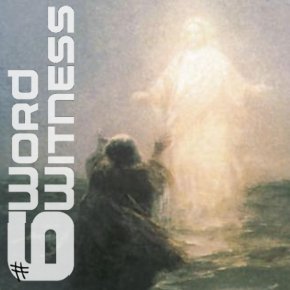
Art: detail from “Jesus walks on water,” by Ivan Aivazovsky (1888).

Living the Story

Sermon for Sunday, May 18, 2014 || Easter 5A || John 14:1-14

livingthestoryAttending seminary a few subway stops away from Washington D.C. provided some lovely distractions. The National Gallery of Art was my favorite. The Air and Space Museum was a close second. I visited most of the District’s tourist attractions during my three years there, and most lived up to their billing. One that did not was the D.C. zoo. The zoo is squashed into a tiny piece of the District, and the animals are squashed into tiny pieces of the zoo. The panda paddock was smaller than the backyard I mowed every week growing up. The elephants had no room to move. Everything was concrete and wrought iron. And the one time I went there, I couldn’t help but think what an inaccurate use of the word “zoo” I was witnessing.*
You see, the word “zoo” comes from a beautiful Greek word, which has also morphed into a popular girls’ name. The name is “Zoey”; the Greek word is ζωη (pronounced zo-AY). Zoe mean “life,” but the life reflected in the zoo’s tiny paddocks full of forlorn-looking animals is not the kind of life the word zoe comprehends.

You see, zoe means “life,” yes, but the connotation of the Greek doesn’t stop there. The word from which we get “zoo” means expansive life, life without bounds, the kind of life that the creature is meant to live. Jesus uses this word in today’s Gospel lesson when he answers Thomas’s question. The disciple asks, “Lord, we do not know where you are going. How can we know the way?”

Jesus says, “I am the way, and the truth, and the life.” I Am the Life. This life – this zoe – is the expansive, authentic life of the creature living as the Creator dreams for the creature to live. As we walk with Christ through our lives, he offers us his zoe, a life of purpose and meaning and fulfillment. A small piece of Christ’s life appears in what we call the Gospel; I’d like to spend the rest of this sermon telling you all a story – well, fragments of the story of Jesus’ life as told by John, our Gospel writer for today. The more we tell this story to each other, the more we will live it, and the more our lives will reflect Jesus’ zoe.

In the beginning was the Word, and the Word was with God, and the Word was God. All things came into being through this Word – all life, all zoe, in fact. This Word became flesh and made his home among us. He lived with us in order to teach us how to live, how to tune our lives so they resonate with the Creator-of-all-that-is. Everyone needs a name, and his earthly parents called this Word-made-flesh “Jesus.” Jesus lived in an obscure corner of an obscure corner of a mighty empire. But pretty soon the empire would sit up and take notice.

One day Jesus was out walking and two fellows, John and Andrew, came up to him and asked where he was staying. Now Jesus could have said, “Down the street to the left of the well just past the marketplace.” That would have been a fair answer to the question. Instead, Jesus says, “Come and see.” Jesus’ life is a life of inviting.

Three days later, Jesus went to a wedding celebration with his new friends and his mother. Now, weddings in those days went on for a whole week, but something at this wedding threatened to cut the festivities short. They ran out of wine. Jesus wasn’t going to get involved, but his mother had other plans. So Jesus had several large jars filled with water, but when the steward tasted it, the water had become wine. And moreover, this wine was even better than the wine that ran out. Presumably, the festivities continued in full swing. Jesus’ life is a life of celebrating.

Some time after that, Jesus met a man who had been paralyzed for thirty-eight years. The man often came to a certain pool, a pool renowned for curative properties. He was so focused on getting into the pool when Jesus came that he almost missed the opportunity in front of him. Jesus commanded the paralyzed man to get up. If anyone else had said this to the man, he would have thought it a cruel joke, but something in Jesus’ tone (or maybe it was the fire in his eyes) made the man obey. He stood up, and then I imagine he danced for joy. Jesus’ life is a life of healing.

Soon after, Jesus crossed the Sea of Galilee, and a vast crowd followed him. Unwilling to send the crowd away, Jesus took a laughably small amount of food – barely enough for one family – thanked God for it, and distributed the five loaves and two fish to over five thousand people. After he fed the people with physical food, he also fed them spiritual food. Jesus’ life is a life of feeding.

Skipping forward quite a ways in the story, Jesus was getting ready to share another meal when first he took off his outer robe, tied a towel around himself, got down on his knees, and washed the dusty feet of his disciples. This act of service was so at odds with how they thought their teacher should act that Simon Peter told Jesus not to wash his feet. But Jesus saw the matter differently. To remove the dynamic of power – one over another – Jesus commanded his friends to wash each other’s feet, to serve each other. Jesus’ life is a life of serving.

The next day, Jesus met the empire – both the worldly empire of Rome, which occupied his homeland; and the otherworldly empire of evil, death, and division, which occupied the hearts and minds of those he wished to bring back to God. Jesus, condemned to death, dragged a cross to a hill outside the city. In the anguish that followed, he drew to himself each and everything that separates us from God, and their power died with him. Jesus’ life is a life of sacrificing.

Three days later, his tomb was empty. Jesus was alive again, though not again. Rather, Jesus was alive anew. In his death and resurrection, he brought creation back into right relationship with God. The Word made flesh, who made his home with us, gave us a new opportunity to make our home with God. This new relationship was the ultimate act of reconciliation. Jesus life is a life of reconciling.

Inviting. Celebrating. Healing. Feeding. Serving. Sacrificing. Reconciling. These are just seven pieces of Jesus’ life – his zoe – the expansive, authentic life which he offers to us all. Now, I have two questions for you. First, how do you or how can you participate in Jesus’ zoe by intentionally integrating these actions into your lives? Perhaps you’ll invite an acquaintance to church. Or celebrate someone else’s good news. Or be a healing presence for a person’s who’s sick. Or cook food to feed the hungry. Or serve God by using your unique constellation of gifts. Or practice sacrificial giving so that God’s work in the world, say at our partner school in Haiti, can shine even brighter. Or reconcile with a person from whom you are estranged. In each of these actions, know that you are embracing Jesus’ life and living as the Creator meant for you to live.

My second question: what other pieces of Jesus’ life can we add to this list and what stories point to them? Jesus’ life is a life of loving, of teaching, of truth-telling, of relationship-building, of prophetic-speaking and Spirit-breathing, and so much more. You and I each have the opportunity to tune our lives to the frequency of Jesus’ zoe. When we do, we become beacons of the light of Christ shining in this world. We become the flesh, in which the Word makes his home. So I encourage you this week, and this lifetime, to live the story of Jesus’ life in your own. Invite. Celebrate. Heal. Feed. Serve. Sacrifice. Reconcile. And be authentic expressions of the life, the zoe, which God dreams for creation.

* I was told after the service in which I delivered this sermon that the D.C. zoo has been much improved since I visited it some eight or nine years ago.
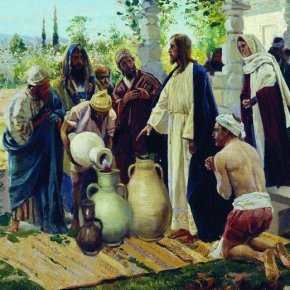
Art: detail from “Miracle at Cana” by Vladimir Makovsky (1887).

Psalm 23, Expanded

(Sermon for Sunday, May 11, 2014 || Easter 4A || Psalm 23)

shepherdessIn six years of priesthood, I’ve preached on the psalm exactly twice. Today, I’m going to make it three times. Psalm 23 is among the most well-loved and oft-quoted passages of scriptures. We read it at funerals or by the bedsides of those who are sick. When you listen to these words, you might hear an echo of your grandmother reciting it to you when you were a child. The words of Psalm 23 are powerful and gentle at the same time. But, as with anything you hear over and over again, the words can grow stale and distant. So I’d like to try something. I’d like to offer a meditation on Psalm 23 by expanding the thoughts contained in each of the six verses. Saint Francis of Assisi did something similar with the Lord’s Prayer, and I’m going to follow his example. As you listen, see how the venerable words of the twenty-third Psalm strike you anew.
The LORD is my shepherd.
For most, our agrarian days are long past and we see pastureland only from the car window as we drive by on the highway. We see the animals in the field, and we think, “How quaint and how beautiful.” But something tugs inside, and we notice a secret longing for a simpler time. We desire to tramp through the long grass, the only sounds the swish of our clothes rubbing together and our voices calling the flock. Each sheep has a name, and as we call, they come. We have a shepherd, too, who calls us each by name. We have a guide. A protector. A provider. The Lord is my shepherd;

I shall not be in want.
It’s a statement of faith that hangs on the promise of provision, the expectation that the Lord will provide. But this English rendition of the Hebrew words gives them more than one meaning. We will not be in want; that is, we will lack for nothing we need to sustain us. But we will also be free from the concept of “wanting”; that is, when we believe the Lord will provide, we will resist the siren song of consumer culture that seduces us, that tries to tell us security only comes with more stuff. “I shall not be in want,” means that we understand proportion, that we have a realistic notion of the word “enough,” and that we find contentment in living simply.

He makes me lie down in green pastures and leads me beside still waters.
These are the good days – the days of plenty, the days of refreshment. The still waters reflect God’s peace. The green pastures announce God’s abundance. Peace and abundance feed our awareness of the One who leads us. We notice that, in the words of Gerard Manley Hopkins, “The world is charged with the grandeur of God.”* Noticing this grandeur re-“charges” us. Or in the words of the psalmist:

He revives my soul
My essence. My life-force. The gift God gave each of us in the sparkling moment of creation that connects our fleetingness to God’s eternity. God’s grandeur is present, and yet we might still miss it. We tire. We burn out. We feel more fleeting than eternal. Thus our Lord revives our souls time and time again…

And guides me along right pathways for his Name’s sake.
Oftentimes in the psalms the poet reiterates a thought with a parallel one, which is why many psalms have a repetitive nature to them. Here we have a hidden parallel: reviving our souls and guiding us along right pathways are two sides of the same coin. The pathways along which our shepherd guides us lead to revival, to green grass and refreshing water. And all for God’s name’s sake; in other words, all to make God’s grandeur apparent. And yet…

Though I walk through the valley of the shadow of death, I shall fear no evil.
If the shepherd is leading us, why do we walk through this particular valley? Why is it on the route at all? Do we stumble into the valley of the shadow of death because we have strayed from right pathways, or do the right pathways include a road through this valley? We all know life isn’t just green pastures and still waters. We are a people formed by the reality of the cross. But the cross – the shadow of death – is not the end of the story. The joy of the resurrection proclaims that we are not abandoned in the valley of the shadow of death. No. We walk through the valley and out the other side. Perhaps we make this journey because there are people stuck in the valley. It is our duty and our joy to help them find their way out.

In the valley we fear no evil; not because evil doesn’t exist, but because fearing evil gives it power. Fear keeps us from trusting that we will make it out the other side of the valley. Evil seeks to separate us from the One in whom we put our trust. But evil will not succeed…

For you are with me; your rod and your staff, they comfort me.
This is our mantra while in the valley: “You are with me. You are with me.” Just because we have trouble noticing God’s presence doesn’t mean God is absent. And so we breathe these words, “You are with me,” until they become, “I am with you.” And dwelling in that truth, we find comfort. Comfort and sustenance, for…

You spread a table before me in the presence of those who trouble me.
On the bad days, we might not be able to find the green pastures or the still waters. We might stop believing we have enough and start listening to the seductive voices of those who trouble us, those who chant: “More. More. More. Then you’ll find comfort.” And so, on those bad days, instead of leading us to the pasture to forage for ourselves, the Lord sets a banquet before us. The Lord places what we need right in front of us so we can’t miss it. And we discover once again the abundance inherent in trusting in the Lord to provide.

You have anointed my head with oil, and my cup is running over.
When the Lord provides, the Lord provides. What we are fearful won’t be enough overwhelms us instead. Our cups overflow with blessing, both because there is so much blessing, and also because we have made ourselves too small to contain it. The extravagance of God’s blessing fills us in a way that the “More” of the seductive voices could never achieve. When our cups run over, we have the opportunity to spill God’s blessing on all those we meet. As the Lord guides us along right pathways, overflowing blessing marks the way for us and for those who will come after. And as we walk those ways…

Surely your goodness and mercy shall follow me all the days of my life.
The Lord, our shepherd, guides us, leads us by the hand through the valley of the shadow of death to the green pastures and still waters. The Lord takes the lead. We follow. And notice what follows us: God’s goodness and mercy trails us like the churning wake of a ship at sea. Thus, we are surrounded: God’s blessing and abundance before us, God’s goodness and mercy behind us. And above, below, and within us is the truth of God’s promise that…

I will dwell in the house of the LORD for ever.
For ever includes right now. To dwell means not just to live, but to abide. To unpack all our boxes. To put our clothes in the drawers and fill the refrigerator. To make a home for ourselves in the palm of God’s hand. This is the witness of this beautiful poem, Psalm 23. Wherever we go, whatever we do, we have a home in our Lord’s house. We have a provider in the Good Shepherd. And we have eyes to witness, here and in the life to come, a world “charged with the grandeur of God.”


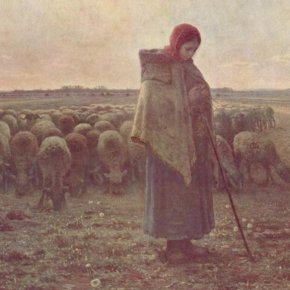
Art: Detail from “Shepherdess,” by Jean-Franc Millet (1864).
* Gerard Manley Hopkins, “God’s Grandeur

Book Review: Planted

Note: I haven’t done book reviews on WheretheWind.com in the past, but I am now dipping my toe in those waters. What a joy to have been contacted to review Planted right at the time I was thinking about reviewing books!

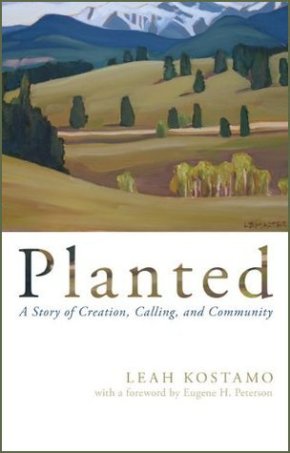
planted“In theological terms naming is the first step in moving from an ‘I-It’ relationship with something or someone to an ‘I-Thou’ relationship, a relationship where a person or creature or even an object becomes known not just for its usefulness, but for its innate worth. It’s the first step in the kind of understanding that leads to caring.”

I marked this and many other passages in my copy of Planted by Leah Kostamo with a green pen, and when I was done with the book, I had run into a common problem when reading a book as meaningful, memorable, and thought-provoking as this one. I had underlined so many passages that my green markings did very little to help me sift through them all.

Such is the nature of this delightful and quick read by the cofounder of the first dedicated Christian environmental center in Canada. Kostamo dedicates a good portion of the book to anecdotes about the sometimes wacky, sometimes dirty, always sacred life at the A Rocha center in British Columbia. These stories of interns, guests, and workers ground the tale in real life and experience. But the balance of the book is where the true depth lies. Kostamo integrates into the anecdotal narrative honest and thoughtful theological reflection on creation care, stewardship, and vocation.

While none of the theological reflection breaks new ground, Kostamo quirky sense of humor and gracious storytelling style invites the reader to hear anew the call of God to be a faithful steward of creation. Many times while reading I found myself underlining a sentence and realizing I had had the same thought myself in the past. But unlike me, Kostamo did something with it! Her experience lends a humble authenticity to her reflection that makes me both remember things I had forgotten and long to take further steps to align my life so it resonates more fully with God’s call to stewardship of creation.

For example, here Kostamo is talking about the value of being in nature: “…North American media has turned information into entertainment, rendering it impotent when it comes to motivating change. We live in a deluge of information – awash in statistics that should have us running hell-bent through the streets to some constructive action. But we don’t. It seems that fear tactics and empirical knowledge have a short shelf life when it comes to inspiring change. What lasts is wonder.” *

The notion that wonder, not fear or statistics, inspires change has been percolating in me since I read it and I’m excited to see how God is inviting me to use this new idea in my life.

Planted begins with more stories of the A Rocha center and less theological reflection, but about halfway through the ratio flips. If you find yourself grazing through the stories but not getting much out of the book, please stick with it. The stories help ground the reflection to come and both are important for the integrity of the book as a whole. Kostamo sows stories in the first half and reaps theological reflection in the second. And the harvest is bountiful.

*Italics mine.

My thanks to Leah Kostamo for the complimentary copy of this book, which I received for purposes of review.

Resting All My Weight

Sermon for Sunday, April 27, 2014 || Easter 2A || John 20:19-31

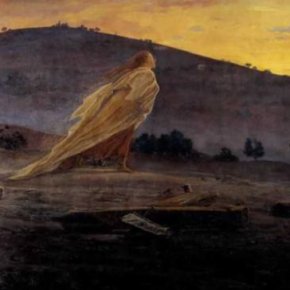
WinslowHomerFarmerToday we are going on a journey to the center of a word. This word happens to be one of the most misused words in the English language, and it happens to be an important word in our Gospel lesson today. This word is “believe.”
For several years now, I’ve tried to use the word “believe” only when talking about God. This is tricky because practitioners of modern English rarely treat the word with that kind of discretion. The word “believe” has become commonplace. How often have you heard a question like this: “Do you believe in [fill in the blank with a hot button issue of the day].” Somehow, the word “believe” has become synonymous with “think something is okay.” This watered down understanding is a far cry from how the word is used in our Gospel lesson today: “Now Jesus did many other signs in the presence of his disciples, which are not written in this book. But these are written so that you may come to believe that Jesus is the Messiah, the Son of God, and that through believing you may have life in his name.” Here “belief” is synonymous with life and relationship with God, not with mere assent to a particular position. As we journey to the center of the word “believe,” let’s try to recapture an undiluted definition.

The best way to talk about the word “believe” is to tell a story. Here’s a version of one that I heard a priest friend of mine tell several years ago (and he heard it from someone, too, so there’s no telling to whom this story belongs).

A Bible scholar trekked deep into the heart of the Amazon River basin, and there he found an indigenous tribe that had barely had any contact with the outside world. Like any decent Bible scholar would do, he set about learning the language of the people in order to translate the Good Book into the local tongue. While staying in the village, he lived with a farmer and his wife. For months, the scholar worked and worked: he listened to the people talking, made notes, slowly built a lexicon, and then set to the task of translation. He spread his papers out over the rough wooden table in the kitchen of the hut and put pen to paper.

But soon he stopped. He was stuck. In all his study, he had never heard the villagers use a word that seemed to him synonymous with “belief,” which was, after all, an important word in the Bible. He put his pen down and sat there, just thinking and feeling sorry for himself. Just then, the farmer came in from the fields all hot and sticky from a hard day’s labor. He sat down in the chair opposite the scholar, leaned back on two legs, propped his feet on the table, and let out a grateful sigh. In halting words, the scholar asked the farmer what his word for “believe” was. The farmer didn’t understand. The scholar tried to explain using other words, and comprehension dawned on the farmer. “Do you see me sitting here,” he said in his own language. “I am leaning back in this chair after a hard day’s work. My feet are up. I am resting all my weight on these two legs.” And the scholar found his word.

So to believe in something is to rest all of your weight on that something. Think about the first time you ever went to the pool. The older kids who knew how to swim were doing cannonballs into the deep end and playing Marco Polo in the shallows. The teenage boys were staring at the lifeguard in her red one-piece and layers of tanning lotion. The adults were laying in reclining lawn chairs around the edge of the pool, far enough away to be out of the splash zone.

But you took no notice of any of this. You were too busy contemplated your next action. You were standing by the edge of the pool, your toes curled over the cement lip of the shallow end. You had your arms crossed in front of you and your knees bent in. Your teeth chattered – from either fear or cold, you couldn’t tell. And there was your Dad standing three feet from you. He was standing waist deep in the water like a titan, impervious to Poseidon’s attempts to plunge him under. And he was extending his arms out to you, beckoning you to jump. He would catch you, of course, he said. You would not drown. You would be safe. You would have fun once you got used to the water. All you needed to do was jump into his arms.

You had a choice to make. You could waddle back to the safety of the towels and the bag with your sister’s change of clothes in it. Or you could jump, believing with all your might that your Dad would catch you, that you could rest all of your weight in his embrace. That’s belief.

But recall, I mentioned that belief is a tricky concept. It’s tricky for several reasons. Here’s one. When you decided to jump into your Dad’s arms on your first visit to the pool, you took the leap because you believed what he said. He would catch you, no matter what. You could rest your weight in his arms. Equating this belief with belief in God is where everything gets tricky. Here’s the problem.

There is a chance, however slim, that your Dad would fail to catch you.

No matter how earnestly we believed in a parent’s omnipotence or a coach’s perfection or a teacher’s omniscience, those people turned out to be…well, people. They were all stricken with the gene for human fallibility. Of course, not being perfect didn’t make them bad people. It just made them people. When we equate our belief in humans with our belief in God, we often make the mistake of hedging our bets were God is concerned. We apply to God the expectations we have when we believe in other people, thus unwittingly reducing God’s power and glory to the levels that fit comfortably in a fallible human body.

Now, please don’t misunderstand. I’m not telling you to repel all human contact because those fallible humans are not to be trusted. Human beings are fundamentally good. We usually do the right thing. We usually live up to the trust others have in us. What I am saying is this: there is no “usually” with God. God always does the right thing. God always lives up to the trust we place in God, else God wouldn’t be God.

So when you speak of belief, remember that God is the One in whom you can always rest your weight. God is the One who never fails to keep a promise. Therefore, God is the one whom we can always believe. When we reserve the word “believe” for God alone, we can begin to recapture the majesty that the concept of belief has lost through overuse in unworthy situations.

If believing is about resting your weight on something, then belief means knowing and trusting the something that takes your weight. This is your foundation. Every foundation that is not God is not a foundation at all, but a structure built on God, who is the ultimate foundation. God is, so to speak, the ground upon which everything rests. Believing in God is all about not being content until you find that ground, that deepest foundational level, upon which to rest your weight.

In our Gospel lesson today, Thomas discovers this foundation when he sees the Risen Christ’s wounds and says, “My Lord and my God!” Thomas’s journey has led him to rest his weight on the Risen Christ – to believe. The next time you use the word “believe,” ask yourself if the context surrounding that word is your foundation, something you can truly rest your weight on. If not, try a different word. We rest our weight on the One who is our foundation. For we believe in God.

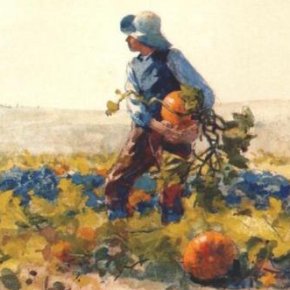
*Art: Detail from “For to be a Farmer’s Boy” by Winslow Homer (1887).

We Rise with Christ

Sermon for Easter Sunday, Year A || April 20, 2014 || Matthew 28:1-11

Easter2014Good morning and welcome to St. Mark’s church on this beautiful Easter Sunday. As I see some unfamiliar faces out there, please allow me to do a quick introduction. My name is Adam Thomas, and my wife Leah and I moved to Mystic three months ago today so that I could become the rector of this wonderful church. In that short space of time, I have been overwhelmed by the welcome we received from this parish, and I feel incredibly blessed to be a part of this community. If this holiday of Easter brought you across our threshold for the first time today, I invite you to return again on a day of less fanfare, to join us, and to enhance our community with your presence.

On Good Friday two days ago, I didn’t finish my homily. Instead, I left those present with a cliffhanger. We were standing at the foot of the cross with Jesus’ mother and beloved friend. The powers of death and darkness and despair and fear and shame and domination were careening towards Golgotha, were bearing down on us, were about to crush us. Jesus had just said, “It is finished.” Jesus had just breathed his last.

That could have been the end. “It is finished,” might have been the final words of one ready to take his curtain call, to take his bow, to exit stage left. But if that were the case, we wouldn’t be here today. Today, we celebrate the resolution of the cliffhanger. Today, we witness Jesus Christ rise from the grave and leave entombed the powers that seek to separate us from God. Today, we turn away from those powers and embrace the truth that nothing in all creation can separate us from the love of God in Jesus Christ our Lord.

We wait in suspense three days for the resolution of the cliffhanger. And in that time removed from the foot of the cross, we realize that when Jesus said, “It is finished,” he meant, “It is accomplished.” It is completed. My work is fulfilled. He laid the trap for the powers that seek to separate us from God. He offered himself up as bait. And they took it. On this side of Easter, we look back on the dark events of Good Friday and see the full scope of the plan that Jesus only hinted at to his friends before his arrest.

On the cross, he lured those powers of separation in. He absorbed all our darkness and despair, our fear and shame, our desire to dominate, even the power of death itself. As he suffocated to death on the cross, they appeared to be winning. But it was all a setup. Their power died with him. And he left their wasted shells in the tomb when he rose triumphant.

Yet we still see the powers of separation active in our world today. They still seek to pull creation apart, to pull us apart. And so we might be left to wonder if Christ’s resurrection actually accomplished anything at all. We might be tempted to ask what good it did. These are fair questions to ask, and God knows we struggle with them. But in the midst of the struggle, God constantly calls us to look more carefully for God’s presence in all situations, to engage the suffering of this world on a deeper level, to see into the truth of things.

And when we do this, hope stirs in us. We see that while the forces Jesus lured to the cross still exist, their ultimate power is no more. They have lost. They just don’t know it yet. We live in a reality in which Christ is risen. The truth of the risen-ness of Christ permeates existence. Everyone and everything that can be redeemed, that belongs to God’s original intention for creation, rises with Christ. Everything else stays in the tomb.

In today’s Gospel reading, when the angel beckons the women to see the place where Jesus lay, I wonder what they see? A burial shroud in the corner, perhaps. But mostly just emptiness. Indeed, after the resurrection, the tomb was the burial place for emptiness. For nothingness. This emptiness, this nothingness is the eventual outcome of all those things Jesus lured to the cross. What the women don’t see is death and darkness and despair and fear and shame and domination all crowding for space, invisible in the emptiness of the tomb. There is no room for those things in a reality built on Christ’s risen-ness. Those things are being forced out of reality, forced to stay in the tomb where they belong.

So what does belong in a reality built on Christ’s risen-ness? All we need do is look at the opposites of the things left in the tomb.

Instead of death, we have life. We rise with Christ when we choose life-affirming paths, when we share our gifts and resources so that other may have life, and when we act sustainably so that all creation can enjoy the fullness of life.

Instead of darkness, we have light. We rise with Christ when we walk in the light, when our choices reflect values that prioritize strengthening relationships, and when we encourage others to shine with their own light.

Instead of despair, we have hope. We rise with Christ when we believe that the bounds of possibility are far wider than we can perceive, when we dare to dream of all the wonders we can do when we partner with God, and when we offer a grief-stricken friend a shoulder to cry on.

Instead of fear, we have trust. We rise with Christ when we surrender daily to God our fruitless desire to control the future, when we make choices relying on our faith, and when we ourselves practice trustworthiness and the keeping of promises.

Instead of shame, we have grace. We rise with Christ when we let go everything that keeps us from embracing God’s love, when we discover how graceful we are when we dance in concert with God’s movement, and when we look upon others and see the beautiful beings that God sees.

And instead of domination, we have freedom. We rise with Christ when we allow God to free us from everything that enslaves us, when we stop bowing down to modern-day material idols, and when we stop dominating others to ensure our own freedom.

Every time we choose life and light and hope and trust and grace and freedom, we resonate with the reality of Christ’s risen-ness. We leave the things Jesus lured to the cross where they belong – in the emptiness of the tomb. We become little pockets of Easter, outposts of the resurrection, beacons of true reality based on today’s proclamation: Alleluia. Christ is risen. The Lord is risen indeed. Alleluia!

*Art: Detail from “Harbingers of the Resurrection” by Nikolai Ge (1867)

Too Close

Homily for Good Friday || April 18, 2014 || The Passion According to John

goodfriday2014‘When Jesus had received the wine, he said, “It is finished.” Then he bowed his head and gave up his spirit.’

“It is finished.” The clock has run out. The game is over. The final whistle has blown. It is finished. The end. Jesus releases the last ragged gasp of hard-fought breath. His mother and his beloved friend look up in time to see his body sag. A moment ago his spent muscles had been holding him up, keeping him from suffocating, but now…the nails keep his body pinned in place, another victim of Rome’s desire to turn execution into demonstration.

Imagine yourself standing with his mother and friend. The horror of witnessing his torture has already cleared the contents of your stomach. You’ve retched multiple times since, but with only bile as a result. You bit back bile of a different sort when the soldiers divided his clothes between them. You wanted to let them have it, to excoriate them for their cold-hearted avarice, but they have swords and spears, and all you have is your ragged faith in a dying man. You hear his last words: “It is finished.” And in that moment, those are the only words in existence. Nothing he said before enters your mind – certainly nothing about rising again on the third day. In that moment, “It is finished,” are the final words anyone will ever speak. They truly are the end.

After all, how could they mean anything else? He said he was “the Way, the Truth, and the Life.” But his way led him to this horrible destination. His words of truth were suffocated out of him. His life ended. As we dwell here at the foot of the cross on this Good Friday, we hear those words, we hear the finality in them. “It is finished.” Full stop.

If you touch him now, you know his body will be unnaturally cold. Death is too close.

Even though it’s midday, thick clouds blot out the sun. Darkness is too close.

As his breath fled him, any last bastion of hope fled you. Despair is too close.

Fear. Shame. Domination. All of them, too close.

And as the weight of all the powers of evil and separation come careening toward Golgotha, as they bear down on you, as they crush you like they crushed him, those three words mutate in your mind, become gangrenous. It is finished. We lost.

And yet. The faintest ember of hope glimmers beneath the ash of your extinguished fire.

What if? The sun is still there behind the clouds, still warming the earth with its light, whether or not you can see it.

And yet what if all of this was a trap? What if Jesus, unwilling to risk anyone else, offered himself as the bait? What if Jesus positioned himself high on that cross so the powers of death and darkness and despair and fear and shame and domination could get a good view of him? Could not resist such a juicy target. What if Jesus knew what he was doing all along? Keep your friends close and your enemies closer. Was his sacrifice a way to draw his enemies out, to draw them to him, to nail them to the cross with him? If so, no wonder they’re too close. No wonder you feel the crushing weight of the powers of evil careening toward Golgotha.

The words kindle again within you. It is finished.

Could he?

Could he possibly have meant something else?

In those final moments, did he know his plan had worked? Could he feel death and darkness and all the rest scuttling around his cross? Inching closer? Triggering his trap?

It is finished. No. Not the end.

It is accomplished. It is completed. My work is fulfilled. No. Not the end. This is but the middle of the story.

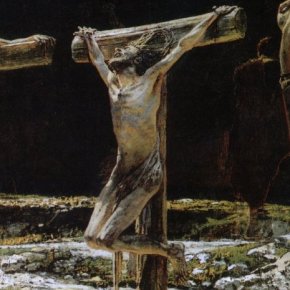
*Art: Detail from “Crucifixion” by Nikolai Ge (1831-94)

A New Dream

Homily for Maundy Thursday || April 17, 2014 || John 13

MaundyThurs2014Imagine with me the Apostle Peter at night in his prison cell in Rome near the end of his life.

It all happened so long ago. Thirty years or more now. And yet sometimes – like tonight – I wake up in the cold wee hours of the morning gasping for air because my dreams drag me back to that week. One moment, I’m being suffocated by the crowds pressing in on me, buffeting me, shouting for blood. The next I awake in my prison cell, take in great swallows of stale air.

My cellmate – another follower rounded up here in Rome like I was – he says, “You were shouting in your sleep again.”

“What was I shouting?” I ask, though I already know the answer.

“Something like, ‘I don’t know who you’re talking about,’ ” he says.

Yes, of course. The same old dream. I always wake up when the rooster crows.

Why can’t I dream of the happier times? Lugging the huge catch of fish onto the beach. Talking with Jesus around the campfire. Sharing a meal with him in our hideout in Jerusalem.

“Perhaps you still feel guilty,” my cellmate says. “We’ve all heard the story: how you denied you knew Jesus when he needed you most.”

“But Jesus forgave me,” I say. “I told him I loved him. He gave me a mission to feed his sheep. He knew I couldn’t live with myself, so he told me to live for him instead…And I have…”

My voice trails off. I used to give this defense with more fire.

He might have forgiven you.” My cellmate again. “But have you truly accepted his forgiveness? Have you ever forgiven yourself?”

I want to say, “yes.” I want this fellow in my cell to know that I am one of Jesus’ most fervent followers, that I remember everything he ever taught, that I apply it constantly to my life. But it’s all a lie. A front I put on so others will be encouraged. If they knew the doubts that assail my hearts, they’d be less eager to follow, I tell myself. I do follow, but…fervently?

His question lingers in the stale air: “Have you ever forgiven yourself?” I want to say, “yes,” but something about the dank prison cell drags the truth out of me instead. Must be the hardness of the floor, the right angles of the walls, the smoothness of the stones. In Rome, even the prison cells are plumb. “No,” I say. The word rebounds off the wall. The echo indicts me.

Silence replaces the echo, and we listen to each other breathing in the dark. “I’d always heard you were stubborn, Peter,” says my cellmate. “But that forgiveness. That love of his. It was a free gift. You didn’t need to earn it. Your denial didn’t make you unworthy of it. Do you not see that?”

A recent convert, this one. I can always tell by their zeal. This one is mouthier than most.

He presses on. “It’s the footwashing all over again.”

“The what?”

“The night before Jesus went to his death on the cross. We’ve all heard that story, too. Jesus knew he was going to God and so he wanted to show you all the importance of service. Of love. The fact that service and love are really the same thing. So he took off his robe, got down on his knees, and washed the feet of his friends.”

“I remember. I was there.”

“But…but when he got to your feet, you didn’t want them washed. You didn’t feel worthy of that either.”

This I have to answer. “He just looked so small,” I say. “Crawling on his knees, pushing the wash basin before him. It felt so wrong for him to humble himself like that for my sake. His humility made me feel even more unworthy.”

More silence. Again, the truth tumbles out.

“It still does.”

And what does my cellmate do? He starts to sing:

“Being found in human form,
he humbled himself
and became obedient to the point of death–
even death on a cross.

“I heard that the day I was arrested,” he says. “We sang it at a gathering.”

“So?”

“It says Jesus humbled himself and became obedient. Don’t you see, Peter? How can I, who is so new to the Way, be the one to teach you this, you who have the keys to the kingdom? Humility and obedience go together.”

I shift on my cot. I don’t want to hear this, but his voice has taken on a new tone, one I remember Jesus using: excitement and insight mixing together to form revelation. I sit up and feel the hairs raise on the back of my neck.

“When he washed your feet he demonstrated humble service. And what did he do next?”

“He told us to love each other.”

“No. He commanded you to love each other. It wasn’t a request. Jesus gave you a direct order, a new commandment. To obey you had to love. To show love you had to serve humbly. To serve humbly you had to obey – to listen deeply for his call and act on it. I found my church – my new family – because I watched them loving each other, serving each other, and I knew I wanted to be part of that. I wanted to follow Jesus’ commandment.”

“And yet here you are, in prison with me.”

“I believe I’m exactly where I’m supposed to be, doing exactly what I’m supposed to do.”

“And what exactly is that?”

He takes a deep breath. “Helping Peter find a new dream.”

I grunt my derision, but the memory of the rooster crowing still hovers behind my eyes. I’m listening, in spite of myself.

“Look,” he presses. “You can dismiss everything I say as the ravings of convert’s zeal. But just because I’m new doesn’t mean I’m wrong. Those words you said in fear that night still haunt you. Let them go. Tell me now. Say it aloud. Say you know him.”

His words awaken the same ones in me. I open my mouth. My voice catches in my throat. But I force them out. “I do know the man.”

“Say it again.”

“I do know him.”

“Where is he?”

“He’s here in this cell. I hear him speaking through you.”

“What is he commanding?”

“He wants me to let go, to let his forgiveness wash me clean, to release my stubbornness and pride, to hear and obey.”

“ To hear and obey. To love and serve in humility?”

“That is his command. Loving and serving. The command and the gift, both at the same time.”

He reaches across the divide between our cots and grasps my hand. I can feel his blood pulsing. And for the first time in God knows how long, I feel the fire blaze in me again. He squeezes my hand and holds it fast. “Peter, my friend, there’s your new dream.”

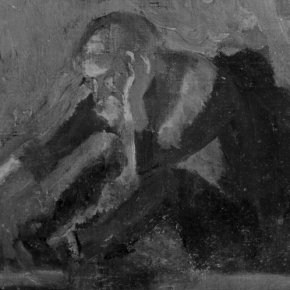
*Art: detail from “Columbus in Prison” by Thomas Eakins (1844-1916)