During my sabbatical, I’m not writing new sermons, so on Mondays I am choosing one post from every year of WheretheWind.com to highlight. In the second year of the website, 2009, I started a short-lived video series. This video (which was modeled after The Colbert Report) eventually found its way to my publisher, which is what prompted them to get in touch with me.
Continue reading “Sabbatical Retrospective, Year 2009: Humor in the Bible”Tag: John 10
Even the Good One
Sermon for Sunday, April 30, 2023 || Easter 4A || Psalm 23; John 10:1-10
This sermon is about God remaining faithful even when tragedy or pain or grief keep us from acting out our faith. Before I start, though, I need to share a trigger warning. I will be briefly talking about the death of a child.
Between March 2020 and May 2021, this building was closed to the public due to the pandemic restrictions. For fourteen long months, we gathered together via Zoom and YouTube, worshiping together in love any way we could as we supported one another through the depths of the Covid-19 pandemic. During those services of Morning Prayer, I shared with you 27 of the songs I’ve written over the course of my life. That’s every song I’ve ever written (that’s fit for people to listen to). Well, every song but one. There’s one particular song of mine that I deliberately did not sing during those fearful months because I didn’t think I’d be able to get through it. The song is raw and it does not end on a particularly joyful note. But I think now the time is finally right to sing this song for you.
Continue reading “Even the Good One”Listen to My Voice
Sermon for Sunday, May 8, 2022 || Easter 4C || John 12:22-30
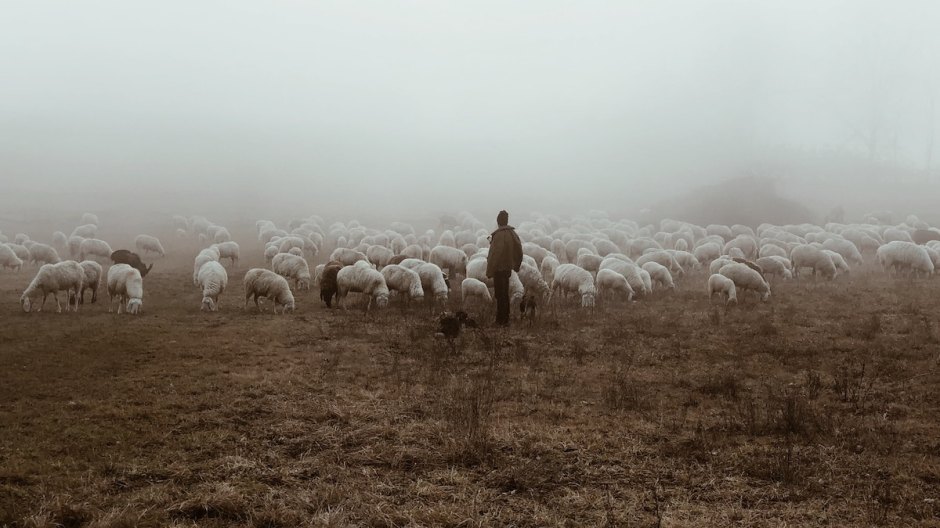
Two weeks ago in our Gospel reading, we heard Jesus say, “Blessed are those who have not seen and yet have come to believe.” Last week Jesus told Simon Peter (and by extension, us the readers) “Follow me.” And today, we hear him say something else from earlier in the Gospel. He has just talked all about being the Good Shepherd, who calls the sheep by name, who brings the sheep out of the sheepfold, who lays down his life for the sheep. And then he says this. He says, “My sheep listen to my voice.”
The trouble for people reading or hearing the Gospel way back then is the same trouble we have today. None of them and none of us have ever audibly heard Jesus say anything. And yet, we follow. We believe. We listen. The question we’re going to ponder together for the next few minutes is “How.” How do we listen to Jesus’ voice? How do we listen to someone who lived nineteen centuries ago and who inhabited the other side of the world and who spoke a language that no longer exists?
Continue reading “Listen to My Voice”Other Sheep
Sermon for Sunday, April 25, 2021 || Easter 4B || John 10:11-18
On Monday morning last week, the buds on the maple tree in front of my house appeared. They weren’t there last Sunday, and then – BOOM – there they were in all their potential glory. I knew they were coming in the vague sense that it was spring and that’s what happens to trees. But I hadn’t spared much thought as to when. And then, suddenly, there they were: skeletal sticks one day, green buds the next, like a quick costume change between scenes of a play.
At least that’s what I saw from my perspective. What about the tree’s perspective? What would we see if we imagined our way into that majestic maple? We would feel the slow return of warmth and sunlight that would get the sap moving again after the near dormant days of winter. We would explore deeper with our roots, seeking nutrients and water. We would spend weeks gathering and converting energy to power all the tiny interactions within our complex body to send forth those little green buds. Over the course of one night, the buds would slowly unfurl from the ends of their little flagpoles.
What looks to me like a spontaneous greening, the maple spent all winter preparing for. What looks to me sudden and surprising was for the maple slow and deliberate. What a difference our perspective makes.
Continue reading “Other Sheep”The Parable of the Good Shepherd
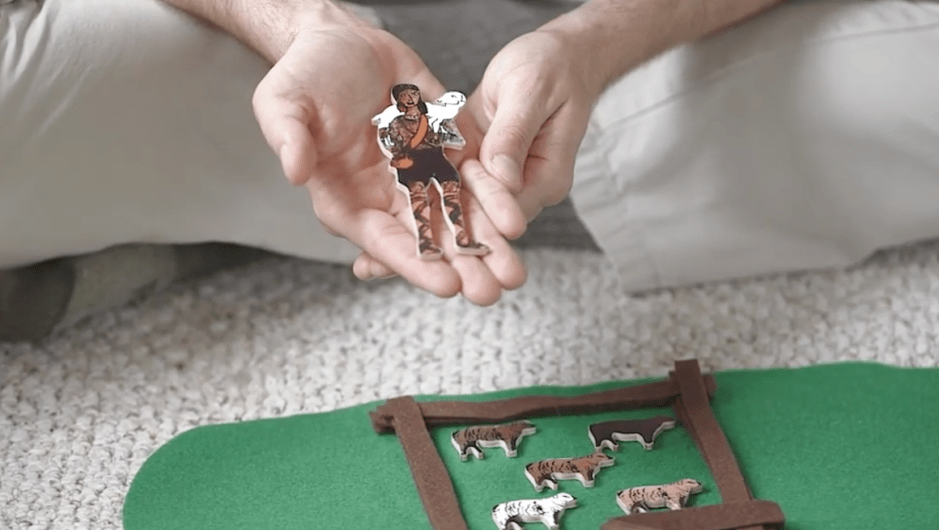
No sermon this week, so instead, I am excited to share with you a project that I was blessed to work on last summer. Stories of God at Home is a new book by Godly Play founder Jerome Berryman. The book takes several of the most beloved Godly Play stories and adapts them for use by families at home at various points in the year.
I had the opportunity to record a video for the Parable of the Good Shepherd, which was so much fun, but also nerve-racking, considering it is the proto-Godly Play story. Continue reading “The Parable of the Good Shepherd”
God is Love, and Love Wins
Sermon for Sunday, August 13, 2017 || In response to the Violence in Charlottesville, VA
You might be wondering why I didn’t shave today. I have enough grandmothers in this congregation that I assure you someone is wondering that. Well, at about quarter to six this morning, I scrapped my sermon. I had just finished revising it when I decided to check the news and learned what had happened yesterday in Charlottesville, Virginia. If you were tuned out yesterday like I was, here’s the short version. A large group of white supremacists gathered on and near the campus of the University of Virginia to, according to them, protest the removal of a statue of Robert E. Lee. Counter-protesters also gathered. There were verbal and physical clashes, culminating in a car plowing into a the latter group, killing one person and injuring 19 others. Later in the day, a police helicopter crashed, killing both officers aboard (though foul play was not suspected). Continue reading “God is Love, and Love Wins”
Worst Enemies
Sermon for Sunday, May 7, 2017 || Easter 4A || John 10:1-10
There was a problem with the audio for this sermon, so unfortunately, it’s just text this week.
Whenever I watched The Empire Strikes Back as a kid, I would always fast forward through one particular scene because it terrified me. Luke Skywalker is training with Jedi Master Yoda on the swamp planet Dagobah when Luke feels the cold presence of death emanating from a nearby cave. “That place is strong with the Dark Side of the Force,” says Yoda. Luke asks, “What’s in there?” And Yoda replies, “Only what you take with you.”
Luke enters the cave, lightsaber in hand. From the shadows appears Darth Vader. They duel for a few desperate seconds, and then Luke cuts off Vader’s helmeted head. The helmet comes to rest, and the black mask blows off, only to reveal Luke’s own face. As a child, this scene terrified me because Darth Vader was really scary, and the darkness of the cave and the tremulous musical score only added to my fear. As an adult, watching this scene still touches my heart with fear, but fear of a different kind: fear of the truth that Luke discovers in the cave and that I discover whenever I look within myself.
Like Luke, I am my own worst enemy. Continue reading “Worst Enemies”
5 Years: Humor in the Bible
This June is the 5th anniversary of Wherethewind.com, and we are celebrating by looking back at some of the best of the last five years of this website. Today we have the the second of the four video Bible studies I shot in my house in West Virginia before I moved to Massachusetts. (Originally posted October 22, 2009)
If I were a superhero, this video Bible study would serve as part of my origin story. About six weeks after filming it, I received a phone call from Ron, an editor at the United Methodist Publishing House. The video had ended up on Ron’s computer by way of a complicated series of connections borne equally by the Internet and the Holy Spirit. This is the video that started my relationship with my publisher, and I am so thankful it made its way to them. (And now, a plug: remember my new book, Letters from Ruby, arrives in stores August 20th!)
The Sheepfold
(Sermon for Sunday, May 15, 2011 || Easter 4A || John 10:1-10; find it also on Day1.org as part of the series “Young Leaders of the Church” series.)
Having the flu changed my life. The day was Thursday, March 13th, 2008, and I was sitting on my futon with my computer on my lap. Quite suddenly, I realized how clammy and hot I felt. Half an hour before, I had felt just fine, but in just thirty minutes my insides decided that they needed desperately to become my outsides. I put my computer on the floor, leapt up, and staggered into the bathroom. I was ill for five days, and during that time all I did was sleep and watch my recently acquired complete series of Star Trek: The Next Generation on DVD. For those five days, I did not open the lid of my laptop. I did not press the power button. And I did not log in to the computer game that had dominated my life for nearly two years.

The following Tuesday, when I felt that I could walk around without gripping the furniture for support, I stumbled over to the computer and deleted World of Warcraft from the hard drive. I tossed the game discs in the trash. And in the three years, two months, and two days since contracting the flu bug, I have never logged back into the game. The flu acted as the catalyst for the breaking of my addiction to the computer game. The illness put me on the disabled list for a week right before Easter, but no matter how awful the flu made me feel, I thank God every day for the not-so-gentle push away from the stagnant life I was living. I thank God every day for yanking me out of the comfortable sheepfold that I had built up around me. I thank God every day for pulling me kicking and screaming through the gate, away from my dormant life and toward a life full of God.
This not-so-gentle shove out of the sheepfold happens in today’s Gospel reading, although I doubt you noticed any mention of being kicked through the gate in Jesus’ words. We’ll get back to this shove in a moment. First, notice that in John chapter 10, Jesus employs the imagery of first century shepherding practice in an attempt to reveal his own identity and his relationship to us. Now, the most experience I’ve ever had with sheep was in southern England, where I spent one windy afternoon dodging the sheep’s ubiquitous droppings while trying to appreciate the mystery of Avebury’s standing stones. If you’re anything like me, you have no clue about shepherding practice of any sort, ancient or modern. Therefore, in order to access what John calls a “figure of speech,” we first acknowledge our lack of personal contact with Jesus’ choice of image, and second we embrace the opportunity to use our imaginations.
So imagine with me a rolling plain, dotted with humps and hillocks. Dusk descends, and the shepherd leads his flock into the sheepfold. One of the hillocks has been hollowed out, and the sheep huddle inside next to the sheep of several other shepherds who share this particular fold. A pair of piled rock walls extends out a few feet from the sides of the hill. The shepherd lies down in the space between the low walls, effectively sealing the enclosure. Thieves and bandits and wolves will have a difficult time getting in with the shepherds on guard. The sheep are safe in the sheepfold.
When the shepherd arises the next morning, Jesus explains, “He calls his own sheep by name and leads them out. When he has brought out all his own, he goes ahead of them, and the sheep follow him because they know his voice.” The sheep can’t spend their whole lives in the sheepfold, no matter how safe the enclosure may be. There’s no food in the fold, after all. The sheepfold may be comfortable and safe, but the sheep must follow the shepherd out of the fold in order to find sustenance, in order to live.
Jesus’ choice of words here is telling, but our translation into English hides the special word that Jesus uses. “When he has brought out all his own, he goes ahead of them,” says Jesus in the version we use in church. In this verse, there’s a fairly weak rendering of a Greek word that appears over and over again in the Gospel. We hear this word every time Jesus casts out a demon. We hear this word when Jesus makes a whip and throws the moneychangers out of the temple. We hear this word when Jesus speaks of driving out the “ruler of this world.” In every instance of this word in the Gospel, Jesus is doing some sort of battle: he is pushing, pulling, throwing, yanking, driving, exorcising, casting out. But in this instance about the shepherd and the sheep, the translators decided a nice, safe, neutral translation was better. The shepherd simply “brings” his sheep out of the fold.
Now, perhaps those dimwitted, wooly animals trod placidly from the fold every morning at the beckoning of the shepherd. But Jesus is, of course, not talking about real sheep. He’s talking about us, about you and me. He’s talking about calling out to us, about speaking the word that will bring us forth from our own sheepfolds, from those places of comfort and safety that we have built up around us. The seductive force that pulls us into these personal sheepfolds tells us that everything will be okay as long as we keep quiet and stay put. Play another hour. Have another drink. Watch another show. I don’t know about you, but I need to be pushed, pulled, thrown, yanked, and driven out of that place of stagnation and dormancy every time I start settling into my comfortable enclosure.
For two years, my sheepfold was the virtual world created in the computer game World of Warcraft. I lived there more than I did in the real world. I played every day. Often I ate all three meals in front of my computer. But during those stagnant months that stretched into years, I didn’t live. I existed. I simply settled myself in my sheepfold. My mind numbed. My heart hibernated. My spirit deflated. But I didn’t notice because I was safe and I was comfortable. Then the flu hit, and I was too weak to resist the pulling and yanking that God had been doing for who knows how long. God drove me out of my sheepfold. And my life began anew.
This is the message of the Resurrection: life cannot be conquered – not by death, not by sin, not by the powers of darkness. Life happens – fully, intensely, eternally. Indeed, Jesus tells us this morning: “I came that they may have life, and have it abundantly.” The Resurrection of Jesus Christ ripples out to touch every life, everywhere, for all time. The wonder of Easter morning shows us the utter lengths that God goes to offer us abundant life.
And yet, while life cannot be conquered, life can be delayed, put on hold, made dormant. When we retreat to the safety and comfort of our own personal sheepfolds – whatever they may be – we refuse to participate in the fullness of a life lived in God. Of course, existing in the sheepfold is easier, less demanding. But existence is not life. Ease does not bring joy. And less demanding often means less fulfilling.
We cannot import into our sheepfolds the abundant life that Christ offers us because the very fullness of that life cannot fit inside a safe, comfortable enclosure. Christ drives us out of the sheepfold so that our lives have the opportunity to expand, that we may embrace God’s unrestrained abundance. During this season of Easter, join God in the expansive life found in the Resurrection. Listen for the voice of the shepherd calling you by name, calling you out of complacency. And give Christ the chance to cast you out of your sheepfold so that you may find the fullness of a life lived in the abundance of God.
Jesus throws me out
The following post appeared Friday, August 13th on Episcopalcafe.com, a website to which I am a monthly contributor. Check it out here or read it below.
* * *

On a certain Saturday in late July of 2006, I found myself sitting in the pastoral care office of Children’s Medical Center in Dallas, Texas, waiting for a ten-year-old boy to die. I had sat with his mother by his bedside earlier in the day. We had cried the Rosary together. We had held hands and gazed upon the face of the little boy. When his mother asked for some private time with her son, I returned to the office and waited for the pager to ring. And as I waited, I jotted down the first verse of a song that took me the next three years to write. The words of John 10 echoed in my mind as I wrote the lyrics because for weeks I had been telling the Godly Play story of the Good Shepherd with children on my floor of the hospital.
Almost four years to the day, I sit at my computer. None of the urgency or the heartbreak of that day remains, and I am aware of the complacency that has crept in over the years. And once again, the words of John 10 return to my mind: Jesus is the good shepherd who calls his sheep by voice. They hear their names and he leads them out of the sheepfold. But a closer look shows that Jesus doesn’t necessarily lead them out (as many English translations say). Rather, he throws them out of the sheepfold. Here’s what I mean.
Jesus begins his discussion with something as close to a parable as the Gospel according to John gets. In the other accounts of the Gospel, Jesus often speaks in parables, but not in John. Instead, Jesus himself is the parable of God — the way God is made known in the world (John 1:18). Here in chapter 10, Jesus speaks in a “figure of speech” about shepherding and sheep and wolves and bandits. Jesus identifies himself as the good shepherd who calls his sheep by name and “leads them out” (NRSV). The word for “lead out” is one of my favorite Greek words: ekballo. This is a fairly prevalent verb in the Gospel according to John and in the other accounts, as well. In the Synoptics (Matthew, Mark, and Luke), when Jesus casts out demons, he ekballo-s them. In John 2, when Jesus drives out the moneychangers and animal sellers from the temple, he ekballo-s them. The man born blind is ekballo-ed from the synagogue at the end of chapter 9. And finally, in chapter 12, Jesus mentions that the “ruler of this world” will be ekballo-ed from it.
In each of these cases, the connotation of ekballo is to drive out or cast out or throw out. But in John 10, according to, say, the NRSV, the shepherd calls his sheep by name and “leads them out.” While Greek words definitely have ranges of meaning, I suggest that we should translate the instance of the word ekballo in chapter 10 not as “lead out,” but as “throw out.” Here’s why.
The first character Jesus introduces in chapter 10 is a thief and a bandit. This person climbs into the sheepfold rather than entering through the gate. The thief comes only to “steal and kill and destroy.” Furthermore, outside the sheepfold there are wolves waiting to snatch up the sheep and scatter them. Hired hands are no help because they run away when they see the wolves coming. With thieves, bandits, and wolves roaming outside the sheepfold, leaving the fold can be frightening and dangerous.
In contrast, the sheepfold is safe and secure — shepherds bring their flocks to these enclosures at night for safety. But the sheep can’t live their whole lives in the sheepfold, no matter how safe and secure they may feel. They must go out into the world beyond the gate to graze for food (which, as far as I can tell, is all sheep do). So the shepherd ekballo-s them. The shepherd throws the sheep out of the fold so they can eat and drink and run.
The sheepfold is a safe place, but everything outside the sheepfold is dangerous. Who would not want to stay in the fold? Being led out into the world can feel like being thrown out. What is my fold? What do I use to shelter myself from the world? Where do I feel comfortable to the point of intransigence? The answer to these questions is the thing from which Jesus throws me out.
Contemporary sheepfolds come in all shapes, sizes, and disguises. Perhaps my family is my sheepfold, or my work, or, yes, even my church. For me, my complacency is the fold from which Jesus constantly throws me. The fold of complacency is slippery and amorphous because it has no walls, no group of people with whom to identify, no action of its own. And complacency leads to complicity with all the bad things in the world. I am so entrenched in my complacency that Jesus has to throw me out of it. It is the demon in me that Jesus casts out, the ruler of my world that Jesus drives out.
And he throws me out of this fold with one simple word: my name. Jesus calls me by name and I hear his voice and I know that I have been in the fold too long. By calling my name, Jesus brings me into an intimate relationship with him. (Remember in middle school when you found out your crush actually knew your name? It’s a good feeling, isn’t it?) By calling my name, Jesus tells me he knows me, knows that I struggle with complacency, knows that I need a swift kick in the trousers (a new translation of ekballo, perhaps?) to prompt me to act in the world on his behalf.
When I listen for Jesus calling my name, I feel his hands continually throwing me out of the fold of complacency. When I hear Jesus calling my name, I know that he has given me life and given it abundantly. This abundance of life is made possible by the intimate relationship Jesus has founded with me by knowing my name. When I venture out of my sheepfold into the frightening, dangerous world, I know that Jesus, my shepherd, is guiding me with his voice. And I know that he will continue to throw me out of the comfortable folds I find myself in so I can, with his help, continue to do God’s work in the world.