

Sermon for Sunday, August 23, 2015 || Proper 16B || John 6:56-69; Joshua 24:1-2a, 14-18
 Today we complete our long, five-week march through the sixth chapter of the Gospel according to John. We read every last word, some of them multiple times. Jesus fed the crowds – five thousand strong – with one person’s groceries. He walked on water to meet his companions across the sea. He spoke to the crowds at length, hoping to move them past their rumbling tummies to the deeper craving for the “bread of life”; that is, the sustenance of abiding relationship with him. But the people don’t get it. They aren’t ready to hear what he has to say. And yet, Jesus keeps pushing. He keeps extending the metaphor, making it more explicit, until he’s talking about eating and drinking his own flesh and blood.
To this many of his disciples respond, “This teaching is difficult; who can accept it?” And they stopped following Jesus that day. They “turned back and no longer went about with him,” John narrates. I bet – in that moment as they were wandering away back to their old lives – Jesus could feel the power to compel them to stay surge up within him. I bet he knew that if only he willed it, they would turn around and come back, like dogs on leashes. But Jesus knew better. He knew that every person had to be free to choose to leave, or else it wouldn’t ever be worth staying.
After they leave, he turns to his twelve most faithful companions, his inner circle, and asks them a question. I always hear a thick sadness in his voice when I read these words: “Do you also wish to go away?” In that moment teetering on despair, Peter gives Jesus a gift: “Lord, to whom can we go? You have the words of eternal life. We have come to believe and know that you are the Holy One of God.”
In John’s Gospel, belief is synonymous with relationship. So when Peter says these words, he affirms his relationship with Jesus, despite any perplexity Jesus’ words about flesh and blood might have caused him. This is the same Peter who later denies knowing Jesus three times on the terrifying night of Jesus’ arrest and trial. And this is the same Peter who even later has this denial healed when Jesus asks three times if Peter loves him. Peter’s real name is Simon. Jesus nicknames him Peter, which means “Rock.” You may recall in another account of the Gospel Jesus making a pun: I call you Peter/Rock, and on this Rock I will build my church.
When you call someone a rock, you mean she is steadfast to the end. “Patty was a rock the whole time her daughter was in the hospital.” That may seem true from the outsider’s perspective, but the real story probably looks more variable – like Peter’s. Maybe Patty held it together whenever she and her daughter had visitors. After all, in an odd but predictable reversal of roles, it often falls on the people involved in a tragedy to comfort those coming to visit. Of course, she was a rock when visitors came around. But how many times did Patty break down sobbing in the middle of the night by her daughter’s bedside, alone but for the steady beeping of the machines? How many times did despair creep in? How many times did she rage at God (a totally appropriate reaction to her situation, mind you)?
I seriously doubt that anyone who’s ever been called a “rock” ever felt like one themselves. In our example, Patty might even feel some misplaced shame for her lack of stability if people label her “rock,” no matter how well meaning they are. Throughout the Gospel and the book of Acts, we can see Peter trying to live up to his nickname, only to fail on multiple occasions. One of these failures actually leads to a huge expansion of the early church, when the Rock realizes he is wrong and changes his mind.
All this to say that the life of faith is much more variable than many of us desire or are comfortable with. None of us is on a perfectly straight road like the Interstates out in the mid-West. Rather our lives of faith run more like rivers or streams – twisting around boulders, bubbling through rapids, tumbling down waterfalls, flowing swiftly, flowing lazily, sometimes stagnating, sometimes surging.
And it has always been this way. In the reading from the Hebrew Scriptures this morning, Joshua puts a choice before the Israelites: “Choose this day whom you will serve.” Will it be the lifeless and false gods of the peoples of the land or will it be the Lord. Joshua answers for himself first: “As for me and my household, we will serve the Lord.” All the people answer the same way: “We also will serve the Lord, for he is our God.” But it doesn’t take long for this promise to fade into obscurity. In fact, the rest of the Hebrew Scriptures narrate the story of the people of Israel oscillating between following God and throwing their lot in with some other convenient deity of the month.
So why is the life of faith so much more variable than many of desire or are comfortable with? Well, because we don’t have two lives – a normal life and a life of faith. We just have life. And life is all about change. If we labored under the delusion that our faith could not and should not have some variability, then that faith would never line up authentically with the rest of our lives. It would be as disconnected from us as a Midwestern Interstate is from a stream meandering down a mountain.
I urge you, therefore, not to beat yourself up when you don’t feel as faithful as you did last week or last year. There are periods of time when each of us – including me – are lost in the desert. But the good news is this: in the end, our faith or lack thereof is only a part of the story, and a small part of the story at that. God’s steadfastness matters much more than ours. The story of the Hebrew Scriptures is not just the one about people turning away from God; it’s also the one about God continually calling them back. Remember, God was there in the desert, too.
This interplay between God and God’s people finds expression in a curious grammatical ambiguity that crops up in many of St. Paul’s letters. In several places Paul is either talking about “faith in Jesus Christ” (that is, our faith) or “faith of Jesus Christ” (that is, Jesus’ own faith). It could mean either, and Paul probably wants it to mean both. The steadfast faith of Jesus Christ, who is the true Rock (no matter Simon Peter’s nickname), holds our faith for us when we are too angry or too sad or too distracted or too apathetic to access it ourselves. In this, the faith of Jesus Christ is like our regent, ruling in the place of us, the infant kings and queens, until we are ready to take up the mantle.
I like to think that some of those folks who walked away from Jesus came back another day because they realized they were still hungry and only his words of truth could fill them. I like to think they once again took up the mantle of faith. The same goes for us. The invitations that Jesus Christ offers to us to join him in his work of healing and reconciliation will never stop arriving at our doorsteps. His faith in us activates our faith in him. Our meandering streams can each day meet his surging river. Why not today?

 It’s great to be back with you after three weeks away. I spent much of my vacation traveling to Massachusetts, North Carolina, and Tennessee. I visited a friend going through an agonizing medical issue and reconnected with an old friend from college. I got to shoot a bow and arrow, which I haven’t done since I earned the archery merit badge about twenty years ago. And I got to hang out with the now one-year-old twins and their mother a lot. It was a good vacation. But I’m glad to be back with you ready to preach a sermon about six of my favorite words in the Gospel. Those six words are: “I am the bread of life.” Embedded in these words are three things that so often dance beneath the surface of what Jesus says: a promise, an invitation, and a mission.
 I’ve never liked horror movies. I don’t understand the appeal of being scared out of my wits by things that go bump in the night or by gory chainsaw-driven bloodbaths. I don’t want to be afraid or disgusted, so why would I ever pay eleven dollars to subject myself to those emotions at the movie theater? I know that a lot of people out there enjoy horror movies, but if you’re anything like me in this regard, then the story I just finished reading possibly stirred in you the same feelings of fear and disgust that A Nightmare on Elm Street or Friday the Thirteenth might. The plot is truly dreadful: Herod throws a party to celebrate his birthday, but in the end, it is John the Baptizer’s death that is mourned. But even in the midst of these discomfiting emotions, I think we can still find something of value in this story.

 Twelve years ago today, I preached my very first sermon. Delivering a sermon was a requirement of my internship at St. Michael and All Angels Church in Dallas, Texas. So when the other four interns and I received the readings we’d all be preaching on, we dove right in, determined to preach the best sermons the great state of Texas had ever heard. That didn’t happen. But we each managed to say something coherent about Jesus calming the storm, and none of us fainted in the pulpit, so I call that a win. I have a muffled recording of the sermon I preached. I made the mistake of listening to it earlier this week. Wow, it’s really bad. There was something about complacency and faith and God shaking us up and Isaac Newton’s first law of motion, but I didn’t real say anything to take home with you.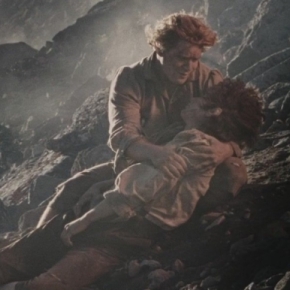
 I first learned how to tell Godly Play stories back in 2006 when I was interning as a hospital chaplain at Children’s Medical Center in Dallas, Texas. We chaplains had these miniature golden parable boxes, which we would bring to the patients’ rooms and lay out the stories on their beds. The first one I got my hands on comes from today’s Gospel lesson. The kingdom of God is “like a mustard seed, which, when sown upon the ground, is the smallest of all the seeds on earth; yet when it is sown it grows up and becomes the greatest of all shrubs, and puts forth large branches, so that the birds of the air can make nests in its shade.”
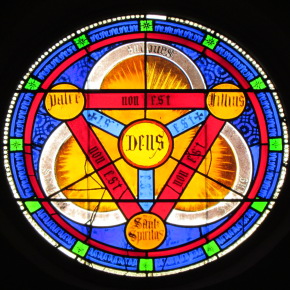 Have you ever looked closely at the round window high up the wall in the back of the church? Go ahead – turn around and give it a good look. I love this window. I love the vibrant colors. I love that when the sun is shining through it, an afterimage gets imprinted on my eyes, so I see it when I close them. If you’ve never given the window much thought, I don’t blame you. The words on it are in Latin, after all. But let’s keep looking. The window presents a diagram of the Holy Trinity. “Deus” – God – is encircled in the center. Three smaller circles float around it: Patri, Filius, Spiritus Sancti – Father, Son, and Holy Spirit. Each of the smaller circles is connected to the others with the words “non est” (is not), and each smaller circle is connected to the large central one with the word “est” (is). The diagram is telling us that the Father, Son, and Holy Spirit are not each other but they are all One God. How does this work? Wisely, the window doesn’t tell us. The window just illustrates the reality, a theological blueprint in stained glass.
 Stigma is not a happy word. If you use it in a sentence, more than likely the word “stigma” will be linked to something that people view as disgraceful or humiliating, whether that view is warranted or not. A couple of us recently read a book called The Rich and the Rest of Us by Tavis Smiley and Cornel West, who spoke of the need to lift the stigma associated with the word “poverty” if we are ever going to muster the societal will to lift those on the margins. In years past, society has stigmatized attributes of people who exhibit less capacity than most, using words like “retarded” and “crippled” to describe those with mental and physical challenges. Suffice to say that members of every minority group – no matter the difference used to justify labeling them as “those people” – have been stigmatized in one way or another. Stigmas lead to segregation and prejudicial behavior and animosity. “Stigma” is not a happy word.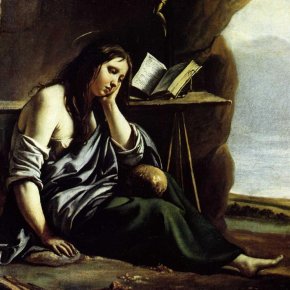
 Good morning, and welcome to St. Mark’s on this glorious Easter Sunday. This morning we walk with Mary Magdalene to the tomb and find it empty. And yet our emptiness doesn’t last for long because Jesus, the Risen Christ, stands there, shining before us, as the dew glistens on the early spring flowers blossoming in the garden.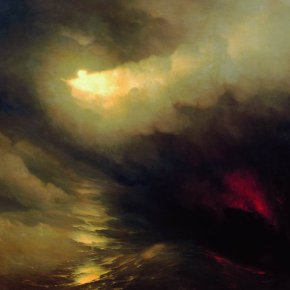
 It’s great to have a baptism scheduled for the Easter Vigil, but we didn’t this year at St. Mark’s. I still wanted to bless the water of baptism before we renewed our baptismal covenant, so my father suggested I build the blessing into my sermon. At the vigil, you can preach before or after the transition from darkness to light, and this year I chose before.
