Stone Symphonies

(Sermon for March 28, 2010 || Palm Sunday, Year C, RCL || Luke 19:28-40)

“I tell you, if these were silent, the stones themselves would cry out.” So says Jesus to some Pharisees, who want him to corral his exuberant disciples. If we lived anywhere else, I would be tempted to take these words of Jesus merely as metaphor, as a turn of phrase intended to illustrate the remarkable nature of the event taking place. But in the month that I’ve been in Cohasset, I’ve walked on the beach several times, and I’ve heard a certain, special noise that has made these words come alive.

As you know, small stones populate the beaches here, stones that were once boulders and are not yet sand, stones made round and smooth by the ebb and flow of the tide, stones good for skipping on the ocean. Waves break over these stones and cover them with foamy surf. As the tidal forces suck the waves back out to sea, the water runs through air pockets between the round edges of the stones. And as the water vibrates the stones, they cry out. The stones sing with a quavering voice, a thousand violins playing the same note but each with unique rhythm and tempo. As the waves flow out, the stone symphony plays the chords of creation, joining the great company of all the myriad instruments in God’s terrestrial orchestra.

If we attune our ears and eyes and hearts, we can hear these chords and we can witness all of Creation praising God. This praise happens when God’s creatures fulfill the purposes for which God made them. The sun praises God by shining, the moon by reflecting the sun’s light. The thunder praises God by crashing, the rain by watering the earth. The gazelle praises God by running, the wolf by hunting, the rose by blooming, the bee by pollinating. Each member of the great symphony of Creation praises God in an unique way, and all work in concert to glorify the Creator.

Well, all except for one glaring exception. We humans are a thick lot. On our best days, we ignore the symphony, and on our worst days, we spend our time devising ways to silence Creation’s praise. Down through history, we have slowly but surely forgotten how to read Creation’s score, forgotten that we too have parts to fulfill in God’s orchestra.

We are able to join in praise to God when we remember that God created us to display one fundamental attribute: goodness. God created everything that is, Genesis tells us, and at the end of each creative session, God pronounced the new creation Good (and on the last day, not just Good, but Very Good). So, at the fundamental level of our human nature is goodness, which is a reflection of God’s delight in Creation. The manifestation of that goodness is our praise to God. We embody this praise when we sing and dance, when we laugh and pray, when we love, and most importantly, when we serve.

The trouble appears when we forget that goodness remains at the core of our human nature. Instead, we see all the malignant attributes that attack our goodness and mistake this tumorous growth for what defines us as humans. How often have you heard the following statements explained away by attributing the behavior to human nature:

“He’s just jealous because I won the office pool.” “Well, jealousy is just a part of human nature.”

“She’s so petty: who cares if we wore the same dress today.” “Well, pettiness is just a part of human nature.”

“I can’t believe he lied about where he was last night.” “Well, dishonesty is just a part of human nature.”

We make the worst mistake of our lives when we attribute these negative actions to human nature. Our fundamental nature is Good, and anything else is a perversion of the goodness by which God brought us into being. These perversions of our goodness (also known as “sin”) distort our relationship with God. We start playing our instruments out of tune, thus ruining the symphony of Creation.

But when Jesus rides that donkey’s colt down the Mount of Olives, he takes a step in the process of subverting all our tumorous perversions of human nature. On his way to the cross, which is the epicenter of the perversion the Good, he begins showing that goodness (and all of goodness’s positive emanations) still exist, despite the malignancy eroding the nature of humanity.

First, he tackles the perversion of power. Notice that his parade is rather incongruous. Anyone would expect a king to enter the city on an armored warhorse with weapons-laden legions flanking him. But Jesus rides in humility, on the back of a lowly farm animal. He displays that humility (which is one manifestation of goodness) has more majesty than any imperial power could ever muster.

While Jesus subverts the perversion of power, his disciples tackle the perversion of terror. While fear is sometimes a helpful emotion, terror is not simply “really big fear.” Terror is an extension of power meant to control. But at this moment in the Gospel, the disciples walk directly into the most dangerous situation in their lives unabashedly praising God with joyful voices. “Blessed is the king who comes in the name of the Lord!” They display courage, another manifestation of goodness, and their courage subverts any attempt by the perversion of terror to control.

The rest of the Gospel plays out in much the same way. Jesus subverts the perversion of greed when he overturns the tables of the moneylenders in the temple. He subverts the perversion of fame when he tells his disciples that he is among them as one who serves. He subverts the perversion of revenge when he stops the retaliation during his arrest and heals the slave’s ear. And in his greatest display of goodness, Jesus defeats the perversion of domination by willingly giving up his life. Jesus brought all our perversions of human nature to the cross and died with them. And in his resurrection, he shows us that these perversions of our good nature have no ultimate power over us.

Because of Jesus’ life, death, and resurrection, we have the ability to access the goodness at the core of our human nature. We have the humility and courage necessary to let God excise all the malignancy that perverts our relationships with one another and with the rest of Creation. We have ears to hear the symphony of praise playing all around us, and we have the music within us to add our own harmonies to the orchestra of Creation.

And when we fail, when we once again forget our goodness, we can be silent, we can be still, and we can listen. And then we will hear the stones themselves crying out on our behalf, crying out their praise to God.

Notes

For the Internet versions of my sermons, I usually remove the specifics of place, but for this sermon, I really needed to preserve them for the imagery. If you ever make it up to the Massachusetts coast, listen for the sound I’m talking about.


Broken

(Sermon for Sunday, March 14, 2010 || Lent 4, Year C, RCL || 2 Corinthians 5:16-21; Luke 15:-13, 11b-32)

Connie looked especially haggard. For the better part of two hours, I watched her hold a phone to each ear, tap-tap-tap on the keyboard, and patiently plead with belligerent passengers all at the same time. As I inched closer to the desk to change my flight information, I caught snippets of the abuse hurled in Connie’s direction and prayed for forgiveness for the entire irate human race. The reason for the belligerence was simple: the airplane was broken. Some gizmo that keeps the flaps from freezing fell off during the plane’s trip to Nashville. One piece in a hundred thousand broke, and the plane was grounded. One piece – a nothing part, really, until you don’t got one. Then it appears to be everything.

Ironically, Delta had to fly this nothing part, this anti-flap-freezing gizmo, in from elsewhere. The departure time leapt forward, finally settling on 8:00am yesterday morning, a full twenty hours and ten minutes late. With the airplane broken, the system broke down, as well. All the other flights out of Nashville were booked solid. Passengers missed connections. People were stranded and growing more bellicose with every update of the plane’s ramshackle status. And in the middle of it all stood Connie, a wisp of a woman on the verge of tears. She clung to the desk, and she clung to her manners. She was the unlucky target of vented frustration, of heaps of bile, of caustic protestations. And all because the plane was broken.

You’d think that people would be used to brokenness by now. You’d think that people would take the brokenness in stride because brokenness marks our lives everyday: broken homes, broken bones, broken pavement, broken promises, broken ecosystems. You’d think that this brokenness would come as no surprise. But every time we encounter brokenness, we seem to react with astonishment and incredulity. How could your best friend betray your trust? How could the kid break his wrist right before the big game? How could the airplane be grounded?

While brokenness does seem to mark our existence, I think we react with astonishment because in some deep place within, we know that “broken” is not the way things are supposed to be. We believe that God created everything and called Creation “good” and never made a thing called “brokenness.” And yet, brokenness crept into Creation. Separation and division soon followed. Today, we see a broken world, and we know that it could be, that it should be – better.

And in that seeing, in that knowing, we hear God calling to us, inviting us to work with God’s help to repair this brokenness. In today’s lesson from his Second Letter to the Corinthians, Paul tells us that God “has given us the ministry of reconciliation.” He continues, “In Christ, God was reconciling the world to himself, not counting their trespasses against them, and entrusting the message of reconciliation to us.”

The world needs this message of reconciliation because the world is marred by broken relationships that need repairing, separations that need healing, divisions that need stitching up. When Jesus welcomes and eats with “tax collectors and sinners” in this morning’s Gospel, he models the ministry of reconciliation. The scribes and Pharisees like their society just fine the way it is, and they grumble when Jesus upsets the brokenness with which they have learned to live. So Jesus tells them a story about a family, a family marred by brokenness, a family in need of reconciliation.

The younger of two sons presses his father to give him his share of the inheritance. The father acquiesces and divides his property. The younger son takes his portion and travels to a distant country where he squanders his fortune in what the King James Version calls “riotous living.” So I’m wondering: what’s the younger son’s sin? At first glance, his sin sure seems to be his debauchery, given his status as a decadent wastrel. And while this qualifies as sin, I don’t think his prodigality takes the top seed.

Instead, his major sin is the division caused by his separation from his family. Jesus makes a point to say that the father divides his household to fulfill his son’s wish. And then the son doesn’t settle nearby, but in a “distant” country. With the division and separation complete, all that’s needed is a famine for the younger son to notice his folly. When he comes to himself sitting in the filth among the pigs, he realizes the brokenness his departure caused. He no longer feels worthy to be called a son, so he prepares himself to live with the brokenness and to be considered a hired hand rather than a member of the family.

At this point in the parable, I imagine the scribes and Pharisees nodding their heads in approval. The younger son defiled himself. He is unclean after touching all those pigs. Of course, he mustn’t be welcomed home. But Jesus isn’t finished telling the story yet.

The younger son travels back to his father’s house, and yet he’s aware that it will never be home again. His decision to separate himself from his family saw to that. But when he is still a vaguely human shape on the twilit horizon, his father sees him and runs out to meet him and embraces him and kisses him. “I am no longer worthy to be called your son,” he says. But his father will not tolerate the separation, the brokenness any longer. “This son of mine,” he says, “was dead and is alive again; he was lost and is found.” This son of mine. With these words, the father repairs the broken relationship, and the two are reconciled.

At this point in the parable, I imagine the scribes and Pharisees raising incredulous eyebrows. Now the father is unclean, as well, because he touched the younger son before he purified himself with the appropriate rituals. What kind of family is this? But Jesus still isn’t finished telling the story.

A celebration for the younger son’s return begins. His elder brother hears the revelry coming from the house and asks a slave what’s going on. When he finds out about his brother’s return, he will not enter the house or join the party. The elder son echoes his brother’s sin by separating himself from the celebration. When the father comes out to plead with him, the elder son shows his own division from the family. He calls his brother “this son of yours,” thus ignoring the fraternal relationship. And rather than working like a son, he says, “For all these years I have been working like a slave for you.” Like a slave. Like the hired hand the younger son was prepared to be.

But the father continues to repair the brokenness in his family. “Son,” he calls his eldest. There is no division between us because “you are always with me, and all that is mine is yours.” Then the father attempts to heal the fraternal separation by emphasizing the sons’ relationship to one another: “This brother of yours was…lost and has been found.”

As the parable ends, I imagine the scribes and Pharisees noticing that they themselves look an awful lot like the elder brother. I wonder if their own irritation with Jesus deafens them to the reconciling nature of the father in the parable.

Both sons separate themselves from the family, the younger through taking his inheritance to a distant country and the elder through refusing to join the celebration. But their father goes out and meets both sons in their brokenness. He runs up to the younger when his son is still far off. He leaves the party to be with the elder. When neither brother feels much like a son, the father practices reconciliation and repairs his broken family.

The father refuses to separate himself from his sons. Likewise, God refuses to be separated from us. Our sin may separate us from God, but God never separates from us. As Paul says, God “reconciled us to himself through Christ.” God never gives up on relationships with us. Instead, God continually brings us back into relationship with God. We may be broken, but God is whole, and so we can find wholeness. We may be separated, but God is welcoming, and so we can bring welcome. We may be divided, but God is One, and so we can come together.

Today, we see a broken world, and we know that it could be, that it should be – better. We know in that deep place within that the world is not supposed to be broken. And we also know that God has reconciled us to himself in order that we might engage in a ministry of reconciliation to this broken world. The question is: will we?

And the answer is this: we will, with God’s help.

Notes

* The first person to notice and correctly identify the reference to Joss Whedon’s Firefly in this sermon wins five points. (These points aren’t really redeemable for anything, but hey, you should try to get them anyway.)

* If you are as big a fan of Firefly and Serenity as I am, you may also notice that the overarching theme of this sermon is pretty similar to that of the film Serenity. And no, that’s not the reference. The reference is incredibly specific.

The Word Happens

(Sermon for February 28, 2010 || Lent 2, Year C, RCL || Genesis 15:1-12, 17-18)

Something happens during our worship service that I would bet you’ve never really noticed before. Actually, this something happens twice during our worship. In fact, this something has already happened twice during this very service. The readers finished both the story about Abram and the piece of Paul’s Letter to the Philippians, and then they said, “The Word of the Lord.” And you responded, “Thanks be to God.”

Have you ever wondered why we say, “Thanks be to God” at that particular moment at the conclusion of a scriptural reading? If you haven’t, don’t worry: I didn’t wonder why until I started writing this sermon. Saying “Thanks be to God” seems rather strange at first. For what are we really thanking God? Honestly, this thanksgiving would make much more sense if the reader herself were the one offering it. I can imagine the reader thanking God for the lack of unpronounceable names in the lesson; or for the ability to pronounce Melchizedek and Nebuchadnezzar on the first try; or for the opportunity to serve God in the capacity of reading the Bible aloud. But the question remains: why do we respond with thanks to God when the reader says, “The Word of the Lord”?

This morning’s lesson from Genesis provides an answer. But first, here’s a quick recap of the first few episodes of Abram’s story. God tells Abram to leave his country and set out for a new place, which only God knows about. So Abram, his wife Sarai, his nephew Lot, and their household set out on a journey. They wander through Canaan and down into Egypt, where Abram gives his wife to Pharaoh to save his own skin. But when a great plague hits Egypt, Pharaoh realizes Sarai’s already married, and he sends her back to her husband. Abram and Lot part ways because their herds have grown too great to share the same land. Finally, Abram settles by the oaks of Mamre. Soon after, he takes part in a battle among the local kingdoms. And on three separate occasions during these adventures, God tells Abram that God will give him offspring and make of him a great nation.

But Abram worries because he remains childless. He’s getting on in years. Sarai is barren. He’s rich and powerful and secure, but the one blessing he desires above all else has eluded him. He has no descendants to inherit his land. A slave born in his house will have to be his heir. Eliezer of Damascus is going to get everything. How does this fulfill your promise, God?

In this way, Abram questions God when the word of the Lord comes to him in a vision. Half in accusation, half in resignation, Abram states the situation bluntly: “You have given me no offspring.” And during this moment – during Abram’s most anxious, most doubtful, most defeated moment – the “word of the Lord” comes to him. The Word of the Lord comes to him and says, “No one but your very own issue will be your heir. Look toward heaven and count the stars, if you are able to count them. So shall your descendants be.” The Word of the Lord comes to him and gives Abram the strength to believe that God will fulfill God’s promise. This is the same “Word of the Lord” for which we twice give thanks on Sunday morning.

You may ask: “How can mere words give Abram such strength? What if the promises are empty? Where’s the action to back up the talk?” Okay, I’m about to say the “H”-word and I need you to stay with me for just a minute here. Genesis was originally written in Hebrew. Translators do the best they can to render the original language into English, but sometimes a Hebrew word is just too deep and complex for a single English word to suffice. In these cases, the English is like looking at a picture of a cake. The Hebrew is like taking a big bite of the cake itself.

Such is the case with the word “Word.” In Hebrew, the “Word” is not simply speech or writing on a page. The “Word” happens to people. The “Word” is an event, an encounter, an action that calls for further action. In the beginning when God created the heavens and the earth, God spoke creation into being: “God said, ‘Let there be light’ and there was light.” The Word of the Lord happened, and, as a result, creation came into existence. When the Word of the Lord happens to Abram, he finds the strength to go on trusting God in spite of all the reasons why God’s promise seems preposterous.

And when we hear a reading from Holy Scripture on Sunday morning, we respond “Thanks be to God” because the Word of the Lord has just happened to us. In that encounter with the Word, we are aware that God continues to speak us into existence. And from existence into service. And from service into love. And from love into the transformation that happens when we follow Jesus Christ our Lord.

You see, when the Word happens to us, we are changed. We may be changed minutely or momentously, but we are changed. We may be changed slowly or suddenly, but we are changed. We are changed into better lovers of God, better servants of other human beings, and better human beings ourselves.

In the film Life as a House, George talks about change, a subject about which he knows a great deal. George has been diagnosed with cancer, and he is using his final months to repair his relationship with his estranged son. By tearing down his house and rebuilding the home he always wanted, he and his son work through the messy process of reconnecting. At one point, George says: “You know the great thing, though, is that change can be so constant you don’t even feel the difference until there is one. It can be so slow that you don’t even notice that your life is better or worse, until it is. Or it can just blow you away, make you something different in an instant. It happened to me.”

In Abram’s case, the Word happens to him, and the change comes slowly. The Word gives him trust in God’s faithfulness, but at first Abram fails to understand the expanse of God’s miraculous promise. Abram doesn’t realize that God desires not just Abram’s own offspring, but Sarai’s, as well. So Abram bears a son with Hagar, his wife’s slave-girl. But the Word isn’t finished happening to Abram yet. Years later, Abram stumbles into God’s presence again, and God renews his promise a final time. In the pivotal sign of the change, which the Word has on Abram’s life, God changes his name to Abraham and Sarai’s to Sarah. Soon after, Sarah bears Abraham a son named Isaac, and the countless generations that follow rival the number of stars in the heavens.

I invite you to reflect on how the Word is even now happening to you. Is the change, which the Word is causing in your life, so constant that you don’t feel the difference until there is one? Or is the Word blowing you away and making you into something different, something new, in an instant? Either way, know that our Creator continues to speak creation into existence. Our Creator writes the Word on our hearts. Our Creator puts the Word on our lips so we may speak love and welcome to all we encounter.

The reader says “The Word of the Lord” to make us aware that the Word is happening to us even now this morning while we sit in our pews. We respond “Thanks be to God” to show our gratitude for God’s movement in our lives. But the Word isn’t through happening to us yet either. The Word happens to us to enable us to serve and to love. The Word impels us to go out into the world and invite others to notice the Word happening to them. As followers of Christ, we live with the joyful expectation that the Word will happen to anyone, anywhere, at any time.

And when the Word happens to us, we will be changed.

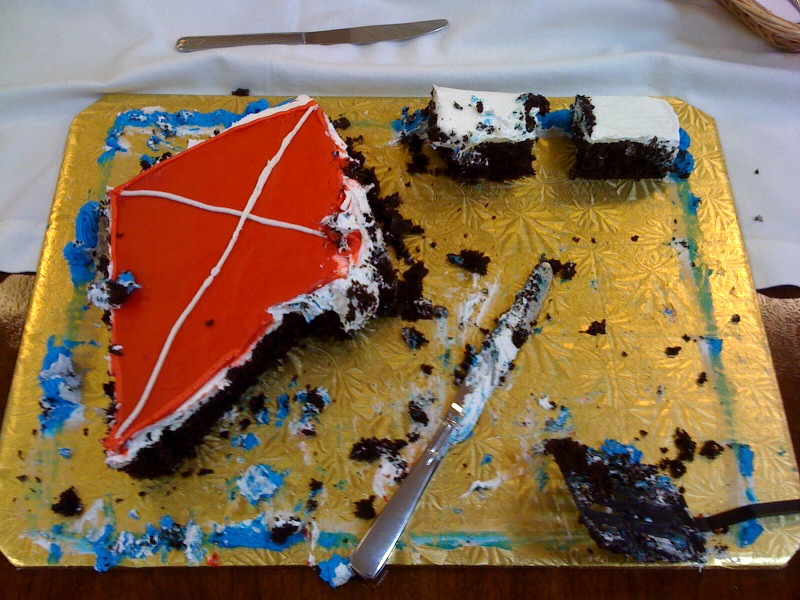
Speaking of cake, the day I preached this sermon was my first at the church to which I was recently called to be the Assistant Rector (Assistant to the Rector, Dwight!). They got me this cake, which is awesome.

Then, the kids ate it.

Better wine than before

If you are a regular reader of this blog, you know I never pass up a chance to talk about the Gospel according to John. This past Sunday’s Gospel text was John 2:1-11, which spurred this article published in the local paper.

* * *

View from the Tor of Glastonbury. See what I mean about the grass?

On my wall, I have a collage of pictures from a college choir trip to England in 2005. In one picture, 15 friends and I are standing in front of the Tor of Glastonbury, a ruined tower on the top of a hill in Southern England. It’s a great picture—the four men and eleven women are all smiles because the late-spring sun is shining and because even the dullest blade of English grass is greener than the greenest blade of American grass. Recently, I looked at the picture and realized that fifty percent of the people in it have gotten married or engaged in the last four years. Whenever I get a new invitation or see wedding pictures on Facebook, a special kind of happiness grips me, a happiness reserved for such outward signs of God’s love as marriage.

In a Christian context, a marriage displays to the world the best attempt human beings can make at emulating the love of God. Marriage unites two people in a commitment (a better word may be “covenant”) to love and cherish one another so that the world is enriched by their love. Indeed, a couple truly meant to commit themselves to each other shows their love for God by loving one another. Because God’s love is so intimately involved, marriage is a calling, just like any other action taken on behalf of God. The celebration of this love, upon which the marriage is founded, is the wedding.

The wedding celebrates the union of two people in the love of God. How wonderfully appropriate, then, is it that Jesus first reveals his glory at a wedding feast. The location of this revelation reminds me that Jesus brings people back into union with God. This is one way to characterize his mission—he reunites me with every good thing I have lost through years of indifference and antipathy. By accepting the love of God in Jesus Christ, I find cause to celebrate the fact that, while I may have broken my relationship with God, God has never broken God’s covenant with me. The commitment God made to Abraham and his descendants finds new life in me when I discover the possibility of reunion with God through the love of Christ. Just like the wedding feast, this discovery necessitates celebration. But just like a marriage, this celebration can last a lifetime.

Imagine the beauty of a life lived in the full knowledge that God is committed to loving you. What would you do in response to that commitment? How would your life change? Jesus changes the water in the jars to wine, and not just any wine, but wine that is superior to what was originally served. In the same way, living into the covenant God has made with you brings change. You will be changed. You will become better wine than before. You will be a sign of the glory of God in the world. If this is not cause for celebration, nothing is.

When I attend the wedding of a friend, I always remember this story of Jesus at the wedding of Cana. His appearance at the wedding and the sign he performs to reveal his glory attune me to feeling the joy that spills over from the celebration in heaven when people on earth find the love of God in one another. When Jesus calls us into union with himself, we can share in the lifelong celebration of being Jesus’ disciples, the lifelong knowledge that we are becoming better wine than we were before, and the lifelong commitment to experience the love of God that continues to be present and active in the world.

Guillotine (Davies Tales #5)

“Step outside with me a minute.”

Aiden Davies looked up from tracing patterns in the Oriental rug. The priest gestured to the patio door. Davies stood up, smoothed his jacket, and walked outside.

Twenty-four hours earlier, he had boarded a plane in Nashville. The irony that it was Halloween weekend had not escaped him. He was flying to West Virginia to attend a meeting, at which no costume or mask would be tolerated. The Commission on Ministry awaited: in the space of a four hour meeting, they would form a recommendation for the Bishop as to whether Davies should be allowed to remain on the path to priesthood. This was another hurdle, a big one, in the overarching plan that he had only recently begun to cherish in his heart. He arrived at the motel and passed an uneasy night, a product of nerves and an unfamiliar bed. He had convinced himself that sleep was hopeless when…

…Davies was in the chambers of the Supreme Court…the bench was impossibly high…the faceless members of the Commission peered down at him…the bench was a rock wall…he checked his belay and started climbing…halfway up a door appeared…he walked through, the door shut behind him, and he heard the bolt slide home…the cell had two piles of old, grimy hay and a slit of a window high out of reach…a man in a ragged smock sat in the corner… “I can’t do it, Charles,” he said… “Who is Charles?” Davies asked…he looked down and saw his hands trussed with the climbing rope…he was on a cart in the midst of a screaming crowd…the same man caught his eye, turned, and walked away… “Mr. Carton,” Davies cried, “It’s supposed to be you.”…the sun glinted off something metal…

…Davies sat up, knuckled his eyes, and grabbed the bedside clock. 5:00am. The dream was gone. The meeting was in three hours. He got up, paced the room, attempted a few incoherent prayers. He showered, dressed, and ate cereal from a plastic disposable tub at the continental breakfast. At 7:30, he arrived at the retreat center. Horses watched him from behind a whitewashed fence. The mountains rose in the distance. As the fog lifted, the gray morning gave way to all the colors of autumn. This place is too beautiful a setting for defeat, Davies thought.

He walked through the open front door and stood in the hallway. He took a couple of deep breaths, smelled coffee, followed the scent down the hall, and poked his head through a doorway. There they were – no Supreme Court dais or headsman, just a dozen and a half folks, some in black clergy shirts and collars, others in suits or dresses, all with coffee. “Aiden, welcome,” said a woman near the door.

He recognized her from his stint as a camp counselor during the previous summer. “Hello,” he said, and his eyes swept the room. He knew almost half the group on sight. So that’s why the Bishop wanted me to spend the summer at Camp Madison. A tall, goatee-ed priest stood up and shook Davies’s hand. “Here’s the drill,” he said, “We have here both the Commission on Ministry and the Standing Committee. We’ll split into four groups, and you and the other three aspirants will have an hour with each group. Got it?”

“Yessir,” said Davies. The priest looked as his watch. “Okay, well, I’ll see you in a few hours. Don’t forget to breathe. There’s really no reason to be concerned.”

“That’s easy for you to say.” Davies tried to turn his grimace into a smile. Careful, you idiot: you’re not shooting the breeze after a campfire. But before he could gauge the priest’s reaction, the woman who first greeted Davies said, “You’ll be staying in here, dear.”

She patted the seat next to hers, and he sat down. The other three groups filed out of the room, leaving a small band clustered near Davies. “Will you open with prayer, please,” said the woman. Is this part of the test? He looked at the eager faces around him. Obviously, yes. “Sure…uh…Let us pray,” stalled Davies. “Heavenly Father, please be with us today as we…as they…as the Commission on Committees…I mean, the Commission on Ministry and the Standing Committee attempt to discern your will. Thank you for bringing us all here safely; in your Son’s name. Amen.”

“Amen,” they echoed. C-minus, if you’re lucky. “Let’s start with your family. You’re father’s a priest in this diocese,” said a man to Davies’s left.

Davies waited for a question, but the man seemed to be finished. “Yes, he is. He’s actually on the Standing Committee, but my cousin’s getting married today, so he’s in Georgia right now.”

“Do you see yourself as following in his footsteps?”

“I guess you could put it that way,” Davies said, “but I tend to think that we’re both following in Jesus’ footsteps. At least, I hope so. It’s not the family business or anything. I was deadset against priesthood until I got to college. Then I was able to be my own person, and I realized that my proximity to dad sheltered me from a call of my own.”

He looked around, but no one was clamoring to ask a question: “There was a time at my internship in Texas,” Davies continued, “when I was preaching and I realized halfway through the sermon that I was just channeling my dad. Then I dropped the microphone, stooped to pick it up, and I was me. It was a pretty cool moment.”

The questioner broke in, “I want to caution you, son. Try not to talk about your father too much today. We want to hear about you.” Well, then why did you ask a question about him? “Uh…yessir,” Davies said instead.

The hour came to a close quicker than he thought possible. The welcoming woman pointed him to his next meeting. He was ready to pray this time. Solid B. The hour passed and he moved on to his third meeting. He expected to pray again, but no invitation came. Instead, another priest he had met at camp waited for him to sit down and then said, “So. You’re 21.”

It was a statement with a tinge of accusation. Davies took a quick breath and chambered a verse bullet about not being despised because of your youth. But just as he was about to fire Paul at the ornery priest, something stopped him. Do you realize you’ve been grading your own prayers? Give it up already. What will be will be. “Yes, I am,” said Davies.

“That’s awfully young.” The hour ticked uncomfortably by. Finally, Davies rose, expecting to see a pool of his own sweat on the chair. At least I didn’t talk about dad. He moved on to his last meeting. Once again, they asked him to pray. “Gracious God,” he began, “thank you for these people who have answered the challenge to discern who you are calling to be ordained in your church. Grant them wisdom and courage; in Jesus’ name. Amen.”

I’ve never prayed this much out loud in my whole life. Davies smiled. The goatee-ed priest led the questioning, and before Davies knew it, the morning was over. He sat with the three other aspirants as the joint-committee deliberated. The minutes stretched into an hour, and Davies found himself tracing patterns in the Oriental rug.

“Step outside with me a minute.”

Davies looked up and saw the goatee-ed priest gesturing him to the patio door. He stood up, heart thumping like it used to when a fly ball was hit to him in centerfield. They walked out on the porch, and he half expected to see a guillotine among the wicker chairs, but last night’s dream was just a dream. The priest put his hand on Davies’s shoulder. “Before I say anything else,” he said. Oh God, help me. Oh God oh God oh God (…there it is…A-plus…) Oh GOD. “I want you to know that it is our recommendation that you be approved for postulancy.”

Davies barely heard the rest of the speech. The affirmation was just another piece of the plan, and his head was ten years in the future: I’ve finished seminary and gotten married to my girlfriend – I know we’ve only been together six weeks, but she’s The One. I’ve been called to a large church in a suburb of big city. Our son’s starting Tee Ball next spring, and our daughter is putting everything in her mouth. Our black lab likes to catch Frisbees. It’s perfect.

Of course, most of that never happened. But those are different tales.

The snow shovel (or an illustration of God’s providence)

The following post appeared Wednesday, January 6th on Episcopalcafe.com, a website to which I am a monthly contributor. Check it out here or read it below.

* * *

Here’s something you don’t know about me: I don’t own a snow shovel. This fact was unimportant until a few weeks ago when a record December snowfall dropped two feet of powder on Berkeley County, West Virginia. I woke up to a foot of snow outside, and the sky was dumping an inch an hour. I opened my front door, and the snow made an encroaching barrier to my front stoop. I went to the cupboard and pulled out my house broom. Sweeping the snow from the steps, I felt like Gandalf staring down the Balrog: “You shall not pass!”

But a broom is a poor substitute for a proper shovel, especially with the quantity of snow making islands of every vehicle on the street. And this is where the providence of God comes in. Providence is a tricky thing because one can easily over-define it to a point where we are simply chess pieces for God to move around the terrestrial board. To make matters trickier, one can also under-define Providence to a deistic level: God is merely an observer, having set events in motion with the winding of creation’s clock long ago. Neither of these definitions is satisfactory. Theologian Paul Tillich strikes a balance when he says, “Providence is a permanent activity of God. He is never a spectator; he always directs everything toward fulfilment. Yet God’s directing creativity always creates through the freedom of man and through the spontaneity and structural wholeness of all creatures.” *

So what’s all this have to do with my lack of a snow shovel? I’m glad you asked. Sometimes, encountering the Providence of God takes something quite small. We shall enter this small story during the early months of 2009, when a dear man from my congregation purchased a new car. He had been getting tired of his old Buick, and so he went for a shiny, silver Japanese sedan. But within a month of driving the car off the lot, he fell ill.

The cancer had been growing slowly, and for a time, the doctors held it at bay. The man spent several weeks in the hospital, until the medical staff, his family, and he decided that being comfortable in his own bed at home was as good for his condition as any drug. For several more weeks, he held on, making his wife laugh and cry, joking with the hospice nurses, slowly disintegrating from the inside. Not until his final day did the awareness, the flash in his eye, fade. He passed on in July, leaving his loving wife, a daughter, grandchildren, a cluttered house full of memories, and a brand new, silver, Japanese sedan.

Fast forward from midsummer to mid-autumn. A deer ran into my little Korean car, and the insurance company whisked it away to the total loss center to be evaluated. For some foolish reason, I didn’t have rental coverage as part of my plan. But I did have something even better: the man’s wife, who is the dear heart I’ve mentioned many times in blog entries over the last year. She found out that I was without a car, and asked (in her sweet, typical fashion) if I would help her out: “You see, his car’s been sitting in the garage since summer and if it doesn’t get driven, it will start to fall apart. I would be very pleased if you would drive it for me.”

I readily agreed to the arrangement, all the while smiling to myself because she made it sound like I was the one doing her a favor. After two weeks, my damaged car finally made it to the auto shop, the insurance company having decided it was worth repairing. I hoped to have it back by Thanksgiving, but the mechanic found more damage than the original estimate covered, which necessitated another visit from the adjuster. So when will it be done, I asked; by mid-December, the mechanic promised.

“Keep the car as long as you need to,” the dear heart said, when I told her the repairs were delayed. I suspect that if my car had been a total loss, she would have simply given me the shiny sedan because she’s just that generous a person. But I really like my car, so I was willing to wait out the repairs. I called the auto shop on December 17th hoping to hear that I could pick up the car that day. The collision was five weeks before, surely enough time to repair some front-end damage.

“Well, we took the car for a spin,” said the mechanic, “but it needs realigning so we put it on the lift and noticed something. Did you say your insurance company took the car to a total loss center first?” Yes, I said, not liking where this conversation was going. “Well,” the mechanic continued, “at those places, they use this kind of crane to lift the cars… We’d’ve never noticed it if we hadn’t put the car on the lift, but it looks like the crane cracked the fuel tank. So I need to get your adjuster out one more time to look at it.” Great, I thought. How long, I said. Another couple of weeks, what with the holiday and all, came the answer.

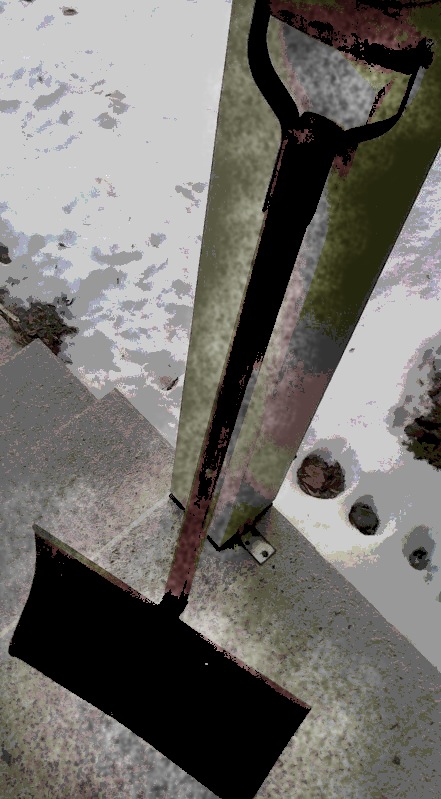
Two days later, the snow hit. With broom in hand, I stood on the front stoop and looked at the snow-covered Japanese sedan. The car had been driven a total of 317 miles before I took the wheel. I had put nearly two thousand miles on it during the last month. I thought about the dear man, a practical fellow, who bought the car last winter. I trudged out to the car, swept the snow from the trunk, and opened it. Inside was a shovel.

Now that’s Providence.

Footnotes

* Tillich, Paul. Systematic Theology. Vol 1. Chicago: University of Chicago Press, 1951 (p. 266)

The garden and the wasteland

(Sermon for January 3, 2010 || Christmas 2, RCL || Luke 2:41-52)

They say that every therapist should be in therapy. Likewise, every priest should participate in spiritual direction. Without trained professionals helping us priests notice God’s movement in our lives, one of two things happens. We either forget to rely on God, thus emptying ourselves of all nourishment even though a feast is perpetually spread before us. Or we decide we don’t need to rely on God, because we are doing just fine on our own (thank you very much!) and the same starvation results. We priests are a rather thick bunch, usually quite stubborn when faced with the Almighty, because the Creator-of-All-That-Is rarely seems to fit the predictions of our seminary studies.

When I was in seminary, my spiritual director diagnosed my particular case as a combination of failing to notice God’s presence and deciding I didn’t need God anyway. I’m glad I could offer her such a potent mixture of blindness and stupidity. Needless to say, our sessions were never boring. Over our two years together, she taught me many things, but one stands above the rest. You can basically separate the events of your life into two categories, she said. There are moments of consolation, and there are moments of desolation. Both will happen and ignoring one will make the other that much harder to define. In this morning’s Gospel, Mary runs the gamut from desolation when she loses Jesus to consolation when she finds him again. Then she treasures “all these things in her heart” because she knows that the emptiness of desolation and the joy of consolation combine to form the trajectory of her life.

(c) Wizards of the Coast

Usually, people want the bad news first, so we’ll begin with the emptiness of desolation. Desolation is the nuclear winter of the soul. Desolation makes the soul a wasteland – arid, parched, rendered uninhabitable by events in the life of the very person who must inhabit the internal desert.

Sometimes, we bring desolation on ourselves: a man cheats on his wife, and she doesn’t even catch him. He expects to feel the thrill of adventure, of subterfuge. Instead, he feels the pain of a broken promise. He doesn’t realize he is a moral person until he fails to live up to his own unexamined values. And his failure eats away at his soul. Sometimes, external events bring desolation upon us: the pregnancy has been difficult, but the doctors have managed to stay positive. If she can hold on just a few more weeks…but the contractions start, and she delivers a tiny life. The infant’s underdeveloped lungs struggle for breath. He lives for four days, and her soul dies with him. Sometimes, desolation happens not in these large events but in the accumulation of small frustrations and disappointments. They hired the other guy. The repair cost more than the estimate. Another D-minus. Chicken for dinner – again. Each frustration erodes the soil of the soul, nutrients leach out, and eventually only the wasteland remains.

In these times of desolation, we do not look for the presence of God because we think God can’t possibly be there. We abandon ourselves to despair, so we expect that God has abandoned us too. We may even stop believing in God, while paradoxically blaming God for our situations. When we are desolate, we don’t live: we merely subsist. And we fail to realize that our very ability to survive through the torment of despair is a manifestation of God’s awesome power and love.

While our desolation happens when we think God is gone, Mary’s desolate moment happens when she literally loses Jesus. The family has been attending the festival of the Passover in Jerusalem. They start their journey back to Nazareth, and Jesus is not with them. But they’re not worried because the caravan is peopled with family and friends; surely, he’s wandered off to chat with some favorite uncle. A day out, Mary and Joseph realize Jesus is missing. They rush back to Jerusalem, frightened, anxious. They search for three frantic days. As someone who has only experienced the combination of harsh words and fervent embraces that accompany a parent finding a lost child, I can only imagine the desolation that those three days brought to Mary’s soul.

On the third day, Mary’s search brings her to the temple. And there she finds Jesus, safe and sound and unaware of the years his absence has shaved off his mother’s life. Desolation gives way to the warmth, the electricity of consolation. What was lost, Mary now has found. They travel to Nazareth without incident, and Luke assures us that Jesus is obedient to his parents.

(c) Wizards of the Coast

Whereas desolation makes the soul a wasteland, consolation makes the soul a garden in full bloom. In consolation, the roots of our souls grow deep in the rich soil of God’s presence. We are aware of the persistent activity of creation, and we revel in the joys that life has to offer.

Sometimes, our determination brings consolation to us: a young girl is told she’ll never become a concert pianist. Her hands are too small, her technique mediocre, pedestrian. But she practices and practices and practices. Her joy is in the vibration of hammer on string buzzing up through her fingertips, in the notes transferred from black dots and squiggles to tones of weight and beauty. She may never play at Carnegie Hall, but the music is inside her soul. Sometimes, as with desolation, external events bring consolation to us: the city-dweller finds himself in rural woodland at night. The sky is clear, the moon a sliver. He lies on his back and gazes up at the stars. He didn’t know there were so many. The subtle band of the Milky Way brings shape to the clutter. The innumerable points of light in the darkness bring light to his soul. More often than not, consolation happens when we gather together all of the small blessings in our lives. A good night’s sleep leads to energy and cheerfulness. An unexpected phone call comes from an old friend. The house is warm. Chicken for dinner again! Each blessing enriches the soil, in which our souls thrive, and our gardens bloom with unrestrained life.

In these times of consolation, we notice God filling us to overflowing. We cannot possibly hold any more grace, so it spills from us, hopefully landing on those around us. Our joy prompts us to invite others to gather up their blessings and notice God’s presence in their lives. We form communities to share our joy, and these communities help sustain those who inevitably fall into periods of desolation.

You see, desolation and consolation are the extremes of life – the subsistence and the abundance. Most of the time, we exist somewhere along the spectrum between the two. Luke tells us that Mary treasures “all these things in her heart” – both the empty time of desolation when Jesus was lost and the joyful time of consolation when she found him again. Mary takes both categories into her heart and ponders them. Her life, like all our lives, brings together experiences both of desolation and consolation. As faithful people of God, we try with God’s help to lead lives that trend toward consolation on the spectrum.

As we begin a new year and a new decade, I invite you to take stock of where you fall on the spectrum between desolation and consolation. If your trajectory is moving toward consolation, rejoice, and continue to gather your small blessings and keep a weather eye out for God’s presence in your life. If your trajectory is moving toward desolation, I pray that God grants you the courage to turn around. You may still be stuck in the wasteland, but you will be facing the right direction – out of the desert and toward the garden.

Finally, may God grant you the grace to survive when you are desolate, to thrive when you are overflowing, and to treasure all these things in your hearts.

The decade (or) when God found me

God has known me since I was in my mother’s womb, so at least since 1982 (though there is that whole eternity thing to take into account). I have known God for somewhat less of an interval — only ten short years. My knowledge of my own walk with God began in the year 2000. And because Y2K forgot to blast us back to the Stone Age, I have this handy Internet thing to tell you all about the last decade. What follows is (and I’m well aware of the cliche) a top ten list of my journey with God. I offer these moments in hopes that they serve you as a guide for reflecting on the last decade of your life. What are the moments of consolation; that is, when did God find you? On the flip side, what are the moments of desolation, or when did you lose God? You will notice both appear in this list because both are important in shaping you and me, the people God is creating.

#10: The first baptism (2006) My summer as a chaplain at a children’s hospital is drawing to a close. In fact, I am working my final overnight on-call shift. This night, I have already been present with two families as their children died. It is 2am. I am trying to catch a few minutes sleep. The pager assaults my eardrums. A nurse on the sixth floor needs a chaplain. I grumble during the elevator ride because no one really needs a chaplain at 2am on a non-ICU floor such as the 6th. The nurse brings me to the room of a three-month-old baby. In a mix of Spanish and English, his parents ask me to baptize him in preparation for surgery, which the infant will have in the morning. After some halting discussion, I agree. The godparents have brought a small bottle of water, filled at their church’s baptismal font. The mother holds the infant. I sprinkle water on his head and say: “Yo te bautizo en el Nombre del Padre, y del Hijo, y del Espíritu Santo. Amén.” And God finds me.

#9: The funeral (2009) Some situations are just so big or so brutal or hit so close to home that reliance on God is a requirement and not the fallback position (which too often is my default setting). This is one of those situations. I get a call that a parishioner’s daughter has died suddenly in the night. I rush to the house and stand outside the door trying to find the courage to knock. God finds me cowering on the front stoop. I take a deep breath and enter the house. Every day for a week and a half, I spend time with the grieving parents, and I know without a shadow of a doubt that my normal strength is unequal to the task. I officiate at her funeral, my first for someone my own age. And God is there.

#8: The first two months of seminary (2005) I go to chapel every day for two months. I read the prayers in the book. I recite the psalms and the creed. But I’m not praying. Something is missing: faith? passion? conviction? Ironically, I lose God when I first arrive at the place to study God. Then one evening at the end of September, I am leading a prayer at an evening worship service. I say, “Assist us mercifully, O Lord…” I read these five words and everything changes. I realize to whom I am addressing my speech — the Creator of all that is. How could I ever forget? But I did.

#7: I love you (2004) I am sitting with my girlfriend watching a movie. My arm is around her, and she is resting her head on my chest. It’s an ordinary, everyday kind of moment. And without warning or forethought or the classic over-thinking which I could patent, I whisper, “I love you.” She looks up at me, smiles, and says, “I love you.” We hold each other just a bit tighter. And the burning glow in my chest tells me that this is right.

#6: Breakdown in the office (2008) I have been at my first church for three months. A few days before, I had visited my seminary and saw many of my friends, who dispersed to the four winds after graduation. It is Sunday morning, and I have just finished celebrating the early service. I walk back to my office, remove my vestments, close the door, shut off the lights, fall to the floor, and crumble. I sit with my back to the door so no one can come in. And I cry and cry and cry. I can’t stop, and I can’t figure out why I started. I quietly hyperventilate, hoping that the coffee-drinkers in the next room can’t hear me. I can’t stand the thought of smiling and chatting and handshaking. I want to be anywhere but where I am.

#5: Confession (2007) I ask my spiritual director to hear my confession in preparation for my diaconal ordination one week later. I clean out my closet and bring a heaping box of clothes to the church’s opportunity shop. We enter the sanctuary. I kneel at the altar rail. I have written some notes on yellow legal sheets, and they are crinkled from being in my pocket. I begin my confession, and quickly the tears begin to flow. I confess the big things like my presumptuous reliance on myself above everything else. And I confess the little things like cheating on that math quiz in fifth grade (sorry Mrs. Goldberg!) I am utterly exhausted when I finish. I feel empty, but in a good way, like there is more space in me for God to fill.

#4: Laying on of hands (2004) I am a camp counselor. It is the second to last day of camp, and I am helping one of the priests during a healing service. The teenagers coming for healing have wounds beyond their years: broken families, eating disorders, depression, suicidal thoughts, anger, pain, disease. I ask God to use me as a channel. Fill me to overflowing, I pray, so you spill through me into these children. And God does. I am so full that for twenty minutes after the service, I weep the excess Spirit from me. (If this sounds familiar, you may have read about it here.)

#3: Ordination to the priesthood (2008) My family arrives at the church early and discovers it has no air conditioning. It is June and blistering outside. I am glad to be wearing seersucker. A few hours later, I am kneeling before my bishop and his hands are gripping my head firmly. The rest of the priests are touching me lightly. I can feel my father’s hand on my shoulder. I am overwhelmed. At the end of the service, people come to me for the customary blessing from the new priest. I don’t know what to say, but the words come anyway.

#2: The year (2006) For several months, I ignore God’s prompting to examine the state of my relationship with my girlfriend. I refuse to notice that love has already eroded into convenience and is well on its way to indifference. In mid-May, we attend a Red Sox game. They lose. That night, she proposes the end of our relationship, though it takes another month to dissolve. I push away the abyss threatening to engulf me because I need to focus on my chaplaincy at the children’s hospital and there’s enough pain there for several lifetimes. When the chaplaincy ends, I let myself feel the effects of the breakup. At the beginning of my second year of seminary, I fall into despair. I isolate myself, presumptuously assuming that none of my friends has ever felt this way. I escape into the fantasy world of an online video game. I don’t surface again for many months.

#1: The moment with God (2000) I visit my college for the first time in October of my senior year of high school. I step onto the quad and know in the deep place within that I am walking ground being prepared for me. The following Sunday, I am in church. My father is preaching. I realize that I can’t hear him. Then I realize I can’t see him. But I know what he’s saying. The same deep place within is speaking his words directly into my soul. I am with God for an indefinite moment. My senses are overloaded. I am made anew. A few days later, I sit with my mother on the couch. I say, “I have something to tell you.” She waits patiently while I try to form words. Suddenly, I burst into tears and cry for an hour. She holds me. When I finally stop, she looks at me and says, “I know, love, I know.”

Baby Boy (Davies Tales #4)

During the summer between his first and second years of seminary, Aidan Davies grew up all at once. The summer began with a breakup and ended with a baptism, but those are pieces of a larger story. This story is about a baby boy.

Davies was a chaplain only because his badge said he was. For that first month, he didn’t particularly feel like one. I’m not a chaplain, but I play one at this hospital, he often thought. His clinical pastoral educators – the hospital’s professional chaplains – had borrowed their teaching style from mother birds. On the third day of the summer, they pushed Davies and the seven other interns out of the nest and watched as eight pairs of arms, flapping wildly, disappeared in a downward spiral. The wingless interns crashed into the rocky bottom, and, miraculously, found their patients there.

Rock bottom was on the top floor of the hospital, but Davies had no patients on that level considering another intern had chosen the ICU as his normal beat. However, that night, Davies was on-call, and the on-call pager had beckoned him to Intensive Care, and he stared at the message on the little screen the whole elevator ride to the twelfth story.

From the moment he stepped off the elevator, the next several hours blurred together in Davies’s mind. Attending physician speaking…parents deciding to take their baby off the machines…Baby Boy Rodriguez breathing on his own…and then not…wailing…holding…silence. Davies walked the parents to their car. He had very little Spanish, so no one spoke. But grief, it turns out, is a universal language. The car pulled away, with fewer passengers than it should have been carrying, and Davies watched it turn a corner to the lower levels of the parking deck.

He arrived back in the ICU room to find Mary Ann, one of the baby’s nurses, silently wiping down a machine. Cords lay in neat stacks on a rolling table, and a small pile of dirt and bits of candy wrapper filled a dustpan near the door. Davies allowed his gaze to find the tiny bed, upon which the body of Baby Boy Rodriguez still lay. He walked over and looked down at the baby – a perfect porcelain sculpture in a clown-adorned onesie. “He looks so peaceful,” said Davies.

“Yeah,” said Mary Ann, and she came to stand by Davies at the bed.

“When I first saw him this evening, he had all these tubes in him. He looked like he was…but now…” Davies’s voice trailed off.

“He was in a lot of pain,” said Mary Ann, and Davies suddenly realized that this nurse had known the Baby Boy as long as his parents had. Three months in this room, but never alone.

“I’m glad that he was able to take a few breaths on his own,” said Davies. Mary Ann continued as if finishing his sentence, “And his mother could hold him while he was still alive.”

Davies stayed by the bed while Mary Ann continued cleaning the equipment, and the silence renewed. Davies stared down at Baby Boy Rodriguez. He reached out a hand, and with the lightest pressure, placed it on the baby’s forehead. He tried to pray. He moved his hand and took the little balled up fist into his own palm. He imagined God holding the Baby Boy and his parents and Mary Ann and Davies himself in the same way.

A noise made him look up. A small machine had fallen to the floor. “What does that do?” Davies asked.

“It helps with respiration,” said Mary Ann.

It kind of looks like a belt sander, thought Davies. And they were quiet again. Theirs, however, was not a conversation broken by silence, but a silence broken by conversation. The noises of the padding of feet, the pulse of machines, the typing on computers all happened in the obscurity outside the room. But this room was a different world, an in-between world. Between Baby Boy Rodriguez’s own anguished writhing and that of the next patient was peace and stillness and silence.

Davies’s tears traced pathways down his cheeks and fell to the floor. Mary Ann looked up from her cleaning. “The first time is hard,” she said.

“It doesn’t get any easier though, does it?”

“No, it doesn’t. Every time is hard.”

Davies wiped his eyes on his sleeve. “It would be easier if you didn’t care for these children so much.”

Mary Ann looked down at Baby Boy Rodriguez. Davies realized that before she started cleaning the room, she had cleaned and dressed his body. “The moment you stop caring is the moment you have to stop doing this job,” she said.

And the silence renewed. Mary Ann finished her cleaning. Davies continued to hold the hand of the dead Baby Boy. A few minutes passed, and then the glass door slid open. Another nurse carried a folded piece of plastic with a zipper running through it. “I didn’t realize it would be white,” Davies said, as he watched the nurses unfold the body bag. Mary Ann affixed a toe tag to Baby Boy Rodriguez’s ankle and then gently lifted him, as the other nurse slid the bag underneath. Davies touched the baby’s forehead once more, and then the nurse zipped the bag closed. Mary Ann covered it with a sheet, and picked it up, like any mother carrying her child.

Davies and Mary Ann processed to the elevator and rode down to the main level. Several turns through labyrinthine passages brought them to a nondescript door. Davies punched in the code, which only pathologists and chaplains knew. The morgue had four cold chambers. Davies opened one. Mary Ann laid the bag containing the body of Baby Boy Rodriguez on the metal shelf. Davies shut the freezer door and mouthed a whisper of gratitude to Mary Ann. She placed a hand on Davies’s arm for a moment, echoed his thanks, and walked from the morgue – back to the living and the dying. Davies turned and saw his fuzzy reflection in the four, shining metal doors.

And the silence renewed.

Encountering the Examen

The following post appeared Wednesday, November 18th on Episcopalcafe.com, a website to which I am a monthly contributor. Check it out here or read it below.

* * *

Three Novembers ago, I was a recluse in my seminary dormitory, I ate meals alone at tables with seven other people, and the light had gone out in my eyes. Heartbreak six months old continued to ferment within me. I had no way to deal so I drank deep of my own depression. I was a wretched creature, cast from the pages of Dickens or Dostoyevsky. To borrow from the psalmist, the water had risen up to my neck: I was sinking in deep mire and there was no firm ground for my feet.

In this state, I drove to St. Alban’s in Northwest DC to meet with my spiritual director. The month before, in our first meeting of the new school year, she could tell right away that something was different about me. I was waiting to be buzzed into the office, and she saw me through the little window in the locked door. The door opened, and without a word, she took my arm and pulled me into an embrace. The tears would have come if I had had any left.

A month after that first meeting, I had slipped even lower in the mire. The only thing that could have made the situation worse had happened, and I was struggling to go an hour without wallowing in the future that would have been. I sat down in the rocking chair in my spiritual director’s office. She lit the candle, and we sat in the relative silence of the intersection of Wisconsin and Mass Ave.

Over the next hour, I talked about how difficult it was not to dwell on the woman who left me. In that special way spiritual directors have of eliciting responses by being quiet at the right times, my director helped me discover something. During the nearly two years that we were together, I prayed for this woman every day. I lifted her up to God, and thanked God for her presence in my life. But the prayer dissolved with the relationship, which, of course, was the exact wrong time to stop praying. “When your mind starts to spiral to thoughts of her,” my spiritual director said, “pray for her instead. You are still connected through the love of God, even if you are no longer together.”

The guidance helped, but I don’t think I would have ever recovered if a new spiritual practice hadn’t accompanied the counsel. That same session, my director handed me a sheet of paper entitled “Ignatius’ 5 Step Daily Consciousness or ‘Awareness’ Examen.” “Pray these steps every night for the next month,” she said, “and write them down if writing makes you focus better.” This was a prescription for soul medicine, and, in my desperation, I saw it as a cure. She might have said, “Take two Examens and call me in the morning.” Of course, that’s not how spiritual practices work.

On the first night, I placed a red, five-subject notebook on my pillow so I wouldn’t forget. In the top right corner of the first page, I wrote “1,” and on the first line, “November 6, 2006.” Feeling a bit silly and wondering if I should get a little lock for my new diary, I took out the Examen.

“Step One,” I read: “Be Mindful.” I scratched the words, “Yes, Lord, you are here” under the date and took a deep breath. Something detached from my consciousness with that breath and I wrote it down. Yes, Lord, you are here in the presence of my friends. (My friends whom I have abandoned because I’m sure that none of them has ever felt the way I feel right now. How presumptuous.)

“Step Two. Be Thankful.” A roast beef sandwich, spiritual direction, sweater weather. When I thought about it, I found that I was thankful about some things. How wonderful.

“Step Three. Be Humble.” Ah, here’s the tough one, I thought. Humility and I have never been close; cards at Christmas – that’s about it. What is God teaching me through the lesson of today? How has God illumined me today without me realizing it? How uncomfortable.

“Step Four. Be Reflective.” What’s that one encounter from today that has stuck with me? Did the encounter bring me closer or push me away from God? Can’t think of one? How distracted.

“Step Five. Be Responsive.” I read over what I had written, and breathed deeply again. And again, something detached and I wrote it down. So this is where God is leading me. How revealing.

Three years later, the Examen has become a part of my life. I make mental notes during the day about what I want to write. I’m on my sixth notebook, and I switch between blue and black pens, so I can tell when they have run out of ink. The woman, who initially appeared in every entry, no longer stars in its pages. New thanksgivings and desolations and encounters and hopes abound. They are all parts of my story, which God already knows, but which I am discovering every day. I pray to be mindful, thankful, humble, reflective, responsive. I pray for the courage to live a life that can fill dozens of more notebooks. And I pray that God continues to guide my hand as I spill my soul onto those college-ruled pages.