To an Unknown God

(Sermon for Sunday, May 29, 2011 || Easter 6A || Acts 17:22-31)

I wonder what Paul was thinking as he walked the streets of Athens. I’m sure that the many-columned Parthenon was looking down on him from atop the Acropolis, as this temple of Athena had for nearly five hundred years. But no matter the goddess Athena’s appeal, down every street, Paul sees another crumbling monument to one deity or another. He studies them carefully. I imagine he finds statues of all the Greek gods and perhaps other ones from far off places, considering Athens’ booming tourism trade.

At one point on his walk, however, Paul comes across something he doesn’t expect. He stumbles upon an altar with an odd inscription: “To an unknown god.” Now, Paul is no stranger to being run out of town, but he is also never one to sit quietly in a corner and listen. So, after seeing the inscription, Paul stands up at a gathering of the local scholarly elite and proclaims to them just who this unknown God is.

God, he says, is not like the gods of these gold, silver, and stone monuments. God is Lord of heaven and earth. God isn’t bound to set roles like your local gods. God breathes life into all things. God doesn’t live in a special house somewhere. God is not far from each one of us everywhere. And yet, while Paul’s sermon is full of stirring and magnificent images of God, I can’t help but wonder if the phrase “unknown God” still applies more than any other.

Now, I’m going to warn you that we are about to wade into particularly deep and boggy theological waters. I confused myself thoroughly trying to write all of this down, so if your brain starts to hurt, you’re not alone. However, I have confidence that with some help from our friend C.S. Lewis and a stiff breeze from the Holy Spirit, whom Jesus talked about in today’s Gospel, we will all come out on the other side of the bog with our minds intact. Are you with me? Good.

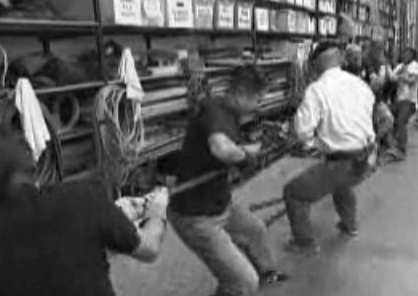
The Mythbusters try to pull apart two interlocked phonebooks

So two extremes play tug-of-war with this concept of our “knowledge of God.” In the case of the first extreme, I claim to have captured God, strapped the Divine to the operating table, and figured out what makes God tick. When I’m done with the exploratory surgery, I stuff and mount God on the wall just like a prize twelve-point buck. With my experimentation complete, I know just what button to push to make God act in my favor, and oddly enough, God disagrees with all the same people I do. This is the extreme where I have God pegged. Now, you might have spotted the flaw in this point of view. (Remember – we’re talking about extremes, so flaws are more common out here.) The flaw here is, of course, the delusion that God is small or mundane enough for me to figure out what makes God tick.

The other extreme is, naturally, the complete opposite of the first. In the case of the second extreme, I claim to have absolutely no ability to comprehend a God who exists for eternity in infinity. When I try to get a handle on God, I am at a complete loss for words and I must conclude that God is so unsearchably unknowable that I might as well give up. I’m an amoeba trying to read Shakespeare. But I make peace with my teeny-tinyness, and I go about my day trying not to have delusions of grandeur, in which I might rise to a level of intelligence that allows me to comprehend even a shred of what God is about. Of course, there’s a flaw here, too. The flaw in this extreme is the faulty thinking that God is too big and majestic to bother with an amoeba like me, no matter the evidence that God has been surprising humanity for millennia by encounters with the Divine, including one in which God sent his only Son to be an amoeba like me.

Now, each of us exists somewhere along the spectrum between these two extremes. When I really need something to happen – to get a job or pass a test or receive successful treatment – I might trend toward the first extreme, in which God comes at my beck and call. When something really terrible happens in the world – a huge earthquake or massive flooding or a category five tornado – I might trend toward the second extreme, in which God may exist in the ether of eternity but surely can’t be bothered with things here on lil’ ol’ Earth.

Do you see what’s happening here? My experience of God changes depending on my needs in the moment. I slide along the spectrum between the two extremes. The unique mixture of my appetites, yearnings, successes, failures, doubt, and faith paints a picture of the God to whom I address my prayers. And whatever else that painting may be, there is one thing that the picture surely is not. And that is an accurate portrait of God. This is why I wonder if the phrase “unknown God” still applies more than any other.

Now, as I tried to wade out of my confusion while writing this sermon, two questions struck me after that whole bit about the extremes. They might be on your mind right now, as well. First, if the God I’m worshiping isn’t really God, but rather my conception of God, then what’s the good of praying? And second, if I’m not really worshiping God, doesn’t that make me an idolater? This is when we need to call in one of the heavyweights.

C.S. Lewis wrote an incredible poem called “A footnote to all prayers.” He begins:

He whom I bow to only knows to whom I bow
When I attempt the ineffable name, murmuring thou,
And dream of Pheidian fancies and embrace in heart
Symbols (I know) which cannot be the thing thou art.

These Pheidian fancies are works of the Greek sculptor Phidas, the very statues of gods and goddesses that Paul saw in Athens. Lewis knows that, even when he tries to call upon God, the best he can do is some symbol that could never do God justice. He continues:

Thus always, taken at their word, all prayers blaspheme
Worshipping with frail images a folk-lore dream,
And all men in their praying, self-deceived, address
The coinage of their own unquiet thoughts…

Lewis poetically describes the same predicament we were in a minute ago: in prayer, we address the gods of our own “unquiet” thoughts and thus we blaspheme. But the poem is only half over, for Lewis continues: [we blaspheme]

…unless
Thou in magnetic mercy to thyself divert
Our arrows, aimed unskillfully…

Even someone of C.S. Lewis’ verbal skill aims his prayer-arrows unskillfully, always at some conception of an “unknown” god than at the one, true God. But, in the end, our story isn’t really about you and me. Our story is always and forever about God working in, around, and through us, no matter how unknown God may be to us. And God’s story is all about God’s “magnetic mercy,” by which God pulls our prayers to God, even though we shoot them far wide of the target. Lewis concludes:

Take not, oh Lord, our literal sense. Lord, in thy great,
Unbroken speech our limping metaphor translate.

As we slide along the spectrum between the two faulty extremes of our conception of God, we can only speak in “limping metaphor.” But the true God, according to Lewis, speaks in “great, unbroken speech.” This is the speech that voiced light in the beginning and continues to sustain creation. This is the speech that speaks each one of us into being everyday, no matter the degree to which the speaker is unknown to us.

To tell you the truth, this unknown quality of God will be with us until God takes us fully into God’s glorious presence. Indeed, the unknown quality will keep us searching and reaching out and finding God in even the unlikeliest of places. And I believe that God redeems our lack of knowledge through God’s magnetic mercy. God translates our limping metaphor into the leaping speech of abundant life (even the words I’m speaking right now). Here’s the good news. In the end, our knowledge of God places a far distant second to God’s knowledge of us. As Paul says to the church in Corinth: someday “I will know fully, even as I have been fully known.”

The Sheepfold

(Sermon for Sunday, May 15, 2011 || Easter 4A || John 10:1-10; find it also on Day1.org as part of the series “Young Leaders of the Church” series.)

Having the flu changed my life. The day was Thursday, March 13th, 2008, and I was sitting on my futon with my computer on my lap. Quite suddenly, I realized how clammy and hot I felt. Half an hour before, I had felt just fine, but in just thirty minutes my insides decided that they needed desperately to become my outsides. I put my computer on the floor, leapt up, and staggered into the bathroom. I was ill for five days, and during that time all I did was sleep and watch my recently acquired complete series of Star Trek: The Next Generation on DVD. For those five days, I did not open the lid of my laptop. I did not press the power button. And I did not log in to the computer game that had dominated my life for nearly two years.

The following Tuesday, when I felt that I could walk around without gripping the furniture for support, I stumbled over to the computer and deleted World of Warcraft from the hard drive. I tossed the game discs in the trash. And in the three years, two months, and two days since contracting the flu bug, I have never logged back into the game. The flu acted as the catalyst for the breaking of my addiction to the computer game. The illness put me on the disabled list for a week right before Easter, but no matter how awful the flu made me feel, I thank God every day for the not-so-gentle push away from the stagnant life I was living. I thank God every day for yanking me out of the comfortable sheepfold that I had built up around me. I thank God every day for pulling me kicking and screaming through the gate, away from my dormant life and toward a life full of God.

This not-so-gentle shove out of the sheepfold happens in today’s Gospel reading, although I doubt you noticed any mention of being kicked through the gate in Jesus’ words. We’ll get back to this shove in a moment. First, notice that in John chapter 10, Jesus employs the imagery of first century shepherding practice in an attempt to reveal his own identity and his relationship to us. Now, the most experience I’ve ever had with sheep was in southern England, where I spent one windy afternoon dodging the sheep’s ubiquitous droppings while trying to appreciate the mystery of Avebury’s standing stones. If you’re anything like me, you have no clue about shepherding practice of any sort, ancient or modern. Therefore, in order to access what John calls a “figure of speech,” we first acknowledge our lack of personal contact with Jesus’ choice of image, and second we embrace the opportunity to use our imaginations.

So imagine with me a rolling plain, dotted with humps and hillocks. Dusk descends, and the shepherd leads his flock into the sheepfold. One of the hillocks has been hollowed out, and the sheep huddle inside next to the sheep of several other shepherds who share this particular fold. A pair of piled rock walls extends out a few feet from the sides of the hill. The shepherd lies down in the space between the low walls, effectively sealing the enclosure. Thieves and bandits and wolves will have a difficult time getting in with the shepherds on guard. The sheep are safe in the sheepfold.

When the shepherd arises the next morning, Jesus explains, “He calls his own sheep by name and leads them out. When he has brought out all his own, he goes ahead of them, and the sheep follow him because they know his voice.” The sheep can’t spend their whole lives in the sheepfold, no matter how safe the enclosure may be. There’s no food in the fold, after all. The sheepfold may be comfortable and safe, but the sheep must follow the shepherd out of the fold in order to find sustenance, in order to live.

Jesus’ choice of words here is telling, but our translation into English hides the special word that Jesus uses. “When he has brought out all his own, he goes ahead of them,” says Jesus in the version we use in church. In this verse, there’s a fairly weak rendering of a Greek word that appears over and over again in the Gospel. We hear this word every time Jesus casts out a demon. We hear this word when Jesus makes a whip and throws the moneychangers out of the temple. We hear this word when Jesus speaks of driving out the “ruler of this world.” In every instance of this word in the Gospel, Jesus is doing some sort of battle: he is pushing, pulling, throwing, yanking, driving, exorcising, casting out. But in this instance about the shepherd and the sheep, the translators decided a nice, safe, neutral translation was better. The shepherd simply “brings” his sheep out of the fold.

Now, perhaps those dimwitted, wooly animals trod placidly from the fold every morning at the beckoning of the shepherd. But Jesus is, of course, not talking about real sheep. He’s talking about us, about you and me. He’s talking about calling out to us, about speaking the word that will bring us forth from our own sheepfolds, from those places of comfort and safety that we have built up around us. The seductive force that pulls us into these personal sheepfolds tells us that everything will be okay as long as we keep quiet and stay put. Play another hour. Have another drink. Watch another show. I don’t know about you, but I need to be pushed, pulled, thrown, yanked, and driven out of that place of stagnation and dormancy every time I start settling into my comfortable enclosure.

For two years, my sheepfold was the virtual world created in the computer game World of Warcraft. I lived there more than I did in the real world. I played every day. Often I ate all three meals in front of my computer. But during those stagnant months that stretched into years, I didn’t live. I existed. I simply settled myself in my sheepfold. My mind numbed. My heart hibernated. My spirit deflated. But I didn’t notice because I was safe and I was comfortable. Then the flu hit, and I was too weak to resist the pulling and yanking that God had been doing for who knows how long. God drove me out of my sheepfold. And my life began anew.

This is the message of the Resurrection: life cannot be conquered – not by death, not by sin, not by the powers of darkness. Life happens – fully, intensely, eternally. Indeed, Jesus tells us this morning: “I came that they may have life, and have it abundantly.” The Resurrection of Jesus Christ ripples out to touch every life, everywhere, for all time. The wonder of Easter morning shows us the utter lengths that God goes to offer us abundant life.

And yet, while life cannot be conquered, life can be delayed, put on hold, made dormant. When we retreat to the safety and comfort of our own personal sheepfolds – whatever they may be – we refuse to participate in the fullness of a life lived in God. Of course, existing in the sheepfold is easier, less demanding. But existence is not life. Ease does not bring joy. And less demanding often means less fulfilling.

We cannot import into our sheepfolds the abundant life that Christ offers us because the very fullness of that life cannot fit inside a safe, comfortable enclosure. Christ drives us out of the sheepfold so that our lives have the opportunity to expand, that we may embrace God’s unrestrained abundance. During this season of Easter, join God in the expansive life found in the Resurrection. Listen for the voice of the shepherd calling you by name, calling you out of complacency. And give Christ the chance to cast you out of your sheepfold so that you may find the fullness of a life lived in the abundance of God.

Digital Disciple Chapter 3: Remote Intimacy

Here’s the third in a six part video series produced to accompany the book Digital Disciple. This video series is designed to be used in a class setting to introduce the material and spur discussion. Of course, watching it by yourself is fine too!

Don’t forget to head over to the Facebook page and participate in a little quiz about this video. In a few days, we’ll pick a random winner from those who participate. The winner will receive an autographed copy of the book, the DVD, and a Doctor Who t-shirt like the one Adam wore in the video! It could be you!

Digital Disciple Chapter 2: From Connection to Communion

Here’s the second in a six part video series produced to accompany the book Digital Disciple. This video series is designed to be used in a class setting to introduce the material and spur discussion. Of course, watching it by yourself is fine too!

Don’t forget to head over to the Facebook page and participate in a little game about this video. In a few days, we’ll pick a random winner from the first 23 players. The winner will receive an autographed copy of the book, the DVD, and a Battlestar Galactica t-shirt like the one Adam wore in the video! It could be you!

Digital Disciple Chapter 1: Virtual People

Here’s the first in a six part video series produced to accompany the book Digital Disciple. This video series is designed to be used in a class setting to introduce the material and spur discussion. Of course, watching it by yourself is fine too!

Don’t forget to head over to the Facebook page and participate in the quiz about the video. In a few days, we’ll draw from the correct answers a random winner. The winner will receive an autographed copy of the book, the DVD, and the Blue Sun T-shirt (from Joss Whedon’s Firefly) that Adam wore in the video (well, not that specific shirt, but a similar one that’s brand new!) It could be you!

Digital Disciple Preview: Deserted Islands (part 3 of 3)

Digital Disciple will be on the physical bookstore shelf and the virtual website shelf on May 1. You can pre-order it here. Here’s the third part of a three part preview that can also be found on my Facebook page and on Episcopal Cafe.com.

* * *

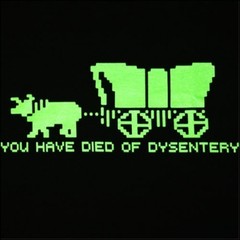
One of the first great computer games, "Oregon Trail" ended more often than not with these words.

The new dimension of virtuality that the Tech has added to our lives has brought with it new locations, new situations, and yes, new opportunities and dangers. We are pioneers moving not along a riverbank in rickety covered wagons but along the virtual paths marked by cell towers and wi-fi hot spots. The lay of the land has changed, so to speak, and our new virtual environments are affecting us on multiple levels, which we will address over the course of this book. But before entering fully into our discussion of connection and isolation, we must address briefly the influence that the new frontier of the Tech has on our identity as social creatures.

To explore this influence, join me in a quick illustration. You attend a party; say, a company Christmas party. Spouses and children have been invited, so there’s a mix of generations milling about the lobby. On the buffet table sit cheese and crackers and one rather forlorn-looking vegetable tray. The eggnog comes in two varieties, one for grown-ups only. Bing Crosby croons softly over the PA system. Adults chat in that awkward way that always happens when home and work collide. One man’s laugh keeps rising over the low murmur in the room. Everyone attempts to avoid the mistletoe because that one creepy guy from the mailroom has claimed the territory underneath it.

Walking back from disposing of your paper plate and plastic cup, you notice a trio of people sitting on one of the lobby’s couches. A teenaged daughter of a middle manager, a graduate student doing her internship at the company, and a cubicle drone in his mid-thirties each occupy a cushion. But the cushions might as well be deserted islands for all the contact among the three of them. They sit facing forward, heads bowed. And all three are tap-tap-tapping away on their cell phones, completely disengaged from one another and from the conversations happening around them and from good old Bing dreaming of his white Christmas.

Ask yourself if you’ve ever seen this behavior. (Or perhaps, ask yourself if you’ve ever engaged in this behavior.) Now ask yourself if you think the three couch dwellers in the illustration are being antisocial. “Yes” is a perfectly acceptable answer: of course, they’re being antisocial. All those folks around talking, laughing, carrying on. So many conversations to join and eggnog bowls to hover around, and those three sit in a corner glued to their cell phones! Didn’t their parents raise them better?

If this is your reaction, I heartily agree with you, but take a moment to view the situation from another angle. Perhaps these three aren’t being antisocial. Perhaps they’re being (and I’m about to make up a word) trans-social. They may not be interacting with the bosses, employees, spouses, and creepy mailroom guys who inhabit the lobby during the Christmas party, but they are conversing with (possibly multiple) friends via text message. They are checking up on what their friends are doing and where they are doing it via Facebook and Twitter. They are being social—just not with the people close at hand.

At its broadest, trans-social behavior consists of socializing with people across a distance that makes face-to-face contact difficult. Of course, this has been around as long as there have been methods of delivering messages from one person to another: smoke signals, the Pony Express, and long correspondence like you find in Jane Austen novels. But as anyone who has read Pride and Prejudice knows, there’s an awful lot of anxious pacing around sitting rooms and garden paths during the excruciating period between letters. So beginning with telephone calls and eventually continuing with e-mails, the Tech added a dimension of immediacy to trans-social behavior. No more anxious pacing— just an upbeat “You’ve got mail” from a digital voice. With the advent of online social networking in the last decade, the Tech has combined this immediacy with widespread distribution, thus providing the infrastructure for trans-social behavior to explode.

Let’s turn back to our three trans-social folks and take a closer look. The teenager on Cushion One is updating her Facebook status with a rant about the creepy mailroom guy who keeps staring at her. The intern on Cushion Two is texting with three of her friends and showing remarkable aptitude for keeping all three conversations distinct. The cubicle drone on Cushion Three is selecting the starting lineup for his fantasy football game against the friend of a friend whom he has never met in person, but with whom he has been messaging spiritedly about the game on the league’s online forum.

The threesome sit on their respective islands, but it’s no matter that the islands are deserted because they have open lines of communication to distant friends. They may be isolated in the physical world, but in the virtual world they find connections that bridge the gaps between deserted islands. We’ll pick up the threads of connection and isolation in chapters 2 and 3; for now, let’s think for a moment about the environment that the Tech has redesigned and the people like me who have never known any other environment.

We older Millennials (along with the last few GenXers) began blogging before blogging was even a word. On websites including LiveJournal and MySpace, we poured out all the mundane secrets, petty jealousies, and terrible poetry that used to belong to the private diary under lock and key. In the past, none of those words would have seen the light of day, but the Internet enticed us to divulge these confidences with an artificial promise of phony anonymity. Then older folks started warning us about our tendency to overshare on the Interwebs. “If you put something online, it can never be fully removed,” they said. We adopted the appropriate shocked expressions until they went away, and then we joined Facebook and found a sleek new interface through which to bare our souls.

We extol the benefits of social networking: friends’ birthdays right there on our profiles, reconnection with that old high school crush, the ability to organize a flash mob to re-create the Thriller music video in the middle of the mall! But only in the last few years has the danger inherent in social networking begun to sink in: the inevitability of sexted nude photos winding up on the Internet, the ability for robbers to pick easy targets based on Facebook vacation updates, the omnipresence of cyberbullies online, and the data mining that follows every clicked link.

Social networking has enabled and amplified trans-social behavior to such a degree that all definitions of privacy are being rewritten. Until recently, private, direct, personal communication dominated; now it is giving ground to wide-spectrum, impersonal communication that may be private in nature but is public in disclosure. (Think about professional athletes who trash-talk over Twitter rather than on the field or court.) Indeed, the Internet is essentially a public place; however, to many of us Tech users, Millennials especially, it sure looks private because we interact with the Web while alone. For a Millennial blogger like me, I need to keep a personal journal in a physical spiral notebook just to be sure I keep myself from revealing things on my blog that aren’t appropriate for public consumption.

The Tech has designed this public-disguised-as-private environment, and Tech users interact socially in this environment. What should be an individual’s private identity often has public access enabled. The opportunities inherent in sharing socially across boundaries of distance are tempered by the dangers of ceding too much of oneself to the virtual world. Following Jesus Christ involves locating our identities first and foremost in the God who breathes those identities into our very souls. If we allow too much of our identities to escape into the ether of the virtual world, there may not be enough left to escape into God.

Digital Disciple Preview: Virtual People (part 2 of 3)

Digital Disciple will be on the physical bookstore shelf and the virtual website shelf on May 1. You can pre-order it here. Here’s the second part of a three part preview that can also be found on my Facebook page and on Episcopal Cafe.com.

* * *

As I view the intersections between connection and isolation, Tech culture and following Jesus, you should know that I make my observations from the perspective of a member of the first generation that has never known a world without the Internet. I’m a Millennial, one of the vanguard of the generation whose first members were born in 1982. As one of the eldest of the Millennials, I remember artifacts such as Prodigy and CompuServe, which lost the evolutionary battle to AOL. I remember when Napster was new and innovative and not at all threatening to the music industry. I remember when e-mail caught the attention of spellcheck.

But I don’t remember a time before http and www were more than just letters. I don’t remember my father owning a computer without a port for a phone cord. Ask younger members of the generation, and they won’t even realize that computers came with phone ports rather than Ethernet ones. My first cell phone was for emergencies only because it had a paltry fifteen minutes a month. (Don’t tell my dad, but most of my emergencies were of the pizza-ordering variety.) Younger Millennials have had cell phones since they were in elementary school. But from the eldest of us who remember the cretaceous period of dial-up to the youngest who were born with Bluetooth implants, we Millennials are dependent on the Tech, on all the gadgets and machines and Series of Tubes that connect us one to another and each to the world.

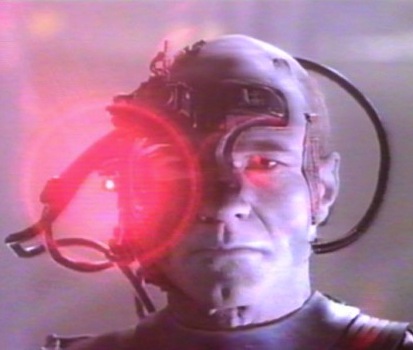
It's only a short leap from walking around with your bluetooth in your ear all day to the Borg. But they're still in the Delta quadrant, so we're safe for a couple hundred more years, right?

Of course, Millennials aren’t the only ones affected by the rise of the Internet and associated Tech. GenXers, Boomers, and computer-savvy older people like my grandmother feel the strong current of the Internet pulling them online just as much. As a Millennial, I have felt this current pulling me since I could reach the keyboard. As a follower of Christ, I feel God moving in both my virtual and my real lives. Knowing that these dual influences are neither mutually exclusive nor entirely compatible gives rise to a series of questions.

How do the Tech’s simultaneous forces of connection and isolation affect our walks with Christ? How does living in a virtual world influence living in both the physical and the spiritual ones? How do we maintain the body of Christ when the physical bodies we see and touch in church expand to include the virtual bodies we inhabit online? What place does prayer have in our instantaneous, Tech-driven world? Where do we keep our knowledge of God when our preferred method of storing information has shifted to the external? How do we resist isolation while remaining plugged into the Series of Tubes?

Now, I can speak only from my own experience. But I know that we humans are ineffective at arriving at the truth on our own, so I hope and pray that you will interact with my experience to delve more deeply into the truth revealed in Jesus Christ. Each of us has a call from God, each a ministry. Within each of the questions above, we find this fundamental one: How do we continue in the tradition of the personal nature of the ministry of Jesus in lives that are increasingly siphoned off into remote, disembodied, virtual space? I invite you to explore this question with me.

But first, you might be wondering why you should take what I say seriously. Who am I to write this book? Well, I claim neither special revelation from the Almighty nor a mandate from my generation. I’m just another disciple of Jesus Christ who has a few words to share with you. I endeavor to follow Christ wherever he leads me, but increasingly I find myself walking along the data streams and fiber-optic paths of the virtual world. Is it possible that Jesus might find me and I might find him on those virtual paths? Is it possible that God can use the Tech to create better followers of Jesus Christ? I am convinced that the answer is a resounding yes, but a yes stamped with a necessary warning label. Our Tech-driven world is changing rapidly, and we are changing with it. Unlike the great cloud of Christian witnesses that has preceded us, we’re not simply earthbound, pavement-pounding disciples of Jesus Christ. The Tech has added a new dimension to our lives; we are physical, emotional, spiritual, and now virtual people. But I believe that God continues to move through every facet of our existence, and that makes us new kinds of followers. We are digital disciples.

Digital Disciple Preview: Virtual People (part 1 of 3)

Digital Disciple will be on the physical bookstore shelf and the virtual website shelf on May 1. You can pre-order it here. Here’s the first part of a three part preview that can also be found on my Facebook page and on Episcopal Cafe.com.

* * *

We call it an Internet “connection.” On any given day, I know that an acquaintance from high school just had a baby shower. I know that an old college friend chose the strappy sandals. I know who had one too many at a party last night. Through my keyboard, LED monitor, wireless router, and ISP, I’m connected to several layers of people—my close friends, my acquaintances, strangers with similar interests, and the hordes of people with spelling so dreadful it would make Noah Webster weep.

Doesn't Noah Webster look sad?

But we could just as easily call it an Internet “isolation.” While millions of little connections happen every day—from friends and relatives to subcultures and fan bases—these connections always happen remotely. I can see and hear people thousands of miles away using the warm box on my lap. But I can’t touch using Facebook. I can’t taste a friend’s tweets. And I sure can’t smell a Wikipedia entry. My senses are reduced by 60 percent. I have a contacts list on my Gmail account, but I rarely make contact. A wall of technology isolates me from you, and the more we use the Tech, the more comfortable we feel hiding behind it. We develop a dependence on what can only be described oxymoronically as remote intimacy.

Yes, we are connected, but more often than not we connect remotely. Yes, I may know your favorite bands and books, but I may never know the timbre of your voice or how heavy your footfalls are. Yes, community forms on the Internet, but how can you share a meal or look someone in the eye via an online forum?

I make the observations found in this book from a vantage point overlooking a pair of intersections. The first intersection occurs where the opposing forces of connection and isolation meet. These two forces have been around since the Garden of Eden, but never have they been as coupled as the Internet makes them. The second intersection occurs at the junction between Tech culture and the greater reality of following Jesus Christ our Lord.

Following Jesus Christ is first and foremost about connection, about the arms of love reaching from the cross to embrace everyone. The Word became flesh in Jesus Christ in order that we might see more clearly the connection that God yearns for us to have with one another and with God. The Internet offers wonderful opportunities for connection, but they always come attached with the danger of isolation. Like most things in this life, we can’t separate the danger from the opportunity; we can only hope to trend toward the opportunity while trying not to ignore the nature of the danger.

As the Internet continues to change the way we communicate and connect with one another, the opportunities and dangers grow increasingly intertwined. The trouble is that the speed of innovation has kept us from pausing, breathing deeply, and taking a hard look at technology’s effects on our lives. Consider that a hundred years ago, people dashed and dotted with the telegraph and wrote long correspondences in perfect cursive. Seventy-five years ago, they shared a phone line with half a dozen neighbors and sat in front of the radio in the evening. Fifty years ago, they had their own telephone numbers and televisions. Twenty-five years ago, mobile phones and personal computers had begun the big, boxy stage of their evolutions. Fifteen years ago, my computer spent an agonizing forty-five seconds doing a fuzzy R2-D2 impression while attempting to dial up a connection to the Internet. Ten years ago, my family got our hands on a shiny new piece of technology called a cable modem, and the connection tripled in speed. Today, broadband allows connections of ease and immediacy. The breadth and depth of content online have now matched the blazing download rate; indeed (and I’m saying this with only the slightest hyperbole), I could live my whole life virtually and never notice the lack of fresh air and exercise.

We communicate more quickly, more frequently, more globally (and often more anonymously) than ever before. The Internet, once a harebrained idea hatched in a military think tank, has pervaded our lives and our society. Removing it would be like amputating not an arm or a leg, but a central nervous system. I know I’m not alone when I confess that, while I don’t live my whole life virtually, I do almost everything online: shop, check baseball scores, read the news, watch TV, play games, chat with friends, research my sermons. I even met my wife through some combination of divine intervention and the Series of Tubes.

Cloudburst (Davies Tales #8)

Aidan Davies stepped onto the platform of South Station. He looked left, then right, then left again. The trickle of passengers disembarking the commuter rail train turned left, and Davies joined them. As he headed for the terminal, a drop of rain hit his nose. He quickened his pace, but the drop only brought along a few dozen companions. Davies looked up and frowned at the sky. The sun shone through the clouds’ ragged edges, gilding them with light but failing to penetrate the bulk of the cloud, which was becoming increasingly darker. It’s a good thing the subway stops at the hospital, Davies thought.

Today would be his third day in a row traveling into the city to Mass General. The accident had happened late Saturday evening, and he had arrived at the hospital bleary-eyed but alert early Sunday morning, wearing his clergy clothes and the “I’m supposed to be here” expression that he saved specifically for the ICU. The family had been on a nighttime sail when nine-year-old Janice stood up at the wrong time. The boom hit her full in the back of the head, knocking her simultaneously unconscious and overboard. The rescue chopper brought her straight to the hospital in Boston, leaving her stricken parents on Nantucket to await the ferry the next day. Janice was brought up to the ICU from the OR an hour before Davies arrived. A patch of her dark ringlets was cut away at the base of her skull, revealing a dozen hasty sutures. He held her hand gingerly so as not to disturb the IV until midmorning when her mother pelted into the room. Davies then melted into the background, feeling suddenly inadequate in the face of the mother’s frenzy.

Two days later, Janice was still unconscious in the ICU, and her mother had not left her bedside. The doctors had not used the word “coma” but Janice’s mother feared the worse. With her husband at the office for a few hours, that fear was her only companion until Davies arrived. Fat lot of good I’ve done the past two days, he chided himself. An unconscious girl is one thing. A desperate mother is something else. I wonder when she’ll figure out I have no idea what to do.

He checked his mobile phone. Plenty of time to get there, he thought. Just a few stops up the Red Line. He swiped his card, jogged down the stairs, and flung himself aboard an idling subway car. Perfect timing, he thought, beaming around at the passengers as if he had just landed the dismount. A few of his fellow travelers smirked at him, shook their heads, and looked away. Just then the PA system crackled to life, and the man next to him pointed in the general direction of the indistinct voice coming over the speaker: “Due to a fire at Charles/MGH station, the Red Line is delayed. We are sorry for the inconvenience.”

Chagrined by his train-catching heroics, Davies shared a shrug with the man, leaned nonchalantly against a pole, and called up a mental map of downtown Boston. MGH isn’t too far a walk from South Station, he told himself. Just through the Common and over Beacon Hill. He looked around at the waiting passengers and wondered how long the train had been stuck at South Station. Just then two young men, frat boys by the looks of their untidy hair and polo shirts half tucked in to display massive belt buckles, launched themselves into the car as Davies had done. He smirked at them, shook his head, and exited the car.

He walked back up the stairs into South Station. There’s a buck seventy I’ll never see again. He ordered a panini and ate it quickly as he walked out of the station onto Summer Street. Davies oriented himself toward the Common and trudged up the sidewalk, hands in his pockets and his laptop bag bouncing against his back. He looked up at the sky again and the amateur meteorologist in him told him he would have been better off with the train delay. The sky had darkened considerably while the Massachusetts Bay Transit Authority had been thwarting him below ground. Licking his fingers, he tossed the remains of his hurried lunch into a trashcan and strode toward a store a few blocks from the station.

Five minutes later Davies emerged with a new umbrella under one arm. It’ll never rain now, he thought triumphantly, assured that reverse psychology works quite well to influence colliding low-pressure systems. Davies licked his lips, suddenly thirsty from his sodium-laced sandwich. I wish I had bought a bottle of water at the store. “Too late now,” he said aloud to no one in particular. Just then, he walked past a van painted in violently neon shades of green and orange. Two college-aged women, wearing shorts and the kind of socks that basketball players wore in the 70s, stood at the rear of the van, each holding a case of violently neon sports drinks.

“Have you Thrust today?” one of them asked Davies as he walked by, and he could tell she enjoyed asking such a seemingly provocative question to a guy wearing a clerical collar.

“No, I can’t say I have,” Davies said.

“You should try it,” said the other, and she held out a bottle sporting the word Thrust in lightning bolt-shaped letters. The bottle was filled with a liquid that looked like it was distilled from traffic cones.

“Thanks.” Davies took the drink and continued up the street, trying to resist the urge to look over his shoulder at the nubile Thrust promoters. He chugged the neon fluid, hoping that it would quench his thirst before he noticed how awful it tasted. He crossed Tremont Street and entered Boston Common as he emptied the last drops of the traffic cone flavored beverage into his mouth. Then he heard the rain.

With the sound of a thousand car washes a solid sheet of water was approaching rapidly from across the Common. So much for tricking the weather, Davies thought. At least I have this handy thing. He opened the umbrella and hunched beneath it just as the deluge reached him. After a minute of slogging across the open green space, his trousers felt like they had just come out of the washing machine. Davies reached the far end of the Common and looked through the rain for the street his phone’s GPS had told him to take over Beacon Hill. He walked one block down the Hill hoping for a street sign. No such luck. This city, apparently attempting to stymie foreign military occupation, keeps signage to a minimum, he mused ruefully. Davies took the next right and walked fifty yards. This isn’t it, he thought, seeing the street terminate in a row of brownstones a couple blocks ahead. He turned to retrace his steps. Then the rain did the impossible and worsened.

With the same vigor he had used flinging himself into the subway car, Davies dove for the relative dryness of a sheltered doorway. He squeezed the excess water out of his pants, dried his glasses, and oriented himself. I am one street down too far. Davies waited out the worst of the rain hunkered down in the doorway. After ten torrential minutes, the sun blazed through the spent clouds, raising steam from the street. Davies left the shelter and continued his charge up Beacon Hill.

Taking a left on Cambridge Street, he walked the last few blocks to the hospital. The imposing complex of parking garages and mismatched hospital buildings rose up on his right. He stopped to cross the intersection at Cambridge and North Grove. The cars navigating Boston’s surface streets glistened after the downpour. There it is, he thought, storm clouds forming in his mind as they had done in the sky. Through the main doors, down the hall, up the elevator, around the ward, into the room. Davies shivered. I’m just cold from the rain, he told himself, though he knew it wasn’t true. What am I supposed to do? What am I supposed to say? I am so ill-equipped for this that it would be laughable if the situation weren’t so serious.

The traffic light changed and the walking person blinked across the road, telling him to cross. Davies stayed put. After half a minute, the light changed again, and a red hand replaced the person, warning pedestrians not to cross. Davies stared at the hand. He closed his eyes and the blurry afterimage of the warning signal danced across his eyelids. He took a deep breath and held it. The hand fixed itself in his mind, a symbol of something he told people everyday but often forgot to believe himself. The hand slowly dissolved into a voice in his head, his own voice but with deeper resonance and greater clarity. You were thirsty and I provided drink. You were drowning in the rain and I provided shelter. Do you honestly think that I will break this pattern when you enter that hospital room?

Davies exhaled slowly and opened his eyes. The red hand shone from the signal across the street. The voice echoed faintly in his mind. You are always in the palm of my hand. Yes, even you, Aidan. The hand changed back into the walking person, and Aidan Davies crossed the intersection. He pushed through the main doors of the hospital, strode down the hall, rode up the elevator, paced around the ward, and walked into the room.

Attempted Temptation

(Sermon for Sunday, March 13, 2011 || Lent 1, Year A  || Matthew 4:1-11)

At dinnertimes growing up, I was often accused of having “a hollow leg.” I kept piling mashed potatoes on my plate and polishing them off and by the time I was on my third helping, my grandmother would be commenting on the vacancy in my lower extremities. In eighth grade, I weighed all of 85 pounds soaking wet, and still, I could put away the food. It has to be going somewhere, my relations would say. “He must have a hollow leg.”

"Close Encounters of the Third Kind" (1977)

During my overly literal early years, this commentary on my anatomy confused me terribly. Both of my legs seemed full of bone, ligaments, and muscle tissue. How could I have a hollow leg? And even if I did, wouldn’t the appendage fill up with mashed potatoes over the course of a few meals? Over time, I learned about metaphor and imagery, so I stopped wondering about the mutant connection between my stomach and leg. Then sophomore year of high school and my growth spurt hit simultaneously. My already ravenous appetite doubled, and my mother began saying that I had not one, but two hollow legs.

Every day, I filled myself up with carbs and fruit and sweets and the odd vegetable. And the next day, I had to fill up again. My hollow legs got longer, which was a good thing, considering all the food I was packing into them. My metabolism was so high that I often found myself parked in front of the refrigerator half an hour after dinner looking for a post-prandial snack.

In our society, we consume as if we have not only hollow legs, but hollow arms and hollow torsos, not to mention, hollow heads. We fill ourselves up with fast food and fast cars, all the while buying stuff that we tell ourselves we need, but we really don’t. We fill ourselves up with anxiety over making sure our lives and livelihoods are secure, all the while ignoring the vast majority of people who will never have security. We fill ourselves up with the sensational, yet banal, details of the lives of the rich and famous, all the while daydreaming about what we would do if the paparazzi followed us into a restaurant.

We fill ourselves up by hoarding stuff, by worrying about our security, by coveting fame. We fill ourselves up until there’s no room left within us for anything that we ourselves didn’t squash in there, until there’s no room left within us for God.

In the Gospel reading this morning, the Holy Spirit leads Jesus into the wilderness immediately following his baptism. After more than a month in the wilderness, Jesus meets the devil. And the devil can’t pass up such a juicy opportunity for temptation.

“See that rock over there,” says the tempter. “I bet you could turn that rock into bread and fill yourself up.”

“See the ground way below,” says the tempter. “I bet you could jump and be secure in the arms of angels who would never let you hurt even your foot.”

“See the kingdoms spread all over the world,” says the tempter. “I bet you’d be the most famous ruler of those kingdoms who ever lived if you first swore fealty to me.”

These three attempts at temptation are the industry standard. Worrying about getting stuff, getting security, and getting fame – they’ve worked for centuries, thinks the devil. Surely, they will work on this Jesus fellow. Not to mention, Jesus has been out in this wilderness for forty days. I’ve got him right where I want him, thinks the devil. Surely, the industry standard temptations about stuff, security, and fame will work on a guy who has been living out in the elements alone with no food for forty days!

Of course, the industry standard temptations fail. Jesus isn’t worried about getting stuff or being secure or finding fame. Why not? Well, the easy answer is that Jesus is the Son of God and therefore more than a match for temptation. But that’s not much help to you and me, so try this on for size. Rather than being a benefit to the devil in the devil’s attempted temptation, Jesus’ forty days in the wilderness actually help not the tempter, but Jesus himself.

You see, Jesus wasn’t just killing time during those forty days. He wasn’t twiddling his thumbs waiting for the devil to turn up. Jesus was fasting.

A fast is a way to make a space, to open up a hole within ourselves. A fast is an active and difficult denial of something that has influence over us (traditionally food, though fasts certainly are not limited to that area). When we fast, we forego the things that we usually use to fill us up, the things that we depend on to keep us going. And when we cease to fill ourselves up with all the junk of the world or all the anxiety about our own security or all our envy of the famous – when we cease to fill ourselves up with these things, we make room within ourselves for God.

Fasting intentionally opens up a hole for God to fill. When Leah and I moved into our new place a few weeks ago, we had boxes piled up all over the living room and dining room floors. But each day, we unpacked a bit and tidied up a bit, and now, we can walk around the house unhindered by all our stuff. This is what fasting does for us. When we clear away the rubbish that has piled up in our interior selves, we make a space for God to come in and dwell. And the more interior square footage we devote to God, the better we will be able to listen and respond to God’s movement in our lives.

This is just how Jesus fends off the devil in the wilderness. After forty days of fasting, he’s not empty, but full – full of God. Notice that each time the devil attempts a temptation, Jesus dredges up from within himself words of scripture that speak to the believer’s relationship with God.

“Bread alone can’t sustain you,” Jesus says. “But every word that God speaks gives sustenance to creation.”

“I’m not going to jump off the temple,” Jesus says. “I don’t need to test God to trust God.”

“I’m not going to bow down to you,” Jesus says. “I serve God, and only God instills in me the desire to worship.”

Jesus combats the industry standard temptations of stuff, security, and fame. He beats off the tempter by filling himself up with God. And he fills himself up with God by emptying himself through fasting. During our own forty days this Lent, how will we make spaces within us for God? How can we clear away the rubbish so that God can move in and walk around? We can make a start by choosing to fast.

If you tend to fill yourself up with stuff you don’t really need, then don’t buy anything beyond basic necessity. If you tend to fill yourself up with worry about the security of your livelihood, then stop and pray when you find anxiety setting in. If you tend to fill yourself up with desire to live as the rich and famous do, then skip the grocery aisle magazine racks and E! Entertainment Television for the next six weeks.

As you deny yourself the things that normally fill you up, actively invite God to enter the newly cleared space. Choose to fast. Clear away the rubbish, hollow out your insides, and give God a place to fill.