Baby Donkeys

Sermon for Sunday, March 29, 2026 || Palm/Passion Sunday A || Matthew 21:1-11

This is a sermon about baby donkeys. Well, really it’s a sermon about peace, but the thing you probably will remember about it is the baby donkey. Today, we celebrate an event in the life of Jesus, an event that was so momentous that it appears in all four accounts of the Gospel. At the beginning of the service, we read Matthew’s version of this event: Jesus’ triumphant ride into Jerusalem at the beginning of the week leading up to Passover. The way Jesus decides to enter the city demonstrates to the people of his own time and for people of all time Jesus’ conscious and dedicated embrace of nonviolence. And it all comes down to a baby donkey.

Continue reading “Baby Donkeys”

The Language of Embrace (Updated)

Sermon for Sunday, March 22, 2026 || Lent 5A || John 11:1-45

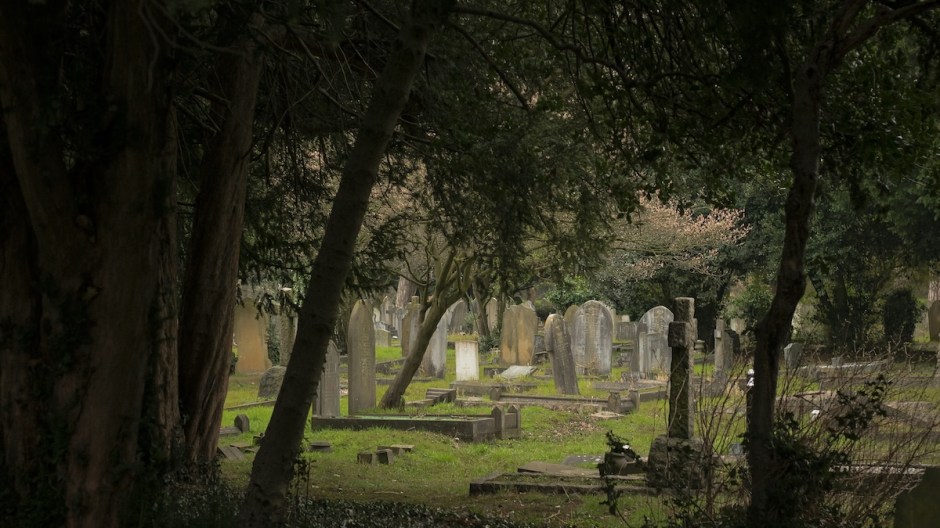
Today’s sermon is about the promise of the resurrection. And we’ll start today at a windswept cemetery as a funeral comes to end. The prayers have all been prayed. The earth has been cast on the shining, glossy coffin. The low murmur of voices mingles with the whisper of the wind through the long, cemetery grass. The new widow rises from the velvet-covered folding chair, the triangle of the blue field and white stars of the American flag peeking out from under her arm. A line of black-clad people forms, and they begin to file past her. You watch her receive with grace each well-meant, but well-worn sentiment. You join the line, and soon it’s your turn. You grasp her hand in both of yours and wait for the words to come.

Continue reading “The Language of Embrace (Updated)”

The Light of the World

Sermon for Sunday, March 15, 2026 || Lent 4A || John 9:1-41

This sermon is about perspective, about aligning our worldviews in order to see by Jesus, the Light of the World. But before we talk about that, we have to do something I really don’t like doing in sermons. We have to critique the translation of the Bible we use for Sunday readings. Here are the verses we are going to look at today from the beginning of our Gospel lesson:

As Jesus walked along, he saw a man blind from birth. His disciples asked him, “Rabbi, who sinned, this man or his parents, that he was born blind?” Jesus answered, “Neither this man nor his parents sinned; he was born blind so that God’s works might be revealed in him. We must work the works of him who sent me while it is day; night is coming when no one can work. As long as I am in the world, I am the light of the world.” (John 9:1-5)

Continue reading “The Light of the World”

Foreigners

Sermon for Sunday, March 8, 2026 || Lent 3A || John 4:5-52

Only once in my life have I truly felt like a foreigner. It wasn’t on our honeymoon in South Africa because we were ensconced at a small game reserve the whole time. It wasn’t in Israel because I was there as a tourist doing touristy things. It wasn’t even when I visited Haiti because, though I stood out due to my pale skin, every Haitian I met made me feel like family. The only time I have ever felt like a foreigner was the first day of the second half of sixth grade when I walked into Mrs. Green’s social studies class at Hillcrest Middle School in Tuscaloosa, Alabama.

There were three things that marked me as a foreigner, an immigrant from the cold, distant land of New England. First, I was the new kid. Second, I did not know I was supposed to call my teacher, “Ma’am.” And third, I had a wicked Rhode Island accent. In a comedy of errors that is seared into my memory, when I needed a drink of water, I asked, “Can I go to the Bubbl-ah (Bubbler)?” It took about ten minutes to figure out I meant the water fountain, at which point I could only go if I addressed Mrs. Green as “Ma’am.”

Continue reading “Foreigners”

How Can These Things Be?

Sermon for Sunday, March 1, 2026 || Lent 2A || John 3:1-17

This sermon is about the cultivation of that wonderful gift of God known as curiosity. The older I get, the more I realize what I don’t know and the more I value curiosity. It’s strange. There seems to be an inverse relationship here. When I was younger, I should have been more curious, but I thought I knew way more than I did, so I did not cultivate curiosity. Now that I am edging into my mid-forties, my curiosity piques all the time. I get excited to learn new things, to explore topics that I never knew would interest me until I started digging into them. I love being curious.

Continue reading “How Can These Things Be?”

Done and Left Undone

Sermon for Sunday, February 22, 2026 || Lent 1A || Romans 5:12-19

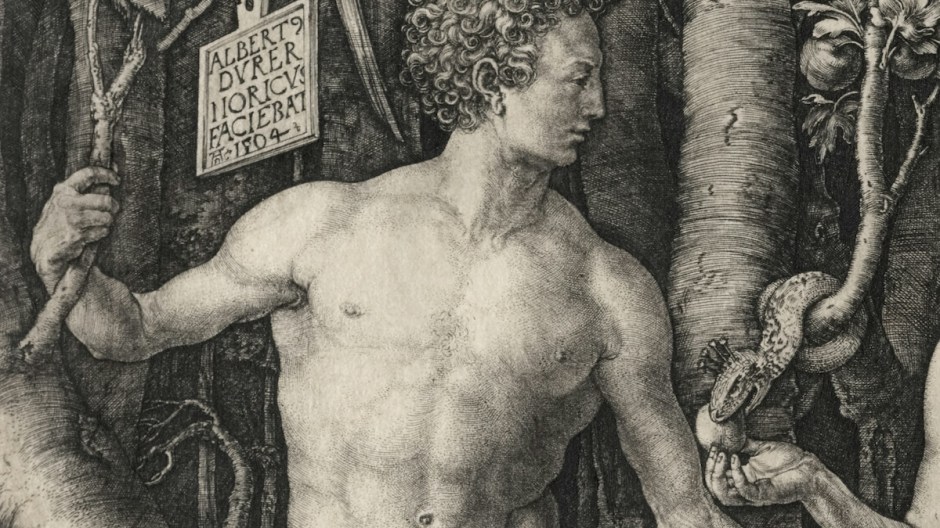
Today, on this first Sunday in Lent, I’m going to talk with you about sin. “Sin” is very much a “church” word, a word that we use liturgically in our Confession of Sin and a word that crops up in the Bible, nowhere more frequently than in Paul’s Letter to the Romans, which we read this morning. “Sin” is such a “church” word that we have trouble decoupling it from our liturgical expression in order to see how sin operates in big and little ways in our everyday life. So today we are going to reexamine Sin so we can get a better look at its patterns in the world.

Continue reading “Done and Left Undone”

The True Fast

Sermon for Wednesday, February 18, 2026 || Ash Wednesday || Isaiah 58:1-12

Out of all the feasts and fasts of the church year, Ash Wednesday is the one most liable to be misunderstood. We engage in the (admittedly strange) ritual of scraping soot on our foreheads to remind us of our existential limitations. We participate in this ritual because we humans have the troublesome habit of casting ourselves as the stars in the universal drama of God’s Creation. But the ashes tell a different story: one of transience, of fleetingness. And this makes sense, considering that if the history of the universe were a calendar year, humanity would make its appearance a second before midnight on December 31st.

Continue reading “The True Fast”

Faithful, Collaborative, Renewing

Sermon for Saturday, February 14, 2026 || Celebration of New Ministry || Numbers 11:16-17, 24-30; Psalm 146; Romans 12:1-18; John 15:9-16

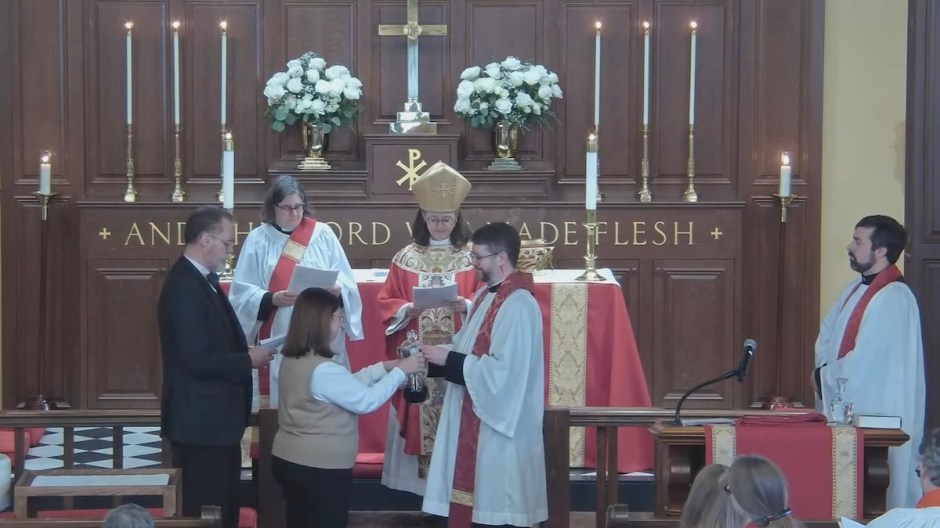
Greetings from the other side of the country. My name is Adam Thomas, and I am the rector of St. Mark’s Episcopal Church in Mystic, Connecticut. Yes, that is the place made famous by the 1980s coming-of-age film Mystic Pizza. And yes, there really is a pizza place named that; it’s around the corner from my church. I am so glad to be here for this celebration with you for three reasons. First, I got to escape the unprecedented run of single digit temperatures in New England. Second, three of my best friends from different phases of my life all live here somehow, and I’ve gotten to visit everyone. And third, I get to speak with you this morning about your new partnership in ministry with a friend I met half a lifetime ago, the Rev. Bret Bowie Hays.

Now, this sermon is not going to devolve into a roast of Bret. I promise I’m going to talk about God and church in a minute. But just so you know why I’m the one preaching today – besides his family, I’m probably the person in this church who has known Bret the longest. We met on the first day of orientation at Virginia Theological Seminary way back in the halcyon days of the summer of 2005. We became fast friends, bonding over our love for pizza, theological discourse, and Star Trek. We spent many a night in the dorms together at VTS, him watching Star Trek and me falling asleep watching Star Trek. Bret was a groomsman in my wedding; he’s godfather to my son; and he is one of those friends you can call up and chat to for an hour when you’re driving to a meeting at the diocesan office. After priestly ministry in Colorado, Massachusetts, and Florida, he has arrived here in California as your next rector. And I am so excited about the new partnership in God’s mission you here at Trinity Episcopal Church and Bret have begun together.

As you continue getting to know one another at the outset of this new ministry, I invite you to embrace three words for your life together. May God grant you the grace to make your ministry together faithful, collaborative, and renewing.

Continue reading “Faithful, Collaborative, Renewing”

Saying Grace

Sermon for Sunday, February 8, 2026 || Epiphany 5A || Matthew 5:13-20

The last several sermons I’ve preached have dealt either directly or indirectly with the current issues affecting our country. I’ve talked about following Christ through truth-telling, community-building, and justice-seeking as we join others in standing against state-sponsored violence and fearmongering. While these issues are still present in the forefront of our minds, I’m not going to talk about them directly today. Rather, I’m going to talk about something foundational to our lives of faith that supports our daily following of Jesus as we work for truth, community, and justice.

Today we’re going to talk about something very simple: saying grace at dinner. This topic has been on my mind recently for three reasons. First, I’ve been aware of how much reacting we are all doing right now. We’re all playing defense against a swift-moving offense of violent action and rhetoric. Recentering ourselves through a simple practice like saying grace can help us find our footing. Second, saying grace is one of the ways to be salt and light in this world. It is a visible, though not ostentatious, participation in the presence of God. And third, last Monday my daughter literally asked me to talk about saying grace at meals, and she agreed it would be a good sermon topic.

Continue reading “Saying Grace”

Words Matter

Sermon for Sunday, February 1, 2026 || Epiphany 4A || Micah 6:1-8

This sermon is about telling the truth. But to enter into a discussion about truth-telling, we first have to talk about words. Specifically about how our words can both curtail and expand our thoughts, and about how those in power can create societal narratives based on the words they choose. Language is a tool of creativity. The way we tell our creation story begins with God speaking creation into existence: “God said, ‘Let there be light,’ and there was light.” In the Hebrew language the “word” happens to people like the prophet. The Word of God is an encounter that compels the prophet to action. Likewise, the Gospel of John identifies the person of Jesus as the Word of God, the ultimate happening of the Word as it becomes flesh and dwells among us as a human being.

Continue reading “Words Matter”