Everyone’s heart

(Sermon for May 24, 2009 || Easter 7, Year B, RCL || Acts 1:15-17, 21-26)

Their starting lineup is down a man. While football and soccer teams play with eleven on a side, the apostles need an even twelve. No prime numbers for those apostles. Maybe they need twelve to break into four teams of three for Friday night Cranium.* Or, more plausibly, they need twelve to parallel the tribes of the people of Israel and several other biblical allusions. Whatever the reason, they have an open slot. Peter culls down the candidate pool by limiting applicants to those “who have accompanied us during all the time that the Lord Jesus went in and out among us, beginning from the baptism of John until the day when he was taken up from us.” Taking this criterion into account, the selection committee proposes two names: Joseph called Barsabbas and Matthias.

Then the eleven pray to God for guidance, beginning with “Lord, you know everyone’s heart.” Lord, you know everyone’s heart. What a profound statement of faith – five words that speak to the apostles’ trust in God. Lord, you know everyone’s heart. This one, brief sentence guides their decision-making process in three substantial ways. They acknowledge God’s presence in their endeavor. They understand that making choices involves more than purely mental exercise. And they show humility in the face of a life-altering decision.

Now, I’ve said it before and I’ll say it again: we routinely ignore God’s presence because God is always present. We forget that God is in charge of not just the miraculous, but also the mundane. Our failure to recognize God’s presence is understandable. How many of us note the sound of the engine in the car until there’s an ominous sputtering? How many of us note the reliable glow of the bedside lamp until the transformer blows outside? We adapt to routine. We organize our lives into predictable patterns. But God’s movement in our lives is the very framework upon which our patterns hang, so that movement is often difficult to perceive. On the other hand, like the electricity, we’d notice if God weren’t there.

The apostles combat the tendency to ignore God’s foundational presence by invoking God’s knowledge of their hearts as they make a decision. Lord, you know everyone’s heart is shorthand for, “Lord, you are present in all that we do, and your presence sustains the world we live in and the life we live.” With these words, the apostles invite God into their decision-making process. This invitation may seem superfluous if you believe the assertion that God is ever-present. Indeed, God doesn’t need an invitation to be present in our lives. But we often need to invite God in to remind ourselves to be present to God. Our invitation functions, strangely enough, as an RSVP, as a response to God’s presence. The apostles know this. They know that the Lord is already present, but the invitation prepares their hearts to respond to God’s movement.

Lord, you know everyone’s heart, they pray. The apostles know that making a life-altering decision involves more than mental exercise. I’m sure you’re familiar with the old adage: “Don’t let your emotions cloud your judgment.” To put this cliché in more expressive terms: “Don’t let your wild, unrefined feelings derail your completely rational higher brain functions.” This advice is, of course, flawed from the start. You may be able to solve an algebra problem using your mind alone, but the rest of human experience is up for grabs.

Every decision we make has both mental and emotional components, and we ignore the emotional at our peril. When the apostles pray, Lord, you know everyone’s heart, they combine the mental verb “know” with the feeling word “heart.” They understand that God made separating heart from head so difficult precisely because our decision-making process should not attempt the separation. God gave us minds to temper our emotions and hearts to provide our minds with the fuel of hope and imagination. God infused our biology with such checks and balances, so we tragically limit ourselves when we shelve our feelings in favor of our thoughts. Only by mingling the two can we make faithful decisions.

The apostles know they are in God’s presence. They employ both their hearts and their minds as they make their choice. And they show humility in the midst of a life-altering decision. This humility is key to the whole decision-making enterprise. Every one of my choices affects more than just me, and those effects ripple into the future in permutations that my brain is unequipped to process. I don’t know how my decisions will affect others, let alone myself. Furthermore, I don’t even know myself well enough to make good decisions. Lord, you know everyone’s heart. If God knows what’s in my heart, then that makes one of us.

Humility comes in when we acknowledge our limited awareness of ourselves and the world around us. If our interior lives are clouded in mystery, how much less can we understand the trajectory of our decisions in the wider world? Inviting God into the decision-making process opens us up to the One who truly knows us. The humble prayer begins, “Lord you know my heart, and you know it much better than I do.” Confessing our shallow understanding of our own inner selves sets us on the path to faithful decisions.

The apostles pray, “Lord you know everyone’s heart.” They invite God into their decision, thus gaining attentiveness of God’s presence in their lives. They do not let their heads dominate, but mingle their hearts and minds in order to use all their faculties to choose. And they humbly acknowledge that they do not alone have the depth of awareness necessary to make a faithful decision.

The apostles choose Matthias to fill out their number. With a full complement of apostles, the Holy Spirit descends on them and they create the Church. Then they begin to spread the Gospel from Jerusalem to the ends of the earth. I invite you to imitate the apostles’ prayer when you are faced with a decision. Invite God into your dilemma. Allow your heart and mind to cooperate. And be humble in the midst of the unknown, trusting that God’s knowledge of your hearts far surpasses your own. Lord, you know everyone’s heart. Thanks be to God.

Footnotes

* Instead of Cranium, I said, “three tables for Thursday morning Bridge” at the early service.

Sensuous

Episcopalians are often accused of being too brainy, too intellectual. We think too much. We get caught up in the space between our ears and forget about that throbbing muscle in our chests. These accusers are correct up to a point: we do not check our brains at the door. Jesus asks us to love the Lord with all our mind, as well as our heart and strength. But our intellectual engagement with faith is only half the story.

You see, worship in the Episcopal Church is quite sensuous. Don’t get me wrong – I’m not talking about the Harlequin romance definition of the word. Our worship is sensuous in that we employ all our senses to encounter the presence of God. We hear the Word of God read and proclaimed. We see the stained glass and changing seasonal color palates. We smell the incense puffing from the thurible.* We taste the bread and wine. We touch one another in the handshake or embrace of the peace of the Lord.

To engage all of our senses, we use things in our worship. We use candles, books, and bowls. We use bread, wine, and water. These things are all incredibly – laughably – ordinary. Nothing about a loaf of bread is inherently special. Hand me a loaf of bread, and I might feed the birds or save it and make French toast tomorrow morning. (Actually, if you know me, the most likely scenario is that I’ll eat the loaf right then and there.)

breadaisleSo, how does the loaf of bread, which was one of a hundred bar coded loaves at the grocery store, transform from a laughably ordinary carbohydrate delivery system to a holy vessel of Christ’s presence? The bread moves from its ordinary location on the shelf in the store to its new, strange location on a linen-draped table in a church. The bread behaves quite normally, sitting there waiting to be eaten.

But the table and the action done to the bread and the people watching the action are not normal. The table is abnormal because it has several tablecloths covering it, some ornate, some plain. The action is abnormal – whoever talks about a loaf of bread before they start slicing it? And the watching is abnormal – unless you’re in the studio audience for Iron Chef, who joins dozens of others in watching someone prepare a meal?

So the bread is laughably ordinary. But the situation is not. The juxtaposition between the normal loaf of bread and the strange way it is being treated invest the ordinary with new meaning. This new meaning turns the bread into a symbol. Now, before we go any further, I want to dispel from your mind any notion of the phrases “it’s only a symbol” or  “it’s merely symbolic.” Symbols are woefully misunderstood things in American culture – like soccer and irony. A symbol is an object that points beyond itself to a deeper truth. Too often, “sign” and “symbol” are used interchangeably, but they are not synonymous. A stop sign lets you know you are supposed to brake at an intersection, but that’s all it tells you. The red octagon doesn’t compel you to ruminate on why you should stop. But a symbol – the cross, for instance – stirs within us all of the historical and theological and emotional resonances of the truth to which it points.

Okay, so the bread is a symbol. It connotes the bounty of harvest, the fruits of the earth, the goodness of creation, the nourishment of our bodies. And when we put it on that table, and a priest (in the presence of God’s people) asks God to indwell that bread with the Spirit of Christ, the bread becomes a special sort of symbol called sacrament.

God moves within us, spurring us to love, praise, act, pray, serve. Outward connections with our inward spiritual lives are called sacraments. These special symbols take the ordinary things we’ve been discussing – bread, water, even our own actions and personhoods – and set them ablaze with physical and emotive evidence of the presence of God.

When we participate in the sacraments, we ourselves become sacramental symbols of God’s movement. Our service to God points to the deeper truth of God’s creation of and love for the world. Worship nourishes us for our role as bearers of God’s image, as vessels of the light of Christ. We enter church as normal, ordinary people, like the loaves of bread on the grocery store shelves. We leave church transformed by our sharing in the presence of Christ with one another. Over time – months, years, lifetimes – the transformation helps us to realize that what we mistook as “normal” was really quite miraculous and extraordinary.

All of the normal, everyday things we use in church gather new meaning when we employ them to worship God. The candle becomes the light of Christ. The bowl becomes the vessel for the waters of baptism. The bread and wine become the Body and Blood. Likewise, we – as sacramental beings – discover new meaning for our lives when we come together to worship the Lord.

Footnotes

*The metal censer on the chain that you swing to disperse the perfumed smoke; sort of like a liturgical yo-yo.

Unless I had been calling to you

Eustace and Jill Pole are trying to escape a mob of bullies at the Experiment House, their ghastly boarding school. Jill has been crying, and the bullies can smell tears from hundreds of yards away. From their hiding spot, the two targets hear the angry shouts of the searchers. Eustace looks at Jill and wonders aloud if they might be able to escape to That Place. He begins calling out, “Aslan, Aslan, Aslan!” Jill follows his example: “Aslan, Aslan, Aslan!” The bullies draw near, and Eustace and Jill scramble through the laurels and up a steep slope. The weathered old door in the wall is always locked, but this time – miraculously – the knob turns. And the two children step into Aslan’s country.

Immediately after they arrive, Eustace falls off a cliff, but a lion arrives just in time and blows him to safety in Narnia. The lion – naturally – frightens Jill Pole. She tries to slip away, but the lion begins questioning her. Her showing off caused Eustace’s fall, she confesses. For that display of pride, the lion gives her a task to perform. “Please, what task, Sir?” asks Jill. “The task for which I called you and him here out of your own world,” says the lion. This response puzzles Jill. Nobody called them. They called out to – Somebody – a name she wouldn’t know. Wasn’t it she and Eustace who asked to come?

aslan “You would not have called to me unless I had been calling to you,” says the lion.

The lion is Aslan, and the task on which he sends Jill and Eustace makes up the story of The Silver Chair, one of The Chronicles of Narnia by C.S. Lewis. This exchange between Aslan and Jill Pole from the beginning of the tale illustrates most vibrantly the foundational principle of a life of prayer. You would not have called to me unless I had been calling to you.

The Catechism* in the back of the Book of Common Prayer states: “Prayer is responding to God, by thoughts and by deeds, with or without words.” When I first read this definition, I was flabbergasted. I had never thought of prayer as anything more than asking God for stuff. God, please give me a kitty that doesn’t scratch me. God, please help us win our soccer game. God, please make Grammy not sick anymore. Now, please don’t misunderstand, I am not condemning this form of prayer. There are many kinds of prayer, and they all have fancy names like adoration, oblation, intercession, petition – you get the idea. Rather, the popular definition that prayer is “asking God for stuff,” is several bricks up from the foundation.

That foundation is, of course, God. More precisely, the foundation of prayer is God’s presence in our lives and call upon our hearts. “Prayer,” says the Catechism, “is responding to God.”** Think of prayer as a phone call. We never dial the number: we only have the option to answer the phone when it rings. When we choose to answer, we enter into the relationship that God yearns for us. Prayer is another word for our part in our relationships with God.

Of course, the phone call is not a perfect metaphor because God is always present in our lives and always calling upon us to serve God in the world. In this context, Paul’s directive to “pray without ceasing” seems less unrealistic. Our striving to respond to God’s perpetual call in our lives is prayer. The collection of our words and deeds that emanate from our relationships with God is prayer. Anything we do in response to God’s movement in our lives is prayer. While prayer comprehends the kneeling-beside-the-bed-at-bedtime image that many associate with prayer, the act of praying is so much more expansive.

Monastics down through the ages have understood this. Even the lowliest jobs at the monastery – peeling potatoes or weeding fields – were prayer. Monks prayed many times a day in their chapels, but the labor they performed in the meantime was prayer, too. While we don’t have strict priors delegating our labors, we can still import the monastic example into our lives.

Look at your day, your week, your year. How do your engagements and actions display your response to God’s movement in your life?  As a student, God calls you to learn about yourself and the rest of God’s creation. As a member of a family, God calls you to love and enjoy and forgive your parents and siblings. As a servant of God, God calls you to discover and enact that one way in which you can better the lives of those around you. When we respond to God in all these areas of our lives, we pray. We affirm our relationships with God. We live the abundant lives that Christ gives to us.

“You would not have called to me unless I had been calling to you,” says Aslan to Jill Pole. “We love because he first loved us,” says the writer of the First Letter of John. Likewise, we pray because God first called us – called us into the expansive, abundant relationship with God. What will our response be?

Footnotes

* Also called “An Outline of the Faith,” an Episcopal F.A.Q. Most people know it as the thing you read when the sermon is really boring.

** Italics mine.

Be-ing

As I’ve mentioned before, I’ve been working on a Confirmation class recently, and the lessons keeping popping up here on the blog. Here’s 1000 words on theology, using three phrases from the Nicene Creed as a framework.

nicaea…of all that is, seen and unseen

What I’m about to write ignores the fact that the Nicene Creed was originally written in Greek and then translated into Latin and then translated into English. Don’t panic – the following is about the current English grammatical structure of the phrase, which is influenced by, but not chained to, the original language.

Do you see that little comma between the words “is” and “seen”? Yes? Good. Now, think back to all the times you’ve ever heard the Creed recited during church and ask yourself if anyone has ever acknowledged that comma. No? Didn’t think so. The sentence usually sounds like this: “…maker of heaven and earth, of all that-is-seen-and-unseen.” But the sentence actually reads: “…maker of heaven and earth, of all that is, [slight pause] seen and unseen.” I imagine you are now rolling your eyes at my disconcerting attention to inane details.

This detail may seem inane at first, but I assure you, it’s not. For now, let’s ignore the phrase “seen and unseen” because it gets entirely too much attention when Creed-speakers unwittingly barrel through the defenseless little comma. With what are we left? “Maker…of all that is.”

Maker…of all that is. This “is” is the most important linking verb in the history of linking verbs, and probably other verbs, as well. We believe that God made all that is. Put another way, we believe that God is the very ground of our “is-ness” – or, to use a not made-up word, our “being.” [Disclaimer: The rest of this section assumes the reader knows the unwieldy conjugation of the verb “to be.”] In Exodus 3, Moses asks God what God’s name is. God responds: “I AM WHO I AM.” This awkward English rendering of the Hebrew preserves the root of God’s divine name, which is the verb “to be” (hayah in Hebrew). When Moses asks God what God’s name is, God responds with something like, “I have being and I bestow being and that’s all you need to know.” Look at the word “being.” Now add a hyphen: be-ing. The noun “being” is disguised as a present participle verb, a verb of continuing action. This points to the eternal continuity and abiding presence of God, who is the very ground of be-ing.

All grammatical gymnastics aside, the point is this: God created all that is, and creation’s existence depends on God’s continuing presence. As small bits of that creation, we receive our be-ing, our identity, our life from the foundation of that be-ing, the Holy One we call God.

Through him all things were made

“We believe in one Lord, Jesus Christ… Through him all things were made.” Okay, since I failed to return to the original Greek in the last section, I feel I must make up for it. John begins his Gospel account with this poetry: “In the beginning was the Word, and the Word was with God, and the Word was God. He was in the beginning with God. All things came into being through him, and without him, not one thing came into being. What has come into being in him was life…”

You’ll notice that word be-ing from the last section crops up several times in just these few sentences. We said that God is the foundation for be-ing, and now we discover that the “Word” is responsible for translating that be-ing into life. Here’s the Greek bit.

The “Word” is the translation of the Greek word logos, from which dozens of English words take their root. Every time you see –ology at the end of a word (zoology, biology, epidemiology), that ending comes from the Greek logos. “Logic” also springs from this root. When something is “logical” it is ordered, it makes good sense. This is a good entrance into one understanding of logos. John says that the Word was in the beginning with God and through the Word all things were made. This “Word” is the “logic” behind creation, the “organizing principle” through which creation has come into being. In Genesis, God speaks creation into being (“Then God said, ‘Let there be light’; and there was light.”). God uses words to organize creation, and John identifies “The Word” as God the only Son, who is incarnate in Jesus Christ.

So, the “Word” is creation’s logic or organizing principle. Creation, therefore, is not haphazard or accidental. You might be tempted to ask a question about “Creationism vs. Evolution.” But the unhappy dichotomy between these two positions breaks down when we see creation as both organized and continuous. My college chaplain was fond of saying: “If God stopped speaking, the world would stop turning.” The implication is this: the “Word,” the logic of creation continues to underpin and give life to all that is.

…he became incarnate from the Virgin Mary and was made man

As I said above, John identifies “The Word” as God the only Son, who is incarnate in Jesus Christ. “Incarnate” means “become flesh” (the –carn in the word is the same root as in the word carnivore, “meat-eater”). John’s use of “Word” connects to a strain of thought coming out of the Hebrew Scriptures. The “word of God” appears whenever a prophet is granted a new prophecy (The word of God came to so-and-so…). The Hebrew word for “word” (davar) means much more than the stuffy English equivalent. We think of “word” as something on a piece of paper or something spoken aloud. In Hebrew, however, the “word” is something that happens to people. It is an event, an action that calls for further action. When John uses the Greek form of “word” (logos), he purposefully links it back to this Hebrew understanding. The “Word” becoming flesh and dwelling among us is the ultimate example of the “Word” happening.

Here’s the thing to remember: the “Word,” through which God speaks creation into be-ing, is life-giving. Without the “Word,” life would not exist. When the “Word” became flesh in Jesus Christ, God gave us the gift of seeing how life is meant to be organized, meant to be lived. This means that the words Jesus speaks provide for us the means by which to organize our lives in order to be in deeper touch with God. The “Word” became flesh and lived among us. And now the “Word” continues to speak life into the world, disclosing the glory that is full of grace and truth.

The Sweet Six Billion

(Sermon for March 22, 2009 || Lent 4, Year B, RCL || John 3:14-21)

Last week, the annual rite of spring commenced. Sixty-four college basketball teams began competing for the NCAA title. My apologies for bringing this up. I wrote this introduction before Dayton upset our own West Virginia Mountaineers. The field has been cut in half, and WVU is, unfortunately, in the wrong half. Soon, the field will be halved again, and there will be sufficiently few teams left for SportsCenter to analyze them as the “Sweet Sixteen”: only one quarter of the teams will have survived. Presumably, this fact makes them “sweet.” After this third round of games, the sportscasters will chatter on about the “Elite Eight.” A mere 12.5 percent of teams will advance to play in this fourth round, making them (sure enough) “elite.” Notice how the sports media doesn’t have a term for the first and second rounds of games; there’s no such thing as the “Snappy Sixty-four” or the “Thrilling Thirty-two.” The field just isn’t small enough to qualify for such exclusive epithets as “sweet” and “elite.”

In our society, we often associate success and value with exclusivity. Only a handful of doctors can perform that neonatal heart procedure. Only a few original 1977 Luke Skywalker action figures exist still in the blister packaging. Only a couple dozen baseball players have accumulated over three thousand hits in their careers. As a culture, we assign value to these exclusive objects and groups. If every baseball player had over three thousand hits, such an achievement would certainly not make one a shoe-in for Cooperstown.

fruitrollupvspuddingcupOf course, our society operates in this way because of Econ 101. From a young age, we are socialized to think in terms of supply and demand. If only one kid in the cafeteria has a strawberry fruit roll-up, the demand for that delicious snack will be high. You might have to trade a week’s worth of pudding cups for that fruit roll-up. The same market forces apply outside of elementary school. If OPEC cuts oil exports, you know what happens to the price.
Sadly, the exclusivity model, on which the doctrine of supply and demand is founded, has infiltrated the Christian religion. Too many Christian groups attempt to define themselves as the exclusive repositories of the faith, as the exclusive holders of the keys to heaven. If you don’t interpret the Bible exactly as they do, then you are excluded. If you disagree about the way worship is conducted, then you are excluded. If you don’t subscribe to the same set of social values, then you are excluded. This exclusion provides for these groups of Christians an illusory feeling of certitude, and, consequently, a “my way or the highway” approach to outsiders.*

Over time, a single severely misinterpreted verse of scripture has developed into the brand for such exclusivist, cliquish Christianity. We heard it this morning in the Gospel. Perhaps, your ears perked up because you recognized the verse from a bumper sticker or the television or the half-forgotten memory of Sunday School. Homemade signs at ballgames give the citation: John 3:16 in big, block letters. “For God so loved the world, that he gave his only Son, so that everyone who believes in him may not perish but may have eternal life.”

Cliquish Christianity has so thoroughly branded John 3:16 that the verse rarely appears outside its exclusivist shrink-wrapping.  Here’s one plausible line of reasoning employed to co-opt John 3:16: Supply and demand teaches that for something to be valuable, it must be limited. Eternal life is valuable. Therefore, eternal life is limited. If eternal life is limited, we must figure out who’s got it and who doesn’t. Let’s see: “everyone who believes in him.” Okay, that’s seems clear enough. If you believe in the only Son of God, you may have eternal life.

But cliquish Christianity ignores two major problems with this logic. First, the major premise of the syllogism** (for something to be valuable, it must be limited) is altogether false. One of the wonderful things about God’s love and grace is their utter repudiation of basic economic theory. The counter-economics of the Gospel are well-documented. All the workers in the vineyard receive the same pay no matter how long they labored. The five loaves of bread feed a thousand times their number with twelve baskets to spare. God’s love abounds when it is freely offered, rather than becoming scarce like the bills in your wallet when you give your cash away. Likewise, eternal life cannot be limited. That’s what makes eternal life eternal.

Second, cliquish Christianity mistakes the minutiae of adhering to particular doctrinal positions for belief in the only Son of God. Disagreements about what constitutes the correct method of making someone wet during a baptism or what instruments are approved to be played in church have driven some Christians to deny eternal life to others. Such disagreements are akin to thinking that ketchup, rather than ground beef, makes something a hamburger.*** History and experience have shown that there are many paths to belief in Jesus Christ. The early leaders of the church recognized the need for four accounts of the Gospel to speak to the widest audience possible. In sixteenth century England, two competing groups struggled for doctrinal dominance, but Queen Elizabeth saw value in each position and accepted both into the Book of Common Prayer. As Christianity spread throughout the world, missionaries fused the message of the Gospel with local custom, creating unique expressions of the Christian religion.

But cliquish Christianity disregards both counter-economics and the substitution of particularity for belief. The misinterpretation of John 3:16 has become inviolable, an idol in blister packaging. And this packaging is necessary for cliquish Christians to use the verse as validation for their exclusivism. You see, the shrink-wrapping protects the sixteenth verse from all the ones surrounding it. But scripture has never been intended to be taken a verse at a time. Indeed, judging by the age of the Bible, verse numbers are downright innovative, having debuted in the 1550s.

So, let’s reattach verse 16 and see what happens: “And just as Moses lifted up the serpent in the wilderness, so must the Son of Man be lifted up, that whoever believes in him may have eternal life. For God so loved the world that he gave his only Son, so that everyone who believes in him may not perish but may have eternal life. Indeed, God did not send the Son into the world to condemn the world, but in order that the world might be saved through him.”

In this context, we notice the object of God’s love: the “world.” God gave his only Son because God loved the world. God sent the Son into the world to save the world. In just these three sentences, the “world” appears four times. God’s loving gift takes on cosmic proportions and comprehends the whole creation.

God doesn’t give the gift of the Son to an exclusive group of people but to the entire world. The Son is not the exclusive property of those who believe in him. He is not trussed up in the backroom, ready to be ransomed in exchange for compliance to doctrinal particularity.  Rather, those who believe in him are the property of the Son, in whose presence eternal life gushes up like a spring.

God loved the world so much that God gave the only Son to be lifted up on the cross and to die and to rise again and, in so doing, to lift us to the light of eternal life. If this sublime story of sacrifice and salvation were meant only for an exclusive few, then there’s no reason to believe it. But the world is the recipient of God’s loving gift, a gift so extravagant and precious that an exclusive few could never hope to unwrap it completely.

In our fallen society, we measure success and value by exclusivity. But in God’s family, we measure success by our ability to include. We measure value by our generosity and hospitality. We invite others to discover God’s loving gift just as we have discovered him. We welcome everyone to celebrate the joy of an abundant life illumined by the light of God’s Son. We do not play the role of the gatekeeper to God’s house, checking credentials and barring entrance. We do not play the role of the bouncer with the clipboard. Our role is simple and humbling. We go out into this world that God loves so much and we meet our brothers and sisters and we say,  “Look at the gift I received from God, this gift full of love and grace. Come and see. God offers the gift to you, too. Come and see. God gave the gift to the whole world. Come and see.”

Footnotes

* In recent years, to the detriment of the work of God in the world, various members of the Anglican Communion, the Episcopal Church included, have exhibited a variation of these exclusivist tendencies.

** My focus group (read: my mother) advised me to remove this word from the spoken version of the sermon, which I did. But, this is technically the correct word for the context, so I figured I could sneak it back into the written version. A syllogism is an argument that has a major premise, a minor premise, and a conclusion. Here’s an example: “People who use the word ‘syllogism’ in sermons are pretentious goobers. Adam used the word ‘syllogism’ in a sermon. Therefore, Adam is a pretentious goober.”

*** Brian McLaren and Tony Campolo have written about this. Check out their Adventures in Missing the Point

Viral papyri (Bible study #10)

In the middle of the second century, a guy named Marcion took his Bible and tore out most of the Gospel according to Luke and some of Paul’s letters. He stapled these together and chucked the rest in the dumpster. Marcion had decided that the “god” who created the world was evil because the world sure wasn’t doing him any favors. The other god, the real “God,” was Lord of the “spirit world,” totally alien from our world, except for that thing about sending his son here. The trouble was, that’s not what the Bible said. So, Marcion, with a stockpile of misplaced entrepreneurial zeal, made up a new one.

Well…that’s not actually what happened. You see, the “New Testament” as we now have it wasn’t compiled yet. Christians and various derivative groups had been writing letters and gospels and stories and strange things called “apocalypses” for a hundred years. Some circulated widely, like the ancient equivalent of viral YouTube videos. Others stayed put in the community which produced them. Some were attributed to Jesus’ apostles or their associates. Others were written by that guy with the hair and the thing. Some espoused doctrine that both created and helped support the emerging theological position of the “Church.” Others claimed “secret knowledge,” known only to the few who could get into the metaphysical country club.

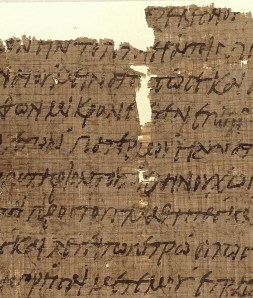
papyrusThe viral papyri attributed to an associate of Jesus and espousing sound theological views eventually became what we now call the “New Testament.” The other stuff — the classified documents, location-specific texts, and the ones written by that guy — predictably faded into obscurity.*

Okay, let’s go back to Marcion. Since there was no list (or “canon”) of authoritative texts, Marcion felt entitled to make one up that suited his own viewpoints. When he threw the Hebrew Scriptures and many of the viral papyri into the rubbish bin, the leaders of the Church said something to the effect of, “Hey, you can’t do that!” And Marcion shot back, “Too bad, suckers.”

At that point, those leaders decided that a list of their own would probably be a good idea. But, things moved slowly in the ancient world, so the top 27 texts were not finalized until the end of the fourth century (and even then, there was still some dispute between the Eastern and Western churches). But, I get ahead of myself. Let’s back up a bit.

With Marcion’s heresy forcing the Church to respond with its own canon of authoritative texts, scholars began compiling lists. Certain texts were shoe-ins. First and foremost, the Hebrew Scriptures (which became known as the “Old” Testament) were never in question because these texts were the Bible for the people who wrote the rest of the Bible. Second, the letters of Paul (the most virulent of all the viral papyri) and the three synoptic gospels, Matthew, Mark, and Luke, along with the Acts of the Apostles (which is sort of the Godfather II of Luke’s Gospel). The Gospel of John was on the bubble at times because some of the heretical groups loved it. But, it made the cut partly because its “high Christology” helped the Church’s position on the divinity of Christ.

Over time, the New Testament canon solidified with 27 texts.** The four accounts of the Gospel came first, as they narrated the reason why the rest of the texts exist. Then the Acts of the Apostles propels the canon into the letters of Paul (strangely enough, appearing in descending order by length). After Paul, Hebrews begins the section of various texts addressed to a wider audience (the “catholic” epistles). Appropriately, the Revelation to John ends the canon.

The compilation of the New Testament from viral papyri to authoritative text speaks to us today of the value of various viewpoints within a larger structure. Unlike Marcion, who depleted the message until it said only what he wanted it to say, the 27 canonical texts present myriad experiences that coalesce into the great message of the love and grace of God. From an early time, the Church valued several different expressions of the Gospel of Jesus Christ because it realized that one text could not contain such overwhelming truth and beauty. What is striking about the compilation of the canon is that the Church exhibited pretty startling ecumenism over a long period of time as the churches from both far-flung places and major cities shared their experience of the God made flesh in Jesus Christ.

I wonder when we Christians decided to stop valuing the experience of our fellows. The viral papyri tell a different story. Would that we could live that story again.

Footnotes

* Well, until a sensationalist media program digs up a “gnostic gospel” and decides that “everything we know about Christianity is about to change.” Honestly, give it a rest. That story lost the lead to the Battle of the Milvian Bridge.

** In the mid-1700s, an Italian named Ludovico Antonio Muratori stumbled upon an ancient fragment stuck in a book in a library in Milan. The “Muratorian fragment,” which could be dated anywhere from the second to the fourth centuries is the oldest extant list of the texts of the New Testament. What’s most interesting about the fragment is the short justifications it gives for why certain texts were either chosen or not.

Forty days

Americans are rarely a self-reflective people. We have eyes only for result and effect, caring little for process and cause. We seek to assign blame, caring little for our own culpability. We repeat the mistakes of the past, caring little for the lessons those mistakes teach. Never look back. Never let ‘em see you bleed. Never stop to think or the world will pass you by.

Living in this results-driven world is, at the same time, both exceedingly difficult and quite easy. It’s difficult because true joy, the fuel for any fruitful life, is a scarce commodity. Joy happens during not after, and in a results-oriented society, the during is dismissed as superfluous. 50percentBut this dismissal is why the results-driven life is also quite easy. You crop half of life away. The journey becomes unimportant: only the destination matters. How easy would a test be if you only had to score a 50% to pass?

Self-reflection makes life hard, but it also allows us to recognize that joy abounds, poised to infuse our lives with meaning. Because we are such poor practitioners of self-reflection and because our culture tells us not to take time for such a revealingly honest enterprise, we need a swift kick in the trousers to boot us from the grasping current of the results-driven half-life.

In the Church, this swift-kick-in-the-trousers is called the season of Lent. “Lent” is an old translation of the Latin word quadragesima, which simply means “forty days.” Forty days is a significant period of time in the Bible: Noah, Moses, and Elijah all had forty days of something –flooding, fasting, sitting around with God on the mountaintop. Jesus spent forty days in the desert, during which Satan tempted him. Begun this year on February 25 (on the fast the church names “Ash Wednesday”) Lent continues until the day before Easter. Historically, the season of Lent was the period of time that people used to prepare for baptism, which took place at the Great Vigil of Easter on Easter Eve.

During these forty days that bring us to Easter, we examine our lives and discern how attuned to God’s movement we are. We pray for God to create in us clean hearts and renew right spirits within us, as Psalm 51 says. We rededicate ourselves to following Christ and wonder how last year’s dedication faded away. We slow down and turn our thoughts inward. How have my actions and inactions contributed to the brokenness in the world? To what have I enslaved myself? Where is my joy and freedom? Do I really want to follow Christ?

When we enter this period of self-reflection, when we honestly answer questions such as these, it often becomes apparent just how skin deep and results-oriented we’ve become. The season of Lent helps us see the error in statements such as “It’s only cheating if you get caught” and “The ends justify the means.” Living a full life – not a half-life of results only – means valuing the moral fortitude that counters wanton opportunism and caring about how things are accomplished, not just that they are. Observing Lent means taking a hard look at ourselves and borrowing enough strength from God to be capable of seeing those festering things that we usually ignore. Then we borrow enough faith from God to know that God will help us change and will reawaken within us those faculties of hope and love that have long lay dormant.

I invite you to turn your gaze inward during this season of Lent and discover the true joy that comes from a full life lived in the love of God.

* This post began its life as an article in my local newspaper.

Horizons

(Sermon for February 22, 2009 || Last Epiphany, Year B, RCL || Mark 9:2-9)

Imagine you are strolling down a pier on the cold, rocky coast of Massachusetts. You stop, lean your elbows on a metal railing, and look out at the vastness of the ocean before you. You can feel the impatient energy of morning and smell the sun about to rise. First, the door of the sky opens just a crack and lets a sliver of light ripple across the face of the water. Then, all in one breath of reckless animation, the sun spills out of the distant horizon, red and completecoast

Then something strange and altogether unexpected happens. As the sun continues to rise, you notice the line of the horizon crumbling into the ocean. With the horizon gone, the thousands of miles of brooding Atlantic open before you. You see the waves crashing into the northwest coast of Spain. You see skiers flying down the slopes of the Alps. You see oil derricks pounding the banks of the Caspian Sea. Abandoned missile silos in Kazakhstan. Mongolian shepherds driving their flocks. The Great Wall of China. The DMZ. Tokyo skyscrapers. The Pacific Ocean. California a distant speck but growing…

You snap your eyes shut and grip the metal railing. You’re overwhelmed, unsteady on your feet, nauseous. Your brain attempts to catalogue all the far-flung images you just saw. But it shuts down, unable to process this excess of information. After several weak-kneed minutes, your heart rate begins to slow, and you hesitantly reopen your eyes. The horizon has returned to its accepted place at the end of the reach of your vision.

Near as I can tell, this is how Peter, James, and John must feel during the event described in this morning’s Gospel reading. With Jesus leading, they hike up a high mountain, a pastime not unknown to Jesus’ friends, who are always chasing him up hills and through deserts. But this time, at the top, something new happens. These three disciples look at Jesus and, with neither warning nor preparation, they see far past all reasonable limits of normal human vision.

Peter, James, and John look at Jesus with new eyes. And the biological horizon limiting their perception crumbles. Until now, they have been used to seeing only what they expect to see. Until now, they have been lulled to sleep by the monotony of the mundane. Until now, they have looked at Jesus, but have never seen him. Until now.

The horizon of Jesus’ body cannot contain his dazzling glory, and the disciples see him as he really is. The horizon between this life and the next cannot veil their eyes, and they see Jesus talking with Moses and Elijah, two of the great prophets they had heard stories about their whole lives.

Peter, it seems, cannot handle this raw data, this overabundance of visual stimulation. He’s terrified, and understandably so. Horizons seem to exist to limit our sight, and limits are comforting. When the horizons crumble, Peter doesn’t know what to say. But, being Peter, he says something anyway: “Rabbi, it is good for us to be here; let us make three dwellings, one for you, one for Moses, and one for Elijah.” Now, from all those stories Peter had heard, he knew that back when the people of Israel were wandering around the desert for forty years, they lugged about a special portable dwelling, a tent really. Inside this tent, they arranged all their sacred luggage. The people thought the tent holy because they believed God, while eternal, omnipotent and ever-present, also dwelled in the tent.

So, when Peter suggests constructing a trio of tents, he is attempting to circumscribe the event unfolding in dazzling brightness before him. He is trying to erect temporary horizons, trying to control the situation, trying to jam the impossible back into a box consisting of normal, everyday things.

On the other hand, he may just be so dumbfounded that he blurts out the first thing that comes to his mind. Again, knowing Peter, this is a distinct possibility. But, it’s a bit harder to preach about, so let’s stick with the horizons.

When Peter sees Jesus’ biological horizon crumble, revealing the dazzling brightness of Jesus’ connection to God, Peter’s first response is to put Jesus in a holy box in order to contain him. Peter had seen Jesus do some impossible things – feed five thousand with one person’s lunch, calm a storm, heal Peter’s own mother-in-law – but this, this transfiguration is something else entirely. You could explain away those other things if you wanted to: persuasion, charisma, being in the right time at the right place. You could store those other things in a box and refuse to believe the horizon between God and humanity is more permeable than was originally thought.

But this, this transfiguration, this holy event Peter witnesses with his own eyes would never fit in the box, no matter how precisely he might have constructed those three tents. And why not? In this event, Jesus doesn’t change. He is neither better nor more holy than he was before. But Peter, James, and John are granted the gift of seeing Jesus as God sees him – dazzlingly bright and beloved. The Greek word we translate as “Transfiguration” has been transmitted directly into our own language. The English equivalent is metamorphosis, a complete change in form or shape. So, in this transfiguration, what changes, if not Jesus?

Until the mountaintop, the disciples had seen some things, some miracles, and they thought they understood them. But their small understanding was dangerous because it amounted to just enough to create an unwarranted category labeled “impossible.” In this category, in this box, they stored everything that ran counter to what they thought they knew about the world. They were terrified of the walking on water. Their hearts were hardened about the multiplied loaves. “Who then is this, that even the winds and the sea obey him?” And yet, Jesus did all these things, and he couldn’t care less what they labeled “impossible.”

The change, the metamorphosis, that occurs on the mountaintop happens when Peter fails to begin his construction of the three tents. A cloud overshadows the disciples, and they hear a voice: “This is my Son, the Beloved, listen to him.” Then, all of sudden, they look around and the horizon is back to normal. But nothing would ever be “normal” again.

When God tells the disciples to listen to Jesus, God implicitly commands them and us to rid ourselves of the box labeled “impossible.” If we listen to Jesus and obey him, then we trust that everything he does is the “real” thing – not a parlor trick or smoke and mirrors, not mere charisma or happenstance. He doesn’t bend the rules of a set universe, but he does bend the ones that our dangerously limited understanding has contrived. Miracles aren’t glitches in the natural order. They are the natural order, the natural order that we dumped into the box long ago. The change, the metamorphosis, that occurs on the mountaintop prepares us for the even greater change that happens when Jesus rises from the dead, when Jesus tips the box over and removes the first two letters from the word “impossible.”

You see, the horizon exists not to limit our senses, but to give us something beyond which our dreams can thrive. The transfiguration we celebrate this morning shines in our lives with dazzling brightness, reminding us of two things. First, there is something wonderful and glorious beyond the horizon. And second, that wonderful and glorious something couldn’t care less about horizons. The dazzling brightness of this morning foreshadows the even greater brightness of the resurrection, the brightness that rises in one breath of reckless animation. We will celebrate this triumph seven weeks from today.

During that time, I invite you to look at the horizon. What do you see beyond it? What sliver of light ripples across the water? I also invite you to look inside yourselves. What have you restored to the box that Jesus once overturned? What change in your life are you resisting? Reflect on these questions. And, at the same time, know that Jesus stands forever before you, beckoning you to see him in all his dazzling brightness, beckoning you to see him with transfigured eyes, with eyes that see beyond the horizon.

The trapdoor in my gut

(Sermon for February 8, 2009 || Epiphany 5, Year B, RCL || Isaiah 40:21-31)

When I am engaged in a mundane activity—say, brushing my teeth or counting the bleary-eyed seconds until I hit snooze again or watching the digital numbers flick by on the counters at the gas station—the activity itself occupies only a tiny portion of my brain’s processing power. So the rest of my mind often wanders into other sections of my body. Sometimes, my mind meanders past my throat and lungs and finds its way down through that trapdoor in my gut. And I begin to ask those questions that make my gut twinge and pulse, like the feeling you get after narrowly avoiding a car accident.

I’ll be wrapping the floss around my fingers or anticipating the snap of the nozzle that signals a full tank of fuel, and I’ll look up at the sky and say, “Why do you care about me, Lord?” Then the cars will collide in my gut because, in that moment, everything I’ve ever believed is branded with a big red stamp of the word “FOOLISHNESS.”

Why do you care about me, Lord? This gut-twinging question doesn’t necessarily speculate on God’s existence. The question isn’t: “Do you exist, Lord?” There’s no reason to ask God if God exists. That would be like asking all the absent people in a classroom to raise their hands. Instead, the question acknowledges that God does, indeed, exist, but wonders why the heck God would ever care about an insignificant, messy, little thing like me. Of course, there’s no reason why God should care. This is truly first-rate foolishness.

The prophet Isaiah doesn’t help matters. He says, “It is he who sits above the circle of the earth, and its inhabitants are like grasshoppers; who stretches out the heavens like a curtain, and spreads them like a tent to live in; who brings princes to naught, and makes the rulers of the earth as nothing… To whom then will you compare me, or who is my equal? says the Holy One.”

There’s a tension in our scriptures — a twofold presentation — about how God relates to us that feeds the pulsing in my gut. The dual stories of creation in the opening chapters of the book of Genesis illustrate this tension. “In the beginning when God created the heavens and the earth…” says the first verse of Genesis. The narrative goes on to tell how God spoke creation into being. Creation was ordered: light separated from darkness, day from night, land from sea from sky. God orchestrated the emergence of life and proclaimed the creation “good” and, indeed, “very good.” This ordering, this filling the void with matter and energy and life and light, speaks of the Cosmic Creator, whose voice and arm stretch into the vast expanse of eternity. This is the understanding of God that Bette Midler promotes when she sings: “God is watching us from a distance.” This is the understanding of God that the Enlightenment era Deists caricatured as a great Watchmaker, who set the gears running and then left well enough alone.

The second chapter of Genesis presents another view of this same creative God. God is not standing at the podium, waving a baton as the performing forces of creation harmonize the music of life. In the second story, God, rather the being the conductor, is the instrumentalist: God plays each violin and French horn and clarinet. “In the day that the LORD God made the earth and the heavens,” says Genesis, God bent down in the dust and formed a human being. Then, into his nostrils, God breathed the “breath of life.” When the human became lonely, God put him to sleep, and out of the man’s own flesh God created another human being. As the story continues, the man and woman heard God “walking in the garden at the time of the evening breeze.” This movement and participation in the creation, this intimacy, speak of the God who eventually becomes incarnate as the word made flesh, Jesus Christ. This is the understanding of God that Joan Osbourne wonders about when she sings: “What if God was one of us…just a stranger on the bus trying to make his way home?” This is the understanding of God that the old hymn describes: “And he walks with me and he talks with me and he tells me I am his own.”

The tension between our understanding of God as “Cosmic Creator” and as “Intimate Companion” brings us back to the gut-twinging question: “Why do you care about me, Lord?” In those moments of existential angst, the Cosmic Creator easily trumps the Intimate Companion because the former seems so much bigger, holier, more powerful. When my gut compares the two, the latter seems somehow lessened by my own shabbiness.

And this misguided transfer of shabbiness is difficult to suspend. Human nature dictates that we narcissistically use ourselves as the measuring sticks by which other things are evaluated. Our ability to reason, manufacture tools, and put our thoughts into speech elevates us above other animals. We then use these factors to order other species by “intelligence.” Chimpanzees eat using rudimentary utensils. Dolphins communicate with their cackling code. Therefore, based on the anthropomorphic scale, these creatures are closer to our presumed preeminence.

But the scale works the other way, as well. Our penchants for betrayal, mistrust, indifference and our well-rehearsed disregard for the welfare of others knock a bleaker set of notches into the measuring stick. When the gut-twinging question surfaces – “Why do you care about me, Lord? – these regrettable attributes emigrate from our world and narcissistically modify our understanding of God.

Having thus remade God in my own lamentable image, the collision in my gut worsens. The Cosmic Creator looks down and sees a bunch of tiny grasshoppers, so why should that God be bothered? The Intimate Companion is probably just as apathetic and self-centered as I am, so why should that God care?

Do you see the twisted, oxymoronic reasoning that leads to these conclusions? The gut-twinging question appears when I notice my own laughable insignificance. At the same time, I use myself as the measuring stick for which to assess God’s motivation to care about me. This logic definitely deserves the red FOOLISHNESS stamp.

You see, when the prophet Isaiah expounds on God’s greatness and ineffability, he is not extolling God’s distance and isolation. Instead, he is warning people not to engage in the foolish business of looking for God in the mirror. The Holy One says, “To whom then will you compare me, or who is my equal?” The answer is quite obviously a resounding “NO ONE!” When you escape the twisted logic that seeks to anthropomorphize God, you are one step closer to resolving the gut-twinging question – “Why do you care about me, Lord?”

God as Cosmic Creator, who “stretches out the heavens like a curtain,” did not need a reason to speak creation into being. I might need a reason to build a bookcase or compose a letter, but God doesn’t need to share my motivations. If God did not need a reason to create, why would that same creator need a reason to care about us insignificant grasshoppers? God’s very greatness subsumes the “Why” question into God’s eternal being and renders it irrelevant. With the “Why” expunged, the gut-twinging question becomes a glorious statement of faith: “You care about me, Lord.”

You care about me, Lord. When I finally realize this, I notice that God as Intimate Companion has been whispering these words in my ear the whole time. Then I realize that God’s care for me (another word for which is grace) enables and enthuses me to care for others. The penchant for betrayal and disregard for others’ welfare, once unfairly plastered onto God’s being, now fall away as God continues to make me in God’s own image.

Our world is vast and full of questions. We are insignificant. We are messy. We are little things. But God’s vastness stretches into eternity. In staggering showers of grace-filled generosity, God both answers and removes the need to question. In those same showers falls the gift of sanctifying love, which removes our insignificance and scrubs us cleans. As we discern the Cosmic Creator and Intimate Companion in the same loving face of God, more words from the prophet Isaiah resound: “Those who wait for the LORD shall renew their strength, they shall mount up with wings like eagles, they shall run and not be weary, they shall walk and not faint.”

Graceful

At today’s weekly healing service, I forgot something rather important. “Today, we are using Eucharist Prayer B found on page 367,” I said, and then a moment later, “The Lord be with you.”

“And also with you” came the reply from seven chilly parishioners (unlike the abiding presence of God, the heat in our building is both scarce and unreliable). We then exchanged the rest of the sursum corda* and I prayed the proper preface for Epiphany. Together, we said the Sanctus, after which I began the rest of the Eucharistic prayer.

“We give thanks to you, O God…” O God, I thought. I looked down. I looked up. O God. I looked down again. My distorted reflection peered up at me out of an empty chalice. I stopped speaking, pulled my hands out of the orans position, and turned around. “It seems that I forgot to put the wine in the chalice. Um…one moment please.”

I finished setting the table, smiling in a mortified kind of way. Then we continued the Eucharistic prayer, and the rest of the service went as expected. As I was walking back to my office, I thought to myself: I can’t believe I forgot to fill the chalice. That wasn’t very graceful of me.

Then I remembered some of the words I heard at my friend’s ordination, which I attended this weekend in Denver. The bishop looked at my friend standing before him and said, “In all that you do, you are to nourish Christ’s people from the riches of his grace…”

Nourish Christ’s people from the riches of his grace. What a phrase. At my own ordination, these words passed right through my sternum and took up residency in the neighborhood of my left ventricle. They set me on fire and I never thought I’d stop burning. But in the last seven months, I somehow forgot the message of these words. I don’t know — maybe their house in my heart went into foreclosure. Maybe I wasn’t inhaling enough Holy Spirit with each breath to keep the fire going. I never forgot that it was my job to nourish. But I did forget whose meal was providing that nourishment.

You see, as a priest (heck, as a person) it is my job to say, “I have nothing of my own to offer. I have only what you, Lord, have given me.” Too often, I get caught up in succeeding at things that I forget that my success is not really mine at all. Too often, I try to nourish Christ’s people from the paucity of my grace, rather than from the riches of Christ’s. But doing that is like trying to water your lawn with the hose turned off.

When I forgot to put wine in the chalice, I remembered just how graceless I am. There I was with hands outstretched and prayer on autopilot, about to ask God to bless an empty cup. After filling the chalice with wine and a few drops of water, I realized that it was not the only empty cup in the room. I needed to be filled, too. I needed the riches of Christ’s grace to nourish me again because I — through inattentiveness and pride — had let his sustenance leach from my body.

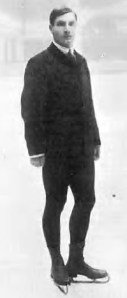
This guy invented the salchow. His name is Ulrich Salchow. What a coincidence!?!

We use the word “graceful” when we describe a dancer pirouetting or a figure skater performing a triple salchow. The word also applies to those people who suck every ounce of nutrition out of Christ’s nourishment and walk about with shimmering cascades of grace spilling over the tops of their heads. I know a few such people. You can tell them apart because they leave little puddles of grace behind them when they leave.

Lord, help me to remember that it is your grace with which you call me to nourish others. I can’t nourish them if I don’t allow you to nourish me. So please, fill this empty cup with the shimmering riches of Christ’s grace.

Footnotes

* Here’s a list of the technical words I used in this post:

Sursum corda: The three calls and responses at the beginning of the Eucharistic prayer, in which the congregation gives the priest the okay to go ahead and celebrate the Eucharist. The responsory nature of this prayer makes explicit that the Eucharist is a corporate event.

Epiphany: The twelfth day after Christmas, on which we celebrate the coming of the wise men to see Jesus. The coming of light into darkness and the call of the disciples are stressed during the season of Epiphany, which extends from January 6 to the day before Ash Wednesday.

Sanctus: “Sanctus” means holy and is the name for the prayer which begins “Holy, holy, holy Lord, God of power and might.” In Hebrew, there’s no way to make a word superlative (good, better, best); so, a three time repetition serves the same purpose.

Chalice: The cup we use at church. Remember that scene at the end of Indiana Jones and the Last Crusade? The room with the old knight is full of chalices. (“He chose…poorly”)

Orans position: “Orans” comes from the Latin word for “prayer” and is used when the priest is saying a prayer on behalf of the congregation. Think of a referee unethusiastically signaling touchdown and you’ve got it.

Ordination: The thing that happens to make someone who’s not a priest into a priest. The word comes from Latin and means something to the effect of “to put into order”; thus, ordination is when someone is set apart from others. There are four “orders” in the church: lay, deacon, priest, bishop — the latter three are “ordained” positions.