What is truth? — Pilate in three takes (take 2)

As mentioned in the footnote of the last Bible study (“Don’t just read it”), the following post is the middle of three that explores different interpretations of Pilate’s question “What is truth.” Using the ancient Jewish practice of Midrash (in which scholars took the stories of scripture and expanded them to reach new insight and new interpretive depth), I have attempted to get into Pilate’s mind on that fateful day before the Passover. Think of these posts as “takes”  — a film director asking an actor for different emotions over the course of shooting a scene. These different angles help us interpret Pilate’s conversation with Jesus in John 18:33-38. After reading all three takes, decide which you think is persuasive. If none is, write your own!

Take Two

I slam the door open so hard that it crashes into the mantle, sending a vase toppling. I catch the vase in midair with both hands and look at my warped features in the curved, glazed surface. Red splotches have broken out on my cheeks and neck. I grit my teeth, spin, and fling the vase at the far wall. It shatters, satisfyingly.

My personal guard comes bolting into the room, sword drawn, at the sound of the crash. He stops and stands dumbly when he sees that I am alone. “Bring me the prisoner,” I say, chest heaving.

I stand with my back to the door. I lean with my knuckles on the desk, hands clenched in fists. I hear the door open slowly. Without turning, I say, “Are you the king of the Jews?” He answers insolently, questioning me when I am the one asking the questions.

“I am not a Jew, am I?” I say, half mocking, half enraged. I always have trouble with locals this time of year, but this is as bad as I’ve seen it. I feel justified in my rage and it feels good. When will they learn that we are in control? “Your own nation and the chief priests have handed you over to me. What have you done?”

I hear a sound and whip around to find Jesus bending over the broken vase. He is holding a flower. This is too perfect, I think, as my ire grows stronger. This dove thinks he can play with the lion. He has no idea who he is dealing with. I stride over to him, snatch the flower, and snap its head off. I can play with him and those meddlesome priests at the same time: I can expend my anger in sport.

Then he babbles something incoherent about his kingdom. “So you are a king,” I shout, throwing my hands in the air.

“You say that I am a king,” he says, quietly. His calmness threatens to diffuse my anger. I won’t let him. He continues, as I pace around him, stepping on the broken vase and flowers with each pass. “For this I was born and for this I came into the world, to testify to the truth. Everyone who belongs to the truth listens to my voice.”

He finishes. I grab him by the shoulder and spin him around, grasping his garment in my left hand and pulling him close. We are nose to nose. His expression is one of mild surprise. There is no fear, not even concern in his eyes. Why isn’t he afraid of me? Why is he so calm?

“What is truth?” I don’t shout it. I don’t scream in his face. It comes out as a bellow, almost a growl. I push him away and storm out of the room, slamming the door behind me.

What is truth? — Pilate in three takes (take 1)

As mentioned in the footnote of the last Bible study (“Don’t just read it”), the following post is the first of three that explores different interpretations of Pilate’s question “What is truth.” Using the ancient Jewish practice of Midrash (in which scholars took the stories of scripture and expanded them to reach new insight and new interpretive depth), I have attempted to get into Pilate’s mind on that fateful day before the Passover. Think of these posts as “takes”  — a film director asking an actor for different emotions over the course of shooting a scene. These different angles help us interpret Pilate’s conversation with Jesus in John 18:33-38. After reading all three takes, decide which you think is persuasive. If none is, write your own!

Take One

I beckon for Jesus to follow me inside, and then I ask him, “Are you the King of the Jews?” He won’t give a straight answer, but I can tell he believes what he says. There is no hint of fever or delusion, just honesty. But I have learned from long experience in the politics of the Empire that there is a difference between honesty and truth. “So you are a king?” I press.

He looks at me for a moment, considering his response. “You say that I am a king. For this I was born and for this I came into the world, to testify to the truth. Everyone who belongs to the truth listens to my voice.”

I lean back on my desk and cross my arms. This man really, honestly believes what he is saying. There is no trace of deception in his face. He is playing the game and playing it well; his answers are both vague and cryptic, but neither seditious nor treasonous. I try to keep my face from betraying my internal skepticism, but I am sure my right eyebrow rises.

“What is truth?” I say. I say it flatly, so that there is barely a question mark at the end of the phrase. I can’t help but add a bit of sneer to my raised eyebrow. What a ludicrous proposition. He thinks he is on a mission to testify—to die—for the truth?

The truth? I don’t even think there is such a thing as truth, let alone a singular, definite truth. There are too many lies masquerading as truths out there. There is a chain of command in this Empire and that means there is a chain of lies, as well. I can lie to everyone beneath me, and they have to believe what I say is truth. And I am sure my superiors lie to me, but what am I to do? Consider it truth: that’s all I can do. Yes, there are too many lies out there masquerading as truths to think I can nail down any one single Truth.

My skepticism leaks out of my raised eyebrow and my sneering mouth. He knows I couldn’t care less for his truth. I just need to make sure I still have a job tomorrow. Truth. Lies. These things don’t matter. Keeping my position and my head: those are my concerns.

Still, nothing he has said makes him guilty. I stand up straight, look Jesus in the eye for a long moment, and then sweep past him on my way to talk to the locals again.

Don’t just read it (Bible study #7)

If you take the vast sweep of Christian history into account, far fewer people have read the Bible than have heard it read. When the New Testament was still just a collection of letters and a few strange things called “Gospel” (say from about 50 to 325 CE), specially trained performers recited entire letters and books from memory during worship. In the middle ages, the majority of people never heard scripture read in a language they could understand and probably wouldn’t have recognized a book if it fell on them from a scriptorium window. Even as the Reformation gained steam and the printing press made vernacular versions of the Bible available, most people heard scripture, but never read it. The “family Bible” didn’t become fashionable until the 18th century, and even today churchgoers hear more scripture than they read (no matter the ubiquity of the Bible online and on store shelves).newsies

What’s this have to do with biblical interpretation? I’m glad you asked. The texts that make up the Bible were always meant to be read aloud. Acts 8 makes this quite clear: Philip approaches the Ethiopian eunuch and knows he’s reading the prophet Isaiah because he is reading out loud. To himself. Follow the eunuch’s example (no, not that example). Read your passage out loud. I know you are reading a translation, but the beauty and rhetorical power of the biblical text do not necessarily suffer in an English treatment. When you read aloud, you will notice oratorical patterns and cadences that the Biblical writers employed to make recitation easier and listening more captivating.

Try this one on for size: say the following two verses in your mind and then say them out loud. “For those whom he foreknew he also predestined to be conformed to the image of his Son, in order that he might be the firstborn within a large family. And those whom he predestined he also called; and those whom he called he also justified; and those whom he justified he also glorified” (Romans 8:29-30).

Notice the oratorical power in the repetitive cadence. This is called a “step argument”: each phrase builds on the previous one until the sentence climaxes on the word “glorified.” Paul obviously wrote this sentence to be spoken rather than read. So there’s no point in studying these verses as “written.”

Besides appreciating the oratorical flair of Biblical writers, reading aloud gives you the opportunity to engage the drama of the Bible. A good chunk of the text is narrative and a good chunk of the narrative is dialogue. Now, we have no audiovisual documentation of the conversations recorded in the narrative, so it falls to us to interpret how the dialogue sounds.

Let’s take Pilate’s response to Jesus as an example: “Jesus answered, ‘You say that I am a king. For this I was born, and for this I came into the world, to testify to the truth. Everyone who belongs to the truth listens to my voice.’ Pilate asked him, ‘What is truth?’ ” (John 18:37-38). How does Pilate say, “What is truth?” Is he angry? Is he skeptical? Is he desperate? Each of these readings offers a different insight into the mind of the Roman governor. If you take reading aloud seriously, the dialogue will force you to make interpretive choices of tone, emotion, and motive. I’m not going to lie. Practicing a text for performance is an awesome way to enter into an interpretive mindset.*

A trained musician may be able to “hear the music” when she looks at a score, but most of us cannot comprehend music’s beauty and power without hearing it played. Similarly, the Biblical text soars when it is read aloud. In Genesis, God speaks creation into being. When we read the Bible aloud, we access that creative voice within ourselves and use the breath and the bodies that God created.

So, read the Bible, yes. But don’t just read it. Speak it. And don’t just speak the Bible. Proclaim it.

Footnotes

* The next few posts on this blog will expand this discussion of exploring dialogue in the Bible by presenting a three part Midrash on Pilate’s statement “What is truth?” Stay tuned.

** I want to thank the writer of the first comment on this post. Reading scripture aloud during worship is the main way people are exposed to scripture. Knowing that, we’ve got to make sure our lectors are trained and know what they are reading ahead of time. Too often, (for various reasons) priests are running around five minutes before services looking for people to read. Reading scripture aloud is too important for that to be the norm.

Finding your voice

You may not believe me, but there is a severe malady that targets clergy. To my knowledge, there are no support groups for those with chronic cases and no medical advances from the pharmaceutical companies. Indeed, doctors can do nothing to diagnose or treat this malady. Attacks happen almost exclusively during worship when the cleric is praying aloud and cease only when he or she has stopped speaking.

Liturgical professionals have made great strides in diagnosing this debilitating affliction; after much research, they have discovered that clergy with high self-importance blast counts most often contract it. Once, in the crypt of a great English cathedral, I came across an ancient description, but my memory is now woefully incomplete. My mind’s eye sees a crumbling illuminated page filled with cramped Latin writing. As near as I remember, the recorder named the malady something to the affect of inficere fenestrae voce — what is now commonly called “Stained Glass Voice.”

National Stained Glass Voice Awareness Week

If you have never heard of this affliction, please permit me to raise your awareness. “Stained Glass Voice” happens when the cleric prays aloud in a vastly different voice than he or she uses when saying anything else. Indicators of Stained Glass Voice include, but are not limited to, the dramatic pause (especially in the middle of a phrase); syllable elongation (especially “O” as in “O Lord”); pitch augmentation (especially an affected deep voice); and unnatural stressing (especially on words such as “who has”).

Most often, clergy contract Stained Glass Voice because they start acting instead of praying. Usually, they don’t even realize it because the affliction spreads gradually. They say the same prayers over and over again. In subconscious attempts to assuage the encroaching dullness of the repetitive action, they begin to say the words differently. Over time, the Stained Glass Voice replaces the original fervor of prayer, and clerics start competing for Best Supporting Actor in a Collect or Blessing.

Ever since I began leading worship, I have attempted to monitor my own vocal patterns when I pray aloud in church. At first, I suffered from Stained Glass Voice because I had trouble combining authenticity with volume. My natural praying voice is quite quiet, so my own voice felt foreign when I raised it to be heard by the congregation. Since my ordination to the priesthood, I have been praying aloud more often and for longer periods at a time. And I am coming to a point where volume does not inhibit authenticity. Attacks of Stained Glass Voice are less frequent (I hope), and I give credit for my remission to a mentor who probably has no idea how much she has taught me.

A few weeks ago, I wrote about a foursome of women who attend Morning Prayer every single day. One of these women, a beautiful lady whose advanced years have not robbed her of what they called in her day “moxie,” adds a set of prayers near the end of our daily worship. She says the prayers in her normal voice, with the same tone and character she uses after the service when she wishes me a good day. For many weeks, I reflected about how wonderful it was that she prays the same way she speaks. Then I realized why her prayers affect me so. It is not that she prays the same way she speaks. She just never stops praying. In every syllable she utters, I hear her prayer for her friends and her community, whether she is talking about God or about all the doughnuts I need to eat to fatten up a bit.

The Apostle Paul instructs the Thessalonians to “pray without ceasing.” I’ve known few people in my life who live up to such a lofty charge, but my friend at Morning Prayer does. As I listen to her speak and pray at the same time, I am learning how to make prayer an integral part of my life —  to make prayer the studs inside the wall rather than the pictures hung to adorn it. As I continue to grow as a person and as a priest, I hope that my true voice rises to my lips, and that the only stained glass in the building is the windowpanes.

Footnotes

I totally made up the story about the crypt at a great English Cathedral because I couldn’t figure out how to say “Stained Glass” in Latin.

The Inlet

(I wrote the following piece in the Spring of 2008, and happened upon it when I was reorganizing some folders on my computer. Some of the temporal language is now dated, but I left the piece as is to preserve its integrity.)

Theologian Sallie McFague identifies the earth as “the new poor.”* The planet, once bursting with bounty and hiding secrets in great swaths of unexplored terrain, now groans under the weight of post-industrial consumption and post-common sense insatiability. The earth has become poor (and a victim of exploitation, rape, and mutilation) in much the same way people become poor: the rich deny access to resources and opportunities. The sense of entitlement over the earth’s riches has grown over the last several hundred years (along with our gluttonous appetites). The Western Christian view of the earth—which, during the medieval period, was full of awe, respect, and fear—has morphed into one of utility, ambition, and domination. We have made the earth poor because we see it simply as an object, argues McFague.

There is another way. Rather than objectifying the earth, rather than possessing the earth as a thing to be used, abused, and discarded, McFague pleads with us to see the world as we see our loved ones—as subjects. Seeing the earth as another subject just as we ourselves are subjects gives us the opportunity to enter into mutual, sustainable relationships with the earth based on love and respect. McFague calls this model “the loving eye.”

Last autumn, I changed the route I take when I drive to church and discovered what she means by this loving eye. A left at the Belle Haven Golf Course sends me a Par Five’s distance down a residential street toward the George Washington Parkway, where I turn right and follow the Potomac River for about five minutes until I reach my parish. Sun-polished leaves of every green hue dance on the branches of trees, which arch toward one another above the parkway, making a dappled, living tunnel. On my left, the river peek-a-boos every now and again when the trees thin, and groves of white masts, rooted in anchored sailboats, mingle with the tree trunks. I sit up a little straighter in my seat. My eyes drift to the trees and the river beyond. And then, for the briefest of moments, I see my spot.

A small inlet in the river reaches to the road. The water tiptoes in and out of the little cove, treading softly around the three or four dead trunks that still stand in the shallows. On cloudless mornings, dawn gilds the somersaulting waves with new light, and the overhanging trees reflect swaying twins in the water. These deep green reflections merge with the morning light, mixing the color of sparkling possibility. All the energy of the dawn and the river and the swaying trees infuses me as I pass by, and I silently thank the Creator for such potent imagination. That is spring.

In winter, the water still treads lightly in and out of the cove, but, on certain January Sundays, ice reaches out from the bank, halting the tumbling waves. The dead trunks hide behind a low fog, which crawls along the surface of the water. When the cold sun penetrates the clouds, it shines through the winter scaffolding and silhouettes the bare trunks and branches. All the deliberateness of the ice and the fog and the sleeping branches deepens me as I pass by, and I silently thank the Creator for such quiet solemnity.

In autumn, the trees shed their uniformity. The water exults to mirror the new apparel in swirling reflections of amber and crimson. Dropping leaves spiral down, catching the morning light. They float on the water and cluster at the bases of the dead trunks. Dawn ignites the trees, making their leaves shimmer and blaze. The wind ruffles the surface of the water—no tiptoeing this time, only cartwheels. The light glances off each wave’s crest and each yellow leaf, doubling the morning’s fervent brightness. All the elation of the wind and the light and the flaming leaves elevates me as I pass by, and I silently thank the Creator for such riotous innovation.

I have never driven past my spot in the summer, but I imagine the inlet displaying a worn, comfortable version of the sparkling possibility of spring. Soon, I will no longer be driving that way on Sundays. At times, I have contemplated pulling my car over to snap a picture of the spot. But each time I travel down the living tunnel, I decide to keep driving by. Deep down, I discover that I have no desire to capture the image of that blessed spot. How can I hope to tell the story of such a place in a photograph? Capturing its image truly would be a confinement. I would preserve one instant of two-dimensional facsimile when the original has such light and movement and possibility. The depth of reflection would flatten. The waves would no longer tumble. The wind would disappear. If I took that picture, I would cease to remember that spot in my imagination. I would lose what I had sought to preserve. In a sense, I would take the life from a place that has infused my life with such energy, such ardent joy.

So I leave my camera at home. I prefer to keep the ever-changing image of that spot in my heart. It continues to kindle within me the spontaneous thanks of a creature for all the potent imagination, quiet solemnity, and riotous innovation with which the Creator has blessed creation.

The spot brings out McFague’s loving eye in me, and I find myself asking the water and wind and trees for forgiveness—for myself and for our entire post-common sense establishment. During the same lecture in which we discussed McFague’s work, my seminary theology professor reached back to the medieval era and borrowed the idea of Haecceitas from thinker Duns Scotus. He was not content to know a forest or a species of tree or flower. He wanted to know each particular white oak, each individual daffodil. And in so knowing, rejoice that God also knows those trees and flowers for God created them. And in so rejoicing, praise God for the craft, detail, and unsurpassed beauty seen in the particularity of creation. I pray for these Haecceitas eyes. I pray that soon we will all see the earth as a subject, a poor subject in need of enriching relationships. And I pray that the inlet remains in my heart, urging me to look with love on God’s creation.

Footnotes

* Sallie McFague, Super, Natural Christians

Our better angels: The two things you’re not supposed to talk about (part 3)

Election day falls on the first Tuesday after the first Monday in November of every even-numbered year. That day happens to be today.* West Virginia has early voting and the polling place happens to be next door to my church, so I took advantage of that a few weeks ago. But I’ve been keeping on top of the political scene in the country: the campaign tactics, the exchanges, the (gotcha!) media, the blustering pundits and blundering surrogates. I’ve at times in the last weeks been both enthused and disgusted, hopeful and resigned. Every sign of progress I see shares the spotlight with the tired old prejudices of the past. I hope with all the fervor of my heart that, no matter the outcome of this election, the United States continues to strive for that “more perfect union,” to which our Constitution sets its lofty heights.

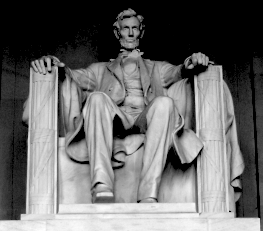
This hope stirs in me a refrain that has been playing in my head for days: “We are not enemies, but friends. We must not be enemies. Though passion may have strained it must not break our bonds of affection. The mystic chords of memory, stretching from every battlefield and patriot grave to every living heart and hearthstone all over this broad land, will yet swell the chorus of the Union, when again touched, as surely they will be, by the better angels of our nature.”lincoln

Abraham Lincoln spoke these words on March 4, 1861. The dust of 150 years has made these words no less relevant today. Chorus. Union. Bonds of affection. These are powerful words that tell of a truth, which these years of dust could never obscure: We can do great things when we come together, when we embrace the power of unity. This is Lincoln’s charge to us all. This is the truth which we entrust to our next president. And this is the prayer of Jesus for his disciples and for all of us: “All mine are yours, and yours are mine; and I have been glorified in them. And now I am no longer in the world, but they are in the world, and I am coming to you. Holy Father, protect them in your name that you have given me, so that they may be one, as we are one.” (John 17:10-11)

Jesus lived this prayer for unity when he welcomed everyone to come to him, and all those who were thirsty to drink. He lived this prayer when he ignored the racial barriers between Jews and Samaritans. He lived this prayer when, dying on the cross, he created a new family for his mother and his beloved disciple.

But uniting is not enough. Uniting is only the exposition of the story. We must unite for something. We must come together to fulfill those tasks which the better angels of our nature invite us to accomplish. Too often, the ingrained talking points that showcase the worst of partisan bickering shout down these better angels. Just last week, I was sitting at Panera bread and overheard a conversation between two businessmen — the gist of their chat simply rehashed the tired old stereotype that all people on welfare just sit at home watching Oprah. Surely, these two suits would have more political acumen than to recite such a line of attack, I thought. But no. In election years, by some strange alchemical process, saying something enough times makes it true, no matter the veracity of the claim. In the absence of any real hope, any real truth, whoever steps up to the mic to fill the dead air is the ruler of that fifteen second soundbyte.

But our better angels fill in that dead air. When we turn our attention inward, we will find those angels speaking the words of the only Truth out there worth subscribing to, the words of life that God writes on our hearts. These words will never fit into a soundbyte. They will never succumb to the tired old prejudices. They will only urge us to join together to accomplish God’s work on earth. The mystic chords of our better angels’ chorus echo with Jesus’ words: “Come, you that are blessed by my Father, inherit the kingdom prepared for you from the foundation of the world; for I was hungry and you gave me food, I was thirsty and you gave me something to drink, I was a stranger and you welcomed me, I was naked and you gave me clothing, I was sick and you took care of me, I was in prison and you visited me…Truly I tell you, just as you did it to one of the least of these who are members of my family, you did it to me.” (Matthew 25:34-36, 40)

We can feed the hungry and cloth the naked and shelter the homeless and nurse the sick. We can respond to that image of Christ in the faces of the least of Jesus’ family. Far be this from some misguided philanthropic diversion to the benefit of Oprah’s sweatpanted viewership. We are called, not just as Christians but as human beings, to help those who are suffering, to bring hope to those who are despairing. I ask you: how much better will we be, how much more unified, when today’s least of these are in the position to help tomorrow’s?

This is not the time for a bootstraps mentality. This is not the time to recline in the illusory comfort of self-interest. This is not the time to relapse into a tired old hoarding way. Be touched by the better angels of our nature.  Know that this is the time to give. This is the time to tug on your neighbor’s bootstraps. This is the time to enter into the kinectic delight of unity and labor for the kingdom of God on earth.**

Footnotes

* Incidentally, figuring out when Election day falls is similar to figuring out the date for Easter: the first Sunday after the first full moon after the vernal equinox. Fun times.

** Here is a list of links to help you get involved:

The ONE Campaign

The United Way

Habitat for Humanity

Heifer International

Episcopal Relief and Development

CNN: Impact Your World

Idealist.org

Redefining the good news: The two things you’re not supposed to talk about (part 2)

In the first installment of this series, we looked at how the phrase “separation of church and state” fails to comprehend the complex relationship that those two broad entities share. Fealty to such a misunderstood doctrine can blind us to the influence our faith in God should have on our political decisions. No decision is made in a vacuum. Acknowledging this, each person chooses which voices to distinguish from the cacophony clamoring for attention. She contemplates what her context values as true. As the cacophony and the context press upon her, the faithful person attempts to attend to that still small fluttering within, which is the deep intersection between her consciousness and God’s movement.

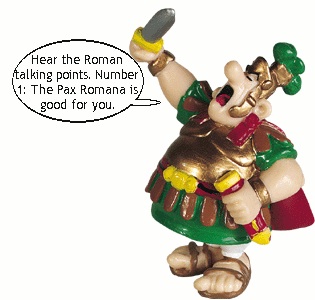
Just as decisions (political or otherwise) are not made in a vacuum, the Gospel does not take place outside of a specific context. Indeed, the dusty realism of the Gospel makes for compelling reading and even more compelling living. When Jesus of Nazareth steps onstage, the scene is set, the players chosen. The first words out of Jesus’ mouth (according to Mark) intentionally borrow the political language of the day: “The time is fulfilled, and the kingdom of God has come near; repent, and believe in the good news.” Jesus imagines a new definition for that word euangelion (Gospel, good news). No longer is “good news” to be proclaimed for another Roman military victory or another birthday of a Roman emperor. No. The kingdom of God has come near! This is the Good News of Jesus.

If Jesus is redefining Roman talking points, the political nature of his message would be hard for his contemporaries to miss. Their difficulty came from another angle: to whom does this nobody from a backwater like Nazareth belong? Is he a Pharisee? A Zealot? A Herodian? An Essene? He can’t be an Essene because he would’ve never left the desert. He can’t be a Herodian because he is speaking out against the Romans, and those Herodians are living just fine as Roman stooges. He can’t be a Zealot because he keeps talking about peace and seems not to have the stomach for gutting the odd centurion. And he can’t be a Pharisee — just look at the company he keeps!*

These groups made up the political landscape of early first century Israel, a land which had been under one foreign regime or other for several centuries. The current occupier, the Romans, governed with both the carrot and the stick. You could get very rich or very dead depending on how you interacted with Rome. Most got very enslaved or at least intimidated into meek submission. But Jesus, who fit no known political category of the day, spoke out in the politically charged atmosphere, spoke out with no fear and people listened.**

People listened. People watched. They saw the eyes of the blind opened and the legs of the lame strengthened. Could this Jesus possibly be the One they were expecting, the son of David who would lead them out from under the yoke of Rome — the Messiah? Peter thought so, but when Jesus told him what was to happen, Peter couldn’t handle it. The Messiah wasn’t supposed to die on a cross. The Messiah was supposed to lead the nation in an uprising and sweep all enemies from the land. To hear the people of Israel tell it, the Messiah was a political office — a judge/prophet/king, a conflation of all the powerful figures from the past.

But in a further re-imagining, Jesus took the messianic expectation and turned it on its head. He would have no part perpetuating the cycle of violence. After his death and resurrection, his followers began seeing Jesus’ understanding of the Messiah in different parts of the same Hebrew scriptures — the Messiah as the suffering servant, the one who demonstrated the utter necessity in beating swords to ploughshares.

Jesus stepped into a world dominated by the politics of fear and division and blame and hate. He immersed himself in the grimy, bloody mess of that world, but did not succumb to its tactics. In the end, that world killed him, but not before he proclaimed and lived out a new way, the way of the kingdom of God. It is to the political implications of this kingdom that we turn in the conclusion of this series, “The two things you’re not supposed to talk about.”

Footnotes

*Thanks to Brian McLaren’s concise description of the political nature of Jesus’ context. Read more in his The Secret Message of Jesus. Also, if you read just one more book this year, read his Everything Must Change for the best discussion of faith and our lives as citizens of the planet earth I’ve ever read.

** Of course, Jesus also got very dead. But happily for all of us, the dead bit is only part of the story.

Generous engagement: The two things you’re not supposed to talk about (part 1)

With a mere eight days left before the presidential election and with a friend to whom I really can’t say no coaxing me to step into this quagmire, I find my thoughts turning to the intersection between faith and politics. This is not just any intersection — this is the intellectual version of what my seminary friends call “dysfunction junction,” which I imagine gives 1 in 10 drivers in Alexandria, Virginia symptoms of PTSD. At that intersection, Braddock Road, Quaker Lane, and King Street all cross, and many vehicles trying to brave the passage do not make it out unscathed.

With the image of dysfunction junction planted firmly in my mind, I turn it to faith and politics, while the collective cry of grandparents everywhere echoes that those are the two things one is not supposed to talk about. I plan to talk about the political dimension of Jesus’ message in the next installments of this series, but first I must clear something up from a political science perspective, and here it is:

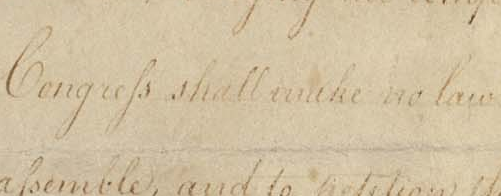
The phrase “separation of church and state” appears nowhere in our official political documents. Media Pundits and Joes Six-Pack alike invoke these five words everyday, but all they serve to do is reduce a much more complicated relationship into a morass of error and misunderstanding. Religion is mentioned exactly once in the U.S. Constitution. The First Amendment states: “Congress shall make no law respecting an establishment of religion, or prohibiting the free exercise thereof…” That’s it. That’s all we’ve got. First things first: the amendment deals specifically with congress. Churches can seek to impact the government all they want; the amendment concerns the power of congress, not the curtailment of the voice of the church.

Now, over the years, the Supreme Court has decided myriad cases by interpreting these two clauses of the First Amendment. The court gets involved simply because there is no complete wall of separation between church and state, as much as Thomas Jefferson wanted one. In 1963, the Court set a standard by which the government can indeed infringe on someone’s free exercise of religion as long as the government has a “compelling interest” and the resultant action is the “least restrictive” it can be (Sherbert v. Verner). My constitutional law notes from college have 33 religious cases cited, and those are just the important ones. The court has looked at issues such as school prayer, expulsion for religious motivations for failing to salute the flag, blue laws, drug use in religious ceremonies, wearing of religious symbols on military uniforms, displaying religious imagery on government property, polygamy, school vouchers, tax exemptions…*

All this to say that the government entangles itself in the religious establishment, no matter how much it tries not to. And the religious establishment, especially in the decades since the rise of the religious right, is unafraid to wade into the waters of politics. So, while the “separation of church and state” may be a nice shorthand for keeping us out of the messy business of theocracy, the phrase does not describe how our system functions.

People of faith should not fear to let their religious beliefs guide their political decisions. Rather, inviting God to be a part of your political decisions can lead to a more generous, sensitive engagment among those with whom you disagree. Of course, if invitation is corrupted by a toxic expectation that God is going to rubber stamp everything you decide is right, then this generosity and sensitivity will disappear. A prayerful reflection of the values Jesus teaches and the life he calls us to lead, along with a prayer for a discerning heart, help us to act responsibly and effectively in the political sphere.

With that sticky business about the separation of church and state cleared up, we can turn to the political message of Jesus’ teaching. Stay tuned for the second installment of “The two things you’re not supposed to talk about.”

Footnotes

*It would make for an extra boring post if I went into the actual legal stuff in here, and I’m not qualified to do so anyway. I have a Polical Science degree, not a JD. Suffice to say, the government (usually) tries hard not to break its own rules, but sometimes it does. Most of us just don’t notice most of the time.

Rambling in the presence of God

(Sermon for October 19, 2008 || Proper 24, Year A RCL || Exodus 33:12-23)

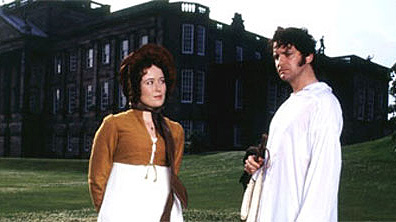
Moses is a bit of a rambler. I know, because I am a bit of a rambler, as well. If Dr. House were performing a differential diagnosis on “anxiety,” rambling would be the first symptom written on the dry-erase board. In my case, anxiety-induced rambling usually happens when I am attempting to converse with a woman I find attractive. In especially acute attacks, my rambling begins to sound like the dialogue in a Jane Austen novel. Much to my own chagrin, I tend to use phrases like “would that you were amenable to my ardent affection” and “how diverting it must be to tarry in the presence of such loquacious interlocutors.”
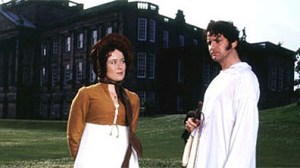
Now, Moses is already married to the lovely Zipporah (whom he met at the well) so he doesn’t have to worry about accidently quoting Pride and Prejudice in conversation. Rather than rambling in the presence of women, Moses’ anxiety leads him to ramble in the presence of God. No one could fault him for being anxious. After all, the people of Israel have been grumbling about the good old days in Egypt ever since they stepped on the far bank of the Red Sea. The daily delivery of manna and quail and the water gushing from the rock don’t seem to have curbed their discontent. And just last week, they melted down all their jewelry to make a nice, little pet god, which, of course, broke one of those pesky commandments. Needless to say, Moses has his hands full. Add to all this the anxiety caused by a heart to heart with the LORD, and Moses breaks down into an acute rambling attack.

The way the book of Exodus structures the conversation we heard this morning makes this rambling difficult to notice. This is one of those instances where the Bible overuses the third-person singular pronoun “he” so that you’re never quite sure who’s talking. Here’s Moses’ first ramble:* “See, you have said to me, `Bring up this people’; but you have not let me know whom you will send with me. Yet you have said, `I know you by name, and you have also found favor in my sight.’ Now if I have found favor in your sight, show me your ways, so that I may know you and find favor in your sight. Consider too that this nation is your people.”

And the LORD says to Moses: “My presence will go with you, and I will give you rest.”

But Moses apparently doesn’t hear this, because he is already halfway into his next ramble:* “If your presence will not go, do not carry us up from here. For how shall it be known that I have found favor in your sight, I and your people, unless you go with us? In this way, we shall be distinct, I and your people, from every people on the face of the earth.”

The LORD responds: “You have found favor in my sight, and I know you by name.”

I imagine Moses hearing this and slumping to the ground, allowing the full weight of his calling and all of his anxieties to wash over him. He lets the LORD’s words sink in. He shudders at their impact. He looks up, and his next frenetic ramble dies on his lips. Instead, he says, “Show me your glory, I pray.”

And the LORD says, “I will make all my goodness pass before you, and will proclaim before you the name, ‘The LORD.’”

So, after the LORD takes the necessary precautions to keep Moses from overexposure, the glory of the LORD passes Moses by. Moses, safe in the palm of God’s hands, feels the presence of the LORD. Moses’ anxious rambling ceases. Secure in the knowledge that he is in the LORD’s presence, Moses begins his work anew.

These are anxiety-ridden days. The presidential election is heading into the ninth inning. Unemployment is up and home-ownership down. The stock market graph looks like a heart monitor in the ICU. Add to all this the anxieties of work, school, and family, and rambling is going to be the least of our symptoms.

Thankfully, Moses is not the only person with whom God has the kind of conversation we’ve been discussing this morning. Oftentimes, when we come to God in prayer, our minds are already starting the sixtieth lap at Talladega. We just can’t slow down, can’t shift into a lower gear. We get frustrated because our prayer time becomes just another opportunity to review the grocery list and dwell on the need to get the oil changed and wonder how big a hit the investment portfolio took today.

But in our frustration, we fail to realize something. The grocery list, the oil change, the portfolio—these are just as good a place to start as any. Rather than seeing these things as intruding on our prayers, we can see them as entrances into authentic conversations with God. I don’t think God expects us to shut off our anxiety when we enter into prayer. Quite the opposite. God expects us to offer our anxieties as prayer.

Moses rambles about the people and finding favor in God’s sight and the nation of Israel. Rather than addressing any one manifestation of anxiety directly, the LORD speaks to the very core of Moses being: “My presence will go with you, and I will give you rest.” In other words, God says, “Moses, you are still going to lead the people. I’m not going to let you off the hook. But, remember, please remember that I am with you, and you can find rest in me.”

When we offer our anxieties to God in prayer, we acknowledge that the sources of those anxieties have power over us and keep us from being the people God calls us to be. But God whispers to the very core of our beings: “My presence will go with you, and I will give you rest.”

Moses continues to ramble. So God reminds Moses of the relationship they share. The LORD knows Moses’ name and Moses hears God speak that special, holy, intimate divine name that the Israelites wrote down but never spoke aloud. In revealing this special name to Moses, God invites Moses into a deeper relationship.

When we offer our anxieties to God in prayer, God gives us the opportunity to notice that God has heard what our hearts have been divulging. Through all our rambling, God is speaking God’s name to us, inviting us to that deeper relationship, in which trust begins to mitigate anxiety.

Finally, Moses stops rambling. He realizes that God is with him, bearing him up as the waves of anxiety crash over him. Moses asks to see God’s glory. All the goodness and the glory of the LORD pass him by. When we acknowledge the anxieties weighing on our hearts, we can begin to hear God speaking peace to us in the midst of those anxieties. And we, too, can settle into the cleft of the rock, rest in the palm of God’s hand, and feel the presence of the LORD pass us by.

Footnotes

* This is one of those times when reading a sermon doesn’t give you the effect of the delivered message. To get said effect, read Moses’ bits like Dr. Cox from Scrubs. He is a rambler, also.


Once there was a man who found a pearl…

So, the United States is mired in the worst financial fiasco since I was four years old. Because of my early developmental stage back then, I was more concerned with fire trucks than the Dow Jones Industrial Average. Now, I still get pretty excited when I see a fire truck, but the economic crisis occupies my mind with far more regularity. Every news cycle seems to have a direr story than the one before, the presidential candidates talk about little else, and the crisis is the number two topic at coffee hour right now (after college football, which, of course, is more important, especially when my team is ranked #2 in the AP).

With the Dow taking a nosedive and 401Ks across the land going on the South Beach diet, can you think of a better time for churches to start their fall stewardship campaigns?

I know the previous sentence sounds sarcastic, but it’s not. Of course, I wish we had never gotten into this mess in the first place. But we’re in it now, and the best thing we can do is take hard looks at our priorities. The economic crisis is forcing us to reevaluate how we allocate our resources. The first step in this evaluation process is realizing “our” resources are not ours at all.

Jesus tells this parable: “Again, the kingdom of heaven is like a merchant in search of fine pearls; on finding one pearl of great value, he went and sold all that he had and bought it” (Matthew 13:45-46).

A bishop I knew a long time ago used to tell a story about this passage from the Gospel according to Matthew. I was very young, so I might get some of the details wrong and I might embellish others, but it goes something like this:

Once there was a man who found a pearl. This pearl was the most magnificent specimen. Indeed, only in the wildest dreams of clams did a pearl like this one exist. It was the size and weight of a golf ball, but no one would think to compare the two. The pearl was in a class by itself. It shone with a light all its own. The light might have hid some imperfections if the pearl had had any. But it didn’t. The pearl, thought the man, was, quite simply, perfect. The trouble is, the pearl was in a glass case and very visible alarm wire crisscrossed the case and a wrinkled shopkeeper hovered over the case. The man opened his wallet, thumbed through the small bills in the billfold and pondered his several credit cards. He pulled out one especially shiny card and, pointing to the pearl, tried to hand the card to the shopkeeper. The shopkeeper raised her eyebrows and shook her head.

So the man went home. He wandered through his house, into the garage, and onto the deck. He gathered up everything not nailed down and sold it all—his car, his computer, his beloved grill. He went back to the shop. Not enough, the shopkeeper’s look told him.

So the man sold his house. Not enough. He cashed out his stock options. Not enough. He even gave up his mint-condition Nolan Ryan rookie card. Not enough. The man stared plaintively at the shopkeeper. Then his eyes wandered down to the pearl. He knew somehow that obtaining this pearl was why he was alive, what he was made for. He didn’t know how he knew, but, looking at that pearl, he just knew. He looked back up at the shopkeeper. “What about me?” he said, “What if I give myself?”

The shopkeeper smiled, brought a jangling set of keys to eyelevel, and began searching for a key. She found it, unlocked the case, and slowly lifted the pearl off of its bed of velvet. “Here you go,” the shopkeeper said. “And by the way,” she continued, “you were willing to give up everything for this pearl. Your house and grill and baseball card are still mine, but I want you to look after them for me. And remember, you are mine, too.”

This story has been with me for quite a while, and I share it because I think it centers the discussion of stewardship better than anything I can come up with myself. To understand the importance of stewardship, we must first acknowledge that everything we have comes from God, and is, in fact, still God’s. We are just holding onto God’s stuff for a while.

Indeed, a steward is someone who manages the assets of another. So when we talk about stewardship in a Christian context, we are saying that we are blessed with abundance from God, and we are striving to use that abundance justly and wisely. When we think of Christian giving—of time, of talent, of monetary resources—we should really tack on another word. We should think of it as “Christian giving back.”

Stewardship always entails some form of giving. Stewardship has at its base a certain kind of giving that we do every Sunday. When we celebrate the Eucharist, we are literally “giving thanks,” for that is what Eucharist means. By starting with thanksgiving, we acknowledge that our gifts, our lives, our livelihoods come from God. Stewardship must start with an “attitude of thanksgiving.”

The reevaluation of our allocation of resources begins with humbly acknowledging that we are not the owners of the stuff we accumulate and gratefully giving thanks to God for what God has given us to look after. In the end, this all comes down to trust. The financial crisis in which we are currently embroiled is predicated on untrustworthy practices; indeed, we don’t even know how much certain things are worth any more because of deceit and mistrust. But God is trustworthy, and God has entrusted us with God’s stuff. How will we respond?