First Words

(Sermon for Sunday, October 16, 2011 || Proper 24A || 1 Thessalonians 1:1-10 )

Any spherical object! (that's me at age 2)

Did your parents ever tell you about the first word you ever spoke? More than likely, your first word was “Da,” which is short for, “Daddy, go get Mommy so I can have lunch.” Perhaps, your first word was “Ma,” though this is unlikely, considering the “M” sound is much more difficult to make than the “D” sound. Perhaps, your first word was “No,” which you probably heard your parents say many, many times when they asked each other if the other had slept last night. My first word was “ball.”  And thus began a lifetime of me kicking, catching, and throwing any spherical object I could get my hands on.

Christianity has some first words, as well; at least, they’re the first words that we still have a record of today. They aren’t as hesitant or half-formed as are the first words of infants. Rather, they spring from the pages of the New Testament with remarkable (even uncanny) clarity, vitality, and comprehensiveness. We heard these words a few minutes ago when we listened to the first ten verses of Paul’s First Letter to the Thessalonians.

Now, before we get to some of Christianity’s first words, we need to clear up one spot of potential confusion and talk for just a minute about the similarities between Thessalonica in 50 AD and the United States in 2011. First, the potential confusion.

If you pull up the Bible on your smartphone, you will notice two things: number 1, the New Testament begins with the Gospel according to Matthew; and number 2, Paul’s First Letter to the Thessalonians is actually eighth on Paul’s depth chart, not first. So how could these ten verses from First Thessalonians possibly be the oldest recorded words in Christian history?

For starters, the folks who put together the New Testament put the four accounts of the Gospel up front because the rest of the pieces didn’t make a lot of sense without first hearing the story of Jesus’ life, death, and resurrection. But the people who wrote the Gospel didn’t start doing so until probably 15 to 20 years after Paul wrote to the Thessalonians. As for Paul’s depth chart (and this is a little strange) – his letters are actually in order by length, from longest to shortest, and First Thessalonians is one of the shorter letters. But if the New Testament were ordered chronologically by when the texts were written, our reading from Paul today would be on Page 1. Okay, confusion averted? Great. Let’s keep going.

Our modern moment shares several things in common with mid-first century Thessalonica, the community to which Paul writes the first words of Christianity. Like the modern United States, Thessalonica was a diverse, cosmopolitan place, with a plurality of religions and cultures all rubbing shoulders. As the capital of the region of Macedonia, there were plenty of things to do, not unlike the glut of stimulation that assaults us at every turn. And the Thessalonians had not received the good news of Jesus Christ before Paul arrived, just as people in modern America have lost contact with this great story of the Gospel.

To these people in Thessalonica and to us here on the Interwebs, Paul sends these first words. He, of course, had no idea we would consider them the first words of Christianity, which lends a special kind of authenticity to his message. These are words written to people who hadn’t read Matthew, Mark, Luke, or John. These are words written to people who lived in a society that knew very little about this faith that Paul brought with him. As such, these are words that can serve us as we practice sharing our faith, as the Thessalonians did, with people outside the walls of this church.

In these first ten verses of the first text of Christianity, there are six words in particular that shimmer for me: grace, peace, faith, love, hope, and joy. Notice how Paul uses each of these special words: “Grace to you and peace,” he writes. “We always give thanks to God for all of you and mention you in our prayers, constantly remembering before our God and Father your work of faith and labor of love and steadfastness of hope in our Lord Jesus Christ…You became imitators of us and of the Lord, for in spite of persecution you received the word with joy inspired by the Holy Spirit.”

These words are special because each has a meaning outside the church and a greater meaning inside the church. The secular understanding of these words can give followers of Christ like you and me a place to establish common ground as we share with others how God is present in our lives.

Let’s quickly look at each of these words to see how we can expand the secular definition to fit into the greater reality of following Jesus Christ.

“Grace” is a perfectly lovely word. We use this word to describe ballet dancers because they move with poise and precision. They throw their bodies into the air trusting that they will land on their feet, and if they don’t they get back up quickly and keep dancing. How easily can we take this understanding of grace and elevate the grace of the dancer to the Grace of God, this grace that picks us up when we fall and teaches us to find beauty in everything.*

We hear the word “peace” when conflict ends and “peacekeepers” enter the recently warring region to monitor the new situation. We use this word to describe a calm ocean after a storm or an infant who has finally dropped off to sleep. We can expand this to the Peace of God, which takes situations of conflict and infuses them with possibilities for unity, justice, and new beginnings.

“Faith” is the trickiest word on this list because all human attempts at “faithfulness” fall short. We put our trust in banks, in governments, in products, in each other, and sooner or later we are always let down. But when we expand the definition of faith to include the Faith of God, we find the one example in all of creation that will never fail. How wonderful to tell someone about this kind of faith!

“Love” is tricky, too, because we use the word in so many different circumstances, from our shoes to our spouses. But when we find that most authentic use of the word, when the word “love” springs unbidden from our lips and doesn’t describe an emotion but a state of being, a state that we entered unwittingly and never want to leave – then we begin to see the edge of the extraordinary Love of God. And we can celebrate that love with each other.

“Hope” is about the future. All people have used this word to talk about what they dream for the days and years ahead. I hope to have children and to teach them to play soccer. These human hopes are safe hopes, the kind that we can see in our mind’s eye five or ten years down the road. This understanding of hope elevates to the Hope of God when God releases us from the boundaries of the merely possible and shows us the realms of glory that exist far beyond our sight. And then we have a greater hope in which our everyday hopes can dwell.

Finally, we talk about “joy” most often when we have “enjoyed” a dinner party or a new film or a ballgame. We mean that we had a good time and might want to come over again. What we don’t realize is that this “joy” we feel is more than happiness. The Joy of God is a feeling of wholeness, of completion that comes when we discover that we are exactly the people who God created us to be.

Each of these words, these first words that Paul used when he wrote to the Thessalonians makes sense outside the context of the Christian faith. But within the greater reality of following Jesus Christ, these words shimmer with new facets of meaning.

I invite you this week to take these first words of Paul and try them out for yourself. Pray with this question in your heart: how has God encountered you when you have had an experience of grace, peace, faith, love, hope, or joy? Then find someone from within your own faith community and try out these words. Practice sharing with one another before you go out and share your Christian life with those outside your church.

Like the first words of an infant, our first attempts in sharing the first words of our faith will be halting. They will be hesitant. They will be half-formed. But they will be ours. And God will take them, shape them, and elevate them into God’s own words.

Note

*I wrote “Grace…teaches us to find beauty in everything” and then realized that I stole those words from U2. Thanks, fellas.

Christ’s Own

(Sermon for Sunday, October 2, 2011 || Proper 22A || Philippians 3:4b-14)

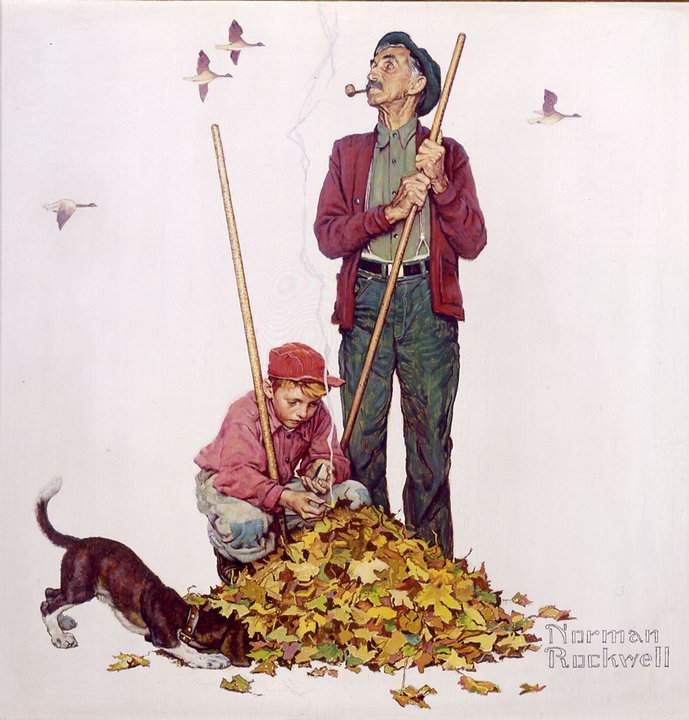
My grandfather, Roy Thomas, went into hospice twelve days ago, after several difficult weeks in the hospital. Less than twenty-four hours later, he passed away due to complications from being alive for more than nine decades. I awoke to the phone ringing at quarter to six in the morning, and I knew before answering what the news would be. Now, my grandfather and I were never close. There are no pictures of him teaching me how to fly fish or taking me to the ballgame or riding a tractor with me perched on his lap. There was never a Norman Rockwell moment in our relationship. He sent me a card each birthday, and I saw him every other year, give or take.

So, when I broke down weeping in my office a few hours after I received the call from my father, I was taken completely by surprise. Where were those tears coming from? How could the loss of someone, with whom I had but a passing relationship, hit me so hard in my gut? These were the questions I was asking myself as I wiped the tears away. I felt a bit silly, crying so uncontrollably when I was sure I was just fine, thank you very much. But perhaps, more fitting questions ask exactly the opposite. How could I be surprised that I felt such tear-stained grief over the loss of my own grandfather, no matter the state of our connection? How could I possibly think that the loss of a member of my own family wouldn’t hit me so hard in my gut?

The concept of “loss” is tricky thing. The overriding fact of earthly life is that one day – perhaps not today or tomorrow, but one day – we will lose our earthly lives. Everyone dies. There are no exceptions. We have thousands upon thousands of years of data backing up this reality. And yet, we train ourselves to ignore this overriding fact. We assume that death is something that happens to other people – fuzzy, nebulous people on the news and in the obituaries. Not the people we love. Not the people close to us.

But then a relative develops an aggressive cancer. Or a friend flips his SUV. Or a grandparent goes into hospice. And the illusion that loss only happens to other people shatters. The overriding fact that earthly life always ends sneaks up and surprises us, even though this fact is enmeshed in the very fabric of existence.

And death isn’t the only kind of loss we encounter. We confront loss on a daily basis, and still we have tremendous difficulty dealing. There is the loss of autonomy when others make decisions for us. There is the loss of relationships when we part ways with those who have made impacts on our lives. There is the loss of material possessions, the loss of health, the loss of trust, the loss of baseball games (sorry, fellow Sox fans). There is even the loss of loss, which is the grief that happens in response to you realizing that you are no longer grieving.

With loss surrounding us all the time, you’d think we’d have developed ways to deal that didn’t include various forms of denial and willful ignorance. But more often than not, we ignore the potential for loss until the loss is right in front of us hitting us in the gut.

And this willful ignorance is what made me read today’s lesson from Paul’s letter to the Philippians over and over again. Paul writes: “Yet whatever gains I had, these I have come to regard as loss because of Christ. More than that, I regard everything as loss because of the surpassing value of knowing Christ Jesus my Lord. For [Christ’s] sake I have suffered the loss of all things.”

Somehow, Paul’s relationship with Jesus Christ has allowed Paul to confront the reality of loss head on, well before any sort of loss has a chance to sneak up and surprise him. How does Paul do this? Let’s take a look. Can we do the same? Yes, I think we can.

According to Philippians, Paul values knowing Christ Jesus above all else. Nothing even comes close. The value of being in relationship with Jesus surpasses everything. And because knowing Jesus is so incalculably valuable, everything else in Paul’s life seems utterly insignificant. The gulf between what was important before meeting Christ and what is important now that he has met Christ is so wide that Paul can barely see the stuff of his old life shrinking in the distance.

And, therefore, he regards everything as loss. Based on Paul’s own words and my interpretation of them a moment ago, we might come away with the impression that nothing besides being in relationship with Christ should matter, that we should ignore everything that isn’t Jesus. This is the interpretation favored by hermits and ascetics that got away from everything to focus on God. However, I’m not convinced that that’s what Paul had in mind. We must keep going, because so far we’ve only gotten through the first half of Paul’s discussion.

Because Paul values his relationship with Christ above all else, he no longer attempts to cling to the rest of his life. He lets go of everything – his relationships, his possessions, his fears, his illusions. But all of this that Paul regards as loss is not lost. Paul does not cast everything into the void. Rather, he gives everything away to Christ. He gives everything to Jesus, and in doing so, Paul finds that everything he has regarded as loss was always God’s in the first place. Even Paul himself.

Paul relates this comforting reality to the Philippians: “Not that I have already obtained [the resurrection] or have already reached the goal; but I press on to make it my own, because Christ Jesus has made me his own.” Christ Jesus has made me his own. These words are the crux of Paul’s ability to deal with loss. The surpassing value of knowing Christ compels Paul to give everything up to Jesus and thus find himself at a loss. But in the act of giving away everything to Jesus, Paul discovers that Jesus has taken even more. Jesus has taken Paul. Jesus has made Paul his own, along with all that stuff that Paul gave him.

And Christ has made us his own, as well. When we enter into relationship with Christ, the surpassing value of that relationship makes everything else seem entirely insignificant. This seeming insignificance allows us to release our stranglehold on everything that we have been putting in place of a relationship with Christ. And when we release our grip and give away everything to Christ, we will find that Christ has already obtained us in the bargain.

Because Christ Jesus has made us his own, he has empowered us to give to him everything and everyone that we possibly could lose before the loss sneaks up and surprises us. Does this make grieving un-Christian? Of course not. Rather, our grief is one of the things that Christ invites us to give over, so that God might enfold us in our hour of need.

When my grandfather passed away eleven days ago, I was not prepared for the sense of loss that would hit me. Perhaps, this profound loss of someone I didn’t even realize I was clinging to has opened my eyes to truth that I still have plenty to give away to Christ. I would hazard to bet that we all continue to cling to things that have never really been ours to cling to. The good news is this: Any loss, any gain, any grief, any joy, any challenge, any victory is ours to share with Jesus Christ because Christ has made us his own.

In My Name

(Sermon for Sunday, September 4, 2011 || Proper 18A || Matthew 18:15-20 )

Near the end of the film Shakespeare in Love, the crowds who have just witnessed the first performance of Romeo and Juliet sit stunned into silence. Then one person begins clapping and soon the playhouse is shaking to thunderous applause. But in the midst of the cast’s curtain call, a group of soldiers storms into the theatre led by Mr. Tilney, the Queen’s Master of the Revels. “I arrest you in the name of Queen Elizabeth,” shouts Tilney.

When asked why he is attempting to arrest everyone present, he says that they all “stand in contempt of the authority vested” in him by Her Majesty because they just participated in a display of public lewdness – because (and here he points to Gwyneth Paltrow who is playing Lady Viola who, in turn, is playing Juliet) “that woman is a woman!” Then he employs the Queen’s authority a third time: “I’ll see you all in the clink in the name of Her Majesty Queen Elizabeth.”

“Mr. Tilney,” thunders a voice from the audience. Then the Queen reveals herself and says, “Have a care with my name or you will wear it out.” And stepping regally to the stage (as only Dame Judi Dench can), she takes charge of the situation.

Now the monarch happened to be at the play, but neither Mr. Tilney nor anyone else knew that. Mr. Tilney was doing what was expected of him as the person in charge of public performances in the Queen’s realm. The Queen, of course, could not possibly attend to all matters of governance alone, and so she appointed all sorts of people to handle affairs in her name. These people, like Mr. Tilney, used the Queen’s name to generate the authority they needed to do their jobs, which in the big picture always meant looking after the Queen’s affairs. Apparently, in Mr. Tilney’s case, he has traded on her name one too many times.

This is the model that first comes to my mind when the Gospel references doing something in Jesus’ name, as so happens in today’s reading from Matthew. I think of the absent monarch delegating to an underling some portion of her authority so that some minor affair of state runs smoothly. In this model, the name of the monarch functions as a badge or a seal, some sort of official statement that the underling is speaking for the monarch because the monarch is elsewhere.

Now I want you to time travel with me back about three minutes. I climbed into this pulpit, crossed myself, and said, “In the name of the Father and the Son and the Holy Spirit.” You said, “Amen,” and then you sat down while I took a sip of water. And then I started talking about Shakespeare in Love. Okay, back to the present.

How is my invocation of God’s name any different than Mr. Tilney wearing out Queen Elizabeth’s? If Mr. Tilney invokes the Queen’s name primarily because she is absent, what am I saying about God’s presence here with us at St. Stephen’s? Could I possibly be implying that God is an absent sovereign, and I am speaking on God’s authority because God couldn’t quite get here this morning?

I surely hope not. And here is where we disciples of Jesus Christ diverge from the underlings of Queen Elizabeth. Notice what Jesus says at the end of today’s Gospel reading: “For where two or three are gathered together in my name, I am there among them.” Whenever we invoke the name of Jesus, we do not do so in order to stand in for an absent savior; rather, we invoke Jesus’ name to awaken ourselves to the ultimate reality of Christ’s very presence in our midst.

Jesus expresses this ultimate reality when he says, “I am there among them.” In Greek, this phrase literally means, “I am there in the middle of them.” In other words, the presence of Christ forms the invisible connective tissue in our relationships. We make this connection visible when we love one another, when we serve one another, when we respect the dignity of one another, and when we reach out to those who we might not think are all that connected to us.

And we make this connection visible when we gather intentionally in Christ’s name to share Christ’s presence with each other. Later in this service, we will turn our attention to the table. And the very first words out of our mouths will demonstrate that a gathering of at least two is necessary to celebrate God’s connection to us and to each other. I will say, “The Lord be with you.” And you will respond, “And also with you.” We will engage in this short conversation in order to notice that we are gathered together in God’s presence.

During the ensuing prayer, we will thank God for all the gifts God has given us. And because this thanksgiving comes attached to the sharing of something, namely bread and wine, we will be reminded that the best way to thank God for our gifts is to share them with others. At the end of the prayer, I will break the bread so we all can partake in this act of sharing. And through the praying, thanking, breaking, and sharing, we will participate in the presence of God among us. We will celebrate the connective tissue of Christ in each of our relationships.

But this is not the end of our awareness of the connecting power of God. This is the training, the exercise for the real work of disciples of Jesus Christ. When we walk out through those doors, we will bring with us the desire and the ability to make visible the connective tissue of Christ’s presence in all of our relationships. The final dialogue of this service will be, “Let us go forth in the name of Christ,” to which you will respond, “Thanks be to God” (plus a few “Alleluias”).

We go forth in the name of Christ, not to divide, but to gather. We go forth in the name of Christ, not rejecting the chance to form a bond, but rejoicing that the connective tissue of God’s presence stretches forth from us, seeking the lost and the lonely. We go forth in the name of Christ, not as delegates of an absent savior, but as beacons of the light of Christ, which fills the space between people and pulls them closer together.

The Dragon’s Skin

(Sermon for August 28, 2011 || Proper 17A || Exodus 3:1-15)

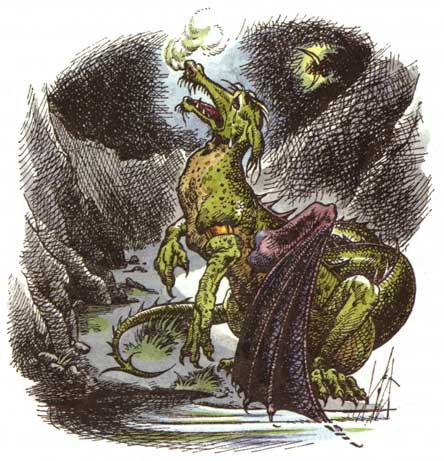
Eustace Scrubb had read only the wrong books. The books he had read had “a lot to say about exports and imports and governments and drains, but,” says C.S. Lewis, “they were weak on dragons.” And so when Eustace accidentally accompanies his cousins Edmund and Lucy on a voyage aboard the ship Dawn Treader, you might imagine that he is, shall we say, out of his element. The further the ship sails from Narnia, the more ghastly becomes Eustace’s behavior. He is truly a horrible boy – lazy, selfish, dishonest, self-centered, and his attitude only goes from bad to worse.

So you won’t be surprised to hear that, when the ship finally comes ashore after a brutal storm, Eustace slips off by himself to avoid a day of hard work. And because he’s read only the wrong books, you also won’t be surprised to hear that, when he stumbles into a cave full of treasure, he has no idea that he has trespassed into a dragon’s lair. He has no idea that falling asleep on a dragon’s hoard turns one into a dragon. And he has no idea that he has become a dragon until he realizes that he’s running on all fours and that the reflection in the pool is his own. Now that he has become a dragon, “an appalling loneliness” comes over him, and he begins to see in himself the monster that his cousins and the crew of the Dawn Treader had tolerated for the entire voyage. How could Eustace possibly undo the enchantment? How could he shed the dragon’s skin?

Consider that your cliffhanger until later in the sermon. Before we return to Eustace the dragon, let’s turn our attention to this morning’s lesson from the Hebrew Scripture. Moses grazes the flock of his father-in-law far afield. At Mount Horeb, he sees a bush blazing merrily, but the bush isn’t turning to coals and ash. Intrigued, Moses turns aside to look more closely. And God encounters him there. “Come no closer,” God calls to Moses. “Remove the sandals from your feet, for the place on which you are standing is holy ground.”

Remove the sandals from your feet. On the surface, this command reminds Moses that he and God don’t share the same position. Moses is a supplicant, and he comes into God’s presence unshod to show the vast disparity between the two. Okay, show of hands – which of you took off your shoes when you settled into your pew this morning? Yeah, neither did I. From a cultural point-of-view, removing our footwear signals informality rather than respect. So, we need to look at God’s command here from a different perspective.

On a deeper level than the simple removal of a garment, God’s command to Moses to take off his sandals presents a challenge to each of us who hears this story. This challenge begins with a question. What is God commanding you and me to remove from ourselves when we enter into God’s presence?

Our answers to this question build the wardrobe of costumes we wear all the time without realizing that we are dressed up. We wear these invisible costumes and affix invisible masks to our faces in order to set up buffers between ourselves and other people. If other people get too close, then they might impel us to change, to see the world differently than we desire, to remove ourselves from the centers of our existence. Our costumes are our first line of defense to remain the people we’ve always told ourselves we want to be. The trouble is that the costumes also disguise us from ourselves.

And so we stumble into God’s presence wearing carefully crafted costumes and masks that create barriers between us and everything that is not us. And just as God commands Moses to remove his shoes, God tells us to take off the costume.

What is God commanding you and me to remove from ourselves when we enter God’s presence? What makes up our costumes? Here I can only speak for myself, so listen for where your experience connects with mine. After praying with the question, I decide that the first piece of my costume to remove is Fear. This is the fear that forestalls any type of change. This is the fear that keeps me from entering into any kind of relationship because the other will cause some sort of transformation in me. This is the fear that keeps me from diving into a pool, not because I’m afraid of diving, but because I don’t want to get wet.

The second piece of the costume is Ignorance. When fear keeps relationships from beginning, ignorance is the necessary byproduct. I am blind to the situations of those I don’t take the time and energy to know. Again, this is part of the buffer. If I actively keep myself from developing an understanding of another’s plight, I won’t be putting myself in the position to have to decide whether or not to help, to relate, to get my hands dirty.

The third piece of the costume is Apathy. When ignorance fails, and I do find myself in the position to make a choice – to be in relationship or not – apathy sings the siren’s song. Apathy is the inertial force that keeps me complicit and complacent to the woes of others because I just can’t quite dig up enough empathy to care.

There are many more pieces of the costume, too many to talk about in this sermon, but there’s still the mask. My mask is Pride. When fear and ignorance and apathy all fail to keep me from being in an authentic relationship with another, there’s always pride to keep me living a disguised life. This is the pride that takes all the credit for my giftedness and assumes that I can get along quite well on my own because I seem to have done so thus far.

And this is where we return to Eustace, the horrible boy of C.S. Lewis’s The Voyage of the Dawn Treader. After he becomes human again, Eustace relates to his cousin Edmund how he left the dragon behind. A lion had come to him in the night and bade him undress. Since he had no clothes, he began shedding his skin like a snake. He scraped off his scales and stepped out of the skin. But then he looked down and saw another layer was there. He peeled this off as well. And “exactly the same thing happened again,” said Eustace.

And I thought to myself, oh dear, how ever many skins have I got to take off? …So I scratched away for the third time and got off a third skin, just like the two others, and stepped out of it. But as soon as I looked at myself in the water I knew it had been no good.

Then the lion said… ‘You will have to let me undress you.’

The desperate Eustace lay down and

The very first tear [the lion] made was so deep that I thought it had gone right into my heart… Well, he peeled the beastly stuff right off – just as I thought I’d done it myself the other three times, only they hadn’t hurt – and there it was, lying on the grass: only ever so much thicker, and darker, and more knobbly-looking than the others had been.

When we stumble into God’s presence, God invites us to remove our costumes. Like Eustace, we might be able to slough off some pieces ourselves, but the real costume only comes off when God intervenes and pulls the invisible garments away. When we pray, “I will, with God’s help,” we acknowledge that we cannot take off our disguises until we stand before the God who is the only one who truly knows what we look like. We cannot remove our costumes until we ask God to take them away, to leave them lying next to us, thick and dark and knobbly-looking.

And when we participate with God in this removal, there is just so much room to fill. Hope takes the place of Fear. Awareness fills in the gap left by of Ignorance. Engagement replaces Apathy. And Humility settles in where Pride once kept the disguise wrapped around us so tight. Shedding the costume is hard work that takes a lifetime. But we are not alone. We are in God’s presence, and God is forever helping us shed the dragon’s skin.

The Word is Near You

(Sermon for Sunday, August 7, 2011 || Proper 14 Year A || Romans 10:5-15)

This Sunday, the phrase, “the word is near you,” which Paul quotes from Deuteronomy in his letter to the Romans, really struck me. As I sat down to write a sermon about how and when the word is near us, I kept having this feeling that this sermon needed to be a song instead of a more traditional offering. So I decided to pull out my guitar and write a sung sermon. Here it is. You can hear a rough live version of the song by clicking play on the audio file below.

The T in Boston might run on a time table, but no one knows what it is.

When you’re standing on the subway platform,
And the Red Line is running late
When you’re landing on a rainy runway,
And the storm turns the sky to slate
When you’re handing out bread,
When you go where you’re led,
When you face what you dread…
the word is near you.

When you’re flipping through a family album
With your grandmother who you love
When you’re slipping down an icy sidewalk
With the cold seeping through your gloves
When you’re clipping your nails,
When you’re telling tall tales,
When the life support fails…
the word is near you.

The word is near you, the word is near you
It’s in the sun-setting sky,
And every answer to “why?”
Hear the still, small voice cry…
The word is near you.

When you’re clasping on your favorite bracelet,
The one made by your niece at camp
When you’re gasping on the field at halftime
And you fight through a wave of cramps
When you’re grasping at straws,
When you notice your flaws,
When your hardened heart thaws…
The word is near you.

When you’re looking for a baby present
For your friend who is almost due
When you’re booking travel for the funeral,
And your grief knocks the air from you.
When you’re cooking up eggs,
When the man near you begs,
When there’s nothing but dregs…
The word is near you.

It’s on your lips
And in your heart
Speaking life to your soul
And making you whole

The Autonomic Spiritual System

(Sermon for Sunday, July 17, 2011 || Proper 11 Year A || Genesis 28:10-19a; Psalm 139:1-11, 22-23)

What would your life be like if you had to think consciously about every breath you take? What would your life be like if your brain had to work your lungs like your hands might work a bicycle pump? What would your life be like if you needed to be aware of each of those millions of oxygen atoms that squeeze their way into your red blood cells for their continual circuit around your body? Well, for starters, you would never be able to sleep. You might be able to get a little work done by holding your breath for thirty seconds at a time and then concentrating furiously at the task at hand. You certainly wouldn’t be able to pay attention to this sermon. But that’s okay because I wouldn’t be able to preach in any coherent fashion either.

We are blessed, therefore, that God created us with “an autonomic nervous system,” which removes breathing from the list of bodily functions that require conscious thought. Of course, you might notice your breathing after walking up a particularly long flight of stairs or during a brisk run or when you are in labor. But for the vast majority of our lives, we simply breathe and never give the miracle of respiration a second thought.

I bet your high school anatomy class covered the wonder of the autonomic nervous system. Our bodies do so many things involuntarily, and the autonomic nervous system takes care of each one of them. What I’m sure the anatomy class didn’t cover, however, is the fact that, in addition to our bodily ones, every person here also has an autonomic spiritual system. God’s presence is even more constant than breathing, and so each of us has developed an autonomic spiritual system in order to handle our relationship with God during the vast majority of our lives when we are not consciously responding to that relationship.

Unlike the autonomic nervous system, which controls breathing and other things, none of us is born with an autonomic spiritual system. When you see a child’s eyes go wide at the splash of a stone in a pond or at the scurry of a squirrel on a branch, the child is experiencing God’s presence unfiltered by the involuntary sifting of the autonomic spiritual system. As we grow up, we develop this involuntary filtration, preferring the concrete stuff of the world over the spiritual substance of God’s presence. This is why the children in C.S. Lewis’s Chronicles of Narnia cannot return to Aslan’s domain once they’ve reached a certain age. The cares of the world keep them from wishing to go back to Narnia, and so they never find another gateway.

In today’s reading from the Hebrew Scriptures, Jacob demonstrates that even someone a mere two generations removed from Abraham has developed the problem of the autonomic spiritual system, this involuntary sifting of God’s presence from our daily experience. Jacob is on the run from his brother Esau, whose birthright and blessing Jacob has stolen. On his way to Haran, Jacob beds down in a certain place, which must have been quite rustic considering he uses a rock for a pillow. During the night, Jacob dreams of a ladder filled with angels going back and forth between earth and heaven. The Lord stands next to Jacob in this dream and says to him, “Know that I am with you and will keep you wherever you go.”

Jacob wakes up and proclaims to the sky and to the rocks: “Surely the Lord is in this place – and I did not know it!” Jacob’s involuntary filtration had prevented him from noticing that presence when he went to sleep, but his dream alerts him to override his autonomic spiritual system. Just like during the brisk run when you notice your breathing, Jacob wakes up dazzled by God’s presence.

And then, as so often happens, Jacob makes a common mistake that turns the autonomic spiritual system back on. He says, “How awesome is this place! This is none other than the house of God, and this is the gate of heaven.” Jacob’s mistakes his physical location as the catalyst for his spiritual awakening. By assigning spiritual meaning to that particular rock-strewn piece of ground, Jacob fails to remember the words that God spoke to him in his dream: “Know that I am with you and will keep you wherever you go.” God doesn’t say: “Know that I am here. God will bring Jacob back to that land, but in the meantime, Jacob will be in God’s presence wherever he goes.

The psalmist may have had Jacob’s mistake in mind while writing Psalm 139:

Where can I go then from [God’s] Spirit?
where can I flee from your presence?

If I climb up to heaven, you are there;
if I make the grave my bed, you are there also.

If I take the wings of the morning
and dwell in the uttermost parts of the sea,

Even there your hand will lead me
and your right hand hold me fast.

The psalmist understands that God’s presence is everywhere we might go because God’s presence is everywhere. These verses, then, are the psalmist’s way of remembering that God’s hand leads us, that God’s right hand holds us fast, no matter how often we might forget to search for God. The good news is that our autonomic spiritual systems do not define our spiritual existence. We can override them by accepting the ever-present help of God. There have been people throughout time who never developed the involuntary filtration: the Church calls them saints. I’m sure you know someone the church hasn’t canonized who lives a life fully present to God, a life without an autonomic spiritual system.

But for those of us who have difficulty overriding the system, we can take solace and strength in holding fast to an essential truth: God’s presence is not dependent on our awareness of God’s presence. Our awareness only matters insofar as we are present to God. We practice this awareness by taking on disciplines that slowly wean us from our reliance on the autonomic spiritual system: counting blessings, praying at times we might otherwise not pray, appreciating the majesty of the simplest created things, loving each other without thought of reciprocation, serving those in need.

Think about the last time you were stressed out – I mean really stressed out – I mean “I have four papers due on Monday and I washed a red shirt with the whites and I’ve been stuck on the tarmac at Logan for two hours for no discernible reason” stressed out. What did your friends do? They took you for coffee or for ice cream or, perhaps, for coffee ice cream. They told you to take a couple deep breaths. They told you to focus on breathing. Everything will be alright, they said. They knew that breathing, like God’s presence, is a constant in our lives. They knew that we don’t have to focus on constant things in order for those constant things to continue happening. But they also knew that when we do focus on those constant things, we often find peace – peace and new beginnings.

To an Unknown God

(Sermon for Sunday, May 29, 2011 || Easter 6A || Acts 17:22-31)

I wonder what Paul was thinking as he walked the streets of Athens. I’m sure that the many-columned Parthenon was looking down on him from atop the Acropolis, as this temple of Athena had for nearly five hundred years. But no matter the goddess Athena’s appeal, down every street, Paul sees another crumbling monument to one deity or another. He studies them carefully. I imagine he finds statues of all the Greek gods and perhaps other ones from far off places, considering Athens’ booming tourism trade.

At one point on his walk, however, Paul comes across something he doesn’t expect. He stumbles upon an altar with an odd inscription: “To an unknown god.” Now, Paul is no stranger to being run out of town, but he is also never one to sit quietly in a corner and listen. So, after seeing the inscription, Paul stands up at a gathering of the local scholarly elite and proclaims to them just who this unknown God is.

God, he says, is not like the gods of these gold, silver, and stone monuments. God is Lord of heaven and earth. God isn’t bound to set roles like your local gods. God breathes life into all things. God doesn’t live in a special house somewhere. God is not far from each one of us everywhere. And yet, while Paul’s sermon is full of stirring and magnificent images of God, I can’t help but wonder if the phrase “unknown God” still applies more than any other.

Now, I’m going to warn you that we are about to wade into particularly deep and boggy theological waters. I confused myself thoroughly trying to write all of this down, so if your brain starts to hurt, you’re not alone. However, I have confidence that with some help from our friend C.S. Lewis and a stiff breeze from the Holy Spirit, whom Jesus talked about in today’s Gospel, we will all come out on the other side of the bog with our minds intact. Are you with me? Good.

The Mythbusters try to pull apart two interlocked phonebooks

So two extremes play tug-of-war with this concept of our “knowledge of God.” In the case of the first extreme, I claim to have captured God, strapped the Divine to the operating table, and figured out what makes God tick. When I’m done with the exploratory surgery, I stuff and mount God on the wall just like a prize twelve-point buck. With my experimentation complete, I know just what button to push to make God act in my favor, and oddly enough, God disagrees with all the same people I do. This is the extreme where I have God pegged. Now, you might have spotted the flaw in this point of view. (Remember – we’re talking about extremes, so flaws are more common out here.) The flaw here is, of course, the delusion that God is small or mundane enough for me to figure out what makes God tick.

The other extreme is, naturally, the complete opposite of the first. In the case of the second extreme, I claim to have absolutely no ability to comprehend a God who exists for eternity in infinity. When I try to get a handle on God, I am at a complete loss for words and I must conclude that God is so unsearchably unknowable that I might as well give up. I’m an amoeba trying to read Shakespeare. But I make peace with my teeny-tinyness, and I go about my day trying not to have delusions of grandeur, in which I might rise to a level of intelligence that allows me to comprehend even a shred of what God is about. Of course, there’s a flaw here, too. The flaw in this extreme is the faulty thinking that God is too big and majestic to bother with an amoeba like me, no matter the evidence that God has been surprising humanity for millennia by encounters with the Divine, including one in which God sent his only Son to be an amoeba like me.

Now, each of us exists somewhere along the spectrum between these two extremes. When I really need something to happen – to get a job or pass a test or receive successful treatment – I might trend toward the first extreme, in which God comes at my beck and call. When something really terrible happens in the world – a huge earthquake or massive flooding or a category five tornado – I might trend toward the second extreme, in which God may exist in the ether of eternity but surely can’t be bothered with things here on lil’ ol’ Earth.

Do you see what’s happening here? My experience of God changes depending on my needs in the moment. I slide along the spectrum between the two extremes. The unique mixture of my appetites, yearnings, successes, failures, doubt, and faith paints a picture of the God to whom I address my prayers. And whatever else that painting may be, there is one thing that the picture surely is not. And that is an accurate portrait of God. This is why I wonder if the phrase “unknown God” still applies more than any other.

Now, as I tried to wade out of my confusion while writing this sermon, two questions struck me after that whole bit about the extremes. They might be on your mind right now, as well. First, if the God I’m worshiping isn’t really God, but rather my conception of God, then what’s the good of praying? And second, if I’m not really worshiping God, doesn’t that make me an idolater? This is when we need to call in one of the heavyweights.

C.S. Lewis wrote an incredible poem called “A footnote to all prayers.” He begins:

He whom I bow to only knows to whom I bow
When I attempt the ineffable name, murmuring thou,
And dream of Pheidian fancies and embrace in heart
Symbols (I know) which cannot be the thing thou art.

These Pheidian fancies are works of the Greek sculptor Phidas, the very statues of gods and goddesses that Paul saw in Athens. Lewis knows that, even when he tries to call upon God, the best he can do is some symbol that could never do God justice. He continues:

Thus always, taken at their word, all prayers blaspheme
Worshipping with frail images a folk-lore dream,
And all men in their praying, self-deceived, address
The coinage of their own unquiet thoughts…

Lewis poetically describes the same predicament we were in a minute ago: in prayer, we address the gods of our own “unquiet” thoughts and thus we blaspheme. But the poem is only half over, for Lewis continues: [we blaspheme]

…unless
Thou in magnetic mercy to thyself divert
Our arrows, aimed unskillfully…

Even someone of C.S. Lewis’ verbal skill aims his prayer-arrows unskillfully, always at some conception of an “unknown” god than at the one, true God. But, in the end, our story isn’t really about you and me. Our story is always and forever about God working in, around, and through us, no matter how unknown God may be to us. And God’s story is all about God’s “magnetic mercy,” by which God pulls our prayers to God, even though we shoot them far wide of the target. Lewis concludes:

Take not, oh Lord, our literal sense. Lord, in thy great,
Unbroken speech our limping metaphor translate.

As we slide along the spectrum between the two faulty extremes of our conception of God, we can only speak in “limping metaphor.” But the true God, according to Lewis, speaks in “great, unbroken speech.” This is the speech that voiced light in the beginning and continues to sustain creation. This is the speech that speaks each one of us into being everyday, no matter the degree to which the speaker is unknown to us.

To tell you the truth, this unknown quality of God will be with us until God takes us fully into God’s glorious presence. Indeed, the unknown quality will keep us searching and reaching out and finding God in even the unlikeliest of places. And I believe that God redeems our lack of knowledge through God’s magnetic mercy. God translates our limping metaphor into the leaping speech of abundant life (even the words I’m speaking right now). Here’s the good news. In the end, our knowledge of God places a far distant second to God’s knowledge of us. As Paul says to the church in Corinth: someday “I will know fully, even as I have been fully known.”

The Sheepfold

(Sermon for Sunday, May 15, 2011 || Easter 4A || John 10:1-10; find it also on Day1.org as part of the series “Young Leaders of the Church” series.)

Having the flu changed my life. The day was Thursday, March 13th, 2008, and I was sitting on my futon with my computer on my lap. Quite suddenly, I realized how clammy and hot I felt. Half an hour before, I had felt just fine, but in just thirty minutes my insides decided that they needed desperately to become my outsides. I put my computer on the floor, leapt up, and staggered into the bathroom. I was ill for five days, and during that time all I did was sleep and watch my recently acquired complete series of Star Trek: The Next Generation on DVD. For those five days, I did not open the lid of my laptop. I did not press the power button. And I did not log in to the computer game that had dominated my life for nearly two years.

The following Tuesday, when I felt that I could walk around without gripping the furniture for support, I stumbled over to the computer and deleted World of Warcraft from the hard drive. I tossed the game discs in the trash. And in the three years, two months, and two days since contracting the flu bug, I have never logged back into the game. The flu acted as the catalyst for the breaking of my addiction to the computer game. The illness put me on the disabled list for a week right before Easter, but no matter how awful the flu made me feel, I thank God every day for the not-so-gentle push away from the stagnant life I was living. I thank God every day for yanking me out of the comfortable sheepfold that I had built up around me. I thank God every day for pulling me kicking and screaming through the gate, away from my dormant life and toward a life full of God.

This not-so-gentle shove out of the sheepfold happens in today’s Gospel reading, although I doubt you noticed any mention of being kicked through the gate in Jesus’ words. We’ll get back to this shove in a moment. First, notice that in John chapter 10, Jesus employs the imagery of first century shepherding practice in an attempt to reveal his own identity and his relationship to us. Now, the most experience I’ve ever had with sheep was in southern England, where I spent one windy afternoon dodging the sheep’s ubiquitous droppings while trying to appreciate the mystery of Avebury’s standing stones. If you’re anything like me, you have no clue about shepherding practice of any sort, ancient or modern. Therefore, in order to access what John calls a “figure of speech,” we first acknowledge our lack of personal contact with Jesus’ choice of image, and second we embrace the opportunity to use our imaginations.

So imagine with me a rolling plain, dotted with humps and hillocks. Dusk descends, and the shepherd leads his flock into the sheepfold. One of the hillocks has been hollowed out, and the sheep huddle inside next to the sheep of several other shepherds who share this particular fold. A pair of piled rock walls extends out a few feet from the sides of the hill. The shepherd lies down in the space between the low walls, effectively sealing the enclosure. Thieves and bandits and wolves will have a difficult time getting in with the shepherds on guard. The sheep are safe in the sheepfold.

When the shepherd arises the next morning, Jesus explains, “He calls his own sheep by name and leads them out. When he has brought out all his own, he goes ahead of them, and the sheep follow him because they know his voice.” The sheep can’t spend their whole lives in the sheepfold, no matter how safe the enclosure may be. There’s no food in the fold, after all. The sheepfold may be comfortable and safe, but the sheep must follow the shepherd out of the fold in order to find sustenance, in order to live.

Jesus’ choice of words here is telling, but our translation into English hides the special word that Jesus uses. “When he has brought out all his own, he goes ahead of them,” says Jesus in the version we use in church. In this verse, there’s a fairly weak rendering of a Greek word that appears over and over again in the Gospel. We hear this word every time Jesus casts out a demon. We hear this word when Jesus makes a whip and throws the moneychangers out of the temple. We hear this word when Jesus speaks of driving out the “ruler of this world.” In every instance of this word in the Gospel, Jesus is doing some sort of battle: he is pushing, pulling, throwing, yanking, driving, exorcising, casting out. But in this instance about the shepherd and the sheep, the translators decided a nice, safe, neutral translation was better. The shepherd simply “brings” his sheep out of the fold.

Now, perhaps those dimwitted, wooly animals trod placidly from the fold every morning at the beckoning of the shepherd. But Jesus is, of course, not talking about real sheep. He’s talking about us, about you and me. He’s talking about calling out to us, about speaking the word that will bring us forth from our own sheepfolds, from those places of comfort and safety that we have built up around us. The seductive force that pulls us into these personal sheepfolds tells us that everything will be okay as long as we keep quiet and stay put. Play another hour. Have another drink. Watch another show. I don’t know about you, but I need to be pushed, pulled, thrown, yanked, and driven out of that place of stagnation and dormancy every time I start settling into my comfortable enclosure.

For two years, my sheepfold was the virtual world created in the computer game World of Warcraft. I lived there more than I did in the real world. I played every day. Often I ate all three meals in front of my computer. But during those stagnant months that stretched into years, I didn’t live. I existed. I simply settled myself in my sheepfold. My mind numbed. My heart hibernated. My spirit deflated. But I didn’t notice because I was safe and I was comfortable. Then the flu hit, and I was too weak to resist the pulling and yanking that God had been doing for who knows how long. God drove me out of my sheepfold. And my life began anew.

This is the message of the Resurrection: life cannot be conquered – not by death, not by sin, not by the powers of darkness. Life happens – fully, intensely, eternally. Indeed, Jesus tells us this morning: “I came that they may have life, and have it abundantly.” The Resurrection of Jesus Christ ripples out to touch every life, everywhere, for all time. The wonder of Easter morning shows us the utter lengths that God goes to offer us abundant life.

And yet, while life cannot be conquered, life can be delayed, put on hold, made dormant. When we retreat to the safety and comfort of our own personal sheepfolds – whatever they may be – we refuse to participate in the fullness of a life lived in God. Of course, existing in the sheepfold is easier, less demanding. But existence is not life. Ease does not bring joy. And less demanding often means less fulfilling.

We cannot import into our sheepfolds the abundant life that Christ offers us because the very fullness of that life cannot fit inside a safe, comfortable enclosure. Christ drives us out of the sheepfold so that our lives have the opportunity to expand, that we may embrace God’s unrestrained abundance. During this season of Easter, join God in the expansive life found in the Resurrection. Listen for the voice of the shepherd calling you by name, calling you out of complacency. And give Christ the chance to cast you out of your sheepfold so that you may find the fullness of a life lived in the abundance of God.

Breathing on Statues

(Sermon for Sunday, May 1, 2011 || Easter 2A || John 20:19-31)

Imagine with me the Apostle Peter, who is in Rome near the end of his life, talking to a friend about the day when Jesus rose from the dead and appeared to the disciples in the locked house.

"Aslan Breathes" by Melissa Carter. Click the picture to see more of her paintings.

I wish I could tell you that seeing the empty tomb was enough. I went inside the tomb and saw the linen cloths lying there and the cloth that had covered Jesus’ face folded up in a corner. Thinking back now, surely grave robbers would not have folded his ceremonial burial garments while stealing his body! But in the semi-darkness of that early morning, I wasn’t thinking rationally. I wasn’t thinking at all. I was numb on the outside, immune to the sliver of hope that the empty tomb brought.

I was numb on the outside, but on the inside, I was at war. I always thought of myself as his most faithful disciple, but at the time of his greatest need, I abandoned him, I lied about knowing him to save my own skin. In the garden, I had been ready to fight to the death for Jesus. But the moment he took away my sword, I crumbled. I wasn’t strong enough to remain by his side without a weapon in my hand. I wasn’t strong enough to trust him, to trust that his plan included death without fighting. I was at war within myself, and I could not access a single crumb of the peace that Jesus had always radiated.

I saw the empty tomb, but the conflict within kept me blind to what the emptiness might mean. The war inside of me – with fresh reinforcements of guilt – was still raging when I returned to the house we had used a few nights before, on the night when I didn’t want Jesus to wash me feet. Nine of the others were there; they had been locked in the room since the mob had formed three days before. As I was shutting the door, Mary Magdalene rushed up and squeezed her way into the room. “I have seen the Lord,” she shouted.

She was breathing hard. I had left her standing outside the tomb, so she must have raced all the way to the house to catch up with me. I looked at Mary: her face glistened with sweat, her eyes were bright. If the conflict within had not been blinding me, I might have identified the brightness in her eyes as “joy,” but how could there ever be joy again after what had happened? The other disciples barely looked up when she burst in shouting. She looked around the room, then back at me. “He has risen from the dead,” she said, defiantly.

I took a step toward her. “Just because the tomb was empty,” I began, but my voice trailed off. She backed away, and now her voice was very small, small and wounded. “But I did see him,” she said. And I shut the door with Mary on the other side.

Sliding the bolt home, I slumped against the door and slid to the ground. Oblivious to Mary’s pounding on the door, I looked around the room. Judas was gone, of course, but everyone else was there, I was sure. We had escaped the mob and the authorities. Would they be content with the death of our leader or would they be coming after us, too? I counted the others. Nine, and I made ten. Someone else was missing. “Where’s Thomas,” I called out.

Philip looked up for a moment and managed a one-word response. “Gone,” he said, and he put his head back into his hands. I sat with my back to the locked door. Eventually Mary gave up her pounding. I could hear her sobbing, her breath coming in great heaves. She was, no doubt, sitting against the other side of the door. Three inches of wood separated us: three inches of wood and my disbelief and the war raging within me.

Inside the room, we might have been statues. I couldn’t even hear the others breathing. Hours passed and no one noticed. No one spoke. No one ate or drank. We were entombed in the locked house, alive but acting like dead men. And all the while the war raged on while numbness froze my body against the bolted door.

The ten of us were still frozen in place when evening fell. I had been staring at nothing in particular when I began unconsciously counting the others again. “Eight. Nine. Ten.” I counted aloud, and then I put my finger to my own chest. “Eleven.” I counted again. Eleven again. I leapt up and stared at the man in the center of the room. He was slowly spinning in a circle, studying each statue in turn. I looked where he was looking: at the hollow eyes, at the sunken cheeks, at the dried up streams of tears that had washed clean lines on dirty faces.

As far as I could tell, I was the only one who had noticed his presence. Since my rational mind was still turned off, I didn’t even wonder how someone else had entered the room while I was sitting against the locked door. I just stared at him, uncomprehending, but the sliver of hope that lay dormant in me since the tomb was beginning to glow. Then he said, “Peace be with you.”

They were the first words spoken since Philip’s one-word response to my question hours earlier. The words rang out, and the others began to stir. They raised their heads. Some stood up. The man walked over to me, gripped my arm in a firm grasp, and I noticed fresh wounds that cut through both of his wrists. He went around the room clasping the others’ shoulders and lifting their chins with his fingers. “He can’t be,” I said, as the war of guilt and pain and loss continued to rage within me, stronger now that the faint glow of hope was illuminating the battlefield.

The man heard me and turned to face my direction. “Peace be with you,” he said again. We were all standing now. The room, so empty a moment before, seemed full now, but not full enough for him. He gestured to me. I turned, unbolted the lock, and opened the door. Mary, still slumped against the other side, fell into the room. I helped her to her feet. “Is he?” I whispered to her. She looked from the man to me, and she beamed at me through brimming eyes.

“As the Father sent me, so I am sending you,” he continued. With these words, we, who had been as still as statues mere minutes before, all leaned in, like trees bending toward the sunlight. And he exhaled a deep, cleansing breath, then another and another. As he breathed out, I breathed in. I breathed in his breath, the wind of his life. I breathed in the words he had spoken twice since his arrival, the very peace that he proclaimed, that he radiated. This was Jesus, and he was alive, and he was breathing life back into us, into the ones who had entombed ourselves in that locked house.

As we leaned closer, Jesus said, “Receive the Holy Spirit.” And his breath washed over me, into me, through me. His Spirit brought peace to the war raging within. His breath blew across the faint glow of hope, turning the glow into a spark, and the spark into a flame, and the flame into a fire. And the fire set my heart alight with all the fervor of rekindled belief in this Jesus, this risen Lord, this one who would not abandon me to the grave even after I had abandoned him to die.

I tell you, friend, that in the years since that day, my daydreams have often brought me back to that moment when Jesus breathed his Spirit into me. When I am in distress, when I am in grief, when I forget that I believe that I am with God, I can take a breath. And I will remember that I am breathing in the peace that our Lord has given to each of us, the peace that passes all my ability to understand and lodges where I need that peace the most – in the secret places within where the war still rages from time to time. You see, every time I take a breath, and, for that matter, every time you take a breath, we are not only filling up our lungs with air. We are filling up our souls with the Holy Spirit of God, who continues to breathe into us the new life of the Risen Christ.

These Things Last

 (Sermon for Sunday April 17, 2011 || Palm Sunday Year A || Psalm 118; Matthew 21:1-11)

You may or may not have noticed that we skipped sixteen verses of today’s psalm. We read verses one and two, and then we leapt to verse nineteen and read to the end. Now, I don’t know about you, but the lectionary prompting me to skip things just makes me more and more curious about what I’m being told not to read. Perhaps this is the rebellious streak that never manifested in my adolescence finally coming out in bouts of unruly biblical interpretation. If so, I invite you to join me in my insubordination for a few moments.

Steve McQueen's Capt. Hilts goes to the "cooler" for insubordination about once every half hour of the legendary film "The Great Escape" (1963).

The opening verse of the psalm, which we did read, says, “Give thanks to the Lord, for he is good; his mercy endures for ever.” Other translations render “mercy” as “loving kindness” and “faithful love,” as in “his faithful love lasts forever.” The psalmist then moves from this declaration of love to the verses we skipped, which tell of a difficult military campaign. The middle section reads: “All the nations surrounded me, but I cut them down in the Lord’s name. Yes, they surrounded me on every single side, but I cut them down in the Lord’s name. They surrounded me like bees, but they were extinguished like burning thorns. I cut them down in the Lord’s name!” The psalmist continues with a victory shout: “The Lord’s strong hand is victorious! The Lord’s strong hand is ready to strike! The Lord’s strong hand is victorious!”

With the bloody, militant verses through, the lectionary picks back up on safer terrain for the final ten verses of the psalm. Isolated as they are in this morning’s reading, these ten verses depict an innocuous procession to the temple for some sort of sacrifice of thanksgiving. But the militant verses show this psalm in a different light than we might have otherwise expected. This is no ordinary procession to the temple; this is a victory march. This is the triumphant rally following a hard-fought war. The victors parade into the city with verse 19 on their lips: “Open for me the gates of righteousness; I will enter them; I will offer thanks to the Lord.”

A few verses later, we hear the chants of the crowd lining the streets as the troops pass: “Hosannah, Lord, hosannah! Lord, send us now success. Blessed is he who comes in the name of the Lord.” Wait just a second. We heard these same words again this morning, again from a crowd, again during a parade. As Jesus rides into Jerusalem, the crowds chant, “Hosanna to the Son of David! Blessed is the one who comes in the name of the Lord!” Could we have just heard the same story twice in a row? We sure did, but you’ll notice some glaring differences, which show that the story in the Gospel will soon come to quite a different ending, which we will hear at the end of this service.

In the psalm, the ones who come in the name of the Lord are the ones who cut down their foes also in the name of the Lord. In the Gospel, the one who comes in the name of the Lord is the prince of peace.

In the psalm, the speaker shouts that the Lord’s strong hand is victorious and ready to strike. In the Gospel, Jesus offers no retaliation upon his arrest and reprimands the disciple who lashes out with the sword. Jesus shows his power not in victory, but in sacrifice.

In the psalm, the speaker declares: “I won’t die—no, I will live and declare what the Lord has done.” In the Gospel, Jesus gives up his life in order to declare what the Lord is doing.

In the psalm, the people call out for success. In the Gospel, Jesus knows that sacrifice, rather than success, is his calling.

In the psalm, the parade “form(s) a procession with branches up to the horns of the altar,” where the blood of the animal of the ritual sin offering will be smeared. In the Gospel, Jesus takes on the role of sin offering and sacrifices his own life for the sins of the whole world.

Whereas the psalm tells this story of a parade as the end of a triumphant military campaign, the Gospel tells this same story as the beginning of a defeat so great that the subject of the parade is put to death and his followers betray him, deny him, and desert him.

And yet, we are left to wonder: which one is the true victory? Which parade truly tells the story that the first and last verses of the psalm proclaim: “Give thanks to the Lord because he is good, because his faithful love lasts forever.”

God’s faithful love lasts forever. The triumphant military campaign in Psalm 118 is fleeting. Those same victorious soldiers marching through the gates of the city will, sadly, march out into battle again. But the death of the one whose only crime was truth-telling, the defiance of the one who stands against the forces of darkness and domination, the sacrifice of the one who drew all the world to himself while being raised up on a cross – these things last.

Jesus says to his disciples, “This is my commandment: love each other just as I have loved you. No one has greater love than to give up one’s life for one’s friends” (John 15:12-13). Jesus modeled this commandment in his own magnificent defeat. But we know that this isn’t the end of the story.

Because God’s faithful love lasts forever.