Whatever Passes Along the Paths of the Sea: The Oil Spill and Psalm 8

I first posted this reflection on Psalm 8 (the Psalm from Trinity Sunday) on the website Day1.org, a site on which I am a “key voices” blogger. If it sounds more academic than my normal writing, it is because this piece began it’s life as a seminary paper. I promise it sounds way more academic in it’s original version.

* * *
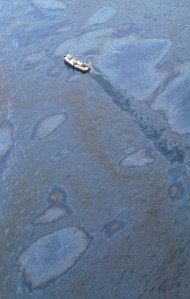
source: huffingtonpost.com

Seen from aerial photographs, the oil spill looks like any old gasoline rainbow you might see on the pavement outside a gas station after a drizzle. Then you realize the picture is taken from a few thousand feet and the patch of oil is hundreds of square miles in area and the spill is growing because it’s not a leak, it’s a geyser. Such thoughts send the mind reeling. How could we be so bold, so cocky, so derelict in our duty to God to be stewards of this creation that we pump toxic liquids out of the ground without so much as even a sketch of a plan to deal with the consequences of our own fallibility?

With these thoughts on my mind (and, I must confess, I am safely ensconced on a different coast far from the poisonous ooze), I glance at the readings for Trinity Sunday and the words of Psalm 8 hit me hard upside the head.

1. O LORD, our Sovereign,
how majestic is your name in all the earth!
You have set your glory above the heavens.
2.  Out of the mouths of babes and infants
you have founded a bulwark because of your foes,
to silence the enemy and the avenger.
3.  When I look at your heavens, the work of your fingers,
the moon and the stars that you have established;
4.  what are human beings that you are mindful of them,
mortals that you care for them?
5.  Yet you have made them a little lower than God,
and crowned them with glory and honor.
6.  You have given them dominion over the works of your hands;
you have put all things under their feet,
7.  all sheep and oxen, and also the beasts of the field,
8.  the birds of the air, and the fish of the sea,
whatever passes along the paths of the seas.
9.  O LORD, our Sovereign,
how majestic is your name in all the earth!

With uncanny prescience, the psalmist speaks to our modern world about humanity’s role in creation, one based on the proper comprehension of humanity’s status as God’s subjects and therefore as servants of God’s creation. The second verse, which introduces the theme of dependence, seems out of place in the overarching language praising God for creation and humankind’s place in it. Of course, it’s always the verses that seem out of place that hold the most interpretive weight. By introducing the idea of dependence, the psalmist directs the audience to reflect on the necessity of human humility in regards to humanity’s relationship with God, especially concerning the dominion over creation.

At first glance verse 2 stands in contrast to the rest of the psalm since it concerns itself with enemies that are not mentioned again; further, verses 1 and 3 flow together nicely, with the thought of heaven connecting the two verses. But instead of mentally removing verse 2 so that the psalm flows smoothly, the reader must dwell on the second to come to the subtler and deeper orientation that the psalmist attempts to reach. The psalmist praises God for founding a “bulwark” (or strength, stronghold) against enemies “out of the mouths of babes and infants.” For those reading the psalms in order, this is the first time infants are mentioned in the entire Book of Psalms; indeed, the image of the babe is a fresh idea. A prevalent mental association made with infants is their dependency on their parents. The psalmist makes this association explicit by using not only the word for child, but also the word for “nursing infant,” The nursing infant truly is dependent on his or her mother in a way to which no other relationship quite compares. And it is out of the mouths of the utterly dependent that God achieves God’s plan — in this case beating back the foes, which scholar J. Clinton McCann deems “the chaotic forces that God conquered and ordered in the sovereign act of creation.”

With the interpretive key of dependence planted firmly in our minds, we can turn to the rest of the psalm. Verse 1 names God with the divine name and then follows with a title for God. The divine name automatically engenders feelings of obedience, but the addition of a title of “sovereign” serves as a further reminder that God is in charge. Because God exercises complete sovereignty, humans are as completely dependent on God as nursing infants are on their mothers.

Moving to verses 3-5, the psalmist looks up to the night sky and is walloped with a feeling of insignificance. And why not? In The Hitchhiker’s Guide to the Galaxy, Douglas Adams unwittingly offers an explanation of verse 3: “Space…is big. Really big. You just won’t believe how vastly hugely mindbogglingly big it is. I mean you may think it’s a long way down the road to the chemist, but that’s just peanuts to space.”

Scholar Peter Craigie points out that the psalmist drives home the point of humankind’s insignificance by saying that God establishes this mindbogglingly big thing with God’s fingers. This awareness of humanity’s smallness in the grand scheme could reduce us to apathetic movement through life because nothing we do would seem to matter. The psalmist nearly slips into this dangerous mode of thinking in v. 4; indeed, the hymn of praise could become a psalm lament at this point. But in the words “mortals that you care for them,” the reader recalls verse 2 and remembers that we are in a dependent relationship with God, who is our sovereign. Verse 5 continues this recollection by adding “yet you have made them (a little lower than God).” By reading verses 3-5 in light of verse 2, the faith that God made us and cares for us outweighs any feelings of insignificance that the night sky may provoke.

Verses 6-8 shift the focus from humankind’s dependence on God and humanity’s misplaced feelings of insignificance to the role God has ordained for humankind on earth. These verses recall the vocation God gives humanity on the sixth day of creation. While the word “dominion” in verse 6 is different than “dominion” in Genesis 1:26, the parallels with Genesis 1 are unmistakable. The language of largeness and smallness remains in these verses, which continues the theme of significance/insignificance seen in the previous three verses. God gives humankind dominion over small sheep, birds, and fish, and also large oxen, beasts, and “whatever passes along the paths of the seas” (the Leviathan which God “has made for the sport of it,” perhaps? (Psalm 104)). Humankind is given charge over great and small creatures; as the psalmist says, “you have put all things under their feet.” However, the psalm does not end with humanity’s dominion. In an inclusive bookend with verse 1, the psalmist reiterates the sovereignty of God over all things. This reprise recalls once again the dependence that humanity has on the LORD, who is their Lord.

What does this discussion offer the modern audience? We live in a global society hell-bent on destroying itself. We clear-cut forests, remove mountaintops, and pump toxic levels of Carbon Dioxide into the air. We do not share the bounty of the land, thus pushing others to burn rainforests and oases for farmland. We live under the delusion that we can develop “safe” oil rigs. We refuse to believe that our actions are slowly turning our world, a piece of God’s creation, into a planetary rubbish bin, fit only for storing the waste we accumulate.

Psalm 8 is a wakeup call, the An Inconvenient Truth of the Bible. To put it simply, the world today has forgotten the truth, which Psalm 8 espouses — that we are dependent on God even though (or more appropriately, especially because) we exercise dominion over the earth. We miss the all-important message that God has given us dominion: we do not intrinsically have it. We properly receive this gift only when we recognize our relationship with God is one of total dependence. Scholar James Mays puts it this way: Psalm 8’s “vision of the royal office of the human race is completely theocentric, but humanity in its career has performed the office in an anthropocentric mode. Dominion has become domination; rule has become ruin; subordination in the divine purpose has become subjection to human sinfulness.”

In the end, the problem is the oldest problem in the book — human self-aggrandizement destroys the purpose that God originally conceived for humanity. Misplaced delusions of grandeur unravel humanity’s proper relationship with God. Scholar Walter Brueggemann says, “Human persons are to rule, but they are not to receive the ultimate loyalty of creation. Such loyalty must be directed only to God.” Psalm 8 calls us back to the correct relationship with God concerning creation. We are utterly dependent on God, we are significant in the realm of creation, but we are not the source or the beginning (though we may very well be the end). In Psalm 8, the psalmist reclaims our primal orientation as dependent subjects on God who has been given us the gift of caring for creation. When we recover this proper relationship, we can take steps to retrieve creation from its slow decline, so that we can once again see the “majesty of God’s name in all the earth.”
It’s Love, in Point of Fact

(Sermon for Sunday, May 30, 2010 || Trinity Sunday, Year C, RCL || Proverbs 8:1-4, 22-31; Romans 5:1-5; John 16:12-15)

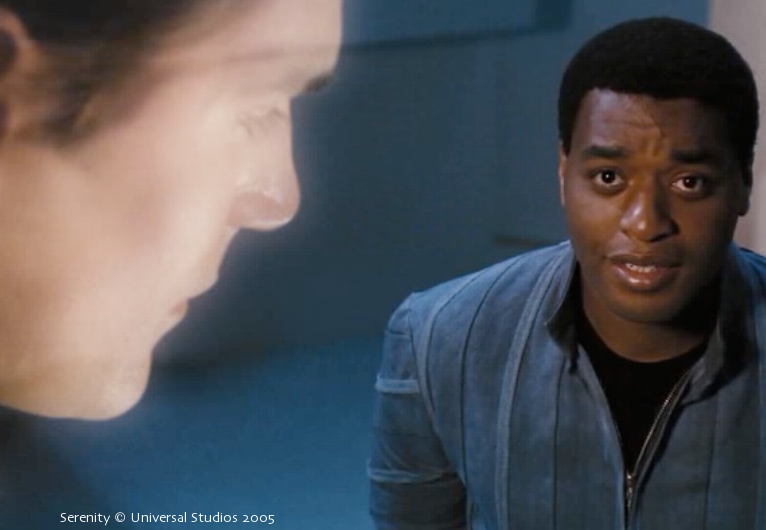
At the beginning of the science-fiction film Serenity, the Operative scans through security footage of Simon Tam breaking his sister, River, out of a government-run facility that has been conducting torturous experiments on River’s brain. The doctor who runs the facility tells the Operative that it was “madness” for Simon Tam to give up his own brilliant future in medicine in order to save his sister. “Madness?” the Operative replies. “Have you looked at this scan carefully, Doctor? At [Simon Tam’s] face? It’s love, in point of fact. Something a good deal more dangerous.” It’s love, in point of fact.

It’s love, in point of fact, that forms this wonderful community, which cares for those both within and without our little band of pilgrims. Some would say this is madness rather than love, asserting that maintaining a purely self-interested motivation for action is the only safe and sane way to live.

It’s love, in point of fact, that brings this wonderful community here today to worship a God we’ve never seen with our eyes nor heard with our ears nor touched with our fingers. Some would say this is madness rather than love, asserting that only what we can prove and quantify and predict are real.

And it’s love, in point of fact, that forms this wonderful community to worship an unseen God who reveals God’s personhood as threefold, as Father, Son, and Holy Spirit. Some would say this is madness rather than love, asserting that the Trinity is a needless complication of the already tenuous and rather dodgy business about God.

Some would say all this is madness, but it’s love, in point of fact. Let’s take a look at each of these three – community, belief in God, and belief in God as a Trinity of persons. We’ll look at them in the opposite order, so we’ll start before the beginning.

You see, if we start at the beginning, we’ve already arrived on the scene too late, as our lesson from Proverbs does today. Proverbs’ personification of Wisdom tells us, “The Lord created me at the beginning of his work, the first of his acts of long ago. Ages ago I was set up, at the first, before the beginning of the earth.” Wisdom may have been created before the earth, but Wisdom tells us that the Lord still created her. This is far too late to begin our discussion of the Trinity. Too even grasp the edge of the expanse of the majesty of the Trinity, we must cast our imaginations back to before there was even a concept known as “before.” You with me so far? Good.

In the First Letter of John, the writer makes the sweeping statement: “God is love.” If nothing besides God existed before the beginning, how did this love manifest? If there was no Creation to fill the role of the Beloved, then how could God be “love?” At first the answer seems rather narcissistic: if there was nothing else to love, then God loved God. But we can’t stop there because true love always manifests as a relationship. In our futile attempt to find the right word to name God, we latch on to relational language and call God “Father.” This sets up one side of a loving relationship, that of parent to child.

But the relationship is incomplete without that second person. And so we also call God “Son” to acknowledge the complete relationship between loving parent and beloved child. In the Gospel according to John, Jesus says that God “loved me before the foundation of the world.” This love between parent and child is so palpable that the love itself is the third member of the Trinity, which we experience as the Holy Spirit. Indeed, Paul tells the church in Rome that “God’s love has been poured into our hearts through the Holy Spirit that has been given to us.”

So this loving relationship between parent and child existed before anything else, including the concept of “before.” Nothing existed that could substitute for or diminish the relationship. The love was pure, perfect, unsullied by deficiencies such as lust or anger or apathy or dominance. In fact, the perfection of the relationship meant that, while there was a Trinity of persons, a Unity of being was the ultimate reality. This Unity of being was the home in which the three persons dwelt: the Parent, the Child, and the Love between them.

Now, I’ve been speaking in the past tense for the last few minutes. Of course, because all this happened before there was a “before,” there was no such thing as the “past” or the “future.” There was only the eternal present in which the perfect Love between Parent and Child manifested in the perfect Unity of being. Before the beginning was this ultimate reality of God, of love, of home.

Then came “In the beginning,” and suddenly there was a time known as “before.” God breathed the wind of God’s Holy Spirit over the face of the deep. God spoke the Word of God, through which all creation came into being. The Trinity, still loving itself into eternally perfect relationship, created the heavens and the earth, thus generating an “other” to bring into that loving relationship, that home that is God. This Creation is not God because God made it, just as God made Wisdom in today’s reading from Proverbs.

Everything that God creates exists in Space and Time, which are simply two more things that God created. Right now, we exist in the space that is this beautiful sanctuary. We don’t exist on your sailboats or sitting in the bleachers at this afternoon’s Red Sox game. And for the last seven minutes, we’ve existed in the time in which I’ve been speaking. Sad to say, we can’t move backward in time and choose not to come to church since the sermon will be really confusing. But because God created Space and Time, God exists outside of these constraints. However, since God loves this little universe of God’s making, God continues to move around and throughout and within it. Truly, God loved this little universe so much, that God the loving parent gave to Creation God’s beloved child.

This beloved child, this Word made flesh came to our little planet as a baby who grew up to be a man who said and did such wonderful things and who taught us about God’s love for all Creation and who expanded our hearts and minds so they could contain such wonderful thoughts and who was killed because of his vision of acceptance and love and who rose miraculously from the dead and who ascended once again to exist in the eternally perfect relationship with God and who showed us the way home to this relationship.

After Jesus Christ ascended, he sent the Holy Spirit to us, the same wind of God that swept across the face of the deep at the moment of Creation. Through the Holy Spirit, God continues to pour God’s love into our hearts so that they can expand to hold the Truth of Jesus’ message of hospitality, generosity, and service. Each member of the Trinity moves in our lives, a family perfectly unified as One, as One who yearns to bring us back home.

Far from being some obscure, antiquated doctrine, the Trinity permeates existence today as it always has even before anything else existed. The Trinity loves itself into eternally perfect relationship, which makes forming loving relationships in our own lives the best way to glorify God. When we come together in this wonderful, loving community to worship God, we participate in the life of the Trinity. When we share the body and blood of Christ, we participate in the life of the Trinity. When we go out into the world in the power of the Holy Spirit to love and serve and find God in those we meet, we participate in the life of the Trinity. This community is home – not a perfect home like the Trinity is unto itself – but a good home made by fallible humans doing our best to love one another.

At the end of the film Serenity, the captain of the small spacecraft finds River sitting in the copilot’s chair, while rain lashes the cockpit’s windows. “But [flyin’] ain’t all buttons and charts,” Malcom Reynolds tells River. “You know what the first rule of flyin’ is? …Love. You can learn all the math in the ‘Verse, but you take a boat in the air that you don’t love, she’ll shake you off just as sure as a turn in the worlds. Love keeps her in the air when she oughta fall down, tells ya she’s hurtin’ ‘fore she keens. Makes her a home.”

The majesty of the Trinity is that God is a perfect home unto God. And God invites us and everyone and all Creation into that home. What makes God a home for us? It’s love, in point of fact.

It’s not easy being green

The following post appeared Monday, May 3rd on Episcopalcafe.com, a website to which I am a monthly contributor. Check it out here or read it below.

* * *

Every February of my college years, the entire student body suffered from a mass case of seasonal affective disorder. The campus of Sewanee is one of the top five most beautiful spots on the planet, but the beauty of the Domain was difficult to appreciate during that dreadful month. What neophytes mistook for simple fog, veterans of Sewanee winters knew was in reality a low-hanging raincloud that hovered over the campus, sapping students of the will to do anything besides curl up under a blanket and nap. The weather lasted for weeks, and when the sun finally broke through the clinging barrier, we students discovered our vigor once again, as if by some sudden leap in evolution, we had developed the ability to photosynthesize.

A version of this same seasonal affective disorder hits Episcopalians every year within a few weeks of Pentecost. We look out over the vast expanse of the upcoming liturgical calendar, and we see nearly a month of Sundays with seemingly no variation, with nothing peculiar to distinguish one day from the next. It’s a sea of green, and without the concurrence of wedding season, the Altar Guild would forget where the paraments are stored.

We call it the season after Pentecost – even the designation gives it the sound of an afterthought. At first glance, those legendary church year framers seem to have measured the year wrong. They only programmed six months! What’s there to do with the rest, those twenty-odd Sundays after Pentecost that stretch on interminably during the dog days of summer and into the heart of autumn? Truly, we blanche at the long months and wonder if the Holy Spirit has enough juice in those Pentecost batteries to get us to the first Sunday of Advent.

The other liturgical seasons are nice and short; indeed, no other season creeps into double digits. Epiphany gets the closest, sometimes reaching as high as nine (watch out 2011!), but it can’t quite get there. And the short seasons always (and satisfyingly) lead somewhere: Advent moves to Christmas Day; Christmas season to the Epiphany; Epiphany season to Ash Wednesday; Lent to Easter Day; Easter season to Pentecost. Each season is like crossing a river or lake to the next feast or fast on the other side. But the season after Pentecost is an ocean, and Christ the King Sunday is in the next hemisphere.

So what do we do to combat the spiritual lethargy that can result from so many Sundays of unvarying green vestments? Well, we could try to split it into more liturgical seasons. So, starting with the Sunday after Pentecost, we’d have the season of the Trinity until mid-August. Then, beginning on August 15th, we’d have the season of the Blessed Virgin Mary until the end of September. Then, we’d have Michaelmas until Advent. There: three more manageable seasons for us modern people with our tweet-sized attention spans.

While this divvying up of the calendar has a certain appeal (especially to all the Anglo-Catholics reading this), I doubt the Church would go for it. So, where does that leave us? Our churches are still stuck in six months of monotonous green! The seasonal affective disorder will attack. Parishioners will fall away! (I know, I know – mostly because of summer holidays, but just go with me on this whole long liturgical season thing.)

Instead of lamenting the six months of green, let’s use the green season to our advantage. Don’t completely shut down program for the summer. Rather, take your cue from the liturgical color. Spend time each week or each month discussing how both the church and the individual can become more environmentally friendly. Devote education time to the intersection between theology and environmental sustainability. Set goals for the parish to meet by the end of the season after Pentecost to reduce consumption. Go paperless for the entire season to cut down on waste. Move service times to earlier in the day and turn off the A/C. Encourage people to bike to church or carpool. Have a light bulb changing party and replace all the lights with CFLs (the curlicue ones). Check out websites like nccecojustice.org for more ideas.

By taking positive steps to live into God’s pronouncement that we are stewards of creation and by staying active through the long days of the season after Pentecost, we can stave off that seasonal affective disorder. Even when the liturgical color hasn’t changed in four months, each Sunday is still a celebration of our Lord’s resurrection. Every Sunday we worship God, who through the Word brought all creation into being. The best way to praise God for that mighty creative act is by preserving it so countless generations to come can also praise God for God’s creation.

It’s a good thing the Green Season is so long. There sure is a lot to do.

Green Tea (Davies Tales #7)

Aidan Davies slipped out of his daydream and refocused his eyes on the bright screen of the computer warming his legs. The purple walls of the coffee shop, so captivatingly gaudy when he first arrived, melted into the background outside Davies’s headphoned and laptopped bubble. Customers claimed tables, ate, drank, bussed, and left. Employees emptied the trash and called out orders. The traffic rushed silently by on the wet street outside. All Davies saw was the screen and various vague shapes in his peripheral vision. All Davies heard was the lush sonorities of Beethoven sonatas through his headphones. The mug holding the dregs of his green tea was long forgotten.

The sermon writing that was supposed to be occupying Davies’s attention kept losing the battle to tangential diversions dedicated to researching unimportant details on the Internet. I should probably shut off my wireless, thought Davies when he was halfway through reading an article on the etymology of the word “tangent.” I’m having tangents about my tangents. Bad sign. Davies closed first the web browser and then his eyes. Focus, he told his tired mind. Just then, Beethoven’s “Pathétique” sonata invaded his consciousness, and he listened for the move from Grave to Allegro molto e con brio. “There it is,” he sighed under his breath.

But as the Allegro ran its course and the slow section of the piece reasserted itself, another sound began to pick and to nag for Davies’s attention. He opened his eyes and flicked them to the right. A young woman, whom Davies had idly noticed when he sat down and then promptly forgotten, was talking on her cell phone. Out of the corner of his eye, he watched the young woman’s brow crease. Her free hand went to her mouth. Oh no, thought Davies, as his internal pastoral alarm (what he called his spidey sense) whirred up from his gut. The woman began to collapse inward. Here it comes, thought Davies.

“How long will it take me to get to the hospital from the airport?” Her voiced trembled as she asked the question, fear mixing with at least a veneer of bravery. Davies closed his eyes again. For half a second, he tried to ignore the woman. She’s not one of mine. I’m not wearing the uniform today. I’m just here to drink green tea. But when the half-second ended, the muscles in Davies’s arms and legs tensed. His chest constricted. For a horrible moment, he was unmade, a traitor in his own body.

Davies glanced up at the ceiling. Even though he often preached that God’s presence was everywhere, he had never quite shaken the notion that God was located in the general direction of “up.” I know, he said to himself, they are all mine because they are all yours. But what can I do? Again Davies flicked his eyes toward the young woman, who was stabbing her cell phone with a shaking thumb.

He played through one scenario in his mind: Hi. My name is Aidan. I’ve been eavesdropping on what I’m sure is a very distressing set of conversations for you, but it’s okay because I’m a priest. Davies shifted uncomfortably in his seat and mentally crossed out that option. I’m not a superhero. I can’t run to the phone booth and do a quick change into my collar and black shirt. I can’t save her with the platitudinous ramblings of a stranger.

With the hero plan discarded, the resolve to do nothing crept back into his consciousness and this time it brought reinforcements. You don’t know her, so why should you care, asked Apathy. You’ve got enough on your own plate to worry about, reasoned Vanity. Go get another cup of tea. Maybe she’ll be gone when you get back, coaxed Craving.

They were convincing. The traitorous feeling, which Davies knew upon his first thought to feign ignorance of the young woman’s plight, did not resurface. No chest constriction. No tension in his extremities. Rather, Davies felt pleasantly sleepy, like a soldier who wore eighty pounds of gear all day but never saw combat. I resisted the urge to feed my own messiah-complex. I’m doing quite well. “Self-Differentiated.” He said the last word in his mind as if he were at a podium lecturing. The word echoed through his conscience. He smiled. Someone watching Davies could have seen a mite of smugness skitter across his grin.

Aren’t you forgetting something, whispered another voice. Davies looked across the battlefield from where he crouched with Apathy, Vanity, and Craving. It’s nothing, they said, Keep your head down. Get more tea. Davies looked at the soggy teabag in the mug and the sticky rings staining the table. You idiot, whispered the voice again, this time closer, from the adjacent foxhole. Davies climbed out of the trench and crawled to the mouth of hole from where the voice had come. The Reinforcements clamored and caterwauled for him to come back, to return to the safety of self-satisfied ignorance.

I can’t approach the distressed woman and I can’t do nothing. So what can I do? If the whispering voice could have taken corporeal form, Davies felt sure it would have slapped the back of his head. Pray for her, it said.

Davies glanced back at the woman. She continued to hold her cell phone to her ear, an electronic flotation device keeping her from drowning in the choppy waters of the unknown emergency. I lift her up to you, Lord, who already knows the distress in her heart. Use me as a beacon emanating your peace. Connect my soul to hers for these few moments when our proximity makes us kin. Grant her the strength to bear the pain that is ahead of her.

Davies exhaled. He turned his attention back to his computer screen, though his thoughts were all eight feet away at the woman’s table. A few minutes later, she shut her cell phone, put her computer in her bag, and walked out of the coffee shop. The Lord be with you, prayed Davies. Then he glanced at his watch and realized it was time for him to depart, as well. Davies gathered his things, placed his mug in the plastic dish tub near the door, and walked out into the rain.

The Last Prayer in the Bible

(Sermon for Sunday, May 16, 2010 || Easter 7, Year C, RCL || Revelation 22:20)

Words can help and words can harm. Words can enlighten and words can confuse. Words can dull the mind and words can infuse the soul with joy. Recently, I spoke some words to someone that wounded that person, and I continue to work to repair that relationship. Recently, I also spoke words to someone else that brought her a bit of peace, a quarter cup of hope for the recipe of her daily walk with Christ.

Words by themselves are innocuous little things, like bullets rattling around safely in the box. Then we employ these innocuous little words to order our thoughts. We combine them into phrases, sentences, speeches, lullabies, poems, diatribes. We use them to teach and to welcome and to express deep emotions that rarely fit neatly into our vocabulary. We also use them to manipulate and to control and to stoke our own fragile egos. Knowing that words surround and define us, the fact that we spend so little time choosing our words is startling. The fact that we spend so little time examining the repercussions of what we say is quite disturbing.

This is true at home, where a conversation can end in a tearful embrace or a slammed door. This is true at school, where teachers use words to encourage, and bullies use words to demean. And this is especially true at church, where we say collections of words used nowhere else in our lives. These words inspire humility and invite transformation, and yet we rarely take the time to notice the power of the words we speak here in this building.

This morning, we heard the final prayer in the Bible, the literal last words in the last book of the library that chronicles God’s interactions with all those grimy, messed up, beautiful people. “Come, Lord Jesus,” prays John of Patmos at the end of the Book of Revelation. Come, Lord Jesus. No prayer in the Bible is more fervent or more concise or more powerful. These three little words pass us by in the midst of another reading on another Sunday morning. But these three little words illustrate the fact that we rarely notice the power of the words we speak in church. We’ll get back to this final prayer in a few minutes. First, let’s explore this power that we tend to overlook.

In her book Teaching a Stone to Talk, Annie Dillard diagnoses this blissful ignorance that affects lay people and clergy alike. She asks, “Does anyone have the foggiest idea what sort of power we so blithely invoke? Or, as I suspect, does not one believe a word of it? The churches are children playing on the floor with their chemistry sets, mixing up a batch of TNT to kill a Sunday morning. It is madness to wear ladies’ straw hats and velvet hats to church; we should be wearing crash helmets.”

In her colorful prose, Dillard reminds us all that worshiping the Creator-Of-All-That-Is has never been an altogether safe or predictable proposition.  In our worship, we consciously commune with the foundation of our very existence, the God who transcends all thought and who, at the same time, moves within and around each of us, breathing life into our bodies and purpose into our souls. The church is not a museum for us to tour with amused and sleepy detachment; there is no frozen exhibit of doves in midair, no taxidermied Holy Spirit. Our God is no divine watchmaker who wound the universe and then left well enough alone. We worship the God who was and who is and who will be. God continues to speak creation into existence every moment of every day. But one of the things God never created is the box in which we often try to stick God, so that we can go about our daily lives secure in the knowledge that God is collecting dust on a shelf in the cupboard.

This box doesn’t exist. Any attempt to domesticate God is a severe delusion of grandeur, one that I know I’m guilty of. We worship a God who moves through our lives like the wind, uncontrollable and yet ever visible in the dancing of leaves and the billow of sails. This is the God whose name we toss about in frustrated oaths when we’re stuck in traffic. This is the God we rail at when the pain of loss wallops us in the gut. And this is the God to whom we address our praise and our prayers.

We ask God for forgiveness in the words of the confession. We invoke God’s name when we offer each other Peace. We recite the poetry of God’s grace in the words of the Eucharistic prayer. We pray for the coming of God’s kingdom in the words that Jesus taught us. After communion, we tell God of our plans to go out and serve God in the world, and we ask for strength and courage.

But how often do we stop and realize that God actually hears these words of ours. How often do we take stock of our conviction that God listens to our pitiful, halting, inadequate, wonderful prayers. Our words are powerful and transformative because we speak them to the God who empowers and transforms us. When we speak words like “Come, Lord Jesus,” are we really prepared for the transformation into which these words draw us?

This is why we need those crash helmets, of which Annie Dillard spoke. God calls us to participate in our own transformation. When we pray, “Come, Lord Jesus,” we signal our readiness to become a part of our own remaking. We discover the arduous path of discipleship, a path which Jesus never promised would be safe or easy. Rather, he promised that he would always be with us on the path, no matter the danger or difficulty. When we pray, “Come, Lord Jesus,” we notice that Christ is already here with us.

This is a comforting and a disturbing thought. Christ is already here with us guiding us and holding us up. But Christ is also here pushing us to step into new encounters that will transform us and, at the same time, transform the world. I know I can’t speak for all of us so I’ll speak for myself. Sometimes, I’m afraid to say, “Come, Lord Jesus,” because I know I might hear Jesus echo my prayer and send me where I don’t want to go. “Come, Lord Jesus,” I’ll say, and then Jesus will say: Come, Adam. Come to me here. Come to me at the prison, at the slum. Come to me when I rattle a Dunkin Donuts cup at you on Tremont Street. Come to me when I hold up a cardboard sign at the intersection. Come to me when I’m alone at the table in the soup kitchen.

Our transformations take place in those moments when we cry out “Come, Lord Jesus,” and Jesus hears us and echoes our cry with one of his own. The more conviction we have in saying those three little words, the easier will be our reception of Jesus’ call in our lives. The more often we pray, “Come Lord, Jesus,” the less often will we be tempted to sequester Jesus in the upper room or to stash him in the manger where he can’t do too much to stir our lives. In The Lord of the Rings, old Bilbo Baggins used to say to his nephew: “ ‘It’s a dangerous business, Frodo, going out of your door. You step into the Road, and if you don’t keep your feet, there is no knowing where you might be swept off to.’ ” Likewise, when we pray, “Come, Lord Jesus,” we step into the Road of our own discipleship, and Jesus sweeps us off to those places where our own transformation intersects God’s transforming of the world.

Words by themselves are innocuous little things until you combine them into phrases and invest those phrases with meaning and conviction. The last prayer in the Bible is just three little words: “Come, Lord Jesus.” With these words, we accept Christ’s invitation to participate in our own remaking. We open ourselves up to hearing Christ’s call to go to those places and to those people who are in need of change themselves. And when we arrive, we’ll find that the Lord Jesus has come there first, and that he will continue to strengthen us in our ministry with his grace.

Mountaintop removal

The following post appeared Monday, May 3rd on Episcopalcafe.com, a website to which I am a monthly contributor. Check it out here or read it below.

* * *

I recently moved to one of the top ten most beautiful spots in the world. I live a three-minute walk from the Atlantic Ocean. I can see a lighthouse from my living room window. I bought a new car. I started working at a new church, which is as beautiful as the town surrounding it. The people at church are wonderful. The trees and flowers are exploding with spring colors. And to top it all off: it’s Easter, the happiest and most celebratory season in the church year. I know I am blessed, radically blessed.

So, why am I having trouble finding something to write about? Why am I having difficulty elucidating God’s presence in my life, at this, one of my life’s most idyllic moments? You’re probably thinking: “Adam, go back and read your first paragraph and quit complaining.” Fair point. But my difficulty is symptomatic of a deeper spiritual malady, which (strangely enough) a simple recitation of my blessings actually exacerbates. I’m sure this malady affects more Christians than just me, so let’s do a little diagnosing.

Our walks with God are topographically interesting. For the most part, we walk the straight path, which Isaiah and John the Baptizer proclaim is the way of the Lord. But sometimes, we meander through desolate valleys, in which simply finding the tiniest token of God’s presence is drink for our arid souls. Other times, we climb mountains, atop which we touch the very face of God and can never imagine a time when our spiritual energy will need recharging. The valleys and peaks, the lows and highs, are the times we remember.

We remember the smile the stranger gave us in the frozen food aisle when we’d forgotten that God was still around. We remember hearing the choir singing choral evensong and how our hearts soared into the very heart of God during the first chords of the Magnificat. We remember the smell of disinfected despair when we sat overnight in the hospital room. We remember standing on a literal mountaintop and breathing in the wind of the Spirit and seeing the patchwork creation spread out below us.

These valleys and mountains shape our lives as Christians. Some folks have Grand Canyons and Himalayas. Others have dry streambeds and foothills. But the slope of our lows and highs matters little. For this discussion, let’s agree that our walks with God have valleys and peaks. The spiritual malady I mentioned a moment ago severely limits our ability to process the peak category.

By removing the mountaintop receptors, the malady keeps our souls from gathering spiritual nourishment from the peak times in our lives. Our minds know that God must be moving in our lives for life to be so full of blessing. But our souls have trouble metabolizing that blessing into the nutrients that sustain us while we search for God’s presence. Without that sustenance, we cease our active awareness of God until there is a noticeable change from “good” to “bad” times. When the paradigm shifts from “good” to “bad” – that is, from mountain to valley – we enter spiritual survival mode and begin frantically looking for God, only to have the walls of the depression limit our sight.

The disciple Peter is patient zero for this spiritual malady. When Jesus calls him out of the boat, Peter walks on the water as if he’s ambling down a garden path. Walking on the water is a spiritual mountaintop, but the paradigm shifts quickly. Peter notices the waves around him, and he starts to sink. Only when he is floundering in the surf does Peter reach up his hand for Jesus to rescue him. Peter could have taken Jesus’ hand while walking atop the water, but he waits until his valley moment.

Like Peter, I forget to seek God when things are going well. When I’m on a mountaintop, I rarely open my eyes to take in the glorious view. Through an intellectual exercise, I know that I am blessed, but this blessing fails to filter into my soul. Only when the jaggedness of grief or deprivation assaults me do I begin my tardy search for God anew.

I know I’m not alone in dealing with the spiritual malady of mountaintop removal. If you suffer from it, then know that there are steps to address it. Take a few moments to look at your life. Orient yourself on the topographical map of your walk with God. Where are you in relation to your most recent valley? If you know that you are no longer in the valley, force yourself to do more than think about your blessings. Rather than an amorphous abstraction you call “blessing,” separate each small blessing into individual shimmering lights of grace. Write each one down. Then thank God for the blessings individually, and be creative. Thank God with action, not thought. If your blessing is having enough food, go feed someone who is starving. If your blessing is living near the ocean, go stomp around in the shallows. If your blessing is being a member of a loving family, go tell them how much they mean to you. If your blessing is the song in your heart, go sing.

Once you’ve acted out your thanks to God, don’t stop. Actively seek out ways to thank God for God’s blessing in your life. Every morning when you draw your first breath, decide to look for God’s presence that day. Then over time, you may see the ground beneath your feet rise into a mountain. And you will notice just how close is the face of God.

Stone Symphonies

(Sermon for March 28, 2010 || Palm Sunday, Year C, RCL || Luke 19:28-40)

“I tell you, if these were silent, the stones themselves would cry out.” So says Jesus to some Pharisees, who want him to corral his exuberant disciples. If we lived anywhere else, I would be tempted to take these words of Jesus merely as metaphor, as a turn of phrase intended to illustrate the remarkable nature of the event taking place. But in the month that I’ve been in Cohasset, I’ve walked on the beach several times, and I’ve heard a certain, special noise that has made these words come alive.

As you know, small stones populate the beaches here, stones that were once boulders and are not yet sand, stones made round and smooth by the ebb and flow of the tide, stones good for skipping on the ocean. Waves break over these stones and cover them with foamy surf. As the tidal forces suck the waves back out to sea, the water runs through air pockets between the round edges of the stones. And as the water vibrates the stones, they cry out. The stones sing with a quavering voice, a thousand violins playing the same note but each with unique rhythm and tempo. As the waves flow out, the stone symphony plays the chords of creation, joining the great company of all the myriad instruments in God’s terrestrial orchestra.

If we attune our ears and eyes and hearts, we can hear these chords and we can witness all of Creation praising God. This praise happens when God’s creatures fulfill the purposes for which God made them. The sun praises God by shining, the moon by reflecting the sun’s light. The thunder praises God by crashing, the rain by watering the earth. The gazelle praises God by running, the wolf by hunting, the rose by blooming, the bee by pollinating. Each member of the great symphony of Creation praises God in an unique way, and all work in concert to glorify the Creator.

Well, all except for one glaring exception. We humans are a thick lot. On our best days, we ignore the symphony, and on our worst days, we spend our time devising ways to silence Creation’s praise. Down through history, we have slowly but surely forgotten how to read Creation’s score, forgotten that we too have parts to fulfill in God’s orchestra.

We are able to join in praise to God when we remember that God created us to display one fundamental attribute: goodness. God created everything that is, Genesis tells us, and at the end of each creative session, God pronounced the new creation Good (and on the last day, not just Good, but Very Good). So, at the fundamental level of our human nature is goodness, which is a reflection of God’s delight in Creation. The manifestation of that goodness is our praise to God. We embody this praise when we sing and dance, when we laugh and pray, when we love, and most importantly, when we serve.

The trouble appears when we forget that goodness remains at the core of our human nature. Instead, we see all the malignant attributes that attack our goodness and mistake this tumorous growth for what defines us as humans. How often have you heard the following statements explained away by attributing the behavior to human nature:

“He’s just jealous because I won the office pool.” “Well, jealousy is just a part of human nature.”

“She’s so petty: who cares if we wore the same dress today.” “Well, pettiness is just a part of human nature.”

“I can’t believe he lied about where he was last night.” “Well, dishonesty is just a part of human nature.”

We make the worst mistake of our lives when we attribute these negative actions to human nature. Our fundamental nature is Good, and anything else is a perversion of the goodness by which God brought us into being. These perversions of our goodness (also known as “sin”) distort our relationship with God. We start playing our instruments out of tune, thus ruining the symphony of Creation.

But when Jesus rides that donkey’s colt down the Mount of Olives, he takes a step in the process of subverting all our tumorous perversions of human nature. On his way to the cross, which is the epicenter of the perversion the Good, he begins showing that goodness (and all of goodness’s positive emanations) still exist, despite the malignancy eroding the nature of humanity.

First, he tackles the perversion of power. Notice that his parade is rather incongruous. Anyone would expect a king to enter the city on an armored warhorse with weapons-laden legions flanking him. But Jesus rides in humility, on the back of a lowly farm animal. He displays that humility (which is one manifestation of goodness) has more majesty than any imperial power could ever muster.

While Jesus subverts the perversion of power, his disciples tackle the perversion of terror. While fear is sometimes a helpful emotion, terror is not simply “really big fear.” Terror is an extension of power meant to control. But at this moment in the Gospel, the disciples walk directly into the most dangerous situation in their lives unabashedly praising God with joyful voices. “Blessed is the king who comes in the name of the Lord!” They display courage, another manifestation of goodness, and their courage subverts any attempt by the perversion of terror to control.

The rest of the Gospel plays out in much the same way. Jesus subverts the perversion of greed when he overturns the tables of the moneylenders in the temple. He subverts the perversion of fame when he tells his disciples that he is among them as one who serves. He subverts the perversion of revenge when he stops the retaliation during his arrest and heals the slave’s ear. And in his greatest display of goodness, Jesus defeats the perversion of domination by willingly giving up his life. Jesus brought all our perversions of human nature to the cross and died with them. And in his resurrection, he shows us that these perversions of our good nature have no ultimate power over us.

Because of Jesus’ life, death, and resurrection, we have the ability to access the goodness at the core of our human nature. We have the humility and courage necessary to let God excise all the malignancy that perverts our relationships with one another and with the rest of Creation. We have ears to hear the symphony of praise playing all around us, and we have the music within us to add our own harmonies to the orchestra of Creation.

And when we fail, when we once again forget our goodness, we can be silent, we can be still, and we can listen. And then we will hear the stones themselves crying out on our behalf, crying out their praise to God.

Notes

For the Internet versions of my sermons, I usually remove the specifics of place, but for this sermon, I really needed to preserve them for the imagery. If you ever make it up to the Massachusetts coast, listen for the sound I’m talking about.

Schooling Nicodemus (or) “Imagine what you’ll know tomorrow”

The following post appeared Sunday, March 14th on Episcopalcafe.com, a website to which I am a monthly contributor. Check it out here or read it below.

* * *

In the film Men in Black, Jay discovers that aliens exist and many of them live on Manhattan Island. When he confronts Kay about this unnerving new detail, of which he (Jay) was previously unaware, Kay deadpans: “A thousand years ago everybody knew, as a fact, that the earth was the center of the universe. Five hundred years ago, everybody knew that the Earth was flat, and fifteen minutes ago, you knew that humans were alone on it. Imagine what you’ll know tomorrow.”

The season of Lent invites us to examine what we know, or, put more precisely, what we think we know. When we tackle this examination, we open ourselves up to encounters with Christ, which tend to augment, rearrange, and expand our knowledge with the addition of deeper faith. The Gospel contains myriad stories of Jesus blasting people with new knowledge,  so we should expect nothing different in our own lives. One such story co-stars the Pharisee Nicodemus (read up on John 3 before you continue).

As a general rule, if someone in the Gospel besides Jesus says “I know” or “we know,” then that person either knows a small fraction of the whole or, more commonly, nothing at all. Strangely enough, knowing nothing at all can even manifest itself when the statement made is quite true and correct. Such is the case with this leader of the Jews, who comes to see Jesus one night.

Nicodemus uses his “knowledge” displayed at the beginning of the conversation as a weapon to corner Jesus into a particular set of expectations. The Pharisee says, “Rabbi, we know that you are a teacher who has come from God, for no one could do these signs that you do apart from the presence of God.” Apparently, so far so good. This statement is true: Jesus has come from God and most definitely stands forever in the presence of God. But there’s irony in the statement, also. Nicodemus calls Jesus “teacher” twice — once in Hebrew (Rabbi) and once in Greek (didaskalos, from which comes the word “didactic”). But at the same time, Nicodemus’s conversational opener allows no room for Jesus to teach. Instead, Nicodemus is the one attempting to teach Jesus, to pigeonhole him into what Nicodemus and his colleagues have labeled him.

But Jesus refuses to be put on the defensive. In usual fashion, he completely ignores Nicodemus’s opening salvo and immediately expands the conversation to a depth and height that Nicodemus is not expecting. Jesus says, “No one can see the kingdom of God without being born from above/again.” There’s a delightful ambiguity here: in Greek, “from above” and “again” are the same word (anothen). They both work in the context, and Jesus probably means both when he says the word. How better to jostle someone loose from his rigidity than with a small helping of ambiguity?

But Nicodemus grasps at the more mundane of the two meanings and responds: “How can anyone be born after having grown old? Can one enter a second time into the mother’s womb and be born?” This may seem like a sarcastic response, but at least this Pharisee, who has always been the one answering questions, is now (albeit haltingly) beginning to ask some of his own. But Jesus doesn’t seem interested in staying on the terrestrial plane, so he ignores Nicodemus questions and pushes him to a new level of understanding. “No one can enter the kingdom of God without being born of water and spirit. What is born of the flesh is flesh and what is born of the Spirit is spirit.” At this point, I imagine Nicodemus’s brain starts hurting.

But Jesus keeps pushing him. Nicodemus’s opening “we know” now sounds empty in comparison to the mysteries Jesus is revealing to him. To begin to absorb these mysteries, Nicodemus must turn this empty “we know” into an “I don’t know” full of desire and curiosity. With his next words, Jesus gives Nicodemus license to let go of what he thinks he knows: “The wind/Spirit blows where it chooses and you hear the sound of it, but you do not know where it comes from or where it goes.” (Here’s another delightful ambiguity—in Greek, “wind” and “spirit” are the same word, pneuma.) Nicodemus must now consent to trusting in things he can never quite figure out. Indeed, he must realize that the truest things that have ever been or ever will be can be believed without being adequately explained. In a word, Jesus asks Nicodemus to have faith that the words he speaks are true, no matter how difficult, preposterous, or confusing they may sound.

And Nicodemus takes a tentative step into the shallows of faith in Jesus. He asks one of the sincerest questions in the Gospel: “How can these things be?” With this question, Nicodemus allows the cognitive dissonance that has been cresting to break on him like a wave. This dissonance is the necessary distress that happens when he realizes he doesn’t know something he thought he knew. But dissonance isn’t a bad thing. In music, dissonance is the interesting part, the part that pushes the piece onward. A pleasing harmony (called “consonance”) can hang in the air indefinitely, but a dissonance begs to move forward to the next consonant chord.

So it is with Nicodemus and anyone who opens up himself or herself to the possibility of the unknown. Allowing the cognitive dissonance to enter our comfortable worldviews pushes us to grow into the next consonant chords in our lives. When Jesus confronts us, like Nicodemus, with the mysteries of the faith, we can either step backward into the comfort of what we think we know or step forward, fully expecting the boundaries of possibility to be far wider than we can perceive. This confrontation goes by another name: revelation.

Every encounter with Jesus, whether in the text or in life, promises an opportunity for revelation, which obeys no boundaries of possibility. Revelation is that thing you know, but don’t know how you know it. Revelation is visceral as well as mental because the brain alone is ill-equipped to handle it. Revelation infuses us with an odd mixture of peace and exhilaration—peace because we know God is there, exhilaration because we know God is calling us to serve. Cognitive dissonance is the birthplace of such revelation. The dissonance reminds us that what we know is far less than the whole. When we can acknowledge that we don’t, in fact, know where the wind comes from or where it goes, we are primed for receiving the revelation of God’s love that Jesus is forever revealing to the world. This is a scary proposition, for if we do, indeed, remain attentive we might actually hear God calling us to serve in a way that doesn’t fit our plans.

But revelation bursts our ability and our desire to control because it blows where it chooses on the wind of the Spirit. When Nicodemus says to Jesus, “We know,” he is seeking to control the conversation that will follow. But he immediately discovers he’s in over his head. When we acknowledge that Jesus has things to reveal to us that we couldn’t possibly imagine, we discover we’re also in over our heads. The trick is to learn to breathe in the wind of the Spirit while underwater (to grow gills and fins) and to find a new natural state submerged in the revelatory love of Christ.

When Nicodemus says to Jesus, “How can these things be,” he allows the possibility for revelation to strike him in his head and in his gut. His cognitive dissonance jettisons his need to control. He is open for Jesus to reveal new and wonderful things to him. And Jesus does — things about the Son of Man ascending to and descending from heaven, things about the Son of Man being lifted up as Moses lifted up the serpent in the wilderness, things about eternal life and self-giving love and believing and salvation.

I imagine Nicodemus left his encounter with Jesus in a daze, his heart and mind on overload attempting to process all he had seen and heard. Is he able fully to put his trust in Jesus, to allow the dissonance to resolve into a new and deeper consonance? Not quite yet. But we are lucky enough to meet Nicodemus twice more in the Gospel (check them out! John 7 & John 19). His journey towards the consonance of a life of faith following Jesus models for us our Lenten journeys of self-examination. If we open ourselves up to encounters with Christ during this season of Lent, then (as Kay says), “Imagine what you’ll know tomorrow.”