Sermon for Sunday, September 29, 2024 || Proper 21B || Mark 9:38-50
My sermons are now available in podcast form. Click here for Apple Podcasts or search “WheretheWind.com Sermon” on your podcast app of choice.
Just so we’re on the same page, I want you to know that this sermon is about idolatry, but that is the only time I will use the word in the whole thing. And I’m going to spend the first third talking about Indiana Jones. So here’s the scene:
Sermon for Sunday, September 22, 2024 || Proper 20B || Mark 9:30-37
My sermons are now available in podcast form. Click here for Apple Podcasts or search “WheretheWind.com Sermon” on your podcast app of choice.
Imagine with me the memories of the Apostle Peter, near the end of his life, thinking back to that day in Capernaum that is described in our Gospel reading this morning.
We didn’t think Jesus could hear us on the road. He was lagging behind us, chatting with people who had come in from the countryside to see him. Only Philip, his self-appointed bodyguard, had hung back with Jesus. The rest of us were hungry and eager to get to my house, where they knew my mother-in-law would put out a fabulous spread. But for the moment, our hunger and exhaustion had gotten the better of us, and a stupid argument broke out. We argued about which one of us was the greatest of Jesus’ disciples. I thought I had a pretty good claim on the title, given that I was always by Jesus’ side, but so were the sons of Zebedee. Others thought it might be Thomas for his devotion or James the Zealot for his zeal. Bartholomew, ever the jokester, voted for Jesus’ shadow because it followed him everywhere.
Sermon for Sunday, February 11, 2024 || Last Epiphany B || Mark 9:2-9
I’ve noticed over the years that one of the enduring themes of my sermons has to do with perspective, with the manner in which we perceive our place in God’s creation. This is going to be one of those sermons.
The only way we perceive the world is from the standpoint of our own bodies. When I look up at a blue sky, I can’t be sure that I’m seeing the exact same shade of blue that you see because we have different configurations of all the little anatomical bits that make up our eyes. Beyond vision, think of a tall staircase rising before you. Someone with good, young knees might think nothing of climbing those stairs. But someone else with older, creakier knees might look for an elevator.
Sermon for Sunday, February 14, 2021 || Last Epiphany B || Mark 9:2-9
Christianity has many symbols, the cross being chief among them – a device of death and domination that Jesus transformed into a symbol of life and reconciliation. There are plenty of other symbols too, and many of them are animals: the lamb, the fish, the dove. And, perhaps most beautifully, the butterfly. Like the cross, the butterfly is also a symbol of transformation. The butterfly undergoes metamorphosis as it changes from the caterpillar, through the chrysalis, and emerges in its luminous form with wings like an artist’s palette.
The word metamorphosis pops up in the Gospel reading we just listened to. You didn’t hear it because Julia read the lesson in English, but I swear it’s there. “Jesus took with him Peter and James and John, and led them up a high mountain apart, by themselves. And he was transfigured before them.” And he was metamorphosed before them. In its humblest connotation, this word simply means “change.” And he was changed before them. But the intent is that the change is a revelation of who Jesus truly is. The metamorphosis that Jesus undergoes on the mountaintop reveals the dazzling, luminous person that God sees when God gazes upon God’s son.
Sermon for Sunday, September 30, 2018 || Proper 21B || Mark 9:38-50
(I was blessed to preach this day at my father’s retirement service. For the sermon preached at St. Mark’s Episcopal Church in Mystic, please click here.)
Good morning. I feel so blessed to have the opportunity to speak with you today as you say farewell to my mother and father. After nearly thirty years of active ordained ministry, my dad is “retiring” tomorrow. I put that word in air quotes because if you know my dad, then you can’t imagine that particular verb ever describing him. For him, retirement won’t mean playing golf every day (which is good, because he’s not very good at it). For him, retirement will mean a refocusing of the life God has called him to live so that he might help others learn how to do the kind of work that you and he have been doing together these last three years. God called you and my parents together to participate in God’s mission of healing and reconciliation here in Middletown. As my parents depart this place, the mission of God remains, and you will have a new pastor with whom to share this mission.Continue reading “Beloved Community”→
Sermon for Sunday, February 11, 2018 || Last Epiphany B || Mark 9:2-9
Our spiritual lives are topographically interesting. Two of the most enduring images of walking with God are the mountain and the valley, the high place and the low. You’ve heard of the proverbial “mountain top experience,” which can spark faith for the first time or renew the well-trodden paths of faith. And you’ve prayed the immortal words of Psalm 23: “Yea, though I walk through the valley of the shadow of death…thou art with me.” The mountain and the valley: these are the peaks of our spiritual lives and the troughs.Continue reading “Spiritual Topography”→
Sermon for Sunday, September 20, 2015 || Proper 20B || Mark 9:30-37
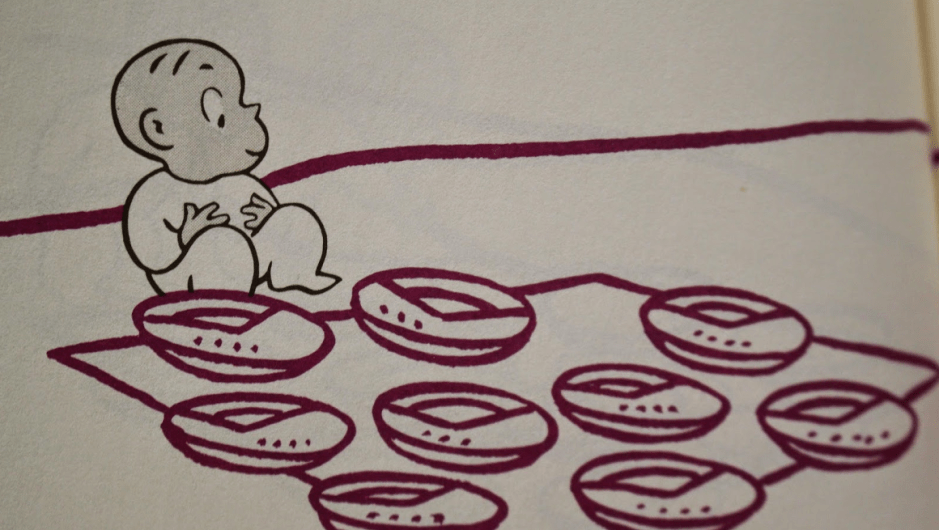
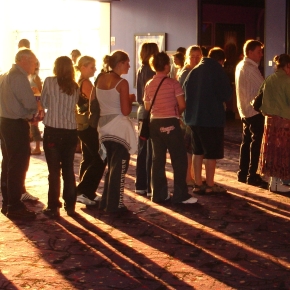
Every day of my fourth grade year, my class lined up at the end of recess to go back inside. The bell rang, and we raced to our spots in the line. But the race was in vain because no matter who arrived at the door first, we always lined up alphabetically by last name. By last name. What I wouldn’t have given to line up by first name. Then (Oh happy day!) I would have been at the very front of the line. No Aarons or Abigails in my class. No. Adam would have been the first name on the list. But those days were cruel. Every morning, I stood on tiptoes to see over the twenty-three heads in front of me, and only one boy – Shane Yellin – was worse off than I.
Then, on the day when all the mothers began insisting their fourth graders wear winter coats to school, something happened. Mrs. Ida Hughes, my math teacher, challenged us to line up in reverse alphabetical order. And for one cold, drizzly, glorious day, I stood at the front of the line and only one head obstructed my view of the playground doors.
Standing at the front of the line feels good and the benefits are numerous. Being in front means the concert tickets aren’t sold out. The first baseman hasn’t tired of signing autographs. The bucket of fried chicken at the church potluck retains its full complement of chicken legs. Certainly, perks abound for those in front. Go to any shopping center in the wee hours of the morning on the day after Thanksgiving and witness the millions of Americans attempting be first in line simply to purchase new TVs for “doorbuster” prices.
Of course, these benefits are all about me. I get the tickets and the autograph and the preferred piece of chicken. I get the deal on the television. I get all these things because I got in line before you. You are behind me and someone else is behind you and countless faceless others line up behind that someone else. So we stand in our line and stare at the backs of the heads in front of us. In this linear configuration, no one can converse. No one can relate. No one can do anything more than slowly shuffle forward, both surrounded and isolated at the same time.
This isolation is the danger Jesus envisions when he places a little child among his disciples. They’ve been arguing about which one of them is the greatest (in other words, which one of them should be first in line). The prevailing linear culture has thoroughly molded the disciples. They only understand relationships in terms of hierarchy based on class, gender, and age. But they’ve been hanging around Jesus long enough to know that Jesus is thoroughly countercultural. He talks with women. He eats with outcasts. He touches the unclean. And so the disciples lapse into embarrassed silence when Jesus asks them about the content of their argument. They know they’ve provided Jesus with what would now be called a “teachable moment.”
The disciples expect something countercultural and that’s exactly what Jesus gives them: “Whoever wants to be first must be last of all and servant of all.” To illustrate the revolutionary nature of this statement, Jesus brings a small child and places the child among the disciples – not before them or after them, but among them. In Jesus’ day, this child was the last of the last. The hierarchy of the society placed children just below farm animals because you could get a lot more out of a goat than a toddler, and the goat would probably live longer. Children had no rights or protections. They weren’t even considered people until they were old enough to work.
But Jesus ignores this cruel stratification when he says: “Whoever welcomes one such child in my name welcomes me.” Jesus commands his disciples and us to welcome those whom society deems lowest of all. With this welcome comes the opportunity to see the faces and learn the stories of those who until now were at the end of the line, too far removed from us to register on our radar. And as we hear the stories of the lowest and the last, we seek ways to serve them and serve with them.
But one of the greatest mistakes of our time has been the Western presumption that we know what’s best for the people we serve: “You might not have said you need a well in your village, but we’re going to come and build one anyway.” This imperialistic attitude only perpetuates the linear model, which our service should be attempting to supplant. However, with his command to welcome, Jesus doesn’t allow us to develop a “serve first and ask questions later” mentality. Welcoming provides the framework through which service leads to the building up of relationships.
With his emphasis on relationships, Jesus changes the existing linear model into a circular one. In the line, you can’t welcome anyone because all you see are the backs of heads. You can’t serve anyone because the implied hierarchy of the line makes isolation the norm. You can only count the number of people ahead of you and nurse your own indignation over your rotten place in line. But in the circle, there is no first and no last. We can grasp hands in welcome precisely because we will be unable to quantify our position in the continuous round. And relationships have a chance to flourish because we look not at backs but at each other’s faces.
This circular model of welcome and service stands in laughable contrast to the current situation in this country. Too many incidents to count show that the tired old scourge of racism is alive and well. The drive to produce leads to longer hours, more work, and more money, but assuredly less happiness, less camaraderie. The gap between the rich and the poor grows ever wider. Each of these examples depends on the linear model continuing to thrive. And it is. So here we sit with our Lord challenging us to do something, which the loudest voices on the other side of those doors claim is utter nonsense.
To be first you must be last of all and servant of all, he says. Let go of linear relationships based on power and ambition and embrace circular relationships based on welcome and service. If you are standing near the front of the line now, start walking to the back. Grab the hand of the last person in line and form the circle. Welcome the least among us. Listen to their needs, their desires, their dreams. Form new relationships. Partner with them in service because we are only as strong as our weakest members. Jesus invites us over and over again to accomplish these things. And Jesus never issues an invitation without simultaneously offering the gifts needed to embrace it.
So to every fourth grader lining up after recess and to every businessperson lining up at Starbucks and to everyone whose ambition blinds him or her to those standing on tiptoes in the back: Give up your place in line.
Sermon for Sunday, February 15, 2015 || Last Epiphany B || Mark 9:2-9
We’ve spent the last five weeks walking with Jesus during the first days of his ministry. We stood on the shore of the Jordan River as Jesus came up out of the waters of baptism. We also stood on the shore of the Sea of Galilee as Jesus called his first disciples and gave them their mission. We wandered into the Sabbath assembly and watched him confront an unclean spirit. And we escaped with him into the desert to rest, reconnect, and reflect with God. Today, in our last sermon in this series, we skip forward to the middle of the story, and we find ourselves following Jesus as he picks his way up the mountain path with Peter, James, and John. And at the top of the mountain, we find our sixth and final word: Revelation.
“Revelation” comes from the same root as the word “reveal.” A revelation is an unveiling, a pulling back of the curtain that separates the known from the unknown. You might say the difference between revelation and ordinary discovery is that we usually attribute revelation to an outside source, namely God, while discovery is the product of our own learning and experimentation. But I think this is a false dichotomy. Rather, God is always offering us the blessing of revelation; in fact, I believe God desires nothing more than for us to know God better. But we are not always in places that allow ready embracing of such revelation. Revelation is available to us, but we are not always available to revelation.
And this is where the process of ordinary discovery comes in. Think back to a time in school. You were in math class – say, geometry. And you had no idea what your teacher was talking about. You’d been taking math classes your whole life. You’d learned addition and subtraction and your multiplication tables. You’d struggled with long division, but got it in the end. Then came fractions. Yikes! But those too made sense in time. Algebra next – the slope of a line. Y=MX + B. No problem. But now you’re stuck. You see the formulas to find the areas of various shapes on the dry erase board, and the only sound in your brain is the dull buzz of incomprehension. But you like math, so you buckle down. You ask a friend who understands it to help you learn. You draw circle after circle, triangle after triangle, trying to figure out the material. Thankfully, your friend is patient with you, and one day in the library after school, you get it. You’ve put in the legwork. You’ve applied your elbow grease. And now you own that geometric discovery for yourself.
We can apply this same legwork and elbow grease when it comes to nurturing our faith. We call it discipleship. While revelation is always available to us, we make ourselves more and more available to revelation when we actively participate in our relationships with God, when we strive to follow Jesus with intention. In geometry class, we could have just let the material pass us by. We could have just limped along not really understanding the lesson. But that’s not what we signed up for. In the same way, when we make every effort to pair our drive for discovery with God’s desire to pull back the curtain, we find ourselves open to revelation. And we find ourselves on the mountaintop with the disciples.
Jesus stands before us in the darkness. But suddenly the light from within Jesus blazes forth, and the darkness flees. Or at least that’s what seems to happen. We perceive Jesus changing, and as Mark tells us, “his clothes became dazzling white, such as no one on earth could bleach them.” But I think something else is going on here, and to see it, we have to reorient our perspective. In the evening, we say the sun sets beneath the horizon. But what really happens is that our little plot of earth rotates away from the sun. Likewise, I don’t think anything at all changes about Jesus during the mountaintop visit. Rather, I think God gives the disciples the gift of revelation. God gives them transfigured eyes – eyes that, for a moment, are able to see Jesus as God sees him, as a luminous being from whom the darkness can do nothing but flee.
When we stumble into a moment of revelation – and it almost always is a stumbling in – we discover new or deeper truths about God’s movement in our lives and God’s mission of healing and reconciliation in this broken world. In these moments of revelation, our perspective shifts, deepens, and we catch a clearer glimpse of what God is up to.
And everything begins again.
We look back at where our feet have taken us, and we know we’ve moved along the path following Jesus. And yet, we find ourselves back at our first word, Affirmation. And we hear once again God say to Jesus the same words God spoke six weeks ago. “This is my Son, the beloved.” Once again, God affirms Jesus as God’s beloved child, and by extension God affirms us – warts and all – as fundamentally good children beloved by God. But the affirmation is deeper now because of the journey we’ve taken. We’ve gone to the center of our brokenness; we’ve taken up our crosses; we’ve confronted the entrenched demons of society; we’ve collapsed exhausted for a time of Sabbath rest – and now we discover God revealing to us that God loves us even more than we thought possible.
With that deeper affirmation of goodness and love resonating in our hearts, we are ready for new Invitations, to go even closer to the center of our brokenness than we were willing to go before. We are ready to embrace with even more zeal the authentic Missions that Christ offers us when we pick up our crosses. We are ready to trust God with ever-expanding reserves of courage and faith when we Confront all that stands in the way of creation reconciling at last to God. We are ready to drink even more deeply from the waters of Rejuvenation. And each time we walk this path as it spirals upwards, we are ready to embrace greater Revelation, to see more often with those transfigured eyes.
That’s the goal, really: seeing more and more often with transfigured eyes, seeing this world as God sees it, as broken and beautiful at the same time. And in seeing as God would want us to see, we begin to notice with greater regularity those whom God yearns for us to love. We begin to serve with greater passion those whom God yearns for us to serve. And we begin to live with greater vitality the abundant life that Christ offers to all.
(Sermon for Sunday, September 30, 2012 || Proper 21B || Mark 9:38-50 )
Indiana Jones and the Last Crusade (Paramount, 1989)
The floor of the ancient structure splits open, revealing a gaping chasm. Nazi sympathizer Elsa, the treacherous blonde bombshell, who earlier in the film skewers the heart of our hero Indiana Jones, falls in, only to be caught at the last second by Indy. But he has a dubious grip on her gloved hand and, over the next tenuous seconds, his grip starts slipping. If only she would reach up with her other hand. But no. The Holy Grail has also fallen into the chasm and is even now perched on a ledge mere inches from Elsa’s reach. “I can’t hold you,” shouts Indy. “Give me your other hand!”
“I can reach it,” she screams back, all the while groping for the cup. “Give me your other hand,” Indy shouts again. Another pulse-pounding moment flies by, punctuated by the an eerie silence in the glorious John Williams score. Elsa reaches a final time for the Grail. And then she’s gone. She falls, screaming as she goes, and vanishes into the mist that obscures the endlessness of the chasm.
Indy stares after her, but he has only a moment to grieve because the floor buckles again, and Indy finds himself thrown into the chasm. His father, Henry, slides across the floor just in time to catch Indy’s hand, but his grip is just as dubious as Indy’s had been moments before. Of course, the Grail is still perched on the ledge. Indy has longer arms than Elsa. “I can get it. I can almost reach it,” says Indy.
Then Henry, who has spent his entire life chasing the legend of the Grail, calls his son’s name: “Indiana,” he says, and then again with more gravity, as only Sean Connery can. “Indiana.” Indy looks up and their eyes lock. “Let it go,” says Henry, “Let it go.” Indy doesn’t give the Grail another look, but instead flings his arm up. Henry grasps both of Indy’s hands in a tight grip, and a moment later they are running from the ancient structure, soon to ride off into the sunset.
This scene from Indiana Jones and the Last Crusade flawlessly illustrates what Jesus is trying to tell his disciples in today’s Gospel lesson. Now, every commentary I read about the passage made sure to note just how harsh Jesus sounds in all the talk about cutting off body parts and going to hell, so I’d bet that my reading of Jesus’ words a minute ago made us all a bit squeamish.
And for good reason. I think Jesus is going for far more than squeamish. His disciples have demonstrated time and again that they just can’t grasp the kind of life that Jesus is trying to teach them to live. As their utter thickness becomes more apparent, Jesus gropes for more and more outlandish imagery in an attempt to reach them.
Jesus has tried telling them point blank what’s going to happen. He has tried the object lesson of putting a child among them. He has even been transfigured into a dazzling being. And yet the disciples still try to dissuade Jesus from his chosen path, they try to figure out which of them is the best, and they try to stop someone not in their group from doing Jesus’ work. Finally, Jesus has had enough. “Listen up,” he says. “If your hand causes you to stumble, cut it off; it is better for you to enter life maimed than to have two hands and to go to hell, to the unquenchable fire.”
Here’s another way to read this same verse: “If your hand causes you to separate yourself from God, then separate yourself from your hand instead. If your goal is to live the kind of abundant life that God yearns for you to live, then you would be better off having only one hand than to have two and wind up in the refuse dump, where they burn trash all day long.”
Jesus reiterates the same point using feet and eyes, and I imagine the disciples stand there dumbfounded and maybe a little sick to their stomachs. But perhaps Jesus’ point has finally hit home. There are so many things in our lives that we cling to, which impede us from living the kind of abundant life that God yearns for us to live. Therefore, we have a choice. We can choose the impediment, as Elsa does in the movie when she reaches and reaches for the Grail, only to fall to her death. Or we can cut ourselves off from the impediment, as Indiana Jones does when he ignores the Grail in favor his father’s strong grasp.
Jesus makes his point in a visceral, ugly way, but that seems to be the only way his disciples will hear him. The severed hand and foot and the torn out eye are parts of ourselves that seem integral, but you know what? Life can go on without them. Of course, Jesus only uses these bodily features to make his point. Physical body parts are not what cause us to separate ourselves from God. So the question is: what does? What about our choices or our actions or our way of looking at the world does separate us from God? What part of ourselves do we continually and erroneously reach for, even when our grip on God is failing?
I can’t answer these questions for you. I can only answer them for myself. And there are so many things that I should amputate from my life in order to participate more fully in my relationship with God. My anxiety is one – I know I should trust God enough to let go of my fears for the future and my stress for today, but I’m so used to feeling anxious that I tell myself I don’t know what would happen if I asked God finally to sever anxiety from my life. To tell you the truth, I do know what would happen. I’d find a more abundant, more peaceful life. So why do I keep reaching for the Grail of anxiety? Because I always have, and the inertial force of complacency is a strong foe.
Anxiety is one. Pride is another old standby. Apathy. The craving for security, which leads to chances never being taken. Perhaps the thing that Jesus calls you to amputate is on my list, or perhaps your list is full of other cancerous impediments that would best be excised like tumors rather than clung to like pieces of wreckage in a storm-tossed sea.
Jesus’ strong, visceral language in today’s passage is a wake-up call to the disciples and to us that the barriers we erect between us and God do nothing but hurt us and keep us from living the kind of abundant life that God yearns for all people to live. The good news is this. As we continue to reach for our favorite impediment, for our Grail perching so tantalizingly on the ledge just out of reach, God is clinging to our other hand, clinging with a grasp that will never slip. And God is whispering, “Let it go. Let it go.”
(Sermon for September 20, 2009 || Proper 20, Year B, RCL || Mark 9:30-37)
Every day of my fourth grade year, my class lined up at the end of recess to go back inside. The bell rang, and we raced to our spots in the queue. But the race was in vain because no matter who arrived at the door first, we always lined up alphabetically by last name. By last name. What I wouldn’t have given to line up by first name. Then (Oh happy day!) I would have been at the very front of the line. No Aarons or Abigails in my class. No. Adam would have been the first name on the list. But those days were cruel. Every morning, I stood on tiptoes to see over the twenty-three heads in front of me, and only one boy – stricken with a name beginning with the letter “Y” – was worse off than I.
Then, on the day when all the mothers began insisting that their fourth graders wear winter coats to school, something happened. Mrs. Hughes, my math teacher, challenged us to line up in reverse alphabetical order. And for one cold, drizzly, glorious day, I stood at the front of the queue and only one head obstructed my view of the playground doors.
Standing at the front of the line feels good and the benefits are numerous. Being in front means that the concert tickets aren’t sold out. The first baseman hasn’t tired of signing autographs. The stalls of the women’s bathroom remain unoccupied. The bucket of fried chicken at the church potluck retains its full complement of chicken legs. Certainly, perks abound for those in front. Go to any shopping center in the wee hours of the morning on the day after Thanksgiving and witness the millions of Americans attempting be first in line simply to purchase a GPS system for twenty percent off retail.
Of course, these benefits are all about me. I get the tickets and the autograph and the preferred piece of chicken. I get the deal on the GPS. I get all these things because I got in line before you. You are behind me and someone else is behind you and countless faceless others line up behind that someone else. So we stand in our line and stare at the backs of the heads in front of us. In this linear configuration, no one can converse. No one can relate. No one can do anything more than slowly shuffle forward, both surrounded and isolated at the same time.
This isolation is the danger Jesus envisions when he places a little child among his disciples. They’ve been arguing about which one of them is the greatest (in other words, which one of them should be first in line). The prevailing linear culture has thoroughly molded the disciples. They only understand relationships in terms of hierarchy based on class, gender, and age. But they’ve been hanging around Jesus long enough to know that Jesus is thoroughly countercultural. He talks with women. He eats with outcasts. He touches the unclean. And so the disciples lapse into embarrassed silence when Jesus asks them about the content of their argument. They know that they’ve provided Jesus with what would now be called a “teachable moment.”
Now, we know Jesus is about to [drop some knowledge] on the disciples because he sits down, which is the preferred position of any self-respecting Jewish teacher. The disciples expect something countercultural and that’s exactly what Jesus gives them: “Whoever wants to be first must be last of all and servant of all.” To illustrate the revolutionary nature of this statement, Jesus brings a small child and places the child among the disciples – not before them or after them, but among them. In Jesus’ day, this child was the last of the last. The hierarchy of the society placed children just below farm animals because you could get a lot more out of a goat than a toddler, and the goat would probably live longer. Children had no rights or protections. They weren’t even considered people until they were old enough to work.
But Jesus ignores this cruel stratification when he says: “Whoever welcomes one such child in my name welcomes me.” Jesus commands his disciples and us to welcome those whom society deems lowest of all. With this welcome comes the opportunity to see the faces and learn the stories of those who until now were at the end of the line, too far removed from us to register on our radar. As we hear the stories of the lowest, we seek ways to serve them.
One of the greatest mistakes of our time has been the Western presumption that we know what’s best for the people we serve. But this imperialistic attitude only perpetuates the linear model, which our service attempts to supplant. However, with his command to welcome, Jesus doesn’t allow us to develop a “Serve first and ask questions later” mentality. Welcoming provides the framework through which service leads to the building up of relationships.
With his emphasis on relationships, Jesus changes the existing linear model into a circular one. In the line, you can’t welcome anyone because all you see are the backs of heads. You can’t serve anyone because the implied hierarchy of the line makes isolation the norm. You can only count the number of people ahead of you and nurse your own indignation over your rotten place in line. But in the circle, there is no first and no last. We grasp hands in welcome because we are unable to quantify our position in the continuous round. And relationships have a chance to flourish because we look not at backs but at each other’s faces.
This circular model of welcome and service stands in laughable contrast to the current situation in this country. A declining economy makes people cling ever tighter to their presumed spot in line. Distrust and belligerence and hate disfigure our political discourse. The gap between the first and last grows ever wider. And in the middle of this maelstrom, here we sit on Sunday morning. Here we sit with our Lord challenging us to do something, which every screaming voice on the other side of those doors claims is utter nonsense. Here we sit and if Jesus’ words don’t make us squirm in our seats then we aren’t listening.
To be first you must be last of all and servant of all, he says. Let go of linear relationships based on power and ambition and embrace circular relationship based on welcome and service. If you are at the front of the line now, start walking to the back. Grab the hand of the last person in line and form the circle. Welcome the least among us. Listen to their needs. Serve them because we are only as strong as our weakest member. Jesus commands us to accomplish these things. And the good news is this: Jesus never issues a command without simultaneously offering the gifts needed to carry it out.
So to every fourth grader queuing up after recess and every suit lining up at Starbucks and to everyone, myself included, whose ambition blinds him or her to those standing on tiptoes in the back:






 Every day of my fourth grade year, my class lined up at the end of recess to go back inside. The bell rang, and we raced to our spots in the line. But the race was in vain because no matter who arrived at the door first, we always lined up alphabetically by last name. By last name. What I wouldn’t have given to line up by first name. Then (Oh happy day!) I would have been at the very front of the line. No Aarons or Abigails in my class. No. Adam would have been the first name on the list. But those days were cruel. Every morning, I stood on tiptoes to see over the twenty-three heads in front of me, and only one boy – Shane Yellin – was worse off than I.
 We’ve spent the last five weeks walking with Jesus during the first days of his ministry. We stood on the shore of the Jordan River as Jesus came up out of the waters of baptism. We also stood on the shore of the Sea of Galilee as Jesus called his first disciples and gave them their mission. We wandered into the Sabbath assembly and watched him confront an unclean spirit. And we escaped with him into the desert to rest, reconnect, and reflect with God. Today, in our last sermon in this series, we skip forward to the middle of the story, and we find ourselves following Jesus as he picks his way up the mountain path with Peter, James, and John. And at the top of the mountain, we find our sixth and final word: Revelation.

 Where the Wind...