Sermon for Sunday, March 22, 2026 || Lent 5A || John 11:1-45
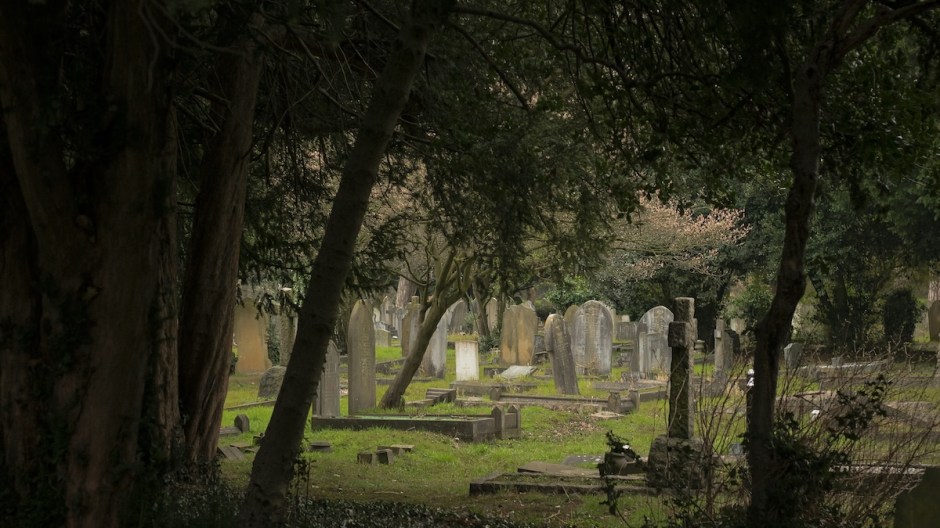
Today’s sermon is about the promise of the resurrection. And we’ll start today at a windswept cemetery as a funeral comes to end. The prayers have all been prayed. The earth has been cast on the shining, glossy coffin. The low murmur of voices mingles with the whisper of the wind through the long, cemetery grass. The new widow rises from the velvet-covered folding chair, the triangle of the blue field and white stars of the American flag peeking out from under her arm. A line of black-clad people forms, and they begin to file past her. You watch her receive with grace each well-meant, but well-worn sentiment. You join the line, and soon it’s your turn. You grasp her hand in both of yours and wait for the words to come.
Sermon for Sunday, November 3, 2024 || All Saints B || John 11:32-44
Here we are. November 3, 2024, the day we celebrate all the saints. We are two days before a momentous election that pits vastly different visions of this country against each other. The world is mired in the midst of multiple ongoing wars in which so many innocent people have died. We’re grappling with increasingly common and destructive natural disasters due to climate change. And on a personal level we are contending with issues ranging from physical and mental health to addictions to economic hardship to interpersonal relationships. Anxiety and stress are high. Time is fleeting. The future approaches, and we have no idea what it will hold. I don’t know about you, but I’ve been holding tension in my shoulders for so long that I don’t remember what it feels like to be relaxed.
Sermon for Sunday, April 9, 2023 || Easter Sunday A || John 20:1-18
Good morning and welcome to St. Mark’s Episcopal Church on this cold and sunny Easter Sunday. I’m Pastor Adam Thomas, and today we are celebrating our tenth Easter together in this special place on Pearl Street. During the season of Lent, I preached a four-part sermon series on the verse John 3:16, which culminated in this new interpretation of the most famous verse in the Bible:
For God so loved the entirety of Creation that God revealed God’s own self in the gift of God’s only Child: to draw us deeper into relationship with God, to find our place in God’s story of reconciliation, and to embrace the true life of God’s presence now and forever.
I’d like to spend today’s sermon offering a bit of a coda to the sermon series and speak again about God drawing us into deeper relationship. This makes sense to do on Easter Sunday because today is the day we celebrate God’s full and eternal embrace of Creation through the power of the Resurrection of Jesus.
Sermon for Sunday, March 19, 2023 || Lent 5A || John 11:1-45
(Part Four of Sermon Series on John 3:16 – Part One – Part Two – Part Three)
Today we finish up our sermon series on John 3:16 – “For God so loved the world that he gave his only Son, so that everyone who believes in him may not perish but may have eternal life.” Three weeks ago, we talked about God loving every nook and cranny of creation. Two weeks ago, we said that God gave the gift of God’s only son to show us how to enter into the story God is telling. Last week, we looked at the concept of belief as “abiding in relationship” with Jesus. And that brings us to the final phrase of John 3:16 – “may not perish but may have eternal life.”
Sermon for Sunday, November 7, 2021 || All Saints B || John 11:32-44
I’m going to start today’s sermon with the end of it. Here it is. Are you ready? Jesus’ commands include in them the gifts needed to carry them out. Got that? I’ll say it again: Jesus’ commands include in them the gifts needed to carry them out. This is a statement of faith that I think comes with quite a bit of evidence in the Gospel, especially in the passage I just read, the raising of Lazarus. I’m talking about commands and gifts this morning because in a few minutes, we are going to reaffirm our Baptismal promises. I’ll get back to Baptism in a bit, but first, here’s the evidence for that statement of faith: Jesus’ commands include in them the gifts needed to carry them out.
Sermon for Sunday, September 29, 2019 || Proper 21C || Luke 16:19-31
This sermon is about walking in love. But before I go there, I need to talk about Jesus the radical. Jesus shares a lot of radical stories in the Gospel. We might not realize how radical they are because they appear in the Bible. And the Bible over time has become such an established collection of writings that we don’t necessarily expect them to be radical. We hear the same stories over and over again, so their shocking nature is dulled both by repetition and the long march of history.
Sermon for Sunday, April 2, 2017 || Lent 5A || John 11:1-45
“Lord, if you had been here, my brother would not have died.” So say both Martha and her sister Mary when they meet Jesus outside Bethany. They must have been saying this over and over again to each other in the four days since Lazarus’s death: “If the Teacher had been here, things would be different. If Jesus had come when we first wrote to him. If, if, if…”
Two weeks ago, one of our ten Handy Guidelines told us that how a line of dialogue is spoken is a matter of interpretation. So how do the two grieving sisters deliver this line? Is it an accusation? [angrily] “Lord, if you had been here, my brother would not have died.” Is it wistful? [sadly] “Lord, if you had been here, my brother would not have died.” Or is it faithful? [lovingly] “Lord, if you had been here, my brother would not have died.”
Probably a little bit of each one, all rolled together in that roiling mass of anger and sadness and love that we call “grief.” No matter how Martha and Mary speak this statement, my question is this: is it true? Would Lazarus still be alive if Jesus had been there?Continue reading “If You Had Been Here”→
Sermon for Sunday, March 13, 2016 || Lent 5C || John 12:1-11
Imagine with me a letter written by Lazarus, the friend whom Jesus brought back to life after four days in the tomb.
To my dear sisters, Martha and Mary, by the hand of a trusted friend:
I have written and re-written this letter in my mind, and still any words I hope to scratch here will pale in comparison to the anguish I have in my heart for you. I love you both. My spirit wilts to contemplate putting you through grief yet again. You already passed from grief to joy, as I passed from death to life. But I fear we will reverse this cycle again before long.
Indeed, if you are reading this letter, then I have died once again: not from illness this time, but from malice. I am writing this to help you understand what has happened, and I’m sorry if my thoughts seem like fragments. Fragments are all I have right now. After dinner tonight, Jesus confirmed the fear that has been growing in my mind. His words shattered the innocence I wrapped myself in since coming out of the tomb.
He drew me aside after his confrontation with Judas. I could smell the perfume you anointed him with, Mary. I will remember that scent for the rest of my days. I will remember, too, his eyes set on mine, full of love and agitation. “Beloved,” he said, “I’m sorry.”
I didn’t know what to say. What did he have to apologize to me for?
“I’m sorry for what may be coming soon. I’m sorry that you may suffer on my account. I’m sorry I drew you into all this.”
He looked to be on the verge of tears. “Into what, Lord?” I asked.
“I brought you back from death, only to make you a target for death again. There are powers in Jerusalem who seek my life, and now they seek your life as well. These crowds that come to hear me—they also come to see you, to see with their own eyes proof of the words I speak. And now those who seek to kill me have added you to their list.”
I had sensed this—in the roving eyes of some in the crowd, in the growing sense of foreboding in my gut—but hearing it from Jesus’ own mouth made it real. I hadn’t named the fear I was feeling. I had feigned innocence, hoping that ignoring reality would change it. But Jesus’ words set reality in front of my eyes, and I could not turn away.
Will I die tomorrow? Will I be stoned in a public square or dispatched by an assassin’s blade? Will there be blood? Will it hurt? My sisters, I know you are reading this after I’m gone, so these thoughts must seem wild and misplaced in such a letter. But I beg you: keep reading, for I have not said all.
He kept his eyes on me as I took in his words. I didn’t know whether to run away or to weep on his shoulder. I felt faint. I looked around for something solid to lean on. The walls and chairs looked flimsy somehow. So I reached out and steadied myself on his arm. Finally, words came. “Why did you restore my life if I’m just going to be murdered weeks later?”
“Lazarus,” he said, “I wish I could spare you the prying eyes that have hounded you since that day. I wish I could spare you the pain that may be ahead of you. I cannot. But I can tell you this…”
Dear sisters, coming from any other person, what he said next would have rung pitifully hollow, but the light in Jesus’ eyes held the promise that his words are truth. “I came that you may have life,” he said, “and have it in abundance. This life that I give, beloved, is more than just your ability to move or think or breathe. This life includes those things, just as it includes pain and grief. But ever so much more, this life includes those wonderful gifts from God that reach into eternity: love and joy and grace and justice and peace. You are mine, and I have taught you how to love others as I love you. You are mine, and I make your joy complete. You are mine, and I offer the grace to strive for justice and peace everyday, no matter how many days are left to you.”
I was captivated. I looked him in the eye, and again that light of truth danced behind brimming tears that now began to trace silent streams down his face. “I shed tears now,” he said, “knowing that you may suffer for my sake. But I shed them also for the joy of knowing that such suffering cannot diminish the life I give you. Yes, you will die again. Do not let that keep you from living. And yes, you will live again after you die. Do not let that keep you from living now, either.”
His words washed over me, like clear water from a living spring. I drank them in, and they filled me. The life that he gives is more than life. The life that he gives is more than death. It does not begin when I die, nor did it begin when he brought me from the tomb. His life endures, for I am his whether I live or whether I die.
Dear sisters, while I pray to be spared from pain and suffering, I am not afraid of death. I am afraid that I do not have the strength to live as one who has this abundant life that reaches into eternity. I am afraid that I will live as though I were dead again.
But Jesus chose his words well the day he brought me back to life. Yes, he knew my fears even before I did. Do you remember what he said that day? I do, and those words are imprinted on me like the smell of tonight’s perfume. “Lazarus, come out.” He never spoke a word of resuscitation, never said, “I raise you from the dead.” He just commanded me to leave the tomb. And the gift of life came back to me in order to obey this command.
So until the day I pass through the gate of death again – and I sense it will be soon – Jesus’ command to stay out of the tomb still rules my life. This life he has given me – given each of us – reaches into eternity, so whatever ways we show forth his love now are burnished with the sheen of heaven. Whatever ways we show forth his love now will last long after we are gone, will ripple out to touch more lives than we can possibly imagine.
Mary, Martha: if you are reading this, I have died again. But know that my death will not stop the abundant life that Jesus revealed to me when I was still with you. Do not wait for death to begin your abundant, eternal life. It is yours now. Laugh and dance and sing and serve and love. And rejoice that Jesus continues to give you—and me—the gift of himself, the gift of abundant life that reaches into eternity.
Sermon for Sunday, November 1, 2015 || All Saints’ Day Year B || John 11:32-44
Today’s sermon is about practicality and belief. I don’t have time for a fancy intro about when I was in fourth grade or about how something my children did reminded me of the Gospel. We’ve got too much to do in this All Saints’ Day service for that – most importantly, getting to the baptism, which is up next. Since today’s sermon is in part about practicality, I thought I’d be practical in my time-management and just skip the intro. So to reiterate, today’s sermon is about practicality and belief.
We’ll start with Martha and Lazarus, then move on to the saints, and then mention baptism near the end. The Gospel lesson picks up after Martha and Jesus have their famous conversation, in which Jesus says among other things, “I am the resurrection and the life.” He asks Martha if she believes and she answers, “Yes, Lord, I believe that you are the Messiah, the Son of God, the one coming into the world.”
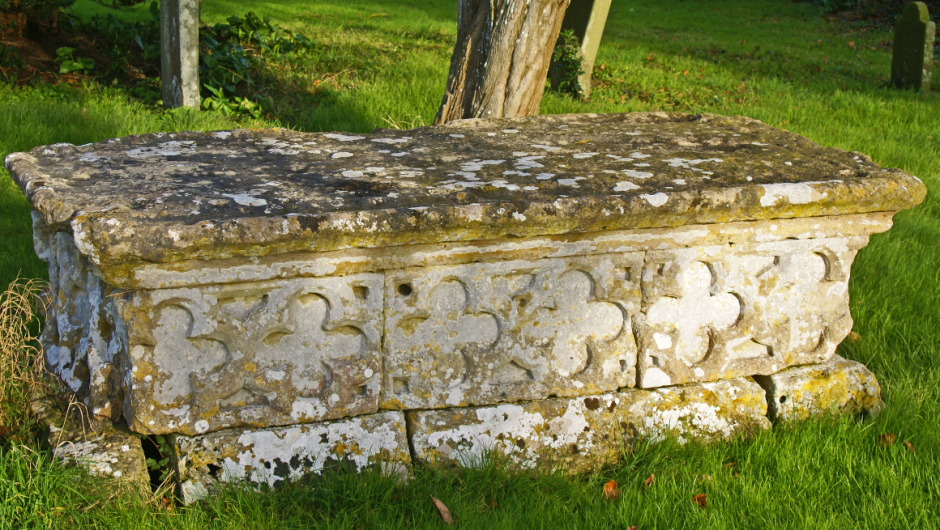
But when they arrive at the tomb of her brother Lazarus, the oppressive reality of death threatens to overwhelm her belief. To keep from being overwhelmed, Martha’s practical side asserts itself. (In another story about Martha in Luke’s account of the Gospel, this practical side keeps her bustling around the house being the consummate hostess while her sister Mary sits at Jesus’ feet.) But in our story today, this practical side asserts itself when she mentions that Lazarus’s body must smell really bad. The translation I just read makes Martha sound something like a member of the British House of Lords: “Lord, already there is a stench.” I prefer to translate these words with an earthier, more colloquial quality – say, like a West Texas ranch hand: “He’s been in there four days; he stinks!”
Whatever way we translate Martha’s statement, the olfactory reality of death is on her mind: the practical notion that the most likely scenario is that Lazarus’s smell, and not Lazarus himself, will come out of the tomb. That’s when Jesus reminds her of her belief. “Did I not tell you that if you believed, you would see the glory of God?” Now I’ve said it before and I’m sure I’ll say it again, but here we have another example of Jesus turning everything around. The popular axiom says, “Seeing is believing.” But Jesus, like he so often does, flips it: “If you believed, you would see…” For Jesus, believing is seeing.
In other words, our belief in the God made known in Jesus Christ gives us a particular lens through which to view our lives, our relationships, our gifts and callings, not to mention the whole of creation. In last week’s sermon, I called this lens the “eyes of faith.” Our belief enlivens these eyes of faith and activates our special God-tinted lenses. We look back through our lives and see God’s movement stitching together the defining moments and relationships that make us the people we are. We look out and see God’s presence in those whom God calls us to serve. We look beyond and discover the fullness of new life in God with all the saints.
However, our God-tinted lenses get cloudy and scratched all the time. Often, this happens when practicality overrides belief. You look back through your life and see a series of coincidences and happenstances that led you to where you are. You look out and see the need, but perhaps not the people who are in need. You look beyond and see emptiness or maybe a vague notion of the hereafter or maybe a flicker of hope staving off the dread of death. “I don’t want to get caught up in ‘pie-in-the-sky’ thinking,” we might say, “so I’ll just be practical. Who could honestly believe all that anyway?”
The answer: I do. Not perfectly, not by a long shot. Not everyday, not even a majority of the time, to be honest. But I think seeing with God-tinted lenses is like hitting a baseball: even the very best baseball players only get a hit about a third of the time.
Here’s the tricky part. Here’s why the interaction between practicality and belief is so hard to navigate: We need our practical sides in order to live the kind of life our belief in God catalyzes. Without practicality, we would never translate our belief into action. We would never actually follow through on the callings we hear from God. We might notice God’s movement in creation, we might even generate a vague notion to respond to such movement, but we’d never make a plan. We’d never figure out how many drivers we need to deliver Thanksgiving meals or what books are most appropriate for the students at our partner school in Haiti. Without our practical sides, we’d be hard-pressed to act, and our follow through would be anemic at best.
So instead of seeing practicality and belief as opposing forces, we can see them as unlikely allies. While practicality can undermine belief, practicality can also give belief legs when used to further the missions we believe God has given us. The saints we celebrate today turned their belief into action, and I’m sure they used a heavy dose of practicality to do it. Mother Teresa, for example, believed with all her heart that God had called her to the sick and dying of Calcutta – and she was also an uncannily good fundraiser.
When we baptize _____ in a few minutes, we’ll see once again the interaction between practicality and belief. We will pour water into this basin and thank God for it. We will remember that water is sacred and life-giving. Then we will give _____ a bath. I know, I know, it won’t be a very thorough bath – just go with me on this imagery here. What could be more practical, more mundane than washing? And yet, we who wear these God-tinted lenses see something so much greater than a simple bath taking place. We see a welcome into God’s household. We see the power of sin washed away. We see the gifts of the Holy Spirit awakening. We see Christ making us his own forever.
And with the washing done, the words of the Baptismal Covenant, which we are about to say, echo again the practical, boots-on-the-ground facet of our belief. The Covenant begins with the affirmation of belief and continues with the practical ways we live out our mission, with God’s help. And so our unlikely allies, practicality and belief, animate our lives as followers of Jesus Christ. We need both, and we’d be diminished if one were absent. After all, when Lazarus comes out of the tomb, I doubt he smelled like a bed of roses. I’m sure Martha’s practical prediction about his stench was confirmed. But Lazarus came out of the tomb, just the same.
Sermon for Sunday, April 6, 2014 || Lent 5A || John 11:1-44
The prayers have all been prayed. The farewells to the deceased have all been said. The dirt has been cast on the shining, glossy coffin. The low murmur of voices mingles with the whisper of the wind through the long, cemetery grass. The new widow rises from the velvet-covered folding chair, the triangle of the blue field and white stars of the American flag peeking out from under her arm. A line of black-clad people forms, and they begin to file past her. You watch her receive with grace each well-meant, but well-worn sentiment. You join the line, and soon it’s your turn. You grasp her hand in both of yours and wait for the words to come.
I’m sure each of us has been in this position. Some of us have also been on the other side of it. Sometimes words tumble out before we have a chance to catch them, to measure them, to reflect on how they will be heard. Other times, we have no words, and we trust that the fervent squeeze of the hand or an embrace will communicate what we want to say. Most times, the language of embrace is more potent and effective than the language of words.
In today’s Gospel reading, we have the opportunity to listen in as Jesus and Martha converse near the grave of her brother Lazarus. They’ve both lost someone: Martha, a brother; Jesus, a friend. Indeed, the Gospel doesn’t describe too many individuals specifically as ones Jesus loved, but Lazarus is among the honored few.
Martha speaks first: “Lord, if you had been here my brother would not have died.” We could interpret Martha’s first words as an accusation or as a statement of faith. More than likely, they are (as is so often the case) a combination of the two. Since her sister Mary echoes these same words a few verses later, we can assume Martha and Mary had spoken them to each other in the four days since Lazarus died. “If Jesus had been here, Lazarus would still be alive,” they might have whispered to each other. And then I imagine, “Why didn’t he come?” And then, “I heard he’s on his way,” followed shortly by, “What took him so long!”
In any case, Martha says these words to Jesus, “Lord, if you had been here my brother would not have died.” At first, Jesus responds with what sounds like an empty, stock answer to a grieving person: “Your brother will rise again.” Such a statement had probably reached the status of well-worn platitude in that time, considering a large portion of Jewish society believed in a final resurrection. Judging by her next words, Martha certainly takes Jesus’ statement in this clichéd manner. I imagine her hanging her head when she says, “I know that he will rise again in the resurrection on the last day.”
But here’s where Jesus changes the rules of the standard funereal conversation. He stretches out his hand, places it on Martha’s cheek, gently raises her head so their eyes meet. “I AM the resurrection and the life,” he says. And for those few words his voice rings like a well-struck bell, and the truth of them resounds deep within Martha’s soul. I AM the resurrection and the life.
You may recall last week, we discussed how frequently Jesus employs this sentence structure in the Gospel According to John. When he states I AM, he reaches back to the conversation between Moses and God at the burning bush. Moses asks God for God’s name, and God replies, “I AM WHO I AM.” When Jesus echoes these words in the Gospel, he reveals a piece of his own divine identity.
“I AM the resurrection.” By taking resurrection into his very identity, Jesus proclaims to Martha and to us that his business is always remaining in life-giving relationships. Yes, death occurs. But death is not final. Yes, life ends. But new life – life in some superlative form – emerges because of the power of the promise of Christ’s resurrection. I do not know what this new life looks. I cannot describe it to you. But because Jesus says, “I AM the resurrection,” I believe he will be there, continuing to call us into full and complete relationship with him. Only then, in the power of the resurrection, we will truly be able to reciprocate and join him in that full and complete relationship.
Martha understands the truth of the promise of this relationship. Notice how she answers Jesus’ next question. He asks: “Those who believe in me, even though they die, will live, and everyone who lives and believes in me will never die. Do you believe this?”
Here Martha replies in the affirmative, but she answers a different question than the one Jesus asked: “Yes, Lord, I believe that you are the Messiah, the Son of God, the one coming in the world.” By saying she believes in him, Martha affirms her relationship with Jesus. And Jesus, unwilling to let such a relationship ever end, offers her the gift of resurrection. Our belief in Jesus affirms our desire to remain in relationship with him. His gift of resurrection affirms his desire to remain in relationship with us.
So the promise of resurrection, which Jesus builds into his very identity, is the promise of eternal relationship with God. And that sounds like a pretty good definition of heaven. In their conversation near the grave of Lazarus, Martha and Jesus reaffirm their desire to be together. Their words are a verbal embrace that points to the eternal embrace promised by the power of the resurrection.
And so we return to the windswept cemetery, to the widow holding the crisply folded American flag, to the receiving line filing past. It’s your turn. You grasp her hand in both of yours and wait for the words to come. And you remember Jesus’ conversation with Martha. You remember Jesus’ promise to remain in life-giving relationships with all who desire them. You remember his resurrection proclaims this triumphant promise.
And you realize that Christ is already calling you into such a life-giving relationship. You don’t have to wait for your own death for such a relationship to begin. You can practice it everyday in your interactions with other people as you speak words of life and grace and blessing to them, as you discover the presence of Christ in them, as you seek to deepen your relationships with them.
You open your mouth to speak to the widow, but no words come. And so you resort to the language of embrace to communicate this desire to demonstrate how important your relationship with the widow is to you. You put your arms around her, and now your mouth is by her ear. Now something prompts you to speak. “I love you,” you whisper. That’s all you need say, if you say anything at all.







 Today’s sermon is about practicality and belief. I don’t have time for a fancy intro about when I was in fourth grade or about how something my children did reminded me of the Gospel. We’ve got too much to do in this All Saints’ Day service for that – most importantly, getting to the baptism, which is up next. Since today’s sermon is in part about practicality, I thought I’d be practical in my time-management and just skip the intro. So to reiterate, today’s sermon is about practicality and belief.
 The prayers have all been prayed. The farewells to the deceased have all been said. The dirt has been cast on the shining, glossy coffin. The low murmur of voices mingles with the whisper of the wind through the long, cemetery grass. The new widow rises from the velvet-covered folding chair, the triangle of the blue field and white stars of the American flag peeking out from under her arm. A line of black-clad people forms, and they begin to file past her. You watch her receive with grace each well-meant, but well-worn sentiment. You join the line, and soon it’s your turn. You grasp her hand in both of yours and wait for the words to come.
 Where the Wind...