Run home, Jack

(Sermon for January 4, 2009 || Christmas 2, RCL)

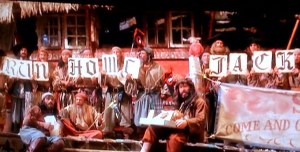
In the 1991 movie Hook, the nefarious captain who lends his name to the film abducts Peter Pan’s children and brings them to Neverland. Once there, the pirate attempts to condition Jack and Maggie into thinking that their parents don’t care about them and that they are better off away from home. Maggie resists Hook from the start, but Jack, who is angry at his father for always missing Jack’s baseball games, falls victim to Hook’s indoctrination. To show his feigned appreciation for Jack, Hook organizes a ballgame.  When Jack comes up to bat, it becomes apparent that none of the pirates knows a thing about the sport. Instead of cheering for Jack to hit a home run, the crowd mixes up the words and chants “Run home, Jack! Run home, Jack!” For an instant, Hook’s spell is broken, and Jack remembers who he is and where he belongs.runhomejack
We live in a world of dislocations and disenchantments, and too often we forget where home is. We are constantly on the move from here to there or are stuck in traffic on the way from here to there. We are constantly harvesting the disappointments of a world that makes rash promises and fails to deliver. We are constantly sprinting, speeding, gorging, guzzling – but we rarely stop to catch our breath. We rarely pause to find our bearings. We rarely go home.

Few undeniable truths remain in this world, but one is this: you’ve got to know where you are to figure out where you are going. Look at any map at a rest stop or fire safety plan on the back of a hotel room door, and you will find a dot and the words “You are here.” Your destination is 140 miles up I-81. Your nearest exit in case of emergency is the stairwell at the end of the hall. These maps come in handy when you are trying to find your physical location.

But there are so many other ways to become lost, for which “You are here” stickers are nowhere to be found. You used your credit card to make your mortgage payment last month and now the Visa bill is due. Your new relationship burned fast and hot for a few months and now you are wondering if there’s anything left to fuel the fire. Your job is eroding your will to exist, but there’s nowhere else to work. I doubt none of us has to dig too deeply into his or her own soul to find a similar situation. When we are lost, retracing our steps to home will help us find ourselves again.

But only in the narrowest definition of the word is “home” a physical place. More expansively, home is where we center ourselves. Home refreshes us and reintegrates us. Home propels us to where we are going next by being the one space that assures us of where we are now. Do you remember that old keyboard tutor, Mavis Beacon? She teaches you to type by keeping your fingers on the middle row of keys, the “home keys.” With your fingers on A-S-D-F-J-K-L-semicolon, you always have a reference point for finding the rest of the alphabet. Your left index finger knows to go up for “R” and “T” and right for “G.” You don’t have to look at the keyboard with your fingers centered on the home keys. When we find ourselves “at home,” we allow ourselves the space to breath, find our bearings, and achieve the quiet stillness that nurtures new possibilities.

The people of Israel have been in exile in Assyria and Babylon for a long time – decades stretching into centuries. Their home is their identity, an identity they lost when they were taken by force to their conquerors’ kingdoms. They weep by the rivers and hang up their harps. They cannot sing the songs of Zion in the strange land. But in this morning’s reading, we hear a note of hope from the prophet Jeremiah: “See, I am going to bring them from the land of the north, and gather them from the farthest parts of the earth…With consolations I will lead them back, I will let them walk by brooks of water, in a straight path in which they shall not stumble…They shall come and sing aloud on the height of Zion…I will turn their mourning into joy, I will comfort them, and give them gladness for sorrow.”

The prophet tells of the imminent return of the people to their own lands and homes, where they will reclaim their identity and sing once again on Zion’s height. Today’s psalm would not be out of place on that long journey back to their home: “How dear to me is your dwelling, O Lord of hosts! My soul has a desire and longing for the courts of the Lord.” The psalmist sees the sparrow and swallow making nests and reflects on the happiness of those who dwell in God’s house: “For one day in your courts is better than a thousand in my own room.”

The psalmist longs to be in God’s presence. In our world of dislocations and disenchantments, some deep, inexplicable energy drives us to seek this same presence. When we pause long enough to figure out where we are, we open ourselves up for an encounter with the presence of God. This presence constantly encounters us, but we rarely tear ourselves away from our sprinting and guzzling long enough to notice. But when we do, when we accept the God-given gift of stillness in our souls and embrace the encounter with God’s presence, we will find ourselves at home. St. Augustine says, “You have made me for yourself and my heart is restless until it finds rest in you.” We find that rest when we are at home in God’s presence, which refreshes us and creates in us the space to figure out where we are going next.

The wise men in this morning’s Gospel find this presence when they follow the star to Bethlehem. They enter the home of Mary and Joseph and find the Christ child with his mother. In the presence of the infant King, they offer their gifts. Like the wise men, when we notice the signs pointing to an encounter with Christ, we too can find ourselves at home with Jesus. In that shimmering moment of encounter, God gives us the opportunity to discern the gifts we can lay at Christ’s feet. Centered and nourished by God’s presence, we go out, use our gifts, and join in the work of building God’s home here on earth.

So run home, Jack. Run home and find Jesus Christ awaiting you there. Run home to God’s presence and find your rest. Come and sing aloud on the height of Zion. Let your heart and your flesh rejoice in the living God. Encounter that one day in the courts of the Lord that is better than a thousand elsewhere.
Unmuddying the waters (Bible study #9)

I know I’ve said this before, but it bears repeating: the hardest thing to do when studying the Bible is to read the words on the page without the baggage of tradition lending a hand. For the purposes of this Bible study, “tradition” has a lowercase “t.” (While it rhymes wimusicmanth “p,” it does not stand for “pool.”) This tradition is everything from the writings of the church fathers to the texts of songs in our hymnals. Now, I’m not saying that reading with a knowledge of tradition is a bad thing — far from it. Sometimes, however, tradition serves to muddy the scriptural waters to the point that we can no longer see our soggy selves floating around.

The opening of the second chapter of Matthew, one of the choices for this Sunday’s Gospel text, illustrates just how murky the waters can get. This is the bit where the wise men from the East come to see King Herod, and he sends them on a reconnaissance mission to find the newborn “king of the Jews.” Until a dream notifies them, the wise men are unaware of Herod’s malicious plans. They bring the infant Jesus some gifts he has no practical use for (does myrrh clear up diaper rash?) and then go home by another road.

Okay, now let’s bring in tradition. For years and years we have smooshed the beginnings of Matthew and Luke together so much that we have trouble separating them, even when reading them independently of each other. But this independent reading is so important for seeing how each evangelist is setting up his account of the Gospel of Jesus Christ. If you let the “no place in the inn” bit of the story (from Luke) fall away, you’ll notice that it certainly looks like Joseph, Mary, and Jesus live in Bethlehem — they relocate to Nazareth after their jaunt in Egypt. Indeed, the wise men come to Mary’s house, not a stable. So, while Luke uses the census to get the holy family to Bethlehem and back, Matthew uses Herod’s slaughter of the infants to get the holy family out of Bethlehem and eventually to Nazareth. But that’s not how we usually tell the story.

Now, bring in that hymn about the kings and everything gets even murkier. First, the wise men are “magi,” not “kings” — yes, these are entirely different words in Greek. Second, we have no way of knowing how many there were: we surmise three, but that’s because of the gifts. Maybe a couple went halfsies on the frankincense.

I acknowledge that using “We three kings of Orient are…” is a bit of a cheap shot, but it sure gets my point across. While these are small things that end up being mere distractions from what the text says, there are pieces of our tradition that amount to much more. Here’s one: Martin Luther’s “law/grace” dichotomy has colored readings of Paul’s letters for five hundred years. Luther’s viewpoint is so thoroughly embedded in biblical scholarship that it has taken on its own scriptural aura. But his is not the only reading.

Here’s another: one segment of Christian tradition — let’s call it the “rapture dispensationalist” segment (please read the footnote if those words are unfamiliar)* — sees the book of Revelation** as a script for what is going to happen during the “end times” (cue ominous music). This has led people (who would most likely — and ironically — call themselves “biblical literalists”) to speculate that the dragons and locusts symbolize things like atomic weapons and AK-47s. This reading of Revelation as a blueprint for the future has leaked into Christian tradition over the last two hundred years — so much so that the waters of Revelation (already murky by the difficult imagery of the text) are muddied even more by futile searches for modern analogs to biblical images. A more productive reading sees Revelation as an early Christian warning against complacency and the errors of  “the world,” a warning that transcends the time in which it was written.

Tradition helps us float in our biblical waters. But when we study the Bible, we should always take one swim unsupported by inner tubes or those floaties you wear on your upper arms. Perhaps, when we peer into that clear water, we will encounter God in new and fresh ways. Then we can add our encounters to that long story that is our Christian tradition.

Footnotes

* These are people who believe that the world will end in seven years of really gruesome carnage and destruction. Depending on which flavor of rapture dispensationalism you subscribe to, you will be brought bodily to heaven either before, in the middle of, or after these seven years.*** Again, depending on your flavor, Jesus comes back at some point in this time frame as well. As you can probably tell from this explanation, I am not a rapture dispensationalist.

** Please, please, please don’t say “Revelations” when you talk about this biblical text. There is just no “s” anywhere in that word.

*** A footnote inside a footnote! One term for the “middle of” way of thinking is this: “Mid-tribulation rapture dispensationalism.” See how smart you can sound with silly church words!

Finding your voice

You may not believe me, but there is a severe malady that targets clergy. To my knowledge, there are no support groups for those with chronic cases and no medical advances from the pharmaceutical companies. Indeed, doctors can do nothing to diagnose or treat this malady. Attacks happen almost exclusively during worship when the cleric is praying aloud and cease only when he or she has stopped speaking.

Liturgical professionals have made great strides in diagnosing this debilitating affliction; after much research, they have discovered that clergy with high self-importance blast counts most often contract it. Once, in the crypt of a great English cathedral, I came across an ancient description, but my memory is now woefully incomplete. My mind’s eye sees a crumbling illuminated page filled with cramped Latin writing. As near as I remember, the recorder named the malady something to the affect of inficere fenestrae voce — what is now commonly called “Stained Glass Voice.”

National Stained Glass Voice Awareness Week

If you have never heard of this affliction, please permit me to raise your awareness. “Stained Glass Voice” happens when the cleric prays aloud in a vastly different voice than he or she uses when saying anything else. Indicators of Stained Glass Voice include, but are not limited to, the dramatic pause (especially in the middle of a phrase); syllable elongation (especially “O” as in “O Lord”); pitch augmentation (especially an affected deep voice); and unnatural stressing (especially on words such as “who has”).

Most often, clergy contract Stained Glass Voice because they start acting instead of praying. Usually, they don’t even realize it because the affliction spreads gradually. They say the same prayers over and over again. In subconscious attempts to assuage the encroaching dullness of the repetitive action, they begin to say the words differently. Over time, the Stained Glass Voice replaces the original fervor of prayer, and clerics start competing for Best Supporting Actor in a Collect or Blessing.

Ever since I began leading worship, I have attempted to monitor my own vocal patterns when I pray aloud in church. At first, I suffered from Stained Glass Voice because I had trouble combining authenticity with volume. My natural praying voice is quite quiet, so my own voice felt foreign when I raised it to be heard by the congregation. Since my ordination to the priesthood, I have been praying aloud more often and for longer periods at a time. And I am coming to a point where volume does not inhibit authenticity. Attacks of Stained Glass Voice are less frequent (I hope), and I give credit for my remission to a mentor who probably has no idea how much she has taught me.

A few weeks ago, I wrote about a foursome of women who attend Morning Prayer every single day. One of these women, a beautiful lady whose advanced years have not robbed her of what they called in her day “moxie,” adds a set of prayers near the end of our daily worship. She says the prayers in her normal voice, with the same tone and character she uses after the service when she wishes me a good day. For many weeks, I reflected about how wonderful it was that she prays the same way she speaks. Then I realized why her prayers affect me so. It is not that she prays the same way she speaks. She just never stops praying. In every syllable she utters, I hear her prayer for her friends and her community, whether she is talking about God or about all the doughnuts I need to eat to fatten up a bit.

The Apostle Paul instructs the Thessalonians to “pray without ceasing.” I’ve known few people in my life who live up to such a lofty charge, but my friend at Morning Prayer does. As I listen to her speak and pray at the same time, I am learning how to make prayer an integral part of my life —  to make prayer the studs inside the wall rather than the pictures hung to adorn it. As I continue to grow as a person and as a priest, I hope that my true voice rises to my lips, and that the only stained glass in the building is the windowpanes.

Footnotes

I totally made up the story about the crypt at a great English Cathedral because I couldn’t figure out how to say “Stained Glass” in Latin.

The Inlet

(I wrote the following piece in the Spring of 2008, and happened upon it when I was reorganizing some folders on my computer. Some of the temporal language is now dated, but I left the piece as is to preserve its integrity.)

Theologian Sallie McFague identifies the earth as “the new poor.”* The planet, once bursting with bounty and hiding secrets in great swaths of unexplored terrain, now groans under the weight of post-industrial consumption and post-common sense insatiability. The earth has become poor (and a victim of exploitation, rape, and mutilation) in much the same way people become poor: the rich deny access to resources and opportunities. The sense of entitlement over the earth’s riches has grown over the last several hundred years (along with our gluttonous appetites). The Western Christian view of the earth—which, during the medieval period, was full of awe, respect, and fear—has morphed into one of utility, ambition, and domination. We have made the earth poor because we see it simply as an object, argues McFague.

There is another way. Rather than objectifying the earth, rather than possessing the earth as a thing to be used, abused, and discarded, McFague pleads with us to see the world as we see our loved ones—as subjects. Seeing the earth as another subject just as we ourselves are subjects gives us the opportunity to enter into mutual, sustainable relationships with the earth based on love and respect. McFague calls this model “the loving eye.”

Last autumn, I changed the route I take when I drive to church and discovered what she means by this loving eye. A left at the Belle Haven Golf Course sends me a Par Five’s distance down a residential street toward the George Washington Parkway, where I turn right and follow the Potomac River for about five minutes until I reach my parish. Sun-polished leaves of every green hue dance on the branches of trees, which arch toward one another above the parkway, making a dappled, living tunnel. On my left, the river peek-a-boos every now and again when the trees thin, and groves of white masts, rooted in anchored sailboats, mingle with the tree trunks. I sit up a little straighter in my seat. My eyes drift to the trees and the river beyond. And then, for the briefest of moments, I see my spot.

A small inlet in the river reaches to the road. The water tiptoes in and out of the little cove, treading softly around the three or four dead trunks that still stand in the shallows. On cloudless mornings, dawn gilds the somersaulting waves with new light, and the overhanging trees reflect swaying twins in the water. These deep green reflections merge with the morning light, mixing the color of sparkling possibility. All the energy of the dawn and the river and the swaying trees infuses me as I pass by, and I silently thank the Creator for such potent imagination. That is spring.

In winter, the water still treads lightly in and out of the cove, but, on certain January Sundays, ice reaches out from the bank, halting the tumbling waves. The dead trunks hide behind a low fog, which crawls along the surface of the water. When the cold sun penetrates the clouds, it shines through the winter scaffolding and silhouettes the bare trunks and branches. All the deliberateness of the ice and the fog and the sleeping branches deepens me as I pass by, and I silently thank the Creator for such quiet solemnity.

In autumn, the trees shed their uniformity. The water exults to mirror the new apparel in swirling reflections of amber and crimson. Dropping leaves spiral down, catching the morning light. They float on the water and cluster at the bases of the dead trunks. Dawn ignites the trees, making their leaves shimmer and blaze. The wind ruffles the surface of the water—no tiptoeing this time, only cartwheels. The light glances off each wave’s crest and each yellow leaf, doubling the morning’s fervent brightness. All the elation of the wind and the light and the flaming leaves elevates me as I pass by, and I silently thank the Creator for such riotous innovation.

I have never driven past my spot in the summer, but I imagine the inlet displaying a worn, comfortable version of the sparkling possibility of spring. Soon, I will no longer be driving that way on Sundays. At times, I have contemplated pulling my car over to snap a picture of the spot. But each time I travel down the living tunnel, I decide to keep driving by. Deep down, I discover that I have no desire to capture the image of that blessed spot. How can I hope to tell the story of such a place in a photograph? Capturing its image truly would be a confinement. I would preserve one instant of two-dimensional facsimile when the original has such light and movement and possibility. The depth of reflection would flatten. The waves would no longer tumble. The wind would disappear. If I took that picture, I would cease to remember that spot in my imagination. I would lose what I had sought to preserve. In a sense, I would take the life from a place that has infused my life with such energy, such ardent joy.

So I leave my camera at home. I prefer to keep the ever-changing image of that spot in my heart. It continues to kindle within me the spontaneous thanks of a creature for all the potent imagination, quiet solemnity, and riotous innovation with which the Creator has blessed creation.

The spot brings out McFague’s loving eye in me, and I find myself asking the water and wind and trees for forgiveness—for myself and for our entire post-common sense establishment. During the same lecture in which we discussed McFague’s work, my seminary theology professor reached back to the medieval era and borrowed the idea of Haecceitas from thinker Duns Scotus. He was not content to know a forest or a species of tree or flower. He wanted to know each particular white oak, each individual daffodil. And in so knowing, rejoice that God also knows those trees and flowers for God created them. And in so rejoicing, praise God for the craft, detail, and unsurpassed beauty seen in the particularity of creation. I pray for these Haecceitas eyes. I pray that soon we will all see the earth as a subject, a poor subject in need of enriching relationships. And I pray that the inlet remains in my heart, urging me to look with love on God’s creation.

Footnotes

* Sallie McFague, Super, Natural Christians

Generous engagement: The two things you’re not supposed to talk about (part 1)

With a mere eight days left before the presidential election and with a friend to whom I really can’t say no coaxing me to step into this quagmire, I find my thoughts turning to the intersection between faith and politics. This is not just any intersection — this is the intellectual version of what my seminary friends call “dysfunction junction,” which I imagine gives 1 in 10 drivers in Alexandria, Virginia symptoms of PTSD. At that intersection, Braddock Road, Quaker Lane, and King Street all cross, and many vehicles trying to brave the passage do not make it out unscathed.

With the image of dysfunction junction planted firmly in my mind, I turn it to faith and politics, while the collective cry of grandparents everywhere echoes that those are the two things one is not supposed to talk about. I plan to talk about the political dimension of Jesus’ message in the next installments of this series, but first I must clear something up from a political science perspective, and here it is:

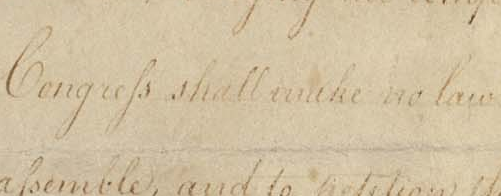
The phrase “separation of church and state” appears nowhere in our official political documents. Media Pundits and Joes Six-Pack alike invoke these five words everyday, but all they serve to do is reduce a much more complicated relationship into a morass of error and misunderstanding. Religion is mentioned exactly once in the U.S. Constitution. The First Amendment states: “Congress shall make no law respecting an establishment of religion, or prohibiting the free exercise thereof…” That’s it. That’s all we’ve got. First things first: the amendment deals specifically with congress. Churches can seek to impact the government all they want; the amendment concerns the power of congress, not the curtailment of the voice of the church.

Now, over the years, the Supreme Court has decided myriad cases by interpreting these two clauses of the First Amendment. The court gets involved simply because there is no complete wall of separation between church and state, as much as Thomas Jefferson wanted one. In 1963, the Court set a standard by which the government can indeed infringe on someone’s free exercise of religion as long as the government has a “compelling interest” and the resultant action is the “least restrictive” it can be (Sherbert v. Verner). My constitutional law notes from college have 33 religious cases cited, and those are just the important ones. The court has looked at issues such as school prayer, expulsion for religious motivations for failing to salute the flag, blue laws, drug use in religious ceremonies, wearing of religious symbols on military uniforms, displaying religious imagery on government property, polygamy, school vouchers, tax exemptions…*

All this to say that the government entangles itself in the religious establishment, no matter how much it tries not to. And the religious establishment, especially in the decades since the rise of the religious right, is unafraid to wade into the waters of politics. So, while the “separation of church and state” may be a nice shorthand for keeping us out of the messy business of theocracy, the phrase does not describe how our system functions.

People of faith should not fear to let their religious beliefs guide their political decisions. Rather, inviting God to be a part of your political decisions can lead to a more generous, sensitive engagment among those with whom you disagree. Of course, if invitation is corrupted by a toxic expectation that God is going to rubber stamp everything you decide is right, then this generosity and sensitivity will disappear. A prayerful reflection of the values Jesus teaches and the life he calls us to lead, along with a prayer for a discerning heart, help us to act responsibly and effectively in the political sphere.

With that sticky business about the separation of church and state cleared up, we can turn to the political message of Jesus’ teaching. Stay tuned for the second installment of “The two things you’re not supposed to talk about.”

Footnotes

*It would make for an extra boring post if I went into the actual legal stuff in here, and I’m not qualified to do so anyway. I have a Polical Science degree, not a JD. Suffice to say, the government (usually) tries hard not to break its own rules, but sometimes it does. Most of us just don’t notice most of the time.

Rambling in the presence of God

(Sermon for October 19, 2008 || Proper 24, Year A RCL || Exodus 33:12-23)

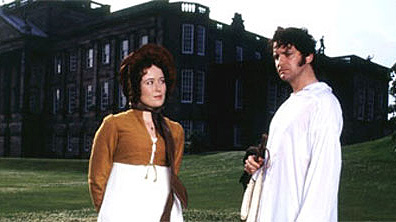
Moses is a bit of a rambler. I know, because I am a bit of a rambler, as well. If Dr. House were performing a differential diagnosis on “anxiety,” rambling would be the first symptom written on the dry-erase board. In my case, anxiety-induced rambling usually happens when I am attempting to converse with a woman I find attractive. In especially acute attacks, my rambling begins to sound like the dialogue in a Jane Austen novel. Much to my own chagrin, I tend to use phrases like “would that you were amenable to my ardent affection” and “how diverting it must be to tarry in the presence of such loquacious interlocutors.”

Now, Moses is already married to the lovely Zipporah (whom he met at the well) so he doesn’t have to worry about accidently quoting Pride and Prejudice in conversation. Rather than rambling in the presence of women, Moses’ anxiety leads him to ramble in the presence of God. No one could fault him for being anxious. After all, the people of Israel have been grumbling about the good old days in Egypt ever since they stepped on the far bank of the Red Sea. The daily delivery of manna and quail and the water gushing from the rock don’t seem to have curbed their discontent. And just last week, they melted down all their jewelry to make a nice, little pet god, which, of course, broke one of those pesky commandments. Needless to say, Moses has his hands full. Add to all this the anxiety caused by a heart to heart with the LORD, and Moses breaks down into an acute rambling attack.

The way the book of Exodus structures the conversation we heard this morning makes this rambling difficult to notice. This is one of those instances where the Bible overuses the third-person singular pronoun “he” so that you’re never quite sure who’s talking. Here’s Moses’ first ramble:* “See, you have said to me, `Bring up this people’; but you have not let me know whom you will send with me. Yet you have said, `I know you by name, and you have also found favor in my sight.’ Now if I have found favor in your sight, show me your ways, so that I may know you and find favor in your sight. Consider too that this nation is your people.”

And the LORD says to Moses: “My presence will go with you, and I will give you rest.”

But Moses apparently doesn’t hear this, because he is already halfway into his next ramble:* “If your presence will not go, do not carry us up from here. For how shall it be known that I have found favor in your sight, I and your people, unless you go with us? In this way, we shall be distinct, I and your people, from every people on the face of the earth.”

The LORD responds: “You have found favor in my sight, and I know you by name.”

I imagine Moses hearing this and slumping to the ground, allowing the full weight of his calling and all of his anxieties to wash over him. He lets the LORD’s words sink in. He shudders at their impact. He looks up, and his next frenetic ramble dies on his lips. Instead, he says, “Show me your glory, I pray.”

And the LORD says, “I will make all my goodness pass before you, and will proclaim before you the name, ‘The LORD.’”

So, after the LORD takes the necessary precautions to keep Moses from overexposure, the glory of the LORD passes Moses by. Moses, safe in the palm of God’s hands, feels the presence of the LORD. Moses’ anxious rambling ceases. Secure in the knowledge that he is in the LORD’s presence, Moses begins his work anew.

These are anxiety-ridden days. The presidential election is heading into the ninth inning. Unemployment is up and home-ownership down. The stock market graph looks like a heart monitor in the ICU. Add to all this the anxieties of work, school, and family, and rambling is going to be the least of our symptoms.

Thankfully, Moses is not the only person with whom God has the kind of conversation we’ve been discussing this morning. Oftentimes, when we come to God in prayer, our minds are already starting the sixtieth lap at Talladega. We just can’t slow down, can’t shift into a lower gear. We get frustrated because our prayer time becomes just another opportunity to review the grocery list and dwell on the need to get the oil changed and wonder how big a hit the investment portfolio took today.

But in our frustration, we fail to realize something. The grocery list, the oil change, the portfolio—these are just as good a place to start as any. Rather than seeing these things as intruding on our prayers, we can see them as entrances into authentic conversations with God. I don’t think God expects us to shut off our anxiety when we enter into prayer. Quite the opposite. God expects us to offer our anxieties as prayer.

Moses rambles about the people and finding favor in God’s sight and the nation of Israel. Rather than addressing any one manifestation of anxiety directly, the LORD speaks to the very core of Moses being: “My presence will go with you, and I will give you rest.” In other words, God says, “Moses, you are still going to lead the people. I’m not going to let you off the hook. But, remember, please remember that I am with you, and you can find rest in me.”

When we offer our anxieties to God in prayer, we acknowledge that the sources of those anxieties have power over us and keep us from being the people God calls us to be. But God whispers to the very core of our beings: “My presence will go with you, and I will give you rest.”

Moses continues to ramble. So God reminds Moses of the relationship they share. The LORD knows Moses’ name and Moses hears God speak that special, holy, intimate divine name that the Israelites wrote down but never spoke aloud. In revealing this special name to Moses, God invites Moses into a deeper relationship.

When we offer our anxieties to God in prayer, God gives us the opportunity to notice that God has heard what our hearts have been divulging. Through all our rambling, God is speaking God’s name to us, inviting us to that deeper relationship, in which trust begins to mitigate anxiety.

Finally, Moses stops rambling. He realizes that God is with him, bearing him up as the waves of anxiety crash over him. Moses asks to see God’s glory. All the goodness and the glory of the LORD pass him by. When we acknowledge the anxieties weighing on our hearts, we can begin to hear God speaking peace to us in the midst of those anxieties. And we, too, can settle into the cleft of the rock, rest in the palm of God’s hand, and feel the presence of the LORD pass us by.

Footnotes

* This is one of those times when reading a sermon doesn’t give you the effect of the delivered message. To get said effect, read Moses’ bits like Dr. Cox from Scrubs. He is a rambler, also.

Once there was a man who found a pearl…

So, the United States is mired in the worst financial fiasco since I was four years old. Because of my early developmental stage back then, I was more concerned with fire trucks than the Dow Jones Industrial Average. Now, I still get pretty excited when I see a fire truck, but the economic crisis occupies my mind with far more regularity. Every news cycle seems to have a direr story than the one before, the presidential candidates talk about little else, and the crisis is the number two topic at coffee hour right now (after college football, which, of course, is more important, especially when my team is ranked #2 in the AP).

With the Dow taking a nosedive and 401Ks across the land going on the South Beach diet, can you think of a better time for churches to start their fall stewardship campaigns?

I know the previous sentence sounds sarcastic, but it’s not. Of course, I wish we had never gotten into this mess in the first place. But we’re in it now, and the best thing we can do is take hard looks at our priorities. The economic crisis is forcing us to reevaluate how we allocate our resources. The first step in this evaluation process is realizing “our” resources are not ours at all.

Jesus tells this parable: “Again, the kingdom of heaven is like a merchant in search of fine pearls; on finding one pearl of great value, he went and sold all that he had and bought it” (Matthew 13:45-46).

A bishop I knew a long time ago used to tell a story about this passage from the Gospel according to Matthew. I was very young, so I might get some of the details wrong and I might embellish others, but it goes something like this:

Once there was a man who found a pearl. This pearl was the most magnificent specimen. Indeed, only in the wildest dreams of clams did a pearl like this one exist. It was the size and weight of a golf ball, but no one would think to compare the two. The pearl was in a class by itself. It shone with a light all its own. The light might have hid some imperfections if the pearl had had any. But it didn’t. The pearl, thought the man, was, quite simply, perfect. The trouble is, the pearl was in a glass case and very visible alarm wire crisscrossed the case and a wrinkled shopkeeper hovered over the case. The man opened his wallet, thumbed through the small bills in the billfold and pondered his several credit cards. He pulled out one especially shiny card and, pointing to the pearl, tried to hand the card to the shopkeeper. The shopkeeper raised her eyebrows and shook her head.

So the man went home. He wandered through his house, into the garage, and onto the deck. He gathered up everything not nailed down and sold it all—his car, his computer, his beloved grill. He went back to the shop. Not enough, the shopkeeper’s look told him.

So the man sold his house. Not enough. He cashed out his stock options. Not enough. He even gave up his mint-condition Nolan Ryan rookie card. Not enough. The man stared plaintively at the shopkeeper. Then his eyes wandered down to the pearl. He knew somehow that obtaining this pearl was why he was alive, what he was made for. He didn’t know how he knew, but, looking at that pearl, he just knew. He looked back up at the shopkeeper. “What about me?” he said, “What if I give myself?”

The shopkeeper smiled, brought a jangling set of keys to eyelevel, and began searching for a key. She found it, unlocked the case, and slowly lifted the pearl off of its bed of velvet. “Here you go,” the shopkeeper said. “And by the way,” she continued, “you were willing to give up everything for this pearl. Your house and grill and baseball card are still mine, but I want you to look after them for me. And remember, you are mine, too.”

This story has been with me for quite a while, and I share it because I think it centers the discussion of stewardship better than anything I can come up with myself. To understand the importance of stewardship, we must first acknowledge that everything we have comes from God, and is, in fact, still God’s. We are just holding onto God’s stuff for a while.

Indeed, a steward is someone who manages the assets of another. So when we talk about stewardship in a Christian context, we are saying that we are blessed with abundance from God, and we are striving to use that abundance justly and wisely. When we think of Christian giving—of time, of talent, of monetary resources—we should really tack on another word. We should think of it as “Christian giving back.”

Stewardship always entails some form of giving. Stewardship has at its base a certain kind of giving that we do every Sunday. When we celebrate the Eucharist, we are literally “giving thanks,” for that is what Eucharist means. By starting with thanksgiving, we acknowledge that our gifts, our lives, our livelihoods come from God. Stewardship must start with an “attitude of thanksgiving.”

The reevaluation of our allocation of resources begins with humbly acknowledging that we are not the owners of the stuff we accumulate and gratefully giving thanks to God for what God has given us to look after. In the end, this all comes down to trust. The financial crisis in which we are currently embroiled is predicated on untrustworthy practices; indeed, we don’t even know how much certain things are worth any more because of deceit and mistrust. But God is trustworthy, and God has entrusted us with God’s stuff. How will we respond?

Activating praise

Every weekday morning, I walk into the fellowship hall at church to find four delightful ladies chatting over coffee. I shake their hands and pat their shoulders. They welcome me with smiles and critiques of my thinness (along with doughnuts, their remedy for such a physique). If I yawn even once, they launch into mock interrogations of the previous night’s activities. I have known these ladies for two months only, but already I love them, for their warmth could instill no other feeling.

At the appointed time, we move from coffee and doughnuts in the hall to silence and prayer in the chapel. My four delightful friends form the core of worshipers for daily Morning Prayer, a tradition as old as any other in the Anglican Church. This morning, I was checking my email in my office when they shooed me into the chapel, where my rector asked me to lead our morning’s devotion.

“Lord, open our lips,” I prayed.

“And our mouth shall proclaim your praise,” came the response.

These words, so familiar from years of praying the Daily Office,* tasted fresh and alive with new meaning this morning. Notice the progression these two lines demonstrate. We cannot proclaim God’s praise until God opens us up. God is the cause. Our proclamation is the effect. Indeed, God activates our praise. We do not call God to us when we come together in prayer; God calls us to prayer. God is not standing on the doorstep with hands in pockets waiting to be buzzed in. God is already inside prompting within us the desire to gather. Lord, open our lips. Only when God has done this will we be ready or able to proclaim God’s praise.

These words at the beginning of Morning Prayer remind us that we do not have a boxed-up God or a God carved in a piece of wood. Our God does not exist for our convenience. Our God is not a mute receptacle for our cares and concerns. Our God lives a life of radiance and moves with graceful unpredictability through a world which tries its best to forget who deserves credit for creation. God’s radiant life is complete within that life, but, in a wonderful incongruity, God also moves in and through our own little lives. This movement activates our prayer. This movement gives us the desire to praise God. Our mouth shall proclaim your praise because you, Lord, have deigned to open our lips.

In Mere Christianity, C.S. Lewis comes to a similar conclusion when discussing our connection with the life of the Trinity: “An ordinary Christian kneels down to say his prayers. He is trying to get into touch with God. But if he is a Christian he knows that what is prompting him to pray is also God: God, so to speak, inside him. But he also knows that all his real knowledge of God comes through Christ, the Man who was God — that Christ is standing beside him, helping him pray, praying for him. You see what is happening. God is the thing to which he is praying — the goal he is trying to reach. God is also the thing inside him which is pushing him on — the motive power.”

God both motivates our pray and receives it. When we pray, “Lord, open our lips,” we acknowledge that we would not even be entertaining the notion to praise God if God were not prompting us toward such a notion. Thus, our prayer is our ultimate expression of God’s sovereignty, which (from an anthropocentric perspective) is our inability to control God. When we view prayer as our response to God’s movement, we are less likely to see God as the proverbial divine genie-in-a-bottle or ATM. We are more likely to come to God humbly, overwhelmed by the proposition that the Creator of all that is would desire our mouths to proclaim any sort of praise.

The four delightful ladies with whom I share Morning Prayer understand this gift of God’s presence better than most. They are there every day, expressing their joy that our radiant God moves in their midst, activating their praise.

Footnotes

* “The Daily Office” is a technical term for the various daily times of prayer, which grew out of the monastic tradition of praying the hours. In the Episcopal Church, Morning and Evening Prayer are the predominant pieces of the Office, with Noonday prayers and Compline (nighttime prayers) a close second.

Not FEMA trucks

I’ve been rereading C.S. Lewis’s The Screwtape Letters in preparation for a class I will be teaching at my church. The book is a series of letters from one of Hell’s executive level devils sent to a junior tempter who is tasked with corrupting the soul of a new convert to Christianity. In Letter #14, Screwtape is alarmed that Wormwood’s “patient” is showing signs of becoming humble.

This is not as dire as it may seem, says Screwtape, because the true meaning of humility is easy to conceal. He counsels Wormwood: “Let [your patient] think of it not as self-forgetfulness but as a certain kind of opinion (namely, a low opinion) of his own talents and character…. By this method thousands of humans have been brought to think that humility means pretty women trying to believe they are ugly and clever men trying to believe they are fools.”

You can see just how handy this kind of self-deception could be for those who work against God (who Screwtape calls “the Enemy”). If people are deluding themselves in such a way as to take less than full advantage of their gifts, then Screwtape and his boss are winning. And here’s the main point: thinking yourself less talented than you are does not lead to humility, but to dereliction of duty.

God pours out on each one of us a collection of gifts and talents. If we don’t use them due to a case of misplaced modesty, then we are not fully living the lives that God’s abundance makes possible. We’d be like those FEMA trucks held back from the hurricane zone, full of uneaten food and unused supplies. Humility has nothing to do with a low opinion of your talents. Humility has everything to do with the proper attribution of and thanksgiving for those talents to God, the provider of all good gifts. And the best way to give thanks to God for your talents is to use them in the service of others—giving of yourself out of the things God has given you. Indeed, the only way to thank God properly for your gifts is to use them and use them fully, with no hindrance from a false understanding of humility.

So, come to the Lord in prayer and ask God what are those gifts and talents God has poured out on you. Be humble by acknowledging that those gifts and talents have a source, and you aren’t it. But do not sell yourself short. God gives gifts so they can be used to glorify God. Any cropping of your talents for the sake of that false understanding of humility lessens your ability to reflect the glory of God out into the world. Give thanks to God for all the opportunities God has given you to reflect that glory and serve God with that life of yours, so full of gift, talent, and promise.

Emptying

(Sermon for September 28, 2008 || Proper 21, Year A RCL || Philippians 2:1-13)

For the first several weeks after moving into my townhouse, about half my stuff littered the living room floor. I had put away my clothes and shelved my books. I had arranged my furniture and replaced the light bulbs with those curlicue ones. I had set up my TV and hung a handful of pictures. But this mass of extraneous stuff persisted. There were sealed boxes and boxes whose contents had thinned as I randomly put things away. But even these boxes lingered, some with single items remaining in their depths. Every time I came home I dodged the crate of office supplies, stepped over the plastic filing cabinet, and wished everything would gain just enough sentience to find a place to go that wasn’t the middle of my living room. The objects of my wish, of course, remained stubbornly inanimate.

The number of times I’ve moved has reached the double digits now, and I have discovered a universal law: for every five boxes you pack, one will remain unopened until your next move. These extra boxes are (a) shoved unceremoniously into the closet under the stairs or (b) stacked in the garage where the car should go or (c) pushed next to the couch with decorative afghans thrown over them and turned into end tables. Currently, my one-in-five-boxes, so recently cluttering my living room, are now lined up against the wall in the guest room awaiting their fate.

I have all this stuff. I can’t possibly need it all. I can’t possibly use it all — the nearly empty boxes, the still sealed boxes, the hanging bags, duffel bags, laundry bags, garbage bags, trunks, suitcases — not to mention all the stuff that used to be in these containers that I did unpack. Most of the stuff seems to exist simply to take up space.

So, when I read in today’s lesson from Philippians that the same mind that was in Christ Jesus should be in me, I find I’m in a bit of a bind. Paul praises Jesus for doing something that my accumulation of stubborn inanimate objects shows I’m unwilling to do. “Jesus,” says Paul, “who, though he was in the form of God, did not regard equality with God as something to be exploited, but emptied himself, taking the form of a slave, being born in human likeness.”

The Greek word translated “something to be exploited” might be better translated as “something to be grasped” or even “something to be hoarded.” Even though he was in the form of God, Jesus let go of his station. Even though he was part of all the might and majesty and magnificence of God, he did not hoard them. Even though he shared the most precious thing in the universe — equality with God — he shared himself with us by emptying himself. By taking on the form of a slave. By being born in human likeness.

Then he humbled himself, and became obedient to the point of death — even death on a cross. Then God exalted him and gave him the name that is above every name. All this happened because Jesus was willing to let go of his grasp on his divine form. All this happened because Jesus refused to hoard the incomprehensible harmony of light and love and grace that is our God. All this happened because Jesus emptied himself.

And I am supposed to have the same mind that was in Christ Jesus? Surely, Paul, you ask too much this time.

If I am unwilling to relinquish my stuff, even the stuff in the boxes that won’t see the light of day until I move again, how much more unwilling am I to empty my heart and mind of all the stuff that diverts me from following the Lord. Indeed, the boxes and bags and furniture function merely as physical reminders for all the clutter encumbering my soul. If one in five boxes remains unopened after a move, what percentage of my soul remains sealed off after moving through life? How much of my heart is unusable because of all the stuff piled so high? With my mind distracted by the detritus of the day, when will I have time to contemplate the works of God?

Where is this mind of Christ Jesus that neither grasps nor hoards, but seeks to empty? How do we obtain this mind? How do we grasp it? Right here. Right here is where the imitation of the mind of Christ begins. We can’t obtain it. We can’t grasp it. We can only resonate with Jesus’ self-emptying by beginning to empty ourselves. We can only come to some lowly analog of the mind of Christ when our own minds let go of the persistent accumulation of distractions. This emptiness is unlike any other instance of emptiness out there. This is not the emptiness of a bare pantry or the emptiness of thirty miles after the fuel light comes on. This is expectant emptiness, purposeful emptiness, holy emptiness. This holy emptiness makes room for the grace of God to expand within us. Our internal houses, once the storage depots for the stuff of the world, transform into the sanctuaries they were always meant to be. The emptier we become, the greater is our opportunity to discover true fullness.

This wonderful paradox is at the heart of our life of faith. Paul says that God is at work in us, enabling us both to will and to work for God’s good pleasure. As we begin the slow process of self-emptying, we realize that God has been at work in us all along: rearranging our internal furniture, removing the clutter, and unsealing those parts of our souls we packed away. Truly, we’d never have been able to start emptying ourselves without God first tidying up the place. When we empty ourselves, we are ready to respond to God. We are eager to serve others. We are prepared to give of ourselves because we know the fullness of God expanding within us has no bounds.

I invite you to join me in an experiment this week. Each night before you go to sleep, focus your mind and heart in prayer. Identify something in your life that is taking up too much space within you, that is cluttering up your internal living room. Perhaps this something is trouble at work or doubt about your financial future or concern for a loved one. Give this something to God in prayer. Ask God to inhabit the space vacated by this offering. Do this every night. Each time give something else to God. Allow more space for God to move in your life. Soon you will empty yourself of enough clutter to notice that God has been at work in you all along, enabling you both to will and to work for God’s good pleasure. Thanks be to God.