Tabula rooster (Bible study #6)

For the first time in my life, a rooster woke me up this morning.

Before I go any further, let me say that I was none too pleased by this event. Everything I know about roosters comes from cartoons and various other early childhood media, and the aggregate sum of that knowledge boils down to two facts: (1) roosters are boy chickens and (2) roosters crow at sunrise. Now, according to the U.S. Naval Observatory Astronomical Applications Department, sunrise was at 7:09 this morning at longitude W80.0, latitude N38.7 where I happen to be on retreat. So, either the cartoons lied or the rooster was jet-lagged because that darn bird woke me up at 5:30.

As an aside, I’ve always thought clock-radios to be rather neutral devices, but the one in my room mocked me with its diabolical red numbers.

At first, I didn’t know what was making the noise. It was guttural, gravelly — like the rooster version of Tom Waits. Then, as sleep traitorously fled from me, I took stock of my position as it related to the unknown sound. I was in bed. I was in the middle of farm country. I was awake before I should be. The sound was not my alarm. Taking these four items into account, I deduced the encroaching noise was the call of a rooster — an overzealous rooster fiend — but a rooster, nonetheless.

So, what’s all this have to do with the Bible? Well, not much, in truth. I needed to vent. However, as I am writing this post, I realize that taking stock of my position helped me identify the rooster’s crow. In much the same way, taking stock of my position in relation to the various texts of the Bible facilitates a more authentic encounter with those texts.

Why does that one story make you angry? or sad? or joyful? or indifferent? What memories does that other story stir in your heart and mind? Maybe your grandmother recited the twenty-third Psalm to you every night as you fell asleep. Maybe that gesticulating street preacher quoted a verse at you while explaining that your bare legs condemned you to hell.  Maybe you were on the verge of mental collapse and you threw your Bible to the ground and it flopped open to Romans and you read and you were filled. Maybe you cannot read Paul because the slave owners justified their action with his words.*

Simply put, our positions, our baggage influence our readings of the text. None of us can achieve a state of Tabula Rasa when we open our Bibles; nor should we try. I don’t believe God wants blank slates to write words on. God wants us — in all our history and tragedy and comedy — wants to rearrange our baggage into those words of life. We bring ourselves to the texts of the Bible. All those positive and negative memories and emotions bubble up. Quelling them for the sake of “scholarship” or “study” makes no sense. The Bible should be too much a part of our lives to keep our lives from being a part of the Bible.

When you pick up the Bible, acknowledge that your position and your baggage do, in fact, influence your reading. Ironically, this acknowledgment will make you less biased in the long run because you will begin to see why a story strikes you a certain way and not just that it does. Chronicling your past associations with a particular text offers one way to chart your growth in your life of faith. The text does not change, but you do. What changes happened? How does the constancy of the text bring those changes to light?

Take stock of your position when you open the Bible.  Let the text encounter you — not the person you think you should be in order to be worthy of the Bible’s holiness nor the unobtainable Tabula Rasa, but the person you are in all your human particularity and messiness. Through the power of the Holy Spirit, the text will speak to this honest, baggage-ridden person. Where the text and your baggage intersect, you will have found your story in the Bible. You will know you aren’t alone in your experience for there are no new stories. There are just new people telling them, new combinations of baggage which add depth and innovation, new ways to proclaim that old, old story.

Who knows? Maybe the next time I read the Passion narrative and come to Peter’s denial of Jesus, I’ll think of that overzealous rooster fiend at longitude W80.0, latitude N38.7.

Footnotes

* In his wonderful and provoking book Jesus and the Disinherited, Howard Thurman speaks of this in his own family.

** In the 4th study in this series, I spoke of a dual reading of the text — once with your context and the historical context and once in the light of a “holy naivete.” I think this holy naivete is different from the blank slate mentality. In the former, you let go of your baggage in order to set it into sharper relief in your reading. In the latter, you delude yourself into thinking you have nothing to offer the encounter.

For once I didn’t disengage

Detachment. Recently, I’ve been giving in to the feelings of this my most famous and well-documented coping mechanism. Friends will tell you that I barely left my room during my second year of seminary except to go to classes and meals. Some days were better than others. I could stomach watching a football game in the common room or going to a birthday dinner at the Mexican restaurant. But on the worst nights — ones in which I had been invited out and had even made a vague commitment to going — I got dressed in going out clothes, laced up my going out shoes, paced the room, argued with myself, grasped the door handle half a dozen times, manufactured some phantom nausea, and put my pajamas back on. I hated myself for those nights. Back then I was coping with the loss of a long-term relationship; I dealt with the decoupling by detaching myself from everyone else, too. I know — not the healthiest of coping mechanisms. Indeed, I needed a coping mechanism for my coping mechanism. But more on that in a moment.

Before you start calling in a crack squad of psychotherapists, this recent bout with detachment is nowhere near as severe. Like Spinal Tap’s amps, the detachment a few years ago went up to eleven. This time, the severity is at about a two or three. But enough of the shadow of that previous time hovers in my memory, making me all too aware of the dangers of detachment. Back then, a loss of relationship made me pull away. Ironically, a similar set of responses is happening as I form new relationships at my new parish. Of course, with the new relationships come the ending or transforming of other relationships. Suffice to say, the constellation of relationships in my night sky is changing, and something in that change is causing me to fall back on my erstwhile coping mechanism.

Enter this week’s lesson from Paul’s letter to the church in Rome. Paul discusses various practices that some find objectionable and others find completely acceptable. Each group thinks they are the ones who are truly honoring God. Paul tells them that both sides are giving thanks to God by different actions, so neither has a right to pass judgment on the other. In this context, Paul writes a verse of surpassing beauty and profundity: “We do not live to ourselves, and we do not die to ourselves. If we live, we live to the Lord, and if we die, we die to the Lord; so then, whether we live or whether we die, we are the Lord’s.”

As I contemplate my recent relapse into old patterns of detachment, I realize that these words have been with me from my first week at my new parish. Since the beginning of August, I have been a part of three memorial services — liturgies during which people come together to mourn and laugh and grieve and celebrate the life of a loved one who has died, and in so doing, celebrate the resurrection of Jesus Christ. At the beginning of each service, the priest intoned these same words from Paul’s letter to the Romans. Each time I heard these words in the last month, I got that spine-tingling feeling that happens when God drops an ice cube down your back to remind you that God’s still there.

These words of Paul speak the beautiful and profound truth that we belong to God, or as the Episcopal burial office puts it: “We are the Lord’s possession.” This reminds me that however much I may feel the need to detach, to disentangle myself from life or friends or responsibilty, God never severs the relationship with me. Hearing Paul’s words during those special memorial services kept me from disengaging in the midst of all the changes and chances my life had been through in recent months.

This is why “church” is so important. In the context of the community of faith, the Lord spoke words of renewed invitation to me. I’m sure you’ve heard the popular epithet that describes someone as “spiritual, but not religious.” I think I understand some of the cultural and sociological forces that have contributed to the emergence of this category. One of these forces, sadly, is a misunderstanding on the societal level of what “religion” means. In the modern era, the terms “religion” and “church” took on the connotation of “edifice” — of imposing structure and immutable establishment.

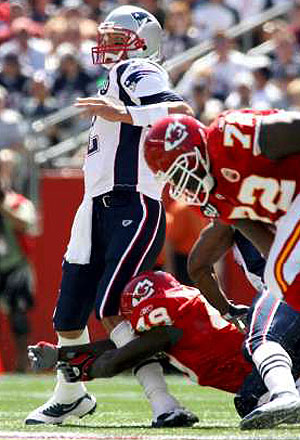
But “church” has very little to do with a building and much to do with a people gathered. While structure and doctrine have their necessity, “religion” does not mean structure and doctrine. When you get right down to it, “religion” means “reconnection.” Re-ligio. Just look at the word and think of all the football players (most recently Tom Brady of my beloved Patriots) who have had surgery for torn ACLs.  An ACL tear is repaired by reconnecting the torn ligaments to the muscle and bones of the knee. Likewise, “religion” is all about reconnecting us to the One who holds us all in possession. And “church” is all about celebrating that reconnection with one another.

The musical Rent offers a stark view of the reality of our society and shows the utter need for these resources of connection and relationship. Near the end of the show, after the characters have dispersed and gone their separate ways, Roger and Mark sing about that special Christmas Eve last year when their group of friends came together to celebrate life and love. They sing: “What was it about that night? Connection in an isolating age. For once the shadows gave way to light. For once I didn’t disengage.” Opening themselves up to that connection with others leads them to joy and pain and life and death and the grittiness of a love that has survived all the assassination attempts by the forces of isolation.

When I begin to let myself detach from those around me, I must remember that God has already repaired the torn ligament and banished the shadows of isolation. I am the Lord’s possession. I am the Lord’s when I die. And I am the Lord’s while I live. I just need to make sure I’m living while I am alive, to make sure that I stay connected to those around me and celebrate the love of the God who knits us all together.

A Fragile euXarist

He wore a grey t-shirt sporting the American flag, shorts, and velcro sandals. When we entered the apartment, he was sitting on one of those big exercise balls and staring through the blinds into the yards beyond the fence. His supervisor greeted us at the door and called out to him to welcome us visitors. The young man at the door — bleached-blond, tattoed, pierced — looked more like a roadie for Alice Cooper than a 24-hour supervisor for a man with Fragile X syndrome.*

My friend had asked me to accompany her to visit her brother and bring him communion. He is not able to get to church much, she had explained, because of his condition, but the Eucharist means a lot to him. She had also explained that Fragile X is a genetic mental impairment that, in her brother’s case, manifested in cognitive disabilities and, on occasion, uncontrolled violent behavior. He will repeat the same phrases over and over again, she had said, and he’ll probably ignore you this visit — he usually ignores strangers.

She and I sat on the futon in the small living room, and she attempted to engage her brother in conversation. I kept my communion kit (which looks like a camera bag) slung across my back, and I leaned forward to catch what they were saying. Instead of talking with his sister, he continued to stare out the window and converse with his supervisor about the comings and goings of various neighbors. After a few minutes, he stood up and I realized how big he is — he could have played power forward at Duke, I’m sure. He went over to the dining table and sat down again, musing about his dinner options. He wanted french fries with ketchup. My friend was patient, and every time she tried to engage him, he responded a bit more. After a while, I could tell that the two siblings had started playing an old game — she knew he was listening and now he was just pretending to ignore her. His responses to her queries, randomly nonsensical moments ago, were now humorously nonsensical. We all laughed about french fries and ketchup and about the lady in the apartment upstairs.

After a few minutes at the dining table, he wandered back to the exercise ball, produced a pack of bent playing cards, and began to shuffle them. My friend asked him if wanted communion. He started staring out the window again. She turned to me and suggested I start unpacking my kit. I unzipped the bag and took out the corporal — sort of a liturgical placemat. On the corporal, I placed the paten (plate) and chalice (cup). As I set out the vessels and tipped some wine into the chalice, he stopped shuffling and started watching. He picked up the Bible and leafed through it while I turned the pages in my prayer book. As I prayed the prayer of consecration, I found myself unconciously emphasizing the simple words in the prayer — words such as food and drink and life. I finished the prayer, my friend and I prayed the Lord’s Prayer with her brother, still holding my Bible, looking on, and then I broke the Bread. I brushed his hand as I gave him the Body of Christ, and, in that touch, I could feel the presence of Christ in our midst. He was there, as he had been our whole visit, and he made himself known in the sharing of his Body and Blood.

After sipping from the cup, I cleaned up the kit and repacked it. I found myself wondering how much my friend’s brother had understood of what we had just done. Then I stopped short. How much had I understood? I said the prayers. I laid my hands on the bread and wine. I asked the Holy Spirit to sanctify the gifts. But even with all my schooling and all my study, I still don’t know exactly what happens in those holy moments of sharing in Christ’s Body and Blood. I don’t know how Jesus indwells those elements with his Spirit. I don’t know how ordinary bread and wine are changed to something that connects us bodily with the grace of our Lord Jesus. But I know that connection exists, that relationship is real. I felt it when my friend, her brother, and I shared that Holy Eucharist.

We do not have to understand fully to participate in the life of Christ. In fact, living a life in Christ is not about understanding at all. It’s about following, about having faith that Christ is one step ahead of you, guiding you. As Paul says, right now I know only in part, but I will know fully, even as I am fully known. God is the one who understands. God is the one who, indeed, stands under and holds up everything that we hold true and good. Living a life in Christ cultivates that deep relationship with God that both brings some understanding, but also (and happily) removes the need to understand.

There’s a phrase in one of the postcommunion prayers in the Episcopal prayerbook: “Almighty and everliving God, we thank you…for assuring us in these holy mysteries…” I’ve asked myself many times how a mystery can be assuring. Mysteries usually thrive by keeping you wondering. But I think that’s the very point. If we understood everything about God there is to understand, God wouldn’t be God, and we’d be deluding ourselves. That was the problem with carved gods and graven images that were both worshiped and controlled. God reveals God’s very majesty and glory in the fact that the mystery abides. And the assurance comes when we cross that fine line between wondering and being lost in wonder.

I still wonder how much my friend’s brother understood about what we were doing. But I know now that understanding is a distant second to sharing — the sharing of the presence of Christ in our midst. My friend’s brother hugged her when we got up to leave. We said goodbye to the roadie-supervisor. As I left the room, I glanced back, and for a split-second, I saw Jesus balancing on that exercise ball.

Footnotes

*For more information about Fragile X syndrome, click here.

To be that follower

(Sermon for August 31, 2008 || Proper 17, Year A RCL || Matthew 16:21-28)

Imagine with me the Apostle Peter, who is in Rome near the end of his life, thinking back on that day spoken of in this morning’s Gospel. *

The coals in the cooking fire still smoldered hours after the last log was cast on them. I awoke in the pre-dawn chill and warmed my fingers over the scant heat. Mine was the night’s last watch, and I muttered to myself about the senselessness of posting a sentry. But our resident Zealot,** the other Simon, had spoken persuasively about the need for vigilance, especially as Jesus’ words reached more important and more vindictive ears. As the foggy, half-light of dawn crept through our camp, I saw movement coming through the scrub from the foothills. I was about to wake the Zealot when I heard the tune of a psalm carried on the breeze, and then Jesus himself stepped out of the mist. Under one arm, he had a load of sticks and twigs, which he deposited on the coals. Blowing gently on the embers, he rekindled the fire and sat down next to me.

“Lord, you shouldn’t go off alone like that. It isn’t safe.” Apparently, I said this louder than I had meant to because our companions began to stir.

“You’re right,” he said, “It probably isn’t safe.” He turned to look at me and smiled. “But I wasn’t alone, Peter. No. None of us is ever alone.” He paused, held his breath. Then he exhaled slowly, and his cold breath mingled with the smoke from the damp twigs on the fire. He called out to those still sleeping. “Gather around, everyone. I have something to tell you.”

Once the rest of our group was seated at the fire, Jesus lifted his head and greeted us each by name. “My friends,” he said, “Yesterday, I asked you to keep my identity a secret. I asked you not to tell anyone that I am the Messiah. I know I can trust all of you, and this morning I have more to entrust to your confidence. Peter has just cautioned me about the danger of going off alone. Simon has you all standing guard through the night. I thank them both for their devotion to our safety. However, my friends, this morning I must tell you where our story is going, where my path is leading. Soon, I will abandon the safety of these hills and go to Jerusalem. Once there, I will ask you not to protect me. Men from the elders and the chief priests and the scribes will come, and they will arrest me, and they will beat me, and they will kill me. And three days later I will be raised from the dead.”

I stood up and looked down at Jesus. I didn’t know what to say. Twenty minutes ago he was rekindling the fire, and now he was talking about his own fire being snuffed out. I looked around at my companions—stunned into silence every one, even Bartholomew who always had some joke or jest on his lips. I started walking away. I needed to get away.

I thought I had everything figured out. I thought I knew what was to come. I saw him do amazing things: I saw him make the blind see and the lame walk. I saw him cleanse the leper’s skin. I saw him feed five thousand with enough to feed five. I saw him cry out in the storm and calm the waves. The words of the prophet were coming to life before my very eyes. The day before, Jesus had asked us who we thought he was. “You’re the Messiah,” I had said, and something inside me that was not myself told me I had spoken the truth.

But what kind of Messiah lets himself be led like some silent sheep to the slaughter? What kind of Messiah allows himself to be killed? The Messiah is the heir to David’s throne, the king who brings victory over our oppressors, the warrior who will sweep our enemies from our land and make us free once again. Not one who surrenders. Not a victim. Not a dead man.

These maddening thoughts crashed into me, and I dropped to one knee, my chest heaving, my cheeks moist with tears. I felt a hand on my shoulder and looked up. Jesus was there, looking down at me. “Why, Lord?” I snarled from my kneeling position. Then I stood up and shouted in his face: “Why? I trusted you. I called you Messiah and you did not deny it. I gave you my life, and for what? So that I might dig your grave?” I turned around and put my hands on my head, squeezing as if the pressure would keep my mind from flying apart. “Heavens preserve you, Lord. This must never happen to you.”

Jesus turned and looked at me or into me. When he spoke, his voice was calm, but commanding. “Get behind me, Satan! You are a stumbling block to me; for you are setting your mind not on godly things, but on human things.”

Then he walked back to camp, leaving me alone in the morning fog. “None of us is ever alone,” I heard him say, as in a distant memory. I followed him back to the fire, my thoughts as thick as the fog. Yesterday, I was Rock. Today, I am stumbling block? Yesterday, the father in heaven was revealing things to me. Today, my mind is set on human things. What happened? What changed?

I had been clinging so tightly to my own image of the Messiah that I failed to see this new, brilliant vision of the Christ in my midst. Where was his army marshalling to cast out the Romans? Where were his generals and siege towers and chariots? Of course, there were none. Instead of soldiers there were blind men with new eyes. Instead of swords and shields there were loaves and fishes. Instead of slaughter and death there was healing and life for all. I realized in that moment that I was the blind one: I missed what was there because I was looking for what was not. I was the deaf one: I had never heard Jesus properly because I was always filtering him through my own preconceptions. I vowed then and there to listen with new ears and see with new eyes.

As I reached the camp, I heard him say to our companions, “If any want to become my followers, let them deny themselves and take up their cross and follow me. For those who want to save their life will lose it, and those who lose their life for my sake will find it.”

I wanted to be that follower. But I couldn’t make it happen that cold morning. There were too many changes happening and just too much new information to process. And I couldn’t make it happen later that year. Instead of denying myself, I denied Jesus. Three times in one night. He took up his cross and I fled to save my life. But three days later, he rose from the dead, and I saw him, and that voice inside me remembered that he said he would do this. But was I his follower yet, even then?

The years bring clarity, and now I know that I was his follower even on that cold morning and on that terrifying night before his death. You see, being his follower had very little to do with how much I understood. I didn’t understand the kind of Messiah he was and yet he still welcomed me back, still loved me, no matter how much I shouted at him. Being his follower also had very little to do with how good I was at it. I denied him and yet he still welcomed me back, still loved me.

Yes, the years do bring clarity, and many things are clear to me now. Jesus never said that those who lose their life for his sake will save their life. The saving is Jesus’ job and his alone. No. He said that those who lose their life for his sake will find their life. You don’t find something without searching for it. The search gave me the space to let go of my preconceptions, to lose all those things I was holding onto so tightly—my own vision of the Messiah, my own need for Jesus to be exactly who I needed him to be. As I let go of those things, the search offered me the license to believe in Jesus without understanding everything he said or did. As my own death approaches, I see that the losing, the searching, and the finding are all somehow wrapped into one. The One I seek has already found me. The One I seek is bearing his cross with me. The One I seek is walking before me as I try to follow him.

None of us is ever alone. No matter how much or how little I think I understand, I hear Jesus’ voice inside of me saying, “Understanding will come…in time. For now, lift up that cross and follow me.”

Footnotes

* This narrative type of sermon has its roots in the ancient Jewish practice of Midrash, in which scholars took the stories of scripture and expanded them to reach new insight and new interpretive depth.

** The Zealots were a sect that favored violent encounter to achieve political ends. If they were around today, they’d be one man’s freedom fighters and another man’s terrorists. I try not to mix the accounts of the Gospel, but in this case, I borrow a bit from Luke, who assigns the category of Zealot to the other Simon. Matthew does not.

A living sacrifice

Paul says to the church in Rome: “I appeal to you, therefore, brothers and sisters, by the mercies of God, to present your bodies as a living sacrifice, holy and acceptable to God, which is your spiritual worship. Do not be conformed to this world, but be transformed by the renewing of your minds, so that you may discern what is the will of God—what is good and acceptable and perfect.” These two sentences are so packed with key words that we can’t possibly take them all in at one go. I’m going to talk about four of them: bodies, living, sacrifice, and transform. We’ll start with “bodies.”

One of the great heresies that the early church battled stated that Jesus Christ wasn’t really human, wasn’t really flesh and blood. He didn’t really suffer and die. He just appeared to be flesh. He just appeared to suffer and die. He was a spirit or a ghost, not a person like you or me. A modern day expression of this heresy might say Jesus was a divine holographic projection.

You can see the problem here. We are an Incarnational people, meaning we believe that God makes God known in all the beauty and particularity of creation. This includes us, in our embodied, fleshy selves. And this especially includes Jesus, who took on the fleshiness and particularity of humanity in order to bring us back into a right relationship with God. The theologian Irenaeus frequently wrote against these heretics. He summed up his arguments with this theological zinger, “Jesus became like us to make us like him.” We aren’t divine holographic projections. We have bodies— hairy, ungainly, perspiring, cellulite-padded, beautiful bodies. And Jesus became one of those bodies to show us how to use them in the love and service of God.

Paul appeals to the Romans and to us to present these bodies to God as a “living sacrifice.” This phrase is, of course, an oxymoron. In the Jewish tradition, in which Paul and the rest the New Testament writers were raised, sacrifice was an indispensable part of the worship of God. And an indispensable part of sacrifice was killing the animal being offered. You couldn’t get at the blood to dash against the altar without the unfortunate byproduct of a dead sheep or goat or bull. The sacrifice (however bloody and gory to modern Western eyes) was one way Israel affirmed and strengthened its relationship with God. Paul grabs onto this effect of sacrifice—this affirmation and strengthening—while dispensing with the business about dead animals. And for good reason. Earlier in his Letter to the Romans, he says: “We have been buried with [Christ] by baptism into death, so that, just as Christ was raised from the dead by the glory of the Father, so we too might walk in newness of life” (6:4). We have already passed through death, says Paul; therefore, if we are going to be a sacrifice, we must be a living one.

Being a living sacrifice means using those bodies of ours for action. We are built to move and run and hold and high-five and embrace and serve. I love the Olympic games because they showcase some of the amazing things we can do with the bodies God has given us: a smiling wide-eyed teenager flipping and spinning in the air; a sprinter running faster than anyone ever has. Look at Michael Phelps if you need some proof. I mean, really. Of course, we don’t need his 93 abdominal muscles to be a living sacrifice. What we need is a desire to serve. When we present our bodies as a living sacrifice to God we offer back to God all the good gifts God has bestowed upon us. We ask God how we can use these gifts to serve in our community and in the world. We listen for that still, small voice calling us to a ministry, a ministry which matches our deep gladness with the world’s deep hunger.*  And then we act, asking God to make our bodies into vessels of God’s light bound for a darkened world.

This darkened world asks us for our conformity to its misplaced values and desolating agendas. But conformity with these values and agendas leads to the deformity of our actions as God’s living sacrifice. Paul says, “Do not be conformed to this world, but be transformed by the renewing of your minds, so that you may discern what is the will of God.” We make mistakes. We sin. We put lesser things in God’s place. But Paul knows this doesn’t have to be the whole story: be transformed, he says. Allow change and grow. Remember that we are a living sacrifice, and living things continue to renew, to grow new skin, to flower again next year. Our transformation takes place in the renewing of our minds, in the reorienting of our priorities so they resonate with the will of God. The transformation is possible because we are living. The transformation happens when we realize we are a sacrifice. And the transformation affects the world when we present our bodies to God for action.

Now, that old nagging, itchy feeling crops up. “I’m just one person and this all seems so big—what can I do?” We are all individuals, that’s true—remember the beautiful particularity of the Incarnation—but there is a vast chasm of difference between being an individual and being just one person. None of us is just one person. None of us is alone. C.S. Lewis says, “[Human beings] look separate because you see them walking about separately…If you could see humanity spread out in time, as God sees it, it would not look like a lot of separate things dotted about. It would look like one single growing thing—rather like a very complicated tree. Every individual would appear connected with every other.”**

Notice that throughout this whole sermon, I have quoted Paul saying that we “present our bodies as a living sacrifice,” not living sacrifices. Paul is not botching his grammar here. Paul intentionally says that we are a singular living sacrifice, meaning we present our bodies collectively to God. Paul continues: “For as in one body we have many members, and not all the members have the same function, so we, who are many, are one body in Christ, and individually we are members one of another” (12:4-5). In the one body of Christ, our individual identities and personalities and gifts find their most perfect expressions. The living sacrifice happens when we affirm and strengthen our relationship with God by sharing our gifts with one another. When the collective body galvanizes into action to do the work of God in the world, transformation and renewal have already begun.

So, “Present your bodies as a living sacrifice, holy and acceptable to God.” Whether you have 4% body fat or a couple of replacement hips, remember that each of our bodies is built for action, for service, for love. Each of our bodies is designed to fit into the one body of Christ. And this body is alive. This body of Christ knits us together as a living sacrifice, offered up to God to bring transformation to the world.

(Sermon for August 24, 2008 || Proper 16, Year A RCL || Romans 12:1-8 )

Footnotes

* Frederick Buechner, Wishful Thinking

** C.S. Lewis, Mere Christianity

Expect to be surprised (Bible study #4)

I wasn’t planning to write about this particular aspect of Bible study for a while yet, but a few days ago I broke the very direction I’m about to relate to you. Before I tell you what this direction is, I must say that failing to observe my own guidelines is an odd and humbling experience. You might say, “Adam, you made them up; you can get rid of them just as easily.” Well, I’ve never liked when presidents dump their own executive orders when they get inconvenient. So I better stick to my guidelines and remember that God’s greatest gift to me is slapping me upside the head with humility.

Incidentally, I wonder if police officers experience any humility or remorse when they speed by with nary a siren or light turned on. I doubt it. Anyways, back to the Bible. So, I was beginning my sermon prep and reading through this Sunday’s lessons in a book that has all three of them conveniently grouped together. I finished the short passage from Paul’s Letter to the Romans, and my eyes wandered down to the Gospel reading. “Matthew 16:13-20” said the bold headline. Right, I thought, that’s Peter’s confession of Jesus being the Messiah, keys to the kingdom and all that. Then I closed the book.

Yep, I closed the book. I closed the book WITHOUT READING THE GOSPEL LESSON. Take 30 seconds to mull over all the ways that’s just stupid before continuing to read this post………..right, let’s press on.

The next morning in the shower (I do all my best thinking in the shower), I was thinking about my sermon and realized I couldn’t remember what the Gospel text was for Sunday. I could, however, remember shutting the book after reading Romans. I took 30 seconds to mull over all the ways that’s just stupid. When I got to church, I pulled out my Bible, opened up to Matthew 16, and read it. And read it again. And read it again.

And I surprised myself so much that I threw my head back and laughed a manly laugh of triumph. Actually, I had an uncontrollable fit of giggles, but if Cameron Crowe ever makes my biopic, I hope he inaccurately portrays me so I seem less like a 12-year-old girl.

I giggled because I noticed something in the text I’ve never noticed before. I’ve read Matthew 16 a few dozen times over the years, but until Tuesday morning, I never saw that Jesus asks his disciples two different questions: “Who do people say that the Son of Man is?” and “Who do you say that I am?” I always saw the “those people/you disciples” distinction, but never the “Son of Man is/I am” one. My sermon is still percolating somewhere in the region of my belly, so I don’t know if this distinction will influence what I say on Sunday. But, the important thing is this: the text surprised me–this text that I thought I knew so well that I didn’t even need to read it to write a sermon about it surprised me with something new and exciting.

The title of this post is a bit of an oxymoron. If you’re expecting to be surprised, then will there really be a surprise? With birthday parties, No. With reading the Bible and living your life in God’s grace, Yes. God can and surely does surprise us when we are least expecting it. But we can also foster the faithful expectation that God’s sleeves are full of never-ending pocket handkerchiefs and affixed to God’s lapel is one of those flowers that squirts water and in God’s loving embrace await ever deeper and more beautiful surprises.*

When you read the Bible, practice expecting to be surprised, especially when you are studying the most familiar passages. And I do mean practice. Every reading will not yield some surprising event, but every expectant reading will cultivate an openness to the Holy Spirit, whose whole game plan is about surprising us with God’s grace and joy.

Here’s one exercise I find helpful. Read the passage twice, with a few minutes of silence in between. The first time, read as critically as you can, with all your past experience and knowledge of the historical context and history of tradition and understanding of ancient biblical languages and your kitchen sink. The second time, let all the baggage recede into your mind’s Green Room and read with the lightness of a holy naivete. Finally, have a conversation with yourself about how your two readings compared. What was the same/different? What was confusing/clear? What sprung from the page? As your intellect, curiosity, and hunger mingle with the Holy Spirit’s guidance, you will find something new and exciting. And you might just giggle like a 12-year-old girl.

Footnotes

*After the first comment on this post, I think I’ll qualify my clown imagery. I was going for the surprising things clowns do. If you’ve ever met me, you know clowns really freak me out, but it’s the painted smiles, not the gags. The clown therapy people who frequented the hospital at which I worked one summer wore white lab coats like doctors. It was weird.

The county fair

The smells of sweat and fried dough hung in the air, mixing with the burned oil of the tractor pull. He was sitting with hands clasped, wearing a plaid shirt with the sleeves rolled up and a challenge on his deeply lined, leathery face. She was standing, looking all the world like a Grant Wood painting, and thrusting matchbook-sized pamphlets into the hands of passersby. I walked by out of reach, but I couldn’t help looking at the booth, one of many at the county fair. “How sure are you of going to heaven? Are you 50% 75% 100% sure?” read the banner. My friend wondered aloud about how one arrives at a 75% surety of heaven. I chuckled, but I was unable to keep walking by the booth. On the table, a wooden contraption with three small doors read: “Do you know the three things God CANNOT do?”

I stopped. The Grant Wood painting saw my furrowed brow and handed me a pamphlet. It looked like a doll’s magazine. A smiley face decorated the cover along with the words: “Have you accepted Jesus Christ as your personal Lord and Savior?” I closed my hand around the pamphlet and pointed to the three doors. I tried to keep the incredulity out of my voice, but I failed miserably: “So, what are the three things God can’t do?” I said.

She opened the first door: “God CANNOT lie.” She opened the second door: “God CANNOT change.” She opened the third door: “God CANNOT let people into heaven who have not been born again.”

We talked for fifteen minutes. I told them I did not disagree with the first door, but that I preferred to state the sentiment in positive terms: “God always tell the truth” or “God is trustworthy and faithful.” I said that a “lie” is the absence of the “truth,” and that I’d rather talk about God’s goodness shown in God’s truthfulness than to try to hook people with the trappings of sensationalism. After five minutes, the man commented that I was very intelligent. I took that as a compliment, but I have a sneaking suspicion it was not meant as such.

As our conversation continued, I realized we weren’t conversing. We were sparring. I’ve never had a taste for theological pugilism, but I was already three rounds deep, so I kept jabbing and blocking. I’ve had this same conversation with county fair proselytizers, but never as an ordained person. After the man commented on my intelligence, he asked me what I did. I said, “I’m a priest.” Without another word, he thrust another pamphlet in my hand. It was about how Roman Catholics aren’t real Christians and are going to hell.The same thought kept jumping to the front of my mind: “People like these, no matter how pure and ardent their intentions, make my job harder.”

It didn’t matter that I wasn’t a Roman Catholic. It didn’t matter that I agreed with the man and woman several times during our bout. The only thing that mattered was that I didn’t buy into the way they framed the Christian faith–as a bottom-line venture whose only goal is to “save souls” by following the instructions in the smiley-face doll-sized magazine. Surely, there’s more than that. Surely, the abundance of what God has done and is doing is more important than a “what’s behind door number 3” marketing scheme concerned with what God CANNOT do.

As I walked away, I wondered what had been accomplished during our boxing match. In the Gospel according to Matthew, Jesus says that when two or three are gathered in his name, he will be in the midst of them. Were we gathered “in his name” or in our own names, intent on KOing the other’s theological stance? Was Jesus there? Was I 50% 75% 100% sure of his presence? Looking back, Jesus was there, but he was not in my corner and he was not in their corner. He was there trying to get us to leave the ring.

For the sake of ten (part 3 of 3)

This relationship which God has extravagantly blessed us with challenges the understanding of God’s immutability. Indeed, in the story, it seems (at first glance at least) that Abraham is swaying God’s mind. Many, if not most, ancient and medieval Christian thinkers assert that a facet of the divine is changelessness. This makes sense because the perfect cannot be changed; if it could, it would not be perfect. However, I think that assigning platonic categories of perfection to God is a silly exercise because God is beyond our concept of perfection.* God is more than perfect because God subsumes the category of perfection into God’s being. That is why God can send a son to earth against all the rules of fashionable Greek philosophical discourse of the time. God is other, but God is present at the same time. What we call Providence, as theologian Paul Tillich says, is the intermingling of our actions and inactions with God’s directing creativity. Part of this directing creativity is responsiveness to prayer. Tillich says that “every serious prayer contains power, not because of the intensity of desire expressed in it, but because of the faith the person has in God’s directing activity—a faith which transforms the existential situation”  When Abraham says “Far be it from you to do such a thing” (which might more expressively be translated: “How dare you!”), he is engaging in this kind of prayer. The relationship he has with God, more than the words, is the important factor in the exchange.

While it might seem that Abraham is using his close connection with God to sway God’s mind, God seems to let the exercise go on to expand Abraham’s mind concerning justice, righteousness, and sin. Abraham’s thought experiment is flawed to begin with because there is no way to separate the righteous and sinful.  Even in generations to come when it was possible to be “righteous under the law,” people kept the temple in business by sacrificing to restore their righteousness. Later, Paul reflects this reality when he says, “There is no one who is righteous, not even one” (Romans 3:10). But Abraham’s seems to say, “For argument’s sake, let’s say there’s a clear distinction between the righteous and the sinful.” God humors him thus far.

Next, Abraham makes an outrageous claim that would make any level-headed person cry foul. He says, “Shall not the Judge of all the earth do what is just?” Abraham is outraged that the righteous would be swept away with the wicked. However, he is perfectly content with the wicked remaining unpunished if even ten righteous people are found in the city. Surely, this is not justice—the wicked go unpunished for the sake of the righteous, the wicked don’t get what they deserve! Now, we all know the end of the story—Sodom gets utterly destroyed. But leaving that aside for a moment, let us pause and reflect on God’s mercy as this story elucidates it. Mercy is not getting what you deserve. It seems that as Abraham lessens the number of righteous needed to save the city, the mercy (rather than the justice) of God expands to greater and greater levels. If only ten are found, you won’t destroy the city? Heck, what about one? We never get that far, but it is not unimaginable. By the end of the story, it seems that the ten righteous are on vacation, and the city is destroyed anyway. But the extravagant claim about God’s mercy still stands, though Abraham can’t see it because of his preoccupation with justice.

This story is finally about two things that relate to each other. The first is the human inability to comprehend God and God’s action in the world. The second is the realization that humans are always in the presence of God, participating in that same action. C.S. Lewis says: “The freedom of God consists of the fact that no cause other than Himself produces His acts and no external obstacle impedes them—that His own goodness is the root from which they all grow and His own omnipotence the air in which they all flower”  Our incomprehension stems from the actions of God having God’s freedom as their basis and warrant. We are in God’s presence because of God’s goodness. We participate in God’s freedom even when (or especially when) we question God as Abraham does. We participate in God’s goodness when our actions bring about the justice, mercy, and grace of God. And we participate in God’s omnipotence when we are blessed with those briefest of glimpses of God’s directing creativity, which spur us to greater action and greater love.

Footnotes

* A fair number of 20th century theologians say something similar, though I doubt they use the word “silly.”

For the sake of ten (part 2 of 3)

Thinking we understand the ways of the world, and of God, for that matter, is a major cause of all kinds of unrest. I have been a student for nineteen years and one piece of learning that has quietly crept up on me as the years rolled by is this: there sure is a heck of a lot I don’t know. Most of my personal failings come from me thinking I know things that I don’t know. Recognizing that I do not know something is, I believe, one of God’s repetitious lessons in humility. I know so little about the world that I can see and feel and touch. If I know so little about what is actually knowable, how could I ever presume to know anything about God? About why God does what God does? And for that matter, whether or not why is even an appropriate question when God is involved?

These musings stray into the territory of an apophatic* understanding of God, but I assure you, I will not quite get there. One needs only to look at the story this reflection concerns to know that God, while supremely unknowable from our end, makes God known to us in both ordinary and mysterious ways. Indeed, Abraham talks to God!  The simple fact that there are two characters in the scene—Abraham and God—illustrates the immanence of God in our midst. It is when we turn this around and realize that it is really we who are in God’s midst that the transcendence of God smacks us square in the forehead. God is beyond our knowledge, but because of God’s grace we are not beyond glimpses of the recognition that we think, move, act, love, live in the presence of God. This is revelation, of which Jesus Christ is the most perfect example.

We live in the presence of God whether we recognize it or not. However, as our eyes adjust to the holiness around us, the injustice of the world becomes more apparent and more intolerable. Questions such as why do we suffer? and why are the good punished and the evil rewarded? and why does the world seem to be in inexorable decline socially and environmentally? abound when we link our experience of our Creator with our moral compasses. C.S. Lewis, in The Problem of Pain, begins with a discussion of religion in general. He says that the roots of religion are two-fold: the universal, uncanny, dreadful, unexplainable something that he calls experiencing the “numinous”; and the emergence of morality. The Jewish people, he continues, were the first to combine these two things when they discerned that their God both prompted them to live a life of good morals and helped them along the way. As the understanding of God as a necessarily “good” being grew, the aforementioned questions became more prevalent. Indeed, if we were without our understanding of God as a beneficent Creator, then there would be no problem associated with injustice or pain. They would simply be neutral facts, as indistinguishable from their natural counterparts as colors in the dark. However, we are blessed with the revelation that our God is good. This is both a comforting and a vexing thought. Abraham takes the vexation head on. In doing so, he accuses God of premeditated capriciousness and also shows just how poorly he, Abraham, understands the concept of justice.

“Will you indeed sweep away the righteous with the wicked?” says Abraham. Here Abraham wrestles with what might be termed “Divine inscrutability.”** What looks like capriciousness to humans, goes one interpretation, is God fulfilling God’s inscrutable plan. This quickly becomes the “It’s God’s will” argument. However, this progression is inherently flawed. There is obviously a paradox happening somewhere when inscrutability and knowledge of God’s will are mentioned in the same breath. These two approaches seek to answer the “why” question (why did God let this happen? etc). Inscrutability says, “I don’t know why.” The God’s will argument says just that—“It’s God’s will,” no matter what happens. The latter is a very limited understanding of our relationship with God. While the “will” of God certainly exists, it is not the organizing principle by which we live. That is, instead, reserved for the “Word” of God, which is both the foundation of existence and the incarnate being of Jesus Christ. Affirming this premise does not answer the “why” question, but supersedes it with the person of Christ, who is present with us in our pain and suffering. The inscrutability of God is maintained because we can never fully know God, but our questions are answered by a relationship with Jesus Christ (rather than an explanation).

to be concluded.

Footnotes

* This is a five dollar seminary word that means something like: “You can never know anything about God, so quit asking.”

** Inscrutability is a funny word. You can be inscrutable, but can you just be scrutable? In think you can in Europe.

For the sake of ten (part 1 of 3)

Abraham stares after them as they make their dusty way down into the valley. They are men to his eyes, and yet, in the shadow-stretched twilight they appear indistinct, almost shadows themselves. But not shadows; for these beings shine. They shine with the borrowed light of the one who remains with Abraham on the hilltop overlooking the candlelit city of Sodom. Abraham watches them until their shadows mingle with those of the scrub and gorse bushes. He stands there, mystified—for they have just predicted that Sarah (his Sarah!) would get pregnant. Ha. She’s far too old, her joints too arthritic, her bones too brittle to stand the strains of pregnancy. And yet. And yet they had seemed so certain. She had laughed, but it was no joke. I thought I understood the ways of the world, ponders Abraham, as the shining beings melt into the candlelight of the city.

I thought I understood the ways of the world. Perhaps not, if it is true that Sarah can still bear children. Confusion. Abraham shakes his head, as if this act would jostle loose such a silly, irrational thought as Sarah becoming pregnant. He looks down at Sodom again. And here’s another example of irrationality, he thinks. Anger kindles in his chest as he remembers the abuses that have reached his ears, the abuses committed by the people of that city. But yet—how could God destroy that place if there were righteous people there. Surely God could not be that unjust.

Abraham shakes his head again, this time with suppressed incredulity, and lifts his eyes from the twinkling lights below. He turns and approaches the third being, the one who has remained with him on the hill when the others ventured down to the city. Seen peripherally, the being is generally man-shaped. But as Abraham moves near, he perceives how inadequate a container the man-shaped body is for such an abundance of light, harmony, and awe. Abraham suppresses a shudder. He opens his mouth, but closes it again, unsure whether he wants to question or accuse. The being knows the confusion in Abraham’s mind, knows that such cognitive dissonance is the birthplace of revelation.

All at once, Abraham finds his words: question and accusation combine into indictment tinged with desperate plea for understanding. “Will you indeed sweep away the righteous with the wicked?” He presses on, not waiting for the LORD (for, of course, this is who the luminous being on the hilltop is) to respond. “Suppose there are fifty righteous within the city; will you then sweep away the place and not forgive it for the fifty righteous who are in it? Far be it from you to do such a thing, to slay the righteous with the wicked, so that the righteous fare as the wicked!” Abraham points a quivering, accusatory finger, and his pitch rises as the cause of his mental distress tumbles from him: “Far be that from you! Shall not the Judge of all the earth do what is right?” Tears form at the corners of his eyes; he slumps over, chest heaving with the exertion of voicing the thoughts that have been building ever since the three men approached his tent.

The LORD waits for Abraham to recover and then responds quietly, certainly: “If I find at Sodom fifty righteous in the city, I will forgive the whole place for their sake.” Abraham hears these words and is mollified—almost. What about 45? 40? 30? 20? What about—and here Abraham raises both hands, fingers splayed—ten? “For the sake of ten I will not destroy it,” says the LORD. And then the LORD leaves Abraham with his thoughts. Abraham returns to his place to find Sarah, her deep eyes reflecting dancing firelight, lost in the same thought: I thought I understood the ways of the world.*

to be continued.

Footnotes

* This and the upcoming two posts are pieces of a reflection on Genesis 18.