God and Not-God (Updated)

Sermon for Sunday, June 15, 2025 || Trinity Sunday C || John 16:12-15

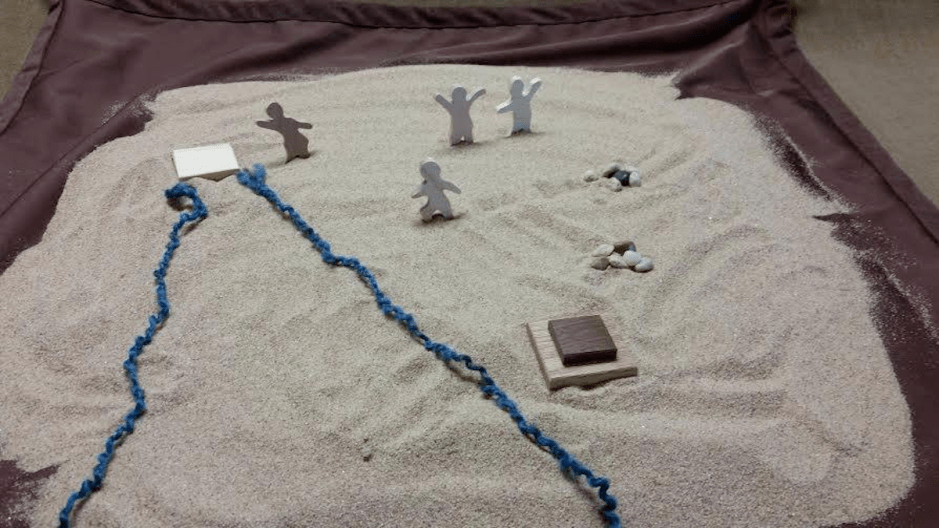
Nine years ago on Trinity Sunday, I preached a sermon called “God and Not-God: A Short History.” I’m going to preach a portion of that sermon again this morning before veering off in a different direction. This short history comprehends five truths that God has revealed to us, culminating in the truth of the Holy Trinity. But we need to begin at a more fundamental starting place.

Continue reading “God and Not-God (Updated)”

Not Running

Sermon for Sunday, July 2, 2023 || Proper 8A || Genesis 22:1-14

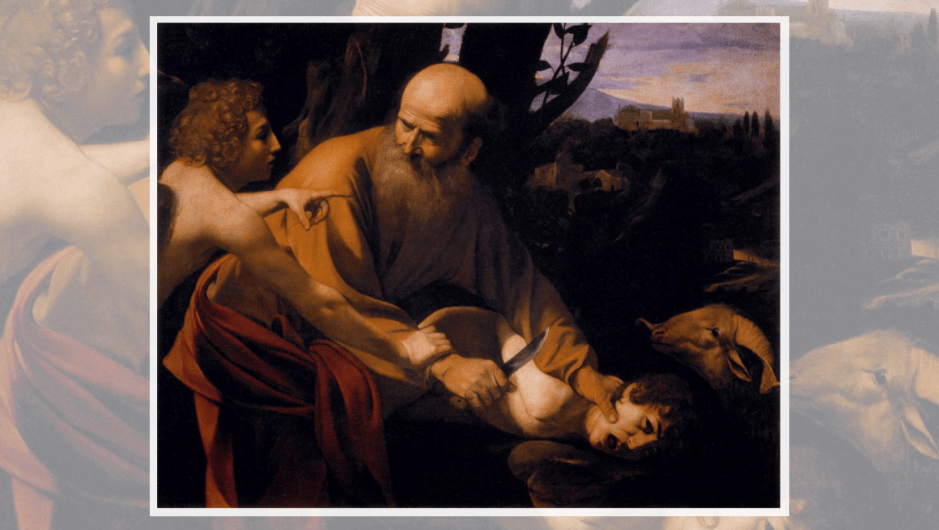
I looked at my sermon archive, and I haven’t preached on the story of Abraham and Isaac since my first year at St. Mark’s. This story is among the strangest and most uncomfortable stories in the Bible. It’s easy to ignore this story, to skip over it, or trim it from the Bible because it doesn’t seem to fit our vision of God. But the truth of the matter is that this story is there; every Bible includes Genesis Chapter 22. So the question for us is how do we encounter this story that makes us recoil and squirm in our seats.

Well, I don’t want you to set your expectations too high about this sermon, because there’s a good chance that by the time I’m done talking this morning, you’ll still be recoiling and squirming in your seats. But I have to say – nine years ago, when I first attempted to preach about this passage, I found myself reading and re-reading it and discovering some beautiful truth in the midst of the disturbing story.

Continue reading “Not Running”

Laugh Tracking (Updated)

Sermon for Sunday, June 18, 2023 || Proper 6A || Genesis 18:1-15; 21:1-7

Going to California this past week for my grandmother’s long-awaited funeral kept me from having as much time to write a sermon as I normally have. So I went back into my archives and guess what? The very first sermon I preached as an ordained priest fifteen years ago was for this particular Sunday. So I thought I’d bring it out of mothballs, dust it off, and share an updated version with you. The sermon is about laughter.

Now, when I was a little kid, I often told jokes that only made sense to me. My parents encouraged me to finish my jokes like Fozzie Bear, the hapless stand-up comic of the Muppets (you know, “Wocka, wocka!”). This told them it was time to laugh. My sense of humor and comic timing didn’t come into their own until my late teens.  So maybe that’s why I never employ the old sermon technique of beginning with a joke. I used to get laughs by making oblique references to my age, but I’m forty now, so I don’t think that’ll work anymore. Let’s try: “Back when I was born during the Reagan administration…”)

Continue reading “Laugh Tracking (Updated)”

The Temple of His Body

Sermon for Sunday, March 7, 2021 || Lent 3B || John 2:13-22

Today marks the one year anniversary of closing the building of St. Mark’s due to the COVID-19 pandemic. Two days before the Third Sunday in Lent last year, the vestry met in an emergency capacity and made the heart-wrenching decision to close the church building for two weeks. At the time, the two-week closure was designed to help public health officials get a handle on where the virus was so they could begin tracking it. But two weeks became four, then a season, and now we mark a year. I went back and found the letter I sent to the parish about closing. It is clear in the letter that I had no conception that our building closure would last as long as it has. I could only comprehend two weeks at a time. I nursed a hope that we would be together by Easter. In March 2020 I would never have been able to conceive that we would still be apart the following Easter. But our building closure will last at least that long and most likely longer.

Continue reading “The Temple of His Body”

The God Who Sees

Sermon for Sunday, June 21, 2020 || Proper 7A || Genesis 21:8-21

Today, I’d like to talk about Hagar. Specifically, I’d like to talk about Hagar’s vision and how God grants us the same capacity for faithful seeing that Hagar has. First, though, you might be wondering who Hagar is. Hagar is an Egyptian servant (or slave) in the household of Abram and Sarai (who during the course of the Genesis story have their names changed to Abraham and Sarah). When God promises Abram that God will give Abram countless descendants, the old couple don’t know what to do. They’ve never had children of their own, and now they’re way too old. Taking God’s promise into her own hands, Sarai offers her servant Hagar to Abram, saying, “It may be that I shall obtain children by her.” (If this sounds eerily like The Handmaid’s Tale, it is.)

Continue reading “The God Who Sees”

The Meaning in Stories

Sermon for Sunday, June 14, 2020 || Proper 6A || Genesis 18:1-15; 21:1-7

Today, I’d like to share a few stories and talk about how we use them to make meaning. The lessons and meanings of our own stories, our communal stories, and our biblical stories dwell inside us, and we can use what we learn from these stories to make sense of the story we currently find ourselves in. Today, I’m going to tell two and a half stories: first a personal one, then a biblical one. The half story at the end is the story of now, which isn’t finished being written yet.

First, the personal story. Twelve years ago today, I knelt in front of the bishop of West Virginia. He and a dozen or so priests laid their hands on my head, back, and shoulders. And they prayed for God to make me a priest in God’s church. The day of my ordination was a blur, but I remember the next day much more, the day I celebrated Holy Communion for the first time. I was so nervous on the day of my first Eucharist as a priest. I was convinced I was going to knock over the chalice because I had to make specific gestures while clothed beneath a baggy piece of outerwear. 

Continue reading “The Meaning in Stories”

Where God Is, A Brief History

This article first appeared in the Pentecost 2018 issue of The Lion’s Tale, the seasonal magazine of my church, St. Mark’s in Mystic, CT.

This article starts way back. I mean waaaay back – over three thousand years ago, when two people left their home city and journeyed off into the wilderness. Their names were Abram and Sarai (soon to be Abraham and Sarah), and we read their story in the book of Genesis. The reason I need to start so far back is that Abram and Sarai discovered something that no one else in their land had discovered. They realized (a) there was only one true God and (b) God was already present wherever they went.

These were revolutionary ideas in their day. Most people in their neck of the woods assumed that each mountain and each river and each city had their own gods. Those gods stayed put: they were tied to particular places. Then Abram and Sarai ventured into the wilderness to find a new home, and they found God out in the wilderness. They set up altars to worship God wherever they found God, and soon the desert was littered with their shrines. God was everywhere! How amazing! Continue reading “Where God Is, A Brief History”

Turning Points

Sermon for Sunday, February 25, 2018 || Lent 2B || Genesis 17:1-7, 15-16

History is full of turning points – those moments when one event or one decision alters the fabric of the future. The turning points we remember happened on the world’s stage: the sinking of the RMS Lusitania on May 7, 1915, which contributed to the United States entering World War I; or the bombing of Pearl Harbor, which did the same 26 years later; or more happily, the moon landing on a summer night in July 1969, which spurred the scientific dreams of a generation.

In my 35 years, I have witnessed some world changing turning points. I was six years old when the Berlin Wall fell, too young to appreciate what its destruction symbolized, but old enough to remember just the same. On a Tuesday morning in September of my freshman year of college, I was waiting for an appointment in the admissions office when I heard a tinny voice on the radio announce that a horrible accident had happened at the World Trade Center. This was before the second plane, before we grasped the horrible reality of terrorism. Today’s teenagers do not remember this event, just as I do not remember, say, the Kennedy assassination or the fall of Saigon.

Continue reading “Turning Points”

Blessed (God’s Point of View, part 4 of 8)

Sermon for Sunday, January 29, 2017 || Epiphany 4A || Matthew 5:1-12

I thought I hit record this week, but I didn’t, and with only one service because of St. Mark’s Annual Meeting, I failed to capture the audio for this sermon. Apologies.

Three weeks ago, we began an Epiphany sermon series in which we are imagining our way into God’s eyes and trying to see ourselves as God sees us. What is God’s point of view? What does God see, name, and celebrate about us? And how can we incorporate that divine point of view into how we interact with God’s creation?

We began with Belovedness. God sees and names us and each person we meet as God’s Beloved. Living in this reality means affirming in word and deed the dignity and value of all people. Next we talked about God befriending us. God calls us into mission alongside God, not as subjects or employees, but as partners, friends. And this friendship leads us to create strong relationships of our own. Love leads to friendship, which leads us out into the world, participating in God’s mission of healing and reconciliation. Here we claim our giftedness, not to make ourselves feel special, but to use our gifts to make others feel so. We claim our giftedness, which helps us be blessings in the world.

With this word – “blessing” – we return for a fourth time to God’s point of view. God sees, names, and celebrates us as blessed. There are two parts to blessing: sustenance and mission, and neither is particularly well understood. Continue reading “Blessed (God’s Point of View, part 4 of 8)”

God and Not-God: A Short History

Sermon for Sunday, May 22, 2016 || Trinity Sunday C || John 16:12-15

GodandNotGodThere’s a group of folks at St. Mark’s that meets every Thursday morning for Bible study. The class is called “Genesis to Revelation,” and as its name implies, we set ourselves the goal of reading the entire Bible. We started last autumn and should finish sometime around next winter. It’s a daunting task to read the whole thing, but very worthwhile too. A few weeks ago, we were working our way through a particularly thorny section, and one member of the group said something to me that made the whole group double over in laughter. She said, “Well, I thought I understood this until you started explaining it.”

So with that humorous word of caution in my mind, I turned my attention to Trinity Sunday, traditionally one of the thornier preaching days of the year. Continue reading “God and Not-God: A Short History”