Proclaiming the mystery: John’s first five

The following post appeared Saturday, August 22nd on Episcopalcafe.com, a website to which I am now a monthly contributor. Check it out here or read it below.

* * *

The mystery section was on the back wall of the small independent bookshop at which I worked my last few years of high school. When a customer entered the store, her eyes would glance past the smaller shelving units and fix on the placards proudly bearing the word “MYSTERY.” The shelves containing the mystery section were taller and broader than those holding the other books, and I was the only employee tall enough to dust the top ones without a stepladder. Let’s just say that the manager loved mysteries, so we had a disproportionate number of them. We had humorous mysteries and thrillers, beach reads and stay-up-till-one-in-the-morning nail biters. In those books, a mystery was set forth: say, how did the killer manage to murder someone in a room locked from the inside? The plot revolved around the detective attempting to solve the puzzle. In the end, the detective figured out that the bell rope used to call for the maid was replaced with a poisonous snake, which somehow slithered unnoticed out of the room in the ensuing hubbub of discovering the body. Mystery solved. No more mystery.

The Gospel according to John begins with a mystery, but it is a mystery that is wholly different from the Whodunnits? on the back wall of the bookshop. The mystery that begins the Gospel cannot be solved, cannot be explained away. It can only be unapologetically presented and then unabashedly proclaimed.

rainbowTake a look at the first five verses that John gives us:In the beginning was the Word, and the Word was with God, and the Word was God. He was in the beginning with God. All things came into being through him, and without him, not one thing came into being. What has come into being in him was life, and the life was the light of all people. The light shines in the darkness, and the darkness did not overcome it. (1:1-5; NRSV)

Here John presents the mystery: somehow the Word (who we find out a few verses later becomes enfleshed in Jesus Christ) is in the beginning with God and is also God. Remember in Algebra class when you had to show your work to get full credit? Well, John skips down to the bottom of the page. There is no balancing of equations or solving for “x.” He states the mystery simply: in the beginning, the Word was with God and was God. This is frustrating at first because I’m conditioned to think that mysteries are all supposed to be like the ones on the back wall of the bookshop. I want to know how it’s possible and I won’t be satisfied until I figure it out and if I can’t figure it out then it must not be true.

But I take a deep breath and look at the words again. I read them slowly and speak them aloud. I notice that the rational part of me is sitting in the corner sulking because “with” and “was” should be mutually exclusive. But I find that the creative part of me sees past such mundane things as mutual exclusivity and begins to roll around in the muck of ambiguity. I squelch my toes in the mud, relishing the notion that God lives in a reality where choosing between alternatives is not the only viable option. Of course the Word can be both with God and was God! The limits of my language do not limit God, only my understanding of God. I realize my language skills are not up to the challenge of describing God. And my rational side joins my creative side in the muck of ambiguity because my rationality has been given the license to imagine.

In a few short phrases, John presents the mystery. Then, he deepens the mystery by retelling the story of creation. It’s no coincidence that John uses the same phrase that opens the book of Genesis: “In the beginning.” All things came into being through the Word who was with God and was God. My creative side connects with these verses because they are about creation. Life is created through him, and because I have been given the gift of creativity, I can sense in my gut or in my bones that the Creator is continuing to create me.

This creative force is the light that shines in the darkness. The darkness cannot comprehend or overcome or understand the light because the darkness has never been a part of creation. The darkness is just the absence of any created thing. It tries jealously to unmake created things but fails to triumph since God never stops creating or calling creation to God.*

In these first five verses, John locates us (“life,” “all people”) within the mystery of God and creation, and he presents the adversary of creation, namely darkness. We have the makings of an epic story here.** The seemingly out-of-place verses 6-8 help me realize my role in this story. The mystery has been presented, and now John the Baptizer steps onstage for a brief scene. He is a witness who testifies to the light. (The words “witness” and “testify” are from the same root in Greek; the English word “martyr” comes from it.) His proclamation points to the light, which is the Word made flesh, Jesus Christ. So too, my life, which has come into being through the Word, is meant to be a proclamation of the mystery of God and God’s movement in creation.

When I encounter these first few verses of the Fourth Gospel, I feel the enormity of the mystery of God surrounding me, and I rejoice that this mystery discloses itself in light and life and love. If I could explain the mystery, I would be in danger of explaining it away, of shelving it like the Whodunnits? on the back wall. The mystery transcends explanation. It is elusive, and at the same time intimate; it cannot be grasped, but it can be embraced. The intimacy and the embrace happen when the mystery touches the spark of creativity within me, spurring me to proclaim the Word made flesh, Jesus Christ. Life has come into being through the Word. And my life expands to every pocket and corner of my being when I live to proclaim this good news.

Footnotes

* My apologies for hurling this paragraph at you with no further comment. If it confused you at all, blame Karl Barth.

** I am using the word “story” to convey something that is important enough to be told and retold down through the centuries, something that is about God and about us and is a tale that is never quite finished being woven. Please do not take my use of the word in the sense of “it’s only a story.”
The paralysis of familiarity

Tonight I have the opportunity to preach at an ecumenical evening service outdoors in the park. It’s going to be really hot, so I’m not planning to talk for too long. What follows is the outline of my talk. Before you go any further, click this link and read John 5:1-17 so you’ll be familiar with the passage from the Gospel.

* * *

The question isn’t designed to be a stumper: “Do you want to be made well?” So says Jesus to the man, who has been sitting by the pool of Bethzatha for 38 years. 38 years! The locals probably stop seeing him after six months. After a year, he probably melts into the architecture.  After ten, the stones behind his back probably retain their original color, while the rest fade in the sunlight. 20 years. Each day is the same, and he never makes it into the pool. 30 years. Each day is the same, but he no longer even attempts to crawl to the water. 38 years. Each day is the same, and his excuse as to why he is still sitting here is his response to anything anybody says to him.

“Do you want to be made well?” The obvious answer is “YES! Of course, I want to be made well.” But, perhaps the question might stump the man more easily than I originally thought. If he’s made well, he’ll have to stand up and leave the pool and find something new to do. He’ll have to negotiate a place that has no doubt changed in the last 38 years. He’ll have to begin a new life full of new possibilities and chances and hopes and dangers. If he’s made well, his paralysis will be healed, but the paralyzing familiarity of the routine will also need a cure.

No wonder he fails to answer Jesus’ question: “Do you want to be made well?” Yes is the correct answer, but this paralyzing familiarity makes No look more and more attractive. The man answers neither Yes nor No. Instead, he replies with what sounds like a well-rehearsed speech: “Sir, I have no one to put me into the pool when the water is stirred up; and while I am making my way, someone else steps down ahead of me.” If you read the previous chapter of John, you’d notice that Jesus doesn’t need a bucket to offer living water. So, he sure doesn’t need a pool now. Jesus is the gift of God, and the man at the pool of Bethzatha has encountered so much more than he bargained for.

Jesus asks the question, and the man deflects it. Jesus doesn’t ask it again. Nor does he say anything like: “You are healed!” or “Be healed!” or “You have been made well!” No. Jesus is not interested simply in giving health to the man. Now, giving him health seems like a pretty good reason to me. Jesus knows better. Saying “You are healed” leaves the man the opportunity to remain paralyzed by familiarity, to stay seated with his back to the bright stones and melted into the architecture. But Jesus doesn’t give the man this option.

Instead, Jesus commands the man to act: “Stand up, take your mat and walk.” Somewhere between this command and the man obeying it, Jesus heals him. But the healing is secondary to Jesus’ desire to change the man’s situation. Jesus, the gift of God, gives him new life by denying him the option to remain in his current condition. By saying, “Stand up, take your mat and walk,” Jesus confronts the man with the terrifying new possibility: Believe what I am saying to you, obey my commands, and you will discover abilities that 38 years of monotony have made inaccessible to you. I am the gift of God, and I am here to bestow upon you the gifts of movement and change and renewal. I have healed you, but you won’t notice it until you get up.

While I am not physically disabled like the man at the pool of Bethzatha, I suffer all too often from the paralysis of familiarity. All too often, I mistake routine for life. All too often, I recite instead of pray. I mumble instead of proclaim. I talk instead of listen, afraid that if I were to listen, Christ might confront me and tell me to stand and take and walk. When did I become so complacent, I wonder? When did I melt into the architecture of my life, content to sit with the stones warming my back?

Every time I discover that I have fallen back into this complacency, this paralysis of familiarity, I wonder when I will be healed, when the waters will be stirred up and I can tip myself into the pool. Then I hear Christ calling out to me: Forget the pool. I healed you already. You’ll realize it if you stand up, take your mat and walk.

Snapping turtles

The following post appeared Friday, July 31st on Episcopalcafe.com, a website I am very excited now to be a part of. Read the post here or below.

* * *

Snapping turtles live in the muddy water underneath a dock that extends into Lake Kanuga. I know this because I have been slowly fattening them up with Wonderbread since I was eleven. I’m 26 now, and (while I’ve doubled my body mass in the intervening years) the turtles remain – stubbornly – about the size of my hand. Misty crossAll but one. There is the “Big One” that rises Kraken-like from the depths and that you only ever see out of the corner of your eye.

For years during the last glorious week of July, my friends and I have gone down to the water’s edge to feed the turtles. We used to sprint to the dock. Now we amble. Once there, we untwist our ordnance and pass out the sliced, carbohydrate projectiles. Some employ the patented tear-and-toss approach, which maximizes the number of pieces for the turtles to eat. Others drop whole slices of bread into the water and count the number of bites necessary to consume each piece.

Within seconds of the bread hitting the water, the turtles surface. Plop. Snap. The first breadcrumb disappears, and ripples are the only evidence the turtle was ever there. Plop. Snap. The second piece vanishes. Plop. Snap. We keep a weather eye out for the Kraken. Plop. Snap. There he is, the Big One, the Leviathan that God has made for the sport of it. Plop. Snap. No, it was just the way the light hit the water. Plop. Whoosh. Snap. Missed him again. Maybe next year. Plop. Snap. Plop. Snap. Plop. Snap.

The turtles propel themselves out of the depths, eyes on the dark spots on the surface. They trap the bread in their little, beaky mouths, and they dive again. They stay on the surface just long enough to snap up their sustenance before retreating to the darkness of the brackish shallows underneath the dock. After years of dropping bread to the turtles, I’ve realized that we do the same. We never stay topside in the sun for too long. We prefer the anonymity of the murk. We prefer to focus only on that bit of bread, a floating shadow above us. We prefer to surface only at feeding time, lest the daylight expose us to all the pesky problems of the world.

Now, I’m pretty sure that the above metaphor is thinly veiled enough that my impending addition of the Holy Eucharist to this discussion will seem both appropriate and timely. Here goes. All too often, we approach our worship with a Plop. Snap. mentality. For an hour and fifteen minutes on Sunday morning, we notice the Wonderbread falling from the sky, and we surface to snap up our fill. Then we dive until next week. Same time. Same place.

The trouble is twofold. First, the Wonderbread, heavenly manna, God’s grace – call it what you will – does not descend on us at predetermined times once a week. However, we condition ourselves to notice it only during those times we’ve set aside for God. We kneel at the altar rail. Plop. We lick the bread off our palms. Snap. In seven days time, we’ll commune again. In the six days in between, we are more than a little oblivious to the fact that God wants to commune with us every day. Indeed, we may say “daily,” but too often we mean, “Give us this day our weekly bread.”

Second, the surface is where the action is. The psalmist prays, “Out of the depths have I called to you, O Lord; Lord, hear my voice.” God’s grace pulls us out of these depths, out of the brackish water underneath the dock. We surface in the brightness of day. As our eyes adjust, we notice all the injustice and desperation and fear that the murk makes easy to ignore. And as we share the bread and cup, we remember that the Body we ingest connects us to the greater body of Christ in the world. Jesus says to his disciples, “ If you walk in the darkness, you do not know where you are going. While you have the light, believe in the light, so that you may become children of light.” Being children of light means remaining on the surface, knowing we share our lives in a larger community, and addressing those inequities that the light throws into sharp relief. We can accomplish none of these if we dive back to the depths – back to anonymity and ignorance – immediately after receiving our nourishment.

When we begin to notice the abundance of God’s grace around us, which pulls us to the light of the surface, we can break out of the cycle of the Plop. Snap. mentality. Silent ripples should not be the only signs that mark our ascent to the surface. Just as God blesses Abraham, God blesses us so we can be blessings in the world. God nourishes us with the bread of heaven so we can nourish others.

At the end of July this year, I will once again amble to the dock to feed the turtles. I will toss the bread into the water. Plop. Ever vigilant for signs of the Big One, I will watch the little, beaky mouths spear the soggy pieces. Snap. And I will pray to God that we can all remain on the surface, paddle there in the light of the sun, and serve our Lord.

Three squares a day

My friend Paula, who writes the blog Welcoming Spirit, recently challenged her readers to take on a discipline for thirty days. I am a week into mine and I’ll tell you, it’s not going so well. You’d think a priest would be better at remembering to pray at meals. I mean, look at the Eucharistic meal — I pray for a solid five minutes before anyone gets to eat anything. But for some reason or other, I’m just not that disciplined at praying before my three squares a day.
Well, not “some reason or other.” Honestly, I know the reasons. When I lived at home with my parents, we had our dinnertime rites. We tried not to answer the phone, though the thirty second pause to listen for the machine made that rule laughably futile. We always put our napkins on our laps and kept our elbows off the table. And we always prayed. (My father usually tapped the person who unsuccessfully failed to make eye contact with him. If everyone succeeded, he led the prayer.)

Now that I live on my own and take most of my meals alone, I have yet to develop the discipline of thanking God for all of God’s blessings, of which the meal is a palpable reminder. I am one week into my intentional practice, and I am doing dreadfully. I’m two for two today, but over the course of the week, I can’t have remembered more than three out of ten. That average would be great if I were a baseball player, since no other job in the universe measures success at thirty percent.

But I’m not a baseball player. I’m a priest. I’m supposed to be the one who remembers to pray — 100% of the time. Prayers should be the first words that spring to my lips in the morning and the last ones to whisper out when I fall asleep. Prayer should be as natural as breathing, should happen with each of my breaths.

It doesn’t, God knows. Too often, I just forget to pray. Not the best example, I know. Neither were the disciples, and from them I take a measure of hope. They follow Jesus around, they hear his words, they cast out demons and heal the sick. But they only get it three out of ten times. They bicker about which is the greatest, they bar people’s access to Jesus, and they abandon him.

I’m not saying that the disciples’ example gives me a free pass. They mess up, they misunderstand, but Jesus stays in relationship with them. He even repairs his relationship with Simon Peter after this most adamant follower denies him three times. Peter, do you love me? You know I do, Lord. Then feed my sheep.*

Jesus has invested way too much time and energy in me to give up now. Indeed, his resurrection shows me that he’ll never give up on me, even after I die. Everyday, he invites me into a deeper relationship with him, and  I usually ignore the invitation. I prefer, instead, to wade in the shallow end, to make sure my feet can touch the bottom.

But there are those days — few and far between — that I acknowledge my apathy and ask God to help me float into the deeper waters. And I find the strength to accept the invitation.

As I write this, one of my favorite songs from my college years is playing on my Itunes. The chorus of Jennifer Knapp’s “Hold Me Now” goes like this: “I’m weak, I’m poor. I’m broken, Lord, but I’m yours. Hold me now.”

My apathy and forgetfulness about praying before meals (among other things) stem from my grasping, prideful illusion that I need not rely on God. Perhaps, deep down, I don’t really believe that God will claim me if I’m weak or poor or broken. But that’s not how God operates. Nothing I do will elevate me past weakness or paucity or brokenness. Only when I allow God to hold me in the palm of God’s hand can I find strength. Only when I take part in the relationship into which Jesus calls me can I find abundance. Only when I let go the illusion can I see the reality of God making me whole.

Praying before meals may seem like a small step, but it is an essential one. It creates a pattern, a practice, a discipline. If I remember to pause even three times a day to thank God for God’s presence in my life, then perhaps my illusory self-reliance will begin to fall away. Perhaps I’ll remember that God has blessed me to be a blessing to others. Perhaps I’ll hear Jesus ask, “Adam, do you love me?”

And I’ll be able to say, “You know I do, Lord.”

Then feed my sheep.

Footnotes

* John 21:15-17

PB&J

Five years ago, during my summer as a camp counselor, I discovered I had within my untested vocal cords the “Dad” voice. The final day of the last week of camp came at last, and parents bumped their minivans up the gravel road. The parents (who, a few nights ago, the campers could not imagine living without for another homesick minute) had to wrestle their children away from new friends and into the confinement of the backseat and the long drive home.

Doing the morning "Launch" for Junior Camp at Peterkin.

I remember one mother attempting to corral her son, who was determined to expend every last upside down second of monkey-barred bliss. After a few minutes of bargaining and cajoling, she looked at me and shrugged plaintively. Now, that summer had taught me many things, among them the “Dad” voice. So, in my best drill sergeant, I barked: “JOHN.” John swung down from the monkey bars and walked over to his mother, who was looking at me like I had just pulled her six of diamonds from an intact navel orange.

At camp five years ago, I learned that I possessed the “Dad” voice, but it was not until last week at the same camp that I discovered I really, truly want also to be the Dad behind the voice. Sure, I’ve always wanted to have kids in that vague procreative instinct sort of way. Last week, however, awoke within me the deep, abiding notions that God might call me to Fatherhood and that I might actually be okay at the whole Dad thing.

This realization hit me Wednesday at lunch. I sat down next to a boy who is going into the third grade. He looks exactly like the boy in Finding Neverland, and he melted the hearts of all the female counselors at camp (and, to be honest, mine too). On his plate, he had arranged two pieces of bread (white), a tub of peanut butter (creamy), and a tub of jelly (apple flavored). For a few minutes, he stared at these ingredients, but they remained inanimate, a Cézanne from his sandwich period. Then the boy looked up at me, and I looked down at him. “Would you like me to make your sandwich?” I asked.

“Yes, please.” And he grinned and nodded his freckled face ostentatiously and a hundred miles away his mother (I am sure) felt the tremors of his good manners.

I pushed my plate out of the way and slid his over. Then I picked up one slice of bread and spackled on the peanut butter. Next came a moment of indecision. I looked solemnly at the boy. “Do you want me to spread the jelly on top of the peanut butter or on the other piece of bread?”

He giggled. Apparently, my question was that of a naïve apprentice. “The other piece.” I spread the jelly and stacked the slices of bread. Then another moment of indecision and a further necessary question: “Rectangles or triangles?”

“Triangles,” came the firm response. “Four, please.” I twice cut the sandwich diagonally and slid the plate back to him — four little tea sandwiches, but without the cucumber or pretension.

With both hands, he picked up a sandwich quarter and nibbled the edge like a chipmunk. Then he took a big bite, and my anxiety that I would be a deficient sandwich maker released. Now, this event might seem small and ordinary, and in a way it was. But small and ordinary do not preclude God from revealing God’s hopes for us. Quite the opposite, in fact.

In my case, this was neither small nor ordinary for two reasons. First, until last Wednesday, I had never made a peanut butter and jelly sandwich before. Yes, I know how strange that is. I don’t like cake either. And second, I had never made a sandwich for a child who potentially could  be mine (if I had been more stupidly adventurous in high school).

These two reasons mixed with the ordinariness of the situation and God infused the whole thing with revelation. As I watched the boy eat his PB&J, I knew in that place that knows before your mind does that I want to be a Dad. I want to know the kind of love that I see in my father’s eye when he welcomes me after a long absence. I want to play catch and praise scribbles and help do long division and frighten potential suitors and change diapers. Well, maybe not that last one. I’ll get there when I get there. I know that my image of fatherhood is still gilded with romanticized glitter. I know that not everything is picnics and ice cream. But I also know that the sacredness of a PB&J sandwich crafted with love puts more points in the “pro” column than anything could match in the “con.”

You might be thinking: why are you writing about this? Is there something you’re not mentioning? Don’t fret. I am either a series of well-planned, time-consuming steps or one really dumb decision away from being a father. And the former is the only option I’ll ever consider. There are just moments in our lives — small, ordinary moments — that make us realize certain things. God reveals God’s goodness in such moments. Last week, making a sandwich unlocked the door to Fatherhood in my future. What will it be today? I don’t know, but I pray for the attentiveness that helps me resonate with God’s hopes for me. I pray for something small and ordinary. I pray for PB&J.

Creation and pie

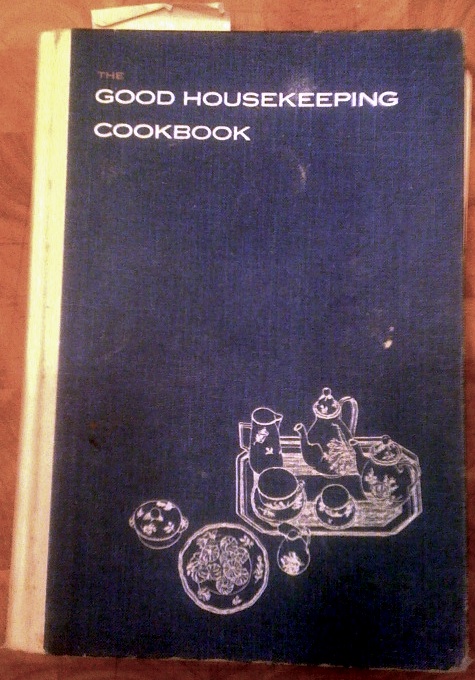
An ancient Good Housekeeping cookbook resides in the cabinet above the stove at my parents’ house. Whether it ever had a dusk jacket, I don’t know. Possibly, it was a victim of my childhood crusade against dusk jackets, a period of my life that my mother recalls grimacing every time she runs the feather duster over her shelves of first editions.goodhousekeeping I’ve never been sure why my mother has kept this volume around for so long, what with our constant moving from place to place; the book has been unshelved, boxed, unboxed, and reshelved at least two dozen times since she received it for a wedding present. She definitely doesn’t need the entire book. She only ever uses the pancake page, which has been warped and wrinkled by years of my enthusiastic stirring.

About five years ago, I discovered how glad I was that my mother retained the extraneous five hundred or so pages of the ancient cookbook. A few days before Christmas, I opened the refrigerator and freezer hoping that all the food I had already eaten that day had spontaneously reappeared so I could eat it again. This action was nothing new — I had been doing it several times a day for years, with little efficacy. But that time I noticed the apple pie, boxed and frozen, deposited sideways, squashed between the broccoli and my father’s ice cream quart collection

My shoulders slumped — how unexciting that the apple pie in the freezer would taste like all the other frozen apple pies from all the other Christmases and Thanksgivings and birthdays (yes, I had birthday pie). Since no new food had appeared, I closed the refrigerator’s doors. But a new idea had formed in my mind. I opened the cabinet and selected the ancient cookbook. It fell open to the batter-sodden pancake page, but I was in search of something new. The book’s spine creaked and cracked in protest as I forced it open to a new page, which sported the chapter heading: “Pies that Please.” How promising, I thought.

I wonder if, before the sixth day of creation, God opened the fridge and slumped her shoulders, bored by all the rocks and stars and fish he had been keeping fresh, ready for dispersal into creation. Sure, those rocks and stars and fish were all good, but their pages in God’s recipe book were warped and wrinkled by now. How about something new?

My experiment began with a moment of feverish self-doubt: my mother can’t make piecrust. As I read over the ingredient list, a nagging fear surfaced that I carried the same defective gene. What if I’m genetically unable to make pie? Flour and salt, shortening and water — these base pairs, in certain quantities and combinations, held the secret to flaky, golden-brown goodness. Could I succeed where my mother (and perhaps generations of Parsonses stricken by dough deficiency) had failed?

I pushed my chromosomal makeup out of my mind and began measuring, pouring, sifting, and cutting. I Jackson Pollocked flour all over the kitchen but managed to land two and a quarter cups of it in the correct bowl. Coaxing the Crisco into the mixture raised my blood pressure to stuffing-the-cat-in-the-cat-carrier-level, and only after several of the breaths I imagine they teach at Lamaze classes was I able to continue. Gradually, my flour/salt/Crisco mixture achieved the consistency of peas (a good sign, the recipe assured me), and I added the cold water. Now came the moment of truth. I pushed and prodded my concoction and said some desperate magic words under my breath, hoping by miraculous alchemy that the slimy mass before me would transform into heredity-denying dough.

I wonder whether God worried that her creation mixed from dust and breath might not turn out the way he expected. Would this experiment fail? Was making a being in the image and likeness of herself too complex a recipe? What if he had to start again from scratch?

The transformation worked. Where a bowl of sticky ingredients sat mocking me a minute before, a lump of dough now beckoned me to flatten it with my rolling pin. I placed the dough between two pieces of wax paper (I’m not sure where I picked up this trick — it was either instinct or the Food Network). Then I rolled out the crusts, making two circles my ninth grade geometry teacher would have been proud of.

Buoyed by my success with the crust, I decided to improvise the filling. After checking the oven temperature and baking time, I returned the ancient cookbook to the cabinet above the stove and began peeling apples. Seven or eight would do, I told myself. With a bag of brown sugar in one hand and a box of cinnamon in the other, I showered the cut apple pieces with sweetness. Then I hurried the filling into its pie tin bed and tucked in the top crust. A quick glaze of melted butter and a few knife slits on top and it was into the oven. For the next forty minutes, I paced and fretted like a father outside the delivery room.

I wonder that God gave me the ability to grow and the desire to create. God’s recipe was simple—dust and breath. The dust grows, remembering the earth and the deep things of those creation days that were called good. And the breath creates, remembering the heavens and the Spirit moving and creating and renewing.

Against all odds of genetics and pie-making virginity, my first apple pie succeeded beyond my wildest expectations. I usually take my parents’ compliments with a salt mine (they are my parents, after all), but my own taste buds confirmed their praise. I have tweaked my recipe and method since then, adding a few subtle spices and making sure to cover the crust with tin foil half way through baking. Though some are better than others, each pie is good (and only one — the famous “Lattice Crust Experiment” of 2007 — was an unmitigated failure).  And each pie pushes me to improve, to better my technique, to take the basics from that ancient cookbook and create. And create. And create.

Something stronger

(Sermon for June 28, 2009 || Proper 8, Year B, RCL || Mark 5:21-43)

Imagine with me the thoughts of Jairus, the leader of the synagogue, in the aftermath of his encounter with Jesus.

I have been afraid my whole life. When I was little, a scorpion stung my friend, and he died drooling and thrashing in his crib. And so I feared scorpions. When I was old enough to understand the meaning of the scowling soldiers wearing shiny, metal armor, I realized what happened to people who looked at them the wrong way. And so I feared that my father might one day fail to return home. When I met my wife, I feared I wouldn’t be able to provide for her. When I became leader of the synagogue, I feared that I would have no wisdom to share. And when my little girl was born, I feared for her safety every minute of every day. I have been afraid my whole life.

And so when my daughter showed me the tiny, insignificant puncture on her forearm, and she bit her bottom lip to keep from crying out in pain, my world ended. I found the assassin and stomped its hardened, scaly body into the dirt, and then I collapsed – shivering – to the ground. My wife came `round the corner and saw me weeping, the dead scorpion in pieces next to me. She dropped the washing, raced over, and began checking me for signs of a sting. I could barely talk through my heaving: “Not me. Not me. Not me.” She understood and launched herself into the house to find our daughter. I couldn’t go back inside. I rocked back and forth: “Not me. Why not me? Why not me instead?”

Twelve years old, my little girl. On the verge of womanhood. My wife cataloging potential suitors. Me practicing my menacing glare for those same suitors. Twelve years old, and not so little anymore, if I’m honest with myself. She and I used to climb the hill at night, lie down in the scrub grass so that the tops of our heads touched, and name the stars. She always named them after the heroes of the great stories: David and Gideon and Deborah and Esther. “And that one’s you, Daddy.” She always named the brightest one after me. But at the indefinable moment when she began her adolescence, she stopped wanting to climb the hill. I asked her why one day. “That’s kid stuff, Daddy,” she said.

The night the scorpion stung her, I climbed the hill alone and screamed names at the sky – not the names of heroes, but blasphemous names I never thought I could utter. The darkness swallowed my anger, and I don’t know if my obscenities reached their intended target. He created the scorpion: for that, I could not forgive him.

I stalked back home and tapped on my daughter’s bedroom door. My wife opened it, and our eyes met – one empty stare gazing past another. The candle threw swaying shadows on the wall as I entered the room. All my fears were confirmed when I looked at my little girl. She was drenched in sweat, her neck twitched, and her eyes darted from corner to corner. I wrapped my arms around her and put my head on her chest. I could barely distinguish one heartbeat from the next. My wife wrapped her arms around me. Thus I spent the remainder of the night – embraced by the one I love but feeling only the heavy grasp of fear.

I awoke suddenly and cursed myself for having fallen asleep. Dawn was piercing through the gaps in the window’s shutters. I bent my ear to my daughter’s mouth, but the sounds of a commotion outside drowned out the low rasping of her breath. “Vultures,” I growled and my wife woke up. I stabbed a finger at the window: “Here, no doubt, to console us with their wailing performance.”

I looked down at my little girl. I couldn’t just sit there and watch her die. I had to do something. I resolved first to run the vultures off. I had enough grief of my own. I didn’t need to pay someone else to manufacture it. I squeezed my wife’s hand and kissed my daughter on the forehead. So clammy. I banged open the front door ready to unload on the would-be grievers. But the commotion was something else entirely. People were running up the street in the direction of the shore. They were laughing and calling to one another: “Jesus of Nazareth is sighted off the beach. He’s coming here.”

Without thinking, I joined the throng. People recognized me as the leader of the synagogue and let me through. I reached the shore in time to see a fishing boat bump into the shallows. The crowd swelled around the vessel. Jesus’ disciples muscled a hole in the multitude and the man himself stepped off the boat. “Jesus, Jesus,” I cried. But mine was only one voice in a thousand. I feared there was no way he heard me.

Then he turned and gestured to me. His disciples opened a path for him. I fell at his feet. “My little daughter, my little one is at the point of death.” I swung my arm back in the direction of my house. “Come and lay your hands on her, so that she may be made well, and live.”

I didn’t know where the words came from. My fear was grasping at the words in my chest, but something stronger ripped them out of me. The fear fought back, reminding me of last night’s blasphemy. A new fear gripped me – that God had, indeed, heard my anger and would do nothing for me now.

We walked back to my house, but the great crowd slowed our progress. I wanted to run, to sprint home with Jesus keeping up beside me. But then, he stopped. “Who touched my clothes?” he said. I looked at him in disbelief. I wanted to scream: “There’s a thousand people trying to touch you right now. Who cares? My daughter is about to die.”

A woman fell down at his feet and started speaking. She probably spoke for less than a minute, but it was a lifetime to me. As Jesus responded to her, my eyes found my brother and his sons pushing their way through the crowd. “No. No. No.” I started to fall, but my brother caught me and held me tight. “Your daughter is dead,” he whispered. I sagged in his arms. Again, he picked me up. “Come,” he said. “Why trouble the teacher any further?”

I turned back to the woman who delayed me, who kept the teacher from coming to my house on time, and curses curled on the edge of my lips. But Jesus stepped in between us and grabbed my shirt in both hands. “Do not fear,” he said. “Do not fear, only believe.” The stronger something that had earlier ripped words from my chest reflected in his eyes. “Trust me,” he said, and he pulled me along the path to my house. The curses died on my tongue, and I let myself be dragged home to face my own death in the still body of my little girl.

The vultures had come while I was out, but I had no ears for their wailing. And I had no eyes but for my little daughter. Jesus looked around at everyone. “Why do you make a commotion and weep,” he said, “The child is not dead but sleeping.” A laugh erupted from my chest, and it felt utterly foreign in this house, which now had Death for a tenant. But then I laughed again, and I noticed that the laugh didn’t come from my fear. The stronger something caused the laugh. The laugh was my body’s involuntary response to the truth of Jesus’ words.

Jesus took my daughter by the hand, brushed a stray lock of hair behind her ear, and said, “Little girl, get up.” And she did. She walked up to my wife and me and we picked her up and the three of us held each other and turned in circles, laughing and crying at the same time. I looked at Jesus and realized what had ripped the words from me at the beach. Trust. Something about this man radiated trust. No. Not something about him. He, himself, radiated trust. He stared back into my eyes and suddenly I knew that hurling blasphemies at God under the cover of darkness meant that somewhere deep down I still believed. I knew that trust is something entirely stronger than fear. I knew that trust and belief are the antidotes for fear.

Jesus’ own laugh pulled me out of my thoughts. He smiled at the three of us twirling around and said, “She’s had a rough day. Give her something to eat.” My wife rushed off to the kitchen to prepare something, tears streaming behind her as she went. And then my daughter looked up at me, trust shimmering in her eyes. Twelve years old and still my little girl. “Daddy,” she said, “Can we go up the hill tonight and name the stars?”

“Of course,” I said, and I gathered her into my arms.

I had been afraid my whole life. But not anymore.

Voices

Sometimes, when I’m praying with a small group — say, the ladies at Morning Prayer whom I have mentioned before — I stop speaking aloud and listen instead. Starting with the woman closest to me, I try to pick out each voice.

Our Father, who art in heaven, she begins. Her voice is measured, calm, the sound of warm milk being poured into a glass for a child who can’t fall asleep. Hallowed be thy name. I imagine her voice checking off ingredients as she pulls baking powder and brown sugar from her cupboard. Her apron has a floury hand print below the pocket, into which she replaces the battered heirloom of a recipe card. I can taste the flaky crust of her apple pie.

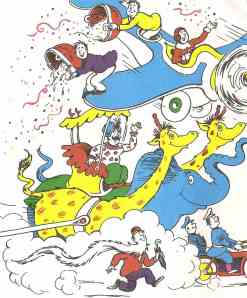
And to Think That I Saw It on Mulberry Street, by Dr. Seuss, 1937

Thy kingdom come, thy will be done. I shift my focus to the dear heart across the aisle. Her voice is honey and love, the sound of grass on a hillside when you’re having a picnic and have to weigh down the napkins with the salt and pepper shakers. On earth as it is in heaven. I imagine her voice reading Dr. Seuss and Shel Silverstein to laughing children who sit cross-legged on mats and never want naptime to come. At the end of each page, she makes sure all of the children have seen the pictures. I laugh, too, when the airplane drops confetti near the end of ” And to Think that I Saw It on Mulberry Street.”

Give us this day our daily bread. I strain to hear the woman next to her. Her voice is soft but durable, the sound of late afternoon rain watering patchwork fields and seeping into the clay. And forgive us our trespasses, as we forgive those who trespass against us. I imagine her speaking comfort in the ICU, her words keeping time with the pinging heart monitor. She holds a frail hand in both of hers, careful not to disturb the needle and tape and gauze and drip-drip of the IV bag. I stand in the doorway with my stomach in my throat and watch her care.

And lead us not into temptation. The last lady is easy to pick out because she is always a few words ahead of everyone else. Her voice is crystal, weightless, the sound of water splashing out of a bucket as it is rises haltingly from the depths of a stone-lined well. But deliver us from evil. I imagine her voice distributing presents on Christmas morning after all the adults have gotten coffee and hot-cross buns. She thanks her grandchildren for their gifts of pipe cleaner and popsicle stick ornaments. I wait for her to call my name and shake a present in my direction.

My focus dissipates, and I join the four woman for the conclusion. For thine is the kingdom, and the power, and the glory, forever and ever. Our voices mix into one voice — warm milk and rain, windswept grass and splashing water, and my voice, which always sounds strange to me when I hear it on a recording. We raise that voice as one to the One that gave us voice. And after our Amen we fall silent.

And we listen.

The Japanese tattoo

You may be tempted to take away from the following story this advice: “Don’t get a word from a language you don’t speak tattooed onto you.” By all means, please do take this advice. But also keep reading because I don’t plan to make my non-tattoo specific point until later in the piece.

I had a friend in college – a tall, good-looking fellow, who probably could be cast as the Norse god Thor in a future Marvel Comic film adaptation if he grew his hair out. Over the course of four years of college, this friend got half a dozen tattoos. The ink was spread across his body, and there seemed to be neither rhyme nor reason to his choices. Like moles or scars, the tattoos appeared to be distributed randomly between his torso and various appendages. About once a semester, he would walk up to the lunch table, put down his tray, and grin until we realized he got a new tattoo.

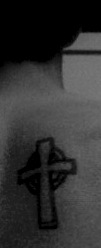
This is my tattoo. Notice, it's not a foreign word. However, I don't think I'll ever fully understand its significance.

On one such occasion, he rolled up his sleeve and showed us the fresh ink just below his left shoulder. Upon the skin, still red and raw from the thousand tiny stab wounds he suffered for this new art, a vertical line connected three horizontal ones. “It means ‘Life’ in Japanese,” he said through his grin. Thankfully, he was too enthralled with his own left arm to see my eyes go wide, like I had just realized I left the oven on. I looked down and started arranging the French fries on my plate into the same Japanese character, while my inner censor struggled to purge my speech of all the correctional thoughts racing through my mind.

Now, I took two years of Japanese in college, and that character was written in black Sharpie on my mental 3×5 cards. “It means ‘Life’ in Japanese,” he said, and my first wide-eyed thought was, “Well, sort of…” The character means, “to live” in the sense of “I live in West Virginia.” Literally, it means, “to inhabit.” Needless to say, I’m glad my inner censor won that day, because Thor could easily have pummeled me if I had educated him in the nuances of the Japanese language.

Ever since that tattoo-related event, I have distinguished living from inhabiting. Too often, I merely inhabit: I wake up, I take a shower, I microwave a bowl of oatmeal, I ignore Sportscenter until the Red Sox highlights come on, I make sure I have my keys before I lock the front door. I do everything…vaguely. I yawn my way through the bleary-eyed hours. I flip on the autopilot switch and read a magazine in the cockpit of my existence.

Surely, this “inhabiting” isn’t what Jesus meant when he used the word “life.” I am the way, the truth, and the life. I came that they may have life, and have it abundantly. When Jesus promises us abundant life, he is not talking about our existence. We do not “exist” abundantly. When we enter into Jesus’ life, we find this abundant living. But living doesn’t just happen. Living is deliberate. If we do not claim abundance, it will just sit there, like the pack of hot dogs that’s been in my fridge for six months.

The danger of “inhabiting” rather than living is (usually unbeknownst to us) lapsing into dronehood, into the drab cycle of shower/oatmeal/Sportscenter/keys. But God did not create us to be drones; indeed, God sent God’s only son to us because we had become drones – slaves to the poor imitations of life that we had cultivated to golden-calf-status.

Receiving the abundance that Jesus’ promised snaps us out of dronehood. When we choose to live rather than merely to inhabit, a new world of possibility opens up for us. The complete joy that is key to an abundant life paints our days with vibrancy and vitality. Even those things that established our routine get a new coat of joy.

I suspect Henry David Thoreau was struggling with dronehood when he decided to go Walden Pond in 1845. There he wrote these words: “I went to the woods because I wished to live deliberately, to front only the essential facts of life, and see if I could not learn what it had to teach, and not, when I came to die, discover that I had not lived. I did not wish to live what was not life, living is so dear; nor did I wish to practice resignation, unless it was quite necessary. I wanted to live deep and suck out all the marrow of life.”

It is my prayer that each one of us lives deep, that we live and not merely inhabit, that we suck out all the marrow of the abundant life that Jesus promises us.