Happy Dancing Ewoks

(Sermon for September 5, 2010 || Proper 18, Year C, RCL || Luke 14:25-33)

The rain is so heavy that I feel like I’m driving through a carwash. I can barely see out the windshield, and I keep thinking that I’ve missed Furnace Brook Parkway. But just when I decide I need to turn around, I spot the sign reflecting green in the dim glow of my headlights. I turn left and five minutes later I park across the street from the Coffee Break Café. I make a mad dash for the dryness and warmth of the shop, but the rain still manages to soak my jeans during the ten seconds I’m out in the elements.

The moment I step into the café, however, I forget the dangerous drive. I forget the torrential downpour. I forget the soaked jeans and the English language and my name and how to walk correctly. The woman, whom I planned to meet at the café, stands before me wearing patterned rain boots, holding a steaming cup of tea, and smiling. And I forget everything about myself except for the fact that she is there to meet me – me of all people.

That was a little over five months ago. A little over five months from now, she and I will be married about ten feet over and four feet down from where I’m standing right now – right over there. Leah and I will hold hands, and Margot will direct us to look at one another and speak our vows. I will say, “In the name of God, I, Adam, take you, Leah, to be my wife, to have and to hold from this day forward, for better for worse, for richer for poorer, in sickness and in health, to love and to cherish, until we are parted by death. This is my solemn vow.”

In February, I will promise to love and to cherish Leah for the rest of my life. You might have guessed that I’m pretty excited by that prospect. And so, when I listen to this morning’s Gospel reading and hear Jesus say that to be his disciple I have to hate my wife, I’m just downright confused.

Return of the Jedi (1983) 20th Century Fox

Ever since I was a little kid, I’ve known that hate is a bad thing. In fact, I learned this lesson during my daily viewing of Return of the Jedi. Near the end of the film, Luke Skywalker finds himself standing before the twisted and evil Emperor Palpatine. The Emperor doesn’t want to kill the Jedi; he desires Luke to fall under the seductive power of the dark side of the Force. Palpatine has Luke’s lightsaber, and he tempts the young Jedi saying: “I am defenseless. Take your weapon. Strike me down with all of your hatred, and your journey towards the dark side will be complete.”

Even as a young child, I knew that Luke could not give in to his hate because then he would have been corrupted. He would have joined the dark side, and the film would not have ended with smiles and embraces and happy dancing Ewoks. I learned the lesson well. Hate is a bad thing. If you are anything like me, you were brought up learning the same lesson. So how do we encounter these words of Jesus? He says, “Whoever comes to me and does not hate father and mother, wife and children, brothers and sisters, yes, and even life itself, cannot be my disciple.” How do we obey a command that just seems so wrong?

The first thing we need to do is to make sure that we don’t ignore Jesus when his words sound wrong to our ears. When he says something that makes us uncomfortable, there is a tendency to skip over the offending words. The trouble is, skipping those bits is exactly the opposite reaction than Jesus is going for. When Jesus turns to the crowds and says these words, he employs shocking rhetoric in an attempt to make the crowd understand just what life following him looks like. In Jesus’ day, following spiritual gurus around was something of a pastime, akin today to following the Grateful Dead on tour. Most of the people making up the large crowds were following him because he was a local celebrity. When Jesus tells them that they can’t be his disciples unless they hate life itself, I imagine many of them left to find a less demanding guru.

So we shouldn’t ignore Jesus’ words when they sound wrong. But this still leaves the fact that they sound wrong. Now, please don’t interpret the rest of this sermon as an attempt to explain away Jesus’ tough words. Rather, permit me to reinterpret the word “hate,” and hopefully, when I’m done, the toughness of Jesus’ words will have remained intact.

In between last week’s passage from Luke 14 and this week’s, several verses fell through the cracks. Just before Jesus turns to the crowds and speaks today’s Gospel, Luke narrates Jesus telling a parable. In the story, all the people invited to a great dinner make excuses and fail to attend: “I have bought a piece of land, and I must go out and see it”; “I have bought five yoke of oxen, and I am going to try them out”; “I have just been married, and therefore I cannot come.” The host of the dinner becomes angry with these no-shows and sends his servants out into the streets to fill his house with all the people who wouldn’t normally be invited to a party.

Right after this parable, Jesus tells the crowds that to be his disciple they must hate father and mother and wife and children and life itself. The three people in the parable who made excuses were obviously not following this difficult command. Instead, they decided that land and livestock and spouse were more important than the great dinner. The word “hate” jolts us with its emotional connotation; but, based on the parable, I’m far from convinced that Jesus desires us to indulge in the emotion of hate. Rather, he uses the word “hate” to show that every person who isn’t Jesus is never meant to take the place of Jesus. Unlike the three people in the parable, those who come to Jesus cannot be his disciples unless they make him more important than everything else. Therefore, becoming Jesus’ disciples means putting Jesus ahead of all the other people in our lives.

Of course, this is incredibly difficult. But the incredibly difficult things that Jesus asks of us also turn out to be incredibly important. With his tough words about hating life itself, Jesus offers us protection from the most common sin in the book: idolatry. In the parable, the would-be guests make excuses to avoid the great dinner. The land, livestock, and spouse are their idols. In our lives, idols are those things that we turn to when we should turn to God. We let our parents, spouses, children, jobs, cars, computers, smartphones, and addictions invade the territory that should be God’s alone. We begin to look to something other than God for salvation. We mistake the creation for the Creator.

This is not bad just because our idolatry breaks one of the Ten Commandments. This is bad because when I set up another person as my god, my idolatry will eventually destroy both the other person and myself. If I made Leah into an idol, I would rely on her for everything. I would run her ragged trying to see to my needs. I would suck the life and the love out of her. And when there is nothing left, I would starve. Sooner or later, every idol ceases to be enough, and it’s usually not until this time that we realize our idolatry.

So let’s go back to those words that Leah and I will say to each other at our wedding in February. In all the good and bad times, I will promise to love and to cherish her. There is absolutely no way to fulfil this promise without the very first phrase I will say during my vows: “In the name of God.” God is the foundation of every healthy relationship. Loving God first is the only way to be able to love another. Cherishing God first is the only way to cherish another. We can only be Jesus’ disciples when we finally rid ourselves of any idea or notion that our ability not only to love, but to exist, comes from nowhere but God alone.

When I wed Leah, I will strive to remember that God formed us in our mothers’ wombs and God brought us into each other’s lives and God knit us together and God will continue to sustain us. God is the beginning, the middle, and the end. Cutting God out of our relationship – indeed, out of any relationship – simply ignores the reality that God is the foundation of all relationships. Cutting God out allows the sin of idolatry to creep in.

Jesus tells us that we must hate life to become his disciples. With this, he sets us the difficult task of putting him before all else. Accomplishing this difficult task means that when we cherish our loved ones, we remember that we are capable of that action because God cherishes us. When we love them, we draw upon the unrelenting outpouring of God’s love. And if we forget everything else – the English language and our names and how to walk correctly – we still remember that God somehow puts each one of us first. And so we thank God and ask for the grace to put God first. Everything else will find its proper place atop God’s sure and steady foundation.


Inadequacy

(Sermon for Sunday, August 22, 2010 || Proper 16, Year C, RCL || Jeremiah 1:4-10)

These geeks feel inadequate most of the time (NBC's shortlived, but brilliant "Freaks and Geeks")

Human nature urges us to shy away from thing we aren’t too good at. Boys at the middle-school dance tend to add their support to the structural integrity of the gymnasium rather than venturing out onto the dance floor. Folks who don’t have the best singing voices often lament the fact that they are “tone-deaf,” which, statistically speaking, is unlikely. I’ve never been a strong swimmer, so I keep to the shallows, or more often, the shore. We all nurse feelings of inadequacy – whether in dancing, singing, swimming, or whatever might be your particular constellation of shortcomings.

These inadequacies define as just as much as our strengths do. But while strengths define us positively, like an artist drawing shapes on a canvas, inadequacies fill up the negative space around those shapes. Our discomforts, our shortcomings, our inadequacies press in from outside of us, telling us that, no matter our strengths, we are failures. We are failures before we even try because we know we’ll never be any good, and therefore, we never try new things, we never step out of comfort zones. And when we never step out of comfort zones, they never have the chance to expand. As such, the feeling of inadequacy greatly impedes growth of all sorts: physical, emotional, spiritual.

But God, I think, sees our inadequacies from a different perspective than we do. To us, our inadequacy is an impediment. To God, our inadequacy is an opportunity for God to display God’s glory. This morning’s lesson from Hebrew Scripture demonstrates this perspective.

Jeremiah’s feelings of inadequacy prompt him to attempt to dissuade God from calling him to be a prophet. But God has no inclination to heed Jeremiah’s argument. Rather, God seems to call Jeremiah specifically because of the boy’s feelings of inadequacy, not in spite of them. Notice how God answers Jeremiah’s single piece of dialogue in the passage. After God informs Jeremiah that God has appointed him to be a prophet to the nations, Jeremiah says, “Ah, Lord GOD! Truly I do not know how to speak, for I am only a boy.”

God hears these words and keys in on the second half. “Do no say, “I am only a boy,” God says. Your youth doesn’t matter because I am with you to deliver you. You can’t help being your age. If I wanted someone older I’d call someone else. But no similar assurance addresses Jeremiah’s inadequacy in speaking. God never tries to assure Jeremiah by saying, “Do not say, ‘I do not know how to speak.’” Rather, God uses Jeremiah’s inadequacy in speaking as an opportunity to put God’s own words in Jeremiah’s mouth. God sees room for growth in Jeremiah, and God fills that room with God’s own words.

For his part, Jeremiah knows he is an inadequate speaker. But when he points this out to God, his argument backfires. What Jeremiah doesn’t realize is that God picks him precisely because of his inadequacy. This is a pattern throughout the Hebrew Scripture. Moses has a speech impediment, but God still calls him to stand up before Pharaoh. David wears no armor and carries only a sling and stones when he challenges Goliath, the Philistine champion. Gideon drastically reduces the numbers of his army – from 22,000 to three hundred – when he contends with the Midianites. In each of these cases, the human vessel called to work God’s purpose is laughably inadequate to the task at hand. And every time, God’s purpose succeeds.

God works through human inadequacy to display God’s own glory. In a sense, God is showing off. But this is not vanity, because God shows off for our sakes. I’ve mentioned before in sermons that we humans are a pretty thick lot. We often have trouble attributing our giftedness to God, which allows the sin of pride to creep in at ground level and start rotting out our appreciation for God’s blessing. This trouble magnifies greatly for gifts that we perceive we’ve always had. The constancy of our strengths makes us less apt to remember to thank God for them.

But we have a much easier time thanking God for abilities we’ve had to work hard to obtain. God cultivates growth in us by targeting our inadequacies. We remember what the inadequacy felt like when we didn’t have certain abilities, and so we thank God for helping us to step outside of our comfort zones and try new things. This is my experience with learning how to sing, and I’m willing to bet each of you can think of a similar example in your own lives.

God knows our trouble at offering thanks for our strengths, and so God insists on working through our inadequacies to remind us that God is the giver of all gifts. Rather than viewing inadequacy as an impediment, we can see it as God sees it. Our inadequacies are opportunities for us to invite God to work through us in new ways.

Think about your own most recent shortcoming. How can you invite God to work through this inadequacy? Perhaps God might say something like this:

“Do not worry that you don’t know how to speak. I do. I’ve been speaking creation into existence since time began. Borrow my speech and soon it will become yours.”

“Do not worry that you can’t turn down a fight. I did. My son went to the cross in order to show that violence does not have to beget violence. Borrow my courage and soon it will become yours.”

“Do not worry that you can’t sustain a relationship. I can. I have been the husband and the parent of my people for as long as anyone can remember, and I have never broken my promise to them. Borrow my love and soon it will become yours.”

Whatever our shortcomings, whatever our inadequacies, God can work through them to display God’s glory. God uses the inadequacy of Jeremiah to put God’s words in his mouth. God uses the inadequacies of Moses, David, and Gideon. And not just them: Jacob was a cheat. Joseph was a prima donna. Jonah hightailed it in the opposite direction. Rahab was a prostitute. Ruth was a stranger in a strange land. Rachel had trouble conceiving a child. Paul was a persecutor. Ehud was left-handed. Aaron built an idol five minutes after he heard the commandment not to. And not to mention, the disciples fled.

So why not us? Thousands of years may have passed, but our shortcomings, our inadequacies are the same. (Well, being left-handed isn’t so bad anymore.) Our strengths are opportunities for us to thank God for how God has always worked through us. But we thick humans have never been so great at that. And so God works through our inadequacies, granting us the ability to grow in God’s grace and praise God for all of God’s good gifts.

This week, I invite you to ask God to work in you, to work through your deficiencies. Pray to God for the courage to take a step outside of your comfort zone. Pray for the hospitality to welcome a stranger into your midst. Pray for the trust to give up some of your resources toward the work of God in the world. Pray for the peace necessary to stop in the midst of this swirling world and find God in the middle of your day. Pray to God to work through your inadequacy, and soon you will discover new strengths, which you can use to serve God in your lives.

Sermon Reconstruction: Luke’s Lord’s Prayer

A few weeks ago, I preached* a sermon on Luke’s version of the Lord’s Prayer, but I never wrote it down. The sermon existed in my mind as a skeletal structure of six or seven keywords, but with no meat or movement. So during the preaching moment, I wove in the muscles and tendons, and (as she so often does) the Holy Spirit animated the whole thing with breath. All that to say, my fingers never hit the keys on this particular sermon, so when a dear, dear lady at my church asked for a copy, I had none to give her. So what follows is not exactly what I preached, but a rough approximation of the sermon based on a reconstruction of my initial skeletal thought processes.

Jesus is praying in a certain place when his disciples approach him and say to him, “Lord, teach us to pray.” I imagine Jesus looking at them with bemused surprise and thinking: “Took you guys long enough. I called you six chapters ago!” Then he teaches them his own prayer:

Father, hallowed be your name.
Your kingdom come.
Give us each day our daily bread.
And forgive us our sins,
for we ourselves forgive everyone indebted to us.
And do not bring us to the time of trial.

You might look at these words and say, “Hey, wait a second. Where’s the rest of it? Is this the Cliff’s Notes version or something?” True, the version of the Lord’s Prayer in Luke’s account of the Gospel is not quite as long as the one found in Matthew and there are also a few differences in word choice (“sin” instead of “debt/trespass,” for example). Most scholars agree that Luke’s version is the older one, citing the fact that shorter versions of similar passages tend to be older because phrases tend to get added over time rather than subtracted. For our purposes, just remember that we’ll be talking about Luke’s version during this sermon and not the one we’ll pray later on in the service.

Jesus begins his prayer with the expectation of close relationship with God. Rather than saying something like “Almighty God, Lord of the Universe,” Jesus starts with a familial word. By addressing God as “Father,” Jesus tacitly shows himself to be in the role of child. And because he is teaching his prayer to his friends, he lets them and us know that we, too, are God’s children. With one word, Jesus sets up the relationship between God and us. We are both closely connected to the Father, and we occupy the position of dependent in the relationship.

With the words “Your kingdom come,” Jesus introduces hope into the prayer. Hope is about the future. When we hope, we begin to expect that the boundaries of possibility are far wider than we once supposed. When we pray for the coming of the kingdom, we show our willingness to participate in the advent of that kingdom here on earth, both in its current, unfinished manifestation and in its future culmination. The mere act of hoping for a better future can begin to change the present, which is the subject of the next phrase.

While scholars aren’t quite sure of the meaning of the word translated into English as “daily,” the fact that two words in this next sentence have to do with “today” stands out. Jesus teaches us to pray for the nourishment that sustains us just for this day – not yesterday, which is past, nor tomorrow, which is yet to come, but right now. When we pray for sustenance today, we remain grounded in the present moment, the moment in which we can encounter God moving in our lives. Nourishment today helps us hope for tomorrow, and sustains us to continue walking the path with Christ.

More than anything else, this path is about reconciliation, which is the subject of the next sentence. We ask for forgiveness, and at the same time we make a commitment to forgive others. I’m reminded of that great Anne Lamott line, in which she says that not forgiving is like drinking rat poison and then waiting for the rat to die. A quick recap: forgiveness is the action we take in the present to participate in the coming of the kingdom. Nourishment sustains us in the present. Hope drives us to the future. And a close relationship with God allows us to pray. One more sentence to go.

With the final phrase, Jesus gives voice to the fear that crops up in each of us. We do not like to think about coming into a time of trial. But by saying the words aloud, we permit ourselves to give that fear up to God. And the thing that occupies the space left by that fear is peace. This peace frees us from the worry that might keep us from praying in the first place.

And Jesus says that we must never stop praying. The disciples asked him to teach them to pray, but he’s interested in more than just the words they use. Like the person who keeps knocking and knocking to get his friend to come to the door, Jesus tells us that persistence is the key to prayer. Just like improvement in sport comes through constant training, practicing prayer makes the act of praying second nature (or perhaps, even first nature).

This persistence in defining a close relationship with God, hoping for the future, finding nourishment for the present, reconciling and asking for forgiveness, and discovering peace leads us into deeper faith in God. Through prayer, we participate in God’s movement in our lives, and our persistence helps us notice God’s blessing in our lives.

Relationship, hope, nourishment, reconciliation, peace, persistence, blessing. Jesus teaches us to pray these things. I pray that God may grant us these so that we can continue to be blessings in this world.

The sermon went something like this, though I know there was a line from The Shawshank Redemption in there somewhere. Mrs. E, I hope this is what you were looking for!

Footnotes

* Perhaps you’ve never given this much thought, but I’ve always wanted the past tense of “preach” to be “praught.”

Facing Fear

(Sermon for August 8, 2010 || Proper 14, Year C, RCL || Luke 12:32-40)

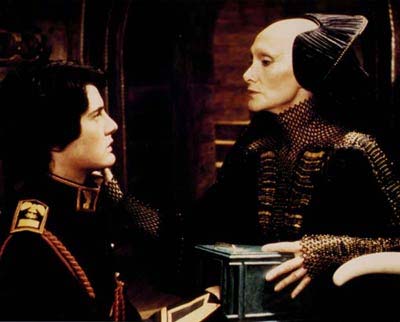
The Bene Gesserit test Paul Atreides at the beginning of Dune. (1984)

Many years ago in a dusty volume, I read an old Bene Gesserit litany against fear, and this prayer has stuck with me every since. “I must not fear,” says the litany. “Fear is the mind-killer. Fear is the little-death that brings total obliteration. I will face my fear. I will permit it to pass over me and through me. And when it has gone past I will turn the inner eye to see its path. Where the fear has gone there will be nothing. Only I will remain.”

Now that dusty volume was Frank Herbert’s Dune, the best selling science-fiction novel of all time, but the words of the litany ring true nonetheless. “I must not fear… Fear is the little-death… I will face my fear.”

From the time we are young children, our parents echo these words and tell us to face our fears. Perhaps you were afraid of the dark. So you mother let you sleep with the lights on for a while. Then she turned the lights off and left the bedside lamp on. A few days later, she turned off the bedside lamp and plugged a nightlight into the wall near the door. Pretty soon, you didn’t even need the nightlight. Your mother helped you face your fear of the dark, and you overcame it.

Or perhaps you were afraid of the monsters under your bed. There they were: always lurking, rumbling, slurping, ready to pounce – until you summoned up enough courage to dangle your head over the side of the bed and chase the monsters away. You faced your fear, and you overcame it.

We look back on these childhood fears and chuckle at how intangible worries grew into monstrous fears. The shadow of your own feet under the covers cast a winged creature on the wall, and the creature moved the more you shook. Under your bed, a pair of shoes and a couple of tennis balls made the ears and eyes of a monster peering up through the floorboards. The fears were nothing really. Our imaginations ran away with us, that’s all.

At least, this is how we adults dismiss those childhood fears. We dismiss them as fanciful or as attention-seeking or as the fruits of overactive imaginations. But hidden within this easy dismissal is also a tacit dismissal of our parents’ advice. “Face your fear,” they said, and we did, and everything got better.

But those were our intangible, childhood fears. That advice couldn’t possibly work on our concrete, grown-up fears. Our fears are too immediate, too relentless, too real. Of course, we forget that this is exactly how our childhood fears felt, as well. Perhaps our parents’ advice, the same advice that I learned reading science fiction, really might work in our lives today. In this morning’s Gospel, Jesus asks his disciples to take our parents’ advice. He asks them to face their fears.

But before we get to that, we first need to address where fear comes from. The root of fear is deprivation. We fear when something has the potential to become scarce. We fear when we perceive that there is not enough of a certain something. Supply and demand economic theory is based squarely on this reality. The root of fear is deprivation. You can trace all fears to this specific cause, even though specific fears may appear quite differently. Fears manifest themselves one way or another depending on the nature of the deprivation. If you are afraid of the dark, you fear a scarcity of light. If you are afraid of contracting a terminal illness, you fear being deprived of a long, healthy life. If you are afraid of how you will live when you retire, you fear that you will not have enough income to sustain your manner of living.

You can trace all fears to specific deprivations, and by confronting the sources of scarcity, you can face your fears. Jesus identifies the disciples’ source of fear when he says to them, “Do not be afraid, little flock, for it is your Father’s good pleasure to give you the kingdom. Sell your possessions, and give alms.” Jesus assures them that their fears are baseless because their accumulation of stuff will not help them enter the kingdom of God. This assurance runs counter to the fashionable reasoning of the day, which stated that the more stuff you owned, the more blessed you were. “God obviously favors that person,” ran this line of thinking. “Just look at all the stuff he has.” Not too much different from today, I’m sad to say.

But Jesus changed the rules. Remember last week’s Gospel? Jesus told us the parable of the rich fool. His land produced more than his barns could hold, so he decided to tear down those barns and build larger ones. The more stuff the rich man had, the more secure and comfortable he would feel, he told himself. Surely, this man would have been considered blessed in his society. But he died the very night he planned to erect larger storehouses, and he surely couldn’t take his barn-loads of stuff with him. The rich man’s folly shows the misguided lengths to which people will go to ward off deprivation, the root cause of fear.

But Jesus shows his disciples another way to face their fear. Rather than accumulating stuff, give it away, he says. Face deprivation by depriving yourself of the things you think you can’t live without. And you’ll discover pretty quickly that you can, in fact, live without those things.

I’m sure that you’ve heard this interpretation before, perhaps so many times that you tune it out now. And if you’re like me, you really aren’t any closer to facing the root of fear than you were the last time you heard someone talk about this. I know for myself that I used to be able to fit all my possessions in a 1992 Mazda Protégé. When I moved to Massachusetts, I needed every square inch of a 14-foot U-Haul. With more stuff comes more fear of loss, more fear of that stuff not being enough.

And the more fear that we have, the more we deprive ourselves of fear’s antidote. That antidote is trust. When we were children, we faced our fears because we trusted our parents’ advice. We believed that they would not lead us astray, and they didn’t. The darkness did not frighten us to death. The monsters did not pounce.

So how come we have so much trouble trusting in God? How come fear tends to trump trust more often than not? I think the answer is this. Trust takes energy. While fear creeps along, keeping us from action, trust derives from the kind of sustained relationship, which establishes and nourishes fidelity. God always keeps God’s promises. God is always trustworthy. The trouble is we have to trust that God is trustworthy. We have to practice the faith that God has given us in order to maintain our ability to trust in God.

And fear constantly diverts this ability. But when we practice trust, when we believe that God’s keeps God’s promises, we can face our fears, we can keep at bay the gnawing dread of deprivation. Our grown-up fears may be concrete and relentless. But I am convinced that they are no match for the power of trusting in God.

This week, I ask you to take some time to be silent and to turn your thoughts inward. What do you fear? What kind of deprivation is at the root of that fear? And how will practicing trusting God help you face that fear? In your reflection, remember this good news. When Jesus says, “Do not be afraid,” he is not just giving a command. He is giving a promise that when we face our fears, we will not be alone. When we face our fears, they will pass through us, and when they are gone, only God, holding us in the palm of God’s hand, will remain.

Pocketing the Sunglasses

During the summer, I am preaching without notes or a text; as such, what follows is the unraveling of my thought processes for a sermon, not the actual words I spoke.

I was riding the T on my way to Mass General when I noticed a young fellow across from me pick up a pair of sunglasses that had fallen out of the pocket of the man sitting next to him. The man was reading a crumpled edition of the free newspaper that seems to germinate in subway stations and hadn’t noticed his glasses fall. The fellow looked at the sunglasses for half a minute and then spent the rest of the minute attempting to get the attention of the man with the free paper. Finally, he poked the man in the knee with the glasses, and the man pocketed them with a grateful smile to the young fellow.

The fellow could have easily put the sunglasses into his own pocket, the complimentary bounty of the inattentive man. Rather, he confirmed my sometimes flagging faith in the human race and handed the glasses back. Of course, there is a clear right and clear wrong in this situation, and to his credit, the fellow chose the right.

Now (and this is for posterity, so be honest) how many of you would have taken the glasses for yourself? How many of you would have seen the (perhaps expensive) shades and decided that the man with the paper didn’t really need them anymore? Finders Keepers, right?

Owing to what were (I am sure) fine upbringings, I hope none of you raised your hands. We spend a goodly amount of time teaching our children the difference between right and wrong. “Emily, I’m glad you’re sharing your jelly beans with your brother. That’s the right thing to do.” “Jimmy, stop hitting your sister. That’s wrong!” Distinguishing between right and wrong is easy. If you have to keep your action a secret – say, for example, you cut the hair off all of your sister’s Barbie dolls – then you’ve probably chosen the wrong thing to do. From an early age, we learn right from wrong, and we hopefully also learn to choose the right, although the actions of recent Wall Street executives disprove the unanimity of this childhood lesson.

While we spend a good deal of time on this lesson, we spend much less time teaching our children the much trickier ability of choosing between right and right. How do we decide when the choice is not between a good and a bad, but between a good and another good?

Let’s look at an example. At 1:30 in the morning, you are driving down the street and you see the light ahead turn red. You roll to a stop and look both ways. No one is coming. Do you wait for green or do you run the light? Convenience may tell you to put the car in gear and keep on going. But, respect for the law keeps you waiting for the light to change. It’s only 35 seconds after all. So, what do you do? In this case, the good of respecting the law should override the good of you arriving at your destination a few seconds sooner.

Now let’s add a few more variables. At 1:30 in the morning, you are driving down the street and you see the light ahead turn red. Your wife is in the backseat; her contractions are only a few minutes apart. The baby is coming any minute now! You roll to a stop and look both ways. No one is coming. Do you wait for green or do you run the light? Respect for the law tells you to wait, but the biological instinct to protect your wife and unborn child by getting to the hospital as soon as humanly possible tells you to go Go GO. So, what do you do? In this case, the good of respecting the law falls short of the good of getting your wife to a medical professional.

Choosing between right and right is a tricky business because both choices are good. So, how do we followers of Jesus make these choices? This past Sunday’s Gospel lesson provides some clarity. Martha welcomes Jesus into her home and then goes about her tasks. Her sister Mary sits at Jesus’ feet and listens to him speak. When Martha asks Jesus to tell her sister to help her, Jesus says that Mary has chosen the better part.

Does this mean that Martha has chosen the wrong thing? Has she done something bad? Of course she hasn’t. This isn’t a zero-sum game with a winner and a loser. Martha has done the same thing that Abraham does in the accompanying reading from Genesis. Abraham bustled around preparing a meal for the three men, who tell him that he and Sarah are finally going to have a child of their own. This bustling isn’t right in the Hebrew scripture and wrong in the Gospel. Martha does the right thing: she provides hospitality for the gathering, which is arguably the highest good in the Hebrew law.

But Jesus says that Mary does a better right thing. She listens to Jesus when she is in his presence. She is not distracted or worried, but attentive to his words. This is the better good, which does not erase Martha’s attempt to do the right thing. Rather, Mary displays the fundamental action, of which Martha’s welcome and hospitality are secondary outcomes.

When I am worried and distracted by many things, how often do I actually stop, take a deep breath, and listen? Not often enough, I’ll tell you. Even when I am engaged in good things, my busyness often drowns out that voice, for which I should be listening. Choosing between right and wrong is easy, but choosing between right and right is difficult. When I have so many good things clamoring for my attention, I first must sit down at the feet of Jesus Christ and listen.

Do You See this Woman?

(Sermon for Sunday, June 13, 2010 || Proper 6, Year C, RCL || Luke 7:36—8:3)

Every once in a while in my preaching, I’m going to ask you to imagine that I am a character in the story we’ve just heard. I will speak in the voice of that character and invite you to bring your own imagination to the story. This is an old technique for exploring the scripture going back to the sixteenth century’s St. Ignatius of Loyola and before him to the ancient Jewish Rabbis. So, imagine with me a letter written by Simon the Pharisee the day after his dinner party.

Simon, a servant of the Lord God and Pharisee faithful under the law, to Judith, my dearest sister and confidant: Peace to you and to your house.

I thank God for you every time I write to you since you are one of those rare people whom I know I can trust with my most private affairs. I smile as I write this because you yourself pointed out in your last letter that I only seem to write when I am vexed. And yes, this observation holds true today. I am vexed. I have so many questions, which I’m sure have answers, but I don’t know if I want to hear those answers.

By this point, I’m sure you’ve heard of the teacher from Nazareth who has been making the circuit throughout the region. I invited this Jesus to my house for the evening meal, as is my custom with all the rabbis visiting town. You know I have a soft spot for these provincial teachers who venture out of their backwater villages into the wider world. I enjoy their dusty, local wisdom, and their eyes always grow wide when they see the spread of my table. Never has one spoken words I could not predict. Never has one challenged me. Never has one planted festering questions in my heart.

Until he spoke up last night. I had heard stories about Jesus, but they were the same ludicrously incredible stories I always hear when the gullible discover hope. He forecast a huge catch of fish. He made a leper’s skin clean. He raised a widow’s son from the dead. I tell you, sister, the masses are never satisfied unless they have something sensational to chatter about. You know that I’ve always been good at reading people – but I confess, I misread Jesus from the very beginning. He may be from a provincial backwater, but he spoke with an authority I’ve never heard before. And he said such unnerving things. His voice continues to echo in my mind. But I get ahead of myself.

Here’s what happened. Dinner was progressing nicely. My guests were appropriately appreciative, and I was appropriately modest. But as the steward came around to refill our cups, he very nearly tripped over the prone body of a woman. She lay at Jesus’ feet, a quivering heap of streaming tears and unbound hair. A full minute passed before my shock subsided, and I realized that this trespasser, disguised by her reddened face and tangled curls, was in fact someone I had met several times. She is notorious in the district. Independently wealthy after a string of ancient husbands, she adds to her fortune by lending money at exorbitant rates of interest. Desperate people will take any avenue open to them, God knows – even the road to a predatory usurer.

Such was the kind of woman who walked uninvited into my home, disrupted my gathering, and disgraced everyone in the room with her outrageous display. Everyone that is, except Jesus. He allowed the behavior to continue. He even allowed the usurer to pour expensive ointment on his feet (bought no doubt by means of her immoral practices). “Some prophet,” I said to myself. “If he were who people claim he is, he’d know that the woman touching him is a sinner.”

Just then, as if he had heard my thoughts, Jesus confronted me. “A creditor had two debtors,” he said. Maybe he does know this woman’s sin after all, I thought. “One owed a lot of money and one owed a little,” he continued. “When neither could pay, the creditor canceled both debts. Which do you think will love him more?” The answer was obvious – the one who owed more money. But I couldn’t comprehend why he told the story. Then Jesus gestured to the sinner at his feet. “Do you see this woman?” he asked me.

Did I see her? Of course, I saw her. She was ruining my dinner. She was staining my house with her very presence. But sister, oh, his question does continue to fester. “Do you see this woman?” No. I did not see her. I saw “it.” I saw the spectacle: the weeping, the kissing, the impropriety of it all. I did not see her. I saw her sin – her usury, her taking advantage of the poor and desperate. I saw only her sin wrapped up around her like a costume.

But that is not how Jesus saw this notorious woman. He knew she had many sins, and he forgave them. He touched her face with his hand, looked her right in the eye, and said, “Your sins are forgiven.” An uproar went up around the table at these words, but I had no stomach to generate the appropriate outrage. Jesus’ words continued to echo in my mind, disarming me. And today, as I write you this letter, I find that those words have begun to sink down into my heart and into my gut.

Rather than seeing the woman, I saw only her sin wrapped around her. But Jesus saw her. He saw the person underneath the heavy layers of transgression and immorality. He saw the good creature that God created – before her sin distorted her. And in that act of forgiveness, I think Jesus removed those burdensome layers. Don’t ask me how, but he untwisted the distortion, and the costume fell away. Is it possible that Jesus never even saw the costume? Is it possible that he immediately saw the woman as she was going to be once he forgave her? And in his seeing beyond the distortion, did the costume simply disappear?

Oh sister, these thoughts are too much for my mind to comprehend. This provincial teacher understands forgiveness much better than I. Perhaps…perhaps Jesus has shown me a glimpse of how God sees us. Could it be that God sees beyond our sin from a place of total forgiveness? And because God sees from this place of total forgiveness, does not God grant us this same gift of vision? Could forgiveness allow us to see beyond the masquerade of sin that distorts our reality? If so, then forgiveness allows us to see others as they truly are, not as accumulations of sin, but as broken people in need of love.

Dearest sister, that is my sin: I see the transgression so I don’t have to see the person. I see the costume because I want an excuse to keep the person underneath at a distance. Jesus saw that in me right away. He called me out for my inhospitality. I didn’t wash his feet or welcome him with a kiss or anoint his head with oil. I brought him into my own home simply to stoke my own ego, not to form any kind of relationship.

But do you think he could forgive me like he forgave the woman? Or has he already done so? Yes, I think he has: in his act of forgiveness, I am able to see my own costume now. I see my sin. He must have forgiven me so that I might find the eyes to see myself as God sees me – without the distortion, without the costume. If I can see myself with these eyes, how could I ever again look at those around me and see only their sin?

Dearest sister, I pray for these new eyes. I pray for the capacity to see beyond the costume. I pray that, if Jesus ever again asks me, “Do you see this woman,” I can say without hesitation or equivocation: “Yes, I see her.”

It’s Love, in Point of Fact

(Sermon for Sunday, May 30, 2010 || Trinity Sunday, Year C, RCL || Proverbs 8:1-4, 22-31; Romans 5:1-5; John 16:12-15)

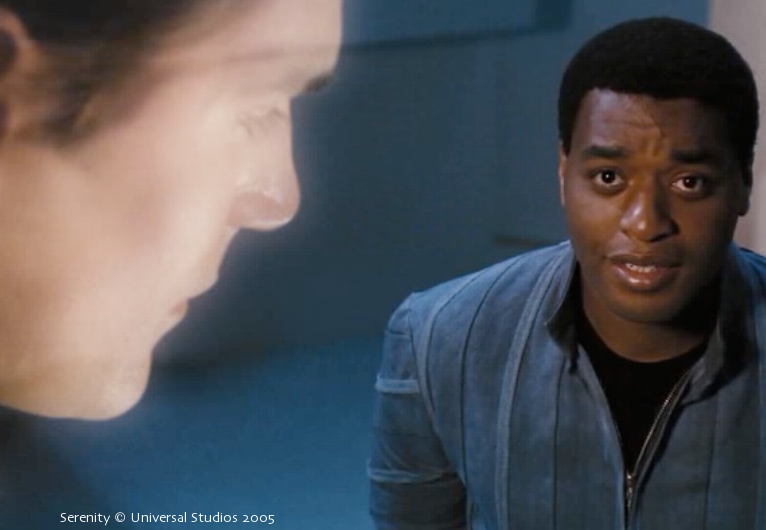
At the beginning of the science-fiction film Serenity, the Operative scans through security footage of Simon Tam breaking his sister, River, out of a government-run facility that has been conducting torturous experiments on River’s brain. The doctor who runs the facility tells the Operative that it was “madness” for Simon Tam to give up his own brilliant future in medicine in order to save his sister. “Madness?” the Operative replies. “Have you looked at this scan carefully, Doctor? At [Simon Tam’s] face? It’s love, in point of fact. Something a good deal more dangerous.” It’s love, in point of fact.

It’s love, in point of fact, that forms this wonderful community, which cares for those both within and without our little band of pilgrims. Some would say this is madness rather than love, asserting that maintaining a purely self-interested motivation for action is the only safe and sane way to live.

It’s love, in point of fact, that brings this wonderful community here today to worship a God we’ve never seen with our eyes nor heard with our ears nor touched with our fingers. Some would say this is madness rather than love, asserting that only what we can prove and quantify and predict are real.

And it’s love, in point of fact, that forms this wonderful community to worship an unseen God who reveals God’s personhood as threefold, as Father, Son, and Holy Spirit. Some would say this is madness rather than love, asserting that the Trinity is a needless complication of the already tenuous and rather dodgy business about God.

Some would say all this is madness, but it’s love, in point of fact. Let’s take a look at each of these three – community, belief in God, and belief in God as a Trinity of persons. We’ll look at them in the opposite order, so we’ll start before the beginning.

You see, if we start at the beginning, we’ve already arrived on the scene too late, as our lesson from Proverbs does today. Proverbs’ personification of Wisdom tells us, “The Lord created me at the beginning of his work, the first of his acts of long ago. Ages ago I was set up, at the first, before the beginning of the earth.” Wisdom may have been created before the earth, but Wisdom tells us that the Lord still created her. This is far too late to begin our discussion of the Trinity. Too even grasp the edge of the expanse of the majesty of the Trinity, we must cast our imaginations back to before there was even a concept known as “before.” You with me so far? Good.

In the First Letter of John, the writer makes the sweeping statement: “God is love.” If nothing besides God existed before the beginning, how did this love manifest? If there was no Creation to fill the role of the Beloved, then how could God be “love?” At first the answer seems rather narcissistic: if there was nothing else to love, then God loved God. But we can’t stop there because true love always manifests as a relationship. In our futile attempt to find the right word to name God, we latch on to relational language and call God “Father.” This sets up one side of a loving relationship, that of parent to child.

But the relationship is incomplete without that second person. And so we also call God “Son” to acknowledge the complete relationship between loving parent and beloved child. In the Gospel according to John, Jesus says that God “loved me before the foundation of the world.” This love between parent and child is so palpable that the love itself is the third member of the Trinity, which we experience as the Holy Spirit. Indeed, Paul tells the church in Rome that “God’s love has been poured into our hearts through the Holy Spirit that has been given to us.”

So this loving relationship between parent and child existed before anything else, including the concept of “before.” Nothing existed that could substitute for or diminish the relationship. The love was pure, perfect, unsullied by deficiencies such as lust or anger or apathy or dominance. In fact, the perfection of the relationship meant that, while there was a Trinity of persons, a Unity of being was the ultimate reality. This Unity of being was the home in which the three persons dwelt: the Parent, the Child, and the Love between them.

Now, I’ve been speaking in the past tense for the last few minutes. Of course, because all this happened before there was a “before,” there was no such thing as the “past” or the “future.” There was only the eternal present in which the perfect Love between Parent and Child manifested in the perfect Unity of being. Before the beginning was this ultimate reality of God, of love, of home.

Then came “In the beginning,” and suddenly there was a time known as “before.” God breathed the wind of God’s Holy Spirit over the face of the deep. God spoke the Word of God, through which all creation came into being. The Trinity, still loving itself into eternally perfect relationship, created the heavens and the earth, thus generating an “other” to bring into that loving relationship, that home that is God. This Creation is not God because God made it, just as God made Wisdom in today’s reading from Proverbs.

Everything that God creates exists in Space and Time, which are simply two more things that God created. Right now, we exist in the space that is this beautiful sanctuary. We don’t exist on your sailboats or sitting in the bleachers at this afternoon’s Red Sox game. And for the last seven minutes, we’ve existed in the time in which I’ve been speaking. Sad to say, we can’t move backward in time and choose not to come to church since the sermon will be really confusing. But because God created Space and Time, God exists outside of these constraints. However, since God loves this little universe of God’s making, God continues to move around and throughout and within it. Truly, God loved this little universe so much, that God the loving parent gave to Creation God’s beloved child.

This beloved child, this Word made flesh came to our little planet as a baby who grew up to be a man who said and did such wonderful things and who taught us about God’s love for all Creation and who expanded our hearts and minds so they could contain such wonderful thoughts and who was killed because of his vision of acceptance and love and who rose miraculously from the dead and who ascended once again to exist in the eternally perfect relationship with God and who showed us the way home to this relationship.

After Jesus Christ ascended, he sent the Holy Spirit to us, the same wind of God that swept across the face of the deep at the moment of Creation. Through the Holy Spirit, God continues to pour God’s love into our hearts so that they can expand to hold the Truth of Jesus’ message of hospitality, generosity, and service. Each member of the Trinity moves in our lives, a family perfectly unified as One, as One who yearns to bring us back home.

Far from being some obscure, antiquated doctrine, the Trinity permeates existence today as it always has even before anything else existed. The Trinity loves itself into eternally perfect relationship, which makes forming loving relationships in our own lives the best way to glorify God. When we come together in this wonderful, loving community to worship God, we participate in the life of the Trinity. When we share the body and blood of Christ, we participate in the life of the Trinity. When we go out into the world in the power of the Holy Spirit to love and serve and find God in those we meet, we participate in the life of the Trinity. This community is home – not a perfect home like the Trinity is unto itself – but a good home made by fallible humans doing our best to love one another.

At the end of the film Serenity, the captain of the small spacecraft finds River sitting in the copilot’s chair, while rain lashes the cockpit’s windows. “But [flyin’] ain’t all buttons and charts,” Malcom Reynolds tells River. “You know what the first rule of flyin’ is? …Love. You can learn all the math in the ‘Verse, but you take a boat in the air that you don’t love, she’ll shake you off just as sure as a turn in the worlds. Love keeps her in the air when she oughta fall down, tells ya she’s hurtin’ ‘fore she keens. Makes her a home.”

The majesty of the Trinity is that God is a perfect home unto God. And God invites us and everyone and all Creation into that home. What makes God a home for us? It’s love, in point of fact.

The Last Prayer in the Bible

(Sermon for Sunday, May 16, 2010 || Easter 7, Year C, RCL || Revelation 22:20)

Words can help and words can harm. Words can enlighten and words can confuse. Words can dull the mind and words can infuse the soul with joy. Recently, I spoke some words to someone that wounded that person, and I continue to work to repair that relationship. Recently, I also spoke words to someone else that brought her a bit of peace, a quarter cup of hope for the recipe of her daily walk with Christ.

Words by themselves are innocuous little things, like bullets rattling around safely in the box. Then we employ these innocuous little words to order our thoughts. We combine them into phrases, sentences, speeches, lullabies, poems, diatribes. We use them to teach and to welcome and to express deep emotions that rarely fit neatly into our vocabulary. We also use them to manipulate and to control and to stoke our own fragile egos. Knowing that words surround and define us, the fact that we spend so little time choosing our words is startling. The fact that we spend so little time examining the repercussions of what we say is quite disturbing.

This is true at home, where a conversation can end in a tearful embrace or a slammed door. This is true at school, where teachers use words to encourage, and bullies use words to demean. And this is especially true at church, where we say collections of words used nowhere else in our lives. These words inspire humility and invite transformation, and yet we rarely take the time to notice the power of the words we speak here in this building.

This morning, we heard the final prayer in the Bible, the literal last words in the last book of the library that chronicles God’s interactions with all those grimy, messed up, beautiful people. “Come, Lord Jesus,” prays John of Patmos at the end of the Book of Revelation. Come, Lord Jesus. No prayer in the Bible is more fervent or more concise or more powerful. These three little words pass us by in the midst of another reading on another Sunday morning. But these three little words illustrate the fact that we rarely notice the power of the words we speak in church. We’ll get back to this final prayer in a few minutes. First, let’s explore this power that we tend to overlook.

In her book Teaching a Stone to Talk, Annie Dillard diagnoses this blissful ignorance that affects lay people and clergy alike. She asks, “Does anyone have the foggiest idea what sort of power we so blithely invoke? Or, as I suspect, does not one believe a word of it? The churches are children playing on the floor with their chemistry sets, mixing up a batch of TNT to kill a Sunday morning. It is madness to wear ladies’ straw hats and velvet hats to church; we should be wearing crash helmets.”

In her colorful prose, Dillard reminds us all that worshiping the Creator-Of-All-That-Is has never been an altogether safe or predictable proposition.  In our worship, we consciously commune with the foundation of our very existence, the God who transcends all thought and who, at the same time, moves within and around each of us, breathing life into our bodies and purpose into our souls. The church is not a museum for us to tour with amused and sleepy detachment; there is no frozen exhibit of doves in midair, no taxidermied Holy Spirit. Our God is no divine watchmaker who wound the universe and then left well enough alone. We worship the God who was and who is and who will be. God continues to speak creation into existence every moment of every day. But one of the things God never created is the box in which we often try to stick God, so that we can go about our daily lives secure in the knowledge that God is collecting dust on a shelf in the cupboard.

This box doesn’t exist. Any attempt to domesticate God is a severe delusion of grandeur, one that I know I’m guilty of. We worship a God who moves through our lives like the wind, uncontrollable and yet ever visible in the dancing of leaves and the billow of sails. This is the God whose name we toss about in frustrated oaths when we’re stuck in traffic. This is the God we rail at when the pain of loss wallops us in the gut. And this is the God to whom we address our praise and our prayers.

We ask God for forgiveness in the words of the confession. We invoke God’s name when we offer each other Peace. We recite the poetry of God’s grace in the words of the Eucharistic prayer. We pray for the coming of God’s kingdom in the words that Jesus taught us. After communion, we tell God of our plans to go out and serve God in the world, and we ask for strength and courage.

But how often do we stop and realize that God actually hears these words of ours. How often do we take stock of our conviction that God listens to our pitiful, halting, inadequate, wonderful prayers. Our words are powerful and transformative because we speak them to the God who empowers and transforms us. When we speak words like “Come, Lord Jesus,” are we really prepared for the transformation into which these words draw us?

This is why we need those crash helmets, of which Annie Dillard spoke. God calls us to participate in our own transformation. When we pray, “Come, Lord Jesus,” we signal our readiness to become a part of our own remaking. We discover the arduous path of discipleship, a path which Jesus never promised would be safe or easy. Rather, he promised that he would always be with us on the path, no matter the danger or difficulty. When we pray, “Come, Lord Jesus,” we notice that Christ is already here with us.

This is a comforting and a disturbing thought. Christ is already here with us guiding us and holding us up. But Christ is also here pushing us to step into new encounters that will transform us and, at the same time, transform the world. I know I can’t speak for all of us so I’ll speak for myself. Sometimes, I’m afraid to say, “Come, Lord Jesus,” because I know I might hear Jesus echo my prayer and send me where I don’t want to go. “Come, Lord Jesus,” I’ll say, and then Jesus will say: Come, Adam. Come to me here. Come to me at the prison, at the slum. Come to me when I rattle a Dunkin Donuts cup at you on Tremont Street. Come to me when I hold up a cardboard sign at the intersection. Come to me when I’m alone at the table in the soup kitchen.

Our transformations take place in those moments when we cry out “Come, Lord Jesus,” and Jesus hears us and echoes our cry with one of his own. The more conviction we have in saying those three little words, the easier will be our reception of Jesus’ call in our lives. The more often we pray, “Come Lord, Jesus,” the less often will we be tempted to sequester Jesus in the upper room or to stash him in the manger where he can’t do too much to stir our lives. In The Lord of the Rings, old Bilbo Baggins used to say to his nephew: “ ‘It’s a dangerous business, Frodo, going out of your door. You step into the Road, and if you don’t keep your feet, there is no knowing where you might be swept off to.’ ” Likewise, when we pray, “Come, Lord Jesus,” we step into the Road of our own discipleship, and Jesus sweeps us off to those places where our own transformation intersects God’s transforming of the world.

Words by themselves are innocuous little things until you combine them into phrases and invest those phrases with meaning and conviction. The last prayer in the Bible is just three little words: “Come, Lord Jesus.” With these words, we accept Christ’s invitation to participate in our own remaking. We open ourselves up to hearing Christ’s call to go to those places and to those people who are in need of change themselves. And when we arrive, we’ll find that the Lord Jesus has come there first, and that he will continue to strengthen us in our ministry with his grace.

Revelation (The Good Parts Version)

(Sermon for Sunday, May 9, 2010 || Easter 6, Year C, RCL || Revelation 21:10, 22—22:5)

These are my original sermon notes. I accidentally washed them in the laundry.

Have you noticed that we’ve been reading the Book of Revelation ever since Easter? Every Sunday since Easter, the New Testament lessons have come from the Book of Revelation. You probably haven’t noticed this for at least two reasons. One: Besides a quick quotation in last week’s sermon, no preacher at this church has come within spitting distance of the texts from Revelation. Two: We’ve only read from the few chapters that don’t sound like a cross between an acid trip and Dante’s Inferno.

Our lectionary trims down the Book of Revelation to “The Good Parts Version,” the parts that don’t make us bewildered and squeamish. In all six lectionary lessons, not once do we hear about wars or plagues. Not once do we hear about dragons with seven heads and ten horns and seven diadems on their heads or beasts with ten horns and seven heads and ten diadems on their horns. Not once do we hear about the seven bowls of wrath or the six-six-six number of the beast or the five months of torture or the four horsemen or the three foul spirits or the two hundred miles of blood or the one whore of Babylon. Not once.

And we like it that way, thank you very much. We like the “Good Parts Version” of Revelation because we don’t want to dwell on how the world’s going to end in wrath and blood and fire. We don’t want to read the perplexing script that narrates the world’s annihilation. We don’t want to hear prophetic predictions of horrible apocalypse.

But, you know what? We don’t have to. While Revelation is full of disturbing imagery, several popular misconceptions about the text have led to some strange and erroneous readings.

Before we move on to this morning’s lesson, we need to get a few things straight. For starters, the popular understanding that Revelation is a script that narrates the end of the world is utter nonsense. Doctrines espousing the “Rapture” and the seven-year “Tribulation” only work by pasting together a few disparate pieces of scripture into a collage of truly baffling interpretation.

Next, to move any further into Revelation we need to rescue the words “prophecy” and “apocalypse” from their popular connotations. Prophets are not fortune-tellers or predictors or spiritual meteorologists. Prophecy is not about predicting the future. Prophecy is about telling the truth of the present in order that the future may change. Prophets call people back to God and hope that those people will listen and change their lives.

The story of Jonah illustrates the true nature of biblical prophecy. People usually remember the bit about the fish, but there is more. Jonah goes to the city of Ninevah and says, “Forty days more, and Nineveh shall be overthrown!” He says this to shake them out of complacency, to get them to turn back to God. And they do: the city isn’t destroyed! Does this make Jonah a false prophet because his words didn’t come true? No. Quite the contrary: Jonah succeeds as a prophet because the people listened and changed.

“Prophecy” is about telling present truth, not about predicting the future. To redefine another popular word, “apocalypse” is not necessarily about the “end of the world.” Rather, “apocalypse” means “an unveiling” or “revealing.” We’re used to hearing the word paired with trailers for disaster movies like 2012, but the term is really about pulling back the curtain of reality to see the deeper reality at work underneath. The message of Revelation is urgent not because the book is specifically about the world’s end, but because much early Christian thought grew out of the notion that Christ would return very soon. In that context, John of Patmos, the writer of Revelation, prayerfully looks behind the veil of the world’s reality and tells the truth about the present. John’s vision convinces him that true reality is a very different place than the one, which the Roman propaganda machine describes. The Empire had declared peace – the Pax Romana – but John sees this peace for what it really is, a violent, suppressive regime that rules by intimidation, occupation, fear, and capital punishment.

John had also noticed that the seven churches of Asia Minor had begun to buy into the Roman system of social domination. They were getting comfortable, complacent. They were adapting to the false reality of the Empire rather than living the countercultural lifestyle of the people of the Way, the followers of Jesus Christ. So John proclaims his vision to these churches.

To compose his vision into written form, John employs disturbing imagery, much of which our imaginations can barely fathom. Through a series of repetitive spirals, John tells the vision multiple times with increasingly unsettling images. Prose could never capture the vision, so John writes a long, sometimes nauseatingly graphic poem. Pastor and scholar Eugene Peterson comments, “If St. John’s Revelation is not read as a poem, it is virtually incomprehensible, which, in fact, is why it is so often uncomprehended.”

This prophetic poem is epic and cohesive. We do the Book of Revelation a disservice by reading only the “Good Parts Version” in church. Far from being a script narrating the cataclysmic end of the world, John’s apocalypse tells the truth about how God’s kingdom exists with far grander and vaster scope than the scary, but ultimately doomed, imperial dominion of Rome. While John was writing to people in his own time, Revelation continues to be remarkably relevant today. The parts we read in church are all about God’s kingdom. But we need the rest of Revelation, as well, to prepare us to hear the good news of these “Good Parts.”

You see, Revelation is shocking the same way a car accident is shocking. We can’t drive by without looking at the tangled mess of fenders and engine parts. Once we’re passed, the collision reminds us of our responsibility to be safe drivers. Likewise, the itchy, disturbing parts of Revelation narrate the mess we get ourselves into when we buy into the domination systems that the world has been promulgating throughout history. Then the “Good Parts” tell us about God’s true reality underneath, which pushes and prods us to relinquish our grip on the world’s false reality.

In this morning’s reading, John reaches the climax of his vision in the description of God’s holy city. His poetry tries as hard as language can to describe the glory he beholds. If we’ve read the disturbing parts of Revelation, we are now struck with the utter reversal from darkness to light, from death to life, from war to creation. But the vision of the city doesn’t simply encompass what we can expect when we pass from life through death to new life. Every single Sunday, we pray (in words that Jesus taught us) for God’s kingdom to come while we still live on earth. When we pray, “Thy kingdom come, thy will be done, on earth as it is in heaven,” we offer ourselves to God to use in the growth of the kingdom here.

So what does John’s vision have to tell us about this kingdom, which we are participating in growing on earth? Three things stand out, and all three work to counteract the domination systems, which John’s Revelation exposes. First, members of God’s kingdom practice radical hospitality. John says, “[The city’s] gates will never be shut by day – and there will be no night there.” Back in John’s time, city gates were usually open during the day to facilitate trade unless the city was under siege. But all threats have been removed from the heavenly city. And what’s more, since there is no night, the city gates are always open. As members of God’s kingdom, we strive to model this hospitality in our churches and in our lives. All are welcome, and woe to us if we attempt to close the gates which God has thrown open wide.

Second, members of God’s kingdom share the extravagant blessings of God with everyone they meet. In the heavenly city, the river of the water of life flows right through the middle of the main street. On either side of the river grows the “tree of life with its twelve kinds of fruit.” Unlike earthly trees, which bloom once a year, the tree of life produces a different fruit each month. The tree of life blooms constantly with all the extravagant blessing of God. As members of God’s kingdom, we strive to model this blessing by working for the just distribution of the world’s resources, by managing them wisely and sustainably, and by demonstrating that these resources can nourish the entire human family.

Third, members of God’s kingdom work for healing, wholeness, and closer communion with God for all of God’s people. “Nothing unclean will enter [the city],” says John, but not because unclean things will be barred. Rather, as scholar Brian Peterson says, “The promise that nothing unclean will enter, in the end, is the promise that God will remove all uncleanness from us all.” John shows this with these words: “The leaves of the tree are for the healing of the nations.” These are the “nations” that we thought destroyed by the battles earlier in John’s vision. Now they “walk by [the city’s] light.” Likewise, the kings who had earlier allied themselves with Babylon against the Lord now “bring their glory into the city.” As members of God’s kingdom, our duty has never been to say who can and who cannot come into closer contact with God. Rather, the city is full of the glory, light, and “unmediated presence” of God. When we release the illusion that we somehow control this presence, we can work to bring God’s wholeness to a world broken by systems of domination.

Hospitality, blessing, communion – John’s Revelation shows these things to be pieces of God’s true reality. Assimilation by the world’s domination system blinds us to this reality. I invite you to read the rest of Revelation to see the new eyes, which John gives to the churches in Asia Minor. The disturbing, transient imagery of war and pestilence gives way to the glorious, eternal reality of God’s grace and presence. Simply reading the “Good Parts Version” of Revelation ignores all the baggage with which the world saddles us when we buy into the system. But God constantly breathes into us the strength and perseverance to labor with God to grow God’s kingdom here on earth so that only the “Good Parts Version” remains.

Notes

* Thanks to Craig Koester Revelation and the End of All Things for the background exegesis for this sermon.

Hear my voice

(Sermon for April 25, 2010 || Easter 4, Year C, RCL || John 10:22-30)

I’m sure we can all agree that making a real audible connection with Jesus is difficult. After all, our Lord ascended into heaven one thousand nine hundred and seventy-seven years ago, give or take. You can’t download his parables off of iTunes. You can’t watch the Sermon on the Mount on Youtube. You can’t get a podcast of the Last Supper. As Judas sings at the end of Jesus Christ Superstar: “If you’d come today you could have reached the whole nation. Israel in 4 BC had no mass communication.”

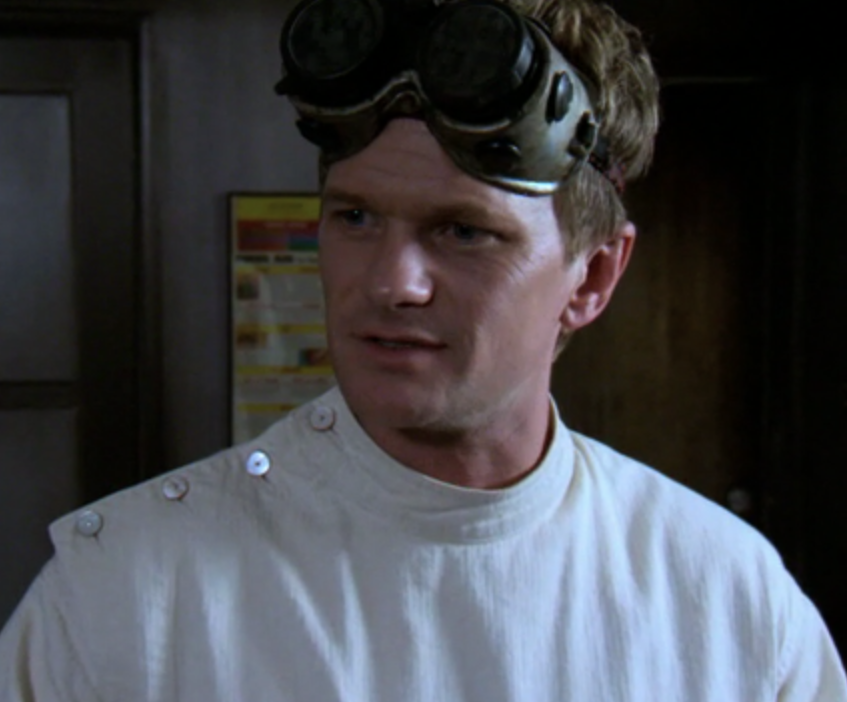
Dr. Horrible is only a few weeks away from a "real audible connection" with his crush, Penny.

With no way to make that real audible connection with Jesus, we might be tempted to disregard this morning’s Gospel as an antiquated relic of Jesus’ own time. In the verses preceding our lesson, John records Jesus discussing his identity as the good shepherd who takes care of the sheep. Then, in today’s reading, Jesus returns to that image when he tells his opponents, “My sheep hear my voice.” The fact that you got out of bed this morning and decided to come to church tells me that on some level you identify as a member of Jesus’ flock. So, with no person to speak or recording to play, how do we, his sheep, hear Jesus’ voice? How do we listen to someone who lived nineteen centuries ago and who inhabited the other side of the world and who spoke a language that no longer exists?

All those barriers notwithstanding, we sheep still hear Jesus’ voice. We hear his voice in myriad ways, too many to list exhaustively during this sermon. We especially hear Jesus speak to us from within ourselves, from the collective voice of the community, and from the prayerful reading of his words in the Gospel.

Let’s begin with the reading of scripture. Did you know that in the ancient world in which the Bible was written, there was no such thing as silent reading? People read aloud even when they were alone. The Book of Acts presents a clear example of this. Philip is walking along the road from Jerusalem to Gaza when he happens upon an Ethiopian eunuch reading the prophet Isaiah. How does Philip know he’s reading Isaiah? Right – because the eunuch is reading out loud to himself. Now, we all grew up with elementary school teachers giving us cross looks if we accidentally began reading aloud when we were supposed to be reading silently. I also imagine that if I began reading my novel out loud on the T, I might engender some strong negative reactions.

Obviously, our culture no longer subscribes to the ancient practice of reading everything out loud. But in our efforts to be the sheep who hear Jesus’ voice, I invite you to attempt this practice. Read the Gospel slowly, prayerfully, carefully, and audibly. Listen to the sound of your own voice speaking the words of Jesus:

“Come to me, all you that are weary and are carrying heavy burdens, and I will give you rest.”

“Truly I tell you, just as you did it to one of the least of these who are members of my family, you did it to me.”

“And remember, I am with you always, to the end of the age.”

Hear the voice of Jesus welling up from within you. Feel your mouth and tongue and breath work in concert to form those life-giving words. When you encounter a particular verse or passage that strikes you, don’t rush through the words. Sit with them. Say them aloud and hear Jesus speaking through you to you. Make those words your breath prayer. Practice making the voice of Christ the first thing that comes to your own lips in idle moments and joyful moments and fearful moments. As Paul says to the church in Colossae, “Let the word of Christ dwell in you richly.” We sheep hear Jesus’ voice in the words of scripture when we attend to them and attune to them and orient our lives around them.

This orientation continues in our own interior lives, which is the next setting for hearing the voice of Christ. At the outset of his own trek through the inward life, St. Augustine says, “My God, I would have no being, I would not have any existence, unless you were in me. Or rather, I would have no being if I were not in you.” Because we are in God and God somehow dwells within us, we can access the voice of Jesus within ourselves.

Most often, we are too distracted by external stimuli to attend to this voice. And when we manage to find grace enough to silence the outward bombardment, we still must contend with the chattering voice of our own selfish desire. This seductive voice constantly eats away at us, eroding us with whatever idols happen to be fashionable this season. But underneath the artillery and the idolatry, another voice speaks. This is the voice of Jesus speaking softly enough that we have to strain to hear. And everyone knows that when you have to strain to hear, you must be listening.

This internal voice of Jesus is the same “still, small voice” that Elijah hears on the mountain after the wind and the earthquake and the fire pass by. This is the same voice that the psalmist hears when God says, “Be still, and know that I am God.” The voice of Jesus speaks truth into our souls every moment of every day, and every once in a great while, we might happen to stop and hear that truth.

I remember a time in my life in which each day, I asked God if I was in the right relationship. And each day, I felt the resonance in my chest of a deep and abiding, “Yes.” Then, on a day of no particular consequence, the resonance disappeared. But rather than paying attention to the change, I forced myself to remember what the voice sounded like. And for months, I lied to myself rather than making the effort to listen to Christ’s voice within me. When the relationship ended, I was shocked, although I had no right to be. The voice of Jesus had been preparing me for that outcome. The still, small voice speaks to us continually. All we need do is listen.

We sheep hear Jesus’ voice in our inner selves, but without that voice also speaking to us from a loving community, the dialogue is incomplete. “Let the word of Christ dwell in you richly,” says Paul, and he continues, “Teach and admonish one another with all wisdom; and with gratitude in your hearts sing…songs to God.” Without this conversation, this communion, with one another, we struggle to discern the voice of Jesus in our lives. God calls each one of us to ministry both within the church and in our lives outside these walls. The voice of the community and the internal voice within each of us coalesce to form our calls to serve God.

We will reaffirm our baptismal promises in a few minutes. One promise asks, “Will you seek and serve Christ in all persons, loving your neighbor as yourself?” When we answer, “I will, with God’s help,” we signal our willingness to listen to the voice of Jesus speaking through one another. If we are able to sublimate the chattering voices of our own selfish desire, then each still, small voice within us can join with the next, creating the voice of Jesus in the community. When we share in one another’s lives, when we take the time to know one another on deep, personal levels, we more readily serve as vessels for the voice of Christ to each other.

Christ’s voice in the Gospel forms and guides the other two voices – the interior voice and the voice of the community. Working together, this threefold voice of Jesus speaks to us across the barriers of time and distance and language. Jesus proclaims, “My sheep hear my voice.” This statement is both a declaration and a hope. As we struggle with our flurries of distractions and entanglements both externally and internally, I pray that we each find the grace to take seriously these words of Jesus: “My sheep hear my voice.” We are his sheep. I hear Jesus’ voice calling each of us to serve one another in love and reach out with healing arms to a broken world. What do you hear?