The paralysis of familiarity

Tonight I have the opportunity to preach at an ecumenical evening service outdoors in the park. It’s going to be really hot, so I’m not planning to talk for too long. What follows is the outline of my talk. Before you go any further, click this link and read John 5:1-17 so you’ll be familiar with the passage from the Gospel.

* * *

The question isn’t designed to be a stumper: “Do you want to be made well?” So says Jesus to the man, who has been sitting by the pool of Bethzatha for 38 years. 38 years! The locals probably stop seeing him after six months. After a year, he probably melts into the architecture.  After ten, the stones behind his back probably retain their original color, while the rest fade in the sunlight. 20 years. Each day is the same, and he never makes it into the pool. 30 years. Each day is the same, but he no longer even attempts to crawl to the water. 38 years. Each day is the same, and his excuse as to why he is still sitting here is his response to anything anybody says to him.

“Do you want to be made well?” The obvious answer is “YES! Of course, I want to be made well.” But, perhaps the question might stump the man more easily than I originally thought. If he’s made well, he’ll have to stand up and leave the pool and find something new to do. He’ll have to negotiate a place that has no doubt changed in the last 38 years. He’ll have to begin a new life full of new possibilities and chances and hopes and dangers. If he’s made well, his paralysis will be healed, but the paralyzing familiarity of the routine will also need a cure.

No wonder he fails to answer Jesus’ question: “Do you want to be made well?” Yes is the correct answer, but this paralyzing familiarity makes No look more and more attractive. The man answers neither Yes nor No. Instead, he replies with what sounds like a well-rehearsed speech: “Sir, I have no one to put me into the pool when the water is stirred up; and while I am making my way, someone else steps down ahead of me.” If you read the previous chapter of John, you’d notice that Jesus doesn’t need a bucket to offer living water. So, he sure doesn’t need a pool now. Jesus is the gift of God, and the man at the pool of Bethzatha has encountered so much more than he bargained for.

Jesus asks the question, and the man deflects it. Jesus doesn’t ask it again. Nor does he say anything like: “You are healed!” or “Be healed!” or “You have been made well!” No. Jesus is not interested simply in giving health to the man. Now, giving him health seems like a pretty good reason to me. Jesus knows better. Saying “You are healed” leaves the man the opportunity to remain paralyzed by familiarity, to stay seated with his back to the bright stones and melted into the architecture. But Jesus doesn’t give the man this option.

Instead, Jesus commands the man to act: “Stand up, take your mat and walk.” Somewhere between this command and the man obeying it, Jesus heals him. But the healing is secondary to Jesus’ desire to change the man’s situation. Jesus, the gift of God, gives him new life by denying him the option to remain in his current condition. By saying, “Stand up, take your mat and walk,” Jesus confronts the man with the terrifying new possibility: Believe what I am saying to you, obey my commands, and you will discover abilities that 38 years of monotony have made inaccessible to you. I am the gift of God, and I am here to bestow upon you the gifts of movement and change and renewal. I have healed you, but you won’t notice it until you get up.

While I am not physically disabled like the man at the pool of Bethzatha, I suffer all too often from the paralysis of familiarity. All too often, I mistake routine for life. All too often, I recite instead of pray. I mumble instead of proclaim. I talk instead of listen, afraid that if I were to listen, Christ might confront me and tell me to stand and take and walk. When did I become so complacent, I wonder? When did I melt into the architecture of my life, content to sit with the stones warming my back?

Every time I discover that I have fallen back into this complacency, this paralysis of familiarity, I wonder when I will be healed, when the waters will be stirred up and I can tip myself into the pool. Then I hear Christ calling out to me: Forget the pool. I healed you already. You’ll realize it if you stand up, take your mat and walk.

Three squares a day

My friend Paula, who writes the blog Welcoming Spirit, recently challenged her readers to take on a discipline for thirty days. I am a week into mine and I’ll tell you, it’s not going so well. You’d think a priest would be better at remembering to pray at meals. I mean, look at the Eucharistic meal — I pray for a solid five minutes before anyone gets to eat anything. But for some reason or other, I’m just not that disciplined at praying before my three squares a day.

Well, not “some reason or other.” Honestly, I know the reasons. When I lived at home with my parents, we had our dinnertime rites. We tried not to answer the phone, though the thirty second pause to listen for the machine made that rule laughably futile. We always put our napkins on our laps and kept our elbows off the table. And we always prayed. (My father usually tapped the person who unsuccessfully failed to make eye contact with him. If everyone succeeded, he led the prayer.)

Now that I live on my own and take most of my meals alone, I have yet to develop the discipline of thanking God for all of God’s blessings, of which the meal is a palpable reminder. I am one week into my intentional practice, and I am doing dreadfully. I’m two for two today, but over the course of the week, I can’t have remembered more than three out of ten. That average would be great if I were a baseball player, since no other job in the universe measures success at thirty percent.

But I’m not a baseball player. I’m a priest. I’m supposed to be the one who remembers to pray — 100% of the time. Prayers should be the first words that spring to my lips in the morning and the last ones to whisper out when I fall asleep. Prayer should be as natural as breathing, should happen with each of my breaths.

It doesn’t, God knows. Too often, I just forget to pray. Not the best example, I know. Neither were the disciples, and from them I take a measure of hope. They follow Jesus around, they hear his words, they cast out demons and heal the sick. But they only get it three out of ten times. They bicker about which is the greatest, they bar people’s access to Jesus, and they abandon him.

I’m not saying that the disciples’ example gives me a free pass. They mess up, they misunderstand, but Jesus stays in relationship with them. He even repairs his relationship with Simon Peter after this most adamant follower denies him three times. Peter, do you love me? You know I do, Lord. Then feed my sheep.*

Jesus has invested way too much time and energy in me to give up now. Indeed, his resurrection shows me that he’ll never give up on me, even after I die. Everyday, he invites me into a deeper relationship with him, and  I usually ignore the invitation. I prefer, instead, to wade in the shallow end, to make sure my feet can touch the bottom.

But there are those days — few and far between — that I acknowledge my apathy and ask God to help me float into the deeper waters. And I find the strength to accept the invitation.

As I write this, one of my favorite songs from my college years is playing on my Itunes. The chorus of Jennifer Knapp’s “Hold Me Now” goes like this: “I’m weak, I’m poor. I’m broken, Lord, but I’m yours. Hold me now.”

My apathy and forgetfulness about praying before meals (among other things) stem from my grasping, prideful illusion that I need not rely on God. Perhaps, deep down, I don’t really believe that God will claim me if I’m weak or poor or broken. But that’s not how God operates. Nothing I do will elevate me past weakness or paucity or brokenness. Only when I allow God to hold me in the palm of God’s hand can I find strength. Only when I take part in the relationship into which Jesus calls me can I find abundance. Only when I let go the illusion can I see the reality of God making me whole.

Praying before meals may seem like a small step, but it is an essential one. It creates a pattern, a practice, a discipline. If I remember to pause even three times a day to thank God for God’s presence in my life, then perhaps my illusory self-reliance will begin to fall away. Perhaps I’ll remember that God has blessed me to be a blessing to others. Perhaps I’ll hear Jesus ask, “Adam, do you love me?”

And I’ll be able to say, “You know I do, Lord.”

Then feed my sheep.

Footnotes

* John 21:15-17

Creation and pie

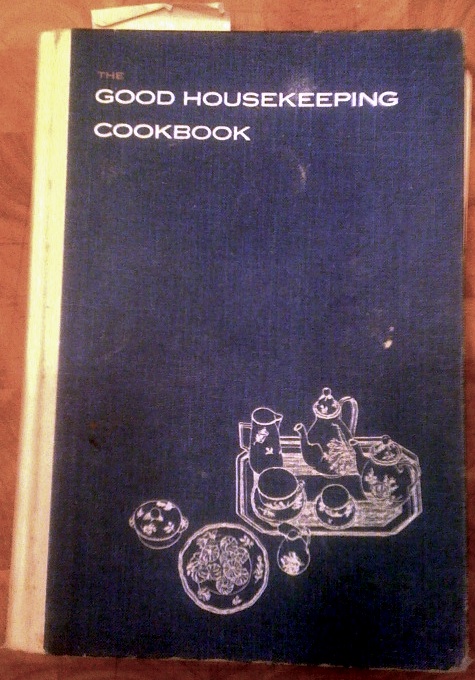
An ancient Good Housekeeping cookbook resides in the cabinet above the stove at my parents’ house. Whether it ever had a dusk jacket, I don’t know. Possibly, it was a victim of my childhood crusade against dusk jackets, a period of my life that my mother recalls grimacing every time she runs the feather duster over her shelves of first editions.goodhousekeeping I’ve never been sure why my mother has kept this volume around for so long, what with our constant moving from place to place; the book has been unshelved, boxed, unboxed, and reshelved at least two dozen times since she received it for a wedding present. She definitely doesn’t need the entire book. She only ever uses the pancake page, which has been warped and wrinkled by years of my enthusiastic stirring.

About five years ago, I discovered how glad I was that my mother retained the extraneous five hundred or so pages of the ancient cookbook. A few days before Christmas, I opened the refrigerator and freezer hoping that all the food I had already eaten that day had spontaneously reappeared so I could eat it again. This action was nothing new — I had been doing it several times a day for years, with little efficacy. But that time I noticed the apple pie, boxed and frozen, deposited sideways, squashed between the broccoli and my father’s ice cream quart collection

My shoulders slumped — how unexciting that the apple pie in the freezer would taste like all the other frozen apple pies from all the other Christmases and Thanksgivings and birthdays (yes, I had birthday pie). Since no new food had appeared, I closed the refrigerator’s doors. But a new idea had formed in my mind. I opened the cabinet and selected the ancient cookbook. It fell open to the batter-sodden pancake page, but I was in search of something new. The book’s spine creaked and cracked in protest as I forced it open to a new page, which sported the chapter heading: “Pies that Please.” How promising, I thought.

I wonder if, before the sixth day of creation, God opened the fridge and slumped her shoulders, bored by all the rocks and stars and fish he had been keeping fresh, ready for dispersal into creation. Sure, those rocks and stars and fish were all good, but their pages in God’s recipe book were warped and wrinkled by now. How about something new?

My experiment began with a moment of feverish self-doubt: my mother can’t make piecrust. As I read over the ingredient list, a nagging fear surfaced that I carried the same defective gene. What if I’m genetically unable to make pie? Flour and salt, shortening and water — these base pairs, in certain quantities and combinations, held the secret to flaky, golden-brown goodness. Could I succeed where my mother (and perhaps generations of Parsonses stricken by dough deficiency) had failed?

I pushed my chromosomal makeup out of my mind and began measuring, pouring, sifting, and cutting. I Jackson Pollocked flour all over the kitchen but managed to land two and a quarter cups of it in the correct bowl. Coaxing the Crisco into the mixture raised my blood pressure to stuffing-the-cat-in-the-cat-carrier-level, and only after several of the breaths I imagine they teach at Lamaze classes was I able to continue. Gradually, my flour/salt/Crisco mixture achieved the consistency of peas (a good sign, the recipe assured me), and I added the cold water. Now came the moment of truth. I pushed and prodded my concoction and said some desperate magic words under my breath, hoping by miraculous alchemy that the slimy mass before me would transform into heredity-denying dough.

I wonder whether God worried that her creation mixed from dust and breath might not turn out the way he expected. Would this experiment fail? Was making a being in the image and likeness of herself too complex a recipe? What if he had to start again from scratch?

The transformation worked. Where a bowl of sticky ingredients sat mocking me a minute before, a lump of dough now beckoned me to flatten it with my rolling pin. I placed the dough between two pieces of wax paper (I’m not sure where I picked up this trick — it was either instinct or the Food Network). Then I rolled out the crusts, making two circles my ninth grade geometry teacher would have been proud of.

Buoyed by my success with the crust, I decided to improvise the filling. After checking the oven temperature and baking time, I returned the ancient cookbook to the cabinet above the stove and began peeling apples. Seven or eight would do, I told myself. With a bag of brown sugar in one hand and a box of cinnamon in the other, I showered the cut apple pieces with sweetness. Then I hurried the filling into its pie tin bed and tucked in the top crust. A quick glaze of melted butter and a few knife slits on top and it was into the oven. For the next forty minutes, I paced and fretted like a father outside the delivery room.

I wonder that God gave me the ability to grow and the desire to create. God’s recipe was simple—dust and breath. The dust grows, remembering the earth and the deep things of those creation days that were called good. And the breath creates, remembering the heavens and the Spirit moving and creating and renewing.

Against all odds of genetics and pie-making virginity, my first apple pie succeeded beyond my wildest expectations. I usually take my parents’ compliments with a salt mine (they are my parents, after all), but my own taste buds confirmed their praise. I have tweaked my recipe and method since then, adding a few subtle spices and making sure to cover the crust with tin foil half way through baking. Though some are better than others, each pie is good (and only one — the famous “Lattice Crust Experiment” of 2007 — was an unmitigated failure).  And each pie pushes me to improve, to better my technique, to take the basics from that ancient cookbook and create. And create. And create.

The Japanese tattoo

You may be tempted to take away from the following story this advice: “Don’t get a word from a language you don’t speak tattooed onto you.” By all means, please do take this advice. But also keep reading because I don’t plan to make my non-tattoo specific point until later in the piece.

I had a friend in college – a tall, good-looking fellow, who probably could be cast as the Norse god Thor in a future Marvel Comic film adaptation if he grew his hair out. Over the course of four years of college, this friend got half a dozen tattoos. The ink was spread across his body, and there seemed to be neither rhyme nor reason to his choices. Like moles or scars, the tattoos appeared to be distributed randomly between his torso and various appendages. About once a semester, he would walk up to the lunch table, put down his tray, and grin until we realized he got a new tattoo.

This is my tattoo. Notice, it's not a foreign word. However, I don't think I'll ever fully understand its significance.

On one such occasion, he rolled up his sleeve and showed us the fresh ink just below his left shoulder. Upon the skin, still red and raw from the thousand tiny stab wounds he suffered for this new art, a vertical line connected three horizontal ones. “It means ‘Life’ in Japanese,” he said through his grin. Thankfully, he was too enthralled with his own left arm to see my eyes go wide, like I had just realized I left the oven on. I looked down and started arranging the French fries on my plate into the same Japanese character, while my inner censor struggled to purge my speech of all the correctional thoughts racing through my mind.

Now, I took two years of Japanese in college, and that character was written in black Sharpie on my mental 3×5 cards. “It means ‘Life’ in Japanese,” he said, and my first wide-eyed thought was, “Well, sort of…” The character means, “to live” in the sense of “I live in West Virginia.” Literally, it means, “to inhabit.” Needless to say, I’m glad my inner censor won that day, because Thor could easily have pummeled me if I had educated him in the nuances of the Japanese language.

Ever since that tattoo-related event, I have distinguished living from inhabiting. Too often, I merely inhabit: I wake up, I take a shower, I microwave a bowl of oatmeal, I ignore Sportscenter until the Red Sox highlights come on, I make sure I have my keys before I lock the front door. I do everything…vaguely. I yawn my way through the bleary-eyed hours. I flip on the autopilot switch and read a magazine in the cockpit of my existence.

Surely, this “inhabiting” isn’t what Jesus meant when he used the word “life.” I am the way, the truth, and the life. I came that they may have life, and have it abundantly. When Jesus promises us abundant life, he is not talking about our existence. We do not “exist” abundantly. When we enter into Jesus’ life, we find this abundant living. But living doesn’t just happen. Living is deliberate. If we do not claim abundance, it will just sit there, like the pack of hot dogs that’s been in my fridge for six months.

The danger of “inhabiting” rather than living is (usually unbeknownst to us) lapsing into dronehood, into the drab cycle of shower/oatmeal/Sportscenter/keys. But God did not create us to be drones; indeed, God sent God’s only son to us because we had become drones – slaves to the poor imitations of life that we had cultivated to golden-calf-status.

Receiving the abundance that Jesus’ promised snaps us out of dronehood. When we choose to live rather than merely to inhabit, a new world of possibility opens up for us. The complete joy that is key to an abundant life paints our days with vibrancy and vitality. Even those things that established our routine get a new coat of joy.

I suspect Henry David Thoreau was struggling with dronehood when he decided to go Walden Pond in 1845. There he wrote these words: “I went to the woods because I wished to live deliberately, to front only the essential facts of life, and see if I could not learn what it had to teach, and not, when I came to die, discover that I had not lived. I did not wish to live what was not life, living is so dear; nor did I wish to practice resignation, unless it was quite necessary. I wanted to live deep and suck out all the marrow of life.”

It is my prayer that each one of us lives deep, that we live and not merely inhabit, that we suck out all the marrow of the abundant life that Jesus promises us.

Unless I had been calling to you

Eustace and Jill Pole are trying to escape a mob of bullies at the Experiment House, their ghastly boarding school. Jill has been crying, and the bullies can smell tears from hundreds of yards away. From their hiding spot, the two targets hear the angry shouts of the searchers. Eustace looks at Jill and wonders aloud if they might be able to escape to That Place. He begins calling out, “Aslan, Aslan, Aslan!” Jill follows his example: “Aslan, Aslan, Aslan!” The bullies draw near, and Eustace and Jill scramble through the laurels and up a steep slope. The weathered old door in the wall is always locked, but this time – miraculously – the knob turns. And the two children step into Aslan’s country.

Immediately after they arrive, Eustace falls off a cliff, but a lion arrives just in time and blows him to safety in Narnia. The lion – naturally – frightens Jill Pole. She tries to slip away, but the lion begins questioning her. Her showing off caused Eustace’s fall, she confesses. For that display of pride, the lion gives her a task to perform. “Please, what task, Sir?” asks Jill. “The task for which I called you and him here out of your own world,” says the lion. This response puzzles Jill. Nobody called them. They called out to – Somebody – a name she wouldn’t know. Wasn’t it she and Eustace who asked to come?

aslan “You would not have called to me unless I had been calling to you,” says the lion.

The lion is Aslan, and the task on which he sends Jill and Eustace makes up the story of The Silver Chair, one of The Chronicles of Narnia by C.S. Lewis. This exchange between Aslan and Jill Pole from the beginning of the tale illustrates most vibrantly the foundational principle of a life of prayer. You would not have called to me unless I had been calling to you.

The Catechism* in the back of the Book of Common Prayer states: “Prayer is responding to God, by thoughts and by deeds, with or without words.” When I first read this definition, I was flabbergasted. I had never thought of prayer as anything more than asking God for stuff. God, please give me a kitty that doesn’t scratch me. God, please help us win our soccer game. God, please make Grammy not sick anymore. Now, please don’t misunderstand, I am not condemning this form of prayer. There are many kinds of prayer, and they all have fancy names like adoration, oblation, intercession, petition – you get the idea. Rather, the popular definition that prayer is “asking God for stuff,” is several bricks up from the foundation.

That foundation is, of course, God. More precisely, the foundation of prayer is God’s presence in our lives and call upon our hearts. “Prayer,” says the Catechism, “is responding to God.”** Think of prayer as a phone call. We never dial the number: we only have the option to answer the phone when it rings. When we choose to answer, we enter into the relationship that God yearns for us. Prayer is another word for our part in our relationships with God.

Of course, the phone call is not a perfect metaphor because God is always present in our lives and always calling upon us to serve God in the world. In this context, Paul’s directive to “pray without ceasing” seems less unrealistic. Our striving to respond to God’s perpetual call in our lives is prayer. The collection of our words and deeds that emanate from our relationships with God is prayer. Anything we do in response to God’s movement in our lives is prayer. While prayer comprehends the kneeling-beside-the-bed-at-bedtime image that many associate with prayer, the act of praying is so much more expansive.

Monastics down through the ages have understood this. Even the lowliest jobs at the monastery – peeling potatoes or weeding fields – were prayer. Monks prayed many times a day in their chapels, but the labor they performed in the meantime was prayer, too. While we don’t have strict priors delegating our labors, we can still import the monastic example into our lives.

Look at your day, your week, your year. How do your engagements and actions display your response to God’s movement in your life?  As a student, God calls you to learn about yourself and the rest of God’s creation. As a member of a family, God calls you to love and enjoy and forgive your parents and siblings. As a servant of God, God calls you to discover and enact that one way in which you can better the lives of those around you. When we respond to God in all these areas of our lives, we pray. We affirm our relationships with God. We live the abundant lives that Christ gives to us.

“You would not have called to me unless I had been calling to you,” says Aslan to Jill Pole. “We love because he first loved us,” says the writer of the First Letter of John. Likewise, we pray because God first called us – called us into the expansive, abundant relationship with God. What will our response be?

Footnotes

* Also called “An Outline of the Faith,” an Episcopal F.A.Q. Most people know it as the thing you read when the sermon is really boring.

** Italics mine.

Be-ing

As I’ve mentioned before, I’ve been working on a Confirmation class recently, and the lessons keeping popping up here on the blog. Here’s 1000 words on theology, using three phrases from the Nicene Creed as a framework.

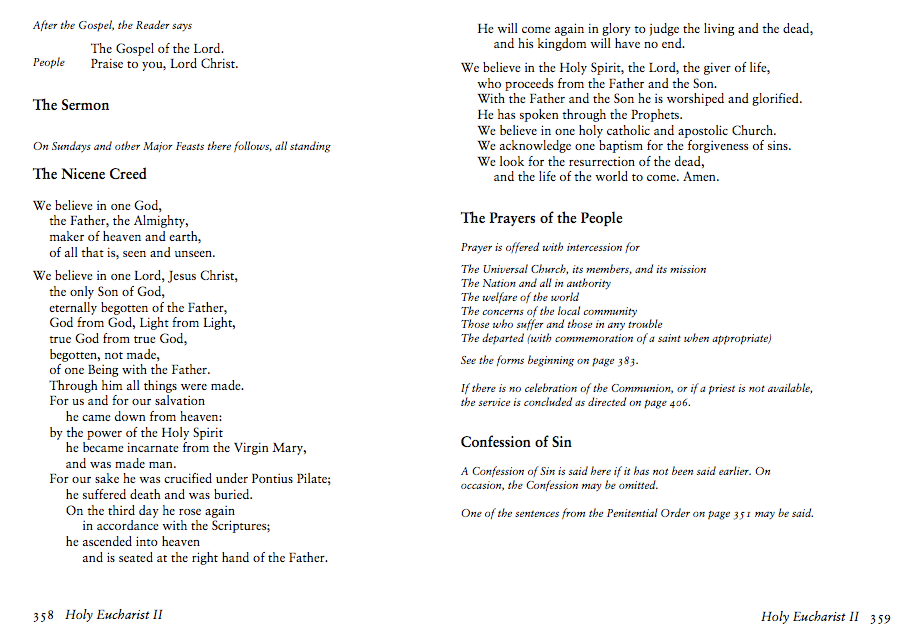
nicaea…of all that is, seen and unseen

What I’m about to write ignores the fact that the Nicene Creed was originally written in Greek and then translated into Latin and then translated into English. Don’t panic – the following is about the current English grammatical structure of the phrase, which is influenced by, but not chained to, the original language.

Do you see that little comma between the words “is” and “seen”? Yes? Good. Now, think back to all the times you’ve ever heard the Creed recited during church and ask yourself if anyone has ever acknowledged that comma. No? Didn’t think so. The sentence usually sounds like this: “…maker of heaven and earth, of all that-is-seen-and-unseen.” But the sentence actually reads: “…maker of heaven and earth, of all that is, [slight pause] seen and unseen.” I imagine you are now rolling your eyes at my disconcerting attention to inane details.

This detail may seem inane at first, but I assure you, it’s not. For now, let’s ignore the phrase “seen and unseen” because it gets entirely too much attention when Creed-speakers unwittingly barrel through the defenseless little comma. With what are we left? “Maker…of all that is.”

Maker…of all that is. This “is” is the most important linking verb in the history of linking verbs, and probably other verbs, as well. We believe that God made all that is. Put another way, we believe that God is the very ground of our “is-ness” – or, to use a not made-up word, our “being.” [Disclaimer: The rest of this section assumes the reader knows the unwieldy conjugation of the verb “to be.”] In Exodus 3, Moses asks God what God’s name is. God responds: “I AM WHO I AM.” This awkward English rendering of the Hebrew preserves the root of God’s divine name, which is the verb “to be” (hayah in Hebrew). When Moses asks God what God’s name is, God responds with something like, “I have being and I bestow being and that’s all you need to know.” Look at the word “being.” Now add a hyphen: be-ing. The noun “being” is disguised as a present participle verb, a verb of continuing action. This points to the eternal continuity and abiding presence of God, who is the very ground of be-ing.

All grammatical gymnastics aside, the point is this: God created all that is, and creation’s existence depends on God’s continuing presence. As small bits of that creation, we receive our be-ing, our identity, our life from the foundation of that be-ing, the Holy One we call God.

Through him all things were made

“We believe in one Lord, Jesus Christ… Through him all things were made.” Okay, since I failed to return to the original Greek in the last section, I feel I must make up for it. John begins his Gospel account with this poetry: “In the beginning was the Word, and the Word was with God, and the Word was God. He was in the beginning with God. All things came into being through him, and without him, not one thing came into being. What has come into being in him was life…”

You’ll notice that word be-ing from the last section crops up several times in just these few sentences. We said that God is the foundation for be-ing, and now we discover that the “Word” is responsible for translating that be-ing into life. Here’s the Greek bit.

The “Word” is the translation of the Greek word logos, from which dozens of English words take their root. Every time you see –ology at the end of a word (zoology, biology, epidemiology), that ending comes from the Greek logos. “Logic” also springs from this root. When something is “logical” it is ordered, it makes good sense. This is a good entrance into one understanding of logos. John says that the Word was in the beginning with God and through the Word all things were made. This “Word” is the “logic” behind creation, the “organizing principle” through which creation has come into being. In Genesis, God speaks creation into being (“Then God said, ‘Let there be light’; and there was light.”). God uses words to organize creation, and John identifies “The Word” as God the only Son, who is incarnate in Jesus Christ.

So, the “Word” is creation’s logic or organizing principle. Creation, therefore, is not haphazard or accidental. You might be tempted to ask a question about “Creationism vs. Evolution.” But the unhappy dichotomy between these two positions breaks down when we see creation as both organized and continuous. My college chaplain was fond of saying: “If God stopped speaking, the world would stop turning.” The implication is this: the “Word,” the logic of creation continues to underpin and give life to all that is.

…he became incarnate from the Virgin Mary and was made man

As I said above, John identifies “The Word” as God the only Son, who is incarnate in Jesus Christ. “Incarnate” means “become flesh” (the –carn in the word is the same root as in the word carnivore, “meat-eater”). John’s use of “Word” connects to a strain of thought coming out of the Hebrew Scriptures. The “word of God” appears whenever a prophet is granted a new prophecy (The word of God came to so-and-so…). The Hebrew word for “word” (davar) means much more than the stuffy English equivalent. We think of “word” as something on a piece of paper or something spoken aloud. In Hebrew, however, the “word” is something that happens to people. It is an event, an action that calls for further action. When John uses the Greek form of “word” (logos), he purposefully links it back to this Hebrew understanding. The “Word” becoming flesh and dwelling among us is the ultimate example of the “Word” happening.

Here’s the thing to remember: the “Word,” through which God speaks creation into be-ing, is life-giving. Without the “Word,” life would not exist. When the “Word” became flesh in Jesus Christ, God gave us the gift of seeing how life is meant to be organized, meant to be lived. This means that the words Jesus speaks provide for us the means by which to organize our lives in order to be in deeper touch with God. The “Word” became flesh and lived among us. And now the “Word” continues to speak life into the world, disclosing the glory that is full of grace and truth.

Forty days

Americans are rarely a self-reflective people. We have eyes only for result and effect, caring little for process and cause. We seek to assign blame, caring little for our own culpability. We repeat the mistakes of the past, caring little for the lessons those mistakes teach. Never look back. Never let ‘em see you bleed. Never stop to think or the world will pass you by.

Living in this results-driven world is, at the same time, both exceedingly difficult and quite easy. It’s difficult because true joy, the fuel for any fruitful life, is a scarce commodity. Joy happens during not after, and in a results-oriented society, the during is dismissed as superfluous. 50percentBut this dismissal is why the results-driven life is also quite easy. You crop half of life away. The journey becomes unimportant: only the destination matters. How easy would a test be if you only had to score a 50% to pass?
Self-reflection makes life hard, but it also allows us to recognize that joy abounds, poised to infuse our lives with meaning. Because we are such poor practitioners of self-reflection and because our culture tells us not to take time for such a revealingly honest enterprise, we need a swift kick in the trousers to boot us from the grasping current of the results-driven half-life.

In the Church, this swift-kick-in-the-trousers is called the season of Lent. “Lent” is an old translation of the Latin word quadragesima, which simply means “forty days.” Forty days is a significant period of time in the Bible: Noah, Moses, and Elijah all had forty days of something –flooding, fasting, sitting around with God on the mountaintop. Jesus spent forty days in the desert, during which Satan tempted him. Begun this year on February 25 (on the fast the church names “Ash Wednesday”) Lent continues until the day before Easter. Historically, the season of Lent was the period of time that people used to prepare for baptism, which took place at the Great Vigil of Easter on Easter Eve.

During these forty days that bring us to Easter, we examine our lives and discern how attuned to God’s movement we are. We pray for God to create in us clean hearts and renew right spirits within us, as Psalm 51 says. We rededicate ourselves to following Christ and wonder how last year’s dedication faded away. We slow down and turn our thoughts inward. How have my actions and inactions contributed to the brokenness in the world? To what have I enslaved myself? Where is my joy and freedom? Do I really want to follow Christ?

When we enter this period of self-reflection, when we honestly answer questions such as these, it often becomes apparent just how skin deep and results-oriented we’ve become. The season of Lent helps us see the error in statements such as “It’s only cheating if you get caught” and “The ends justify the means.” Living a full life – not a half-life of results only – means valuing the moral fortitude that counters wanton opportunism and caring about how things are accomplished, not just that they are. Observing Lent means taking a hard look at ourselves and borrowing enough strength from God to be capable of seeing those festering things that we usually ignore. Then we borrow enough faith from God to know that God will help us change and will reawaken within us those faculties of hope and love that have long lay dormant.

I invite you to turn your gaze inward during this season of Lent and discover the true joy that comes from a full life lived in the love of God.

* This post began its life as an article in my local newspaper.

Graceful

At today’s weekly healing service, I forgot something rather important. “Today, we are using Eucharist Prayer B found on page 367,” I said, and then a moment later, “The Lord be with you.”

“And also with you” came the reply from seven chilly parishioners (unlike the abiding presence of God, the heat in our building is both scarce and unreliable). We then exchanged the rest of the sursum corda* and I prayed the proper preface for Epiphany. Together, we said the Sanctus, after which I began the rest of the Eucharistic prayer.

“We give thanks to you, O God…” O God, I thought. I looked down. I looked up. O God. I looked down again. My distorted reflection peered up at me out of an empty chalice. I stopped speaking, pulled my hands out of the orans position, and turned around. “It seems that I forgot to put the wine in the chalice. Um…one moment please.”

I finished setting the table, smiling in a mortified kind of way. Then we continued the Eucharistic prayer, and the rest of the service went as expected. As I was walking back to my office, I thought to myself: I can’t believe I forgot to fill the chalice. That wasn’t very graceful of me.

Then I remembered some of the words I heard at my friend’s ordination, which I attended this weekend in Denver. The bishop looked at my friend standing before him and said, “In all that you do, you are to nourish Christ’s people from the riches of his grace…”

Nourish Christ’s people from the riches of his grace. What a phrase. At my own ordination, these words passed right through my sternum and took up residency in the neighborhood of my left ventricle. They set me on fire and I never thought I’d stop burning. But in the last seven months, I somehow forgot the message of these words. I don’t know — maybe their house in my heart went into foreclosure. Maybe I wasn’t inhaling enough Holy Spirit with each breath to keep the fire going. I never forgot that it was my job to nourish. But I did forget whose meal was providing that nourishment.

You see, as a priest (heck, as a person) it is my job to say, “I have nothing of my own to offer. I have only what you, Lord, have given me.” Too often, I get caught up in succeeding at things that I forget that my success is not really mine at all. Too often, I try to nourish Christ’s people from the paucity of my grace, rather than from the riches of Christ’s. But doing that is like trying to water your lawn with the hose turned off.

When I forgot to put wine in the chalice, I remembered just how graceless I am. There I was with hands outstretched and prayer on autopilot, about to ask God to bless an empty cup. After filling the chalice with wine and a few drops of water, I realized that it was not the only empty cup in the room. I needed to be filled, too. I needed the riches of Christ’s grace to nourish me again because I — through inattentiveness and pride — had let his sustenance leach from my body.

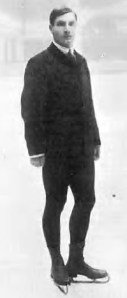
This guy invented the salchow. His name is Ulrich Salchow. What a coincidence!?!

We use the word “graceful” when we describe a dancer pirouetting or a figure skater performing a triple salchow. The word also applies to those people who suck every ounce of nutrition out of Christ’s nourishment and walk about with shimmering cascades of grace spilling over the tops of their heads. I know a few such people. You can tell them apart because they leave little puddles of grace behind them when they leave.

Lord, help me to remember that it is your grace with which you call me to nourish others. I can’t nourish them if I don’t allow you to nourish me. So please, fill this empty cup with the shimmering riches of Christ’s grace.

Footnotes

* Here’s a list of the technical words I used in this post:

Sursum corda: The three calls and responses at the beginning of the Eucharistic prayer, in which the congregation gives the priest the okay to go ahead and celebrate the Eucharist. The responsory nature of this prayer makes explicit that the Eucharist is a corporate event.

Epiphany: The twelfth day after Christmas, on which we celebrate the coming of the wise men to see Jesus. The coming of light into darkness and the call of the disciples are stressed during the season of Epiphany, which extends from January 6 to the day before Ash Wednesday.

Sanctus: “Sanctus” means holy and is the name for the prayer which begins “Holy, holy, holy Lord, God of power and might.” In Hebrew, there’s no way to make a word superlative (good, better, best); so, a three time repetition serves the same purpose.

Chalice: The cup we use at church. Remember that scene at the end of Indiana Jones and the Last Crusade? The room with the old knight is full of chalices. (“He chose…poorly”)

Orans position: “Orans” comes from the Latin word for “prayer” and is used when the priest is saying a prayer on behalf of the congregation. Think of a referee unethusiastically signaling touchdown and you’ve got it.

Ordination: The thing that happens to make someone who’s not a priest into a priest. The word comes from Latin and means something to the effect of “to put into order”; thus, ordination is when someone is set apart from others. There are four “orders” in the church: lay, deacon, priest, bishop — the latter three are “ordained” positions.

Our better angels: The two things you’re not supposed to talk about (part 3)

Election day falls on the first Tuesday after the first Monday in November of every even-numbered year. That day happens to be today.* West Virginia has early voting and the polling place happens to be next door to my church, so I took advantage of that a few weeks ago. But I’ve been keeping on top of the political scene in the country: the campaign tactics, the exchanges, the (gotcha!) media, the blustering pundits and blundering surrogates. I’ve at times in the last weeks been both enthused and disgusted, hopeful and resigned. Every sign of progress I see shares the spotlight with the tired old prejudices of the past. I hope with all the fervor of my heart that, no matter the outcome of this election, the United States continues to strive for that “more perfect union,” to which our Constitution sets its lofty heights.

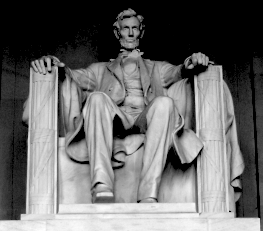
This hope stirs in me a refrain that has been playing in my head for days: “We are not enemies, but friends. We must not be enemies. Though passion may have strained it must not break our bonds of affection. The mystic chords of memory, stretching from every battlefield and patriot grave to every living heart and hearthstone all over this broad land, will yet swell the chorus of the Union, when again touched, as surely they will be, by the better angels of our nature.”lincoln

Abraham Lincoln spoke these words on March 4, 1861. The dust of 150 years has made these words no less relevant today. Chorus. Union. Bonds of affection. These are powerful words that tell of a truth, which these years of dust could never obscure: We can do great things when we come together, when we embrace the power of unity. This is Lincoln’s charge to us all. This is the truth which we entrust to our next president. And this is the prayer of Jesus for his disciples and for all of us: “All mine are yours, and yours are mine; and I have been glorified in them. And now I am no longer in the world, but they are in the world, and I am coming to you. Holy Father, protect them in your name that you have given me, so that they may be one, as we are one.” (John 17:10-11)

Jesus lived this prayer for unity when he welcomed everyone to come to him, and all those who were thirsty to drink. He lived this prayer when he ignored the racial barriers between Jews and Samaritans. He lived this prayer when, dying on the cross, he created a new family for his mother and his beloved disciple.

But uniting is not enough. Uniting is only the exposition of the story. We must unite for something. We must come together to fulfill those tasks which the better angels of our nature invite us to accomplish. Too often, the ingrained talking points that showcase the worst of partisan bickering shout down these better angels. Just last week, I was sitting at Panera bread and overheard a conversation between two businessmen — the gist of their chat simply rehashed the tired old stereotype that all people on welfare just sit at home watching Oprah. Surely, these two suits would have more political acumen than to recite such a line of attack, I thought. But no. In election years, by some strange alchemical process, saying something enough times makes it true, no matter the veracity of the claim. In the absence of any real hope, any real truth, whoever steps up to the mic to fill the dead air is the ruler of that fifteen second soundbyte.

But our better angels fill in that dead air. When we turn our attention inward, we will find those angels speaking the words of the only Truth out there worth subscribing to, the words of life that God writes on our hearts. These words will never fit into a soundbyte. They will never succumb to the tired old prejudices. They will only urge us to join together to accomplish God’s work on earth. The mystic chords of our better angels’ chorus echo with Jesus’ words: “Come, you that are blessed by my Father, inherit the kingdom prepared for you from the foundation of the world; for I was hungry and you gave me food, I was thirsty and you gave me something to drink, I was a stranger and you welcomed me, I was naked and you gave me clothing, I was sick and you took care of me, I was in prison and you visited me…Truly I tell you, just as you did it to one of the least of these who are members of my family, you did it to me.” (Matthew 25:34-36, 40)

We can feed the hungry and cloth the naked and shelter the homeless and nurse the sick. We can respond to that image of Christ in the faces of the least of Jesus’ family. Far be this from some misguided philanthropic diversion to the benefit of Oprah’s sweatpanted viewership. We are called, not just as Christians but as human beings, to help those who are suffering, to bring hope to those who are despairing. I ask you: how much better will we be, how much more unified, when today’s least of these are in the position to help tomorrow’s?

This is not the time for a bootstraps mentality. This is not the time to recline in the illusory comfort of self-interest. This is not the time to relapse into a tired old hoarding way. Be touched by the better angels of our nature.  Know that this is the time to give. This is the time to tug on your neighbor’s bootstraps. This is the time to enter into the kinectic delight of unity and labor for the kingdom of God on earth.**

Footnotes

* Incidentally, figuring out when Election day falls is similar to figuring out the date for Easter: the first Sunday after the first full moon after the vernal equinox. Fun times.

** Here is a list of links to help you get involved:

The ONE Campaign

The United Way

Habitat for Humanity

Heifer International

Episcopal Relief and Development

CNN: Impact Your World

Idealist.org

Redefining the good news: The two things you’re not supposed to talk about (part 2)

In the first installment of this series, we looked at how the phrase “separation of church and state” fails to comprehend the complex relationship that those two broad entities share. Fealty to such a misunderstood doctrine can blind us to the influence our faith in God should have on our political decisions. No decision is made in a vacuum. Acknowledging this, each person chooses which voices to distinguish from the cacophony clamoring for attention. She contemplates what her context values as true. As the cacophony and the context press upon her, the faithful person attempts to attend to that still small fluttering within, which is the deep intersection between her consciousness and God’s movement.

Just as decisions (political or otherwise) are not made in a vacuum, the Gospel does not take place outside of a specific context. Indeed, the dusty realism of the Gospel makes for compelling reading and even more compelling living. When Jesus of Nazareth steps onstage, the scene is set, the players chosen. The first words out of Jesus’ mouth (according to Mark) intentionally borrow the political language of the day: “The time is fulfilled, and the kingdom of God has come near; repent, and believe in the good news.” Jesus imagines a new definition for that word euangelion (Gospel, good news). No longer is “good news” to be proclaimed for another Roman military victory or another birthday of a Roman emperor. No. The kingdom of God has come near! This is the Good News of Jesus.

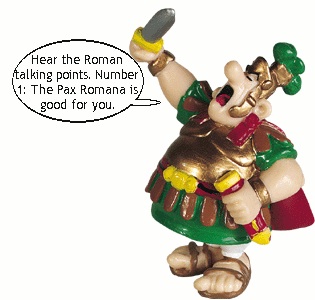
If Jesus is redefining Roman talking points, the political nature of his message would be hard for his contemporaries to miss. Their difficulty came from another angle: to whom does this nobody from a backwater like Nazareth belong? Is he a Pharisee? A Zealot? A Herodian? An Essene? He can’t be an Essene because he would’ve never left the desert. He can’t be a Herodian because he is speaking out against the Romans, and those Herodians are living just fine as Roman stooges. He can’t be a Zealot because he keeps talking about peace and seems not to have the stomach for gutting the odd centurion. And he can’t be a Pharisee — just look at the company he keeps!*

These groups made up the political landscape of early first century Israel, a land which had been under one foreign regime or other for several centuries. The current occupier, the Romans, governed with both the carrot and the stick. You could get very rich or very dead depending on how you interacted with Rome. Most got very enslaved or at least intimidated into meek submission. But Jesus, who fit no known political category of the day, spoke out in the politically charged atmosphere, spoke out with no fear and people listened.**

People listened. People watched. They saw the eyes of the blind opened and the legs of the lame strengthened. Could this Jesus possibly be the One they were expecting, the son of David who would lead them out from under the yoke of Rome — the Messiah? Peter thought so, but when Jesus told him what was to happen, Peter couldn’t handle it. The Messiah wasn’t supposed to die on a cross. The Messiah was supposed to lead the nation in an uprising and sweep all enemies from the land. To hear the people of Israel tell it, the Messiah was a political office — a judge/prophet/king, a conflation of all the powerful figures from the past.

But in a further re-imagining, Jesus took the messianic expectation and turned it on its head. He would have no part perpetuating the cycle of violence. After his death and resurrection, his followers began seeing Jesus’ understanding of the Messiah in different parts of the same Hebrew scriptures — the Messiah as the suffering servant, the one who demonstrated the utter necessity in beating swords to ploughshares.

Jesus stepped into a world dominated by the politics of fear and division and blame and hate. He immersed himself in the grimy, bloody mess of that world, but did not succumb to its tactics. In the end, that world killed him, but not before he proclaimed and lived out a new way, the way of the kingdom of God. It is to the political implications of this kingdom that we turn in the conclusion of this series, “The two things you’re not supposed to talk about.”

Footnotes

*Thanks to Brian McLaren’s concise description of the political nature of Jesus’ context. Read more in his The Secret Message of Jesus. Also, if you read just one more book this year, read his Everything Must Change for the best discussion of faith and our lives as citizens of the planet earth I’ve ever read.

** Of course, Jesus also got very dead. But happily for all of us, the dead bit is only part of the story.