
P.E.A.C.H.

Sermon for Sunday, October 12, 2014 || Proper 23A || Matthew 22:1-14
peachToday I’d like to do something a little different. Do you remember how, in math classes, your teacher told you to “show your work” in order to get full credit for answering a question? Well, this morning, I’m going to show my work as we go through this sermon together. Rather than just give you the end product of my Bible study, my struggles and false starts, and my attempts to listen to the Holy Spirit, I thought I’d pull back the curtain and show you some of the process.

I’ve decided to do this today for two reasons. First, the passage we just read from the Gospel according to Matthew is very difficult to encounter, so taking a step back and looking at it from a higher vantage point can be beneficial. Second, I never want to fall into the trap where I set myself up as such an unassailable expert in all things spiritual that, instead of inspiring you, I keep you from thinking you have the necessary skills to do what I do. Believe me, I am not an expert. I’m just a fellow disciple, who perhaps has a bit more specialized schooling than you might.

So think about this sermon as one that is really a step or two from the normal finished product. In it, we’ll explore together one way I like to study and interpret Biblical passages. My hopes are, by the end of this sermon, we will hear a word from God about today’s Gospel reading, and we will all be just a little bit more confident the next time we sit down to read the Bible. So without further ado, let me introduce you to a favorite acronym of mine: P.E.A.C.H. PEACH will lead us through five steps toward more fruitful Bible study. I commend these steps to you whenever you sit down to study our sacred texts. PEACH stands for Prayer > Encounter > Atmosphere > Charge > Humility.

We’ll start where any endeavor should: with Prayer. You might seek out a prayer specifically about reading the Bible, or you may write one for yourself to pray whenever you sit down to read. Or you may allow a new prayer to bubble up whenever you are getting ready to pick up your Bible. Perhaps your prayer might sound something like this:

“Dear God, thank you for prompting me to read the Bible today: please help me to be surprised by the generosity of your Word, to be patient in the face of everything I still don’t understand, to be enfolded by your grace as I read, and to be courageous as I bring your love with me from these pages out into the world; In Jesus Christ’s name I pray. Amen.”

After you pray, read your passage. Read it aloud. Read it slowly. Try to have an authentic Encounter with it. Don’t allow preconceived notions about how you think you should feel about the Bible ruin this authentic encounter. If the text makes you revolted, feel revulsion. If the text makes you question, feel confusion. If the text makes you peaceful, dwell in that peace.

Today’s parable from Jesus contains so much overt hyperbole that any emotion our encounter with it evokes will most likely be a strong version of that emotion. The parable begins innocently enough. We have a king, a sumptuous wedding banquet for the prince, and guests who decide they have better things to do. So far this sounds like several other parables Jesus tells. But then everything goes haywire. The realism of the story disintegrates when the would-be guests kill the invitation deliverers. And then when the king burns down their city. And then when the host throws the improperly dressed fellow not back out into the street but into “the outer darkness where there will be weeping and gnashing of teeth.”

I don’t know about you, but so far my authentic encounter with this story leans me toward discomfort, if not all out revulsion. It’s entirely possible that such a response is exactly what Jesus is going for. To look further into that, we turn to the next letter in PEACH. “A” is for Atmosphere.

The atmosphere of a reading is everything around it that helps it breath. This can mean a lot of different things where Bible study is concerned, but for our purposes, let’s say the atmosphere surrounding our reading is everything that happens within a couple of chapters of it in the Gospel. Backing up, we witness Jesus ride in humble triumph into Jerusalem on the back of a donkey. That means we are at the beginning of Jesus’ final week. We know what’s right around the corner, and by all accounts, so does Jesus. Jesus gets off the donkey, walks into the temple, overturns the tables of the moneychangers, and drives out all the sellers of sacrificial animals. This disruptive action probably seals his fate.

Jesus returns to the temple the next day, where the chief priests, Pharisees, and many others question him. He tells three consecutive parables, all having to do with inviting a new and unlikely set of people into the kingdom of heaven. The first parable (which we read two weeks ago) speaks of two sons, on who did the will of his father and one who didn’t. The second (which we read last week) speaks of wicked tenants who kill the son of the vineyard keeper. By this time, Jesus’ opponents realize he’s talking about them. But he’s not done. Now Jesus tells today’s parable, and the violence ratchets up again. With each story, Jesus gets more explicit and more graphic. After a few more verbal skirmishes, Jesus stops speaking in parables entirely and denounces the scribes and Pharisees openly. If chasing people out of the temple didn’t sign his death warrant, this indictment surely does.

The important thing to glean from our look at the atmosphere of our story is the constant ratcheting up of tension within Jesus’ parables. With each successive story, he makes his point more graphically so that no one mistakes his meaning – that those chosen to represent God among the people had failed in their duty and that God was welcoming all to become God’s representatives.

And this is where we find the “C” of PEACH. This is where we hear our Charge from God, the word God puts on our hearts during many prayerful, authentic encounters with scripture. In today’s passage, our charge comes when the king sends his messengers out to invite everyone they find in the street to attend the wedding. Everyone becomes a guest, no matter what. We hear our charge in this good news. Everyone is capable of being a guest at the heavenly banquet. Therefore, God invites us to treat all people – regardless of any reason we might have not to associate with them – as guests at God’s table, as people who bear the image and likeness of God in their souls. The more we treat each other as God’s honored guests, the more generosity, hospitality, and gratitude we will show one another. And not just each other, but everyone, for the wedding hall is filled with guests.

But this charge, which invites us to be radically welcoming, runs up against our last letter in PEACH. “H” is for Humility. The prayerful, authentic encounter with scripture often leads to unanswered questions and causes for further study somewhere down the road. The humble response when this happens is simply, “I don’t know.” Such is the case with me and the very strange paragraph about the fellow who doesn’t have a wedding robe. I confess I don’t know what to do with those few sentences. I have no answers, just questions, and so I strive to remain humble in the face of these cryptic words of Jesus, to admit I’m not in a place to hear them instead of throwing them out or explaining them away.

So there you have it. I invite you to try this process when you read the Bible. For fruitful study, try PEACH: Prayer, Encounter, Atmosphere, Charge, Humility. Without going through these steps this week, I would still be stuck in the discomfort of the passage and I would not have heard my charge, which I now share again with you. Everyone is a guest at God’s table. Far be it for us to bar the way. Instead, why don’t we go out “into the main streets and invite everyone we find there to the wedding banquet.”

The Raw Material of Blessing

Sermon for Sunday, October 5, 2014 || Proper 22A || *

rawmaterialofblessingBecause of my peculiar and very frustrating allergy, there’s one aisle of the grocery store I never travel down – the bread aisle. If you read the nutrition information on each and every plastic-wrapped and twist-tied loaf, you’ll find it contains soy flour, which means I can’t eat it. But there’s a happy byproduct of this limitation. Because I can’t eat the store bought loaves, Leah makes our bread from scratch. And, boy, is it good. I’ve watched her make it on several occasions. She starts by activating the yeast in warm water. She mixes the ingredients in the Kitchen Aid, counting the cups of flour aloud so she doesn’t put in too much. She let’s the dough hook work its kneading magic. She waits for the dough to rise, first in the mixer, and then, after forming the loaves, in the pans before putting them in the oven. The whole process takes the better part of a morning.


A group of dedicated women follows a similar process each week to make the bread we use for Holy Communion. What fascinates me about the process is how many steps there are between setting the ingredients on the counter and pulling the bread fresh from the oven. (And this doesn’t even take into account the number of steps needed to make the ingredients in the first place, such as milling the flour from grain or picking the grain from the field.)

When we celebrate Holy Communion, the gifts, which we offer to God and then share with one another, derive from a combination of God’s bounty and human industry. The bread and wine both have their roots in…well…roots. Seeds planted in the ground send roots down and stalks up as the soil, sun, and rain nourish their growth. The grain grows tall and full. The grape grows fat and juicy. Up to this point, their growth has been in God’s hands, as the overarching gift of nature’s cycles, which God wove into creation, promotes their cultivation.

But then a farmhand (or, in today’s less romanticized world of big agribusiness, a mammoth combine) comes along and picks the grain. A vineyard worker picks the grape. And human ingenuity, creativity, and wisdom begin shaping this raw material, this God-given bounty into the bread and wine we share each week.

Do you see what’s happening here? When we offer the bread and wine to God in thanksgiving, we give back to God what was always God’s in the first place, but which changed shape as humans interacted with the raw material of God’s blessing. There are two vital ideas embedded in this thought. First, whenever we give to God, we are really giving back to God. And second, God invites us to partner with God – to use our own unique constellations of gifts – in order to turn the raw material of blessing into nourishment, into justice, into peace, into hope.

Thinking of our giving as giving back keeps us in right relationship with God. When we acknowledge that God is the source of our blessings, we are less likely to attribute the bestowal of a particular blessing to the blessing itself. This erroneous attribution is how idols are made. Idols happen whenever we worship the gift instead of the giver. This way ultimately leads to disappointment because the idol will never give more than itself. And you will find yourself serving it, and you will notice more and more of your life being taken up by trying to make the idol greater than it is. And in the end, you will live a very small life, confined to the goal of making the idol into something worthy of your worship.

You might notice this happening when our relationship with money starts becoming idolatrous. Instead of thinking of money as some of the raw material of God’s blessing, we mistakenly see money as the source of our blessing. Instead of seeing it as a resource, we mistakenly see the amassing of money as the goal. It’s easy to do. Money allows us to live comfortably, after all, and to afford the things we desire. But the more we bend our lives around the accumulation of money, the less time we have to enjoy the benefits it offers. You end up spending too much time in the office, and before you know it, you’ve missed four of your daughter’s soccer games in a row. Call it the Ebenezer Scrooge problem. He lived his life bent on increasing his wealth and by the time the three ghosts are done with him he realizes he never actually lived his life. That’s what idols do. They contort our lives around the wrong goals and reduce us to very small versions of ourselves.

But when we have a proper relationship with money, a non-idolatrous one, we see our financial resources as some of the raw material of God’s blessing. Remember, through human interaction, the grain of God’s bounty become bread. The grape of God’s bounty becomes wine. The same thing happens with our money. The dollar becomes half a dozen notebooks for a classroom at St. Luc’s school in Haiti. The check becomes a hundred juice boxes for WARM’s summer lunch program. The financial pledge becomes fuel for God’s mission happening here at St. Mark’s.

If you’re anything like me, you sometimes have trouble putting money in the same category as all the other gifts God has given us. I’ve always had trouble doing this because money has this ephemeral, transitory nature. We turn it into other resources and these are what we think of as our blessings instead. But when we have a right relationship with money, it goes in the same bucket as all of blessing’s other raw materials.

To symbolize this reality here at St. Mark’s, I’m going to start doing something that I should have been doing all along; indeed, something that most Episcopal churches have always done. During the offertory, the bread and wine come forward and a few minutes later, the money comes forward in the collection plates. Because there’s a delay between these two processions, we might not connect the two. But they are connected. We give the bread and wine back to God in thanksgiving for our interaction with the raw material of blessing. In the same way, we give our financial resources back to God in thanksgiving for and in support of God’s mission here in our midst.

So from now on, I plan to leave the collection plates on the altar as we celebrate Holy Communion in recognition that we give thanks for all the blessings of our lives. When you see me place them to the side of the other gifts we are giving back to God, I hope you will remember that God has given us all that we have and made us all that we are. And God delights in seeing all the unique ways we use the raw material of blessing to further God’s mission of healing and reconciliation.

We give back to God out of the myriad gifts God has showered upon us for two reasons. First, by giving back we stay in right relationship with God. We worship the giver instead of the gift. We live full lives enriched by multitudes of blessings instead of tiny lives in service to lifeless idols. And second, giving back offers us the opportunity to partner with God and use our unique constellations of gifts to turn the raw material of blessing into new and abundant life for all.

*It’s very strange for me not to reference any of the assigned readings for the day in the sermon itself. They were all there swirling around in my head as I wrote, but every time I tried to add them in, I felt like I was shoehorning them in. Perhaps this means I wrote the wrong sermon! Or perhaps it means the readings can influence the preaching without being directly quoted.

The Glow

Sermon for Sunday, September 28, 2014 || Proper 21A || Philippians 2:1-13

TheGlowI started writing this sermon at 5:30 in the morning last Wednesday. I was sitting on the floor in the living room with my eight-week old son sleeping fitfully on my lap. In the minutes preceding opening my laptop to write, I gave him a bottle in the stillness and darkness of the hour before dawn. Just enough light drifted in from the kitchen that I could see his face in the darkness. He was looking at me intently as he sucked down the bottle. I gazed back at him, and that’s when I felt it. I felt this impenetrable feeling of rightness, of completion. I felt “the glow.”

That’s what I call it, at least: “The Glow.” For going on a dozen years or so, this has been my dominant metaphor for my sense of connection – of resonance – with God’s movement in my life. The Glow is my name for what Paul describes in the final verse from our Philippians reading this morning. Paul says, “For it is God who is at work in you, enabling you both to will and to work for his good pleasure.” So today, I’d like to share a few stories about The Glow with you.

I had been at my previous church, St. Stephen’s, for a little over a year when I received a phone call from the rector of one of the biggest Episcopal churches in the country. He wanted me to interview for one of his associate’s positions, a position that promised much higher salary, more opportunity for advancement, and the prestige of working at a church the size of a small diocese. Believe me when I tell you, I was star struck. His invitation stoked my age-old enemy – my pride – and I started constructing a new narrative for myself, in which I basked in the glory of this vaunted position.

Leah and I went for a weekend visit and interview. We met with various groups of people, all friendly and energetic. We toured the buildings of the church, all massive and modern. For the first few days of the trip, I knew intellectually that, on paper, this was a great opportunity for us. And yet something was holding me back. On the day before we were scheduled to fly back to Massachusetts, I had lunch with the wardens and the treasurer. They asked me questions. I responded. And I just kept talking about St. Stephen’s – about the wonder of Godly Play, about the fact that the youth group was getting off the ground, about all the fantastic things we were doing and planning to do.

That’s when I felt it: The Glow. Whenever I mentioned St. Stephen’s during that lunch, I could feel this glowing ball of light expanding within me, radiating from my chest. I couldn’t keep the smile off my face. Needless to say, I removed myself from that search process the next day. At that lunch, God was at work in me, enabling me to will and to work for God’s good pleasure. The Glow, this sense of spiritual rightness, propelled me to stay at St. Stephen’s, and I’m ever so glad I had three more wonderful years of ministry there.

But the Glow is not always so readily instructive. I have wanted to marry two women in my life. One of them I did marry, thanks be to God, and she is radiance, far greater than glow. The other I met in college. We dated for a little less than two years starting at the beginning of my senior year. I remember distinctly during our first year together that I prayed for her every night, I thought about her all the time, and whenever I did I felt the sense of rightness. I felt God blessing our relationship. I felt the Glow.

Then, slowly yet interminably, things took a turn. The distance was taking its toll. We weren’t as close as we once had been. The “I love you’s” were fewer and farther between. But I persisted stubbornly in feeling the Glow. I convinced myself that everything would be better once we were engaged. Thankfully, she was a stronger person that I was. On an incredibly painful night in May 2006 she ended our relationship.

Months later, I was journaling when I realized something about the Glow. Something frightening. The Glow can be manufactured. That’s the trouble with relying on yourself alone to discern God working within you. For those last few fairly dismal months of our relationship, I didn’t actually feel the Glow. Instead, I remembered feeling it. I forced myself to recall its warmth and light from an earlier time when it was really and truly present. I didn’t want the relationship to end, so I tricked myself into feeling the echo of the Glow. God was still at work in me even then, but I ignored what God was actually saying to me in favor of what God had said to me in the past.

So sometimes the Glow burns bright and strong and immediate, and there’s no mistaking the direction God is leading us. Other times, we know just what we want (no matter how God might be prompting us), and so we manufacture a feeling of rightness in order to sanction our disobedience.

And this is where the Glow emerges from the interior of the individual and mixes with the light of the community, thereby creating something of a safeguard against our own confused desires. About this time last year, another job prospect came along. I had been at St. Stephen’s nearly four years, and while I still felt the Glow ministering there, I also knew that God was inviting me to seek new challenges.

I arrived at St. Mark’s in the middle of a Friday afternoon to meet with the search committee. The first person I encountered was Angie Robinson. Now, there are people out there who just seem to glow all the time. Angie is one of them. Angie’s natural shining stirred the Glow in me. We couldn’t use the Undercroft because of the D.A.R. tea the next day, so I helped Angie move the tables to another room, and in so doing, made a lifelong friend. The Glow grew as I met more people and as the possibility of joining you here at St. Mark’s became more and more real. But the Glow would not have ignited in me if it had not also ignited in you. The Glow was mirrored between us, this sense of the rightness of God calling us together.

As the Apostle Paul asserts, God is at work in us, enabling us to will at to work for God’s good pleasure. We participate in God’s work when we recognize God’s movement in our lives and we resonate with it. I call this the Glow. I wonder what you call it? This week, I invite you to think and pray about how you describe resonating with the God who is at work in you. What words or images do you attach to this resonance? What is your version of the Glow? How do you separate a true feeling of spiritual rightness from a manufactured one? What role do other people play in your discernment of God’s call in your life?

God calls each of us to will and to work for God’s good pleasure. This is the true purpose of life. And God is at work in each of us, breathing on the embers of the Glow so that it is ready to flare up when our deep gladness meets the world’s deep hunger.* So look within and see how God is working in you. Look around and see where God yearns for you to serve. And then…Glow.

* A paraphrase of Frederick Buechner’s famous line about vocation from his fabulous Wishful Thinking.

Someone Else Syndrome

Sermon for Sunday, September 21, 2014 || Proper 20A || Matthew 20:1-16

SomeoneElseSyndromeMy twins are not quite two months old, and yet I wonder when they will first look at the other and feel jealous. It might be my imagination, but I swear I’ve seen a barely perceptible glint in my daughter’s eye while she’s rocking away in the mechanical swing and I’m holding her brother – a barely perceptible glint of envy. Her eyes haven’t settled on a color yet, but I would swear in those few moments that they were green.

I can’t imagine there is conscious thought about it, but some instinct of survival tells her that her brother is getting something that she’s not getting, that he’s privy to a better bargain than she, while he’s in my arms and she’s in the swing. They aren’t quite two months old, but I’m pretty sure I’ve seen a primitive, pre-cognitive jealously rear its ugly head.

Of course, in a year or two, full-fledged active jealousy will come along. She will be playing with a toy and he will decide that toy is far more interesting than the one he is playing with. The green glint will flash across his eye; he’ll push his sister down and take her toy. At that point, he won’t be able yet to distinguish the horrible emotion he felt in that moment of envy, but he’ll feel it nonetheless.

Fast-forward a few more years, and the first day of middle school will come. They will step into school and immediately they will be bombarded by an overwhelming array of new and different ways to compare themselves to others, new and different ways to feel less than those around them, new and different ways to be envious. Someone will be wearing the sneakers he wanted to get, but – wretched parents that we are – we won’t want to spend the money because he’ll just grow out of them next month anyway. Someone will be wearing her hair the way she wanted to get it cut, but (darn it) if her hair just wouldn’t style that way. Too curly, the hairdresser will say.

I see these opportunities for jealousy in my children, and I also see the ancient nature of jealousy in our sacred texts. The first murder in the Bible happens because of Cain’s jealousy of his brother Abel’s sacrifice. Later, Joseph’s brothers sell him into slavery because they are jealous of his status as their father’s favored son.

Jealously is one of those primal emotions that shows up in our earliest texts and lurks within each of us from an early age. Think back – when was the first time you remember feeling jealous? Someone else had the new Barbie doll. Someone else got picked for the team ahead of you. Someone else had a fruit rollup at lunch and all you had was a lousy vanilla pudding.

It’s this notion of “Someone Else” I want to focus on for the next few minutes. I’d venture to say that a goodly portion of the world’s problems has come about because of “Someone Else Syndrome.” This syndrome attacks on a global scale. Poverty, hunger, access to basic medical care and clean water – they all have their roots in the jealous guarding of resources. After all, there is enough food in the world to feed everyone. And yet some have too much and some have none at all. The Someone Else Syndrome attacks on a personal level, as well. Infidelity, covetousness – even bullying – have their roots in our incessant primal need to compare ourselves to others.

The Someone Else Syndrome is so prevalent in society, now and in Jesus’ time, that he addressed it in one of his parables, the one we read today about the landowner who invites workers into his vineyard. At the beginning of the story the landowner negotiates the appropriate daily wage with those who start out early in the morning. He hires more throughout the day, and the last enters the vineyard with not more than an hour left to work.

Up to this point, none of the workers has experienced Someone Else Syndrome yet, but it attacks with the first disbursement of wages. The latecomers receive the full daily wage, which prompts the original workers to expect quite a bit more. They compare themselves to the latecomers: “We worked twelve hours in the heat, while they only worked one. Could we possibly get nearly two weeks worth of wages for one day of work?”

But they are disappointed. They get to the front of the line and receive the same as everyone else. Now, if none of the workers were privy to the pay scale of the others, would the original workers have been jealous? Of course not! They would have received what they were promised and gone about their merry way. The simple fact that they compare themselves – and unfavorably so – to others makes them think they got a raw deal. The Someone Else Syndrome strikes, and jealously blazes up within them.

This Someone Else Syndrome strikes us, as well, all the time. Some of you might have been afflicted by it at breakfast this morning when your spouse nabbed the last of the orange juice. Or when you got to church and someone else was in your pew. I’m sad to say that each of us has a terminal case of Someone Else Syndrome. There is no known cure. But there is a treatment. The treatment involves dedication in prayer, practice of selflessness, and cultivation of the antidote for jealousy.

That antidote is generosity. Generosity comes in two forms. First, generosity flows from us when we share freely out of our abundance, when we don’t let our relentless comparisons to others trick us into thinking our resources are scarcer than they really are. Second, generosity compels us to desire good things for other people, independent of whether we get them, too.

The Someone Else Syndrome makes us think in zero-sum terms; that is, because someone else has something, we can’t have it, and therefore we must feel envious. But the generosity treatment exposes the lie of zero-sum thinking. A generous heart rejoices in the blessings others have received, and this joy leaves no room for jealously to strike. Someone else had the new Barbie doll; well, I’m glad to see her so happy. Someone else got picked for the team ahead of you; well, he was having a bad morning and that just made his day. Someone else had a fruit rollup at lunch and all you had was a lousy vanilla pudding; well, I’m not sure what to say about that one. It seems my generosity treatment is still in the early stages.

But you get the idea. Generosity flips the Someone Else Syndrome on its head. We are all connected to one another, so when one person is blessed, we all are. When we practice generosity, even as the Someone Else Syndrome tells us to be jealous, we access the source of all blessing. We access the love of God, which is the very thing that connects us to the Someone Else we’re supposed to be jealous of. The more we practice generosity, the closer God will draw us to all the Someone Elses in our lives. And the more joy we will share together, in community, in friendship.

So this week, I invite you to start actively combating the Someone Else Syndrome we’ve all had since childhood. Ask God for the strength to practice generosity, to rejoice at the fortunes of others, to share the joy of their triumphs and then to bear with them the pain of their defeats. Don’t let the Someone Else Syndrome cut you off from one of the greatest gifts God has given each of us, but which we fail to receive so much of the time. This gift is the joy made manifest by God’s love connecting each of us, one to the other. This gift is the capacity to rejoice no matter who is the object of good fortune. This gift is a heart overflowing with generosity.

10,000 Talents

Sermon for Sunday, September 14, 2014 || Proper 19A || Matthew 18:21-35

10000talentsImagine with me the Apostle Peter in prison in Rome near the end of his life. He is talking to his cellmate, a new convert to the Way of Jesus Christ.
I’ve been thinking about what you said last night – about getting arrested at your first ever gathering of Jesus’ followers, about wishing you had had the chance to talk to your mother before being thrown in this cell with me, about feeling guilty for having lied to her as to where you were going. You seek forgiveness, and you’re not sure you’ll ever have the chance to ask for it. For both your sakes, I hope you do. Son, there’s nothing as precious as forgiveness for making a life worthwhile. I wish I had understood that when I was your age.

I understood so little back in the days when Jesus was with us. I was headstrong and curious, but I was curious about the wrong things. If I had known then what I know now, I would have asked different questions. Instead of asking Jesus about quantities and statistics, I would have asked about values and purpose. I remember this one time, I asked about forgiveness. Well, not about the practice of forgiveness, but about how often I was obligated to forgive my brother or sister. And knowing Jesus to be the generous sort, I shot high. Seven times seemed a bit excessive, but still reasonable. Seven is, after all, a number that, in my culture, evokes completion.

For once Jesus answered the question I asked rather than the one he wished I had asked. And yet, as he always did, he answered it in his own unique, unexpected, and unrelentingly gracious way. I remember him raising his eyebrows and tilting his head to one side. It was his, “Seriously, Peter?” look. Bartholomew used to do a spot on impression of it. “Not seven times,” Jesus said. “Try seventy-seven times.” Now, he could apparently see me doing math in my head, so before I finished my multiplication table, he made his outrageous hyperbole clear.

He told a story about a slave who didn’t understand forgiveness, and this slave owed his master 10,000 talents. You don’t use talents where you’re from? Let’s see: 10,000 talents is equal to…about 150,000 years worth of wages.* You see what I mean about Jesus’ hyperbole. This slave had a debt that neither he, nor the next hundred generations of his family could ever hope to pay off. You wonder how he ever accumulated that much debt, but Jesus never went into that part of the story.

But his master forgives it all. Just waves his hand, and the slave is forgiven. If it were me, I think I’d about float away with such a weight lifted off my chest. But this fellow doesn’t float. No, he sinks. He goes out and demands the 100 denarii another slave owes him. That’s only about three months wages – a laughably tiny amount compared to his own forgiven debt. Makes you wonder about the nerve of some people or their lack of compassion or just plain lack of decency. But don’t be too quick to count yourself out of such a group. I’m in it. We’re all in it some of the time.

This story has stuck with me all these years. It reminds me of the prayer Jesus taught us. You might have said it at the gathering before you were arrested. Do you know the line I’m thinking of? “Forgive us our trespasses as we forgive those who trespass against us.” Now what’s the line right before it? “Give us this day our daily bread.”

I prayed Jesus’ prayer for years before I ever saw a connection between these two phrases. I always said them in isolation. I prayed for my daily sustenance. Then I prayed for the capacity to offer and receive forgiveness. It must have been fifteen or more years after Jesus sent his Holy Spirit to guide us when the two lines finally joined for me. There was a big council of the various groups that had sprung up around Jesus. People came from all over. Paul was there – you may have heard of him. I don’t want to bore you with the issues we discussed, but suffice to say tempers got heated. There were arguments, rancor, vitriol spat back and forth. I gave as good as I got, I’m sorry to say. I left the council with the taste of bile in my mouth. And for days and days after, that’s all I could taste. Any food I tried to eat made me so nauseated. I didn’t eat for a long time. I started wasting away.

During those days of unintentional fasting, I continued praying Jesus’ prayer. I had my daily bread, but I couldn’t stomach it. I had been forgiven by our Father in heaven – to the tune of those 10,000 talents in the story. But I had not practiced forgiveness myself. I had not let it flow from my heart, as Jesus taught. Instead, I had relished the anger I had for my opponents at the council. For those first days, the bile I tasted was like a war wound proudly worn.

But as food continued to turn to ash in my mouth, I realized that my stubborn refusal to forgive was the cause. When the desire to forgive finally returned, so did my appetite. And the return of my daily bread gave me the strength to ask for forgiveness from my opponents and grant it, too. From then on, the two lines of Jesus’ prayer have gone together: “Give us this day our daily bread, and forgive us our trespasses as we forgive those you trespass against us.”

You see, my young friend, forgiveness is not just something we do occasionally. Like our daily bread sustaining us each and every day, forgiveness is a posture that we can employ all the time, an attitude that leads to open, trusting, caring, and fulfilling relationships. Forgiveness is an act of grace, a gift given or received whether or not it is deserved.

That’s why Jesus told me to forgive 77 times. He didn’t mean exactly 77. He didn’t mean for us to take out our accounting ledgers. No. Just look at the number. Two sevens. Two instances of completion. A beginning and an end. A life made complete by the grace-filled act of forgiveness.

So if you ever get out of this cell, my son, I hope you reunite with your mother in order to ask for her forgiveness. But don’t stop with just that one instance. Make your life one in which you never grow accustomed to the angry taste of bile in your mouth. As your daily bread sustains you, remember that offering and receiving forgiveness are parts of your sustenance, as well. And through them you partner with God in nourishing this hollow and starving world. We all have a tendency to sink in the mire, like the wicked slave in the story. But God has already forgiven our 10,000 talent debts. In response, make such outrageous and extravagant forgiveness one of purposes of your life. And instead of sinking, you will float on the wind of grace.

* The calculation about the 10,000 talents comes from this article by Karl Jacobson.

The Challenge of Christ’s Presence

Sermon for Sunday, September 7, 2014 || Proper 18A || Matthew 18:15-20

challengeofchristspresence“For when two or three are gathered together in my name, I am there among them.” I’ve always heard these famous words of Jesus as an astonishing promise, as a steadfast assurance that Christ is present in our midst no matter what. If you’ve ever been to a church gathering where only a few people showed up, I bet someone said, rather wistfully, “Well, when two or three are gathered…” I’ve said the same many times as a way to remind myself that what we’re doing when we gather as the church, as the body of those whose faith and action is motivated by the life, death, and resurrection of Jesus Christ, is important, no matter the size of the group.

This is all well and good, but I think our wonderful verse of scripture suffers from the same ailment as the most famous verse ever, John 3:16. I call it the “fun-sized candy bar” problem. Now bear with me: At Halloween, all the candy in the supermarket starts showing up in big bags filled with little individually wrapped units. They call them “fun-sized,” but I don’t understand what’s fun about getting a smaller candy bar than normal. In the same way, we wade into dangerous biblical territory when we individually wrap single verses of scripture, isolating them from their neighbors and from the larger interpretive ecosystem as a whole. It’s easy to get the Bible to say exactly what you want it to say when you pinch a verse from here and snipe a verse from there.

So this week, I went back and read the Gospel surrounding our famous, fun-sized verse: “For when two or three are gathered together in my name, I am there among them.” Right before these words, Jesus counsels his disciples in the proper way to deal with broken relationships amongst members of the church. Right after these words, Peter tries to nail down the number of times he’s obligated to forgive someone. He pegs the number at seven, but Jesus multiplies that by eleven, essentially saying, “Forgiveness should be limitless.” Thus the interpretive ecosystem, within which our fun-sized verse lives, seems to be about how difficult it can be to live together in community. Community can be messy, especially church, because church is for broken people. It would be for perfect people too, but there aren’t any of those.

So while I still see the beautiful promise embedded in Jesus’ words about being among us when we gather, I now also see something else. I see a challenge – a challenge to share the Spirit of Christ residing in us with others and to recognize and honor the Spirit of Christ residing in them. Jesus promises to be with us whenever we gather in his name. This is Gospel truth if I’ve ever heard any. Our challenge comes when we strive to make this truth evident in our lives.

I invite you, as we begin another program year here at St. Mark’s, to join me in this challenge. After being with you these past seven months, I’ve seen so much evidence of Christ’s presence in our midst, but from here on out I invite each and every one of you to name that presence when you see it flourishing in one another. Name it aloud. Celebrate it. Thank each other for making the Spirit of Christ more present in our midst. When visitors or guests pass through St. Mark’s, I want them to depart knowing Christ better than when they entered. I want them to meet Christ when they meet you. And I want you to meet Christ when you meet them.

I’m conscious of the fact that we enter rather ephemeral territory when we speak of being and seeing the Spirit of Christ. It can all be a bit theoretical or metaphorical. But we need something we can sink our teeth into, that we can really engage in. Therefore, in full awareness that what follows is only a tiny portion of the ways we can be and see the Spirit of Christ, I’d like to name three specific actions that each and every one of us can do – today, even – to live into the challenge of Jesus’ presence in our midst.

The first is inviting. One of my favorite stories of Jesus comes from the first chapter of the Gospel according to John. A pair of John the Baptist’s disciples hears their teacher call Jesus “the lamb of God,” and so they follow him. Jesus asks them what they’re looking for and they in turn ask where he is staying. “Come and see,” he replies. Come and see. He doesn’t tell them where he’s staying; instead, he invites them to join him. This is the first of many invitations Jesus offers throughout the Gospel. Each subsequent invitation involves Jesus expanding his followers’ comfort zones and moving them to embrace the abundant life he offers to all.

When we take seriously Christ’s presence in our midst, we embrace his attitude of invitation. We open ourselves up to the vulnerable nature of the new. We reach out our hands to those we don’t know, those whom we consider “other.” And in so doing, we discover one of the secrets of life: there’s no such thing as a stranger.

When we reflect Jesus’ priority of invitation, our group gathered in Christ’s name becomes permeable. We draw others towards us with the charisma of the Spirit of Christ: with our welcome, our hospitality, our utter delight in saying, “Come and see,” to those hungering for spiritual connection. Jesus drew people to him, and when we accept the challenge of living with him in our midst, we will draw people to us, as well.

Along with inviting, our next action is serving. One of the holy invitations Jesus offers to all is to serve in his name. His was a life of service to those who were poor and marginalized. He healed people not just by curing ailments, but by seeing a person standing before him when society saw only a problem or a disease or a demon.

When we take seriously Christ’s presence in our midst, we embrace his attitude of service. We actively seek out ways to step outside of our comfortable bubbles and rub shoulders with those on the margins. I spent an hour at the WARM shelter in Westerly last Wednesday, and the opportunities for us to serve their population are myriad. I can’t wait to imagine with you how to expand our work with them.

With inviting and serving, we come to our third action, which is sharing. On the night before he died, Jesus shared a meal with his friends. We participate in this same meal each week as we share his Body and Blood with each other. In this sharing, we become Christ’s Body, a group gathered in his name, strengthened and unified by his Spirit.

When we take seriously Christ’s presence in our midst, we embrace his attitude of sharing. We take an interest in each other’s lives. When we ask how you’re doing, we really want to know. When we embrace, we feel the kinship of Christ holding tight even after we let go. We share our talents and our resources with the group because we are stronger together.

Our sharing strengthens us for service. Our serving broadens our understanding of invitation. And our inviting expands our circle of sharing. Each of these actions responds to the challenge of Christ’s presence in our midst. When we gather together in Christ’s name, he is here among us. This is Gospel truth. This is the reality that makes our lives what they are. This is Jesus’ promise to us. Embedded in that promise is our challenge to make visible, to make tangible the gift of his presence. So this year at St. Mark’s, we will invite any and all to come and see what God is up to. We will serve those on the margins. We will share our lives with each other. We will gather in Christ’s name. And Christ will be among us.

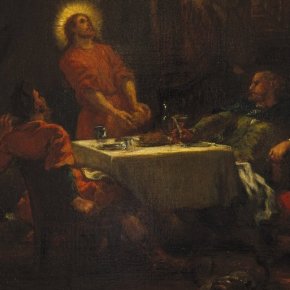
Art: Detail from “The Disciples at Emmaus” by Eugene Delacroix (1853)

A Resounding Yes

Sermon for Sunday, August 31, 2014 || Proper 17A || Exodus 3:1-15


aresoundingyesI’ll tell you all the truth: I’ve been struggling lately. The day the twins were born, about a month ago now, life took a dramatic turn. I knew this tectonic shift in life was going to happen, but I sure wasn’t prepared for it. At times over the past month, I have felt helpless. I have felt frantic. I have felt desperately inadequate. The learning curve for new parenthood is steep, and I’ve had to adjust my expectations about how fast I catch on. I’ve always been a quick study, but in this particular case, there’s no substitute for the exhausting daily grind of caring for the twins. I guess what I’m trying to say is that I knew it was going to be hard, but my definition of “hard” has never reached the superlative level of caring for multiple newborns.
Of course, there is joy, too. And love – so much love that it leaks from my tear ducts when I gaze upon their sleeping faces. But both joy and love often get buried under the weight of bone-wearying exhaustion, and at the end of the day or at the end of the night – and with newborns they are pretty much the same thing – all you can say is, “We survived.” And you’re too tired most of the time to appreciate that survival, in itself, is a pretty astounding gift.

In light of the last month, I read our passage from the Hebrew Scriptures this week with new eyes. I have read the story of Moses and the burning bush hundreds of times, but this time around new words shimmered for me. My feeling of desperate inadequacy led me to see the same feeling in Moses. Today’s story takes place on Mount Horeb, but let’s back up and see how Moses got there.

After growing up the adopted son of Pharaoh’s daughter, Moses was caught between two worlds, the life of privilege of the king’s house and the life of slavery of Moses’s family of origin. One day Moses visits the work camps and sees an Egyptian beating a Hebrew. While the book of Exodus skips Moses’s upbringing, we can easily conjure a scenario where he had no firsthand knowledge of the plight of his people before this. Sure he heard rumors, but they were easily dismissed by his Egyptian family. Then he sees for himself the rumors are true, and his sense of betrayal mingles with his sense of justice. Moses secretly kills the offending Egyptian. But such an act cannot stay secret for long, and when Pharaoh finds out, Moses flees.

Settling in the land of Midian, Moses meets his wife at a well (which is where everyone meets his spouse in the Hebrew Scriptures). Zipporah brings Moses home to her father, who takes him in and teaches him to be a shepherd. A long time passes, and Moses finds himself with the flock beyond the wilderness on the mountain. God calls to him from the burning bush and gives Moses the task of delivering God’s people from the hands of the Egyptians. And this is where Moses’s feeling of desperate inadequacy rises to the surface. He asks, “Who am I that I should go to Pharaoh, and bring the Israelites out of Egypt?”

You can see where Moses is coming from. He’s been gone so long. Who would remember him? He wasn’t even raised among his own people. Who would accept him? Later, he mentions he’s not a very persuasive talker. Who would listen to him? All of these worries and fears boil under the surface of Moses’s question. But God stops Moses in his tracks.

And here we must pause for a moment for an aside. Whenever you read the Bible, I want you to pay especially close attention to how questions are answered. More often than not questions are not answered directly in scripture. When God in the Hebrew Scriptures and Jesus in the Gospel answer questions, they often answer the one they wish they had been asked, rather than the one that was asked. So – Bible study tip – pay special attention to how questions are answered.

So let’s turn this special attention to Moses’s question. Moses asks, “Who am I that I should go to Pharaoh?” His feeling of deep inadequacy weighs the question down. But God lifts him back up with the answer. “I will be with you.”

This doesn’t answer the question Moses asked. “Who am I?” he pleads. And the response. “I will be with you.” The question God answered, the question God wished Moses had asked, was: “Will you be with me?” And the answer: a resounding “Yes.”

God’s answer to this question reverberates throughout the Bible. God shows Abraham the way through the desert to a new home. God comes to Elijah not in the storm but in the sound of sheer silence. God descends into the den of lions with Daniel. God gives Jesus a second name, Emmanuel, which means, “God with us.”

And so when I read the story of Moses and the burning bush in the light of my own desperate inadequacy this past month, I realize I have been asking the wrong question. Like Moses, I have been asking, “Who am I? Who am I that I should be able to accomplish the task of helping to care for these two precious lives?” But that’s not the question God is answering right now.

Instead, God has prompted me to ask the question God yearned for me to ask all along: not “Who am I” but “Will you be with me?” And God has answered that question with the same resounding “Yes” which God promised Moses. Yes, I am with you in the helping hands and loving hearts of the friends and family who have given countless hours of their time. Yes, I am with you when you breathe deeply in moments of serenity and when your patience stretches past the breaking point when the crying won’t stop. Yes, I am with you in the peace that comes from a few hours of treasured sleep. Yes, I am with…always.

The feeling of desperate inadequacy can paralyze us. Perhaps a challenge seems too big for us to even begin to grasp. Perhaps we’ve been down a certain road before and failed. Perhaps we’re facing something new and the fear of the unknown cripples us. Whatever the case, we can begin to move past our inadequacy or whatever else is holding us back by changing the question we ask of God. Rather than asking, “Who am I to take care of my aging parents”; or “Who am I to be able to find friends at my new school”; or “Who am I to make the slightest difference in a world full of pain”; rather than asking, “Who am I” ask the question God yearns for you to ask.

Ask, “Will you be with me?” And believe in the deepest core of your being that the answer to that question is always and will always be, “Yes.” When you hear that “Yes” resound in your core, you will begin to see with new eyes and reach out with less burdened arms and discover all the ways God is already using you to shine God’s light in this darkened world, no matter the inadequacy you feel.

I still feel inadequate when the twins start crying. I’m still exhausted most of the time. But we’re doing it. One day becomes the next, and that in itself is a gift, as is God prompting me to change the question I was asking, so that God could answer with a resounding “Yes.”

Trailblazer

Sermon for Sunday, August 24, 2014 || Proper 16A || Matthew 16:13-20

(A problem with our sound system rendered the audio for this sermon unusable.)

TrailblazerFor as long as I can remember, my father has worn a cross beneath his clothing, resting on his skin close to his heart. So when my parents gave me a cross of my own to wear when I was in my early teen years, I was thrilled. I was going to be just like Dad, wearing my cross all the time, even in the shower! The trouble was I kept losing it. I couldn’t wear the cross all the time because I played soccer, and there was a “no jewelry” rule. So it would get lost in the depths of my soccer bag (which was not a place for the faint of heart). The chain broke once, but I managed to find the cross beneath the seat of my car. Then during my freshman year of college the chain broke again, and I lost the cross for good.
At that time, I was just beginning to glimpse the edge of the expanse of the life God was calling me into, so I was quite upset at losing my cross. I’m not naturally a superstitious person, but I took it as a bad omen. So two weeks before I turned nineteen, I went to a local tattoo parlor and emerged a few hours later with a Celtic cross indelibly inked on my back. It was my way of telling myself that I was, indeed, a follower of Jesus, that if push came to shove there was no way to deny my identity. At baptism I was marked with oil as “Christ’s own forever,” but now I was visibly marked as Christ’s own.

And yet, walking out of the tattoo parlor on that fine January day, I don’t think I could have told you what it meant to me to be a follower of Jesus. I think I could do a bit better job today, but such meaning-making will take the rest of my lifetime to unfold, so check back with me again sometime. What’s telling is that – in my tattoo experience – I identified as “follower.” Since I put myself in the position of “follower,” for me Jesus took on the identity of “guide.”

As my guide, or better yet my “trailblazer,” I envisioned Jesus walking ahead of me, as if we were tramping through a marsh and he knew where it was safe to place one’s feet. Because he was my trailblazer and I his follower, I attempted to step where he stepped and to stay on the path he showed me. When people learned I was in the process to become an ordained minister, they asked if I was following in my father’s footsteps. I responded, “No,” because in my mind, we were both following in Jesus’ footsteps. Thus, in my language and in my imagination – two of the most potent vehicles for meaning-making – I identified as the follower of a trailblazer.

But the trailblazer-follower relationship is only one of myriad possibilities. And this is why today’s story from the Gospel according to Matthew is so important for us today. You see, when Jesus asks the disciples, “Who do you say that I am?” he’s really asking them, “What kind of relationship do you want to have with me?”

This powerful secondary question hovers just beneath the primary one because no matter what the disciples say, they set up the presumption of a relationship. Let’s take Simon Peter’s answer, for instance. I imagine his words rushing from Peter’s mouth all at once, as if an unseen force reached into his heart and yanked them out: “You are the Messiah, the Son of the Living God.”

So if Peter names Jesus “Messiah,” what title would Peter use for himself to relate to this identity? Would it surprise you if I said soldier? The title of “Messiah” was something of a political identity at this time in Israel. The Jewish Messiah was supposed to be a warrior like the great King David, who swept away the forces occupying Israel with his martial prowess. It’s not a coincidence at all that Matthew sets this exchange in the city of Ceasarea Phillipi, a city named for the Roman Emperor. Peter’s confession of Jesus as Messiah tacitly sets Jesus against the power of occupying Rome. That Peter identifies as a soldier in the Messiah’s army is made clear both in his use of a sword when Jesus is arrested and in the very next passage after ours today. We’ll read it next week, but here’s a spoiler. Jesus reveals to the disciples what is going to happen to him – namely something basically the opposite of kicking the Romans out of Israel – and Peter is stunned to hear the Messiah will die. Another set of words rips itself from Peter: “God forbid it, Lord! This must never happen to you.”

It takes the rest of the Gospel, and indeed the rest of Peter’s life, to fathom Jesus’ understanding of “Messiah.” Peter’s journey takes him from confession to denial to redemption to proclamation as he struggles with his relationship to Jesus in light of calling him Messiah. By the end of his time in the book of Acts, Peter has moved from soldier to something of a herald of Jesus’ understanding of Messiah-ship.

So Peter undergoes a long transformation of his identity in the light of calling Jesus Messiah. I still think of Jesus as my trailblazer, and I try to follow his steps. But what of you? When Jesus puts this question to you, who do you say that he is? And what does that say about the kind of relationship you want to have with him?

Perhaps you answer that Jesus is “Lord,” which makes you his “subject.” If so, this means you cede your sovereignty over to him. You surrender your will to his. You are a vassal and he is your liege. We might not want to give up our autonomy to a higher power, knowing as we do how badly that turns out most of the time here on earth. But Jesus is a Lord who is trustworthy and true, and giving up our wills for his leads not to enslavement but to freedom.

Perhaps you answer not Lord but “Teacher.” This makes you Jesus’ “student.” If so, you desire to learn all you can from him, both by searching the scriptures and listening for his instruction as you pray. We have so much to learn from Jesus our teacher, and we will never graduate from his class, not until we “know fully, even as we are fully known.”

Perhaps you answer not Lord or Teacher, but “Savior.” Thus, you relate to Jesus as someone who needs saving. He is the knight in shining armor and you are in distress in the dragon’s lair. As our savior, Jesus accomplished the great work set before him between the cross and the empty tomb. But if we let him, his presence in our lives continues to save us from all the small, yet debilitating, ways we drift towards annihilation.

And if not Lord or Teacher or Savior, how about “Friend?” If Jesus is your friend, then you are his. This is not blasphemy, for Jesus calls his disciples friends in the upper room on the night of his arrest. As a friend, a companion, Jesus is not walking ahead of us blazing the path. Rather, he is walking with us, hand in hand, as we discover the way together.

Of course, these ways of answering Jesus’ question are not mutually exclusive. Jesus is trailblazer and Messiah and Lord and teacher and savior and friend. And that is just a small sampling. Answering his question – “Who do you say that I am?” – does not limit our relationships with him, but it does define them. Discerning how we relate to Jesus at any given time or in any given situation will only serve to strengthen our relationships with him. And the more we follow our trailblazer and proclaim our Messiah and serve our Lord and learn from our teacher and reach out to our Savior and walk with our friend Jesus Christ, the better and fuller and deeper will we answer his call in our lives.

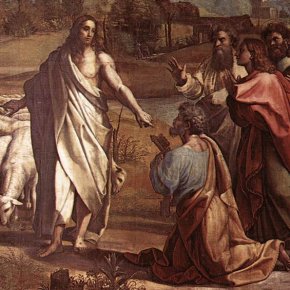
Art: Detail from “Handing Over the Keys” by Raphael (1515)

The Faith System

Sermon for Sunday, August 17, 2014 || Proper 15A || Matthew 10:21-28

thefaithsystemGood morning! It’s good to be back after three weeks away. I know I’ve only been next door, but it seems like another world when newborns are filling all your waking (and the few sleeping) moments. I seriously thought about skipping this sermon entirely and just showing you baby pictures for the next ten minutes, but then I realized lemonade on the lawn might be a better venue for that. So, let’s get down to the sermon.

Having newborns in the house has a way of making you get back to basics. It’s not easy to care for them, but it is simple. Feed. Change. Soothe. Try to catch a few zz’s. Repeat. Likewise, today I’d like to get back to one of the basics of following Jesus Christ. I’m going to talk about faith – specifically about how faith works in our lives. Hopefully, at the end of this sermon we will all rejoice that, while faith seems like an abstract, ephemeral concept, faith is in truth the fuel that fires our lives.

To start this little discussion about faith, we need to clear up one minor issue. In the English language the word “faith” is a noun. This grammatical construction makes it normal for us to ask a question like “Do you have faith?” Faith here is the object of your possession: “Yes, I have faith.” This sounds like completely correct and acceptable English, right? The trouble is, while faith is a noun, it should be a verb. I should be able to say “I’m going faith-ing today” or “We faith-ed yesterday and we’re going to faith again tomorrow.” But those sentences sound really strange, don’t they? I wish they didn’t. The word “faith” is a noun but whenever you use it, I hope you will remember it should be a verb.

Here’s why. We can possess things like concert tickets and hiking boots, but such possessions just sit on the counter or in the closet until we need to use them. If we have faith in the same way we have concert tickets, then we run the risk of storing our faith in the kitchen cupboard until we think we need it. But faith doesn’t work like that. Faith cannot be stored up or hoarded. We might get into situations where we say, “If I just had a little more faith…” But this turns faith into a commodity, something we can trade for something else. That’s not how faith works.

Thinking of faith as a verb removes it from the kitchen cupboard and puts it in our actions. We cannot store up or hoard our actions like we can our possessions. Rather, each action tumbles into the next in a never-ending stream. The problem we run into here is that, since the word faith isn’t actually a verb, we have trouble imagining what faith as action looks like. You know exactly what I mean when I say, “I saw someone running on my walk to church this morning.” But you’d have difficulty conjuring up the image if I said, “I saw someone faith-ing on my walk to church this morning.”

Because of this difficulty, I’d like to invite you to imagine with me a reality that we don’t often think about. When God created animals, God gave us all sorts of biological systems that allow us to live. The respiratory system lets us breath, the circulatory system cycles our blood through our bodies, the digestive system turns food into nutrients. There’s the nervous system, the endocrine system, the lymphatic system and so on. But we were made in God’s image and likeness, which means we have one more system that other animals don’t have. We have a spiritual one to go along with all our biological ones. We have a faith system.

The faith system works a lot like our muscular system. We all have muscles. We need our muscles to do simple tasks like getting out of bed, standing up, even smiling. We also need our muscles to do more difficult tasks like running a marathon or lugging a couch to a third floor walkup. Exercising hones and strengthens our muscles, making them more durable and less likely to fatigue. But whether we exercise or not, our muscles still put in work day in and day out.

So, too, with our faith system. The faith system spurs us to seek out life-affirming relationships, to support one another in our daily walks with God, to reach out to those in need, to welcome anyone into our midst, and to share with them the good news of God’s love. The faith system also sustains us through dry, desolate periods, giving us enough endurance not to give up quite yet. Like our muscles, our faith can get weary and fatigued. But also like our muscles, we can exercise our faith to hone and strengthen it, to make it more a part of our actions and less a thing sitting on the shelf in the kitchen cupboard.

If we’re going to exercise our faith, then we should figure out exactly what we mean when we say the word. We’ve already said how faith is a noun that should be a verb. Faith then is the action that happens when we participate in our relationships with God. Faith borrows the best parts of trust, confidence, humility, and zeal and molds them into our response to God’s presence in our lives. From trust, our faith borrows the willingness to give ourselves over to the power of another. From confidence, our faith borrows the courage to take the leap into God’s waiting arms. From humility, our faith borrows the recognition that God (and not we ourselves) initiates the action that results in the giving of ourselves up to God. And from zeal, our faith borrows the passion actually to get going and do something.

In today’s Gospel lesson, the Canaanite woman actively engages her faith system. She trusts that Jesus can help her. She has courage actually to do something about that trust, even in the midst of the disciples’ and Jesus’ own dismissal of her. She shows humility when she kneels before Jesus, calls him “Lord,” and asks for help. And her passion erupts when she counters Jesus’ statement about the children’s food. All she needs is a crumb, she says, a scrap discarded to the floor. Jesus calls her faith “great.” But no matter how great our faith is, we each have a faith system that God gave us so we would be able to join God in relationship. The more we exercise our faith system – the more we act out our faith – the deeper can we go in our relationships with God.

Imagine if we exercised our faith in the same way we exercise our muscles. Going to the gym once doesn’t do much, but going every other day can work wonders on our bodies. God yearns for us to have this kind of dedication to our lives of faith. When we are serious about exercising our faith systems, we build time into every day to be in prayer with God. We start with faith and allow it to motivate all our other actions. We take part in the act of worship, both on Sunday mornings and in the moments of our days when our faith shows us special signs of God’s presence that our eyes alone might not see.

I invite you today to remember that faith is not a commodity or a possession. Faith is the active component of our relationships with God. Faith is a noun but in our lives let’s make it a verb.

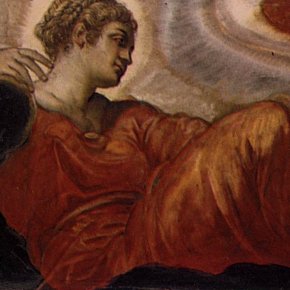
* Art: detail from “Allegory of Faith” by Tintoretto (c. 1564)

God’s Presence: A Letter to My Children

Sermon for Sunday, July 20, 2014 || Proper 11A || Genesis 28:10-19a

godspresenceDear Baby Boy and Baby Girl,

Right now you are still in Mommy’s tummy, but only for a few more days. The doctors tell us everything is going well, and they are really excited that you’ve managed to stay inside as long as you have. As for Mommy and me, we can’t wait to meet you, now that you’re big enough to live out here in this messy, yet beautiful world. But before you arrive, there are a few things I need to tell you. You probably already know everything I’m about to say (you being so close to God and all), but at times, like the rest of us, you will forget. That’s why I’m writing this letter to you. It’s not just for you, but for me, and for everyone who hears it, as well.

This morning at church we read the story of a fellow named Jacob who camps out one night under the stars. Maybe we’ll do this someday, too, but Daddy doesn’t really like camping so you’ll have to persuade me. Anyway, Jacob dreams that angels are connecting earth to heaven, and he hears God speak promises to him. “Know that I am with you and will keep you wherever you go,” says God. God had said something similar to Jacob’s grandfather Abraham, but before then people didn’t understand that “all of God was in every place.”* Instead, people thought there were all sorts of little gods who lived inside of things like rivers and mountains. They couldn’t take those little gods with them when they traveled. But Abraham left home and discovered that God was already present wherever Abraham went. It was a wonderful and staggering notion.

In fact, my children, even though thousands of years have passed since then, this notion is still so wonderful and staggering that even today we have to remember over and over again that all of God is present everywhere we go. When Jacob wakes up the next morning after his vision of God, he says, “Surely the LORD is in this place – and I did not know it!” I’ve said the same thing many times when I didn’t expect to find God only to be surprised when God showed up.

You two are smart, so you might be wondering why we have so much trouble noticing God’s presence even when that presence is everywhere all the time. Well, that’s the rub. The very constancy of God’s presence keeps us from noticing it. Let me tell you a quick story to illustrate this point. Mommy’s been having me read you guys a story every night recently, so I hope you like it when I tell you stories. Here goes: A long time ago our ancestors didn’t live in towns with grocery stores. They didn’t even have farms to grow vegetables and raise cows. (What sound does the cow make? Moo! You got it!) Instead, they had to go out into the dangerous wilderness to search for food. There were certain animals in the wilderness searching for food, too, and our ancestors were on their menus – animals like lions and tigers and…well, you get the idea. Our ancestors started noticing rustling in the underbrush and new odors coming to them on the wind. These changing signals warned them when they were in danger. The people who were best at noticing the changes in their environment flourished and passed their instincts on to their children.

We still have those instincts in us. Mommy and I passed them on to you. While we don’t usually have to worry about animals that have us on their menus, we do live in a world where things are changing all the time. Keeping up with everything that’s changing takes nearly all our attention. And so we forget to focus on the one thing that remains constant through it all, and that is the presence of God.

This is what I wanted to tell you in this letter, children: Sometimes you have to fight against your instincts. Sometimes you have to shut out all your distractions – all the change swirling around you – and just be. Just sit in a comfortable chair like your Daddy. Just lay on the ground at night under the stars like Jacob in the story. As you lay under the stars remind yourselves that you are in God’s presence. Acknowledge that it can be hard to notice because God’s presence is so constant, and we aren’t wired to notice constancy. But God knows this. God knows our instincts tell us to perceive change instead of constancy. That’s why God gave us the gift of memory.

As you lay under the stars reminding yourselves that you are in God’s presence, remember also that you were in God’s presence even when you didn’t notice it. Look back over your day or week or month or lifetime and start to uncover the footprints of God’s presence when you least expected to find it but needed it most.** You’ll be surprised to discover all the subtle and startling ways God was moving in your lives in the past. Doing this work of reflection will then help you see those same patterns of God’s movement in the future. And the more you do this work, the more readily you will notice God’s movement in the present.

I know it will be a long time before you, Baby Boy and Baby Girl, will have the ability or need to do this reflective work. But this is where the other facet of God’s presence arrives. Right now you two are reminders of God’s presence for your Mommy and me. As each day rolls into the next and your birth approaches, we know beyond a shadow of a doubt that God is present in our lives because God has given us the gift of the two of you. The fact that God has also given us a beautiful community in which to raise you makes God’s gift even more wonderful and staggering.

Being a reminder of God’s presence in the life of someone else will not only make that person’s life better, it will also help you discover God’s presence in your own. When you serve as such a reminder you trick your instincts into thinking God’s presence is one of the things that is changing, which helps you notice it. But what’s really changing is you. As you grow up, you will have the opportunity to be signs of God’s presence in so many ways. Grab hold of those opportunities with both hands and with your heart. Never let a chance to serve God by helping someone pass you by. Never assume you are too small to make a difference because assuming that makes you much smaller than you are. Know that you began your lives as reminders of God’s presence, and you will continue to be your whole lives long.

Your Mommy and I love you very much, and we can’t wait to meet you. In a few days, we’ll be in the hospital. We’ll be waiting for you. And then, suddenly, you’ll be there. And when I hold you and smell the tops of your heads and touch you to my skin, I will know that I am in the presence of God through God’s gift of you, Baby Boy and Baby Girl. We are in God’s presence all the time, yet we rarely notice it. But on that day, I will say, “Surely the LORD is in this place – and I do know it.” May you have many days when you can say the same thing.

With all the love in my heart,

Daddy

* Quoted from “The Great Family” Godly Play story by Jerome Berryman (my favorite story to tell)

** Borrowed from my father. It’s his favorite thing to say.