

(Or The Fundamental Goodness of Creation)
Sermon for Sunday, January 11, 2015 || Epiphany 1B || Genesis 1:1-5; Mark 1:4-11
 You may recall during a sermon last spring, I challenged you to choose six words to proclaim your faith. I remembered the “Six-Word Witness” challenge as I began to prepare for this new season after Epiphany, as there happen to be six Sundays between now and Lent. If you read my article in the recent issue of The Lion’s Tale, you got a sneak peak at a particular six-word witness, one that describes the trajectory of the next six weeks as we hear the story of the beginning of Jesus’ ministry. My plan during this season after Epiphany is to connect this sermon with the next five to tell a much larger story of our lives as followers of Jesus Christ.
Yes, you heard that right. Today’s sermon is the beginning of a six-part series. That means if you have plans to go skiing in a couple of weeks, I’m afraid you’re going to have to cancel.
We begin today with the first word: Affirmation. And we begin today, appropriately, at the beginning. What we find when we enter the story as early as we possibly can is the affirmation of goodness. “In the beginning when God created the heavens and the earth, the earth was a formless void and darkness covered the face of the deep, while a wind from God swept over the face of the waters. Then God said, ‘Let there be light’; and there was light. And God saw that the light was good.”
Right away, in the first verses of the first chapter of the first book of the Bible, God has already affirmed something as good. This pattern continues throughout the rest of the creation story. Each day God creates, and that which God creates God affirms as good. Thus the fundamental goodness of creation is built into the very fabric of creation. From the sweeping array of celestial bodies to the lowliest tadpole dwelling in the muck to us troublesome and ungainly humans, God affirms everything God makes with the seal of goodness.
(As an aside, God calls us humans “very” good while the rest of creation is merely good, but I think that has more to do with the fact that we humans we were the ones who wrote it all down.)
The reality that goodness entered creation on the ground floor is of utmost importance for the rest of the ongoing story. There have been folks in the past, notably in the early centuries of Christianity, who taught that the physical creation God made — the matter, the flesh, the stuff we can see and touch — was, in fact, inherently evil. They taught that only the spiritual realm held any goodness, and so they sought to divorce themselves from the flesh entirely. Of course, to make this heretical mental leap, they had to ignore the bulk of the Biblical witness, which they did with no qualms at all. Their path led to disengagement from the world; the founding of secretive, insular societies; and what I imagine was quite a lot of struggle against instincts that are totally normal, but which they decided were base and evil. Thankfully, the majority of Christians were not led astray by this faulty understanding of creation. And so we still have the witness of Genesis reminding us of God’s affirmation of the fundamental goodness of creation.
But now comes our own mental leap. Or call it a leap of faith. We move from one beginning to another, from the beginning of creation to the beginning of the good news of Jesus Christ. At the outset of Mark’s account of the Gospel, Jesus comes up out of the water of the River Jordan during his own baptism. He sees the heavens torn apart and the Spirit descending on him like a dove. And he hears a voice from heaven say, “You are my Son, the Beloved; with you I am well pleased.”
Notice the placement of this piece of the Gospel. Before Jesus has a chance to do anything of consequence; before his ministry gets off the ground; before any miracles or teachings or healings or his death or resurrection, God showers upon Jesus God’s love and pleasure. Just like God affirms creation as good right from the start, God affirms Jesus’ identity as God’s beloved Son before he has a chance to earn the right to such a name.
Now, you might be thinking: “Of course God affirms Jesus as God’s beloved Son — that’s who he is! What about me?!” Yes, what about the rest of us troublesome, ungainly, and yet “very” good humans? Well, to make our leap of faith, we need a little help from our friend the Apostle Paul. He writes to the church in Rome: “For all who are led by the Spirit of God are children of God. For you did not receive a spirit of slavery to fall back into fear, but you have received a spirit of adoption. When we cry, ‘Abba! Father!’ it is that very Spirit bearing witness with our spirit that we are children of God, and if children, then heirs, heirs of God and joint heirs with Christ” (8:14-17).
If the writers of Genesis were presumptuous to call us “very” good, then Paul must be doubly so to claim that we are joint heirs with Christ. Or is he? Perhaps, instead, Paul has seen into the truth of the matter, seen Jesus’ plan all along, a plan to show us what we have always been and to reaffirm our inherent goodness, our lovableness.
And here’s where our own version of the heresy I spoke of earlier comes to into play. While those folks taught the matter of creation was inherently evil, there is an overriding voice in our modern American society telling us that we aren’t exactly evil, but we sure are deficient. I’m of course referring to my favorite homiletical punching bag, the ubiquitous marketing department. Marketing campaigns work like this: they tell us ways we are defective, and then they try to sell us products designed to improve those defects. Truck commercials tell men they aren’t manly unless their vehicles can haul a couple tons of dirt. Toy commercials tell kids they won’t be happy unless they receive the hot new toy for Christmas. And don’t get me started on commercials aimed at women. Judging by the ads, women in this country have hair that isn’t shiny enough; bodies that aren’t the right shape; the wrong handbags, clothes, shoes, and earrings; too many wrinkles; and not enough diamonds.
All this must be true, right? I mean, we’re bombarded with our supposed deficiencies everywhere we turn. Then we repeat them over and over again until they seem like truth. And pretty soon, it’s not just the marketers, but everyone getting in on the fun. And that’s when the boy feels deficient because he hasn’t played the video game all his friends are talking about. That’s when the girl feels defective because she doesn’t quite fit the clothes her friends have started to buy. That’s when the parents feel substandard because they can’t afford the tuition at the “best” college. That’s when we forget our inherent goodness, the goodness God affirmed in the first rushing breath of creation.
Here our leap of faith continues, because the marketing department has convinced us of our utter worthlessness. And so we might not want to believe that Jesus has invited us — yes, even you and me — to be joint heirs with him of the love and pleasure of God. Jesus received this affirmation of his belovedness before his ministry even started. Likewise, you and I who are joint-heirs with Christ have never done anything in our lives, nor will we do anything in our lives, to earn God’s love and pleasure. They are ours intrinsically. They are ours because we are God’s. And because we cannot earn God’s love and pleasure, we cannot do anything to lose them either. They are part of what makes us who we are – the best part of what makes us who we are. God’s love and pleasure are nestled at the very core of our beings, nestled right next to the affirmation of goodness, which God breathes into all creation.
Archbishop Desmond Tutu summed this up in one dazzling sentence. He once said, “God does not love us because we are lovable; we are lovable because God loves us.” This love is the core of our identity, not something we earn, not something that can be dislodged due to our own presumed deficiencies. When we choose to believe this fundamental truth, we will be ready to listen — really listen — for God’s invitations in our lives. It is to these invitations we turn next week as our six-part series continues. But for today, feel this truth in your bones. Feel God say this to you: “You are my Son. You are my daughter, the beloved. With you I am well pleased.”

 I’ve lived a lot of places in my life. In my nearly thirty-two years, I’ve resided in Maine, New York, Wisconsin, Rhode Island, Alabama, Tennessee, Virginia, West Virginia, Massachusetts, and Connecticut. And I spent two summers in Texas, which I count in the total because it was summer…in Texas. For the bulk of those years, home for me was wherever my parents lived. I even had to get directions to a new home once when they moved during my junior year of college. (Let me tell you, it’s a strange experience – needing directions to your own house.) But when Leah and I got married, my definition of home changed. Now home is wherever Leah is, and more recently where Leah and the twins are. But, as with most things we hold dear, the concept of “home” is much deeper than the surface definition: “house where my family lives.”
 One
One
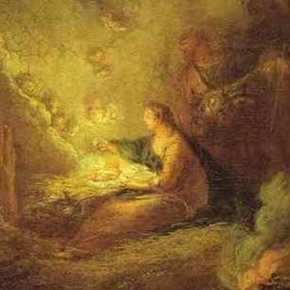 This version of the Christmas pageant employs two sets of main characters, one younger and one older. The older versions sit on stools flanking the main action. They stand up to deliver their monologues. During the monologues the younger versions pantomime the action and speak at the end of each speech.

 The Gospel writer Mark wastes no time telling us what his story is about. The very first words of his account of the Gospel proclaim without hesitation: “The beginning of the good news of Jesus Christ, the Son of God.” Matthew begins with a genealogy linking Jesus back to Abraham. Luke begins with a short address about his research methodology. John begins with a mysterious poem about creation. But Mark just hits the ground running and never looks back. “The beginning of the good news of Jesus Christ, the Son of God.”
 When I was a kid, there was a series of books called the Magic Eye books. Each page of these books was filled with what looked like very precise and geometric versions of Jackson Pollock’s art work. The pictures were just jumbles of kaleidoscopic lines and shapes, and if you didn’t know any better, that’s all you saw. But the trick with these books was that if you looked at the pictures a different way – sort of squint a bit – then you saw an image hiding beneath the jumbled surface picture. I’ll let you in on a little secret: I never once saw anything besides the geometric Jackson Pollock’s. No matter how often I lied to my friends and said, “Of course, I can see the person walking the dog,” I just could never get my eyes to focus correctly to see the hidden images. Let me tell you, it was quite frustrating.

 Last Wednesday, I was visiting Gene and Judy Roure at home as Judy continues recovering from surgery. I arrived right after lunch and we were having a pleasant conversation when something unforeseen happened. My eyes started to close. I couldn’t help it. I made a conscious effort to keep them open as we talked, but you know if you ever try that tactic, your body just assumes you’re using reverse psychology. I knew the lack of sleep Leah and I have been experiencing would catch up to me eventually, but I sure didn’t want it to happen during a pastoral visit! So I did the only thing I could think to do: I asked Gene and Judy if it would be okay to close my eyes for five minutes while sitting in the terribly comfortable rocking chair in their living room. Being the lovely and gracious people they are, they readily said, “Yes.” I put my head back and let my eyes do what they desperately wanted to do. I shut them and slept for five glorious minutes.
 The feast of All Saints, which we celebrate today, is about family, namely the family of God. Each saint has a special day commemorating his or her life of devotion and service, but on this day we celebrate all of them. We celebrate them collectively: not as a group of individuals who walked the way of discipleship alone, but as the glistening threads of God’s tapestry woven together to tell the story of God’s presence in creation since the time of Jesus. However, this tapestry is vast, so much bigger than the threads of particular saints could fashion, and so God weaves other threads into the warp and weft in order to complete the story. I have a thread. You have a thread. And Reggie, the beautiful six-month old collection of smiles and joy we’ll be baptizing in a few minutes, has a thread. The tapestry God continues to weave is the story of God’s family from the dawn of time. It is the story of the people of Israel. It is the story of the Gospel. And it is our story because we are all members of God’s great family. Today, we celebrate God weaving us together with all the saints into the story of this great family. And today, we celebrate bringing another person into that story, into this great family, when we baptize Reggie.
