Be-ing

As I’ve mentioned before, I’ve been working on a Confirmation class recently, and the lessons keeping popping up here on the blog. Here’s 1000 words on theology, using three phrases from the Nicene Creed as a framework.

nicaea…of all that is, seen and unseen

What I’m about to write ignores the fact that the Nicene Creed was originally written in Greek and then translated into Latin and then translated into English. Don’t panic – the following is about the current English grammatical structure of the phrase, which is influenced by, but not chained to, the original language.

Do you see that little comma between the words “is” and “seen”? Yes? Good. Now, think back to all the times you’ve ever heard the Creed recited during church and ask yourself if anyone has ever acknowledged that comma. No? Didn’t think so. The sentence usually sounds like this: “…maker of heaven and earth, of all that-is-seen-and-unseen.” But the sentence actually reads: “…maker of heaven and earth, of all that is, [slight pause] seen and unseen.” I imagine you are now rolling your eyes at my disconcerting attention to inane details.

This detail may seem inane at first, but I assure you, it’s not. For now, let’s ignore the phrase “seen and unseen” because it gets entirely too much attention when Creed-speakers unwittingly barrel through the defenseless little comma. With what are we left? “Maker…of all that is.”

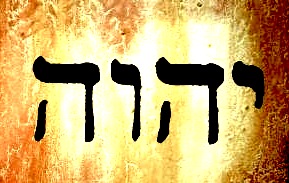
Maker…of all that is. This “is” is the most important linking verb in the history of linking verbs, and probably other verbs, as well. We believe that God made all that is. Put another way, we believe that God is the very ground of our “is-ness” – or, to use a not made-up word, our “being.” [Disclaimer: The rest of this section assumes the reader knows the unwieldy conjugation of the verb “to be.”] In Exodus 3, Moses asks God what God’s name is. God responds: “I AM WHO I AM.” This awkward English rendering of the Hebrew preserves the root of God’s divine name, which is the verb “to be” (hayah in Hebrew). When Moses asks God what God’s name is, God responds with something like, “I have being and I bestow being and that’s all you need to know.” Look at the word “being.” Now add a hyphen: be-ing. The noun “being” is disguised as a present participle verb, a verb of continuing action. This points to the eternal continuity and abiding presence of God, who is the very ground of be-ing.

All grammatical gymnastics aside, the point is this: God created all that is, and creation’s existence depends on God’s continuing presence. As small bits of that creation, we receive our be-ing, our identity, our life from the foundation of that be-ing, the Holy One we call God.

Through him all things were made

“We believe in one Lord, Jesus Christ… Through him all things were made.” Okay, since I failed to return to the original Greek in the last section, I feel I must make up for it. John begins his Gospel account with this poetry: “In the beginning was the Word, and the Word was with God, and the Word was God. He was in the beginning with God. All things came into being through him, and without him, not one thing came into being. What has come into being in him was life…”

You’ll notice that word be-ing from the last section crops up several times in just these few sentences. We said that God is the foundation for be-ing, and now we discover that the “Word” is responsible for translating that be-ing into life. Here’s the Greek bit.

The “Word” is the translation of the Greek word logos, from which dozens of English words take their root. Every time you see –ology at the end of a word (zoology, biology, epidemiology), that ending comes from the Greek logos. “Logic” also springs from this root. When something is “logical” it is ordered, it makes good sense. This is a good entrance into one understanding of logos. John says that the Word was in the beginning with God and through the Word all things were made. This “Word” is the “logic” behind creation, the “organizing principle” through which creation has come into being. In Genesis, God speaks creation into being (“Then God said, ‘Let there be light’; and there was light.”). God uses words to organize creation, and John identifies “The Word” as God the only Son, who is incarnate in Jesus Christ.

So, the “Word” is creation’s logic or organizing principle. Creation, therefore, is not haphazard or accidental. You might be tempted to ask a question about “Creationism vs. Evolution.” But the unhappy dichotomy between these two positions breaks down when we see creation as both organized and continuous. My college chaplain was fond of saying: “If God stopped speaking, the world would stop turning.” The implication is this: the “Word,” the logic of creation continues to underpin and give life to all that is.

…he became incarnate from the Virgin Mary and was made man

As I said above, John identifies “The Word” as God the only Son, who is incarnate in Jesus Christ. “Incarnate” means “become flesh” (the –carn in the word is the same root as in the word carnivore, “meat-eater”). John’s use of “Word” connects to a strain of thought coming out of the Hebrew Scriptures. The “word of God” appears whenever a prophet is granted a new prophecy (The word of God came to so-and-so…). The Hebrew word for “word” (davar) means much more than the stuffy English equivalent. We think of “word” as something on a piece of paper or something spoken aloud. In Hebrew, however, the “word” is something that happens to people. It is an event, an action that calls for further action. When John uses the Greek form of “word” (logos), he purposefully links it back to this Hebrew understanding. The “Word” becoming flesh and dwelling among us is the ultimate example of the “Word” happening.

Here’s the thing to remember: the “Word,” through which God speaks creation into be-ing, is life-giving. Without the “Word,” life would not exist. When the “Word” became flesh in Jesus Christ, God gave us the gift of seeing how life is meant to be organized, meant to be lived. This means that the words Jesus speaks provide for us the means by which to organize our lives in order to be in deeper touch with God. The “Word” became flesh and lived among us. And now the “Word” continues to speak life into the world, disclosing the glory that is full of grace and truth.

Harmony

Ecce Quam Bonum! These three Latin words are carved in moss-covered stones and lintels of doorways across the campus of my alma mater, the University of the South in Sewanee, Tennessee. Ecce Quam Bonum! “Behold, how good!” These words begin Psalm 133, and they speak of the desire for joyful, harmonious fellowship with our brothers and sisters: “Behold, how good and pleasant it is, when brethren live together in unity!”

The lectionary for the Second Sunday of Easter joins this psalm with three readings, each of which speaks of community and fellowship. In the Acts of the Apostles, Luke paints a happily-ever-after picture of the apostles and their companions, in which the “whole group of those who believed were of one heart and soul” (4:32). In the First Letter of John, the writer says, “We declare to you what we have seen and heard so that you also may have fellowship with us; and truly our fellowship is with the Father and with his Son Jesus Christ” (1:3). In the Gospel, the risen Jesus appears to the disciples as a group, grants them peace, and breathes the Holy Spirit upon them. Thomas is not with the disciples at the time, so as a group they seek him out and tell him the good news. A week later, when Thomas has returned to the fellowship, Jesus once again appears, and Thomas believes.

At church this Sunday, we are baptizing a beautiful newborn, and I can’t think of better lessons to accompany the joyous occasion. The sacrament of Baptism celebrates the inward movement of God in a person’s life by outwardly welcoming that person into God’s family the Church. Hmm… I know that definition sounds incredibly boring and academic, so let me try again, this time with a musical metaphor.

The music of God plays in each one of our hearts. Sometimes the music is soft, a half-whispered lullaby, barely discernible over the din of the world. Sometimes the notes crescendo to a deafening fortissimo that knocks us, weeping, to our knees. Most often, the music sounds as the percussive TUB-thp of our hearts — a rhythm that, if you listen closely, beats in time with the rest of the performing forces of creation.

orchestraEach one of us has the music of God resounding within, but the symphony is incomplete until we have found each other, until we have joined together in fellowship as the orchestra of God. In Greek, this fellowship is called koinonia, but I’ve always thought that “fellowship” is a rather limp translation. For the sake of our metaphor, let’s translate koinonia as “harmony,” which lands much closer to the descriptive intent of the Greek word. Musical harmony is the collection of notes that adds structure, color, tone, depth, and meaning to the main tune. This tune, called the “melody” is the music of God within us. The combination of our own unique passions, trials, joys, griefs, and loves creates the harmony of the music of God.

In the sacrament of Holy Baptism, we welcome another violin or French horn or bassoon into the orchestra. We await eagerly the subtle changes in timbre that the new life will bring. Together, we play the koinonia, the harmony, of the music of God to a world so accustomed only to noise and clatter. The movements of our symphony resonate with the movement of God in this world. This is the sacrament of Holy Baptism: new sound, new harmony, new resonance in the symphony of the music of God.

Behold how good and pleasant it is when brethren live and sing and make music together in unity.

The new version of me

(A Meditation for Good Friday; April 10, 2009 || John 19:31-42)

Imagine with me the thoughts of the Pharisee Nicodemus on his way home from helping Joseph of Arimathea bury the body of Jesus.

Two years ago, I knocked on a door. I waited until nighttime and wrapped myself in a traveling cloak with a deep hood so no one would recognize me. Was I afraid to be seen with Jesus, who my colleagues branded as a dangerous radical? Yes, but fear was not the main reason for my caution. I was ashamed. I was ashamed to admit that I didn’t have all the answers, ashamed that someone else’s words could make me feel so infantile, like a newborn baby. So I hid myself in darkness, not to protect against prying eyes, but to conceal me from myself. I hid from myself. I hid from the version of me that Jesus was beckoning to emerge from some long forgotten exile.

I used to relish my position on the council, my authority as an arbiter. I took pleasure in the blank looks of acceptance on the faces of my litigants. They invested me with the power to judge, and I failed to notice when that power mutated into self-assured complacency. Predictability became my idol. There was never a new problem to be solved, never something I couldn’t explain or interpret or analyze. Over the years, I forgot how to ask questions because I was always the person with the answers.

Until that night. Until my vestigial curiosity awoke that night. When I first opened my mouth, my council voice came out, and I made a grand statement about knowing who comes from God. I could tell immediately that Jesus was not one to be cowed by my position or impressed by my stature. “I tell you the truth,” he said, “no one can see the kingdom of God without being born from above.”

I didn’t know what to say. I remember opening and closing my mouth several times. I remember Jesus smiling at me – patient, eager. Then my breath forced an “H” sound from my throat, and I was surprised when the word “how” came from my lips. I was asking a question. “How can anyone be born after having grown old?” The floodgates opened, and for the rest of the conversation, all I did was ask questions: “Can one enter into the mother’s womb a second time and be born? How can these things be?”

Ever since that night, I have heard his words carried on the wind. Since the wind blows where it chooses, my idolatrous reliance on predictability has vanished. Since I don’t know where the wind comes from or where it goes, my fantasy that I have all the answers has disappeared, as well. On my way to see Jesus, I was hiding from a new version of me. But everyday, I felt Jesus’ words drawing that new version out of me.

Last year, I reminded my colleagues to obey their own rules. No one on the council had discovered my secret meeting with Jesus, so my position was safe. The two versions of me occupied the same body, and, at that time, the familiar one dominated still. But I had begun to question and look past the veneer of institutional banality.

Jesus had shown up at the festival of booths and caused quite a stir. The chief priests had sent the temple police to arrest him, but they came back empty handed saying: “Never has anyone spoken like this!” I suppressed a smile. He escaped again. The rest of the Pharisees were outraged. One of them shouted: “Surely you have not been deceived, too, have you? Has any one of the authorities or of the Pharisees believed in him?”

A small voice inside me murmured: “I do.” Then a louder voice: “Careful. Careful.” When I spoke, I tried to defend Jesus without giving myself away. “Our law does not judge people without first giving them a hearing to find out what they are doing, does it?” But they were implacable. That’s when I noticed something I would never have seen had Jesus not awakened my curiosity. These colleagues of mine, the keepers of tradition, the self-proclaimed protectors of the Law, were breaking their own rules. I could no longer be party to such bankrupt ideals and blind action. That day, the small voice grew louder, the voice attached to the new version of me.

Today, I buried my Lord. Two years ago, I went to see him at night to cloak my own shame. But today, the sun shines down, unaware that its brightness mocks the darkness in my soul. The sun shines down, and I walk out under its beams so the world can see where my allegiance lies. When first we met, Jesus said to me, “Those who do what is true come to the light, so that it may be clearly seen that their deeds have been done in God.” It took two years, but here I am. Here I am in the light.

See, all you who pass by: I am one of his. I am not the person you knew. I am a new version of me, the version Jesus called out of me. See, all you who pass by: I am not ashamed any more. I feel the wind on my face, and I know his words are true. See, all you who pass by: is there any sorrow like my sorrow. My Lord is dead. It took his death for my old version to die. But will my new version survive with him gone? Will I have another chance to walk in the light? Has the darkness won? Will the light return?

Aaron’s story

Sermon for April 5, 2009 || Palm Sunday, Year B, RCL || Mark 11:1-11

Imagine with me the thoughts of a boy named Aaron whose family owns the donkey, which Jesus’ disciples borrow for his triumphant entry into Jerusalem.

They came up to our farm this morning — two of them — while I was doing my chores. I don’t like mucking out the stable, but Father says it builds character, whatever that means. Mother says when I turn twelve next year, I don’t have to do it anymore. Then mucking will be Benjamin’s job. He’s only eight. We live in Bethany, which is really close to Jerusalem, and Father does a lot of trading there and sometimes he takes me with him.

Anyways, these two strangers just walked right up to Stony – that’s what I call him because he’s gray and hard to move when he has a mind to stay put. They walked right up to him and started untying him. Well, I came out of the stable with my rake and started shaking it at them. And they backed off because they didn’t want to get splattered. I held the rake like a spear and said: “What are you doing with Stony?”

“The Lord needs Stony for a little while, son, but we’ll bring him back soon,” says the first one, and I say right back: “I’m not your son, and you can’t have Stony. He’s mine.”

Then I felt a hand on my shoulder and looked up and Father was standing there. “Actually, he’s mine,” he says. I gave the strangers my best smirk, but then Father says: “And you may borrow the colt for as long as you need.” I threw the rake on the ground: “But, but Father…”

“No buts, Aaron.” And I knew he meant it because he said it in his deep voice. I watched the two men lead Stony away. When they were gone, Father looked down at me: “And don’t ever let me catch you mouthing off to strangers again. You know the story of Abraham and the three men.”

“Yes, Father.” Then he walked back to our house and when he was out of sight I hopped the fence and started following the two strangers. I decided it would be a good idea to keep an eye on Stony, just in case.

They led Stony a little ways toward Jerusalem and met up with a group of people. Then they threw their shirts onto Stony’s back like a saddle and one of the other men got on him. I’ve tried to jump on Stony a lot, but he never let’s me stay on. He jumps and bucks and shakes until I fall off. It’s not fair, ’cause Stony let this total stranger ride him.

I followed the group while they walked to the city. I made it into a game, running from rock to rock and trying to keep out of sight. I ran ahead and beat them to Jerusalem. There was a big crowd lining the road leading up to one of the gates. The people spread more clothes and even some tree branches on the road. They were all shouting and cheering and waving, like at a parade. I didn’t know what was so special about this stranger…except that he could ride Stony without falling off.

I tried to push my way through the crowd to get to the front so I could see better, but there were too many people. I walked all the way down the crowd looking for an opening, and when I got close to the gate, I saw another group of people. They weren’t shouting or cheering or waving. They were in a tight little group talking to each other. They sounded really mad. I heard one of them say, “Who does he think he is, a king?” Then they all laughed, but it didn’t sound like they thought it was very funny.

Then I remembered something I heard from my Rabbi last week. He said something about a king riding a colt like Stony. I crawled under the legs of the crowd and pushed my way through the gate into the city. I ran all the way to my Rabbi’s house, and when he let me in, I asked to see the scroll we were using last week — the prophet Zechariah. He still had it open on the table, but first he made me wash my hands and feet because I was mucking out the stable earlier. Then he helped me find the right place, and I read the lines over and over until I had them by heart: “Rejoice greatly, O daughter Zion! Shout aloud, O daughter Jerusalem! Lo, your king comes to you; triumphant and victorious is he, humble and riding on a donkey, on a colt, the foal of a donkey. He will cut off the chariot from Ephraim and the war-horse from Jerusalem; and the battle bow shall be cut off, and he shall command peace to the nations…”

If that’s right, then Stony is in good hands, I thought. I left my Rabbi’s, and when I got back to the gate, all the people were gone. The parade was over, and I was really hungry, so I walked home. When I got to the farm, Stony was tied back in his place. I tried to jump on him, but he shook me off. I guess only kings can ride Stony.

But what is that stranger king of? Why would a victorious king ride on a smelly donkey and not a chariot or a big warhorse? I guess it might be because the king is supposed to cut off the chariot from Ephraim and the warhorse from Jerusalem. He wouldn’t ride one if he got rid of them all. The chariots and warhorses the Roman soldiers ride scare me. I’m short, and they wouldn’t even see me if I was in front of them.

But if he is king, then doesn’t he need chariots and soldiers to fight all the people who don’t want him to be king – like the Romans and those other people at the parade? Doesn’t he need the battle bow? How can he become king without fighting? How can he command peace to the nations? The Romans always say they bring us peace, but Father says it’s not really peace. Father says we are like prisoners…only without a jail. If the stranger who rode on Stony isn’t going to fight the Romans, how will he bring us peace?

Maybe he’ll bring peace by not fighting.

Sacking the monasteries

I’ve been working on a Confirmation class recently, and the lessons keeping popping up here on the blog. Here’s the English Reformation in 1000 words.

The airbrushed version of the story goes like this: King Henry VIII needed a male heir. His wife had only managed a daughter and things were looking bleak on that front. Henry fell in love with another woman who surely was young and fertile enough to produce a son. In order to legitimize any children of the second union, Henry needed to remove his first wife from the picture. The pope wouldn’t grant an annulment. So, in 1534, Henry directed Parliament to approve his divorce and proclaim him the “supreme head of the Church of England.” Without the pope’s interference, the Reformation in England could start scrubbing the grimy Romish doctrines from the walls of a truer Christianity.

Of course, the airbrush was invented to hide blemishes and make people look glossy and even-coloured. Let’s take another pass at the story: King Henry VIII needed a male heir. His wife had only managed a daughter and things were looking bleak on that front. Annulments were not uncommon at the time, but Pope Clement VII balked because Rome needed the friendship of Spain, whose ruler Charles V did not want to see his aunt, Henry’s wife Catherine, be humiliated. So, Henry took matters into his own hands for political, rather than religious, reasons. You see, the Reformation was lumbering toward its third decade on the continent, but Henry appeared immune to its effects. Indeed, at a time before all the business about divorce, the pope had proclaimed Henry a “defender of the faith.” When the 1534 acts of Parliament established Henry as the head of the Church of England, the monarch envisioned a sort of Roman Catholicism minus the Roman bit.

The reformers interpreted Henry’s break with the pope as an opportunity to install Protestantism on the island. Henry’s dissolution of the English monasteries fueled the reformers’ hopes because the monasteries were bastions of papal influence. But the reformers only saw what they wanted to see. Henry dissolved the monasteries not to signal new reforms, but to consolidate his power and to refill the royal coffers with the assets of the rich monastic lands. With an unsympathetic monarch and infighting among various Protestant groups, reform in the English Church would be slow in coming and would never reach the full break with Roman Catholic doctrine that happened in many places on the continent.

henrythehuttThis is not to say that Henry never waved the flag of reform. Rather, his support for the myriad religious flavors being tasted on the streets of London shifted depending on winds of the current political moment. Henry was a political realist: he sought advantage with little regard for principle. In direct conflict with this realism, Henry was also a glutton: his royal appetite for food, alcohol, and women was the stuff of legend. Indeed, when Henry died, he probably looked something like Jabba the Hutt.

The task of reconciling Henry’s gluttonous appetites, political maneuvers, and religious position fell to Thomas Cranmer, the Archbishop of Canterbury. Cranmer favored incremental reform of the church, and over time, his subtle influence over the king pushed England toward an unique experience of the Christian faith, both like and unlike Roman Catholicism and Protestantism.

In his thirteen years as the head of the Church of England, King Henry married five more times, divorced twice (Catherine of Aragon, Anne of Cleves), and executed two of his wives (Anne Boleyn, Catherine Howard). His gluttony and penchant for disposing of his wives make it remarkable that the church he accidentally started turned out as well as it has. Okay, moving on.

Henry’s third wife, Jane Seymour, finally produced a male heir before she died, but King Edward VI was never a picture of health and outlived his father by only six years. In that time, Archbishop Cranmer invented something that has defined the Anglican Church ever since: the Book of Common Prayer. The first edition, appearing in 1549, was Cranmer’s English synthesis of various traditional sources. This first book was decidedly Roman Catholic in tone, a fact that led to a second, much more Protestant, edition three years later.

When Edward died, his successor hit the reset button on reform in the English Church, and she hit it hard with blood and burning. Mary Tudor, Henry’s first daughter and a staunch Roman Catholic, repealed the reforms made since 1534 and relentlessly sought to purge England of all Protestant influence. During her five-year reign, England once again affirmed obedience to the pope. As with most everything else in these tumultuous decades, religion and politics once again danced clumsily with one another. Mary’s allegiance to the pope was borne not just out of religious zeal, but also to secure Mary’s status as a legitimate heir to the throne. Mary burned several hundred people at the stake including our old friend, Thomas Cranmer.

Mary’s reign was fierce but short. Upon Mary’s death in 1558, her half-sister Elizabeth ascended the throne and reinstated the religious policies of her father and brother. Like Mary’s, Elizabeth’s legitimacy as heir was tied directly to the version of history that the ruling religious class embraced. In 1559, Elizabeth issued a third edition of the Book of Common Prayer. This edition combined the varying theology found in the first two books and birthed the Anglican tradition of navigating the via media (the “middle way”). Elizabeth reigned more than forty years, during which the Church of England established its own identity separate from but related to other expressions of Christianity. Her demeanor and bearing were the antithesis of her father’s; indeed, she was known as the “Virgin Queen,” and she makes for a much more appealing spiritual founder of the Anglican Church.

So, the beginning of the Anglican Communion, of which the Episcopal Church is a part, is predicated on a great historical irony. The whole messy business began when Henry needed a male heir. In the end, his female heir solidified the new Church as one of the major expressions of Christianity in the world.*

Footnotes

* Justo Gonzalez’s The Story of Christianity, Vol. II helped refresh my memory on many of the above details. Thanks Justo!

A woefully abridged timeline

We’re in the fifth week of a confirmation class at church, and I (unwisely) decided to teach a class on the first 1500 years of Christian history. I never thought I’d forget just how much happened in those 1500 years, but apparently, I did. So, I grabbed my church history books and a timeline I xeroxed once, and I ended up compiling this woefully abridged list of important stuff. What are the odds we can talk about all of this in an hour?

64 Rome burns down. The crazy Roman Emperor Nero begins a longstanding habit of blaming Christians for every bad thing that happens to the Roman Empire. Around this time, tradition holds that the Apostles Peter and Paul executed in Rome.

c. 155 Polycarp, bishop of Smyrna, is martyred under the Emperor Trajan’s guidelines for dealing with “atheists.” Christians were considered “atheists” because they didn’t worship the Roman Gods. Persecutions were sporadic over the first few centuries of Christian history.

270 Antony decided to become a hermit and runs off to the desert so he won’t be disturbed in prayer. His example becomes quite trendy, leading to the development of monasticism.

313 The soon-to-be Emperor Constantine has a vision to put the first two letters of “Christ” on his shield before the Battle of the Milvian Bridge. He wins the battle, becomes Emperor, and promulgates the “Edict of Milan,” which ends the persecution of Christians.

325 The Council of Nicea convenes, the first “ecumenical” council of bishops from near and far. Among other things, the council rejects Arianism and affirms the Trinitarian doctrine that Christ is “begotten, not made, of one Being with the Father.”

387 Augustine of Hippo (after many years of disappointing his mother, Monica) converts to Christianity. His writing becomes the basis for the Western presentation of theology.

405 Jerome finishes the “Vulgate,” the Latin translation of the Bible, which becomes the industry standard until those Protestants started reading in their own languages a thousand years later.

432 Patrick, once taken captive by Irish marauders, returns to Ireland as a missionary and leads many to the Christian faith, including several local kings. Nowadays, people get pinched if they don’t wear green on his feast day.

451 The Fourth Ecumenical Council convenes in Chalcedon and affirms the doctrine that Christ is both fully God and fully human. The Council is wisely silent on how the heck this works.

529 Benedict of Nursia founds his monastic order (the “Benedictines”) and writes the “Rule” that becomes the standard for Western monasticism. Unlike those pirates, his rule is more than just “guidelines.”

590 Gregory the Great becomes pope. He earns his nickname by advancing the power of the papacy. Tradition says that a little bird taught him some music called “Gregorian chant.”

732 Charles Martel leads the winning side of the Battle of Tours, which halted the Muslim invasion of Europe. The Muslims retreat to Spain and hang out there for a long time.

800 Charlemagne crowned Emperor by Pope Leo III, a sign of the power of the papacy, which rose and fell over the years. Charlemagne is the forerunner of the “Holy Roman Empire,” which existed in one form or another for about a 1000 years beginning in the mid-900s.

1054 The Great East-West Schism, centuries in the making, finally happens. The Catholic church develops in the Latin-speaking West, the Orthodox church in the Greek-speaking East.

1095 Pope Urban II proclaims the First Crusade to wrest the Holy Land from the hands of the Muslims. Over several hundred years, the crusades caused a lot of senseless death and achieved no lasting objective.

c. 1150 The universities of Paris and Oxford are formed, leading to renewed scholarship, theological inquiry, and fledgling scientific enterprise.

1206 Francis of Assisi renounces his wealth and, to punctuate his point, removes all his fancy clothes in front of the bishop. His early followers embrace a simple life of poverty. Francis had a love for nature, which is why so many Christians have his statue in their gardens.

1215 The Fourth Lateran Council affirms the doctrine of “Transubstantiation,” that the bread and wine mysteriously become the actual Body and Blood of Christ during the Eucharist.

c. 1380 John Wycliffe is exiled from Oxford for such strange positions as (1) the Bible should be translated into the vernacular and (2) Christ is present in the Eucharist, but it’s still bread. Basically, Wycliffe showed up for the Reformation 150 years early.

1456 Johann Gutenberg’s printing press produces the first printed Bible. All the monks copying the Bible by hand in scriptoriums across Europe cheer. (Okay, I made that last sentence up.)

1478 The Spanish Inquisition begins under Ferdinand and Isabella. The Inquisition uses brutal tactics to root out heretics and force the conversion of people of other religions. 500 years later, Monty Python spoofs the Inquisition. (“Our chief weapon is fear! Fear and surprise!”)

1517 Martin Luther nails his 95 theses (points of contention with church practice) to the church door in Wittenberg, inadvertently sparking the Protestant Reformation.

So, my questions are these: what do you think I left out that I shouldn’t have and what did I put in that I shouldn’t have?

The Sweet Six Billion

(Sermon for March 22, 2009 || Lent 4, Year B, RCL || John 3:14-21)

Last week, the annual rite of spring commenced. Sixty-four college basketball teams began competing for the NCAA title. My apologies for bringing this up. I wrote this introduction before Dayton upset our own West Virginia Mountaineers. The field has been cut in half, and WVU is, unfortunately, in the wrong half. Soon, the field will be halved again, and there will be sufficiently few teams left for SportsCenter to analyze them as the “Sweet Sixteen”: only one quarter of the teams will have survived. Presumably, this fact makes them “sweet.” After this third round of games, the sportscasters will chatter on about the “Elite Eight.” A mere 12.5 percent of teams will advance to play in this fourth round, making them (sure enough) “elite.” Notice how the sports media doesn’t have a term for the first and second rounds of games; there’s no such thing as the “Snappy Sixty-four” or the “Thrilling Thirty-two.” The field just isn’t small enough to qualify for such exclusive epithets as “sweet” and “elite.”

In our society, we often associate success and value with exclusivity. Only a handful of doctors can perform that neonatal heart procedure. Only a few original 1977 Luke Skywalker action figures exist still in the blister packaging. Only a couple dozen baseball players have accumulated over three thousand hits in their careers. As a culture, we assign value to these exclusive objects and groups. If every baseball player had over three thousand hits, such an achievement would certainly not make one a shoe-in for Cooperstown.

fruitrollupvspuddingcupOf course, our society operates in this way because of Econ 101. From a young age, we are socialized to think in terms of supply and demand. If only one kid in the cafeteria has a strawberry fruit roll-up, the demand for that delicious snack will be high. You might have to trade a week’s worth of pudding cups for that fruit roll-up. The same market forces apply outside of elementary school. If OPEC cuts oil exports, you know what happens to the price.

Sadly, the exclusivity model, on which the doctrine of supply and demand is founded, has infiltrated the Christian religion. Too many Christian groups attempt to define themselves as the exclusive repositories of the faith, as the exclusive holders of the keys to heaven. If you don’t interpret the Bible exactly as they do, then you are excluded. If you disagree about the way worship is conducted, then you are excluded. If you don’t subscribe to the same set of social values, then you are excluded. This exclusion provides for these groups of Christians an illusory feeling of certitude, and, consequently, a “my way or the highway” approach to outsiders.*

Over time, a single severely misinterpreted verse of scripture has developed into the brand for such exclusivist, cliquish Christianity. We heard it this morning in the Gospel. Perhaps, your ears perked up because you recognized the verse from a bumper sticker or the television or the half-forgotten memory of Sunday School. Homemade signs at ballgames give the citation: John 3:16 in big, block letters. “For God so loved the world, that he gave his only Son, so that everyone who believes in him may not perish but may have eternal life.”

Cliquish Christianity has so thoroughly branded John 3:16 that the verse rarely appears outside its exclusivist shrink-wrapping.  Here’s one plausible line of reasoning employed to co-opt John 3:16: Supply and demand teaches that for something to be valuable, it must be limited. Eternal life is valuable. Therefore, eternal life is limited. If eternal life is limited, we must figure out who’s got it and who doesn’t. Let’s see: “everyone who believes in him.” Okay, that’s seems clear enough. If you believe in the only Son of God, you may have eternal life.

But cliquish Christianity ignores two major problems with this logic. First, the major premise of the syllogism** (for something to be valuable, it must be limited) is altogether false. One of the wonderful things about God’s love and grace is their utter repudiation of basic economic theory. The counter-economics of the Gospel are well-documented. All the workers in the vineyard receive the same pay no matter how long they labored. The five loaves of bread feed a thousand times their number with twelve baskets to spare. God’s love abounds when it is freely offered, rather than becoming scarce like the bills in your wallet when you give your cash away. Likewise, eternal life cannot be limited. That’s what makes eternal life eternal.

Second, cliquish Christianity mistakes the minutiae of adhering to particular doctrinal positions for belief in the only Son of God. Disagreements about what constitutes the correct method of making someone wet during a baptism or what instruments are approved to be played in church have driven some Christians to deny eternal life to others. Such disagreements are akin to thinking that ketchup, rather than ground beef, makes something a hamburger.*** History and experience have shown that there are many paths to belief in Jesus Christ. The early leaders of the church recognized the need for four accounts of the Gospel to speak to the widest audience possible. In sixteenth century England, two competing groups struggled for doctrinal dominance, but Queen Elizabeth saw value in each position and accepted both into the Book of Common Prayer. As Christianity spread throughout the world, missionaries fused the message of the Gospel with local custom, creating unique expressions of the Christian religion.

But cliquish Christianity disregards both counter-economics and the substitution of particularity for belief. The misinterpretation of John 3:16 has become inviolable, an idol in blister packaging. And this packaging is necessary for cliquish Christians to use the verse as validation for their exclusivism. You see, the shrink-wrapping protects the sixteenth verse from all the ones surrounding it. But scripture has never been intended to be taken a verse at a time. Indeed, judging by the age of the Bible, verse numbers are downright innovative, having debuted in the 1550s.

So, let’s reattach verse 16 and see what happens: “And just as Moses lifted up the serpent in the wilderness, so must the Son of Man be lifted up, that whoever believes in him may have eternal life. For God so loved the world that he gave his only Son, so that everyone who believes in him may not perish but may have eternal life. Indeed, God did not send the Son into the world to condemn the world, but in order that the world might be saved through him.”

In this context, we notice the object of God’s love: the “world.” God gave his only Son because God loved the world. God sent the Son into the world to save the world. In just these three sentences, the “world” appears four times. God’s loving gift takes on cosmic proportions and comprehends the whole creation.

God doesn’t give the gift of the Son to an exclusive group of people but to the entire world. The Son is not the exclusive property of those who believe in him. He is not trussed up in the backroom, ready to be ransomed in exchange for compliance to doctrinal particularity.  Rather, those who believe in him are the property of the Son, in whose presence eternal life gushes up like a spring.

God loved the world so much that God gave the only Son to be lifted up on the cross and to die and to rise again and, in so doing, to lift us to the light of eternal life. If this sublime story of sacrifice and salvation were meant only for an exclusive few, then there’s no reason to believe it. But the world is the recipient of God’s loving gift, a gift so extravagant and precious that an exclusive few could never hope to unwrap it completely.

In our fallen society, we measure success and value by exclusivity. But in God’s family, we measure success by our ability to include. We measure value by our generosity and hospitality. We invite others to discover God’s loving gift just as we have discovered him. We welcome everyone to celebrate the joy of an abundant life illumined by the light of God’s Son. We do not play the role of the gatekeeper to God’s house, checking credentials and barring entrance. We do not play the role of the bouncer with the clipboard. Our role is simple and humbling. We go out into this world that God loves so much and we meet our brothers and sisters and we say,  “Look at the gift I received from God, this gift full of love and grace. Come and see. God offers the gift to you, too. Come and see. God gave the gift to the whole world. Come and see.”

Footnotes

* In recent years, to the detriment of the work of God in the world, various members of the Anglican Communion, the Episcopal Church included, have exhibited a variation of these exclusivist tendencies.

** My focus group (read: my mother) advised me to remove this word from the spoken version of the sermon, which I did. But, this is technically the correct word for the context, so I figured I could sneak it back into the written version. A syllogism is an argument that has a major premise, a minor premise, and a conclusion. Here’s an example: “People who use the word ‘syllogism’ in sermons are pretentious goobers. Adam used the word ‘syllogism’ in a sermon. Therefore, Adam is a pretentious goober.”

*** Brian McLaren and Tony Campolo have written about this. Check out their Adventures in Missing the Point

Viral papyri (Bible study #10)

In the middle of the second century, a guy named Marcion took his Bible and tore out most of the Gospel according to Luke and some of Paul’s letters. He stapled these together and chucked the rest in the dumpster. Marcion had decided that the “god” who created the world was evil because the world sure wasn’t doing him any favors. The other god, the real “God,” was Lord of the “spirit world,” totally alien from our world, except for that thing about sending his son here. The trouble was, that’s not what the Bible said. So, Marcion, with a stockpile of misplaced entrepreneurial zeal, made up a new one.

Well…that’s not actually what happened. You see, the “New Testament” as we now have it wasn’t compiled yet. Christians and various derivative groups had been writing letters and gospels and stories and strange things called “apocalypses” for a hundred years. Some circulated widely, like the ancient equivalent of viral YouTube videos. Others stayed put in the community which produced them. Some were attributed to Jesus’ apostles or their associates. Others were written by that guy with the hair and the thing. Some espoused doctrine that both created and helped support the emerging theological position of the “Church.” Others claimed “secret knowledge,” known only to the few who could get into the metaphysical country club.

papyrusThe viral papyri attributed to an associate of Jesus and espousing sound theological views eventually became what we now call the “New Testament.” The other stuff — the classified documents, location-specific texts, and the ones written by that guy — predictably faded into obscurity.*

Okay, let’s go back to Marcion. Since there was no list (or “canon”) of authoritative texts, Marcion felt entitled to make one up that suited his own viewpoints. When he threw the Hebrew Scriptures and many of the viral papyri into the rubbish bin, the leaders of the Church said something to the effect of, “Hey, you can’t do that!” And Marcion shot back, “Too bad, suckers.”

At that point, those leaders decided that a list of their own would probably be a good idea. But, things moved slowly in the ancient world, so the top 27 texts were not finalized until the end of the fourth century (and even then, there was still some dispute between the Eastern and Western churches). But, I get ahead of myself. Let’s back up a bit.

With Marcion’s heresy forcing the Church to respond with its own canon of authoritative texts, scholars began compiling lists. Certain texts were shoe-ins. First and foremost, the Hebrew Scriptures (which became known as the “Old” Testament) were never in question because these texts were the Bible for the people who wrote the rest of the Bible. Second, the letters of Paul (the most virulent of all the viral papyri) and the three synoptic gospels, Matthew, Mark, and Luke, along with the Acts of the Apostles (which is sort of the Godfather II of Luke’s Gospel). The Gospel of John was on the bubble at times because some of the heretical groups loved it. But, it made the cut partly because its “high Christology” helped the Church’s position on the divinity of Christ.

Over time, the New Testament canon solidified with 27 texts.** The four accounts of the Gospel came first, as they narrated the reason why the rest of the texts exist. Then the Acts of the Apostles propels the canon into the letters of Paul (strangely enough, appearing in descending order by length). After Paul, Hebrews begins the section of various texts addressed to a wider audience (the “catholic” epistles). Appropriately, the Revelation to John ends the canon.

The compilation of the New Testament from viral papyri to authoritative text speaks to us today of the value of various viewpoints within a larger structure. Unlike Marcion, who depleted the message until it said only what he wanted it to say, the 27 canonical texts present myriad experiences that coalesce into the great message of the love and grace of God. From an early time, the Church valued several different expressions of the Gospel of Jesus Christ because it realized that one text could not contain such overwhelming truth and beauty. What is striking about the compilation of the canon is that the Church exhibited pretty startling ecumenism over a long period of time as the churches from both far-flung places and major cities shared their experience of the God made flesh in Jesus Christ.

I wonder when we Christians decided to stop valuing the experience of our fellows. The viral papyri tell a different story. Would that we could live that story again.

Footnotes

* Well, until a sensationalist media program digs up a “gnostic gospel” and decides that “everything we know about Christianity is about to change.” Honestly, give it a rest. That story lost the lead to the Battle of the Milvian Bridge.

** In the mid-1700s, an Italian named Ludovico Antonio Muratori stumbled upon an ancient fragment stuck in a book in a library in Milan. The “Muratorian fragment,” which could be dated anywhere from the second to the fourth centuries is the oldest extant list of the texts of the New Testament. What’s most interesting about the fragment is the short justifications it gives for why certain texts were either chosen or not.

Forty days

Americans are rarely a self-reflective people. We have eyes only for result and effect, caring little for process and cause. We seek to assign blame, caring little for our own culpability. We repeat the mistakes of the past, caring little for the lessons those mistakes teach. Never look back. Never let ‘em see you bleed. Never stop to think or the world will pass you by.

Living in this results-driven world is, at the same time, both exceedingly difficult and quite easy. It’s difficult because true joy, the fuel for any fruitful life, is a scarce commodity. Joy happens during not after, and in a results-oriented society, the during is dismissed as superfluous. 50percentBut this dismissal is why the results-driven life is also quite easy. You crop half of life away. The journey becomes unimportant: only the destination matters. How easy would a test be if you only had to score a 50% to pass?

Self-reflection makes life hard, but it also allows us to recognize that joy abounds, poised to infuse our lives with meaning. Because we are such poor practitioners of self-reflection and because our culture tells us not to take time for such a revealingly honest enterprise, we need a swift kick in the trousers to boot us from the grasping current of the results-driven half-life.

In the Church, this swift-kick-in-the-trousers is called the season of Lent. “Lent” is an old translation of the Latin word quadragesima, which simply means “forty days.” Forty days is a significant period of time in the Bible: Noah, Moses, and Elijah all had forty days of something –flooding, fasting, sitting around with God on the mountaintop. Jesus spent forty days in the desert, during which Satan tempted him. Begun this year on February 25 (on the fast the church names “Ash Wednesday”) Lent continues until the day before Easter. Historically, the season of Lent was the period of time that people used to prepare for baptism, which took place at the Great Vigil of Easter on Easter Eve.

During these forty days that bring us to Easter, we examine our lives and discern how attuned to God’s movement we are. We pray for God to create in us clean hearts and renew right spirits within us, as Psalm 51 says. We rededicate ourselves to following Christ and wonder how last year’s dedication faded away. We slow down and turn our thoughts inward. How have my actions and inactions contributed to the brokenness in the world? To what have I enslaved myself? Where is my joy and freedom? Do I really want to follow Christ?

When we enter this period of self-reflection, when we honestly answer questions such as these, it often becomes apparent just how skin deep and results-oriented we’ve become. The season of Lent helps us see the error in statements such as “It’s only cheating if you get caught” and “The ends justify the means.” Living a full life – not a half-life of results only – means valuing the moral fortitude that counters wanton opportunism and caring about how things are accomplished, not just that they are. Observing Lent means taking a hard look at ourselves and borrowing enough strength from God to be capable of seeing those festering things that we usually ignore. Then we borrow enough faith from God to know that God will help us change and will reawaken within us those faculties of hope and love that have long lay dormant.

I invite you to turn your gaze inward during this season of Lent and discover the true joy that comes from a full life lived in the love of God.

* This post began its life as an article in my local newspaper.

The invisible cross

For many years, I became queasy at the thought of having ashes scraped across my forehead — not because they are a reminder of my own mortality, not because I dislike being called to repent, but because I couldn’t square the action with Jesus’ command in the Gospel for the day. In the middle of the Sermon on the Mount, Jesus takes to task those who do things merely for show rather than for dedicated spiritual discipline. “Beware of practicing your piety before others in order to be seen by them,” he says. Don’t sound a trumpet when you give alms. Don’t pray ostentatiously on street corners so others will see you. Don’t disfigure your face when you fast. Give alms, pray, and fast in secret, “and your father who sees in secret will reward you.”ashes

Don’t disfigure your face. These words stuck in my mind while walking to the altar rail, while watching the priest’s trembling thumb touch the powder, while feeling the gritty scrape first vertical then horizontal on my forehead, like sooty sandpaper. Why are we disfiguring our faces when Jesus just told us not to?!

I was preparing a children’s sermon when I realized I had it all wrong. As far back as I can remember, I had not seen the ashes as anything other than a disfigurement, a liturgically pretentious sign that I was a pious person. Everything changed when I tried to explain Lent to a group of five-year-olds.

“Did you know that you have a cross on your forehead,” I asked, arching my eyebrows as high as they could go. They all looked back at me with those funny, squinched up faces that kids make when they are quizzical. Several shook their heads emphatically. “It’s true,” I said, “but the cross on your forehead is invisible.”

That got their attention. They began looking at each other’s foreheads. I continued, “When you were baptized, a priest took some oil and made a cross right here” — I demonstrated on myself — “and said, ‘You are sealed by the Holy Spirit in Baptism and marked as Christ’s own forever.’

“That cross is still there, but you can’t really see it. It’s a reminder that you belong to God and that God loves you very much.” They nodded, open-mouthed. “Today is a special day because today we are going to use some special dust to make that cross appear on your foreheads again.”

On Ash Wednesday, we don’t disfigure our faces so others can see how pious we are. In fact, it’s just the opposite. By making visible again the cross that we received at Baptism, we acknowledge our impiety, our lack of repentance, our apathy to the suffering in the world. The renewed visiblity of our baptismal crosses indicts us for our indifference to our baptismal promises.

We look in the mirror and see a pair of lines, crude charcoal calligraphy. And we remember what it means to be a follower of Christ, to be sealed by the Holy Spirit and marked as Christ’s own forever. We remember that we have only a limited time on this earth to make a difference in the lives of those we meet, to show forth the love and light of God to a world too familiar with darkness. Disfigurement happens when we rub the ashes away and forget that there is still a cross written on our foreheads.

On Ash Wednesday we make that cross visible, if but for a brief time. This small, crudely drawn cross reminds us of another cross, the one that Jesus calls his followers to pick up when they decide to follow him. All too often, this cross also fades into invisibility, a wooden victim of our lethargy and misplaced priorities. During the season of Lent, we are given the opportunity to discern how to make that cross visible again.