Three Parades

Sermon for Sunday, March 20, 2016 || Palm/Passion Sunday C || Luke 19:28-40; Luke 23

ThreeParadesIn our lovely, little town of Mystic, today is a day of parades. There’s one this afternoon that will get all the press – the St. Patrick’s Day parade will attract throngs of green-clad people to Main Street to watch and revel at a charming small town spectacle. The Highland Pipe Band will set the tone as they march off from Mystic Seaport towards downtown. Hundreds of people on floats, in cars, and on foot will follow, not to mention the real reason to go to parades, which is the fire engines. They say everyone is Irish on St. Patrick’s Day, and the same extends to Mystic’s parade four days later.
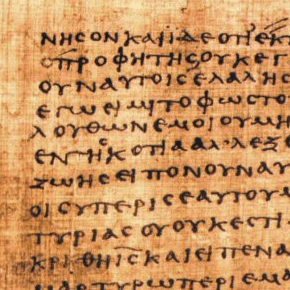
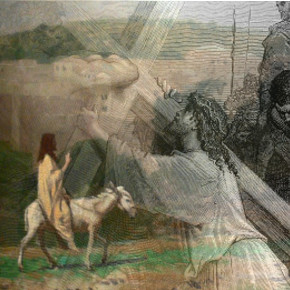
In addition to our town’s parade, we here at St. Mark’s remember not one, but two more parades today. In the first parade, a baby donkey walks down the Mount of Olives towards Jerusalem. A man rides on its back, and people hail him as the “king who comes in the name of the Lord.” In the second parade, the same man staggers out of Jerusalem under the weight of the cross, and people deride him with mocking shouts: “If you really are the king, then save yourself.”

These two parades – separated by less than a week’s time in Luke’s Gospel – couldn’t look more different. In the first, Jesus rides triumphantly into Jerusalem with “the whole multitude of the disciples” praising God. In the second, Jesus stumbles his way to the place called The Skull, whipped and beaten, too exhausted to carry his own cross the entire distance.

But if we take a deeper look at these two parades, we discover they aren’t as different as they appear on the surface. In both parades, Jesus subverts expectations. He could have ridden into Jerusalem on the back of many a more respectable beast, but he chose a baby donkey. Why? Well, for starters there was Zechariah’s prophecy to fulfill:

“…Shout aloud, O daughter Jerusalem! Lo, your king comes to you; triumphant and victorious is he, humble and riding on a donkey…” (9:9)

But beyond prophetic fulfillment, Jesus chose this humble farm animal to show the incongruity inherent in people’s expectations of their king. They wanted a warrior. They got a healer.

Jesus’ walk to Golgatha continues this subverting of expectation. “Save yourself,” people jeer. “If you are who you say you are, then break out of here and dispatch these Roman soldiers as you go!” What they don’t realize, however, is that Jesus has no interest in saving himself. He wants to save them.

In both parades, a vulnerable Jesus turns his face towards danger and death instead of running the other way. He had been saying for the entire journey south that Jerusalem was where everything was going down. This was high noon, and Jesus purposefully left his six-shooter at home. He rides into the city weaponless, with his deputies cringing and looking for likely hiding places. He chooses this utter vulnerability because it illuminates his innocence, the fact that he is put to death for no just reason. The second parade, the one to The Skull, happens because he continues defenseless. Pontius Pilate is just looking for an excuse to release him, and surely Jesus could have provided one. But no. Jesus is staring down the power of death itself, and he’s not about to blink.

Indeed, in both parades, Jesus has a grander agenda than anyone realizes. He is a king, but of a realm so much bigger than any physical location. He is locked in battle, but his enemy is so much larger than an intransigent religious establishment or even the entirety of the Roman Empire. He is going to die, but new life that triumphs over death will be the ultimate conclusion. The Pharisees want him to quiet his disciples. But Jesus says: You’re setting your sights too small. “If they were silenced, the very stones themselves would shout out.” The thief on the cross just wants to be remembered. But Jesus says: You’re setting your sights too small. “Truly I tell you, today you will be with me in Paradise.”

These two parades show the beauty and glory of Jesus for who he is: the messiah who fulfills God’s promises in unexpected ways; the healer-king who puts himself squarely between us and the power of death; the savior who yearns for us to stop setting our sights so small.

There was a fellow way back in the fifth century who did just that. Like his Savior, he set his sights big – like entire island big. He had been captured and taken to that island in his youth and he had been made a slave. After many years in servitude, he escaped and returned to his homeland. He might have expected to live out his days in comfort after the trials of his youth, but Jesus is in the business of upending expectations. What’s incredible and beautiful is that this man listened to Christ’s call, and went back to the place of his captivity. Just like his Savior, he turned his face towards danger and death, despite his vulnerability. And he enlightened an entire island with the Good News of Christ. His name was Patrick, and a parade in his honor happens at one o’clock today. Hmm. Maybe all three parades have more in common than I thought.

Art: Mashup of “Entry of the Christ into Jerusalem” by Jean-Leon Gemore (1897) and “Jesus Falling Beneath the Cross” by Gustave Dore

Reaching Into Eternity

Sermon for Sunday, March 13, 2016 || Lent 5C ||  John 12:1-11

reachingintoeternity

Imagine with me a letter written by Lazarus, the friend whom Jesus brought back to life after four days in the tomb.

To my dear sisters, Martha and Mary, by the hand of a trusted friend:

I have written and re-written this letter in my mind, and still any words I hope to scratch here will pale in comparison to the anguish I have in my heart for you. I love you both. My spirit wilts to contemplate putting you through grief yet again. You already passed from grief to joy, as I passed from death to life. But I fear we will reverse this cycle again before long.

Indeed, if you are reading this letter, then I have died once again: not from illness this time, but from malice. I am writing this to help you understand what has happened, and I’m sorry if my thoughts seem like fragments. Fragments are all I have right now. After dinner tonight, Jesus confirmed the fear that has been growing in my mind. His words shattered the innocence I wrapped myself in since coming out of the tomb.

He drew me aside after his confrontation with Judas. I could smell the perfume you anointed him with, Mary. I will remember that scent for the rest of my days. I will remember, too, his eyes set on mine, full of love and agitation. “Beloved,” he said, “I’m sorry.”

I didn’t know what to say. What did he have to apologize to me for?

“I’m sorry for what may be coming soon. I’m sorry that you may suffer on my account. I’m sorry I drew you into all this.”

He looked to be on the verge of tears. “Into what, Lord?” I asked.

“I brought you back from death, only to make you a target for death again. There are powers in Jerusalem who seek my life, and now they seek your life as well. These crowds that come to hear me—they also come to see you, to see with their own eyes proof of the words I speak. And now those who seek to kill me have added you to their list.”

I had sensed this—in the roving eyes of some in the crowd, in the growing sense of foreboding in my gut—but hearing it from Jesus’ own mouth made it real. I hadn’t named the fear I was feeling. I had feigned innocence, hoping that ignoring reality would change it. But Jesus’ words set reality in front of my eyes, and I could not turn away.

Will I die tomorrow? Will I be stoned in a public square or dispatched by an assassin’s blade? Will there be blood? Will it hurt? My sisters, I know you are reading this after I’m gone, so these thoughts must seem wild and misplaced in such a letter. But I beg you: keep reading, for I have not said all.

He kept his eyes on me as I took in his words. I didn’t know whether to run away or to weep on his shoulder. I felt faint. I looked around for something solid to lean on. The walls and chairs looked flimsy somehow. So I reached out and steadied myself on his arm. Finally, words came. “Why did you restore my life if I’m just going to be murdered weeks later?”

“Lazarus,” he said, “I wish I could spare you the prying eyes that have hounded you since that day. I wish I could spare you the pain that may be ahead of you. I cannot. But I can tell you this…”

Dear sisters, coming from any other person, what he said next would have rung pitifully hollow, but the light in Jesus’ eyes held the promise that his words are truth. “I came that you may have life,” he said, “and have it in abundance. This life that I give, beloved, is more than just your ability to move or think or breathe. This life includes those things, just as it includes pain and grief. But ever so much more, this life includes those wonderful gifts from God that reach into eternity: love and joy and grace and justice and peace. You are mine, and I have taught you how to love others as I love you. You are mine, and I make your joy complete. You are mine, and I offer the grace to strive for justice and peace everyday, no matter how many days are left to you.”

I was captivated. I looked him in the eye, and again that light of truth danced behind brimming tears that now began to trace silent streams down his face. “I shed tears now,” he said, “knowing that you may suffer for my sake. But I shed them also for the joy of knowing that such suffering cannot diminish the life I give you. Yes, you will die again. Do not let that keep you from living. And yes, you will live again after you die. Do not let that keep you from living now, either.”

His words washed over me, like clear water from a living spring. I drank them in, and they filled me. The life that he gives is more than life. The life that he gives is more than death. It does not begin when I die, nor did it begin when he brought me from the tomb. His life endures, for I am his whether I live or whether I die.

Dear sisters, while I pray to be spared from pain and suffering, I am not afraid of death. I am afraid that I do not have the strength to live as one who has this abundant life that reaches into eternity. I am afraid that I will live as though I were dead again.

But Jesus chose his words well the day he brought me back to life. Yes, he knew my fears even before I did. Do you remember what he said that day? I do, and those words are imprinted on me like the smell of tonight’s perfume. “Lazarus, come out.” He never spoke a word of resuscitation, never said, “I raise you from the dead.” He just commanded me to leave the tomb. And the gift of life came back to me in order to obey this command.

So until the day I pass through the gate of death again – and I sense it will be soon – Jesus’ command to stay out of the tomb still rules my life. This life he has given me – given each of us – reaches into eternity, so whatever ways we show forth his love now are burnished with the sheen of heaven. Whatever ways we show forth his love now will last long after we are gone, will ripple out to touch more lives than we can possibly imagine.

Mary, Martha: if you are reading this, I have died again. But know that my death will not stop the abundant life that Jesus revealed to me when I was still with you. Do not wait for death to begin your abundant, eternal life. It is yours now. Laugh and dance and sing and serve and love. And rejoice that Jesus continues to give you—and me—the gift of himself, the gift of abundant life that reaches into eternity.

With all the love in my heart,

Your Brother,

Lazarus

Healing Brokenness

Sermon for Sunday, March 6, 2016 || Lent 4C || 2 Corinthians 5:16-21; Luke 15:1-3, 11b-32

HealingBrokennessWe live in a broken world: broken homes, broken promises, broken government, broken ecosystems. We’re used to brokenness. We learn to live with it. We hear about another mass shooting or another intractable political standoff or another couple dissolving their marriage, and we might shake our heads for a minute and sigh and say, “Boy, I don’t know.” And then we go back to whatever we were doing. And yet, even in the midst of this listless response to brokenness, something niggles and naggles at us, unsettles us; something deep within reminds us that “broken” is not the way things are supposed to be. We believe that God created everything and called Creation “good” and never made a thing called “brokenness.” And yet, brokenness crept into Creation. Separation and division soon followed. Today, we see a broken world, and we know that it could be, that it should be – better.

And in that seeing, in that knowing, God invites us to participate in God’s mission to repair this brokenness. In today’s lesson from his Second Letter to the Corinthians, Paul tells us that God “has given us the ministry of reconciliation.” He continues, “In Christ, God was reconciling the world to himself, not counting their trespasses against them, and entrusting the message of reconciliation to us. So we are ambassadors for Christ, since God is making his appeal through us.”

Did you hear that? We are ambassadors for Christ – representatives of Jesus bringing his message of reconciliation to this broken world. Reconciliation is the healing of brokenness. When Jesus welcomes and eats with “tax collectors and sinners” in this morning’s Gospel, he models the ministry of reconciliation. The scribes and Pharisees like their society just fine the way it is. They’ve learned to live with the brokenness, profit from it even. And so they grumble when Jesus upsets the status quo and shows them what wholeness can look like. Jesus tells them a story about a family, a family marred by brokenness, a family in need of reconciliation.

The younger of two sons basically says to his father, “I wish you were dead so I could have my inheritance.” His father acquiesces, and the younger son takes his portion and travels to a distant country where he squanders his fortune in what the King James Version calls “riotous living.” At first glance, the younger son’s sin sure seems to be his debauchery, given his status as a decadent wastrel. But I don’t think his prodigality takes the top seed.

Instead, his major sin is the rift caused by his separation from his family. Jesus makes a point to say that the father divides his household to fulfill his son’s wish. And then the son doesn’t settle nearby, but in a “distant” country. With the division and separation complete, all that’s needed is a famine for the younger son to notice his folly. When he comes to himself sitting in the filth among the pigs, he realizes the brokenness his departure caused. He no longer feels worthy to be called a son, so he prepares himself to live with the brokenness and to be considered a hired hand rather than a member of the family.

At this point in the parable, I imagine the scribes and Pharisees nodding their heads in approval. The younger son defiled himself. He is unclean after touching all those pigs. Of course, he mustn’t be welcomed home. But Jesus isn’t finished telling the story yet.

The younger son travels back to his father’s house, prepared for the sad reality that it will never be home again. But when he is still a vaguely human shape on the twilit horizon, his father sees him and runs out to meet him and embraces him and kisses him. The young man begins his prepared speech: “I am no longer worthy to be called your son.” But his father will not tolerate the separation, the brokenness any longer. “This son of mine,” he says, “was dead and is alive again; he was lost and is found.” This son of mine. With these words, the father repairs the broken relationship, and the two are reconciled.

At this point in the parable, I imagine the scribes and Pharisees raising incredulous eyebrows. Now the father is unclean, as well, because he touched the younger son before he purified himself with the appropriate rituals. What kind of family is this? But Jesus isn’t finished telling the story yet.

When the elder brother hears the revelry coming from the house, he learns of his brother’s return, and he will not enter the house or join the party. The elder son echoes his brother’s sin by separating himself from the celebration. When the father comes out to plead with him, the elder son shows his own division from the family. He calls his brother “this son of yours,” thus ignoring the fraternal relationship. And rather than working like a son, he says, “For all these years I have been working like a slave for you.” Like a slave. Like the hired hand the younger son was prepared to be.

But the father continues to repair the brokenness in his family. “Son,” he calls his eldest. There is no division between us because “you are always with me, and all that is mine is yours.” Then the father attempts to heal the fraternal separation by emphasizing the sons’ relationship to one another: “This brother of yours was…lost and has been found.”

I imagine the scribes and Pharisees noticing that they themselves look an awful lot like the elder brother. I bet their own irritation with Jesus deafens them to the reconciling nature of the father in the parable. But while the parable ends, Jesus still isn’t finished telling the story yet.

Both sons separate themselves from the family, but their father goes out and meets both sons in their brokenness. He runs up to the younger when his son is still far off. He leaves the party to be with the elder. Jesus continues his ministry by mirroring the action of the father in the parable. He doesn’t just wait for people to come to him. He seeks people out where they are, eating with tax collectors and sinners, healing the sick, touching the unclean, standing with the marginalized, dying with the criminals in the refuse dump on the outskirts of the city.

That’s our savior, the one who will never let any barrier or rift or division – not even death – separate us from his love. Our savior leaves the 99 sheep to search for the one that is lost. Our savior seeks out and finds the man born blind after he’s thrown out of the synagogue. Our savior reconciles Peter to him after Peter’s triple denial of ever knowing him. Our savior left his home in order to bring us to it. And we are his ambassadors.

Today, we see a broken world, and we know that it could be, that it should be – better. We know in that deep place within that the world is not supposed to be broken. Participating in God’s mission of reconciliation begins when we listen to this deep place within, the voice of Christ our Savior telling us that we can make a difference. We can make a difference when we react to brokenness not with listlessness, not with apathy, not with indifference. We can make a difference when we react to brokenness with compassion, with the desire to be like the father in the parable and go out and meet our broken world head on.

It may seem like a fool’s errand, participating in God’s mission of reconciliation when the brokenness of the world is so great. It may seem insurmountable. But remember, Jesus isn’t finished telling the story yet.

*There’s a stealthy nod to The West Wing in this sermon. First person to figure it out gets five points.
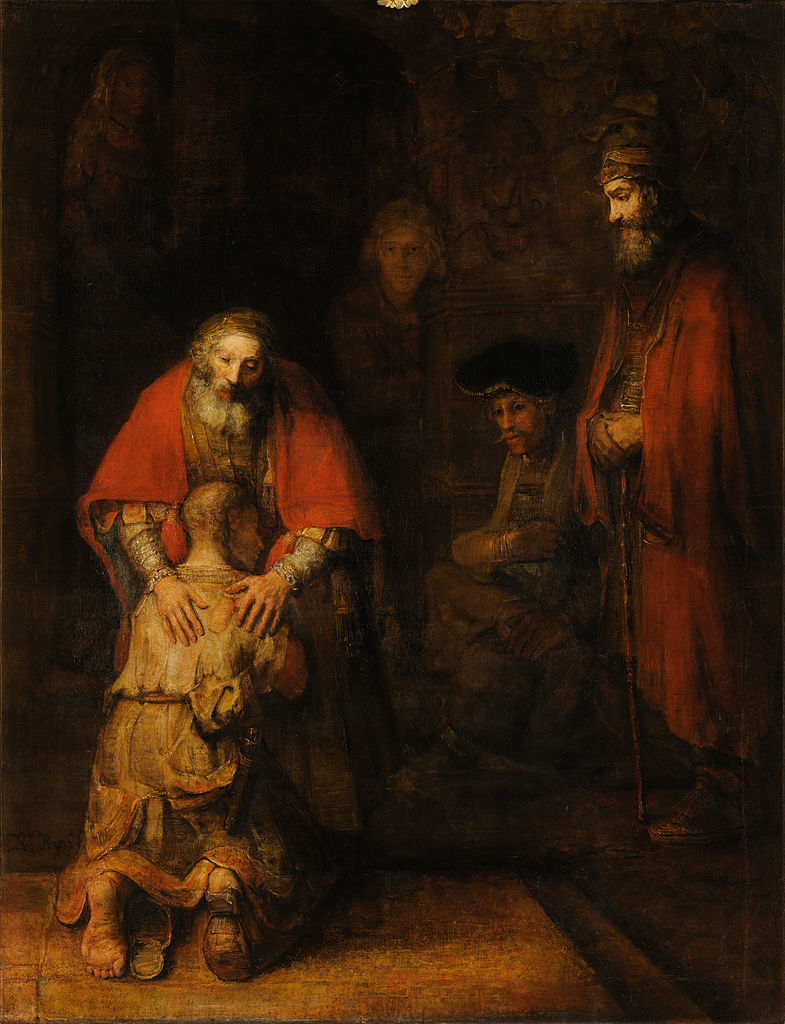
Art: Detail from “The Return of the Prodigal Son” by Rembrandt.

Transfigured Eyes

Sermon for Sunday, February 7, 2016 || Last Epiphany C || Luke 9:28-36

transfiguredeyesEvery year on the Sunday before Lent begins, we read this Gospel lesson. We call it the story of the Transfiguration, which is a fancy way of saying “something turning into something else, usually a more beautiful something else.” And if we stopped there with the label we apply to the story, we would get something out of it to strengthen our faith. We would see some evidence that Jesus was really whom he said he was, since his face changed and his clothes dazzled and two famous dead prophets came round for a chat. But I don’t think this evidence is really what Luke means for us to get out of this story. I don’t even think the term “Transfiguration” applies to Jesus. Rather, since the whole story is told from the disciples’ perspective, I think they are the ones who are “transfigured.” I’ll explain what I mean by that in a minute, but first I’d like to tell you about my fifth grade science fare project.

While many of my friends were slapping papier-mâché over chicken wire frames to make baking soda and vinegar volcanoes, I was enamored by the properties of light. So for my project, I procured a small triangular prism, glued it inside a shoebox, and positioned a penlight to shine at the prism. Then I cut a slit in the box so the judges could see the subtle rainbow made when the white light broke apart into every child’s mnemonic friend, ROY G. BIV. (That’s Red, Orange, Yellow, Green, Blue, Indigo, Violet for those of you who never met Roy in school.) I remember feeling so proud of that science project, like I had done magic by shining light through a prism. My mother hung prisms in the most sun-drenched windows of our house, so we always had rainbows dancing on the walls, and now I had captured one in a shoebox!

In the end, however, the explosive grandeur of the baking soda and vinegar volcanoes ruled the day, and I did not take home a blue ribbon. But because of my research I did find a way to rationalize my loss. “That blue ribbon is no better than my yellow ‘honorable mention’ ribbon,” I told myself. “It only appears blue because it reflects a certain wavelength of the visible spectrum.” See, I learned something!

I also learned that we humans see because light breaks open in predictable ways. Objects absorb, reflect, and refract light in particular patterns, which allow our brains to catalog them. The first Genesis creation story begins with God saying, “Fiat Lux!” (God speaks in Latin, didn’t you know?) “Let there be light!” Why? Well, because from the human perspective, we need light to give everything else definition and vibrancy. And yet, the light we see is a teeny, tiny part of the spectrum – just a 300 nanometer band, in fact.

Of course, we often labor under the presumptuous notion that only what we see exists, despite all evidence to the contrary. We listen to the radio. We microwave leftovers. We sunburn. All these things happen due to parts of the (electromagnetic) spectrum that we can’t see. But they are just as real as our friend, ROY G. BIV.

Now, the jump from science to theology is a short one here. When he takes the three disciples up the mountain, Jesus also negates the presumptuous notion that only what we see exists. “And while he was praying,” Luke tells us, “the appearance of his face changed, and his clothes became dazzling white.” The appearance of his face changed. Peter, James, and John see Jesus in a different and more glorious way than they had seen him before. In this moment on the mountaintop, Jesus gives his friends the gift of seeing him with transfigured eyes. They are used to seeing a dusty traveler with ruddy skin weathered by so many nights out of doors. But now they see him as God sees him: a luminous being shimmering in the light of God’s glory and favor. Their transfigured eyes see him for once unfettered by any notion of the usual expectation of humanity. Their transfigured eyes see into their collective memory, see connection to the prophets of old. And their transfigured senses continue to expand when their ears hear a voice that commands them to listen to Jesus.

I’m sure the experience overwhelmed Peter, James, and John. It certainly left them speechless. Just imagine if suddenly you could see the rest of the spectrum: the gamma and x-rays speeding by, the ultraviolet and infrared light expanding your vision, all the other waves crowding your visual cortex. I think I might last about half a second before my brain just stopped working, overloaded by the torrent of stimulation. If the disciples felt anything like that when they saw the true and radiant reality of Jesus on the mountaintop, then it’s no wonder Peter just started rambling incoherently.

The point of this whole thought exercise is to focus us on the following questions. As we approach Lent, a season of rededication to spiritual practice and realignment of skewed priorities, what encompasses the limited spectrum through which each of us views our possibilities? What blinders have we affixed to our eyes that keep us from seeing all the possibilities that God’s grace illuminates around us? And how can we receive the same gift Jesus gave his friends, the gift of transfigured eyes?

Too often we shackle ourselves to the tyranny of the currently possible. The spectrum we see is the one we were taught or the one we are used to or the one we are comfortable with. But there is so much more than the currently possible. Who could have predicted a hundred years ago the technology we have today? And who can predict where your faith might lead you tomorrow if you decide to take a risk today, to trust God today, to say “yes” to something today?

Too often we affix blinders to our eyes so that we see only one path. It’s just so much easier to keep our heads down and trudge along. But the truth of the matter is that our path is not a single road, but a person. When Jesus said, “I am the way, the truth, and the life,” he never meant for us to separate the three. Our path is a dynamic one, full of choices and consequences, and it takes a lifetime, but we never walk the path alone.

Too often we see only what we expect to see. And so we pray for transfigured eyes so we might catch glimpses of how God sees. This Lent, I invite you to join me in praying for such eyes. Each day for practice, make a point to notice something you’ve never, ever seen before. Today’s something might be bird in flight at sunset. Tomorrow’s might be the shape of your child’s face, so different now than it was a year ago. The next day’s might be the lettering on the cardboard sign of a silent and bundled figure at the traffic light. Whatever you see, engage it with appreciation or concern or thanksgiving. Practice noticing. Train your eyes to see past the surface to God’s dazzling reality underneath. That’s what transfigured eyes are for: to discover God’s glorious presence at the heart of all things, and to be thankful.

Mothers and Sons

Sermon for Sunday, January 17, 2016 || Epiphany 2C || John 2:1-11

mothersandsonsI love my mother with all my heart. For thirty-three years and five days, she has never wavered in her steadfast love for me, support of me, and delight in me. She delivered me in the middle of a Maine snowstorm; she endured through my advanced childhood self-centeredness; and she never let her own demons keep her from being my nurturer, advocate, mentor, and friend. I get my love of reading from her. I get my precociousness from her. And I get my ability to be quiet and listen from her. When I had my first ever bona fide moment with God, it was my mother who held me and rocked me – her seventeen-year-old baby boy – while I bawled my eyes out, overwhelmed by the immensity and clarity of it all.
As I said, I love my mother with all my heart. I’m saying this aloud today for two reasons. The first is to say “thank you” to my mother, who will be reading this tomorrow, I have no doubt. If she were here right now, I’d give her a big hug, and my chin would rest snugly on top of her head. The second reason is to locate myself on the continuum of relationships between mothers and sons. I am an unabashed “momma’s boy,” and proud of it. I would never think to call my mother by her first name, Edna. It just wouldn’t feel right. And while I now tend to call her “Amma” (her chosen grandmother name), I will always cherish the way my heart feels when I address her as “Mom.”

So when I read the story of the wedding in Cana of Galilee, I tend to focus on the relationship between Jesus and his mother. If you were paying attention, you might have noticed that the Gospel writer does not name her. She is not called “Mary” in this story. She is simply known as “the mother of Jesus.” In her only other appearance in the Gospel of John – at the foot of the cross – she is also only identified as Jesus’ mother. No name, just a relationship. This isn’t a fluke, as another recurring character in the Gospel of John is given the same treatment, someone mysteriously known as “the disciple whom Jesus loved.” Tradition tells us this disciple is “John,” but the story never names him. The relationship to Jesus is what matters.

Identifying people by their relationships to us is commonplace. Who’s that? “Oh, that’s my boss. Oh, that’s my best friend from high school. Oh, that’s my first cousin once removed.” (By the way, if you ever want to confuse my mom, try to explain the difference between first cousins once removed and second cousins. It’s really funny.)

When you were a kid, you more than likely fell victim to this tendency to identify via relationship. You were behaving badly and one of your parents identified you as the child of the other parent, right? “Tell your daughter to pick up her shoes.” “Tell your son to eat his zucchini.” (It’s possible that second example is personal – I do eat zucchini now, as long as it’s in soup.) In our language we stress our relationships. If a stranger asked me who is the vertically challenged woman with the beautiful smile and the heart of gold, I wouldn’t just say, “Edna.” I would surely add, “My mother.”

Yes, in our language we stress our relationships. We use possessive grammatical constructions quite a lot. My mother. Jesus’ mother. “There was a wedding in Cana of Galilee, and the mother of Jesus was there. Jesus and his disciples had also been invited to the wedding. When the wine gave out, the mother of Jesus said to him, ‘They have no wine.’” Now, he sasses her here, calling her, “Woman.” I’ve read that in Jesus’ day such an appellation was not considered rude, but I’m not sure I buy that. Jesus seems a mite petulant here; perhaps a bit of childhood regression for the Son of God. I know that I would never get away with it if I called my mother “Woman,” so I’ve never tried.

By calling her “Woman” instead of “Mom,” Jesus plays down the relationship. He doesn’t really want to be bothered. He just wants to keep a low profile and enjoy himself. But his mother is having none of that. She pushes him to help the wedding planners retain their hospitality. She pushes him to be his best, to reveal his glory. Just like a mother, right? – wanting her kid to shine. And, of course, Jesus gets over his momentary petulance and does what she says. So their mother-son relationship remains intact: she coaxes him to be brilliant, to be extraordinary. And he is.

By never calling her by name, the Gospel writer tacitly tells us to focus on this relationship. She is the mother of Jesus. Focusing on this relationship begs the question: Who are we? Yes, we have our names, which later on in the Gospel the Good Shepherd will speak as he leads us out of the sheepfold. Yes, we have our names, but who are we?

Well, to answer that question, we must quote the famous Christian axiom, “It’s not who you are that matters. It’s whose you are.” So whose are we? Last week, we spent the whole sermon answering this question. We are God’s beloved children. If we believe that, we have the starting point for every relationship that matters in our lives.

Who are you? I’m a child of God. Each of us is “child of God.” That’s the beginning. That’s the spark. That’s the soul. Every other meaningful relationship springs from this one. That’s why the marriage vows begin, “In the name of God.” That’s why the solemn, scrunched up faces of our infant children make us fall to our knees in gratitude to the Giver of all life. That’s why every difficult or inconvenient encounter can be transformed by remembering the other person is a child of God, too.

Indeed, the good news of Jesus Christ resounds with the beauty of relationships based in God’s own connective tissue. Today’s story happens at a wedding, after all! Over and over again in the Gospel, Jesus invites people into deep and abiding relationships with him. “I am the vine,” he says, “and you are the branches.” And just to make sure we get the point of all this, when Jesus’ mother appears for the second time, at the foot of the cross, in the moments before Jesus’ death, do you know what he does? With his last few ragged breaths, he stitches together a new family. He gives the two people who have no names into the other’s care: his mother and the disciple whom he loved. “Here is your son. Here is your mother.”

That’s what God’s story is all about: stitching us and all people and all creation more deeply into the fabric of God’s love. So the next time you see someone with whom you have a deep and abiding relationship – perhaps your own mother or your spouse or your child or your friend – give thanks to God for that relationship. And notice how the love of God strengthens that relationship. And notice how that relationship strengthens your love for God.

Image: Groom and Mother of the Groom dancing at mine and Leah’s wedding. A lovely memory, dancing with my mom.

God’s Dazzling Truth

Sermon for Sunday, January 10, 2016 || Epiphany 1C || Luke 3:15-17, 21-22

Godsdazzlingtruth“You are my Son, the Beloved; with you I am well pleased.” Whenever I read this beautiful verse of Scripture, my lungs expand with more air than normal. I take a deep, cleansing breath, and I remember the truth of these words, and I lament how easy it is to forget them.
“You are my daughter, the Beloved; with you I am well pleased.” God’s truth embedded in this verse expands out from Jesus and touches each precious life. Jesus did not hoard God’s love and pleasure; no, he gave himself freely so that we might share God’s love and pleasure.

“You are my child, the Beloved; with you I am well pleased.” Can you feel power and the promise in these words? Drink them in now. Close your eyes and whisper them to yourselves. Feel the weight of their truth. Feel the freedom they bring. You are my child. I love you. You are my joy, my delight. In all my acts of creating, over billions of years, across countless galaxies, I had never created you until now, and I am well pleased.

As you let these words sink in, I guarantee you will start to feel a conflict forming inside yourself. The conflict pits God’s dazzling truth against our natural wariness to believe anything that seems to have no strings attached, that seems too good to be true. Our suspicion arms itself with several arguments, so let’s take them in turn.

The first argument coming to the plate is swinging the bat of literalism: “God was talking to Jesus. Of course, God would say all that about the person who is literally God’s own Son. Let’s not get delusions of grandeur now. We’re taking too great a leap to include ourselves in the conversation.”

Well, we are taking a great leap: a leap of faith. We have faith that Paul’s words written to the church in Rome are true: “For all who are led by the Spirit of God are children of God. For you did not receive a spirit of slavery to fall back into fear, but you have received a spirit of adoption. When we cry, ‘Abba! Father!’ it is that very Spirit bearing witness with our spirit that we are children of God, and if children, then heirs, heirs of God and joint heirs with Christ” (8:14-17). We are children of God. Thus, God’s words, spoken from heaven as the dove descends, are for us, too.

“But wait,” says our suspicion, which now comes to bat with a little more nuance: “Maybe the first bit is for everyone because you are God’s children, but the second half has got to be for Jesus alone. Of course God would be well pleased in him. He’s Jesus. Look at everything he did!”

Well, that is true. And if this beautiful verse were spoken at the end of the Gospel rather than at the beginning, I might be swayed by that argument. But within Luke’s narrative, Jesus hasn’t done anything yet. He hasn’t said anything yet. He has completed no healings, spoken no parables, gathered no disciples, performed no miracles. All he has done is take a swim with his cousin John in the River Jordan. Therefore, God’s love and pleasure are not predicated on what Jesus does, but on who he is. And he is God’s child, just like us.

But now the heavy hitters are coming to the plate, the guys who swing for the fences. “What’s so beautiful about these words about being God’s children? Your own parents never lived up to your expectations. What makes you think God will?”

Yes, this is the sticking point. How could we believe God’s promise of love and pleasure when promises around us are routinely broken? (And not usually with malicious intent, but because things just fall apart sometimes.) There’s a whole other sermon waiting right here, so I’ll try not to get too diverted. Basically, one of the biggest challenges in our life of faith is resisting the urge to remake God in our own image. We are made in the image and likeness of God, not the other way around. The moment we start comparing God to our own parents or our own meager ability to be parents, we are no longer talking about God. God is the One who keeps promises, who tells the truth, whose steadfast love lasts forever. If our natural urge to compare God to ourselves or our parents ever waters down these fundamental stanchions of God’s own self, then we are no longer contemplated God for who God truly is.

The trouble is, it’s really hard to contemplate perfection using our own imperfect hardware. But the closer we get to believing that God really is who God claims to be, then the beauty of God’s words to Jesus at the River Jordan gain even more dazzling vibrancy. “You are my child, the Beloved; in you I am well pleased.”

But now the cleanup hitter comes up to bat, and our suspicion hits the ball right into our guts: “What have you ever done to deserve such love?”

You might think we covered this one when I mentioned that fact that Jesus’ ministry hadn’t even started yet. But no, our pernicious feelings of inadequacy and unworthiness will not let us off the hook that easily. Perhaps you lived in fear of your parents finding out you made a “C” on your report card. Perhaps you grew up with an alcoholic father and everything had to be just so, or else. Perhaps you have convinced yourself that you’d be more popular or more successful if you just had…something…more.

Whatever the case, it’s all a lie, a smokescreen. We have never, ever done anything to deserve such love. And we never will. The love of God is a pure gift. No strings attached. It’s too be good to be true, and yet it is true.

And so the conflict rages within us, our natural wariness pitted against God’s dazzling truth. Our arguments scream and howl and stamp and claw, but God only whispers again and again the same words, because the truth needs no bluster. Close your eyes again and listen for God whispering these words in the depths of your being. You are my child. I love you. You are my joy, my delight. In all my acts of creating, over billions of years, across countless galaxies, I had never created you until now, and I am well pleased.

Now open your eyes again and look around. God speaks this same truth not just to you alone, not just to us sitting here this morning, not just to people who look like us or think like us or believe like us, not just to people in the same type of family unit or the same income bracket. Everyone you meet and everyone you avoid meeting has this same truth stitched on their hearts. Treat them as beloved children of God, with no arguments or reservations. Treat all people as beloved children of God, and we will change the world.

Tapestry

Sermon for Sunday, January 3, 2016 || Christmas 2 || Luke 2:41-52

tapestryWell, here we are in 2016. Another year has come and gone, and oh so quickly. Years are short and not necessarily memorable unless we take the time to remember them, to stitch them into our living tapestries. I love that today’s Gospel mentions that Mary “treasures all these things in her heart.” Mary treasures both the painful memories, like losing Jesus in the caravan, and the happy memories, like finding him again in the temple. Mary treasures her memories, and they become the warp and weft of her life. They become the story of her walk with God.

At the last Confirmation class, we discussed how hard it can be to notice God’s movement in our lives because of how constant God’s presence is. We are hard-wired to notice change, not constancy. So to improve our awareness of God’s movement – and thus improve our chances of responding to that movement – I have a homework assignment for you. I want you to treasure things in your hearts.

Specifically, as we begin another new year, I invite each of you to look back over the past decade. For each year since January 2006, choose one event or theme that crystallizes for you what that year meant for your life. The event or theme doesn’t have to deal overtly with God’s movement, but I suspect that as you stitch these ten important moments together, you might start to see the wind of the Holy Spirit blowing in your life in unexpected ways. For the rest of this sermon, I’d like to present for you a personal example of this homework assignment. So, starting ten years ago:

It’s spring 2006, and my first year of seminary is coming to a close. I refuse to notice that love has already eroded into convenience and is well on its way to indifference. In mid-May, my girlfriend of two years initiates the end of our relationship. I push away the abyss threatening to engulf me because I need to focus on my chaplaincy at the children’s hospital. Back at seminary, I fall into despair. I isolate myself, presumptuously assuming that none of my friends has ever felt this way. I escape into the fantasy world of an online video game. I don’t surface again for many months.

It’s December 2007, and I ask my spiritual director to hear my confession in preparation for my first ordination. We enter the sanctuary. I kneel at the altar rail. I have written some notes on yellow legal sheets. The tears begin to flow as I confess the big things like my arrogant reliance on myself above everything else. I also confess the little things like cheating on that math quiz in fifth grade (sorry Mrs. Goldberg!). I am utterly exhausted when I finish. I feel empty, but in a good way, like there is more space in me for God to fill.

It’s June 2008 and blisteringly hot outside. There’s no A/C at the church, so I’m glad to be wearing seersucker. I kneel before my bishop and his hands are gripping my head firmly. The rest of the priests touch me lightly. I can feel my father’s hand on my shoulder. At the end of the service, people come to me for the customary blessing from the new priest. I don’t know what to say, but the words come just the same.

It’s late 2009, and some situations are just so brutal or hit so close to home that reliance on God is a requirement and not the fallback position. I get a call that a parishioner’s daughter has died suddenly in the night. God finds me cowering on the front stoop. I take a deep breath and enter the house. Every day for a week and a half, I spend time with the grieving parents, and I know without a shadow of a doubt that my normal strength is unequal to the task. I officiate at her funeral, my first for someone my own age. And God is there.

It’s the beginning of 2010, and I’m looking for a new position. I email my former spiritual director about a job on the day after she mentions off-handedly to her husband that she’d like an “Adam Thomas clone” to be her assistant rector. We don’t believe in coincidences, but in the weaving power of God’s movement. I start my new job in Massachusetts six weeks later. Four weeks after that, I meet Leah.

It’s February 2011, and I’m standing at the top of the steps in my church with my father by my side. Leah walks towards me wearing a beautiful white dress. We vow in the name of God to have and to hold each other until we are parted by death. She is my future, and you couldn’t stuff any more gratitude to God in my heart if you tried.

It’s July 2012, and I rush Leah to the hospital. She’s at a ten on the pain scale, and it takes the ER doctors all day to figure out why. The reason is connected to the fact that every month we hope and hope and hope for a positive pregnancy test, and every month our hopes are dashed. We cry a lot. We wonder what’s wrong with us that we can’t seem to do what our bodies are designed to do. The future we planned together dims.

It’s November 2013, and I get off the phone with Chris Barnes, who has just invited me to be your rector. I have to wait patiently for him to stop talking so I could say, “YES!” I feel the same sense of glowing rightness in my chest that I had felt about going to Massachusetts and marrying Leah. The next day, Leah and I have a special medical procedure, and two weeks later we see two tiny heartbeats on the ultrasound monitor.

It’s July 2014, and I watch as first a tiny baby girl and then a slightly less tiny baby boy enter the world. I look in awe at their solemn little faces and their fingers and their miniscule fingernails. I have no idea what I’m doing, but I hold them and whisper to them and change their diapers, and those seem to be the right things to do. I am overwhelmed, and my gratitude comes in kisses, not in words.

It’s the end of 2015, and I’m writing this sermon. I only cry twice (maybe three times) while writing it. It takes me a long time to figure out what to say about this last year. It has been a year of ups and downs, of complete joy and utter exhaustion. It has also been a year of first words and first steps and lots of food dropped purposefully on the kitchen floor. But as I look back, the one word that captures this past year for me is “home.” In all my life, I’ve never felt at home until now – until my children started crawling up the stairs and knowing which room is theirs, until I started walking in the back door and knowing that a pair of sticky hugs was in my immediate future. I am home.

This is what I treasure in my heart today. These are the events from the last decade that have woven themselves into the tapestry of my life. These are the moments – both happy and painful – that have helped sink the moorings of my faith deeper and deeper. As we begin 2016, I invite you to take some time to treasure the last decade in your heart. View your own living tapestry and see how the golden thread of God’s movement weaves through it. If you’d like to write yours down like I did, I would love to read it. Above all, in this new year, I pray that you may find treasure to hold in your hearts, and I pray that you may be the treasure, which others hold in theirs.

Made His Home

Sermon for Christmas Eve 2015; John 1:1-14

madehishomeRight now, you might be thinking, “Wait a second…where are the baby and the manger and the shepherds and the angels? I know it’s late, but I don’t think I nodded off during the Gospel reading.” Now, I don’t know whether or not you nodded off, but I can assure you that I didn’t say anything about the baby or the manger or the shepherds or the angels. Tonight, I read a different version of the story of Jesus’ Nativity. Allow me to explain in brief, and then we’ll get to what I really want to talk about on this most Holy Night, which is God making a home here.

But first: yes, we are used to the Christmas Pageant version of the story of the Nativity. Most of that story is found in the Gospel according to Luke. I say “most” because a few bits come from the Gospel of Matthew and a few others bits are made up entirely. Tonight we read another take on that same story, a take so vastly dissimilar that it seems to be a different story entirely. But it’s not. The story is just condensed. The story of the Nativity is distilled down to a single, yet powerful verse of scripture: “And the Word became flesh and lived among us, and we have seen his glory, the glory as of a father’s only son, full of grace and truth.”

That’s it. That’s the Gospel of John’s Nativity story. That one verse; half a verse really. “And the Word became flesh and lived among us.” Pretty concise, right? But even in their brevity, these words pack in a whole lot of meaning. They are pregnant words, so to speak.

The Word that becomes flesh is the main character of this prologue to John’s account of the Gospel. In just eighteen verses, John explores some pretty weighty theological ideas, and he does so using poetry. Indeed, these verses are best understood as a poem: John uses special words and rhythm and imagery in an attempt to get to the very heart of God’s making of and presence in Creation. The weightiest of these special images is the word “Word.”

This is the Greek word logos. We get the English suffix “-ology” from it; you know, biology, zoology, paleontology. We also get the word “logic” from it. When something is “logical,” it is orderly, organized, it makes good sense. So when John claims that Creation “came into being through [the Word],” he’s stating that God was organized about the act of creating, that God had a plan for the universe and wasn’t just creating all willy-nilly. You can see how John’s poem goes all the way back to before anything existed, all the way back to when there was only God. John needs this cosmic perspective in order to demonstrate the extraordinary specialness of what happens next.

This organizing principle, this logic behind Creation, this giver of all life, this Word became flesh. This Word took on the very meat and bones and skin and breath and soul that had evolved over untold millennia within the Word’s own orderly Creation. This Word became flesh in the person of Jesus of Nazareth, a man of seemingly humble origin who had a knack for helping people live better, fuller, and more authentic lives, serving one another in love. This Word became flesh, which means he got dirty and tired; he grieved and wept and sought comfort; he ate and drank and laughed with his friends. He was homeless at times; he was also a refugee. He was welcomed and excluded; he was loved and hated. He touched and healed so many people, but sometimes he needed to go off by himself to recharge. He took a first, newborn breath. He took a last dying breath. All this to say: he was one of us.

In fact, he was the best one of us. He was the best one of us because he was so much more than simply one of us. He was the Word. He was life as life is meant to be lived, as God dreams for life to be. As so many theologians have said, this Word became like us, so that we could become more like him.

And this thought brings us to the last important word in John’s brief Nativity story: “And the Word became flesh and lived among us.” Lived among us. I don’t like this translation. It’s about as weak a translation of the original language as you can get. I prefer this: “And the Word became flesh and made his home among us.” Made his home among us. This gets much closer to the intent of John’s original poetry. The Word didn’t just live here for a time. The Word settled here. The Word made a home here.

I think this second translation impacts me so much because I have lived quite a nomadic existence. In my nearly thirty-three years on this planet, I’ve lived in ten different states. The longest I lived anywhere was six years in Tuscaloosa, Alabama. The second longest was four years at college. I’ve lived a lot of places. But I never, ever felt like I was making my home anywhere. Until now. I live in a real house with my wife and two children. We brought the twins home to that house. In their short lives, they have never lived anywhere else. That is their home. We have made a home.

The Word became flesh and made his home among us. God made a home here. The Nativity we celebrate this night marks not a brief dalliance with Creation, not simply a passing through, but a commitment to be present, to be active, to be here. And through the power of the Holy Spirit, this commitment continues long ages past the Word’s earthly walk. The home God made is no longer just in Bethlehem or Nazareth or Jerusalem. The home God makes is here, in each beating heart. And the home God makes is also out there, within the whole of Creation. As the Godly Play stories so aptly put it: “All of God is in everyplace.” That’s God’s home. We are God’s home. And God is our home, now and into eternity.

So this night, we celebrate not only the first, newborn breath of the babe in the manger. We celebrate the deep reality that God made a home here in order that we might have a home in God.

Art: Detail from “On the Morning of Christ’s Nativity” by William Blake, 1809.

Listen for Truth

Sermon for Sunday, November 22, 2015 || Christ the King Year B || John 18:33-37

listenfortruthI find it ironic that the framers of our lectionary chose the Gospel lesson I just read as the one for today. Today is the feast we call “Christ the King” or “Reign of Christ.” And yet, for the entire length of his conversation with Pontius Pilate, Jesus specifically dodges Pilate’s questions about his kingship. “Are you the king of the Jews?” Do you ask this on your own, or did others tell you about me? “So you are a king?” You say I am a king. But if Jesus is king of anything, if Jesus claims to reign over anything in this passage, his kingdom would not include land or crops or livestock or resources. His reign would be over “the truth.” For this I was born, and for this I came into the world, to testify to the truth.

A truth kingdom. I like the sound of that. Would that we lived in one of those. But for anyone who’s ever heard a joke about politicians, you know the punch line always involves untruthfulness of some sort. We might give them the benefit of the doubt and say they don’t out and out lie most of the time, but they are masters of prevarication, obfuscation, and equivocation, that’s for sure. We’re used to this behavior from our political leaders; so used to it, in fact, that when a politician stumbles into a genuine moment, we’re amazed and we start asking if it were staged.

In our Gospel passage today, Jesus seems to be engaging in just such an impressive display of political obfuscation. Perhaps he’s trying to meet Pilate where Pilate is. Perhaps Jesus is using Pilate’s own tactics to get through to him. Or perhaps Jesus is simply telling the truth, but we’re so used to prevarication that even the truth sounds false. If that’s the case, I’d like to try something this morning. I’d like to try to rehabilitate the truth simply by speaking Jesus’ truth to you. Truth has a special ring to it, and I hope you hear its crystal clarity this morning. There will be no prevarication or obfuscation. But there will be mystery; after all, the truth is too big for us to understand completely. Jesus says, “Everyone who belongs to the truth listens to my voice.” So close your eyes now and listen for Jesus’ invitation to you to enter his kingdom. Listen for Jesus’ truth.

Are you hungry for more? Not for more stuff, more possessions, more things to clutter your house. Not for prosperity at the sake of others’ poverty. Not for more empty calories, the white starch of idolatry and self-deceit. There are so many idols out there scheming to fill you up, but you’ll only be left craving. There’s so much fear to gorge on, but fear will just leave you hollow. Are you hungry for more? For more meaning? For deeper connection? For sustenance that truly sustains? Then listen to Jesus: “I am the bread of life. Whoever comes to me will never be hungry, and whoever believes in me will never be thirsty” (John 6:35).

But I still have dry times, Lord. I believe, but I still feel empty more often than I’d like. How can I trust your words when I feel like this?

I know how you feel, says Jesus. I felt desolate in the garden of Gethsemane. I felt abandoned on the cross. I know it can be so hard to hear my invitation when you feel lost in the desert. But I’ve been lost there, too. I’m lost there with you right now, so that you may be found. Listen again to my invitation: “Come to me, all you that are weary and are carrying heavy burdens, and I will give you rest” (Matthew 11:28).

The desert I can handle, Lord. At least it’s bright there. But sometimes I look out at the world and all I see is darkness. There’s so much darkness, and I’m afraid there’s a shadow growing over my soul, too.

One time, says Jesus, I was looking out over the city of Jerusalem, and the tears just started flowing. Another time, my beloved friend died, and all I could do was weep. I know what it means to be a light shining in the darkness: a flickering flame that might snuff out at any moment. But have you ever seen a ray of darkness? There’s no such thing. Have you ever seen the darkness of a hallway flood into a bright room when the door opens? No. The light wins every time. The light will always win. As for the shadow growing over your soul, make sure it listens to my words: “I am the light of the world. Whoever follows me will never walk in darkness but will have the light of life” (John 8:12).

The light of life, Lord? How could I ever be worthy of such a prize? I spend too much time in darkness to deserve the light of life.

Nonsense, says Jesus. Do you think anyone has ever been worthy of the gifts God gives them? Do you remember that story I told about the son who takes his inheritance and squanders it? He came home penniless and ashamed, and what did his father do? His father ran out to him! His father could not wait another second to rekindle their relationship even though the son didn’t deserve it. Don’t be paralyzed by unworthiness. My love makes you worthy of my love. So listen to my truth, “Remember, I am with you always, to the end of the age” (Matthew 28:20).

But it can’t be all about me, Lord, can it? You helped so many people in your life, but up to now I’ve just been concerned with myself? There’s got to be more.

Oh, there is more, says Jesus. So much more. When you realize I am with you, you’ll also realize I’m with everyone else. And with that realization will come the desire to serve others as you serve me, especially those who are poor and lost, those who are my special project. You’ll find joy in feeding the hungry and giving drink to the thirsty. You’ll find joy in welcoming the stranger. You’ll find joy in clothing the naked and visiting the sick and imprisoned. Do you want to know the truth? Listen to this: “Just as you [served] one of the least of these who are members of my family, you [served] me” (Matthew 25:40).

Okay, Lord, so I live my life serving others, being a light in the darkness, and finding refreshment in your arms. But I’m still going to die someday. And I’m afraid.

I understand, says Jesus. I was, too. I even prayed to be spared, to let the cup pass from me. I can’t promise you a life free of pain. I can’t promise you a death free of pain, either. But I can promise to be with you in the pain of life and death. If you love others as I love you, then pain is inevitable. But so is joy. In the end, there is nothing but love and joy. Or should I say the new beginning? Listen to my truth: “I am the resurrection and the life. Those who believe in me, even though they die, will live, and everyone who lives and believes in me will never die. Do you believe this?” (John 11:25-26)

Yes, Lord, I believe. Please help my unbelief.

A truer prayer has never been uttered, says Jesus. “Everyone who belongs to the truth listens to my voice.” So listen for my word in your life. Listen for my truth. Live my truth: For “if you continue in my word, you are truly my disciples; and you will know the truth, and the truth will set you free” (John 8:31-32).

The Long Prayer

Sermon for Sunday, November 8, 2015 || Proper 27B || Mark 12:38-44

thelongprayerI’ve been preparing recently for Confirmation class, which begins later today. We have four tenth and eleventh graders and their sponsors ready to begin a five-month journey through their faith: learning, discussing, sharing stories. The next time the bishop visits, these four will have the opportunity to make a mature profession of faith if they so desire, and I am really excited to get to walk with them these next several months. Because I’ve had Confirmation on my mind, I’ve been thinking and rethinking some of the “nuts and bolts” of the way we express our faith as Episcopalians. Every once in a while, I like to preach on these “nuts and bolts” because in my job I get asked the same dozen or so questions about our practice all the time, and exploring such questions can help us all deepen our engagement in worship and in mission.

One of these questions has to do with the second half of our Sunday service – Holy Communion in particular. “What is Holy Communion,” I am often asked, “and why do you say such a long prayer right before it?” The second half of this question hit me again this week when I read today’s Gospel lesson, in which Jesus takes the scribes to task for all sorts of things – a few of which struck a little close to home.

“Beware of the scribes,” says Jesus, “who like to walk around in long robes” (looks down at self wearing an alb and chasuble) “and to be greeted with respect in the market-places” (not many people have the definite article at the beginning of their title, but priests do – ‘the Reverend Adam Thomas’) “and to have the best seats in the synagogues” (I guarantee you my chair is more comfortable than yours – look at that cushion!) “and places of honor at banquets” (Okay, okay, finally something that’s not true – as long as I have a lefty seat at the corner of the table, I’m good). “They devour widows’ houses” (All right, moving further away, this is good) “and for the sake of appearance say long prayers” (gulps).

For the sake of appearance say long prayers. We say a lot of long prayers on Sunday morning, and one in particular is longer than all the others put together: the Eucharistic prayer. We haven’t gotten to it yet this morning, since it happens later in the service. You’ll know when we arrive at the Eucharistic prayer because I will be standing behind the altar when we start it. So Jesus indicts the scribes on six different issues, and by my count I’m guilty of three, innocent of two, and the final one is pending. For the sake of appearance, they say long prayers. I can’t dispute that the Eucharistic prayer is long – most graces before a meal don’t last five minutes. So to break even on these six charges, I have to prove that I don’t pray this prayer for “the sake of appearance.”

Before I start my defense, you need to know I’m not the only one implicated in this. You all are co-conspirators. At the beginning of the prayer you and I share a short dialogue, right? (The Lord be with you. And also with you. And so on…). In this dialogue, I ask your permission to pray on your behalf, and you grant it when you say, “It is right to give God thanks and praise.” So that’s the first thing to remember: even though I’m the one talking, we’re all praying this Eucharistic prayer together.

Now that you have joined the defendant’s side of this indictment with me, let’s explore this question: If not for appearance, why then do we pray such a long and involved prayer before receiving Communion? My answer is this: we are part of God’s story. We nurture our faith when we take time each week to locate ourselves in this great story. And when we locate ourselves in the story, we realize that, by the power of the Holy Spirit, the story is still being told. And when we have this realization, we give thanks to God for our participation in God’s story through the Body and Blood of Jesus Christ.

Now I know that was a pretty dense answer, so let’s unpack it a little bit. First, we locate ourselves in the story by praying, “Holy and gracious Father: In your infinite love you made us for yourself.” We fell away from you, but you gave us another chance by sending your Son. We and Us. Not They and Them. This story is about us. We don’t deserve mercy, but God doesn’t care one lick whether or not we deserve it. And that’s called grace.

With this grace emboldening us, we then fulfill Jesus’ request made at his last supper with his friends when he took bread and broke it. But notice that when I narrate the breaking of the bread, I don’t actually break it. Not yet. I break the bread later for the utilitarian purpose of sharing it. The reason I don’t break the bread when Jesus does is because I am not standing in for Jesus. And we are not reenacting the Last Supper. This is important, so listen up. We are not reenacting the Last Supper; we are participating in it. There has only been one Last Supper, and we were there. We are there each time we partake of Christ’s Body and Blood. We are there with everyone who has ever received the sacrament. We are there with the great cloud of witnesses that we invoke later in the prayer. We are there as the Body of Christ to receive the Body of Christ. Thus, the broken bread makes us whole: one body in Christ made up of many members, each supporting the others in worship, love, and service.

That’s why we invite the Holy Spirit to fill the bread and wine with the presence of Christ: not simply to remember what Christ did, but to participate in what Christ is doing. The story is not over yet. The Bible might be finished, but the story continues – God’s story of making, redeeming, and sustaining this little Creation of God’s. When you come to the altar rail and put out your hands, you signal your fervent desire to participate in this great story. In the Eucharistic prayer, we tell the story together, and in the telling and in the sharing we take on our role as the characters in the current chapter. We are the people to whom Christ offers his Body and Blood in order that we might both feel closer to him and feel strengthened to serve. We are the people enlivened by this precious nourishment. We are the people with a story to tell.

And that’s why we give thanks. The Eucharistic prayer is a prayer of Great Thanksgiving: thanksgiving for God’s mercy and grace; thanksgiving for Christ’s sacrifice and sustenance; thanksgiving for the Holy Spirit’s presence and empowerment. We give thanks that we are a part of the story. And it is quite a story. I don’t know about you, but a five-minute praying of the story seems downright short when you realize all that it entails. But of course, we don’t tell the story just once a week for five minutes on a Sunday. We tell the story each day of our lives.

We don’t pray this long prayer just for the sake of appearance. We pray this long prayer to give thanks for our part in God’s great story. And then we receive Holy Communion to strengthen and nourish us to continue telling that story together.