Who is this Jesus?

Sermon for Sunday, April 9, 2017 || Palm/Passion Sunday, Year A || Matthew 22:1-11; Matthew 26:36 – 27:56

As we move in our service from the humble triumph of Jesus’ festive entry into Jerusalem towards his arrest, trial, and crucifixion, there is one question on my mind. It is the question asked at the end of the Palm Sunday Gospel reading. “When he entered Jerusalem, the whole city was in turmoil, asking, ‘Who is this?’”

Who is this Jesus?

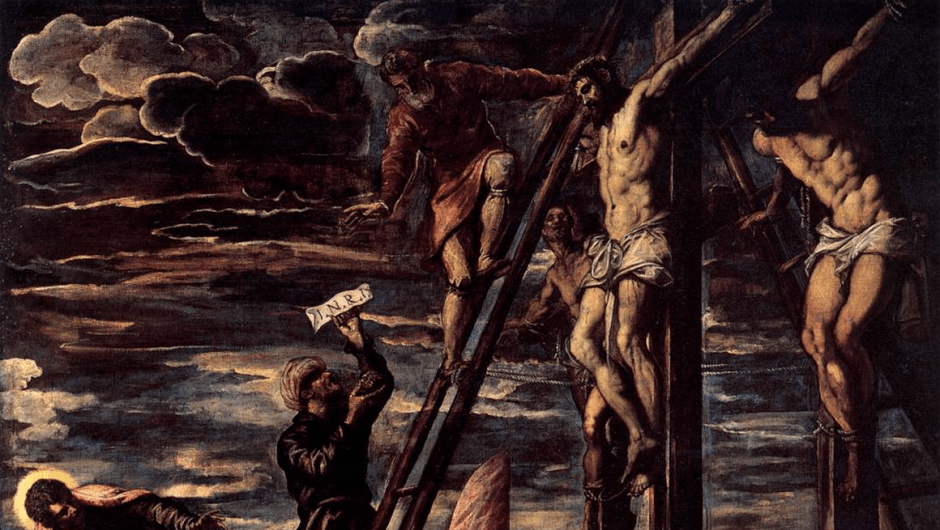
At the end of today’s service, we will read the Passion Gospel; that is, the story of Jesus’ arrest, trial, suffering, and crucifixion. It is a story that is at once beautiful and heartbreaking, and I cannot read it without being moved. Indeed, it makes me tremble, tremble, tremble, as the old spiritual says. Today, as we hear this powerful story of our Lord’s unbreakable love for us and for all creation, I invite you to listen to how Matthew’s telling answers the question asked in today’s first Gospel story: “Who is this?” Continue reading “Who is this Jesus?”

If You Had Been Here

Sermon for Sunday, April 2, 2017 || Lent 5A || John 11:1-45

“Lord, if you had been here, my brother would not have died.” So say both Martha and her sister Mary when they meet Jesus outside Bethany. They must have been saying this over and over again to each other in the four days since Lazarus’s death: “If the Teacher had been here, things would be different. If Jesus had come when we first wrote to him. If, if, if…”

Two weeks ago, one of our ten Handy Guidelines told us that how a line of dialogue is spoken is a matter of interpretation. So how do the two grieving sisters deliver this line? Is it an accusation? [angrily] “Lord, if you had been here, my brother would not have died.” Is it wistful? [sadly] “Lord, if you had been here, my brother would not have died.” Or is it faithful? [lovingly] “Lord, if you had been here, my brother would not have died.”

Probably a little bit of each one, all rolled together in that roiling mass of anger and sadness and love that we call “grief.” No matter how Martha and Mary speak this statement, my question is this: is it true? Would Lazarus still be alive if Jesus had been there? Continue reading “If You Had Been Here”

The Gift of God (With 10 Handy Guidelines for Interpretation)

Sermon for Sunday, March 19, 2017 || Lent 3A || John 4:5-42

Recently, a few dozen parishioners of St. Mark’s blessed us all with their meditations on Bible passages found in the Lent issue of The Lion’s Tale magazine. Their work got me thinking about biblical interpretation in general and that fact that such an adventure is not reserved for clergy alone. Anyone can be an interpreter of the Bible, though I am aware that most people do not feel equipped to do so. So today, I’m going to give you a crash course on interpreting the Bible, as at least a place to start: Ten Handy Guidelines for Interpretation (or HGIs for short) that we will derive from the Gospel story I just read. There’s a bookmark in your program that lists the Handy Guidelines, and I invite you to stick it in your Bible when you get home. You ready? Here we go. Continue reading “The Gift of God (With 10 Handy Guidelines for Interpretation)”

The Guest Star

Sermon for Sunday, March 12, 2017 || Lent 2A || John 3:1-17; 7:45-52; 19:38-42

The Pharisee Nicodemus is not a member of the main cast of the Gospel according to John. In the parlance of television, he would be known as a recurring character. If each chapter of John’s Gospel were an episode of a TV series, it would fill one standard network season, and Nicodemus would guest star in episodes 3, 7, and 19. We meet him at the beginning, middle, and end of Jesus’ ministry, and each time we drop in on him, Nicodemus is somewhere new in his own journey towards an active faith in Christ.

The Gospel writer makes clear that the intention of the Gospel is to help the reader believe by telling the story of Jesus in a certain way. The writer uses Nicodemus’s three-part journey as a stand-in for our own, as we, too, journey towards more active faith in Christ. The world of Nicodemus and our own world share some striking similarities. Nicodemus lived in a world that had yet to be steeped in Christian tradition; people around him were either confused by the message of Jesus, hostile to it, or ignorant of it. Today’s world is similar; the Christian worldview no longer permeates Western culture, while confusion, hostility, and ignorance to the message of Jesus are in long supply. Today, we’re going to go on the journey of our guest star Nicodemus to see what his participation in the story of Jesus has to tell us about our own. Continue reading “The Guest Star”

The God-Fountain

Sermon for Ash Wednesday, March 1, 2017

One of my favorite American poets, James Weldon Johnson, opens his book God’s Trombones with a poetic prayer, which begins like this:

O Lord, we come this morning
Knee-bowed and body-bent
Before Thy throne of grace.
O Lord—this morning—
Bow our hearts beneath our knees,
And our knees in some lonesome valley.
We come this morning—
Like empty pitchers to a full fountain,
With no merits of our own.
O Lord—open up a window of heaven,
And lean out far over the battlements of glory,
And listen this morning.* Continue reading “The God-Fountain”

Transformed (God’s Point of View, part 8 of 8)

Sermon for Sunday, February 26, 2017 || last Epiphany A || Matthew 17:1-9

We have reached the final week of our Epiphany sermon series, in which we have been imaging our way into God’s point of view. God sees, names, and celebrates us as beloved, befriended, gifted, blessed, enlightened, unfinished, and finished. This brings us to our final word of the sermon series: God names us “transformed.” The more we practice seeing ourselves and others the way God sees us, the more we participate in our own transformation.

I saved this word for today because I knew we would be reading the story of Jesus’ Transfiguration. He goes up the mountain with Peter, James, and John and there the Gospel tells us, “he was transfigured before them, and his face shone like the sun, and his clothes became dazzling white.” Despite what the text says, I’ve never thought that Jesus himself was changing in any way. This story has always been for me a window into God’s point of view. On the mountaintop, God gives Peter, James, and John a gift. God gives them the gift of seeing Jesus as God sees him, a luminous being awash in God’s love and grace. And I’ve always wondered if the disciples had turned and looked at each other, would they have seen each other similarly transfigured?

Continue reading “Transformed (God’s Point of View, part 8 of 8)”

Blessed (God’s Point of View, part 4 of 8)

Sermon for Sunday, January 29, 2017 || Epiphany 4A || Matthew 5:1-12

I thought I hit record this week, but I didn’t, and with only one service because of St. Mark’s Annual Meeting, I failed to capture the audio for this sermon. Apologies.

Three weeks ago, we began an Epiphany sermon series in which we are imagining our way into God’s eyes and trying to see ourselves as God sees us. What is God’s point of view? What does God see, name, and celebrate about us? And how can we incorporate that divine point of view into how we interact with God’s creation?

We began with Belovedness. God sees and names us and each person we meet as God’s Beloved. Living in this reality means affirming in word and deed the dignity and value of all people. Next we talked about God befriending us. God calls us into mission alongside God, not as subjects or employees, but as partners, friends. And this friendship leads us to create strong relationships of our own. Love leads to friendship, which leads us out into the world, participating in God’s mission of healing and reconciliation. Here we claim our giftedness, not to make ourselves feel special, but to use our gifts to make others feel so. We claim our giftedness, which helps us be blessings in the world.

With this word – “blessing” – we return for a fourth time to God’s point of view. God sees, names, and celebrates us as blessed. There are two parts to blessing: sustenance and mission, and neither is particularly well understood. Continue reading “Blessed (God’s Point of View, part 4 of 8)”

Gifted (God’s Point of View, part 3 of 8)

Sermon for Sunday, January 22, 2017 || Epiphany 3A ||Matthew 4:12-23

Two weeks ago, we began an Epiphany sermon series in which we are imagining our way into God’s eyes and trying to see ourselves as God sees us. What is God’s point of view? What does God see, name, and celebrate about us? And how can we incorporate that divine point of view into how we interact with God’s creation?

We began with Belovedness. God sees and names us as God’s Beloved. When we enter this reality, we see, name, and celebrate that each person we meet is also the Beloved of God. Living in this reality means affirming in word and deed the dignity and value of all people. Last week we talked about God befriending us. God calls us into mission alongside God, not as subjects or employees, but as partners, friends. And this friendship leads us to create strong relationships of our own, often befriending the unlikeliest of people, many of whom are those who have received little love.

Love leads to friendship, which leads us out into the world, participating in God’s mission of healing and reconciliation. Here we return to God’s point of view because we wonder how we possibly could contribute anything meaningful to such a vast enterprise as God’s mission. We imagine our way into God’s eyes again. We discover that God sees, names, and celebrates us as gifted. Continue reading “Gifted (God’s Point of View, part 3 of 8)”

Befriended (God’s Point of View, part 2 of 8)

Sermon for Sunday, January 15, 2017 || Epiphany 2A || John 1:29-42

A week ago, we began an Epiphany sermon series in which we are imagining our way into God’s eyes and trying to see ourselves as God sees us. What is God’s point of view? What does God see, name, and celebrate about us? And how can we incorporate that divine point of view into how we interact with God’s creation?

Last week we began with Belovedness. God sees and names us as God’s Beloved. When we enter this reality, we see, name, and celebrate that each person we meet is the Beloved of God. Living in this reality means affirming in word and deed the dignity and value of all people. Claiming belovedness is the best way to stoke our own reserves of compassion for those on the margins, who we’d rather ignore to make our own lives a little more pleasant. Being God’s Beloved does not allow for such a heartless option, for they are God’s Beloved, too.

Thus, imagining how God sees us is not an entirely pleasant exercise. Being beloved is at once comforting and conflicting. We rest in God’s love, and we feel the pinch in our souls that so many out there feel no love at all. And so we decide to do something about that. This decision leads us back to God’s point of view. God befriends us, calling us into mission alongside God, not as subjects or employees, but as partners, friends. And this friendship leads us to create strong relationships of our own, often befriending the unlikeliest of people. Continue reading “Befriended (God’s Point of View, part 2 of 8)”

Beloved (God’s Point of View, part 1 of 8)

Sermon for Sunday, January 8, 2017 || Epiphany 1A || Matthew 3:13-17

Two years ago I did a sermon series during the season after Epiphany, and I enjoyed writing it so much that I thought I’d give it another shot this year. When I was putting together the materials for our pledge drive last fall, I wrote a paragraph that really energized and focused my share in our collective ministry. The words appeared on the back of the stewardship brochure, and they read: “At St. Mark’s Episcopal Church, we see, name, and celebrate the presence of God in our lives, our church, and our neighborhoods.” The paragraph continued on in a missional vein, but that first sentence, especially the verbs “see, name, and celebrate,” really sparked for me.

See. Name. Celebrate. Wonderful verbs at first glance, but then I started living with them. I don’t know about you, but my eyes don’t work very well, even when I’m wearing my corrective lenses. So seeing is hard. Naming involves gaining intimate awareness of something, and who has time for that? Finally, celebrating often feels like betrayal – with some much wrong in the world, how could we possibly find cause for celebration? Continue reading “Beloved (God’s Point of View, part 1 of 8)”