The Second Word: Invitation

(Or “I Know the Way Out”)

Sermon for Sunday, January 18, 2015 || Epiphany 2B || 1 Samuel 3:1-10; John 1:43-51)
Word2InvitationLast Sunday, we started our six-part sermon series about our lives as followers of Jesus Christ. And we began with the word “Affirmation.” God affirmed in the earliest moment of creation the fundamental goodness of that creation. And God affirmed Jesus – and by extension we who are also God’s children – as the beloved, in whom God is well pleased. The love and goodness of God form the core of our identity. They are not something we earn. They are not something that can be dislodged due to our own presumed deficiencies. When we embrace this fundamental truth, we are ready to listen — really listen — for God’s invitations in our lives.

That’s the second word: Invitation. As we move on, you’ll see how closely linked our two words are, and you’ll see why we had to start with affirmation in the first place.

Invitations offer specific, time-sensitive choices about how you are going to spend your time and resources. A friend may invite you to her birthday party. A head hunter may invite you to apply for a new job. A coach may invite you to join a club soccer team. Or God may invite you. Let me rephrase – God does invite you, me, each of us to join God in God’s mission of healing and reconciliation in this world.

We’ll get to that mission next week since “mission” is our third word. For now, let’s stay with “invitation” – God’s invitation. When God invites us to partner with God in mission, we always have a choice and the mission is always specific. Individual invitations may be time-sensitive due to the exigencies of what a particular mission is, but God’s invitations never expire. God renews them day by day, hour by hour. God is always inviting us into deeper relationship, into closer partnership, into greater service.

In our story this morning from the Hebrew Scriptures, God calls to the boy Samuel four times. No three strikes and you’re out here. On the fourth time, Samuel responds to God’s invitation, but I imagine God would have kept calling until Samuel and Eli figured out what was happening.

Sadly, unlike Samuel, we often turn away from the invitations God sends us. We ignore them or decline them because of where or why God delivers them. This is because, most often, God’s invitation intersects with our inadequacies, our pain, our brokenness. Each of us is broken in one way or another, or in many ways. Brokenness is part of the human condition because perfection is far from us and sin is near. We hurt each other. We hurt ourselves.

But when we allow God to move in our lives, we discover God redeeming this brokenness by offering us invitations to go to the center of our pain. Because only at the center of our pain can healing begin. And because only at the center of our pain will we find solidarity with others feeling the same pain as we. God’s desire to extend holy invitations is not the reason we are broken; rather, accepting a holy invitation is the best way to make our brokenness mean something for ourselves and to others.

I’d like to share with you a deeply personal story about my own brokenness to illustrate this point. I share this not to garner sympathy, but to demonstrate from my own experience God’s astonishing ability to redeem brokenness and refashion old pain into new possibility.

When I was eleven years old, the church broke me. My father was three years into his rectorship at his first church when everything started to fall apart. His misplaced enthusiasm and zealous naïveté collided with an intransigent establishment that said it wanted change and growth, but was not ready to face the consequences of such things. My father was the proverbial unstoppable force, and the establishment the immovable object. And my mother, sister, and I were caught in the middle.

I do not remember much about the conflict. But I do remember one Sunday morning. It is a fixed point in my life. I was acolyting at the 8 o’clock service. My father stood up to preach, but a few minutes into his sermon, a man in the congregation also stood up, a man who had been a friend to our family when we first moved. He spoke out sharply, telling my father to “sit down and shut up.” I had never heard anyone speak to my dad that way, let alone during a church service. I started to cry. My father came over and calmly asked if I’d like to go home. I nodded, and he hugged me and helped me back to the sacristy. Later that week, several parishioners accused my father of planning and then staging my tearful departure from the church.*

A few months after that, we moved to Alabama and were met by the most gracious and loving congregation a clergy family could ask for. But I didn’t trust them. I always wondered when the betrayal would happen. I was broken.

Where is God’s holy invitation in this story? How is God redeeming this brokenness? Let me tell you. The church that broke my family was also called St. Mark’s. It was here in New England, about sixty miles from this spot. It was my father’s first call as rector. We lived next door in the rectory. Our family had two young children, a boy and a girl. You might see a pattern here.

Somehow, by accepting God’s holy invitations throughout my life, my family has arrived at a place close to the center of my childhood pain. And I feel God redeeming that pain every day as I collaborate in ministry with the wonderful people at this St. Mark’s; and as I walk with people who have also been broken by the church.

Each of us is or has been broken in one way or another. But through God’s invitations, our brokenness can mean something. Perhaps alcohol ruined your life years ago, but you’re a dozen years sober, and now you sponsor new members of AA who are trying to turn their lives around. Perhaps the scourge of gun violence cruelly took the life of a loved one, and now you rally support to end such senseless killing. Perhaps you were in the closet in high school and know the pain of one living a lie, and now whenever you meet a gay teen you do all in your power to bring hope to that person’s life. “It gets better,” you say, and you mean it. These are God’s invitations, delivered to the heart of our own pain and brokenness.

And this is where affirmation re-enters our discussion. Since so many of God’s holy invitations originate in our brokenness, our pain can trick us into thinking the invitation is meant for someone else. But we err when we think that God can only use the whole parts of us, as there aren’t many of those anyway. That’s why we must remember that before anything else, God affirmed us as God’s good and beloved children. No amount of brokenness can keep God from inviting us into deeper relationship, closer partnership, and greater service.

We’ll pick up this greater service next week when we reach the third word: “Mission.” But for now, I’d like to share one last story of finding God’s invitation in our brokenness. It comes from Leo McGarry, the chief-of-staff on the fabulous TV show, The West Wing, and a recovering drug and alcohol addict. Leo tells the struggling Josh Lyman this parable:

“This guy’s walking down the street when he falls in a hole. The walls are so steep he can’t get out. A doctor passes by, and the guy shouts up, ‘Hey you, can you help me out?’ The doctor writes a prescription, throws it down in the hole, and moves on. Then a priest comes along, and the guy shouts up, ‘Father, I’m down in this hole, can you help me out?’ The priest writes out a prayer, throws it down in the hole, and moves on. Then a friend walks by. ‘Hey Joe, it’s me. Can you help me out?’ And the friend jumps in the hole. Our guy says, ‘Are you stupid? Now we’re both down here.’ The friend says, ‘Yeah, but I’ve been down here before, and I know the way out.’ ”

<< The First Word: Affirmation  ||  The Third Word: Mission>>

*I shared with my father, the Rev. Dr. William Carl Thomas, the few paragraphs concerning my experience as an eleven-year-old, and he asked me to share with you what happened after I left the church from his perspective. He writes: “This is a powerful part of your story. You should and must tell it. I would, however, ask you to consider adding what happened after you left the sanctuary (interesting word: not a place of safety for you at that time!). I resumed my sermon, the text was on the golden calf while Moses was on the mountain and the whining that accompanies unrealistic expectations: no wonder I was challenged. The most odd and graceful thing for me occurred as we shared holy communion. Everyone came to the altar rail, including my antagonist. The blessing (and irony) of offering him and the other antagonists the grace found within the sacrament still prompts a sense of wonder and joy when the hugeness of God’s love is made evident.

The First Word: Affirmation

(Or The Fundamental Goodness of Creation)

Sermon for Sunday, January 11, 2015 || Epiphany 1B || Genesis 1:1-5; Mark 1:4-11

Word1AffirmationYou may recall during a sermon last spring, I challenged you to choose six words to proclaim your faith. I remembered the “Six-Word Witness” challenge as I began to prepare for this new season after Epiphany, as there happen to be six Sundays between now and Lent. If you read my article in the recent issue of The Lion’s Tale, you got a sneak peak at a particular six-word witness, one that describes the trajectory of the next six weeks as we hear the story of the beginning of Jesus’ ministry. My plan during this season after Epiphany is to connect this sermon with the next five to tell a much larger story of our lives as followers of Jesus Christ.

Yes, you heard that right. Today’s sermon is the beginning of a six-part series. That means if you have plans to go skiing in a couple of weeks, I’m afraid you’re going to have to cancel.

We begin today with the first word: Affirmation. And we begin today, appropriately, at the beginning. What we find when we enter the story as early as we possibly can is the affirmation of goodness. “In the beginning when God created the heavens and the earth, the earth was a formless void and darkness covered the face of the deep, while a wind from God swept over the face of the waters. Then God said, ‘Let there be light’; and there was light. And God saw that the light was good.”

Right away, in the first verses of the first chapter of the first book of the Bible, God has already affirmed something as good. This pattern continues throughout the rest of the creation story. Each day God creates, and that which God creates God affirms as good. Thus the fundamental goodness of creation is built into the very fabric of creation. From the sweeping array of celestial bodies to the lowliest tadpole dwelling in the muck to us troublesome and ungainly humans, God affirms everything God makes with the seal of goodness.

(As an aside, God calls us humans “very” good while the rest of creation is merely good, but I think that has more to do with the fact that we humans we were the ones who wrote it all down.)

The reality that goodness entered creation on the ground floor is of utmost importance for the rest of the ongoing story. There have been folks in the past, notably in the early centuries of Christianity, who taught that the physical creation God made — the matter, the flesh, the stuff we can see and touch — was, in fact, inherently evil. They taught that only the spiritual realm held any goodness, and so they sought to divorce themselves from the flesh entirely. Of course, to make this heretical mental leap, they had to ignore the bulk of the Biblical witness, which they did with no qualms at all. Their path led to disengagement from the world; the founding of secretive, insular societies; and what I imagine was quite a lot of struggle against instincts that are totally normal, but which they decided were base and evil. Thankfully, the majority of Christians were not led astray by this faulty understanding of creation. And so we still have the witness of Genesis reminding us of God’s affirmation of the fundamental goodness of creation.

But now comes our own mental leap. Or call it a leap of faith. We move from one beginning to another, from the beginning of creation to the beginning of the good news of Jesus Christ. At the outset of Mark’s account of the Gospel, Jesus comes up out of the water of the River Jordan during his own baptism. He sees the heavens torn apart and the Spirit descending on him like a dove. And he hears a voice from heaven say, “You are my Son, the Beloved; with you I am well pleased.”

Notice the placement of this piece of the Gospel. Before Jesus has a chance to do anything of consequence; before his ministry gets off the ground; before any miracles or teachings or healings or his death or resurrection, God showers upon Jesus God’s love and pleasure. Just like God affirms creation as good right from the start, God affirms Jesus’ identity as God’s beloved Son before he has a chance to earn the right to such a name.

Now, you might be thinking: “Of course God affirms Jesus as God’s beloved Son — that’s who he is! What about me?!” Yes, what about the rest of us troublesome, ungainly, and yet “very” good humans? Well, to make our leap of faith, we need a little help from our friend the Apostle Paul. He writes to the church in Rome: “For all who are led by the Spirit of God are children of God. For you did not receive a spirit of slavery to fall back into fear, but you have received a spirit of adoption. When we cry, ‘Abba! Father!’ it is that very Spirit bearing witness with our spirit that we are children of God, and if children, then heirs, heirs of God and joint heirs with Christ” (8:14-17).

If the writers of Genesis were presumptuous to call us “very” good, then Paul must be doubly so to claim that we are joint heirs with Christ. Or is he? Perhaps, instead, Paul has seen into the truth of the matter, seen Jesus’ plan all along, a plan to show us what we have always been and to reaffirm our inherent goodness, our lovableness.

And here’s where our own version of the heresy I spoke of earlier comes to into play. While those folks taught the matter of creation was inherently evil, there is an overriding voice in our modern American society telling us that we aren’t exactly evil, but we sure are deficient. I’m of course referring to my favorite homiletical punching bag, the ubiquitous marketing department. Marketing campaigns work like this: they tell us ways we are defective, and then they try to sell us products designed to improve those defects. Truck commercials tell men they aren’t manly unless their vehicles can haul a couple tons of dirt. Toy commercials tell kids they won’t be happy unless they receive the hot new toy for Christmas. And don’t get me started on commercials aimed at women. Judging by the ads, women in this country have hair that isn’t shiny enough; bodies that aren’t the right shape; the wrong handbags, clothes, shoes, and earrings; too many wrinkles; and not enough diamonds.

All this must be true, right? I mean, we’re bombarded with our supposed deficiencies everywhere we turn. Then we repeat them over and over again until they seem like truth. And pretty soon, it’s not just the marketers, but everyone getting in on the fun. And that’s when the boy feels deficient because he hasn’t played the video game all his friends are talking about. That’s when the girl feels defective because she doesn’t quite fit the clothes her friends have started to buy. That’s when the parents feel substandard because they can’t afford the tuition at the “best” college. That’s when we forget our inherent goodness, the goodness God affirmed in the first rushing breath of creation.

Here our leap of faith continues, because the marketing department has convinced us of our utter worthlessness. And so we might not want to believe that Jesus has invited us — yes, even you and me — to be joint heirs with him of the love and pleasure of God. Jesus received this affirmation of his belovedness before his ministry even started. Likewise, you and I who are joint-heirs with Christ have never done anything in our lives, nor will we do anything in our lives, to earn God’s love and pleasure. They are ours intrinsically. They are ours because we are God’s. And because we cannot earn God’s love and pleasure, we cannot do anything to lose them either. They are part of what makes us who we are – the best part of what makes us who we are. God’s love and pleasure are nestled at the very core of our beings, nestled right next to the affirmation of goodness, which God breathes into all creation.

Archbishop Desmond Tutu summed this up in one dazzling sentence. He once said, “God does not love us because we are lovable; we are lovable because God loves us.” This love is the core of our identity, not something we earn, not something that can be dislodged due to our own presumed deficiencies. When we choose to believe this fundamental truth, we will be ready to listen — really listen — for God’s invitations in our lives. It is to these invitations we turn next week as our six-part series continues. But for today, feel this truth in your bones. Feel God say this to you: “You are my Son. You are my daughter, the beloved. With you I am well pleased.”

The Second Word: Invitation >>

Going Home

Sermon for Sunday, January 4, 2015 || Christmas 2

goinghomeI’ve lived a lot of places in my life. In my nearly thirty-two years, I’ve resided in Maine, New York, Wisconsin, Rhode Island, Alabama, Tennessee, Virginia, West Virginia, Massachusetts, and Connecticut. And I spent two summers in Texas, which I count in the total because it was summer…in Texas. For the bulk of those years, home for me was wherever my parents lived. I even had to get directions to a new home once when they moved during my junior year of college. (Let me tell you, it’s a strange experience – needing directions to your own house.) But when Leah and I got married, my definition of home changed. Now home is wherever Leah is, and more recently where Leah and the twins are. But, as with most things we hold dear, the concept of “home” is much deeper than the surface definition: “house where my family lives.”
You see, we live in a world of dislocations and disenchantments, and too often we forget where home is. We are constantly on the move from here to there or are stuck in traffic on the way from here to there. We are constantly harvesting the disappointments of a world that makes rash promises and fails to deliver. We are constantly sprinting, speeding, gorging, guzzling – but we rarely stop to catch our breath. We rarely pause to find our bearings. We rarely go home.

Few undeniable truths remain in this world, but one is this: you’ve got to know where you are to figure out where you are going. Look at any map at a rest stop or fire safety plan on the back of a hotel room door, and you will find a dot and the words “You are here.” Your destination is 60 miles down I-95. Your nearest exit in case of emergency is the stairwell at the end of the hall. These maps come in handy when you are trying to find your physical location.

But there are so many other ways to become lost, for which “You are here” stickers are nowhere to be found. You used your credit card to make your mortgage payment last month and now the Visa bill is due. Your new relationship burned fast and hot for a few months and now you are wondering if there’s anything left to fuel the fire. Your job is eroding your will to exist, but there’s nowhere else to work. I doubt any of us have to dig too deeply into his or her own soul to find a similar situation. When we are lost, retracing our steps to home will help us find ourselves again.

But only in the narrowest definition of the word is “home” a physical place. More expansively, home is where we center ourselves. Home refreshes us and reintegrates us. Home propels us to where we are going next by being the one space that assures us of where we are now. When we find ourselves “at home,” we allow ourselves the space to breath, find our bearings, and achieve the quiet stillness that nurtures new possibilities.

Speaking of home, the people of Israel have been away from theirs for a long time. They’ve been in exile in Assyria and Babylon for decades stretching into centuries. Their home is their identity, an identity they lost when they were taken by force to their conquerors’ kingdoms. They weep by the rivers and hang up their harps. They cannot sing the songs of Zion in the strange land. But in this morning’s first reading, we hear a note of hope from the prophet Jeremiah: “See, I am going to bring them from the land of the north, and gather them from the farthest parts of the earth…With consolations I will lead them back, I will let them walk by brooks of water, in a straight path in which they shall not stumble…They shall come and sing aloud on the height of Zion…I will turn their mourning into joy, I will comfort them, and give them gladness for sorrow.”

The prophet tells of the imminent return of the people to their own lands and homes, where they will reclaim their identity and sing once again on Zion’s height. Today’s psalm would not be out of place on that long journey back to their home: “How dear to me is your dwelling, O Lord of hosts! My soul has a desire and longing for the courts of the Lord.” The psalmist sees the sparrow and swallow making nests and reflects on the happiness of those who dwell in God’s house: “For one day in your courts is better than a thousand in my own room.”

The psalmist longs to be in God’s presence. In our world of dislocations and disenchantments, some deep, inexplicable energy drives us to seek this same presence. When we pause long enough to figure out where we are, we open ourselves up for an encounter with the presence of God. This presence constantly encounters us, but we rarely tear ourselves away from our sprinting and guzzling long enough to notice. But when we do, when we accept the God-given gift of stillness in our souls and embrace the encounter with God’s presence, we will find ourselves at home. St. Augustine says, “You have made me for yourself and my heart is restless until it finds rest in you.” We find that rest when we are at home in God’s presence, which refreshes us and creates in us the space to figure out where we are going next.

The wise men in this morning’s Gospel find this presence when they follow the star to Bethlehem. They enter the home of Mary and Joseph and find the Christ child with his mother. In the presence of the infant King, they offer their gifts. Like the wise men, when we notice the signs pointing to an encounter with Christ, we too can find ourselves at home with Jesus. In that shimmering moment of encounter, God gives us the opportunity to discern the gifts we can lay at Christ’s feet. Centered and nourished by God’s presence, we then go out, use our gifts, and join in the work of building God’s home here on earth.

As we begin another new year, I encourage you to dwell on your understanding of “home.” What does it mean for you? How do you cultivate the welcome, openness, and rest that the home inspires? For those in our midst who have no home – physical or otherwise – how is God calling you to use your gifts to welcome them back home? Finally, what new ways can we at St. Mark’s make this community even more of a nurturing home for those who are new and for those who have been living here their entire lives?

When you go home today, actively heighten your awareness for Christ’s presence awaiting you there. Find your rest. Find you center. And then go out and be a beacon of that presence to those who are dislocated and disenchanted in this world. And as God will do with each of us one day, do unto them: Welcome them home.

Christmas Sonnets

ChristmasSonnetsOne

The greatest story ever told began
When God breathed deep and bade the light to shine;
Creation burst from Love and Word, then ran
Away and grasped at purpose less divine
Than God would wish or yearn for it. For God
In foolish wisdom wove with freedom’s thread
And gave creation chances to be flawed,
If chance there were to choose the Lord instead.
This freedom came to earth when Eden’s dust
Was poured in human form, but right away
The fruitless choice was made, and broken trust
Turned Eden’s joyful hues to shades of gray.
The freedom God had granted first abused,
When fear and shame were learned and love refused.

Two

With love refused, sad separation reigned:
We littered earth with broken covenants
And chose dark paths to walk and then complained
To God that we were lost beyond all sense.
In longing God would call us to return,
And for a fickle time we would repent.
The cycle thus unleashed: we’d grasp then spurn
The love of God, but God would not relent.
We showed no willingness to come to God
So God in mercy chose to come to us,
As shepherd, comforting with staff and rod,
To teach us sheep again to love and trust.
As love so often does, this love began
When Mary felt a tremor ‘neath her hand.

Three

Her hand leapt up to shield her dazzled eyes
When Gabriel, awash in radiance,
Appeared to her, and much to his surprise,
He saw no fear in Mary’s countenance.
Confusion showed instead on Mary’s face:
She wondered how she ranked as favored one
When her humility would grant no place
As high, yet humble love would bear the Son.
Now God entrusted Mary to decide
If God’s design to walk upon the earth
Would flow through Mary’s womb, thus God relied
On human freedom to approve the birth.
But God chose well: the humble maid said, “Yes,”
And through her love this broken world was blessed.

Four

The world was blessed one night in David’s town,
But so few saw the miracle arrive
That we might wonder whether it came down
At all, or if it simply failed to thrive.
The savior people sought was not a child,
Who nestles helpless at his mother’s breast.
They sought a fighter who like Samson piled
The bodies of the foes he sent to rest.
They sought a soldier who like David led
His troops to bloody victory with ease.
They sought a muscle-bound Messiah bred
To root out rank imperial disease.
So when the unexpected came that night
The people waiting all ignored the light.

Five

The light was fading fast in Bethlehem
When Joseph, hand in hand with Mary, passed
the final house, which closed its doors to them
Like all the rest had done that day. At last
The months of waiting ended with a burst
Of pain that echoed through the darkling gloom;
She knew the birth would now be unrehearsed
And cried to Joseph, “Please go find a room.”
But Joseph would not leave her in the street,
So heaving Mary to his arms he veered
Off down a dusty trail and heard the bleat
Of sheep and goats, and knew a stable neared.
For once, thank God, a door stood open wide,
And breathless, weak, the couple dropped inside.

Six

The couple dropped inside a stable stall,
And Joseph gathered up the fresher hay
While anxious Mary paced from wall to wall
Until the urge to push would not delay.
The universe contracted to the here,
The now, the pain, the prayer, the ancient swell,
The final push, the crystal cry so clear,
The Word made flesh was born — Emmanuel.
The universe expanded once again
As light ascending from within the child,
Reflected in the nighttime sky, and then
The light ignited in a star most wild.
The brilliance shone on heaven and on earth,
Proclaiming God-with-us, the Savior’s birth.

Seven

The Savior’s birth took place, yet no one heard
Until the herald angels praised his name
To shepherds (“lowlife rabble,” many slurred),
And yet for outcasts such as these He came.
When eastern wisdom read the star’s good news,
The magi journeyed west toward the flame;
But Herod welcomed them with bloody ruse,
And yet for immigrants like these He came.
For all creation was the Savior born:
Yet not for wealth, nor fortune, nor for fame,
But for the broken, lost, abandoned, scorned,
And Yes — what Joy — for you and me He came.
The greatest story ever told endures
Oh God, keep telling it till we are yours.

Say “Yes”: A Christmas Pageant

Performed at St. Mark’s in Mystic, CT on Sunday, December 21, 2014

SayYesThis version of the Christmas pageant employs two sets of main characters, one younger and one older. The older versions sit on stools flanking the main action. They stand up to deliver their monologues. During the monologues the younger versions pantomime the action and speak at the end of each speech.
Prologue

NARRATOR

Before the universe existed, there was God. There was no time and no space, but there was God. Then God spoke and Creation came to be. One of the things God created was freedom, which was the ability to say “yes” or “no” of your own free will and not be compelled to answer one way or the other. God yearned with all of God’s heart that the Creation God made would say “yes” to a deep relationship with God its creator. But more often than not, parts of that Creation said, “No.” People said, “No.” We said, “No.”

Saying “No” to relationship with God led people down some dark paths. They dominated each other instead of serving each other in love. Fear ruled the day. And yet God did not give up. God decided to send God’s own Son into this wayward Creation to show us the path back to the God who never broke the relationship like we had done. All God needed was someone to say, “Yes.”

Scene 1: The Annunciation

While the OLDER MARY speaks her monologue, YOUNGER MARY and GABRIEL pantomime their conversation.

OLDER MARY

Until that day, nothing had ever happened to me. I grew up like everyone else in my town. I worked my father’s farm with my brothers and sisters. I watched the sun set. I watched the sun rise. That was life. Even getting engaged to be married to Joseph was just another day. It was expected. I always did what was expected.

Then Gabriel appeared to me, and every day since has been more unexpected than the last. He told me not to be afraid, but there was no need. His presence wasn’t frightening. It was exciting. From the moment he spoke, I felt a quickening in my gut, a hum, a desire finally to discover the person I longed to be.

The angel told me of the son I would have, the heir of David’s throne, the flesh and blood of the Most High God. It all sounded impossible. But Gabriel said nothing is impossible for God. I thought for a moment: I’ve never done anything in my life. I’ve never been anywhere. I’m not special in any way. Why would God choose me?

And that’s when it hit me. God chose me because God knew I would say…

YOUNGER MARY

Yes.

Scene 2: Joseph’s Dream

NARRATOR

Mary said, “Yes,” to the angel. She said, “Yes,” to God’s dream for her life, and that dream became a reality. And as the dream was growing inside her, the angel made another stop.

YOUNGER JOSEPH is fast asleep when GABRIEL stands over him pantomiming speaking.

OLDER JOSEPH

My namesake was a great interpreter of dreams. He saved Egypt during a seven-year famine. He saved his own family, too. I always wondered what it would be like to have that kind of gift. Then one night I found out. My dream didn’t need interpretation, however, because the angel stood before me plain as day, and when he spoke, the words tasted true.

Everyone around me, society at large, even my own father, urged me to get rid of Mary, to dismiss her quietly so as not to cause a fuss. But I couldn’t bring myself to do it. Then the angel told me why. Somehow I knew, even before the angel told me, that the child was special. I didn’t have the words to describe the way I felt until the angel called my son, “Emmanuel.”

GABRIEL departs, and YOUNGER JOSEPH rises from sleep. He join YOUNGER MARY and puts his hand on her pregnant belly.

OLDER JOSEPH

Yes, the joy I felt came from that place, that place of nearness. When I looked at Mary and felt the baby kick, I knew…

YOUNGER JOSEPH

God is with us.

Scene 3: Arrival in Bethlehem

As the NARRATOR speaks, YOUNGER MARY and YOUNGER JOSEPH make their way to Bethlehem.

NARRATOR

Mary spent the first few months of her pregnancy with her cousin Elizabeth. But as the time drew near for the baby to be born, the Empire called for a counting of all the people in their territories. Joseph had to go to Bethlehem to be registered because his ancestors hailed from there. Mary went with him.

OLDER MARY

The waves of pain began weeks before Jesus was born. At first I thought I was going into labor, but Elizabeth assured me it was normal. I learned to live with them, even though they got worse as the day drew near. But that first night in Bethlehem, a different pain hit me, and I knew it was time.

YOUNGER MARY AND YOUNGER JOSEPH pantomime the story being told: breaking into the room, being surrounded by ANIMALS.

OLDER JOSEPH

In desperation, I broke into the backroom of a house to get us out of the cold. The owner’s animals were huddled there. It stunk to high heaven, but at least it was warm. When Mary started to cry out in pain, I thought that we were done for, that the people of the house would drive us back into the night.

The FARMER comes in with a rake. Then the MIDWIFE enters.

OLDER MARY

But they didn’t. The farmer came in brandishing a threshing rake, but he took in what was happening right away and called for his wife. We asked if we could stay, and she said, “Yes.” Turns out she was a midwife. What a blessing from God. Joseph was beside himself. He didn’t know what to do. But she calmed him down, directed him.

OLDER JOSEPH

She put a blanket in my hands and guided them.

OLDER MARY

One last thunderous wave of pain washed through me, and then…

YOUNGER JOSEPH holds the BABY JESUS in his arms.

OLDER JOSEPH

I held my son Jesus in my arms. I held God. And I knew God was holding me.

Scene 4: The Shepherds

The SHEPHERDS and SHEEP cluster in the center aisle.

NARRATOR

The light of the world shining from the baby wasn’t the only light shining that night. In the fields outside Bethlehem, dawn seemed to be breaking impossibly early.

The ANGELS and GABRIEL stand on the first pew and pantomime talking to the SHEPHERDS.

OLDER SHEPHERD

The light grew slowly at first, so we didn’t notice anything out of the ordinary. But then the field was awash in brilliance. It was like an eclipse in reverse. But what I remember more than the light was the song. The angels sang a song of peace. Of peace! How could you sing a song of peace in such a war-torn age? And yet that is what they did.

The SHEPHERDS and SHEEP walk to the Nativity scene and join it. The ANGELS gather around behind the Nativity scene.

We went to find the One of whom the angels sang. And we found him in the dirt, among the animals just like my own children were born. The song of the angels rang in my mind and I sang it for the baby, a lullaby of peace for the Prince of Peace. And I knew he was one of us. And he was here…

YOUNGER SHEPHERD

To make us more like him.

Scene 5: The Magi

The MAGI begin their trek slowly from one side aisle of the church around the back and up the other side aisle. At the side of the church near the lectern, the MAGI meet HEROD, who pantomimes a conversation.

NARRATOR

Not only did Jesus’ own people seek him out. Immigrants from a far off land arrived guided by a star in the heavens. They first met King Herod in Jerusalem, but they knew Herod was not the king they sought.

The MAGI move to the main group and present their gifts.

OLDER MAGUS

We had been searching the stars for a sign of the One who was to come. And when we found the celestial body streaking westward we knew we had to follow. We didn’t know where it would lead. What we didn’t expect, though, was for it to lead us not only across the desert, but deeper into our own hearts. When we met our true King the first time, we felt the inadequacy of the gifts we had brought – the gold, the frankincense, the myrrh. The infant gazes at us, into us, into our hearts. And we knew the gift he truly wanted. And so I gave him not just a box of gold…

YOUNGER MAGUS

I gave him myself.

Epilogue

The OLDER CHARACTERS move to join their YOUNGER SELVES.

NARRATOR

And so God sent God’s only Son to teach people to use their freedom to remain open to God, to say “Yes” to that deep relationship. A few decades later, he would die for his convictions. But then he rose again to show that nothing, not even death, can separate us from God’s love.

OLDER MAGUS

So when you are searching for God…

OLDER JOSEPH

Know that God is always with us…

OLDER SHEPHERD

And when the Prince of Peace calls to you…

OLDER MARY

Say “Yes.”

*  *  *

The Players

(*=tiny speaking part; **=big speaking part)

Little Children
SHEEP
ANIMALS
ANGELS
(BABY JESUS)

Children/Tweens
GABRIEL
YOUNGER MARY*
YOUNGER JOSEPH*
SHEPHERDS (1*)
(HEROD)
FARMER
MIDWIFE
MAGI x3 (1*)

Tweens/Teens
OLDER MARY**
OLDER JOSEPH**
OLDER SHEPHERD**
OLDER MAGUS**
NARRATOR**

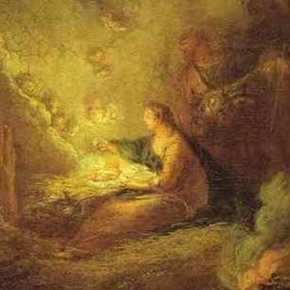
*Artwork: detail from “Birth of Christ” by Antoine Pesne (1745)

Tend Your Light

Sermon for Sunday, November 9, 2014 || Proper 27A || Joshua 24:14-25; Matthew 25:1-13

tendyourlightLast Wednesday, I was visiting Gene and Judy Roure at home as Judy continues recovering from surgery. I arrived right after lunch and we were having a pleasant conversation when something unforeseen happened. My eyes started to close. I couldn’t help it. I made a conscious effort to keep them open as we talked, but you know if you ever try that tactic, your body just assumes you’re using reverse psychology. I knew the lack of sleep Leah and I have been experiencing would catch up to me eventually, but I sure didn’t want it to happen during a pastoral visit! So I did the only thing I could think to do: I asked Gene and Judy if it would be okay to close my eyes for five minutes while sitting in the terribly comfortable rocking chair in their living room. Being the lovely and gracious people they are, they readily said, “Yes.” I put my head back and let my eyes do what they desperately wanted to do. I shut them and slept for five glorious minutes.

So when I read the end of today’s Gospel lesson, all I can do is chuckle half-heartedly. Jesus sums up the rather strange parable of the ten bridesmaids by saying: “Keep awake therefore, for you know neither the day nor the hour” of the coming of the kingdom of heaven. Keep awake, he says. But if there’s one thing I’ve learned in the last three months since the twins were born, it’s this: trying to keep awake makes you really sleepy.

Even the bridesmaids in the story don’t keep awake. All ten of them — the wise and the foolish — get drowsy and fall asleep when the bridegroom is delayed. They all wake up at midnight, but only the five wise ones have enough oil in their lamps to see the bridegroom coming. These details of the parable make Jesus’ summary sound a little off. Rather than “keep awake” shouldn’t he say, “tend your light” or “keep your lamp lit?” If this parable were one of those stories on a standardized test, one of the questions might be, “Which title best describes this story?” If my choices included both “keep awake” and “tend you light” I think I’d choose the latter. But Jesus chooses the former.

(As an aside, I don’t think Jesus would have been a very good standardized test taker, what with his penchant for answering people’s questions in wildly creative and unexpected ways.)

Whether or not the testing board would accept Jesus’ answer of “keep awake,” that’s the one he gives. This leaves us in the position of reconciling the content of the parable with Jesus’ odd summary. What about tending our lights leads to “keeping awake?”

First of all, we mustn’t take Jesus’ summary literally. Obviously, we can’t survive if we stay awake all the time. If we don’t sleep, eventually we go insane. (There’s a great Star Trek: The Next Generation episode about that, by the way.) So if we can’t literally keep awake all the time, how do we live into Jesus’ instruction? At Wednesday’s visit with Gene and Judy, my eyes started closing of their own accord because of my physical exhaustion. But there are plenty other types of exhaustion that lead us to close our eyes and ignore our part in bearing witness to the coming kingdom of heaven.

There’s emotional exhaustion. You carry the burdens of so many others on your heart. You worry. You fret. You can’t help vicariously feeling their pain, and it overwhelms you. There’s the exhaustion of crises. Everything in this world seems to be going haywire. Famine, poverty, war, discrimination, disease. You can’t even watch the news anymore because the compounding crises overwhelm you. There’s the exhaustion of resources. You give and you give, and there’s always more need. It never stops and the direness of the need overwhelms you. You start to see a pattern here. When we feel overwhelmed, we get tired. We just want to close our eyes and enter the blissful ignorance of sleep. So we disengage. We fail to keep awake.

And this is where tending our lights comes into play – because there’s another term for disengagement and failure to keep awake. It’s called “burn out.” Show of hands: how many of us have used the phrase, “I feel so burned out right now,” at some point in our lives? Being like the wise bridesmaids in the parable means keeping oil in our lamps so they don’t burn out. After all, it’s a whole lot easier keeping a fire burning than it is to light a new one.

Burn out happens when we exhaust our supply of oil and have no way to replenish it. You take on too many responsibilities and pretty soon juggling all of them is the biggest responsibility you have. You start to wonder if there’s any way for a day to be more than twenty-four hours. To stick with our metaphor, you’re burning the candle at both ends and your fuel ain’t gonna last much longer. Burn out is inevitable. And when it comes, you don’t necessarily stop. You might continue your breakneck pace with no fuel until you enter freefall and crash land in the desert.

So tending our lights means making good choices about what to spend our oil on, so we don’t exhaust it. If we choose everything, then nothing gets the attention it deserves, we never achieve the excellence that focus instills, and, more to the point, we burn out. But by carefully and intentionally choosing where to place our energy, we keep the oil burning in the lamp longer, and, in a happy coincidence, our choices can lead to replenishment of the oil.

Let’s take Joshua’s speech to the people of Israel for example. At long last they have occupied the Promised Land, and now Joshua puts a choice before them: “Choose this day whom you will serve.” The choices are the Lord, the God of their ancestors or the false gods of their neighbors in their new home. Joshua makes his choice clear: “As for me and my household, we will serve the Lord.”

This is the first choice Joshua puts before the people. And it is the first choice that confronts us each morning when we wake up. Who will you serve today? The Lord, who calls us to be lamps shining with the light of the kingdom, or the false gods that litter our lives with the junk of the world and scream in our ears words like “more” and “now.” When we wake up in the morning and answer “The Lord,” then all the other choices we make that day will be built on the sure foundation of the God who yearns for us to be shining versions of ourselves. This yearning leads to us burning bright, not burning out.

When we tend our lights to burn brightly, we first choose to serve God each morning. Then, with God’s help, we decide how best to move through the day so that our own personal flourishing contributes to the flourishing of the world and the coming of the kingdom. Rather than taking on too much, we focus on those passions, which God gives us the gifts to pursue. Rather than being overwhelmed by crises and need and emotional entanglement, we say, “I can make a difference,” and then we shine our lights into particular dark corners of this world that we can, in fact, help to brighten.

Today, I invite you, I urge you, to make the active, conscious, and intentional choice to serve the Lord. With this choice made, see how God helps guide your other choices so that your lamp stays lit and so that you keep awake to the coming kingdom of heaven. We’ve all been burned out before. Some of us might be on the edge of burn out right now. When you feel yourself approaching that edge, just stop. Stop and focus on your own light. How much oil is left? Can you really sustain the pace you’ve set or will the fuel run out before the race is run? Tend you light by overhauling your choices. First choose the Lord. Then ask God to guide you to make choices that will replenish your oil so your light will grow all the brighter. And with this fierce conflagration shining inside you, you will awaken to the coming kingdom of heaven.

Giving to God

Sermon for Sunday, October 19, 2014 || Proper 24A || Matthew 22:15-22

givingtogod“Give therefore to the emperor the things that are the emperor’s, and to God the things that are God’s.” Give to God the things that are God’s. Two weeks ago in the sermon and last week at the forum hour between services, we talked quite a bit about giving to God. We said that all giving to God is really and truly giving back to God. We said that good stewardship comprehends the intentional awareness that what we have isn’t really ours; therefore we cultivate an attitude in which all that we are and all that we have is a gift given back and forth between us and God.


But I was struck this week when reading Jesus’ words in our Gospel lesson that we never talked about what giving to God really looks like. If you think for even more than a few seconds about the idea, you realize that this act of giving is, in the end, metaphorical. Or perhaps a better word is ephemeral. We just don’t have the opportunity to hand something physically to God, as I might hand you a birthday present. The trouble is we use the language of “giving” so often when we speak of our interaction with God that I’m afraid we now tend to skip past the real world impact of this necessarily ephemeral action. So I’d like to spend the next several minutes exploring with you this real world impact and at least make a start at answering the following question. What do we really mean when we say we are giving something to God?

Notice first how often we use this “giving” language. Let us give thanks to the Lord God. It is right to give God thanks and praise. Give that burden on your heart to God in prayer. All things come from thee, O Lord, and of thine own have we given thee. These three common phrases illustrate the three biggest categories of our use of the term “giving to God.” We give our thanks. We give our burdens. And we give our material possessions, our stuff.

With each of these categories, let’s start with what they look like when two humans engage in them. Say Tom and Brad go out for ice cream. When they arrive at the cash register, they both reach for their wallets, but then Brad says, “I’ve got this,” and motions for Tom to put his wallet away. Tom then says, “Thank you” to Brad for the ice cream. What is happening in this exchange? Brad gives Tom something, a gift Tom wasn’t expecting. Tom says, “Thanks” in acknowledgement of the gift.

Thus, in regards to giving thanks to God, the act of giving thanks is the acknowledgement of the gifts God has given us. The act of giving thanks is our response to the giver. Therefore, giving thanks keeps us in right relationship with God because by it we practice again and again living into the reality that we are not the prime movers of our own lives. We are simply the respondents.

Our fallen world often causes us to drift toward isolation and disengagement. But the act of giving thanks reminds us that we are not, in fact, unmoored. We are tethered to the God who continually calls us into being. Our lives have a source. And they have a culmination. Both the source and culmination are the eternity of God’s love. In between, we stay anchored to God when we respond to God’s gifts with our thankfulness.

This is one of the reasons we share Holy Communion each week. We begin the Eucharistic prayer by stating how proper it is for us to thank God for everything. In the words of the various prayers, we catalog what we are thankful for. And then we stretch out our hands and receive the Body of Christ, a response to God’s love, which nourishes us to continue to respond.

So giving thanks anchors us to the prime mover in our lives. What about giving our burdens? Let’s return to Tom and Brad. Tom comes to Brad with a heavy heart. He said something that hurt another friend’s feelings. He tried to apologize but the damage had been done and the friend isn’t talking to him anymore. He’s afraid he has irreparably damaged their relationship. He needed someone to talk to and is so glad Brad is willing to talk. By offering an ear to listen and a shoulder to cry on, Brad helps bear Tom’s burden.

So how does this conversation change when it happens not between two friends but in the context of prayer to God? We don’t necessarily hear audible words of comfort or feel the warmth of a physical embrace. But something important happens nonetheless. Our burdens often make us feel small. They threaten to crush us under their weight if we spend all our time trying to hold onto them. In a way, our burdens function similarly to the idols we talked about two weeks ago. They can warp our lives around the need to carry them and end up taking all our energy.

But giving a burden up to God releases us from this functional idolatry. Rather than the burden being between us and God as a barrier, the burden is shared between us and God as a bridge. The burden becomes another way we connect to God, since we are both carrying it, as do two people trying to lug a couch up the stairs. So just as giving thanks anchors us to God as responders, giving our burdens tethers us to God in the sharing of the weight between us.

These two categories of giving link us to God, and so does the third, but we have to look more closely as we now move from the ephemeral to the concrete and turn to giving our “stuff.” Quickly, back to Tom and Brad. Tom needs a trench coat to finish his Halloween costume. Turns out Brad grew out of his old one, so he gives it to Tom to keep. The important thing to note in this exchange is the physical handing over of the item, wherein perhaps they shake hands or high five or express some form of camaraderie.

When we give God our stuff, we obviously don’t give it directly to God. God can’t use a trench coat, after all. Instead, we give our stuff to other people, either directly like when we purchase, cook, and serve food to those in need at the WARM shelter or indirectly like when we pledge money to God’s work at St. Mark’s. Our other two categories of giving tether us to God in one way or another, and so does this third category, but we have to look more intentionally for the link.

Thankfully, Jesus makes this link for us just a few chapters after our Gospel reading this morning. He tells us that whenever we give food to the hungry or drink to the thirsty or clothes to the naked, we are actually giving to him. Therefore, whenever we give to God some possession of ours, God grants us the opportunity to seek Christ’s presence in the person receiving the gift in God’s stead. By intentionally recognizing God at the heart of the receiver we connect more deeply with that person and with God who makes all connection possible.

This theme of connection animates all of our thanksgiving. We give God our thanks. We give God our burdens. We give God our stuff. In each instance, our giving anchors us, tethers us, connects us more deeply to God and to each other. This is what we mean when we say we are giving something to God; this is what happens: We respond to God with thanks, we partner with God in sharing our burdens, and we meet Christ whenever we give of ourselves to help another.

The Glow

Sermon for Sunday, September 28, 2014 || Proper 21A || Philippians 2:1-13

TheGlowI started writing this sermon at 5:30 in the morning last Wednesday. I was sitting on the floor in the living room with my eight-week old son sleeping fitfully on my lap. In the minutes preceding opening my laptop to write, I gave him a bottle in the stillness and darkness of the hour before dawn. Just enough light drifted in from the kitchen that I could see his face in the darkness. He was looking at me intently as he sucked down the bottle. I gazed back at him, and that’s when I felt it. I felt this impenetrable feeling of rightness, of completion. I felt “the glow.”

That’s what I call it, at least: “The Glow.” For going on a dozen years or so, this has been my dominant metaphor for my sense of connection – of resonance – with God’s movement in my life. The Glow is my name for what Paul describes in the final verse from our Philippians reading this morning. Paul says, “For it is God who is at work in you, enabling you both to will and to work for his good pleasure.” So today, I’d like to share a few stories about The Glow with you.

I had been at my previous church, St. Stephen’s, for a little over a year when I received a phone call from the rector of one of the biggest Episcopal churches in the country. He wanted me to interview for one of his associate’s positions, a position that promised much higher salary, more opportunity for advancement, and the prestige of working at a church the size of a small diocese. Believe me when I tell you, I was star struck. His invitation stoked my age-old enemy – my pride – and I started constructing a new narrative for myself, in which I basked in the glory of this vaunted position.

Leah and I went for a weekend visit and interview. We met with various groups of people, all friendly and energetic. We toured the buildings of the church, all massive and modern. For the first few days of the trip, I knew intellectually that, on paper, this was a great opportunity for us. And yet something was holding me back. On the day before we were scheduled to fly back to Massachusetts, I had lunch with the wardens and the treasurer. They asked me questions. I responded. And I just kept talking about St. Stephen’s – about the wonder of Godly Play, about the fact that the youth group was getting off the ground, about all the fantastic things we were doing and planning to do.

That’s when I felt it: The Glow. Whenever I mentioned St. Stephen’s during that lunch, I could feel this glowing ball of light expanding within me, radiating from my chest. I couldn’t keep the smile off my face. Needless to say, I removed myself from that search process the next day. At that lunch, God was at work in me, enabling me to will and to work for God’s good pleasure. The Glow, this sense of spiritual rightness, propelled me to stay at St. Stephen’s, and I’m ever so glad I had three more wonderful years of ministry there.

But the Glow is not always so readily instructive. I have wanted to marry two women in my life. One of them I did marry, thanks be to God, and she is radiance, far greater than glow. The other I met in college. We dated for a little less than two years starting at the beginning of my senior year. I remember distinctly during our first year together that I prayed for her every night, I thought about her all the time, and whenever I did I felt the sense of rightness. I felt God blessing our relationship. I felt the Glow.

Then, slowly yet interminably, things took a turn. The distance was taking its toll. We weren’t as close as we once had been. The “I love you’s” were fewer and farther between. But I persisted stubbornly in feeling the Glow. I convinced myself that everything would be better once we were engaged. Thankfully, she was a stronger person that I was. On an incredibly painful night in May 2006 she ended our relationship.

Months later, I was journaling when I realized something about the Glow. Something frightening. The Glow can be manufactured. That’s the trouble with relying on yourself alone to discern God working within you. For those last few fairly dismal months of our relationship, I didn’t actually feel the Glow. Instead, I remembered feeling it. I forced myself to recall its warmth and light from an earlier time when it was really and truly present. I didn’t want the relationship to end, so I tricked myself into feeling the echo of the Glow. God was still at work in me even then, but I ignored what God was actually saying to me in favor of what God had said to me in the past.

So sometimes the Glow burns bright and strong and immediate, and there’s no mistaking the direction God is leading us. Other times, we know just what we want (no matter how God might be prompting us), and so we manufacture a feeling of rightness in order to sanction our disobedience.

And this is where the Glow emerges from the interior of the individual and mixes with the light of the community, thereby creating something of a safeguard against our own confused desires. About this time last year, another job prospect came along. I had been at St. Stephen’s nearly four years, and while I still felt the Glow ministering there, I also knew that God was inviting me to seek new challenges.

I arrived at St. Mark’s in the middle of a Friday afternoon to meet with the search committee. The first person I encountered was Angie Robinson. Now, there are people out there who just seem to glow all the time. Angie is one of them. Angie’s natural shining stirred the Glow in me. We couldn’t use the Undercroft because of the D.A.R. tea the next day, so I helped Angie move the tables to another room, and in so doing, made a lifelong friend. The Glow grew as I met more people and as the possibility of joining you here at St. Mark’s became more and more real. But the Glow would not have ignited in me if it had not also ignited in you. The Glow was mirrored between us, this sense of the rightness of God calling us together.

As the Apostle Paul asserts, God is at work in us, enabling us to will at to work for God’s good pleasure. We participate in God’s work when we recognize God’s movement in our lives and we resonate with it. I call this the Glow. I wonder what you call it? This week, I invite you to think and pray about how you describe resonating with the God who is at work in you. What words or images do you attach to this resonance? What is your version of the Glow? How do you separate a true feeling of spiritual rightness from a manufactured one? What role do other people play in your discernment of God’s call in your life?

God calls each of us to will and to work for God’s good pleasure. This is the true purpose of life. And God is at work in each of us, breathing on the embers of the Glow so that it is ready to flare up when our deep gladness meets the world’s deep hunger.* So look within and see how God is working in you. Look around and see where God yearns for you to serve. And then…Glow.

* A paraphrase of Frederick Buechner’s famous line about vocation from his fabulous Wishful Thinking.

A Resounding Yes

Sermon for Sunday, August 31, 2014 || Proper 17A || Exodus 3:1-15


aresoundingyesI’ll tell you all the truth: I’ve been struggling lately. The day the twins were born, about a month ago now, life took a dramatic turn. I knew this tectonic shift in life was going to happen, but I sure wasn’t prepared for it. At times over the past month, I have felt helpless. I have felt frantic. I have felt desperately inadequate. The learning curve for new parenthood is steep, and I’ve had to adjust my expectations about how fast I catch on. I’ve always been a quick study, but in this particular case, there’s no substitute for the exhausting daily grind of caring for the twins. I guess what I’m trying to say is that I knew it was going to be hard, but my definition of “hard” has never reached the superlative level of caring for multiple newborns.
Of course, there is joy, too. And love – so much love that it leaks from my tear ducts when I gaze upon their sleeping faces. But both joy and love often get buried under the weight of bone-wearying exhaustion, and at the end of the day or at the end of the night – and with newborns they are pretty much the same thing – all you can say is, “We survived.” And you’re too tired most of the time to appreciate that survival, in itself, is a pretty astounding gift.

In light of the last month, I read our passage from the Hebrew Scriptures this week with new eyes. I have read the story of Moses and the burning bush hundreds of times, but this time around new words shimmered for me. My feeling of desperate inadequacy led me to see the same feeling in Moses. Today’s story takes place on Mount Horeb, but let’s back up and see how Moses got there.

After growing up the adopted son of Pharaoh’s daughter, Moses was caught between two worlds, the life of privilege of the king’s house and the life of slavery of Moses’s family of origin. One day Moses visits the work camps and sees an Egyptian beating a Hebrew. While the book of Exodus skips Moses’s upbringing, we can easily conjure a scenario where he had no firsthand knowledge of the plight of his people before this. Sure he heard rumors, but they were easily dismissed by his Egyptian family. Then he sees for himself the rumors are true, and his sense of betrayal mingles with his sense of justice. Moses secretly kills the offending Egyptian. But such an act cannot stay secret for long, and when Pharaoh finds out, Moses flees.

Settling in the land of Midian, Moses meets his wife at a well (which is where everyone meets his spouse in the Hebrew Scriptures). Zipporah brings Moses home to her father, who takes him in and teaches him to be a shepherd. A long time passes, and Moses finds himself with the flock beyond the wilderness on the mountain. God calls to him from the burning bush and gives Moses the task of delivering God’s people from the hands of the Egyptians. And this is where Moses’s feeling of desperate inadequacy rises to the surface. He asks, “Who am I that I should go to Pharaoh, and bring the Israelites out of Egypt?”

You can see where Moses is coming from. He’s been gone so long. Who would remember him? He wasn’t even raised among his own people. Who would accept him? Later, he mentions he’s not a very persuasive talker. Who would listen to him? All of these worries and fears boil under the surface of Moses’s question. But God stops Moses in his tracks.

And here we must pause for a moment for an aside. Whenever you read the Bible, I want you to pay especially close attention to how questions are answered. More often than not questions are not answered directly in scripture. When God in the Hebrew Scriptures and Jesus in the Gospel answer questions, they often answer the one they wish they had been asked, rather than the one that was asked. So – Bible study tip – pay special attention to how questions are answered.

So let’s turn this special attention to Moses’s question. Moses asks, “Who am I that I should go to Pharaoh?” His feeling of deep inadequacy weighs the question down. But God lifts him back up with the answer. “I will be with you.”

This doesn’t answer the question Moses asked. “Who am I?” he pleads. And the response. “I will be with you.” The question God answered, the question God wished Moses had asked, was: “Will you be with me?” And the answer: a resounding “Yes.”

God’s answer to this question reverberates throughout the Bible. God shows Abraham the way through the desert to a new home. God comes to Elijah not in the storm but in the sound of sheer silence. God descends into the den of lions with Daniel. God gives Jesus a second name, Emmanuel, which means, “God with us.”

And so when I read the story of Moses and the burning bush in the light of my own desperate inadequacy this past month, I realize I have been asking the wrong question. Like Moses, I have been asking, “Who am I? Who am I that I should be able to accomplish the task of helping to care for these two precious lives?” But that’s not the question God is answering right now.

Instead, God has prompted me to ask the question God yearned for me to ask all along: not “Who am I” but “Will you be with me?” And God has answered that question with the same resounding “Yes” which God promised Moses. Yes, I am with you in the helping hands and loving hearts of the friends and family who have given countless hours of their time. Yes, I am with you when you breathe deeply in moments of serenity and when your patience stretches past the breaking point when the crying won’t stop. Yes, I am with you in the peace that comes from a few hours of treasured sleep. Yes, I am with…always.

The feeling of desperate inadequacy can paralyze us. Perhaps a challenge seems too big for us to even begin to grasp. Perhaps we’ve been down a certain road before and failed. Perhaps we’re facing something new and the fear of the unknown cripples us. Whatever the case, we can begin to move past our inadequacy or whatever else is holding us back by changing the question we ask of God. Rather than asking, “Who am I to take care of my aging parents”; or “Who am I to be able to find friends at my new school”; or “Who am I to make the slightest difference in a world full of pain”; rather than asking, “Who am I” ask the question God yearns for you to ask.

Ask, “Will you be with me?” And believe in the deepest core of your being that the answer to that question is always and will always be, “Yes.” When you hear that “Yes” resound in your core, you will begin to see with new eyes and reach out with less burdened arms and discover all the ways God is already using you to shine God’s light in this darkened world, no matter the inadequacy you feel.

I still feel inadequate when the twins start crying. I’m still exhausted most of the time. But we’re doing it. One day becomes the next, and that in itself is a gift, as is God prompting me to change the question I was asking, so that God could answer with a resounding “Yes.”

The Faith System

Sermon for Sunday, August 17, 2014 || Proper 15A || Matthew 10:21-28

thefaithsystemGood morning! It’s good to be back after three weeks away. I know I’ve only been next door, but it seems like another world when newborns are filling all your waking (and the few sleeping) moments. I seriously thought about skipping this sermon entirely and just showing you baby pictures for the next ten minutes, but then I realized lemonade on the lawn might be a better venue for that. So, let’s get down to the sermon.

Having newborns in the house has a way of making you get back to basics. It’s not easy to care for them, but it is simple. Feed. Change. Soothe. Try to catch a few zz’s. Repeat. Likewise, today I’d like to get back to one of the basics of following Jesus Christ. I’m going to talk about faith – specifically about how faith works in our lives. Hopefully, at the end of this sermon we will all rejoice that, while faith seems like an abstract, ephemeral concept, faith is in truth the fuel that fires our lives.

To start this little discussion about faith, we need to clear up one minor issue. In the English language the word “faith” is a noun. This grammatical construction makes it normal for us to ask a question like “Do you have faith?” Faith here is the object of your possession: “Yes, I have faith.” This sounds like completely correct and acceptable English, right? The trouble is, while faith is a noun, it should be a verb. I should be able to say “I’m going faith-ing today” or “We faith-ed yesterday and we’re going to faith again tomorrow.” But those sentences sound really strange, don’t they? I wish they didn’t. The word “faith” is a noun but whenever you use it, I hope you will remember it should be a verb.

Here’s why. We can possess things like concert tickets and hiking boots, but such possessions just sit on the counter or in the closet until we need to use them. If we have faith in the same way we have concert tickets, then we run the risk of storing our faith in the kitchen cupboard until we think we need it. But faith doesn’t work like that. Faith cannot be stored up or hoarded. We might get into situations where we say, “If I just had a little more faith…” But this turns faith into a commodity, something we can trade for something else. That’s not how faith works.

Thinking of faith as a verb removes it from the kitchen cupboard and puts it in our actions. We cannot store up or hoard our actions like we can our possessions. Rather, each action tumbles into the next in a never-ending stream. The problem we run into here is that, since the word faith isn’t actually a verb, we have trouble imagining what faith as action looks like. You know exactly what I mean when I say, “I saw someone running on my walk to church this morning.” But you’d have difficulty conjuring up the image if I said, “I saw someone faith-ing on my walk to church this morning.”

Because of this difficulty, I’d like to invite you to imagine with me a reality that we don’t often think about. When God created animals, God gave us all sorts of biological systems that allow us to live. The respiratory system lets us breath, the circulatory system cycles our blood through our bodies, the digestive system turns food into nutrients. There’s the nervous system, the endocrine system, the lymphatic system and so on. But we were made in God’s image and likeness, which means we have one more system that other animals don’t have. We have a spiritual one to go along with all our biological ones. We have a faith system.

The faith system works a lot like our muscular system. We all have muscles. We need our muscles to do simple tasks like getting out of bed, standing up, even smiling. We also need our muscles to do more difficult tasks like running a marathon or lugging a couch to a third floor walkup. Exercising hones and strengthens our muscles, making them more durable and less likely to fatigue. But whether we exercise or not, our muscles still put in work day in and day out.

So, too, with our faith system. The faith system spurs us to seek out life-affirming relationships, to support one another in our daily walks with God, to reach out to those in need, to welcome anyone into our midst, and to share with them the good news of God’s love. The faith system also sustains us through dry, desolate periods, giving us enough endurance not to give up quite yet. Like our muscles, our faith can get weary and fatigued. But also like our muscles, we can exercise our faith to hone and strengthen it, to make it more a part of our actions and less a thing sitting on the shelf in the kitchen cupboard.

If we’re going to exercise our faith, then we should figure out exactly what we mean when we say the word. We’ve already said how faith is a noun that should be a verb. Faith then is the action that happens when we participate in our relationships with God. Faith borrows the best parts of trust, confidence, humility, and zeal and molds them into our response to God’s presence in our lives. From trust, our faith borrows the willingness to give ourselves over to the power of another. From confidence, our faith borrows the courage to take the leap into God’s waiting arms. From humility, our faith borrows the recognition that God (and not we ourselves) initiates the action that results in the giving of ourselves up to God. And from zeal, our faith borrows the passion actually to get going and do something.

In today’s Gospel lesson, the Canaanite woman actively engages her faith system. She trusts that Jesus can help her. She has courage actually to do something about that trust, even in the midst of the disciples’ and Jesus’ own dismissal of her. She shows humility when she kneels before Jesus, calls him “Lord,” and asks for help. And her passion erupts when she counters Jesus’ statement about the children’s food. All she needs is a crumb, she says, a scrap discarded to the floor. Jesus calls her faith “great.” But no matter how great our faith is, we each have a faith system that God gave us so we would be able to join God in relationship. The more we exercise our faith system – the more we act out our faith – the deeper can we go in our relationships with God.

Imagine if we exercised our faith in the same way we exercise our muscles. Going to the gym once doesn’t do much, but going every other day can work wonders on our bodies. God yearns for us to have this kind of dedication to our lives of faith. When we are serious about exercising our faith systems, we build time into every day to be in prayer with God. We start with faith and allow it to motivate all our other actions. We take part in the act of worship, both on Sunday mornings and in the moments of our days when our faith shows us special signs of God’s presence that our eyes alone might not see.

I invite you today to remember that faith is not a commodity or a possession. Faith is the active component of our relationships with God. Faith is a noun but in our lives let’s make it a verb.

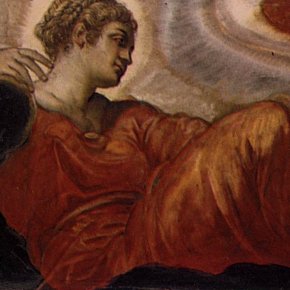
* Art: detail from “Allegory of Faith” by Tintoretto (c. 1564)