Sermon for Sunday, November 9, 2025 || Proper 27C || Luke 20:27-38
Jesus’ words to the Sadducees in today’s Gospel are words that speak of the sublime mystery and majesty of God. I’m so excited that we got to hear this story today because Jesus’ words light my theological imagination on fire. We’re going to spend all of today’s sermon in my theological imagination as we envision as best we can our way into God’s point of view. None of us is really qualified to talk about God’s point of view, so you’ll have to take everything I say today with a grain of salt – or as a professor of mine used to say, “with salt mine.” In the next few minutes I might say something that is true, but if I do, it will have been by accident because what I’m really going to talk about is Adam’s point of view about God’s point of view. But maybe the Holy Spirit will help us glimpse the corner of the edge of the majesty of how God sees things.
During my sabbatical, I’m not writing new sermons, so on Mondays I am choosing one post from every year of WheretheWind.com to highlight. In 2023, my church was in the midst of an unprecedented number of deaths and funerals in the parish. This sermon was a response to that reality and is now one of the most often viewed posts on this website.
Sermon for Sunday, January 29, 2023 || Epiphany 4A
On this day of our Annual Meeting, I’d like to spend this sermon time fulfilling a request from a number of people over the last few months. Today, I am going to share with you some of the elements of the funeral homilies I have preached over the last year. Because funerals are mostly attended by family and close friends, very few of the members of our church have heard me preach at a funeral. And yet we are all grieving in one way or another the deaths of so many of our church family – 23 of whom we have buried in the last year. A funeral homily is my chance to set the life (and new life) of the person who died within the greater context of the resurrection of Jesus Christ. So today, on this day of our annual gathering, we are going to remember those who have died, and I am going to share with you some thoughts on heaven and the eternal love of God.
Sermon for Sunday, April 21, 2019 || Easter Day C || JOHN 20:1-18
Here we are at long last: Easter Sunday, a long wait this year, two-thirds of the way through the month of April. But it could have been longer. April 25th is the latest Easter can be, but that hasn’t happened since 1943 and won’t happen again until 2038, which coincidentally is the year I’ll be eligible to retire. Unlike most holidays, which are fixed on a particular date or day of the month, the date of Easter (and the Jewish Passover) springs from something much grander – the motion of celestial bodies. We start with the vernal equinox, the day in March when the earth is tilted just so in relation to the sun to make day and night the same exact length. Then we find the next full moon, and the Sunday following is this day of Resurrection.
One Sunday last October, I made a strategic error in my preaching. I held my guitar the whole time, but never played more than the opening riff of “Blackbird” at the beginning. For the rest of the sermon, many of you expected me to, you know, actually play a song. But I didn’t. I just held the instrument. I’d like to correct that today, so I’m telling you right now: I plan to end this homily with a song.
The song I’m going to offer you is one I wrote many years ago during my last semester of seminary. I wrote it in response to the Gospel lesson I just read, a passage which takes places right before Jesus is arrested and brought to trial. The passage is the beginning of a long and complicated prayer, which Jesus offers on behalf of his friends, most of whom are about to deny and abandon him. The prayer is long because the Jesus of John’s Gospel is always verbose. And the prayer is complicated because Jesus seems to be praying it from the future. Continue reading “Don’t Wait for Death”→
Sermon for Sunday, April 16, 2017 || Easter Day, Year A || John 20:1-18
On three occasions over the last couple years, I have left Home Depot laden with weather-treated boards and decking screws. I brought the materials home, lugged them to the backyard, and set about shaping them into rudimentary boxes. I’m not much of a carpenter, so “rudimentary” is actual quite a compliment. Thankfully, all these boxes have to do is sit in the sun and rain, full of soil and compost and manure.
You see, my wife Leah has become quite the gardener since we moved to Mystic. There was a single three foot by six foot box in the yard when we arrived, a remnant from a previous occupant. I built another the same size, and, let me tell you, the tomatoes Leah grew that first year were…mwah…delicioso! I put in a 4 x 8 bed last fall, which now has little stalks of garlic reaching through the soil. And a few weeks ago, I knocked together the last box, a long narrow one, 12 x 2, for peas. Needless to say, the surface area for gardening at the rectory has tripled in the last year, and I am looking forward to eating the results.Continue reading “Two Gardens”→
Sermon for Sunday, March 13, 2016 || Lent 5C || John 12:1-11
Imagine with me a letter written by Lazarus, the friend whom Jesus brought back to life after four days in the tomb.
To my dear sisters, Martha and Mary, by the hand of a trusted friend:
I have written and re-written this letter in my mind, and still any words I hope to scratch here will pale in comparison to the anguish I have in my heart for you. I love you both. My spirit wilts to contemplate putting you through grief yet again. You already passed from grief to joy, as I passed from death to life. But I fear we will reverse this cycle again before long.
Indeed, if you are reading this letter, then I have died once again: not from illness this time, but from malice. I am writing this to help you understand what has happened, and I’m sorry if my thoughts seem like fragments. Fragments are all I have right now. After dinner tonight, Jesus confirmed the fear that has been growing in my mind. His words shattered the innocence I wrapped myself in since coming out of the tomb.
He drew me aside after his confrontation with Judas. I could smell the perfume you anointed him with, Mary. I will remember that scent for the rest of my days. I will remember, too, his eyes set on mine, full of love and agitation. “Beloved,” he said, “I’m sorry.”
I didn’t know what to say. What did he have to apologize to me for?
“I’m sorry for what may be coming soon. I’m sorry that you may suffer on my account. I’m sorry I drew you into all this.”
He looked to be on the verge of tears. “Into what, Lord?” I asked.
“I brought you back from death, only to make you a target for death again. There are powers in Jerusalem who seek my life, and now they seek your life as well. These crowds that come to hear me—they also come to see you, to see with their own eyes proof of the words I speak. And now those who seek to kill me have added you to their list.”
I had sensed this—in the roving eyes of some in the crowd, in the growing sense of foreboding in my gut—but hearing it from Jesus’ own mouth made it real. I hadn’t named the fear I was feeling. I had feigned innocence, hoping that ignoring reality would change it. But Jesus’ words set reality in front of my eyes, and I could not turn away.
Will I die tomorrow? Will I be stoned in a public square or dispatched by an assassin’s blade? Will there be blood? Will it hurt? My sisters, I know you are reading this after I’m gone, so these thoughts must seem wild and misplaced in such a letter. But I beg you: keep reading, for I have not said all.
He kept his eyes on me as I took in his words. I didn’t know whether to run away or to weep on his shoulder. I felt faint. I looked around for something solid to lean on. The walls and chairs looked flimsy somehow. So I reached out and steadied myself on his arm. Finally, words came. “Why did you restore my life if I’m just going to be murdered weeks later?”
“Lazarus,” he said, “I wish I could spare you the prying eyes that have hounded you since that day. I wish I could spare you the pain that may be ahead of you. I cannot. But I can tell you this…”
Dear sisters, coming from any other person, what he said next would have rung pitifully hollow, but the light in Jesus’ eyes held the promise that his words are truth. “I came that you may have life,” he said, “and have it in abundance. This life that I give, beloved, is more than just your ability to move or think or breathe. This life includes those things, just as it includes pain and grief. But ever so much more, this life includes those wonderful gifts from God that reach into eternity: love and joy and grace and justice and peace. You are mine, and I have taught you how to love others as I love you. You are mine, and I make your joy complete. You are mine, and I offer the grace to strive for justice and peace everyday, no matter how many days are left to you.”
I was captivated. I looked him in the eye, and again that light of truth danced behind brimming tears that now began to trace silent streams down his face. “I shed tears now,” he said, “knowing that you may suffer for my sake. But I shed them also for the joy of knowing that such suffering cannot diminish the life I give you. Yes, you will die again. Do not let that keep you from living. And yes, you will live again after you die. Do not let that keep you from living now, either.”
His words washed over me, like clear water from a living spring. I drank them in, and they filled me. The life that he gives is more than life. The life that he gives is more than death. It does not begin when I die, nor did it begin when he brought me from the tomb. His life endures, for I am his whether I live or whether I die.
Dear sisters, while I pray to be spared from pain and suffering, I am not afraid of death. I am afraid that I do not have the strength to live as one who has this abundant life that reaches into eternity. I am afraid that I will live as though I were dead again.
But Jesus chose his words well the day he brought me back to life. Yes, he knew my fears even before I did. Do you remember what he said that day? I do, and those words are imprinted on me like the smell of tonight’s perfume. “Lazarus, come out.” He never spoke a word of resuscitation, never said, “I raise you from the dead.” He just commanded me to leave the tomb. And the gift of life came back to me in order to obey this command.
So until the day I pass through the gate of death again – and I sense it will be soon – Jesus’ command to stay out of the tomb still rules my life. This life he has given me – given each of us – reaches into eternity, so whatever ways we show forth his love now are burnished with the sheen of heaven. Whatever ways we show forth his love now will last long after we are gone, will ripple out to touch more lives than we can possibly imagine.
Mary, Martha: if you are reading this, I have died again. But know that my death will not stop the abundant life that Jesus revealed to me when I was still with you. Do not wait for death to begin your abundant, eternal life. It is yours now. Laugh and dance and sing and serve and love. And rejoice that Jesus continues to give you—and me—the gift of himself, the gift of abundant life that reaches into eternity.
Sermon for Ash Wednesday, February 18, 2015 || Isaiah 58:1-12; Psalm 103
The twins are six and half months old. They’re sleeping pretty well, waking either zero or once during the night. They’re beginning to crawl and sit up by themselves. Their hair is really coming in. And they have the absolute softest skin imaginable. I could spend all day kissing their cheeks and foreheads and want to do it again all day tomorrow. So when I think of offering them the imposition of ashes, when I imagine scraping two coarse lines of grit on those smooth foreheads, I shudder. I recoil. How could I sully such perfect skin?
As this question hangs in the air, I think back to last week, when I was blessed to go up the street to Mystic Healthcare and offer prayers by the bedsides of two women who were actively dying. They had lived long, long lives. Both passed away over the weekend, one in her mid-nineties and one who was 105 years old. I prayed by their bedsides as they breathed the short, staccato breaths of those who are living their final days. I touched and kissed their foreheads during the prayers, and I found them to be spotted and wrinkled and dry, more like wax paper than skin. Surely, these were the foreheads made to receive the imposition of ashes.
And yet the ashes are made to adorn the newborn infant and the dying elder both the same. No matter how much or how little of this life we have left, the ashes are made for us to wear. This thought might make you shudder, like it does when I think about offering them to my babies. But if we take another look at the ashes, we might come to a new understanding.
You see, more often than not we associate ashes with death. I think we make this association for two reasons. First, when a fire dies out, the ashes remain. Second the rate of cremations in the United States has risen from three and a half percent in 1960 to over forty percent in 2010.* And this number will continue to rise. We are closing in on half of all funerals in this country involving the deceased person’s ashes.
So it’s only natural to associate ashes with death. Even the words I will pray in a few minutes before the imposition of ashes speak of them being a “sign of our mortality.” Then when I scrape the ashes on your foreheads, I will say, “Remember that you are dust, and to dust you shall return.” All of this seems to be pointing to our deaths.
But I would suggest the ashes are not about our deaths at all, despite all this evidence to the contrary. The ashes are about our lives. The ashes remind us how transient this life is; how impermanent. The eighth century monk and historian known as the Venerable Bede compared this life to a sparrow fluttering into a brightly lit banqueting hall, flying the length of the room, and then disappearing into the night. The psalmist speaks the same truth in today’s psalm: “Our days are like the grass; we flourish like a flower of the field; When the wind goes over it, it is gone, and its place shall know it no more.”
If our lives are so transient, so fragile and brief, then we have to wonder why God would bother with us at all? We scratch our heads in wonder at the 105 years of the woman at Mystic Healthcare, but even that is less than a breath when we zoom out the camera to geologic time. So why would God bother with us? Why would the psalmist say, “As a father cares for his children, so does the LORD care for those who fear him?” It all seems a bit daft in the grand scheme of things.
But remember, I said the ashes were about our lives, not about our deaths. While this life is transient, yes, and while we aren’t more than vapor on the wind (as the Bible so often reminds us), there is more to the story. Because death is not the end, just as birth was not the beginning. Have you ever looked at an infant and seen a hidden wisdom hovering just behind his wide-eyed wonder? Have you ever held the hand of a dying elder and realized that she was excited to see what comes next? Both of these instances speak to the “something else” or “something more” that we feel in our gut when we meet the beginning or the end of life. We call this “something more” eternity. We call this “something else” the promises of God made real in the life, death, and resurrection of Jesus Christ. If God made us for eternity, then we can in all faithfulness zoom out the camera again and see geologic time fade away.
This is the true life that God invites each of us to live: the expansive, abundant, eternal life, which fuels the fires of our souls. This is the life we have, but it is rarely the life we live. And so we return to the ashes and our new understanding. When I burn last year’s palms to make the ashes, the fire gives off light and heat. The process changes the material of the palms into the energy of the fire. What’s left over when the fire goes out is the ashes. The keyword here is “change.” Each of us is on fire for God. We are burning our whole lives long, shining God’s light into the dark recesses of this world. But like the burning bush in the Exodus story, we are not consumed. The fire does not annihilate. It purifies. As we live, all that will not burn for God filters away. All that keeps us from shining with the love and grace of God filters away. All that separates us from God, what we call “Sin,” filters away. And becomes ash. When we are done burning and God has gathered us home like those two blessed women at Mystic Healthcare, the ash remains behind. All that separates us from God remains behind.
We scrape the ashes on our foreheads each year to remember that we are still burning. God is still calling us to shine the light of God’s reign on the darkness of the world. Today the prophet Isaiah gives us a blueprint for how to shine: “Loose the bonds of injustice…share your bread with the hungry…bring the homeless poor into your house…cover the naked when you see them…let the oppressed go free.” When we burn for God doing these things, our ashes filter away, and we live the promise Isaiah offers next: “Then your light shall break forth like the dawn.”
(Sermon for Sunday, November 10, 2013 || Proper 27C || Luke 20:27-38)
Today, I’d like to speak with you on a topic I’m entirely unqualified to talk about. No, it’s neither mortgage-backed securities nor the sport of cricket, though I’m definitely unqualified to talk about each. Nor is the topic the mysterious reasons for why my wife’s apple pie is so much more delicious than the ones I used to make. I know that one has something to do with butter, but that’s as far my understanding takes me. No, today I’d like to speak with you on a topic that no one besides Jesus has ever been qualified to talk about. I’d like to speak with you today about God’s point of view.
Because I’m unqualified to talk about this topic, you’ll have to take everything I say with a grain of salt. In the next few minutes I might say something that is true, but if I do, it will have been by accident because what I’m really going to do is talk about Adam’s point of view about God’s point of view. But maybe, just maybe, the Holy Spirit will help us glimpse the corner of the edge of the majesty of how God sees things.
So with those caveats aside, let’s listen in to the end of Jesus’ conversation with those wily Sadducees in today’s Gospel reading. They thought they could embarrass Jesus with a trick question, but in characteristic fashion, Jesus answers the question he wishes they had asked, not the one they’d actually asked. He finishes with these words: “The fact that the dead are raised Moses himself showed, in the story about the bush, where he speaks of the Lord as the God of Abraham, the God of Isaac, and the God of Jacob. Now he is God not of the dead, but of the living; for to him all of them are alive.”
Here Jesus references the third chapter of the book of Exodus, in which God says, “I am the God of your father, the God of Abraham…Isaac, and…Jacob.” Jesus notices that God doesn’t say, “I was the God of your father…” From our limited point of view, Abraham, Isaac, and Jacob are long dead – somewhere in the neighborhood of three thousand years ago, or about a thousand years in Jesus’ day. But God, says Jesus, sees things differently, as his emphatic end to the conversation demonstrates: “Now he is God not of the dead, but of the living; for to him all of them are alive.”
William Blake, Ancient of Days
This is our first glimpse into God’s point of view: “to God all of them are alive.” Can you imagine what that must be like for God? All of creation from the moment that moments began alive all at once. Every star that died billions of years ago, but whose light is just reaching us now; every single-celled organism gliding through the primordial ooze; every person we have ever loved and every person we have never known; all of them alive to God, all of it happening now for God.
I don’t know about you, but I get a little dizzy just trying to comprehend this thought – the riot of color and sound, the collision of what we see as the past and future, the unmeasured light years of space and uncounted eons of time all seen now by God, all spoken into being now by God, all loved and cherished now by God.
We can’t ever hope to comprehend this thought because we live our lives in linear fashion, moving moment to moment. We have memories of the past, and we have hopes for the future. Yesterday happened yesterday. It’s not still happening today. This linear model is like flipping through the pages of a magazine. Once I’ve flipped from page 35 to 36, I’m no longer looking at page 35. But from God’s point of view, the magazine is a collage of all the pages, with each picture cut out and arranged just so, like an elementary school art project.
This thought comforts me. From God’s point of view, I’m not simply Adam as I stand here before you: two months until his 31st birthday, his mother visiting from North Carolina, his sermon moving along apace. No. From God’s point of view, I am the totality of myself: everything that has ever happened, everything that will ever happen, every joy, every regret, every skinned knee, every embrace, every relationship, every failure, every triumph – everything that makes me the person I am, God sees and God speaks into being. This totality of myself includes my death and whatever there is in what we would call “After,” but what God still sees as “Now.”
The apostle Paul understands the difficulty of speaking about God’s point of view, and he says what I’m trying to say much better than I ever could. He says these words to the church in Corinth: “For now we see in a mirror, dimly, but then we will see face to face. Now I know only in part; then I will know fully, even as I have been fully known” (1 Cor. 13:12).
To be fully known. This is how God’s point of view works. God knows us fully. God knows the totality of each of us, just like God sees the entirety of creation happening now.
Speaking about God’s point of view has the unfortunate byproduct of making us feel so small, even insignificant. It’s only natural in the face of the idea that all of creation is always present to God to think that we don’t matter, that in the grand cosmic scale our lives are worthless.
But from God’s point of view, nothing could be farther from the truth. God couldn’t care less about the “grand cosmic scale” because the notion of a “scale” of any kind is meaningless to our eternal and infinite God. God speaks every subatomic particle into being and celebrates it as if it were the only speck in existence. Each speck has God’s full attention; if it didn’t, it would cease to be.
We may look up at the night sky and see ourselves as small, insignificant specks on a small, insignificant planet orbiting a small, insignificant star. But to do so is to deny the truth not just about ourselves, but about all of creation. All of creation is present to all of God. This includes you and me. If God weren’t constantly and continuously speaking each of us into existence, we would cease to be.
So if we are anywhere in the ballpark of the truth of God’s point of view, what does this all mean for us? Too many things, of course, to close this sermon with, so we’ll look at three – what we call past, present, and future, but each of which is always now to God.
First, the past and our grief over people dying: From our perspective, the sun sets below the horizon. But in reality, we are spinning away from the sun. Likewise, we grieve when someone dies because, from our perspective, that loved one is gone. But we know in a place deeper than normal knowing that, in reality, our loved one is still alive to God. Ultimately, grief is a way to express our frustration that we have a severely limited ability to perceive reality. But for anyone who has ever had a loved one die, you know that every now and again, you catch glimpses of true reality when you feel the presence of that loved one alive in a different way.
Second, the present: Since God is fully present to every particle of creation, which includes each of us, we have no business thinking of ourselves or anybody else as insignificant. Everyone matters, so we must affirm this in our actions.
Third, the future: Those we perceive as future generations are as alive to God as we are. Therefore, it is our duty to honor their significance in the same way we are called to honor those we meet today. This means making choices in our personal and communal lives that sustain our world, which, in the end, is another piece of creation fully present to God and therefore worthy of our honor.
So there you have it. I have now talked for more than ten minutes on a topic I’m entirely unqualified to speak about. However, being unqualified does not mean that we shouldn’t strive to see creation through the eyes of God. When we do this, we become better stewards, better servants, better followers. And we see deeper into the heart of what it means to be a child of God.
The following post appeared Saturday, September 19th on Episcopalcafe.com, a website to which I am now a monthly contributor. Check it out here or read it below.
* * *
‘Jesus said to them, “Very truly I tell you, before Abraham was, I am.” ’ (John 8:58)
You can always tell when Jesus says something truly sensational and scandalous because people respond by searching for rocks to fling at his head. The eighth chapter of the Gospel According to John contains four instances of Jesus saying, “I am,” which is one way Jesus imparts his divine identity to his listeners. Out of the four, only the final one elicits such a stony reaction, while the first three build to the climactic iteration. The escalation begins slowly when Jesus says, “I am the light of the world” (8:12). Next, Jesus says, “You will die in your sins unless you believe that I am” (8:24). Then, a few verses later, he says, “When you have lifted up the Son of Man, then you will realize that I am” (8:28). Each of these statements of his divine identity flies right over the heads of his opponents. But then the conversation intensifies. Jesus says they are from their father the devil. They think he may have a demon. He says no one will see death if they keep his word. They are sure he has a demon. He says Abraham rejoiced to see his day. Now they know that he’s crazy—he’s not even fifty! How can he have seen Abraham?
Then Jesus knocks their socks off with his most dangerous statement in the whole Gospel: “Before Abraham was, I AM.” This time, no one mistakes his meaning. No one asks him to clarify his words. They understand the full significance of saying, “I AM.” They know God said the same thing to Moses when Moses was brash enough to ask God for God’s name (Exodus 3). But underneath the shocking nature of Jesus’ statement is a subtler point (ultimately missed in the search for stones) about how our eternal God interacts with a finite creation.
Jesus’ “I am” statements in the Gospel According to John are revelations of God’s very being. Because of the simplicity of the sentence (just a subject and a verb), “I am” is as close as language can get to universality and eternity. Since we live in a temporal world, eternity is an impossible concept for us to wrap our heads around. Eternity is not “endless” time; nor is it the framework in which time finds a snug fit. In eternity, before and after are undefined and the only when is now. (The previous sentence makes no sense, of course.)
When Jesus says, “Before Abraham was, I am,” he uses our language to express the eternal nature of God. He does not say, “I was before Abraham was,” which is the grammatically correct way to articulate the thought. Instead, his “I am” (while functioning in our world as a present tense construction) is really a representation of the eternal tense. In eternity, I AM is the only sentence that makes any sense at all. In other words, eternity happens. It didn’t start and it won’t stop because the notions of beginning and ending are thoroughly temporal. And eternity happens because God is.
We run into trouble when we expect God to exist in the same way we do. Our minutes tick by one after another. For every one of our actions there is an equal and opposite reaction. Objects fall at a rate of 9.8 m/s2. But those are our minutes, our reactions, our gravity, and they all rely on linear experience. When Jesus says, “I AM,” he reminds us that God created linear experience, and thus is not beholden to it.
When we stumble into God’s presence, we encounter eternity making utter nonsense of time. Time ceases to matter because eternity overrides the rules of linear experience. That’s why it’s so hard to say how long we feel the presence of God. We feel that presence in moments, not minutes. When Jesus says, “Before Abraham was, I am,” he pushes us to relinquish our need to order events when God is concerned. God exists in eternity, which just happens.
Footnote
* If you read my last contribution to EpiscopalCafé in conjunction with this one, you might deduce two things: (1) I like to use Holy Scripture to discuss spirituality and (2) I seem partial to the Gospel According to John. These deductions are both entirely correct. As a member of the Millennial generation, I am attracted to the Fourth Gospel’s combination of mystery and revelation. If you have a group of Millennials in your church (right now, that would be your middle schoolers through your college students, give or take) who huff and sigh and roll their eyes every time you pull out the Bible, try some passages from the Gospel According to John. You might encounter fewer glazed looks and drool-flecked chins.





 The twins are six and half months old. They’re sleeping pretty well, waking either zero or once during the night. They’re beginning to crawl and sit up by themselves. Their hair is really coming in. And they have the absolute softest skin imaginable. I could spend all day kissing their cheeks and foreheads and want to do it again all day tomorrow. So when I think of offering them the imposition of ashes, when I imagine scraping two coarse lines of grit on those smooth foreheads, I shudder. I recoil. How could I sully such perfect skin?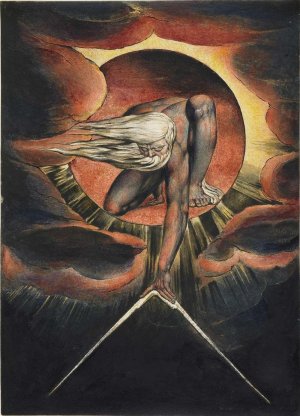

 Where the Wind...