Sermon for Sunday, March 22, 2026 || Lent 5A || John 11:1-45
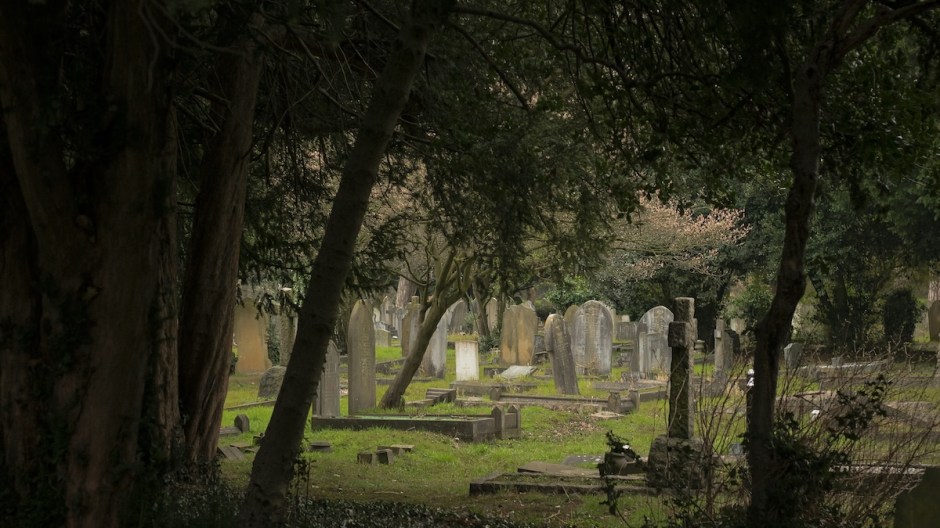
Today’s sermon is about the promise of the resurrection. And we’ll start today at a windswept cemetery as a funeral comes to end. The prayers have all been prayed. The earth has been cast on the shining, glossy coffin. The low murmur of voices mingles with the whisper of the wind through the long, cemetery grass. The new widow rises from the velvet-covered folding chair, the triangle of the blue field and white stars of the American flag peeking out from under her arm. A line of black-clad people forms, and they begin to file past her. You watch her receive with grace each well-meant, but well-worn sentiment. You join the line, and soon it’s your turn. You grasp her hand in both of yours and wait for the words to come.
Sermon for Sunday, April 27, 2025 || Easter 2C || John 20:19-31
Today we are going to do Part Two of last Sunday’s sermon. We’re going to dig into the meaning of the word “believe” because it is central to the story of the disciple Thomas and to our stories as well. Let’s start with the scene in which the Risen Christ encounters Thomas a week after standing amidst the others. Jesus invites Thomas to touch his wounds, saying, “No more disbelief. Believe!” Thomas immediately responds with the highest form of adoration in the entire Gospel: “My Lord and my God!”
Sermon for Sunday, April 20, 2025 || Easter Day || John 20:1-18
Good morning and welcome to St. Mark’s on this Easter Sunday morning. I am so glad to be here worshiping with you today on this most sacred of all Feasts of the Resurrection. On this day, we proclaim that nothing in all creation, not even death, can separate us from the love of God in the power of the Risen Christ. On this day, we celebrate the emptiness of the tomb and the fullness of new life granted through the Resurrection. On this day, we run alongside Mary Magdalene and Simon Peter to witness the miracle of miracles.
Sermon for Sunday, March 19, 2023 || Lent 4A || John 9:1-41
(Part Three of Sermon Series on John 3:16 – Part One – Part Two)
Today we are going to continue our four-week sermon series on John 3:16 – “For God so loved the world that he gave his only Son, so that everyone who believes in him may not perish but may have eternal life.” Two weeks ago, we talked about God loving every nook and cranny of the universe. Last week, we talked about what God did because God loved the universe; namely, God gave God’s only son to show us how to enter into the story God is telling. We’ll finish up the series next week, but first we’ll tackle the next phrase: “so that everyone who believes in him.”
The thrust of this sermon is very simple: Jesus will always be present. That’s the simple idea at the heart of this sermon. But I’ve got to warn you. I’m going to over-complicate things for a few minutes before returning to this simple and beautiful idea: “Jesus will always be present.”
Sermon for Sunday, January 17, 2021 || Epiphany 2B || John 1:43-51
Imagine with me the memories of the disciple Nathanael, thinking back to that fateful day when Philip invited him into Jesus’ circle.
This is a story about seeing. But first I need to tell you about my best friend Philip. Philip was always the one who was quick to believe. Every few months he would come to me way too excited about a new guru he had heard about or a get-rich-quick scheme or an investment opportunity. He always gave me the hard sell: You don’t know what you’re missing! How much money do you have! We can pool ours together and buy a full share! This is a once-in-a-lifetime deal! Well, Philip’s deals were more like once-in-a-fortnight deals, considering how often he fell for them.
Sermon for Sunday, November 18, 2018 || Proper 28B || Hebrews 10:11-14, 19-25
We were talking theology over pizza last week at confirmation class, and one of the teens asked a question that was so thought-provoking, I spent the next several days thinking about it. Because the question was on my mind this week, my response to it ended up being this sermon. The question went something like this: “Adam, how do you believe all the time? Are there any times when you don’t really know about all this God stuff?”Continue reading “The Posture of Belief”→
Sermon for Sunday, August 26, 2018 || Proper 16B || John 6:56-69
Sometimes ordinary conversations spur the deepest of thoughts. This past Monday, I was cleaning up the breakfast dishes while listening to the kids talking to each other at the kitchen table. At their recent birthday party, they had decorated small terra cotta pots with glitter glue and stickers. Inside the pots they planted seeds that hopefully will grow into tiny spruce trees by Christmas. So there they sat at the kitchen table, and then they started listing off all the people they wanted to invite over to see their Christmas trees when they’re done growing.
They began with close family friends who had helped bake their birthday cake. Then they listed all their family members – Nana and Papa, Amma and Abba, their aunts and uncles and cousins. Then they moved onto friends who attended their party and their parents; then to other friends from school; then to people from church. They kept naming people they know, people with whom they have some level of relationship. And for a pair of four-year-olds, they had a pretty extensive list.Continue reading “You Will be Found”→
Sermon for Sunday, November 22, 2015 || Christ the King Year B || John 18:33-37
I find it ironic that the framers of our lectionary chose the Gospel lesson I just read as the one for today. Today is the feast we call “Christ the King” or “Reign of Christ.” And yet, for the entire length of his conversation with Pontius Pilate, Jesus specifically dodges Pilate’s questions about his kingship. “Are you the king of the Jews?” Do you ask this on your own, or did others tell you about me? “So you are a king?” You say I am a king. But if Jesus is king of anything, if Jesus claims to reign over anything in this passage, his kingdom would not include land or crops or livestock or resources. His reign would be over “the truth.” For this I was born, and for this I came into the world, to testify to the truth.
A truth kingdom. I like the sound of that. Would that we lived in one of those. But for anyone who’s ever heard a joke about politicians, you know the punch line always involves untruthfulness of some sort. We might give them the benefit of the doubt and say they don’t out and out lie most of the time, but they are masters of prevarication, obfuscation, and equivocation, that’s for sure. We’re used to this behavior from our political leaders; so used to it, in fact, that when a politician stumbles into a genuine moment, we’re amazed and we start asking if it were staged.
In our Gospel passage today, Jesus seems to be engaging in just such an impressive display of political obfuscation. Perhaps he’s trying to meet Pilate where Pilate is. Perhaps Jesus is using Pilate’s own tactics to get through to him. Or perhaps Jesus is simply telling the truth, but we’re so used to prevarication that even the truth sounds false. If that’s the case, I’d like to try something this morning. I’d like to try to rehabilitate the truth simply by speaking Jesus’ truth to you. Truth has a special ring to it, and I hope you hear its crystal clarity this morning. There will be no prevarication or obfuscation. But there will be mystery; after all, the truth is too big for us to understand completely. Jesus says, “Everyone who belongs to the truth listens to my voice.” So close your eyes now and listen for Jesus’ invitation to you to enter his kingdom. Listen for Jesus’ truth.
Are you hungry for more? Not for more stuff, more possessions, more things to clutter your house. Not for prosperity at the sake of others’ poverty. Not for more empty calories, the white starch of idolatry and self-deceit. There are so many idols out there scheming to fill you up, but you’ll only be left craving. There’s so much fear to gorge on, but fear will just leave you hollow. Are you hungry for more? For more meaning? For deeper connection? For sustenance that truly sustains? Then listen to Jesus: “I am the bread of life. Whoever comes to me will never be hungry, and whoever believes in me will never be thirsty” (John 6:35).
But I still have dry times, Lord. I believe, but I still feel empty more often than I’d like. How can I trust your words when I feel like this?
I know how you feel, says Jesus. I felt desolate in the garden of Gethsemane. I felt abandoned on the cross. I know it can be so hard to hear my invitation when you feel lost in the desert. But I’ve been lost there, too. I’m lost there with you right now, so that you may be found. Listen again to my invitation: “Come to me, all you that are weary and are carrying heavy burdens, and I will give you rest” (Matthew 11:28).
The desert I can handle, Lord. At least it’s bright there. But sometimes I look out at the world and all I see is darkness. There’s so much darkness, and I’m afraid there’s a shadow growing over my soul, too.
One time, says Jesus, I was looking out over the city of Jerusalem, and the tears just started flowing. Another time, my beloved friend died, and all I could do was weep. I know what it means to be a light shining in the darkness: a flickering flame that might snuff out at any moment. But have you ever seen a ray of darkness? There’s no such thing. Have you ever seen the darkness of a hallway flood into a bright room when the door opens? No. The light wins every time. The light will always win. As for the shadow growing over your soul, make sure it listens to my words: “I am the light of the world. Whoever follows me will never walk in darkness but will have the light of life” (John 8:12).
The light of life, Lord? How could I ever be worthy of such a prize? I spend too much time in darkness to deserve the light of life.
Nonsense, says Jesus. Do you think anyone has ever been worthy of the gifts God gives them? Do you remember that story I told about the son who takes his inheritance and squanders it? He came home penniless and ashamed, and what did his father do? His father ran out to him! His father could not wait another second to rekindle their relationship even though the son didn’t deserve it. Don’t be paralyzed by unworthiness. My love makes you worthy of my love. So listen to my truth, “Remember, I am with you always, to the end of the age” (Matthew 28:20).
But it can’t be all about me, Lord, can it? You helped so many people in your life, but up to now I’ve just been concerned with myself? There’s got to be more.
Oh, there is more, says Jesus. So much more. When you realize I am with you, you’ll also realize I’m with everyone else. And with that realization will come the desire to serve others as you serve me, especially those who are poor and lost, those who are my special project. You’ll find joy in feeding the hungry and giving drink to the thirsty. You’ll find joy in welcoming the stranger. You’ll find joy in clothing the naked and visiting the sick and imprisoned. Do you want to know the truth? Listen to this: “Just as you [served] one of the least of these who are members of my family, you [served] me” (Matthew 25:40).
Okay, Lord, so I live my life serving others, being a light in the darkness, and finding refreshment in your arms. But I’m still going to die someday. And I’m afraid.
I understand, says Jesus. I was, too. I even prayed to be spared, to let the cup pass from me. I can’t promise you a life free of pain. I can’t promise you a death free of pain, either. But I can promise to be with you in the pain of life and death. If you love others as I love you, then pain is inevitable. But so is joy. In the end, there is nothing but love and joy. Or should I say the new beginning? Listen to my truth: “I am the resurrection and the life. Those who believe in me, even though they die, will live, and everyone who lives and believes in me will never die. Do you believe this?” (John 11:25-26)
Yes, Lord, I believe. Please help my unbelief.
A truer prayer has never been uttered, says Jesus. “Everyone who belongs to the truth listens to my voice.” So listen for my word in your life. Listen for my truth. Live my truth: For “if you continue in my word, you are truly my disciples; and you will know the truth, and the truth will set you free” (John 8:31-32).
Sermon for Sunday, November 1, 2015 || All Saints’ Day Year B || John 11:32-44
Today’s sermon is about practicality and belief. I don’t have time for a fancy intro about when I was in fourth grade or about how something my children did reminded me of the Gospel. We’ve got too much to do in this All Saints’ Day service for that – most importantly, getting to the baptism, which is up next. Since today’s sermon is in part about practicality, I thought I’d be practical in my time-management and just skip the intro. So to reiterate, today’s sermon is about practicality and belief.
We’ll start with Martha and Lazarus, then move on to the saints, and then mention baptism near the end. The Gospel lesson picks up after Martha and Jesus have their famous conversation, in which Jesus says among other things, “I am the resurrection and the life.” He asks Martha if she believes and she answers, “Yes, Lord, I believe that you are the Messiah, the Son of God, the one coming into the world.”
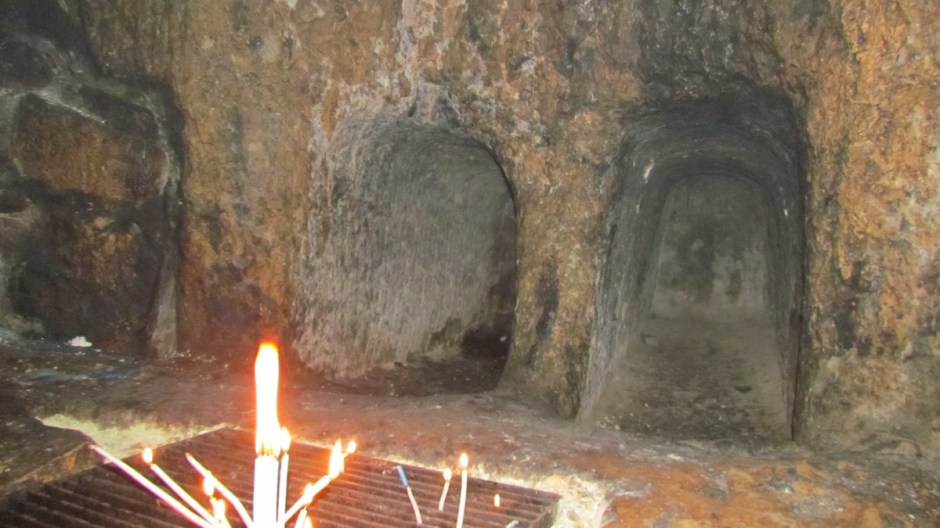
But when they arrive at the tomb of her brother Lazarus, the oppressive reality of death threatens to overwhelm her belief. To keep from being overwhelmed, Martha’s practical side asserts itself. (In another story about Martha in Luke’s account of the Gospel, this practical side keeps her bustling around the house being the consummate hostess while her sister Mary sits at Jesus’ feet.) But in our story today, this practical side asserts itself when she mentions that Lazarus’s body must smell really bad. The translation I just read makes Martha sound something like a member of the British House of Lords: “Lord, already there is a stench.” I prefer to translate these words with an earthier, more colloquial quality – say, like a West Texas ranch hand: “He’s been in there four days; he stinks!”
Whatever way we translate Martha’s statement, the olfactory reality of death is on her mind: the practical notion that the most likely scenario is that Lazarus’s smell, and not Lazarus himself, will come out of the tomb. That’s when Jesus reminds her of her belief. “Did I not tell you that if you believed, you would see the glory of God?” Now I’ve said it before and I’m sure I’ll say it again, but here we have another example of Jesus turning everything around. The popular axiom says, “Seeing is believing.” But Jesus, like he so often does, flips it: “If you believed, you would see…” For Jesus, believing is seeing.
In other words, our belief in the God made known in Jesus Christ gives us a particular lens through which to view our lives, our relationships, our gifts and callings, not to mention the whole of creation. In last week’s sermon, I called this lens the “eyes of faith.” Our belief enlivens these eyes of faith and activates our special God-tinted lenses. We look back through our lives and see God’s movement stitching together the defining moments and relationships that make us the people we are. We look out and see God’s presence in those whom God calls us to serve. We look beyond and discover the fullness of new life in God with all the saints.
However, our God-tinted lenses get cloudy and scratched all the time. Often, this happens when practicality overrides belief. You look back through your life and see a series of coincidences and happenstances that led you to where you are. You look out and see the need, but perhaps not the people who are in need. You look beyond and see emptiness or maybe a vague notion of the hereafter or maybe a flicker of hope staving off the dread of death. “I don’t want to get caught up in ‘pie-in-the-sky’ thinking,” we might say, “so I’ll just be practical. Who could honestly believe all that anyway?”
The answer: I do. Not perfectly, not by a long shot. Not everyday, not even a majority of the time, to be honest. But I think seeing with God-tinted lenses is like hitting a baseball: even the very best baseball players only get a hit about a third of the time.
Here’s the tricky part. Here’s why the interaction between practicality and belief is so hard to navigate: We need our practical sides in order to live the kind of life our belief in God catalyzes. Without practicality, we would never translate our belief into action. We would never actually follow through on the callings we hear from God. We might notice God’s movement in creation, we might even generate a vague notion to respond to such movement, but we’d never make a plan. We’d never figure out how many drivers we need to deliver Thanksgiving meals or what books are most appropriate for the students at our partner school in Haiti. Without our practical sides, we’d be hard-pressed to act, and our follow through would be anemic at best.
So instead of seeing practicality and belief as opposing forces, we can see them as unlikely allies. While practicality can undermine belief, practicality can also give belief legs when used to further the missions we believe God has given us. The saints we celebrate today turned their belief into action, and I’m sure they used a heavy dose of practicality to do it. Mother Teresa, for example, believed with all her heart that God had called her to the sick and dying of Calcutta – and she was also an uncannily good fundraiser.
When we baptize _____ in a few minutes, we’ll see once again the interaction between practicality and belief. We will pour water into this basin and thank God for it. We will remember that water is sacred and life-giving. Then we will give _____ a bath. I know, I know, it won’t be a very thorough bath – just go with me on this imagery here. What could be more practical, more mundane than washing? And yet, we who wear these God-tinted lenses see something so much greater than a simple bath taking place. We see a welcome into God’s household. We see the power of sin washed away. We see the gifts of the Holy Spirit awakening. We see Christ making us his own forever.
And with the washing done, the words of the Baptismal Covenant, which we are about to say, echo again the practical, boots-on-the-ground facet of our belief. The Covenant begins with the affirmation of belief and continues with the practical ways we live out our mission, with God’s help. And so our unlikely allies, practicality and belief, animate our lives as followers of Jesus Christ. We need both, and we’d be diminished if one were absent. After all, when Lazarus comes out of the tomb, I doubt he smelled like a bed of roses. I’m sure Martha’s practical prediction about his stench was confirmed. But Lazarus came out of the tomb, just the same.
Sermon for Sunday, April 27, 2014 || Easter 2A || John 20:19-31
Today we are going on a journey to the center of a word. This word happens to be one of the most misused words in the English language, and it happens to be an important word in our Gospel lesson today. This word is “believe.”
For several years now, I’ve tried to use the word “believe” only when talking about God. This is tricky because practitioners of modern English rarely treat the word with that kind of discretion. The word “believe” has become commonplace. How often have you heard a question like this: “Do you believe in [fill in the blank with a hot button issue of the day].” Somehow, the word “believe” has become synonymous with “think something is okay.” This watered down understanding is a far cry from how the word is used in our Gospel lesson today: “Now Jesus did many other signs in the presence of his disciples, which are not written in this book. But these are written so that you may come to believe that Jesus is the Messiah, the Son of God, and that through believing you may have life in his name.” Here “belief” is synonymous with life and relationship with God, not with mere assent to a particular position. As we journey to the center of the word “believe,” let’s try to recapture an undiluted definition.
The best way to talk about the word “believe” is to tell a story. Here’s a version of one that I heard a priest friend of mine tell several years ago (and he heard it from someone, too, so there’s no telling to whom this story belongs).
A Bible scholar trekked deep into the heart of the Amazon River basin, and there he found an indigenous tribe that had barely had any contact with the outside world. Like any decent Bible scholar would do, he set about learning the language of the people in order to translate the Good Book into the local tongue. While staying in the village, he lived with a farmer and his wife. For months, the scholar worked and worked: he listened to the people talking, made notes, slowly built a lexicon, and then set to the task of translation. He spread his papers out over the rough wooden table in the kitchen of the hut and put pen to paper.
But soon he stopped. He was stuck. In all his study, he had never heard the villagers use a word that seemed to him synonymous with “belief,” which was, after all, an important word in the Bible. He put his pen down and sat there, just thinking and feeling sorry for himself. Just then, the farmer came in from the fields all hot and sticky from a hard day’s labor. He sat down in the chair opposite the scholar, leaned back on two legs, propped his feet on the table, and let out a grateful sigh. In halting words, the scholar asked the farmer what his word for “believe” was. The farmer didn’t understand. The scholar tried to explain using other words, and comprehension dawned on the farmer. “Do you see me sitting here,” he said in his own language. “I am leaning back in this chair after a hard day’s work. My feet are up. I am resting all my weight on these two legs.” And the scholar found his word.
So to believe in something is to rest all of your weight on that something. Think about the first time you ever went to the pool. The older kids who knew how to swim were doing cannonballs into the deep end and playing Marco Polo in the shallows. The teenage boys were staring at the lifeguard in her red one-piece and layers of tanning lotion. The adults were laying in reclining lawn chairs around the edge of the pool, far enough away to be out of the splash zone.
But you took no notice of any of this. You were too busy contemplated your next action. You were standing by the edge of the pool, your toes curled over the cement lip of the shallow end. You had your arms crossed in front of you and your knees bent in. Your teeth chattered – from either fear or cold, you couldn’t tell. And there was your Dad standing three feet from you. He was standing waist deep in the water like a titan, impervious to Poseidon’s attempts to plunge him under. And he was extending his arms out to you, beckoning you to jump. He would catch you, of course, he said. You would not drown. You would be safe. You would have fun once you got used to the water. All you needed to do was jump into his arms.
You had a choice to make. You could waddle back to the safety of the towels and the bag with your sister’s change of clothes in it. Or you could jump, believing with all your might that your Dad would catch you, that you could rest all of your weight in his embrace. That’s belief.
But recall, I mentioned that belief is a tricky concept. It’s tricky for several reasons. Here’s one. When you decided to jump into your Dad’s arms on your first visit to the pool, you took the leap because you believed what he said. He would catch you, no matter what. You could rest your weight in his arms. Equating this belief with belief in God is where everything gets tricky. Here’s the problem.
There is a chance, however slim, that your Dad would fail to catch you.
No matter how earnestly we believed in a parent’s omnipotence or a coach’s perfection or a teacher’s omniscience, those people turned out to be…well, people. They were all stricken with the gene for human fallibility. Of course, not being perfect didn’t make them bad people. It just made them people. When we equate our belief in humans with our belief in God, we often make the mistake of hedging our bets were God is concerned. We apply to God the expectations we have when we believe in other people, thus unwittingly reducing God’s power and glory to the levels that fit comfortably in a fallible human body.
Now, please don’t misunderstand. I’m not telling you to repel all human contact because those fallible humans are not to be trusted. Human beings are fundamentally good. We usually do the right thing. We usually live up to the trust others have in us. What I am saying is this: there is no “usually” with God. God always does the right thing. God always lives up to the trust we place in God, else God wouldn’t be God.
So when you speak of belief, remember that God is the One in whom you can always rest your weight. God is the One who never fails to keep a promise. Therefore, God is the one whom we can always believe. When we reserve the word “believe” for God alone, we can begin to recapture the majesty that the concept of belief has lost through overuse in unworthy situations.
If believing is about resting your weight on something, then belief means knowing and trusting the something that takes your weight. This is your foundation. Every foundation that is not God is not a foundation at all, but a structure built on God, who is the ultimate foundation. God is, so to speak, the ground upon which everything rests. Believing in God is all about not being content until you find that ground, that deepest foundational level, upon which to rest your weight.
In our Gospel lesson today, Thomas discovers this foundation when he sees the Risen Christ’s wounds and says, “My Lord and my God!” Thomas’s journey has led him to rest his weight on the Risen Christ – to believe. The next time you use the word “believe,” ask yourself if the context surrounding that word is your foundation, something you can truly rest your weight on. If not, try a different word. We rest our weight on the One who is our foundation. For we believe in God.







 I find it ironic that the framers of our lectionary chose the Gospel lesson I just read as the one for today. Today is the feast we call “Christ the King” or “Reign of Christ.” And yet, for the entire length of his conversation with Pontius Pilate, Jesus specifically dodges Pilate’s questions about his kingship. “Are you the king of the Jews?” Do you ask this on your own, or did others tell you about me? “So you are a king?” You say I am a king. But if Jesus is king of anything, if Jesus claims to reign over anything in this passage, his kingdom would not include land or crops or livestock or resources. His reign would be over “the truth.” For this I was born, and for this I came into the world, to testify to the truth.
 Today’s sermon is about practicality and belief. I don’t have time for a fancy intro about when I was in fourth grade or about how something my children did reminded me of the Gospel. We’ve got too much to do in this All Saints’ Day service for that – most importantly, getting to the baptism, which is up next. Since today’s sermon is in part about practicality, I thought I’d be practical in my time-management and just skip the intro. So to reiterate, today’s sermon is about practicality and belief.
 Today we are going on a journey to the center of a word. This word happens to be one of the most misused words in the English language, and it happens to be an important word in our Gospel lesson today. This word is “believe.”
 Where the Wind...