A Note from my Mother (devo180 recap)

A new weekly feature here on Wherethewind.com brings a week’s worth of devotions from my other website devo180.com and puts them together in one long blog post. I will be editing them for continuity, so the text isn’t exactly like it is on the other site. You can go there and get the original. This one is from the first week of September.

I’m reminded of your authentic faith, which first lived in your grandmother Lois and your mother Eunice. I’m sure that this faith is also inside you. (2 Timothy 1-5; context)

“May you continue to have the space for reflection, the silence for relationship with God, the time for relaxation, and the temperament to recognize and rejoice in all of creation.” You probably don’t recognize the name of the person who wrote this quotation. And that’s okay, because she’s not famous (except in genetically exclusive circles). She’s my mother, and she is one of the wisest and gentlest people I know. She could easily be a saint except that her miracles aren’t the flashy kind that gets you noticed by the canonization committee. Anyway, she wrote those words to me over the summer in a card celebrating the third anniversary of my ordination to the priesthood. The card has been propped open on my desk ever since, and I’m excited that I get to share it with you.

So I invite you to dig up some wisdom from your own mother. If you can’t, dig up some wisdom from one of those surrogate mothers that everyone seems to collect (I’ve got about five, I think). Reflect on that wisdom, and then we’ll pick up with the first phrase of my mother’s message.

Space for Reflection

In her note to me, my mother prayed that I have “the space for reflection.” Now, the word “reflection” is one of my all time favorite words, so I’m sure my mother knew that it would resonate with me. We use the word “reflection” in two main contexts: we see our reflection in mirrors or still ponds and we engage in reflection when we think back on previous events. In both of these contexts, gaining space – both spatial and temporal – allows us to make the most out of reflective moments.

They say that you don’t learn from experience; rather, you learn from reflection on experience. If the middle linebacker (yea football season!!) takes a bad angle and gets blocked out of the play by the left guard, he now has gained some vital experience. But there’s a good chance he’s going to get blocked out of the play again unless he reflects on the mistake and takes time to correct it. For football players, the space for reflection is the film room. For the rest of us, the space happens when we intentionally pause to look back over our days and discern how we succeeded and failed at living the lives God desires for us.

Now let’s get back to the mirror context of the word “reflection.” The word comes from the Latin word flecto, which means “to bend.” Literally, “reflection” is “to bend again” or “to bend back.” So when we allow ourselves the space for reflection, we literally “bend” or, to make the action physical, we “bow.” We bow to the God who is patiently waiting for us to hold up the mirror to our days and see God reflected back at us.

Silence for Relationship with God

My mother prayed that I develop the silence for relationship with God. On the surface, this may seem like a strange juxtaposition – silence and relationship don’t usually go very well together. In a human relationship, a “silent” party may be accused of being incommunicative or may be cowed by an aggressive partner into non-speaking.

But there’s where we make our mistake – too often, we think of silence as a “non-something,” as an absence of something. But silence, when we are speaking about how it functions in our relationships with God, is the exact opposite. Silence is a full something. Practicing silence does not mean shutting off all the noises around and within you. Rather, practicing silence means replacing those noises with attention to what is there, hidden in the background beneath the noise.

This fullness of something beneath is God’s presence. It is beneath the noise because God’s presence is the framework of existence, the structure, the undergirding support for all things. It makes sense, then, that when we find ourselves in silence, we notice this behind-the-scenes presence. When we become attentive to this presence, we can begin to participate in our relationship with God. And it is then that we will notice that God has always and forever been participating in God’s relationship with us.

Time for Relaxation

The third prayer my mother had for me was that I find the time for relaxation. She apparently has some inkling into the fact that I would probably work all the time if I didn’t have people around me to tell me to slow down.

I remember during my first year of college having so much work and reading to do that I never had any time to relax. I always told myself that I would relax when my work was done. The trouble was that when I finished reading for one class, I would need to start it for another, and by the time I was done with that reading it was time to start reading again for the first class. And then there were papers and projects and studying for exams and…and…and…

Finally, a day came when there was just too much hitting me all at once. Then I realized that there was never a time when I wouldn’t have some work for class to do. So I started scheduling relaxation time in order to be more effective when I was working. And that put me on the right path.

The best time to relax is at the moment when you say to yourself, “I am just too busy right now to even think about relaxing.” You (not to mention everyone around you) will be better for it. Remember, Jesus often went off by himself for a bit of a recharge. You can too.

The Temperament to Recognize and Rejoice in All of Creation

The final prayer my mother had for me in that card back in June was that I have “the temperament to recognize and rejoice in all of creation.” I love that she didn’t simply pray for me to recognize and rejoice in creation. Rather, she prayed that I have the “temperament” to do so. In so doing, she asked God that I be granted a specific tool for my faith’s toolbox, not just the effect the tool brings.

Growing into a temperament that recognizes and rejoices means nurturing a certain demeanor, a set of behaviors that leads to the expectation that there is and always will be something to rejoice about. This temperament is not about glossing over the bad stuff or pretending that everything is fine and dandy when it’s not. We aren’t trying to delude ourselves when we seek this temperament. In fact, we are trying to do just the opposite.

Remember two days ago, when I talked about the fullness of God’s presence being the something beneath the silence. In the same way, nurturing the kind of temperament my mother is talking about has to do with searching for the greater reality around and upon which all transient reality clings. Discovering God’s presence in our lives, both when times are great and when times are tough, is all about acknowledging that God is there, undergirding our existence with God’s own greater existence. When we discover this, or more often, when we rediscover this (considering we have a tendency to forget about it), we can recognize and rejoice in creation.

And in so doing, we recognize and rejoice in God’s creating movement in our lives.

I leave this moment with you, God, wishing for open ears to listen, a sensitive mouth to speak, and strong arms to embrace your people.

First Words

(Sermon for Sunday, October 16, 2011 || Proper 24A || 1 Thessalonians 1:1-10 )

Any spherical object! (that's me at age 2)

Did your parents ever tell you about the first word you ever spoke? More than likely, your first word was “Da,” which is short for, “Daddy, go get Mommy so I can have lunch.” Perhaps, your first word was “Ma,” though this is unlikely, considering the “M” sound is much more difficult to make than the “D” sound. Perhaps, your first word was “No,” which you probably heard your parents say many, many times when they asked each other if the other had slept last night. My first word was “ball.”  And thus began a lifetime of me kicking, catching, and throwing any spherical object I could get my hands on.

Christianity has some first words, as well; at least, they’re the first words that we still have a record of today. They aren’t as hesitant or half-formed as are the first words of infants. Rather, they spring from the pages of the New Testament with remarkable (even uncanny) clarity, vitality, and comprehensiveness. We heard these words a few minutes ago when we listened to the first ten verses of Paul’s First Letter to the Thessalonians.

Now, before we get to some of Christianity’s first words, we need to clear up one spot of potential confusion and talk for just a minute about the similarities between Thessalonica in 50 AD and the United States in 2011. First, the potential confusion.

If you pull up the Bible on your smartphone, you will notice two things: number 1, the New Testament begins with the Gospel according to Matthew; and number 2, Paul’s First Letter to the Thessalonians is actually eighth on Paul’s depth chart, not first. So how could these ten verses from First Thessalonians possibly be the oldest recorded words in Christian history?

For starters, the folks who put together the New Testament put the four accounts of the Gospel up front because the rest of the pieces didn’t make a lot of sense without first hearing the story of Jesus’ life, death, and resurrection. But the people who wrote the Gospel didn’t start doing so until probably 15 to 20 years after Paul wrote to the Thessalonians. As for Paul’s depth chart (and this is a little strange) – his letters are actually in order by length, from longest to shortest, and First Thessalonians is one of the shorter letters. But if the New Testament were ordered chronologically by when the texts were written, our reading from Paul today would be on Page 1. Okay, confusion averted? Great. Let’s keep going.

Our modern moment shares several things in common with mid-first century Thessalonica, the community to which Paul writes the first words of Christianity. Like the modern United States, Thessalonica was a diverse, cosmopolitan place, with a plurality of religions and cultures all rubbing shoulders. As the capital of the region of Macedonia, there were plenty of things to do, not unlike the glut of stimulation that assaults us at every turn. And the Thessalonians had not received the good news of Jesus Christ before Paul arrived, just as people in modern America have lost contact with this great story of the Gospel.

To these people in Thessalonica and to us here on the Interwebs, Paul sends these first words. He, of course, had no idea we would consider them the first words of Christianity, which lends a special kind of authenticity to his message. These are words written to people who hadn’t read Matthew, Mark, Luke, or John. These are words written to people who lived in a society that knew very little about this faith that Paul brought with him. As such, these are words that can serve us as we practice sharing our faith, as the Thessalonians did, with people outside the walls of this church.

In these first ten verses of the first text of Christianity, there are six words in particular that shimmer for me: grace, peace, faith, love, hope, and joy. Notice how Paul uses each of these special words: “Grace to you and peace,” he writes. “We always give thanks to God for all of you and mention you in our prayers, constantly remembering before our God and Father your work of faith and labor of love and steadfastness of hope in our Lord Jesus Christ…You became imitators of us and of the Lord, for in spite of persecution you received the word with joy inspired by the Holy Spirit.”

These words are special because each has a meaning outside the church and a greater meaning inside the church. The secular understanding of these words can give followers of Christ like you and me a place to establish common ground as we share with others how God is present in our lives.

Let’s quickly look at each of these words to see how we can expand the secular definition to fit into the greater reality of following Jesus Christ.

“Grace” is a perfectly lovely word. We use this word to describe ballet dancers because they move with poise and precision. They throw their bodies into the air trusting that they will land on their feet, and if they don’t they get back up quickly and keep dancing. How easily can we take this understanding of grace and elevate the grace of the dancer to the Grace of God, this grace that picks us up when we fall and teaches us to find beauty in everything.*

We hear the word “peace” when conflict ends and “peacekeepers” enter the recently warring region to monitor the new situation. We use this word to describe a calm ocean after a storm or an infant who has finally dropped off to sleep. We can expand this to the Peace of God, which takes situations of conflict and infuses them with possibilities for unity, justice, and new beginnings.

“Faith” is the trickiest word on this list because all human attempts at “faithfulness” fall short. We put our trust in banks, in governments, in products, in each other, and sooner or later we are always let down. But when we expand the definition of faith to include the Faith of God, we find the one example in all of creation that will never fail. How wonderful to tell someone about this kind of faith!

“Love” is tricky, too, because we use the word in so many different circumstances, from our shoes to our spouses. But when we find that most authentic use of the word, when the word “love” springs unbidden from our lips and doesn’t describe an emotion but a state of being, a state that we entered unwittingly and never want to leave – then we begin to see the edge of the extraordinary Love of God. And we can celebrate that love with each other.

“Hope” is about the future. All people have used this word to talk about what they dream for the days and years ahead. I hope to have children and to teach them to play soccer. These human hopes are safe hopes, the kind that we can see in our mind’s eye five or ten years down the road. This understanding of hope elevates to the Hope of God when God releases us from the boundaries of the merely possible and shows us the realms of glory that exist far beyond our sight. And then we have a greater hope in which our everyday hopes can dwell.

Finally, we talk about “joy” most often when we have “enjoyed” a dinner party or a new film or a ballgame. We mean that we had a good time and might want to come over again. What we don’t realize is that this “joy” we feel is more than happiness. The Joy of God is a feeling of wholeness, of completion that comes when we discover that we are exactly the people who God created us to be.

Each of these words, these first words that Paul used when he wrote to the Thessalonians makes sense outside the context of the Christian faith. But within the greater reality of following Jesus Christ, these words shimmer with new facets of meaning.

I invite you this week to take these first words of Paul and try them out for yourself. Pray with this question in your heart: how has God encountered you when you have had an experience of grace, peace, faith, love, hope, or joy? Then find someone from within your own faith community and try out these words. Practice sharing with one another before you go out and share your Christian life with those outside your church.

Like the first words of an infant, our first attempts in sharing the first words of our faith will be halting. They will be hesitant. They will be half-formed. But they will be ours. And God will take them, shape them, and elevate them into God’s own words.

Note

*I wrote “Grace…teaches us to find beauty in everything” and then realized that I stole those words from U2. Thanks, fellas.

Christ’s Own

(Sermon for Sunday, October 2, 2011 || Proper 22A || Philippians 3:4b-14)

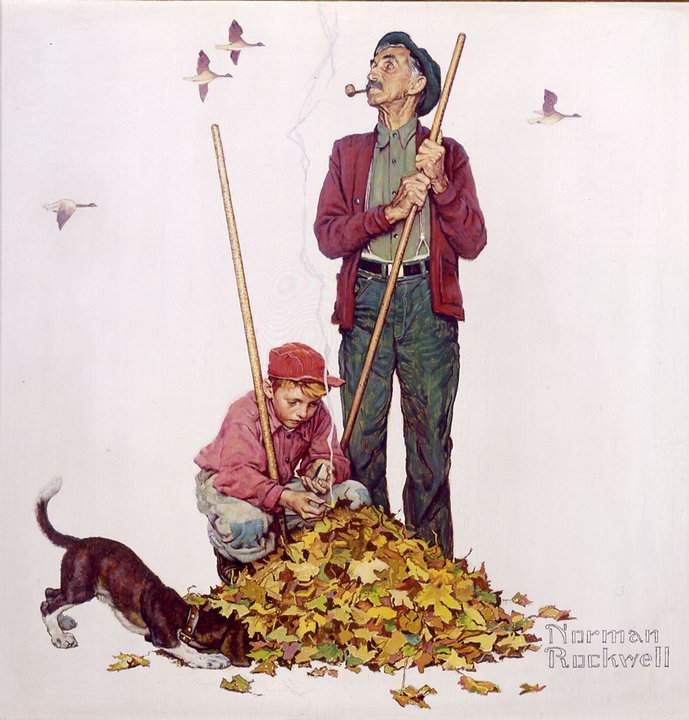
My grandfather, Roy Thomas, went into hospice twelve days ago, after several difficult weeks in the hospital. Less than twenty-four hours later, he passed away due to complications from being alive for more than nine decades. I awoke to the phone ringing at quarter to six in the morning, and I knew before answering what the news would be. Now, my grandfather and I were never close. There are no pictures of him teaching me how to fly fish or taking me to the ballgame or riding a tractor with me perched on his lap. There was never a Norman Rockwell moment in our relationship. He sent me a card each birthday, and I saw him every other year, give or take.

So, when I broke down weeping in my office a few hours after I received the call from my father, I was taken completely by surprise. Where were those tears coming from? How could the loss of someone, with whom I had but a passing relationship, hit me so hard in my gut? These were the questions I was asking myself as I wiped the tears away. I felt a bit silly, crying so uncontrollably when I was sure I was just fine, thank you very much. But perhaps, more fitting questions ask exactly the opposite. How could I be surprised that I felt such tear-stained grief over the loss of my own grandfather, no matter the state of our connection? How could I possibly think that the loss of a member of my own family wouldn’t hit me so hard in my gut?

The concept of “loss” is tricky thing. The overriding fact of earthly life is that one day – perhaps not today or tomorrow, but one day – we will lose our earthly lives. Everyone dies. There are no exceptions. We have thousands upon thousands of years of data backing up this reality. And yet, we train ourselves to ignore this overriding fact. We assume that death is something that happens to other people – fuzzy, nebulous people on the news and in the obituaries. Not the people we love. Not the people close to us.

But then a relative develops an aggressive cancer. Or a friend flips his SUV. Or a grandparent goes into hospice. And the illusion that loss only happens to other people shatters. The overriding fact that earthly life always ends sneaks up and surprises us, even though this fact is enmeshed in the very fabric of existence.

And death isn’t the only kind of loss we encounter. We confront loss on a daily basis, and still we have tremendous difficulty dealing. There is the loss of autonomy when others make decisions for us. There is the loss of relationships when we part ways with those who have made impacts on our lives. There is the loss of material possessions, the loss of health, the loss of trust, the loss of baseball games (sorry, fellow Sox fans). There is even the loss of loss, which is the grief that happens in response to you realizing that you are no longer grieving.

With loss surrounding us all the time, you’d think we’d have developed ways to deal that didn’t include various forms of denial and willful ignorance. But more often than not, we ignore the potential for loss until the loss is right in front of us hitting us in the gut.

And this willful ignorance is what made me read today’s lesson from Paul’s letter to the Philippians over and over again. Paul writes: “Yet whatever gains I had, these I have come to regard as loss because of Christ. More than that, I regard everything as loss because of the surpassing value of knowing Christ Jesus my Lord. For [Christ’s] sake I have suffered the loss of all things.”

Somehow, Paul’s relationship with Jesus Christ has allowed Paul to confront the reality of loss head on, well before any sort of loss has a chance to sneak up and surprise him. How does Paul do this? Let’s take a look. Can we do the same? Yes, I think we can.

According to Philippians, Paul values knowing Christ Jesus above all else. Nothing even comes close. The value of being in relationship with Jesus surpasses everything. And because knowing Jesus is so incalculably valuable, everything else in Paul’s life seems utterly insignificant. The gulf between what was important before meeting Christ and what is important now that he has met Christ is so wide that Paul can barely see the stuff of his old life shrinking in the distance.

And, therefore, he regards everything as loss. Based on Paul’s own words and my interpretation of them a moment ago, we might come away with the impression that nothing besides being in relationship with Christ should matter, that we should ignore everything that isn’t Jesus. This is the interpretation favored by hermits and ascetics that got away from everything to focus on God. However, I’m not convinced that that’s what Paul had in mind. We must keep going, because so far we’ve only gotten through the first half of Paul’s discussion.

Because Paul values his relationship with Christ above all else, he no longer attempts to cling to the rest of his life. He lets go of everything – his relationships, his possessions, his fears, his illusions. But all of this that Paul regards as loss is not lost. Paul does not cast everything into the void. Rather, he gives everything away to Christ. He gives everything to Jesus, and in doing so, Paul finds that everything he has regarded as loss was always God’s in the first place. Even Paul himself.

Paul relates this comforting reality to the Philippians: “Not that I have already obtained [the resurrection] or have already reached the goal; but I press on to make it my own, because Christ Jesus has made me his own.” Christ Jesus has made me his own. These words are the crux of Paul’s ability to deal with loss. The surpassing value of knowing Christ compels Paul to give everything up to Jesus and thus find himself at a loss. But in the act of giving away everything to Jesus, Paul discovers that Jesus has taken even more. Jesus has taken Paul. Jesus has made Paul his own, along with all that stuff that Paul gave him.

And Christ has made us his own, as well. When we enter into relationship with Christ, the surpassing value of that relationship makes everything else seem entirely insignificant. This seeming insignificance allows us to release our stranglehold on everything that we have been putting in place of a relationship with Christ. And when we release our grip and give away everything to Christ, we will find that Christ has already obtained us in the bargain.

Because Christ Jesus has made us his own, he has empowered us to give to him everything and everyone that we possibly could lose before the loss sneaks up and surprises us. Does this make grieving un-Christian? Of course not. Rather, our grief is one of the things that Christ invites us to give over, so that God might enfold us in our hour of need.

When my grandfather passed away eleven days ago, I was not prepared for the sense of loss that would hit me. Perhaps, this profound loss of someone I didn’t even realize I was clinging to has opened my eyes to truth that I still have plenty to give away to Christ. I would hazard to bet that we all continue to cling to things that have never really been ours to cling to. The good news is this: Any loss, any gain, any grief, any joy, any challenge, any victory is ours to share with Jesus Christ because Christ has made us his own.

Digital Disciple Chapter 6: Tech Sabbath

After a midsummer hiatus, here’s the final part in a six part video series produced to accompany the book Digital Disciple. This video series is designed to be used in a class setting to introduce the material and spur discussion. Of course, watching it by yourself is fine too!

Don’t forget to head over to the Facebook page and participate in a little quiz about this video. We’ll pick a random winner from those who participate and he or she will receive an autographed copy of the book, the DVD, and the t-shirts that Adam wore in the video (again, not the actual shirt but one just like it). Check it out!

In My Name

(Sermon for Sunday, September 4, 2011 || Proper 18A || Matthew 18:15-20 )

Near the end of the film Shakespeare in Love, the crowds who have just witnessed the first performance of Romeo and Juliet sit stunned into silence. Then one person begins clapping and soon the playhouse is shaking to thunderous applause. But in the midst of the cast’s curtain call, a group of soldiers storms into the theatre led by Mr. Tilney, the Queen’s Master of the Revels. “I arrest you in the name of Queen Elizabeth,” shouts Tilney.

When asked why he is attempting to arrest everyone present, he says that they all “stand in contempt of the authority vested” in him by Her Majesty because they just participated in a display of public lewdness – because (and here he points to Gwyneth Paltrow who is playing Lady Viola who, in turn, is playing Juliet) “that woman is a woman!” Then he employs the Queen’s authority a third time: “I’ll see you all in the clink in the name of Her Majesty Queen Elizabeth.”

“Mr. Tilney,” thunders a voice from the audience. Then the Queen reveals herself and says, “Have a care with my name or you will wear it out.” And stepping regally to the stage (as only Dame Judi Dench can), she takes charge of the situation.

Now the monarch happened to be at the play, but neither Mr. Tilney nor anyone else knew that. Mr. Tilney was doing what was expected of him as the person in charge of public performances in the Queen’s realm. The Queen, of course, could not possibly attend to all matters of governance alone, and so she appointed all sorts of people to handle affairs in her name. These people, like Mr. Tilney, used the Queen’s name to generate the authority they needed to do their jobs, which in the big picture always meant looking after the Queen’s affairs. Apparently, in Mr. Tilney’s case, he has traded on her name one too many times.

This is the model that first comes to my mind when the Gospel references doing something in Jesus’ name, as so happens in today’s reading from Matthew. I think of the absent monarch delegating to an underling some portion of her authority so that some minor affair of state runs smoothly. In this model, the name of the monarch functions as a badge or a seal, some sort of official statement that the underling is speaking for the monarch because the monarch is elsewhere.

Now I want you to time travel with me back about three minutes. I climbed into this pulpit, crossed myself, and said, “In the name of the Father and the Son and the Holy Spirit.” You said, “Amen,” and then you sat down while I took a sip of water. And then I started talking about Shakespeare in Love. Okay, back to the present.

How is my invocation of God’s name any different than Mr. Tilney wearing out Queen Elizabeth’s? If Mr. Tilney invokes the Queen’s name primarily because she is absent, what am I saying about God’s presence here with us at St. Stephen’s? Could I possibly be implying that God is an absent sovereign, and I am speaking on God’s authority because God couldn’t quite get here this morning?

I surely hope not. And here is where we disciples of Jesus Christ diverge from the underlings of Queen Elizabeth. Notice what Jesus says at the end of today’s Gospel reading: “For where two or three are gathered together in my name, I am there among them.” Whenever we invoke the name of Jesus, we do not do so in order to stand in for an absent savior; rather, we invoke Jesus’ name to awaken ourselves to the ultimate reality of Christ’s very presence in our midst.

Jesus expresses this ultimate reality when he says, “I am there among them.” In Greek, this phrase literally means, “I am there in the middle of them.” In other words, the presence of Christ forms the invisible connective tissue in our relationships. We make this connection visible when we love one another, when we serve one another, when we respect the dignity of one another, and when we reach out to those who we might not think are all that connected to us.

And we make this connection visible when we gather intentionally in Christ’s name to share Christ’s presence with each other. Later in this service, we will turn our attention to the table. And the very first words out of our mouths will demonstrate that a gathering of at least two is necessary to celebrate God’s connection to us and to each other. I will say, “The Lord be with you.” And you will respond, “And also with you.” We will engage in this short conversation in order to notice that we are gathered together in God’s presence.

During the ensuing prayer, we will thank God for all the gifts God has given us. And because this thanksgiving comes attached to the sharing of something, namely bread and wine, we will be reminded that the best way to thank God for our gifts is to share them with others. At the end of the prayer, I will break the bread so we all can partake in this act of sharing. And through the praying, thanking, breaking, and sharing, we will participate in the presence of God among us. We will celebrate the connective tissue of Christ in each of our relationships.

But this is not the end of our awareness of the connecting power of God. This is the training, the exercise for the real work of disciples of Jesus Christ. When we walk out through those doors, we will bring with us the desire and the ability to make visible the connective tissue of Christ’s presence in all of our relationships. The final dialogue of this service will be, “Let us go forth in the name of Christ,” to which you will respond, “Thanks be to God” (plus a few “Alleluias”).

We go forth in the name of Christ, not to divide, but to gather. We go forth in the name of Christ, not rejecting the chance to form a bond, but rejoicing that the connective tissue of God’s presence stretches forth from us, seeking the lost and the lonely. We go forth in the name of Christ, not as delegates of an absent savior, but as beacons of the light of Christ, which fills the space between people and pulls them closer together.

The Dragon’s Skin

(Sermon for August 28, 2011 || Proper 17A || Exodus 3:1-15)

Eustace Scrubb had read only the wrong books. The books he had read had “a lot to say about exports and imports and governments and drains, but,” says C.S. Lewis, “they were weak on dragons.” And so when Eustace accidentally accompanies his cousins Edmund and Lucy on a voyage aboard the ship Dawn Treader, you might imagine that he is, shall we say, out of his element. The further the ship sails from Narnia, the more ghastly becomes Eustace’s behavior. He is truly a horrible boy – lazy, selfish, dishonest, self-centered, and his attitude only goes from bad to worse.

So you won’t be surprised to hear that, when the ship finally comes ashore after a brutal storm, Eustace slips off by himself to avoid a day of hard work. And because he’s read only the wrong books, you also won’t be surprised to hear that, when he stumbles into a cave full of treasure, he has no idea that he has trespassed into a dragon’s lair. He has no idea that falling asleep on a dragon’s hoard turns one into a dragon. And he has no idea that he has become a dragon until he realizes that he’s running on all fours and that the reflection in the pool is his own. Now that he has become a dragon, “an appalling loneliness” comes over him, and he begins to see in himself the monster that his cousins and the crew of the Dawn Treader had tolerated for the entire voyage. How could Eustace possibly undo the enchantment? How could he shed the dragon’s skin?

Consider that your cliffhanger until later in the sermon. Before we return to Eustace the dragon, let’s turn our attention to this morning’s lesson from the Hebrew Scripture. Moses grazes the flock of his father-in-law far afield. At Mount Horeb, he sees a bush blazing merrily, but the bush isn’t turning to coals and ash. Intrigued, Moses turns aside to look more closely. And God encounters him there. “Come no closer,” God calls to Moses. “Remove the sandals from your feet, for the place on which you are standing is holy ground.”

Remove the sandals from your feet. On the surface, this command reminds Moses that he and God don’t share the same position. Moses is a supplicant, and he comes into God’s presence unshod to show the vast disparity between the two. Okay, show of hands – which of you took off your shoes when you settled into your pew this morning? Yeah, neither did I. From a cultural point-of-view, removing our footwear signals informality rather than respect. So, we need to look at God’s command here from a different perspective.

On a deeper level than the simple removal of a garment, God’s command to Moses to take off his sandals presents a challenge to each of us who hears this story. This challenge begins with a question. What is God commanding you and me to remove from ourselves when we enter into God’s presence?

Our answers to this question build the wardrobe of costumes we wear all the time without realizing that we are dressed up. We wear these invisible costumes and affix invisible masks to our faces in order to set up buffers between ourselves and other people. If other people get too close, then they might impel us to change, to see the world differently than we desire, to remove ourselves from the centers of our existence. Our costumes are our first line of defense to remain the people we’ve always told ourselves we want to be. The trouble is that the costumes also disguise us from ourselves.

And so we stumble into God’s presence wearing carefully crafted costumes and masks that create barriers between us and everything that is not us. And just as God commands Moses to remove his shoes, God tells us to take off the costume.

What is God commanding you and me to remove from ourselves when we enter God’s presence? What makes up our costumes? Here I can only speak for myself, so listen for where your experience connects with mine. After praying with the question, I decide that the first piece of my costume to remove is Fear. This is the fear that forestalls any type of change. This is the fear that keeps me from entering into any kind of relationship because the other will cause some sort of transformation in me. This is the fear that keeps me from diving into a pool, not because I’m afraid of diving, but because I don’t want to get wet.

The second piece of the costume is Ignorance. When fear keeps relationships from beginning, ignorance is the necessary byproduct. I am blind to the situations of those I don’t take the time and energy to know. Again, this is part of the buffer. If I actively keep myself from developing an understanding of another’s plight, I won’t be putting myself in the position to have to decide whether or not to help, to relate, to get my hands dirty.

The third piece of the costume is Apathy. When ignorance fails, and I do find myself in the position to make a choice – to be in relationship or not – apathy sings the siren’s song. Apathy is the inertial force that keeps me complicit and complacent to the woes of others because I just can’t quite dig up enough empathy to care.

There are many more pieces of the costume, too many to talk about in this sermon, but there’s still the mask. My mask is Pride. When fear and ignorance and apathy all fail to keep me from being in an authentic relationship with another, there’s always pride to keep me living a disguised life. This is the pride that takes all the credit for my giftedness and assumes that I can get along quite well on my own because I seem to have done so thus far.

And this is where we return to Eustace, the horrible boy of C.S. Lewis’s The Voyage of the Dawn Treader. After he becomes human again, Eustace relates to his cousin Edmund how he left the dragon behind. A lion had come to him in the night and bade him undress. Since he had no clothes, he began shedding his skin like a snake. He scraped off his scales and stepped out of the skin. But then he looked down and saw another layer was there. He peeled this off as well. And “exactly the same thing happened again,” said Eustace.

And I thought to myself, oh dear, how ever many skins have I got to take off? …So I scratched away for the third time and got off a third skin, just like the two others, and stepped out of it. But as soon as I looked at myself in the water I knew it had been no good.

Then the lion said… ‘You will have to let me undress you.’

The desperate Eustace lay down and

The very first tear [the lion] made was so deep that I thought it had gone right into my heart… Well, he peeled the beastly stuff right off – just as I thought I’d done it myself the other three times, only they hadn’t hurt – and there it was, lying on the grass: only ever so much thicker, and darker, and more knobbly-looking than the others had been.

When we stumble into God’s presence, God invites us to remove our costumes. Like Eustace, we might be able to slough off some pieces ourselves, but the real costume only comes off when God intervenes and pulls the invisible garments away. When we pray, “I will, with God’s help,” we acknowledge that we cannot take off our disguises until we stand before the God who is the only one who truly knows what we look like. We cannot remove our costumes until we ask God to take them away, to leave them lying next to us, thick and dark and knobbly-looking.

And when we participate with God in this removal, there is just so much room to fill. Hope takes the place of Fear. Awareness fills in the gap left by of Ignorance. Engagement replaces Apathy. And Humility settles in where Pride once kept the disguise wrapped around us so tight. Shedding the costume is hard work that takes a lifetime. But we are not alone. We are in God’s presence, and God is forever helping us shed the dragon’s skin.

Digital Disciple Chapter 5: Googling Prayer

After a midsummer hiatus, here’s the fifth in a six part video series produced to accompany the book Digital Disciple. This video series is designed to be used in a class setting to introduce the material and spur discussion. Of course, watching it by yourself is fine too!

Don’t forget to head over to the Facebook page and participate in a little quiz about this video. We’ll pick a random winner from those who participate and he or she will receive an autographed copy of the book, the DVD, and one of the t-shirts that Adam wore in the video (again, not the actual shirt but one just like it). Check it out!

The Word is Near You (video)

My lovely wife surreptitiously recorded the song from my sermon yesterday. I wrote it last Thursday and played it a lot on Friday and Saturday to prepare for singing it during church. This is only my second sung sermon in the five-ish years I’ve been preaching, so I probably won’t do one again for quite a while, but every so often you’ve just got to pull out the ol’ guitar. (Check out the previous blog post for the lyrics.)

The Word is Near You

(Sermon for Sunday, August 7, 2011 || Proper 14 Year A || Romans 10:5-15)

This Sunday, the phrase, “the word is near you,” which Paul quotes from Deuteronomy in his letter to the Romans, really struck me. As I sat down to write a sermon about how and when the word is near us, I kept having this feeling that this sermon needed to be a song instead of a more traditional offering. So I decided to pull out my guitar and write a sung sermon. Here it is. You can hear a rough live version of the song by clicking play on the audio file below.

The T in Boston might run on a time table, but no one knows what it is.

When you’re standing on the subway platform,
And the Red Line is running late
When you’re landing on a rainy runway,
And the storm turns the sky to slate
When you’re handing out bread,
When you go where you’re led,
When you face what you dread…
the word is near you.

When you’re flipping through a family album
With your grandmother who you love
When you’re slipping down an icy sidewalk
With the cold seeping through your gloves
When you’re clipping your nails,
When you’re telling tall tales,
When the life support fails…
the word is near you.

The word is near you, the word is near you
It’s in the sun-setting sky,
And every answer to “why?”
Hear the still, small voice cry…
The word is near you.

When you’re clasping on your favorite bracelet,
The one made by your niece at camp
When you’re gasping on the field at halftime
And you fight through a wave of cramps
When you’re grasping at straws,
When you notice your flaws,
When your hardened heart thaws…
The word is near you.

When you’re looking for a baby present
For your friend who is almost due
When you’re booking travel for the funeral,
And your grief knocks the air from you.
When you’re cooking up eggs,
When the man near you begs,
When there’s nothing but dregs…
The word is near you.

It’s on your lips
And in your heart
Speaking life to your soul
And making you whole

First Time, part 2 (Davies Tales #9b)

(For part 1, please click here.)

Aidan Davies and his father walked out of the sacristy. “Wait a moment,” said Alastor. “Let me look at you.”

Aidan stopped and turned in a circle. He had on more layers of clothing than any sane person would wear in the month of June. But he always joked that the psychological testing that candidates went through before becoming priests was done to make sure you were crazy. On top of his suit trousers and black shirt, Aidan wore a white alb, a garment which he used to pretend was a toga when his childhood fantasies built ancient Rome in the churchyard. On top of the alb, he wore a green stole, which more than a handful of people had called a “scarf” when they paid him compliments for its subtle patchwork design. And on top of the stole, he wore a green and gold chasuble, which weighed on his shoulders like a down comforter. Aidan flapped his arms to move the chasuble off of his hands. Of course I’m going to spill wine on it today, he thought. It’s a good thing, then, that it cost more than my first car. Aidan smiled ruefully and gave the chasuble a quick once over, looking for previous stains. There weren’t any.

Alastor stepped to his son and straightened the neckline of the ornate garment. Then his hands suddenly went to Aidan’s shoulders and his father gathered him into a strong embrace. “I remember when you wore a chasuble on Halloween. Your mother had to pin it to keep it from dragging.” He pushed Aidan back to arms length. “Now look at you.”

Alastor choked off the last words, seemingly as surprised as Aidan at his sudden show of emotion. Alastor kept his hand on Aidan’s shoulder as they walked to the back of the church where the early service crowd was trickling in. Churches fill up like movie theaters, Aidan thought.

His father stuck his head outside and clucked good-naturedly at a few stragglers. As they settled in to their pew, Aidan made a quick head count. Two dozen or so. Pretty standard for an early service in the summer. Well, if I do trip and hit my head on the altar only a few people will see it. He glanced at his watch and gave a thumbs up to his father. Alastor led the way as they entered the nave and processed down the center aisle. Aidan had never walked behind his father in procession. This is something new, indeed.

The first half of the service came and went. Aidan kept stealing glances at the altar, wondering how something he used to play under could seem so imposing now. At the Peace, he shook hands with the two-dozen parishioners and embraced his father once again. Then he turned to face the altar and his parents’ advice from earlier that morning came to him. Go to the bathroom before you put your chasuble on. Check. Remember that God’s there too. Aidan looked at the cross and out the window to the misty morning sky. He looked back at the altar and at the people assembled. His mother’s advice had seemed so obvious when he sat perched on the edge of her bed. She might have said, “Remember that gravity will keep you from floating away.” But here in the church, with that special table in front of him, Aidan could not remember, could not see how he could go and stand behind that table and invoke God’s presence.

Aidan pulled his father to one side. “I don’t think I can do this,” he said. He tugged at the collar of his alb. “I don’t think I can consecrate communion.”

Alastor steadied his son with a look. It was the look the veteran paratrooper might give the new recruit before pushing him bodily from the plane. “And what makes you think that you’re the one doing anything,” he said simply.

Aidan stared blankly at his father. “You’re just the hands and the mouth,” said Alastor. “No delusions of grandeur. God’s doing the heavy lifting.” Aidan nodded and turned back to the altar. Alastor stepped up behind him and whispered, “And God does the heavy lifting whether or not you realize God is here.”

Once again Aidan let out a breath he didn’t know he was holding. God is here. God is here and that truth has nothing to do with me. No delusions of grandeur. “Okay. I’m really ready this time,” he said.

He mounted the steps to the altar and unwrapped the chalice. He folded the veil and laid it aside. He put the burse on top of the veil. He dumped a few dozen wafers onto the paten. He took the two silver cruets from the credence table and set them next to the chalice. Then he froze and his eyes went wide. He looked at the two containers: they were identical and they were solid metal. One held wine and one held water, but there was no earthly way to tell them apart. He pulled the stopper from one and glanced inside. Too dark. The liquid could have been either. He checked the other. Looks the same. He picked them up to feel the weight, hoping the cruet containing the wine would be fuller. No such luck. He put them down and gave his father a sidelong glance, along with a half grimace that he hoped communicated, “Help me!”

Perhaps, his father didn’t understand his attempt at telepathy. Perhaps, his father was trying to loosen him up some more before the Eucharistic prayer began. Perhaps, his father was getting him back for all those times that Aidan held up his watch to signal that a sermon had gone on too long. Whatever the reason, Alastor Davies gave his son a shrug, and not just any shrug, a comically expansive shrug, like one you might use while playing charades.

Aidan did his best to hide a scowl. Then he did the last thing he could think of. He tipped just a bit out of one cruet. Water. Of course. He switched cruets and poured. A more experienced priest wouldn’t have panicked. A more experienced priest would have known that less than ten percent of the congregation would have any clue that something was amiss at the altar. But Aidan had been a priest for less than twenty-four hours.

And yet, as his panic subsided, Aidan noticed something else filling its place. What is it? Aidan searched within himself before beginning the prayer. Ah, there it is. Peace. And what’s that next to it? Yes. Joy. Aidan lifted his head and smiled at the two-dozen people scattered around the church. “The Lord be with you,” he said.

In the end, he didn’t spill wine on the chasuble. He didn’t trip and bang his head on the altar. He didn’t have a panic attack. All he had to do was jump and pull the ripcord. And the wind caught his chute and brought him safely to ground.

Back at the kitchen table later that day, Aidan paused in the middle of eating his grilled cheese sandwich. Aquinas was curled up on his lap, sleeping soundly. Lucy and Alastor sat across from their son. They hadn’t stopped beaming at him since they arrived home. “So, Dad, I have a question,” he said.

“The Sox have a day game. Starts in about half an hour,” Alastor said.

“No, that’s not it.” He took a bite. The cheese stretched as he pulled the sandwich from his mouth. “How do you tell which cruet holds wine and which holds water?”

Alastor smiled at his wife, who reflected it back at him. He put on his best professorial tone and said to his valedictorian, Bachelor of Arts summa cum laude, Master of Divinity, seminary-trained new priest of a son, “You smell them, of course.”