

(Or with Wings Like Eagles)
Sermon for Sunday, February 8, 2015 || Epiphany 5B || Isaiah 40:20-31; Mark 1:29-39
(No audio this week: I forgot at the early service, and then I thought I pressed record at the later service, but didn’t. Sorry!)
 Next week ends our Epiphany sermon series, which means today we have come to our fifth word. But let’s start with a recap. Our first word was Affirmation: Nothing can take away God’s affirmation of us as God’s good and beloved children. Our second word was Invitation: God’s holy invitations most often originate in the center of our brokenness. Our third word was Mission: When we pick up our crosses and follow Jesus, we find God’s missions for us where the plank of the world’s need intersects with the plank of our passions. Our fourth word was Confrontation: All the forces of this fallen world fight back when we embrace God’s mission of healing and reconciliation.
And this brings us to today, to our fifth word. And that word is Rejuvenation. When I was deciding on the six words to highlight during this series, today’s word was the most difficult to find. I read the Gospel lesson over and over again, but nothing stood out. The whole passage was just more confrontation. But then on the tenth or eleventh reading, I noticed a verse I had always skimmed over before. “In the morning, while it was still very dark, [Jesus] got up and went out to a deserted place, and there he prayed.”
How wonderful is it that Mark, in all his hurry to move the narrative forward, would stop for a brief moment and give us this insight into Jesus’ character. Jesus must have been bone weary after the day he had. He spent most of the day at the Sabbath assembly, where we heard last week’s story of casting out the unclean spirit. Then he went to Simon and Andrew’s house, presumably for some respite. But he was needed there, too, as Simon’s mother-in-law was abed with fever. That evening, perhaps Jesus was looking forward to a good night’s sleep. But no. The people of Capernaum heard tell of his power, and “the whole city” (Mark tells us) gathered around the door clamoring for healing. Who knows how late into the night Jesus spent confronting demons and diseases. It seems no one, not even Jesus, can keep the pace he set that bone weary day in Capernaum.
And so we find Jesus in the wee hours of the morning escape to a deserted place. “And there he prayed.” And there he found his own Sabbath rest. And there he took a deep breath and reconnected with God his father. And there he reflected on the events of today so he’s better equipped for the events of tomorrow. And there he was rejuvenated.
This rejuvenation lasts only a single verse. In the next, Simon and his companions hunt for Jesus, find him, and he’s right back in the melee again, confronting all that separates his people from God. But for this one indefinite moment of time early in the morning in the deserted place, Jesus teaches us the value of rejuvenation: of Sabbath rest, prayerful reconnection, and spiritual reflection. Let’s take these three pieces of rejuvenation in turn.
We live out our missions from God throughout our daily lives and during special times of confrontation with the entrenched sins of the world. But what most of us fail to realize most of the time is that Sabbath rest is part of our missions. We have been suckered in by the myth of the full calendar. In recent years, school-aged children have started getting scheduled to within an inch of their lives. When I was a child and adolescent, I played a lot of sports, but I still remember spending plenty of time just hanging out with my friends, too. Those days seem to be long gone. And the over-scheduling we are subjecting our young ones to is now infecting us all.
Taking time to pause when this maelstrom of activity is swirling around you is totally countercultural. Over-scheduling is a form of the sin of gluttony, to which society is addicted in the extreme. But when we take Sabbath rest, we resist the false claim that doing more leads to greater happiness. You don’t need to take this rest on the actual day of the Sabbath, but I urge you to carve some white space out on your full calendar. Start with an hour of rejuvenation and try over time to stretch it to a full day.
Our time of rejuvenation begins with rest, which then deepens into prayerful reconnection with God. Engaging in our God-given missions, confronting the demons of the world, and – for that matter – just living our lives tend to untether us from our moorings. The currents of entrenched sin pull us out to sea. And the farther we drift from the source of all goodness, the more our priorities rearrange themselves. Greed and self-preservation rise up the list even as love and self-sacrifice fall. But returning to God regularly in prayer helps us examine those priorities and order them in the way God desires us to do. We come together each week to share Holy Communion because the Eucharist both physically reconnects us to the nourishment of God in Christ and reminds us of our true priorities: gratitude, community, love, and service.
Our rejuvenation begins with rest, continues with reconnection, and concludes with reflection. When we intentionally make available enough free space and time for reflection, then everything we do becomes more effective. I can hear my father’s voice in my head saying over and over again as I was growing up: “You don’t learn from experience. You learn from reflection on experience.” The most productive form of reflection couples self-examination with counsel from a coach, mentor, or friend. The best athletes in the world still have coaches to help them reflect on their games, learn from the mistakes, and get better at sports they are already the best at. The same holds true in our walks with Jesus Christ. Each of us can follow more nearly when others help us to reflect on our experiences to learn what holds us back.
When Jesus sneaks off by himself to be alone in prayer, he rests for a few precious moments, away from the demands of his ministry. He reconnects in prayer with the source of his strength. And I imagine that he reflects on an action packed day so that the days ahead can be more effective. And in so doing, God rejuvenates him to continue his mission. Likewise, God offers us this same opportunity to retreat strategically from our confrontations, engage a different piece of our mission, and rediscover ourselves moored to God’s goodness and love. When we accept the invitation to this opportunity, we find ourselves rejuvenated to continue our journeys towards the sixth and final word. That word is Revelation. But that will have to wait until next week.
For now, I urge you to carve that white space out on your calendar so that you have the space to hear one of God’s great and enduring promises, which the prophet Isaiah proclaims in today’s reading: “Even youths will faint and be weary, and the young will fall exhausted; but those who wait for the LORD shall renew their strength, they shall mount up with wings like eagles, they shall run and not be weary, they shall walk and not faint” (40:30-31).

 Over the last month we have been considering our walks as followers of Jesus Christ. God affirms us as God’s good and beloved children. God invites us to the center of our own brokenness, where we seek the missions God yearns for us to pursue. We trudge with Jesus to the cross and find those missions where the two planks meet, at the intersection of the world’s need and our passions. So what happens when we engage those missions on a personal level? What happens when we join together to accomplish those missions on a larger scale? What happens when we partner with God to bring God’s healing and reconciliation to this world? The answer is our fourth word. The answer is Confrontation. The world fights back. Those who profit from the status quo fight back. The spiritual uncleanness that festers in the dank recesses of everyone’s heart fights back.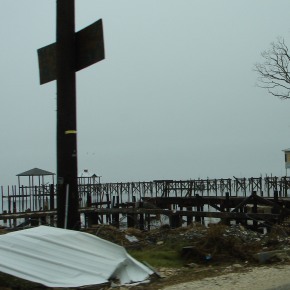
 Two weeks ago, we felt God affirm us as God’s good and beloved children. Last week, that affirmation allowed us to accept God’s holy invitations, which most often originate in our own brokenness. This week, we ask where those invitations lead us, and we find our third word in this six-part series. That third word is Mission.
 Last Sunday, we started our six-part sermon series about our lives as followers of Jesus Christ. And we began with the word “Affirmation.” God affirmed in the earliest moment of creation the fundamental goodness of that creation. And God affirmed Jesus – and by extension we who are also God’s children – as the beloved, in whom God is well pleased. The love and goodness of God form the core of our identity. They are not something we earn. They are not something that can be dislodged due to our own presumed deficiencies. When we embrace this fundamental truth, we are ready to listen — really listen — for God’s invitations in our lives.
 You may recall during a sermon last spring, I challenged you to choose six words to proclaim your faith. I remembered the “Six-Word Witness” challenge as I began to prepare for this new season after Epiphany, as there happen to be six Sundays between now and Lent. If you read my article in the recent issue of The Lion’s Tale, you got a sneak peak at a particular six-word witness, one that describes the trajectory of the next six weeks as we hear the story of the beginning of Jesus’ ministry. My plan during this season after Epiphany is to connect this sermon with the next five to tell a much larger story of our lives as followers of Jesus Christ.
 I’ve lived a lot of places in my life. In my nearly thirty-two years, I’ve resided in Maine, New York, Wisconsin, Rhode Island, Alabama, Tennessee, Virginia, West Virginia, Massachusetts, and Connecticut. And I spent two summers in Texas, which I count in the total because it was summer…in Texas. For the bulk of those years, home for me was wherever my parents lived. I even had to get directions to a new home once when they moved during my junior year of college. (Let me tell you, it’s a strange experience – needing directions to your own house.) But when Leah and I got married, my definition of home changed. Now home is wherever Leah is, and more recently where Leah and the twins are. But, as with most things we hold dear, the concept of “home” is much deeper than the surface definition: “house where my family lives.”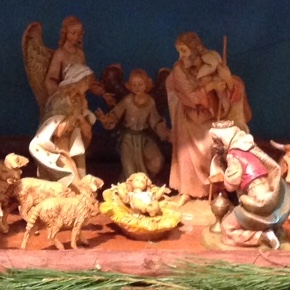
 One
One
 This version of the Christmas pageant employs two sets of main characters, one younger and one older. The older versions sit on stools flanking the main action. They stand up to deliver their monologues. During the monologues the younger versions pantomime the action and speak at the end of each speech.
 The Gospel writer Mark wastes no time telling us what his story is about. The very first words of his account of the Gospel proclaim without hesitation: “The beginning of the good news of Jesus Christ, the Son of God.” Matthew begins with a genealogy linking Jesus back to Abraham. Luke begins with a short address about his research methodology. John begins with a mysterious poem about creation. But Mark just hits the ground running and never looks back. “The beginning of the good news of Jesus Christ, the Son of God.”
 Where the Wind...