
Sermon for Ash Wednesday, February 18, 2015 || Isaiah 58:1-12; Psalm 103
 The twins are six and half months old. They’re sleeping pretty well, waking either zero or once during the night. They’re beginning to crawl and sit up by themselves. Their hair is really coming in. And they have the absolute softest skin imaginable. I could spend all day kissing their cheeks and foreheads and want to do it again all day tomorrow. So when I think of offering them the imposition of ashes, when I imagine scraping two coarse lines of grit on those smooth foreheads, I shudder. I recoil. How could I sully such perfect skin?
As this question hangs in the air, I think back to last week, when I was blessed to go up the street to Mystic Healthcare and offer prayers by the bedsides of two women who were actively dying. They had lived long, long lives. Both passed away over the weekend, one in her mid-nineties and one who was 105 years old. I prayed by their bedsides as they breathed the short, staccato breaths of those who are living their final days. I touched and kissed their foreheads during the prayers, and I found them to be spotted and wrinkled and dry, more like wax paper than skin. Surely, these were the foreheads made to receive the imposition of ashes.
And yet the ashes are made to adorn the newborn infant and the dying elder both the same. No matter how much or how little of this life we have left, the ashes are made for us to wear. This thought might make you shudder, like it does when I think about offering them to my babies. But if we take another look at the ashes, we might come to a new understanding.
You see, more often than not we associate ashes with death. I think we make this association for two reasons. First, when a fire dies out, the ashes remain. Second the rate of cremations in the United States has risen from three and a half percent in 1960 to over forty percent in 2010.* And this number will continue to rise. We are closing in on half of all funerals in this country involving the deceased person’s ashes.
So it’s only natural to associate ashes with death. Even the words I will pray in a few minutes before the imposition of ashes speak of them being a “sign of our mortality.” Then when I scrape the ashes on your foreheads, I will say, “Remember that you are dust, and to dust you shall return.” All of this seems to be pointing to our deaths.
But I would suggest the ashes are not about our deaths at all, despite all this evidence to the contrary. The ashes are about our lives. The ashes remind us how transient this life is; how impermanent. The eighth century monk and historian known as the Venerable Bede compared this life to a sparrow fluttering into a brightly lit banqueting hall, flying the length of the room, and then disappearing into the night. The psalmist speaks the same truth in today’s psalm: “Our days are like the grass; we flourish like a flower of the field; When the wind goes over it, it is gone, and its place shall know it no more.”
If our lives are so transient, so fragile and brief, then we have to wonder why God would bother with us at all? We scratch our heads in wonder at the 105 years of the woman at Mystic Healthcare, but even that is less than a breath when we zoom out the camera to geologic time. So why would God bother with us? Why would the psalmist say, “As a father cares for his children, so does the LORD care for those who fear him?” It all seems a bit daft in the grand scheme of things.
But remember, I said the ashes were about our lives, not about our deaths. While this life is transient, yes, and while we aren’t more than vapor on the wind (as the Bible so often reminds us), there is more to the story. Because death is not the end, just as birth was not the beginning. Have you ever looked at an infant and seen a hidden wisdom hovering just behind his wide-eyed wonder? Have you ever held the hand of a dying elder and realized that she was excited to see what comes next? Both of these instances speak to the “something else” or “something more” that we feel in our gut when we meet the beginning or the end of life. We call this “something more” eternity. We call this “something else” the promises of God made real in the life, death, and resurrection of Jesus Christ. If God made us for eternity, then we can in all faithfulness zoom out the camera again and see geologic time fade away.
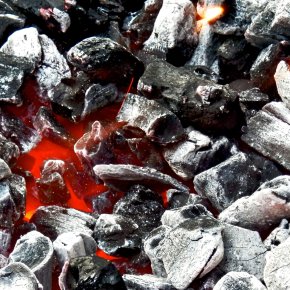
This is the true life that God invites each of us to live: the expansive, abundant, eternal life, which fuels the fires of our souls. This is the life we have, but it is rarely the life we live. And so we return to the ashes and our new understanding. When I burn last year’s palms to make the ashes, the fire gives off light and heat. The process changes the material of the palms into the energy of the fire. What’s left over when the fire goes out is the ashes. The keyword here is “change.” Each of us is on fire for God. We are burning our whole lives long, shining God’s light into the dark recesses of this world. But like the burning bush in the Exodus story, we are not consumed. The fire does not annihilate. It purifies. As we live, all that will not burn for God filters away. All that keeps us from shining with the love and grace of God filters away. All that separates us from God, what we call “Sin,” filters away. And becomes ash. When we are done burning and God has gathered us home like those two blessed women at Mystic Healthcare, the ash remains behind. All that separates us from God remains behind.
We scrape the ashes on our foreheads each year to remember that we are still burning. God is still calling us to shine the light of God’s reign on the darkness of the world. Today the prophet Isaiah gives us a blueprint for how to shine: “Loose the bonds of injustice…share your bread with the hungry…bring the homeless poor into your house…cover the naked when you see them…let the oppressed go free.” When we burn for God doing these things, our ashes filter away, and we live the promise Isaiah offers next: “Then your light shall break forth like the dawn.”
—

 We’ve spent the last five weeks walking with Jesus during the first days of his ministry. We stood on the shore of the Jordan River as Jesus came up out of the waters of baptism. We also stood on the shore of the Sea of Galilee as Jesus called his first disciples and gave them their mission. We wandered into the Sabbath assembly and watched him confront an unclean spirit. And we escaped with him into the desert to rest, reconnect, and reflect with God. Today, in our last sermon in this series, we skip forward to the middle of the story, and we find ourselves following Jesus as he picks his way up the mountain path with Peter, James, and John. And at the top of the mountain, we find our sixth and final word: Revelation.
 Next week ends our Epiphany sermon series, which means today we have come to our fifth word. But let’s start with a recap. Our first word was Affirmation: Nothing can take away God’s affirmation of us as God’s good and beloved children. Our second word was Invitation: God’s holy invitations most often originate in the center of our brokenness. Our third word was Mission: When we pick up our crosses and follow Jesus, we find God’s missions for us where the plank of the world’s need intersects with the plank of our passions. Our fourth word was Confrontation: All the forces of this fallen world fight back when we embrace God’s mission of healing and reconciliation.
 Over the last month we have been considering our walks as followers of Jesus Christ. God affirms us as God’s good and beloved children. God invites us to the center of our own brokenness, where we seek the missions God yearns for us to pursue. We trudge with Jesus to the cross and find those missions where the two planks meet, at the intersection of the world’s need and our passions. So what happens when we engage those missions on a personal level? What happens when we join together to accomplish those missions on a larger scale? What happens when we partner with God to bring God’s healing and reconciliation to this world? The answer is our fourth word. The answer is Confrontation. The world fights back. Those who profit from the status quo fight back. The spiritual uncleanness that festers in the dank recesses of everyone’s heart fights back.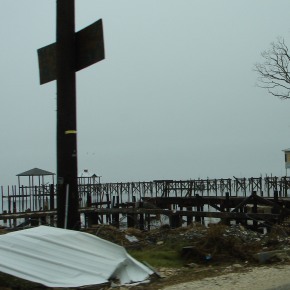
 Two weeks ago, we felt God affirm us as God’s good and beloved children. Last week, that affirmation allowed us to accept God’s holy invitations, which most often originate in our own brokenness. This week, we ask where those invitations lead us, and we find our third word in this six-part series. That third word is Mission.
 Last Sunday, we started our six-part sermon series about our lives as followers of Jesus Christ. And we began with the word “Affirmation.” God affirmed in the earliest moment of creation the fundamental goodness of that creation. And God affirmed Jesus – and by extension we who are also God’s children – as the beloved, in whom God is well pleased. The love and goodness of God form the core of our identity. They are not something we earn. They are not something that can be dislodged due to our own presumed deficiencies. When we embrace this fundamental truth, we are ready to listen — really listen — for God’s invitations in our lives.
 You may recall during a sermon last spring, I challenged you to choose six words to proclaim your faith. I remembered the “Six-Word Witness” challenge as I began to prepare for this new season after Epiphany, as there happen to be six Sundays between now and Lent. If you read my article in the recent issue of The Lion’s Tale, you got a sneak peak at a particular six-word witness, one that describes the trajectory of the next six weeks as we hear the story of the beginning of Jesus’ ministry. My plan during this season after Epiphany is to connect this sermon with the next five to tell a much larger story of our lives as followers of Jesus Christ.
 I’ve lived a lot of places in my life. In my nearly thirty-two years, I’ve resided in Maine, New York, Wisconsin, Rhode Island, Alabama, Tennessee, Virginia, West Virginia, Massachusetts, and Connecticut. And I spent two summers in Texas, which I count in the total because it was summer…in Texas. For the bulk of those years, home for me was wherever my parents lived. I even had to get directions to a new home once when they moved during my junior year of college. (Let me tell you, it’s a strange experience – needing directions to your own house.) But when Leah and I got married, my definition of home changed. Now home is wherever Leah is, and more recently where Leah and the twins are. But, as with most things we hold dear, the concept of “home” is much deeper than the surface definition: “house where my family lives.”
 One
One
 Where the Wind...