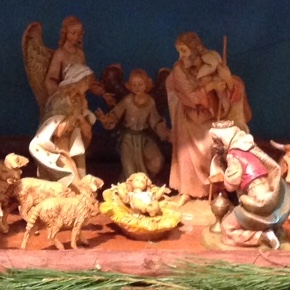
Christmas Sonnets

ChristmasSonnetsOne

The greatest story ever told began
When God breathed deep and bade the light to shine;
Creation burst from Love and Word, then ran
Away and grasped at purpose less divine
Than God would wish or yearn for it. For God
In foolish wisdom wove with freedom’s thread
And gave creation chances to be flawed,
If chance there were to choose the Lord instead.
This freedom came to earth when Eden’s dust
Was poured in human form, but right away
The fruitless choice was made, and broken trust
Turned Eden’s joyful hues to shades of gray.
The freedom God had granted first abused,
When fear and shame were learned and love refused.

Two

With love refused, sad separation reigned:
We littered earth with broken covenants
And chose dark paths to walk and then complained
To God that we were lost beyond all sense.
In longing God would call us to return,
And for a fickle time we would repent.
The cycle thus unleashed: we’d grasp then spurn
The love of God, but God would not relent.
We showed no willingness to come to God
So God in mercy chose to come to us,
As shepherd, comforting with staff and rod,
To teach us sheep again to love and trust.
As love so often does, this love began
When Mary felt a tremor ‘neath her hand.

Three

Her hand leapt up to shield her dazzled eyes
When Gabriel, awash in radiance,
Appeared to her, and much to his surprise,
He saw no fear in Mary’s countenance.
Confusion showed instead on Mary’s face:
She wondered how she ranked as favored one
When her humility would grant no place
As high, yet humble love would bear the Son.
Now God entrusted Mary to decide
If God’s design to walk upon the earth
Would flow through Mary’s womb, thus God relied
On human freedom to approve the birth.
But God chose well: the humble maid said, “Yes,”
And through her love this broken world was blessed.

Four

The world was blessed one night in David’s town,
But so few saw the miracle arrive
That we might wonder whether it came down
At all, or if it simply failed to thrive.
The savior people sought was not a child,
Who nestles helpless at his mother’s breast.
They sought a fighter who like Samson piled
The bodies of the foes he sent to rest.
They sought a soldier who like David led
His troops to bloody victory with ease.
They sought a muscle-bound Messiah bred
To root out rank imperial disease.
So when the unexpected came that night
The people waiting all ignored the light.

Five

The light was fading fast in Bethlehem
When Joseph, hand in hand with Mary, passed
the final house, which closed its doors to them
Like all the rest had done that day. At last
The months of waiting ended with a burst
Of pain that echoed through the darkling gloom;
She knew the birth would now be unrehearsed
And cried to Joseph, “Please go find a room.”
But Joseph would not leave her in the street,
So heaving Mary to his arms he veered
Off down a dusty trail and heard the bleat
Of sheep and goats, and knew a stable neared.
For once, thank God, a door stood open wide,
And breathless, weak, the couple dropped inside.

Six

The couple dropped inside a stable stall,
And Joseph gathered up the fresher hay
While anxious Mary paced from wall to wall
Until the urge to push would not delay.
The universe contracted to the here,
The now, the pain, the prayer, the ancient swell,
The final push, the crystal cry so clear,
The Word made flesh was born — Emmanuel.
The universe expanded once again
As light ascending from within the child,
Reflected in the nighttime sky, and then
The light ignited in a star most wild.
The brilliance shone on heaven and on earth,
Proclaiming God-with-us, the Savior’s birth.

Seven

The Savior’s birth took place, yet no one heard
Until the herald angels praised his name
To shepherds (“lowlife rabble,” many slurred),
And yet for outcasts such as these He came.
When eastern wisdom read the star’s good news,
The magi journeyed west toward the flame;
But Herod welcomed them with bloody ruse,
And yet for immigrants like these He came.
For all creation was the Savior born:
Yet not for wealth, nor fortune, nor for fame,
But for the broken, lost, abandoned, scorned,
And Yes — what Joy — for you and me He came.
The greatest story ever told endures
Oh God, keep telling it till we are yours.

Say “Yes”: A Christmas Pageant

Performed at St. Mark’s in Mystic, CT on Sunday, December 21, 2014
SayYesThis version of the Christmas pageant employs two sets of main characters, one younger and one older. The older versions sit on stools flanking the main action. They stand up to deliver their monologues. During the monologues the younger versions pantomime the action and speak at the end of each speech.

Prologue

NARRATOR

Before the universe existed, there was God. There was no time and no space, but there was God. Then God spoke and Creation came to be. One of the things God created was freedom, which was the ability to say “yes” or “no” of your own free will and not be compelled to answer one way or the other. God yearned with all of God’s heart that the Creation God made would say “yes” to a deep relationship with God its creator. But more often than not, parts of that Creation said, “No.” People said, “No.” We said, “No.”

Saying “No” to relationship with God led people down some dark paths. They dominated each other instead of serving each other in love. Fear ruled the day. And yet God did not give up. God decided to send God’s own Son into this wayward Creation to show us the path back to the God who never broke the relationship like we had done. All God needed was someone to say, “Yes.”

Scene 1: The Annunciation

While the OLDER MARY speaks her monologue, YOUNGER MARY and GABRIEL pantomime their conversation.

OLDER MARY

Until that day, nothing had ever happened to me. I grew up like everyone else in my town. I worked my father’s farm with my brothers and sisters. I watched the sun set. I watched the sun rise. That was life. Even getting engaged to be married to Joseph was just another day. It was expected. I always did what was expected.

Then Gabriel appeared to me, and every day since has been more unexpected than the last. He told me not to be afraid, but there was no need. His presence wasn’t frightening. It was exciting. From the moment he spoke, I felt a quickening in my gut, a hum, a desire finally to discover the person I longed to be.

The angel told me of the son I would have, the heir of David’s throne, the flesh and blood of the Most High God. It all sounded impossible. But Gabriel said nothing is impossible for God. I thought for a moment: I’ve never done anything in my life. I’ve never been anywhere. I’m not special in any way. Why would God choose me?

And that’s when it hit me. God chose me because God knew I would say…

YOUNGER MARY

Yes.

Scene 2: Joseph’s Dream

NARRATOR

Mary said, “Yes,” to the angel. She said, “Yes,” to God’s dream for her life, and that dream became a reality. And as the dream was growing inside her, the angel made another stop.

YOUNGER JOSEPH is fast asleep when GABRIEL stands over him pantomiming speaking.

OLDER JOSEPH

My namesake was a great interpreter of dreams. He saved Egypt during a seven-year famine. He saved his own family, too. I always wondered what it would be like to have that kind of gift. Then one night I found out. My dream didn’t need interpretation, however, because the angel stood before me plain as day, and when he spoke, the words tasted true.

Everyone around me, society at large, even my own father, urged me to get rid of Mary, to dismiss her quietly so as not to cause a fuss. But I couldn’t bring myself to do it. Then the angel told me why. Somehow I knew, even before the angel told me, that the child was special. I didn’t have the words to describe the way I felt until the angel called my son, “Emmanuel.”

GABRIEL departs, and YOUNGER JOSEPH rises from sleep. He join YOUNGER MARY and puts his hand on her pregnant belly.

OLDER JOSEPH

Yes, the joy I felt came from that place, that place of nearness. When I looked at Mary and felt the baby kick, I knew…

YOUNGER JOSEPH

God is with us.

Scene 3: Arrival in Bethlehem

As the NARRATOR speaks, YOUNGER MARY and YOUNGER JOSEPH make their way to Bethlehem.

NARRATOR

Mary spent the first few months of her pregnancy with her cousin Elizabeth. But as the time drew near for the baby to be born, the Empire called for a counting of all the people in their territories. Joseph had to go to Bethlehem to be registered because his ancestors hailed from there. Mary went with him.

OLDER MARY

The waves of pain began weeks before Jesus was born. At first I thought I was going into labor, but Elizabeth assured me it was normal. I learned to live with them, even though they got worse as the day drew near. But that first night in Bethlehem, a different pain hit me, and I knew it was time.

YOUNGER MARY AND YOUNGER JOSEPH pantomime the story being told: breaking into the room, being surrounded by ANIMALS.

OLDER JOSEPH

In desperation, I broke into the backroom of a house to get us out of the cold. The owner’s animals were huddled there. It stunk to high heaven, but at least it was warm. When Mary started to cry out in pain, I thought that we were done for, that the people of the house would drive us back into the night.

The FARMER comes in with a rake. Then the MIDWIFE enters.

OLDER MARY

But they didn’t. The farmer came in brandishing a threshing rake, but he took in what was happening right away and called for his wife. We asked if we could stay, and she said, “Yes.” Turns out she was a midwife. What a blessing from God. Joseph was beside himself. He didn’t know what to do. But she calmed him down, directed him.

OLDER JOSEPH

She put a blanket in my hands and guided them.

OLDER MARY

One last thunderous wave of pain washed through me, and then…

YOUNGER JOSEPH holds the BABY JESUS in his arms.

OLDER JOSEPH

I held my son Jesus in my arms. I held God. And I knew God was holding me.

Scene 4: The Shepherds

The SHEPHERDS and SHEEP cluster in the center aisle.

NARRATOR

The light of the world shining from the baby wasn’t the only light shining that night. In the fields outside Bethlehem, dawn seemed to be breaking impossibly early.

The ANGELS and GABRIEL stand on the first pew and pantomime talking to the SHEPHERDS.

OLDER SHEPHERD

The light grew slowly at first, so we didn’t notice anything out of the ordinary. But then the field was awash in brilliance. It was like an eclipse in reverse. But what I remember more than the light was the song. The angels sang a song of peace. Of peace! How could you sing a song of peace in such a war-torn age? And yet that is what they did.

The SHEPHERDS and SHEEP walk to the Nativity scene and join it. The ANGELS gather around behind the Nativity scene.

We went to find the One of whom the angels sang. And we found him in the dirt, among the animals just like my own children were born. The song of the angels rang in my mind and I sang it for the baby, a lullaby of peace for the Prince of Peace. And I knew he was one of us. And he was here…

YOUNGER SHEPHERD

To make us more like him.

Scene 5: The Magi

The MAGI begin their trek slowly from one side aisle of the church around the back and up the other side aisle. At the side of the church near the lectern, the MAGI meet HEROD, who pantomimes a conversation.

NARRATOR

Not only did Jesus’ own people seek him out. Immigrants from a far off land arrived guided by a star in the heavens. They first met King Herod in Jerusalem, but they knew Herod was not the king they sought.

The MAGI move to the main group and present their gifts.

OLDER MAGUS

We had been searching the stars for a sign of the One who was to come. And when we found the celestial body streaking westward we knew we had to follow. We didn’t know where it would lead. What we didn’t expect, though, was for it to lead us not only across the desert, but deeper into our own hearts. When we met our true King the first time, we felt the inadequacy of the gifts we had brought – the gold, the frankincense, the myrrh. The infant gazes at us, into us, into our hearts. And we knew the gift he truly wanted. And so I gave him not just a box of gold…

YOUNGER MAGUS

I gave him myself.

Epilogue

The OLDER CHARACTERS move to join their YOUNGER SELVES.

NARRATOR

And so God sent God’s only Son to teach people to use their freedom to remain open to God, to say “Yes” to that deep relationship. A few decades later, he would die for his convictions. But then he rose again to show that nothing, not even death, can separate us from God’s love.

OLDER MAGUS

So when you are searching for God…

OLDER JOSEPH

Know that God is always with us…

OLDER SHEPHERD

And when the Prince of Peace calls to you…

OLDER MARY

Say “Yes.”

*  *  *

The Players

(*=tiny speaking part; **=big speaking part)

Little Children
SHEEP
ANIMALS
ANGELS
(BABY JESUS)

Children/Tweens
GABRIEL
YOUNGER MARY*
YOUNGER JOSEPH*
SHEPHERDS (1*)
(HEROD)
FARMER
MIDWIFE
MAGI x3 (1*)

Tweens/Teens
OLDER MARY**
OLDER JOSEPH**
OLDER SHEPHERD**
OLDER MAGUS**
NARRATOR**

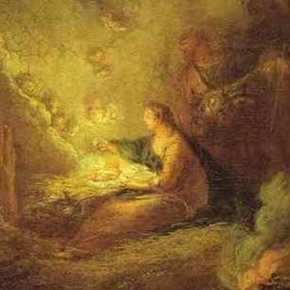
*Artwork: detail from “Birth of Christ” by Antoine Pesne (1745)

The Arrow

Sermon for Sunday, December 14, 2014 || Advent 3B || John 1:6-8, 19-28

thearrowJust before his death in 1543, Nicolaus Copernicus published his theory that corrected a long held belief about our planet’s place in the heavens. Initial curiosity by the establishment, including some power brokers of the Church, unfortunately succumbed to the prevailing wisdom of the day that the sun revolved around the earth and not the other way around. When Galileo picked up Copernicus’s theories a few decades later (and we must mention with less diplomatic tact than Copernicus had shown), Galileo was convicted of heresy, compelled to recant, and lived the rest of his life under house arrest. The heads of the Church could not handle this new information that implied we humans weren’t quite as special as they thought. Despite the definitive nature of Galileo’s proofs and despite further corroboration by other reputable scientists, the establishment for many years shut its collective eyes, covered its collective ears, and said, “We’re not listening!”

Humans have always fallen victim to the particular notion that we each exist at the center of the universe. Just examine some common occurrences if you need evidence. When a young man of a certain disposition goes courting, an observer might say, “What does he think he is, God’s gift?” When doctors are accused of “playing God,” it’s often because their own egos have driven them to risky procedures. When the cult of celebrity that grips this country hails the triumphant return of a professional basketball player as the second coming or heeds the flawed advice of a low-wattage movie star concerning childhood vaccinations, then we’re all left to wonder why we don’t have such personal clout. And to top it off, how many of us have been told, when trying to insert ourselves into a friend’s troubles, “This isn’t about you!”

Thinking we are (or we should be) the center of the universe is just part of the human condition, but it’s a part of the human condition in continual need of rehabilitation. And in today’s Gospel reading, John the Baptist gives us a lesson. Recall that one of my favorite things about the Gospel is the fact that people rarely answer questions the way you expect them to. The priests and Levites come to John when he is baptizing in the Jordan and ask him a simple question: “Who are you?” Note how John could have answered as expected: “I’m John, son of Elizabeth and Zechariah, from down yonder a bit. Favorite pastime: baptizing with water. Likes include locusts and wild honey…”

But that’s not what John says. “Who are you?” they ask. And what does John do? He tells them who he is not. “I’m not the Messiah.” His rejection of messiah-hood throws his questioners for a loop and they start grasping at straws: “Are you Elijah? A prophet? Tell us who you are!” If a cult of celebrity exists today, then a similar one, albeit less fed by the fawning media, existed in John’s day. False messiahs cropped up all the time, attracted followers, and then lost them just as quickly when they couldn’t deliver the goods. That’s why, at the beginning of the Gospel, the establishment doesn’t much worry about Jesus. They assume he’s going to fade into obscurity like everyone else. Indeed, John’s denial of messiah-hood was much more newsworthy than claiming it would have been.

With John refusing the identities that the priests and Levites try to pin on him, they decide to ask him point blank: “What do you say about yourself?” They need an answer to bring to their superiors, but John never gives them satisfaction. Even when asked specifically about himself, John doesn’t take the bait. He deflects the attention from himself and shines it on the one who is to come, saying: “I am the voice of one crying out in the wilderness, ‘Make straight the way of the Lord.’ ”

John has no delusions of grandeur. He knows his place in the universe. He knows he is not the Messiah. And he also knows his relationship to the Messiah: “He himself was not the light, but he came to testify to the light.” John embraces an identity based in Jesus’ messiah-hood. John is the herald, the special voice that captures people’s attention and turns their eyes to the coming king. “What do you say about yourself?” they ask. And John responds: “My identity is based on the identity of the true Messiah. I am the voice, the herald, the witness. I am the arrow that always points to the one who is coming after me.”

John continues to display this identity throughout his short time in the Gospel. When his disciples see Jesus the next day, John the Arrow points and says, “Look, here is the Lamb of God!” He risks losing his own followers because he knows it is not his place to have followers. Later he repeats that he is not the Messiah, calling himself instead the “friend of the bridegroom.” John has now heard Jesus’ voice, so John proclaims: “My joy has been fulfilled. He must increase, but I must decrease.”

How in touch with his sense of self must John have been fully to embrace his identity as the arrow pointing to Jesus. How many of us would have felt jealous when our turn in the spotlight was over? How many of us would have tried to extend our fifteen minutes of fame? But not John. John knows he has no light of his own. He is the moon reflecting the light of the sun.

And so are we. The lesson we learn from John the Baptist today teaches us to delve within and discover our own true identities, the places in this universe where only you and I were made to fit. None of us was made to be the center of the universe, even if the human condition tries to trick us into believing that to be true. Our true identities are gifts from God; therefore, when you fully embrace your identity, when you try it on and it fits better than your favorite pair of jeans, then you will find yourself spontaneously pointing to the true center of the universe, the true light of the world.

Like John, we are arrows pointing to God. I invite you this week to list out all the different facets of your identity and pray about how each one connects back to the One who makes you who you are. Here’s a snippet of mine to get you started: I am a husband and a father. The love for my family that fuels these pieces of my identity comes directly from the love of God. I am a priest and a pastor. My service to God and others springs from the call Christ places on my heart. I am a singer and writer. My inspiration comes from the Holy Spirit’s creativity living within me.

As I continue to list out facets of my identity, I see this pattern continue: I am who I am because of God’s presence in my life. Claiming and proclaiming that presence makes me an arrow like John the Baptist. And not just me: each of us is an arrow pointing to God. Each of us is the moon reflecting the light of the sun.

Copernicus and Galileo knew the earth wasn’t the center of the universe. But they had no idea how far away from it we actually are in space. Recent modeling shows our own solar system is tucked in a corner of the Milky Way galaxy and the Milky Way galaxy is tucked in a corner of a supercluster of galaxies known as Laniakea, and Laniakea is just one piece of a web of superclusters that make up the known universe. We might not be at the center of this universe, but the Creator of it is at the center of ours.

Art: screenshot from this incredible Youtube video.

Good News

Sermon for Sunday, December 7, 2014 || Advent 2B || Mark 1:1-8

goodnewsThe Gospel writer Mark wastes no time telling us what his story is about. The very first words of his account of the Gospel proclaim without hesitation: “The beginning of the good news of Jesus Christ, the Son of God.” Matthew begins with a genealogy linking Jesus back to Abraham. Luke begins with a short address about his research methodology. John begins with a mysterious poem about creation. But Mark just hits the ground running and never looks back. “The beginning of the good news of Jesus Christ, the Son of God.”

Now, Mark’s Gospel tends to hurtle from one scene to the next. Everything happens immediately after everything else. The fast pace of this sixteen chapter account of the Gospel just makes me want to keep reading and get to the end as quickly as Mark seems to want me to. But if we did such a binge reading, we’d miss the depth and intricacy packed into this, the shortest of the Gospel accounts. So with this in mind and because Advent is upon us, let’s slow down for a few minutes and really digest this first verse: “The beginning of the good news of Jesus Christ, the Son of God.”

In today’s parlance, when we hear the term “good news,” the two words are usually embedded in the sentence: “Well, I’ve got some good news and some bad news.” We’ve all used this conversational staple.

“The good news is the rest of this week will be lovely; the bad news is next week we’re in for a Nor’ Easter.”

“The good news is no one was seriously hurt in the accident; the bad news is the car was totaled.”

“The good news is I found the recipe; the bad news is we’re out of eggs.”

In meetings, around kitchen tables, on the bus, we use the words “good news” to talk about the sometimes funny, sometimes bland, sometimes serious details of our lives. These two words are so ordinary, so normal. Because they sound so common, I wonder how we encounter the words “good news” when we hear them right at the beginning of Mark’s account of the Gospel. Perhaps Mark is really excited about the story he’s going to tell. Perhaps Mark is employing a specific term that Jesus’ himself or his first followers used to describe his message. Either way, Mark is almost certainly doing something that we 21st century citizens would miss entirely because of our modern connotation of “good news.”

You see, in the first century Roman Empire, of which Israel was an occupied region, the term “good news” had a special connotation. The word was used exclusively for propaganda about the empire and usually about the Roman emperor himself.

“Good News: the Emperor won a victory in Gaul!”

“Good News: the Emperor’s wife has given birth to a strapping infant boy!”

“Good News: the Emperor has had another birthday!”

The Roman propaganda machine churned out these ancient press releases, and the strong arm of the military bade the cowed citizenry of occupied countries to celebrate. This was one small way that the Empire kept control of all that conquered land.

So when Jesus and later Mark proclaim their own “Good News,” they are tacitly setting their story, their message, their view of who’s really in charge squarely in the face of the Roman establishment. The “Good News,” which Jesus and his followers proclaim, is a stark challenge to the ruling order of the day. Indeed, Mark shows his faith and his gutsiness in the simple act of writing those two rebellious words on the page.

Okay, file this stark challenge away for just a minute and let’s back up to the first two words in the verse: “The beginning of the good news of Jesus Christ, the Son of God.” The beginning. These two words seem completely innocuous. They obviously start the story. They’re on page one. They would have been at the top of the scroll in Mark’s day. So then why does Mark need to tell us that we are reading the beginning of the story when we are obviously reading the beginning of the story?

Perhaps Mark isn’t just stating the obvious. Perhaps this “beginning” is greater than “the opening verses of Chapter One.” Perhaps the “beginning” that Mark has in mind encompasses the entirety of his sixteen-chapter Gospel. Now we’re on to something.

If the whole, entire Gospel is the “beginning of the good news,” then the natural question becomes, “What is the middle and end of the good news?” And this is where followers of Jesus Christ down through the centuries come in. Jesus lived the beginning of the Good News. Mark, along with Matthew, Luke, and John, wrote down the story of that beginning. And you and I are characters in the middle of that same story begun two thousand years ago. You and I are players in the unfolding drama of the Good News. You and I have taken up the narrative of the Gospel that God continues to tell in our lives.

All right, go ahead and un-file the stark challenge we talked about a minute ago. Remember that Mark’s usage of the term “Good News” was a gutsy, implicit challenge to the ruling order of the day. This ruling order touted their empire as the “Pax Romana,” the “peace of Rome.” Of course, this “peace” was accomplished through conquest, coercion, occupation, and fear. But Jesus Christ replaced this so-called “peace” with a peace of his own invention. Jesus’ own Good News, his own triumph was accomplished through welcome, healing, sacrifice, and love.

Of course, when these two versions of “peace” clashed, the broken, imperial establishment utterly crushed Jesus. However, by not fighting back, by sacrificing himself to halt the cycle of violence, Jesus succeeded in his challenge, even though he died. But even then, the story was just beginning. With his resurrection, Jesus demonstrated that his version of the Good News is truly the Good one. As characters who have now appeared later in this same narrative, we have the opportunity to take up the same challenge that Jesus and Mark after him championed. The Pax Romana of our day rules through apathy, self-centeredness, greed, and fear. But when find ourselves in the middle of the story begun in the Gospel, we find the strength and courage to combat those evils with Jesus’ own arsenal of welcome, healing, sacrifice, and love.

This opening verse of Mark’s Gospel invites us once again to read the prologue to our own lives as followers of Jesus Christ. This beginning of the Good News gives us who live in the middle our meaning and our purpose and the promise that we are part of the great story of God’s mission to reconcile all creation back to God. The Good News was a challenge in Jesus’ day. And it still is in ours. But we’re up for the challenge because once the Good News of Jesus Christ has lodged itself in your heart, you can’t help but share it in your words and in your deeds.

Now, I’ll end this sermon with some good news and some bad news. Which do you want first? The bad news. Sure. The bad news is there’s still so much brokenness in this world, so many places where God’s reconciling love seems so far away. The good news is that with God’s help, we can challenge the ruling order of our day and bring the wholeness of this reconciliation to those broken places. The good news is that we are the current characters in the story begun in the Gospel. The good news is that the story isn’t over yet.

Miserere Mei

Sermon for Sunday, November 23, 2014 || Christ the King, Year A || Matthew 25:31-46

misereremeiWhen I was a kid, there was a series of books called the Magic Eye books. Each page of these books was filled with what looked like very precise and geometric versions of Jackson Pollock’s art work. The pictures were just jumbles of kaleidoscopic lines and shapes, and if you didn’t know any better, that’s all you saw. But the trick with these books was that if you looked at the pictures a different way – sort of squint a bit – then you saw an image hiding beneath the jumbled surface picture. I’ll let you in on a little secret: I never once saw anything besides the geometric Jackson Pollock’s. No matter how often I lied to my friends and said, “Of course, I can see the person walking the dog,” I just could never get my eyes to focus correctly to see the hidden images. Let me tell you, it was quite frustrating.

Every single day, we live in a world like the Magic Eye books, and the feast we celebrate today reminds us of the true picture buried beneath the jumble of lines and shapes. The foundation of our existence is the reign of our king Jesus Christ. This fundamental reality of existence is, if you will, the image concealed beneath the geometric Jackson Pollock. The kingdom of Christ is our true home; this is where we live and move and have our being. But most of us spend much of our time seeing only the jumble of lines and shapes, all the clatter of this broken world that redirects our attention away from the reign of Christ. I could never see the image hidden in the Magic eye, and my success rate at perceiving the reign of Christ in our midst isn’t much better.

And yet, I believe Christ isn’t through with me yet. Unlike other kings, who might have cast me from their service upon my first failure, Jesus, in his mercy, gives me a second chance. And then a third chance. And then a fourth chance. That’s what mercy is, by the way. Mercy is the action of giving someone another chance.

In today’s Gospel lesson, neither the sheep nor the goats see into the heart of the Magic Eye picture. When the king says those famous words about being hungry and thirsty and alien and naked and sick and imprisoned, both groups ask, “Lord, when was it?” When did we see you in these circumstances? And he responds, “That was me. I was there shining from within the least of those who are members of my family.” One group serves and the other does not, but neither group knows whom they, at least, have the potential to serve. They do not have Kingdom Eyes. They do not see the presence of Christ buried beneath the need.

When we see those who are in need, we have so many different reactions. We might cringe and turn away. Or we might be spurred to help, to show compassion. We might be paralyzed by indifference. Or we might reach out in love. We might wonder where the reign of Christ is in the face of so much need. And that’s when we need to pray for Kingdom Eyes, so that, with God’s help, we can see the presence of Christ in the least of the members of Christ’s family. And in witnessing that presence be spurred to help, to show compassion, to reach out in love.

But even when we witness God’s presence amongst the need in this world, even when we see the image hidden beneath the Magic Eye picture, we are not guaranteed to respond in a way that makes the reign of Christ more complete in this broken world. And this is where the mercy of Christ returns to this sermon. You see, none of us is a sheep or a goat. It’s just not that cut and dried. Sometimes we act like one and sometimes like the other. But Christ is not through with us yet. We have a second chance to respond with compassion when we see Christ’s presence in the least of these. And then we have a third chance. And then we have a fourth chance. That’s what mercy is. Through the mercy of God, we have a chance each and every day to respond with compassion when we say, “When was it, Lord? When did we see you? Oh, right there…today…on the street corner.”

The Latin phrase for “Have mercy on me” is Miserere Mei, which is the title of the song I’d like to share with you to close this sermon. This is a song about second and third and fourth chances. It is a song about seeing the reign of Christ in the midst of need and praying for the will to engage that need.

Miserere Mei, by Adam Thomas

Lord, I saw you yesterday
You were holding a cardboard sign near the highway
I tried not to notice when you looked at me
All I saw were a duffel bag and tattered jeans
I looked without seeing
I felt without feeling
You were so easy to ignore
How can I stand here being
A rich man while I’m stealing
The lives of the least of these your children, Lord?

Lord, I saw you on the TV screen
Your belly distended, your arms so lean
You looked at the camera, your dark eyes burned
But I pressed fast-forward till my show returned
I’m all the time pretending
The next time you’ll be sending
Me out to serve is not today
But I feel my lethargy is ending
My tattered heart is mending
When next I see you Lord help me not to turn away.

Miserere mei

Lord, I saw you at the hospital
You were lying in a bed surrounded by white-coated people
You watched me standing frozen at the door
I was looking for the courage to take one step more
I feel myself regressing
My lack of faith is pressing
Me to rely on self alone
I am always second-guessing
When I should be confessing
That I will trust your strength O Lord and not my own

Miserere mei,
Lord have mercy on me.

*You can listen to the live recording of  “Miserere Mei” in the sermon audio above or download the original recording here.
**The image associated with this post comes from magiceye.com and serves as the sample image there. I still can’t see the hidden image, even with instruction.

Playing with Purpose

Sermon for Sunday, November 16, 2014 || Proper 28A || Matthew 25:14-30

playingwithpurposeAs an avid game player, one of my favorite things to do is teach other people how to play games. Leah and I have several dozen board games in our upstairs hall closet, but we don’t have people to play them with because games like Monopoly have, over the decades, taught Americans that board games are not fun. But the ones we play come mostly from Germany, and the Germans sure know how to make fun board games. These games are beautifully designed and highly strategic, so a new player often doesn’t catch on until near the end of her first game. For the bulk of that first game, she plays by the rules, but she doesn’t play strategically. Then something happens. The light goes on, and she realizes why she might do this instead of that. She realizes how a choice made now will affect the game in a few turns. I love watching for this moment when I’m teaching a game. Suddenly, the new player stops wandering through her turn and begins striding through it. She’ll need several more games under her belt before she really understands the strategy, but she’s taken the important first step. She has begun to play with purpose.

Like many of the lessons board games can teach, playing with purpose stretches far past recreational outlets and touches all facets of life. Playing with purpose encourages us to act intentionally rather than spasmodically. Our daily questions of “What?” and “How?” deepen with the addition of “Why?” We plan, we set goals, we care about the destination and the journey.

In 1845, Henry David Thoreau went to live at Walden Pond because he realized he wasn’t playing with purpose. He writes, “I went to the woods because I wished to live deliberately, to front only the essential facts of life, and see if I could not learn what it had to teach, and not, when I came to die, discover that I had not lived. I did not wish to live what was not life, living is so dear…I wanted to live deep and suck out all the marrow of life.” *

To live deliberately. To live with intention. To waken to all the ways God could be calling you to make the most positive difference with your life. This is what playing with purpose means.

Most of us take a while to start playing with purpose. Case in point: allow me to introduce you to Glenn. Glenn graduated from college three years ago with a degree in history. He thought about law school but never got around to registering for the LSAT, let alone studying for it. In three years, he’s worked five jobs but none has held his attention for long. Same with girlfriends. A few dates here or there, but he’s never made a true commitment to any of them. He’s also moved back home twice since college for a couple months at a time. When his parents ask him what he wants to do, he says things like, “I dunno,” or “Something’ll come along.” Glenn does everything vaguely, indistinctly, like he’s a figure in a coloring book, who’s only partially colored in.

Then he meets Helen, and the light goes on. They really click, but Glenn knows that he doesn’t deserve to be with someone as luminous as she. She is so full of life. She pursues her passions. She has dreams, yes, but more than that, she has lists of conscious steps to achieve those dreams. Opening her own bakery is just a year or two away. Seeing himself through her, Glenn realizes just how listless he has been, how the last three years have been one long meander. And yet when Helen looks at him, he feels fully colored in.

Following her example, Glenn begins playing with purpose. He remembers his love for history and the high school teacher who fired that passion. He starts substitute teaching at a private school, and soon he’s there everyday filling in for a history teacher on maternity leave. He starts taking night classes to get his masters in education. Two more years sees him in a classroom of his own. His purpose is to teach, and he’s never felt more alive.

Before Glenn met Helen, he could have been the third servant in today’s Gospel lesson. Jesus tells the story of a man who entrusts his servants with extraordinary wealth. The first two play with purpose and double that wealth by the time their master returns. But the third servant never uses the wealth given to him. He just puts it in the ground and goes about his regularly scheduled life.

This story fits snugly between last week’s Gospel lesson and the one we’ll read next week, which make up the entire twenty-fifth chapter of Matthew. In each parable, there are characters who make deliberate, intentional decisions to act and those who don’t. The wise bridesmaids bring extra oil. The foolish ones don’t. The first two servants invest their master’s wealth. The third doesn’t. Next week, we will hear of the sheep who feed the hungry and give drink to the thirsty and clothe the naked and visit the sick and imprisoned. And we’ll hear about the goats who don’t.

In each story, the ones who act with intention – the ones who play with purpose – remain in right relationship with the various persons of power: the bridesmaids enter into the wedding banquet with the bridegroom; the first two servants “enter into the joy of their master”; the sheep who served the least of God’s family “inherit the kingdom.”

If we stop there, however, then we will see these stories merely as quid pro quo. Do what you’re supposed to do and you’ll be rewarded. Don’t and you’ll be punished. But such a conclusion reduces our relationships with God to mere transactions. If God desired for us to live these quid pro quo kinds of lives, God would have given us a rule book or a scorecard. But God did something else. God gave us God’s son. And this Son taught us to live with intention, to keep awake for opportunities to bring the kingdom closer to earth, to play with purpose. And more than that: this Son, our Lord and savior Jesus Christ, wiped out the quid pro quo system entirely when he died and rose again.

If it’s a scorecard you’re looking for, a measuring stick to see if you’ll be rewarded or punished, then you’ve come to the wrong place. In this place, we practice playing with purpose. We act as Helen does with Glenn, as catalysts for each other’s dreams. We pray for clarity about where God is calling us. We discover how our passions fit those callings. We partner with one another to strengthen each other for service. We take risks, knowing that the Holy Spirit will lead us through both failure and success to greater collaboration with God in our own lives and in the life of this community.

If you feel like a figure in a coloring book who’s only partially colored in, then ask God to help you play with purpose. Playing with purpose is the difference between talking and proclaiming, the difference between swaying and dancing, between running and racing. Playing with purpose is the difference between floating along and trimming the sail to catch the wind.

*Henry David Thoreau. Walden. (But I first hear it in Dead Poets’ Society.)
**Image of Walden Pond courtesy of my sister, Melinda Thomas Hansen.

Tend Your Light

Sermon for Sunday, November 9, 2014 || Proper 27A || Joshua 24:14-25; Matthew 25:1-13

tendyourlightLast Wednesday, I was visiting Gene and Judy Roure at home as Judy continues recovering from surgery. I arrived right after lunch and we were having a pleasant conversation when something unforeseen happened. My eyes started to close. I couldn’t help it. I made a conscious effort to keep them open as we talked, but you know if you ever try that tactic, your body just assumes you’re using reverse psychology. I knew the lack of sleep Leah and I have been experiencing would catch up to me eventually, but I sure didn’t want it to happen during a pastoral visit! So I did the only thing I could think to do: I asked Gene and Judy if it would be okay to close my eyes for five minutes while sitting in the terribly comfortable rocking chair in their living room. Being the lovely and gracious people they are, they readily said, “Yes.” I put my head back and let my eyes do what they desperately wanted to do. I shut them and slept for five glorious minutes.

So when I read the end of today’s Gospel lesson, all I can do is chuckle half-heartedly. Jesus sums up the rather strange parable of the ten bridesmaids by saying: “Keep awake therefore, for you know neither the day nor the hour” of the coming of the kingdom of heaven. Keep awake, he says. But if there’s one thing I’ve learned in the last three months since the twins were born, it’s this: trying to keep awake makes you really sleepy.

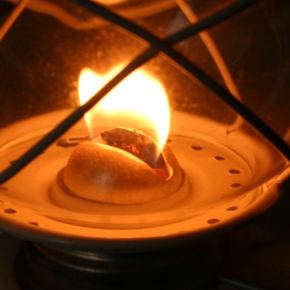
Even the bridesmaids in the story don’t keep awake. All ten of them — the wise and the foolish — get drowsy and fall asleep when the bridegroom is delayed. They all wake up at midnight, but only the five wise ones have enough oil in their lamps to see the bridegroom coming. These details of the parable make Jesus’ summary sound a little off. Rather than “keep awake” shouldn’t he say, “tend your light” or “keep your lamp lit?” If this parable were one of those stories on a standardized test, one of the questions might be, “Which title best describes this story?” If my choices included both “keep awake” and “tend you light” I think I’d choose the latter. But Jesus chooses the former.

(As an aside, I don’t think Jesus would have been a very good standardized test taker, what with his penchant for answering people’s questions in wildly creative and unexpected ways.)

Whether or not the testing board would accept Jesus’ answer of “keep awake,” that’s the one he gives. This leaves us in the position of reconciling the content of the parable with Jesus’ odd summary. What about tending our lights leads to “keeping awake?”

First of all, we mustn’t take Jesus’ summary literally. Obviously, we can’t survive if we stay awake all the time. If we don’t sleep, eventually we go insane. (There’s a great Star Trek: The Next Generation episode about that, by the way.) So if we can’t literally keep awake all the time, how do we live into Jesus’ instruction? At Wednesday’s visit with Gene and Judy, my eyes started closing of their own accord because of my physical exhaustion. But there are plenty other types of exhaustion that lead us to close our eyes and ignore our part in bearing witness to the coming kingdom of heaven.

There’s emotional exhaustion. You carry the burdens of so many others on your heart. You worry. You fret. You can’t help vicariously feeling their pain, and it overwhelms you. There’s the exhaustion of crises. Everything in this world seems to be going haywire. Famine, poverty, war, discrimination, disease. You can’t even watch the news anymore because the compounding crises overwhelm you. There’s the exhaustion of resources. You give and you give, and there’s always more need. It never stops and the direness of the need overwhelms you. You start to see a pattern here. When we feel overwhelmed, we get tired. We just want to close our eyes and enter the blissful ignorance of sleep. So we disengage. We fail to keep awake.

And this is where tending our lights comes into play – because there’s another term for disengagement and failure to keep awake. It’s called “burn out.” Show of hands: how many of us have used the phrase, “I feel so burned out right now,” at some point in our lives? Being like the wise bridesmaids in the parable means keeping oil in our lamps so they don’t burn out. After all, it’s a whole lot easier keeping a fire burning than it is to light a new one.

Burn out happens when we exhaust our supply of oil and have no way to replenish it. You take on too many responsibilities and pretty soon juggling all of them is the biggest responsibility you have. You start to wonder if there’s any way for a day to be more than twenty-four hours. To stick with our metaphor, you’re burning the candle at both ends and your fuel ain’t gonna last much longer. Burn out is inevitable. And when it comes, you don’t necessarily stop. You might continue your breakneck pace with no fuel until you enter freefall and crash land in the desert.

So tending our lights means making good choices about what to spend our oil on, so we don’t exhaust it. If we choose everything, then nothing gets the attention it deserves, we never achieve the excellence that focus instills, and, more to the point, we burn out. But by carefully and intentionally choosing where to place our energy, we keep the oil burning in the lamp longer, and, in a happy coincidence, our choices can lead to replenishment of the oil.

Let’s take Joshua’s speech to the people of Israel for example. At long last they have occupied the Promised Land, and now Joshua puts a choice before them: “Choose this day whom you will serve.” The choices are the Lord, the God of their ancestors or the false gods of their neighbors in their new home. Joshua makes his choice clear: “As for me and my household, we will serve the Lord.”

This is the first choice Joshua puts before the people. And it is the first choice that confronts us each morning when we wake up. Who will you serve today? The Lord, who calls us to be lamps shining with the light of the kingdom, or the false gods that litter our lives with the junk of the world and scream in our ears words like “more” and “now.” When we wake up in the morning and answer “The Lord,” then all the other choices we make that day will be built on the sure foundation of the God who yearns for us to be shining versions of ourselves. This yearning leads to us burning bright, not burning out.

When we tend our lights to burn brightly, we first choose to serve God each morning. Then, with God’s help, we decide how best to move through the day so that our own personal flourishing contributes to the flourishing of the world and the coming of the kingdom. Rather than taking on too much, we focus on those passions, which God gives us the gifts to pursue. Rather than being overwhelmed by crises and need and emotional entanglement, we say, “I can make a difference,” and then we shine our lights into particular dark corners of this world that we can, in fact, help to brighten.

Today, I invite you, I urge you, to make the active, conscious, and intentional choice to serve the Lord. With this choice made, see how God helps guide your other choices so that your lamp stays lit and so that you keep awake to the coming kingdom of heaven. We’ve all been burned out before. Some of us might be on the edge of burn out right now. When you feel yourself approaching that edge, just stop. Stop and focus on your own light. How much oil is left? Can you really sustain the pace you’ve set or will the fuel run out before the race is run? Tend you light by overhauling your choices. First choose the Lord. Then ask God to guide you to make choices that will replenish your oil so your light will grow all the brighter. And with this fierce conflagration shining inside you, you will awaken to the coming kingdom of heaven.

Affirmation and Celebration

Sermon for Sunday, November 2, 2014 || All Saints Year A

affirmationandcelebrationThe feast of All Saints, which we celebrate today, is about family, namely the family of God. Each saint has a special day commemorating his or her life of devotion and service, but on this day we celebrate all of them. We celebrate them collectively: not as a group of individuals who walked the way of discipleship alone, but as the glistening threads of God’s tapestry woven together to tell the story of God’s presence in creation since the time of Jesus. However, this tapestry is vast, so much bigger than the threads of particular saints could fashion, and so God weaves other threads into the warp and weft in order to complete the story. I have a thread. You have a thread. And Reggie, the beautiful six-month old collection of smiles and joy we’ll be baptizing in a few minutes, has a thread. The tapestry God continues to weave is the story of God’s family from the dawn of time. It is the story of the people of Israel. It is the story of the Gospel. And it is our story because we are all members of God’s great family. Today, we celebrate God weaving us together with all the saints into the story of this great family. And today, we celebrate bringing another person into that story, into this great family, when we baptize Reggie.

So what’s really going on in baptism? The traditional understanding tells us that baptism serves as the initiatory rite of the church and marks the cleansing of our sins. Now neither of these definitions is wrong (let me be clear), but I think if we stop there we will be prone to misunderstanding. We need to dig a little deeper. Here’s one thing to remember about baptism, and this will be on the test (there’s no test): the sacrament of baptism affirms and celebrates a state of being that already exists. The action of baptizing doesn’t create anything new; rather, the sacrament marks our participation in something God is already doing.

Here’s what I mean. At the end of the baptism service, we will welcome Reggie saying: “We receive you into the household of God. Confess the faith of Christ crucified, proclaim his resurrection, and share with us in his eternal priesthood.” However, by virtue of Reggie being born in the image and likeness of God, he is already a member of God’s family. He is already part of God’s household. He already has a thread in God’s tapestry. Thus, his baptism is an affirmation and celebration of a state of being he already possesses. Today we will celebrate his membership in God’s family so that we can see the deep truth of God’s reality: that we are all members of that family.

Participating in this deep truth is what makes baptism one of the sacraments of the faith. If you’ve taken a confirmation class or CCD in the Roman Catholic Church, then you might remember the classic definition of a sacrament: An outward and visible sign of an inward and spiritual grace. Another way to put this is that sacraments are windows through which God gives us the gift of viewing the true and eternal reality of God’s movement in creation. Sacraments take ordinary, everyday things – water and bread, for example – and use them to reveal extraordinary holiness hidden in plain sight.

When we baptize Reggie, the hidden will be revealed for a moment, and we will see the unconditional love of God embracing a soul who has never done a thing to earn that love. And we will learn once again that we can do nothing to earn it either. We can only respond to God’s unconditional love in our lives.

If Reggie has done nothing to earn God’s love, then neither has he done anything to reject it, so you might be wondering why we baptize to cleanse sins, which you’ll recall was the second part of our traditional understanding of baptism. Once again, we are affirming and celebrating a state of being that already exists.

The word “baptism” sounds all fancy until you dig down to its roots. “Baptism” simply means “to wash.” When we bathe, we scrub away all the dirt and sweat and grime that accumulates during our day-to-day lives. We have to bathe regularly because we get dirty regularly. But we baptize only once because baptism is a celebration that our sins are forgiven – not just the ones we already committed but all of our sins past and future, everything that has, does, or will separate us from God. When we wash in the waters of baptism, we join God’s reality in progress, a reality in which nothing in all creation can separate us from God’s love. The sacrament of baptism allows us to mark the beginning of our participation in this reality.

So if baptism is an affirmation and celebration of a state of being that already exists, you might be wondering if it asks anything of us at all. If we’re just jumping into a river that’s already flowing, what is our responsibility in all of this?

Well, the action of baptism takes place in a few seconds at the font behind me. We’ll pour a few ounces of blessed water on Reggie’s forehead, say the words, and that will be that. But the baptismal life continues from that moment on. The baptismal life is a sacramental life, a life in which each baptized person becomes one of those windows into the true and eternal reality of God’s movement in creation. Thus baptism invites us into deeper commitment as followers of Jesus Christ, deeper relationship with God, and deeper resonance with the Holy Spirit’s presence.

When we reaffirm our Baptismal Covenant in a moment, we will promise with God’s help to commit ourselves once again to serve God in this world. We will remember that nothing separates us from God’s love, that we are all members of God’s great family, that we all have threads woven into God’s tapestry. And we will celebrate that God invites us to live baptismal lives, committed to bearing witness to the true and deep reality of God’s presence in creation.

The Last Word for Love

Sermon for Sunday, October 26, 2014 || Proper 25A || Matthew 22:34-46

lastwordforloveEnglish is a strange language. We have thousands upon thousands of words – more than most languages – and more get added every year. And still there are plenty of instances in the English language where we employ the same word to speak about multiple concepts. I can’t bear to be in the same room as him. The apple trees are about to bear fruit. Yikes, there’s a bear in our campsite! Now bear with me. This idiosyncrasy of English often leads to confusion, especially among non-native speakers. What’s worse is that it can also lead to a concept being watered down, diluted when the various understandings of the word start to merge.

Such is the case with the English word “love.” We use the word “love” in so many contexts and in so many ways that we hardly know what the word means anymore. When I say, “I love you,” to my wife, I mean something wildly different than when I say, “I love that movie!” And yet, I use the same verb in both sentences.

So when Jesus answers the lawyer’s question about the greatest commandment, we find ourselves in a bind. Jesus chooses two commandments and both begin with the imperative to “love.” Love the Lord your God with all your heart, and with all your soul, and with all your mind. Love your neighbor as yourself. How we go about living into these commandments has everything to do with what we think “love” means.

But before we go there, I find myself needing to scratch my Greek itch, as it has been months since I talked about Greek words in a sermon. So, if you’ll indulge me for a minute. While the English language has thousands upon thousands more words in it than ancient Greek, the Greeks of the first century had at least four different words that we translate as “love.” First, there’s eros, which is the love of attraction and desire. We get the word “erotic” from it. Then there’s philia, which is the love expressed in comradeship. A city in Pennsylvania bears this word in its name: Philadelphia. Then there’s sturgia, which is the love of a homeland as expressed in patriotism. And finally there’s agape, which is the love we’ll spend the rest of this sermon defining. This last word for “love” is the one Jesus uses in his answer to the lawyer’s question. And this last word for “love” inspires our fulfillment of Jesus’ two great commandments: Love God with all that you are and love your neighbor as yourself.

Because of the diluted nature of the word “love” in English, we might find it difficult to obey Jesus’ command to love. We might protest: “I can’t decide whom I love and whom I don’t. How can I help feeling the way I do?” The first problem we run into, then, is defining love primarily as an emotion. We get into trouble when we think of “loving” as a more intense version of “liking.” We all fall victim to this line of thought sooner or later, usually for the first time in high school. “Well, I like her but I don’t love her.” Or perhaps, “I like this top but I love those shoes.” When we mistake “love” for “liking a lot” we remove nearly all of the weight of the word, as Jesus uses it. Indeed, the Gospel according to John tells us that God so loved the world that he sent his only begotten Son. If God only “liked the world a whole lot,” I don’t know where we’d be.

When we move past this high school version of love, we find the deeper territory that our last word for love – agape – exists in. Far from being a simple emotion, love opens the door to the whole universe of emotion. Because God loves each of us, we each have the ability to love in turn. Shutting the door to love means shutting the door to the entire emotional realm and replacing it with indifference and isolation. But God does not desire this for us. God desires us to open the door, the same door God opened when God sent the only begotten Son to this sin-soaked world.

When we love, we invest ourselves. We become vulnerable. We may be hurt. Or we may be filled with joy. The ability to love is the ability to look past yourself, to see the heart of God burning in the chest of another, reflecting the burning in your own heart. And to have that burning move you to trust, to connect, to sacrifice. This burning may or may not kindle affection within you – that is, the emotion of “liking a lot” – but you will be “loving” just the same.

So the love that Jesus commands us to show for God and neighbor begins, not with the emotion of “liking,” but with a posture of openness, selflessness, and vulnerability. This is a scary way to live because it means living without a mask and without the protective armor we so often don unconsciously. This unconscious armor implores us to keep our heads down, to disengage, to do everything we can not to be spotted.

Going back to examples from school, how many of us had the opportunity to help a kid who was being bullied, but chose not to; chose instead to hover in the back of the pack, not laughing and jeering like the others, but not standing with the victim either. This bully-victim model stretches from school into all facets of life where there are power differentials. If we take seriously Jesus’ command to love, we will always choose to stand with the victim, to risk being tarred and feathered, to risk coming to the cross.

Yes, the kind of love Jesus commands us to live out is the very love that brought him to Golgotha. He could have sunk under the waves of uncertainty in the garden. He could have shrunk back into obscurity after causing a stir in Jerusalem. He could have slunk home, only to have his followers drift off in search of new messiahs. But love would not let him take that path. Out of love, he chose the path of selflessness and sacrifice. On the cross, naked, with his arms spread wide, the openness and vulnerability of love was exposed. But only with his arms spread wide could he reach out and touch everyone with his loving embrace.

The last word for love – agape – is not an emotion. This love is a state of being. This love is the word we use for the voluntary conviction that propels us to step outside of our selfish selves and to discover the riches of building up one another, of finding mutuality, of respecting difference, of speaking out against intolerance and hate, of standing with the victim until enough of us do to remove the label of victim forever.

This is the kind of love Jesus commands us to live. This is the kind of love Jesus died to express. And this is the kind of love that rose with him from the dead. You see, the love that Jesus commands us to live does not turn us into victims, although that’s what we’ve learned from years of wearing our unconscious protective armor. Rather, the love Jesus commands us to live moves us with him through death to resurrection. As we walk this road, Jesus strengthens us to live like he died: shed of our protective armor, with arms spread wide, ready to embrace the victims of this sin-soaked world and walk hand in hand toward the coming kingdom of God.

Giving to God

Sermon for Sunday, October 19, 2014 || Proper 24A || Matthew 22:15-22

givingtogod“Give therefore to the emperor the things that are the emperor’s, and to God the things that are God’s.” Give to God the things that are God’s. Two weeks ago in the sermon and last week at the forum hour between services, we talked quite a bit about giving to God. We said that all giving to God is really and truly giving back to God. We said that good stewardship comprehends the intentional awareness that what we have isn’t really ours; therefore we cultivate an attitude in which all that we are and all that we have is a gift given back and forth between us and God.

But I was struck this week when reading Jesus’ words in our Gospel lesson that we never talked about what giving to God really looks like. If you think for even more than a few seconds about the idea, you realize that this act of giving is, in the end, metaphorical. Or perhaps a better word is ephemeral. We just don’t have the opportunity to hand something physically to God, as I might hand you a birthday present. The trouble is we use the language of “giving” so often when we speak of our interaction with God that I’m afraid we now tend to skip past the real world impact of this necessarily ephemeral action. So I’d like to spend the next several minutes exploring with you this real world impact and at least make a start at answering the following question. What do we really mean when we say we are giving something to God?

Notice first how often we use this “giving” language. Let us give thanks to the Lord God. It is right to give God thanks and praise. Give that burden on your heart to God in prayer. All things come from thee, O Lord, and of thine own have we given thee. These three common phrases illustrate the three biggest categories of our use of the term “giving to God.” We give our thanks. We give our burdens. And we give our material possessions, our stuff.

With each of these categories, let’s start with what they look like when two humans engage in them. Say Tom and Brad go out for ice cream. When they arrive at the cash register, they both reach for their wallets, but then Brad says, “I’ve got this,” and motions for Tom to put his wallet away. Tom then says, “Thank you” to Brad for the ice cream. What is happening in this exchange? Brad gives Tom something, a gift Tom wasn’t expecting. Tom says, “Thanks” in acknowledgement of the gift.

Thus, in regards to giving thanks to God, the act of giving thanks is the acknowledgement of the gifts God has given us. The act of giving thanks is our response to the giver. Therefore, giving thanks keeps us in right relationship with God because by it we practice again and again living into the reality that we are not the prime movers of our own lives. We are simply the respondents.

Our fallen world often causes us to drift toward isolation and disengagement. But the act of giving thanks reminds us that we are not, in fact, unmoored. We are tethered to the God who continually calls us into being. Our lives have a source. And they have a culmination. Both the source and culmination are the eternity of God’s love. In between, we stay anchored to God when we respond to God’s gifts with our thankfulness.

This is one of the reasons we share Holy Communion each week. We begin the Eucharistic prayer by stating how proper it is for us to thank God for everything. In the words of the various prayers, we catalog what we are thankful for. And then we stretch out our hands and receive the Body of Christ, a response to God’s love, which nourishes us to continue to respond.

So giving thanks anchors us to the prime mover in our lives. What about giving our burdens? Let’s return to Tom and Brad. Tom comes to Brad with a heavy heart. He said something that hurt another friend’s feelings. He tried to apologize but the damage had been done and the friend isn’t talking to him anymore. He’s afraid he has irreparably damaged their relationship. He needed someone to talk to and is so glad Brad is willing to talk. By offering an ear to listen and a shoulder to cry on, Brad helps bear Tom’s burden.

So how does this conversation change when it happens not between two friends but in the context of prayer to God? We don’t necessarily hear audible words of comfort or feel the warmth of a physical embrace. But something important happens nonetheless. Our burdens often make us feel small. They threaten to crush us under their weight if we spend all our time trying to hold onto them. In a way, our burdens function similarly to the idols we talked about two weeks ago. They can warp our lives around the need to carry them and end up taking all our energy.

But giving a burden up to God releases us from this functional idolatry. Rather than the burden being between us and God as a barrier, the burden is shared between us and God as a bridge. The burden becomes another way we connect to God, since we are both carrying it, as do two people trying to lug a couch up the stairs. So just as giving thanks anchors us to God as responders, giving our burdens tethers us to God in the sharing of the weight between us.

These two categories of giving link us to God, and so does the third, but we have to look more closely as we now move from the ephemeral to the concrete and turn to giving our “stuff.” Quickly, back to Tom and Brad. Tom needs a trench coat to finish his Halloween costume. Turns out Brad grew out of his old one, so he gives it to Tom to keep. The important thing to note in this exchange is the physical handing over of the item, wherein perhaps they shake hands or high five or express some form of camaraderie.

When we give God our stuff, we obviously don’t give it directly to God. God can’t use a trench coat, after all. Instead, we give our stuff to other people, either directly like when we purchase, cook, and serve food to those in need at the WARM shelter or indirectly like when we pledge money to God’s work at St. Mark’s. Our other two categories of giving tether us to God in one way or another, and so does this third category, but we have to look more intentionally for the link.

Thankfully, Jesus makes this link for us just a few chapters after our Gospel reading this morning. He tells us that whenever we give food to the hungry or drink to the thirsty or clothes to the naked, we are actually giving to him. Therefore, whenever we give to God some possession of ours, God grants us the opportunity to seek Christ’s presence in the person receiving the gift in God’s stead. By intentionally recognizing God at the heart of the receiver we connect more deeply with that person and with God who makes all connection possible.

This theme of connection animates all of our thanksgiving. We give God our thanks. We give God our burdens. We give God our stuff. In each instance, our giving anchors us, tethers us, connects us more deeply to God and to each other. This is what we mean when we say we are giving something to God; this is what happens: We respond to God with thanks, we partner with God in sharing our burdens, and we meet Christ whenever we give of ourselves to help another.