Wonder, Joy, and Fear

Sermon for Sunday, March 2, 2014Ÿ || Last Epiphany A ||Ÿ Matthew 17:1-9

In the end this is going to be a sermon about prayer, but first I’d like to start with a quotation from my favorite book:

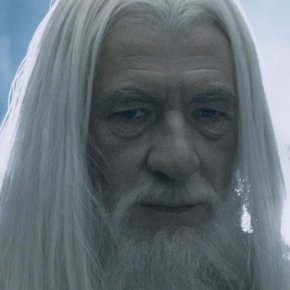
“They all gazed at him. His hair was white as snow in the sunshine; and gleaming white was his robe; the eyes under his deep brows were bright, piercing as the rays of the sun; power was in his hand. Between wonder, joy, and fear they stood and found no words to say.”

Does anyone know what book that quotation comes from? Let me add the next few lines:

whitewizard“At last Aragorn stirred. ‘Gandalf!’ he said. ‘Beyond all hope you return to us in our need! What veil was over my sight?”
Yes, my favorite book is and probably always will be The Lord of the Rings. Isn’t it cool that J.R.R. Tolkien seems to be alluding to today’s story of the Transfiguration (not to mention the Resurrection) in this passage from The Two Towers?

The coolness of this allusion aside, I think Tolkien is on to something with his description of Aragorn’s reaction to the bright and gleaming figure before him: “Between wonder, joy, and fear they stood and found no words to say.”

If Peter were a little more laconic, Matthew might have written the same thing about the disciples’ reaction to Jesus’ Transfiguration. Words fail James and John, but Peter blurts out the first thing that comes to his mind – something about honoring the moment with shrines for their brilliant Lord and his impossible companions. But before Peter can finish speaking his mind, the weather shifts. Sudden clouds engulf them, and they hear a voice. “This is my Son, the Beloved…”

And like Aragorn, Legolas, and Gimli encountering the white wizard in the wilderness, the disciples Peter, James, and John stand on the mountaintop, stand between wonder, joy, and fear – and find no words to say.

And this is where we bring prayer into our discussion. How often have you tried to pray and ended up not really having anything to say? You put your hands together, closed your eyes, took a deep breath. You said, “Dear God, it’s me…” And then your mind unraveled. Random thoughts spilled in and maybe you voiced one or two, but then you felt silly because they didn’t really feel special enough for prayer. So you gave up, put the attempt out of your mind, and went about your day.

The trouble is that when you quit you were just on the cusp of a breakthrough. You were just on the cusp of the least awkward silence imaginable. You were just on the cusp of beginning to listen.

While the Transfiguration is not outwardly a story about prayer, we see this same progression. Peter sees Jesus dazzlingly bright there on the mountaintop, and he addresses him: “Lord.” And then Peter’s mind unravels. Random thoughts spill in. He voices the first one: “It is good for us to be here.” Talking gives him some semblance of control, so he plows ahead: “If you wish, I will make three dwellings here, one for you, one for Moses, and one for…”

But the word “Elijah” dies on his lips. The cloud consumes him. Silence consumes him. And between wonder, joy, and fear, Peter stands and finds no more words to say. In the midst of the cloud, he hears a voice. He hears a voice, but not with his ears. The silence remains even as the depths of his being resonate with the truth of God’s words. He feels their truth as a glow in his chest, like a reflection of Jesus’ transfigured radiance. The words shimmer – an afterimage before Peter’s eyes: “This is my Son, the Beloved; with him I am well pleased.”

And then, I think mostly for Peter’s benefit (as well as ours), God adds the all-important instruction: “Listen to him.” With this command, God gives Peter and us the permission to lapse into silence when we pray. God invites us to be the respondent in the conversation, not the speaker. God asks only that we listen with the ears of our hearts.

So I invite you to close your eyes now and let us practice for a few minutes this silent prayer, this listening that is so hard for most of us. We’ll end the sermon with a long moment of silence, so please know it is intentional. Close your eyes now and we’ll begin.

You do not need grand words lofty enough for the Almighty. You do not need to pen personal litanies worthy of Shakespeare or John Donne. You do not even need the right words. When you come to God in prayer, you need no words at all. You need only the willingness to be patient, to be still. Let the random thoughts dance through your mind before prodding them toward God as tangential offerings. As you sink into stillness, notice not the absence of noise, but the presence of silence – because true silence is a presence, like the cloud that engulfed the disciples on the mountaintop. Notice that the depth of the silence makes unnecessary any words that might now float through your mind. Brush them aside.

As you listen to the silence, as you tune yourself to God’s movement in your prayer, feel yourself suddenly living between wonder, joy and fear. Wonder rises up as a symptom of consciously inviting yourself into God’s presence. Like the disciples viewing their dazzling Lord, you see with new eyes and hear with new ears. Luminous mystery abounds and the only thing you can do is drink in a deep breath of the Spirit. You wonder where God is calling you, and you lose yourself in the wonder of the silent, indefinite moment. And you listen.

Along with wonder comes joy – not happiness, exactly, because happiness is too fleeting an emotion to describe the solid companionship you feel right now. You feel the presence of Christ. You are not alone. You have never been alone. He touches you on the shoulder as he did the disciples after they fell to the ground upon hearing God’s voice. You realize that joy is a natural byproduct of being aware that you are in God’s presence. And you listen.

Along with wonder and joy comes fear. You have laid yourself bare before God. So used to praying the same words in the same ways, you no longer have their protection. You are vulnerable. You realize that if you listen, you might actually hear something. You’re not sure if you’re ready for God to be that present in your life. But then Jesus’ words from our story today rise up from your gut: “Do not be afraid.” You continue to feel the joy of his touch, and you know in a place deeper than normal knowing that he will never abandon you. The wonder returns – more radiant, more real. The silence remains. The wonder remains. The joy remains. But the fear is gone. And you listen.

I invite you to remember this meditation when you bring yourself to God in prayer. As for now, let us remain silent for a moment. Between wonder, joy, and fear you stand and you find no words to pray. So instead allow the silence to descend like a cloud. And listen.

Our Response

(Sermon for Sunday, October 20, 2013 || Proper 24C || Luke 18:1-8 )

“Jesus told his disciples a parable about their need to pray always and not to lose heart.” So Luke tells us before sharing the story of a woman whose primary attribute is her unflagging persistence. But I wonder how many of us might like to tiptoe past Jesus’ reason for telling the story in the first place – his desire for his followers (then and now) to pray with dogged persistence, to pray always.

We might like to tiptoe past this notion because it seems so unrealistic. How could we possibly pray all the time? Surely Jesus is engaging in hyperbole. Perhaps he’s thinking that if he starts as high as “always,” then when we bargain him down, we’ll still be praying sometimes.

Or perhaps not. After all, Jesus doesn’t seem to be one for haggling. Perhaps he really does yearn for us to pray always, to pray with the same unflagging persistence as the widow in the parable demonstrates in her quest for justice. If that’s the case, then the popular understanding of prayer isn’t going to cut it; that is, an understanding of prayer as simple wish fulfillment. We need a bigger definition of prayer.

silverchair
Pauline Baynes (c) C.S. Lewis Pte. Ltd.

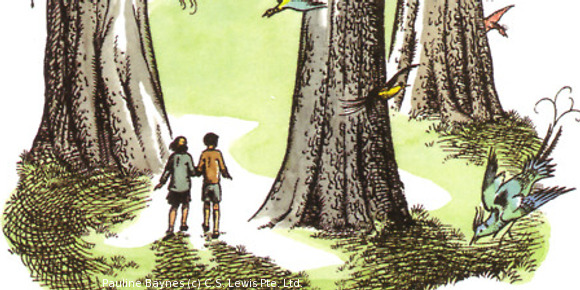
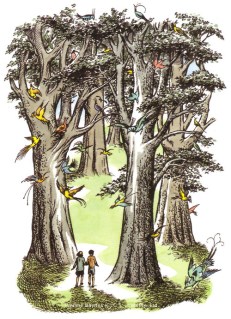
And so I submit as Exhibit A my yearly dive into C.S. Lewis’s Chronicles of Narnia. This time around, the beginning of Book Four, The Silver Chair.

Eustace Scrubb and Jill Pole are trying to escape a mob of bullies at the Experiment House, their ghastly boarding school. Jill has been crying, and the bullies can smell tears from hundreds of yards away. From their hiding spot, the two targets hear the angry shouts of the searchers. Eustace looks at Jill and wonders aloud if they might be able to escape to That Place. He begins calling out, “Aslan, Aslan, Aslan!” Even though she doesn’t know what he’s saying, Jill follows his example: “Aslan, Aslan, Aslan!” The bullies draw near, and Eustace and Jill scramble through the laurels and up a steep slope. The weathered old door in the wall is always locked, but this time – miraculously – the knob turns. And the two children step into Aslan’s country.

Immediately after they arrive, Eustace falls off a cliff, but a lion arrives just in time and blows him to safely to Narnia. The lion – naturally – frightens Jill Pole. She tries to slip away, but the lion begins questioning her. Her showing off caused Eustace’s fall, she confesses. For that display of pride, the lion gives her a task to perform. “Please, what task, Sir?” asks Jill.

“The task for which I called you and him here out of your own world,” says the lion. This response puzzles Jill. Nobody called them. They called out to – Somebody – a name she wouldn’t know. Wasn’t it she and Eustace who asked to come?

“You would not have called to me unless I had been calling to you,” says the lion, Aslan, the Christ-like figure of Lewis’s fiction.

This exchange between Aslan and Jill Pole illustrates most vibrantly the foundational principle of our bigger definition of prayer. You would not have called to me unless I had been calling to you.

The Catechism in the back of the Book of Common Prayer states the same thought like this: “Prayer is responding to God, by thoughts and by deeds, with or without words.” Years ago, when I first read this definition, I was flabbergasted. I had never thought of prayer as anything more than asking God for stuff. God, please give me a kitty that doesn’t scratch me. God, please help us win our soccer game. God, please make Grammy not sick anymore. Now, please don’t misunderstand, I’m in no way condemning these prayers of intercession and petition. Rather, every kind of prayer fits into a larger framework. Petition and intercession, which popular culture misunderstands as “wish-fulfillment,” are several bricks up from the foundation of prayer.

That foundation is, of course, God. More precisely, the foundation of prayer is God’s presence in our lives and God’s call upon our hearts. “Prayer,” says the Catechism, “is responding to God.” We never initiate a prayer. Our prayer is always a response because God has always been active, has always been breathing our lives into being.

Think of prayer as a phone call. You and I never dial the number: we only have the option to answer the phone when it rings. You would not have called to me unless I had been calling to you. When we choose to answer, we affirm our desire to participate in our relationships with God. Prayer, then, is the inclination of our lives towards God, our response to what God is already doing in our lives.

How full of light and love would those lives be if we took seriously Jesus’ desire for his followers to pray always? How much light and love would we bring to those around us if we strove with unflagging persistence to respond to God in every situation?

If prayer is everything we do in response to God, then Jesus’ call to “pray always” seems a little more realistic – still challenging, still demanding discipline and rigor, but more realistic just the same.

Monastics down through the ages have practiced this bigger definition of prayer. Even the lowliest jobs at the monastery – peeling potatoes or weeding fields – were prayer. Monks prayed many times a day in their chapels, but the labor they performed in the meantime was prayer, as well. They “prayed always,” because they saw everything they did in their lives as a response to God’s presence. While we don’t have strict priors delegating our labors, we can still import the monastic example into our lives.

Look at your day, your week, your year. How do your engagements and actions display your response to God’s movement in your life? As a member of a family, God calls you to love and enjoy and forgive your spouses, children, parents, and siblings. As a person made in God’s image, God calls you to discover your authentic self, the version of yourself that God sees and celebrates. As a servant of God, God calls you to perform that one way in which you can bring light and love to the lives of those around you. When we respond to God in all these areas of our lives, we pray. We affirm our relationships with God. We live the abundant lives that Christ offers to all.

The prayers we pray this morning in our worship service, the lessons we hear, the music we sing, the meal we share, all nourish us for a life of prayer between now and next Sunday. Jesus yearns for us his followers to pray always, to respond to God’s movement at all times. This brand of unflagging persistence surely is challenging. But the good news is this: even attempting to pray always is a response to God. Even realizing that we aren’t praying always is a response to God. Every impulse towards generosity, welcome, hope, joy, love, and service is a response to God. As are the cries of our hearts when all is dark. Each day of our lives, we are met with myriad opportunities to pray, to be responsive to God’s movement. And this same movement gives us the grace to respond.

“You would not have called to me unless I had been calling to you,” says Aslan to Jill Pole. “We love because he first loved us,” says the writer of the First Letter of John. Likewise, we pray because God first called us – called us into expansive, abundant relationship with God. What will our response be?

Digital Disciple Chapter 6: Tech Sabbath

After a midsummer hiatus, here’s the final part in a six part video series produced to accompany the book Digital Disciple. This video series is designed to be used in a class setting to introduce the material and spur discussion. Of course, watching it by yourself is fine too!

Don’t forget to head over to the Facebook page and participate in a little quiz about this video. We’ll pick a random winner from those who participate and he or she will receive an autographed copy of the book, the DVD, and the t-shirts that Adam wore in the video (again, not the actual shirt but one just like it). Check it out!

The Dragon’s Skin

(Sermon for August 28, 2011 || Proper 17A || Exodus 3:1-15)

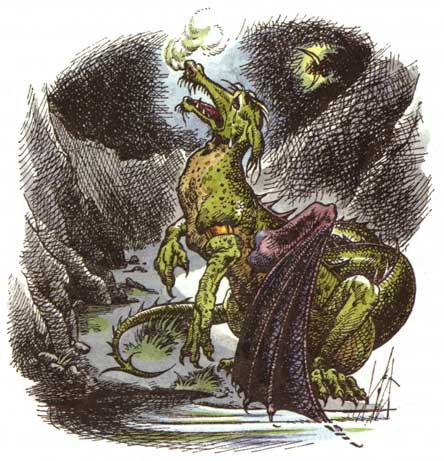
Eustace Scrubb had read only the wrong books. The books he had read had “a lot to say about exports and imports and governments and drains, but,” says C.S. Lewis, “they were weak on dragons.” And so when Eustace accidentally accompanies his cousins Edmund and Lucy on a voyage aboard the ship Dawn Treader, you might imagine that he is, shall we say, out of his element. The further the ship sails from Narnia, the more ghastly becomes Eustace’s behavior. He is truly a horrible boy – lazy, selfish, dishonest, self-centered, and his attitude only goes from bad to worse.

So you won’t be surprised to hear that, when the ship finally comes ashore after a brutal storm, Eustace slips off by himself to avoid a day of hard work. And because he’s read only the wrong books, you also won’t be surprised to hear that, when he stumbles into a cave full of treasure, he has no idea that he has trespassed into a dragon’s lair. He has no idea that falling asleep on a dragon’s hoard turns one into a dragon. And he has no idea that he has become a dragon until he realizes that he’s running on all fours and that the reflection in the pool is his own. Now that he has become a dragon, “an appalling loneliness” comes over him, and he begins to see in himself the monster that his cousins and the crew of the Dawn Treader had tolerated for the entire voyage. How could Eustace possibly undo the enchantment? How could he shed the dragon’s skin?

Consider that your cliffhanger until later in the sermon. Before we return to Eustace the dragon, let’s turn our attention to this morning’s lesson from the Hebrew Scripture. Moses grazes the flock of his father-in-law far afield. At Mount Horeb, he sees a bush blazing merrily, but the bush isn’t turning to coals and ash. Intrigued, Moses turns aside to look more closely. And God encounters him there. “Come no closer,” God calls to Moses. “Remove the sandals from your feet, for the place on which you are standing is holy ground.”

Remove the sandals from your feet. On the surface, this command reminds Moses that he and God don’t share the same position. Moses is a supplicant, and he comes into God’s presence unshod to show the vast disparity between the two. Okay, show of hands – which of you took off your shoes when you settled into your pew this morning? Yeah, neither did I. From a cultural point-of-view, removing our footwear signals informality rather than respect. So, we need to look at God’s command here from a different perspective.

On a deeper level than the simple removal of a garment, God’s command to Moses to take off his sandals presents a challenge to each of us who hears this story. This challenge begins with a question. What is God commanding you and me to remove from ourselves when we enter into God’s presence?

Our answers to this question build the wardrobe of costumes we wear all the time without realizing that we are dressed up. We wear these invisible costumes and affix invisible masks to our faces in order to set up buffers between ourselves and other people. If other people get too close, then they might impel us to change, to see the world differently than we desire, to remove ourselves from the centers of our existence. Our costumes are our first line of defense to remain the people we’ve always told ourselves we want to be. The trouble is that the costumes also disguise us from ourselves.

And so we stumble into God’s presence wearing carefully crafted costumes and masks that create barriers between us and everything that is not us. And just as God commands Moses to remove his shoes, God tells us to take off the costume.

What is God commanding you and me to remove from ourselves when we enter God’s presence? What makes up our costumes? Here I can only speak for myself, so listen for where your experience connects with mine. After praying with the question, I decide that the first piece of my costume to remove is Fear. This is the fear that forestalls any type of change. This is the fear that keeps me from entering into any kind of relationship because the other will cause some sort of transformation in me. This is the fear that keeps me from diving into a pool, not because I’m afraid of diving, but because I don’t want to get wet.

The second piece of the costume is Ignorance. When fear keeps relationships from beginning, ignorance is the necessary byproduct. I am blind to the situations of those I don’t take the time and energy to know. Again, this is part of the buffer. If I actively keep myself from developing an understanding of another’s plight, I won’t be putting myself in the position to have to decide whether or not to help, to relate, to get my hands dirty.

The third piece of the costume is Apathy. When ignorance fails, and I do find myself in the position to make a choice – to be in relationship or not – apathy sings the siren’s song. Apathy is the inertial force that keeps me complicit and complacent to the woes of others because I just can’t quite dig up enough empathy to care.

There are many more pieces of the costume, too many to talk about in this sermon, but there’s still the mask. My mask is Pride. When fear and ignorance and apathy all fail to keep me from being in an authentic relationship with another, there’s always pride to keep me living a disguised life. This is the pride that takes all the credit for my giftedness and assumes that I can get along quite well on my own because I seem to have done so thus far.

And this is where we return to Eustace, the horrible boy of C.S. Lewis’s The Voyage of the Dawn Treader. After he becomes human again, Eustace relates to his cousin Edmund how he left the dragon behind. A lion had come to him in the night and bade him undress. Since he had no clothes, he began shedding his skin like a snake. He scraped off his scales and stepped out of the skin. But then he looked down and saw another layer was there. He peeled this off as well. And “exactly the same thing happened again,” said Eustace.

And I thought to myself, oh dear, how ever many skins have I got to take off? …So I scratched away for the third time and got off a third skin, just like the two others, and stepped out of it. But as soon as I looked at myself in the water I knew it had been no good.

Then the lion said… ‘You will have to let me undress you.’

The desperate Eustace lay down and

The very first tear [the lion] made was so deep that I thought it had gone right into my heart… Well, he peeled the beastly stuff right off – just as I thought I’d done it myself the other three times, only they hadn’t hurt – and there it was, lying on the grass: only ever so much thicker, and darker, and more knobbly-looking than the others had been.

When we stumble into God’s presence, God invites us to remove our costumes. Like Eustace, we might be able to slough off some pieces ourselves, but the real costume only comes off when God intervenes and pulls the invisible garments away. When we pray, “I will, with God’s help,” we acknowledge that we cannot take off our disguises until we stand before the God who is the only one who truly knows what we look like. We cannot remove our costumes until we ask God to take them away, to leave them lying next to us, thick and dark and knobbly-looking.

And when we participate with God in this removal, there is just so much room to fill. Hope takes the place of Fear. Awareness fills in the gap left by of Ignorance. Engagement replaces Apathy. And Humility settles in where Pride once kept the disguise wrapped around us so tight. Shedding the costume is hard work that takes a lifetime. But we are not alone. We are in God’s presence, and God is forever helping us shed the dragon’s skin.

Digital Disciple Chapter 5: Googling Prayer

After a midsummer hiatus, here’s the fifth in a six part video series produced to accompany the book Digital Disciple. This video series is designed to be used in a class setting to introduce the material and spur discussion. Of course, watching it by yourself is fine too!

Don’t forget to head over to the Facebook page and participate in a little quiz about this video. We’ll pick a random winner from those who participate and he or she will receive an autographed copy of the book, the DVD, and one of the t-shirts that Adam wore in the video (again, not the actual shirt but one just like it). Check it out!

To an Unknown God

(Sermon for Sunday, May 29, 2011 || Easter 6A || Acts 17:22-31)

I wonder what Paul was thinking as he walked the streets of Athens. I’m sure that the many-columned Parthenon was looking down on him from atop the Acropolis, as this temple of Athena had for nearly five hundred years. But no matter the goddess Athena’s appeal, down every street, Paul sees another crumbling monument to one deity or another. He studies them carefully. I imagine he finds statues of all the Greek gods and perhaps other ones from far off places, considering Athens’ booming tourism trade.

At one point on his walk, however, Paul comes across something he doesn’t expect. He stumbles upon an altar with an odd inscription: “To an unknown god.” Now, Paul is no stranger to being run out of town, but he is also never one to sit quietly in a corner and listen. So, after seeing the inscription, Paul stands up at a gathering of the local scholarly elite and proclaims to them just who this unknown God is.

God, he says, is not like the gods of these gold, silver, and stone monuments. God is Lord of heaven and earth. God isn’t bound to set roles like your local gods. God breathes life into all things. God doesn’t live in a special house somewhere. God is not far from each one of us everywhere. And yet, while Paul’s sermon is full of stirring and magnificent images of God, I can’t help but wonder if the phrase “unknown God” still applies more than any other.

Now, I’m going to warn you that we are about to wade into particularly deep and boggy theological waters. I confused myself thoroughly trying to write all of this down, so if your brain starts to hurt, you’re not alone. However, I have confidence that with some help from our friend C.S. Lewis and a stiff breeze from the Holy Spirit, whom Jesus talked about in today’s Gospel, we will all come out on the other side of the bog with our minds intact. Are you with me? Good.

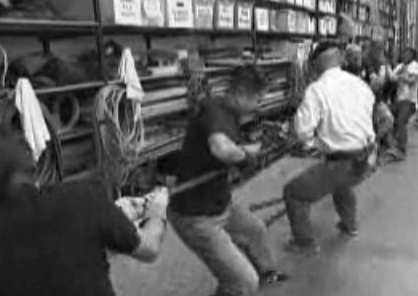
The Mythbusters try to pull apart two interlocked phonebooks

So two extremes play tug-of-war with this concept of our “knowledge of God.” In the case of the first extreme, I claim to have captured God, strapped the Divine to the operating table, and figured out what makes God tick. When I’m done with the exploratory surgery, I stuff and mount God on the wall just like a prize twelve-point buck. With my experimentation complete, I know just what button to push to make God act in my favor, and oddly enough, God disagrees with all the same people I do. This is the extreme where I have God pegged. Now, you might have spotted the flaw in this point of view. (Remember – we’re talking about extremes, so flaws are more common out here.) The flaw here is, of course, the delusion that God is small or mundane enough for me to figure out what makes God tick.

The other extreme is, naturally, the complete opposite of the first. In the case of the second extreme, I claim to have absolutely no ability to comprehend a God who exists for eternity in infinity. When I try to get a handle on God, I am at a complete loss for words and I must conclude that God is so unsearchably unknowable that I might as well give up. I’m an amoeba trying to read Shakespeare. But I make peace with my teeny-tinyness, and I go about my day trying not to have delusions of grandeur, in which I might rise to a level of intelligence that allows me to comprehend even a shred of what God is about. Of course, there’s a flaw here, too. The flaw in this extreme is the faulty thinking that God is too big and majestic to bother with an amoeba like me, no matter the evidence that God has been surprising humanity for millennia by encounters with the Divine, including one in which God sent his only Son to be an amoeba like me.

Now, each of us exists somewhere along the spectrum between these two extremes. When I really need something to happen – to get a job or pass a test or receive successful treatment – I might trend toward the first extreme, in which God comes at my beck and call. When something really terrible happens in the world – a huge earthquake or massive flooding or a category five tornado – I might trend toward the second extreme, in which God may exist in the ether of eternity but surely can’t be bothered with things here on lil’ ol’ Earth.

Do you see what’s happening here? My experience of God changes depending on my needs in the moment. I slide along the spectrum between the two extremes. The unique mixture of my appetites, yearnings, successes, failures, doubt, and faith paints a picture of the God to whom I address my prayers. And whatever else that painting may be, there is one thing that the picture surely is not. And that is an accurate portrait of God. This is why I wonder if the phrase “unknown God” still applies more than any other.

Now, as I tried to wade out of my confusion while writing this sermon, two questions struck me after that whole bit about the extremes. They might be on your mind right now, as well. First, if the God I’m worshiping isn’t really God, but rather my conception of God, then what’s the good of praying? And second, if I’m not really worshiping God, doesn’t that make me an idolater? This is when we need to call in one of the heavyweights.

C.S. Lewis wrote an incredible poem called “A footnote to all prayers.” He begins:

He whom I bow to only knows to whom I bow
When I attempt the ineffable name, murmuring thou,
And dream of Pheidian fancies and embrace in heart
Symbols (I know) which cannot be the thing thou art.

These Pheidian fancies are works of the Greek sculptor Phidas, the very statues of gods and goddesses that Paul saw in Athens. Lewis knows that, even when he tries to call upon God, the best he can do is some symbol that could never do God justice. He continues:

Thus always, taken at their word, all prayers blaspheme
Worshipping with frail images a folk-lore dream,
And all men in their praying, self-deceived, address
The coinage of their own unquiet thoughts…

Lewis poetically describes the same predicament we were in a minute ago: in prayer, we address the gods of our own “unquiet” thoughts and thus we blaspheme. But the poem is only half over, for Lewis continues: [we blaspheme]

…unless
Thou in magnetic mercy to thyself divert
Our arrows, aimed unskillfully…

Even someone of C.S. Lewis’ verbal skill aims his prayer-arrows unskillfully, always at some conception of an “unknown” god than at the one, true God. But, in the end, our story isn’t really about you and me. Our story is always and forever about God working in, around, and through us, no matter how unknown God may be to us. And God’s story is all about God’s “magnetic mercy,” by which God pulls our prayers to God, even though we shoot them far wide of the target. Lewis concludes:

Take not, oh Lord, our literal sense. Lord, in thy great,
Unbroken speech our limping metaphor translate.

As we slide along the spectrum between the two faulty extremes of our conception of God, we can only speak in “limping metaphor.” But the true God, according to Lewis, speaks in “great, unbroken speech.” This is the speech that voiced light in the beginning and continues to sustain creation. This is the speech that speaks each one of us into being everyday, no matter the degree to which the speaker is unknown to us.

To tell you the truth, this unknown quality of God will be with us until God takes us fully into God’s glorious presence. Indeed, the unknown quality will keep us searching and reaching out and finding God in even the unlikeliest of places. And I believe that God redeems our lack of knowledge through God’s magnetic mercy. God translates our limping metaphor into the leaping speech of abundant life (even the words I’m speaking right now). Here’s the good news. In the end, our knowledge of God places a far distant second to God’s knowledge of us. As Paul says to the church in Corinth: someday “I will know fully, even as I have been fully known.”

462 Years

(Sermon for Sunday, January 30, 2011 || Epiphany 4, Year A || Matthew 5:1-12)

I preached this sermon on a Sunday in which the church had Morning Prayer for the first half of the service. We timed the service a little long, so my rector encouraged me to shorten the sermon, hence this 900 word piece rather than my normal 1200-1400 word ones.)

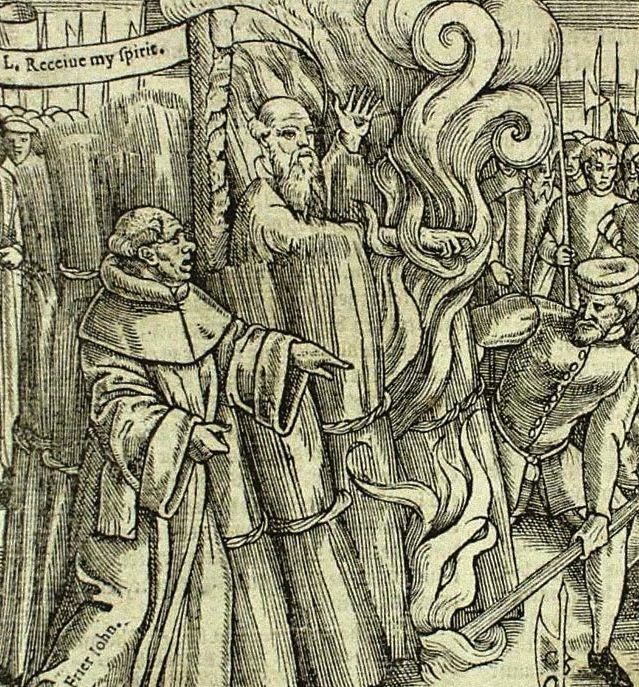
Four hundred and sixty-two years ago, the first edition of a certain book went to the printing press. The year was 1549, the author was Archbishop Thomas Cranmer, and the book was the Book of Common Prayer. In this original Book of Common Prayer (or BCP for short), Cranmer compiled, crafted, codified, and composed the prayers that became the central structure of a new expression of Christianity known as Anglicanism. A decade and a half before this publication, the King of England, Henry VIII, had officially broken away from the Roman Catholic Church. However, in the years immediately following the split, very little changed about the English church besides the pope no longer being the supreme earthly authority. Two years after Henry’s death, Archbishop Cranmer published the first BCP and ushered in the unique expression of Christianity that we at this church continue to practice today.

Queen Mary (Henry's daughter) didn't like Cranmer much. She had him burned at the stake.

This unique expression of following the way of Jesus Christ creates a structure, a framework of prayer, around which we organize our lives. Cranmer borrowed from the monastic example when he created this framework. Benedictine monks framed their days around an eightfold worship cycle; they prayed formally in church with one another about once every three hours. Cranmer wanted all people, not just monks, to frame their days with prayer, so he took the monastic practice and synthesized the eightfold structure into a twofold one. In his new structure, people prayed formally in the morning, then they went to work, and then they prayed formally again in the evening. Thus, the uniquely Anglican worship experience of Morning and Evening Prayer was born.

Every morning and every evening to this very day, Anglicans around the world have gathered to observe these two rituals. During them, we sing psalms and songs of praise to God. We read scripture. We pray and confess our sins. I would be willing to bet that, thanks to time zones, there is a service of Morning or Evening Prayer happening at every hour of every day all year long. When Cranmer developed this dual service, he did so in order to give his flock a method by which to order their lives around prayer and praise to God. This morning, we are participating in a cycle of worship that envelopes the whole world in constant prayer, a prayer that runs all the way back 462 years.

Whether or not we personally practice Morning and Evening prayer ourselves, the example, which Cranmer set, still guides us. Episcopalians prize the order behind our worship because the structure gives us a way to organize our lives around the things that are most important. The framework of prayer allows us to participate in God’s movement not just when we remember to or when we need to, but at all times.

When we adopt this structure and begin to practice our awareness of God’s presence, we can also begin to access another structure, a framework that lies beneath the one we normally witness with our eyes. This deeper structure is the one that Jesus speaks about to his disciples in this morning’s Gospel reading. The beatitudes, or statements of blessing, give us a glimpse of the deeper framework of reality that exists beneath the misplaced priorities and distorted vision of the world at large. This deeper reality is the one that God infused into creation from the beginning, a reality in which communion overrides isolation, peace quells domination, and love bests fear. Of course, humanity has ignored this deeper reality from the word go, preferring instead to set ourselves up as petty lords of our own destinies, oblivious to the fact that we have never really been in control of anything. Humanity’s greatest sin throughout history has always been setting up structures and systems that bury the deeper reality of God’s presence in all and through all. The ordered life of prayer gives us access to this reality.

Jesus’ beatitudes show us how the deeper structure of creation works. The poor in spirit, the grieving, and the persecuted are blessed. The meek, the merciful, the pure in heart, and those passionate about peace and righteousness are blessed. These are not mere moral platitudes spoken to console a downtrodden people. They are not future promises that will be fulfilled someday in heaven if you can just endure long enough to get there. They are not hopes for what could be coming down the road. These statements of blessing are ways in which the deeper reality of God’s presence breaks through the distortions of the world – then and there on the mountainside with Jesus and here and now in our midst.

When we participate in an ordered life of prayer like the one that Archbishop Cranmer developed, we practice the presence of God every day, not just when we remember to or need to, but every day. This practice is a spiritual workout, which strengthens not our muscles, but our vision and our ability to respond to God’s call to serve. When we take on the framework of daily prayer, we train ourselves to see the deeper reality of God’s movement, to which the beatitudes point us. And then we leave this room, our spiritual gym, and we go out into the world to begin uncovering that reality and showing that God’s presence is, indeed, here.

The Pews in the North Transept: A Remembrance

The following post appeared Friday, December 3rd on Episcopalcafe.com, a website to which I am a monthly contributor. Check it out here or read it below.

* * *

photo credit: Lara Shine

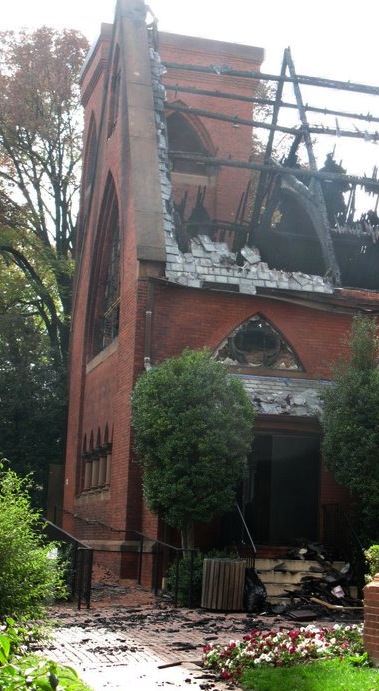
There were a couple of pews in the north transept of the chapel. They were set perpendicular to the main body of pews and a bit apart from the others. Only one corner of these pews had a view of the altar, while the whitewashed wall that marked the beginning of the chancel blocked those sitting in the rest from witnessing the consecration of Holy Communion. A set of upperclassmen always sat in those sideways pews. If we had been in high school rather than seminary, they would have been the aloof, cool kids who wore t-shirts adorned with the names of bands you had never heard of and who only participated in school-spirit building events ironically.

It wasn’t until the second semester of my first year that I decided to try to sit in one of those pews, too. Some vestige of high school social dynamics must have awakened in me to prompt me to sit there: I would be cool and aloof by association if I planted myself in one of those sideways pews. I finally stocked up enough courage to try, and, much to my surprise, the upperclassmen had no problem with me sitting in close proximity to them. Apparently, they were cool and aloof enough to allow my greenness and exuberance for chapel services to invade their territory. At least, that’s what I thought at first. It turns out that those upperclassmen were just nice, welcoming Episcopalians with perhaps more than their share of the liturgical equivalent of gallows humor.

They ushered me, a lowly first year seminarian, into their pews. Pretty soon, I was the upperclassman sharing the pew with new folks starting their turn in the never-ending three-year cycle of Episcopal seminary. From that pew in the corner, I participated in several hundred worship services, mostly Morning Prayer and Eucharist, with an ordination thrown in here and there.

I remember one Tuesday morning during Lent when we hunkered down in those pews for another epic recitation of the Great Litany. Much to the joy of our attention spans, however, the student who was leading the Litany didn’t realize that only a small portion of it appears in the Hymnal 1982. Needless to say, we got out of chapel much earlier than we expected that morning.

I remember a sermon delivered by a beloved Old Testament professor, who had recently become the proud father of a beautiful little girl adopted from China. He preached about how his daughter toddled along next to him as he mowed the lawn, all the while pushing a plastic lawnmower of her own. We are like my little girl, he said. God allows us to push the lawnmower, but really God does the work.

I remember my only sermon in the chapel’s pulpit – five minutes on Philip and the Ethiopian eunuch. I had seen the pulpit shake and sway when particularly rotund and fiery preachers tested its structural integrity. I had no such worry, being neither very heavy nor very fiery.

I remember the first time I stood up behind the chapel’s altar, the table that I could barely see from my chosen pew. I stood there in that place of mystery, while my liturgics practicum professor led us through how to celebrate the Eucharist. Never do something with only one hand, he said. Pray with the authentic voice that God gave you. If you have glasses, make sure the book is at the right height. His practical advice took away none of the mystery; rather, it gave me the ability to share the mystery with others. Still, on the day of my first Eucharist, I was so flustered that I couldn’t tell which cruet held the wine and which held the water.

I remember being proud of my own austerity when I eschewed the kneeler cushions, thus proving I had no idea what the concept of kneeling was all about. I remember putting on my crisp new cassock and surplice for my first Sunday in the choir. I remember playing the guitar at Evening Prayer. I remember practicing baptism on a cabbage patch kid.

Mostly, though, I remember the air in the chapel. It was heavy air, full of stained glass light and the comforting residue of the prayers of thousands of students who came before. That air hit me the first time I entered the chapel as a prospective student on a chilly January morning in 2005. I breathed in the substance of the holy, communal life that the seminary desired for each student – the life made up of words and bread and wine and water and song and, yes, mistakes. For three years, I added the breath of my prayers to that airy substance. And from that pew in the corner, I sat and knelt and stood, while God continually breathed life into me, making me the person God yearned for me to become.

A month ago, the chapel burned down. A friend called me about forty-five minutes after the blaze began to tell me the sad, shocking news. I’ve seen pictures of the charred, unstable structure that still remains. I’ve seen the news stories online. I’ve read the Facebook comments of dozens of seminary friends, who each changed their profile pictures to an image of the east wall of the chapel – the wall that famously read: “Go ye into all the world and preach the gospel.” All of these things tell me that the chapel is gone. But I don’t think that reality will truly hit me until I visit the holy hill of the Virginia Theological Seminary and see for myself the place where the conflagration released the residue of all those prayers into the sky.

Esperanza

(Sermon for Sunday, October 17, 2010 || Proper 24 Year C RCL || Luke 18:1-8)

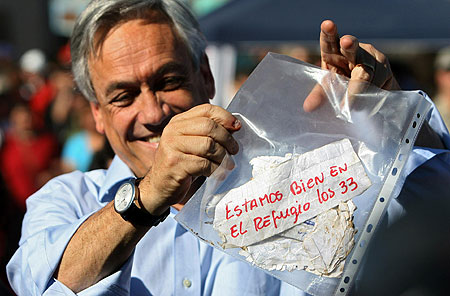
On August 25, 2010, a crucifix traveled 2,300 feet down into the earth. The Apostles’ Creed tells us that Jesus, after he suffered and died on the cross, “descended to the dead.” This crucifix, this representation of the cross supporting the weight of the crucified Lord, descended to the living. Twenty days had passed since the mine collapsed, trapping 33 miners nearly half a mile beneath the soil of the Atacama region of Chili and nearly ten weeks from rescue.

(image from mirror.co.uk)

Backing up to August 5th, the day of the collapse, a single thought began to spread from the miners’ families to the community to the city to the country to the world: Oremos por nuestros hermanos, “Pray for our brothers.” On August 22, a note scrawled in red marker came to the surface: “We are fine in the shelter, the 33 of us.” The message was a glimmer of hope. And over the next several weeks, the glimmer turned into a beacon of hope shining in the depths of the earth.

That crucifix, that image of the suffering Christ, which descended to the living, was a physical representation of the hope that was already present in that shelter half a mile down. The persistent, unceasing prayers of the world – from the pregnant wife of miner Ariel Ticona to the bus driver coming off a double shift in Boston – sustained the hope of the miners. And so, in a fit of divine synchronicity, the Gospel reading for the Sunday following the miners’ rescue would, of course, begin like this: “Jesus told his disciples a parable about their need to pray always and not to lose heart.”

Rarely, if ever, in the Gospel does the writer tip his hand while introducing a parable. Every once in a while, the writer will explain a parable once the story is over. But most often, parables stand alone, with neither introductory material nor closing explanation to help the reader. Indeed, Jesus seems to enjoy speaking in parables for the simple fact that parables make his audience dig deep into his words and find meaning for their lives by searching for meaning in his stories. So, when Luke prefaces Jesus’ parable today with the story’s apparent meaning, we’d be justified in being a bit indignant toward our Gospel writer. Luke doesn’t give us the chance to figure this parable out for ourselves. He tells us the meaning of the parable like a teacher going over the answers to a test before passing out the exam.

But while our indignation toward Luke might be justified, I think we should let him slide just this once. He has our best interest in mind, after all. Luke doesn’t want us to miss the meaning of this story because living out this parable makes our lives fundamentally better. Living out this parable helps us live lives full of God. “Jesus told his disciples a parable about their need to pray always and not to lose heart.” To pray always and not to lose heart. In other words, the story is about praying always and never giving up, or to put the meaning in positive terms, to have the stamina and fortitude to pray persistently and to hope all the time.

We’ve seen over the last seven weeks in Chili that prayer and hope are linked together. In the midst of disaster, prayer and hope rose to the surface and sustained the people affected by the mine’s collapse. Now, let’s be clear. We use the word “hope” for simple, everyday situations such as “I hope the train is on time” or “I hope this week’s episode of Glee is better than the rest of the season, which has been pretty dreadful.” This everyday use of “hope” is of a different magnitude than the hope we are talking about here.

Hope (you might call it capital “H” hope) is the active component of not losing heart. In a world that excels at distracting us from following Jesus Christ and seducing us with the ease of apathy, hope keeps us relying on God to direct us down the right paths. Hope in God allows us to take the long view of our own futures, trusting that God, like a master chess player, has already seen twenty moves ahead. Hope in God opens us to possibilities for our lives that the urgent need of now simply dismisses offhand. Hope in God tells us that God will never lose heart in us, and therefore, we should never lose heart in God.

Hope is the active component of the heart’s steadfastness, and prayer is the active component of hope. Prayer nurtures hope by reminding us that, despite the world’s distraction and seduction, God is present. The Catechism at the back of the Book of Common Prayer says this about prayer: “Prayer is responding to God, by thought and by deed, with or without words.” Notice how this definition adds much needed depth to the popular understanding of prayer. The popular understanding simply makes God the recipient of our prayers: if I pray for my cat to stop scratching me, and the next day she does anyway, I am liable to think that God is not present. But the Catechism’s definition goes back a step in the process of prayer. Prayer is “responding to God.” Therefore, each and every time we pray, we are participating in the life-changing act of acknowledging that God is present in our lives. God calls prayer forth from us. We respond by praying. Each time we enter this exchange of call and response, God fuels our hope with God’s steadfast and eternal presence.

This is why Jesus tells the disciples a parable not just about the need to pray, but the need to pray always. A continuous life of prayer, of response to God, offers us continual awareness of God’s presence. This awareness leads to hope, which, in turn, enables us to live lives open to all of God’s possibilities and to trust in God’s directing creativity.

The widow in the today’s parable exemplifies this need for continuous perseverance and dedication. She keeps coming to the judge, and, in the end, her persistence pays off. Her unwavering commitment to obtaining justice moves the judge, who grants her request simply to get her out of his hair. If she had gone to court once, been dismissed, and never returned, the judge wouldn’t have given her a second thought. But her persistence changes her situation.

This persistence, this dedication to a life of prayer changes our situations, too. Like the persistent widow, our commitment to prayer signals our commitment to respond to God in every situation. The more we commit to prayer, the more apt we are to invite God into our lives and our decision-making. And opening ourselves to God’s presence allows us to soak up the hope that radiates from God’s movement in our lives. Seen from this angle, prayer works very much like food. If your mom or your husband calls you downstairs for meatloaf, you don’t call back, “No thanks. I ate last month.” Prayer leads to openness and trust and hope in God only when we integrate prayer into our daily lives.

The miners surviving 2,300 feet below the surface fed off of the hope generated by God’s presence, a presence proclaimed by the vast multitude of prayers descending on Chili from around the world. Upon his rescue, miner Mario Sepulveda spoke haltingly about his own persistence and hope: “I was with God and I was with the devil, but God won. I held onto God’s hand, the best hand, and at no point in time, how do I explain this, at no point in time, did I doubt that God would get me out of there.”

Sepulveda’s persistent awareness of God’s presence allowed him to survive for 69 days beneath the earth. The parable of the persistent widow teaches us that a life of prayer leads to hope, and hope leads to renewed lives lived in the fullness of God. I invite you to enter into a life of prayer, to find the hope that proceeds from that life, and finally to share the joy of our hope in God with everyone you meet. This happened in Chili: Elizabeth Segovia, wife of trapped miner Ariel Ticona, did not lose heart that her husband would be rescued. She joined her prayer with the prayers of millions. And halfway through the seven-week ordeal, she gave birth to a beautiful baby girl. And she named her “Esperanza,” which means “Hope.”

Note

Quotations and dates for the mine rescue from CNN.com.

Sermon Reconstruction: Luke’s Lord’s Prayer

A few weeks ago, I preached* a sermon on Luke’s version of the Lord’s Prayer, but I never wrote it down. The sermon existed in my mind as a skeletal structure of six or seven keywords, but with no meat or movement. So during the preaching moment, I wove in the muscles and tendons, and (as she so often does) the Holy Spirit animated the whole thing with breath. All that to say, my fingers never hit the keys on this particular sermon, so when a dear, dear lady at my church asked for a copy, I had none to give her. So what follows is not exactly what I preached, but a rough approximation of the sermon based on a reconstruction of my initial skeletal thought processes.

Jesus is praying in a certain place when his disciples approach him and say to him, “Lord, teach us to pray.” I imagine Jesus looking at them with bemused surprise and thinking: “Took you guys long enough. I called you six chapters ago!” Then he teaches them his own prayer:

Father, hallowed be your name.
Your kingdom come.
Give us each day our daily bread.
And forgive us our sins,
for we ourselves forgive everyone indebted to us.
And do not bring us to the time of trial.

You might look at these words and say, “Hey, wait a second. Where’s the rest of it? Is this the Cliff’s Notes version or something?” True, the version of the Lord’s Prayer in Luke’s account of the Gospel is not quite as long as the one found in Matthew and there are also a few differences in word choice (“sin” instead of “debt/trespass,” for example). Most scholars agree that Luke’s version is the older one, citing the fact that shorter versions of similar passages tend to be older because phrases tend to get added over time rather than subtracted. For our purposes, just remember that we’ll be talking about Luke’s version during this sermon and not the one we’ll pray later on in the service.

Jesus begins his prayer with the expectation of close relationship with God. Rather than saying something like “Almighty God, Lord of the Universe,” Jesus starts with a familial word. By addressing God as “Father,” Jesus tacitly shows himself to be in the role of child. And because he is teaching his prayer to his friends, he lets them and us know that we, too, are God’s children. With one word, Jesus sets up the relationship between God and us. We are both closely connected to the Father, and we occupy the position of dependent in the relationship.

With the words “Your kingdom come,” Jesus introduces hope into the prayer. Hope is about the future. When we hope, we begin to expect that the boundaries of possibility are far wider than we once supposed. When we pray for the coming of the kingdom, we show our willingness to participate in the advent of that kingdom here on earth, both in its current, unfinished manifestation and in its future culmination. The mere act of hoping for a better future can begin to change the present, which is the subject of the next phrase.

While scholars aren’t quite sure of the meaning of the word translated into English as “daily,” the fact that two words in this next sentence have to do with “today” stands out. Jesus teaches us to pray for the nourishment that sustains us just for this day – not yesterday, which is past, nor tomorrow, which is yet to come, but right now. When we pray for sustenance today, we remain grounded in the present moment, the moment in which we can encounter God moving in our lives. Nourishment today helps us hope for tomorrow, and sustains us to continue walking the path with Christ.

More than anything else, this path is about reconciliation, which is the subject of the next sentence. We ask for forgiveness, and at the same time we make a commitment to forgive others. I’m reminded of that great Anne Lamott line, in which she says that not forgiving is like drinking rat poison and then waiting for the rat to die. A quick recap: forgiveness is the action we take in the present to participate in the coming of the kingdom. Nourishment sustains us in the present. Hope drives us to the future. And a close relationship with God allows us to pray. One more sentence to go.

With the final phrase, Jesus gives voice to the fear that crops up in each of us. We do not like to think about coming into a time of trial. But by saying the words aloud, we permit ourselves to give that fear up to God. And the thing that occupies the space left by that fear is peace. This peace frees us from the worry that might keep us from praying in the first place.

And Jesus says that we must never stop praying. The disciples asked him to teach them to pray, but he’s interested in more than just the words they use. Like the person who keeps knocking and knocking to get his friend to come to the door, Jesus tells us that persistence is the key to prayer. Just like improvement in sport comes through constant training, practicing prayer makes the act of praying second nature (or perhaps, even first nature).

This persistence in defining a close relationship with God, hoping for the future, finding nourishment for the present, reconciling and asking for forgiveness, and discovering peace leads us into deeper faith in God. Through prayer, we participate in God’s movement in our lives, and our persistence helps us notice God’s blessing in our lives.

Relationship, hope, nourishment, reconciliation, peace, persistence, blessing. Jesus teaches us to pray these things. I pray that God may grant us these so that we can continue to be blessings in this world.

The sermon went something like this, though I know there was a line from The Shawshank Redemption in there somewhere. Mrs. E, I hope this is what you were looking for!

Footnotes

* Perhaps you’ve never given this much thought, but I’ve always wanted the past tense of “preach” to be “praught.”