Three Panels of the Story

(Sermon for Sunday, February 26, 2012 || Lent 1B || Mark 1:9-15)

Every year on the First Sunday of Lent, we hear the story from the Gospel that tells about Jesus’ time in the wilderness. We hear this story on this particular Sunday because Jesus’ forty days off by himself, fasting in the arid austerity of the desert, are a model for our own forty-day Lenten journey. Last year, we heard Matthew’s telling of this tale – an eleven-verse treatment, complete with the devil’s three-pronged attack on a famished Jesus. The year before that, we heard Luke’s version, a full thirteen verses that recount the same story as Matthew does. Now, if Matthew and Luke spend on average a dozen verses on this story, then you might be wondering whether you nodded off during the Gospel reading from Mark a few moments ago and missed something. Where was the dialogue between the seductive devil and the stalwart Jesus? Where were the temptations: the bread from the rock, the leap from the temple, the view from the mountain? The answer is that I didn’t read them because they aren’t there. And I can assure you that you didn’t have time to nod off, no matter how sleepy you are.

Never one to spend his words frivolously, Mark gives us a grand total of two verses on Jesus’ time in the wilderness. “And the Spirit immediately drove him into the wilderness. He was in the wilderness forty days, tempted by Satan; and he was with the wild beasts; and the angels waited on him.” That’s all Mark has to say on the subject. So, to keep you all from feeling gypped by a two-verse Gospel reading, the framers of our lectionary tacked on a few verses before and a few verses after Jesus’ time in the wilderness. And I’m so glad they did.

I’m glad because Mark’s rapid style progresses from scene to scene with such haste that the individual scenes cannot be isolated from one another. Indeed, I don’t think Mark intended for them ever to stand alone. Rather, taken together like the three panels of a comic strip, the three short scenes we read a few minutes ago tell the concise story of our life of faith.

Here’s the first panel: Mark draws Jesus emerging from the waters of the River Jordan. A dove alights on his outstretched arm. A text bubble points out the top of the frame and reads: “You are my Son, the Beloved; with you I am well pleased.” This first panel in the story of our life of faith is “relationship.” Jesus hears God’s voice calling him “Son.” And not just son, but a son whom God loves. And not just a son God loves, but a son God loves, in whom God finds delight and joy. This relationship that God has with Jesus is the same relationship that God initiates with each one of us. Each of us is a son or daughter whom God loves and in whom God delights.

I know this can be hard to accept because most of the time we feel way too messy and unkempt for God to want to know us, let alone to delight in us. Our socks have holes in them. We haven’t vacuumed in a while. We ate that pretzel we found between the couch cushions. And that’s just the surface stuff. Why would God want to have anything to do with such untidy people?

But the wonderful thing about this first panel of our story is that Jesus hasn’t done anything yet. We’re less than a dozen verses into Mark’s account of the Gospel. Jesus hasn’t spoken a word or accomplished anything more remarkable than traveling from Nazareth to the Jordan and coming up for air after John dunked him under the water. Before Jesus has time to win or lose God’s favor, God has already staked out a place in their relationship. Likewise, God tossed God’s lot in with us long before we let God see our untidiness. And God’s not going to cut and run just because of our state of disrepair. God’s knowledge of us, love for us, and delight in us do not depend on our worthiness. In fact, they create our worthiness. Because God is in relationship with us, we are worthy to be in relationship with God. This is the first panel of our story.

In the second panel, Mark draws Jesus walking in the desert. At first glance, he seems to be alone. But then you notice the faint outline of an angelic hand holding one of Jesus’ hands as the other fends off Satan. This second panel in the story of our life of faith is “adversity.” Immediately after God affirms God’s relationship with Jesus, Jesus finds himself in the wilderness with the wild beasts and the temptations of Satan. I always assumed that Jesus had to travel quite far to get to the wilderness, but as I thought about this sermon, I changed my mind. I doubt he went very far at all. The wilderness is all around us. We live in the wilderness. Sometimes through our actions and inactions, we contribute to expanding the wilderness. The wilderness exists anywhere that we feel isolated or afraid or tempted or lost. And let’s be honest – we are feeling at least one of those most of the time.

But the adversity, which brings on these feelings, does not make the wilderness a trial or a proving ground. God does not drop us in the desert just to test our endurance. We simply wander into the wilderness, and we get caught there because the wilderness is vast and tangled. But remember the first panel of our story. The relationship God entered into on our behalf does not end at the desert’s edge. When the people of Israel wandered in the desert for forty years after fleeing Egypt, they made a remarkable discovery. Their God was in the desert, too. The adversity of the wilderness is the second panel of our story, but the relationship of the first panel carries through.

When we discover God’s constant presence even in the midst of the wilderness, we are ready to move to the third panel. Mark draws Jesus striding through Galilee proclaiming a message to everyone who will listen and to some who won’t. A text bubble points to Jesus, saying, “The time is fulfilled, and the kingdom of God has come near; repent, and believe in the good news.” This third panel in the story of our life of faith is “proclamation.” After God has claimed a delight-filled relationship with the beloved Son, and after the Son has wandered in the wilderness, Jesus returns to Galilee with the words of the good news of God on his lips.

Our proclamation of this same good news happens whenever we act on the faith that comes from God’s delighted, loving relationship with us. Our proclamation happens when we come to know, love, and delight in all the messy and unkempt people around us. Our proclamation happens when, even in the midst of the tangled wilderness, we rely on God to show us the path to freedom.

Our life of faith moves from relationship through adversity to proclamation. But this life of faith is not linear; rather, this life is a spiral. As we grow in our faith, we delve more deeply into our side of our relationships with God. As we come ever closer to the God who is always close to us, we can endure greater adversity. And we can proclaim more continuously and more courageously the love and delight God has for all people.

As we enter this holy season of Lent, I invite you to take stock of where you are in this life of faith. Are you nurturing your relationship with God? Or are you wandering through the tangled wilderness of adversity? Or are you reveling in all the ways that you show forth God’s love? Or perhaps, you are living out a little of all three. Wherever you are in this story of the life of faith, trust that God began a relationship with you before you were worthy of one, that God is hacking away at the tangle of wilderness right alongside you, and that God is constantly speaking the words of the good news through your words and deeds into the hearts of those you meet along the way. Thanks be to God.

First Words

(Sermon for Sunday, October 16, 2011 || Proper 24A || 1 Thessalonians 1:1-10 )

Any spherical object! (that's me at age 2)

Did your parents ever tell you about the first word you ever spoke? More than likely, your first word was “Da,” which is short for, “Daddy, go get Mommy so I can have lunch.” Perhaps, your first word was “Ma,” though this is unlikely, considering the “M” sound is much more difficult to make than the “D” sound. Perhaps, your first word was “No,” which you probably heard your parents say many, many times when they asked each other if the other had slept last night. My first word was “ball.”  And thus began a lifetime of me kicking, catching, and throwing any spherical object I could get my hands on.

Christianity has some first words, as well; at least, they’re the first words that we still have a record of today. They aren’t as hesitant or half-formed as are the first words of infants. Rather, they spring from the pages of the New Testament with remarkable (even uncanny) clarity, vitality, and comprehensiveness. We heard these words a few minutes ago when we listened to the first ten verses of Paul’s First Letter to the Thessalonians.

Now, before we get to some of Christianity’s first words, we need to clear up one spot of potential confusion and talk for just a minute about the similarities between Thessalonica in 50 AD and the United States in 2011. First, the potential confusion.

If you pull up the Bible on your smartphone, you will notice two things: number 1, the New Testament begins with the Gospel according to Matthew; and number 2, Paul’s First Letter to the Thessalonians is actually eighth on Paul’s depth chart, not first. So how could these ten verses from First Thessalonians possibly be the oldest recorded words in Christian history?

For starters, the folks who put together the New Testament put the four accounts of the Gospel up front because the rest of the pieces didn’t make a lot of sense without first hearing the story of Jesus’ life, death, and resurrection. But the people who wrote the Gospel didn’t start doing so until probably 15 to 20 years after Paul wrote to the Thessalonians. As for Paul’s depth chart (and this is a little strange) – his letters are actually in order by length, from longest to shortest, and First Thessalonians is one of the shorter letters. But if the New Testament were ordered chronologically by when the texts were written, our reading from Paul today would be on Page 1. Okay, confusion averted? Great. Let’s keep going.

Our modern moment shares several things in common with mid-first century Thessalonica, the community to which Paul writes the first words of Christianity. Like the modern United States, Thessalonica was a diverse, cosmopolitan place, with a plurality of religions and cultures all rubbing shoulders. As the capital of the region of Macedonia, there were plenty of things to do, not unlike the glut of stimulation that assaults us at every turn. And the Thessalonians had not received the good news of Jesus Christ before Paul arrived, just as people in modern America have lost contact with this great story of the Gospel.

To these people in Thessalonica and to us here on the Interwebs, Paul sends these first words. He, of course, had no idea we would consider them the first words of Christianity, which lends a special kind of authenticity to his message. These are words written to people who hadn’t read Matthew, Mark, Luke, or John. These are words written to people who lived in a society that knew very little about this faith that Paul brought with him. As such, these are words that can serve us as we practice sharing our faith, as the Thessalonians did, with people outside the walls of this church.

In these first ten verses of the first text of Christianity, there are six words in particular that shimmer for me: grace, peace, faith, love, hope, and joy. Notice how Paul uses each of these special words: “Grace to you and peace,” he writes. “We always give thanks to God for all of you and mention you in our prayers, constantly remembering before our God and Father your work of faith and labor of love and steadfastness of hope in our Lord Jesus Christ…You became imitators of us and of the Lord, for in spite of persecution you received the word with joy inspired by the Holy Spirit.”

These words are special because each has a meaning outside the church and a greater meaning inside the church. The secular understanding of these words can give followers of Christ like you and me a place to establish common ground as we share with others how God is present in our lives.

Let’s quickly look at each of these words to see how we can expand the secular definition to fit into the greater reality of following Jesus Christ.

“Grace” is a perfectly lovely word. We use this word to describe ballet dancers because they move with poise and precision. They throw their bodies into the air trusting that they will land on their feet, and if they don’t they get back up quickly and keep dancing. How easily can we take this understanding of grace and elevate the grace of the dancer to the Grace of God, this grace that picks us up when we fall and teaches us to find beauty in everything.*

We hear the word “peace” when conflict ends and “peacekeepers” enter the recently warring region to monitor the new situation. We use this word to describe a calm ocean after a storm or an infant who has finally dropped off to sleep. We can expand this to the Peace of God, which takes situations of conflict and infuses them with possibilities for unity, justice, and new beginnings.

“Faith” is the trickiest word on this list because all human attempts at “faithfulness” fall short. We put our trust in banks, in governments, in products, in each other, and sooner or later we are always let down. But when we expand the definition of faith to include the Faith of God, we find the one example in all of creation that will never fail. How wonderful to tell someone about this kind of faith!

“Love” is tricky, too, because we use the word in so many different circumstances, from our shoes to our spouses. But when we find that most authentic use of the word, when the word “love” springs unbidden from our lips and doesn’t describe an emotion but a state of being, a state that we entered unwittingly and never want to leave – then we begin to see the edge of the extraordinary Love of God. And we can celebrate that love with each other.

“Hope” is about the future. All people have used this word to talk about what they dream for the days and years ahead. I hope to have children and to teach them to play soccer. These human hopes are safe hopes, the kind that we can see in our mind’s eye five or ten years down the road. This understanding of hope elevates to the Hope of God when God releases us from the boundaries of the merely possible and shows us the realms of glory that exist far beyond our sight. And then we have a greater hope in which our everyday hopes can dwell.

Finally, we talk about “joy” most often when we have “enjoyed” a dinner party or a new film or a ballgame. We mean that we had a good time and might want to come over again. What we don’t realize is that this “joy” we feel is more than happiness. The Joy of God is a feeling of wholeness, of completion that comes when we discover that we are exactly the people who God created us to be.

Each of these words, these first words that Paul used when he wrote to the Thessalonians makes sense outside the context of the Christian faith. But within the greater reality of following Jesus Christ, these words shimmer with new facets of meaning.

I invite you this week to take these first words of Paul and try them out for yourself. Pray with this question in your heart: how has God encountered you when you have had an experience of grace, peace, faith, love, hope, or joy? Then find someone from within your own faith community and try out these words. Practice sharing with one another before you go out and share your Christian life with those outside your church.

Like the first words of an infant, our first attempts in sharing the first words of our faith will be halting. They will be hesitant. They will be half-formed. But they will be ours. And God will take them, shape them, and elevate them into God’s own words.

Note

*I wrote “Grace…teaches us to find beauty in everything” and then realized that I stole those words from U2. Thanks, fellas.

It’s Love, in Point of Fact

(Sermon for Sunday, May 30, 2010 || Trinity Sunday, Year C, RCL || Proverbs 8:1-4, 22-31; Romans 5:1-5; John 16:12-15)

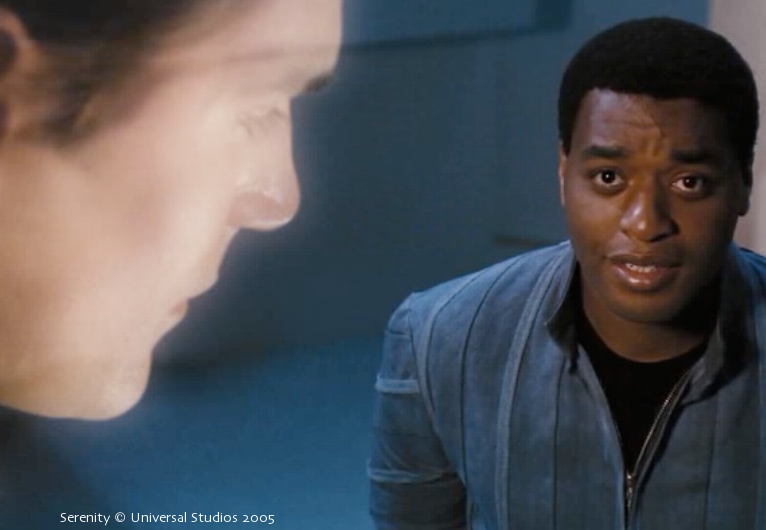
At the beginning of the science-fiction film Serenity, the Operative scans through security footage of Simon Tam breaking his sister, River, out of a government-run facility that has been conducting torturous experiments on River’s brain. The doctor who runs the facility tells the Operative that it was “madness” for Simon Tam to give up his own brilliant future in medicine in order to save his sister. “Madness?” the Operative replies. “Have you looked at this scan carefully, Doctor? At [Simon Tam’s] face? It’s love, in point of fact. Something a good deal more dangerous.” It’s love, in point of fact.

It’s love, in point of fact, that forms this wonderful community, which cares for those both within and without our little band of pilgrims. Some would say this is madness rather than love, asserting that maintaining a purely self-interested motivation for action is the only safe and sane way to live.

It’s love, in point of fact, that brings this wonderful community here today to worship a God we’ve never seen with our eyes nor heard with our ears nor touched with our fingers. Some would say this is madness rather than love, asserting that only what we can prove and quantify and predict are real.

And it’s love, in point of fact, that forms this wonderful community to worship an unseen God who reveals God’s personhood as threefold, as Father, Son, and Holy Spirit. Some would say this is madness rather than love, asserting that the Trinity is a needless complication of the already tenuous and rather dodgy business about God.

Some would say all this is madness, but it’s love, in point of fact. Let’s take a look at each of these three – community, belief in God, and belief in God as a Trinity of persons. We’ll look at them in the opposite order, so we’ll start before the beginning.

You see, if we start at the beginning, we’ve already arrived on the scene too late, as our lesson from Proverbs does today. Proverbs’ personification of Wisdom tells us, “The Lord created me at the beginning of his work, the first of his acts of long ago. Ages ago I was set up, at the first, before the beginning of the earth.” Wisdom may have been created before the earth, but Wisdom tells us that the Lord still created her. This is far too late to begin our discussion of the Trinity. Too even grasp the edge of the expanse of the majesty of the Trinity, we must cast our imaginations back to before there was even a concept known as “before.” You with me so far? Good.

In the First Letter of John, the writer makes the sweeping statement: “God is love.” If nothing besides God existed before the beginning, how did this love manifest? If there was no Creation to fill the role of the Beloved, then how could God be “love?” At first the answer seems rather narcissistic: if there was nothing else to love, then God loved God. But we can’t stop there because true love always manifests as a relationship. In our futile attempt to find the right word to name God, we latch on to relational language and call God “Father.” This sets up one side of a loving relationship, that of parent to child.

But the relationship is incomplete without that second person. And so we also call God “Son” to acknowledge the complete relationship between loving parent and beloved child. In the Gospel according to John, Jesus says that God “loved me before the foundation of the world.” This love between parent and child is so palpable that the love itself is the third member of the Trinity, which we experience as the Holy Spirit. Indeed, Paul tells the church in Rome that “God’s love has been poured into our hearts through the Holy Spirit that has been given to us.”

So this loving relationship between parent and child existed before anything else, including the concept of “before.” Nothing existed that could substitute for or diminish the relationship. The love was pure, perfect, unsullied by deficiencies such as lust or anger or apathy or dominance. In fact, the perfection of the relationship meant that, while there was a Trinity of persons, a Unity of being was the ultimate reality. This Unity of being was the home in which the three persons dwelt: the Parent, the Child, and the Love between them.

Now, I’ve been speaking in the past tense for the last few minutes. Of course, because all this happened before there was a “before,” there was no such thing as the “past” or the “future.” There was only the eternal present in which the perfect Love between Parent and Child manifested in the perfect Unity of being. Before the beginning was this ultimate reality of God, of love, of home.

Then came “In the beginning,” and suddenly there was a time known as “before.” God breathed the wind of God’s Holy Spirit over the face of the deep. God spoke the Word of God, through which all creation came into being. The Trinity, still loving itself into eternally perfect relationship, created the heavens and the earth, thus generating an “other” to bring into that loving relationship, that home that is God. This Creation is not God because God made it, just as God made Wisdom in today’s reading from Proverbs.

Everything that God creates exists in Space and Time, which are simply two more things that God created. Right now, we exist in the space that is this beautiful sanctuary. We don’t exist on your sailboats or sitting in the bleachers at this afternoon’s Red Sox game. And for the last seven minutes, we’ve existed in the time in which I’ve been speaking. Sad to say, we can’t move backward in time and choose not to come to church since the sermon will be really confusing. But because God created Space and Time, God exists outside of these constraints. However, since God loves this little universe of God’s making, God continues to move around and throughout and within it. Truly, God loved this little universe so much, that God the loving parent gave to Creation God’s beloved child.

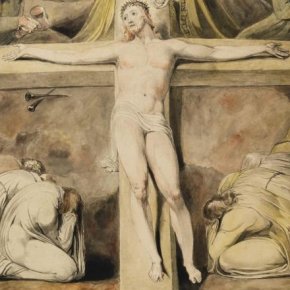
This beloved child, this Word made flesh came to our little planet as a baby who grew up to be a man who said and did such wonderful things and who taught us about God’s love for all Creation and who expanded our hearts and minds so they could contain such wonderful thoughts and who was killed because of his vision of acceptance and love and who rose miraculously from the dead and who ascended once again to exist in the eternally perfect relationship with God and who showed us the way home to this relationship.

After Jesus Christ ascended, he sent the Holy Spirit to us, the same wind of God that swept across the face of the deep at the moment of Creation. Through the Holy Spirit, God continues to pour God’s love into our hearts so that they can expand to hold the Truth of Jesus’ message of hospitality, generosity, and service. Each member of the Trinity moves in our lives, a family perfectly unified as One, as One who yearns to bring us back home.

Far from being some obscure, antiquated doctrine, the Trinity permeates existence today as it always has even before anything else existed. The Trinity loves itself into eternally perfect relationship, which makes forming loving relationships in our own lives the best way to glorify God. When we come together in this wonderful, loving community to worship God, we participate in the life of the Trinity. When we share the body and blood of Christ, we participate in the life of the Trinity. When we go out into the world in the power of the Holy Spirit to love and serve and find God in those we meet, we participate in the life of the Trinity. This community is home – not a perfect home like the Trinity is unto itself – but a good home made by fallible humans doing our best to love one another.

At the end of the film Serenity, the captain of the small spacecraft finds River sitting in the copilot’s chair, while rain lashes the cockpit’s windows. “But [flyin’] ain’t all buttons and charts,” Malcom Reynolds tells River. “You know what the first rule of flyin’ is? …Love. You can learn all the math in the ‘Verse, but you take a boat in the air that you don’t love, she’ll shake you off just as sure as a turn in the worlds. Love keeps her in the air when she oughta fall down, tells ya she’s hurtin’ ‘fore she keens. Makes her a home.”

The majesty of the Trinity is that God is a perfect home unto God. And God invites us and everyone and all Creation into that home. What makes God a home for us? It’s love, in point of fact.

Seeing gasoline rainbows

The following post appeared Tuesday, February 2nd on Episcopalcafe.com, a website to which I am a monthly contributor. Check it out here or read it below.

* * *

Sometimes, I am too young to hear Jesus’ words in the Gospel. Or too old. Or too naïve. Or too refined. Often I wonder if God is holding a particular set of words in reserve for a particular time in my life — when I need those words I will finally hear them. Or perhaps I already have, and they have settled into the bedrock of my faith.

The words of Jesus are beautiful and dynamic. They grow in depth of meaning as I grow in depth of experience, emotion, and faith. Many of Jesus’ words mean something new to the disciples after the resurrection because the disciples are different after the resurrection. Likewise, the words of Jesus are the same, the chapters and verses are the same, but I am different every time I read them. In the novel, The Catcher in the Rye, Holden Caulfield says a similar thing about the natural history museum:

The best thing, though, in that museum was that everything always stayed right where it was. Nobody’d move. You could go there a hundred thousand times, and that Eskimo would still be just finishing catching those two fish, the birds would still be on their way south, the deers would still be drinking out of that water hole…Nobody’d be different. The only thing that would be different would be you. Not that you’d be so much older or anything. It wouldn’t be that, exactly. You’d just be different, that’s all. You’d have an overcoat on this time…Or you’d heard your mother and father having a terrific fight in the bathroom. Or you’d just passed by one of those puddles in the street with gasoline rainbows in them. I mean you’d be different in some way – I can’t explain what I mean.

Both small differences in me from day to day and large changes in me from year to year can affect my reading of scripture and my encountering the words of Jesus. The climactic change in the lives of the disciples was the resurrection; for me, the changes tend to be small, the differences subtle. But a new encounter with Christ can erupt from even the smallest change, the subtlest difference. When I open myself up to seeing gasoline rainbows, when I realize I am different than I was before, I discover the power of the words of Christ working within me.

In a recent bout of nostalgia, I read some of my old writings and found that I had discussed the same verses on three occasions. After he washes the disciples’ feet, Jesus says, “I give you a new commandment, that you love one another. Just as I have loved you, you also should love one another. By this everyone will know that you are my disciples, if you have love for one another” (John 13:34-35). The words were the same each time, but I was different. Here’s what I mean.

It’s May 9, 2004, and Easter season blooms on the domain of Sewanee. I’m a junior in college. I’m two or three steps into the exhaustive process towards ordination. Classes are drawing to an end; exams are approaching. With flagging energy, I am writing lectionary-based reflections on xanga.com (before people ever used the word “blog”). And Jesus’ words encounter me:

“Wow. [Jesus] could not have put it more succinctly, or more beautifully. It does not take mighty acts or wondrous miracles to show people that we are followers of Christ. Just love. But I would argue that love is a mighty act, it is a miracle. Loving with the love Christ taught us – the only true love – is more powerful than anything. […] When we love with the love Christ taught us, we bring Christ to others. This love is powerful, transformative, life-changing, irresistible. Paul tells in his letter to the Romans that nothing can separate us from it. And it is our duty, and it should be our joy, to spread this love to others.”

It’s March 7, 2005, and fog rolls into the domain along with Lent. I’m a senior in college. I’m a postulant for Holy Orders, and I’m waiting for my bishop’s decision about sending me to seminary next school year. I’ve broken John’s Gospel into forty passages, one reflection per day for my Lenten discipline. And Jesus’ same words encounter me again:

“This is at the heart of what it means to be a Christian – to love one another as Christ loves us. We are capable of love because God loves us. Indeed, Paul tells us, ‘God is love.’ So how do we love? I think that is an impossible question to answer succinctly. In a past reflection, I called love the ‘conscious or unconscious search for God in other creatures.’ Searching for God means searching for all that is good, right, true, and graceful about another. However, this does not mean looking past all the other stuff. When we love truly, we see the good and the bad and continue to be in relationship. Contact (spiritual, emotional, &c.) is essential for love – only by staying in contact with God and others can we feel the love that purges our iniquities from us.”

It’s March 20, 2008, and Maundy Thursday comes impossibly early this year. I’m a senior in seminary. I’m a new deacon in the church, and I’m preaching at my field education parish. But the flu keelhauls me for five days, the middle of which is Palm Sunday. Being ill is all I can think about, and Jesus’ words encounter me a third time through that illness.

“Life is only worth living when it can be shared with others. This sharing is another word for love. And love shatters the illusion of self-sufficiency. When the flu knocked me out, my friends served me. I had no choice but to let them serve me because I could not serve myself. And I am better for it. They showed their love for me by bringing me medicine and food. In their act of loving service, they washed my feet. I have a share with them, and we all have a share with Jesus Christ. We are his disciples because we have love for one another. There is no such thing as self-sufficiency. An inability to accept the service of others masquerades as self-sufficiency. But this masquerade is a dismal half-life. Christ came that we may have life, and have it in abundance. Washing each other’s feet, serving one another, and loving each other with the love of God brings this full, abundant life in Christ.”

It’s January 26, 2010, and I’m seeing through the eyes of my old selves. On each day when I read those verses from the Gospel according to John, Jesus encountered me with the same words. And each time, Jesus used my gasoline rainbows to transform me into a new vessel for those words. Over the years, the same words have helped me change into the new person I am continually becoming.

I invite you to look for the gasoline rainbows in your life. You are a new person since you last picked up the Bible. How are you different from the last time you read a particular passage of scripture? What is new about you? How have Jesus’ words made you new? What are your gasoline rainbows?

Love gets its uniform dirty

Last post, I began with an illustration from The Princess Bride, and it seems once you get me going, I have trouble stopping. Here’s another one. At the beginning of the film, Buttercup commands the farm boy, Westley, to do several menial tasks – polish her horse’s saddle, fill buckets with water, fetch a pitcher. Each time, he responds, “As you wish.” In time, Buttercup realizes that “As you wish” is Westley’s way of saying “I love you.” This discovery, of course, leads to a sunset kiss, a leave-taking to seek fortune across the sea, a supposed death, and (eventually) a harrowing reunion, a second separation, another supposed death, a rescue, and (finally) an escape together from the homicidal schemes of the evil prince.

“As you wish,” says Westley before doing Buttercup’s bidding. Too remove any mystery from where this post is going, let me put it bluntly: his actions display his love. He serves Buttercup, and the love that prompts this service stirs in her, as well, though the words “I love you” are never uttered.

You see, saying “I love you” is all too easy – just three little monosyllables. Subject, verb, object. Meaning it is the hard part. I could say, “I’m going to eat eighty-seven hotdogs in twenty minutes,” but (unless I conveniently morph into a hundred pound Japanese man) there’s no way I mean it. But you could drive one of those Wide-Load trailers with half a mobile home on it through the gap between what we say and what we mean.

Too often, the abused wife returns to her husband because “he says he loves me.” Too often, the college freshman wakes up crying the next morning, after being duped by “I love you.” Too often, “I love you” hurts more than it heals. The abusive husband and the manipulative scumbag weaponize the phrase, with no thought to its destructive consequences and their own dormant culpability.

This is where action comes in. This is where service separates truth from manipulation. You may be tempted to say that action is needed to prove that a spoken “I love you” is real. (If this were the case, there would still be myriad jousting tournaments throughout Christendom.*) Rather, active service is a spontaneous symptom of love, and one that often removes the necessity of speaking the words aloud.

Note the dirt stains on Dustin Pedroia, reigning AL MVP.

Loving and serving – we really mustn’t separate the two. Love expresses itself not in poetic protestations, but in holding the beloved’s hair back when she’s bent over the toilet with stomach flu. Love waits all night in the hospital room, visits the prisoner, builds affordable housing, donates mac & cheese. Love gets its uniform dirty.**

The Baptismal Covenant is the Episcopal playbook for turning love into action. One of the promises echoes Jesus’ great commandment: “Will you seek and serve Christ in all persons, loving your neighbor as yourself?”

Will you serve? I will, with God’s help. How will you serve?

Will you love? I will, with God’s help. What will your love impel you to do?

God has given gifts to each of us so that we might enrich the lives of those around us. The ability to love is one such gift. The desire to serve is another. Paired with these gifts are those sets of talents unique to each one of us. When we combine our unique giftedness into that sacred body of which Christ is the head, there are no limits to what we can accomplish.

On Sunday morning, God nourishes us when we share the body and blood of Christ. Then God orients us toward the door at the back of the church and the world waiting beyond. We pray, “And now, Father, send us out to do the work you have given us to do, to love and serve you as faithful witnesses of Christ our Lord.” God sends us out to love and to serve. I pray that we can, with God’s help, respond, “As you wish.”

Footnotes

* I’m sure we could come up with some modern analogs. However, I beg you to concede the point.

** Have you ever noticed that there are certain baseball players who, no matter what, end the game with grass and dirt stains all over their uniforms?