Christ’s Own

(Sermon for Sunday, October 2, 2011 || Proper 22A || Philippians 3:4b-14)
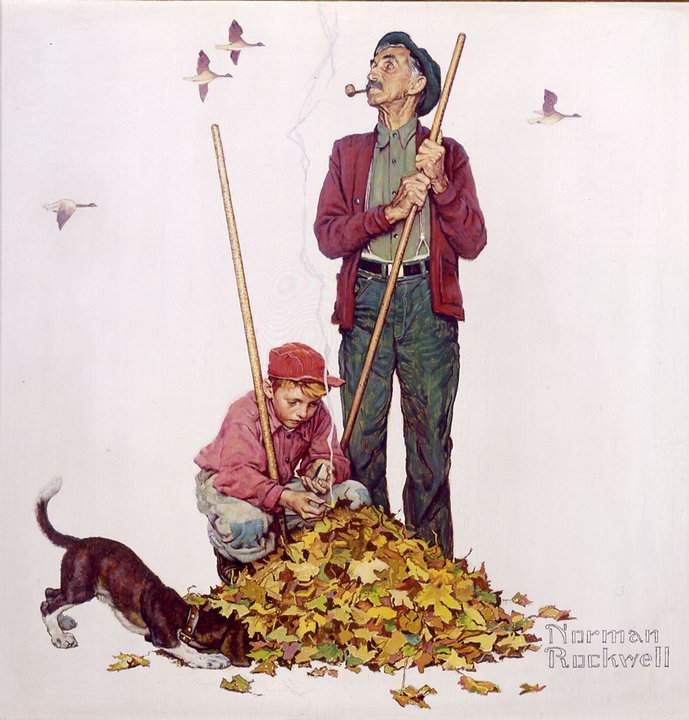
My grandfather, Roy Thomas, went into hospice twelve days ago, after several difficult weeks in the hospital. Less than twenty-four hours later, he passed away due to complications from being alive for more than nine decades. I awoke to the phone ringing at quarter to six in the morning, and I knew before answering what the news would be. Now, my grandfather and I were never close. There are no pictures of him teaching me how to fly fish or taking me to the ballgame or riding a tractor with me perched on his lap. There was never a Norman Rockwell moment in our relationship. He sent me a card each birthday, and I saw him every other year, give or take.

So, when I broke down weeping in my office a few hours after I received the call from my father, I was taken completely by surprise. Where were those tears coming from? How could the loss of someone, with whom I had but a passing relationship, hit me so hard in my gut? These were the questions I was asking myself as I wiped the tears away. I felt a bit silly, crying so uncontrollably when I was sure I was just fine, thank you very much. But perhaps, more fitting questions ask exactly the opposite. How could I be surprised that I felt such tear-stained grief over the loss of my own grandfather, no matter the state of our connection? How could I possibly think that the loss of a member of my own family wouldn’t hit me so hard in my gut?

The concept of “loss” is tricky thing. The overriding fact of earthly life is that one day – perhaps not today or tomorrow, but one day – we will lose our earthly lives. Everyone dies. There are no exceptions. We have thousands upon thousands of years of data backing up this reality. And yet, we train ourselves to ignore this overriding fact. We assume that death is something that happens to other people – fuzzy, nebulous people on the news and in the obituaries. Not the people we love. Not the people close to us.

But then a relative develops an aggressive cancer. Or a friend flips his SUV. Or a grandparent goes into hospice. And the illusion that loss only happens to other people shatters. The overriding fact that earthly life always ends sneaks up and surprises us, even though this fact is enmeshed in the very fabric of existence.

And death isn’t the only kind of loss we encounter. We confront loss on a daily basis, and still we have tremendous difficulty dealing. There is the loss of autonomy when others make decisions for us. There is the loss of relationships when we part ways with those who have made impacts on our lives. There is the loss of material possessions, the loss of health, the loss of trust, the loss of baseball games (sorry, fellow Sox fans). There is even the loss of loss, which is the grief that happens in response to you realizing that you are no longer grieving.

With loss surrounding us all the time, you’d think we’d have developed ways to deal that didn’t include various forms of denial and willful ignorance. But more often than not, we ignore the potential for loss until the loss is right in front of us hitting us in the gut.

And this willful ignorance is what made me read today’s lesson from Paul’s letter to the Philippians over and over again. Paul writes: “Yet whatever gains I had, these I have come to regard as loss because of Christ. More than that, I regard everything as loss because of the surpassing value of knowing Christ Jesus my Lord. For [Christ’s] sake I have suffered the loss of all things.”

Somehow, Paul’s relationship with Jesus Christ has allowed Paul to confront the reality of loss head on, well before any sort of loss has a chance to sneak up and surprise him. How does Paul do this? Let’s take a look. Can we do the same? Yes, I think we can.

According to Philippians, Paul values knowing Christ Jesus above all else. Nothing even comes close. The value of being in relationship with Jesus surpasses everything. And because knowing Jesus is so incalculably valuable, everything else in Paul’s life seems utterly insignificant. The gulf between what was important before meeting Christ and what is important now that he has met Christ is so wide that Paul can barely see the stuff of his old life shrinking in the distance.

And, therefore, he regards everything as loss. Based on Paul’s own words and my interpretation of them a moment ago, we might come away with the impression that nothing besides being in relationship with Christ should matter, that we should ignore everything that isn’t Jesus. This is the interpretation favored by hermits and ascetics that got away from everything to focus on God. However, I’m not convinced that that’s what Paul had in mind. We must keep going, because so far we’ve only gotten through the first half of Paul’s discussion.

Because Paul values his relationship with Christ above all else, he no longer attempts to cling to the rest of his life. He lets go of everything – his relationships, his possessions, his fears, his illusions. But all of this that Paul regards as loss is not lost. Paul does not cast everything into the void. Rather, he gives everything away to Christ. He gives everything to Jesus, and in doing so, Paul finds that everything he has regarded as loss was always God’s in the first place. Even Paul himself.

Paul relates this comforting reality to the Philippians: “Not that I have already obtained [the resurrection] or have already reached the goal; but I press on to make it my own, because Christ Jesus has made me his own.” Christ Jesus has made me his own. These words are the crux of Paul’s ability to deal with loss. The surpassing value of knowing Christ compels Paul to give everything up to Jesus and thus find himself at a loss. But in the act of giving away everything to Jesus, Paul discovers that Jesus has taken even more. Jesus has taken Paul. Jesus has made Paul his own, along with all that stuff that Paul gave him.

And Christ has made us his own, as well. When we enter into relationship with Christ, the surpassing value of that relationship makes everything else seem entirely insignificant. This seeming insignificance allows us to release our stranglehold on everything that we have been putting in place of a relationship with Christ. And when we release our grip and give away everything to Christ, we will find that Christ has already obtained us in the bargain.

Because Christ Jesus has made us his own, he has empowered us to give to him everything and everyone that we possibly could lose before the loss sneaks up and surprises us. Does this make grieving un-Christian? Of course not. Rather, our grief is one of the things that Christ invites us to give over, so that God might enfold us in our hour of need.

When my grandfather passed away eleven days ago, I was not prepared for the sense of loss that would hit me. Perhaps, this profound loss of someone I didn’t even realize I was clinging to has opened my eyes to truth that I still have plenty to give away to Christ. I would hazard to bet that we all continue to cling to things that have never really been ours to cling to. The good news is this: Any loss, any gain, any grief, any joy, any challenge, any victory is ours to share with Jesus Christ because Christ has made us his own.
462 Years

(Sermon for Sunday, January 30, 2011 || Epiphany 4, Year A || Matthew 5:1-12)

I preached this sermon on a Sunday in which the church had Morning Prayer for the first half of the service. We timed the service a little long, so my rector encouraged me to shorten the sermon, hence this 900 word piece rather than my normal 1200-1400 word ones.)

Four hundred and sixty-two years ago, the first edition of a certain book went to the printing press. The year was 1549, the author was Archbishop Thomas Cranmer, and the book was the Book of Common Prayer. In this original Book of Common Prayer (or BCP for short), Cranmer compiled, crafted, codified, and composed the prayers that became the central structure of a new expression of Christianity known as Anglicanism. A decade and a half before this publication, the King of England, Henry VIII, had officially broken away from the Roman Catholic Church. However, in the years immediately following the split, very little changed about the English church besides the pope no longer being the supreme earthly authority. Two years after Henry’s death, Archbishop Cranmer published the first BCP and ushered in the unique expression of Christianity that we at this church continue to practice today.

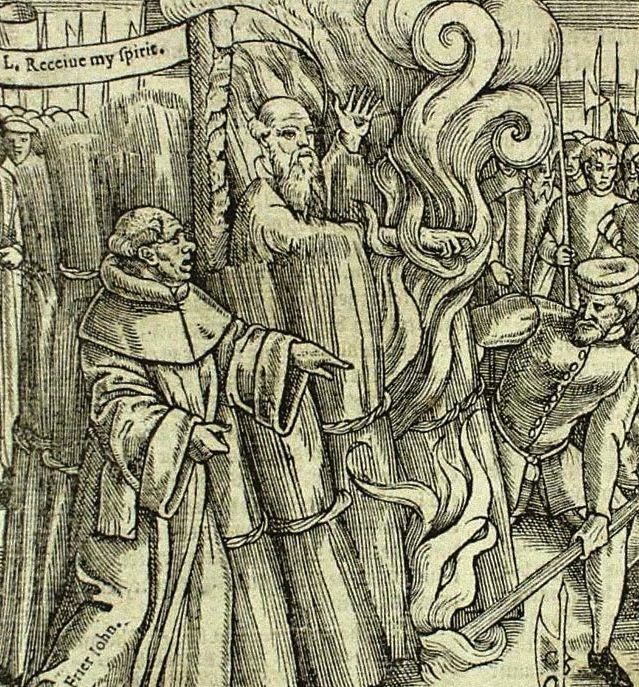
Queen Mary (Henry's daughter) didn't like Cranmer much. She had him burned at the stake.

This unique expression of following the way of Jesus Christ creates a structure, a framework of prayer, around which we organize our lives. Cranmer borrowed from the monastic example when he created this framework. Benedictine monks framed their days around an eightfold worship cycle; they prayed formally in church with one another about once every three hours. Cranmer wanted all people, not just monks, to frame their days with prayer, so he took the monastic practice and synthesized the eightfold structure into a twofold one. In his new structure, people prayed formally in the morning, then they went to work, and then they prayed formally again in the evening. Thus, the uniquely Anglican worship experience of Morning and Evening Prayer was born.

Every morning and every evening to this very day, Anglicans around the world have gathered to observe these two rituals. During them, we sing psalms and songs of praise to God. We read scripture. We pray and confess our sins. I would be willing to bet that, thanks to time zones, there is a service of Morning or Evening Prayer happening at every hour of every day all year long. When Cranmer developed this dual service, he did so in order to give his flock a method by which to order their lives around prayer and praise to God. This morning, we are participating in a cycle of worship that envelopes the whole world in constant prayer, a prayer that runs all the way back 462 years.

Whether or not we personally practice Morning and Evening prayer ourselves, the example, which Cranmer set, still guides us. Episcopalians prize the order behind our worship because the structure gives us a way to organize our lives around the things that are most important. The framework of prayer allows us to participate in God’s movement not just when we remember to or when we need to, but at all times.

When we adopt this structure and begin to practice our awareness of God’s presence, we can also begin to access another structure, a framework that lies beneath the one we normally witness with our eyes. This deeper structure is the one that Jesus speaks about to his disciples in this morning’s Gospel reading. The beatitudes, or statements of blessing, give us a glimpse of the deeper framework of reality that exists beneath the misplaced priorities and distorted vision of the world at large. This deeper reality is the one that God infused into creation from the beginning, a reality in which communion overrides isolation, peace quells domination, and love bests fear. Of course, humanity has ignored this deeper reality from the word go, preferring instead to set ourselves up as petty lords of our own destinies, oblivious to the fact that we have never really been in control of anything. Humanity’s greatest sin throughout history has always been setting up structures and systems that bury the deeper reality of God’s presence in all and through all. The ordered life of prayer gives us access to this reality.

Jesus’ beatitudes show us how the deeper structure of creation works. The poor in spirit, the grieving, and the persecuted are blessed. The meek, the merciful, the pure in heart, and those passionate about peace and righteousness are blessed. These are not mere moral platitudes spoken to console a downtrodden people. They are not future promises that will be fulfilled someday in heaven if you can just endure long enough to get there. They are not hopes for what could be coming down the road. These statements of blessing are ways in which the deeper reality of God’s presence breaks through the distortions of the world – then and there on the mountainside with Jesus and here and now in our midst.

When we participate in an ordered life of prayer like the one that Archbishop Cranmer developed, we practice the presence of God every day, not just when we remember to or need to, but every day. This practice is a spiritual workout, which strengthens not our muscles, but our vision and our ability to respond to God’s call to serve. When we take on the framework of daily prayer, we train ourselves to see the deeper reality of God’s movement, to which the beatitudes point us. And then we leave this room, our spiritual gym, and we go out into the world to begin uncovering that reality and showing that God’s presence is, indeed, here.

The Question at the Top of Page 303

The following post appeared Sunday, September 19th on Episcopalcafe.com, a website to which I am a monthly contributor. Check it out here or read it below.

* * *

As the church in which I am blessed to serve God prepares for a new adult Christian formation program, I have found myself thinking about baptism quite a bit lately. And I have also found myself jotting down notes about several pieces of the baptismal services. A few of these notes, I share with you below.

If you were baptized in an Episcopal Church after 1979, either you or your parents and godparents answered a series of six questions. The last of which reads, “Do you promise to follow and obey [Jesus Christ] as your Lord?” Whether or not you were baptized under this particular liturgy, this is the fundamental question at the heart of the Christian faith. The answer, “I do,” is simply two little words, but these two words really aren’t the answer at all. The true answer to this question is the manner in which we choose to lead our lives in the wake of such a powerful promise. Let’s take a moment to break down this question to see what we are really getting ourselves into.

Do you promise…
Girls link pinkies. Guys spit on their hands and shake. Car dealers sell extended warranties. Banks make you sign the mortgage paperwork a dozen times. Each of these signals a promise: the secret is safe, the ex-girlfriend is off-limits, the car will be repaired free of charge, and the loan will be repaid. The act of making the promise itself means little compared to the continuous act of fulfilling the promise. Ex-friendships, fine print wielding salesmen, and foreclosures point to the fact that many promises do not last.

But there happens to be a significant difference between these promises and the one we make at baptism. In most promises, the other entity entering the trust is another human being—another fallible, flawed human being. When we promise to follow and obey Jesus Christ as our Lord, we make our promise to God. And God never breaks trust with us. So our promise to God follows God’s eternal promise to us to be faithful always, to be with us always, just to be…always.

Thus, our fulfillment of the promise always happens in response to God’s steadfastness. When we break the promise, it does not cease to hold sway because God continues to fulfill it. And God invites us to renew the promise again and again and again.

…to follow…
In the Gospel according to Matthew, the first words that Jesus says to Peter and Andrew, his prospective disciples, are “Follow me” (Matt. 4:18). In the Gospel according to John, the last words that Jesus says to Peter are (you guessed it) “Follow me” (John 21:22). Therefore, considering how the compilers of the New Testament chose to lay out the Gospel, the first and last words out of Jesus’ mouth are “Follow me.” What does it mean to follow Jesus? Like the main promise we are discussing, this question takes a lifetime to answer; but here are a few quick observations.

To follow means to come after or travel behind. You do this most often when you don’t know the way to, say, the movie theater, and the friends in the car ahead of you lead you there. Our Christian faith tells us that Jesus walks with us, leading us on right paths through our lives. He is “the way, the truth, and the life” (John 14:6). In Greek, the “way” is literally the “road” on which we walk down. So not only is Jesus the guide for our feet; he paved the road on which our feet tread. The Letter to the Hebrews calls Jesus the “pioneer” of our faith: he is the trailblazer. He invites us to walk the difficult path he first walked, a path full of both pain and joy (Hebrew 12:2).

To follow also means to learn by example. To quote a learned man at my parish, we are “apprentices” of Jesus Christ. During the Renaissance, master painters directed their students to copy their works of art in order to learn the craft. More often than not, these apprentice copies couldn’t compare to the master’s, but they still learned how to apply paint to canvas, and they learned well. Likewise, we will never be able to reach the full example of Jesus Christ, but this shouldn’t stop us from following him just the same.

…and obey…
Obedience is a tricky thing because it involves something that many folks aren’t all that good at: listening. To obey means to listen carefully and then to act. Obedience to God begins with our intentional effort to discern God’s will in our lives and continues with our reliance on God to live out that will. The good news is that when we choose to obey God, God has already given us the gifts we need to accomplish that will. (Of course, this doesn’t mean the act of obeying will be easy.)

When Jesus commands the paralyzed man to stand up, take his mat, and walk, the man gets up immediately (John 5:8-9). Jesus speaks no word of healing at all. Rather, the act of healing is subsumed in the command. Jesus gives the man the gift of healing in order that the man can obey his command. Likewise, we discover new gifts when we listen for and obey God’s will in our lives.

[Jesus Christ] as your Lord…
In our Christian parlance, we call Jesus many things: friend, brother, teacher, savior. But in this question, we call Jesus “Lord.” We promise to follow Jesus as our “Lord.” How does “Lord” differ from other titles for Jesus? Leaving aside the masculine nature of the title, a lord is someone in a position of authority and respect. In the Gospel, the Greek word for “lord” (kyrie) can also be translated as “sir.” In the military, a person you call “sir” is someone who has the authority to command you to do something.

Likewise, when we promise to follow and obey Jesus as our Lord, we acknowledge that Jesus has the authority to direct our lives. This authority comes from the fact that God is the author of each of us. God pens each day in the books of our lives; sometimes we are the protagonists and sometimes we are antagonists of our own stories. When we follow Jesus as our author, as our Lord, we consciously take on the protagonist role. To change the metaphor, we resonate with God’s directing creativity in our lives. We are in tune with God.

Of course, these few notes simply scratch the surface of this immense question. I wonder how we each live out this promise in our everyday lives? I wonder how the promises we make with other people reflect the promises we make to God?  I wonder how readily we allow God to fulfill God’s promises, which, in the end, allow us to fulfill ours?

Food (namely herbs and stewed rabbit) for the journey

The following post appeared Wednesday, December 9th on Episcopalcafe.com, a website to which I am a monthly contributor. Check it out here or read it below.

* * *

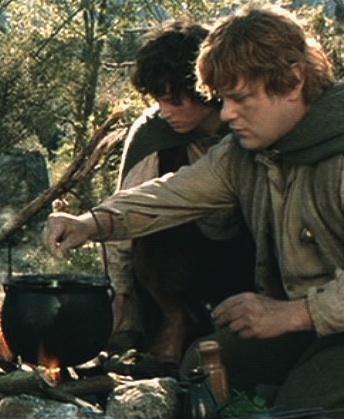
The hobbits Frodo Baggins and Samwise Gamgee arrive in a heather-strewn woodland between the River Anduin and the mountains that border the dreaded land of Mordor. After some walking around and griping about the knavish Gollum, who is their deranged hostage and guide, they sit down for a meal, as hobbits often do. They eat herbs and stewed rabbit and then…

Frodo (Elijah Wood) and Sam (Sean Astin) make stewed rabbit in The Two Towers (2002)

…I have no idea what happens next.

I’m twelve years old, and I have made it nearly two-thirds of the way through The Lord of the Rings. But I can no longer bear it, and I shelve the book. It’s just so boring. All they do is walk! They start in one place, walk for a bit, meet someone and chat, and then walk some more! I just want them to get somewhere! I want to yell, “Get to your destination, Frodo – don’t stop to eat herbs and stewed rabbit, which the author has described in painstaking detail! Just get to the mountain and be done with the ring! Enough of this walking…”

A year later, I’m thirteen (a much wiser and more mature age), and once again I pick up The Lord of the Rings. Maybe this year, I’ll finish it. I begin at the beginning, and they walk and meet folks and chat and run away from enemies and Frodo and Samwise reach the heather-strewn woodland and eat herbs and stewed rabbit and then…

…I have no idea what happens next.

My wisdom and maturity are no match for the walking. Again, I stop reading. The quest is just too long and arduous and their destination is still on the other side of the mountains and several hundred pages away.

A year later, I’m fourteen, and I pick up The Lord of the Rings again. On page 641, Frodo and Samwise sit down for a dinner of herbs and stewed rabbit and then…

…I keep reading. They find themselves in the middle of an ambush, Sam sees an oliphaunt, the hobbits are captured by people who are supposed to be on their side, and the story goes on and on. A few days later, I finish it. And I’ve read it at least eight more times since.

Finally, at fourteen, I could appreciate the journey, and let the destination take care of itself. Tolkien understood that a destination is more than a physical place. A destination is the culmination of all the shaping events of the journey that brings you to that ultimate location.

Every year, after the tryptophan has worn off, we begin just such a journey in our walks with God. While secular Christmas disgorges itself out of shipping containers every year the day after Thanksgiving, we have the opportunity to let Christmas happen only after the four weeks of Advent have run their course. Christmas is the destination. And Advent is about not arriving at your destination before you are shaped by the journey.

Have you ever had the soup du jour at a restaurant? It’s not some fancy French dish. It’s just the soup made for that particular day. Likewise, my journey happens every day. Every encounter, every decision, every road taken or not shapes me. The season of Advent gives me a dedicated four weeks to notice the shaping influence each day has on my journey with God.

On the first Sunday of Advent, we heard the psalmist pray, “ Show me your ways, O Lord, and teach me your paths…All the paths of the Lord are love and faithfulness” (25:3, 9). This Advent, I’m adopting this prayer because I’ve always had trouble not skipping to the end of the story. Every year of my childhood, I wanted to open the windows of my Advent calendar all at once. I just couldn’t wait to open tomorrow’s window tomorrow. Now, at twenty-six (a much wiser and more mature age) I pray for God to give me the patience to notice each day’s impact on my life. When I ask God to “teach me your paths,” I’m not hoping for some inside knowledge about the destination. I’m simply asking for guidance along the road.

Some time ago, I heard this illustration (the origin of which no longer resides in my brain). Have you ever noticed that headlights only show you thirty or forty yards ahead of your car on a dark night? But they still get you to your destination. Likewise, God teaches me God’s path even as I am struggling to stay on it. As I walk towards Christmas on this particular Advent journey, Christ walks a few steps ahead of me, illumining the road to his own nativity, to his own unique and wonderful expression of love and faithfulness.

Despite my opening description, my love for Tolkien’s works of fiction is deep and abiding. They taught me the lesson of Advent: don’t arrive at your destination before being shaped by the journey. I pray that, during this season of Advent, God teaches us God’s paths, which are love and faithfulness. And I pray that we may meet someday on the road, about which Tolkien’s Bilbo Baggins rhymes:

The Road goes ever on and on
Down from the door where it began.
Now far ahead the Road has gone,
And I must follow, if I can,
Pursuing it with weary feet,
Until it joins some larger way,
Where many paths and errands meet.
And whither then? I cannot say.

Total loss

On Sunday, I was driving home from a soccer tournament — a bit worse for wear and sore, but in the good way. We were losing light quickly as the game drew to a close, and by the time I was on the road, dusk had suddenly become full darkness. The darkness didn’t bother me, because I’ve driven back and forth on Route 9 dozens of times since I moved to West Virginia. Every time, I lament the fact that the the DOT hasn’t finished the bypass (and probably never will). On Sunday, my lamentation was justified.

A tenth of a second before the deer hit my car, I saw it flash in the headlights. I heard the impact before I felt it — the sound of someone beating the dust out of an oriental rug, except the rug was metal. The deer collided with the front, left edge of the car, and the force of the impact pushed me off the road. Pumping the brake, I drove through several lawns before coming to a halt. The deer skidded off in the other direction — a rag doll carcass — and came to rest on the shoulder on the far side of the road.

A sheriff’s deputy, who happened to be driving by a minute after the collision, stopped to help me. The driver’s door would not open, so I crawled out the passenger’s side. I was limping, but, I assured the deputy, the limp was a preexisting condition from the soccer tournament. He walked around the car, shining his flashlight and making official sounding grunts. Another officer unceremoniously dragged the deer fully off the road and left it there. I called Triple-A. An hour and fifteen minutes after the collision, a tow truck driver loaded up the car and took me home. Country music played on his radio.

The next day, I called the claims representative. He read through the online report I had filed when I got home the night before. “There’s a better than good chance that this will be a total loss,” he said. A total loss, he explained, happens when the cost of repair outstrips the value of the vehicle. If a total loss is filed, I’ll never see the car again. The insurance company will send me a check, less my deductible. “So take all your stuff out of the car and remove the license plate just in case,” he advised. Apparently, most deer strikes end in total losses. I’ll find out in the next few days.

The phrase “total loss” keeps ringing in my mind. I can’t help but think of Paul’s writing to the Philippians: “Yet whatever gains I had, these I have come to regard as loss because of Christ. More than that, I regard everything as loss because of the surpassing value of knowing Christ Jesus my Lord” (3:7-8). Paul is talking about his position before becoming a follower of Christ. He was a Pharisee, blameless under the law, a prime specimen of the people of Israel. And he gave it all up when the scales fell from his eyes after being struck blind on the road to Damascus.

I regard everything as loss because of the surpassing value of knowing Christ Jesus my Lord. Notice the use of the word “regard.” The surpassing nature of Christ reorients Paul’s perception of himself and the world. Jesus changes Paul’s attitude and outlook, in order that Paul might not mistake the insignificant for the consequential. The world around Paul has not changed, but he no longer views it as he once did.

This reorientation is such a wonderful part of being a follower of Christ. If we keep our eyes and hearts open long enough, we might just notice Jesus pointing us towards the right path, the most effective service, the best attitude. On Sunday, as the car came to a rest and my heart kept right on beating down Route 9, I found myself unexpectedly overcome by my own reoriented spirit. I might have adopted a why me, God? attitude. I might have raised my fist and cursed God’s apparent punitive capriciousness. But, by the grace of God I didn’t. I closed my eyes and thanked God that I was not injured. I thanked God that no one else was involved in the collision. I thanked God for the presence of the deputy.

It is so difficult, in a world that stumbles over itself attempting to remind us of the scarcity that supposedly dominates our lives, to notice Jesus reorienting us towards the abundance that marks the truth of our existence. But the surpassing knowledge of Jesus Christ opens our eyes to the beauty of this abundance. Everything else is loss. Total loss.

Note: I’m still dealing with the fact that I killed a deer. I’ve never been hunting, never shot a gun, and I never want to. I am aware that, as part of humanity, I am responsible for the deaths of countless innocent animals. I’m not sure what to do with this greater context. But the immediate incident keeps replaying in my mind. It’s just different because there’s blood and fur on the mangled hood of my car It’s different because I saw the deer alive one split second and utterly dead the next. I keep seeing it out of the corner of my eye. I keep seeing it tumble away, limbs flailing without purpose, glinting in the glow of my smashed headlight.

Kairos in an instantaneous world

Remember how Christmas Eve was always the longest day of the year? Technically, it is one of the shortest, but it felt so long. I remember planning a full day’s worth of activities (mostly of the building-with-Legos variety) just so the day would go by faster. Now, the clock on the wall had no idea it was Christmas Eve. The minutes ticked by as they normally do. But the anticipation of Christmas morning made me think the clock was conspiring against me.

watchIn Greek, there are two major words for time. The first is chronos, which tends to be the word used for the time of day, or clock time. The second is a special word. Kairos is the kind of time that starts an old Disney fairy tale movie, “Once upon a time.” This special sort of time is Christmas Eve time, expectant time, the kind of time in which promises exist. It is time mixed somehow with eternity, which still slips away but in no predictable way—time that will come when it needs to.

Put another way, chronos is soccer game time, which ticks away even when the ball is out of bounds or a player is injured. The referees add extra time to make up for that lost during the game, but it always continues to tick. Kairos, on the other hand, is baseball game time. There is no limit to how long a baseball game can last: innings take as long as they need to. Kairos is the kind of time the song from Rent talks about—it is measured in cups of coffee and report cards and sunsets and love.

When Jesus says to his brothers, “My time has not yet come,” he uses this special word. Within the Gospel, Jesus lives in kairos, which is understandable considering where he comes from. In my walk with Jesus, I find I have trouble living in this kind of time. Contemporary society jackhammers into me over and over again the supposed benefits of an instantaneous world. And there are definitely real benefits, don’t get me wrong. But 0.14 second Google searches and overnight FedEx and cholesterol reducing pills can blind me to the ultimate reality that most good things are worth waiting for, are worth working for, are worth anticipating.

Jesus’ statement, “My time has not yet come,” reminds me constantly that Jesus doesn’t work on my timetable. He doesn’t clock in and out, with hours well documented on a punch card. He doesn’t respond to my prayers like Google does to my searches. But he does call me to slow down and experience the kind of time measured by the sun’s slow movement across the sky. He does ask me to anticipate his movement in my life with all the fervor of my childhood Christmas Eves. And he does offer me the faith to know that all prayers are answered one way or another.

If you are like me and need help keeping in touch with kairos in our instantaneous world, then try this. Sit down and take several deep breaths. Close your eyes and turn your attention inward. Keep breathing slowly, deeply. Without using your hand, see if you can feel your heart beating against your chest. Feel it? Dull squeezes to the left of your sternum. Small thumps against your ribcage. TUB-thp, TUB-thp, TUB-thp. This is where the rhythm of Jesus’ time resides in us. This is kairos.

Proclaiming the mystery: John’s first five

The following post appeared Saturday, August 22nd on Episcopalcafe.com, a website to which I am now a monthly contributor. Check it out here or read it below.

* * *

The mystery section was on the back wall of the small independent bookshop at which I worked my last few years of high school. When a customer entered the store, her eyes would glance past the smaller shelving units and fix on the placards proudly bearing the word “MYSTERY.” The shelves containing the mystery section were taller and broader than those holding the other books, and I was the only employee tall enough to dust the top ones without a stepladder. Let’s just say that the manager loved mysteries, so we had a disproportionate number of them. We had humorous mysteries and thrillers, beach reads and stay-up-till-one-in-the-morning nail biters. In those books, a mystery was set forth: say, how did the killer manage to murder someone in a room locked from the inside? The plot revolved around the detective attempting to solve the puzzle. In the end, the detective figured out that the bell rope used to call for the maid was replaced with a poisonous snake, which somehow slithered unnoticed out of the room in the ensuing hubbub of discovering the body. Mystery solved. No more mystery.

The Gospel according to John begins with a mystery, but it is a mystery that is wholly different from the Whodunnits? on the back wall of the bookshop. The mystery that begins the Gospel cannot be solved, cannot be explained away. It can only be unapologetically presented and then unabashedly proclaimed.

rainbowTake a look at the first five verses that John gives us:In the beginning was the Word, and the Word was with God, and the Word was God. He was in the beginning with God. All things came into being through him, and without him, not one thing came into being. What has come into being in him was life, and the life was the light of all people. The light shines in the darkness, and the darkness did not overcome it. (1:1-5; NRSV)

Here John presents the mystery: somehow the Word (who we find out a few verses later becomes enfleshed in Jesus Christ) is in the beginning with God and is also God. Remember in Algebra class when you had to show your work to get full credit? Well, John skips down to the bottom of the page. There is no balancing of equations or solving for “x.” He states the mystery simply: in the beginning, the Word was with God and was God. This is frustrating at first because I’m conditioned to think that mysteries are all supposed to be like the ones on the back wall of the bookshop. I want to know how it’s possible and I won’t be satisfied until I figure it out and if I can’t figure it out then it must not be true.

But I take a deep breath and look at the words again. I read them slowly and speak them aloud. I notice that the rational part of me is sitting in the corner sulking because “with” and “was” should be mutually exclusive. But I find that the creative part of me sees past such mundane things as mutual exclusivity and begins to roll around in the muck of ambiguity. I squelch my toes in the mud, relishing the notion that God lives in a reality where choosing between alternatives is not the only viable option. Of course the Word can be both with God and was God! The limits of my language do not limit God, only my understanding of God. I realize my language skills are not up to the challenge of describing God. And my rational side joins my creative side in the muck of ambiguity because my rationality has been given the license to imagine.

In a few short phrases, John presents the mystery. Then, he deepens the mystery by retelling the story of creation. It’s no coincidence that John uses the same phrase that opens the book of Genesis: “In the beginning.” All things came into being through the Word who was with God and was God. My creative side connects with these verses because they are about creation. Life is created through him, and because I have been given the gift of creativity, I can sense in my gut or in my bones that the Creator is continuing to create me.

This creative force is the light that shines in the darkness. The darkness cannot comprehend or overcome or understand the light because the darkness has never been a part of creation. The darkness is just the absence of any created thing. It tries jealously to unmake created things but fails to triumph since God never stops creating or calling creation to God.*

In these first five verses, John locates us (“life,” “all people”) within the mystery of God and creation, and he presents the adversary of creation, namely darkness. We have the makings of an epic story here.** The seemingly out-of-place verses 6-8 help me realize my role in this story. The mystery has been presented, and now John the Baptizer steps onstage for a brief scene. He is a witness who testifies to the light. (The words “witness” and “testify” are from the same root in Greek; the English word “martyr” comes from it.) His proclamation points to the light, which is the Word made flesh, Jesus Christ. So too, my life, which has come into being through the Word, is meant to be a proclamation of the mystery of God and God’s movement in creation.

When I encounter these first few verses of the Fourth Gospel, I feel the enormity of the mystery of God surrounding me, and I rejoice that this mystery discloses itself in light and life and love. If I could explain the mystery, I would be in danger of explaining it away, of shelving it like the Whodunnits? on the back wall. The mystery transcends explanation. It is elusive, and at the same time intimate; it cannot be grasped, but it can be embraced. The intimacy and the embrace happen when the mystery touches the spark of creativity within me, spurring me to proclaim the Word made flesh, Jesus Christ. Life has come into being through the Word. And my life expands to every pocket and corner of my being when I live to proclaim this good news.

Footnotes

* My apologies for hurling this paragraph at you with no further comment. If it confused you at all, blame Karl Barth.

** I am using the word “story” to convey something that is important enough to be told and retold down through the centuries, something that is about God and about us and is a tale that is never quite finished being woven. Please do not take my use of the word in the sense of “it’s only a story.”

Be-ing

As I’ve mentioned before, I’ve been working on a Confirmation class recently, and the lessons keeping popping up here on the blog. Here’s 1000 words on theology, using three phrases from the Nicene Creed as a framework.

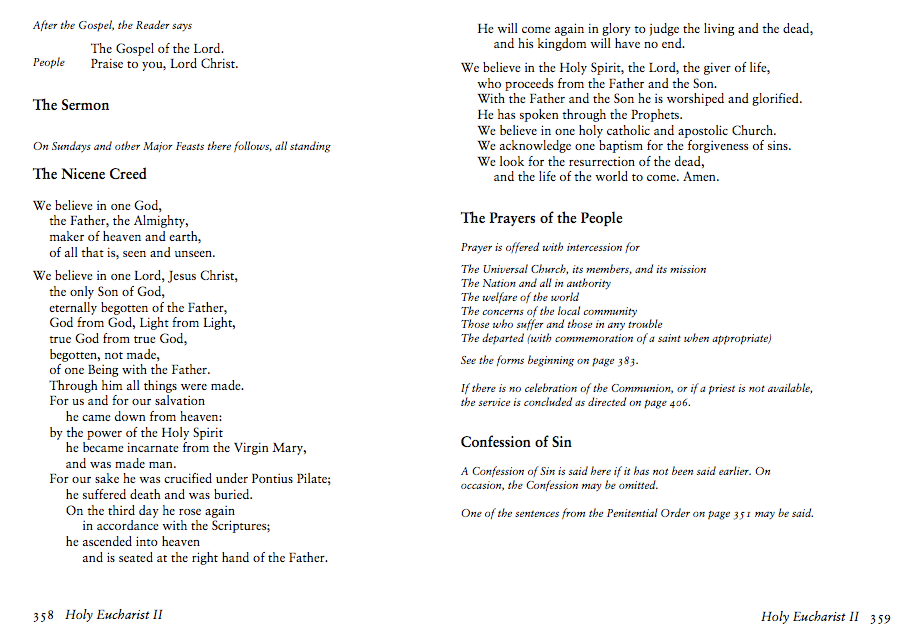
nicaea…of all that is, seen and unseen

What I’m about to write ignores the fact that the Nicene Creed was originally written in Greek and then translated into Latin and then translated into English. Don’t panic – the following is about the current English grammatical structure of the phrase, which is influenced by, but not chained to, the original language.

Do you see that little comma between the words “is” and “seen”? Yes? Good. Now, think back to all the times you’ve ever heard the Creed recited during church and ask yourself if anyone has ever acknowledged that comma. No? Didn’t think so. The sentence usually sounds like this: “…maker of heaven and earth, of all that-is-seen-and-unseen.” But the sentence actually reads: “…maker of heaven and earth, of all that is, [slight pause] seen and unseen.” I imagine you are now rolling your eyes at my disconcerting attention to inane details.

This detail may seem inane at first, but I assure you, it’s not. For now, let’s ignore the phrase “seen and unseen” because it gets entirely too much attention when Creed-speakers unwittingly barrel through the defenseless little comma. With what are we left? “Maker…of all that is.”

Maker…of all that is. This “is” is the most important linking verb in the history of linking verbs, and probably other verbs, as well. We believe that God made all that is. Put another way, we believe that God is the very ground of our “is-ness” – or, to use a not made-up word, our “being.” [Disclaimer: The rest of this section assumes the reader knows the unwieldy conjugation of the verb “to be.”] In Exodus 3, Moses asks God what God’s name is. God responds: “I AM WHO I AM.” This awkward English rendering of the Hebrew preserves the root of God’s divine name, which is the verb “to be” (hayah in Hebrew). When Moses asks God what God’s name is, God responds with something like, “I have being and I bestow being and that’s all you need to know.” Look at the word “being.” Now add a hyphen: be-ing. The noun “being” is disguised as a present participle verb, a verb of continuing action. This points to the eternal continuity and abiding presence of God, who is the very ground of be-ing.

All grammatical gymnastics aside, the point is this: God created all that is, and creation’s existence depends on God’s continuing presence. As small bits of that creation, we receive our be-ing, our identity, our life from the foundation of that be-ing, the Holy One we call God.

Through him all things were made

“We believe in one Lord, Jesus Christ… Through him all things were made.” Okay, since I failed to return to the original Greek in the last section, I feel I must make up for it. John begins his Gospel account with this poetry: “In the beginning was the Word, and the Word was with God, and the Word was God. He was in the beginning with God. All things came into being through him, and without him, not one thing came into being. What has come into being in him was life…”

You’ll notice that word be-ing from the last section crops up several times in just these few sentences. We said that God is the foundation for be-ing, and now we discover that the “Word” is responsible for translating that be-ing into life. Here’s the Greek bit.

The “Word” is the translation of the Greek word logos, from which dozens of English words take their root. Every time you see –ology at the end of a word (zoology, biology, epidemiology), that ending comes from the Greek logos. “Logic” also springs from this root. When something is “logical” it is ordered, it makes good sense. This is a good entrance into one understanding of logos. John says that the Word was in the beginning with God and through the Word all things were made. This “Word” is the “logic” behind creation, the “organizing principle” through which creation has come into being. In Genesis, God speaks creation into being (“Then God said, ‘Let there be light’; and there was light.”). God uses words to organize creation, and John identifies “The Word” as God the only Son, who is incarnate in Jesus Christ.

So, the “Word” is creation’s logic or organizing principle. Creation, therefore, is not haphazard or accidental. You might be tempted to ask a question about “Creationism vs. Evolution.” But the unhappy dichotomy between these two positions breaks down when we see creation as both organized and continuous. My college chaplain was fond of saying: “If God stopped speaking, the world would stop turning.” The implication is this: the “Word,” the logic of creation continues to underpin and give life to all that is.

…he became incarnate from the Virgin Mary and was made man

As I said above, John identifies “The Word” as God the only Son, who is incarnate in Jesus Christ. “Incarnate” means “become flesh” (the –carn in the word is the same root as in the word carnivore, “meat-eater”). John’s use of “Word” connects to a strain of thought coming out of the Hebrew Scriptures. The “word of God” appears whenever a prophet is granted a new prophecy (The word of God came to so-and-so…). The Hebrew word for “word” (davar) means much more than the stuffy English equivalent. We think of “word” as something on a piece of paper or something spoken aloud. In Hebrew, however, the “word” is something that happens to people. It is an event, an action that calls for further action. When John uses the Greek form of “word” (logos), he purposefully links it back to this Hebrew understanding. The “Word” becoming flesh and dwelling among us is the ultimate example of the “Word” happening.

Here’s the thing to remember: the “Word,” through which God speaks creation into be-ing, is life-giving. Without the “Word,” life would not exist. When the “Word” became flesh in Jesus Christ, God gave us the gift of seeing how life is meant to be organized, meant to be lived. This means that the words Jesus speaks provide for us the means by which to organize our lives in order to be in deeper touch with God. The “Word” became flesh and lived among us. And now the “Word” continues to speak life into the world, disclosing the glory that is full of grace and truth.

Graceful

At today’s weekly healing service, I forgot something rather important. “Today, we are using Eucharist Prayer B found on page 367,” I said, and then a moment later, “The Lord be with you.”

“And also with you” came the reply from seven chilly parishioners (unlike the abiding presence of God, the heat in our building is both scarce and unreliable). We then exchanged the rest of the sursum corda* and I prayed the proper preface for Epiphany. Together, we said the Sanctus, after which I began the rest of the Eucharistic prayer.

“We give thanks to you, O God…” O God, I thought. I looked down. I looked up. O God. I looked down again. My distorted reflection peered up at me out of an empty chalice. I stopped speaking, pulled my hands out of the orans position, and turned around. “It seems that I forgot to put the wine in the chalice. Um…one moment please.”

I finished setting the table, smiling in a mortified kind of way. Then we continued the Eucharistic prayer, and the rest of the service went as expected. As I was walking back to my office, I thought to myself: I can’t believe I forgot to fill the chalice. That wasn’t very graceful of me.

Then I remembered some of the words I heard at my friend’s ordination, which I attended this weekend in Denver. The bishop looked at my friend standing before him and said, “In all that you do, you are to nourish Christ’s people from the riches of his grace…”

Nourish Christ’s people from the riches of his grace. What a phrase. At my own ordination, these words passed right through my sternum and took up residency in the neighborhood of my left ventricle. They set me on fire and I never thought I’d stop burning. But in the last seven months, I somehow forgot the message of these words. I don’t know — maybe their house in my heart went into foreclosure. Maybe I wasn’t inhaling enough Holy Spirit with each breath to keep the fire going. I never forgot that it was my job to nourish. But I did forget whose meal was providing that nourishment.

You see, as a priest (heck, as a person) it is my job to say, “I have nothing of my own to offer. I have only what you, Lord, have given me.” Too often, I get caught up in succeeding at things that I forget that my success is not really mine at all. Too often, I try to nourish Christ’s people from the paucity of my grace, rather than from the riches of Christ’s. But doing that is like trying to water your lawn with the hose turned off.

When I forgot to put wine in the chalice, I remembered just how graceless I am. There I was with hands outstretched and prayer on autopilot, about to ask God to bless an empty cup. After filling the chalice with wine and a few drops of water, I realized that it was not the only empty cup in the room. I needed to be filled, too. I needed the riches of Christ’s grace to nourish me again because I — through inattentiveness and pride — had let his sustenance leach from my body.

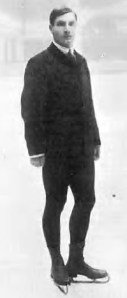
This guy invented the salchow. His name is Ulrich Salchow. What a coincidence!?!

We use the word “graceful” when we describe a dancer pirouetting or a figure skater performing a triple salchow. The word also applies to those people who suck every ounce of nutrition out of Christ’s nourishment and walk about with shimmering cascades of grace spilling over the tops of their heads. I know a few such people. You can tell them apart because they leave little puddles of grace behind them when they leave.

Lord, help me to remember that it is your grace with which you call me to nourish others. I can’t nourish them if I don’t allow you to nourish me. So please, fill this empty cup with the shimmering riches of Christ’s grace.

Footnotes

* Here’s a list of the technical words I used in this post:

Sursum corda: The three calls and responses at the beginning of the Eucharistic prayer, in which the congregation gives the priest the okay to go ahead and celebrate the Eucharist. The responsory nature of this prayer makes explicit that the Eucharist is a corporate event.

Epiphany: The twelfth day after Christmas, on which we celebrate the coming of the wise men to see Jesus. The coming of light into darkness and the call of the disciples are stressed during the season of Epiphany, which extends from January 6 to the day before Ash Wednesday.

Sanctus: “Sanctus” means holy and is the name for the prayer which begins “Holy, holy, holy Lord, God of power and might.” In Hebrew, there’s no way to make a word superlative (good, better, best); so, a three time repetition serves the same purpose.

Chalice: The cup we use at church. Remember that scene at the end of Indiana Jones and the Last Crusade? The room with the old knight is full of chalices. (“He chose…poorly”)

Orans position: “Orans” comes from the Latin word for “prayer” and is used when the priest is saying a prayer on behalf of the congregation. Think of a referee unethusiastically signaling touchdown and you’ve got it.

Ordination: The thing that happens to make someone who’s not a priest into a priest. The word comes from Latin and means something to the effect of “to put into order”; thus, ordination is when someone is set apart from others. There are four “orders” in the church: lay, deacon, priest, bishop — the latter three are “ordained” positions.

My Pavlovian response to the word “evangelical”

There’s a good chance I’m about to get incredibly soap-boxy, but I’m going to try my best to fight that tendency.

Do you remember the WABAC (“way-back”) machine on The Rocky and Bullwinkle Show? You know, the segment with the professorial dog and the red-headed kid who asked inane questions. If I could join Peabody and Sherman for a jaunt in their time machine, I would go back to the very hour that the word “evangelical” started being synonymous with “conservative” and attempt to stop the connection. I would fail, of course, like the guy in the movie version of The Time Machine who tries to save his wife’s life because of the temporal paradox. (i.e. If I succeed peabodyand sever the connection between “evangelical” and “conservative” I’d never have to go back in time to make the attempt, thus the words would be connected, thus I’d go back in time and sever them, thus I’d not need to go back in time…you get the point. I’ve said it before — Harry Potter and the Prisoner of Azkaban is the only book I’ve ever read with a truly well-reasoned time travel plot.)

Okay, I apologize for that stunning example of my ability to digress. I could delete it, but then I’d have no reason to use the picture of Sherman and Peabody. Let’s begin again.

You know how some people say “taxi,” some say “cab” and some say “taxi-cab,” but they all mean those yellow cars that you have to pay to ride in? The same thing has happened with the words “evangelical” and “conservative.” The media combine these two words in various permutations when discussing moral, ethical, or religious issues, and they bank on quickly instilling in your mind the vague image of a bellowing reactionary picketing an abortion clinic with a sign that says “Jesus hates gays.” Some media outlets do this so you will know to disagree with such “evangelicals”; others do it so you’ll know to agree. I’m not sure about you, but the image of the sign-wielding picketer has reached Pavlovian proportions in my mind. The fact that the image is a caricatured worst-case scenario is lost on a population conditioned to react strongly (one way or the other) to the word “evangelical.”

The current connotations of the word “evangelical” could not be further from what the word once meant. Peabody and Sherman could jump into the WABAC machine and travel to Mark’s house in about the year 65 and find the word in the fresh ink of the first line of Mark’s account of the Gospel. “The beginning of the euangelion of Jesus Christ.” Euangelion — one etymological hop and a few millennia brings us to “Evangelical.” Do you see the word “angel” in the middle there? That’s the Greek word for news or message. And the “ev-” at the beginning used to be “eu-” as in “eulogy” (good word/speech) or “[e]utopia” (good place/land).  This beautiful word — this word that has been co-opted, dragged through the mud of bigotry, and associated with narrow-mindedness and hate — used to mean “good news.”

The beginning of the good news of Jesus Christ. Not “The beginning of the reactionary bigotry of Jesus Christ.” Not “The beginning of the messy-ideology-of-hate of Jesus Christ.” Good News. Gospel.

I want the word “evangelical” back. I wish I could call myself an “evangelical” without being handed a “Jesus hates gays” sign in someone else’s mind. Of course, I am not saying that everyone who self-identifies as an “evangelical” hates gay people or thinks Harry Potter is the most inherently evil thing since evolution. These are facile characterizations that discount the good that “evangelicals” do in the world. But, as I see it, there is a latent schizophrenia in the “evangelical movement” that leads to simultaneous digging of wells in African villages and campaigning for Prop 8. Mix in the media’s fostering of the image of the sign-wielding picketer and the blustering of certain conservative demagogues, and the rebranding of “evangelical” is complete.

I have no illusion that the word “evangelical” will ever mean what it once did.  Words are collections of sounds and signs by which we signify objects, thoughts, and feelings, and these significations can change over time. Did you know that “happy” used to mean “lucky?” Juliet’s line “O happy dagger” (as in “O lucky weapon that I happened to find lying next to me”) makes more sense that way, right?

But this is a cautionary tale. If “evangelical” can take on such a twisted meaning, what’s next?

Notes

* You may wonder what spurred me to write this today. Well, to be honest, I’m a little bummed that Barack Obama picked Rick Warren to do the invocation at the inauguration. (I know that The Purpose Driven Life has sold millions of copies and helped a lot of people. But I can get on board with very little that Warren preaches or stands for.) Because of this announcement, the word “evangelical” has been on the news about 917 since yesterday.

** I edited out several very snarky pieces of this entry before publishing it. I still think I got too soap-boxy, but what can ya do?