Cloudburst (Davies Tales #8)

Aidan Davies stepped onto the platform of South Station. He looked left, then right, then left again. The trickle of passengers disembarking the commuter rail train turned left, and Davies joined them. As he headed for the terminal, a drop of rain hit his nose. He quickened his pace, but the drop only brought along a few dozen companions. Davies looked up and frowned at the sky. The sun shone through the clouds’ ragged edges, gilding them with light but failing to penetrate the bulk of the cloud, which was becoming increasingly darker. It’s a good thing the subway stops at the hospital, Davies thought.

Today would be his third day in a row traveling into the city to Mass General. The accident had happened late Saturday evening, and he had arrived at the hospital bleary-eyed but alert early Sunday morning, wearing his clergy clothes and the “I’m supposed to be here” expression that he saved specifically for the ICU. The family had been on a nighttime sail when nine-year-old Janice stood up at the wrong time. The boom hit her full in the back of the head, knocking her simultaneously unconscious and overboard. The rescue chopper brought her straight to the hospital in Boston, leaving her stricken parents on Nantucket to await the ferry the next day. Janice was brought up to the ICU from the OR an hour before Davies arrived. A patch of her dark ringlets was cut away at the base of her skull, revealing a dozen hasty sutures. He held her hand gingerly so as not to disturb the IV until midmorning when her mother pelted into the room. Davies then melted into the background, feeling suddenly inadequate in the face of the mother’s frenzy.

Two days later, Janice was still unconscious in the ICU, and her mother had not left her bedside. The doctors had not used the word “coma” but Janice’s mother feared the worse. With her husband at the office for a few hours, that fear was her only companion until Davies arrived. Fat lot of good I’ve done the past two days, he chided himself. An unconscious girl is one thing. A desperate mother is something else. I wonder when she’ll figure out I have no idea what to do.

He checked his mobile phone. Plenty of time to get there, he thought. Just a few stops up the Red Line. He swiped his card, jogged down the stairs, and flung himself aboard an idling subway car. Perfect timing, he thought, beaming around at the passengers as if he had just landed the dismount. A few of his fellow travelers smirked at him, shook their heads, and looked away. Just then the PA system crackled to life, and the man next to him pointed in the general direction of the indistinct voice coming over the speaker: “Due to a fire at Charles/MGH station, the Red Line is delayed. We are sorry for the inconvenience.”

Chagrined by his train-catching heroics, Davies shared a shrug with the man, leaned nonchalantly against a pole, and called up a mental map of downtown Boston. MGH isn’t too far a walk from South Station, he told himself. Just through the Common and over Beacon Hill. He looked around at the waiting passengers and wondered how long the train had been stuck at South Station. Just then two young men, frat boys by the looks of their untidy hair and polo shirts half tucked in to display massive belt buckles, launched themselves into the car as Davies had done. He smirked at them, shook his head, and exited the car.

He walked back up the stairs into South Station. There’s a buck seventy I’ll never see again. He ordered a panini and ate it quickly as he walked out of the station onto Summer Street. Davies oriented himself toward the Common and trudged up the sidewalk, hands in his pockets and his laptop bag bouncing against his back. He looked up at the sky again and the amateur meteorologist in him told him he would have been better off with the train delay. The sky had darkened considerably while the Massachusetts Bay Transit Authority had been thwarting him below ground. Licking his fingers, he tossed the remains of his hurried lunch into a trashcan and strode toward a store a few blocks from the station.

Five minutes later Davies emerged with a new umbrella under one arm. It’ll never rain now, he thought triumphantly, assured that reverse psychology works quite well to influence colliding low-pressure systems. Davies licked his lips, suddenly thirsty from his sodium-laced sandwich. I wish I had bought a bottle of water at the store. “Too late now,” he said aloud to no one in particular. Just then, he walked past a van painted in violently neon shades of green and orange. Two college-aged women, wearing shorts and the kind of socks that basketball players wore in the 70s, stood at the rear of the van, each holding a case of violently neon sports drinks.

“Have you Thrust today?” one of them asked Davies as he walked by, and he could tell she enjoyed asking such a seemingly provocative question to a guy wearing a clerical collar.

“No, I can’t say I have,” Davies said.

“You should try it,” said the other, and she held out a bottle sporting the word Thrust in lightning bolt-shaped letters. The bottle was filled with a liquid that looked like it was distilled from traffic cones.

“Thanks.” Davies took the drink and continued up the street, trying to resist the urge to look over his shoulder at the nubile Thrust promoters. He chugged the neon fluid, hoping that it would quench his thirst before he noticed how awful it tasted. He crossed Tremont Street and entered Boston Common as he emptied the last drops of the traffic cone flavored beverage into his mouth. Then he heard the rain.

With the sound of a thousand car washes a solid sheet of water was approaching rapidly from across the Common. So much for tricking the weather, Davies thought. At least I have this handy thing. He opened the umbrella and hunched beneath it just as the deluge reached him. After a minute of slogging across the open green space, his trousers felt like they had just come out of the washing machine. Davies reached the far end of the Common and looked through the rain for the street his phone’s GPS had told him to take over Beacon Hill. He walked one block down the Hill hoping for a street sign. No such luck. This city, apparently attempting to stymie foreign military occupation, keeps signage to a minimum, he mused ruefully. Davies took the next right and walked fifty yards. This isn’t it, he thought, seeing the street terminate in a row of brownstones a couple blocks ahead. He turned to retrace his steps. Then the rain did the impossible and worsened.

With the same vigor he had used flinging himself into the subway car, Davies dove for the relative dryness of a sheltered doorway. He squeezed the excess water out of his pants, dried his glasses, and oriented himself. I am one street down too far. Davies waited out the worst of the rain hunkered down in the doorway. After ten torrential minutes, the sun blazed through the spent clouds, raising steam from the street. Davies left the shelter and continued his charge up Beacon Hill.

Taking a left on Cambridge Street, he walked the last few blocks to the hospital. The imposing complex of parking garages and mismatched hospital buildings rose up on his right. He stopped to cross the intersection at Cambridge and North Grove. The cars navigating Boston’s surface streets glistened after the downpour. There it is, he thought, storm clouds forming in his mind as they had done in the sky. Through the main doors, down the hall, up the elevator, around the ward, into the room. Davies shivered. I’m just cold from the rain, he told himself, though he knew it wasn’t true. What am I supposed to do? What am I supposed to say? I am so ill-equipped for this that it would be laughable if the situation weren’t so serious.

The traffic light changed and the walking person blinked across the road, telling him to cross. Davies stayed put. After half a minute, the light changed again, and a red hand replaced the person, warning pedestrians not to cross. Davies stared at the hand. He closed his eyes and the blurry afterimage of the warning signal danced across his eyelids. He took a deep breath and held it. The hand fixed itself in his mind, a symbol of something he told people everyday but often forgot to believe himself. The hand slowly dissolved into a voice in his head, his own voice but with deeper resonance and greater clarity. You were thirsty and I provided drink. You were drowning in the rain and I provided shelter. Do you honestly think that I will break this pattern when you enter that hospital room?

Davies exhaled slowly and opened his eyes. The red hand shone from the signal across the street. The voice echoed faintly in his mind. You are always in the palm of my hand. Yes, even you, Aidan. The hand changed back into the walking person, and Aidan Davies crossed the intersection. He pushed through the main doors of the hospital, strode down the hall, rode up the elevator, paced around the ward, and walked into the room.
Vision and Action

Sermon Notes for Sunday October 3, 2010 || Proper 22, Year C, RCL || Luke 17:5-10

(This Sunday was our first family service, at which I preached a sermon without notes. I gleaned the sermon out of the following brainstorm, which also made for the basis of the sermon for the early service.)

I’m really glad I got to preach this Sunday because the prospect of preaching makes me sit down and think long and hard about the words I am going to say, about the words I believe God is calling me to say. This week I sat down with our Gospel passage from Luke and thought long and hard about faith. And very quickly, I realized that – even with all my schooling and sermons and work in the church – I hadn’t really thought all that much about faith. I knew I had faith. I knew that my doubts didn’t cancel out my faith. I knew that God’s faith in me gave me the ability to have faith in God. But when I dug a little bit deeper, I found myself at a loss for words about how faith works in my life.

My confusion mirrored that of the disciples in this morning’s Gospel. Right before the passage we read today, Jesus tells them that if someone wrongs them seven times in the same day, they should forgive all seven times. The disciples don’t think they have enough faith to do something like that, so they say: “Increase our faith!” Jesus’ responds that a tiny amount of faith is enough to do amazing things. I must confess that the words about the mustard seed and mulberry tree have always seemed rather quaint and comforting, but with no real applicable meaning – like words your great aunt cross-stitches into pillows. But this week, the statement vexed me.

Jesus seems to be saying that an increase in the quantity of faith is not necessary – you can’t get much smaller than a mustard seed, after all. By using such an exaggeratedly small thing, Jesus says that measuring the amount of faith is unimportant. Indeed, thinking of faith as a unit of measure makes no sense. I wouldn’t say, “Last year I had 25 faith, but this year I have 27.” Faith isn’t a statistic.

So when the disciples ask for an increase in faith, I think that Jesus makes the hyperbolic statement about the mustard seed in order to make the disciples see that it’s not an increase in the quantity of faith that matters, but an increase in what faith does. When my thinking brought me away from the static notion of quantity of faith, I realized that I needed to bring my focus back to two simple concepts having to do with faith. First, faith in God sharpens our vision. Second, faith in God motivates our action.

I’ve had blurry vision since middle school. My parents brought me to the optometrist, who noticed my nearsightedness right away. He prescribed glasses, which I hated wearing, as any eighth grader would. Indeed, my desire to keep people from knowing I needed glasses was so great that I skipped trying out for the high school baseball team. I couldn’t see fly balls without my glasses, but I was unwilling to put them on.

You’ve probably noticed that at some point during the fourteen years since my original diagnosis of myopia, I’ve gotten comfortable wearing glasses. And now I finally have a pair that, thanks to Doctor Who, I know are pretty fashionable. But there is another sort of lenses that I fail to put on just as often as I did with my glasses in middle school. These are the lenses of faith. My glasses sharpen my vision of objects in the world around me. The lenses of faith sharpen our vision of the God who is present in and around all things.

Indeed, my glasses don’t give me the ability to see; rather, they give me the ability to see well. When we put on the lenses of faith, we see the world with clearer eyes. Our sharp vision allows us to see God’s directing movement between us and those people, places, and things with which we interact. We stand forever in God’s presence and God moves with us down the paths of our lives. Faith sharpens our vision to catch glimpses of this movement.

Here’s an example. I was standing in Boston’s North Station not too long ago during morning rush hour. I was trying to figure out from which track my train would depart. As I stood there looking up at the departures board, several trains unloaded their passengers at once. I watched as hundreds of people queued up on the platforms and, as one, began trudging toward the glass doors of the station. As they reached the doors, I was spellbound. The intricate, random choreography of the morning commuters was beautiful. They crisscrossed and hurried and meandered and loped along. And not one person ran into another. They passed me as I stood still, and I felt like I was watching a slow motion scene from a film. Each of these people was connected to me and to one another. I could all but see the wispy threads of a tapestry linking us. Faith sharpens our vision. That morning at North Station, the lenses of faith helped me see clearly the reality that God connects each of us to one another.

But sharp vision isn’t quite enough. When we see the world through the eyes of faith, we become aware of how we can participate in God’s work in the world. When I saw clearly my connection to all the people at North Station, I remembered once again that I am called to serve God in all people. Thus, the first thing that faith does – sharpen our vision – leads directly into the second thing that faith does. Faith in God motivates our action.

In many of the stories about Jesus healing various people, Jesus speaks of their faith making them well. Now if we subscribe to the “quantity” notion of faith, we might be tempted to think that Jesus healed these folks because they reached a certain statistical threshold on the faith scale, which qualified them for healing. But the mustard seed reminds us that the quantity of faith is less important than the action of faith. The healing stories, therefore, are really about people whose faith motivated them to the action of seeking out Jesus in the first place. The Gospel writers recorded those healings because of the sometimes heroic, sometimes simple action of faith.

Again, when Jesus says, “If you had faith the size of a mustard seed,” he is not speaking about quantity. We do not have a collection of faith in the same way that we have collections of baseball cards or teapots or old comic books. Faith is not something we can store up in a safe deposit box. Rather, we have faith the same way we have energy. Energy propels us to run and work and play; faith propels us to love and serve and forgive. Indeed, faith is the energy that motivates us to participate in God’s work in the world.

And like energy, faith unused can begin to fade away. Like Langston Hughes’s “Dream Deferred,” unused faith can “dry up like a raisin in the sun.” This is why we come to worship. This is why we meet one another at the table for the nourishing food of Christ’s Body and Blood. This is why we do spiritual practices that keep us in contact with God and with other faithful people. God gave us faith to motivate us to love and serve God. As exercise is to energy, our participation in God’s work is to faith. And the more we allow our faith to motivate our action, the more resilient is our faith when we are confronted with difficult and demanding situations.

Faith in God sharpens our vision. Viewing the world through the lenses of faith shows a deeper layer of reality, the eternal reality of God’s presence. Then faith in God motivates us to act, to live lives full of God’s love and grace, to bring God’s gifts to other people and call God’s gifts forth from those people. Faith in God motivates us to participate in God’s healing and reconciling work in the world. Faith is not a static thing. Faith is not a statistic. Faith is the great gift from God that shows God’s faith in us. Faith is the catalyst that kindles all of our other God-given gifts to shine. Thanks be to God for faith.

Facing Fear

(Sermon for August 8, 2010 || Proper 14, Year C, RCL || Luke 12:32-40)

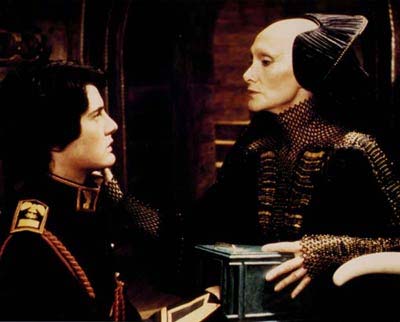
The Bene Gesserit test Paul Atreides at the beginning of Dune. (1984)

Many years ago in a dusty volume, I read an old Bene Gesserit litany against fear, and this prayer has stuck with me every since. “I must not fear,” says the litany. “Fear is the mind-killer. Fear is the little-death that brings total obliteration. I will face my fear. I will permit it to pass over me and through me. And when it has gone past I will turn the inner eye to see its path. Where the fear has gone there will be nothing. Only I will remain.”

Now that dusty volume was Frank Herbert’s Dune, the best selling science-fiction novel of all time, but the words of the litany ring true nonetheless. “I must not fear… Fear is the little-death… I will face my fear.”

From the time we are young children, our parents echo these words and tell us to face our fears. Perhaps you were afraid of the dark. So you mother let you sleep with the lights on for a while. Then she turned the lights off and left the bedside lamp on. A few days later, she turned off the bedside lamp and plugged a nightlight into the wall near the door. Pretty soon, you didn’t even need the nightlight. Your mother helped you face your fear of the dark, and you overcame it.

Or perhaps you were afraid of the monsters under your bed. There they were: always lurking, rumbling, slurping, ready to pounce – until you summoned up enough courage to dangle your head over the side of the bed and chase the monsters away. You faced your fear, and you overcame it.

We look back on these childhood fears and chuckle at how intangible worries grew into monstrous fears. The shadow of your own feet under the covers cast a winged creature on the wall, and the creature moved the more you shook. Under your bed, a pair of shoes and a couple of tennis balls made the ears and eyes of a monster peering up through the floorboards. The fears were nothing really. Our imaginations ran away with us, that’s all.

At least, this is how we adults dismiss those childhood fears. We dismiss them as fanciful or as attention-seeking or as the fruits of overactive imaginations. But hidden within this easy dismissal is also a tacit dismissal of our parents’ advice. “Face your fear,” they said, and we did, and everything got better.

But those were our intangible, childhood fears. That advice couldn’t possibly work on our concrete, grown-up fears. Our fears are too immediate, too relentless, too real. Of course, we forget that this is exactly how our childhood fears felt, as well. Perhaps our parents’ advice, the same advice that I learned reading science fiction, really might work in our lives today. In this morning’s Gospel, Jesus asks his disciples to take our parents’ advice. He asks them to face their fears.

But before we get to that, we first need to address where fear comes from. The root of fear is deprivation. We fear when something has the potential to become scarce. We fear when we perceive that there is not enough of a certain something. Supply and demand economic theory is based squarely on this reality. The root of fear is deprivation. You can trace all fears to this specific cause, even though specific fears may appear quite differently. Fears manifest themselves one way or another depending on the nature of the deprivation. If you are afraid of the dark, you fear a scarcity of light. If you are afraid of contracting a terminal illness, you fear being deprived of a long, healthy life. If you are afraid of how you will live when you retire, you fear that you will not have enough income to sustain your manner of living.

You can trace all fears to specific deprivations, and by confronting the sources of scarcity, you can face your fears. Jesus identifies the disciples’ source of fear when he says to them, “Do not be afraid, little flock, for it is your Father’s good pleasure to give you the kingdom. Sell your possessions, and give alms.” Jesus assures them that their fears are baseless because their accumulation of stuff will not help them enter the kingdom of God. This assurance runs counter to the fashionable reasoning of the day, which stated that the more stuff you owned, the more blessed you were. “God obviously favors that person,” ran this line of thinking. “Just look at all the stuff he has.” Not too much different from today, I’m sad to say.

But Jesus changed the rules. Remember last week’s Gospel? Jesus told us the parable of the rich fool. His land produced more than his barns could hold, so he decided to tear down those barns and build larger ones. The more stuff the rich man had, the more secure and comfortable he would feel, he told himself. Surely, this man would have been considered blessed in his society. But he died the very night he planned to erect larger storehouses, and he surely couldn’t take his barn-loads of stuff with him. The rich man’s folly shows the misguided lengths to which people will go to ward off deprivation, the root cause of fear.

But Jesus shows his disciples another way to face their fear. Rather than accumulating stuff, give it away, he says. Face deprivation by depriving yourself of the things you think you can’t live without. And you’ll discover pretty quickly that you can, in fact, live without those things.

I’m sure that you’ve heard this interpretation before, perhaps so many times that you tune it out now. And if you’re like me, you really aren’t any closer to facing the root of fear than you were the last time you heard someone talk about this. I know for myself that I used to be able to fit all my possessions in a 1992 Mazda Protégé. When I moved to Massachusetts, I needed every square inch of a 14-foot U-Haul. With more stuff comes more fear of loss, more fear of that stuff not being enough.

And the more fear that we have, the more we deprive ourselves of fear’s antidote. That antidote is trust. When we were children, we faced our fears because we trusted our parents’ advice. We believed that they would not lead us astray, and they didn’t. The darkness did not frighten us to death. The monsters did not pounce.

So how come we have so much trouble trusting in God? How come fear tends to trump trust more often than not? I think the answer is this. Trust takes energy. While fear creeps along, keeping us from action, trust derives from the kind of sustained relationship, which establishes and nourishes fidelity. God always keeps God’s promises. God is always trustworthy. The trouble is we have to trust that God is trustworthy. We have to practice the faith that God has given us in order to maintain our ability to trust in God.

And fear constantly diverts this ability. But when we practice trust, when we believe that God’s keeps God’s promises, we can face our fears, we can keep at bay the gnawing dread of deprivation. Our grown-up fears may be concrete and relentless. But I am convinced that they are no match for the power of trusting in God.

This week, I ask you to take some time to be silent and to turn your thoughts inward. What do you fear? What kind of deprivation is at the root of that fear? And how will practicing trusting God help you face that fear? In your reflection, remember this good news. When Jesus says, “Do not be afraid,” he is not just giving a command. He is giving a promise that when we face our fears, we will not be alone. When we face our fears, they will pass through us, and when they are gone, only God, holding us in the palm of God’s hand, will remain.

Why I Love Camp

The following post appeared Friday, July 16th on Episcopalcafe.com, a website to which I am a monthly contributor. Check it out here or read it below.

* * *

I love camp. I love being surrounded by more trees than buildings. I love singing Grace to John Williams’ theme from Superman. I love seeing the half-exhausted, half-excited faces of the campers at breakfast. And I love conversing with children and teenagers because every once in a while they will say something unexpected and profound amidst all the buzzwords and canned phrases that they know will be considered “correct” answers during afternoon Bible studies. Invariably, the profundity of their unexpected contributions comes in the form of the simplest, most direct response to a question.

Here’s why this practice is so profound. Over the years, we adults learn to hedge, to inject some wiggle room into everything we say in order to maintain some deniability later on. We prevaricate, deflect, and obfuscate because we’ve learned from the incessant 24-hour news cycle that a juicy sound byte can tank a career. We’ve learned that a verbal defense mechanism is a necessity for survival.

And with our deniability glands working at full capacity, we say, “Well, that’s not exactly what I meant,” or “I’m not sure you heard me correctly” (when, of course, I purposefully didn’t say exactly what I mean). But the problem with speaking equivocally creeps in over time: prevarication erodes the truth that has been in each of us since God knew us in our mothers’ wombs. When we hedge, we atrophy the muscles that store the truth, and we cut ourselves off from bits of the truth that is within us.

Now I’m not saying that we shouldn’t monitor our words to make sure we always speak hospitably and graciously. Hedging is simply a cheap and ultimately ineffective way to achieve what hospitality and grace achieve naturally – namely, speaking in a way that keeps conversation open and kind. Hedging achieves this end by leading us to speak obscurely so that no meaning can quite be pinned down. Hospitality achieves the same end by leading us to speak truth uncoupled from judgment. One of the epic failures of our time is the withering of this graceful truth when we bury it under our own insecurity and our need to conform to society’s agreed upon level of appropriate vagueness.

Okay, let me get back to why I love camp. I love camp because for a week I get to ascend into the clean and invigorating air of youthful wisdom. The young people just haven’t lived long enough to acquire toxic levels of prevarication. They say all the things that were the first to erode in us adults. God will always be with me. You are my friend. Jesus is awesome. And after a few days of rubbing elbows with the young people, I remember the need to nourish the root system within myself that keeps the truth from eroding.

Thankfully, I didn’t have to preach until Tuesday. I had enough time to drink in the campers’ wisdom, so that when it came time for me to speak I was in less danger of hedging and wiggling. (This was a good thing, too, because children can spot phony commitment a mile away.) I had five minutes to talk about Moses and Aaron, and I had played with several ways to approach the story as I thought about speaking to the campers. When I stood up to speak, I knew my direction of travel, but I was unsure where I would end up.

I began to talk about how Moses was making excuses to God, about how he’s no good at public speaking, about how God might as well get someone else. I looked out at the campers, and then I told them to look at each other. Just then, I realized where the direction of travel was taking me. “God gave everyone special gifts,” I said. “A few of those gifts are within us, but most gifts come wrapped in the people around us. Just because we aren’t good at something doesn’t mean we’re off the hook. It just means we have an opportunity to invite a friend to help us.” These words rang true as I said them, but I didn’t feel them within myself before speaking them. I felt like I was absorbing these words from the young people staring up at me. What a gift.

Of course, as usually happens, I spoke the words aloud, but I’m probably the one who benefited from them more than anyone else. I needed the injection of youthful wisdom to find that truth again, the fundamental truth that I forget more than any other. I am not alone. I am with God. And I am with other people. We are God’s gifts to each other. This is the truth, and it leads to another true statement.

I love camp.

Faithful Thomas

(Sermon for April 11, 2010 || Easter 2, Year C, RCL || John 20:19-31)

I’ve always had a special affinity for Thomas. Perhaps, because we share a name, I feel fraternally responsible for defending him against those who label him with one of the most enduring epithets of all time: Doubting Thomas. (Curiously enough, I’ve never felt much like defending Adam for his stupidity in the garden, but that’s another tale.) So, we have this fellow uncharitably nicknamed Doubting Thomas. We remember him for exactly one reason: he doesn’t trust the words of his fellow disciples when they tell him that they have seen the Risen Lord. Their witness is not enough for Thomas. He needs to see and touch Jesus, just as the other disciples had done when Jesus came to them the first time in that fearful room behind a locked door. Thomas needs the visual and tactile proof of the resurrection for himself. And for this one, simple reason, Thomas has been stricken with his unfortunate nickname, much maligned for his obstinacy, and readily dismissed for his doubt.

But this caricature misses the subtle interplay between doubt and faith that we are going to explore the next few minutes. Notice that Thomas never actually follows through with his stubborn ultimatum. He tells the other disciples, “Unless…I put my finger in the mark of the nails and my hand in his side, I will not believe.” The next weekend, Thomas is with the other disciples when Jesus comes to them again. And when Jesus invites Thomas to fulfill his requirement for belief, Thomas no longer needs to. Rather than reaching out his hand to touch Jesus’ side, Thomas lets loose from his lips the highest affirmation of Jesus’ divinity in the entire Gospel: “My Lord and my God!” Thomas is a man of deep faith.

This is the same Thomas who, when Jesus decides to travel near Jerusalem to raise Lazarus, says to the other disciples, “Let us go with him, that we might die with him.” Thomas is a man of deep conviction. This is the same Thomas who, when Jesus tells the disciples he goes to prepare a place for them, asks of his Lord, “How will we know the way?” Thomas is a man of deep questions.

When you add faith, conviction, and questions together, oftentimes doubt results, at least for a time. Faith gives you the reason to ask questions, and conviction gives you the perseverance to allow doubt to temper faith into a stronger whole. Too frequently, trouble happens when we mistake doubt for the opposite of faith, and therefore as something to be avoided at all costs.

One of the reasons for the persistent mistake of thinking that doubt is the opposite of faith comes from this very Gospel text (and indeed, this particular English translation of the Gospel text). When Jesus invites Thomas to touch his wounds, Jesus says, “Do not doubt but believe.” This sets up a dichotomy between doubt and belief and puts the two in opposition to one another. You can either doubt or believe, but you can’t do both. However, “Do not doubt but believe” is not actually what Jesus says. I don’t say this very often, but the English translation we read in church gets this sentence horribly wrong.

Because the New Revised Standard Version messes this verse up so badly, we need to have a short lesson in ancient Greek, the language in which the Gospel was written. I promise that I won’t make a habit of giving these lessons from the pulpit. But I also promise that you already know more Greek than you realize.

You're probably wondering why this picture makes sense in this context. I promise it does. Go watch the recently cancelled Dollhouse to find out why.

In Greek, to turn a word into its opposite, you add an alpha, which is really just an  “a,” to the front of the word. We do the same thing for English words that come from Greek. Try this one: Bios is a Greek word that means “life.” We get the English words “biology” and “biotic” from it. “Biotic” means “relating to living things.” If we add an “a” to the front, we get “abiotic,” which mean “relating to non-living things.” Or how about this one: Theos is the Greek word for “God.” In English, “theism” is the generic word for belief in God. So, add the “a” prefix and we get “atheism,” which is the belief that there is no God. We could come up with a dozen more examples, but I think you get the point.

Now let’s go back to our verse, which, if you recall, this morning’s reading translates as “Do not doubt but believe.” The Greek word translated “believe” comes from the word pistis, which means “faith.” The word that is translated as “doubt” is simply the word pistis with the “a” prefix – apistis. Therefore, the word should really just mean “unfaith” or “unbelief,” rather than “doubt.” With this new translation, the verse becomes, “Do not be unbelieving but believing.”

“Do not be unbelieving but believing.” This is a far cry from “Do not doubt but believe.” Jesus never tells Thomas not to doubt. Rather, Jesus tells Thomas not to jettison his belief all in one go. There is a huge difference between the two. This supposed “Doubting Thomas” is still incredibly faithful, even in the midst of his doubts. Remember, Thomas is a man of deep faith and conviction, who has the nerve to ask tough questions. Doubt arises in such a chemical makeup. But having doubts does not signal the loss of belief. Having doubts does not signal the abandonment of faith.

Doubt happens when you have enough conviction about your faith to question it. Thus, doubt gives you a reason to reexamine your faith and to sign up with Jesus Christ over and over again. Of course, too much doubt can lead to unbelief, just as, conversely, too much certainty can lead to stagnant faith.

Okay, now that we’ve established that doubt is not something to be avoided at all costs, let’s use our Easter celebration to bring the power of the resurrection into this discussion. Our faith finds its home in Jesus’ resurrection. Jesus triumphed over death in order to keep his promise that he would be with us always, despite the end of our physical existence. Resurrection happens with eternally vaster scope than death ever could. Because of this, death exists within the power of the resurrection. The resurrection subsumes death into itself, making death a piece of the reality of eternal life. In the same way, belief is so much more expansive than doubt; belief subsumes doubt into itself, making doubt a part of the pathway of faith.

Jesus tells Thomas, “Do not be unbelieving but believing.” And Thomas responds with such grand words to express his belief: “My Lord and my God!” Rather than dismissing Thomas as that good-for-nothing doubter, embrace Thomas as a faithful, thoughtful, courageous follower of Christ whose doubts ultimately lead him to a wondrous confession of faith.

God knows that we, too, have our doubts. We wouldn’t be human without them. But belief in God gives our doubts purpose, shape, and context. Do not be ashamed of your doubts. Shame only works to erode faith. Rather, see doubt as a sign of your conviction, as a sign of the fact that you care enough to ask tough questions. Then use that conviction, that perseverance to push through the doubt to the deeper faith beyond. And with those five glorious words of Faithful Thomas, praise the Risen One who is the beginning and end of our belief: “My Lord and My God.”

The trapdoor in my gut

(Sermon for February 8, 2009 || Epiphany 5, Year B, RCL || Isaiah 40:21-31)

When I am engaged in a mundane activity—say, brushing my teeth or counting the bleary-eyed seconds until I hit snooze again or watching the digital numbers flick by on the counters at the gas station—the activity itself occupies only a tiny portion of my brain’s processing power. So the rest of my mind often wanders into other sections of my body. Sometimes, my mind meanders past my throat and lungs and finds its way down through that trapdoor in my gut. And I begin to ask those questions that make my gut twinge and pulse, like the feeling you get after narrowly avoiding a car accident.

I’ll be wrapping the floss around my fingers or anticipating the snap of the nozzle that signals a full tank of fuel, and I’ll look up at the sky and say, “Why do you care about me, Lord?” Then the cars will collide in my gut because, in that moment, everything I’ve ever believed is branded with a big red stamp of the word “FOOLISHNESS.”

Why do you care about me, Lord? This gut-twinging question doesn’t necessarily speculate on God’s existence. The question isn’t: “Do you exist, Lord?” There’s no reason to ask God if God exists. That would be like asking all the absent people in a classroom to raise their hands. Instead, the question acknowledges that God does, indeed, exist, but wonders why the heck God would ever care about an insignificant, messy, little thing like me. Of course, there’s no reason why God should care. This is truly first-rate foolishness.

The prophet Isaiah doesn’t help matters. He says, “It is he who sits above the circle of the earth, and its inhabitants are like grasshoppers; who stretches out the heavens like a curtain, and spreads them like a tent to live in; who brings princes to naught, and makes the rulers of the earth as nothing… To whom then will you compare me, or who is my equal? says the Holy One.”

There’s a tension in our scriptures — a twofold presentation — about how God relates to us that feeds the pulsing in my gut. The dual stories of creation in the opening chapters of the book of Genesis illustrate this tension. “In the beginning when God created the heavens and the earth…” says the first verse of Genesis. The narrative goes on to tell how God spoke creation into being. Creation was ordered: light separated from darkness, day from night, land from sea from sky. God orchestrated the emergence of life and proclaimed the creation “good” and, indeed, “very good.” This ordering, this filling the void with matter and energy and life and light, speaks of the Cosmic Creator, whose voice and arm stretch into the vast expanse of eternity. This is the understanding of God that Bette Midler promotes when she sings: “God is watching us from a distance.” This is the understanding of God that the Enlightenment era Deists caricatured as a great Watchmaker, who set the gears running and then left well enough alone.

The second chapter of Genesis presents another view of this same creative God. God is not standing at the podium, waving a baton as the performing forces of creation harmonize the music of life. In the second story, God, rather the being the conductor, is the instrumentalist: God plays each violin and French horn and clarinet. “In the day that the LORD God made the earth and the heavens,” says Genesis, God bent down in the dust and formed a human being. Then, into his nostrils, God breathed the “breath of life.” When the human became lonely, God put him to sleep, and out of the man’s own flesh God created another human being. As the story continues, the man and woman heard God “walking in the garden at the time of the evening breeze.” This movement and participation in the creation, this intimacy, speak of the God who eventually becomes incarnate as the word made flesh, Jesus Christ. This is the understanding of God that Joan Osbourne wonders about when she sings: “What if God was one of us…just a stranger on the bus trying to make his way home?” This is the understanding of God that the old hymn describes: “And he walks with me and he talks with me and he tells me I am his own.”

The tension between our understanding of God as “Cosmic Creator” and as “Intimate Companion” brings us back to the gut-twinging question: “Why do you care about me, Lord?” In those moments of existential angst, the Cosmic Creator easily trumps the Intimate Companion because the former seems so much bigger, holier, more powerful. When my gut compares the two, the latter seems somehow lessened by my own shabbiness.

And this misguided transfer of shabbiness is difficult to suspend. Human nature dictates that we narcissistically use ourselves as the measuring sticks by which other things are evaluated. Our ability to reason, manufacture tools, and put our thoughts into speech elevates us above other animals. We then use these factors to order other species by “intelligence.” Chimpanzees eat using rudimentary utensils. Dolphins communicate with their cackling code. Therefore, based on the anthropomorphic scale, these creatures are closer to our presumed preeminence.

But the scale works the other way, as well. Our penchants for betrayal, mistrust, indifference and our well-rehearsed disregard for the welfare of others knock a bleaker set of notches into the measuring stick. When the gut-twinging question surfaces – “Why do you care about me, Lord? – these regrettable attributes emigrate from our world and narcissistically modify our understanding of God.

Having thus remade God in my own lamentable image, the collision in my gut worsens. The Cosmic Creator looks down and sees a bunch of tiny grasshoppers, so why should that God be bothered? The Intimate Companion is probably just as apathetic and self-centered as I am, so why should that God care?

Do you see the twisted, oxymoronic reasoning that leads to these conclusions? The gut-twinging question appears when I notice my own laughable insignificance. At the same time, I use myself as the measuring stick for which to assess God’s motivation to care about me. This logic definitely deserves the red FOOLISHNESS stamp.

You see, when the prophet Isaiah expounds on God’s greatness and ineffability, he is not extolling God’s distance and isolation. Instead, he is warning people not to engage in the foolish business of looking for God in the mirror. The Holy One says, “To whom then will you compare me, or who is my equal?” The answer is quite obviously a resounding “NO ONE!” When you escape the twisted logic that seeks to anthropomorphize God, you are one step closer to resolving the gut-twinging question – “Why do you care about me, Lord?”

God as Cosmic Creator, who “stretches out the heavens like a curtain,” did not need a reason to speak creation into being. I might need a reason to build a bookcase or compose a letter, but God doesn’t need to share my motivations. If God did not need a reason to create, why would that same creator need a reason to care about us insignificant grasshoppers? God’s very greatness subsumes the “Why” question into God’s eternal being and renders it irrelevant. With the “Why” expunged, the gut-twinging question becomes a glorious statement of faith: “You care about me, Lord.”

You care about me, Lord. When I finally realize this, I notice that God as Intimate Companion has been whispering these words in my ear the whole time. Then I realize that God’s care for me (another word for which is grace) enables and enthuses me to care for others. The penchant for betrayal and disregard for others’ welfare, once unfairly plastered onto God’s being, now fall away as God continues to make me in God’s own image.

Our world is vast and full of questions. We are insignificant. We are messy. We are little things. But God’s vastness stretches into eternity. In staggering showers of grace-filled generosity, God both answers and removes the need to question. In those same showers falls the gift of sanctifying love, which removes our insignificance and scrubs us cleans. As we discern the Cosmic Creator and Intimate Companion in the same loving face of God, more words from the prophet Isaiah resound: “Those who wait for the LORD shall renew their strength, they shall mount up with wings like eagles, they shall run and not be weary, they shall walk and not faint.”

Our better angels: The two things you’re not supposed to talk about (part 3)

Election day falls on the first Tuesday after the first Monday in November of every even-numbered year. That day happens to be today.* West Virginia has early voting and the polling place happens to be next door to my church, so I took advantage of that a few weeks ago. But I’ve been keeping on top of the political scene in the country: the campaign tactics, the exchanges, the (gotcha!) media, the blustering pundits and blundering surrogates. I’ve at times in the last weeks been both enthused and disgusted, hopeful and resigned. Every sign of progress I see shares the spotlight with the tired old prejudices of the past. I hope with all the fervor of my heart that, no matter the outcome of this election, the United States continues to strive for that “more perfect union,” to which our Constitution sets its lofty heights.

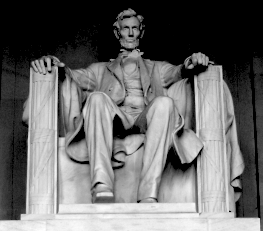
This hope stirs in me a refrain that has been playing in my head for days: “We are not enemies, but friends. We must not be enemies. Though passion may have strained it must not break our bonds of affection. The mystic chords of memory, stretching from every battlefield and patriot grave to every living heart and hearthstone all over this broad land, will yet swell the chorus of the Union, when again touched, as surely they will be, by the better angels of our nature.”lincoln

Abraham Lincoln spoke these words on March 4, 1861. The dust of 150 years has made these words no less relevant today. Chorus. Union. Bonds of affection. These are powerful words that tell of a truth, which these years of dust could never obscure: We can do great things when we come together, when we embrace the power of unity. This is Lincoln’s charge to us all. This is the truth which we entrust to our next president. And this is the prayer of Jesus for his disciples and for all of us: “All mine are yours, and yours are mine; and I have been glorified in them. And now I am no longer in the world, but they are in the world, and I am coming to you. Holy Father, protect them in your name that you have given me, so that they may be one, as we are one.” (John 17:10-11)

Jesus lived this prayer for unity when he welcomed everyone to come to him, and all those who were thirsty to drink. He lived this prayer when he ignored the racial barriers between Jews and Samaritans. He lived this prayer when, dying on the cross, he created a new family for his mother and his beloved disciple.

But uniting is not enough. Uniting is only the exposition of the story. We must unite for something. We must come together to fulfill those tasks which the better angels of our nature invite us to accomplish. Too often, the ingrained talking points that showcase the worst of partisan bickering shout down these better angels. Just last week, I was sitting at Panera bread and overheard a conversation between two businessmen — the gist of their chat simply rehashed the tired old stereotype that all people on welfare just sit at home watching Oprah. Surely, these two suits would have more political acumen than to recite such a line of attack, I thought. But no. In election years, by some strange alchemical process, saying something enough times makes it true, no matter the veracity of the claim. In the absence of any real hope, any real truth, whoever steps up to the mic to fill the dead air is the ruler of that fifteen second soundbyte.

But our better angels fill in that dead air. When we turn our attention inward, we will find those angels speaking the words of the only Truth out there worth subscribing to, the words of life that God writes on our hearts. These words will never fit into a soundbyte. They will never succumb to the tired old prejudices. They will only urge us to join together to accomplish God’s work on earth. The mystic chords of our better angels’ chorus echo with Jesus’ words: “Come, you that are blessed by my Father, inherit the kingdom prepared for you from the foundation of the world; for I was hungry and you gave me food, I was thirsty and you gave me something to drink, I was a stranger and you welcomed me, I was naked and you gave me clothing, I was sick and you took care of me, I was in prison and you visited me…Truly I tell you, just as you did it to one of the least of these who are members of my family, you did it to me.” (Matthew 25:34-36, 40)

We can feed the hungry and cloth the naked and shelter the homeless and nurse the sick. We can respond to that image of Christ in the faces of the least of Jesus’ family. Far be this from some misguided philanthropic diversion to the benefit of Oprah’s sweatpanted viewership. We are called, not just as Christians but as human beings, to help those who are suffering, to bring hope to those who are despairing. I ask you: how much better will we be, how much more unified, when today’s least of these are in the position to help tomorrow’s?

This is not the time for a bootstraps mentality. This is not the time to recline in the illusory comfort of self-interest. This is not the time to relapse into a tired old hoarding way. Be touched by the better angels of our nature.  Know that this is the time to give. This is the time to tug on your neighbor’s bootstraps. This is the time to enter into the kinectic delight of unity and labor for the kingdom of God on earth.**

Footnotes

* Incidentally, figuring out when Election day falls is similar to figuring out the date for Easter: the first Sunday after the first full moon after the vernal equinox. Fun times.

** Here is a list of links to help you get involved:

The ONE Campaign

The United Way

Habitat for Humanity

Heifer International

Episcopal Relief and Development

CNN: Impact Your World

Idealist.org

Redefining the good news: The two things you’re not supposed to talk about (part 2)

In the first installment of this series, we looked at how the phrase “separation of church and state” fails to comprehend the complex relationship that those two broad entities share. Fealty to such a misunderstood doctrine can blind us to the influence our faith in God should have on our political decisions. No decision is made in a vacuum. Acknowledging this, each person chooses which voices to distinguish from the cacophony clamoring for attention. She contemplates what her context values as true. As the cacophony and the context press upon her, the faithful person attempts to attend to that still small fluttering within, which is the deep intersection between her consciousness and God’s movement.

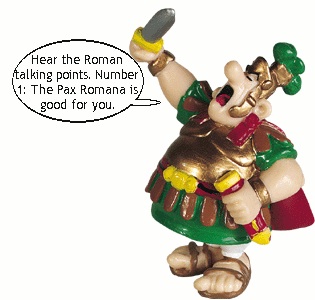
Just as decisions (political or otherwise) are not made in a vacuum, the Gospel does not take place outside of a specific context. Indeed, the dusty realism of the Gospel makes for compelling reading and even more compelling living. When Jesus of Nazareth steps onstage, the scene is set, the players chosen. The first words out of Jesus’ mouth (according to Mark) intentionally borrow the political language of the day: “The time is fulfilled, and the kingdom of God has come near; repent, and believe in the good news.” Jesus imagines a new definition for that word euangelion (Gospel, good news). No longer is “good news” to be proclaimed for another Roman military victory or another birthday of a Roman emperor. No. The kingdom of God has come near! This is the Good News of Jesus.

If Jesus is redefining Roman talking points, the political nature of his message would be hard for his contemporaries to miss. Their difficulty came from another angle: to whom does this nobody from a backwater like Nazareth belong? Is he a Pharisee? A Zealot? A Herodian? An Essene? He can’t be an Essene because he would’ve never left the desert. He can’t be a Herodian because he is speaking out against the Romans, and those Herodians are living just fine as Roman stooges. He can’t be a Zealot because he keeps talking about peace and seems not to have the stomach for gutting the odd centurion. And he can’t be a Pharisee — just look at the company he keeps!*

These groups made up the political landscape of early first century Israel, a land which had been under one foreign regime or other for several centuries. The current occupier, the Romans, governed with both the carrot and the stick. You could get very rich or very dead depending on how you interacted with Rome. Most got very enslaved or at least intimidated into meek submission. But Jesus, who fit no known political category of the day, spoke out in the politically charged atmosphere, spoke out with no fear and people listened.**

People listened. People watched. They saw the eyes of the blind opened and the legs of the lame strengthened. Could this Jesus possibly be the One they were expecting, the son of David who would lead them out from under the yoke of Rome — the Messiah? Peter thought so, but when Jesus told him what was to happen, Peter couldn’t handle it. The Messiah wasn’t supposed to die on a cross. The Messiah was supposed to lead the nation in an uprising and sweep all enemies from the land. To hear the people of Israel tell it, the Messiah was a political office — a judge/prophet/king, a conflation of all the powerful figures from the past.

But in a further re-imagining, Jesus took the messianic expectation and turned it on its head. He would have no part perpetuating the cycle of violence. After his death and resurrection, his followers began seeing Jesus’ understanding of the Messiah in different parts of the same Hebrew scriptures — the Messiah as the suffering servant, the one who demonstrated the utter necessity in beating swords to ploughshares.

Jesus stepped into a world dominated by the politics of fear and division and blame and hate. He immersed himself in the grimy, bloody mess of that world, but did not succumb to its tactics. In the end, that world killed him, but not before he proclaimed and lived out a new way, the way of the kingdom of God. It is to the political implications of this kingdom that we turn in the conclusion of this series, “The two things you’re not supposed to talk about.”

Footnotes

*Thanks to Brian McLaren’s concise description of the political nature of Jesus’ context. Read more in his The Secret Message of Jesus. Also, if you read just one more book this year, read his Everything Must Change for the best discussion of faith and our lives as citizens of the planet earth I’ve ever read.

** Of course, Jesus also got very dead. But happily for all of us, the dead bit is only part of the story.

To be that follower

(Sermon for August 31, 2008 || Proper 17, Year A RCL || Matthew 16:21-28)

Imagine with me the Apostle Peter, who is in Rome near the end of his life, thinking back on that day spoken of in this morning’s Gospel. *

The coals in the cooking fire still smoldered hours after the last log was cast on them. I awoke in the pre-dawn chill and warmed my fingers over the scant heat. Mine was the night’s last watch, and I muttered to myself about the senselessness of posting a sentry. But our resident Zealot,** the other Simon, had spoken persuasively about the need for vigilance, especially as Jesus’ words reached more important and more vindictive ears. As the foggy, half-light of dawn crept through our camp, I saw movement coming through the scrub from the foothills. I was about to wake the Zealot when I heard the tune of a psalm carried on the breeze, and then Jesus himself stepped out of the mist. Under one arm, he had a load of sticks and twigs, which he deposited on the coals. Blowing gently on the embers, he rekindled the fire and sat down next to me.

“Lord, you shouldn’t go off alone like that. It isn’t safe.” Apparently, I said this louder than I had meant to because our companions began to stir.

“You’re right,” he said, “It probably isn’t safe.” He turned to look at me and smiled. “But I wasn’t alone, Peter. No. None of us is ever alone.” He paused, held his breath. Then he exhaled slowly, and his cold breath mingled with the smoke from the damp twigs on the fire. He called out to those still sleeping. “Gather around, everyone. I have something to tell you.”

Once the rest of our group was seated at the fire, Jesus lifted his head and greeted us each by name. “My friends,” he said, “Yesterday, I asked you to keep my identity a secret. I asked you not to tell anyone that I am the Messiah. I know I can trust all of you, and this morning I have more to entrust to your confidence. Peter has just cautioned me about the danger of going off alone. Simon has you all standing guard through the night. I thank them both for their devotion to our safety. However, my friends, this morning I must tell you where our story is going, where my path is leading. Soon, I will abandon the safety of these hills and go to Jerusalem. Once there, I will ask you not to protect me. Men from the elders and the chief priests and the scribes will come, and they will arrest me, and they will beat me, and they will kill me. And three days later I will be raised from the dead.”

I stood up and looked down at Jesus. I didn’t know what to say. Twenty minutes ago he was rekindling the fire, and now he was talking about his own fire being snuffed out. I looked around at my companions—stunned into silence every one, even Bartholomew who always had some joke or jest on his lips. I started walking away. I needed to get away.

I thought I had everything figured out. I thought I knew what was to come. I saw him do amazing things: I saw him make the blind see and the lame walk. I saw him cleanse the leper’s skin. I saw him feed five thousand with enough to feed five. I saw him cry out in the storm and calm the waves. The words of the prophet were coming to life before my very eyes. The day before, Jesus had asked us who we thought he was. “You’re the Messiah,” I had said, and something inside me that was not myself told me I had spoken the truth.

But what kind of Messiah lets himself be led like some silent sheep to the slaughter? What kind of Messiah allows himself to be killed? The Messiah is the heir to David’s throne, the king who brings victory over our oppressors, the warrior who will sweep our enemies from our land and make us free once again. Not one who surrenders. Not a victim. Not a dead man.

These maddening thoughts crashed into me, and I dropped to one knee, my chest heaving, my cheeks moist with tears. I felt a hand on my shoulder and looked up. Jesus was there, looking down at me. “Why, Lord?” I snarled from my kneeling position. Then I stood up and shouted in his face: “Why? I trusted you. I called you Messiah and you did not deny it. I gave you my life, and for what? So that I might dig your grave?” I turned around and put my hands on my head, squeezing as if the pressure would keep my mind from flying apart. “Heavens preserve you, Lord. This must never happen to you.”

Jesus turned and looked at me or into me. When he spoke, his voice was calm, but commanding. “Get behind me, Satan! You are a stumbling block to me; for you are setting your mind not on godly things, but on human things.”

Then he walked back to camp, leaving me alone in the morning fog. “None of us is ever alone,” I heard him say, as in a distant memory. I followed him back to the fire, my thoughts as thick as the fog. Yesterday, I was Rock. Today, I am stumbling block? Yesterday, the father in heaven was revealing things to me. Today, my mind is set on human things. What happened? What changed?

I had been clinging so tightly to my own image of the Messiah that I failed to see this new, brilliant vision of the Christ in my midst. Where was his army marshalling to cast out the Romans? Where were his generals and siege towers and chariots? Of course, there were none. Instead of soldiers there were blind men with new eyes. Instead of swords and shields there were loaves and fishes. Instead of slaughter and death there was healing and life for all. I realized in that moment that I was the blind one: I missed what was there because I was looking for what was not. I was the deaf one: I had never heard Jesus properly because I was always filtering him through my own preconceptions. I vowed then and there to listen with new ears and see with new eyes.

As I reached the camp, I heard him say to our companions, “If any want to become my followers, let them deny themselves and take up their cross and follow me. For those who want to save their life will lose it, and those who lose their life for my sake will find it.”

I wanted to be that follower. But I couldn’t make it happen that cold morning. There were too many changes happening and just too much new information to process. And I couldn’t make it happen later that year. Instead of denying myself, I denied Jesus. Three times in one night. He took up his cross and I fled to save my life. But three days later, he rose from the dead, and I saw him, and that voice inside me remembered that he said he would do this. But was I his follower yet, even then?

The years bring clarity, and now I know that I was his follower even on that cold morning and on that terrifying night before his death. You see, being his follower had very little to do with how much I understood. I didn’t understand the kind of Messiah he was and yet he still welcomed me back, still loved me, no matter how much I shouted at him. Being his follower also had very little to do with how good I was at it. I denied him and yet he still welcomed me back, still loved me.

Yes, the years do bring clarity, and many things are clear to me now. Jesus never said that those who lose their life for his sake will save their life. The saving is Jesus’ job and his alone. No. He said that those who lose their life for his sake will find their life. You don’t find something without searching for it. The search gave me the space to let go of my preconceptions, to lose all those things I was holding onto so tightly—my own vision of the Messiah, my own need for Jesus to be exactly who I needed him to be. As I let go of those things, the search offered me the license to believe in Jesus without understanding everything he said or did. As my own death approaches, I see that the losing, the searching, and the finding are all somehow wrapped into one. The One I seek has already found me. The One I seek is bearing his cross with me. The One I seek is walking before me as I try to follow him.

None of us is ever alone. No matter how much or how little I think I understand, I hear Jesus’ voice inside of me saying, “Understanding will come…in time. For now, lift up that cross and follow me.”

Footnotes

* This narrative type of sermon has its roots in the ancient Jewish practice of Midrash, in which scholars took the stories of scripture and expanded them to reach new insight and new interpretive depth.

** The Zealots were a sect that favored violent encounter to achieve political ends. If they were around today, they’d be one man’s freedom fighters and another man’s terrorists. I try not to mix the accounts of the Gospel, but in this case, I borrow a bit from Luke, who assigns the category of Zealot to the other Simon. Matthew does not.

The county fair

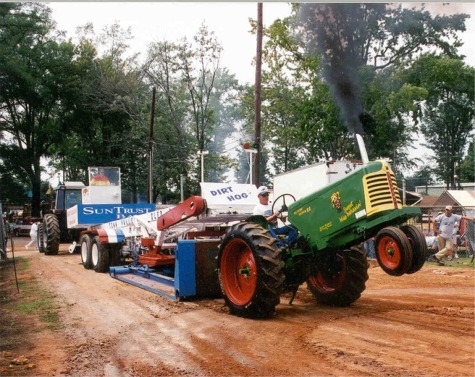
The smells of sweat and fried dough hung in the air, mixing with the burned oil of the tractor pull. He was sitting with hands clasped, wearing a plaid shirt with the sleeves rolled up and a challenge on his deeply lined, leathery face. She was standing, looking all the world like a Grant Wood painting, and thrusting matchbook-sized pamphlets into the hands of passersby. I walked by out of reach, but I couldn’t help looking at the booth, one of many at the county fair. “How sure are you of going to heaven? Are you 50% 75% 100% sure?” read the banner. My friend wondered aloud about how one arrives at a 75% surety of heaven. I chuckled, but I was unable to keep walking by the booth. On the table, a wooden contraption with three small doors read: “Do you know the three things God CANNOT do?”

I stopped. The Grant Wood painting saw my furrowed brow and handed me a pamphlet. It looked like a doll’s magazine. A smiley face decorated the cover along with the words: “Have you accepted Jesus Christ as your personal Lord and Savior?” I closed my hand around the pamphlet and pointed to the three doors. I tried to keep the incredulity out of my voice, but I failed miserably: “So, what are the three things God can’t do?” I said.

She opened the first door: “God CANNOT lie.” She opened the second door: “God CANNOT change.” She opened the third door: “God CANNOT let people into heaven who have not been born again.”

We talked for fifteen minutes. I told them I did not disagree with the first door, but that I preferred to state the sentiment in positive terms: “God always tell the truth” or “God is trustworthy and faithful.” I said that a “lie” is the absence of the “truth,” and that I’d rather talk about God’s goodness shown in God’s truthfulness than to try to hook people with the trappings of sensationalism. After five minutes, the man commented that I was very intelligent. I took that as a compliment, but I have a sneaking suspicion it was not meant as such.

As our conversation continued, I realized we weren’t conversing. We were sparring. I’ve never had a taste for theological pugilism, but I was already three rounds deep, so I kept jabbing and blocking. I’ve had this same conversation with county fair proselytizers, but never as an ordained person. After the man commented on my intelligence, he asked me what I did. I said, “I’m a priest.” Without another word, he thrust another pamphlet in my hand. It was about how Roman Catholics aren’t real Christians and are going to hell.The same thought kept jumping to the front of my mind: “People like these, no matter how pure and ardent their intentions, make my job harder.”

It didn’t matter that I wasn’t a Roman Catholic. It didn’t matter that I agreed with the man and woman several times during our bout. The only thing that mattered was that I didn’t buy into the way they framed the Christian faith–as a bottom-line venture whose only goal is to “save souls” by following the instructions in the smiley-face doll-sized magazine. Surely, there’s more than that. Surely, the abundance of what God has done and is doing is more important than a “what’s behind door number 3” marketing scheme concerned with what God CANNOT do.

As I walked away, I wondered what had been accomplished during our boxing match. In the Gospel according to Matthew, Jesus says that when two or three are gathered in his name, he will be in the midst of them. Were we gathered “in his name” or in our own names, intent on KOing the other’s theological stance? Was Jesus there? Was I 50% 75% 100% sure of his presence? Looking back, Jesus was there, but he was not in my corner and he was not in their corner. He was there trying to get us to leave the ring.