

Sermon for Sunday, August 23, 2015 || Proper 16B || John 6:56-69; Joshua 24:1-2a, 14-18
 Today we complete our long, five-week march through the sixth chapter of the Gospel according to John. We read every last word, some of them multiple times. Jesus fed the crowds – five thousand strong – with one person’s groceries. He walked on water to meet his companions across the sea. He spoke to the crowds at length, hoping to move them past their rumbling tummies to the deeper craving for the “bread of life”; that is, the sustenance of abiding relationship with him. But the people don’t get it. They aren’t ready to hear what he has to say. And yet, Jesus keeps pushing. He keeps extending the metaphor, making it more explicit, until he’s talking about eating and drinking his own flesh and blood.
To this many of his disciples respond, “This teaching is difficult; who can accept it?” And they stopped following Jesus that day. They “turned back and no longer went about with him,” John narrates. I bet – in that moment as they were wandering away back to their old lives – Jesus could feel the power to compel them to stay surge up within him. I bet he knew that if only he willed it, they would turn around and come back, like dogs on leashes. But Jesus knew better. He knew that every person had to be free to choose to leave, or else it wouldn’t ever be worth staying.
After they leave, he turns to his twelve most faithful companions, his inner circle, and asks them a question. I always hear a thick sadness in his voice when I read these words: “Do you also wish to go away?” In that moment teetering on despair, Peter gives Jesus a gift: “Lord, to whom can we go? You have the words of eternal life. We have come to believe and know that you are the Holy One of God.”
In John’s Gospel, belief is synonymous with relationship. So when Peter says these words, he affirms his relationship with Jesus, despite any perplexity Jesus’ words about flesh and blood might have caused him. This is the same Peter who later denies knowing Jesus three times on the terrifying night of Jesus’ arrest and trial. And this is the same Peter who even later has this denial healed when Jesus asks three times if Peter loves him. Peter’s real name is Simon. Jesus nicknames him Peter, which means “Rock.” You may recall in another account of the Gospel Jesus making a pun: I call you Peter/Rock, and on this Rock I will build my church.
When you call someone a rock, you mean she is steadfast to the end. “Patty was a rock the whole time her daughter was in the hospital.” That may seem true from the outsider’s perspective, but the real story probably looks more variable – like Peter’s. Maybe Patty held it together whenever she and her daughter had visitors. After all, in an odd but predictable reversal of roles, it often falls on the people involved in a tragedy to comfort those coming to visit. Of course, she was a rock when visitors came around. But how many times did Patty break down sobbing in the middle of the night by her daughter’s bedside, alone but for the steady beeping of the machines? How many times did despair creep in? How many times did she rage at God (a totally appropriate reaction to her situation, mind you)?
I seriously doubt that anyone who’s ever been called a “rock” ever felt like one themselves. In our example, Patty might even feel some misplaced shame for her lack of stability if people label her “rock,” no matter how well meaning they are. Throughout the Gospel and the book of Acts, we can see Peter trying to live up to his nickname, only to fail on multiple occasions. One of these failures actually leads to a huge expansion of the early church, when the Rock realizes he is wrong and changes his mind.
All this to say that the life of faith is much more variable than many of us desire or are comfortable with. None of us is on a perfectly straight road like the Interstates out in the mid-West. Rather our lives of faith run more like rivers or streams – twisting around boulders, bubbling through rapids, tumbling down waterfalls, flowing swiftly, flowing lazily, sometimes stagnating, sometimes surging.
And it has always been this way. In the reading from the Hebrew Scriptures this morning, Joshua puts a choice before the Israelites: “Choose this day whom you will serve.” Will it be the lifeless and false gods of the peoples of the land or will it be the Lord. Joshua answers for himself first: “As for me and my household, we will serve the Lord.” All the people answer the same way: “We also will serve the Lord, for he is our God.” But it doesn’t take long for this promise to fade into obscurity. In fact, the rest of the Hebrew Scriptures narrate the story of the people of Israel oscillating between following God and throwing their lot in with some other convenient deity of the month.
So why is the life of faith so much more variable than many of desire or are comfortable with? Well, because we don’t have two lives – a normal life and a life of faith. We just have life. And life is all about change. If we labored under the delusion that our faith could not and should not have some variability, then that faith would never line up authentically with the rest of our lives. It would be as disconnected from us as a Midwestern Interstate is from a stream meandering down a mountain.
I urge you, therefore, not to beat yourself up when you don’t feel as faithful as you did last week or last year. There are periods of time when each of us – including me – are lost in the desert. But the good news is this: in the end, our faith or lack thereof is only a part of the story, and a small part of the story at that. God’s steadfastness matters much more than ours. The story of the Hebrew Scriptures is not just the one about people turning away from God; it’s also the one about God continually calling them back. Remember, God was there in the desert, too.
This interplay between God and God’s people finds expression in a curious grammatical ambiguity that crops up in many of St. Paul’s letters. In several places Paul is either talking about “faith in Jesus Christ” (that is, our faith) or “faith of Jesus Christ” (that is, Jesus’ own faith). It could mean either, and Paul probably wants it to mean both. The steadfast faith of Jesus Christ, who is the true Rock (no matter Simon Peter’s nickname), holds our faith for us when we are too angry or too sad or too distracted or too apathetic to access it ourselves. In this, the faith of Jesus Christ is like our regent, ruling in the place of us, the infant kings and queens, until we are ready to take up the mantle.
I like to think that some of those folks who walked away from Jesus came back another day because they realized they were still hungry and only his words of truth could fill them. I like to think they once again took up the mantle of faith. The same goes for us. The invitations that Jesus Christ offers to us to join him in his work of healing and reconciliation will never stop arriving at our doorsteps. His faith in us activates our faith in him. Our meandering streams can each day meet his surging river. Why not today?
 Twelve years ago today, I preached my very first sermon. Delivering a sermon was a requirement of my internship at St. Michael and All Angels Church in Dallas, Texas. So when the other four interns and I received the readings we’d all be preaching on, we dove right in, determined to preach the best sermons the great state of Texas had ever heard. That didn’t happen. But we each managed to say something coherent about Jesus calming the storm, and none of us fainted in the pulpit, so I call that a win. I have a muffled recording of the sermon I preached. I made the mistake of listening to it earlier this week. Wow, it’s really bad. There was something about complacency and faith and God shaking us up and Isaac Newton’s first law of motion, but I didn’t real say anything to take home with you.
 “Sing to the Lord a new song, for he has done marvelous things.” Today’s psalm begins with these glorious words, and for me it begins with a question. Why does the song we sing have to be a new one? Why can’t the song be an old song, one that has stood the test of time? “Amazing Grace,” perhaps? Or how about “In the Garden?” While these songs are beautiful and wonderful and should never, ever be lost to the ages, I think the psalmist feels the urge to sing a new song because he or she has discovered a fundamental truth about God’s movement in God’s universe. God is always doing something new.
 Twice last week, I got to wear a tie. I went to the MASH gala fundraiser and to the Eastern Connecticut Symphony concert, at which several of our parishioners sang their hearts out performing Carl Orff’s Carmina Burana. The benefit was fabulous, the concert was wonderful. And I went to both wearing a tie. This may sound like a strange thing for me to report to you, but I assure you, I am going somewhere with this. Whenever I’m getting dressed, I’m faced with a wardrobe decision. Do I wear my black shirt and collar or not? If I decide not to, then I leave the house incognito. I’m still a priest, of course, when wearing a coat and tie or jeans and flip flops, but people at the concert hall or grocery store won’t be able to spot that about me on first glance. (They probably think I’m a college sophomore home on break.)
 I’ll tell you all the truth: I’ve been struggling lately. The day the twins were born, about a month ago now, life took a dramatic turn. I knew this tectonic shift in life was going to happen, but I sure wasn’t prepared for it. At times over the past month, I have felt helpless. I have felt frantic. I have felt desperately inadequate. The learning curve for new parenthood is steep, and I’ve had to adjust my expectations about how fast I catch on. I’ve always been a quick study, but in this particular case, there’s no substitute for the exhausting daily grind of caring for the twins. I guess what I’m trying to say is that I knew it was going to be hard, but my definition of “hard” has never reached the superlative level of caring for multiple newborns.
 Good morning! It’s good to be back after three weeks away. I know I’ve only been next door, but it seems like another world when newborns are filling all your waking (and the few sleeping) moments. I seriously thought about skipping this sermon entirely and just showing you baby pictures for the next ten minutes, but then I realized lemonade on the lawn might be a better venue for that. So, let’s get down to the sermon.
 As I contemplate my impending fatherhood, the story of the binding of Isaac, which we read a few minutes ago, has taken on new meaning for me. I’ve always struggled with this story, and, if you’ve ever read or heard it, I’m sure you have, too. This reading from the Hebrew Scripture brings up so many questions: why would God ever test someone in such a barbaric way? How could God be so apparently abusive? How could Abraham even think about going through with it? If the angel hadn’t stopped him, would Abraham actually have killed his son? What would that prove?
 Full disclosure: the chapter of the Gospel I just read to you easily makes my Top 5 list of favorite passages of scripture. Nicodemus is my favorite recurring character in the entire Bible. Even the name of my website – wherethewind.com – has its roots in this chapter. I love John 3; I’ve read these words many hundreds of times over the years. I barely needed to look at the Gospel book while reading just now, because these words have carved out a space within me. I know them by heart. I knew what they said before I even sat down to work on this sermon. I was certain of their content; just as certain of their content as Nicodemus is of his knowledge at the outset of his conversation with Jesus.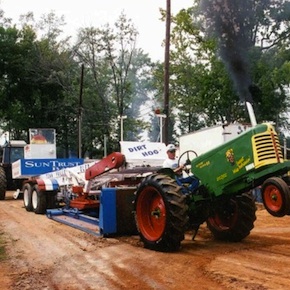
 The smells of sweat and fried dough hung in the air, mixing with the burned oil of the tractor pull. He was sitting with hands clasped, wearing a plaid shirt with the sleeves rolled up and a challenge on his deeply lined, leathery face. She was standing, looking all the world like a Grant Wood painting, and thrusting matchbook-sized pamphlets into the hands of passersby. I walked by out of reach, but I couldn’t help looking at the booth, one of many at the county fair. “How sure are you of going to heaven? Are you 50% 75% 100% sure?” read the banner. My friend wondered aloud about how one arrives at a 75% surety of heaven. I chuckled, but I was unable to keep walking by the booth. On the table, a wooden contraption with three small doors read: “Do you know the three things God CANNOT do?”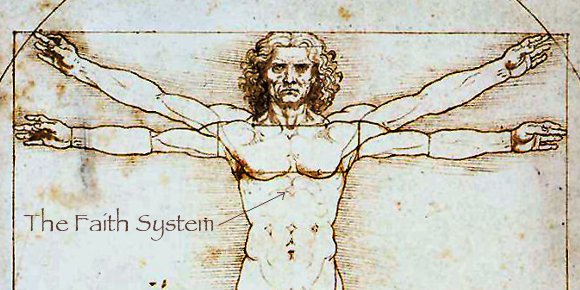
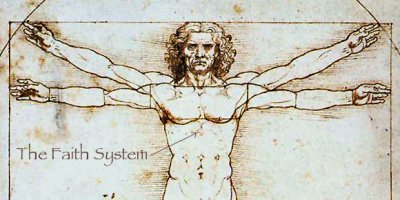 Because of this difficulty, I’d like to invite you to imagine with me a reality that we don’t often think about. When God created animals, God gave us all sorts of biological systems that allow us to live. The respiratory system lets us breath, the circulatory system cycles our blood through our bodies, the digestive system turns food into nutrients. There’s the nervous system, the endocrine system, the lymphatic system and so on. But we were made in God’s image and likeness, which means we have one more system that other animals don’t have. We have a spiritual one to go along with all our biological ones. We have a faith system.
 Where the Wind...