Sermon for Sunday, March 1, 2015 || Lent 2B || Mark 8:31-38
The last week of July has been a wonderful week of my life ever since I was eleven-years-old. This is the week my family takes our annual vacation to the mountains of North Carolina, to a quiet Episcopal retreat center called Kanuga, where we sit and read and play board games and enjoy each other’s company and never watch TV. In 2010, the last week of July became more special because it’s the week Leah and I got engaged. And in 2014, it became even more special because it’s the week Charlie and Amelia were born. Whenever I think about the moment I slid the ring on Leah’s finger, I am overcome by the joy that echoes into the future from that hot July afternoon. Whenever I think about Amelia and Charlie screaming their welcome to the world, I am overcome by the extravagance of the gift God gave us in them. In both cases, when I remember those two focal moments, I realize again and again a profound truth. I realize that I am no longer the main character in my own life.
For the first 27½ years of my existence, my chief concern, whether I acknowledged it or not, was me. I was Numero Uno, first in line, the Big Cheese. I was in the spotlight. Sure, I lived my life with a dollop of self-sacrifice, of serving the other at my own cost, but this behavior was much more garnish than entree. I was the main character of my life: the rest of the cast never really could rival me for my own attention. Then I met Leah and everything changed. Suddenly, not only did I desire to share the spotlight, I would have been excited to give the prime spot to her alone. A whole new world of service opened up to me that I don’t think I was ever aware of before. When we came together as a couple, I finally understood the edge of the expanse of the joy of self-sacrificial love. Adding the twins to the mix makes me understand even more of that joy, but I know I have a long way to go yet.
Leah and I met five years ago this month, and looking back, I chuckle at God’s sense of humor and rejoice in God’s providence. I can just hear God the Father saying to God the Son: “You know that Adam Thomas fellow? He’s my beloved child, he’s even a priest of the Church, but he just doesn’t get it. He doesn’t understand your words, Son, when you said to your friends: ‘If any want to become my followers, let them deny themselves and take up their cross and follow me.’ ”
“You know what we should do?” says God the Son. “We should get him to Massachusetts so he can meet Leah Johnson. I think she will clue him in.”
You see, I spent 27½ years – that’s 86% of my life, by the way – trying to have my cake and eat it to. I tried to follow Jesus and remain the main character in my own life. But Jesus’ words and his own self-sacrificial love show us a different way.
Jesus says, “If any want to become my followers, let them deny themselves and take up their cross and follow me.” We Americans are programmed to cringe at the thought of “denying ourselves.” We want giant SUVs that have great fuel economy. We want the beer to taste great and be less filling. We want to treat ourselves to chocolate desserts that don’t have any calories. We want to pursue our happiness, and we don’t seem to mind advertisers telling us just what our happiness should look like. These marketers know they will rake in so much more money if they continue convincing us that being the main characters of our own lives is the best way to live.
Until I met Leah, I bought into the hype. I’ll let you in on a secret: when I was in elementary school, my parents sent me to a session or two of therapy because of how awfully and brutally I insisted on getting my own way. The temper tantrums I threw if we didn’t go to the restaurant I wanted to go to were the stuff of legend. One of these tantrums happened on my mother’s birthday. While that behavior faded as I got older, I still succumb all too often to our me-first consumer culture. I’d be willing to bet that you do to.
But when we deny ourselves and stop striving to be the main characters, we no longer feel shortchanged when Jesus spins the spotlight away from us and shines the light on others. These others are always the ones that Jesus desires us to see: the ones who seem to us to be the ensemble, those brought in just to fill out the cast, the extras. In our version of the film, these extras are those who have no roof over their heads or who have no money for food or who lay in the nursing home with no one to visit them. But in God’s version of the film, these extras are the stars. When we insist that the spotlight stay on us, these others remain in the shadows, too unimportant to garner any attention. But when we follow Jesus Christ as he yearns for us to, we let go of our stranglehold on the spotlight and finally see those whom he would have us see.
And when we see in this way, when we notice those outside our own spotlights, something happens that the advertisers and marketing directors never prepared us for. We discover a latent desire that Jesus’ words planted within us when we were looking the other way. We discover the desire to be generous and welcoming to those who never enjoy the spotlight. We look the ensemble cast members in the eye and realize that we want to know their names and where they grew up and what their hopes and dreams for the future are. We turn out our pockets and volunteer our time and invite the stranger to become friend because by doing so we notice clearly the footsteps of Christ walking one step before us. We feel the life of Christ welling up from within us and connecting with the life of Christ welling up from within the other, who now shines in the spotlight.
Jesus Christ is always walking one step before us, but we don’t always walk one step behind him. We stray, we go off on our own, we set up camp rather than continue following. But even with all of our wilderness wanderings and our prima donna tendencies, he continues to stay one step away, calling us back to his path. His path is hard: the way of denial, of self-sacrifice, of cross-carrying. But his path is also the way of true joy.
When we walk down Jesus’ path, the spotlight is never on us, but on those around us, those walking with us. Now that God has blessed me with a partner and children to remind me that I am not the main character of my life, I have crept slowly and haltingly onto this path and found the joy of stepping out of the spotlight, the joy of generosity and welcoming and service. Perhaps you have, too. Here’s truth: as we turn the spotlight on each other and on those Jesus would have us see, together we will notice, there marking the ground in front of us, the footsteps of Jesus Christ.
Sermon for Sunday, January 11, 2015 || Epiphany 1B || Genesis 1:1-5; Mark 1:4-11
You may recall during a sermon last spring, I challenged you to choose six words to proclaim your faith. I remembered the “Six-Word Witness” challenge as I began to prepare for this new season after Epiphany, as there happen to be six Sundays between now and Lent. If you read my article in the recent issue of The Lion’s Tale, you got a sneak peak at a particular six-word witness, one that describes the trajectory of the next six weeks as we hear the story of the beginning of Jesus’ ministry. My plan during this season after Epiphany is to connect this sermon with the next five to tell a much larger story of our lives as followers of Jesus Christ.
Yes, you heard that right. Today’s sermon is the beginning of a six-part series. That means if you have plans to go skiing in a couple of weeks, I’m afraid you’re going to have to cancel.
We begin today with the first word: Affirmation. And we begin today, appropriately, at the beginning. What we find when we enter the story as early as we possibly can is the affirmation of goodness. “In the beginning when God created the heavens and the earth, the earth was a formless void and darkness covered the face of the deep, while a wind from God swept over the face of the waters. Then God said, ‘Let there be light’; and there was light. And God saw that the light was good.”
Right away, in the first verses of the first chapter of the first book of the Bible, God has already affirmed something as good. This pattern continues throughout the rest of the creation story. Each day God creates, and that which God creates God affirms as good. Thus the fundamental goodness of creation is built into the very fabric of creation. From the sweeping array of celestial bodies to the lowliest tadpole dwelling in the muck to us troublesome and ungainly humans, God affirms everything God makes with the seal of goodness.
(As an aside, God calls us humans “very” good while the rest of creation is merely good, but I think that has more to do with the fact that we humans we were the ones who wrote it all down.)
The reality that goodness entered creation on the ground floor is of utmost importance for the rest of the ongoing story. There have been folks in the past, notably in the early centuries of Christianity, who taught that the physical creation God made — the matter, the flesh, the stuff we can see and touch — was, in fact, inherently evil. They taught that only the spiritual realm held any goodness, and so they sought to divorce themselves from the flesh entirely. Of course, to make this heretical mental leap, they had to ignore the bulk of the Biblical witness, which they did with no qualms at all. Their path led to disengagement from the world; the founding of secretive, insular societies; and what I imagine was quite a lot of struggle against instincts that are totally normal, but which they decided were base and evil. Thankfully, the majority of Christians were not led astray by this faulty understanding of creation. And so we still have the witness of Genesis reminding us of God’s affirmation of the fundamental goodness of creation.
But now comes our own mental leap. Or call it a leap of faith. We move from one beginning to another, from the beginning of creation to the beginning of the good news of Jesus Christ. At the outset of Mark’s account of the Gospel, Jesus comes up out of the water of the River Jordan during his own baptism. He sees the heavens torn apart and the Spirit descending on him like a dove. And he hears a voice from heaven say, “You are my Son, the Beloved; with you I am well pleased.”
Notice the placement of this piece of the Gospel. Before Jesus has a chance to do anything of consequence; before his ministry gets off the ground; before any miracles or teachings or healings or his death or resurrection, God showers upon Jesus God’s love and pleasure. Just like God affirms creation as good right from the start, God affirms Jesus’ identity as God’s beloved Son before he has a chance to earn the right to such a name.
Now, you might be thinking: “Of course God affirms Jesus as God’s beloved Son — that’s who he is! What about me?!” Yes, what about the rest of us troublesome, ungainly, and yet “very” good humans? Well, to make our leap of faith, we need a little help from our friend the Apostle Paul. He writes to the church in Rome: “For all who are led by the Spirit of God are children of God. For you did not receive a spirit of slavery to fall back into fear, but you have received a spirit of adoption. When we cry, ‘Abba! Father!’ it is that very Spirit bearing witness with our spirit that we are children of God, and if children, then heirs, heirs of God and joint heirs with Christ” (8:14-17).
If the writers of Genesis were presumptuous to call us “very” good, then Paul must be doubly so to claim that we are joint heirs with Christ. Or is he? Perhaps, instead, Paul has seen into the truth of the matter, seen Jesus’ plan all along, a plan to show us what we have always been and to reaffirm our inherent goodness, our lovableness.
And here’s where our own version of the heresy I spoke of earlier comes to into play. While those folks taught the matter of creation was inherently evil, there is an overriding voice in our modern American society telling us that we aren’t exactly evil, but we sure are deficient. I’m of course referring to my favorite homiletical punching bag, the ubiquitous marketing department. Marketing campaigns work like this: they tell us ways we are defective, and then they try to sell us products designed to improve those defects. Truck commercials tell men they aren’t manly unless their vehicles can haul a couple tons of dirt. Toy commercials tell kids they won’t be happy unless they receive the hot new toy for Christmas. And don’t get me started on commercials aimed at women. Judging by the ads, women in this country have hair that isn’t shiny enough; bodies that aren’t the right shape; the wrong handbags, clothes, shoes, and earrings; too many wrinkles; and not enough diamonds.
All this must be true, right? I mean, we’re bombarded with our supposed deficiencies everywhere we turn. Then we repeat them over and over again until they seem like truth. And pretty soon, it’s not just the marketers, but everyone getting in on the fun. And that’s when the boy feels deficient because he hasn’t played the video game all his friends are talking about. That’s when the girl feels defective because she doesn’t quite fit the clothes her friends have started to buy. That’s when the parents feel substandard because they can’t afford the tuition at the “best” college. That’s when we forget our inherent goodness, the goodness God affirmed in the first rushing breath of creation.
Here our leap of faith continues, because the marketing department has convinced us of our utter worthlessness. And so we might not want to believe that Jesus has invited us — yes, even you and me — to be joint heirs with him of the love and pleasure of God. Jesus received this affirmation of his belovedness before his ministry even started. Likewise, you and I who are joint-heirs with Christ have never done anything in our lives, nor will we do anything in our lives, to earn God’s love and pleasure. They are ours intrinsically. They are ours because we are God’s. And because we cannot earn God’s love and pleasure, we cannot do anything to lose them either. They are part of what makes us who we are – the best part of what makes us who we are. God’s love and pleasure are nestled at the very core of our beings, nestled right next to the affirmation of goodness, which God breathes into all creation.
Archbishop Desmond Tutu summed this up in one dazzling sentence. He once said, “God does not love us because we are lovable; we are lovable because God loves us.” This love is the core of our identity, not something we earn, not something that can be dislodged due to our own presumed deficiencies. When we choose to believe this fundamental truth, we will be ready to listen — really listen — for God’s invitations in our lives. It is to these invitations we turn next week as our six-part series continues. But for today, feel this truth in your bones. Feel God say this to you: “You are my Son. You are my daughter, the beloved. With you I am well pleased.”
Sermon for Sunday, January 18, 2015 || Epiphany 2B || 1 Samuel 3:1-10; John 1:43-51
Last Sunday, we started our six-part sermon series about our lives as followers of Jesus Christ. And we began with the word “Affirmation.” God affirmed in the earliest moment of creation the fundamental goodness of that creation. And God affirmed Jesus – and by extension we who are also God’s children – as the beloved, in whom God is well pleased. The love and goodness of God form the core of our identity. They are not something we earn. They are not something that can be dislodged due to our own presumed deficiencies. When we embrace this fundamental truth, we are ready to listen — really listen — for God’s invitations in our lives.
That’s the second word: Invitation. As we move on, you’ll see how closely linked our two words are, and you’ll see why we had to start with affirmation in the first place.
Invitations offer specific, time-sensitive choices about how you are going to spend your time and resources. A friend may invite you to her birthday party. A head hunter may invite you to apply for a new job. A coach may invite you to join a club soccer team. Or God may invite you. Let me rephrase – God does invite you, me, each of us to join God in God’s mission of healing and reconciliation in this world.
We’ll get to that mission next week since “mission” is our third word. For now, let’s stay with “invitation” – God’s invitation. When God invites us to partner with God in mission, we always have a choice and the mission is always specific. Individual invitations may be time-sensitive due to the exigencies of what a particular mission is, but God’s invitations never expire. God renews them day by day, hour by hour. God is always inviting us into deeper relationship, into closer partnership, into greater service.
In our story this morning from the Hebrew Scriptures, God calls to the boy Samuel four times. No three strikes and you’re out here. On the fourth time, Samuel responds to God’s invitation, but I imagine God would have kept calling until Samuel and Eli figured out what was happening.
Sadly, unlike Samuel, we often turn away from the invitations God sends us. We ignore them or decline them because of where or why God delivers them. This is because, most often, God’s invitation intersects with our inadequacies, our pain, our brokenness. Each of us is broken in one way or another, or in many ways. Brokenness is part of the human condition because perfection is far from us and sin is near. We hurt each other. We hurt ourselves.
But when we allow God to move in our lives, we discover God redeeming this brokenness by offering us invitations to go to the center of our pain. Because only at the center of our pain can healing begin. And because only at the center of our pain will we find solidarity with others feeling the same pain as we. God’s desire to extend holy invitations is not the reason we are broken; rather, accepting a holy invitation is the best way to make our brokenness mean something for ourselves and to others.
I’d like to share with you a deeply personal story about my own brokenness to illustrate this point. I share this not to garner sympathy, but to demonstrate from my own experience God’s astonishing ability to redeem brokenness and refashion old pain into new possibility.
When I was eleven years old, the church broke me. My father was three years into his rectorship at his first church when everything started to fall apart. His misplaced enthusiasm and zealous naïveté collided with an intransigent establishment that said it wanted change and growth, but was not ready to face the consequences of such things. My father was the proverbial unstoppable force, and the establishment the immovable object. And my mother, sister, and I were caught in the middle.
I do not remember much about the conflict. But I do remember one Sunday morning. It is a fixed point in my life. I was acolyting at the 8 o’clock service. My father stood up to preach, but a few minutes into his sermon, a man in the congregation also stood up, a man who had been a friend to our family when we first moved. He spoke out sharply, telling my father to “sit down and shut up.” I had never heard anyone speak to my dad that way, let alone during a church service. I started to cry. My father came over and calmly asked if I’d like to go home. I nodded, and he hugged me and helped me back to the sacristy. Later that week, several parishioners accused my father of planning and then staging my tearful departure from the church.*
A few months after that, we moved to Alabama and were met by the most gracious and loving congregation a clergy family could ask for. But I didn’t trust them. I always wondered when the betrayal would happen. I was broken.
Where is God’s holy invitation in this story? How is God redeeming this brokenness? Let me tell you. The church that broke my family was also called St. Mark’s. It was here in New England, about sixty miles from this spot. It was my father’s first call as rector. We lived next door in the rectory. Our family had two young children, a boy and a girl. You might see a pattern here.
Somehow, by accepting God’s holy invitations throughout my life, my family has arrived at a place close to the center of my childhood pain. And I feel God redeeming that pain every day as I collaborate in ministry with the wonderful people at this St. Mark’s; and as I walk with people who have also been broken by the church.
Each of us is or has been broken in one way or another. But through God’s invitations, our brokenness can mean something. Perhaps alcohol ruined your life years ago, but you’re a dozen years sober, and now you sponsor new members of AA who are trying to turn their lives around. Perhaps the scourge of gun violence cruelly took the life of a loved one, and now you rally support to end such senseless killing. Perhaps you were in the closet in high school and know the pain of one living a lie, and now whenever you meet a gay teen you do all in your power to bring hope to that person’s life. “It gets better,” you say, and you mean it. These are God’s invitations, delivered to the heart of our own pain and brokenness.
And this is where affirmation re-enters our discussion. Since so many of God’s holy invitations originate in our brokenness, our pain can trick us into thinking the invitation is meant for someone else. But we err when we think that God can only use the whole parts of us, as there aren’t many of those anyway. That’s why we must remember that before anything else, God affirmed us as God’s good and beloved children. No amount of brokenness can keep God from inviting us into deeper relationship, closer partnership, and greater service.
We’ll pick up this greater service next week when we reach the third word: “Mission.” But for now, I’d like to share one last story of finding God’s invitation in our brokenness. It comes from Leo McGarry, the chief-of-staff on the fabulous TV show, The West Wing, and a recovering drug and alcohol addict. Leo tells the struggling Josh Lyman this parable:
“This guy’s walking down the street when he falls in a hole. The walls are so steep he can’t get out. A doctor passes by, and the guy shouts up, ‘Hey you, can you help me out?’ The doctor writes a prescription, throws it down in the hole, and moves on. Then a priest comes along, and the guy shouts up, ‘Father, I’m down in this hole, can you help me out?’ The priest writes out a prayer, throws it down in the hole, and moves on. Then a friend walks by. ‘Hey Joe, it’s me. Can you help me out?’ And the friend jumps in the hole. Our guy says, ‘Are you stupid? Now we’re both down here.’ The friend says, ‘Yeah, but I’ve been down here before, and I know the way out.’ ”
*I shared with my father, the Rev. Dr. William Carl Thomas, the few paragraphs concerning my experience as an eleven-year-old, and he asked me to share with you what happened after I left the church from his perspective. He writes: “This is a powerful part of your story. You should and must tell it. I would, however, ask you to consider adding what happened after you left the sanctuary (interesting word: not a place of safety for you at that time!). I resumed my sermon, the text was on the golden calf while Moses was on the mountain and the whining that accompanies unrealistic expectations: no wonder I was challenged. The most odd and graceful thing for me occurred as we shared holy communion. Everyone came to the altar rail, including my antagonist. The blessing (and irony) of offering him and the other antagonists the grace found within the sacrament still prompts a sense of wonder and joy when the hugeness of God’s love is made evident.
Sermon for Sunday, January 25, 2015 || Epiphany 3B || Mark 1:14-20
Two weeks ago, we felt God affirm us as God’s good and beloved children. Last week, that affirmation allowed us to accept God’s holy invitations, which most often originate in our own brokenness. This week, we ask where those invitations lead us, and we find our third word in this six-part series. That third word is Mission.
In church lingo, the word “mission” is usually followed by the word “trip.” Perhaps you went on a mission trip as a teenager to a Native American reservation or spent a week painting a church in a town in El Salvador. When I was in seminary I went on a mission trip to New Orleans a few months after Hurricane Katrina. The group went down with Habitat for Humanity thinking we were going to be rebuilding homes. Turns out it was too soon to begin rebuilding, so we spent much of the week mucking putrid, knee-deep mud and silt out of water-logged homes on streets, whose road signs had been ripped off their poles by hundred mile an hour winds. We wore white coveralls, masks, and plastic gloves, which we duct-taped to our wrists. We spent the days bent over our shovels, thinking of nothing more than the next scoop of muck, because if you tried to think bigger thoughts, you became suddenly and irreversibly overwhelmed by the sodden despair clinging to every surface. Everywhere you looked, the five-month old disaster was still raw, still fresh.
When we returned to Virginia, it felt like coming home from a trip to Mars. I woke up the morning after we got back, and I wondered if it had all just been a bad dream. Then I rose and felt the bone-deep ache in my muscles and knew it was no dream. We had been there. We had helped. A little.
For that week in January 2006, bending over a shovel in a house on the outskirts of New Orleans was my mission from God. I have no doubt about that. I bring up this particular, weeklong excursion, however, to point out just how atypical it is. Most people never go on mission trips. If you do regularly, you’ll go probably a single week a year. I’ve only been on one other since New Orleans. Surely, there’s more to mission than just the trips?
When Jesus invites those four unsuspecting fishermen on the shore of the Sea of Galilee, he doesn’t say, “Follow me for a week.” He just says, “Follow me.” And then he gives them their mission: “And I will make you fish for people.” What Jesus offers is not just a break from their nets, but a complete change in their lives as they know them. Simon, Andrew, James, and John do not sign up for a mission trip. They sign up for a mission life.
This is the opportunity Jesus offers us today. He offered it yesterday, too, and he will offer it again tomorrow. He doesn’t say, “Follow me for an hour and fifteen minutes on Sunday morning.” He doesn’t say, “Follow me only when you are around your church friends.” He doesn’t say, “Follow me only when it is convenient.” He just says, “Follow me.” The invitation embedded in those two words promises a life of meaning, of service, of sacrifice, and of joy; not an easy life, but a full life, a life of purpose.
And all Jesus wants in return is you. All of you. Everything that makes you, you: your gifts and talents, as well as your pain and brokenness; your hopes and dreams, as well as your fears and nightmares. Offering everything we are to Jesus helps God tailor our missions to our lives. God will only use the parts of us that we give back to God. So if we want our missions to be authentic outpourings of ourselves for God’s work in the world, then we have to be willing to give everything — and I mean everything — back to God. There may be a dark corner of your life that you don’t want anyone to see. But shining a light into that dark corner may be the exact mission God yearns for you to accomplish. It may be painful. It may lead you to places you never thought you’d go. But it will be your mission. And because you will be following Jesus, he will arrive there ahead of you.
Like the original disciples, when we sign up to follow Jesus, we sign up for mission lives. But before you cringe away from the level of commitment that Jesus calls forth from us, let’s consider those original disciples. For them, following Jesus was an immersive experience. They lived with him. They ate with him. They could tell us if he snored or which sandal he always put on first. And still they often misunderstood him, disbelieved his power, and even abandoned him in his own hour of need. And these were the fellows who knew him in person.
Living mission lives does not mean living perfect lives. Like I said, Jesus wants us – warts and all – to follow him. The brokenness the disciples exhibit in the Gospel is the same brokenness that leads us to God’s holy invitations and then on to our missions.
Jesus’ own mission led him to the cross, and it is the image of the cross that I’d like to dwell on for a moment. Think of the vertical plank of the cross as all the possible missions God could call you to, everything that leads to healing and reconciliation in this world. Now think of the horizontal plank as the entirety of yourself that you have to give to the one who invited you to follow him. The spot where the two planks meet is the center of your mission life. And it is also the spot where Christ gave up his life in order to give you yours.*
The center of the cross is not a pleasant place. Neither will be many of the places where we find ourselves engaged in our mission lives. But just as Jesus transformed the cross from a symbol of death and brokenness into a symbol of life and wholeness, Jesus has already gone ahead of us to our mission fields and prepared the way for us to participate in this same transformation. All we need do is leave our nets and follow him there.
As you contemplate the mission God is inviting you to accomplish with your life, remember these things: Because your authentic mission life resides at the center of the cross you have taken up, it will be something uniquely tailored for your gifts and passions. You will identify with it because it will recall something about you that is or was broken. And, though it might be the most difficult thing you have ever done, you will still feel the glow of rightness about it even when everything is going wrong.
A final story about my own awakening to a life of mission: about five months after the trip to New Orleans, I found myself in the pastoral care office of Children’s Medical Center in Dallas, Texas for a summer residency as a chaplain. There were eight of us, all young and zealous. We had just gotten our hospital badges, but surely there was a mistake. The badges said, “CHAPLAIN.” Not Chaplain Intern. Not Chaplain-in-Training. Just CHAPLAIN. You see, our advisors borrowed their teaching techniques from mother birds. On day one, they flung us out of the nest to see if we could fly. We had our mission: it was right there on the badge. We were chaplains, like it or not. But of course, we could not fly. Within a week, each of us had crash-landed. We had met children living with and dying from cancer. We had seen disease and trauma ravage these small bodies. I had witnessed my first death, a three-month-old baby boy. We brand-new chaplains had a mission: to care for and comfort these young patients and their families. But we could not fly. And so we plummeted. We hit rock bottom. And at rock bottom is where our mission truly began, where Jesus was calling us to follow him. Because when we hit rock bottom, we found our young patients and their families there.
*Thanks to the Rev. Tim Hodapp for reminding me of this image for mission at a recent meeting.
Sermon for Sunday, February 1, 2015 || Epiphany 4B || Mark 1:21-28
Over the last month we have been considering our walks as followers of Jesus Christ. God affirms us as God’s good and beloved children. God invites us to the center of our own brokenness, where we seek the missions God yearns for us to pursue. We trudge with Jesus to the cross and find those missions where the two planks meet, at the intersection of the world’s need and our passions. So what happens when we engage those missions on a personal level? What happens when we join together to accomplish those missions on a larger scale? What happens when we partner with God to bring God’s healing and reconciliation to this world? The answer is our fourth word. The answer is Confrontation. The world fights back. Those who profit from the status quo fight back. The spiritual uncleanness that festers in the dank recesses of everyone’s heart fights back.
Here’s a recent example from a part of the world most of my generation participates in: video games. (Before you scoff it off as kids’ stuff, know that in the United States, the video game industry now pulls in more revenue than the film industry.) In the last six months, many brave women have started speaking out about the truly disgusting way women are sexualized (and sometimes brutalized) in video games, as well as about the utter lack of women working in the Tech industry in general. While there has been good positive reaction to this burgeoning discussion, the bulk of the reaction that has been grabbing headlines is negative. Grossly negative. Horribly negative. A subgroup of truly vicious male gamers has taken upon itself to lash out at these women in the most demeaning and degrading ways: death threats, rape threats, constant harassment, hounding on social media with language that makes me sick to my stomach, and even disclosure online of the women’s home addresses and telephone numbers to make them fear for their safety. These brave women, and their many male allies, have a mission: to alter an industry badly in need of change, to make it safer for men and women alike. And they are even now confronting a demonic piece of that industry, which seeks to terrorize them into submission.
I use the word “demonic” here on purpose. Whenever we engage in the missions God has invited us to pursue, demonic forces, both interior and exterior to ourselves, confront us and try to dissuade us by any means necessary from following through. Just look at the Gospel lesson for today. We aren’t even done with the first chapter of Mark, Jesus has barely begun his mission, and already he confronts an unclean spirit. This unclean spirit seeks to expose who Jesus is before Jesus is ready to do so for himself. But Jesus rebukes the spirit, silences it, and drags it kicking and screaming from its victim. This confrontation typifies Jesus’ ministry: in each encounter, Jesus confronts something that stands in the way of people being reconciled to God and to each other; and in each encounter, Jesus conquers, though not always in the ways we might expect.
Now, I know that dismissing this kind of Biblical story is easy in our day and age. We look to psychology for a comfortable, modern lens with which to interpret unclean spirits. Demonic possession belongs to horror films and to fantasy worlds populated by vampires, zombies and werewolves. But for all the science and science fiction that we can use to explain away stories like today’s Gospel, the fact of the matter remains that we ourselves and the world at large are afflicted by spiritual uncleanness. We have voices inside us that coerce and cajole us away from the missions God sets before us – demonic voices like apathy, lethargy, fear, greed, dominance. Society has these same voices, and in society these voices are bankrolled.
To these many voices, Jesus says, “Be silent, and come out of him.” Be silent, so we can hear the deeper, more constant voice of Christ propelling us away from these unclean voices. Heeding the voice of Christ amongst the clatter within prepares us to confront the same unclean voices in their entrenched forms in society.
A week and a half ago, I was blessed to listen to Dr. Cornel West’s keynote address to the Trinity Institute, which we webcast at St. Mark’s. Quoting the great W.E.B. DuBois, Dr. West offered four questions that always surface when good people confront the entrenched demons of society. Number one: “How shall integrity face oppression?” Number two: “What does honesty do in the face of deception?” Number three: “What does decency do in the face of insult?” And number four: “How does virtue meet brute force?” *
With these questions Cornel West outlines the confrontation that we people striving to follow Jesus Christ encounter. Being part of God’s mission of healing and reconciliation means choosing, as often as we can in our brokenness, the first option in each of these questions. How do we confront oppression? By exhibiting enough integrity to stand with the oppressed, especially when it is inconvenient or unpopular. How do we confront deception? By holding steadfastly to the truth, especially when it gets mangled by extremism. How do we confront insult? By nurturing the dignity of all people, especially when injustice has strangled any notion of decency from the equation. How do we confront brute force? By not submitting to it all that is good and virtuous about us; by not fighting fire with fire.
Remember the ultimate confrontation, in which our savior defeated each of these demonic forces. Jesus took all the oppression, deception, insult, and brute force the world could muster with him to the cross. And in his resurrection, he exposed them for what they are: a sham. Whenever we are seduced by the demonic voices within, we are falling victim to all that is counterfeit about our fallen world. Whenever we side with the entrenched injustice of society we perpetuate the fraudulent narrative the world loves to tell. Confronting this narrative with the true one that God continues to tell takes all the integrity, honesty, decency, and virtue we can muster – and more. Confronting this narrative takes embracing the love of God and letting it shine through us to bring to light everything that would prefer to stay in darkness.
That’s why we confess our sins every single week. We don’t do it because of our individual, personal sins, though those are subsumed into the act of confession. No. We confess every week as a sort of inoculation against the demonic voices that seduce us away from God’s mission. We confess every week to remember that God calls us to be part of the solution, not part of the problem. We confess every week to announce to ourselves and to each other that we are willing (and with God’s help ready and able) to confront the entrenched sins of the world.
When we joined up with Jesus, this is what we signed on for. This was his mission, and he continues it through us. I don’t know about you, but oftentimes I think it’s too big. I quiver in fear. I find myself rigid with spiritual lethargy. I start to give in to the coercing and cajoling voices that seek to muzzle my witness. When this happens to you, remember that you are walking with Jesus. And hear his voice rise over the clatter and say, “Be silent, and come out of him.”
*Hear Cornel West’s keynote address here. (Scan to 1:00:28 for the speech.)
(No audio this week: I forgot at the early service,
and then I thought I pressed record at the later service, but didn’t. Sorry!)
Sermon for Sunday, February 8, 2015 || Epiphany 5B || Isaiah 40:20-31; Mark 1:29-39
Next week ends our Epiphany sermon series, which means today we have come to our fifth word. But let’s start with a recap. Our first word was Affirmation: Nothing can take away God’s affirmation of us as God’s good and beloved children. Our second word was Invitation: God’s holy invitations most often originate in the center of our brokenness. Our third word was Mission: When we pick up our crosses and follow Jesus, we find God’s missions for us where the plank of the world’s need intersects with the plank of our passions. Our fourth word was Confrontation: All the forces of this fallen world fight back when we embrace God’s mission of healing and reconciliation.
And this brings us to today, to our fifth word. And that word is Rejuvenation. When I was deciding on the six words to highlight during this series, today’s word was the most difficult to find. I read the Gospel lesson over and over again, but nothing stood out. The whole passage was just more confrontation. But then on the tenth or eleventh reading, I noticed a verse I had always skimmed over before. “In the morning, while it was still very dark, [Jesus] got up and went out to a deserted place, and there he prayed.”
How wonderful is it that Mark, in all his hurry to move the narrative forward, would stop for a brief moment and give us this insight into Jesus’ character. Jesus must have been bone weary after the day he had. He spent most of the day at the Sabbath assembly, where we heard last week’s story of casting out the unclean spirit. Then he went to Simon and Andrew’s house, presumably for some respite. But he was needed there, too, as Simon’s mother-in-law was abed with fever. That evening, perhaps Jesus was looking forward to a good night’s sleep. But no. The people of Capernaum heard tell of his power, and “the whole city” (Mark tells us) gathered around the door clamoring for healing. Who knows how late into the night Jesus spent confronting demons and diseases. It seems no one, not even Jesus, can keep the pace he set that bone weary day in Capernaum.
And so we find Jesus in the wee hours of the morning escape to a deserted place. “And there he prayed.” And there he found his own Sabbath rest. And there he took a deep breath and reconnected with God his father. And there he reflected on the events of today so he’s better equipped for the events of tomorrow. And there he was rejuvenated.
This rejuvenation lasts only a single verse. In the next, Simon and his companions hunt for Jesus, find him, and he’s right back in the melee again, confronting all that separates his people from God. But for this one indefinite moment of time early in the morning in the deserted place, Jesus teaches us the value of rejuvenation: of Sabbath rest, prayerful reconnection, and spiritual reflection. Let’s take these three pieces of rejuvenation in turn.
We live out our missions from God throughout our daily lives and during special times of confrontation with the entrenched sins of the world. But what most of us fail to realize most of the time is that Sabbath rest is part of our missions. We have been suckered in by the myth of the full calendar. In recent years, school-aged children have started getting scheduled to within an inch of their lives. When I was a child and adolescent, I played a lot of sports, but I still remember spending plenty of time just hanging out with my friends, too. Those days seem to be long gone. And the over-scheduling we are subjecting our young ones to is now infecting us all.
Taking time to pause when this maelstrom of activity is swirling around you is totally countercultural. Over-scheduling is a form of the sin of gluttony, to which society is addicted in the extreme. But when we take Sabbath rest, we resist the false claim that doing more leads to greater happiness. You don’t need to take this rest on the actual day of the Sabbath, but I urge you to carve some white space out on your full calendar. Start with an hour of rejuvenation and try over time to stretch it to a full day.
Our time of rejuvenation begins with rest, which then deepens into prayerful reconnection with God. Engaging in our God-given missions, confronting the demons of the world, and – for that matter – just living our lives tend to untether us from our moorings. The currents of entrenched sin pull us out to sea. And the farther we drift from the source of all goodness, the more our priorities rearrange themselves. Greed and self-preservation rise up the list even as love and self-sacrifice fall. But returning to God regularly in prayer helps us examine those priorities and order them in the way God desires us to do. We come together each week to share Holy Communion because the Eucharist both physically reconnects us to the nourishment of God in Christ and reminds us of our true priorities: gratitude, community, love, and service.
Our rejuvenation begins with rest, continues with reconnection, and concludes with reflection. When we intentionally make available enough free space and time for reflection, then everything we do becomes more effective. I can hear my father’s voice in my head saying over and over again as I was growing up: “You don’t learn from experience. You learn from reflection on experience.” The most productive form of reflection couples self-examination with counsel from a coach, mentor, or friend. The best athletes in the world still have coaches to help them reflect on their games, learn from the mistakes, and get better at sports they are already the best at. The same holds true in our walks with Jesus Christ. Each of us can follow more nearly when others help us to reflect on our experiences to learn what holds us back.
When Jesus sneaks off by himself to be alone in prayer, he rests for a few precious moments, away from the demands of his ministry. He reconnects in prayer with the source of his strength. And I imagine that he reflects on an action packed day so that the days ahead can be more effective. And in so doing, God rejuvenates him to continue his mission. Likewise, God offers us this same opportunity to retreat strategically from our confrontations, engage a different piece of our mission, and rediscover ourselves moored to God’s goodness and love. When we accept the invitation to this opportunity, we find ourselves rejuvenated to continue our journeys towards the sixth and final word. That word is Revelation. But that will have to wait until next week.
For now, I urge you to carve that white space out on your calendar so that you have the space to hear one of God’s great and enduring promises, which the prophet Isaiah proclaims in today’s reading: “Even youths will faint and be weary, and the young will fall exhausted; but those who wait for the LORD shall renew their strength, they shall mount up with wings like eagles, they shall run and not be weary, they shall walk and not faint” (40:30-31).
Sermon for Sunday, February 15, 2015 || Last Epiphany B || Mark 9:2-9
We’ve spent the last five weeks walking with Jesus during the first days of his ministry. We stood on the shore of the Jordan River as Jesus came up out of the waters of baptism. We also stood on the shore of the Sea of Galilee as Jesus called his first disciples and gave them their mission. We wandered into the Sabbath assembly and watched him confront an unclean spirit. And we escaped with him into the desert to rest, reconnect, and reflect with God. Today, in our last sermon in this series, we skip forward to the middle of the story, and we find ourselves following Jesus as he picks his way up the mountain path with Peter, James, and John. And at the top of the mountain, we find our sixth and final word: Revelation.
“Revelation” comes from the same root as the word “reveal.” A revelation is an unveiling, a pulling back of the curtain that separates the known from the unknown. You might say the difference between revelation and ordinary discovery is that we usually attribute revelation to an outside source, namely God, while discovery is the product of our own learning and experimentation. But I think this is a false dichotomy. Rather, God is always offering us the blessing of revelation; in fact, I believe God desires nothing more than for us to know God better. But we are not always in places that allow ready embracing of such revelation. Revelation is available to us, but we are not always available to revelation.
And this is where the process of ordinary discovery comes in. Think back to a time in school. You were in math class – say, geometry. And you had no idea what your teacher was talking about. You’d been taking math classes your whole life. You’d learned addition and subtraction and your multiplication tables. You’d struggled with long division, but got it in the end. Then came fractions. Yikes! But those too made sense in time. Algebra next – the slope of a line. Y=MX + B. No problem. But now you’re stuck. You see the formulas to find the areas of various shapes on the dry erase board, and the only sound in your brain is the dull buzz of incomprehension. But you like math, so you buckle down. You ask a friend who understands it to help you learn. You draw circle after circle, triangle after triangle, trying to figure out the material. Thankfully, your friend is patient with you, and one day in the library after school, you get it. You’ve put in the legwork. You’ve applied your elbow grease. And now you own that geometric discovery for yourself.
We can apply this same legwork and elbow grease when it comes to nurturing our faith. We call it discipleship. While revelation is always available to us, we make ourselves more and more available to revelation when we actively participate in our relationships with God, when we strive to follow Jesus with intention. In geometry class, we could have just let the material pass us by. We could have just limped along not really understanding the lesson. But that’s not what we signed up for. In the same way, when we make every effort to pair our drive for discovery with God’s desire to pull back the curtain, we find ourselves open to revelation. And we find ourselves on the mountaintop with the disciples.
Jesus stands before us in the darkness. But suddenly the light from within Jesus blazes forth, and the darkness flees. Or at least that’s what seems to happen. We perceive Jesus changing, and as Mark tells us, “his clothes became dazzling white, such as no one on earth could bleach them.” But I think something else is going on here, and to see it, we have to reorient our perspective. In the evening, we say the sun sets beneath the horizon. But what really happens is that our little plot of earth rotates away from the sun. Likewise, I don’t think anything at all changes about Jesus during the mountaintop visit. Rather, I think God gives the disciples the gift of revelation. God gives them transfigured eyes – eyes that, for a moment, are able to see Jesus as God sees him, as a luminous being from whom the darkness can do nothing but flee.
When we stumble into a moment of revelation – and it almost always is a stumbling in – we discover new or deeper truths about God’s movement in our lives and God’s mission of healing and reconciliation in this broken world. In these moments of revelation, our perspective shifts, deepens, and we catch a clearer glimpse of what God is up to.
And everything begins again.
We look back at where our feet have taken us, and we know we’ve moved along the path following Jesus. And yet, we find ourselves back at our first word, Affirmation. And we hear once again God say to Jesus the same words God spoke six weeks ago. “This is my Son, the beloved.” Once again, God affirms Jesus as God’s beloved child, and by extension God affirms us – warts and all – as fundamentally good children beloved by God. But the affirmation is deeper now because of the journey we’ve taken. We’ve gone to the center of our brokenness; we’ve taken up our crosses; we’ve confronted the entrenched demons of society; we’ve collapsed exhausted for a time of Sabbath rest – and now we discover God revealing to us that God loves us even more than we thought possible.
With that deeper affirmation of goodness and love resonating in our hearts, we are ready for new Invitations, to go even closer to the center of our brokenness than we were willing to go before. We are ready to embrace with even more zeal the authentic Missions that Christ offers us when we pick up our crosses. We are ready to trust God with ever-expanding reserves of courage and faith when we Confront all that stands in the way of creation reconciling at last to God. We are ready to drink even more deeply from the waters of Rejuvenation. And each time we walk this path as it spirals upwards, we are ready to embrace greater Revelation, to see more often with those transfigured eyes.
That’s the goal, really: seeing more and more often with transfigured eyes, seeing this world as God sees it, as broken and beautiful at the same time. And in seeing as God would want us to see, we begin to notice with greater regularity those whom God yearns for us to love. We begin to serve with greater passion those whom God yearns for us to serve. And we begin to live with greater vitality the abundant life that Christ offers to all.
Sermon for Sunday, February 15, 2015 || Last Epiphany B || Mark 9:2-9
We’ve spent the last five weeks walking with Jesus during the first days of his ministry. We stood on the shore of the Jordan River as Jesus came up out of the waters of baptism. We also stood on the shore of the Sea of Galilee as Jesus called his first disciples and gave them their mission. We wandered into the Sabbath assembly and watched him confront an unclean spirit. And we escaped with him into the desert to rest, reconnect, and reflect with God. Today, in our last sermon in this series, we skip forward to the middle of the story, and we find ourselves following Jesus as he picks his way up the mountain path with Peter, James, and John. And at the top of the mountain, we find our sixth and final word: Revelation.
“Revelation” comes from the same root as the word “reveal.” A revelation is an unveiling, a pulling back of the curtain that separates the known from the unknown. You might say the difference between revelation and ordinary discovery is that we usually attribute revelation to an outside source, namely God, while discovery is the product of our own learning and experimentation. But I think this is a false dichotomy. Rather, God is always offering us the blessing of revelation; in fact, I believe God desires nothing more than for us to know God better. But we are not always in places that allow ready embracing of such revelation. Revelation is available to us, but we are not always available to revelation.
And this is where the process of ordinary discovery comes in. Think back to a time in school. You were in math class – say, geometry. And you had no idea what your teacher was talking about. You’d been taking math classes your whole life. You’d learned addition and subtraction and your multiplication tables. You’d struggled with long division, but got it in the end. Then came fractions. Yikes! But those too made sense in time. Algebra next – the slope of a line. Y=MX + B. No problem. But now you’re stuck. You see the formulas to find the areas of various shapes on the dry erase board, and the only sound in your brain is the dull buzz of incomprehension. But you like math, so you buckle down. You ask a friend who understands it to help you learn. You draw circle after circle, triangle after triangle, trying to figure out the material. Thankfully, your friend is patient with you, and one day in the library after school, you get it. You’ve put in the legwork. You’ve applied your elbow grease. And now you own that geometric discovery for yourself.
We can apply this same legwork and elbow grease when it comes to nurturing our faith. We call it discipleship. While revelation is always available to us, we make ourselves more and more available to revelation when we actively participate in our relationships with God, when we strive to follow Jesus with intention. In geometry class, we could have just let the material pass us by. We could have just limped along not really understanding the lesson. But that’s not what we signed up for. In the same way, when we make every effort to pair our drive for discovery with God’s desire to pull back the curtain, we find ourselves open to revelation. And we find ourselves on the mountaintop with the disciples.
Jesus stands before us in the darkness. But suddenly the light from within Jesus blazes forth, and the darkness flees. Or at least that’s what seems to happen. We perceive Jesus changing, and as Mark tells us, “his clothes became dazzling white, such as no one on earth could bleach them.” But I think something else is going on here, and to see it, we have to reorient our perspective. In the evening, we say the sun sets beneath the horizon. But what really happens is that our little plot of earth rotates away from the sun. Likewise, I don’t think anything at all changes about Jesus during the mountaintop visit. Rather, I think God gives the disciples the gift of revelation. God gives them transfigured eyes – eyes that, for a moment, are able to see Jesus as God sees him, as a luminous being from whom the darkness can do nothing but flee.
When we stumble into a moment of revelation – and it almost always is a stumbling in – we discover new or deeper truths about God’s movement in our lives and God’s mission of healing and reconciliation in this broken world. In these moments of revelation, our perspective shifts, deepens, and we catch a clearer glimpse of what God is up to.
And everything begins again.
We look back at where our feet have taken us, and we know we’ve moved along the path following Jesus. And yet, we find ourselves back at our first word, Affirmation. And we hear once again God say to Jesus the same words God spoke six weeks ago. “This is my Son, the beloved.” Once again, God affirms Jesus as God’s beloved child, and by extension God affirms us – warts and all – as fundamentally good children beloved by God. But the affirmation is deeper now because of the journey we’ve taken. We’ve gone to the center of our brokenness; we’ve taken up our crosses; we’ve confronted the entrenched demons of society; we’ve collapsed exhausted for a time of Sabbath rest – and now we discover God revealing to us that God loves us even more than we thought possible.
With that deeper affirmation of goodness and love resonating in our hearts, we are ready for new Invitations, to go even closer to the center of our brokenness than we were willing to go before. We are ready to embrace with even more zeal the authentic Missions that Christ offers us when we pick up our crosses. We are ready to trust God with ever-expanding reserves of courage and faith when we Confront all that stands in the way of creation reconciling at last to God. We are ready to drink even more deeply from the waters of Rejuvenation. And each time we walk this path as it spirals upwards, we are ready to embrace greater Revelation, to see more often with those transfigured eyes.
That’s the goal, really: seeing more and more often with transfigured eyes, seeing this world as God sees it, as broken and beautiful at the same time. And in seeing as God would want us to see, we begin to notice with greater regularity those whom God yearns for us to love. We begin to serve with greater passion those whom God yearns for us to serve. And we begin to live with greater vitality the abundant life that Christ offers to all.
Sermon for Sunday, December 14, 2014 || Advent 3B || John 1:6-8, 19-28
Just before his death in 1543, Nicolaus Copernicus published his theory that corrected a long held belief about our planet’s place in the heavens. Initial curiosity by the establishment, including some power brokers of the Church, unfortunately succumbed to the prevailing wisdom of the day that the sun revolved around the earth and not the other way around. When Galileo picked up Copernicus’s theories a few decades later (and we must mention with less diplomatic tact than Copernicus had shown), Galileo was convicted of heresy, compelled to recant, and lived the rest of his life under house arrest. The heads of the Church could not handle this new information that implied we humans weren’t quite as special as they thought. Despite the definitive nature of Galileo’s proofs and despite further corroboration by other reputable scientists, the establishment for many years shut its collective eyes, covered its collective ears, and said, “We’re not listening!”
Humans have always fallen victim to the particular notion that we each exist at the center of the universe. Just examine some common occurrences if you need evidence. When a young man of a certain disposition goes courting, an observer might say, “What does he think he is, God’s gift?” When doctors are accused of “playing God,” it’s often because their own egos have driven them to risky procedures. When the cult of celebrity that grips this country hails the triumphant return of a professional basketball player as the second coming or heeds the flawed advice of a low-wattage movie star concerning childhood vaccinations, then we’re all left to wonder why we don’t have such personal clout. And to top it off, how many of us have been told, when trying to insert ourselves into a friend’s troubles, “This isn’t about you!”
Thinking we are (or we should be) the center of the universe is just part of the human condition, but it’s a part of the human condition in continual need of rehabilitation. And in today’s Gospel reading, John the Baptist gives us a lesson. Recall that one of my favorite things about the Gospel is the fact that people rarely answer questions the way you expect them to. The priests and Levites come to John when he is baptizing in the Jordan and ask him a simple question: “Who are you?” Note how John could have answered as expected: “I’m John, son of Elizabeth and Zechariah, from down yonder a bit. Favorite pastime: baptizing with water. Likes include locusts and wild honey…”
But that’s not what John says. “Who are you?” they ask. And what does John do? He tells them who he is not. “I’m not the Messiah.” His rejection of messiah-hood throws his questioners for a loop and they start grasping at straws: “Are you Elijah? A prophet? Tell us who you are!” If a cult of celebrity exists today, then a similar one, albeit less fed by the fawning media, existed in John’s day. False messiahs cropped up all the time, attracted followers, and then lost them just as quickly when they couldn’t deliver the goods. That’s why, at the beginning of the Gospel, the establishment doesn’t much worry about Jesus. They assume he’s going to fade into obscurity like everyone else. Indeed, John’s denial of messiah-hood was much more newsworthy than claiming it would have been.
With John refusing the identities that the priests and Levites try to pin on him, they decide to ask him point blank: “What do you say about yourself?” They need an answer to bring to their superiors, but John never gives them satisfaction. Even when asked specifically about himself, John doesn’t take the bait. He deflects the attention from himself and shines it on the one who is to come, saying: “I am the voice of one crying out in the wilderness, ‘Make straight the way of the Lord.’ ”
John has no delusions of grandeur. He knows his place in the universe. He knows he is not the Messiah. And he also knows his relationship to the Messiah: “He himself was not the light, but he came to testify to the light.” John embraces an identity based in Jesus’ messiah-hood. John is the herald, the special voice that captures people’s attention and turns their eyes to the coming king. “What do you say about yourself?” they ask. And John responds: “My identity is based on the identity of the true Messiah. I am the voice, the herald, the witness. I am the arrow that always points to the one who is coming after me.”
John continues to display this identity throughout his short time in the Gospel. When his disciples see Jesus the next day, John the Arrow points and says, “Look, here is the Lamb of God!” He risks losing his own followers because he knows it is not his place to have followers. Later he repeats that he is not the Messiah, calling himself instead the “friend of the bridegroom.” John has now heard Jesus’ voice, so John proclaims: “My joy has been fulfilled. He must increase, but I must decrease.”
How in touch with his sense of self must John have been fully to embrace his identity as the arrow pointing to Jesus. How many of us would have felt jealous when our turn in the spotlight was over? How many of us would have tried to extend our fifteen minutes of fame? But not John. John knows he has no light of his own. He is the moon reflecting the light of the sun.
And so are we. The lesson we learn from John the Baptist today teaches us to delve within and discover our own true identities, the places in this universe where only you and I were made to fit. None of us was made to be the center of the universe, even if the human condition tries to trick us into believing that to be true. Our true identities are gifts from God; therefore, when you fully embrace your identity, when you try it on and it fits better than your favorite pair of jeans, then you will find yourself spontaneously pointing to the true center of the universe, the true light of the world.
Like John, we are arrows pointing to God. I invite you this week to list out all the different facets of your identity and pray about how each one connects back to the One who makes you who you are. Here’s a snippet of mine to get you started: I am a husband and a father. The love for my family that fuels these pieces of my identity comes directly from the love of God. I am a priest and a pastor. My service to God and others springs from the call Christ places on my heart. I am a singer and writer. My inspiration comes from the Holy Spirit’s creativity living within me.
As I continue to list out facets of my identity, I see this pattern continue: I am who I am because of God’s presence in my life. Claiming and proclaiming that presence makes me an arrow like John the Baptist. And not just me: each of us is an arrow pointing to God. Each of us is the moon reflecting the light of the sun.
Copernicus and Galileo knew the earth wasn’t the center of the universe. But they had no idea how far away from it we actually are in space. Recent modeling shows our own solar system is tucked in a corner of the Milky Way galaxy and the Milky Way galaxy is tucked in a corner of a supercluster of galaxies known as Laniakea, and Laniakea is just one piece of a web of superclusters that make up the known universe. We might not be at the center of this universe, but the Creator of it is at the center of ours.
Sermon for Sunday, September 21, 2014 || Proper 20A || Matthew 20:1-16
My twins are not quite two months old, and yet I wonder when they will first look at the other and feel jealous. It might be my imagination, but I swear I’ve seen a barely perceptible glint in my daughter’s eye while she’s rocking away in the mechanical swing and I’m holding her brother – a barely perceptible glint of envy. Her eyes haven’t settled on a color yet, but I would swear in those few moments that they were green.
I can’t imagine there is conscious thought about it, but some instinct of survival tells her that her brother is getting something that she’s not getting, that he’s privy to a better bargain than she, while he’s in my arms and she’s in the swing. They aren’t quite two months old, but I’m pretty sure I’ve seen a primitive, pre-cognitive jealously rear its ugly head.
Of course, in a year or two, full-fledged active jealousy will come along. She will be playing with a toy and he will decide that toy is far more interesting than the one he is playing with. The green glint will flash across his eye; he’ll push his sister down and take her toy. At that point, he won’t be able yet to distinguish the horrible emotion he felt in that moment of envy, but he’ll feel it nonetheless.
Fast-forward a few more years, and the first day of middle school will come. They will step into school and immediately they will be bombarded by an overwhelming array of new and different ways to compare themselves to others, new and different ways to feel less than those around them, new and different ways to be envious. Someone will be wearing the sneakers he wanted to get, but – wretched parents that we are – we won’t want to spend the money because he’ll just grow out of them next month anyway. Someone will be wearing her hair the way she wanted to get it cut, but (darn it) if her hair just wouldn’t style that way. Too curly, the hairdresser will say.
I see these opportunities for jealousy in my children, and I also see the ancient nature of jealousy in our sacred texts. The first murder in the Bible happens because of Cain’s jealousy of his brother Abel’s sacrifice. Later, Joseph’s brothers sell him into slavery because they are jealous of his status as their father’s favored son.
Jealously is one of those primal emotions that shows up in our earliest texts and lurks within each of us from an early age. Think back – when was the first time you remember feeling jealous? Someone else had the new Barbie doll. Someone else got picked for the team ahead of you. Someone else had a fruit rollup at lunch and all you had was a lousy vanilla pudding.
It’s this notion of “Someone Else” I want to focus on for the next few minutes. I’d venture to say that a goodly portion of the world’s problems has come about because of “Someone Else Syndrome.” This syndrome attacks on a global scale. Poverty, hunger, access to basic medical care and clean water – they all have their roots in the jealous guarding of resources. After all, there is enough food in the world to feed everyone. And yet some have too much and some have none at all. The Someone Else Syndrome attacks on a personal level, as well. Infidelity, covetousness – even bullying – have their roots in our incessant primal need to compare ourselves to others.
The Someone Else Syndrome is so prevalent in society, now and in Jesus’ time, that he addressed it in one of his parables, the one we read today about the landowner who invites workers into his vineyard. At the beginning of the story the landowner negotiates the appropriate daily wage with those who start out early in the morning. He hires more throughout the day, and the last enters the vineyard with not more than an hour left to work.
Up to this point, none of the workers has experienced Someone Else Syndrome yet, but it attacks with the first disbursement of wages. The latecomers receive the full daily wage, which prompts the original workers to expect quite a bit more. They compare themselves to the latecomers: “We worked twelve hours in the heat, while they only worked one. Could we possibly get nearly two weeks worth of wages for one day of work?”
But they are disappointed. They get to the front of the line and receive the same as everyone else. Now, if none of the workers were privy to the pay scale of the others, would the original workers have been jealous? Of course not! They would have received what they were promised and gone about their merry way. The simple fact that they compare themselves – and unfavorably so – to others makes them think they got a raw deal. The Someone Else Syndrome strikes, and jealously blazes up within them.
This Someone Else Syndrome strikes us, as well, all the time. Some of you might have been afflicted by it at breakfast this morning when your spouse nabbed the last of the orange juice. Or when you got to church and someone else was in your pew. I’m sad to say that each of us has a terminal case of Someone Else Syndrome. There is no known cure. But there is a treatment. The treatment involves dedication in prayer, practice of selflessness, and cultivation of the antidote for jealousy.
That antidote is generosity. Generosity comes in two forms. First, generosity flows from us when we share freely out of our abundance, when we don’t let our relentless comparisons to others trick us into thinking our resources are scarcer than they really are. Second, generosity compels us to desire good things for other people, independent of whether we get them, too.
The Someone Else Syndrome makes us think in zero-sum terms; that is, because someone else has something, we can’t have it, and therefore we must feel envious. But the generosity treatment exposes the lie of zero-sum thinking. A generous heart rejoices in the blessings others have received, and this joy leaves no room for jealously to strike. Someone else had the new Barbie doll; well, I’m glad to see her so happy. Someone else got picked for the team ahead of you; well, he was having a bad morning and that just made his day. Someone else had a fruit rollup at lunch and all you had was a lousy vanilla pudding; well, I’m not sure what to say about that one. It seems my generosity treatment is still in the early stages.
But you get the idea. Generosity flips the Someone Else Syndrome on its head. We are all connected to one another, so when one person is blessed, we all are. When we practice generosity, even as the Someone Else Syndrome tells us to be jealous, we access the source of all blessing. We access the love of God, which is the very thing that connects us to the Someone Else we’re supposed to be jealous of. The more we practice generosity, the closer God will draw us to all the Someone Elses in our lives. And the more joy we will share together, in community, in friendship.
So this week, I invite you to start actively combating the Someone Else Syndrome we’ve all had since childhood. Ask God for the strength to practice generosity, to rejoice at the fortunes of others, to share the joy of their triumphs and then to bear with them the pain of their defeats. Don’t let the Someone Else Syndrome cut you off from one of the greatest gifts God has given each of us, but which we fail to receive so much of the time. This gift is the joy made manifest by God’s love connecting each of us, one to the other. This gift is the capacity to rejoice no matter who is the object of good fortune. This gift is a heart overflowing with generosity.
Sermon for Sunday, September 7, 2014 || Proper 18A || Matthew 18:15-20
“For when two or three are gathered together in my name, I am there among them.” I’ve always heard these famous words of Jesus as an astonishing promise, as a steadfast assurance that Christ is present in our midst no matter what. If you’ve ever been to a church gathering where only a few people showed up, I bet someone said, rather wistfully, “Well, when two or three are gathered…” I’ve said the same many times as a way to remind myself that what we’re doing when we gather as the church, as the body of those whose faith and action is motivated by the life, death, and resurrection of Jesus Christ, is important, no matter the size of the group.
This is all well and good, but I think our wonderful verse of scripture suffers from the same ailment as the most famous verse ever, John 3:16. I call it the “fun-sized candy bar” problem. Now bear with me: At Halloween, all the candy in the supermarket starts showing up in big bags filled with little individually wrapped units. They call them “fun-sized,” but I don’t understand what’s fun about getting a smaller candy bar than normal. In the same way, we wade into dangerous biblical territory when we individually wrap single verses of scripture, isolating them from their neighbors and from the larger interpretive ecosystem as a whole. It’s easy to get the Bible to say exactly what you want it to say when you pinch a verse from here and snipe a verse from there.
So this week, I went back and read the Gospel surrounding our famous, fun-sized verse: “For when two or three are gathered together in my name, I am there among them.” Right before these words, Jesus counsels his disciples in the proper way to deal with broken relationships amongst members of the church. Right after these words, Peter tries to nail down the number of times he’s obligated to forgive someone. He pegs the number at seven, but Jesus multiplies that by eleven, essentially saying, “Forgiveness should be limitless.” Thus the interpretive ecosystem, within which our fun-sized verse lives, seems to be about how difficult it can be to live together in community. Community can be messy, especially church, because church is for broken people. It would be for perfect people too, but there aren’t any of those.
So while I still see the beautiful promise embedded in Jesus’ words about being among us when we gather, I now also see something else. I see a challenge – a challenge to share the Spirit of Christ residing in us with others and to recognize and honor the Spirit of Christ residing in them. Jesus promises to be with us whenever we gather in his name. This is Gospel truth if I’ve ever heard any. Our challenge comes when we strive to make this truth evident in our lives.
I invite you, as we begin another program year here at St. Mark’s, to join me in this challenge. After being with you these past seven months, I’ve seen so much evidence of Christ’s presence in our midst, but from here on out I invite each and every one of you to name that presence when you see it flourishing in one another. Name it aloud. Celebrate it. Thank each other for making the Spirit of Christ more present in our midst. When visitors or guests pass through St. Mark’s, I want them to depart knowing Christ better than when they entered. I want them to meet Christ when they meet you. And I want you to meet Christ when you meet them.
I’m conscious of the fact that we enter rather ephemeral territory when we speak of being and seeing the Spirit of Christ. It can all be a bit theoretical or metaphorical. But we need something we can sink our teeth into, that we can really engage in. Therefore, in full awareness that what follows is only a tiny portion of the ways we can be and see the Spirit of Christ, I’d like to name three specific actions that each and every one of us can do – today, even – to live into the challenge of Jesus’ presence in our midst.
The first is inviting. One of my favorite stories of Jesus comes from the first chapter of the Gospel according to John. A pair of John the Baptist’s disciples hears their teacher call Jesus “the lamb of God,” and so they follow him. Jesus asks them what they’re looking for and they in turn ask where he is staying. “Come and see,” he replies. Come and see. He doesn’t tell them where he’s staying; instead, he invites them to join him. This is the first of many invitations Jesus offers throughout the Gospel. Each subsequent invitation involves Jesus expanding his followers’ comfort zones and moving them to embrace the abundant life he offers to all.
When we take seriously Christ’s presence in our midst, we embrace his attitude of invitation. We open ourselves up to the vulnerable nature of the new. We reach out our hands to those we don’t know, those whom we consider “other.” And in so doing, we discover one of the secrets of life: there’s no such thing as a stranger.
When we reflect Jesus’ priority of invitation, our group gathered in Christ’s name becomes permeable. We draw others towards us with the charisma of the Spirit of Christ: with our welcome, our hospitality, our utter delight in saying, “Come and see,” to those hungering for spiritual connection. Jesus drew people to him, and when we accept the challenge of living with him in our midst, we will draw people to us, as well.
Along with inviting, our next action is serving. One of the holy invitations Jesus offers to all is to serve in his name. His was a life of service to those who were poor and marginalized. He healed people not just by curing ailments, but by seeing a person standing before him when society saw only a problem or a disease or a demon.
When we take seriously Christ’s presence in our midst, we embrace his attitude of service. We actively seek out ways to step outside of our comfortable bubbles and rub shoulders with those on the margins. I spent an hour at the WARM shelter in Westerly last Wednesday, and the opportunities for us to serve their population are myriad. I can’t wait to imagine with you how to expand our work with them.
With inviting and serving, we come to our third action, which is sharing. On the night before he died, Jesus shared a meal with his friends. We participate in this same meal each week as we share his Body and Blood with each other. In this sharing, we become Christ’s Body, a group gathered in his name, strengthened and unified by his Spirit.
When we take seriously Christ’s presence in our midst, we embrace his attitude of sharing. We take an interest in each other’s lives. When we ask how you’re doing, we really want to know. When we embrace, we feel the kinship of Christ holding tight even after we let go. We share our talents and our resources with the group because we are stronger together.
Our sharing strengthens us for service. Our serving broadens our understanding of invitation. And our inviting expands our circle of sharing. Each of these actions responds to the challenge of Christ’s presence in our midst. When we gather together in Christ’s name, he is here among us. This is Gospel truth. This is the reality that makes our lives what they are. This is Jesus’ promise to us. Embedded in that promise is our challenge to make visible, to make tangible the gift of his presence. So this year at St. Mark’s, we will invite any and all to come and see what God is up to. We will serve those on the margins. We will share our lives with each other. We will gather in Christ’s name. And Christ will be among us.
Sermon for Sunday, August 24, 2014 || Proper 16A || Matthew 16:13-20
(A problem with our sound system rendered the audio for this sermon unusable.)
For as long as I can remember, my father has worn a cross beneath his clothing, resting on his skin close to his heart. So when my parents gave me a cross of my own to wear when I was in my early teen years, I was thrilled. I was going to be just like Dad, wearing my cross all the time, even in the shower! The trouble was I kept losing it. I couldn’t wear the cross all the time because I played soccer, and there was a “no jewelry” rule. So it would get lost in the depths of my soccer bag (which was not a place for the faint of heart). The chain broke once, but I managed to find the cross beneath the seat of my car. Then during my freshman year of college the chain broke again, and I lost the cross for good.
At that time, I was just beginning to glimpse the edge of the expanse of the life God was calling me into, so I was quite upset at losing my cross. I’m not naturally a superstitious person, but I took it as a bad omen. So two weeks before I turned nineteen, I went to a local tattoo parlor and emerged a few hours later with a Celtic cross indelibly inked on my back. It was my way of telling myself that I was, indeed, a follower of Jesus, that if push came to shove there was no way to deny my identity. At baptism I was marked with oil as “Christ’s own forever,” but now I was visibly marked as Christ’s own.
And yet, walking out of the tattoo parlor on that fine January day, I don’t think I could have told you what it meant to me to be a follower of Jesus. I think I could do a bit better job today, but such meaning-making will take the rest of my lifetime to unfold, so check back with me again sometime. What’s telling is that – in my tattoo experience – I identified as “follower.” Since I put myself in the position of “follower,” for me Jesus took on the identity of “guide.”
As my guide, or better yet my “trailblazer,” I envisioned Jesus walking ahead of me, as if we were tramping through a marsh and he knew where it was safe to place one’s feet. Because he was my trailblazer and I his follower, I attempted to step where he stepped and to stay on the path he showed me. When people learned I was in the process to become an ordained minister, they asked if I was following in my father’s footsteps. I responded, “No,” because in my mind, we were both following in Jesus’ footsteps. Thus, in my language and in my imagination – two of the most potent vehicles for meaning-making – I identified as the follower of a trailblazer.
But the trailblazer-follower relationship is only one of myriad possibilities. And this is why today’s story from the Gospel according to Matthew is so important for us today. You see, when Jesus asks the disciples, “Who do you say that I am?” he’s really asking them, “What kind of relationship do you want to have with me?”
This powerful secondary question hovers just beneath the primary one because no matter what the disciples say, they set up the presumption of a relationship. Let’s take Simon Peter’s answer, for instance. I imagine his words rushing from Peter’s mouth all at once, as if an unseen force reached into his heart and yanked them out: “You are the Messiah, the Son of the Living God.”
So if Peter names Jesus “Messiah,” what title would Peter use for himself to relate to this identity? Would it surprise you if I said soldier? The title of “Messiah” was something of a political identity at this time in Israel. The Jewish Messiah was supposed to be a warrior like the great King David, who swept away the forces occupying Israel with his martial prowess. It’s not a coincidence at all that Matthew sets this exchange in the city of Ceasarea Phillipi, a city named for the Roman Emperor. Peter’s confession of Jesus as Messiah tacitly sets Jesus against the power of occupying Rome. That Peter identifies as a soldier in the Messiah’s army is made clear both in his use of a sword when Jesus is arrested and in the very next passage after ours today. We’ll read it next week, but here’s a spoiler. Jesus reveals to the disciples what is going to happen to him – namely something basically the opposite of kicking the Romans out of Israel – and Peter is stunned to hear the Messiah will die. Another set of words rips itself from Peter: “God forbid it, Lord! This must never happen to you.”
It takes the rest of the Gospel, and indeed the rest of Peter’s life, to fathom Jesus’ understanding of “Messiah.” Peter’s journey takes him from confession to denial to redemption to proclamation as he struggles with his relationship to Jesus in light of calling him Messiah. By the end of his time in the book of Acts, Peter has moved from soldier to something of a herald of Jesus’ understanding of Messiah-ship.
So Peter undergoes a long transformation of his identity in the light of calling Jesus Messiah. I still think of Jesus as my trailblazer, and I try to follow his steps. But what of you? When Jesus puts this question to you, who do you say that he is? And what does that say about the kind of relationship you want to have with him?
Perhaps you answer that Jesus is “Lord,” which makes you his “subject.” If so, this means you cede your sovereignty over to him. You surrender your will to his. You are a vassal and he is your liege. We might not want to give up our autonomy to a higher power, knowing as we do how badly that turns out most of the time here on earth. But Jesus is a Lord who is trustworthy and true, and giving up our wills for his leads not to enslavement but to freedom.
Perhaps you answer not Lord but “Teacher.” This makes you Jesus’ “student.” If so, you desire to learn all you can from him, both by searching the scriptures and listening for his instruction as you pray. We have so much to learn from Jesus our teacher, and we will never graduate from his class, not until we “know fully, even as we are fully known.”
Perhaps you answer not Lord or Teacher, but “Savior.” Thus, you relate to Jesus as someone who needs saving. He is the knight in shining armor and you are in distress in the dragon’s lair. As our savior, Jesus accomplished the great work set before him between the cross and the empty tomb. But if we let him, his presence in our lives continues to save us from all the small, yet debilitating, ways we drift towards annihilation.
And if not Lord or Teacher or Savior, how about “Friend?” If Jesus is your friend, then you are his. This is not blasphemy, for Jesus calls his disciples friends in the upper room on the night of his arrest. As a friend, a companion, Jesus is not walking ahead of us blazing the path. Rather, he is walking with us, hand in hand, as we discover the way together.
Of course, these ways of answering Jesus’ question are not mutually exclusive. Jesus is trailblazer and Messiah and Lord and teacher and savior and friend. And that is just a small sampling. Answering his question – “Who do you say that I am?” – does not limit our relationships with him, but it does define them. Discerning how we relate to Jesus at any given time or in any given situation will only serve to strengthen our relationships with him. And the more we follow our trailblazer and proclaim our Messiah and serve our Lord and learn from our teacher and reach out to our Savior and walk with our friend Jesus Christ, the better and fuller and deeper will we answer his call in our lives.
Sermon for Sunday, August 17, 2014 || Proper 15A || Matthew 10:21-28
Good morning! It’s good to be back after three weeks away. I know I’ve only been next door, but it seems like another world when newborns are filling all your waking (and the few sleeping) moments. I seriously thought about skipping this sermon entirely and just showing you baby pictures for the next ten minutes, but then I realized lemonade on the lawn might be a better venue for that. So, let’s get down to the sermon.
Having newborns in the house has a way of making you get back to basics. It’s not easy to care for them, but it is simple. Feed. Change. Soothe. Try to catch a few zz’s. Repeat. Likewise, today I’d like to get back to one of the basics of following Jesus Christ. I’m going to talk about faith – specifically about how faith works in our lives. Hopefully, at the end of this sermon we will all rejoice that, while faith seems like an abstract, ephemeral concept, faith is in truth the fuel that fires our lives.
To start this little discussion about faith, we need to clear up one minor issue. In the English language the word “faith” is a noun. This grammatical construction makes it normal for us to ask a question like “Do you have faith?” Faith here is the object of your possession: “Yes, I have faith.” This sounds like completely correct and acceptable English, right? The trouble is, while faith is a noun, it should be a verb. I should be able to say “I’m going faith-ing today” or “We faith-ed yesterday and we’re going to faith again tomorrow.” But those sentences sound really strange, don’t they? I wish they didn’t. The word “faith” is a noun but whenever you use it, I hope you will remember it should be a verb.
Here’s why. We can possess things like concert tickets and hiking boots, but such possessions just sit on the counter or in the closet until we need to use them. If we have faith in the same way we have concert tickets, then we run the risk of storing our faith in the kitchen cupboard until we think we need it. But faith doesn’t work like that. Faith cannot be stored up or hoarded. We might get into situations where we say, “If I just had a little more faith…” But this turns faith into a commodity, something we can trade for something else. That’s not how faith works.
Thinking of faith as a verb removes it from the kitchen cupboard and puts it in our actions. We cannot store up or hoard our actions like we can our possessions. Rather, each action tumbles into the next in a never-ending stream. The problem we run into here is that, since the word faith isn’t actually a verb, we have trouble imagining what faith as action looks like. You know exactly what I mean when I say, “I saw someone running on my walk to church this morning.” But you’d have difficulty conjuring up the image if I said, “I saw someone faith-ing on my walk to church this morning.”
Because of this difficulty, I’d like to invite you to imagine with me a reality that we don’t often think about. When God created animals, God gave us all sorts of biological systems that allow us to live. The respiratory system lets us breath, the circulatory system cycles our blood through our bodies, the digestive system turns food into nutrients. There’s the nervous system, the endocrine system, the lymphatic system and so on. But we were made in God’s image and likeness, which means we have one more system that other animals don’t have. We have a spiritual one to go along with all our biological ones. We have a faith system.
The faith system works a lot like our muscular system. We all have muscles. We need our muscles to do simple tasks like getting out of bed, standing up, even smiling. We also need our muscles to do more difficult tasks like running a marathon or lugging a couch to a third floor walkup. Exercising hones and strengthens our muscles, making them more durable and less likely to fatigue. But whether we exercise or not, our muscles still put in work day in and day out.
So, too, with our faith system. The faith system spurs us to seek out life-affirming relationships, to support one another in our daily walks with God, to reach out to those in need, to welcome anyone into our midst, and to share with them the good news of God’s love. The faith system also sustains us through dry, desolate periods, giving us enough endurance not to give up quite yet. Like our muscles, our faith can get weary and fatigued. But also like our muscles, we can exercise our faith to hone and strengthen it, to make it more a part of our actions and less a thing sitting on the shelf in the kitchen cupboard.
If we’re going to exercise our faith, then we should figure out exactly what we mean when we say the word. We’ve already said how faith is a noun that should be a verb. Faith then is the action that happens when we participate in our relationships with God. Faith borrows the best parts of trust, confidence, humility, and zeal and molds them into our response to God’s presence in our lives. From trust, our faith borrows the willingness to give ourselves over to the power of another. From confidence, our faith borrows the courage to take the leap into God’s waiting arms. From humility, our faith borrows the recognition that God (and not we ourselves) initiates the action that results in the giving of ourselves up to God. And from zeal, our faith borrows the passion actually to get going and do something.
In today’s Gospel lesson, the Canaanite woman actively engages her faith system. She trusts that Jesus can help her. She has courage actually to do something about that trust, even in the midst of the disciples’ and Jesus’ own dismissal of her. She shows humility when she kneels before Jesus, calls him “Lord,” and asks for help. And her passion erupts when she counters Jesus’ statement about the children’s food. All she needs is a crumb, she says, a scrap discarded to the floor. Jesus calls her faith “great.” But no matter how great our faith is, we each have a faith system that God gave us so we would be able to join God in relationship. The more we exercise our faith system – the more we act out our faith – the deeper can we go in our relationships with God.
Imagine if we exercised our faith in the same way we exercise our muscles. Going to the gym once doesn’t do much, but going every other day can work wonders on our bodies. God yearns for us to have this kind of dedication to our lives of faith. When we are serious about exercising our faith systems, we build time into every day to be in prayer with God. We start with faith and allow it to motivate all our other actions. We take part in the act of worship, both on Sunday mornings and in the moments of our days when our faith shows us special signs of God’s presence that our eyes alone might not see.
I invite you today to remember that faith is not a commodity or a possession. Faith is the active component of our relationships with God. Faith is a noun but in our lives let’s make it a verb.
Sermon for Sunday, July 6, 2014 || Proper 9A || Matthew 11:16-19, 25-30
I confess: I have babies on the brain. I hope you’ll forgive me another sermon that springs from my impending fatherhood. I promise that in the years to come not all my sermons will generate from this experience. But it’s all I can think about right now, so naturally, in a Gospel lesson crammed with various fabulous sermonic content, I would gravitate to the verse about babies. Jesus says, “I thank you, Father, Lord of heaven and earth, because you have hidden these things from the wise and the intelligent and have revealed them to infants; yes, Father, for such was your gracious will.”
Jesus isn’t entirely clear as to the antecedent for “these things” his Father has hidden from the wise, but judging by the surrounding verses, Jesus seems to be talking about ways in which we notice and enter into God’s presence. Jesus says God has revealed these ways to babies, so today I’d like to explore four of these ways, in order that we might reclaim some of their power in our own lives. My goal in this is not to glorify childhood, but to uncover some of the delightful and important things we may have lost along the way to adulthood. The good news here is that it’s much easier to recover something lost than it is to invent something new.
For the first several months of a human existence, our species is woefully incapable of taking care of itself. We just lie there on our backs looking up at this new world that’s full of blurry shapes and is neither as warm nor as comfortable as the womb we so recently exited. We rely on our parents for everything. We can’t cook our own food. We can’t change our own diapers. And we can’t even come up with the manual dexterity to turn on the TV.
In the animal kingdom, buffet type animals – that is, animals that, sooner or later, become prey for carnivores – tend to be born ready to take on the world. They can stand after a few hours (minutes, in some cases) and can run soon after. If they were as helpless as we are, not a one would survive to adulthood.
But there’s something precious and special about our utter dependence as babies. We are born into this world in an extreme version of the state that each follower of Jesus is striving for – dependence on God. At some point in our early years, we actively (and appropriately) lose this utter dependence on our parents. After all, a small dose of rebellion is healthy in order to claim our individuality. But when this healthy rebellion sets in, it’s difficult to let ourselves be dependent again, on anyone, let alone God.
Once upon a time, we lived with the kind of dependence that a right relationship with God exhibits, the radical reliance on the Lord in all things. The memory of this reliance on a greater power exists within each of us, and we can access it again, with God’s help.
Along with our dependence, as we grow up we lose access to many other faculties we had in early childhood. One of these is imagination. Now, of course, we don’t lose this faculty fully; the ability to imagine can stick around for a lifetime. But the imagination of early childhood is special. There are neither boundaries nor inhibitions. Whereas an older child or an adult might feel foolish chatting to imaginary people, the small child sees it as the most natural thing in the world.
There need be no prompting or stimulus. The imagination carries the child into new worlds that seem just as real as the real world because the real world hasn’t been explored yet. Exploration of the real and imagined worlds happens simultaneously, much to the bewilderment of parents, who see their children fascinated by the most ordinary things. Of course, to the child, the feather duster isn’t a feather duster – it’s a rare bird migrating home to Antarctica.
Because the imagination of early childhood is so untamed, it’s much better at communing with the source of imagination. We are made in the image and likeness of God. Because we are made in God’s image, we have the ability to imagine. Just as God imagined and then spoke creation into being, our imaginations help us see and celebrate all the profound links between our world and our world’s Creator.
Once upon a time, each of us imagined with unfettered power and scope. But even now, we can imagine ourselves into God’s presence and discover that we’ve been there all the while.
So we have dependence and imagination as vehicles of God’s revelation. And closely linked to imagination we have the expansive concept of wonder. Wonder comes in two forms, and young children exhibit both. First, wonder happens when you are in awe of something, when you are engrossed in something bigger than yourself that you cannot explain, nor do you desire to explain. In small children, this kind of wonder happens for all sorts of things – things that grown-ups consider mundane. The rain pattering a window, the dog’s fur, and the fireplace’s crackle each have the capacity to instill wonder in the young child who has never experienced these things before.
Second, wonder happens when the desire to explain creeps in, but the ability to explain does not yet exist. Here curiosity meets inexperience, and an explosion of questions results. But have you ever noticed that young children hardly ever ask yes/no questions? Theirs are often much deeper than they realize, especially their favorite question: “Why?” We adults have trained ourselves to look for answers. But wonderers like young children are happy exploring without needing such a goal at the end.
Once upon a time, each of us had the ability to wonder. We can again. And when we do, our awe will prompt us to ask questions that do not have easy answers, but instead lead us deeper into the heart of God, who is the object of our wonder.
Dependence. Imagination. Wonder. Rediscovering these facets of ourselves helps us see God’s revelation in this world. And finally, we have the natural physical manifestation of imagination and wonder. This is called play. Play happens when we engage both our imaginations and our bodies. We dance to unheard music, we build castles with pillows and sheets, we sculpt mountain ranges with our mashed potatoes.
Play is the most common manner in which young children encounter and learn about the world. Play leads to better manual dexterity, better spatial relations, and more active imagination. There’s little separation between play and the rest of life. But at some point during childhood, play becomes segregated from the more serious side of life. And by the time we reach adulthood, many of us have simply lost the desire and ability to play at all.
As adults, our version of the play of small children is called recreation. It has other names as well: hobby time, dates with your spouse, relaxation, vacation, Sabbath. Just say the word “recreation” differently and see how our play reveals God’s work: re-creation.
Once upon a time, each of us played just for the sake of it. When we play now, God gives us the opportunity to rediscover the joy and delight we had as children. Such joy and delight connects us more deeply to the God who desires to make our joy complete.
In today’s Gospel lesson, Jesus thanks his Father for revealing to babies ways of seeing and entering into God’s presence. By granting this revelation to the youngest of children, which we all were once, God instilled in each of us certain knowledge and abilities that might atrophy from disuse but will never be lost completely. With God’s help, we can recapture our dependence. We can discover God’s image in our imagining. We can stumble into the sublime state of wonder. We can take joy in play. Once upon a time, these things came as naturally to us as breathing. And as we seek to grow deeper in our relationships with God, they can again.
Sermon for Sunday, June 22, 2014 || Proper 7A || Matthew 10:24-39
Sometimes when we pull a piece of the Gospel out of its natural habitat and read it in our cozy New England church, the impact of the words changes. Take the lesson I just finished, for example. How surprised would you be to learn that Jesus is trying to comfort his disciples with these words? You just heard them. They don’t sound very comforting, do they?
Certain passages of the Gospel cut through the dusty weight of years and touch our hearts in the same way I’m sure they touched the hearts of Jesus’ original followers. Others, like today’s, meander towards the present time and get a bit lost along the way. So let’s see if we can follow the path back to Jesus’ lips and hear anew these difficult words. Then we can bring them back to the present and hear what they have to say to us now.
Today’s Gospel lesson comprises the end of a set of instructions, which Jesus gives to his inner circle before sending them out to do the work he has appointed them to do, namely to cast out unclean spirits and cure disease. If we had started the passage sooner, we would have heard Jesus instruct the twelve disciples not to take any extra clothes or food with them, but to rely on God’s provision in the form of hospitality. If we had started the passage sooner, we would have heard Jesus tell them not to worry about what they will say when brought before the authorities, but to rely on God’s Spirit to speak through them. If we had started the passage sooner, we would see what a challenge Jesus sets before his friends, a challenge to rely on God – for sustenance, shelter, endurance, eloquence, in all things really.
This show of reliance on God in the face of challenging circumstances might even be the reason Jesus sent his friends out in the first place. They were living billboards for the kind of life Jesus promoted: a life of trust in God, a life in which you put God first and everything else fell into place. Jesus’ disciples trudged from town to town with nothing but the clothes on their backs, good news on their lips, and the power to heal in their hands. Now some scholars tell us that they didn’t bring extra clothes or food so they wouldn’t be juicy targets for bandits out on the dangerous roads. And I’m sure that’s part of it. But the more compelling story is their acceptance of the challenge to rely on God for all things.
And I’m sure the story was compelling: compelling enough to make new disciples and new enemies. And this is where Jesus’ supposedly comforting words for today arrive on the scene. First he reminds his friends that his opponents have openly called him Beelzebul (that is, the father of demons). If they call me such a name, he says, then don’t expect kind treatment. But even if they treat you poorly, “Have no fear of them.” In fact, Jesus tells his friends not to be afraid three times in this passage, just to make sure the words sink in.
Don’t be afraid, he says, because, while they slander you now with false words, all will be revealed in time. Don’t be afraid because, while they can hurt your physically, they cannot touch the soul, which resides with God for safekeeping. And don’t be afraid because your Father in heaven knows you intimately, knows even how many hairs are on your head. If you do happen to fall to the ground, God will be there to pick you up again.
So far, Jesus’ words are speaking comfort to the challenge. Jesus trusts his disciples to rely on God, and this trust will help them overcome their fear. But now we move to the more difficult words, the ones which the long march of time has mangled. As we listen to them, we have to remember one immutable fact that separates our experience from that of Jesus’ original followers. We do not live in a part of the modern world that is charged with religious fervor. Indeed, in our part of the modern world, the religious fervor tank is approaching empty. I don’t know about you but when people discover I am a practicing Christian, their responses range from total indifference to mild surprise to pleasant curiosity. I can count on less than one hand the number of times my identity as a follower of Jesus has been met with unmitigated derision.
Not so for his original followers. Their world was charged with religious fervor. The very idea that someone like Jesus might be teaching something new would be downright offensive to many people. Jesus’ reinterpretation (and in some cases strengthening) of the Jewish law was a punishable act. The words Jesus speaks in the rest of today’s passage are not intended to strike fear into the hearts of his listeners (as they might do to us), but rather to lay out plainly the state of affairs if you were to take the leap and join Jesus’ team. Such a leap would cause division, as symbolized by the sword. Such a leap could separate families. Such a leap could lead to physical death.
The religiously charged atmosphere was hostile to change, and with his words here, Jesus shows that he knows exactly what he is asking his friends to do. But in the final verse of our passage, he also tells them that it’s worth it: “Those who lose their life for my sake will find it,” he says.
So, as we bring Jesus’ words with us back to our modern moment, what do they say to us? Well, the comfort remains. “Do not be afraid” always rings true and always will. But the things we might be afraid of have changed. In fact, our fear might ironically spring from Jesus’ own words: what he meant as comfort has become our challenge. He says, “What I say to you in the dark, tell in the light; and what you hear whispered, proclaim from the housetops.” As religious fervor leeches from our land, speaking about how we make choices because of God’s movement in our lives – indeed, being on fire for God’s service – has somehow become impolite, even taboo. But we have good news to share, and we have God’s work to do. And we can do so invitingly, unapologetically, and – yes – fervently. Our faith is nothing to be ashamed of. So be open, and rely on God to find the right words and actions to display your allegiance.
In Jesus’ day, he upset the status quo by deepening and expanding the meaning of what it meant to be a follower of God. He spoke comfort and challenge in equal measure to attract and galvanize people to join him in his mission to re-imagine what God was doing on earth – indeed, to make earth more like heaven. In our day, we follow Jesus’ lead when we continue upsetting the status quo. With God’s help, we offer hospitality to the stranger when society tells us to shut our door. We offer generosity to the needy when society tells us to hoard what’s ours. We offer friendship to the lonely, dignity to the outcast, love to the unlovable. This is our story, and it is a compelling one.
Just as Jesus sent his friends out to heal and serve, so he sends us out. He sends us out in trust and not in fear. He sends us out, knowing that our road will not always be an easy one. But he sends us out always walking a road he trod before us, a road that leads, yes, to the cross, but then past the cross to the empty tomb and the glorious new life God offers to all.


 The last week of July has been a wonderful week of my life ever since I was eleven-years-old. This is the week my family takes our annual vacation to the mountains of North Carolina, to a quiet Episcopal retreat center called Kanuga, where we sit and read and play board games and enjoy each other’s company and never watch TV. In 2010, the last week of July became more special because it’s the week Leah and I got engaged. And in 2014, it became even more special because it’s the week Charlie and Amelia were born. Whenever I think about the moment I slid the ring on Leah’s finger, I am overcome by the joy that echoes into the future from that hot July afternoon. Whenever I think about Amelia and Charlie screaming their welcome to the world, I am overcome by the extravagance of the gift God gave us in them. In both cases, when I remember those two focal moments, I realize again and again a profound truth. I realize that I am no longer the main character in my own life.

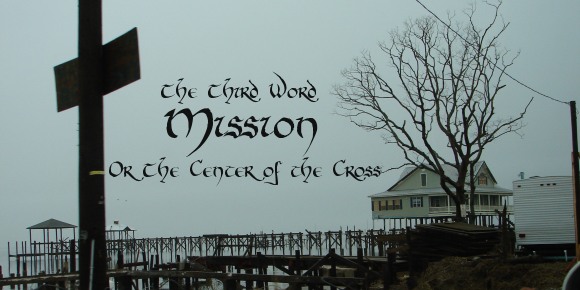




 We’ve spent the last five weeks walking with Jesus during the first days of his ministry. We stood on the shore of the Jordan River as Jesus came up out of the waters of baptism. We also stood on the shore of the Sea of Galilee as Jesus called his first disciples and gave them their mission. We wandered into the Sabbath assembly and watched him confront an unclean spirit. And we escaped with him into the desert to rest, reconnect, and reflect with God. Today, in our last sermon in this series, we skip forward to the middle of the story, and we find ourselves following Jesus as he picks his way up the mountain path with Peter, James, and John. And at the top of the mountain, we find our sixth and final word: Revelation.

 My twins are not quite two months old, and yet I wonder when they will first look at the other and feel jealous. It might be my imagination, but I swear I’ve seen a barely perceptible glint in my daughter’s eye while she’s rocking away in the mechanical swing and I’m holding her brother – a barely perceptible glint of envy. Her eyes haven’t settled on a color yet, but I would swear in those few moments that they were green.
 “For when two or three are gathered together in my name, I am there among them.” I’ve always heard these famous words of Jesus as an astonishing promise, as a steadfast assurance that Christ is present in our midst no matter what. If you’ve ever been to a church gathering where only a few people showed up, I bet someone said, rather wistfully, “Well, when two or three are gathered…” I’ve said the same many times as a way to remind myself that what we’re doing when we gather as the church, as the body of those whose faith and action is motivated by the life, death, and resurrection of Jesus Christ, is important, no matter the size of the group.
 For as long as I can remember, my father has worn a cross beneath his clothing, resting on his skin close to his heart. So when my parents gave me a cross of my own to wear when I was in my early teen years, I was thrilled. I was going to be just like Dad, wearing my cross all the time, even in the shower! The trouble was I kept losing it. I couldn’t wear the cross all the time because I played soccer, and there was a “no jewelry” rule. So it would get lost in the depths of my soccer bag (which was not a place for the faint of heart). The chain broke once, but I managed to find the cross beneath the seat of my car. Then during my freshman year of college the chain broke again, and I lost the cross for good.
 Good morning! It’s good to be back after three weeks away. I know I’ve only been next door, but it seems like another world when newborns are filling all your waking (and the few sleeping) moments. I seriously thought about skipping this sermon entirely and just showing you baby pictures for the next ten minutes, but then I realized lemonade on the lawn might be a better venue for that. So, let’s get down to the sermon.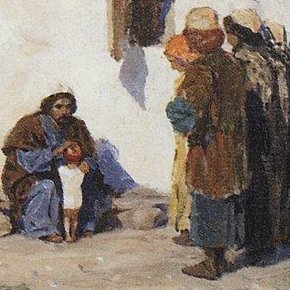
 I confess: I have babies on the brain. I hope you’ll forgive me another sermon that springs from my impending fatherhood. I promise that in the years to come not all my sermons will generate from this experience. But it’s all I can think about right now, so naturally, in a Gospel lesson crammed with various fabulous sermonic content, I would gravitate to the verse about babies. Jesus says, “I thank you, Father, Lord of heaven and earth, because you have hidden these things from the wise and the intelligent and have revealed them to infants; yes, Father, for such was your gracious will.”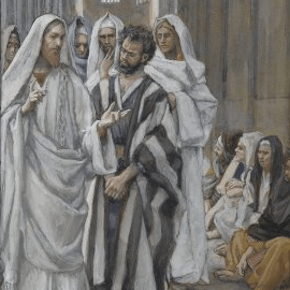
 Sometimes when we pull a piece of the Gospel out of its natural habitat and read it in our cozy New England church, the impact of the words changes. Take the lesson I just finished, for example. How surprised would you be to learn that Jesus is trying to comfort his disciples with these words? You just heard them. They don’t sound very comforting, do they?
 Where the Wind...