Baptism 101

Sermon for Sunday, January 12, 2014 || Epiphany 1A || Matthew 3:13-17

Before I get into the meat of this sermon, I hope you will indulge me with a moment of personal privilege. This is my final sermon at St. Stephen’s Episcopal Church. We’ll still be together next Sunday morning, but I won’t be standing in front of you following the Gospel reading like I am now – on the record, as it were. From the bottom of my heart, please allow me to express my deepest gratitude to you for the last four years. They have been the best four years of my life, in no small part because of your welcome of Leah and me into your midst, your love and partnership, and your fervent desire to serve God here and beyond those doors. May you continue to shine with the light of God’s love, to bear witness to God’s healing power, and to welcome every soul who walks across that threshold. With every fiber of my being, I say, “Thank you.”
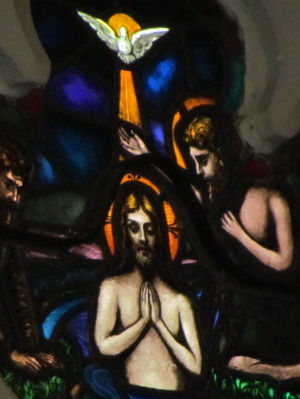
baptismglassSince this is my last sermon, it seems only fitting that today I’ll be talking about a beginning. In a few minutes, we will reorient our worship to the south side of the church. We will stand around that behemoth stone basin over there. (As an aside, I have no idea how our font didn’t sink the ship that carried if here from England all those centuries ago.) Anyway, we will stand around the stone basin, say prayers over the water, and baptize little Kaylee. But before we do, let’s have a quick session of Christianity 101: An Introduction to Baptism. It seems only fitting to do this on a day when we will witness a baptism and when we’ve just read about Jesus’ own baptism by John in the River Jordan.

So what’s really going on in baptism? The traditional understanding tells us that baptism serves as the initiatory rite of the church and marks the cleansing of our sins. Now neither of these definitions is wrong (let me be clear), but I think if we stop there we will be prone to misunderstanding. We need to dig a little deeper. Here’s one thing to remember about baptism, and this will be on the test (there’s no test): the sacrament of baptism affirms and celebrates a state of being that already exists. The action of baptizing doesn’t create anything new; rather, the sacrament marks our participation in something God is already doing.

Here’s what I mean. At the end of the baptism service, we will welcome Kaylee saying: “We receive you into the household of God. Confess the faith of Christ crucified, proclaim his resurrection, and share with us in his eternal priesthood.” However, by virtue of Kaylee being born in the image and likeness of God, she is already a member of God’s family. She is already part of God’s household. Thus, her baptism is an affirmation and celebration of a state of being she already possesses. Today we will celebrate her membership in God’s family so that we can see the deep truth of God’s reality: that we are all members of that family.

Participating in this deep truth is what makes baptism one of the sacraments of the faith. If you’ve taken a confirmation class or CCD in the Roman Catholic Church, then you might remember the classic definition of a sacrament: An outward and visible sign of an inward and spiritual grace. Another way to put this is that sacraments are windows through which God gives us the gift of viewing the true and eternal reality of God’s movement in creation. Sacraments take ordinary, everyday things – water and bread, for example – and use them to reveal extraordinary holiness hidden in plain sight.

When we baptize Kaylee, the hidden will be revealed for a moment, and we will see the unconditional love of God embracing a soul who has never done a thing to earn that love. And we will learn once again that we can do nothing to earn it either. We can only respond to God’s unconditional love in our lives.

If Kaylee has done nothing to earn God’s love, then neither has she done anything to reject it, so you might be wondering why we baptize to cleanse sins, which you’ll recall was the second part of our traditional understanding of baptism. Once again, we are affirming and celebrating a state of being that already exists.

The word “baptism” sounds all fancy until you dig down to its roots. “Baptism” simply means “to wash.” If you were off to take a shower (and you happened to be a speaker of ancient Greek) you might use the verb from which we get the word “baptism.” When we bathe, we scrub away all the dirt and sweat and grime that accumulates during our day-to-day lives. We have to bathe regularly because we get dirty regularly. But we baptize only once because baptism is a celebration that our sins are forgiven – not just the ones we already committed but all of our sins past and future, everything that has, does, or will separate us from God. When we wash in the waters of baptism, we join God’s reality in progress, a reality in which nothing in all creation can separate us from God’s love. The sacrament of baptism allows us to mark the beginning of our participation in this reality.

So if baptism is an affirmation and celebration of a state of being that already exists, you might be wondering if it asks anything of us at all. If we’re just jumping into a river that’s already flowing, what is our responsibility in all of this?

Well, the action of baptism takes place in a few seconds at the behemoth stone basin over there. We’ll pour a few ounces of blessed water on Kaylee’s forehead, say the words, and that will be that. But the baptismal life continues from that moment on. The baptismal life is a sacramental life, a life in which each baptized person becomes one of those windows into the true and eternal reality of God’s movement in creation. Thus baptism invites us into deeper commitment as followers of Jesus Christ, deeper relationship with God, and deeper resonance with the Holy Spirit’s presence.

When we reaffirm our Baptismal Covenant in a moment, we will promise with God’s help to commit ourselves once again to serve God in this world. We will remember that nothing separates us from God’s love, that we are all members of God’s great family, and that God invites us to live baptismal lives, committed to bearing witness to the true and deep reality of God’s presence in creation.


The Peace We Promise

(Sermon for Sunday, August 18, 2013 || Proper 15C || Luke 12:49-56)

These are the promises we will reaffirm before our baptism in a few minutes:

“Will you continue in the apostles’ teaching and fellowship, in the breaking of bread, and in the prayers? Will you persevere in resisting evil, and whenever you fall into sin, repent and return to the Lord? Will you proclaim by word and example the Good News of God in Christ? Will you seek and serve Christ in all persons, loving your neighbor as yourself? Will you strive for justice and peace among all people, and respect the dignity of every human being?”

We will answer each of these with, “I will, with God’s help.” This acknowledges that we can’t fulfill the promises without God. We will also answer them as a group, which acknowledges that we can’t fulfill them without each other. I wonder, however, if you are experiencing a bit of cognitive dissonance trying to reconcile that last promise with Jesus’ words in today’s Gospel reading. I know I am. We promise to “strive for justice and peace among all people,” while Jesus says, “Do you think that I have come to bring peace to the earth? No, I tell you, but rather division.”

It probably didn’t escape your notice that Jesus is in a less friendly mood than he was in last week’s passage. When Jesus speaks from a place of stress or exhaustion, as he does in today’s reading, he often slides to the strident, confrontational end of the spectrum. Sounds particularly human, doesn’t it? Sounds like me if I’m having a low blood sugar day or if I’m about to board an airplane. We can use Jesus’ stress to explain away his difficult words (“He didn’t really mean that stuff about peace and division; he was just really stressed out”). Or we can acknowledge that in his stressed state, Jesus speaks some unvarnished truth, perhaps not as nuanced as he would have liked to speak it, but truth nonetheless.

RomanRoadTo get to this unvarnished truth, we first have to understand how people in Jesus’ time would have heard the word “peace.” One version of the word was a simple greeting: “Shalom.” Another use was for the cessation of upheaval: “Peace, be still.” But a third use was more sinister – peace as propaganda. You’ve heard of the “Pax Romana,” the “Peace of Rome.” This was the glorious gift of Rome to the peoples fortunate enough to come under the Roman banner and Roman “protection.” Well, that’s how the Romans would have sold it. The Pax Romana really spread by the edge of the sword, and conquered peoples lived in fear and distrust of their occupiers.
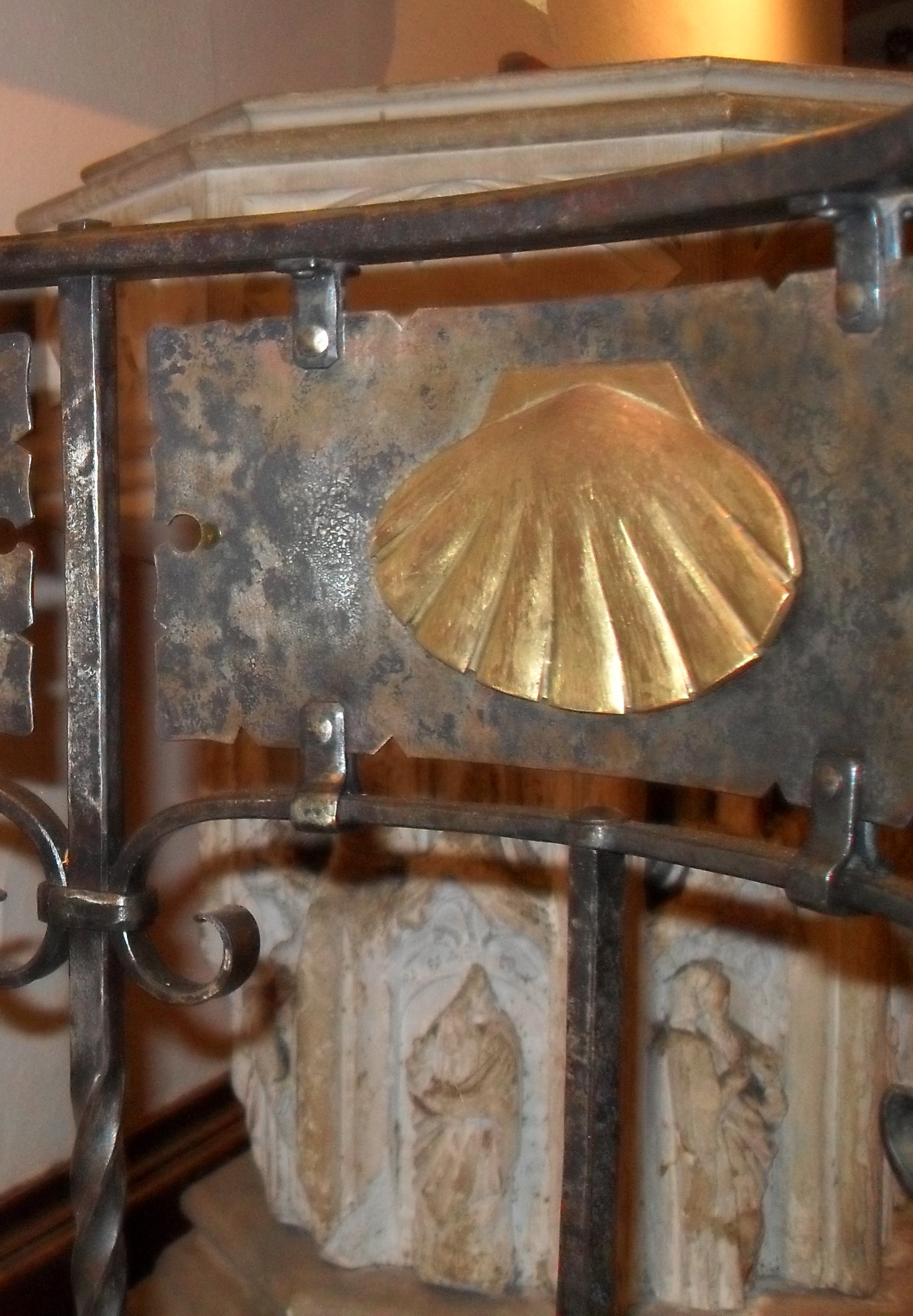

I think it is to this third kind of “peace” that Jesus is referring: “peace” as the absence of conflict, yes, but also the absence of justice, of freedom. The kind of peace the Pax Romana brought was really just a thin veneer spread over a roiling mass of suppressed cultures and traditions and hopes and dreams. The thin veneer of “peace” hid the brokenness, the divisions that lay beneath.

With his words in today’s lesson, Jesus seeks to rip the cover off this false kind of peace and to expose the brokenness of society beneath, and in exposing that brokenness begin to heal it. Jesus knows human nature all too well – without exposing the brokenness, the divisions in society, we are content just to go along with the status quo, willingly ignorant to the steep costs of so-called “peace.” Indeed, Jesus’ words today could have spilled from the lips of any leader of the Civil Rights movement. How many decades did this country live in so-called “peace” before Rosa Parks took her seat on the bus in 1955?

Jesus’ words also speak unvarnished truth when we move from the societal to the personal. Each of us has a individual Pax Romana within us — a set of assumptions about our security and wellbeing that promises peace at long last. Despite the lack of evidence, we believe these promises until we realize they come from the marketing department, whose goal is for us to consume, not to find peace. When Jesus rips the cover off this false kind of peace, we find our broken selves, which have fragmented because we let ourselves be seduced by so many things. With the false peace gone, we confront the broken, divided people we really are.

But we aren’t alone. Jesus may have come to expose the divisions hidden under the myriad Pax Romanas of society and of our souls. But this is only half the mission. He also came to put the pieces back together again. He came to show us what real peace is: peace accompanied by justice, mercy, and love; peace that nurtures the dignity of all peoples rather than suppressing it; peace that passes all understanding.

This is the kind of peace we strive for when we affirm our baptismal promises. We strive for the peace of the broken bone that grows back stronger than before. We strive for the peace of the generous heart that no longer fears scarcity as it once did. We strive for the peace of Christ that shatters the veneer of tranquility, exposes the divisions beneath, and weaves the disparate threads of division into peace that is true, deep, and abiding.

The peace we promise to strive for in our baptismal promises is this true, deep, and abiding peace of Christ. We participate in the hard work of accomplishing this peace when, with God’s help, we see past the thin veneer of so-called peace in society and in ourselves. When, with God’s help, we follow Jesus Christ to the brokenness beneath, the brokenness of the cross and the world. And when, with God’s help, we don’t stop there, but press on to the new wholeness of the empty tomb and the power of the resurrection.

The Question at the Top of Page 303

The following post appeared Sunday, September 19th on Episcopalcafe.com, a website to which I am a monthly contributor. Check it out here or read it below.

* * *

As the church in which I am blessed to serve God prepares for a new adult Christian formation program, I have found myself thinking about baptism quite a bit lately. And I have also found myself jotting down notes about several pieces of the baptismal services. A few of these notes, I share with you below.

If you were baptized in an Episcopal Church after 1979, either you or your parents and godparents answered a series of six questions. The last of which reads, “Do you promise to follow and obey [Jesus Christ] as your Lord?” Whether or not you were baptized under this particular liturgy, this is the fundamental question at the heart of the Christian faith. The answer, “I do,” is simply two little words, but these two words really aren’t the answer at all. The true answer to this question is the manner in which we choose to lead our lives in the wake of such a powerful promise. Let’s take a moment to break down this question to see what we are really getting ourselves into.

Do you promise…
Girls link pinkies. Guys spit on their hands and shake. Car dealers sell extended warranties. Banks make you sign the mortgage paperwork a dozen times. Each of these signals a promise: the secret is safe, the ex-girlfriend is off-limits, the car will be repaired free of charge, and the loan will be repaid. The act of making the promise itself means little compared to the continuous act of fulfilling the promise. Ex-friendships, fine print wielding salesmen, and foreclosures point to the fact that many promises do not last.

But there happens to be a significant difference between these promises and the one we make at baptism. In most promises, the other entity entering the trust is another human being—another fallible, flawed human being. When we promise to follow and obey Jesus Christ as our Lord, we make our promise to God. And God never breaks trust with us. So our promise to God follows God’s eternal promise to us to be faithful always, to be with us always, just to be…always.

Thus, our fulfillment of the promise always happens in response to God’s steadfastness. When we break the promise, it does not cease to hold sway because God continues to fulfill it. And God invites us to renew the promise again and again and again.

…to follow…
In the Gospel according to Matthew, the first words that Jesus says to Peter and Andrew, his prospective disciples, are “Follow me” (Matt. 4:18). In the Gospel according to John, the last words that Jesus says to Peter are (you guessed it) “Follow me” (John 21:22). Therefore, considering how the compilers of the New Testament chose to lay out the Gospel, the first and last words out of Jesus’ mouth are “Follow me.” What does it mean to follow Jesus? Like the main promise we are discussing, this question takes a lifetime to answer; but here are a few quick observations.

To follow means to come after or travel behind. You do this most often when you don’t know the way to, say, the movie theater, and the friends in the car ahead of you lead you there. Our Christian faith tells us that Jesus walks with us, leading us on right paths through our lives. He is “the way, the truth, and the life” (John 14:6). In Greek, the “way” is literally the “road” on which we walk down. So not only is Jesus the guide for our feet; he paved the road on which our feet tread. The Letter to the Hebrews calls Jesus the “pioneer” of our faith: he is the trailblazer. He invites us to walk the difficult path he first walked, a path full of both pain and joy (Hebrew 12:2).

To follow also means to learn by example. To quote a learned man at my parish, we are “apprentices” of Jesus Christ. During the Renaissance, master painters directed their students to copy their works of art in order to learn the craft. More often than not, these apprentice copies couldn’t compare to the master’s, but they still learned how to apply paint to canvas, and they learned well. Likewise, we will never be able to reach the full example of Jesus Christ, but this shouldn’t stop us from following him just the same.

…and obey…
Obedience is a tricky thing because it involves something that many folks aren’t all that good at: listening. To obey means to listen carefully and then to act. Obedience to God begins with our intentional effort to discern God’s will in our lives and continues with our reliance on God to live out that will. The good news is that when we choose to obey God, God has already given us the gifts we need to accomplish that will. (Of course, this doesn’t mean the act of obeying will be easy.)

When Jesus commands the paralyzed man to stand up, take his mat, and walk, the man gets up immediately (John 5:8-9). Jesus speaks no word of healing at all. Rather, the act of healing is subsumed in the command. Jesus gives the man the gift of healing in order that the man can obey his command. Likewise, we discover new gifts when we listen for and obey God’s will in our lives.

[Jesus Christ] as your Lord…
In our Christian parlance, we call Jesus many things: friend, brother, teacher, savior. But in this question, we call Jesus “Lord.” We promise to follow Jesus as our “Lord.” How does “Lord” differ from other titles for Jesus? Leaving aside the masculine nature of the title, a lord is someone in a position of authority and respect. In the Gospel, the Greek word for “lord” (kyrie) can also be translated as “sir.” In the military, a person you call “sir” is someone who has the authority to command you to do something.

Likewise, when we promise to follow and obey Jesus as our Lord, we acknowledge that Jesus has the authority to direct our lives. This authority comes from the fact that God is the author of each of us. God pens each day in the books of our lives; sometimes we are the protagonists and sometimes we are antagonists of our own stories. When we follow Jesus as our author, as our Lord, we consciously take on the protagonist role. To change the metaphor, we resonate with God’s directing creativity in our lives. We are in tune with God.

Of course, these few notes simply scratch the surface of this immense question. I wonder how we each live out this promise in our everyday lives? I wonder how the promises we make with other people reflect the promises we make to God?  I wonder how readily we allow God to fulfill God’s promises, which, in the end, allow us to fulfill ours?

The decade (or) when God found me

God has known me since I was in my mother’s womb, so at least since 1982 (though there is that whole eternity thing to take into account). I have known God for somewhat less of an interval — only ten short years. My knowledge of my own walk with God began in the year 2000. And because Y2K forgot to blast us back to the Stone Age, I have this handy Internet thing to tell you all about the last decade. What follows is (and I’m well aware of the cliche) a top ten list of my journey with God. I offer these moments in hopes that they serve you as a guide for reflecting on the last decade of your life. What are the moments of consolation; that is, when did God find you? On the flip side, what are the moments of desolation, or when did you lose God? You will notice both appear in this list because both are important in shaping you and me, the people God is creating.

#10: The first baptism (2006) My summer as a chaplain at a children’s hospital is drawing to a close. In fact, I am working my final overnight on-call shift. This night, I have already been present with two families as their children died. It is 2am. I am trying to catch a few minutes sleep. The pager assaults my eardrums. A nurse on the sixth floor needs a chaplain. I grumble during the elevator ride because no one really needs a chaplain at 2am on a non-ICU floor such as the 6th. The nurse brings me to the room of a three-month-old baby. In a mix of Spanish and English, his parents ask me to baptize him in preparation for surgery, which the infant will have in the morning. After some halting discussion, I agree. The godparents have brought a small bottle of water, filled at their church’s baptismal font. The mother holds the infant. I sprinkle water on his head and say: “Yo te bautizo en el Nombre del Padre, y del Hijo, y del Espíritu Santo. Amén.” And God finds me.

#9: The funeral (2009) Some situations are just so big or so brutal or hit so close to home that reliance on God is a requirement and not the fallback position (which too often is my default setting). This is one of those situations. I get a call that a parishioner’s daughter has died suddenly in the night. I rush to the house and stand outside the door trying to find the courage to knock. God finds me cowering on the front stoop. I take a deep breath and enter the house. Every day for a week and a half, I spend time with the grieving parents, and I know without a shadow of a doubt that my normal strength is unequal to the task. I officiate at her funeral, my first for someone my own age. And God is there.

#8: The first two months of seminary (2005) I go to chapel every day for two months. I read the prayers in the book. I recite the psalms and the creed. But I’m not praying. Something is missing: faith? passion? conviction? Ironically, I lose God when I first arrive at the place to study God. Then one evening at the end of September, I am leading a prayer at an evening worship service. I say, “Assist us mercifully, O Lord…” I read these five words and everything changes. I realize to whom I am addressing my speech — the Creator of all that is. How could I ever forget? But I did.

#7: I love you (2004) I am sitting with my girlfriend watching a movie. My arm is around her, and she is resting her head on my chest. It’s an ordinary, everyday kind of moment. And without warning or forethought or the classic over-thinking which I could patent, I whisper, “I love you.” She looks up at me, smiles, and says, “I love you.” We hold each other just a bit tighter. And the burning glow in my chest tells me that this is right.

#6: Breakdown in the office (2008) I have been at my first church for three months. A few days before, I had visited my seminary and saw many of my friends, who dispersed to the four winds after graduation. It is Sunday morning, and I have just finished celebrating the early service. I walk back to my office, remove my vestments, close the door, shut off the lights, fall to the floor, and crumble. I sit with my back to the door so no one can come in. And I cry and cry and cry. I can’t stop, and I can’t figure out why I started. I quietly hyperventilate, hoping that the coffee-drinkers in the next room can’t hear me. I can’t stand the thought of smiling and chatting and handshaking. I want to be anywhere but where I am.

#5: Confession (2007) I ask my spiritual director to hear my confession in preparation for my diaconal ordination one week later. I clean out my closet and bring a heaping box of clothes to the church’s opportunity shop. We enter the sanctuary. I kneel at the altar rail. I have written some notes on yellow legal sheets, and they are crinkled from being in my pocket. I begin my confession, and quickly the tears begin to flow. I confess the big things like my presumptuous reliance on myself above everything else. And I confess the little things like cheating on that math quiz in fifth grade (sorry Mrs. Goldberg!) I am utterly exhausted when I finish. I feel empty, but in a good way, like there is more space in me for God to fill.

#4: Laying on of hands (2004) I am a camp counselor. It is the second to last day of camp, and I am helping one of the priests during a healing service. The teenagers coming for healing have wounds beyond their years: broken families, eating disorders, depression, suicidal thoughts, anger, pain, disease. I ask God to use me as a channel. Fill me to overflowing, I pray, so you spill through me into these children. And God does. I am so full that for twenty minutes after the service, I weep the excess Spirit from me. (If this sounds familiar, you may have read about it here.)

#3: Ordination to the priesthood (2008) My family arrives at the church early and discovers it has no air conditioning. It is June and blistering outside. I am glad to be wearing seersucker. A few hours later, I am kneeling before my bishop and his hands are gripping my head firmly. The rest of the priests are touching me lightly. I can feel my father’s hand on my shoulder. I am overwhelmed. At the end of the service, people come to me for the customary blessing from the new priest. I don’t know what to say, but the words come anyway.

#2: The year (2006) For several months, I ignore God’s prompting to examine the state of my relationship with my girlfriend. I refuse to notice that love has already eroded into convenience and is well on its way to indifference. In mid-May, we attend a Red Sox game. They lose. That night, she proposes the end of our relationship, though it takes another month to dissolve. I push away the abyss threatening to engulf me because I need to focus on my chaplaincy at the children’s hospital and there’s enough pain there for several lifetimes. When the chaplaincy ends, I let myself feel the effects of the breakup. At the beginning of my second year of seminary, I fall into despair. I isolate myself, presumptuously assuming that none of my friends has ever felt this way. I escape into the fantasy world of an online video game. I don’t surface again for many months.

#1: The moment with God (2000) I visit my college for the first time in October of my senior year of high school. I step onto the quad and know in the deep place within that I am walking ground being prepared for me. The following Sunday, I am in church. My father is preaching. I realize that I can’t hear him. Then I realize I can’t see him. But I know what he’s saying. The same deep place within is speaking his words directly into my soul. I am with God for an indefinite moment. My senses are overloaded. I am made anew. A few days later, I sit with my mother on the couch. I say, “I have something to tell you.” She waits patiently while I try to form words. Suddenly, I burst into tears and cry for an hour. She holds me. When I finally stop, she looks at me and says, “I know, love, I know.”

Sensuous

Episcopalians are often accused of being too brainy, too intellectual. We think too much. We get caught up in the space between our ears and forget about that throbbing muscle in our chests. These accusers are correct up to a point: we do not check our brains at the door. Jesus asks us to love the Lord with all our mind, as well as our heart and strength. But our intellectual engagement with faith is only half the story.

You see, worship in the Episcopal Church is quite sensuous. Don’t get me wrong – I’m not talking about the Harlequin romance definition of the word. Our worship is sensuous in that we employ all our senses to encounter the presence of God. We hear the Word of God read and proclaimed. We see the stained glass and changing seasonal color palates. We smell the incense puffing from the thurible.* We taste the bread and wine. We touch one another in the handshake or embrace of the peace of the Lord.

To engage all of our senses, we use things in our worship. We use candles, books, and bowls. We use bread, wine, and water. These things are all incredibly – laughably – ordinary. Nothing about a loaf of bread is inherently special. Hand me a loaf of bread, and I might feed the birds or save it and make French toast tomorrow morning. (Actually, if you know me, the most likely scenario is that I’ll eat the loaf right then and there.)

breadaisleSo, how does the loaf of bread, which was one of a hundred bar coded loaves at the grocery store, transform from a laughably ordinary carbohydrate delivery system to a holy vessel of Christ’s presence? The bread moves from its ordinary location on the shelf in the store to its new, strange location on a linen-draped table in a church. The bread behaves quite normally, sitting there waiting to be eaten.

But the table and the action done to the bread and the people watching the action are not normal. The table is abnormal because it has several tablecloths covering it, some ornate, some plain. The action is abnormal – whoever talks about a loaf of bread before they start slicing it? And the watching is abnormal – unless you’re in the studio audience for Iron Chef, who joins dozens of others in watching someone prepare a meal?

So the bread is laughably ordinary. But the situation is not. The juxtaposition between the normal loaf of bread and the strange way it is being treated invest the ordinary with new meaning. This new meaning turns the bread into a symbol. Now, before we go any further, I want to dispel from your mind any notion of the phrases “it’s only a symbol” or  “it’s merely symbolic.” Symbols are woefully misunderstood things in American culture – like soccer and irony. A symbol is an object that points beyond itself to a deeper truth. Too often, “sign” and “symbol” are used interchangeably, but they are not synonymous. A stop sign lets you know you are supposed to brake at an intersection, but that’s all it tells you. The red octagon doesn’t compel you to ruminate on why you should stop. But a symbol – the cross, for instance – stirs within us all of the historical and theological and emotional resonances of the truth to which it points.

Okay, so the bread is a symbol. It connotes the bounty of harvest, the fruits of the earth, the goodness of creation, the nourishment of our bodies. And when we put it on that table, and a priest (in the presence of God’s people) asks God to indwell that bread with the Spirit of Christ, the bread becomes a special sort of symbol called sacrament.

God moves within us, spurring us to love, praise, act, pray, serve. Outward connections with our inward spiritual lives are called sacraments. These special symbols take the ordinary things we’ve been discussing – bread, water, even our own actions and personhoods – and set them ablaze with physical and emotive evidence of the presence of God.

When we participate in the sacraments, we ourselves become sacramental symbols of God’s movement. Our service to God points to the deeper truth of God’s creation of and love for the world. Worship nourishes us for our role as bearers of God’s image, as vessels of the light of Christ. We enter church as normal, ordinary people, like the loaves of bread on the grocery store shelves. We leave church transformed by our sharing in the presence of Christ with one another. Over time – months, years, lifetimes – the transformation helps us to realize that what we mistook as “normal” was really quite miraculous and extraordinary.

All of the normal, everyday things we use in church gather new meaning when we employ them to worship God. The candle becomes the light of Christ. The bowl becomes the vessel for the waters of baptism. The bread and wine become the Body and Blood. Likewise, we – as sacramental beings – discover new meaning for our lives when we come together to worship the Lord.

Footnotes

*The metal censer on the chain that you swing to disperse the perfumed smoke; sort of like a liturgical yo-yo.

Harmony

Ecce Quam Bonum! These three Latin words are carved in moss-covered stones and lintels of doorways across the campus of my alma mater, the University of the South in Sewanee, Tennessee. Ecce Quam Bonum! “Behold, how good!” These words begin Psalm 133, and they speak of the desire for joyful, harmonious fellowship with our brothers and sisters: “Behold, how good and pleasant it is, when brethren live together in unity!”

The lectionary for the Second Sunday of Easter joins this psalm with three readings, each of which speaks of community and fellowship. In the Acts of the Apostles, Luke paints a happily-ever-after picture of the apostles and their companions, in which the “whole group of those who believed were of one heart and soul” (4:32). In the First Letter of John, the writer says, “We declare to you what we have seen and heard so that you also may have fellowship with us; and truly our fellowship is with the Father and with his Son Jesus Christ” (1:3). In the Gospel, the risen Jesus appears to the disciples as a group, grants them peace, and breathes the Holy Spirit upon them. Thomas is not with the disciples at the time, so as a group they seek him out and tell him the good news. A week later, when Thomas has returned to the fellowship, Jesus once again appears, and Thomas believes.

At church this Sunday, we are baptizing a beautiful newborn, and I can’t think of better lessons to accompany the joyous occasion. The sacrament of Baptism celebrates the inward movement of God in a person’s life by outwardly welcoming that person into God’s family the Church. Hmm… I know that definition sounds incredibly boring and academic, so let me try again, this time with a musical metaphor.

The music of God plays in each one of our hearts. Sometimes the music is soft, a half-whispered lullaby, barely discernible over the din of the world. Sometimes the notes crescendo to a deafening fortissimo that knocks us, weeping, to our knees. Most often, the music sounds as the percussive TUB-thp of our hearts — a rhythm that, if you listen closely, beats in time with the rest of the performing forces of creation.

orchestraEach one of us has the music of God resounding within, but the symphony is incomplete until we have found each other, until we have joined together in fellowship as the orchestra of God. In Greek, this fellowship is called koinonia, but I’ve always thought that “fellowship” is a rather limp translation. For the sake of our metaphor, let’s translate koinonia as “harmony,” which lands much closer to the descriptive intent of the Greek word. Musical harmony is the collection of notes that adds structure, color, tone, depth, and meaning to the main tune. This tune, called the “melody” is the music of God within us. The combination of our own unique passions, trials, joys, griefs, and loves creates the harmony of the music of God.

In the sacrament of Holy Baptism, we welcome another violin or French horn or bassoon into the orchestra. We await eagerly the subtle changes in timbre that the new life will bring. Together, we play the koinonia, the harmony, of the music of God to a world so accustomed only to noise and clatter. The movements of our symphony resonate with the movement of God in this world. This is the sacrament of Holy Baptism: new sound, new harmony, new resonance in the symphony of the music of God.

Behold how good and pleasant it is when brethren live and sing and make music together in unity.