The Word Happens

(Sermon for February 28, 2010 || Lent 2, Year C, RCL || Genesis 15:1-12, 17-18)

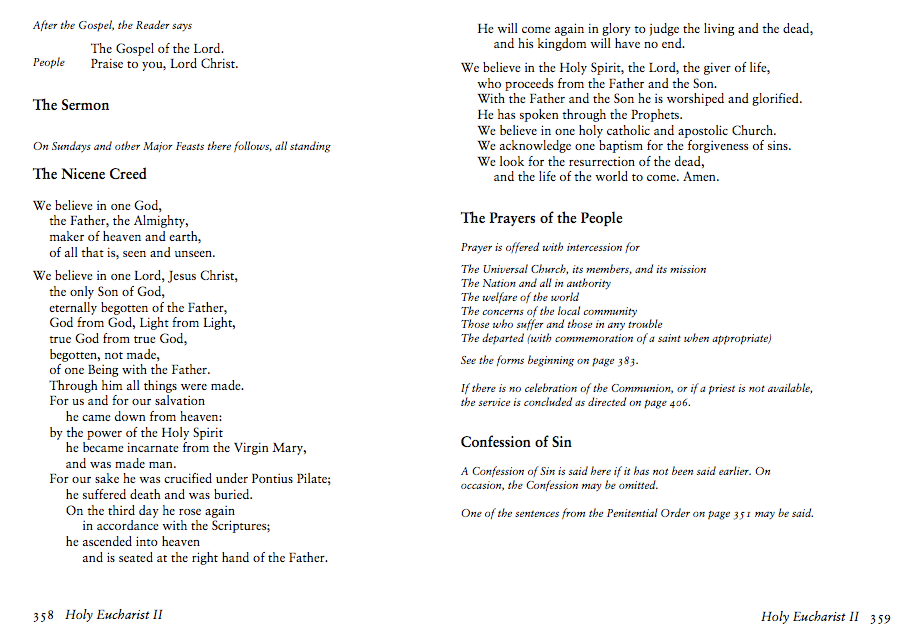
Something happens during our worship service that I would bet you’ve never really noticed before. Actually, this something happens twice during our worship. In fact, this something has already happened twice during this very service. The readers finished both the story about Abram and the piece of Paul’s Letter to the Philippians, and then they said, “The Word of the Lord.” And you responded, “Thanks be to God.”

Have you ever wondered why we say, “Thanks be to God” at that particular moment at the conclusion of a scriptural reading? If you haven’t, don’t worry: I didn’t wonder why until I started writing this sermon. Saying “Thanks be to God” seems rather strange at first. For what are we really thanking God? Honestly, this thanksgiving would make much more sense if the reader herself were the one offering it. I can imagine the reader thanking God for the lack of unpronounceable names in the lesson; or for the ability to pronounce Melchizedek and Nebuchadnezzar on the first try; or for the opportunity to serve God in the capacity of reading the Bible aloud. But the question remains: why do we respond with thanks to God when the reader says, “The Word of the Lord”?

This morning’s lesson from Genesis provides an answer. But first, here’s a quick recap of the first few episodes of Abram’s story. God tells Abram to leave his country and set out for a new place, which only God knows about. So Abram, his wife Sarai, his nephew Lot, and their household set out on a journey. They wander through Canaan and down into Egypt, where Abram gives his wife to Pharaoh to save his own skin. But when a great plague hits Egypt, Pharaoh realizes Sarai’s already married, and he sends her back to her husband. Abram and Lot part ways because their herds have grown too great to share the same land. Finally, Abram settles by the oaks of Mamre. Soon after, he takes part in a battle among the local kingdoms. And on three separate occasions during these adventures, God tells Abram that God will give him offspring and make of him a great nation.

But Abram worries because he remains childless. He’s getting on in years. Sarai is barren. He’s rich and powerful and secure, but the one blessing he desires above all else has eluded him. He has no descendants to inherit his land. A slave born in his house will have to be his heir. Eliezer of Damascus is going to get everything. How does this fulfill your promise, God?

In this way, Abram questions God when the word of the Lord comes to him in a vision. Half in accusation, half in resignation, Abram states the situation bluntly: “You have given me no offspring.” And during this moment – during Abram’s most anxious, most doubtful, most defeated moment – the “word of the Lord” comes to him. The Word of the Lord comes to him and says, “No one but your very own issue will be your heir. Look toward heaven and count the stars, if you are able to count them. So shall your descendants be.” The Word of the Lord comes to him and gives Abram the strength to believe that God will fulfill God’s promise. This is the same “Word of the Lord” for which we twice give thanks on Sunday morning.

You may ask: “How can mere words give Abram such strength? What if the promises are empty? Where’s the action to back up the talk?” Okay, I’m about to say the “H”-word and I need you to stay with me for just a minute here. Genesis was originally written in Hebrew. Translators do the best they can to render the original language into English, but sometimes a Hebrew word is just too deep and complex for a single English word to suffice. In these cases, the English is like looking at a picture of a cake. The Hebrew is like taking a big bite of the cake itself.

Such is the case with the word “Word.” In Hebrew, the “Word” is not simply speech or writing on a page. The “Word” happens to people. The “Word” is an event, an encounter, an action that calls for further action. In the beginning when God created the heavens and the earth, God spoke creation into being: “God said, ‘Let there be light’ and there was light.” The Word of the Lord happened, and, as a result, creation came into existence. When the Word of the Lord happens to Abram, he finds the strength to go on trusting God in spite of all the reasons why God’s promise seems preposterous.

And when we hear a reading from Holy Scripture on Sunday morning, we respond “Thanks be to God” because the Word of the Lord has just happened to us. In that encounter with the Word, we are aware that God continues to speak us into existence. And from existence into service. And from service into love. And from love into the transformation that happens when we follow Jesus Christ our Lord.

You see, when the Word happens to us, we are changed. We may be changed minutely or momentously, but we are changed. We may be changed slowly or suddenly, but we are changed. We are changed into better lovers of God, better servants of other human beings, and better human beings ourselves.

In the film Life as a House, George talks about change, a subject about which he knows a great deal. George has been diagnosed with cancer, and he is using his final months to repair his relationship with his estranged son. By tearing down his house and rebuilding the home he always wanted, he and his son work through the messy process of reconnecting. At one point, George says: “You know the great thing, though, is that change can be so constant you don’t even feel the difference until there is one. It can be so slow that you don’t even notice that your life is better or worse, until it is. Or it can just blow you away, make you something different in an instant. It happened to me.”

In Abram’s case, the Word happens to him, and the change comes slowly. The Word gives him trust in God’s faithfulness, but at first Abram fails to understand the expanse of God’s miraculous promise. Abram doesn’t realize that God desires not just Abram’s own offspring, but Sarai’s, as well. So Abram bears a son with Hagar, his wife’s slave-girl. But the Word isn’t finished happening to Abram yet. Years later, Abram stumbles into God’s presence again, and God renews his promise a final time. In the pivotal sign of the change, which the Word has on Abram’s life, God changes his name to Abraham and Sarai’s to Sarah. Soon after, Sarah bears Abraham a son named Isaac, and the countless generations that follow rival the number of stars in the heavens.

I invite you to reflect on how the Word is even now happening to you. Is the change, which the Word is causing in your life, so constant that you don’t feel the difference until there is one? Or is the Word blowing you away and making you into something different, something new, in an instant? Either way, know that our Creator continues to speak creation into existence. Our Creator writes the Word on our hearts. Our Creator puts the Word on our lips so we may speak love and welcome to all we encounter.

The reader says “The Word of the Lord” to make us aware that the Word is happening to us even now this morning while we sit in our pews. We respond “Thanks be to God” to show our gratitude for God’s movement in our lives. But the Word isn’t through happening to us yet either. The Word happens to us to enable us to serve and to love. The Word impels us to go out into the world and invite others to notice the Word happening to them. As followers of Christ, we live with the joyful expectation that the Word will happen to anyone, anywhere, at any time.

And when the Word happens to us, we will be changed.

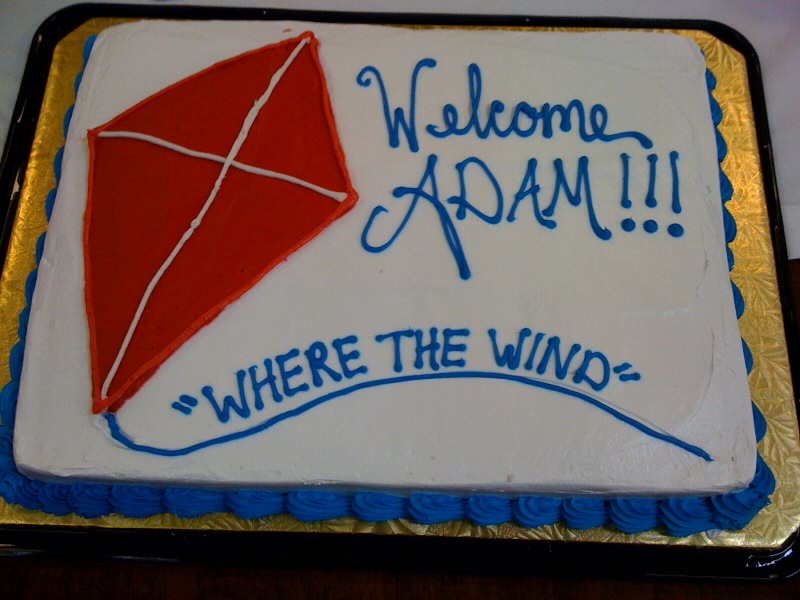
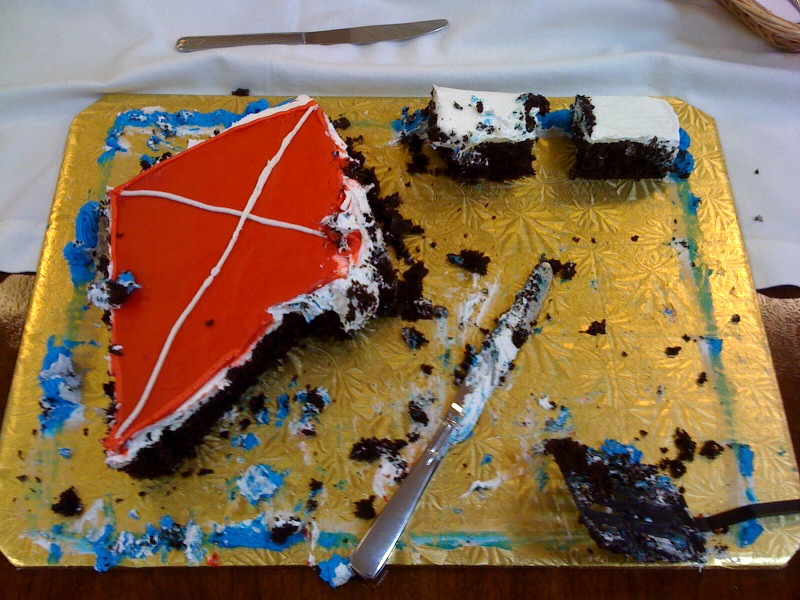
Speaking of cake, the day I preached this sermon was my first at the church to which I was recently called to be the Assistant Rector (Assistant to the Rector, Dwight!). They got me this cake, which is awesome.

Then, the kids ate it.

Proclaiming the mystery: John’s first five

The following post appeared Saturday, August 22nd on Episcopalcafe.com, a website to which I am now a monthly contributor. Check it out here or read it below.

* * *

The mystery section was on the back wall of the small independent bookshop at which I worked my last few years of high school. When a customer entered the store, her eyes would glance past the smaller shelving units and fix on the placards proudly bearing the word “MYSTERY.” The shelves containing the mystery section were taller and broader than those holding the other books, and I was the only employee tall enough to dust the top ones without a stepladder. Let’s just say that the manager loved mysteries, so we had a disproportionate number of them. We had humorous mysteries and thrillers, beach reads and stay-up-till-one-in-the-morning nail biters. In those books, a mystery was set forth: say, how did the killer manage to murder someone in a room locked from the inside? The plot revolved around the detective attempting to solve the puzzle. In the end, the detective figured out that the bell rope used to call for the maid was replaced with a poisonous snake, which somehow slithered unnoticed out of the room in the ensuing hubbub of discovering the body. Mystery solved. No more mystery.

The Gospel according to John begins with a mystery, but it is a mystery that is wholly different from the Whodunnits? on the back wall of the bookshop. The mystery that begins the Gospel cannot be solved, cannot be explained away. It can only be unapologetically presented and then unabashedly proclaimed.

rainbowTake a look at the first five verses that John gives us:In the beginning was the Word, and the Word was with God, and the Word was God. He was in the beginning with God. All things came into being through him, and without him, not one thing came into being. What has come into being in him was life, and the life was the light of all people. The light shines in the darkness, and the darkness did not overcome it. (1:1-5; NRSV)

Here John presents the mystery: somehow the Word (who we find out a few verses later becomes enfleshed in Jesus Christ) is in the beginning with God and is also God. Remember in Algebra class when you had to show your work to get full credit? Well, John skips down to the bottom of the page. There is no balancing of equations or solving for “x.” He states the mystery simply: in the beginning, the Word was with God and was God. This is frustrating at first because I’m conditioned to think that mysteries are all supposed to be like the ones on the back wall of the bookshop. I want to know how it’s possible and I won’t be satisfied until I figure it out and if I can’t figure it out then it must not be true.

But I take a deep breath and look at the words again. I read them slowly and speak them aloud. I notice that the rational part of me is sitting in the corner sulking because “with” and “was” should be mutually exclusive. But I find that the creative part of me sees past such mundane things as mutual exclusivity and begins to roll around in the muck of ambiguity. I squelch my toes in the mud, relishing the notion that God lives in a reality where choosing between alternatives is not the only viable option. Of course the Word can be both with God and was God! The limits of my language do not limit God, only my understanding of God. I realize my language skills are not up to the challenge of describing God. And my rational side joins my creative side in the muck of ambiguity because my rationality has been given the license to imagine.

In a few short phrases, John presents the mystery. Then, he deepens the mystery by retelling the story of creation. It’s no coincidence that John uses the same phrase that opens the book of Genesis: “In the beginning.” All things came into being through the Word who was with God and was God. My creative side connects with these verses because they are about creation. Life is created through him, and because I have been given the gift of creativity, I can sense in my gut or in my bones that the Creator is continuing to create me.

This creative force is the light that shines in the darkness. The darkness cannot comprehend or overcome or understand the light because the darkness has never been a part of creation. The darkness is just the absence of any created thing. It tries jealously to unmake created things but fails to triumph since God never stops creating or calling creation to God.*

In these first five verses, John locates us (“life,” “all people”) within the mystery of God and creation, and he presents the adversary of creation, namely darkness. We have the makings of an epic story here.** The seemingly out-of-place verses 6-8 help me realize my role in this story. The mystery has been presented, and now John the Baptizer steps onstage for a brief scene. He is a witness who testifies to the light. (The words “witness” and “testify” are from the same root in Greek; the English word “martyr” comes from it.) His proclamation points to the light, which is the Word made flesh, Jesus Christ. So too, my life, which has come into being through the Word, is meant to be a proclamation of the mystery of God and God’s movement in creation.

When I encounter these first few verses of the Fourth Gospel, I feel the enormity of the mystery of God surrounding me, and I rejoice that this mystery discloses itself in light and life and love. If I could explain the mystery, I would be in danger of explaining it away, of shelving it like the Whodunnits? on the back wall. The mystery transcends explanation. It is elusive, and at the same time intimate; it cannot be grasped, but it can be embraced. The intimacy and the embrace happen when the mystery touches the spark of creativity within me, spurring me to proclaim the Word made flesh, Jesus Christ. Life has come into being through the Word. And my life expands to every pocket and corner of my being when I live to proclaim this good news.

Footnotes

* My apologies for hurling this paragraph at you with no further comment. If it confused you at all, blame Karl Barth.

** I am using the word “story” to convey something that is important enough to be told and retold down through the centuries, something that is about God and about us and is a tale that is never quite finished being woven. Please do not take my use of the word in the sense of “it’s only a story.”

Sensuous

Episcopalians are often accused of being too brainy, too intellectual. We think too much. We get caught up in the space between our ears and forget about that throbbing muscle in our chests. These accusers are correct up to a point: we do not check our brains at the door. Jesus asks us to love the Lord with all our mind, as well as our heart and strength. But our intellectual engagement with faith is only half the story.

You see, worship in the Episcopal Church is quite sensuous. Don’t get me wrong – I’m not talking about the Harlequin romance definition of the word. Our worship is sensuous in that we employ all our senses to encounter the presence of God. We hear the Word of God read and proclaimed. We see the stained glass and changing seasonal color palates. We smell the incense puffing from the thurible.* We taste the bread and wine. We touch one another in the handshake or embrace of the peace of the Lord.

To engage all of our senses, we use things in our worship. We use candles, books, and bowls. We use bread, wine, and water. These things are all incredibly – laughably – ordinary. Nothing about a loaf of bread is inherently special. Hand me a loaf of bread, and I might feed the birds or save it and make French toast tomorrow morning. (Actually, if you know me, the most likely scenario is that I’ll eat the loaf right then and there.)

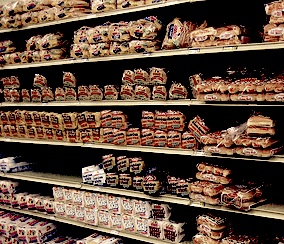
breadaisleSo, how does the loaf of bread, which was one of a hundred bar coded loaves at the grocery store, transform from a laughably ordinary carbohydrate delivery system to a holy vessel of Christ’s presence? The bread moves from its ordinary location on the shelf in the store to its new, strange location on a linen-draped table in a church. The bread behaves quite normally, sitting there waiting to be eaten.

But the table and the action done to the bread and the people watching the action are not normal. The table is abnormal because it has several tablecloths covering it, some ornate, some plain. The action is abnormal – whoever talks about a loaf of bread before they start slicing it? And the watching is abnormal – unless you’re in the studio audience for Iron Chef, who joins dozens of others in watching someone prepare a meal?

So the bread is laughably ordinary. But the situation is not. The juxtaposition between the normal loaf of bread and the strange way it is being treated invest the ordinary with new meaning. This new meaning turns the bread into a symbol. Now, before we go any further, I want to dispel from your mind any notion of the phrases “it’s only a symbol” or  “it’s merely symbolic.” Symbols are woefully misunderstood things in American culture – like soccer and irony. A symbol is an object that points beyond itself to a deeper truth. Too often, “sign” and “symbol” are used interchangeably, but they are not synonymous. A stop sign lets you know you are supposed to brake at an intersection, but that’s all it tells you. The red octagon doesn’t compel you to ruminate on why you should stop. But a symbol – the cross, for instance – stirs within us all of the historical and theological and emotional resonances of the truth to which it points.

Okay, so the bread is a symbol. It connotes the bounty of harvest, the fruits of the earth, the goodness of creation, the nourishment of our bodies. And when we put it on that table, and a priest (in the presence of God’s people) asks God to indwell that bread with the Spirit of Christ, the bread becomes a special sort of symbol called sacrament.

God moves within us, spurring us to love, praise, act, pray, serve. Outward connections with our inward spiritual lives are called sacraments. These special symbols take the ordinary things we’ve been discussing – bread, water, even our own actions and personhoods – and set them ablaze with physical and emotive evidence of the presence of God.

When we participate in the sacraments, we ourselves become sacramental symbols of God’s movement. Our service to God points to the deeper truth of God’s creation of and love for the world. Worship nourishes us for our role as bearers of God’s image, as vessels of the light of Christ. We enter church as normal, ordinary people, like the loaves of bread on the grocery store shelves. We leave church transformed by our sharing in the presence of Christ with one another. Over time – months, years, lifetimes – the transformation helps us to realize that what we mistook as “normal” was really quite miraculous and extraordinary.

All of the normal, everyday things we use in church gather new meaning when we employ them to worship God. The candle becomes the light of Christ. The bowl becomes the vessel for the waters of baptism. The bread and wine become the Body and Blood. Likewise, we – as sacramental beings – discover new meaning for our lives when we come together to worship the Lord.

Footnotes

*The metal censer on the chain that you swing to disperse the perfumed smoke; sort of like a liturgical yo-yo.

Be-ing

As I’ve mentioned before, I’ve been working on a Confirmation class recently, and the lessons keeping popping up here on the blog. Here’s 1000 words on theology, using three phrases from the Nicene Creed as a framework.

nicaea…of all that is, seen and unseen

What I’m about to write ignores the fact that the Nicene Creed was originally written in Greek and then translated into Latin and then translated into English. Don’t panic – the following is about the current English grammatical structure of the phrase, which is influenced by, but not chained to, the original language.

Do you see that little comma between the words “is” and “seen”? Yes? Good. Now, think back to all the times you’ve ever heard the Creed recited during church and ask yourself if anyone has ever acknowledged that comma. No? Didn’t think so. The sentence usually sounds like this: “…maker of heaven and earth, of all that-is-seen-and-unseen.” But the sentence actually reads: “…maker of heaven and earth, of all that is, [slight pause] seen and unseen.” I imagine you are now rolling your eyes at my disconcerting attention to inane details.

This detail may seem inane at first, but I assure you, it’s not. For now, let’s ignore the phrase “seen and unseen” because it gets entirely too much attention when Creed-speakers unwittingly barrel through the defenseless little comma. With what are we left? “Maker…of all that is.”

Maker…of all that is. This “is” is the most important linking verb in the history of linking verbs, and probably other verbs, as well. We believe that God made all that is. Put another way, we believe that God is the very ground of our “is-ness” – or, to use a not made-up word, our “being.” [Disclaimer: The rest of this section assumes the reader knows the unwieldy conjugation of the verb “to be.”] In Exodus 3, Moses asks God what God’s name is. God responds: “I AM WHO I AM.” This awkward English rendering of the Hebrew preserves the root of God’s divine name, which is the verb “to be” (hayah in Hebrew). When Moses asks God what God’s name is, God responds with something like, “I have being and I bestow being and that’s all you need to know.” Look at the word “being.” Now add a hyphen: be-ing. The noun “being” is disguised as a present participle verb, a verb of continuing action. This points to the eternal continuity and abiding presence of God, who is the very ground of be-ing.

All grammatical gymnastics aside, the point is this: God created all that is, and creation’s existence depends on God’s continuing presence. As small bits of that creation, we receive our be-ing, our identity, our life from the foundation of that be-ing, the Holy One we call God.

Through him all things were made

“We believe in one Lord, Jesus Christ… Through him all things were made.” Okay, since I failed to return to the original Greek in the last section, I feel I must make up for it. John begins his Gospel account with this poetry: “In the beginning was the Word, and the Word was with God, and the Word was God. He was in the beginning with God. All things came into being through him, and without him, not one thing came into being. What has come into being in him was life…”

You’ll notice that word be-ing from the last section crops up several times in just these few sentences. We said that God is the foundation for be-ing, and now we discover that the “Word” is responsible for translating that be-ing into life. Here’s the Greek bit.

The “Word” is the translation of the Greek word logos, from which dozens of English words take their root. Every time you see –ology at the end of a word (zoology, biology, epidemiology), that ending comes from the Greek logos. “Logic” also springs from this root. When something is “logical” it is ordered, it makes good sense. This is a good entrance into one understanding of logos. John says that the Word was in the beginning with God and through the Word all things were made. This “Word” is the “logic” behind creation, the “organizing principle” through which creation has come into being. In Genesis, God speaks creation into being (“Then God said, ‘Let there be light’; and there was light.”). God uses words to organize creation, and John identifies “The Word” as God the only Son, who is incarnate in Jesus Christ.

So, the “Word” is creation’s logic or organizing principle. Creation, therefore, is not haphazard or accidental. You might be tempted to ask a question about “Creationism vs. Evolution.” But the unhappy dichotomy between these two positions breaks down when we see creation as both organized and continuous. My college chaplain was fond of saying: “If God stopped speaking, the world would stop turning.” The implication is this: the “Word,” the logic of creation continues to underpin and give life to all that is.

…he became incarnate from the Virgin Mary and was made man

As I said above, John identifies “The Word” as God the only Son, who is incarnate in Jesus Christ. “Incarnate” means “become flesh” (the –carn in the word is the same root as in the word carnivore, “meat-eater”). John’s use of “Word” connects to a strain of thought coming out of the Hebrew Scriptures. The “word of God” appears whenever a prophet is granted a new prophecy (The word of God came to so-and-so…). The Hebrew word for “word” (davar) means much more than the stuffy English equivalent. We think of “word” as something on a piece of paper or something spoken aloud. In Hebrew, however, the “word” is something that happens to people. It is an event, an action that calls for further action. When John uses the Greek form of “word” (logos), he purposefully links it back to this Hebrew understanding. The “Word” becoming flesh and dwelling among us is the ultimate example of the “Word” happening.

Here’s the thing to remember: the “Word,” through which God speaks creation into be-ing, is life-giving. Without the “Word,” life would not exist. When the “Word” became flesh in Jesus Christ, God gave us the gift of seeing how life is meant to be organized, meant to be lived. This means that the words Jesus speaks provide for us the means by which to organize our lives in order to be in deeper touch with God. The “Word” became flesh and lived among us. And now the “Word” continues to speak life into the world, disclosing the glory that is full of grace and truth.