

Sermon for Sunday, April 17, 2016 || Easter 4C || Psalm 23; Revelation 7:9-17
 Every year on the Fourth Sunday of Easter we read Psalm 23. We affectionately call today “Good Shepherd Sunday,” since we always pair the shepherd of the beloved psalm with the Good Shepherd, which Jesus describes in the tenth chapter of John’s Gospel. And yet I doubt it has escaped your notice that we read Psalm 23 more often than once a year. We read it yesterday, in fact; and two weeks before that at the funerals of Ed Carlson and Barbara Noonan. We’re not quite a third of the way through 2016, and we’ve already had six funerals this year. Sometimes the grave seems too close. Sometimes the bitter taste of loss overwhelms all the other sensations we could be feeling. Sometimes the promise of the resurrection seems to lose its luster in comparison to the stark reality of death.
And still we believe that death is an end, but not the end. We believe that the new and superlative life of the resurrection treats death as a threshold through which we walk, not as a tomb at which we stop. A cynic might say that we believe in this way just to make ourselves feel better when a loved one dies. But what the cynic doesn’t understand is that our belief does not make death hurt any less. Our belief enwraps our grief in the warm folds of hope. And hope helps us spread our pain out over the long haul, so that it doesn’t strike us all at once, which would surely kill us. Instead, the pain nestles in our depths and mixes with faith, hope, and memory. And in time, one ingredient in the recipe of grief begins standing out above the rest. And that ingredient is love. So we respond to the cynic: our belief doesn’t make us hurt less, but it does help us love more. In fact, our belief helps us love forever, which is what the resurrection is all about.
Psalm 23 ends with the word “forever.” And in Hebrew it begins with the holiest of God’s names, the “I Am Who I Am” name, the eternal name, the forever name. In between these two mentions of eternity are several promises: promises about sustenance, peace, revival, guidance, companionship, protection, abundance, goodness. We tend to read Psalm 23 at funerals because, in the first days of ragged grief, we need to be reminded of these promises, since we more than likely are having trouble finding ourselves at home in them.
The promises of God continue in our second lesson this morning, from the book of Revelation. Most of this final book of the Bible is strange and scary and sorely misunderstood, but every few chapters, the clouds break and we see the Son shining through. During Easter season, we are reading these shining moments of promise from Revelation. Today, we listen to a promise concerning ones who have “washed their robes and made them white in the blood of the Lamb.” The elder says to John,
They will hunger no more, and thirst no more;
the sun will not strike them,
nor any scorching heat;
for the Lamb at the center of the throne will be their shepherd,
and he will guide them to springs of the water of life,
and God will wipe away every tear from their eyes.
Sounds a lot like Psalm 23, right? The promises are the same because the promises of God are eternal. They existed in the early days, when people were first waking up to the presence of God, were first writing down their experiences, some like King David, poetically. The promises continued to exist hundreds of years later when John of Patmos wrote his prophecy in the book of Revelation. And we know these promises still operate now, for we live our lives in their sway.
And yet, it would be folly to think that our lives as followers of the Good Shepherd are complete when we accept these promises for ourselves. No. Stopping there leads to self-centeredness and isolation. Believing God’s promises about sustenance, peace, guidance, abundance, and all the rest compels us to live outside ourselves, to accept our piece of God’s great mission of healing and reconciliation. There are people who have never met a promise that wasn’t broken. And God calls us to them.
Reading this week the promise from Revelation that “God will wipe away every tear from their eyes” reminded me of a young boy I met when I was a hospital chaplain at Children’s Medical Center in Dallas, Texas ten summers ago. I was assigned to the tenth floor, which housed the neurological and plastic surgery units. Many of my patients were in for cleft palette procedures, some for brain cancers, and every once in a while a crash victim. Derrick* was one such case. His entire family had been involved in a horrible motor vehicle collision, which killed one of his siblings, sent two others to my hospital, and his parents to neighboring ones.
I don’t remember exactly which bones or vertebrae Derrick had broken in the crash, but when I walked into his room the first time, he couldn’t move his head to see who was at the door. His head and neck were braced in what they call a “halo.” He sat motionless because he literally was unable to move. I babbled out my nervousness for a few ineffectual minutes until the weight of Derrick’s loss pummeled me into silence. My usual chaplain’s patter was not going to work in this case. (And I would discover later that patter of any kind never works.)
I visited him everyday while he was on my floor. Some days we talked a bit – stilted conversation punctuated by long silences. Mere words could not reach the depths of his loss or his loneliness. So we watched TV – the types of shows eleven-year-olds like. The World Cup was that summer, so we watched soccer too. I think Derrick found a teeny tiny morsel of comfort in my visits, but it was utterly apparent that I was a poor substitute for what he really needed, which was his family, who were all still hospitalized themselves. Grandparents came and did what they could. The nurses arranged for his sister, who wasn’t injured as badly, to visit him from her floor occasionally. But his parents could not come.
One morning, I visited him first thing. His eyes flicked over and tracked me as I came around and sat down by his bedside. And that’s when I noticed them: Three perfectly straight lines of salt running from his eye down his dark cheek. Now Derrick couldn’t move because of the halo. This meant that during the night, his bed had been raised and lowered to three different positions, and he had cried at each one. And no one was there to wipe away his tears.
That was the day I finally understood what God was calling me to do. To be. I had been in the process to become a priest for years, but didn’t really know why until I saw those three perfect lines of salt on this broken and devastated child. I couldn’t replace his parents. I couldn’t make him feel better. I couldn’t bring his brother back to life. But I could be there. Just be there…to wipe away his tears.
When you look out over this broken world full of broken promises, I hope you will not let this brokenness overcome you. We who believe God’s promises have a mission to help extend those promises to people who have never met a promise that wasn’t broken. And in this mission, we are not alone. We have a Good Shepherd guiding us to those people, and then guiding us together with them to the springs of the water of life, where God will wipe away every tear from their eyes.
—

 Both my first and last names come from the Bible. To be sure, a large portion of names used in the United States do, but many if not most of them do not share the dubious pedigree of mine. Every Hannah out there gets to claim as her namesake a woman of complete devotion to God. Every Matthew and Mark and Luke and John out there gets to share a name with a writer of the Gospel. But me? I get the guy who ate the fruit he wasn’t supposed to eat and then shifted the blame to his wife. And I get the Doubter – and that’s Doubter with a capital “D.”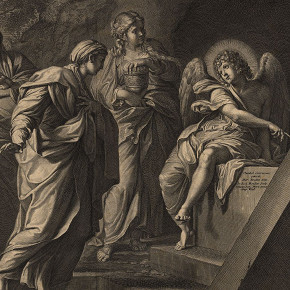
 Good morning, and welcome to St. Mark’s Church on this Feast of the Resurrection. You know, every Sunday is a Feast of the Resurrection, but today is special. Do you know why? Because today is the first Sunday after the first full moon after the vernal equinox – and that makes today Easter. So if a late night talk show host ever jumps out of a cab and asks you how to calculate the date of Easter, now you know.

 Stigma is not a happy word. If you use it in a sentence, more than likely the word “stigma” will be linked to something that people view as disgraceful or humiliating, whether that view is warranted or not. A couple of us recently read a book called The Rich and the Rest of Us by Tavis Smiley and Cornel West, who spoke of the need to lift the stigma associated with the word “poverty” if we are ever going to muster the societal will to lift those on the margins. In years past, society has stigmatized attributes of people who exhibit less capacity than most, using words like “retarded” and “crippled” to describe those with mental and physical challenges. Suffice to say that members of every minority group – no matter the difference used to justify labeling them as “those people” – have been stigmatized in one way or another. Stigmas lead to segregation and prejudicial behavior and animosity. “Stigma” is not a happy word.
 Good morning, and welcome to St. Mark’s on this glorious Easter Sunday. This morning we walk with Mary Magdalene to the tomb and find it empty. And yet our emptiness doesn’t last for long because Jesus, the Risen Christ, stands there, shining before us, as the dew glistens on the early spring flowers blossoming in the garden.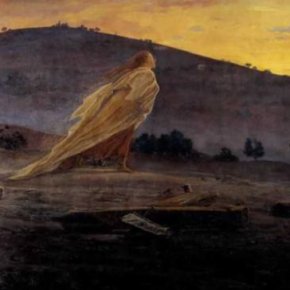
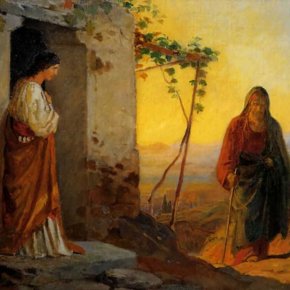
 The prayers have all been prayed. The farewells to the deceased have all been said. The dirt has been cast on the shining, glossy coffin. The low murmur of voices mingles with the whisper of the wind through the long, cemetery grass. The new widow rises from the velvet-covered folding chair, the triangle of the blue field and white stars of the American flag peeking out from under her arm. A line of black-clad people forms, and they begin to file past her. You watch her receive with grace each well-meant, but well-worn sentiment. You join the line, and soon it’s your turn. You grasp her hand in both of yours and wait for the words to come.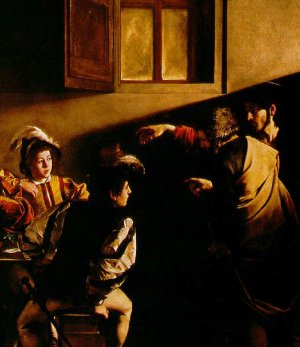
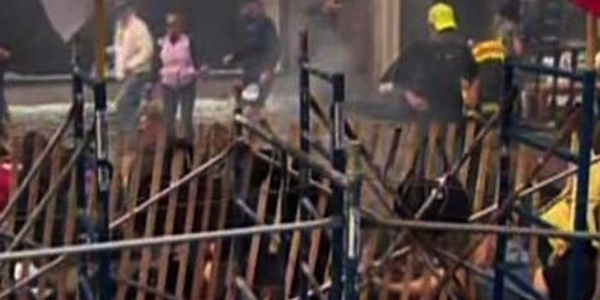
 They call it Heartbreak Hill. It rises between the twentieth and twenty-first miles of the route of the Boston Marathon. It’s not much of a hill, unless you’ve been running for twenty miles and have no more glycogen left to power your leg muscles. You see this gradual rise and you know you only have six miles left, but then you hit the wall and your will to keep running vanishes. That’s why they call it Heartbreak Hill.
 Where the Wind...