On the Road

(Sermon for Sunday, October 28, 2012 || Proper 25B || Mark 10:46-52)

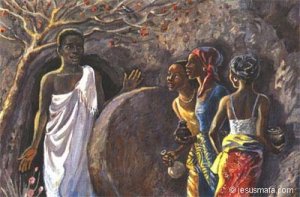
He can’t see them, but he knows they are coming. As he sits by the roadside, he tastes the dust cloud stirred up by their approach. He feels small tremors in the ground caused by their steady, tramping steps. He hears the snorts and bellows of animals, the jingle of bells, the laughter of people. He smells fresh bread and wet animal hair. He can’t see them, but he knows they are coming.

They begin to pass him by, a large crowd: cajoling, telling jokes and fish stories, brushing his knees with rough, hand-spun garments. They begin to pass him by, Bartimaeus, the blind beggar. They begin to pass him by, and he is as invisible to them as they are to him. They are walking on the road to Jerusalem; he is sitting by that road—just sitting, waiting for a coin or a cup of water. But soon some people mention Jesus as they pass him, and in a few moments, Jesus transforms Bartimaeus from this passive sitter by the road into an active follower on the road.

Bartimaeus probably sits in the very same spot by the road every day. Other beggars probably know that is Bartimaeus’s spot. He probably sits down by the road early in the morning and spreads his cloak over his crossed legs, making a basket to catch whatever travelers’ spare from their purses. I’m sure Bartimaeus can hear the coins jangling from their hips. By the sounds different amounts of money make, I bet he can tell how much people will toss onto his cloak. Too few coins in the purse—or too many—and he will get nothing. Bartimaeus sits by the road, waiting for that dull thud of coin on cloak. Day by day, from dew-laden morning to scalding midday to shadow-stretched evening, he sits by the road, waiting.

You might notice that I keep saying that Bartimaeus sits by the road. At first glance, Mark telling us this innocuous detail sounds like the blocking for the scene; if Mark were directing this encounter for the stage, he would plop Bartimaeus down next to, but not on, the road. Now, Mark is usually in a hurry to tell his story, but in detailing the blind beggar’s location, he slows down and sets up a profound encounter with Jesus. Before we get to that encounter, let’s go back to the seemingly insignificant detail of Bartimaeus sitting by the road. I’ll tell you about the road part now, and I promise I’ll get to the sitting part in a bit.

In Mark’s Gospel, road turns out to be a very significant word, indeed. At the beginning of his Gospel, Mark quotes the prophet Isaiah: “See, I am sending my messenger ahead of you, who will prepare your way; the voice of one crying out in the wilderness: ‘Prepare the way of the Lord…’” Now, you might be confused here because, unless you were translating that passage into Greek on the fly, you didn’t hear me say the word road. Let me try the same passage again: “See, I am sending my messenger ahead of you, who will prepare your road; the voice of one crying out in the wilderness: ‘Prepare the road of the Lord…’” Not as poetic, perhaps, but the point is in the original language way and road are the same word. So Bartimaeus is sitting next to the way, which we might think of as the way of the Lord. I suspect that some of you are now thinking: come on, Adam, you got all that from Mark telling us Bartimaeus is sitting by the road? Isn’t that a bit of a stretch? If you’re thinking that, just bear with me for another couple of minutes.

Okay, so Bartimaeus is sitting by the road. He is just sitting—no movement, no motion, just monotony. All too often, we are sitting by the road, too. We sit by the road when we let opportunities to serve our neighbors go by. We sit by the road when we choose not to forgive others and when we reject the forgiveness of others. We sit by the road when we rely only on ourselves and not on God to move our lives. The road is the way of Jesus Christ. When we sit by that road, we know the road is there, but we choose not to journey down the road in the company of our savior. We just sit—no movement, no motion, just monotony.

But Bartimaeus’s monotony is about to end. As he sits by the road, he hears that Jesus of Nazareth is passing by. He shouts out and Jesus halts the moving crowd. Jesus stands still and calls the blind beggar forward. While Jesus takes no physical actions at all in this story, his mere presence catalyzes Bartimaeus into action. First he shouts out from his sitting position by the road. He shouts out again because he hears that Jesus is near. When Jesus calls to him, he throws off his cloak. He literally tosses his cloak aside, probably scattering coins in all directions. Then he springs up, he jumps to his feet and comes to Jesus. Each of these actions portrays an exuberance that cannot be controlled, an excitement that cannot be contained. The very presence of Jesus, even a Jesus who just stands motionless, causes Bartimaeus to leave his motionless sitting position by the road.

Imagine how odd the scene would be if Bartimaeus were politely to ask if he could talk with Jesus rather than shouting at the top of his lungs while people tried to silence him. Imagine how odd the scene would be if Bartimaeus were carefully to fold his cloak and set the garment aside before calmly standing up. No, these staid actions won’t do. The exhilaration Bartimaeus feels at being in Jesus’ presence translates into such evocative actions as throwing off his cloak and springing to his feet.

When Bartimaeus, in all his enthusiasm, comes to Jesus, Jesus asks him what he wants. I hear Bartimaeus say his next line with breathless excitement: “My teacher, let me see again.” And with a word, Jesus immediately renews his sight. When Bartimaeus regains his sight, does he go back and sit down cross-legged by the road with his cloak over his legs? Does he go back to a life of no movement, no motion, just monotony? No. Mark tells us that Bartimaeus follows Jesus on the road. Bartimaeus is now following the way of the Lord. The very presence of Jesus transforms Bartimaeus from a passive sitter by the road to an active follower on the road.

We follow that road when we take the opportunities to serve our neighbors, and when we forgive others, and when we accept forgiveness from others, and when we rely on God and not only ourselves to move our lives. This road is the way of Jesus Christ. When we follow the way we participate in God’s movement, in God’s motion, in God’s majesty. We know the way we are to follow by the presence of Jesus on the road. Like Bartimaeus, the presence of Jesus causes us to shout out and refuse to be silenced. The presence of Jesus causes us to throw off our cloaks and spring to our feet. The presence of Jesus causes us to be healed and follow Christ on the way.

When the power, when the passion, when the presence of the living God, of Jesus Christ, of the Holy Spirit erupt in and around us, we cannot stay sitting by the road for long. This eruption of God’s love and grace in Jesus Christ flows into and out of us; God heals each of us and gives us the strength to spring up and follow on the way.

The Overstuffed Life

(Sermon for Sunday, October 14, 2012 || Proper 23B || Mark 10:17-31)

During my time in college and seminary, I spent seven years living in dorms. Over that time, I lived in five different dorm rooms, and you know what? They all came with a bed and a dresser and an end table and a desk. The beds weren’t always long enough for my six-foot frame and one of the dressers had several sticky drawers, but those were minor complaints. For the most part, I loved living on campus. And the best part about living in a dorm was that I could fit everything I owned – everything – in my car. At the end of the school year, I could pile all of my stuff into my 1992 Mazda Protégé and just drive away.

Then, after seminary, I moved into a rented townhouse in West Virginia. There was no bed, no dresser, no end table, and no desk. So my dad and I drove a borrowed Chevy Suburban to an IKEA near Baltimore and came back with the SUV full of cheap furniture (some assembly required). Gone were the days when I could just throw all my stuff in the back of the car and drive away. I now owned enough stuff that when I moved here to Massachusetts, I had to rent a 14-foot U-Haul.

Then, Leah and I got married, and all of a sudden our apartment had my stuff and her stuff and our stuff. As I sat in the living room pondering this sermon, I looked around and made a mental note of what size U-Haul we would need the next time we move. Let’s just say it’s much bigger than 14 feet.

Reading this morning’s Gospel, I get a bit wistful for the time when I could pile all my stuff in a subcompact car. Now that I have a Subaru Forester, I bet I could fit all of my college-aged stuff and all of Leah’s college-aged stuff in the roomy SUV, though the cello might need to go on the roof rack. And then we could just drive away. We’d be unburdened by everything we have accumulated since: the piano, the couch, the TV, the dining room table, the chairs, the queen-sized bed, the full-sized bed, the bicycles, the bookcases, the books, the DVDs, the dishes…the Kitchen-Aid. (Well, maybe I could find a space in the Forester for the Kitchen-Aid, since Leah makes a mean apple pie.)

I read this morning’s Gospel, and thoughts of such a free lifestyle, unburdened by all that extraneous stuff sounds so appealing. But, of course, whenever I envision such a life, I’m romanticizing it. As I finish mentally storing the essentials in the back of the Forester, I remember that plenty of people live with just the essentials – or not even them – and they don’t have the option to live comfortably in a one-bedroom loft in an apartment community in Weymouth.

I’ve met many such folks at the Long Island Homeless Shelter. With many of you, I’ve served them chicken parmesan and ice cream. I’ve sat there listening for the handful of Spanish words I know while Deb Viscomi carries on with a group of laughing gentleman. I know a young couple – probably about mine and Leah’s age – who do live out of their car. Whenever I see them, their faces always show a potent mix of hope and desperation that breaks my heart. And confronted with their reality, I feel chastened that I could ever romanticize the notion of throwing all our stuff in the car and just driving away.

So you can see my confusion (a confusion that I’d be willing to bet you share) when we read Jesus’ words to the rich man in today’s lesson. The man wants to know how he can inherit eternal life. He says that he has kept all the commandments since his youth. Then Mark’s Gospel tells us: “Jesus, looking at him, loved him and said, ‘You lack one thing; go, sell what you own, and give the money to the poor, and you will have treasure in heaven; then come, follow me.’ When he heard this, he was shocked and went away grieving, for he had many possessions.”

The standard confusion with this story that trips many of us up is the logical progression that would lead this man to sell all of his possessions, give the money to the poor, and then end up being in poverty himself, thus adding to the overarching problem. That’s where I’ve been stuck for a long time, hence the first half of this sermon being about me wondering if I could every truly do this radical thing that Jesus proposes to this man. The trouble is I don’t want to water down Jesus’ words, and, at the same time, I don’t want to wind up down such a confusing logical progression.

So perhaps, I might ask for your charity to bend this story just a little bit, with the proviso that when I’m done I hopefully will have stayed true to an undiluted presentation of Jesus’ message.

The man’s ostensible reason for coming to Jesus is to learn what he must do to inherit eternal life. But Mark tells us that he kneels before Jesus, which is curious behavior. Throughout the rest of Mark’s Gospel, everyone who kneels before Jesus is seeking healing. So, could it be that this man, unbeknownst to himself, is looking to be healed of something?* Since he has kept all the commandments since his youth, his healing doesn’t have to do with obedience to the law. So Jesus gives him another diagnosis. “Your possessions are holding you back,” he seems to say. “You are up to your eyeballs in stuff; therefore, you cannot see the need surrounding you.” This man who kneels before Jesus, not seeking to be healed, but sure in need of healing, has the malady of an overstuffed life, a life cluttered to the extent that he cannot see what is truly important.

After getting rid of your possessions, Jesus continues to prescribe: give the money to the poor, then come and follow me. Here Jesus tells him and us the two things that the man isn’t doing because of his overstuffed life. He isn’t helping the poor (which was a cultural imperative in Israel from time immemorial) and he isn’t following Jesus.

When Jesus heals the blind men in passages before and after this one, he restores their sight with a touch and a word. But to heal an overstuffed life, Jesus can only give the man the prescription to let go of the things that distract him from what really matters. The man can respond positively or negatively. Jesus loves him either way, which is a point that Mark states quite clearly. The man in the story goes away, “shocked and grieving, for he had many possessions.” We can only hope that over time, Jesus’ prescription nestled into his soul and he found his way back to the one who loves him.

When I think of all the stuff cluttering up my life, all the stuff that has no hope of ever fitting in my car so I can just drive away, I wonder hard just what my material possessions are doing to my spiritual life. How often do I abandon Jesus, shocked and grieving, because I am too tethered to my stuff to remember why following him is the most important part of my life? How often do I need to kneel before Jesus to be healed of an overstuffed life?

As we approach the weeks in which our stewardship team asks us to pledge our time, talent, and treasure for the coming year, I invite you to sit in your living room and imagine just how big a U-Haul you would need to fit all of your stuff. Pray about the ways in which your material wealth serves as a barrier to your spiritual health. Kneel before Christ and asked to be healed if you feel your life is overstuffed. And take joyful notice that the abundance in your life has less to do with your material goods and ever so much more to do with the relationships you cherish, the service you render, and the God who loves you no matter what.

* Thanks to David Lose, whose discussion of this passage brought the healing nature of the story to my study.

Letting Go of the Grail

(Sermon for Sunday, September 30, 2012 || Proper 21B || Mark 9:38-50 )

Indiana Jones and the Last Crusade (Paramount, 1989)

The floor of the ancient structure splits open, revealing a gaping chasm. Nazi sympathizer Elsa, the treacherous blonde bombshell, who earlier in the film skewers the heart of our hero Indiana Jones, falls in, only to be caught at the last second by Indy. But he has a dubious grip on her gloved hand and, over the next tenuous seconds, his grip starts slipping. If only she would reach up with her other hand. But no. The Holy Grail has also fallen into the chasm and is even now perched on a ledge mere inches from Elsa’s reach. “I can’t hold you,” shouts Indy. “Give me your other hand!”

“I can reach it,” she screams back, all the while groping for the cup. “Give me your other hand,” Indy shouts again. Another pulse-pounding moment flies by, punctuated by the an eerie silence in the glorious John Williams score. Elsa reaches a final time for the Grail. And then she’s gone. She falls, screaming as she goes, and vanishes into the mist that obscures the endlessness of the chasm.

Indy stares after her, but he has only a moment to grieve because the floor buckles again, and Indy finds himself thrown into the chasm. His father, Henry, slides across the floor just in time to catch Indy’s hand, but his grip is just as dubious as Indy’s had been moments before. Of course, the Grail is still perched on the ledge. Indy has longer arms than Elsa. “I can get it. I can almost reach it,” says Indy.

Then Henry, who has spent his entire life chasing the legend of the Grail, calls his son’s name: “Indiana,” he says, and then again with more gravity, as only Sean Connery can. “Indiana.” Indy looks up and their eyes lock. “Let it go,” says Henry, “Let it go.” Indy doesn’t give the Grail another look, but instead flings his arm up. Henry grasps both of Indy’s hands in a tight grip, and a moment later they are running from the ancient structure, soon to ride off into the sunset.

This scene from Indiana Jones and the Last Crusade flawlessly illustrates what Jesus is trying to tell his disciples in today’s Gospel lesson. Now, every commentary I read about the passage made sure to note just how harsh Jesus sounds in all the talk about cutting off body parts and going to hell, so I’d bet that my reading of Jesus’ words a minute ago made us all a bit squeamish.

And for good reason. I think Jesus is going for far more than squeamish. His disciples have demonstrated time and again that they just can’t grasp the kind of life that Jesus is trying to teach them to live. As their utter thickness becomes more apparent, Jesus gropes for more and more outlandish imagery in an attempt to reach them.

Jesus has tried telling them point blank what’s going to happen. He has tried the object lesson of putting a child among them. He has even been transfigured into a dazzling being. And yet the disciples still try to dissuade Jesus from his chosen path, they try to figure out which of them is the best, and they try to stop someone not in their group from doing Jesus’ work. Finally, Jesus has had enough. “Listen up,” he says. “If your hand causes you to stumble, cut it off; it is better for you to enter life maimed than to have two hands and to go to hell, to the unquenchable fire.”

Here’s another way to read this same verse: “If your hand causes you to separate yourself from God, then separate yourself from your hand instead. If your goal is to live the kind of abundant life that God yearns for you to live, then you would be better off having only one hand than to have two and wind up in the refuse dump, where they burn trash all day long.”

Jesus reiterates the same point using feet and eyes, and I imagine the disciples stand there dumbfounded and maybe a little sick to their stomachs. But perhaps Jesus’ point has finally hit home. There are so many things in our lives that we cling to, which impede us from living the kind of abundant life that God yearns for us to live. Therefore, we have a choice. We can choose the impediment, as Elsa does in the movie when she reaches and reaches for the Grail, only to fall to her death. Or we can cut ourselves off from the impediment, as Indiana Jones does when he ignores the Grail in favor his father’s strong grasp.

Jesus makes his point in a visceral, ugly way, but that seems to be the only way his disciples will hear him. The severed hand and foot and the torn out eye are parts of ourselves that seem integral, but you know what? Life can go on without them. Of course, Jesus only uses these bodily features to make his point. Physical body parts are not what cause us to separate ourselves from God. So the question is: what does? What about our choices or our actions or our way of looking at the world does separate us from God? What part of ourselves do we continually and erroneously reach for, even when our grip on God is failing?

I can’t answer these questions for you. I can only answer them for myself. And there are so many things that I should amputate from my life in order to participate more fully in my relationship with God. My anxiety is one – I know I should trust God enough to let go of my fears for the future and my stress for today, but I’m so used to feeling anxious that I tell myself I don’t know what would happen if I asked God finally to sever anxiety from my life. To tell you the truth, I do know what would happen. I’d find a more abundant, more peaceful life. So why do I keep reaching for the Grail of anxiety? Because I always have, and the inertial force of complacency is a strong foe.

Anxiety is one. Pride is another old standby. Apathy. The craving for security, which leads to chances never being taken. Perhaps the thing that Jesus calls you to amputate is on my list, or perhaps your list is full of other cancerous impediments that would best be excised like tumors rather than clung to like pieces of wreckage in a storm-tossed sea.

Jesus’ strong, visceral language in today’s passage is a wake-up call to the disciples and to us that the barriers we erect between us and God do nothing but hurt us and keep us from living the kind of abundant life that God yearns for all people to live. The good news is this. As we continue to reach for our favorite impediment, for our Grail perching so tantalizingly on the ledge just out of reach, God is clinging to our other hand, clinging with a grasp that will never slip. And God is whispering, “Let it go. Let it go.”

The Spotlight

 (Sermon for Sunday, September 16, 2012 || Proper 19B || Mark 8:27-38)

I put the guitar down on the wooden bench, dropped my right knee to the root-strewn ground, and produced the ring from my pocket. The green light that shone through the trees of the outdoor chapel glinted off the diamond and sapphires, a perfect analog for the light that I felt sure was bursting from my own chest. The last words of the song I had just finished singing clung to the hot, humid, late-July air and surrounded us with the most important question I have ever asked: “Leah, darling, will you marry me?” She nodded her head once, unable to find her voice. Then, after an eternal moment during which I could feel in the depths of my soul the momentum of our entire lives converging on that one point in time, she whispered the single word I longed to hear: “Yes.” My hand trembled so much that I had trouble finding her finger with the ring. And as we embraced, I realized something profound – profound and wonderful. I realized that I was no longer the main character in my own life.

For the first 27½ years of my existence, my chief concern, whether I acknowledged it or not, was me. I was Numero Uno, first in line, the Big Cheese. I was in the spotlight. Sure, I lived my life with a dollop of self-sacrifice, of serving the other at my own cost, but this behavior was much more garnish than entree. I was the main character of my life: the rest of the cast never really could rival me for my own attention. Then I met Leah and everything changed. Suddenly, not only did I desire to share the spotlight, I would have been excited to give the prime spot to her alone. A whole new world of service opened up to me that I don’t think I was ever aware of before. When we came together as a couple, I finally understood the joys of self-sacrificial love.

Looking back on those days two years ago, I chuckle at God’s sense of humor and rejoice in God’s providence. I can just hear God the Father saying to God the Son: “You know that Adam Thomas fellow? He’s my beloved child, he’s even a priest of the Church, but he just doesn’t get it. He doesn’t understand your words, Son, when you said to your friends: ‘If any want to become my followers, let them deny themselves and take up their cross and follow me.’ ”

“You know what we should do?” says God the Son. “We should get him to Massachusetts so he can meet Leah Johnson. I think she will clue him in.”

You see, I spent 27½ years – that’s 93.2% of my life, by the way – trying to have my cake and eat it to. I tried to follow Jesus and remain the main character in my own life. But Jesus’ words and his own self-sacrificial love show us a different way.

Jesus says, “If any want to become my followers, let them deny themselves and take up their cross and follow me.” We Americans are programmed to cringe at the thought of “denying ourselves.” We want giant SUVs that have great fuel economy. We want the beer to taste great and be less filling. We want to treat ourselves to chocolate desserts that don’t have any calories. We want to pursue our happiness, and we don’t seem to mind advertisers telling us just what our happiness should look like. These marketers know they will rake in so much more money if they continue convincing us that being the main characters of our own lives is the best way to live.

Until I met Leah, I bought into the hype. I’ll let you in on a secret: when I was in elementary school, my parents sent me to a session or two of therapy because of how awfully and brutally I insisted on getting my own way. The temper tantrums I threw if we didn’t go to the restaurant I wanted to go to were the stuff of legend. One of these tantrums happened on my mother’s birthday. While that behavior faded as I got older, I still succumb all too often to our me-first consumer culture. I’d be willing to bet that you do to.

But when we deny ourselves and stop striving to be the main characters, we no longer feel shortchanged when Jesus spins the spotlight away from us and shines the light on others. These others are always the ones that Jesus desires us to see: the ones who seem to us to be the ensemble, those brought in just to fill out the cast, the extras. In our film, these extras are those who have no roof over their heads or who have no money for food or who lay in the nursing home with no one to visit them. But in God’s film, these extras are the stars. When we insist that the spotlight stay on us, these others remain in the shadows, too unimportant to garner any attention. But when we follow Jesus Christ as he yearns for us to, we let go of our stranglehold on the spotlight and finally see those whom he would have us see.

And when we see in this way, when we notice those outside our own spotlights, something happens that the advertisers and marketing directors never prepared us for. We discover a latent desire that Jesus’ words planted within us when we were looking the other way. We discover the desire to be generous and welcoming to those who never enjoy the spotlight. We look the ensemble cast members in the eye and realize that we want to know their names and where they grew up and what their hopes and dreams for the future are. We turn out our pockets and volunteer our time and invite the stranger to become friend because by doing so we notice clearly the footsteps of Christ walking one step before us. We feel the life of Christ welling up from within us and connecting with the life of Christ welling up from within the other, who now shines in the spotlight.

Jesus Christ is always walking one step before us, but we don’t always walk one step behind him. We stray, we go off on our own, we set up camp rather than continue following. But even with all of our wilderness wanderings and our prima donna tendencies, he continues to stay one step away, calling us back to his path. His path is hard: the way of denial, of self-sacrifice, of cross-carrying. But his path is also the way of true joy.

When we walk down Jesus’ path, the spotlight is never on us, but on those around us, those walking with us. Now that God has blessed me with a partner to remind me that I am not the main character of my life, I have crept slowly and haltingly onto this path and found the joy of stepping out of the spotlight, the joy of generosity and welcoming and service. Perhaps you have, too. Perhaps, as we turn the spotlight on each other and on those Jesus would have us see, together we will notice, there marking the ground in front of us, the footsteps of Jesus Christ.

Fully Alive

(Sermon for Sunday, August 19, 2012 || Proper 15B || John 6:51-58 )

“What’s the matter, Colonel Sandurz? Chicken?” –Dark Helmet, Spaceballs (1987)

The trouble with being human is that most of us aren’t very good at it. We are way better at being couch potatoes or social butterflies or chickens. We explain the very act of making more humans by referring to birds and bees. A frightened human is a scaredy cat; an insufferable one is a less polite term for donkey. We may exist as homo sapiens, but we spend a lot of time acting like other species.

And I can understand why.  Who really wants to be human? Our skin isn’t very well adapted to our climates. Our young can’t fend for themselves for at least twenty-two years. Our bodies break down with alarming frequency. And to top it off, I can’t think of another species on this planet that kills its own kind with as much regularity and proficiency as we humans.

But somehow we have survived down through the ages amidst the dangers of saber-toothed tigers, drought, pestilence, and war. We have survived, but, as the poet Alfred Lord Tennyson writes, “We are not now that strength which in old days / Moved earth and heaven.” I’m not convinced that we’ve ever been that old strength. I don’t think that we’ve ever lived into our humanity to the greatest extent possible.

Except for one of us. Except for the one whose life, death, and resurrection brought us all here this morning. Except for Jesus. Jesus’ life was miraculous, yes, but perhaps not for the reason we might suspect at first. We believe that Jesus was fully human and fully divine, 100 percent of both without either being diminished or destroyed. This is a great, inexplicable mystery, so I’m not going to try to explain how this full humanity, full divinity thing works. I will say that down through the centuries the “full divinity” side has gotten the majority of the press. But have you ever stopped to think just what we claim when we say that Jesus was “fully human?”

Jesus was fully awake, fully alive – more awake and alive than any person had ever been or has been since. Human potential has always been so vast, so untapped, but until Jesus no one had lived up to that potential. We have always had the capacity to see clearer, to love deeper, to shine brighter, but Jesus is the only person in history who has seen the clearest, loved the deepest, and shined the brightest. And the good news is that he dedicated his life and his death to showing us the way to that full humanity, to the abundance of life that he himself embodied.

In today’s Gospel reading, Jesus says, “Very truly, I tell you, unless you eat the flesh of the Son of Man and drink his blood, you have no life in you.” Last week, we talked about Jesus being the “bread of life,” the most foundational source of nourishment and sustenance for us. Of course, when Jesus talks about being bread, he doesn’t mean physical bread made of flour and other ingredients. Likewise, when Jesus speaks of eating his flesh and drinking his blood, he moves past the literal and invites us to bring his life into ourselves. If we were to eat his flesh, he would travel down to our bellies, the literal middle of our bodies. That’s where Jesus desires to reside in us: in our guts, in the very core of our beings, in the center of what makes us, us.

When we gather to receive Christ in the Holy Communion, we invite him once again to take up residence within us. He has been there all along, but he knows that we need to participate in the action of taking him in again and again so that we remember his life is growing in us. Jesus was fully human, fully alive. As we come closer and closer to him, we too discover our lives expanding, becoming fuller, more abundant. As followers of Jesus, we believe that participating in his way, in his example, in his life will make us more fully alive. And the more fully alive we are, the more life we can bring to those around us.

So what does being “more fully alive” look like? If we aren’t even close to being fully human during our normal, humdrum lives, then how does participating in the fullness of Jesus’ life make any difference?

Perhaps you come home late one night from work and your husband didn’t even think to make dinner and your son decided that his smelly practice clothes were best displayed in the middle of the living room floor and your daughter is having a minor anxiety attack because of all her algebra homework. You and your husband launch into the same old fight about responsibilities; at the same time, you try to tear your son away from the computer so he’ll clean up his mess. Your daughter starts crying because of her homework and hormones and everyone yelling and you tell her to take a few deep breaths: “Everything will be okay, sweetheart.”

And as you say those words to your daughter, you hear another voice saying them to you, a voice that rises up from your gut, from your core, from the center of what makes you, you. And you realize, not for the last time, that life is messy, but there is more to life than mess. You remember that none of you is fully human yet, not like Jesus, at least. None of you is fully alive, not like you will be one day when God completes God’s work in you. And so you ask Jesus to live in you during that moment of stress and failed expectations. And for a little while at least you see clearer, love deeper, and shine brighter than you did before.

Perhaps you visit the Long Island Homeless Shelter, as some are doing later today, and for the first hour you put bread on trays but you can’t quite bring yourself to make eye contact with the guests. They are too foreign, too dirty, too sad. Then you hear one of them laugh – a deep bass laugh that rattles the silverware – and you remember how your grandfather laughed. And when you steal a glance at the man, you see Grandpa for a split second. Then you make eye contact and realize that you are related to this man, if not by blood than by the fact that the Christ dwelling within you and the Christ dwelling within him are the same Christ. And the fullness of the life of Jesus rises up from your gut, from your core, from the center of what makes you, you. The bread you hand to this man will be more than bread.

When we participate in the fullness of the life of Jesus, we discover our own human capacity to love expand. We might not be very good at being human, but Jesus was. When we allow his life to permeate ours, then we can reach toward that full humanity that made him the unique, shining being that he was and is. When we share Holy Communion with one another in a few minutes, we will participate in the act of taking Jesus into ourselves where he resides already. And in that participation, we will become more fully alive, more fully human than we were before. And the more fully alive we are, the more life we can bring to those around us. Thanks be to God.

Christ be with Me, Christ Within Me

(Sermon for Sunday, August 12, 2012 || Proper 14B || John 6:35, 41-51)

I don’t know about you, but these last two weeks, I have felt afraid. Last week, I was excited to go and see the new Batman movie. But then a self-proclaimed Joker – Batman’s chief enemy – calmly walked into a midnight showing in Aurora, Colorado and filled the theater with tear gas…and then bullets…and then dead bodies. Fear – and grief for the victims and their families – replaced excitement, and I haven’t darkened the door of a movie theater since.

This week, I was excited to come to church to celebrate communion and praise God with all of you. But then a white supremacist calmly walked into a Sikh temple in Oak Creek, Wisconsin and filled the temple with bullets of his own…and more dead bodies. Fear – and shock and more grief – once again replaced excitement, and I would be lying if I told you that I feel completely comfortable right now exposed like I am in this pulpit. I don’t know about you, but these last two weeks, I have felt afraid.

And so, as I sat down to write this sermon, fear was on my mind. And I started wondering just why fear is so debilitating. And as I wondered about that, the words of Jesus from today’s Gospel started seeping into my consciousness. And I found that, while my fear didn’t evaporate just like that, someone had sidled up next to the fear and made the fear seem very small in comparison.

But I get ahead of myself. First, why is fear so debilitating? Well, fear has a way of unmaking us. When God created you and me, God made our default position one of loving and trusting. Think of the toddler who will go up to any stranger and say, “Hello.” Then think of the frantic mother who grabs the child by the wrist and yanks him away. Or here’s another example. While on vacation, I met my two-year-old cousin for the first time (which was a real treat, let me tell you) and within half an hour of meeting me, he was flinging himself into my arms from the top platform of the playground. God programmed us to love and trust, not to fear.

So when fear inevitably takes hold, the fear overrides our initial programming. Love and trust move down the list of conditioned responses, and we are no longer the whole people that God intended us to be. Fear motivates people do all sorts of things, the kind of things that unmake us. Some people hole up in their bedrooms never to venture into the world. Some lie to their parents about where they’ve been. Some never settle into mutual, meaningful relationships. Some cheat. Some bully. Some abuse drugs and alcohol. And some go on shooting rampages through temples containing people who look and think differently than they do.

Fear is so debilitating because fear keeps us from being the people God made us to be. Fear hollows out our identity as God’s children. Fear replaces the loving and trusting identity with one that longs to isolate and control. When our identities are tied up in fear rather than in God, we lose who we are; we lose ourselves because there is nothing sustaining or life-giving about fear.

When we feel fearful, when we feel like we are being unmade, what is really happening is that we are losing our connection to our identity as those loving and trusting children of God. And this where the words of Jesus begin seeping into my mind. This is where we make the turn and place Jesus next to the fear and notice how small the fear seems in comparison.

Jesus spends much of his time in the Gospel according to John telling people who he is. His identity is a subject that crops up every other chapter or so, and Jesus signals to us that he is talking about his identity with a special coded phrase. He says the two simple words: “I Am.” But these two simple words carry a lot of weight. By saying “I Am,” Jesus essentially quotes God’s words to Moses. At the burning bush, God gives Moses the mission to free the people of Israel from bondage in Egypt. Moses wants some insurance to let people know he really met God, so he asks for God’s name. “I Am Who I Am,” says God. When Jesus borrows this phrase, he reveals to his listeners and to us his divine identity.

Jesus uses these “I Am” statements over a dozen times in the Gospel according to John. Two of them happen in the story that runs the length of Chapter Six, a part of which we read this morning. I’ll get to the first one in a moment, but before that, let’s talk about the one in our passage today. “I Am the bread of life,” says Jesus. With these words Jesus reveals a piece of his divine identity.

As followers of Jesus, our identities are wrapped up in his. When he discloses a piece of his identity, we discover a piece of ours. When he says, “I Am the bread of life,” he invites us to imagine what bread can tell us about God. Bread nourishes us, just as being in relationship with Jesus nourishes us. Bread in the wider sense of food sustains life, just as through Jesus (as “the Word made flesh”) all life has come into being.

But this is no normal, everyday metaphor. I might say my wife’s smile is the sun on a rainy day, but we all know her smile is not actually the sun. Jesus doesn’t idly compare himself to bread. Jesus is the “bread of life.” Normal, everyday food and drink will satisfy for a time. But eating the food of the bread of life brings us into relationship with Jesus, who is that bread. One of the Eucharistic prayers says this beautifully, praying that we “may worthily receive the most precious Body and Blood of thy Son Jesus Christ, and [be] made one body with him, that he may dwell in us, and we in him.”

In the Eucharistic meal, which we will share in a few minutes, we take Jesus in, and the Bread of Life opens our eyes to the wonderful reality that his presence surrounds us and penetrates us always. The wonderful hymn known as “St. Patrick’s Breastplate” describes this ever-present reality:

Christ be with me, Christ within me,
Christ behind me, Christ before me,
Christ beside me, Christ to win me,
Christ to comfort and restore me.
Christ beneath me, Christ above me,
Christ in quiet, Christ in danger,
Christ in hearts of all that love me,
Christ in mouth of friend and stranger.

When Jesus reveals that he is “the bread of life,” he invites us into the reality that his presence sustains us wherever we are and whatever has happened. This is part of his divine identity, and our identity finds a home in this sustenance.

Whenever fear debilitates us, whenever fear threatens to unmake us, Jesus Christ is there sustaining us, nourishing us so that we can continue on our way, surrounding us with his steadfast presence. We were not made to fear, but to love and trust. The more we rely on the sustaining presence of the Bread of Life, the less of a foothold will we give to fear.

I told you that I would mention Jesus’ other “I Am” statement from an earlier part of this morning’s story. The night before today’s lesson, the disciples row across the sea in their boat. But a storm comes up and threatens to swamp them. Then they see Jesus coming toward them, walking on the water. And do you know what he says to them? He says: “I Am; do not be afraid.”

Antagonists

(Sermon for Sunday, July 15, 2012 || Proper 10B || Mark 6:14-29)

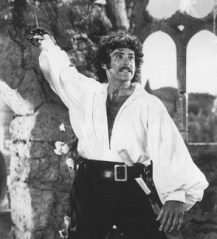
Today’s Gospel reading gives us an entire story about one of the antagonists of the Gospel. Antagonist. This is a tricky word because often in current culture “antagonist” is simply synonymous with villain, enemy, or bad guy. Famous antagonists – a Jeopardy category, perhaps? Darth Vader. Javert. Lex Luthor. Vader wears black, breathes heavily, and uses the “Dark Side” of the Force – definitely a villain. Javert hunts for a man whose crime doesn’t warrant such obsessive and destructive investigation – a perfect enemy for Jean Valjean. And in the first Superman movie, Lex Luthor attempts to destroy California in order to raise his land’s property value – total bad guy.

Gene Hackman as Lex Luthor.

But dismissing these fellows as mere villains ignores their roles as the antagonists of their respective stories. A good antagonist doesn’t simply serve as the proverbial immovable object against which the hero’s unstoppable force must contend. A well-drawn antagonist helps reveal the good things about the protagonist. Often, facets of the main character remain in shadow until a skeptical or adversarial or malevolent character brings them to the light. Lex Luthor’s greed stands in contrast with Superman’s selflessness and so on and so forth.

The antagonist in our story today falls into the same Jeopardy category as Vader, Javert, and Lex Luthor. He is none other than King Herod, to whom Mark dedicates a precious fifteen verses of his short account of the Gospel. If you thought today’s reading felt a bit weird and out of place, then you’re not alone. The Gospel writer Matthew greatly abridges the tale, and Luke and John give the story a miss entirely. But Mark, who usually barrels his narrative ahead at a breakneck speed, oddly stops for a massive chunk of Chapter 6 and treats us to a banquet with one of the bad guys. So, my question is, “Why?”

Well, I think that Mark is a good storyteller, and good storytellers understand what antagonists are for. If antagonists exist to shed light on the good things about the protagonist, then we can ask ourselves, “What does Herod teach us about Jesus?” The easy answer is without Jesus, innocent people get beheaded at dinner. But I think we can go a little deeper than that. Jesus’ absence in this passage is truly conspicuous. Indeed, if the Gospel of Mark were cut up into a season-long television series, the actor playing Jesus would get this episode off. But still, I’m pretty excited because for one week, we get to look at the story from the other side. We get to see the actions of the bad guy and contrast them with the actions of the good guy. And boy, do we have some contrasts to make.

What Mark gives us is really a flashback to an earlier event. Herod thinks that Jesus is John the Baptist come back from the dead, which is bad news for our bad guy because Herod wound up signing John’s death sentence in the first place. Mark tells the tale of why Herod found himself in such a predicament.

The story begins at dinner. And at dinner is where we make our first contrast between the good guy and the bad. This isn’t just any dinner, either. This is Herod’s birthday dinner, and when you’re a puppet king of the Roman Empire – a lackey, really – you don’t have much power beyond spending your citizens hard-earned tax dollars on extravagant banquets for you and your friends. Mark describes these friends in detail: Herod’s guests are “his courtiers and officers and the leaders of Galilee.” Not a bad turnout for the red carpet. You can see them in your mind’s eye, right? There they are reclining at table and congratulating each other for being part of such an impressive coterie.

Of course, if Jesus had been hosting such a banquet, whom would he have invited? That’s right: the outcasts, the sinners, the tax collectors – those people who wouldn’t have a chance in a million years to be on Herod’s guest list. The very people at Herod’s banquet are more than likely the ones who excoriate Jesus for eating with the unwashed poor, the street urchins usually labeled as “bad.” And yet, we know who the good guy in this story is.

So the who’s who of society arrives for Herod’s birthday, and his little daughter dances for the assembly. Her acclaim is so great that Herod swears to her, “Whatever you ask me, I will give you, even half of my kingdom.” With the girl’s conniving mother in the background, we know this cannot go well. Swearing an oath was a big deal back then, akin to a legal contract today, but with more honor at stake. And swearing a blind oath was like writing a blank check.

Of course, if Jesus had watched the little girl’s ballet, what would he have done? Joyfully praised her for her creative expression, no doubt, but he sure wouldn’t have sworn an oath. In the Sermon on the Mount, Jesus says, “Do not swear at all… Let your word be ‘Yes, Yes’ or ‘No, No’; anything more than this comes from the evil one.” In other words, there’s no need to swear an oath; just be trustworthy all the time and you won’t need to make guarantees.

And still, we have one more contrast to make – the biggest one yet between the good guy and the bad. On her mother’s prompting, the girl asks for John the Baptist’s head on a platter. Herod is deeply grieved, Mark tells us, but apparently not too deeply grieved because he goes through with his oath anyway. In order to save his honor, his pride, his standing in society, Herod has an innocent man killed.

Of course, when Jesus was in a similar situation, what did he do? When he could have saved himself from public humiliation, scorn, pain, and death, what did he do? He gave himself up willingly. He gave no regard to his own honor and pride, but emptied himself and humbly chose the road that led to the cross. Society mocked him, the empire killed him, and yet he won in the end, and yet he won in the end when God raised him from the dead on the third day.

Our antagonist today, foolhardy and power-drunk King Herod, shows us the other side of the story, the shadow side, the side that exists in the darkness when the light of the world is offstage. He prizes his standing, his honor, and his pride above all else, even to the point of committing homicide.

I don’t know about you, but I suspect that all too often I place myself on the wrong side of the story. I look at myself in the mirror, and I wonder when the good guy decided to take the episode off and let the bad guy take center stage. I ignore Jesus’ dinner guests because they are so much easier to ignore than to include. I swear oaths to myself about how I will live my life, and then I fail to live up to them. I let my pride stand in the way of doing the right thing. If you’re anything like me, then we all occupy the antagonist’s role in our own lives far too much of the time.

But the good news is this: even when we occupy the bad guy’s role in our own stories, there is always and forever someone occupying the role of the good guy. Our protagonist is Jesus Christ, and as any good guy would, he calls us to come to him, to shed ourselves of our antagonism, and to live our lives as his followers. When we confess our sins in a few minutes, when we once again give up to God our villainy, we will be ready to recognize Jesus as the protagonist of our stories. And as he nourishes us with his Body and Blood at his dinner banquet, we will be strengthened to go out as the good guys and serve the world in his name.

The Seeds of the Kingdom

(Sermon for Sunday, June 17, 2012 || Proper 6B || Mark 4:26-34)

When I was nine or ten years old, I walked into the church across the street from our house really early on a particular morning. Ash Wednesday had always been one of my favorite days. I’m not sure why, but I think I liked going to school with the ashes scraped across my forehead – hence me being in church really early. As many of you know, my father is also a priest, and he met me in the church wearing all of his vestments. But no one else came for the service early that morning. However, as Jesus says, “When two or three are gathered in my name, I am there among them.” So we went ahead with the service, just my dad and me.

When the time came for the ashes, he put his thumb in the gritty, black stuff and scraped first a vertical and then a horizontal line across my forehead, making the sign of the cross. “Remember that you are dust and to dust you shall return,” he said. Then he knelt down and offered the little bowl with the ashes to me. I was surprised, but I put my own thumb in the gritty, black stuff and scraped the sign of the cross on his forehead. “Remember that you are dust and to dust you shall return,” I echoed with all the solemnity that my fourth-grade voice could muster.

Then we finished the service, he took me to school, and we went about our days, and we went about our lives. And about a decade later, my father and I realized that on that Ash Wednesday morning, God planted a seed in me, one so small that neither of us noticed the seed until the stalk started poking through the topsoil of my life.

This seed was the mustard seed of God’s kingdom, the one that Jesus talks about in today’s parable from Mark’s account of the Gospel. Before we go any further, however, I want to dispel any notion that you may have that such a seed would only be planted in someone destined to be ordained as a priest. While some of the seeds of the kingdom that God planted in my life have germinated into my call to the priesthood, others have grown into my call to be Leah’s husband and to spread God’s love through our marriage. I hope other seeds that are still hidden in the soil will sprout into a call to parenthood. God sows within each of us, not just we few who wear the collar, the seeds that grow into a panoply of kingdom callings. Together, as our seeds stretch upwards into beautiful flowers and trees, we help God transform this planet once again into a garden of God’s kingdom.

I firmly believe that God has sown seeds so wildly, so expansively, that every person on this planet has the seeds of the kingdom nestled in the soil of their souls. The parable before the ones we heard this morning speaks to this belief. The sower doesn’t seem to mind that his seed lands, not just on the good soil, but on the road and on the rocky ground and among the thorns, as well. The sower doesn’t just plant in nice furrows in the prepared field, but across every surface, no matter how ready the ground is to receive the seed.

Because of God’s unrestrained scattering of seed, each of us surely has the seeds of the kingdom within us. But, as Jesus says, the seeds start out so small that we can barely see them. In fact, until the seeds have grown into visible plants, we won’t have much luck seeing them at all. But this is how the life of faith works – oftentimes, the moments when the seeds of the kingdom drop into our soil are as small as the seeds themselves. We miss these moments all too easily because they tend to be subtle and quiet. Or they tend to happen in the midst of really difficult and challenging circumstances. Or they tend to happen when we least expect them, when our soil is least ready for the seeds.

With God’s help, we can train ourselves to notice the seeds of the kingdom earlier and earlier in their development. Perhaps, you have a mustard seed that has grown into the full-fledged plant or perhaps you have a stalk peaking up from the ground. Move into a space of prayerful reflection and trace that plant back to the subtle, quiet moment when God scattered the seed in you.

Consider this example. God has given you the gift of teaching. Even though some of the students can be pains in the neck, you love going into the classroom everyday to teach. You feel that teaching is certainly a way that you respond to God’s call. Now, work your way back past your first year struggles, past your student teaching, past your high school days, and find yourself back in fifth grade when your favorite teacher in the whole wide world instilled in you a love of learning and a desire to teach. There’s the seed. God used the dedication and love of your fifth-grade teacher to plant the seed of the kingdom in you.

Here’s another example. God has given you the gift of cooking. Recently, you began helping at your church to prepare hundreds of meals every week for a local homeless shelter. You can feel in each stir of the pasta and each pour of the sauce that you are doing something in which God takes great joy. Now, work your way back past your joining the church, past all those experiments in the kitchen trying to perfect your pie dough, past that semester at culinary school, and find yourself in the kitchen with your mother on the day she finally let you spice her world famous chili for the first time. There’s the seed. God used your relationship with your mother, who passed on her culinary secrets to you, to plant the seed of the kingdom in you.

No matter how old or young we are now, God has planted seeds in us. Some have grown into the greatest of shrubs and the birds nest in their branches. These are the places where we can see God’s kingdom blooming into beautiful gardens around and within us. Other seeds are still nascent, still tucked in the soil waiting for the right moments to start their journey toward the sun. By tracing the plants we can see back to when they were invisible seeds, we can train ourselves to recognize the currently hidden seeds even sooner in their development. And when we do, we can join God in more active participation of their cultivation.

Every week in the Lord’s Prayer, we pray, “Thy kingdom come, thy will be done, on earth as it is in heaven.” The kingdom begins as tiny mustard seeds, which God scatters wildly into our very souls. As we live out our lives as followers of Jesus Christ, we become gardens of the kingdom, spreading the beauty of God wherever we go. The seeds are in each of us. The seeds are sprouting and growing and blooming each day. All we need do is notice.

Guitar Lessons

(Sermon for Sunday, June 3, 2012 || Trinity Sunday B || John 3:1-17)

Playing at VBS in 2003 after my sophomore year of college. That was less than three years in to my guitar playing. It would have been seven or eight if I had never quit.

When I was in seventh grade, my parents bought me a three-quarter sized guitar and procured the services of a guitar expert to teach me the basics. At the first lesson, I learned the names of each of the six strings and how to play notes by plucking them. At the second lesson, I learned how to arrange my fingers on the strings so they made special shapes called chords. At the third lesson, I learned that I would have to practice if I wanted to improve my guitar playing. There was no fourth lesson.

You see, I was a bright kid, to whom pretty much everything came quite easily. I was a good athlete, so baseball and soccer were right up my alley. I really didn’t have to work much to make good grades in school. I had next to no challenges in any of my classes. And so when I was confronted with something that I couldn’t immediately master with no effort, I decided not to try. I put the guitar in the case, and the case sat unopened in my closet for years.

Now, as most of you know, I am a guitar player. So what happened? I picked up the instrument again my senior year of high school, and, being a tiny bit wiser than my seventh grade self, started practicing. I’ve been playing for over eleven years now, and I’m not half bad, but a wistful part of me always wonders how much better I would be at the guitar if I had not quit after three lessons back when I was thirteen years old.

My seventh grade self fell victim to a psychological epidemic that affects the vast majority of the population. Exactly one symptom characterizes this epidemic: people have difficulty agreeing to perform tasks that fall outside of their recognized competencies. This is still true for me: you’ve never seen me do ballet or fix the central heating in the church because these are two things that I don’t do very well. I have no training in either of these areas, and so the likelihood that I will agree to pirouette across a stage or put together an HVAC system is next to zero.

I’d be willing to wager that this fact of life is also true for you. I’m sure each of you could come up with a list of things you are unwilling to try because you know that you aren’t going to be good at them. You know that if you tried, failure would be in your future, and who wants to feel like a failure? And so the psychological epidemic keeps us from attempting new things and keeps us safely ensconced within the borders of our comfort zones.

For us this morning, the trouble comes when the list of things we are unwilling to try includes speaking openly about our faith in God. Why should this be any different from playing the guitar or doing anything else, you might ask? The simple answer is this: becoming an expert in guitar playing is possible. Becoming an expert on God is not.

Today’s Gospel reading teaches us this reality, which is an appropriate lesson on a day when we celebrate the mystery of the Holy Trinity. Nicodemus, a Pharisee and member of the Jewish council, fashions himself such a God expert. He comes to Jesus by night, and at the outset of their conversation, tries to display his knowledge of how God operates. “Rabbi,” says Nicodemus, “We know that you are a teacher who has come from God; for no one can do these signs that you do apart from the presence of God.”

Nicodemus’s “we know” sets him up as the so-called expert on God. The irony is that his statement is true. But Jesus isn’t interested in whether or not Nicodemus speaks correctly; Jesus is solely interested in moving this so-called expert into the unfathomable depths of God’s interaction with God’s creation. “No one can see the kingdom of God without being born from above,” says Jesus in response to Nicodemus’s opening remarks. Jesus’ statement is intentionally ambiguous. The words could mean “born from above or born again,” and I think Jesus means both. The very ambiguity of the phrase shows Jesus’ attempt to push Nicodemus out of his comfort zone where “we know” is his default position.

For his part, Nicodemus latches onto the more mundane of the two possibilities: “How can anyone be born after having grown old?” he asks. This response might sound a bit sarcastic, but at least the Pharisee, who has always been the expert answering questions, is now beginning to ask some of his own. The question is the small chink in the armor of Nicodemus’s expertise. Because of Nicodemus’s willingness to ask a question, Jesus sees that there is hope in showing him the expansiveness of all that this so-called expert does not know.

And, boy, does Jesus show him. Jesus opens Nicodemus’s mind and heart to the mystery of how God creates God’s people, and of how God moves in the world like the wind moving through the trees. When Jesus is done, Nicodemus’s opening “we know” now sounds laughably empty in comparison to the mysteries Jesus reveals to him. To begin to walk in and among these mysteries, Nicodemus must change his empty “we know” into an “I don’t know” full of desire and curiosity. And he takes the first tentative steps along this path with the sincerest question in the entire Gospel: “How can these things be?”

In just one conversation, Jesus shows Nicodemus that being an expert on God is not only not possible, but also not the best way to be in relationship with God. Only by acknowledging his lack of understanding can Nicodemus hope to begin to hear the sound of the wind blowing, this wind of the Holy Spirit that breathes life into creation. Nicodemus’s job is no longer to try to explain what makes God tick. Jesus gives him a new job: to bear witness to the mysterious movement of God in his life.

We see Nicodemus twice more over the course of the Gospel. In his next appearance, he puts one tentative foot outside his comfort zone when he reminds the rest of the council about their own rules when they want to put Jesus to death. And in his final appearance, we see that Nicodemus has fully embraced the new life that Jesus revealed to him. In broad daylight on the afternoon of the crucifixion, Nicodemus helps Joseph of Arimethea take Jesus from the cross and bury him in the tomb.

This so-called expert on God had his world turned upside down that night when he went to see Jesus. Jesus showed him that expertise is neither possible nor desired when relationship with God is concerned. There is not a person on this earth who is competent to talk about what makes God tick. While you and I might have difficulty agreeing to perform tasks that fall outside of our recognized competencies, we can take heart in the reality that Jesus released us from needing to be competent in this particular area. We will never be good at talking about God because God is far too glorious, far too mysterious and majestic for our puny words. But that shouldn’t stop us from trying. Releasing us from the need to be competent means that Christ rejoices in even our most halting attempts, in even the simplest expressions of feeling God’s love.

My prayer this morning is that each of us might feel released from the need to be competent when we have the opportunity to speak to someone else about our faith. Don’t be like my seventh grade self who gave up the guitar because he wasn’t an overnight expert. Rather, acknowledge that expertise has no domain where God is concerned. The simple word about how you feel God’s movement, spoken from the heart, is worth more than any treatise on the inner workings of the Holy Trinity. The halting word about not understanding God’s movement is worth more than all the “we knows” like the one Nicodemus speaks when he first encounters Jesus. The good news is that God uses our incompetencies as much, if not more, than our competencies. So I challenge you and I challenge myself: live into our incompetent ability to speak of God’s movement, and perhaps through our witness, someone new might start seeing God’s wind blowing through the trees.

Four Layers of Peace

(Sermon for Sunday, April 15, 2012 || Easter 2B || John 20:19-31)

Last Tuesday, I received two rather large packages in the mail from my parents. Turns out they have been cleaning out closets in their house, and they decided for me that I would like to be in possession of all of the Star Wars memorabilia I collected when I was a kid. This includes about three-dozen action figures, none of which is old enough to really be worth anything and all of which are now taking up space in my closet, rather than my parents’. Many of them are still in their boxes (yeah, I was that kid), and I spent a while on Tuesday looking at them, trying to dredge up all the intricate details I used to know about the Star Wars universe. And I noticed on the back of every box an advertisement to purchase more action figure, which states: “The Force is with you in all the Star Wars figures and vehicles.”

Even if you don’t know much about Star Wars, I’m sure you’ve heard the most famous line of dialogue from the films. And if you’re an Episcopalian, I’m also sure that you have a kneejerk reaction to this line. Let’s try: “May the Force be with you.” (And also with you.) I like to think that George Lucas borrowed and tweaked that bit of dialogue from the Book of Common Prayer. We say something similar three times during an average Sunday service – at the beginning before the Collect (“The Lord be with you”), in the middle during the Peace (“The peace of the Lord be always with you”), and a few minutes later at the beginning of the Eucharistic Prayer (“The Lord be with you” again”).

Let’s focus on the middle one: “The peace of the Lord be always with you.” (And also with you.) George Lucas might have borrowed his dialogue from us, but we borrowed ours from Jesus. Three times in this morning’s Gospel reading, the Risen Christ says to his disciples: “Peace be with you.” (They aren’t Episcopalians, so they aren’t trained to say, “And also with you,” back to him.) On one level, Jesus saying, “Peace be with you,” is just a greeting to the disciples. And he has to repeat this greeting after showing them his maimed hands and side because they don’t recognize him the first time around. But as the words of the Gospel according to John so often do, even something as simple as a greeting is loaded with layers of meaning.

So what is this “peace” that Jesus offers to the disciples when he appears to them on the evening of the first day of the week, the day he rose from the dead? The surface level is the greeting still heard today in Hebrew and Arabic speaking countries. “Shalom” and “Salaam” – one wonders how there can be so much conflict between and among peoples in these countries – countries like Syria, Israel, Iran – when their special words for greeting one another means “peace.”

On the level below the surface, Jesus’ word of peace to the disciples acknowledges their current situation. There they are, huddled together in the house: shutters drawn, candles doused, door locked for fear of the people who colluded to put Jesus to death. Would the disciples be next? Would the chief priests and the council be satisfied with the blood of the leader or would they pursue the followers too? How had the disciples gotten everything so wrong? How could they have followed someone so disposable, so utterly breakable as Jesus turned out to be?

And into their fear, their confusion, their uncertainty the Risen Christ comes and says, “Peace be with you.” He comes to them even though the door is barricaded. He comes to them even though three days earlier he had died an excruciating death on the cross. He comes to them even though they aren’t expecting him, even though they haven’t understood what he told them about who he is. And when Jesus gives them peace, their fear turns into joy.

But let’s not stop there: let’s go a level deeper. When the Risen Christ offers the disciples peace, he is offering them more than a greeting and an antidote for fear. He is offering them “the abiding presence of God.” This is how a member of our Wednesday Bible Study group described what “peace” means to her, and I adore this definition. Peace is not simply the absence of conflict. Peace is “the abiding presence of God.” Peace happens when we tune ourselves to God’s abiding presence. Peace happens when we resonate with God’s movement in our lives. Peace happens when we discover the inner serenity that God provides in the midst of the maelstrom of activity that marks our lives today.

We might naturally conclude that the peace, which the Risen Christ offers to the disciples and to us, would excuse us from the pain and suffering that life sometimes brings. But Jesus never promised us a reprieve from tragedy. Rather, he promised something so much greater. He promised to be with us always to the end of the ages. He promised to suffer with us, to cry with us, to break his heart open when our hearts break and pour his heart’s love on our wounds. There is no door we can pass through, which the abiding presence of God has not already entered. There is no depth or height that we can attain and not be where God already is. As the psalmist says in one of the most beautiful passages in the book of Psalms:

Where can I go then from your Spirit?
where can I flee from your presence?
If I climb up to heaven, you are there;
if I make the grave my bed, you are there also.
If I take the wings of the morning
and dwell in the uttermost parts of the sea,
Even there your hand will lead me
and your right hand hold me fast.

But all too often we forget that God’s presence abides, and we fail to look for God in situations where we conclude that God couldn’t possibly be. And yet how many of us have said at one time or another, “I just need a moment’s peace.” By our definition, when we say that, what we are really saying is, “I just need a moment to remind myself that I am in God’s abiding presence, a moment to drink in God’s love, a moment to be folded into the arms of grace. This is what “peace” is.

And yet there is another level deeper still. When the Risen Christ offers peace to the disciples, the peace comes with a mission: “Peace be with you,” says Jesus. “As the Father has sent me, so I send you.” And then he breathes on them, saying, “Receive the Holy Spirit.” Thus, Jesus not only gives them the word of peace; he also breathes God’s abiding presence into them through the power of the Holy Spirit. The Father has sent Jesus to bring peace, and now Jesus commissions the disciples and us to do the same. The peace, which Jesus offers, is not for us alone, but for us to share with this damaged, broken world.

In about five minutes, we’ll have a chance to practice bringing this peace. I will say, “The peace of the Lord be always with you.” And you’ll respond: “And also with you.” Then we will greet one another with God’s peace. Just think how powerful an act this is. In these simple words – “Peace be with you” – we bring with us greetings from our Lord. We bring with us the joy that quells fear and uncertainty. And we bring with us the abiding presence of God and of the Risen Christ. Now just imagine: if we took this greeting we practice in church and carried the peace of the Lord into every handshake, every wave, every high five, every tilt of the head, every smile of recognition, every embrace, then we would change the world.