Choosing the Light

 (Sermon for Sunday, March 18, 2012 || Lent 4B || John 3:14-21)

I’d like to go to a Red Sox game and hold up a sign that says, “John 3:17.” Perhaps, a row-mate would ask me why my sign is wrong and I can say that the sign’s not wrong, but a different verse entirely. The verse after the most famous verse of the Bible says, “Indeed, God did not send the Son into the world to condemn the world, but in order that the world might be saved through him.”

Now, before we really get down to the business of this sermon, let’s talk about this “world,” a word John uses three times in this one verse. For John, the world is the creation that rebelled against God – the good works, which God made, but which fell into disrepair because of bad human choices. One of the reasons that John starts his Gospel with, “In the beginning,” is so we readers might make the link back to the story of creation in Genesis, in which God created the heavens and the earth. Three chapters into Genesis, things start to fall apart because of Adam and Eve’s dreadful choices.

Fast-forward to John’s time or even to our own, and the broken state of the world is evident – there’s no need to list all of the broken things in relationships or in society or in the environment (for we know them all too well). Much of the brokenness stems directly from bad choices made over and over again. And because these decisions are made again and again, they become part of the system, the machinery of brokenness, and we feel helpless in the face of a crumbling world. Nevertheless, God so loved this world that God chose to send God’s Son into the brokenness in order that he might show us what is broken. And in showing us, he gave us the gift and duty of helping him restore the broken world to wholeness.

But even though John expands the Son’s salvation to include the whole world (literally the “cosmos” in Greek), the restoration starts taking place in the hearts of God’s children – in us and ever other person who has every walked the earth. The brokenness began in the hearts of Adam and Eve; thus, the healing, the saving of the world takes hold at the origin of the brokenness, in the hearts of all people.

Just like Adam and Eve had the choice to obey or disobey God, each of us has a choice, which Jesus names using the imagery of darkness and light: “The light has come into the world, and people loved darkness rather than light because their deeds were evil,” he says. “For all who do evil hate the light and do not come to the light, so that their deeds may not be exposed. But those who do what is true come to the light, so that it may be clearly seen that their deeds have been done in God.”

We have a choice to stumble in the darkness or to walk in the light, to be part of the problem or part of the solution, to add to the brokenness or to participate in the healing. And we don’t make this choice just once. Rather this choice is part of every single decision we make. Every decision either pulls us back to the darkness or pushes us further into the light. Perhaps you can remember a choice you made that turned out to be the wrong one – failing to stand up to a friend’s bully or taking out your frustration on your spouse or deliberately not noticing the homeless veteran on the street or knowingly purchasing a product that was fabricated under unbearable conditions, or…or…or — the list is endless. I don’t know about you, but when I make a choice the pulls me towards the darkness, I feel just a little bit unmade, like a little bit of me has eroded away. If I continually choose the wrong path, if I continually embrace the darkness, I wonder — will there be anything left of me?

This question points to the condemnation that Jesus talks about. God does not condemn; rather, we condemn ourselves when we choose the darkness over the light. Indeed, each time the verb “condemn” happens in the middle of our passage, the word is passive. God takes no active part in our condemnation, but only patiently and constantly calls us back to the light. And I firmly believe this call is what keeps us from eroding away entirely, what keeps us from total annihilation (which is another way of talking about hell). God’s constant call back to the light gives us a beacon to turn to, a lighthouse, if you will, that can guide us through the darkness and keep us from breaking up on the rocks. God does not force us to choose the light, but rather invites us to steer toward the harbor of God’s radiance.

As we answer God’s call and choose the light over the darkness, we discover that we can be part of the healing of the world. In our own experiences of the darkness, in our own vulnerability, we find the common ground of brokenness that Christ found when he came to earth and when he was lifted up on the cross. When we choose the light, we choose to be partners with Christ in healing the brokenness of the world even as Christ is healing our own brokenness.

So how do we translate the imagery of walking in the light into our everyday lives? What does choosing the light look like on the ground, in our day-to-day lives, at the office or at school or at home? Everything comes back to inviting God into our decisions, about orienting toward the light in each choice so that we do not feel like we are being eroded away to nothingness.

Here’s one practical way to help make decisions. Margot and I have been participating in a Lenten devotional series done by the Society of Saint John the Evangelist in Boston. Each day, a brother of the order talks about a piece of their Rule of Life, and about how each of us can benefit in our walks with God by writing a Rule for ourselves. A personal Rule of Life helps you to figure out how to be the best version of yourself, the version that God created you to be. When faced with a choice, remembering your Rule can help you walk in the light.

Writing out a Rule for yourself could be a simple as praying for clarity about the five things that are most important to you, then writing them on an index card and trying to live with those priorities in mind. Or perhaps, you might feel called to write out a longer, more in-depth set of guidelines for how you relate to yourself, to others, to the world, and to God. I’ve been working on my own Rule, and I’d like to share a few short passages with you so you can see how I am, with God’s help, trying to choose the light.

“I will nurture my relationship with God through praying, listening, serving, and loving.

“I will love my family. I will be loyal, honest, caring, and present to my wife and our (future) children.

“I will live my life with an attitude of thanksgiving, always seeking to choose abundance over scarcity, trust over fear, and relationship over isolation.

“I will live my life with an attitude of invitation, always seeking to choose engagement over apathy, encouragement over criticism, and listening over selling.”

In each of these pieces of my Rule, God has given me guidance for how to choose the light over the darkness. Does this mean I will always choose the light? Of course not, but the Rule will help me see when I have failed and help me turn back to the right paths. I invite you to consider making your own Rule, so that you may more effectively choose light over darkness. Please come see Margot or me if you’d like guidance in doing this incredibly fruitful practice.

Speaking of practice, spring training is going on, which reminds me of my sign from the beginning of this sermon (like that segue?). John 3:17 – “God sent the Son into the world not to condemn the world, but in order that the world might be saved through him.” Christ’s saving of this world began in his life, death, and resurrection, and continues in the hearts of all people. When we choose the light over the darkness, we choose to be part of the healing of this world, we choose to show the world that God is moving in our lives. In this witness, we bring God’s light into the darkness of this world. And do you know what happens when light is introduced into darkness? Darkness flees.

High Noon

(Sermon for Sunday, March 4, 2012 || Lent 2B || Mark 8:31-38 )

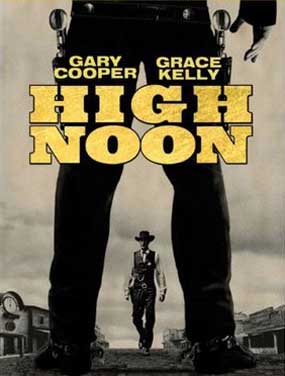
I’m sure we’ve all watched this scene unfold in a film, a Western, perhaps starring John Wayne or Gary Cooper. The sheriff checks the rounds in his six-shooter, puts on his Stetson and shiny, star-shaped badge, and walks bowlegged out of his tin-roofed station. His spurs clink as he walks, and his shoes kick up the dust of the main street running through town. At the same time, the batwing doors of the saloon swing outward, and the gun-slinging outlaw swaggers down the steps into the street. The outlaw wears a black bandana and black chaps and keeps his Colt .45 slung low in his hip, the better to draw quickly. They face each other at high noon out on the street. They are alone, though the whole town is watching from windows and roofs. A tumbleweed skitters across the road between them. There are no shadows. And the sheriff says, “This town ain’t big enough for the both of us.”

With these words, the sheriff gives the outlaw the chance to turn himself in or to leave town before the inevitable shootout. But the shootout is inevitable for two reasons: first, the movie-going public would be disappointed in a Western without a shootout; and second, the outlaw’s very nature and personality won’t let him go quietly. If today’s Gospel reading were staged as a Western, you and I would be cast as the outlaw. And a Stetson-wearing Jesus would be the sheriff, who says to us, “This town ain’t big enough for the both of us.”

But Jesus wouldn’t be talking about a town. He would be talking about us, about our souls, about our lives. “This life ain’t big enough for the both of us” is the Western film version of what Jesus actually says: “If any want to become my followers, let them deny themselves and take up their cross and follow me. For those who want to save their life will lose it, and those who lose their life for my sake, and for the sake of the Gospel, will save it.”

With these words, Jesus gives us the same choice that the sheriff gives the outlaw. We can surrender ourselves to Christ or we can fight in an attempt to keep control of our lives. We cannot, however, do both.

At first glance, the second option seems quite appealing. Who wouldn’t want to remain in control of his or her own life? Is that not the American dream – self-determination, self-preservation, pulling oneself up by one’s own bootstraps? Do we Americans not prize the entrepreneur, the independent thinker, the individual who defies the odds to become someone? Of course we do. In and of themselves, these things are not bad. But they can lead us down some wrong paths.

Let’s take self-preservation, for example. As infants, this is the only thought in our little brains. We cry whenever we perceive that something is being withheld that will help us thrive. We are incapable of taking care of ourselves on our own, so we induce through love and tears others to take care of us. At this stage of our life, self-preservation is not a choice. Keeping ourselves going is a hardwired imperative of our biology. As we grow up and become more self-sustaining, the affinity for self-preservation that we displayed as infants stays with us. The biological imperative keeps us seeking things that will help us survive.

Again, this is not a bad thing at all. The problems begin when the “self” we are trying to preserve starts wandering away from those life-giving things that helped us thrive as infants. Some of those life-giving things – such as family and love – can remain throughout our lives, but other, life-taking things can crowd them out. In middle school, we define ourselves based on the insecure input of our peers and the warped input of the consumer culture. In young adult life, we define ourselves based on our (never quite good enough) physical attractiveness to prospective mates. In adult life, we define ourselves based on our work and our need to be comfortable.

When these definitions lead us down life-taking paths, we humans have a tendency to follow such paths to the extreme. We become addicted to alcohol or drugs or gambling or video games. We pursue what marketing experts define as success. We take on the lone wolf persona, ignoring the welfare of others because we perceive that we are not faring well enough ourselves. Pretty soon, the selves that we have become look so very little like the selves that God created us to be.

The farther down the life-taking paths we go, the deeper the need to preserve these false selves becomes. We know no other way to live. We have no idea what another path would like, and the unknown is the scariest reality of all. So we cling hard. We preserve these so-called lives. And we become outlaws in our own bodies, betrayers of the abundant life that God desires for each of us.

To these outlaws, Jesus says, “This life ain’t big enough for the both of us.” But instead of drawing his six-shooter like the sheriff, Jesus unbuckles his holster and lets the belt drop into the dust. He spreads his arms wide and starts walking toward us. We keep our hands on the hilts of our guns, too bewildered by his behavior to draw and start firing. When he reaches us, he takes the gun from our belts, empties the bullets, and pulls the bandana away from our faces. Then, with his arms once again outstretched as on a cross, he beckons us to him. He calls to us to take one step toward him, one step down a new life-giving path, one step that will find us close enough for his arms to embrace us.

And in that embrace, our need to preserve those false selves starts fighting. But our gun is in the dust. Our arms are pinned to our sides. The only thing left to us is to surrender those false selves into Christ’s care and to begin to let Christ’s life replace the half-lives we were leading. In the embrace, Jesus leans close and whispers, “If you want to become my follower, deny yourself and follow me.”

And so we deny the false selves that we have become, the small, scared people who stubbornly walked down the wrong paths. We lose the half-life we had because we stopped trying to save this old life. And instead, we take on Christ’s life. We step into the life of Christ as Paul says to the Galatians: “I have been crucified with Christ; and it is no longer I who live, but it is Christ who lives in me. And the life I now live in the flesh I live by faith in the Son of God, who loved me and gave himself for me.”

As Christ lives in us, there is no room for the old life to hold sway. This life just ain’t big enough for the both of them. But Christ’s life is big enough to encompass and redeem the old life. The new paths we tread don’t start out new, but as the old, life-taking paths we followed. We just travel them in the opposite direction. And as we journey back up the life-taking path, Christ gives us the opportunity to repair and reconcile with those we’ve hurt and to reject and abandon the system that defines self with stuff. As Christ’s life takes hold in us, we find that this new life is worth preserving, and not only preserving, but rejoicing in and sharing with others.

Surrendering our outlaw lives and living Christ’s life is not easy. That’s why Jesus uses the imagery of the cross – not just because of his own impending execution, but because the cross is a symbol for suffering. Living Christ’s life means sharing in the suffering of the world, and also working to change the world to alleviate some of the suffering. But the good news is this. When we no longer live to preserve our false selves, but allow Christ to live in us, then we are never alone. We never have to face the joys and sorrows of this life alone. We never have to encounter suffering alone. The shootout ended without a shot fired. Our false selves are dead. And Christ is alive in us.

Three Panels of the Story

(Sermon for Sunday, February 26, 2012 || Lent 1B || Mark 1:9-15)

Every year on the First Sunday of Lent, we hear the story from the Gospel that tells about Jesus’ time in the wilderness. We hear this story on this particular Sunday because Jesus’ forty days off by himself, fasting in the arid austerity of the desert, are a model for our own forty-day Lenten journey. Last year, we heard Matthew’s telling of this tale – an eleven-verse treatment, complete with the devil’s three-pronged attack on a famished Jesus. The year before that, we heard Luke’s version, a full thirteen verses that recount the same story as Matthew does. Now, if Matthew and Luke spend on average a dozen verses on this story, then you might be wondering whether you nodded off during the Gospel reading from Mark a few moments ago and missed something. Where was the dialogue between the seductive devil and the stalwart Jesus? Where were the temptations: the bread from the rock, the leap from the temple, the view from the mountain? The answer is that I didn’t read them because they aren’t there. And I can assure you that you didn’t have time to nod off, no matter how sleepy you are.

Never one to spend his words frivolously, Mark gives us a grand total of two verses on Jesus’ time in the wilderness. “And the Spirit immediately drove him into the wilderness. He was in the wilderness forty days, tempted by Satan; and he was with the wild beasts; and the angels waited on him.” That’s all Mark has to say on the subject. So, to keep you all from feeling gypped by a two-verse Gospel reading, the framers of our lectionary tacked on a few verses before and a few verses after Jesus’ time in the wilderness. And I’m so glad they did.

I’m glad because Mark’s rapid style progresses from scene to scene with such haste that the individual scenes cannot be isolated from one another. Indeed, I don’t think Mark intended for them ever to stand alone. Rather, taken together like the three panels of a comic strip, the three short scenes we read a few minutes ago tell the concise story of our life of faith.

Here’s the first panel: Mark draws Jesus emerging from the waters of the River Jordan. A dove alights on his outstretched arm. A text bubble points out the top of the frame and reads: “You are my Son, the Beloved; with you I am well pleased.” This first panel in the story of our life of faith is “relationship.” Jesus hears God’s voice calling him “Son.” And not just son, but a son whom God loves. And not just a son God loves, but a son God loves, in whom God finds delight and joy. This relationship that God has with Jesus is the same relationship that God initiates with each one of us. Each of us is a son or daughter whom God loves and in whom God delights.

I know this can be hard to accept because most of the time we feel way too messy and unkempt for God to want to know us, let alone to delight in us. Our socks have holes in them. We haven’t vacuumed in a while. We ate that pretzel we found between the couch cushions. And that’s just the surface stuff. Why would God want to have anything to do with such untidy people?

But the wonderful thing about this first panel of our story is that Jesus hasn’t done anything yet. We’re less than a dozen verses into Mark’s account of the Gospel. Jesus hasn’t spoken a word or accomplished anything more remarkable than traveling from Nazareth to the Jordan and coming up for air after John dunked him under the water. Before Jesus has time to win or lose God’s favor, God has already staked out a place in their relationship. Likewise, God tossed God’s lot in with us long before we let God see our untidiness. And God’s not going to cut and run just because of our state of disrepair. God’s knowledge of us, love for us, and delight in us do not depend on our worthiness. In fact, they create our worthiness. Because God is in relationship with us, we are worthy to be in relationship with God. This is the first panel of our story.

In the second panel, Mark draws Jesus walking in the desert. At first glance, he seems to be alone. But then you notice the faint outline of an angelic hand holding one of Jesus’ hands as the other fends off Satan. This second panel in the story of our life of faith is “adversity.” Immediately after God affirms God’s relationship with Jesus, Jesus finds himself in the wilderness with the wild beasts and the temptations of Satan. I always assumed that Jesus had to travel quite far to get to the wilderness, but as I thought about this sermon, I changed my mind. I doubt he went very far at all. The wilderness is all around us. We live in the wilderness. Sometimes through our actions and inactions, we contribute to expanding the wilderness. The wilderness exists anywhere that we feel isolated or afraid or tempted or lost. And let’s be honest – we are feeling at least one of those most of the time.

But the adversity, which brings on these feelings, does not make the wilderness a trial or a proving ground. God does not drop us in the desert just to test our endurance. We simply wander into the wilderness, and we get caught there because the wilderness is vast and tangled. But remember the first panel of our story. The relationship God entered into on our behalf does not end at the desert’s edge. When the people of Israel wandered in the desert for forty years after fleeing Egypt, they made a remarkable discovery. Their God was in the desert, too. The adversity of the wilderness is the second panel of our story, but the relationship of the first panel carries through.

When we discover God’s constant presence even in the midst of the wilderness, we are ready to move to the third panel. Mark draws Jesus striding through Galilee proclaiming a message to everyone who will listen and to some who won’t. A text bubble points to Jesus, saying, “The time is fulfilled, and the kingdom of God has come near; repent, and believe in the good news.” This third panel in the story of our life of faith is “proclamation.” After God has claimed a delight-filled relationship with the beloved Son, and after the Son has wandered in the wilderness, Jesus returns to Galilee with the words of the good news of God on his lips.

Our proclamation of this same good news happens whenever we act on the faith that comes from God’s delighted, loving relationship with us. Our proclamation happens when we come to know, love, and delight in all the messy and unkempt people around us. Our proclamation happens when, even in the midst of the tangled wilderness, we rely on God to show us the path to freedom.

Our life of faith moves from relationship through adversity to proclamation. But this life of faith is not linear; rather, this life is a spiral. As we grow in our faith, we delve more deeply into our side of our relationships with God. As we come ever closer to the God who is always close to us, we can endure greater adversity. And we can proclaim more continuously and more courageously the love and delight God has for all people.

As we enter this holy season of Lent, I invite you to take stock of where you are in this life of faith. Are you nurturing your relationship with God? Or are you wandering through the tangled wilderness of adversity? Or are you reveling in all the ways that you show forth God’s love? Or perhaps, you are living out a little of all three. Wherever you are in this story of the life of faith, trust that God began a relationship with you before you were worthy of one, that God is hacking away at the tangle of wilderness right alongside you, and that God is constantly speaking the words of the good news through your words and deeds into the hearts of those you meet along the way. Thanks be to God.

A Deep Breath

(Sermon for Sunday, January 15, 2012 || Epiphany 2B || 1 Samuel 1:1-20 )

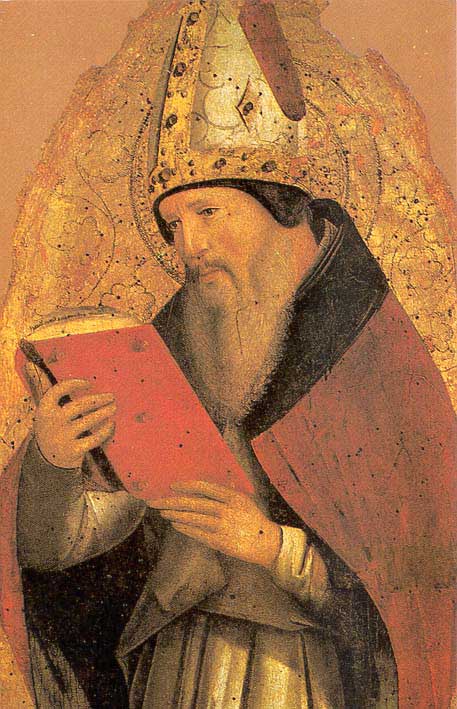
People, including many of you, often ask me how I knew that God was calling me to be a priest. Here’s the story. This week ten years ago, I began the second semester of my freshman year of college. At that time, I was enrolled in a four-semester Humanities class that took a holistic approach to studying Western civilization. The second semester of the class moved from the end of the ancient world through the Middle Ages, so we began around the time of the fall of Rome. The first book we read was The Confessions of Saint Augustine. Now, many of my classmates couldn’t stand Augustine’s introspective, theological memoir, but for some reason, I couldn’t put the book down. What I didn’t realize at the time was that Augustine was teaching me to look deep within myself as he had done all those centuries ago. For me, this book turned out to be much more than an assignment in a four-semester Humanities class.

As I slowly, hesitantly began to look deep within, I began to notice a glowing ember. This ember was the source of the blaze that would become my heart’s fire, but at first the ember was nothing more than the tiniest of flames, the mustard seed of flames. With St. Augustine’s help, I caught sight of that tiny flame. And without realizing what I was doing, I took a deep breath, and when I exhaled, the Holy Spirit rode the wind of my breath into that ember. And the fire began – slowly, hesitantly – this fire that was my call to serve God as a priest in God’s church.

In today’s lesson from the Hebrew Scripture, the boy Samuel is fast asleep on the floor of the temple of the LORD. And God calls to him, “Samuel! Samuel!” This is Samuel’s own glowing ember, the first phase of his call.

The spark, the glimmer that St. Augustine made me aware of was Phase One of mine. Well, from God’s perspective, what I thought was Phase One was probably closer to Phase 23. But to me, the ember was just the beginning. By the end of my freshman year of college, I knew something was going on in the recesses of my being. I knew a flame had been kindled, but I didn’t know yet on what the flame was shedding light. However, if I had been alone, if I had been the only one to notice and nurture the glowing ember, I am convinced there would never have been a Phase Two.

Enter the Reverend Tom Ward, the chaplain at the University of the South in Sewanee, Tennessee. Once a month for my entire sophomore year, I met with Tom Ward, and we just talked. We talked about my hopes and dreams, my fears and doubts, my past and future. And then one day – the day was so ordinary that I don’t even have a clear memory of the meeting – I told him about the glowing ember. I told him about reading St. Augustine and looking within and being surprised to find the glowing. And then, fully realizing what he was doing, Tom took a deep breath, and when he exhaled, the Holy Spirit rode the wind of his breath. And the fire spread out from my gut and into every corner of my being.

In today’s lesson, the boy Samuel is fast asleep on the floor of the temple of the LORD. And God calls to him, “Samuel! Samuel!” Samuel cries out, “Here I am!” And then he runs to Eli, the priest under whom he serves, thinking that Eli had called out to him. “I did not call; lie down again,” says a confused Eli. Samuel does so, but God calls again and then again. Each time, Samuel runs to Eli, thinking that Eli has called out to him. Finally, the third time, Eli realizes that the LORD has been the one calling out to Samuel. So Eli instructs his young charge: “If [God] calls you, you shall say, ‘Speak, LORD, for your servant is listening.’ ” Eli understands Samuel’s call, and Eli teaches Samuel how to respond to that call. Elis is Samuel’s Tom Ward, the mentor who teaches the student how to respond to God.

During my junior year of college, Tom Ward gathered a group of six people from the community of Sewanee to meet with me about the fire that God had kindled two years before. Every week, we met and shared stories about ourselves: not just me, but each of us sharing. Some stories had to do with God’s movement in our lives, others not, though you come to realize that every story has something to do with God’s movement. This group tested the fire, attempting to discern if the fire was from God. Through listening and sharing and praying, we decided God was in the flame.

In today’s lesson, Eli sends the boy Samuel back to his bed with a response to God. The LORD stands before Samuel and calls his name. Samuel responds, “Speak, for your servant is listening.” The group that Tom Ward formed for my discernment taught me how to listen – how to listen to their voices and stories, and within them how to listen for the voice of God speaking God’s story for my life.

During my senior year of college, I went before a scary committee in the diocese of West Virginia. We talked through four one-hour meetings, and at the end of the day, they decided to recommend me for postulancy for Holy Orders. Two years of seminary later, I went before the same committee again, though they were less scary this time. We talked more, and at the end of the day, they recommended me for candidacy for Holy Orders. Six months later, the bishop of West Virginia ordained me to be a deacon. And six months after that, he ordained me to be a priest. Of course, discernment of God’s call is never over, so don’t take away from this that my call story ended that day in June, 2008.

Rather, reflect back on these stories I’ve been telling you these last few minutes. Notice how my story and Samuel’s story overlap. In neither case, can we classify these stories as just mine or just Samuel’s. These stories also belong to Eli and Tom Ward, to the group at Sewanee and the scary committee. And these stories belong to you, for you here at St. Stephen’s have always been a part of God’s call in my life. We just didn’t know that a decade ago.

Notice also that nothing in these stories is all that mysterious. Save for the glowing ember and God’s first call of “Samuel! Samuel!” every phase of these stories involves the simple act of talking with other people. God has built this need for conversation, for communion really, into the very fabric of God’s call in our lives. No call from God exists in solitary confinement. No call from God can ignite into full flame without many people blowing on the embers. We need each other to tease out and discover and nurture God’s call because God’s voice most often comes to us in the voices of other people. Why else would Samuel think Eli was calling to him over and over again?

When you are wondering what God might be calling you to, I offer you this guidance. Find a friend whom you trust more than you trust yourself. This person could be a parent or a spouse or another person whose soul is somehow mingled with yours. Ask this person these two simple questions:

“What do you think the world needs?”

and

“What do you think I’m good at?”

As you and your friend talk, listen to her words. At the same time, watch for the glowing ember deep within you. Sooner or later the answers to those two questions will intersect, and the ember will glow just a little bit brighter. And without realizing what you are doing, you will both take a deep breath, and when you exhale, the Holy Spirit will ride the wind of your collective breath and ignite a fire in your heart.

The Heart’s Square Footage

(Sermon for Sunday, January 1, 2012 || Feast of the Holy Name || Luke 2:15-21; Philippians 2:5-11)

At the end of this sermon, I’m going to invite you to make a New Year’s resolution, but don’t worry because you only have to fulfill the resolution for a week, which I think is the standard longevity of such things anyway.

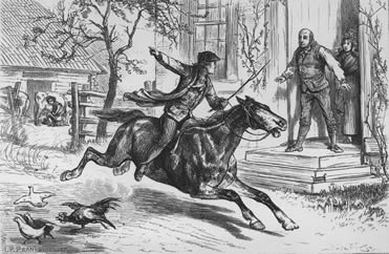
But first I have a couple of wondering questions that this morning’s Gospel calls to mind. We read that the shepherds “made known what had been told them about this child.” I’m wondering to whom did they make this known? I’m really curious. Did they run through Bethlehem Paul Revere style (“The messiah is coming! The messiah is coming!”)? Did they go to the local census bureau and tell them to add another Israelite to the rolls? Did they go to the religious leaders and tell them that their hopes had been fulfilled?

In fine Godly Play style, I’m just going to let that first question hang in the air while I pose a second one. I’m wondering what kind of reaction the shepherds received. Luke tells us “all who heard [the shepherds’ testimony] were amazed at what the shepherds told them.” But “amazed” is neither a positive nor a negative word. As far as the shepherds are concerned, I suspect that they received quite a few responses that went along the lines of: “That’s amazing; ridiculous, but amazing.” Others probably said, “Get off my front stoop, you mangy shepherds.”

In the end, the narrative gives us single answers to both these wondering questions. While the shepherds surely told a wide array of people and received a wide array of amazed responses, we are privy to only one, and that is Mary’s. The shepherds burst in on the exhausted new parents with their witness to the angel’s words about the infant. The angel had said, “I am bringing you good news of great joy for all the people: to you is born this day in the city of David a Savior, who is the Messiah, the Lord.” The shepherds proclaim this good news to Mary and Joseph. And “Mary treasure[s] all these words and ponder[s] them in her heart.”

Notice what is happening here with Mary’s response to the shepherds’ news. For nine months, since the angel appeared to her on that fateful day, Mary has carried within her the Incarnate Word. She has nurtured in her womb the physical embodiment of God’s good news to the world. She has felt the Son of God kick. Then, on the night we celebrated last week, she delivers him. Jesus is born to the rest of the world, and Mary’s womb is empty once again.

And yet, even though her womb is now empty, is her body void of the Word of God? Thanks to the shepherds: No. They bring the first message of the Gospel back to Mary, and she fills herself with the good news. She treasures their words in her heart as she had so recently treasured the Word in her womb.

Each of us bears the Gospel inside of us. The good news of Jesus Christ is treasure hidden in our hearts waiting to be shared. But our hearts are also home to all of the boxes and baggage and bulk that accumulate over lifetimes of focusing our attention away from the things that really matter, away from God and loving relationships. Our hearts are storage units for all of our misplaced priorities, inflated egos, broken promises, habituated distrust, forgotten loyalty, and shackling fears. These things clutter our hearts and leave less room for the good news of Jesus Christ to dwell.

Mary’s brave agreement to carry the Christ child makes a space within her, and God fills her emptiness with the embodiment of this good news. In today’s passage from the Letter to the Philippians, Paul tells us of another emptying, one that the Word made flesh accomplished in order to inhabit Mary’s womb. Paul says of Jesus: “Though he was in the form of God, [he] did not regard equality with God as something to be exploited, but emptied himself, taking the form of a slave, being born in human likeness.”

The Greek word translated “something to be exploited” might be better translated as “something to be grasped” or even “something to be hoarded.” Even though he was in the form of God, Jesus let go of his station. Even though he was part of all the might and majesty and magnificence of God, he did not hoard them. Even though he shared the most precious thing in the universe — equality with God — he shared himself with us by emptying himself; by taking on the form of a slave; by filling Mary’s empty womb and being born in human likeness.

All this happened because Jesus was willing to let go of his grasp on his divine form. All this happened because Jesus refused to hoard the incomprehensible harmony of light and love and grace that is our God. All this happened because Jesus emptied himself. And Jesus emptied himself to fill Mary’s emptiness, to fill our emptiness.

So the question is: how empty are we? How much space within our hearts is left for the good news of Jesus Christ to fill?

If you’re anything like me, then the boxes and baggage and bulk take up a majority of your heart’s square footage. But we can begin to clear away this accumulation by resonating with Jesus’ own self-emptying and echoing Mary’s assent to be filled with God. The resulting emptiness is unlike any other instance of emptiness out there. This is not the emptiness of a bare pantry or a sock drawer on laundry day. This is purposeful emptiness, holy emptiness. This holy emptiness makes room for the grace of God to expand within us. Our internal storage units, once the depositories for those misplaced priorities and shackling fears, transform into the sanctuaries they were always meant to be. The emptier we become, the greater is our opportunity to discover true fullness.

This wonderful paradox is at the heart of our life of faith. As we begin the slow process of self-emptying, we realize that God has been at work in us all along: breaking down the boxes, removing the baggage, and shaving off the bulk. When we, like Mary and Jesus, empty ourselves, we find ourselves ready to respond to God. We are eager to serve others. We are prepared to give of ourselves because we know the fullness of God expanding within us has no bounds.

I invite you to join me in a New Year’s resolution this week. Each night before you go to sleep, focus your mind and heart in prayer. Identify something in your life that is taking up too much square footage within you, that is cluttering your heart. Perhaps this something is trouble at work or doubt about your financial future or concern for a loved one. Give this something to God in prayer. Ask God to inhabit the space vacated by this offering. Do this every night. Each time give something else to God. Practicing this holy emptiness will allow more space for the good news of Jesus Christ to breathe and move and dance within you. Soon you will empty yourself of enough clutter to notice that God has been at work in you from the beginning, and you will be able to dance along.

A Tale of Two Helicopters (devo180 recap)

Everything came into being through the Word, and without the Word nothing came into being. What came into being through the Word was life. (John 1:3-4a; context)

For my birthday this year, my then fiancée bought me a LEGO kit of a police helicopter. It was great fun to put together, and when I was finished the helicopter looked exactly like the one on the box. And no wonder, considering that I had followed the directions exactly. Not one piece was out of place. It was the perfect realization of the set on the box.

Then over the summer I instituted a LEGO club at church, and one of the participants brought in a helicopter of his own. It didn’t quite have the sleek lines of the dedicated pieces that the one I made had, but I sure thought his was way better. His was better because he didn’t use instructions to build it. It didn’t come from a kit ready to assemble. He built his helicopter directly out of his imagination. Whereas I constructed mine, he created his.

In this post, we are going to talk about the link between God’s creation and our own creativity. This link is the imagination, the wonderful gift that God gives us that helps us access our creativity. As we move on, I want you to be thinking about how you personally express your own creativity. We’ll get to that later; for now, just thank God simply because God created you.

Still Speaking

Before we go any further in our discussion about imagination and creativity, I have to rehash some stuff that I’ve said before so please bear with me.

“In the beginning was the Word and the Word was with God and the Word was God…everything came into being through the Word.” So says John the evangelist at the beginning of his account of the Gospel. “In the beginning when God created the heavens and the earth…God said, “Let there be light.” So says one of the writers of the book of Genesis at the beginning of the whole Bible.

The important words here for our discussion are “Word” and “said.” As these two writers articulate the miracle of God’s work in the beginning, God speaks creation into being. Now, we get into trouble when we decide that at the end of Day Six, God stopped speaking. God may have rested on Day Seven, but that Word, which God used to organize creation, continued and continues. God has never stopped speaking creation into being.

As parts of this creation, God continues to speak us into being, as well. None of us is finished being made yet. Not even close. God breathes life into us with each word God speaks, giving us the opportunity to grow, to change, to use our imaginations.

Creation is God’s imagination made real. When we access our imaginations, we tap into the kind of energy that God uses to create.

Imagination

Our imaginations allow us to access our creative sides unrestrained by any thoughts of boundaries or rules. In the beginning of creation, there were no boundaries or rules; there was just God and God’s Word. So when we use our imaginations, we get as close as we can to the state God was in when God began to create. (Of course, we’re still really really really far from the actual state, but we are closer than we normally are.)

Our ability to imagine finds its roots in the reality that God made us in God’s image. You might think that this means, “in God’s physical appearance” because of our use of the word “image” in today’s parlance. But “image” here does not mean “superficial representation.” Rather, it is shorthand for “the deep and abiding spark of God’s Spirit that animates us.” It is that which is within us that allows us to imitate God, to reflect how God is, or to put it another way, to follow.

And it’s no coincidence that the words “image” and “imagination” come for the same root. When we tap into our imaginations, we find ourselves in a pure moment of creative energy. Children are so good at imagining because they don’t have as much baggage, which tends to pollute this pure moment. But even with baggage, we can soar into the heights of creativity. And in so doing, we enable the spark within us that is calling us to create in God’s image.

Talent Not Required

We’ve spent the first half of this post discussing the theological warrant for why we are able to engage our imaginations to aid in creative endeavors. Now let’s talk about one of the pitfalls that can accompany this discussion.

This pitfall centers around a word that is often linked to creativity, and that word is “talent.” Too often we ascribe the creative task only to those people we describe as “talented.” And while it is true that the vast majority of creative artifacts – paintings, musical scores, choreography, to name three – that survive the test of time come from talented people, this does not mean that so-called talented people have a monopoly on creativity. Rather, their works generate value beyond the initial act of creation because other people have decided on sets of factors that assign such value.

But the initial act of creation is much more important than any resultant value of a work. And anyone, no matter how much or how little talent he or she has, can and should create. Exercising our creativity, no matter what the outlet, allows us to reach deep inside and root around for the spark that God buried within us. In this searching for our creative spark, we concurrently probe for our strong, but often ignored, bond with God’s own constant creation. And this leads us to be better followers of Jesus Christ.

So don’t worry if you do not have what the marketplace has decided is “talent.” Don’t worry if the fruits of your creative endeavors sit in your basement once you’re done. Don’t worry if your creativity manifests itself in a way that leaves no material product, but rather leaves a mark on the life of someone else. Rather, create for creation’s sake. After all, that’s what God does.

A Poem for Creativity

As we close our discussion on creativity and imagination, I invite you to imagine with me how you might work with God to release your own creativity. Perhaps you will

Sing a song a way that’s not been heard before,
Or write a play and cast your little brother as the lead,
Or take a day to dig a garden in your yard
And sow some seeds that soon will be a living tapestry.

Or paint a picture with the watercolors in your bottom drawer,
Or stitch a many-colored quilt to lay across a pair of old, scarred knees,
Or take some pages from old magazines and roll them
Into beads for jewelry for your mother’s special day.

Or hum a tune you half-remember hearing at a pub, oh way back when,
Or write some epic verse about adventures Spot has when you are away,
Or take an afternoon to bake a latticed apple pie
And bring it for dessert to potluck night at church.

Or dance a dance that you are making up right then and there,
Or tell yourself the story of the star that shines before the others do,
Or take a piece of rusty clay and throw a pot
And glaze it with a dye you mixed yourself.

Or pick a bunch of daisies for the vase atop your sister’s chest of drawers,
Or weave a brand new romance with the threads of your two lives,
Or take some time to shape a handful of the deepest silence
Into a laugh
Or a cry
Or a long, contented sigh.

I leave this moment with you, God, imagining how you will move in my life tomorrow.

A Note from my Mother (devo180 recap)

A new weekly feature here on Wherethewind.com brings a week’s worth of devotions from my other website devo180.com and puts them together in one long blog post. I will be editing them for continuity, so the text isn’t exactly like it is on the other site. You can go there and get the original. This one is from the first week of September.

I’m reminded of your authentic faith, which first lived in your grandmother Lois and your mother Eunice. I’m sure that this faith is also inside you. (2 Timothy 1-5; context)

“May you continue to have the space for reflection, the silence for relationship with God, the time for relaxation, and the temperament to recognize and rejoice in all of creation.” You probably don’t recognize the name of the person who wrote this quotation. And that’s okay, because she’s not famous (except in genetically exclusive circles). She’s my mother, and she is one of the wisest and gentlest people I know. She could easily be a saint except that her miracles aren’t the flashy kind that gets you noticed by the canonization committee. Anyway, she wrote those words to me over the summer in a card celebrating the third anniversary of my ordination to the priesthood. The card has been propped open on my desk ever since, and I’m excited that I get to share it with you.

So I invite you to dig up some wisdom from your own mother. If you can’t, dig up some wisdom from one of those surrogate mothers that everyone seems to collect (I’ve got about five, I think). Reflect on that wisdom, and then we’ll pick up with the first phrase of my mother’s message.

Space for Reflection

In her note to me, my mother prayed that I have “the space for reflection.” Now, the word “reflection” is one of my all time favorite words, so I’m sure my mother knew that it would resonate with me. We use the word “reflection” in two main contexts: we see our reflection in mirrors or still ponds and we engage in reflection when we think back on previous events. In both of these contexts, gaining space – both spatial and temporal – allows us to make the most out of reflective moments.

They say that you don’t learn from experience; rather, you learn from reflection on experience. If the middle linebacker (yea football season!!) takes a bad angle and gets blocked out of the play by the left guard, he now has gained some vital experience. But there’s a good chance he’s going to get blocked out of the play again unless he reflects on the mistake and takes time to correct it. For football players, the space for reflection is the film room. For the rest of us, the space happens when we intentionally pause to look back over our days and discern how we succeeded and failed at living the lives God desires for us.

Now let’s get back to the mirror context of the word “reflection.” The word comes from the Latin word flecto, which means “to bend.” Literally, “reflection” is “to bend again” or “to bend back.” So when we allow ourselves the space for reflection, we literally “bend” or, to make the action physical, we “bow.” We bow to the God who is patiently waiting for us to hold up the mirror to our days and see God reflected back at us.

Silence for Relationship with God

My mother prayed that I develop the silence for relationship with God. On the surface, this may seem like a strange juxtaposition – silence and relationship don’t usually go very well together. In a human relationship, a “silent” party may be accused of being incommunicative or may be cowed by an aggressive partner into non-speaking.

But there’s where we make our mistake – too often, we think of silence as a “non-something,” as an absence of something. But silence, when we are speaking about how it functions in our relationships with God, is the exact opposite. Silence is a full something. Practicing silence does not mean shutting off all the noises around and within you. Rather, practicing silence means replacing those noises with attention to what is there, hidden in the background beneath the noise.

This fullness of something beneath is God’s presence. It is beneath the noise because God’s presence is the framework of existence, the structure, the undergirding support for all things. It makes sense, then, that when we find ourselves in silence, we notice this behind-the-scenes presence. When we become attentive to this presence, we can begin to participate in our relationship with God. And it is then that we will notice that God has always and forever been participating in God’s relationship with us.

Time for Relaxation

The third prayer my mother had for me was that I find the time for relaxation. She apparently has some inkling into the fact that I would probably work all the time if I didn’t have people around me to tell me to slow down.

I remember during my first year of college having so much work and reading to do that I never had any time to relax. I always told myself that I would relax when my work was done. The trouble was that when I finished reading for one class, I would need to start it for another, and by the time I was done with that reading it was time to start reading again for the first class. And then there were papers and projects and studying for exams and…and…and…

Finally, a day came when there was just too much hitting me all at once. Then I realized that there was never a time when I wouldn’t have some work for class to do. So I started scheduling relaxation time in order to be more effective when I was working. And that put me on the right path.

The best time to relax is at the moment when you say to yourself, “I am just too busy right now to even think about relaxing.” You (not to mention everyone around you) will be better for it. Remember, Jesus often went off by himself for a bit of a recharge. You can too.

The Temperament to Recognize and Rejoice in All of Creation

The final prayer my mother had for me in that card back in June was that I have “the temperament to recognize and rejoice in all of creation.” I love that she didn’t simply pray for me to recognize and rejoice in creation. Rather, she prayed that I have the “temperament” to do so. In so doing, she asked God that I be granted a specific tool for my faith’s toolbox, not just the effect the tool brings.

Growing into a temperament that recognizes and rejoices means nurturing a certain demeanor, a set of behaviors that leads to the expectation that there is and always will be something to rejoice about. This temperament is not about glossing over the bad stuff or pretending that everything is fine and dandy when it’s not. We aren’t trying to delude ourselves when we seek this temperament. In fact, we are trying to do just the opposite.

Remember two days ago, when I talked about the fullness of God’s presence being the something beneath the silence. In the same way, nurturing the kind of temperament my mother is talking about has to do with searching for the greater reality around and upon which all transient reality clings. Discovering God’s presence in our lives, both when times are great and when times are tough, is all about acknowledging that God is there, undergirding our existence with God’s own greater existence. When we discover this, or more often, when we rediscover this (considering we have a tendency to forget about it), we can recognize and rejoice in creation.

And in so doing, we recognize and rejoice in God’s creating movement in our lives.

I leave this moment with you, God, wishing for open ears to listen, a sensitive mouth to speak, and strong arms to embrace your people.

First Words

(Sermon for Sunday, October 16, 2011 || Proper 24A || 1 Thessalonians 1:1-10 )

Any spherical object! (that's me at age 2)

Did your parents ever tell you about the first word you ever spoke? More than likely, your first word was “Da,” which is short for, “Daddy, go get Mommy so I can have lunch.” Perhaps, your first word was “Ma,” though this is unlikely, considering the “M” sound is much more difficult to make than the “D” sound. Perhaps, your first word was “No,” which you probably heard your parents say many, many times when they asked each other if the other had slept last night. My first word was “ball.”  And thus began a lifetime of me kicking, catching, and throwing any spherical object I could get my hands on.

Christianity has some first words, as well; at least, they’re the first words that we still have a record of today. They aren’t as hesitant or half-formed as are the first words of infants. Rather, they spring from the pages of the New Testament with remarkable (even uncanny) clarity, vitality, and comprehensiveness. We heard these words a few minutes ago when we listened to the first ten verses of Paul’s First Letter to the Thessalonians.

Now, before we get to some of Christianity’s first words, we need to clear up one spot of potential confusion and talk for just a minute about the similarities between Thessalonica in 50 AD and the United States in 2011. First, the potential confusion.

If you pull up the Bible on your smartphone, you will notice two things: number 1, the New Testament begins with the Gospel according to Matthew; and number 2, Paul’s First Letter to the Thessalonians is actually eighth on Paul’s depth chart, not first. So how could these ten verses from First Thessalonians possibly be the oldest recorded words in Christian history?

For starters, the folks who put together the New Testament put the four accounts of the Gospel up front because the rest of the pieces didn’t make a lot of sense without first hearing the story of Jesus’ life, death, and resurrection. But the people who wrote the Gospel didn’t start doing so until probably 15 to 20 years after Paul wrote to the Thessalonians. As for Paul’s depth chart (and this is a little strange) – his letters are actually in order by length, from longest to shortest, and First Thessalonians is one of the shorter letters. But if the New Testament were ordered chronologically by when the texts were written, our reading from Paul today would be on Page 1. Okay, confusion averted? Great. Let’s keep going.

Our modern moment shares several things in common with mid-first century Thessalonica, the community to which Paul writes the first words of Christianity. Like the modern United States, Thessalonica was a diverse, cosmopolitan place, with a plurality of religions and cultures all rubbing shoulders. As the capital of the region of Macedonia, there were plenty of things to do, not unlike the glut of stimulation that assaults us at every turn. And the Thessalonians had not received the good news of Jesus Christ before Paul arrived, just as people in modern America have lost contact with this great story of the Gospel.

To these people in Thessalonica and to us here on the Interwebs, Paul sends these first words. He, of course, had no idea we would consider them the first words of Christianity, which lends a special kind of authenticity to his message. These are words written to people who hadn’t read Matthew, Mark, Luke, or John. These are words written to people who lived in a society that knew very little about this faith that Paul brought with him. As such, these are words that can serve us as we practice sharing our faith, as the Thessalonians did, with people outside the walls of this church.

In these first ten verses of the first text of Christianity, there are six words in particular that shimmer for me: grace, peace, faith, love, hope, and joy. Notice how Paul uses each of these special words: “Grace to you and peace,” he writes. “We always give thanks to God for all of you and mention you in our prayers, constantly remembering before our God and Father your work of faith and labor of love and steadfastness of hope in our Lord Jesus Christ…You became imitators of us and of the Lord, for in spite of persecution you received the word with joy inspired by the Holy Spirit.”

These words are special because each has a meaning outside the church and a greater meaning inside the church. The secular understanding of these words can give followers of Christ like you and me a place to establish common ground as we share with others how God is present in our lives.

Let’s quickly look at each of these words to see how we can expand the secular definition to fit into the greater reality of following Jesus Christ.

“Grace” is a perfectly lovely word. We use this word to describe ballet dancers because they move with poise and precision. They throw their bodies into the air trusting that they will land on their feet, and if they don’t they get back up quickly and keep dancing. How easily can we take this understanding of grace and elevate the grace of the dancer to the Grace of God, this grace that picks us up when we fall and teaches us to find beauty in everything.*

We hear the word “peace” when conflict ends and “peacekeepers” enter the recently warring region to monitor the new situation. We use this word to describe a calm ocean after a storm or an infant who has finally dropped off to sleep. We can expand this to the Peace of God, which takes situations of conflict and infuses them with possibilities for unity, justice, and new beginnings.

“Faith” is the trickiest word on this list because all human attempts at “faithfulness” fall short. We put our trust in banks, in governments, in products, in each other, and sooner or later we are always let down. But when we expand the definition of faith to include the Faith of God, we find the one example in all of creation that will never fail. How wonderful to tell someone about this kind of faith!

“Love” is tricky, too, because we use the word in so many different circumstances, from our shoes to our spouses. But when we find that most authentic use of the word, when the word “love” springs unbidden from our lips and doesn’t describe an emotion but a state of being, a state that we entered unwittingly and never want to leave – then we begin to see the edge of the extraordinary Love of God. And we can celebrate that love with each other.

“Hope” is about the future. All people have used this word to talk about what they dream for the days and years ahead. I hope to have children and to teach them to play soccer. These human hopes are safe hopes, the kind that we can see in our mind’s eye five or ten years down the road. This understanding of hope elevates to the Hope of God when God releases us from the boundaries of the merely possible and shows us the realms of glory that exist far beyond our sight. And then we have a greater hope in which our everyday hopes can dwell.

Finally, we talk about “joy” most often when we have “enjoyed” a dinner party or a new film or a ballgame. We mean that we had a good time and might want to come over again. What we don’t realize is that this “joy” we feel is more than happiness. The Joy of God is a feeling of wholeness, of completion that comes when we discover that we are exactly the people who God created us to be.

Each of these words, these first words that Paul used when he wrote to the Thessalonians makes sense outside the context of the Christian faith. But within the greater reality of following Jesus Christ, these words shimmer with new facets of meaning.

I invite you this week to take these first words of Paul and try them out for yourself. Pray with this question in your heart: how has God encountered you when you have had an experience of grace, peace, faith, love, hope, or joy? Then find someone from within your own faith community and try out these words. Practice sharing with one another before you go out and share your Christian life with those outside your church.

Like the first words of an infant, our first attempts in sharing the first words of our faith will be halting. They will be hesitant. They will be half-formed. But they will be ours. And God will take them, shape them, and elevate them into God’s own words.

Note

*I wrote “Grace…teaches us to find beauty in everything” and then realized that I stole those words from U2. Thanks, fellas.

Christ’s Own

(Sermon for Sunday, October 2, 2011 || Proper 22A || Philippians 3:4b-14)

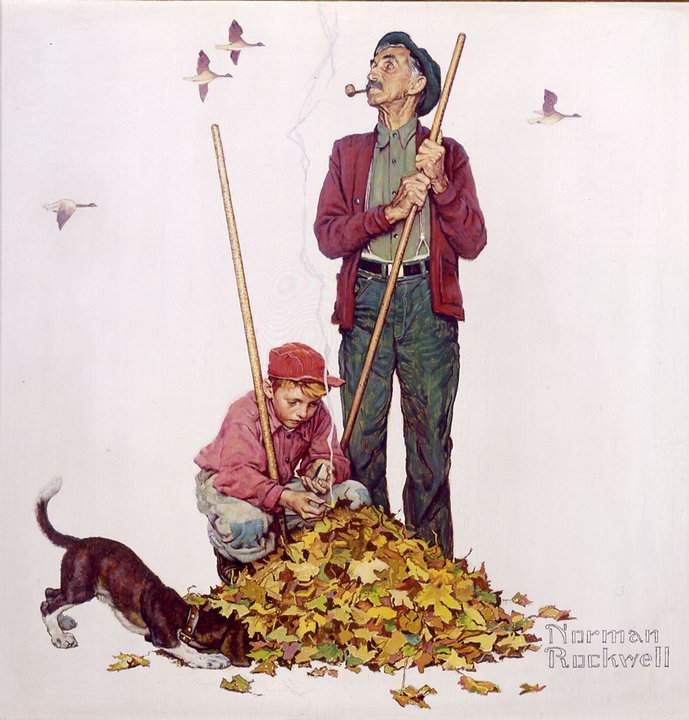
My grandfather, Roy Thomas, went into hospice twelve days ago, after several difficult weeks in the hospital. Less than twenty-four hours later, he passed away due to complications from being alive for more than nine decades. I awoke to the phone ringing at quarter to six in the morning, and I knew before answering what the news would be. Now, my grandfather and I were never close. There are no pictures of him teaching me how to fly fish or taking me to the ballgame or riding a tractor with me perched on his lap. There was never a Norman Rockwell moment in our relationship. He sent me a card each birthday, and I saw him every other year, give or take.

So, when I broke down weeping in my office a few hours after I received the call from my father, I was taken completely by surprise. Where were those tears coming from? How could the loss of someone, with whom I had but a passing relationship, hit me so hard in my gut? These were the questions I was asking myself as I wiped the tears away. I felt a bit silly, crying so uncontrollably when I was sure I was just fine, thank you very much. But perhaps, more fitting questions ask exactly the opposite. How could I be surprised that I felt such tear-stained grief over the loss of my own grandfather, no matter the state of our connection? How could I possibly think that the loss of a member of my own family wouldn’t hit me so hard in my gut?

The concept of “loss” is tricky thing. The overriding fact of earthly life is that one day – perhaps not today or tomorrow, but one day – we will lose our earthly lives. Everyone dies. There are no exceptions. We have thousands upon thousands of years of data backing up this reality. And yet, we train ourselves to ignore this overriding fact. We assume that death is something that happens to other people – fuzzy, nebulous people on the news and in the obituaries. Not the people we love. Not the people close to us.

But then a relative develops an aggressive cancer. Or a friend flips his SUV. Or a grandparent goes into hospice. And the illusion that loss only happens to other people shatters. The overriding fact that earthly life always ends sneaks up and surprises us, even though this fact is enmeshed in the very fabric of existence.

And death isn’t the only kind of loss we encounter. We confront loss on a daily basis, and still we have tremendous difficulty dealing. There is the loss of autonomy when others make decisions for us. There is the loss of relationships when we part ways with those who have made impacts on our lives. There is the loss of material possessions, the loss of health, the loss of trust, the loss of baseball games (sorry, fellow Sox fans). There is even the loss of loss, which is the grief that happens in response to you realizing that you are no longer grieving.

With loss surrounding us all the time, you’d think we’d have developed ways to deal that didn’t include various forms of denial and willful ignorance. But more often than not, we ignore the potential for loss until the loss is right in front of us hitting us in the gut.

And this willful ignorance is what made me read today’s lesson from Paul’s letter to the Philippians over and over again. Paul writes: “Yet whatever gains I had, these I have come to regard as loss because of Christ. More than that, I regard everything as loss because of the surpassing value of knowing Christ Jesus my Lord. For [Christ’s] sake I have suffered the loss of all things.”

Somehow, Paul’s relationship with Jesus Christ has allowed Paul to confront the reality of loss head on, well before any sort of loss has a chance to sneak up and surprise him. How does Paul do this? Let’s take a look. Can we do the same? Yes, I think we can.

According to Philippians, Paul values knowing Christ Jesus above all else. Nothing even comes close. The value of being in relationship with Jesus surpasses everything. And because knowing Jesus is so incalculably valuable, everything else in Paul’s life seems utterly insignificant. The gulf between what was important before meeting Christ and what is important now that he has met Christ is so wide that Paul can barely see the stuff of his old life shrinking in the distance.

And, therefore, he regards everything as loss. Based on Paul’s own words and my interpretation of them a moment ago, we might come away with the impression that nothing besides being in relationship with Christ should matter, that we should ignore everything that isn’t Jesus. This is the interpretation favored by hermits and ascetics that got away from everything to focus on God. However, I’m not convinced that that’s what Paul had in mind. We must keep going, because so far we’ve only gotten through the first half of Paul’s discussion.

Because Paul values his relationship with Christ above all else, he no longer attempts to cling to the rest of his life. He lets go of everything – his relationships, his possessions, his fears, his illusions. But all of this that Paul regards as loss is not lost. Paul does not cast everything into the void. Rather, he gives everything away to Christ. He gives everything to Jesus, and in doing so, Paul finds that everything he has regarded as loss was always God’s in the first place. Even Paul himself.

Paul relates this comforting reality to the Philippians: “Not that I have already obtained [the resurrection] or have already reached the goal; but I press on to make it my own, because Christ Jesus has made me his own.” Christ Jesus has made me his own. These words are the crux of Paul’s ability to deal with loss. The surpassing value of knowing Christ compels Paul to give everything up to Jesus and thus find himself at a loss. But in the act of giving away everything to Jesus, Paul discovers that Jesus has taken even more. Jesus has taken Paul. Jesus has made Paul his own, along with all that stuff that Paul gave him.

And Christ has made us his own, as well. When we enter into relationship with Christ, the surpassing value of that relationship makes everything else seem entirely insignificant. This seeming insignificance allows us to release our stranglehold on everything that we have been putting in place of a relationship with Christ. And when we release our grip and give away everything to Christ, we will find that Christ has already obtained us in the bargain.

Because Christ Jesus has made us his own, he has empowered us to give to him everything and everyone that we possibly could lose before the loss sneaks up and surprises us. Does this make grieving un-Christian? Of course not. Rather, our grief is one of the things that Christ invites us to give over, so that God might enfold us in our hour of need.

When my grandfather passed away eleven days ago, I was not prepared for the sense of loss that would hit me. Perhaps, this profound loss of someone I didn’t even realize I was clinging to has opened my eyes to truth that I still have plenty to give away to Christ. I would hazard to bet that we all continue to cling to things that have never really been ours to cling to. The good news is this: Any loss, any gain, any grief, any joy, any challenge, any victory is ours to share with Jesus Christ because Christ has made us his own.

In My Name

(Sermon for Sunday, September 4, 2011 || Proper 18A || Matthew 18:15-20 )

Near the end of the film Shakespeare in Love, the crowds who have just witnessed the first performance of Romeo and Juliet sit stunned into silence. Then one person begins clapping and soon the playhouse is shaking to thunderous applause. But in the midst of the cast’s curtain call, a group of soldiers storms into the theatre led by Mr. Tilney, the Queen’s Master of the Revels. “I arrest you in the name of Queen Elizabeth,” shouts Tilney.

When asked why he is attempting to arrest everyone present, he says that they all “stand in contempt of the authority vested” in him by Her Majesty because they just participated in a display of public lewdness – because (and here he points to Gwyneth Paltrow who is playing Lady Viola who, in turn, is playing Juliet) “that woman is a woman!” Then he employs the Queen’s authority a third time: “I’ll see you all in the clink in the name of Her Majesty Queen Elizabeth.”

“Mr. Tilney,” thunders a voice from the audience. Then the Queen reveals herself and says, “Have a care with my name or you will wear it out.” And stepping regally to the stage (as only Dame Judi Dench can), she takes charge of the situation.

Now the monarch happened to be at the play, but neither Mr. Tilney nor anyone else knew that. Mr. Tilney was doing what was expected of him as the person in charge of public performances in the Queen’s realm. The Queen, of course, could not possibly attend to all matters of governance alone, and so she appointed all sorts of people to handle affairs in her name. These people, like Mr. Tilney, used the Queen’s name to generate the authority they needed to do their jobs, which in the big picture always meant looking after the Queen’s affairs. Apparently, in Mr. Tilney’s case, he has traded on her name one too many times.

This is the model that first comes to my mind when the Gospel references doing something in Jesus’ name, as so happens in today’s reading from Matthew. I think of the absent monarch delegating to an underling some portion of her authority so that some minor affair of state runs smoothly. In this model, the name of the monarch functions as a badge or a seal, some sort of official statement that the underling is speaking for the monarch because the monarch is elsewhere.

Now I want you to time travel with me back about three minutes. I climbed into this pulpit, crossed myself, and said, “In the name of the Father and the Son and the Holy Spirit.” You said, “Amen,” and then you sat down while I took a sip of water. And then I started talking about Shakespeare in Love. Okay, back to the present.

How is my invocation of God’s name any different than Mr. Tilney wearing out Queen Elizabeth’s? If Mr. Tilney invokes the Queen’s name primarily because she is absent, what am I saying about God’s presence here with us at St. Stephen’s? Could I possibly be implying that God is an absent sovereign, and I am speaking on God’s authority because God couldn’t quite get here this morning?

I surely hope not. And here is where we disciples of Jesus Christ diverge from the underlings of Queen Elizabeth. Notice what Jesus says at the end of today’s Gospel reading: “For where two or three are gathered together in my name, I am there among them.” Whenever we invoke the name of Jesus, we do not do so in order to stand in for an absent savior; rather, we invoke Jesus’ name to awaken ourselves to the ultimate reality of Christ’s very presence in our midst.

Jesus expresses this ultimate reality when he says, “I am there among them.” In Greek, this phrase literally means, “I am there in the middle of them.” In other words, the presence of Christ forms the invisible connective tissue in our relationships. We make this connection visible when we love one another, when we serve one another, when we respect the dignity of one another, and when we reach out to those who we might not think are all that connected to us.

And we make this connection visible when we gather intentionally in Christ’s name to share Christ’s presence with each other. Later in this service, we will turn our attention to the table. And the very first words out of our mouths will demonstrate that a gathering of at least two is necessary to celebrate God’s connection to us and to each other. I will say, “The Lord be with you.” And you will respond, “And also with you.” We will engage in this short conversation in order to notice that we are gathered together in God’s presence.

During the ensuing prayer, we will thank God for all the gifts God has given us. And because this thanksgiving comes attached to the sharing of something, namely bread and wine, we will be reminded that the best way to thank God for our gifts is to share them with others. At the end of the prayer, I will break the bread so we all can partake in this act of sharing. And through the praying, thanking, breaking, and sharing, we will participate in the presence of God among us. We will celebrate the connective tissue of Christ in each of our relationships.

But this is not the end of our awareness of the connecting power of God. This is the training, the exercise for the real work of disciples of Jesus Christ. When we walk out through those doors, we will bring with us the desire and the ability to make visible the connective tissue of Christ’s presence in all of our relationships. The final dialogue of this service will be, “Let us go forth in the name of Christ,” to which you will respond, “Thanks be to God” (plus a few “Alleluias”).

We go forth in the name of Christ, not to divide, but to gather. We go forth in the name of Christ, not rejecting the chance to form a bond, but rejoicing that the connective tissue of God’s presence stretches forth from us, seeking the lost and the lonely. We go forth in the name of Christ, not as delegates of an absent savior, but as beacons of the light of Christ, which fills the space between people and pulls them closer together.