Our better angels: The two things you’re not supposed to talk about (part 3)

Election day falls on the first Tuesday after the first Monday in November of every even-numbered year. That day happens to be today.* West Virginia has early voting and the polling place happens to be next door to my church, so I took advantage of that a few weeks ago. But I’ve been keeping on top of the political scene in the country: the campaign tactics, the exchanges, the (gotcha!) media, the blustering pundits and blundering surrogates. I’ve at times in the last weeks been both enthused and disgusted, hopeful and resigned. Every sign of progress I see shares the spotlight with the tired old prejudices of the past. I hope with all the fervor of my heart that, no matter the outcome of this election, the United States continues to strive for that “more perfect union,” to which our Constitution sets its lofty heights.

This hope stirs in me a refrain that has been playing in my head for days: “We are not enemies, but friends. We must not be enemies. Though passion may have strained it must not break our bonds of affection. The mystic chords of memory, stretching from every battlefield and patriot grave to every living heart and hearthstone all over this broad land, will yet swell the chorus of the Union, when again touched, as surely they will be, by the better angels of our nature.”lincoln
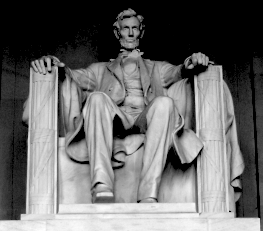
Abraham Lincoln spoke these words on March 4, 1861. The dust of 150 years has made these words no less relevant today. Chorus. Union. Bonds of affection. These are powerful words that tell of a truth, which these years of dust could never obscure: We can do great things when we come together, when we embrace the power of unity. This is Lincoln’s charge to us all. This is the truth which we entrust to our next president. And this is the prayer of Jesus for his disciples and for all of us: “All mine are yours, and yours are mine; and I have been glorified in them. And now I am no longer in the world, but they are in the world, and I am coming to you. Holy Father, protect them in your name that you have given me, so that they may be one, as we are one.” (John 17:10-11)

Jesus lived this prayer for unity when he welcomed everyone to come to him, and all those who were thirsty to drink. He lived this prayer when he ignored the racial barriers between Jews and Samaritans. He lived this prayer when, dying on the cross, he created a new family for his mother and his beloved disciple.

But uniting is not enough. Uniting is only the exposition of the story. We must unite for something. We must come together to fulfill those tasks which the better angels of our nature invite us to accomplish. Too often, the ingrained talking points that showcase the worst of partisan bickering shout down these better angels. Just last week, I was sitting at Panera bread and overheard a conversation between two businessmen — the gist of their chat simply rehashed the tired old stereotype that all people on welfare just sit at home watching Oprah. Surely, these two suits would have more political acumen than to recite such a line of attack, I thought. But no. In election years, by some strange alchemical process, saying something enough times makes it true, no matter the veracity of the claim. In the absence of any real hope, any real truth, whoever steps up to the mic to fill the dead air is the ruler of that fifteen second soundbyte.

But our better angels fill in that dead air. When we turn our attention inward, we will find those angels speaking the words of the only Truth out there worth subscribing to, the words of life that God writes on our hearts. These words will never fit into a soundbyte. They will never succumb to the tired old prejudices. They will only urge us to join together to accomplish God’s work on earth. The mystic chords of our better angels’ chorus echo with Jesus’ words: “Come, you that are blessed by my Father, inherit the kingdom prepared for you from the foundation of the world; for I was hungry and you gave me food, I was thirsty and you gave me something to drink, I was a stranger and you welcomed me, I was naked and you gave me clothing, I was sick and you took care of me, I was in prison and you visited me…Truly I tell you, just as you did it to one of the least of these who are members of my family, you did it to me.” (Matthew 25:34-36, 40)

We can feed the hungry and cloth the naked and shelter the homeless and nurse the sick. We can respond to that image of Christ in the faces of the least of Jesus’ family. Far be this from some misguided philanthropic diversion to the benefit of Oprah’s sweatpanted viewership. We are called, not just as Christians but as human beings, to help those who are suffering, to bring hope to those who are despairing. I ask you: how much better will we be, how much more unified, when today’s least of these are in the position to help tomorrow’s?

This is not the time for a bootstraps mentality. This is not the time to recline in the illusory comfort of self-interest. This is not the time to relapse into a tired old hoarding way. Be touched by the better angels of our nature.  Know that this is the time to give. This is the time to tug on your neighbor’s bootstraps. This is the time to enter into the kinectic delight of unity and labor for the kingdom of God on earth.**

Footnotes

* Incidentally, figuring out when Election day falls is similar to figuring out the date for Easter: the first Sunday after the first full moon after the vernal equinox. Fun times.

** Here is a list of links to help you get involved:
The ONE Campaign

The United Way

Habitat for Humanity

Heifer International

Episcopal Relief and Development

CNN: Impact Your World

Idealist.org

Redefining the good news: The two things you’re not supposed to talk about (part 2)

In the first installment of this series, we looked at how the phrase “separation of church and state” fails to comprehend the complex relationship that those two broad entities share. Fealty to such a misunderstood doctrine can blind us to the influence our faith in God should have on our political decisions. No decision is made in a vacuum. Acknowledging this, each person chooses which voices to distinguish from the cacophony clamoring for attention. She contemplates what her context values as true. As the cacophony and the context press upon her, the faithful person attempts to attend to that still small fluttering within, which is the deep intersection between her consciousness and God’s movement.

Just as decisions (political or otherwise) are not made in a vacuum, the Gospel does not take place outside of a specific context. Indeed, the dusty realism of the Gospel makes for compelling reading and even more compelling living. When Jesus of Nazareth steps onstage, the scene is set, the players chosen. The first words out of Jesus’ mouth (according to Mark) intentionally borrow the political language of the day: “The time is fulfilled, and the kingdom of God has come near; repent, and believe in the good news.” Jesus imagines a new definition for that word euangelion (Gospel, good news). No longer is “good news” to be proclaimed for another Roman military victory or another birthday of a Roman emperor. No. The kingdom of God has come near! This is the Good News of Jesus.

If Jesus is redefining Roman talking points, the political nature of his message would be hard for his contemporaries to miss. Their difficulty came from another angle: to whom does this nobody from a backwater like Nazareth belong? Is he a Pharisee? A Zealot? A Herodian? An Essene? He can’t be an Essene because he would’ve never left the desert. He can’t be a Herodian because he is speaking out against the Romans, and those Herodians are living just fine as Roman stooges. He can’t be a Zealot because he keeps talking about peace and seems not to have the stomach for gutting the odd centurion. And he can’t be a Pharisee — just look at the company he keeps!*

These groups made up the political landscape of early first century Israel, a land which had been under one foreign regime or other for several centuries. The current occupier, the Romans, governed with both the carrot and the stick. You could get very rich or very dead depending on how you interacted with Rome. Most got very enslaved or at least intimidated into meek submission. But Jesus, who fit no known political category of the day, spoke out in the politically charged atmosphere, spoke out with no fear and people listened.**

People listened. People watched. They saw the eyes of the blind opened and the legs of the lame strengthened. Could this Jesus possibly be the One they were expecting, the son of David who would lead them out from under the yoke of Rome — the Messiah? Peter thought so, but when Jesus told him what was to happen, Peter couldn’t handle it. The Messiah wasn’t supposed to die on a cross. The Messiah was supposed to lead the nation in an uprising and sweep all enemies from the land. To hear the people of Israel tell it, the Messiah was a political office — a judge/prophet/king, a conflation of all the powerful figures from the past.

But in a further re-imagining, Jesus took the messianic expectation and turned it on its head. He would have no part perpetuating the cycle of violence. After his death and resurrection, his followers began seeing Jesus’ understanding of the Messiah in different parts of the same Hebrew scriptures — the Messiah as the suffering servant, the one who demonstrated the utter necessity in beating swords to ploughshares.

Jesus stepped into a world dominated by the politics of fear and division and blame and hate. He immersed himself in the grimy, bloody mess of that world, but did not succumb to its tactics. In the end, that world killed him, but not before he proclaimed and lived out a new way, the way of the kingdom of God. It is to the political implications of this kingdom that we turn in the conclusion of this series, “The two things you’re not supposed to talk about.”

Footnotes

*Thanks to Brian McLaren’s concise description of the political nature of Jesus’ context. Read more in his The Secret Message of Jesus. Also, if you read just one more book this year, read his Everything Must Change for the best discussion of faith and our lives as citizens of the planet earth I’ve ever read.

** Of course, Jesus also got very dead. But happily for all of us, the dead bit is only part of the story.

To be that follower

(Sermon for August 31, 2008 || Proper 17, Year A RCL || Matthew 16:21-28)

Imagine with me the Apostle Peter, who is in Rome near the end of his life, thinking back on that day spoken of in this morning’s Gospel. *

The coals in the cooking fire still smoldered hours after the last log was cast on them. I awoke in the pre-dawn chill and warmed my fingers over the scant heat. Mine was the night’s last watch, and I muttered to myself about the senselessness of posting a sentry. But our resident Zealot,** the other Simon, had spoken persuasively about the need for vigilance, especially as Jesus’ words reached more important and more vindictive ears. As the foggy, half-light of dawn crept through our camp, I saw movement coming through the scrub from the foothills. I was about to wake the Zealot when I heard the tune of a psalm carried on the breeze, and then Jesus himself stepped out of the mist. Under one arm, he had a load of sticks and twigs, which he deposited on the coals. Blowing gently on the embers, he rekindled the fire and sat down next to me.

“Lord, you shouldn’t go off alone like that. It isn’t safe.” Apparently, I said this louder than I had meant to because our companions began to stir.

“You’re right,” he said, “It probably isn’t safe.” He turned to look at me and smiled. “But I wasn’t alone, Peter. No. None of us is ever alone.” He paused, held his breath. Then he exhaled slowly, and his cold breath mingled with the smoke from the damp twigs on the fire. He called out to those still sleeping. “Gather around, everyone. I have something to tell you.”

Once the rest of our group was seated at the fire, Jesus lifted his head and greeted us each by name. “My friends,” he said, “Yesterday, I asked you to keep my identity a secret. I asked you not to tell anyone that I am the Messiah. I know I can trust all of you, and this morning I have more to entrust to your confidence. Peter has just cautioned me about the danger of going off alone. Simon has you all standing guard through the night. I thank them both for their devotion to our safety. However, my friends, this morning I must tell you where our story is going, where my path is leading. Soon, I will abandon the safety of these hills and go to Jerusalem. Once there, I will ask you not to protect me. Men from the elders and the chief priests and the scribes will come, and they will arrest me, and they will beat me, and they will kill me. And three days later I will be raised from the dead.”

I stood up and looked down at Jesus. I didn’t know what to say. Twenty minutes ago he was rekindling the fire, and now he was talking about his own fire being snuffed out. I looked around at my companions—stunned into silence every one, even Bartholomew who always had some joke or jest on his lips. I started walking away. I needed to get away.

I thought I had everything figured out. I thought I knew what was to come. I saw him do amazing things: I saw him make the blind see and the lame walk. I saw him cleanse the leper’s skin. I saw him feed five thousand with enough to feed five. I saw him cry out in the storm and calm the waves. The words of the prophet were coming to life before my very eyes. The day before, Jesus had asked us who we thought he was. “You’re the Messiah,” I had said, and something inside me that was not myself told me I had spoken the truth.

But what kind of Messiah lets himself be led like some silent sheep to the slaughter? What kind of Messiah allows himself to be killed? The Messiah is the heir to David’s throne, the king who brings victory over our oppressors, the warrior who will sweep our enemies from our land and make us free once again. Not one who surrenders. Not a victim. Not a dead man.

These maddening thoughts crashed into me, and I dropped to one knee, my chest heaving, my cheeks moist with tears. I felt a hand on my shoulder and looked up. Jesus was there, looking down at me. “Why, Lord?” I snarled from my kneeling position. Then I stood up and shouted in his face: “Why? I trusted you. I called you Messiah and you did not deny it. I gave you my life, and for what? So that I might dig your grave?” I turned around and put my hands on my head, squeezing as if the pressure would keep my mind from flying apart. “Heavens preserve you, Lord. This must never happen to you.”

Jesus turned and looked at me or into me. When he spoke, his voice was calm, but commanding. “Get behind me, Satan! You are a stumbling block to me; for you are setting your mind not on godly things, but on human things.”

Then he walked back to camp, leaving me alone in the morning fog. “None of us is ever alone,” I heard him say, as in a distant memory. I followed him back to the fire, my thoughts as thick as the fog. Yesterday, I was Rock. Today, I am stumbling block? Yesterday, the father in heaven was revealing things to me. Today, my mind is set on human things. What happened? What changed?

I had been clinging so tightly to my own image of the Messiah that I failed to see this new, brilliant vision of the Christ in my midst. Where was his army marshalling to cast out the Romans? Where were his generals and siege towers and chariots? Of course, there were none. Instead of soldiers there were blind men with new eyes. Instead of swords and shields there were loaves and fishes. Instead of slaughter and death there was healing and life for all. I realized in that moment that I was the blind one: I missed what was there because I was looking for what was not. I was the deaf one: I had never heard Jesus properly because I was always filtering him through my own preconceptions. I vowed then and there to listen with new ears and see with new eyes.

As I reached the camp, I heard him say to our companions, “If any want to become my followers, let them deny themselves and take up their cross and follow me. For those who want to save their life will lose it, and those who lose their life for my sake will find it.”

I wanted to be that follower. But I couldn’t make it happen that cold morning. There were too many changes happening and just too much new information to process. And I couldn’t make it happen later that year. Instead of denying myself, I denied Jesus. Three times in one night. He took up his cross and I fled to save my life. But three days later, he rose from the dead, and I saw him, and that voice inside me remembered that he said he would do this. But was I his follower yet, even then?

The years bring clarity, and now I know that I was his follower even on that cold morning and on that terrifying night before his death. You see, being his follower had very little to do with how much I understood. I didn’t understand the kind of Messiah he was and yet he still welcomed me back, still loved me, no matter how much I shouted at him. Being his follower also had very little to do with how good I was at it. I denied him and yet he still welcomed me back, still loved me.

Yes, the years do bring clarity, and many things are clear to me now. Jesus never said that those who lose their life for his sake will save their life. The saving is Jesus’ job and his alone. No. He said that those who lose their life for his sake will find their life. You don’t find something without searching for it. The search gave me the space to let go of my preconceptions, to lose all those things I was holding onto so tightly—my own vision of the Messiah, my own need for Jesus to be exactly who I needed him to be. As I let go of those things, the search offered me the license to believe in Jesus without understanding everything he said or did. As my own death approaches, I see that the losing, the searching, and the finding are all somehow wrapped into one. The One I seek has already found me. The One I seek is bearing his cross with me. The One I seek is walking before me as I try to follow him.

None of us is ever alone. No matter how much or how little I think I understand, I hear Jesus’ voice inside of me saying, “Understanding will come…in time. For now, lift up that cross and follow me.”

Footnotes

* This narrative type of sermon has its roots in the ancient Jewish practice of Midrash, in which scholars took the stories of scripture and expanded them to reach new insight and new interpretive depth.

** The Zealots were a sect that favored violent encounter to achieve political ends. If they were around today, they’d be one man’s freedom fighters and another man’s terrorists. I try not to mix the accounts of the Gospel, but in this case, I borrow a bit from Luke, who assigns the category of Zealot to the other Simon. Matthew does not.

The county fair

The smells of sweat and fried dough hung in the air, mixing with the burned oil of the tractor pull. He was sitting with hands clasped, wearing a plaid shirt with the sleeves rolled up and a challenge on his deeply lined, leathery face. She was standing, looking all the world like a Grant Wood painting, and thrusting matchbook-sized pamphlets into the hands of passersby. I walked by out of reach, but I couldn’t help looking at the booth, one of many at the county fair. “How sure are you of going to heaven? Are you 50% 75% 100% sure?” read the banner. My friend wondered aloud about how one arrives at a 75% surety of heaven. I chuckled, but I was unable to keep walking by the booth. On the table, a wooden contraption with three small doors read: “Do you know the three things God CANNOT do?”

I stopped. The Grant Wood painting saw my furrowed brow and handed me a pamphlet. It looked like a doll’s magazine. A smiley face decorated the cover along with the words: “Have you accepted Jesus Christ as your personal Lord and Savior?” I closed my hand around the pamphlet and pointed to the three doors. I tried to keep the incredulity out of my voice, but I failed miserably: “So, what are the three things God can’t do?” I said.

She opened the first door: “God CANNOT lie.” She opened the second door: “God CANNOT change.” She opened the third door: “God CANNOT let people into heaven who have not been born again.”

We talked for fifteen minutes. I told them I did not disagree with the first door, but that I preferred to state the sentiment in positive terms: “God always tell the truth” or “God is trustworthy and faithful.” I said that a “lie” is the absence of the “truth,” and that I’d rather talk about God’s goodness shown in God’s truthfulness than to try to hook people with the trappings of sensationalism. After five minutes, the man commented that I was very intelligent. I took that as a compliment, but I have a sneaking suspicion it was not meant as such.

As our conversation continued, I realized we weren’t conversing. We were sparring. I’ve never had a taste for theological pugilism, but I was already three rounds deep, so I kept jabbing and blocking. I’ve had this same conversation with county fair proselytizers, but never as an ordained person. After the man commented on my intelligence, he asked me what I did. I said, “I’m a priest.” Without another word, he thrust another pamphlet in my hand. It was about how Roman Catholics aren’t real Christians and are going to hell.The same thought kept jumping to the front of my mind: “People like these, no matter how pure and ardent their intentions, make my job harder.”

It didn’t matter that I wasn’t a Roman Catholic. It didn’t matter that I agreed with the man and woman several times during our bout. The only thing that mattered was that I didn’t buy into the way they framed the Christian faith–as a bottom-line venture whose only goal is to “save souls” by following the instructions in the smiley-face doll-sized magazine. Surely, there’s more than that. Surely, the abundance of what God has done and is doing is more important than a “what’s behind door number 3” marketing scheme concerned with what God CANNOT do.

As I walked away, I wondered what had been accomplished during our boxing match. In the Gospel according to Matthew, Jesus says that when two or three are gathered in his name, he will be in the midst of them. Were we gathered “in his name” or in our own names, intent on KOing the other’s theological stance? Was Jesus there? Was I 50% 75% 100% sure of his presence? Looking back, Jesus was there, but he was not in my corner and he was not in their corner. He was there trying to get us to leave the ring.

Laugh tracking

I’ve noticed in my sermons that I always get a laugh when I make oblique references to my age. I remember people chuckling when I’ve said: “A decade ago, when I was a sophomore in high school,” or “Back in 1993 when I was 10 years old” or “I was born during Reagan’s first term.” Now, I’ve never thought that the congregation was laughing at me; they weren’t laughing because someone half or even one-third their age was preaching to them. They laughed because they remembered themselves at 25, remembered how young or naïve or wide-eyed they were. They laughed because their thoughts of themselves in decades past were pretty darn funny. I wonder if their quarter-century selves laughed back then thinking of 25 or 50 years down the road. Laughter marks our journeys. Laughter, in all its tones, for all its reasons, tells us where we are and how we are experiencing life. And laughter is one of God’s most effective means of communicating God’s plan to us.

You see, there’s not just one kind of laughter. You can chuckle or guffaw or cackle or giggle or chortle or snicker or double over and slap your knee or, if you are the Queen of England, “express amusement.” Different kinds of laughter fit different situations. You might not realize it, but God speaks to us in laughter. When we discover why we are laughing, God’s movement in our lives becomes much clearer. Here’s four kinds of laughter to illustrate what I mean.

In our story from Genesis today, the LORD appears to Abraham by the oaks of Mamre and makes a startling, even comical, announcement: “I will surely return to you in due season, and your wife Sarah will have a son.” The narrator explains why this is so funny: “Now Abraham and Sarah were old, well advanced in years.” The King James Version puts it a bit more colorfully—the couple was “well stricken in age.” Now, whether she is advanced in years or well stricken, Sarah is most definitely post-menopausal. So Sarah laughs the incredulous laughter of impossibility. This laugh usually consists of one loud sound, almost a bark. There’s no way she can have a baby! God is really selling something this time.

How often does God ask us to do the seemingly impossible: from loving those who hate us to holding the hand of a dying friend to working for justice in a world where disparity is the overarching reality. Sometimes, all we can do is laugh at the hopelessness around us. Thinking God is changing our world is incredible—incredible, as in, “not credible.” This is the incredulous laughter of impossibility. Sarah and Abraham (in the previous chapter) both laugh at the possibility that God can do the impossible.

But as a recent Adidas ad campaign reminds us: “Impossible is nothing.” I think Adidas’s marketing department has been reading Genesis. God hears Sarah laugh and says, “Is anything too wonderful for the LORD?” This may sound like a question, but there’s only one answer. “Is anything too wonderful for the LORD?” No. In another story we all know about a woman (who shouldn’t be able to have a baby) having a baby, the angel Gabriel says: “Nothing will be impossible with God.” Believing that impossible is nothing can spur us to laugh the zealous laughter of confidence. This laugh comes from the belly and usually generates a hair toss or the placement of hands on the hips. This is the fresh, unrefined zeal that accompanies a mountaintop experience or a revelatory conversion. Of course nothing is too wonderful for God! How could I ever have doubted?

But fresh, unrefined zeal has a short shelf life. Don’t misunderstand: there aren’t too many better feelings than riding a spiritual high. But there is a danger when these mountaintops, these highs points become the focus of a life of faith. Too often, spiritual high seekers becomes self-centered, always looking for another buzz, never stopping to realize that God has already filled them with every good thing.

When fresh, unrefined zeal deepens past the surface, past the level where the erosion of daily life always threatens to wash away our confidence in God, another kind of laughter emerges. The narrator of Sarah’s story says, “The LORD dealt with Sarah as he had said, and the LORD did for Sarah as he had promised.” Believing God’s promise to fulfill all of God’s promises leads to the thankful laughter of surrender. This laugh of relief usually begins with a long exhale and ends with a small, almost inaudible chuckle. This isn’t surrender in the sense of “giving up,” but in the sense of “giving over.” When we give over to God all of our insecurities and anxieties and fears and limitations, we realize that God has already given us the ability to rest in God’s promises. And we thank God for the willingness to embrace us, love us, and transform our lives.

Sarah’s life changes when she conceives and bears her son Isaac. Nine months before, she was laughing incredulously at the thought that she could have a child. But here he is. And Sarah says, “God has brought laughter for me.” In saying this, she’s having a little joke of her own—in Hebrew, Isaac means “laughter.” I imagine Sarah holding him in her arms, a small swaddled gift from God. I imagine his little fist clutching her old, leathery finger. I imagine her throwing her head back and laughing the sparkling laughter of joy. This laugh is unrestrained and spontaneous and unique for every one of God’s children. This laugh connects us to the God who is the source of our joy. When sparkling laughter wells up within us and spills from our lips, we proclaim that God has made our joy complete, as Jesus says in John’s Gospel.

Sarah says, “God has brought laughter for me,” and then she continues, “Everyone who hears will laugh with me.” Our laughter is a testimony, a witness to the movement of God in our lives and in the world. In the story of Peter Pan, J.M. Barrie echoes this witness: “When the first baby laughed for the first time, the laugh broke into a thousand pieces and they all went skipping about, and that was the beginning of fairies.” When God’s movement in our lives causes us to laugh—incredulously, zealously, thankfully, sparklingly—our laughs break, like our bread, and skip across a world in dire need of something to laugh about.

So laugh for the joy that God is calling us to love and serve God and each other. Laugh for the thankfulness that God equips us for this loving service. Laugh for the faith that nothing is impossible and nothing is too wonderful for the LORD.

(Sermon for June 15, 2008 || Proper 6, Year A RCL || Genesis 18:1-15; 21:1-7)

What size straightjacket?

I have had quite a bit of downtime in this month between graduation from seminary and ordination to the priesthood. While this has been a happy occasion to catch up on sleep and Law & Order:SVU, it has also produced a surplus of mental energy that is no longer being poured into my thesis and papers. Any of my friends could tell you that I think too much, especially about relationships. And when I have the time to think too much, my mind develops every choice, every scenario, every possible combination of what could go right and will go wrong to every logical and illogical conclusion.

In the last two years of seminary, I had few opportunities and even less time for my brain to engage in such frivolous and ultimately useless exercises. But now that formal studies have concluded, my mind wondered what to do with the extra horsepower. Without a relationship with a woman to examine, deconstruct, extrapolate, and fret about, my mind turned to my relationship with God.

As such, in the last month, I have had a few minor anxiety attacks, a couple small bouts of existential dread, and even a dark afternoon of the soul.* Am I ready? Is this really what I want to devote my life to? What about all the other things I could do? How huge is this commitment? Am I committed? Should I be committed? I wonder what size straightjacket I’d wear? My mind climbed the ladders to these lofty questions, and then it found a chute and jumped headfirst. The lofty questions mingled with the old set of relationship questions, and my mind ventured down all the well worn paths it has trod before, all the parallel universes in which I didn’t say this or did recognize that warning sign or missed an opportunity or or or…

Then I realized that all my dread and neuroses were misplaced. When did my relationship with God start mirroring my relationships with women? Now, this is nothing new: the great prophets of the Hebrew Scriptures often compared God’s relationship with Israel to a marriage, sometimes favorably, sometimes not so much. But, in those comparisons, God was always faithful–it was the people of Israel who broke the covenant and went after false gods. My dread came from confusing mine and God’s parts in the story. In my neurotic imaginings, God played the part of the leaver in the relationship. I was the faithful one, the stalwart. But that’s not how it is. The only thing that keeps me going in a world that seems full of leavings, full of broken relationships, is the faith that God will never leave, will never break a relationship. What a revelation.

My ordination is in five days. You might think it strange that someone about to be ordained to the priesthood seems just to be figuring out that God is here to stay. Well, it’s not the first time I’ve realized it, and I’m sure it won’t be the last time I need to. But faith is about remembering to remember. It’s easy to lose sight of God’s promises because life is built on those promises. Over time, they blend into the landscape. Small bouts of existential dread and dark afternoons of the soul jar me into remembering to remember those promises.

At the end of the Gospel According to Matthew, Jesus says, “And remember, I am with you always, to the end of the age.” Lord, help me remember that you are in this relationship for good. Help me remember that my neuroses aren’t going to scare you away. Help me be in this relationship with you.