Three squares a day

My friend Paula, who writes the blog Welcoming Spirit, recently challenged her readers to take on a discipline for thirty days. I am a week into mine and I’ll tell you, it’s not going so well. You’d think a priest would be better at remembering to pray at meals. I mean, look at the Eucharistic meal — I pray for a solid five minutes before anyone gets to eat anything. But for some reason or other, I’m just not that disciplined at praying before my three squares a day.

Well, not “some reason or other.” Honestly, I know the reasons. When I lived at home with my parents, we had our dinnertime rites. We tried not to answer the phone, though the thirty second pause to listen for the machine made that rule laughably futile. We always put our napkins on our laps and kept our elbows off the table. And we always prayed. (My father usually tapped the person who unsuccessfully failed to make eye contact with him. If everyone succeeded, he led the prayer.)

Now that I live on my own and take most of my meals alone, I have yet to develop the discipline of thanking God for all of God’s blessings, of which the meal is a palpable reminder. I am one week into my intentional practice, and I am doing dreadfully. I’m two for two today, but over the course of the week, I can’t have remembered more than three out of ten. That average would be great if I were a baseball player, since no other job in the universe measures success at thirty percent.

But I’m not a baseball player. I’m a priest. I’m supposed to be the one who remembers to pray — 100% of the time. Prayers should be the first words that spring to my lips in the morning and the last ones to whisper out when I fall asleep. Prayer should be as natural as breathing, should happen with each of my breaths.

It doesn’t, God knows. Too often, I just forget to pray. Not the best example, I know. Neither were the disciples, and from them I take a measure of hope. They follow Jesus around, they hear his words, they cast out demons and heal the sick. But they only get it three out of ten times. They bicker about which is the greatest, they bar people’s access to Jesus, and they abandon him.

I’m not saying that the disciples’ example gives me a free pass. They mess up, they misunderstand, but Jesus stays in relationship with them. He even repairs his relationship with Simon Peter after this most adamant follower denies him three times. Peter, do you love me? You know I do, Lord. Then feed my sheep.*

Jesus has invested way too much time and energy in me to give up now. Indeed, his resurrection shows me that he’ll never give up on me, even after I die. Everyday, he invites me into a deeper relationship with him, and  I usually ignore the invitation. I prefer, instead, to wade in the shallow end, to make sure my feet can touch the bottom.

But there are those days — few and far between — that I acknowledge my apathy and ask God to help me float into the deeper waters. And I find the strength to accept the invitation.

As I write this, one of my favorite songs from my college years is playing on my Itunes. The chorus of Jennifer Knapp’s “Hold Me Now” goes like this: “I’m weak, I’m poor. I’m broken, Lord, but I’m yours. Hold me now.”

My apathy and forgetfulness about praying before meals (among other things) stem from my grasping, prideful illusion that I need not rely on God. Perhaps, deep down, I don’t really believe that God will claim me if I’m weak or poor or broken. But that’s not how God operates. Nothing I do will elevate me past weakness or paucity or brokenness. Only when I allow God to hold me in the palm of God’s hand can I find strength. Only when I take part in the relationship into which Jesus calls me can I find abundance. Only when I let go the illusion can I see the reality of God making me whole.

Praying before meals may seem like a small step, but it is an essential one. It creates a pattern, a practice, a discipline. If I remember to pause even three times a day to thank God for God’s presence in my life, then perhaps my illusory self-reliance will begin to fall away. Perhaps I’ll remember that God has blessed me to be a blessing to others. Perhaps I’ll hear Jesus ask, “Adam, do you love me?”

And I’ll be able to say, “You know I do, Lord.”

Then feed my sheep.

Footnotes
* John 21:15-17

“If we only had a wheelbarrow…”

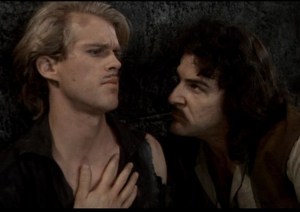
princessbrideThe situation looks hopeless. The odds are twenty to one against, and one-third of their party has just been revived after being mostly dead all day. Westley, Inigo, and Fezzek peer furtively at the newly improved defenses of the castle gate. They have only Westley’s brain, Inigo’s steel, and Fezzek’s strength against 60 men. “If I had a month to plan I might come up with something,” says Westley. Then, half to himself, “If  we only had a wheelbarrow, that would be something.” It turns out, upon second thought, they do have a wheelbarrow; and, upon third thought, a fire-resistant cloak. With this rather odd pairing of materials, they break into the castle, save the princess, steal the prince’s beautiful horses, and make a daring escape. On the walltop over looking the castle, the three heroes make their plan. Here’s the progression as I see it: they state the problem (breaking into a castle guarded by sixty men); they say what they do not have (a month to plan); they re-examine their assets (a cloak and a wheelbarrow); they overcome the problem even though their assets are meager.*

A similar progression, with an all-important extra step, happens when Jesus feeds the five thousand people (as told in Chapter 6 of the Gospel according to John). A large crowd is following Jesus because they like a good spectacle. Jesus has just healed the man at the pool of Bethzatha, so the crowd knows they won’t be disappointed. Jesus goes up the mountain with his disciples and looks down, surveying the vast multitude spread out below him. They could ignore the crowd, and, judging by Philip’s response to Jesus’ question the disciples probably wanted to. But Jesus does not give them that option. Instead, he states the problem: “Where are we to buy bread for these people to eat?” Philip (characteristically for this Gospel) answers a different question than the one Jesus asks. He says what they do not have: “Six months wages would not buy enough bread for each of them to get a little.” Then Andrew re-examines their assets: a little boy has five barley loaves and two fish. Notice how wildly inadequate this amount of food is for so many; I bet Andrew felt foolish even bringing it up.

But Jesus seems to think this very foolishness is just the sort of thing needed to solve such an intractable problem. So he takes the loaves and fish and then adds the all-important extra step in the progression. He gives thanks. He gives thanks even though he has a loaf per thousand people. He gives thanks even though the situation seems impossible. He does not let the apparent meagerness of his resources dictate whether or not he offers thanks to God. He gives thanks, and the crowd eats, and the disciples gather up twelve full baskets. The crowd is looking for a spectacle and they get such a grand one that they try to take Jesus and make him king.

Let’s take another look at the giving thanks. The special word for The Lord’s Supper or Holy Communion is “Eucharist.” (N.B. “Eucharist” comprehends the entire Sunday worship experience, but we are focusing here on the second half, the meal.) When we worship God by sharing this meal, we pray to Christ to somehow enter the bread and wine. Then we break the bread and share the cup, thus sharing Christ with each other. And our eyes are opened to the reality that the love of Christ is inside us and is made known in the sharing of community and love with each other.

The fancy word “Eucharist” is a much less fancy word if you happen to be both from Asia Minor and two thousand years old. This strange looking word simply means “to give thanks.” So, when we come together to share the meal, we are coming together to give thanks to God for all the blessings God has bestowed upon us. The fact that this intentional thanksgiving happens in a community reminds us that we must share our blessings just as we share the body and blood of Christ. And it is the very dwelling of Christ in us and we in him that sustains us as we share with others.

When I give thanks to God for the blessings and gifts God has given me, I must remember that thanksgiving is the catalyst for sharing. If I do not share my gifts with others, then I have not truly thanked God for them. Let me say that again, make it plural, and italicize it so you don’t miss it: If we do not share our gifts with others, then we have not truly thanked God for them

Sometimes, these gifts may seem meager or inadequate. But those are the times we must remember that Christ is there with us, giving thanks for us, and breaking us so he can share himself through us.

Footnotes

* The Princess Bride (1987); dir. Rob Reiner. Watch this film ASAP if you’ve never seen it. In fact, just go home right now and watch it. I’ll lend you my DVD.

Sensuous

Episcopalians are often accused of being too brainy, too intellectual. We think too much. We get caught up in the space between our ears and forget about that throbbing muscle in our chests. These accusers are correct up to a point: we do not check our brains at the door. Jesus asks us to love the Lord with all our mind, as well as our heart and strength. But our intellectual engagement with faith is only half the story.

You see, worship in the Episcopal Church is quite sensuous. Don’t get me wrong – I’m not talking about the Harlequin romance definition of the word. Our worship is sensuous in that we employ all our senses to encounter the presence of God. We hear the Word of God read and proclaimed. We see the stained glass and changing seasonal color palates. We smell the incense puffing from the thurible.* We taste the bread and wine. We touch one another in the handshake or embrace of the peace of the Lord.

To engage all of our senses, we use things in our worship. We use candles, books, and bowls. We use bread, wine, and water. These things are all incredibly – laughably – ordinary. Nothing about a loaf of bread is inherently special. Hand me a loaf of bread, and I might feed the birds or save it and make French toast tomorrow morning. (Actually, if you know me, the most likely scenario is that I’ll eat the loaf right then and there.)

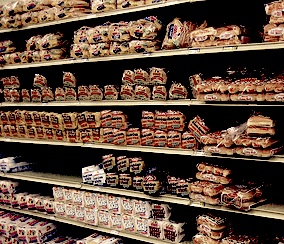
breadaisleSo, how does the loaf of bread, which was one of a hundred bar coded loaves at the grocery store, transform from a laughably ordinary carbohydrate delivery system to a holy vessel of Christ’s presence? The bread moves from its ordinary location on the shelf in the store to its new, strange location on a linen-draped table in a church. The bread behaves quite normally, sitting there waiting to be eaten.

But the table and the action done to the bread and the people watching the action are not normal. The table is abnormal because it has several tablecloths covering it, some ornate, some plain. The action is abnormal – whoever talks about a loaf of bread before they start slicing it? And the watching is abnormal – unless you’re in the studio audience for Iron Chef, who joins dozens of others in watching someone prepare a meal?

So the bread is laughably ordinary. But the situation is not. The juxtaposition between the normal loaf of bread and the strange way it is being treated invest the ordinary with new meaning. This new meaning turns the bread into a symbol. Now, before we go any further, I want to dispel from your mind any notion of the phrases “it’s only a symbol” or  “it’s merely symbolic.” Symbols are woefully misunderstood things in American culture – like soccer and irony. A symbol is an object that points beyond itself to a deeper truth. Too often, “sign” and “symbol” are used interchangeably, but they are not synonymous. A stop sign lets you know you are supposed to brake at an intersection, but that’s all it tells you. The red octagon doesn’t compel you to ruminate on why you should stop. But a symbol – the cross, for instance – stirs within us all of the historical and theological and emotional resonances of the truth to which it points.

Okay, so the bread is a symbol. It connotes the bounty of harvest, the fruits of the earth, the goodness of creation, the nourishment of our bodies. And when we put it on that table, and a priest (in the presence of God’s people) asks God to indwell that bread with the Spirit of Christ, the bread becomes a special sort of symbol called sacrament.

God moves within us, spurring us to love, praise, act, pray, serve. Outward connections with our inward spiritual lives are called sacraments. These special symbols take the ordinary things we’ve been discussing – bread, water, even our own actions and personhoods – and set them ablaze with physical and emotive evidence of the presence of God.

When we participate in the sacraments, we ourselves become sacramental symbols of God’s movement. Our service to God points to the deeper truth of God’s creation of and love for the world. Worship nourishes us for our role as bearers of God’s image, as vessels of the light of Christ. We enter church as normal, ordinary people, like the loaves of bread on the grocery store shelves. We leave church transformed by our sharing in the presence of Christ with one another. Over time – months, years, lifetimes – the transformation helps us to realize that what we mistook as “normal” was really quite miraculous and extraordinary.

All of the normal, everyday things we use in church gather new meaning when we employ them to worship God. The candle becomes the light of Christ. The bowl becomes the vessel for the waters of baptism. The bread and wine become the Body and Blood. Likewise, we – as sacramental beings – discover new meaning for our lives when we come together to worship the Lord.

Footnotes

*The metal censer on the chain that you swing to disperse the perfumed smoke; sort of like a liturgical yo-yo.

Graceful

At today’s weekly healing service, I forgot something rather important. “Today, we are using Eucharist Prayer B found on page 367,” I said, and then a moment later, “The Lord be with you.”

“And also with you” came the reply from seven chilly parishioners (unlike the abiding presence of God, the heat in our building is both scarce and unreliable). We then exchanged the rest of the sursum corda* and I prayed the proper preface for Epiphany. Together, we said the Sanctus, after which I began the rest of the Eucharistic prayer.

“We give thanks to you, O God…” O God, I thought. I looked down. I looked up. O God. I looked down again. My distorted reflection peered up at me out of an empty chalice. I stopped speaking, pulled my hands out of the orans position, and turned around. “It seems that I forgot to put the wine in the chalice. Um…one moment please.”

I finished setting the table, smiling in a mortified kind of way. Then we continued the Eucharistic prayer, and the rest of the service went as expected. As I was walking back to my office, I thought to myself: I can’t believe I forgot to fill the chalice. That wasn’t very graceful of me.

Then I remembered some of the words I heard at my friend’s ordination, which I attended this weekend in Denver. The bishop looked at my friend standing before him and said, “In all that you do, you are to nourish Christ’s people from the riches of his grace…”

Nourish Christ’s people from the riches of his grace. What a phrase. At my own ordination, these words passed right through my sternum and took up residency in the neighborhood of my left ventricle. They set me on fire and I never thought I’d stop burning. But in the last seven months, I somehow forgot the message of these words. I don’t know — maybe their house in my heart went into foreclosure. Maybe I wasn’t inhaling enough Holy Spirit with each breath to keep the fire going. I never forgot that it was my job to nourish. But I did forget whose meal was providing that nourishment.

You see, as a priest (heck, as a person) it is my job to say, “I have nothing of my own to offer. I have only what you, Lord, have given me.” Too often, I get caught up in succeeding at things that I forget that my success is not really mine at all. Too often, I try to nourish Christ’s people from the paucity of my grace, rather than from the riches of Christ’s. But doing that is like trying to water your lawn with the hose turned off.

When I forgot to put wine in the chalice, I remembered just how graceless I am. There I was with hands outstretched and prayer on autopilot, about to ask God to bless an empty cup. After filling the chalice with wine and a few drops of water, I realized that it was not the only empty cup in the room. I needed to be filled, too. I needed the riches of Christ’s grace to nourish me again because I — through inattentiveness and pride — had let his sustenance leach from my body.

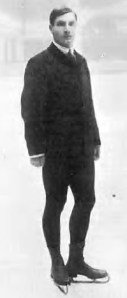
This guy invented the salchow. His name is Ulrich Salchow. What a coincidence!?!

We use the word “graceful” when we describe a dancer pirouetting or a figure skater performing a triple salchow. The word also applies to those people who suck every ounce of nutrition out of Christ’s nourishment and walk about with shimmering cascades of grace spilling over the tops of their heads. I know a few such people. You can tell them apart because they leave little puddles of grace behind them when they leave.

Lord, help me to remember that it is your grace with which you call me to nourish others. I can’t nourish them if I don’t allow you to nourish me. So please, fill this empty cup with the shimmering riches of Christ’s grace.

Footnotes

* Here’s a list of the technical words I used in this post:

Sursum corda: The three calls and responses at the beginning of the Eucharistic prayer, in which the congregation gives the priest the okay to go ahead and celebrate the Eucharist. The responsory nature of this prayer makes explicit that the Eucharist is a corporate event.

Epiphany: The twelfth day after Christmas, on which we celebrate the coming of the wise men to see Jesus. The coming of light into darkness and the call of the disciples are stressed during the season of Epiphany, which extends from January 6 to the day before Ash Wednesday.

Sanctus: “Sanctus” means holy and is the name for the prayer which begins “Holy, holy, holy Lord, God of power and might.” In Hebrew, there’s no way to make a word superlative (good, better, best); so, a three time repetition serves the same purpose.

Chalice: The cup we use at church. Remember that scene at the end of Indiana Jones and the Last Crusade? The room with the old knight is full of chalices. (“He chose…poorly”)

Orans position: “Orans” comes from the Latin word for “prayer” and is used when the priest is saying a prayer on behalf of the congregation. Think of a referee unethusiastically signaling touchdown and you’ve got it.

Ordination: The thing that happens to make someone who’s not a priest into a priest. The word comes from Latin and means something to the effect of “to put into order”; thus, ordination is when someone is set apart from others. There are four “orders” in the church: lay, deacon, priest, bishop — the latter three are “ordained” positions.

Once there was a man who found a pearl…

So, the United States is mired in the worst financial fiasco since I was four years old. Because of my early developmental stage back then, I was more concerned with fire trucks than the Dow Jones Industrial Average. Now, I still get pretty excited when I see a fire truck, but the economic crisis occupies my mind with far more regularity. Every news cycle seems to have a direr story than the one before, the presidential candidates talk about little else, and the crisis is the number two topic at coffee hour right now (after college football, which, of course, is more important, especially when my team is ranked #2 in the AP).

With the Dow taking a nosedive and 401Ks across the land going on the South Beach diet, can you think of a better time for churches to start their fall stewardship campaigns?

I know the previous sentence sounds sarcastic, but it’s not. Of course, I wish we had never gotten into this mess in the first place. But we’re in it now, and the best thing we can do is take hard looks at our priorities. The economic crisis is forcing us to reevaluate how we allocate our resources. The first step in this evaluation process is realizing “our” resources are not ours at all.

Jesus tells this parable: “Again, the kingdom of heaven is like a merchant in search of fine pearls; on finding one pearl of great value, he went and sold all that he had and bought it” (Matthew 13:45-46).

A bishop I knew a long time ago used to tell a story about this passage from the Gospel according to Matthew. I was very young, so I might get some of the details wrong and I might embellish others, but it goes something like this:

Once there was a man who found a pearl. This pearl was the most magnificent specimen. Indeed, only in the wildest dreams of clams did a pearl like this one exist. It was the size and weight of a golf ball, but no one would think to compare the two. The pearl was in a class by itself. It shone with a light all its own. The light might have hid some imperfections if the pearl had had any. But it didn’t. The pearl, thought the man, was, quite simply, perfect. The trouble is, the pearl was in a glass case and very visible alarm wire crisscrossed the case and a wrinkled shopkeeper hovered over the case. The man opened his wallet, thumbed through the small bills in the billfold and pondered his several credit cards. He pulled out one especially shiny card and, pointing to the pearl, tried to hand the card to the shopkeeper. The shopkeeper raised her eyebrows and shook her head.

So the man went home. He wandered through his house, into the garage, and onto the deck. He gathered up everything not nailed down and sold it all—his car, his computer, his beloved grill. He went back to the shop. Not enough, the shopkeeper’s look told him.

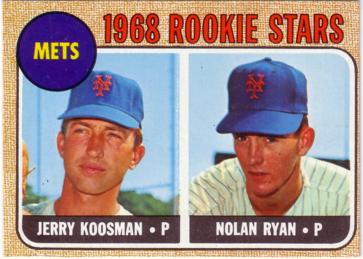
So the man sold his house. Not enough. He cashed out his stock options. Not enough. He even gave up his mint-condition Nolan Ryan rookie card. Not enough. The man stared plaintively at the shopkeeper. Then his eyes wandered down to the pearl. He knew somehow that obtaining this pearl was why he was alive, what he was made for. He didn’t know how he knew, but, looking at that pearl, he just knew. He looked back up at the shopkeeper. “What about me?” he said, “What if I give myself?”

The shopkeeper smiled, brought a jangling set of keys to eyelevel, and began searching for a key. She found it, unlocked the case, and slowly lifted the pearl off of its bed of velvet. “Here you go,” the shopkeeper said. “And by the way,” she continued, “you were willing to give up everything for this pearl. Your house and grill and baseball card are still mine, but I want you to look after them for me. And remember, you are mine, too.”

This story has been with me for quite a while, and I share it because I think it centers the discussion of stewardship better than anything I can come up with myself. To understand the importance of stewardship, we must first acknowledge that everything we have comes from God, and is, in fact, still God’s. We are just holding onto God’s stuff for a while.

Indeed, a steward is someone who manages the assets of another. So when we talk about stewardship in a Christian context, we are saying that we are blessed with abundance from God, and we are striving to use that abundance justly and wisely. When we think of Christian giving—of time, of talent, of monetary resources—we should really tack on another word. We should think of it as “Christian giving back.”

Stewardship always entails some form of giving. Stewardship has at its base a certain kind of giving that we do every Sunday. When we celebrate the Eucharist, we are literally “giving thanks,” for that is what Eucharist means. By starting with thanksgiving, we acknowledge that our gifts, our lives, our livelihoods come from God. Stewardship must start with an “attitude of thanksgiving.”

The reevaluation of our allocation of resources begins with humbly acknowledging that we are not the owners of the stuff we accumulate and gratefully giving thanks to God for what God has given us to look after. In the end, this all comes down to trust. The financial crisis in which we are currently embroiled is predicated on untrustworthy practices; indeed, we don’t even know how much certain things are worth any more because of deceit and mistrust. But God is trustworthy, and God has entrusted us with God’s stuff. How will we respond?

A Fragile euXarist

He wore a grey t-shirt sporting the American flag, shorts, and velcro sandals. When we entered the apartment, he was sitting on one of those big exercise balls and staring through the blinds into the yards beyond the fence. His supervisor greeted us at the door and called out to him to welcome us visitors. The young man at the door — bleached-blond, tattoed, pierced — looked more like a roadie for Alice Cooper than a 24-hour supervisor for a man with Fragile X syndrome.*

My friend had asked me to accompany her to visit her brother and bring him communion. He is not able to get to church much, she had explained, because of his condition, but the Eucharist means a lot to him. She had also explained that Fragile X is a genetic mental impairment that, in her brother’s case, manifested in cognitive disabilities and, on occasion, uncontrolled violent behavior. He will repeat the same phrases over and over again, she had said, and he’ll probably ignore you this visit — he usually ignores strangers.

She and I sat on the futon in the small living room, and she attempted to engage her brother in conversation. I kept my communion kit (which looks like a camera bag) slung across my back, and I leaned forward to catch what they were saying. Instead of talking with his sister, he continued to stare out the window and converse with his supervisor about the comings and goings of various neighbors. After a few minutes, he stood up and I realized how big he is — he could have played power forward at Duke, I’m sure. He went over to the dining table and sat down again, musing about his dinner options. He wanted french fries with ketchup. My friend was patient, and every time she tried to engage him, he responded a bit more. After a while, I could tell that the two siblings had started playing an old game — she knew he was listening and now he was just pretending to ignore her. His responses to her queries, randomly nonsensical moments ago, were now humorously nonsensical. We all laughed about french fries and ketchup and about the lady in the apartment upstairs.

After a few minutes at the dining table, he wandered back to the exercise ball, produced a pack of bent playing cards, and began to shuffle them. My friend asked him if wanted communion. He started staring out the window again. She turned to me and suggested I start unpacking my kit. I unzipped the bag and took out the corporal — sort of a liturgical placemat. On the corporal, I placed the paten (plate) and chalice (cup). As I set out the vessels and tipped some wine into the chalice, he stopped shuffling and started watching. He picked up the Bible and leafed through it while I turned the pages in my prayer book. As I prayed the prayer of consecration, I found myself unconciously emphasizing the simple words in the prayer — words such as food and drink and life. I finished the prayer, my friend and I prayed the Lord’s Prayer with her brother, still holding my Bible, looking on, and then I broke the Bread. I brushed his hand as I gave him the Body of Christ, and, in that touch, I could feel the presence of Christ in our midst. He was there, as he had been our whole visit, and he made himself known in the sharing of his Body and Blood.

After sipping from the cup, I cleaned up the kit and repacked it. I found myself wondering how much my friend’s brother had understood of what we had just done. Then I stopped short. How much had I understood? I said the prayers. I laid my hands on the bread and wine. I asked the Holy Spirit to sanctify the gifts. But even with all my schooling and all my study, I still don’t know exactly what happens in those holy moments of sharing in Christ’s Body and Blood. I don’t know how Jesus indwells those elements with his Spirit. I don’t know how ordinary bread and wine are changed to something that connects us bodily with the grace of our Lord Jesus. But I know that connection exists, that relationship is real. I felt it when my friend, her brother, and I shared that Holy Eucharist.

We do not have to understand fully to participate in the life of Christ. In fact, living a life in Christ is not about understanding at all. It’s about following, about having faith that Christ is one step ahead of you, guiding you. As Paul says, right now I know only in part, but I will know fully, even as I am fully known. God is the one who understands. God is the one who, indeed, stands under and holds up everything that we hold true and good. Living a life in Christ cultivates that deep relationship with God that both brings some understanding, but also (and happily) removes the need to understand.

There’s a phrase in one of the postcommunion prayers in the Episcopal prayerbook: “Almighty and everliving God, we thank you…for assuring us in these holy mysteries…” I’ve asked myself many times how a mystery can be assuring. Mysteries usually thrive by keeping you wondering. But I think that’s the very point. If we understood everything about God there is to understand, God wouldn’t be God, and we’d be deluding ourselves. That was the problem with carved gods and graven images that were both worshiped and controlled. God reveals God’s very majesty and glory in the fact that the mystery abides. And the assurance comes when we cross that fine line between wondering and being lost in wonder.

I still wonder how much my friend’s brother understood about what we were doing. But I know now that understanding is a distant second to sharing — the sharing of the presence of Christ in our midst. My friend’s brother hugged her when we got up to leave. We said goodbye to the roadie-supervisor. As I left the room, I glanced back, and for a split-second, I saw Jesus balancing on that exercise ball.

Footnotes

*For more information about Fragile X syndrome, click here.

Eucharistic tachycardia

I woke up this morning with my heart racing. I clutched my pillow (which sports faded images of Luke, Leia, Han, Chewie, C3PO, R2D2, and Darth Vader), took several ragged breaths, and waited for my heart to slow down. I had been sleeping. I wasn’t active at all. I don’t remember dreaming. I don’t have a heart condition. So why was my heart racing?

I had words going through my mind as I awoke: “On the night he was handed over to suffering and death, our Lord Jesus Christ took bread; and when he had given thanks to you, he broke it, and gave it to his disciples, and said: ‘Take, eat: this is my Body which is given for you. Do this for the remembrance of me.’ ”

These aren’t just any words. In the Episcopal Church, these are some of the “words of institution,” which are part of the Eucharistic prayer. This is the prayer we pray to remember our place in God’s story of salvation and grace, to fulfill Jesus’ wish at the Last Supper, and to ask Christ to indwell the bread and wine with his presence so that they become to us his Body and Blood. “Eucharist” means “thanksgiving”; therefore, when we participate in the Eucharistic prayer, we corporately thank God for all the gifts God has given us, most especially the gift of Jesus Christ our Lord. It’s no coincidence that the word “corporate” comes from the Latin word for “body.” We come together as the body of Christ to share the Body and Blood of Christ (Paul explains this in 1 Corinthians). This sharing of Christ opens our eyes and hearts to the presence of Christ already around and within us. We are nourished to renew our commitment to our Lord, to proclaim the love of God, and to do the work God has given us to do.

In the final chapter of the Gospel According to Luke, Cleopas and his companion meet a wayfarer on the road. They are leaving Jerusalem, defeated and despairing. But the wayfarer sees their predicament from another perspective. They have the story all wrong, he says. And he reframes the story they know into a new story in which violence doesn’t overcome peace, hate  can’t snuff out love, and life kicks death in the teeth. They reach their destination and ask the wayfarer to eat with them. When he breaks the bread, they realize Jesus has been with them all this time. They remember feeling like their hearts were on fire when he was speaking to them on the road. And they race back to Jerusalem to proclaim that they have seen the Lord!

Maybe that’s what happened to me this morning when I awoke with Jesus’ words in my head. My racing heart was burning within me as I thought about what I will do for the first time this Sunday. I am being ordained to the priesthood tomorrow, and I am overjoyed to be celebrating the Eucharist for the first time this weekend. If idly thinking the words of institution gets my heart racing, how will I feel in two days time? Nervous, I have no doubt (in all the gesturing, I’m convinced I’m going to knock over a chalice). Nervous, yes, but my joy is overriding my nerves. This joy springs from deep within me, from the place where Christ dwells, speaking words of love and grace into the very core of my being. Now I have the opportunity to preside at a celebration of this joy with other people. This fills me with awe–awe that God would use me to make known God’s love in the world, would ask me to serve God’s people as a priest.

One of the Eucharistic prayers prays these words: “And here we offer and present unto thee, O Lord, our selves, our souls and bodies, to be a reasonable, holy, and living sacrifice unto thee; humbly beseeching thee that we, and all others who shall be partakers of this Holy Communion, may worthily receive the most precious Body and Blood of thy Son Jesus Christ, be filled with thy grace and heavenly benediction, and made one body with him, that he may dwell in us, and we in him.”

Lord Jesus, please dwell in us so we can share your love in the world. Let us dwell in your presence, which infuses life with your nourishing grace and sets our racing hearts on fire.