
Spark. Fuel. Fire.

Sermon for Sunday, June 8, 2014 || Pentecost, Year A || Acts 2:1-21
sparkfuelfireBeing a creative type, I have found myself relating to the Holy Spirit more readily than most people do. Whenever I sit down to write or play my guitar, I try to acknowledge the Holy Spirit’s presence in that creative activity. I’ve always thought of the Holy Spirit as God’s creativity in the act of making and molding and speaking existence into being. And I’ve always thought of my own creativity as my response to the Holy Spirit moving in my life. The Holy Spirit, then, is the in-spir-ation for my creativity. The Spirit inspires. The two words even come from the same Latin root!

But after many, many conversations with parishioners across several churches, anecdotal evidence suggests that most people gravitate to God the Father or God the Son, rather than to God the Holy Spirit. For a long time, I’ve honestly felt a bit strange due to my affinity for the Holy Spirit. After all, so many people have told me they have real difficulty relating in any meaningful way to this creative force, this inspirer, the Holy Spirit.

But here I must confess something. I’ve come to realize that my process of anecdotal evidence gathering has been totally flawed. For years, I’ve been shortchanging the Holy Spirit when conversing with people about their relationships with God. I’ve been shortchanging the Holy Spirit because in those conversations, I’ve described how I relate to the Holy Spirit as if it’s the only viable option. If the other people didn’t relate to the Holy Spirit in the way I do – in the creative, inspirational way – then I failed to help them name the way the Holy Spirit was, in fact, relating to them. And they assumed they just had no share in the Holy Spirit.

So the rest of this sermon is the beginning of my own remedial training in how the Holy Spirit moves, apart from the raw creativity I’m used to. When I was in college, I often studied by recounting aloud to other people what I had learned, so consider the next several minutes a study session on the Holy Spirit’s movement. As this is a remedial course, I’m going to stick close to our textbook and even to the word “Spirit” itself.

Here goes. We’ve already talked about in-spir-ation, the creative spark that I mistakenly reduced the Holy Spirit to. But what about a-spir­-ation. Each and every one of us experiences the Holy Spirit because each and every one of us has aspirations – goals, dreams, hopes for the future. The Holy Spirit fires these aspirations within us, and gives us strength and support to realize our own potential.

The Holy Spirit was present at creation as the wind that swept over the face of the waters. In the tremulous moment before God said, “Let there be light,” there was nothing. But there was aspiration. There was God’s dream for creation. In that tremulous moment, the Holy Spirit gathered the potential energy of all that would be.

We are each of us small pieces of that potential energy. We are each of us small pieces of God’s aspirations. When we set goals, when we dream, when we aspire to accomplish all that God invites us to do, then we are resonating with the Holy Spirit’s movement. It’s no wonder then, that after the Spirit descends in the rushing wind and tongues of fire, the apostle Peter quotes from the prophet Joel: “I will pour out my Spirit upon all flesh, and your sons and your daughters shall prophesy, and your young men shall see visions, and your old men shall dream dreams.”

Are you beginning to see how much bigger the Spirit’s movement is than my pigeonholing it to simple creativity? We have inspiration. And we have aspiration. How about per-spir-ation? Each and every one of us experiences the Holy Spirit because each and every one us has worked hard to achieve something worthwhile. We’ve put our backs into it. We’ve used our elbow grease. We’ve sweated, perspired.

The Holy Spirit, as our constant companion, gives us the perseverance and endurance to see things through. Those tongues of fire that descended on the heads of the apostles didn’t vanish. No, they kept descending and lodged in their guts. Have you ever heard the expression “a fire in your belly?” The fire of the Holy Spirit catalyzed the apostles to spread the good news of Jesus Christ far and wide, and to be witnesses for the love and grace of God, come what may. It’s no secret that most of Jesus’ original followers came to untimely and grisly ends, but they did so with the fire un-extinguished. They kept perspiring for the sake of the Gospel because the Holy Spirit kept fueling their fire.

When we sweat for things, when we put our hearts and souls into a worthwhile project, then we are ever so much more invested in the outcome. Habitat for Humanity calls the work their homeowners put into their own homes “sweat equity.” Their perspiration gives them a deeper sense of ownership when the work is done. And so does ours when we partner with the Holy Spirit and perspire for the coming of God’s kingdom on earth as it is in heaven.

We have inspiration. We have aspiration. We have perspiration. Finally, in our remedial course on the Holy Spirit’s movement, we have re-spir-ation. Each and every one of us experiences the Holy Spirit because each and every one of us breathes. It’s that simple. Each breath we take is a gift from God. We inhale this gift. The breath of the Holy Spirit infuses us; keeps our bodies, souls, and spirits intact and integrated; and animates us with the desire to serve God in our day-to-day lives. Then we exhale the gift of the Holy Spirit in our actions, in our service, in our love.

The Church calls the Holy Spirit the “sustainer” and the “comforter.” The “sustainer” evokes the constancy of the Spirit’s presence; the “comforter” evokes the peace that comes from breathing deeply. During the last supper, Jesus told his friends he would not leave them orphaned, but would provide them the Spirit to abide with them. After the resurrection, Jesus met them again in the upper room and breathed on them, saying, “Receive the Holy Spirit.” Our constant respiration – whether we are conscious of our breath or not – links us to the Holy Spirit.

Inspiration. Aspiration. Perspiration. Respiration. We participate in the Holy Spirit’s movement in each of these ways. The Spirit sparks our creativity. The Spirit fuels our dreams. The Spirit fires our determination. And the Spirit breathes on our embers, rekindling us again and again. If you have never given your relationship with the Holy Spirit much thought, I invite you, I urge you, to pray about these things. Do not ask if the Spirit is moving in your life. Ask how.
Living the Story

Sermon for Sunday, May 18, 2014 || Easter 5A || John 14:1-14

livingthestoryAttending seminary a few subway stops away from Washington D.C. provided some lovely distractions. The National Gallery of Art was my favorite. The Air and Space Museum was a close second. I visited most of the District’s tourist attractions during my three years there, and most lived up to their billing. One that did not was the D.C. zoo. The zoo is squashed into a tiny piece of the District, and the animals are squashed into tiny pieces of the zoo. The panda paddock was smaller than the backyard I mowed every week growing up. The elephants had no room to move. Everything was concrete and wrought iron. And the one time I went there, I couldn’t help but think what an inaccurate use of the word “zoo” I was witnessing.*
You see, the word “zoo” comes from a beautiful Greek word, which has also morphed into a popular girls’ name. The name is “Zoey”; the Greek word is ζωη (pronounced zo-AY). Zoe mean “life,” but the life reflected in the zoo’s tiny paddocks full of forlorn-looking animals is not the kind of life the word zoe comprehends.

You see, zoe means “life,” yes, but the connotation of the Greek doesn’t stop there. The word from which we get “zoo” means expansive life, life without bounds, the kind of life that the creature is meant to live. Jesus uses this word in today’s Gospel lesson when he answers Thomas’s question. The disciple asks, “Lord, we do not know where you are going. How can we know the way?”

Jesus says, “I am the way, and the truth, and the life.” I Am the Life. This life – this zoe – is the expansive, authentic life of the creature living as the Creator dreams for the creature to live. As we walk with Christ through our lives, he offers us his zoe, a life of purpose and meaning and fulfillment. A small piece of Christ’s life appears in what we call the Gospel; I’d like to spend the rest of this sermon telling you all a story – well, fragments of the story of Jesus’ life as told by John, our Gospel writer for today. The more we tell this story to each other, the more we will live it, and the more our lives will reflect Jesus’ zoe.

In the beginning was the Word, and the Word was with God, and the Word was God. All things came into being through this Word – all life, all zoe, in fact. This Word became flesh and made his home among us. He lived with us in order to teach us how to live, how to tune our lives so they resonate with the Creator-of-all-that-is. Everyone needs a name, and his earthly parents called this Word-made-flesh “Jesus.” Jesus lived in an obscure corner of an obscure corner of a mighty empire. But pretty soon the empire would sit up and take notice.

One day Jesus was out walking and two fellows, John and Andrew, came up to him and asked where he was staying. Now Jesus could have said, “Down the street to the left of the well just past the marketplace.” That would have been a fair answer to the question. Instead, Jesus says, “Come and see.” Jesus’ life is a life of inviting.

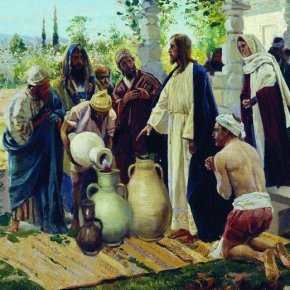
Three days later, Jesus went to a wedding celebration with his new friends and his mother. Now, weddings in those days went on for a whole week, but something at this wedding threatened to cut the festivities short. They ran out of wine. Jesus wasn’t going to get involved, but his mother had other plans. So Jesus had several large jars filled with water, but when the steward tasted it, the water had become wine. And moreover, this wine was even better than the wine that ran out. Presumably, the festivities continued in full swing. Jesus’ life is a life of celebrating.

Some time after that, Jesus met a man who had been paralyzed for thirty-eight years. The man often came to a certain pool, a pool renowned for curative properties. He was so focused on getting into the pool when Jesus came that he almost missed the opportunity in front of him. Jesus commanded the paralyzed man to get up. If anyone else had said this to the man, he would have thought it a cruel joke, but something in Jesus’ tone (or maybe it was the fire in his eyes) made the man obey. He stood up, and then I imagine he danced for joy. Jesus’ life is a life of healing.

Soon after, Jesus crossed the Sea of Galilee, and a vast crowd followed him. Unwilling to send the crowd away, Jesus took a laughably small amount of food – barely enough for one family – thanked God for it, and distributed the five loaves and two fish to over five thousand people. After he fed the people with physical food, he also fed them spiritual food. Jesus’ life is a life of feeding.

Skipping forward quite a ways in the story, Jesus was getting ready to share another meal when first he took off his outer robe, tied a towel around himself, got down on his knees, and washed the dusty feet of his disciples. This act of service was so at odds with how they thought their teacher should act that Simon Peter told Jesus not to wash his feet. But Jesus saw the matter differently. To remove the dynamic of power – one over another – Jesus commanded his friends to wash each other’s feet, to serve each other. Jesus’ life is a life of serving.

The next day, Jesus met the empire – both the worldly empire of Rome, which occupied his homeland; and the otherworldly empire of evil, death, and division, which occupied the hearts and minds of those he wished to bring back to God. Jesus, condemned to death, dragged a cross to a hill outside the city. In the anguish that followed, he drew to himself each and everything that separates us from God, and their power died with him. Jesus’ life is a life of sacrificing.

Three days later, his tomb was empty. Jesus was alive again, though not again. Rather, Jesus was alive anew. In his death and resurrection, he brought creation back into right relationship with God. The Word made flesh, who made his home with us, gave us a new opportunity to make our home with God. This new relationship was the ultimate act of reconciliation. Jesus life is a life of reconciling.

Inviting. Celebrating. Healing. Feeding. Serving. Sacrificing. Reconciling. These are just seven pieces of Jesus’ life – his zoe – the expansive, authentic life which he offers to us all. Now, I have two questions for you. First, how do you or how can you participate in Jesus’ zoe by intentionally integrating these actions into your lives? Perhaps you’ll invite an acquaintance to church. Or celebrate someone else’s good news. Or be a healing presence for a person’s who’s sick. Or cook food to feed the hungry. Or serve God by using your unique constellation of gifts. Or practice sacrificial giving so that God’s work in the world, say at our partner school in Haiti, can shine even brighter. Or reconcile with a person from whom you are estranged. In each of these actions, know that you are embracing Jesus’ life and living as the Creator meant for you to live.

My second question: what other pieces of Jesus’ life can we add to this list and what stories point to them? Jesus’ life is a life of loving, of teaching, of truth-telling, of relationship-building, of prophetic-speaking and Spirit-breathing, and so much more. You and I each have the opportunity to tune our lives to the frequency of Jesus’ zoe. When we do, we become beacons of the light of Christ shining in this world. We become the flesh, in which the Word makes his home. So I encourage you this week, and this lifetime, to live the story of Jesus’ life in your own. Invite. Celebrate. Heal. Feed. Serve. Sacrifice. Reconcile. And be authentic expressions of the life, the zoe, which God dreams for creation.

* I was told after the service in which I delivered this sermon that the D.C. zoo has been much improved since I visited it some eight or nine years ago.
Art: detail from “Miracle at Cana” by Vladimir Makovsky (1887).

Echoing “I Am”

Sermon for Sunday, March 30, 2014 || Lent 4A || John 9:1-41

blindmanelgreco“Let me see some I.D.”

“Yessir.”

I have had this exchange a handful of times with police officers and one very friendly Texas state trooper. They, of course, want my driver’s license, registration, and proof of insurance so they can go back to their cars and run me through their databases looking for past infractions while I’m sweating through my palms and my stomach feels like I just swallowed several gallons of quick-dry cement and my mind is racing in compound-complex run-on sentences such as this one. A warning. Yes, officer. Yessir, no more rolling stops. Yessir. Thank you. You too.

But the words they use are telling: “Let me see some I.D.” Some identification. Really, they just want my name and some corroboration that the picture next to the name matches my appearance. They ask for my identity, and all I give them is a plastic card with my name on it. Date of birth. Address. Sex. Height. Eye color. The fact that I’m an organ donor.

But there’s so much more to my identity than the information listed on that plastic card. I’m a husband and a son and a brother and a priest and a writer and a guitarist and a board game enthusiast. And I’m a follower of Jesus. In fact, my identification card has no room for the most important pieces of my identity. The relationships we hold dear, the values we live by, the priorities that shape us – these are the markers of our true identities.

In our Gospel reading today, we hear the story of a man who discovers and proclaims his true identity. Jesus heals this man, but the miraculous granting of sight is only part of the story. The truly extraordinary aspect of his healing is his ownership of an identity he always had, but which was hidden within him.

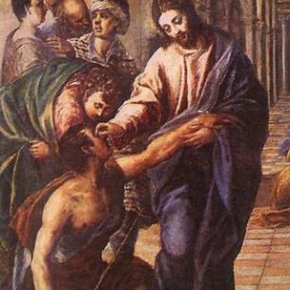
Jesus sends the man to the pool of Siloam to wash, and this man, who was blind from birth, comes back able to see. Do you remember what happens next? His neighbors don’t recognize him! Now, he hasn’t put on weight or grown a big bushy beard or dyed his hair. Nothing cosmetic has changed about him. And yet these people, who have presumably lived near him his entire life, can’t decide if he’s the guy they always saw on the street corner begging. All they ever saw was his blindness; they never looked deeper to see the identity of the man beneath his physical challenge. And since others’ impressions of us tend to shape our identity, I bet the man himself had stopped looking deep within himself, too.

That is, until Jesus heals him. He returns home, and when his neighbors ask him if he’s the blind street corner beggar, he says, “I am.” Now, we’d be hard-pressed to find two more important and impactful words in the entire Gospel according to John. Jesus says these two little words all the time: I am the bread of life. I am the good shepherd. I am the light of the world. I am; don’t be afraid. I am. I am. I am.

These are magic words in the Gospel. Mystical words. These two little words, “I am,” transport us all the way back to Mount Horeb, to a man exiled from his home in Egypt, to a bush ablaze with flame, to an encounter with the Creator-of-all-that-is. Near the end of their conversation, Moses asks God what God’s name is. “I AM WHO I AM,” responds God. “Thus you shall say to the Israelites, ‘I AM has sent me to you.’”

When Jesus echoes God’s “I am” in the Gospel according to John, he reveals his divine identity in small pieces, pieces small enough for us to digest over the course of a lifetime. Jesus’ echoes God’s “I am.” And the man who was formerly blind echoes Jesus’ “I am.” Thus, the man reveals his discovery of Jesus’ identity within himself. Jesus heals him in order that he might take on this identity that he always had buried deep inside, but which had never come to light.

After discovering Jesus’ identity within himself, he can’t help but proclaim it. Even as the religious officials hound him about the details of his story, he sticks to the truth and proclaims Jesus’ healing presence in his life. No threat, no argument, no earthly authority can take away this new identity he has discovered within himself, this new identity as a follower of Christ.

But what of us? What of our identities? We may have never washed in the special pool of Siloam, but we have washed. We have washed in the waters of baptism. We may never have had mud spread on our eyes, but we have been marked as Christ’s own forever. Our baptism into Christ’s body reveals an identity we’ve always had, an ability to echo Jesus’ “I am” with one of our own. The act of baptism marks and celebrates our identity as followers of Jesus Christ.

Each of us has this identity within us. We wouldn’t be here if we didn’t. But if you’re anything like me, the times when this piece of my identity rises to the surface are few and far between. Other pieces of my identity take charge, and “follower of Jesus” sinks down the list. But if I’m honest with myself, if I listen for the whispered invitation of Christ in my depths, I hear him beckoning me, I see his radiance shining within. And God’s promise resonates in my bones: seek God first, own your identity as Christ’s follower, and each other piece of your identity will find a snug fit, properly ordered so that you can experience the abundance of life, so that your default nature is one of service and love, so that you may invite others into the brilliance of the Light of World each day of your life.

Promoting “Follower of Jesus” up the list of pieces of our identities takes commitment. “Husband” wouldn’t be high on my list if I weren’t whole-heartedly committed to my marriage. “Writer” wouldn’t be high up there if I didn’t write every single day. “Follower of Jesus” trends upwards when we commit to praying daily, serving the least of those around us, dwelling deeply in God’s word, and cultivating an awareness of God’s presence in our lives. As this season of Lent marches toward Easter, dedicate yourselves to owning your identity as followers of Jesus. Like the man born blind, hear Jesus’ divine identity echo within you. Look yourself in the mirror and say aloud: “I am. I am a beloved child of God. I am a follower of Jesus Christ.”

This is and always will be the primary piece of our identities, whether or not we put it at the top of the list. God created us to be God’s beloved, and following Jesus Christ leads us to embrace God as our beloved. This is our true identity. This is what the card we hand to the police officer should say. To begin to own this identity, I invite you to sit down and write out a list of all the pieces of your identity. Order those pieces from most to least important. Be honest where you slot in “Follower of Jesus.” Does it make the Top 10? Top 5? When you’re done, recommit yourself to partnering with God to move “Follower of Jesus” up just one slot. Just one. Baby steps here. Over time and with God’s help, move it up the list. Notice how your life changes. Notice how you change the lives of those around you. Own your true identity and shine with the Light of the World.

*Art: Detail from “Christ Healing the Blind Man” by El Greco (1560)

True Purpose

Sermon for Sunday, February 23, 2014 || Epiphany 7A || Matthew 5:38-48

dolphin“Be perfect, therefore, as your heavenly Father is perfect.” Sounds like a tall order, doesn’t it? Sounds like naïve idealism at worst and hopeless hyperbole at best. Sounds like one more command of Jesus that we could never live up to. I mean, it’s hard enough turning the other cheek and walking the extra mile and loving our enemies, but now he wants us to be perfect on top of all of that? Doesn’t he understand that to be perfect there could never have been a time when one wasn’t already perfect? Doesn’t he understand that one cannot become perfect? Either you are or you’re not…and we’re…not.
I don’t mean to be sound discouraging right off the bat, but I bet that many of you were thinking something along those lines after I finished reading the Gospel. Like dutiful Episcopalians, you still said, “Praise to you, Lord Christ” in response to my, “The Gospel of the Lord.” But I’m sure some of you were thinking instead: “What in the world do you mean, Lord Christ?”

Let’s face it. Sometimes Jesus says things that we don’t understand. Sometimes he says things that make us uncomfortable. And sometimes he says exactly the thing we need to hear, the words our hearts have been longing for. Every so often, he scores a hat trick – he’ll say something we don’t understand that makes us feel uncomfortable, and yet those same words end up being precisely what we need to hear.

Such is the case, I think, with these words: “Be perfect, therefore, as your heavenly Father is perfect.” Let’s stick with these words for the rest of this sermon, despite our possible discomfort, and perhaps in the end we will hear them with new ears.

English translations of the Bible going back to the King James Version in the early 1600s have used the word “perfect” to render the original Greek. The trouble is the Greek word is better translated, not as “perfection,” but as “maturation” or “culmination” or “completeness” or “fulfillment.”

Try this translation on for size: “Be complete, find wholeness, therefore, as your heavenly Father is the source of all wholeness.” Sounds a little more doable, doesn’t it?

Or how about this one: “Be fulfilled in your true purpose, as your heavenly Father is the culmination of all true purposes.”

When we render Jesus words like this, we hear not a command, but a desire, a deep yearning of our Lord for us. Jesus isn’t commanding us to “be perfect” like you might command a dog to roll over. No. Jesus is offering us a vision of the life he invites us to take part in.

“Be fulfilled in your true purpose, as your heavenly Father is the culmination of all true purposes.”

This vision – this invitation, really – is Jesus’ dream of bringing humanity back into full communion with God. Somewhere along the path, humanity forgot its true purpose. Humanity forgot what God designed it to do and be. Humanity forgot, and we are the legacy of this forgetting. All that is wrong with civilization – from the global (environmental degradation, war, poverty, hunger) to the personal (domestic strife, substance abuse, body images issues) – all that is wrong with civilization can trace its roots back to people deliberately or unintentionally failing to fulfill the purpose God gave us.

This purpose is simple: love God and love each other. The other includes the person in the next booth at the restaurant, the person on the street with the cardboard sign, the person across the ocean in the refugee camp, not to mention the earth we walk on and everything else that calls this earth home. And the love I’m talking about here is not simply emotional fondness. Here love is multifaceted: love is the catalyst for service, love is the connection between the server and the served, and love is the affection generated in the act of serving, which perpetuates a virtuous cycle. When we look on the other as a subject to be loved, and not as an object to be possessed, we take a step toward the true purpose that God instilled in us along with God’s image and likeness.

When we participate in Jesus’ vision “to be perfect,” we rediscover this true purpose and we find fulfillment in the love we share and the actions such love spurs. And I promise you God delights in this fulfillment in the same way God delights in the dolphin that soars out of the water or the tree that grows straight and tall and bears radiant, delicious fruit. God delights in us always, but we reflect that delight when we live into the true purpose for which God created us.

Here’s what I mean. Have you ever had a moment when you realized you were exactly where you were supposed to be? You took a step outside your body and a thought struck you like a bolt of lightning that your whole life was preparing you for this one, singular moment.

Perhaps you were in the delivery room breathing along with your wife. Her hand squeezed yours so hard that you thought every bone in your fingers was crushed. Finally, at long last, the baby arrived and you gathered the tiny life into your arms and he opened his eyes. They were brown flecked with gold just like yours. And in that moment, you realized your whole life was hurtling forward to that day, to that room, to that new heart beating next to yours. The love you felt in that moment was the fulfillment of your true purpose. It was your perfection.

Perhaps you were deployed to Afghanistan, to one of the forward posts, just you and a dozen other troops in a small fort on a hill in the middle of nowhere. One day you were out on patrol and without warning the wind was full of enemy fire. The staff sergeant next to you took a bullet to the leg in the first wave. It sliced through his artery and the blood flowed too fast. You were pinned down behind a crumbling wall, but still you fashioned a tourniquet from your backpack strap. You flung him over your shoulder, and disregarding the rounds whizzing by, you hiked back to base. He lost the leg but kept his life. And during that hike, you realized your whole life was hurtling forward to that day, to that service, to that comrade-in-arms who needed your help. The service you gave in that moment was the fulfillment of your true purpose. It was your perfection.

Perhaps you can think of a moment like that in your own life. Perhaps you can remember a moment when you realized your whole life was hurtling to that day, to that place, to that person, to that love and service bursting to be fulfilled.

Now wouldn’t it be extraordinary if those moments were the norm and not the exception? When we recognize and step into Jesus’ vision for us, we discover more and more how God is charting the trajectory of our lives, how God is creating opportunities for us to fulfill our true purpose – to love God and love each other.

So be perfect, therefore, as your heavenly Father is perfect. Be fulfilled in your true purpose, as your heavenly Father is the culmination of all true purposes. Love God. Love each other. And start to notice how God is preparing you for each moment of your life – each moment in which we have the opportunity to love, to serve, to be true to the purpose for which we were designed.

*Art Credit: Lomvi2, commons.wikimedia.org

What Kind of Life?

Sermon for Sunday, February, 16, 2014 || Epiphany 6A || Deuteronomy 30:15-20; Matthew 5:21-37

whatkindoflifesquareWhen I was a little kid, I wanted to grow up to be a fireman. Well, a fireman and a garbage man. Well, a fireman, a garbage man, and a baseball player. Well, a fireman, a garbage man, a baseball player, and a paleontologist. I wanted to be a baseball playing, dinosaur-fossil finding, fire fighting trash collector. And you know what? That didn’t happen. Something even better happened. I got to be someone whose job it is to walk with people during the most important moments of their lives and point out God’s movement in those moments. I got to be a priest. And I got to be your priest.

But getting back to my childhood’s occupational dreams, I can tell you one absolutely essential thing about them, which is this: My parents never quashed them. They never told me to stop dreaming. They never told me I was being silly or that I couldn’t, in fact, be a baseball playing, dinosaur-fossil finding, fire fighting trash collector. Instead, they encouraged me to reach for the stars and to fuel my dreams with all the fodder of my boundless imagination. When so-called “reality” set in years later, I didn’t feel betrayed by this encouragement, as one might expect; rather, the early training in dreaming big helped me retain the capacity to imagine more and better possibilities than so-called “reality” presented.

Such a capacity involves consciously making choices about what kind of life you want to live. Do you want to live a small life boxed in by the scarcity inherent in subscribing only to the notion of the currently possible? Or do you want to live a full life unbounded due to the abundance inherent in trusting in the creativity of our God? What kind of life do you want to live?

This is the question that both Moses and Jesus address today in our readings from the book of Deuteronomy and the Gospel according to Matthew. And this is the question they challenge us with today. What kind of life do you want to live?

Moses has stood on the mountaintop and looked on the vista of the Promised Land. But he knows he himself will never get there. He’s about to die, but before he does, he has a few more words to say to the people of Israel who have been walking with him through the desert for forty years. These words make up the book of Deuteronomy: Moses’ last speech, the last piece of the law, the restatement of the Ten Commandments and more, and these words today, in which Moses gives the people a choice:

“See, I have set before you today life and prosperity, death and adversity,” he says. “…I call heaven and earth to witness against you today that I have set before you life and death, blessings and curses…” And then Moses, with all the fervor of someone who knows his time is short and his words precious, implores the people, saying: “Choose life so that you and your descendants may live, loving the LORD your God, obeying him, and holding fast to him.”

Well, we know those people and their descendants had a, shall we say, checkered history with this choice. Sometimes they listened to Moses’ final invitation, but more often than not, they didn’t. The rest of the Hebrew Scriptures trace the trajectory of this choice and of God’s constant and persistent calls through the prophets to renew it and once again “choose life.”

When Moses issued the original invitation before his death, he was speaking about all the fullness of life with God and one another that the Law was designed to promote. But over the centuries, people interpreted and reinterpreted the Law into smaller and smaller boxes. By the time of Jesus, the Law of Moses had been parsed to within an inch of its life. The people, against whom Jesus spoke, had gotten lost in the minute details of the Law and forgotten its original intent to promote the fullness of life, the dream that God always had for God’s people.

And so we watch Jesus ascend the mountain, sit down, and begin a long sermon. He speaks of blessings for people not normally considered blessed (what we call the “Beatitudes”). He speaks of the salt of the earth and the light of the world. And then he says something curious, which we read last week. He says this: “Do not think that I have come to abolish the law or the prophets; I have come not to abolish but to fulfill.”

To fulfill the law. To complete it. To make it what it was always designed to be. In his fulfillment of the law, Jesus takes one step past Moses’ original choice. For Jesus, the choice isn’t simply between life and death because he has already chosen life for each of us. His choice is what kind of life.

And now we hear Jesus offer examples of the kinds of life we might lead. In each one, he takes a piece of the law and expands it, deepens it. Not just “do not murder,” but also, be reconciled to those you are estranged from. Not just “do not commit adultery,” but also, act with virtue and fidelity in all things. Remain in relationship rather than looking for easy outs. Speak truthfully always rather than trying to convince people through deceptive oaths.

In each example, Jesus offers two paths to choose: division or reconciliation? Depravity or virtue? Isolation or relationship? Dishonesty or truth? Each choice builds the kind of life we lead. Our lives can be small – empty of meaningful relationships, bursting with regret, littered with the collateral damage of strife, envy, and enmity. Or our lives can be full of all the good things God yearns to share with us – the abundance of lives lived with and for others, the joy of trusting and being trustworthy, the simple grace of acting virtuously.

Just a quick aside—I know Jesus’ language seems awfully harsh, and, in reality, it is. But we have to remember that he lived in a world where punishments included actually having body parts chopped off and where divorces could be handed out for baking mishaps. While some of his words might be hard for us to digest, the seriousness of his tone and the weight of the message can still sink in.

This message offers us the expansive dream that God invites us to be a part of – the kind of dream where someone might actually grow up to be a baseball playing, dinosaur-fossil finding, fire fighting trash collector. Or more to the point, the kind of dream where someone might actually choose the abundance of reconciliation, virtue, positive relationship, and trust.

If we are to take a step today to not only choose life, but choose the abundant life that Christ offers us, what might we do? Let’s start with a baby step. A mentor of mine, the Rev. Dr. David Lose, suggests this: think of two relationships you currently have. One should be the most wonderful, fruitful, mutual, and loving relationship of your life. The other should be one that’s on the brink of failure because of neglect or hurt feelings or betrayal. Take both of these relationships to God in prayer. Ask God to help you see what sustains and strengthens the first one. Why is that relationship important to you? What about it do you have to thank God? For the second relationship, don’t try to place blame, but instead hold the other person up in prayer to God. Offer God the brokenness of the relationship as something that can’t be mended without God’s help. What actions and choices can you make to move that second relationship to better health?

As you pray about these two relationships, remember the choice that Jesus puts before us today. What kind of life do you want to lead? A life full of reconciliation, virtue, uplifting relationships, and trust? A life of abundance? Yes, all that and more. A life of dreams that are so big that only God can contain them.

God’s Glass

Sermon for Sunday, February 9, 2014 || Epiphany 5A || Isaiah 58:1-9a

Before I became a rector, I rarely had the opportunity to preach two sermons in a row. At my last church, my rector and I alternated, and we only got two in a row if the other was on vacation. So I’ve never really had much of a chance to preach a sequel to a sermon. But today, that’s exactly what I plan to do. So, just in case you weren’t here last week, let’s recap.

Previously on The Sermon at St. Mark’s, we listened in to Simeon’s lullaby as he held the infant Christ and named him the “light to enlighten the nations.” I invited you to join me in a mission: to bear witness to the light of Christ and to be vessels of that same light. To see the light and to be the light. We finished the sermon with three words to help us remember this mission: Christof’s command to “cue the sun” from the film The Truman Show.

We also went through a few small examples of what being the light might look like: being friendly in the grocery line, standing up for a victim of bullying, welcoming someone to church. Of course, I didn’t mean to diminish what it means to be the light of Christ by offering such small examples; rather, by the accumulation of small actions, we discover the light shining brighter around us and forth from us.

And here’s where, if this sermon were a television show, the screen would go black for a moment and we’d be in new territory. Is everyone with me? Great.

We’ll get back to those three small examples from last week in a bit, but first here’s the opening action sequence of the new episode to get everyone hooked.

GlassSo – did you know you are made of glass? It’s true! Now, of course, I don’t mean that you’re made of glass in the idiomatic way; it’s not that you’re easily offended or that your baseball career was cut short because you have a “glass arm.” Nor do I mean made from actual glass that once was sand.

Those caveats aside, you and I are made of glass. God spun the molten glass onto that hollow rod and blew, shaped, and molded each us into being. If somehow you were to scour clean all the layers of accumulated grime – all our misplaced priorities, all our missed chances, all our grubbing and selfishness – then you would uncover God’s glass. Indeed, each of us is transparent beneath the grime of everything that separates us from God (which, by the way, is another way to say “sin”).

With God’s help, we can scour clean some of that grime to come closer to being the transparent people God always envisioned, people who are windows through which the light of God shines. First, we need to celebrate the beautiful truth that we are, in fact, God’s glass; that we are, in fact, the vessels of God’s light we mentioned last week; that we are, in fact, the light of the world, as Jesus claims in today’s Gospel reading.

Second, we acknowledge that our glass is covered in grime. It has lost much of its transparency. The light is shining, but the window is obstructed. We cause some of this grime through our actions and inactions. Some of the grime accumulates simply because we are mindlessly complicit in the big and little sins of the world. The rest happens due to apathy, lethargy, and complacency; we haven’t cleaned in a while, so the window gets dirty.

So first we celebrate that we are God’s glass and then we confess that we do not emit nearly as much light as we are designed to do. Third, we participate with God in the act of scouring. This calls for attention, dedication, and practice – not to mention elbow grease. But I assure you there is no greater goal in this life than to be a window through which God’s glory shines. Truth, reconciliation, love, blessing – all the good things in this life and the next spring from this goal.

The prophet Isaiah knew this. He saw in today’s first reading an accumulation of grime due to a willful misinterpretation of the meaning of fasting. First he accuses his generation of going through the motions of fasting – the outward appearance that seems all well and good but is really covering up the light. His accusation comes in the form of several rhetorical questions, for which the silent answer is a resounding “NO!”

“Is such the fast that I choose,
a day to humble oneself?
Is it to bow down the head like a bulrush,
and to lie in sackcloth and ashes?
Will you call this a fast,
a day acceptable to the LORD?”

Notice that this certainly sounds like a textbook fast. I’m sure people in Isaiah’s day felt like they were on the right track with such outward signs. But Isaiah sees this as more grime accumulating, rather than more light shining. A fast, he says, should be a way to uncover the window beneath the grime. A fast, he says should look like this:

Is not this the fast that I choose:
to loose the bonds of injustice,
to undo the thongs of the yoke,
to let the oppressed go free…
Is it not to share your bread with the hungry,
and bring the homeless poor into your house;
when you see the naked, to cover them…

When we participate with God in this kind of life-affirming service, the grime wipes away and the window is revealed again. And, as Isaiah’s next words say:
“Then your light shall break forth like the dawn.”

We are God’s glass. We are covered with grime. But we have every opportunity to partner with God to scour away the grime and shine as God always intended us to do. Recall those three small examples we talked about last week: the grocery line, gym class, and church. Three small examples of partnering with God to shine as light in this dark world.

Let’s look at them again and give them a little more weight. The first was: “In the line at the grocery store when you choose not to be annoyed that the person ahead of you is taking too long.” It’s really just a minor inconvenience after all. Most of the things that send us towards negativity and broken relationships start as minor inconveniences. But by choosing not to be annoyed, by choosing instead to shine with God’s light and let the oh-so-tempting anger pass, we can allow God to turn inconvenience into blessing.

The second has happened every year since the invention of P.E.: “In gym class when you stand up for the kid who’s being laughed at because he can’t climb the rope.” Is this not a child’s first attempt at standing against oppression and injustice? Is this not an elementary school version of Isaiah’s true fast?

And the third, appropriate for this morning: “At church when you see a new face in your pew and you exchange a kind word of welcome.” I can’t think of a better way to be a window of God’s light than to cultivate a welcoming spirit, both here in the safety of our church home and out in the wilds of the world.

Turning inconvenience into blessing. Standing against oppression and injustice. Cultivating a welcoming spirit. These are merely three ways that we partner with God in scouring away the accumulated grime that keeps us from shining. And in so doing we help God’s kingdom shine even brighter here on earth. We can accomplish each of these ways and so many, many more in the small actions of the day and in the big events of our lives if we apply our attention, dedication, and elbow grease to the practice of being God’s glass.

So celebrate that we are, each of us, windows that God has designed to shine God’s light through. Confess that we do not emit nearly as much light as we are designed to do. And participate with God in the act of scouring, in the daily call to return to transparency. “Then,” as the prophet Isaiah says, “your light shall break forth like the dawn.”

*Art Credit: Kelly Cookson, commons.wikimedia.org

God’s Point of View

(Sermon for Sunday, November 10, 2013 || Proper 27C || Luke 20:27-38)

Today, I’d like to speak with you on a topic I’m entirely unqualified to talk about. No, it’s neither mortgage-backed securities nor the sport of cricket, though I’m definitely unqualified to talk about each. Nor is the topic the mysterious reasons for why my wife’s apple pie is so much more delicious than the ones I used to make. I know that one has something to do with butter, but that’s as far my understanding takes me. No, today I’d like to speak with you on a topic that no one besides Jesus has ever been qualified to talk about. I’d like to speak with you today about God’s point of view.

Because I’m unqualified to talk about this topic, you’ll have to take everything I say with a grain of salt. In the next few minutes I might say something that is true, but if I do, it will have been by accident because what I’m really going to do is talk about Adam’s point of view about God’s point of view. But maybe, just maybe, the Holy Spirit will help us glimpse the corner of the edge of the majesty of how God sees things.

So with those caveats aside, let’s listen in to the end of Jesus’ conversation with those wily Sadducees in today’s Gospel reading. They thought they could embarrass Jesus with a trick question, but in characteristic fashion, Jesus answers the question he wishes they had asked, not the one they’d actually asked. He finishes with these words: “The fact that the dead are raised Moses himself showed, in the story about the bush, where he speaks of the Lord as the God of Abraham, the God of Isaac, and the God of Jacob. Now he is God not of the dead, but of the living; for to him all of them are alive.”

Here Jesus references the third chapter of the book of Exodus, in which God says, “I am the God of your father, the God of Abraham…Isaac, and…Jacob.” Jesus notices that God doesn’t say, “I was the God of your father…” From our limited point of view, Abraham, Isaac, and Jacob are long dead – somewhere in the neighborhood of three thousand years ago, or about a thousand years in Jesus’ day. But God, says Jesus, sees things differently, as his emphatic end to the conversation demonstrates: “Now he is God not of the dead, but of the living; for to him all of them are alive.”

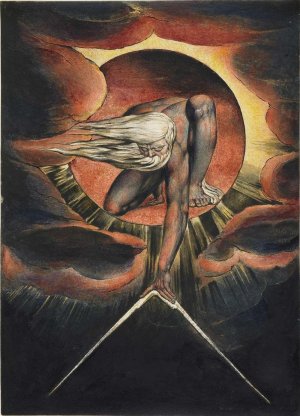
blakesGod
William Blake, Ancient of Days

This is our first glimpse into God’s point of view: “to God all of them are alive.” Can you imagine what that must be like for God? All of creation from the moment that moments began alive all at once. Every star that died billions of years ago, but whose light is just reaching us now; every single-celled organism gliding through the primordial ooze; every person we have ever loved and every person we have never known; all of them alive to God, all of it happening now for God.

I don’t know about you, but I get a little dizzy just trying to comprehend this thought – the riot of color and sound, the collision of what we see as the past and future, the unmeasured light years of space and uncounted eons of time all seen now by God, all spoken into being now by God, all loved and cherished now by God.

We can’t ever hope to comprehend this thought because we live our lives in linear fashion, moving moment to moment. We have memories of the past, and we have hopes for the future. Yesterday happened yesterday. It’s not still happening today. This linear model is like flipping through the pages of a magazine. Once I’ve flipped from page 35 to 36, I’m no longer looking at page 35. But from God’s point of view, the magazine is a collage of all the pages, with each picture cut out and arranged just so, like an elementary school art project.

This thought comforts me. From God’s point of view, I’m not simply Adam as I stand here before you: two months until his 31st birthday, his mother visiting from North Carolina, his sermon moving along apace. No. From God’s point of view, I am the totality of myself: everything that has ever happened, everything that will ever happen, every joy, every regret, every skinned knee, every embrace, every relationship, every failure, every triumph – everything that makes me the person I am, God sees and God speaks into being. This totality of myself includes my death and whatever there is in what we would call “After,” but what God still sees as “Now.”

The apostle Paul understands the difficulty of speaking about God’s point of view, and he says what I’m trying to say much better than I ever could. He says these words to the church in Corinth: “For now we see in a mirror, dimly, but then we will see face to face. Now I know only in part; then I will know fully, even as I have been fully known” (1 Cor. 13:12).

To be fully known. This is how God’s point of view works. God knows us fully. God knows the totality of each of us, just like God sees the entirety of creation happening now.

Speaking about God’s point of view has the unfortunate byproduct of making us feel so small, even insignificant. It’s only natural in the face of the idea that all of creation is always present to God to think that we don’t matter, that in the grand cosmic scale our lives are worthless.

But from God’s point of view, nothing could be farther from the truth. God couldn’t care less about the “grand cosmic scale” because the notion of a “scale” of any kind is meaningless to our eternal and infinite God. God speaks every subatomic particle into being and celebrates it as if it were the only speck in existence. Each speck has God’s full attention; if it didn’t, it would cease to be.

We may look up at the night sky and see ourselves as small, insignificant specks on a small, insignificant planet orbiting a small, insignificant star. But to do so is to deny the truth not just about ourselves, but about all of creation. All of creation is present to all of God. This includes you and me. If God weren’t constantly and continuously speaking each of us into existence, we would cease to be.

So if we are anywhere in the ballpark of the truth of God’s point of view, what does this all mean for us? Too many things, of course, to close this sermon with, so we’ll look at three – what we call past, present, and future, but each of which is always now to God.

First, the past and our grief over people dying: From our perspective, the sun sets below the horizon. But in reality, we are spinning away from the sun. Likewise, we grieve when someone dies because, from our perspective, that loved one is gone. But we know in a place deeper than normal knowing that, in reality, our loved one is still alive to God. Ultimately, grief is a way to express our frustration that we have a severely limited ability to perceive reality. But for anyone who has ever had a loved one die, you know that every now and again, you catch glimpses of true reality when you feel the presence of that loved one alive in a different way.

Second, the present: Since God is fully present to every particle of creation, which includes each of us, we have no business thinking of ourselves or anybody else as insignificant. Everyone matters, so we must affirm this in our actions.

Third, the future: Those we perceive as future generations are as alive to God as we are. Therefore, it is our duty to honor their significance in the same way we are called to honor those we meet today. This means making choices in our personal and communal lives that sustain our world, which, in the end, is another piece of creation fully present to God and therefore worthy of our honor.

So there you have it. I have now talked for more than ten minutes on a topic I’m entirely unqualified to speak about. However, being unqualified does not mean that we shouldn’t strive to see creation through the eyes of God. When we do this, we become better stewards, better servants, better followers. And we see deeper into the heart of what it means to be a child of God.

The Peace We Promise

(Sermon for Sunday, August 18, 2013 || Proper 15C || Luke 12:49-56)

These are the promises we will reaffirm before our baptism in a few minutes:

“Will you continue in the apostles’ teaching and fellowship, in the breaking of bread, and in the prayers? Will you persevere in resisting evil, and whenever you fall into sin, repent and return to the Lord? Will you proclaim by word and example the Good News of God in Christ? Will you seek and serve Christ in all persons, loving your neighbor as yourself? Will you strive for justice and peace among all people, and respect the dignity of every human being?”

We will answer each of these with, “I will, with God’s help.” This acknowledges that we can’t fulfill the promises without God. We will also answer them as a group, which acknowledges that we can’t fulfill them without each other. I wonder, however, if you are experiencing a bit of cognitive dissonance trying to reconcile that last promise with Jesus’ words in today’s Gospel reading. I know I am. We promise to “strive for justice and peace among all people,” while Jesus says, “Do you think that I have come to bring peace to the earth? No, I tell you, but rather division.”

It probably didn’t escape your notice that Jesus is in a less friendly mood than he was in last week’s passage. When Jesus speaks from a place of stress or exhaustion, as he does in today’s reading, he often slides to the strident, confrontational end of the spectrum. Sounds particularly human, doesn’t it? Sounds like me if I’m having a low blood sugar day or if I’m about to board an airplane. We can use Jesus’ stress to explain away his difficult words (“He didn’t really mean that stuff about peace and division; he was just really stressed out”). Or we can acknowledge that in his stressed state, Jesus speaks some unvarnished truth, perhaps not as nuanced as he would have liked to speak it, but truth nonetheless.

RomanRoadTo get to this unvarnished truth, we first have to understand how people in Jesus’ time would have heard the word “peace.” One version of the word was a simple greeting: “Shalom.” Another use was for the cessation of upheaval: “Peace, be still.” But a third use was more sinister – peace as propaganda. You’ve heard of the “Pax Romana,” the “Peace of Rome.” This was the glorious gift of Rome to the peoples fortunate enough to come under the Roman banner and Roman “protection.” Well, that’s how the Romans would have sold it. The Pax Romana really spread by the edge of the sword, and conquered peoples lived in fear and distrust of their occupiers.



I think it is to this third kind of “peace” that Jesus is referring: “peace” as the absence of conflict, yes, but also the absence of justice, of freedom. The kind of peace the Pax Romana brought was really just a thin veneer spread over a roiling mass of suppressed cultures and traditions and hopes and dreams. The thin veneer of “peace” hid the brokenness, the divisions that lay beneath.

With his words in today’s lesson, Jesus seeks to rip the cover off this false kind of peace and to expose the brokenness of society beneath, and in exposing that brokenness begin to heal it. Jesus knows human nature all too well – without exposing the brokenness, the divisions in society, we are content just to go along with the status quo, willingly ignorant to the steep costs of so-called “peace.” Indeed, Jesus’ words today could have spilled from the lips of any leader of the Civil Rights movement. How many decades did this country live in so-called “peace” before Rosa Parks took her seat on the bus in 1955?

Jesus’ words also speak unvarnished truth when we move from the societal to the personal. Each of us has a individual Pax Romana within us — a set of assumptions about our security and wellbeing that promises peace at long last. Despite the lack of evidence, we believe these promises until we realize they come from the marketing department, whose goal is for us to consume, not to find peace. When Jesus rips the cover off this false kind of peace, we find our broken selves, which have fragmented because we let ourselves be seduced by so many things. With the false peace gone, we confront the broken, divided people we really are.

But we aren’t alone. Jesus may have come to expose the divisions hidden under the myriad Pax Romanas of society and of our souls. But this is only half the mission. He also came to put the pieces back together again. He came to show us what real peace is: peace accompanied by justice, mercy, and love; peace that nurtures the dignity of all peoples rather than suppressing it; peace that passes all understanding.

This is the kind of peace we strive for when we affirm our baptismal promises. We strive for the peace of the broken bone that grows back stronger than before. We strive for the peace of the generous heart that no longer fears scarcity as it once did. We strive for the peace of Christ that shatters the veneer of tranquility, exposes the divisions beneath, and weaves the disparate threads of division into peace that is true, deep, and abiding.

The peace we promise to strive for in our baptismal promises is this true, deep, and abiding peace of Christ. We participate in the hard work of accomplishing this peace when, with God’s help, we see past the thin veneer of so-called peace in society and in ourselves. When, with God’s help, we follow Jesus Christ to the brokenness beneath, the brokenness of the cross and the world. And when, with God’s help, we don’t stop there, but press on to the new wholeness of the empty tomb and the power of the resurrection.

Aim at Heaven

(Sermon for Sunday August 11, 2013 || Proper 14C || Luke 12:32-40)

C. S. Lewis once said, “Aim at Heaven and you will get earth ‘thrown in’; aim at earth and you will get neither.” He said this in a radio talk on the BBC during World War II, and it was later collected in a little book known as Mere Christianity. Lewis’s words aren’t meant as a threat or a platitude, but simply as the truth behind how we orient our lives. “Aim at Heaven and you will get earth ‘thrown in’; aim at earth and you will get neither.”

Zelda shooting a light arrow.

I suspect Lewis had today’s Gospel reading in mind when he spoke these words; well, more precisely, today’s reading plus the ten verses before it, which the framers of our reading schedule oddly decided to skip. The ones we jumped over are fairly well known: Jesus speaks of the lilies of the field, how they grow; and about the birds of the air, how God provides for them. All of this distills down to one simple request by Jesus to his disciples: “Don’t worry!” He goes on to say that God knows what we need, so we shouldn’t spend all our time and energy chasing after such things. “Instead,” says Jesus, “desire God’s kingdom and these things will be given to you as well.”

Or as C. S. Lewis paraphrases: “Aim at Heaven and you will get earth ‘thrown in.’” Of course, we’re talking about priorities again, as we did last week. Aiming at heaven, desiring God’s kingdom – this is the most important priority of our lives. All other priorities build from the sure foundation of desiring God’s kingdom, of being part of God’s dream of bringing all creation back to God. This is the foundation of our priorities because we would find it quite impossible to desire something greater or more eternal than this dream.

Think of it this way. When I was a child I dreamt of being a professional baseball player. (Well, a paleontologist baseball player who also got to drive the garbage truck, but let’s stick with baseball.) My big dream was catching the final out of the World Series while playing centerfield for the Boston Red Sox. My friends and I imagined that ninth inning of Game 7 every time we put on our gloves. Now, wouldn’t it have been a little odd if I dreamt of playing centerfield for Double-A Portland? Maybe more practical, but practicality holds no sway in dreaming. Much like our childhood aspirations, God invites us to dream big – to desire God’s kingdom above all else, to be part of the coming of that kingdom here on earth, and by doing so, to aim always for heaven.

Of course, the world about us entices and cajoles us to set our aims lower. “Heaven is too far away, too much hard work,” say the grumbling, demonic voices of this world. “It’s all pie in the sky, better to focus on the here and now,” they continue, louder and more confident. “You’re not good enough for God’s kingdom, anyway,” they finish with a flourish. These grumbling voices chorus with a multitude of reasons why we should set our aims lower than heaven, but we have limited time, so we’ll focus on these three common ones: laziness, worldliness, and unworthiness.

First: laziness. Ah, my old foe. Out of the three we’re looking at today, laziness has most often enticed me to aim at anything but heaven. I’ve tried to combat my lazy streak myriad ways. One is that a few years ago, I stopped describing myself as a Christian because the label didn’t cause me to act any different than I normally did. Instead, I started calling myself a “follower of Christ.” I chose to do this to remind myself that a follower does something: he follows. This has helped a little, but the old kneejerk laziness is still there. It’s just so easy, so seductively easy to drift through life without purpose or goal. It’s just so easy simply to shoot at the target rather than aim for the middle of the target.

But in today’s lesson, we followers of Jesus hear him tell us to “be dressed for action and have our lamps lit.” Be on the lookout for ways to shine the light of God’s kingdom in the darkness of this world. Be prepared to find God where you least expect it, but where God most needs to be proclaimed. This is the way to aim for heaven, and I assure you, despite the seductive ease of laziness, this is the way to live.

Second, worldliness – the secularist’s call to us spiritual types to get our heads out of the clouds, plant our feet on solid ground, and start using common sense. But what the secularist doesn’t understand is that engaging our uncommon senses fills our lives with joy and purpose. Still, worldly distractions make our aim wild. We worry too much about our security; not that security is bad, but we do tend to overcompensate. We stray too far to the “rich fool” end of the spectrum: he who in last week’s parable wanted to build even bigger barns to store all his stuff. The weight of this overcompensation pulls our aim lower.

But in today’s lesson, Jesus encourages his friends not to worry, but to sell their possessions and give to the poor. He reorients their aim and ours to heaven, where the treasure is unfailing. Your heart will be where your treasure is, he says, so desire to enshrine your heart in God’s eternal presence. The more our hearts soak up the radiance of God’s kingdom, the more generous we will be in the here and now, and the more we will spread that radiance ourselves.

Third, and most menacing: unworthiness. Aim at heaven, instructs C. S. Lewis. Desire God’s kingdom, says Jesus. And yet in a cold, dank corner of our minds, each of us has a small raspy voice endlessly intoning: “Not you…Jesus doesn’t mean you…you’re not good enough for heaven…you’re not worthy enough to spread God’s kingdom.” This feeling of unworthiness is so common and yet so far from God’s reality. It is a feeling that shackles us, that keeps us not just from aiming at heaven, but from aiming at all.

But in today’s lesson, Jesus intimates that worthiness has nothing to do with the equation. He says, “Do not be afraid, little flock, for it is your Father’s good pleasure to give you the kingdom.” Another translation says, “Your father delights in giving you the kingdom.” If God delights in this act of giving then God surely isn’t putting up barriers of worth that would keep God from showering the radiance of God’s kingdom on all people. The more we accept that God’s delight in us is what makes us worthy, the more we can participate in spreading the kingdom.

These three – laziness, worldliness, and unworthiness – can keep us from aiming at heaven. But Jesus Christ proclaims to us today that none of these has the power we think they do. The power lies with God, who delights in giving us God’s kingdom and hopes with all the radiance of heaven that we desire to receive the kingdom. When we do, we enter into the great, eternal dream that God has for all of God’s creation, and we join with God in making that dream a reality. So aim at heaven and you’ll get the earth thrown in.

Epic Quest

(Sermon for Sunday, July 7, 2013 || Proper 9C || 2 Kings 5:1-14)

kingfisherNaaman, the central figure of today’s story from the Hebrew Scriptures, has superiority issues. And for good reason. He is, after all, the commander of the army of the King of Aram. He has the resources to travel with an entourage, not to mention bags and bags of precious gold and silver. He has the political clout to rate an audience with Israel’s king. And to top it off, Naaman has chariots! (No, seriously. The mention of chariots is a big deal. My Old Testament professor in seminary used to joke that Israel had “chariot-envy,” because it didn’t have any. So to mention this guy has chariots – watch out, he’s the real deal.)

So this Naaman is a big wig, the alpha dog; he’s large and in charge. And he knows he’s on top. We shouldn’t expect anything less, then, when Naaman explodes in a rage at the way Elisha the prophet treats him. He just saw the king, and now this lowly prophet won’t even come outside, but instead sends a messenger? To add insult to insult, the task Elisha gives him in order to clear up his skin condition is laughably small and easy – too small and easy, of course, for someone of Naaman’s stature.

Where’s the epic quest to pick the first bud of the first flower to bloom on the treacherous mountain peak a year’s journey to the west and then make a tea of its petals and drink and be cleansed? Where’s the command to chase after the last shooting star of the meteor shower and find its resting place far across the sea and melt down the metal to make a set of armor which, when worn, will rid the wearer’s skin of leprosy?

I’m sure Naaman expected this type of challenge when he went to see Elisha the prophet. Naaman’s superiority complex told him he was suited only for the most difficult and heroic of circumstances. His mission would, of course, match his own grandeur.

But he receives something wholly different than he expected. Elisha’s instructions invade the bubble of Naaman’s superiority and remind him he’s not quite as special as he thinks he is. Or perhaps, better yet, he’s not special for the reasons he thinks he is. Elisha gives Naaman quite an ordinary task to do. A small, easy task. Leave the mountaineering and meteor-seeking alone. Just go and wash in the closest river.

Thank God for Naaman’s servants. They have the measure of the situation and enough guts to set their commander straight. In the end, Naaman accomplishes the greatest task of all – he tames his own ego – and then he goes and washes in the Jordan. And he is made clean.

Naaman’s mistake is one of the most common mistakes we can make in our life of faith. It’s so common, in fact, that most of us probably don’t even recognize it as a mistake. Here’s what I mean. Naaman’s delusions of grandeur prompt him to expect an epic quest in order to be healed. Therefore, he is unprepared for the simple steps that will lead to his cleansing.

While Naaman might have been up for whatever challenge Elisha threw at him, when faced with the same prospect, I’d hazard most of us would rather just slink away. Indeed, many of us balk at connecting deeply with our own spiritual journeys because we see them as too difficult or arduous even to begin. We look out at the vast expanses of our lives, and we see the epic quest to follow God from now until eternity. The goal is so lofty, the mission so grand that instead we decide we haven’t faith or stamina enough to see it through. And so we never even try. We just roll over and hit snooze on our relationships with God.

But again, our mistake is the same as Naaman’s. We expect the grand and lofty lifelong challenge of following God, and so that’s what we see. What we miss is our version of Elisha’s instructions. Just go and wash in the river, he tells Naaman. Just take a deep breath and greet me in silent prayer, God whispers to us.

You see, we our mistaken when we look at our spiritual lives and see the whole long, arduous journey at once. Yes, the journey will be long. Yes, the journey will be arduous. Not to mention full of joy. But whatever the case, we don’t experience the journey as a whole. We live the epic quests of our lives with God one moment at a time, one step at a time, one prayer at a time, and that’s what we should concentrate on – the simple things we can commit to today and then commit to again tomorrow and the tomorrow after that. And so our epic quests to follow God grow slowly, imperceptibly, as we, moment by moment, choose our own versions of Elisha’s instructions to Naaman.

The brilliant writer Anne Lamott explains it all this way. (She’s talking about writing, but the point is the same.)

Thirty years ago my older brother, who was ten years old at the time, was trying to get a report on birds written that he’d had three months to write, which was due the next day. We were out at our family cabin in Bolinas, and he was at the kitchen table close to tears, surrounded by binder paper and pencils and unopened books on birds, immobilized by the hugeness of the task ahead. Then my father sat down beside him, put his arm around my brother’s shoulder, and said, “Bird by bird, buddy. Just take it bird by bird.” (Bird by Bird, p. 19)

The spiritual life is hard. But God doesn’t call us to live the spiritual life. God calls us to live the spiritual moment. Bird by bird, God whispers to us. Just take it bird by bird.