A Tale of Two Helicopters (devo180 recap)

Everything came into being through the Word, and without the Word nothing came into being. What came into being through the Word was life. (John 1:3-4a; context)

For my birthday this year, my then fiancée bought me a LEGO kit of a police helicopter. It was great fun to put together, and when I was finished the helicopter looked exactly like the one on the box. And no wonder, considering that I had followed the directions exactly. Not one piece was out of place. It was the perfect realization of the set on the box.

Then over the summer I instituted a LEGO club at church, and one of the participants brought in a helicopter of his own. It didn’t quite have the sleek lines of the dedicated pieces that the one I made had, but I sure thought his was way better. His was better because he didn’t use instructions to build it. It didn’t come from a kit ready to assemble. He built his helicopter directly out of his imagination. Whereas I constructed mine, he created his.

In this post, we are going to talk about the link between God’s creation and our own creativity. This link is the imagination, the wonderful gift that God gives us that helps us access our creativity. As we move on, I want you to be thinking about how you personally express your own creativity. We’ll get to that later; for now, just thank God simply because God created you.

Still Speaking

Before we go any further in our discussion about imagination and creativity, I have to rehash some stuff that I’ve said before so please bear with me.

“In the beginning was the Word and the Word was with God and the Word was God…everything came into being through the Word.” So says John the evangelist at the beginning of his account of the Gospel. “In the beginning when God created the heavens and the earth…God said, “Let there be light.” So says one of the writers of the book of Genesis at the beginning of the whole Bible.

The important words here for our discussion are “Word” and “said.” As these two writers articulate the miracle of God’s work in the beginning, God speaks creation into being. Now, we get into trouble when we decide that at the end of Day Six, God stopped speaking. God may have rested on Day Seven, but that Word, which God used to organize creation, continued and continues. God has never stopped speaking creation into being.

As parts of this creation, God continues to speak us into being, as well. None of us is finished being made yet. Not even close. God breathes life into us with each word God speaks, giving us the opportunity to grow, to change, to use our imaginations.

Creation is God’s imagination made real. When we access our imaginations, we tap into the kind of energy that God uses to create.

Imagination

Our imaginations allow us to access our creative sides unrestrained by any thoughts of boundaries or rules. In the beginning of creation, there were no boundaries or rules; there was just God and God’s Word. So when we use our imaginations, we get as close as we can to the state God was in when God began to create. (Of course, we’re still really really really far from the actual state, but we are closer than we normally are.)

Our ability to imagine finds its roots in the reality that God made us in God’s image. You might think that this means, “in God’s physical appearance” because of our use of the word “image” in today’s parlance. But “image” here does not mean “superficial representation.” Rather, it is shorthand for “the deep and abiding spark of God’s Spirit that animates us.” It is that which is within us that allows us to imitate God, to reflect how God is, or to put it another way, to follow.

And it’s no coincidence that the words “image” and “imagination” come for the same root. When we tap into our imaginations, we find ourselves in a pure moment of creative energy. Children are so good at imagining because they don’t have as much baggage, which tends to pollute this pure moment. But even with baggage, we can soar into the heights of creativity. And in so doing, we enable the spark within us that is calling us to create in God’s image.

Talent Not Required

We’ve spent the first half of this post discussing the theological warrant for why we are able to engage our imaginations to aid in creative endeavors. Now let’s talk about one of the pitfalls that can accompany this discussion.

This pitfall centers around a word that is often linked to creativity, and that word is “talent.” Too often we ascribe the creative task only to those people we describe as “talented.” And while it is true that the vast majority of creative artifacts – paintings, musical scores, choreography, to name three – that survive the test of time come from talented people, this does not mean that so-called talented people have a monopoly on creativity. Rather, their works generate value beyond the initial act of creation because other people have decided on sets of factors that assign such value.

But the initial act of creation is much more important than any resultant value of a work. And anyone, no matter how much or how little talent he or she has, can and should create. Exercising our creativity, no matter what the outlet, allows us to reach deep inside and root around for the spark that God buried within us. In this searching for our creative spark, we concurrently probe for our strong, but often ignored, bond with God’s own constant creation. And this leads us to be better followers of Jesus Christ.

So don’t worry if you do not have what the marketplace has decided is “talent.” Don’t worry if the fruits of your creative endeavors sit in your basement once you’re done. Don’t worry if your creativity manifests itself in a way that leaves no material product, but rather leaves a mark on the life of someone else. Rather, create for creation’s sake. After all, that’s what God does.

A Poem for Creativity

As we close our discussion on creativity and imagination, I invite you to imagine with me how you might work with God to release your own creativity. Perhaps you will

Sing a song a way that’s not been heard before,
Or write a play and cast your little brother as the lead,
Or take a day to dig a garden in your yard
And sow some seeds that soon will be a living tapestry.

Or paint a picture with the watercolors in your bottom drawer,
Or stitch a many-colored quilt to lay across a pair of old, scarred knees,
Or take some pages from old magazines and roll them
Into beads for jewelry for your mother’s special day.

Or hum a tune you half-remember hearing at a pub, oh way back when,
Or write some epic verse about adventures Spot has when you are away,
Or take an afternoon to bake a latticed apple pie
And bring it for dessert to potluck night at church.

Or dance a dance that you are making up right then and there,
Or tell yourself the story of the star that shines before the others do,
Or take a piece of rusty clay and throw a pot
And glaze it with a dye you mixed yourself.

Or pick a bunch of daisies for the vase atop your sister’s chest of drawers,
Or weave a brand new romance with the threads of your two lives,
Or take some time to shape a handful of the deepest silence
Into a laugh
Or a cry
Or a long, contented sigh.

—

I leave this moment with you, God, imagining how you will move in my life tomorrow.

A Note from my Mother (devo180 recap)

A new weekly feature here on Wherethewind.com brings a week’s worth of devotions from my other website devo180.com and puts them together in one long blog post. I will be editing them for continuity, so the text isn’t exactly like it is on the other site. You can go there and get the original. This one is from the first week of September.

I’m reminded of your authentic faith, which first lived in your grandmother Lois and your mother Eunice. I’m sure that this faith is also inside you. (2 Timothy 1-5; context)

“May you continue to have the space for reflection, the silence for relationship with God, the time for relaxation, and the temperament to recognize and rejoice in all of creation.” You probably don’t recognize the name of the person who wrote this quotation. And that’s okay, because she’s not famous (except in genetically exclusive circles). She’s my mother, and she is one of the wisest and gentlest people I know. She could easily be a saint except that her miracles aren’t the flashy kind that gets you noticed by the canonization committee. Anyway, she wrote those words to me over the summer in a card celebrating the third anniversary of my ordination to the priesthood. The card has been propped open on my desk ever since, and I’m excited that I get to share it with you.

So I invite you to dig up some wisdom from your own mother. If you can’t, dig up some wisdom from one of those surrogate mothers that everyone seems to collect (I’ve got about five, I think). Reflect on that wisdom, and then we’ll pick up with the first phrase of my mother’s message.

Space for Reflection

In her note to me, my mother prayed that I have “the space for reflection.” Now, the word “reflection” is one of my all time favorite words, so I’m sure my mother knew that it would resonate with me. We use the word “reflection” in two main contexts: we see our reflection in mirrors or still ponds and we engage in reflection when we think back on previous events. In both of these contexts, gaining space – both spatial and temporal – allows us to make the most out of reflective moments.

They say that you don’t learn from experience; rather, you learn from reflection on experience. If the middle linebacker (yea football season!!) takes a bad angle and gets blocked out of the play by the left guard, he now has gained some vital experience. But there’s a good chance he’s going to get blocked out of the play again unless he reflects on the mistake and takes time to correct it. For football players, the space for reflection is the film room. For the rest of us, the space happens when we intentionally pause to look back over our days and discern how we succeeded and failed at living the lives God desires for us.

Now let’s get back to the mirror context of the word “reflection.” The word comes from the Latin word flecto, which means “to bend.” Literally, “reflection” is “to bend again” or “to bend back.” So when we allow ourselves the space for reflection, we literally “bend” or, to make the action physical, we “bow.” We bow to the God who is patiently waiting for us to hold up the mirror to our days and see God reflected back at us.

Silence for Relationship with God

My mother prayed that I develop the silence for relationship with God. On the surface, this may seem like a strange juxtaposition – silence and relationship don’t usually go very well together. In a human relationship, a “silent” party may be accused of being incommunicative or may be cowed by an aggressive partner into non-speaking.

But there’s where we make our mistake – too often, we think of silence as a “non-something,” as an absence of something. But silence, when we are speaking about how it functions in our relationships with God, is the exact opposite. Silence is a full something. Practicing silence does not mean shutting off all the noises around and within you. Rather, practicing silence means replacing those noises with attention to what is there, hidden in the background beneath the noise.

This fullness of something beneath is God’s presence. It is beneath the noise because God’s presence is the framework of existence, the structure, the undergirding support for all things. It makes sense, then, that when we find ourselves in silence, we notice this behind-the-scenes presence. When we become attentive to this presence, we can begin to participate in our relationship with God. And it is then that we will notice that God has always and forever been participating in God’s relationship with us.

Time for Relaxation

The third prayer my mother had for me was that I find the time for relaxation. She apparently has some inkling into the fact that I would probably work all the time if I didn’t have people around me to tell me to slow down.

I remember during my first year of college having so much work and reading to do that I never had any time to relax. I always told myself that I would relax when my work was done. The trouble was that when I finished reading for one class, I would need to start it for another, and by the time I was done with that reading it was time to start reading again for the first class. And then there were papers and projects and studying for exams and…and…and…

Finally, a day came when there was just too much hitting me all at once. Then I realized that there was never a time when I wouldn’t have some work for class to do. So I started scheduling relaxation time in order to be more effective when I was working. And that put me on the right path.

The best time to relax is at the moment when you say to yourself, “I am just too busy right now to even think about relaxing.” You (not to mention everyone around you) will be better for it. Remember, Jesus often went off by himself for a bit of a recharge. You can too.

The Temperament to Recognize and Rejoice in All of Creation

The final prayer my mother had for me in that card back in June was that I have “the temperament to recognize and rejoice in all of creation.” I love that she didn’t simply pray for me to recognize and rejoice in creation. Rather, she prayed that I have the “temperament” to do so. In so doing, she asked God that I be granted a specific tool for my faith’s toolbox, not just the effect the tool brings.

Growing into a temperament that recognizes and rejoices means nurturing a certain demeanor, a set of behaviors that leads to the expectation that there is and always will be something to rejoice about. This temperament is not about glossing over the bad stuff or pretending that everything is fine and dandy when it’s not. We aren’t trying to delude ourselves when we seek this temperament. In fact, we are trying to do just the opposite.

Remember two days ago, when I talked about the fullness of God’s presence being the something beneath the silence. In the same way, nurturing the kind of temperament my mother is talking about has to do with searching for the greater reality around and upon which all transient reality clings. Discovering God’s presence in our lives, both when times are great and when times are tough, is all about acknowledging that God is there, undergirding our existence with God’s own greater existence. When we discover this, or more often, when we rediscover this (considering we have a tendency to forget about it), we can recognize and rejoice in creation.

And in so doing, we recognize and rejoice in God’s creating movement in our lives.

—

I leave this moment with you, God, wishing for open ears to listen, a sensitive mouth to speak, and strong arms to embrace your people.

Stone Symphonies

(Sermon for March 28, 2010 || Palm Sunday, Year C, RCL || Luke 19:28-40)

“I tell you, if these were silent, the stones themselves would cry out.” So says Jesus to some Pharisees, who want him to corral his exuberant disciples. If we lived anywhere else, I would be tempted to take these words of Jesus merely as metaphor, as a turn of phrase intended to illustrate the remarkable nature of the event taking place. But in the month that I’ve been in Cohasset, I’ve walked on the beach several times, and I’ve heard a certain, special noise that has made these words come alive.

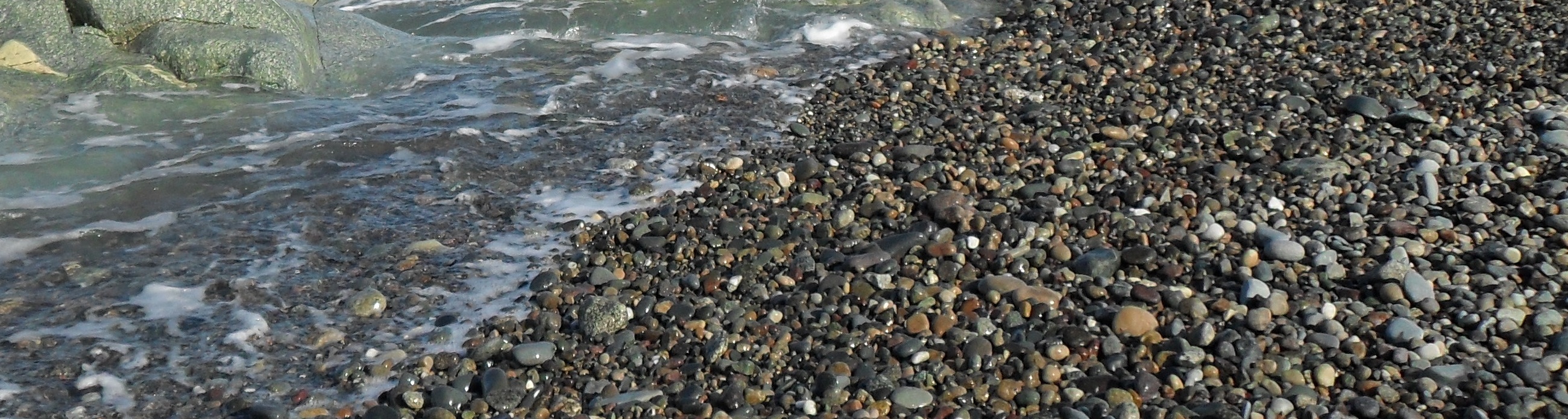
As you know, small stones populate the beaches here, stones that were once boulders and are not yet sand, stones made round and smooth by the ebb and flow of the tide, stones good for skipping on the ocean. Waves break over these stones and cover them with foamy surf. As the tidal forces suck the waves back out to sea, the water runs through air pockets between the round edges of the stones. And as the water vibrates the stones, they cry out. The stones sing with a quavering voice, a thousand violins playing the same note but each with unique rhythm and tempo. As the waves flow out, the stone symphony plays the chords of creation, joining the great company of all the myriad instruments in God’s terrestrial orchestra.

If we attune our ears and eyes and hearts, we can hear these chords and we can witness all of Creation praising God. This praise happens when God’s creatures fulfill the purposes for which God made them. The sun praises God by shining, the moon by reflecting the sun’s light. The thunder praises God by crashing, the rain by watering the earth. The gazelle praises God by running, the wolf by hunting, the rose by blooming, the bee by pollinating. Each member of the great symphony of Creation praises God in an unique way, and all work in concert to glorify the Creator.

Well, all except for one glaring exception. We humans are a thick lot. On our best days, we ignore the symphony, and on our worst days, we spend our time devising ways to silence Creation’s praise. Down through history, we have slowly but surely forgotten how to read Creation’s score, forgotten that we too have parts to fulfill in God’s orchestra.

We are able to join in praise to God when we remember that God created us to display one fundamental attribute: goodness. God created everything that is, Genesis tells us, and at the end of each creative session, God pronounced the new creation Good (and on the last day, not just Good, but Very Good). So, at the fundamental level of our human nature is goodness, which is a reflection of God’s delight in Creation. The manifestation of that goodness is our praise to God. We embody this praise when we sing and dance, when we laugh and pray, when we love, and most importantly, when we serve.

The trouble appears when we forget that goodness remains at the core of our human nature. Instead, we see all the malignant attributes that attack our goodness and mistake this tumorous growth for what defines us as humans. How often have you heard the following statements explained away by attributing the behavior to human nature:

“He’s just jealous because I won the office pool.” “Well, jealousy is just a part of human nature.”

“She’s so petty: who cares if we wore the same dress today.” “Well, pettiness is just a part of human nature.”

“I can’t believe he lied about where he was last night.” “Well, dishonesty is just a part of human nature.”

We make the worst mistake of our lives when we attribute these negative actions to human nature. Our fundamental nature is Good, and anything else is a perversion of the goodness by which God brought us into being. These perversions of our goodness (also known as “sin”) distort our relationship with God. We start playing our instruments out of tune, thus ruining the symphony of Creation.

But when Jesus rides that donkey’s colt down the Mount of Olives, he takes a step in the process of subverting all our tumorous perversions of human nature. On his way to the cross, which is the epicenter of the perversion the Good, he begins showing that goodness (and all of goodness’s positive emanations) still exist, despite the malignancy eroding the nature of humanity.

First, he tackles the perversion of power. Notice that his parade is rather incongruous. Anyone would expect a king to enter the city on an armored warhorse with weapons-laden legions flanking him. But Jesus rides in humility, on the back of a lowly farm animal. He displays that humility (which is one manifestation of goodness) has more majesty than any imperial power could ever muster.

While Jesus subverts the perversion of power, his disciples tackle the perversion of terror. While fear is sometimes a helpful emotion, terror is not simply “really big fear.” Terror is an extension of power meant to control. But at this moment in the Gospel, the disciples walk directly into the most dangerous situation in their lives unabashedly praising God with joyful voices. “Blessed is the king who comes in the name of the Lord!” They display courage, another manifestation of goodness, and their courage subverts any attempt by the perversion of terror to control.

The rest of the Gospel plays out in much the same way. Jesus subverts the perversion of greed when he overturns the tables of the moneylenders in the temple. He subverts the perversion of fame when he tells his disciples that he is among them as one who serves. He subverts the perversion of revenge when he stops the retaliation during his arrest and heals the slave’s ear. And in his greatest display of goodness, Jesus defeats the perversion of domination by willingly giving up his life. Jesus brought all our perversions of human nature to the cross and died with them. And in his resurrection, he shows us that these perversions of our good nature have no ultimate power over us.

Because of Jesus’ life, death, and resurrection, we have the ability to access the goodness at the core of our human nature. We have the humility and courage necessary to let God excise all the malignancy that perverts our relationships with one another and with the rest of Creation. We have ears to hear the symphony of praise playing all around us, and we have the music within us to add our own harmonies to the orchestra of Creation.

And when we fail, when we once again forget our goodness, we can be silent, we can be still, and we can listen. And then we will hear the stones themselves crying out on our behalf, crying out their praise to God.

Notes

For the Internet versions of my sermons, I usually remove the specifics of place, but for this sermon, I really needed to preserve them for the imagery. If you ever make it up to the Massachusetts coast, listen for the sound I’m talking about.

Creation and pie

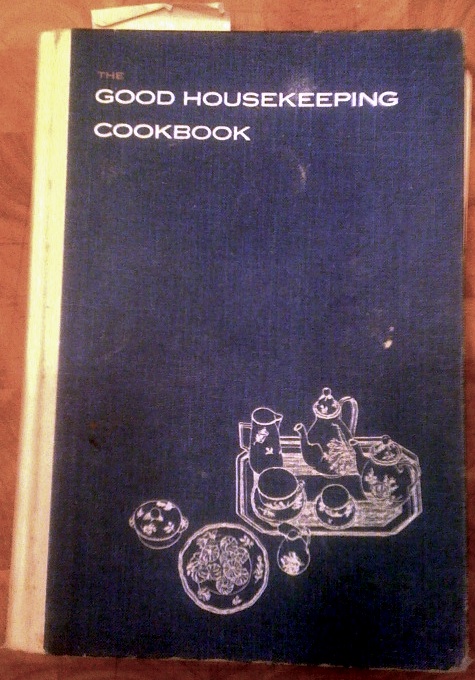
An ancient Good Housekeeping cookbook resides in the cabinet above the stove at my parents’ house. Whether it ever had a dusk jacket, I don’t know. Possibly, it was a victim of my childhood crusade against dusk jackets, a period of my life that my mother recalls grimacing every time she runs the feather duster over her shelves of first editions.goodhousekeeping I’ve never been sure why my mother has kept this volume around for so long, what with our constant moving from place to place; the book has been unshelved, boxed, unboxed, and reshelved at least two dozen times since she received it for a wedding present. She definitely doesn’t need the entire book. She only ever uses the pancake page, which has been warped and wrinkled by years of my enthusiastic stirring.

About five years ago, I discovered how glad I was that my mother retained the extraneous five hundred or so pages of the ancient cookbook. A few days before Christmas, I opened the refrigerator and freezer hoping that all the food I had already eaten that day had spontaneously reappeared so I could eat it again. This action was nothing new — I had been doing it several times a day for years, with little efficacy. But that time I noticed the apple pie, boxed and frozen, deposited sideways, squashed between the broccoli and my father’s ice cream quart collection

My shoulders slumped — how unexciting that the apple pie in the freezer would taste like all the other frozen apple pies from all the other Christmases and Thanksgivings and birthdays (yes, I had birthday pie). Since no new food had appeared, I closed the refrigerator’s doors. But a new idea had formed in my mind. I opened the cabinet and selected the ancient cookbook. It fell open to the batter-sodden pancake page, but I was in search of something new. The book’s spine creaked and cracked in protest as I forced it open to a new page, which sported the chapter heading: “Pies that Please.” How promising, I thought.

I wonder if, before the sixth day of creation, God opened the fridge and slumped her shoulders, bored by all the rocks and stars and fish he had been keeping fresh, ready for dispersal into creation. Sure, those rocks and stars and fish were all good, but their pages in God’s recipe book were warped and wrinkled by now. How about something new?

My experiment began with a moment of feverish self-doubt: my mother can’t make piecrust. As I read over the ingredient list, a nagging fear surfaced that I carried the same defective gene. What if I’m genetically unable to make pie? Flour and salt, shortening and water — these base pairs, in certain quantities and combinations, held the secret to flaky, golden-brown goodness. Could I succeed where my mother (and perhaps generations of Parsonses stricken by dough deficiency) had failed?

I pushed my chromosomal makeup out of my mind and began measuring, pouring, sifting, and cutting. I Jackson Pollocked flour all over the kitchen but managed to land two and a quarter cups of it in the correct bowl. Coaxing the Crisco into the mixture raised my blood pressure to stuffing-the-cat-in-the-cat-carrier-level, and only after several of the breaths I imagine they teach at Lamaze classes was I able to continue. Gradually, my flour/salt/Crisco mixture achieved the consistency of peas (a good sign, the recipe assured me), and I added the cold water. Now came the moment of truth. I pushed and prodded my concoction and said some desperate magic words under my breath, hoping by miraculous alchemy that the slimy mass before me would transform into heredity-denying dough.

I wonder whether God worried that her creation mixed from dust and breath might not turn out the way he expected. Would this experiment fail? Was making a being in the image and likeness of herself too complex a recipe? What if he had to start again from scratch?

The transformation worked. Where a bowl of sticky ingredients sat mocking me a minute before, a lump of dough now beckoned me to flatten it with my rolling pin. I placed the dough between two pieces of wax paper (I’m not sure where I picked up this trick — it was either instinct or the Food Network). Then I rolled out the crusts, making two circles my ninth grade geometry teacher would have been proud of.

Buoyed by my success with the crust, I decided to improvise the filling. After checking the oven temperature and baking time, I returned the ancient cookbook to the cabinet above the stove and began peeling apples. Seven or eight would do, I told myself. With a bag of brown sugar in one hand and a box of cinnamon in the other, I showered the cut apple pieces with sweetness. Then I hurried the filling into its pie tin bed and tucked in the top crust. A quick glaze of melted butter and a few knife slits on top and it was into the oven. For the next forty minutes, I paced and fretted like a father outside the delivery room.

I wonder that God gave me the ability to grow and the desire to create. God’s recipe was simple—dust and breath. The dust grows, remembering the earth and the deep things of those creation days that were called good. And the breath creates, remembering the heavens and the Spirit moving and creating and renewing.

Against all odds of genetics and pie-making virginity, my first apple pie succeeded beyond my wildest expectations. I usually take my parents’ compliments with a salt mine (they are my parents, after all), but my own taste buds confirmed their praise. I have tweaked my recipe and method since then, adding a few subtle spices and making sure to cover the crust with tin foil half way through baking. Though some are better than others, each pie is good (and only one — the famous “Lattice Crust Experiment” of 2007 — was an unmitigated failure).  And each pie pushes me to improve, to better my technique, to take the basics from that ancient cookbook and create. And create. And create.

The trapdoor in my gut

(Sermon for February 8, 2009 || Epiphany 5, Year B, RCL || Isaiah 40:21-31)

When I am engaged in a mundane activity—say, brushing my teeth or counting the bleary-eyed seconds until I hit snooze again or watching the digital numbers flick by on the counters at the gas station—the activity itself occupies only a tiny portion of my brain’s processing power. So the rest of my mind often wanders into other sections of my body. Sometimes, my mind meanders past my throat and lungs and finds its way down through that trapdoor in my gut. And I begin to ask those questions that make my gut twinge and pulse, like the feeling you get after narrowly avoiding a car accident.

I’ll be wrapping the floss around my fingers or anticipating the snap of the nozzle that signals a full tank of fuel, and I’ll look up at the sky and say, “Why do you care about me, Lord?” Then the cars will collide in my gut because, in that moment, everything I’ve ever believed is branded with a big red stamp of the word “FOOLISHNESS.”

Why do you care about me, Lord? This gut-twinging question doesn’t necessarily speculate on God’s existence. The question isn’t: “Do you exist, Lord?” There’s no reason to ask God if God exists. That would be like asking all the absent people in a classroom to raise their hands. Instead, the question acknowledges that God does, indeed, exist, but wonders why the heck God would ever care about an insignificant, messy, little thing like me. Of course, there’s no reason why God should care. This is truly first-rate foolishness.

The prophet Isaiah doesn’t help matters. He says, “It is he who sits above the circle of the earth, and its inhabitants are like grasshoppers; who stretches out the heavens like a curtain, and spreads them like a tent to live in; who brings princes to naught, and makes the rulers of the earth as nothing… To whom then will you compare me, or who is my equal? says the Holy One.”

There’s a tension in our scriptures — a twofold presentation — about how God relates to us that feeds the pulsing in my gut. The dual stories of creation in the opening chapters of the book of Genesis illustrate this tension. “In the beginning when God created the heavens and the earth…” says the first verse of Genesis. The narrative goes on to tell how God spoke creation into being. Creation was ordered: light separated from darkness, day from night, land from sea from sky. God orchestrated the emergence of life and proclaimed the creation “good” and, indeed, “very good.” This ordering, this filling the void with matter and energy and life and light, speaks of the Cosmic Creator, whose voice and arm stretch into the vast expanse of eternity. This is the understanding of God that Bette Midler promotes when she sings: “God is watching us from a distance.” This is the understanding of God that the Enlightenment era Deists caricatured as a great Watchmaker, who set the gears running and then left well enough alone.

The second chapter of Genesis presents another view of this same creative God. God is not standing at the podium, waving a baton as the performing forces of creation harmonize the music of life. In the second story, God, rather the being the conductor, is the instrumentalist: God plays each violin and French horn and clarinet. “In the day that the LORD God made the earth and the heavens,” says Genesis, God bent down in the dust and formed a human being. Then, into his nostrils, God breathed the “breath of life.” When the human became lonely, God put him to sleep, and out of the man’s own flesh God created another human being. As the story continues, the man and woman heard God “walking in the garden at the time of the evening breeze.” This movement and participation in the creation, this intimacy, speak of the God who eventually becomes incarnate as the word made flesh, Jesus Christ. This is the understanding of God that Joan Osbourne wonders about when she sings: “What if God was one of us…just a stranger on the bus trying to make his way home?” This is the understanding of God that the old hymn describes: “And he walks with me and he talks with me and he tells me I am his own.”

The tension between our understanding of God as “Cosmic Creator” and as “Intimate Companion” brings us back to the gut-twinging question: “Why do you care about me, Lord?” In those moments of existential angst, the Cosmic Creator easily trumps the Intimate Companion because the former seems so much bigger, holier, more powerful. When my gut compares the two, the latter seems somehow lessened by my own shabbiness.

And this misguided transfer of shabbiness is difficult to suspend. Human nature dictates that we narcissistically use ourselves as the measuring sticks by which other things are evaluated. Our ability to reason, manufacture tools, and put our thoughts into speech elevates us above other animals. We then use these factors to order other species by “intelligence.” Chimpanzees eat using rudimentary utensils. Dolphins communicate with their cackling code. Therefore, based on the anthropomorphic scale, these creatures are closer to our presumed preeminence.

But the scale works the other way, as well. Our penchants for betrayal, mistrust, indifference and our well-rehearsed disregard for the welfare of others knock a bleaker set of notches into the measuring stick. When the gut-twinging question surfaces – “Why do you care about me, Lord? – these regrettable attributes emigrate from our world and narcissistically modify our understanding of God.

Having thus remade God in my own lamentable image, the collision in my gut worsens. The Cosmic Creator looks down and sees a bunch of tiny grasshoppers, so why should that God be bothered? The Intimate Companion is probably just as apathetic and self-centered as I am, so why should that God care?

Do you see the twisted, oxymoronic reasoning that leads to these conclusions? The gut-twinging question appears when I notice my own laughable insignificance. At the same time, I use myself as the measuring stick for which to assess God’s motivation to care about me. This logic definitely deserves the red FOOLISHNESS stamp.

You see, when the prophet Isaiah expounds on God’s greatness and ineffability, he is not extolling God’s distance and isolation. Instead, he is warning people not to engage in the foolish business of looking for God in the mirror. The Holy One says, “To whom then will you compare me, or who is my equal?” The answer is quite obviously a resounding “NO ONE!” When you escape the twisted logic that seeks to anthropomorphize God, you are one step closer to resolving the gut-twinging question – “Why do you care about me, Lord?”

God as Cosmic Creator, who “stretches out the heavens like a curtain,” did not need a reason to speak creation into being. I might need a reason to build a bookcase or compose a letter, but God doesn’t need to share my motivations. If God did not need a reason to create, why would that same creator need a reason to care about us insignificant grasshoppers? God’s very greatness subsumes the “Why” question into God’s eternal being and renders it irrelevant. With the “Why” expunged, the gut-twinging question becomes a glorious statement of faith: “You care about me, Lord.”

You care about me, Lord. When I finally realize this, I notice that God as Intimate Companion has been whispering these words in my ear the whole time. Then I realize that God’s care for me (another word for which is grace) enables and enthuses me to care for others. The penchant for betrayal and disregard for others’ welfare, once unfairly plastered onto God’s being, now fall away as God continues to make me in God’s own image.

Our world is vast and full of questions. We are insignificant. We are messy. We are little things. But God’s vastness stretches into eternity. In staggering showers of grace-filled generosity, God both answers and removes the need to question. In those same showers falls the gift of sanctifying love, which removes our insignificance and scrubs us cleans. As we discern the Cosmic Creator and Intimate Companion in the same loving face of God, more words from the prophet Isaiah resound: “Those who wait for the LORD shall renew their strength, they shall mount up with wings like eagles, they shall run and not be weary, they shall walk and not faint.”

The Inlet

(I wrote the following piece in the Spring of 2008, and happened upon it when I was reorganizing some folders on my computer. Some of the temporal language is now dated, but I left the piece as is to preserve its integrity.)

Theologian Sallie McFague identifies the earth as “the new poor.”* The planet, once bursting with bounty and hiding secrets in great swaths of unexplored terrain, now groans under the weight of post-industrial consumption and post-common sense insatiability. The earth has become poor (and a victim of exploitation, rape, and mutilation) in much the same way people become poor: the rich deny access to resources and opportunities. The sense of entitlement over the earth’s riches has grown over the last several hundred years (along with our gluttonous appetites). The Western Christian view of the earth—which, during the medieval period, was full of awe, respect, and fear—has morphed into one of utility, ambition, and domination. We have made the earth poor because we see it simply as an object, argues McFague.

There is another way. Rather than objectifying the earth, rather than possessing the earth as a thing to be used, abused, and discarded, McFague pleads with us to see the world as we see our loved ones—as subjects. Seeing the earth as another subject just as we ourselves are subjects gives us the opportunity to enter into mutual, sustainable relationships with the earth based on love and respect. McFague calls this model “the loving eye.”

Last autumn, I changed the route I take when I drive to church and discovered what she means by this loving eye. A left at the Belle Haven Golf Course sends me a Par Five’s distance down a residential street toward the George Washington Parkway, where I turn right and follow the Potomac River for about five minutes until I reach my parish. Sun-polished leaves of every green hue dance on the branches of trees, which arch toward one another above the parkway, making a dappled, living tunnel. On my left, the river peek-a-boos every now and again when the trees thin, and groves of white masts, rooted in anchored sailboats, mingle with the tree trunks. I sit up a little straighter in my seat. My eyes drift to the trees and the river beyond. And then, for the briefest of moments, I see my spot.

A small inlet in the river reaches to the road. The water tiptoes in and out of the little cove, treading softly around the three or four dead trunks that still stand in the shallows. On cloudless mornings, dawn gilds the somersaulting waves with new light, and the overhanging trees reflect swaying twins in the water. These deep green reflections merge with the morning light, mixing the color of sparkling possibility. All the energy of the dawn and the river and the swaying trees infuses me as I pass by, and I silently thank the Creator for such potent imagination. That is spring.

In winter, the water still treads lightly in and out of the cove, but, on certain January Sundays, ice reaches out from the bank, halting the tumbling waves. The dead trunks hide behind a low fog, which crawls along the surface of the water. When the cold sun penetrates the clouds, it shines through the winter scaffolding and silhouettes the bare trunks and branches. All the deliberateness of the ice and the fog and the sleeping branches deepens me as I pass by, and I silently thank the Creator for such quiet solemnity.

In autumn, the trees shed their uniformity. The water exults to mirror the new apparel in swirling reflections of amber and crimson. Dropping leaves spiral down, catching the morning light. They float on the water and cluster at the bases of the dead trunks. Dawn ignites the trees, making their leaves shimmer and blaze. The wind ruffles the surface of the water—no tiptoeing this time, only cartwheels. The light glances off each wave’s crest and each yellow leaf, doubling the morning’s fervent brightness. All the elation of the wind and the light and the flaming leaves elevates me as I pass by, and I silently thank the Creator for such riotous innovation.

I have never driven past my spot in the summer, but I imagine the inlet displaying a worn, comfortable version of the sparkling possibility of spring. Soon, I will no longer be driving that way on Sundays. At times, I have contemplated pulling my car over to snap a picture of the spot. But each time I travel down the living tunnel, I decide to keep driving by. Deep down, I discover that I have no desire to capture the image of that blessed spot. How can I hope to tell the story of such a place in a photograph? Capturing its image truly would be a confinement. I would preserve one instant of two-dimensional facsimile when the original has such light and movement and possibility. The depth of reflection would flatten. The waves would no longer tumble. The wind would disappear. If I took that picture, I would cease to remember that spot in my imagination. I would lose what I had sought to preserve. In a sense, I would take the life from a place that has infused my life with such energy, such ardent joy.

So I leave my camera at home. I prefer to keep the ever-changing image of that spot in my heart. It continues to kindle within me the spontaneous thanks of a creature for all the potent imagination, quiet solemnity, and riotous innovation with which the Creator has blessed creation.

The spot brings out McFague’s loving eye in me, and I find myself asking the water and wind and trees for forgiveness—for myself and for our entire post-common sense establishment. During the same lecture in which we discussed McFague’s work, my seminary theology professor reached back to the medieval era and borrowed the idea of Haecceitas from thinker Duns Scotus. He was not content to know a forest or a species of tree or flower. He wanted to know each particular white oak, each individual daffodil. And in so knowing, rejoice that God also knows those trees and flowers for God created them. And in so rejoicing, praise God for the craft, detail, and unsurpassed beauty seen in the particularity of creation. I pray for these Haecceitas eyes. I pray that soon we will all see the earth as a subject, a poor subject in need of enriching relationships. And I pray that the inlet remains in my heart, urging me to look with love on God’s creation.

Footnotes

* Sallie McFague, Super, Natural Christians

Musings upon the occasion of a sprained ankle

One day in April, I sprained my ankle, and in the process remembered I’m not finished being created:

The disc cut through the breeze and rose steadily into the air as the ground beneath my racing feet sloped away. I leapt for the Frisbee, it eluded my grasp, and I began falling. However, my leap had carried me farther down the sloping field than I anticipated, and my left foot connected with the turf a split-second later than it intended to. Within the next three or four split-seconds, my ankle collapsed under the weight of the rest of my body, which quite naturally followed my foot back to earth. My first thought (as my foot and calf played tug-of-war with my ankle’s ligaments) was: “Not again.” But this fatalism was short-lived, for it dissolved into much anguished rolling around, grass-pulling, and sobbing.

Ultimate Frisbee has now joined soccer, racquetball, and basketball on the list of sports that have put out contracts on my left ankle over the last nine years. Each time, my ankle swelled so I couldn’t see those two knobby protrusions of bone that everyone has, and each time, as the ankle healed, the bruise filtered down my foot, making my toes look like grapes. As I write this, my foot is wrapped in ice, and I long for the days of purple toes. And they will come in time, next week perhaps, if I keep icing and popping Ibuprofen. They will come because the body heals. And the body heals because I’m not finished being created.

The cells divide, the tissues repair, the ligaments rebound. The swelling dwindles, the toes un-purple, the strength returns. This process happened the first three times, and it has begun again. I am being created as I sit here, just breathing and sitting. I breathe in and the air floods my lungs and my lungs separate the oxygen and the oxygen feeds my heart and my heart pumps my blood and my blood carries energy to my ankle where the cells are busy dividing. Each cell division begins with breath, which is the mark of the One who continues to speak creation into existence.

It is the same with the trees, whose canopies I can see from my prone position: last week they proclaimed their constant creation as new buds reached for the sun. It is the same with the birds, whose gossip I can hear past my window: this morning they proclaimed their constant creation as they rummaged for supplies for expectant nests. It is the same with each human being, who refuses to remain exactly the same as she was yesterday or he was the day before that. The One who creates me, who (surely knowing I’d have a knack for spraining my ankle) gave my body the ability to heal, is creating still with the simple ingredients of life and light and love. I’m not finished yet. The world isn’t finished yet. This I believe.

Competing for spots in my imagination

The day before I returned to VTS for my senior year, I went searching for something in the cupboard under the stairs. The light flickered and hiccupped, casting faint shadows on the cramped, box-strewn floor. The winter coats and old military uniforms brushed me heavily like a gas station carwash. I pulled and pushed boxes of books and elementary school projects out of the way. With a dozen or so boxes disgorged from the closet, I found what I was looking for. Three plastic tubs. Three dusty plastic tubs, each nearly two decades old. I carried them into the living room and lined them up. I slit the packing tape off the first one, opened it, and was met with piles of my childhood.

I began sifting through the legos, pulling out flat black and grey pieces and every human figurine I could lay my hands on. After several hours of collecting, lego pieces littered my living room floor like an abstract mosaic. I fitted the black and grey pieces into a grid and sorted the figurines into groups—knights and pirates, naval personnel and more knights. Another hour and my creation was finished: a lego chess set, complete with knights on horseback and kings in mail and helm.

I spent every rainy day of my childhood and some of the sunny ones building with legos. For many years, I followed the instructions meticulously: each piece went in its place, and when I was finished, I had duplicated the image on the box in three dimensions. At some unidentified point after I had hit double-digits in age, I began straying from the directions. Eventually, the sets I kept prison-like in their own boxes began to mingle. Soon, I had three plastic tubs (they were neither old nor dusty yet) piled high with anachronistic castle legos and futuristic space legos and realistic city legos, all together, all competing for spots in my imagination. I put the directions away and just began to build, to create.

Until the day before returning to seminary, I had not created anything with legos in nearly a decade. But the act of creating infused me with joy. I created videos in high school. I created music in college. And as I began to contemplate God’s movement in my life, I accepted God’s invitation to enter more fully into God’s creation.

Thinking about the call to serve God might prompt one to ask the question: why was I created? But I think this is a faulty question. To reach a better understanding of call, the question should be asked in the present tense: for what am I being created? God’s call in my life is a continuously present reality, always pushing my self-defined limits of possibility. The very act of calling assumes an act of creation, for accepting a call is simply the acknowledgment that God is already at work molding me into a better servant, a better giver, a better lover. I think this is why Paul says that whoever is in Christ is a new creation—new creations that are ever new because of constant and continual creating.

I believe that God has barely begun to create me. This thought comforts me when I realize how much I still have to learn and chastens me when I think I have everything figured out. I have perceived enough of the edge of the expanse that is the life with which God has challenged and blessed me to know that only with God’s help can I respond to God’s call. This call in me is nascent; I am still being formed, still being created. But God has known me since I was in my mother’s womb. Christ is with me until the end of the age. And the Holy Spirit moves my life, always pushing those limits of possibility. I hope that through God’s love and grace, the work God has begun in me is a good one. I hope I can respond to God with a reflection of that love and grace. I hope I continue to catch glimpses of God’s creating movement in my life.

God has invited me to participate in God’s creation. I can comprehend nothing so joyful, nothing so humbling as this. Those three old dusty plastic tubs are back in the cupboard under the stairs. The flickering light is off and the winter coats hang undisturbed. But I am still creating because God is creating me.

(This post originally appeared in the Fall 2007 issue of “The Call” newsletter of the Society for the Increase of the Ministry (SIM), a not-for-profit group that supports Episcopal Seminarians as they move from lay to ordained leadership in the Church. I thank God for this organization, and I thank SIM for generously supporting me, both in prayer and scholarships. Check out SIM’s website.)