Christmas Sonnets

ChristmasSonnetsOne

The greatest story ever told began
When God breathed deep and bade the light to shine;
Creation burst from Love and Word, then ran
Away and grasped at purpose less divine
Than God would wish or yearn for it. For God
In foolish wisdom wove with freedom’s thread
And gave creation chances to be flawed,
If chance there were to choose the Lord instead.
This freedom came to earth when Eden’s dust
Was poured in human form, but right away
The fruitless choice was made, and broken trust
Turned Eden’s joyful hues to shades of gray.
The freedom God had granted first abused,
When fear and shame were learned and love refused.

Two

With love refused, sad separation reigned:
We littered earth with broken covenants
And chose dark paths to walk and then complained
To God that we were lost beyond all sense.
In longing God would call us to return,
And for a fickle time we would repent.
The cycle thus unleashed: we’d grasp then spurn
The love of God, but God would not relent.
We showed no willingness to come to God
So God in mercy chose to come to us,
As shepherd, comforting with staff and rod,
To teach us sheep again to love and trust.
As love so often does, this love began
When Mary felt a tremor ‘neath her hand.

Three

Her hand leapt up to shield her dazzled eyes
When Gabriel, awash in radiance,
Appeared to her, and much to his surprise,
He saw no fear in Mary’s countenance.
Confusion showed instead on Mary’s face:
She wondered how she ranked as favored one
When her humility would grant no place
As high, yet humble love would bear the Son.
Now God entrusted Mary to decide
If God’s design to walk upon the earth
Would flow through Mary’s womb, thus God relied
On human freedom to approve the birth.
But God chose well: the humble maid said, “Yes,”
And through her love this broken world was blessed.

Four

The world was blessed one night in David’s town,
But so few saw the miracle arrive
That we might wonder whether it came down
At all, or if it simply failed to thrive.
The savior people sought was not a child,
Who nestles helpless at his mother’s breast.
They sought a fighter who like Samson piled
The bodies of the foes he sent to rest.
They sought a soldier who like David led
His troops to bloody victory with ease.
They sought a muscle-bound Messiah bred
To root out rank imperial disease.
So when the unexpected came that night
The people waiting all ignored the light.

Five

The light was fading fast in Bethlehem
When Joseph, hand in hand with Mary, passed
the final house, which closed its doors to them
Like all the rest had done that day. At last
The months of waiting ended with a burst
Of pain that echoed through the darkling gloom;
She knew the birth would now be unrehearsed
And cried to Joseph, “Please go find a room.”
But Joseph would not leave her in the street,
So heaving Mary to his arms he veered
Off down a dusty trail and heard the bleat
Of sheep and goats, and knew a stable neared.
For once, thank God, a door stood open wide,
And breathless, weak, the couple dropped inside.

Six

The couple dropped inside a stable stall,
And Joseph gathered up the fresher hay
While anxious Mary paced from wall to wall
Until the urge to push would not delay.
The universe contracted to the here,
The now, the pain, the prayer, the ancient swell,
The final push, the crystal cry so clear,
The Word made flesh was born — Emmanuel.
The universe expanded once again
As light ascending from within the child,
Reflected in the nighttime sky, and then
The light ignited in a star most wild.
The brilliance shone on heaven and on earth,
Proclaiming God-with-us, the Savior’s birth.

Seven

The Savior’s birth took place, yet no one heard
Until the herald angels praised his name
To shepherds (“lowlife rabble,” many slurred),
And yet for outcasts such as these He came.
When eastern wisdom read the star’s good news,
The magi journeyed west toward the flame;
But Herod welcomed them with bloody ruse,
And yet for immigrants like these He came.
For all creation was the Savior born:
Yet not for wealth, nor fortune, nor for fame,
But for the broken, lost, abandoned, scorned,
And Yes — what Joy — for you and me He came.
The greatest story ever told endures
Oh God, keep telling it till we are yours.

Say “Yes”: A Christmas Pageant

Performed at St. Mark’s in Mystic, CT on Sunday, December 21, 2014

SayYesThis version of the Christmas pageant employs two sets of main characters, one younger and one older. The older versions sit on stools flanking the main action. They stand up to deliver their monologues. During the monologues the younger versions pantomime the action and speak at the end of each speech.
Prologue

NARRATOR

Before the universe existed, there was God. There was no time and no space, but there was God. Then God spoke and Creation came to be. One of the things God created was freedom, which was the ability to say “yes” or “no” of your own free will and not be compelled to answer one way or the other. God yearned with all of God’s heart that the Creation God made would say “yes” to a deep relationship with God its creator. But more often than not, parts of that Creation said, “No.” People said, “No.” We said, “No.”

Saying “No” to relationship with God led people down some dark paths. They dominated each other instead of serving each other in love. Fear ruled the day. And yet God did not give up. God decided to send God’s own Son into this wayward Creation to show us the path back to the God who never broke the relationship like we had done. All God needed was someone to say, “Yes.”

Scene 1: The Annunciation

While the OLDER MARY speaks her monologue, YOUNGER MARY and GABRIEL pantomime their conversation.

OLDER MARY

Until that day, nothing had ever happened to me. I grew up like everyone else in my town. I worked my father’s farm with my brothers and sisters. I watched the sun set. I watched the sun rise. That was life. Even getting engaged to be married to Joseph was just another day. It was expected. I always did what was expected.

Then Gabriel appeared to me, and every day since has been more unexpected than the last. He told me not to be afraid, but there was no need. His presence wasn’t frightening. It was exciting. From the moment he spoke, I felt a quickening in my gut, a hum, a desire finally to discover the person I longed to be.

The angel told me of the son I would have, the heir of David’s throne, the flesh and blood of the Most High God. It all sounded impossible. But Gabriel said nothing is impossible for God. I thought for a moment: I’ve never done anything in my life. I’ve never been anywhere. I’m not special in any way. Why would God choose me?

And that’s when it hit me. God chose me because God knew I would say…

YOUNGER MARY

Yes.

Scene 2: Joseph’s Dream

NARRATOR

Mary said, “Yes,” to the angel. She said, “Yes,” to God’s dream for her life, and that dream became a reality. And as the dream was growing inside her, the angel made another stop.

YOUNGER JOSEPH is fast asleep when GABRIEL stands over him pantomiming speaking.

OLDER JOSEPH

My namesake was a great interpreter of dreams. He saved Egypt during a seven-year famine. He saved his own family, too. I always wondered what it would be like to have that kind of gift. Then one night I found out. My dream didn’t need interpretation, however, because the angel stood before me plain as day, and when he spoke, the words tasted true.

Everyone around me, society at large, even my own father, urged me to get rid of Mary, to dismiss her quietly so as not to cause a fuss. But I couldn’t bring myself to do it. Then the angel told me why. Somehow I knew, even before the angel told me, that the child was special. I didn’t have the words to describe the way I felt until the angel called my son, “Emmanuel.”

GABRIEL departs, and YOUNGER JOSEPH rises from sleep. He join YOUNGER MARY and puts his hand on her pregnant belly.

OLDER JOSEPH

Yes, the joy I felt came from that place, that place of nearness. When I looked at Mary and felt the baby kick, I knew…

YOUNGER JOSEPH

God is with us.

Scene 3: Arrival in Bethlehem

As the NARRATOR speaks, YOUNGER MARY and YOUNGER JOSEPH make their way to Bethlehem.

NARRATOR

Mary spent the first few months of her pregnancy with her cousin Elizabeth. But as the time drew near for the baby to be born, the Empire called for a counting of all the people in their territories. Joseph had to go to Bethlehem to be registered because his ancestors hailed from there. Mary went with him.

OLDER MARY

The waves of pain began weeks before Jesus was born. At first I thought I was going into labor, but Elizabeth assured me it was normal. I learned to live with them, even though they got worse as the day drew near. But that first night in Bethlehem, a different pain hit me, and I knew it was time.

YOUNGER MARY AND YOUNGER JOSEPH pantomime the story being told: breaking into the room, being surrounded by ANIMALS.

OLDER JOSEPH

In desperation, I broke into the backroom of a house to get us out of the cold. The owner’s animals were huddled there. It stunk to high heaven, but at least it was warm. When Mary started to cry out in pain, I thought that we were done for, that the people of the house would drive us back into the night.

The FARMER comes in with a rake. Then the MIDWIFE enters.

OLDER MARY

But they didn’t. The farmer came in brandishing a threshing rake, but he took in what was happening right away and called for his wife. We asked if we could stay, and she said, “Yes.” Turns out she was a midwife. What a blessing from God. Joseph was beside himself. He didn’t know what to do. But she calmed him down, directed him.

OLDER JOSEPH

She put a blanket in my hands and guided them.

OLDER MARY

One last thunderous wave of pain washed through me, and then…

YOUNGER JOSEPH holds the BABY JESUS in his arms.

OLDER JOSEPH

I held my son Jesus in my arms. I held God. And I knew God was holding me.

Scene 4: The Shepherds

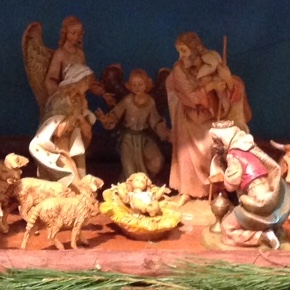
The SHEPHERDS and SHEEP cluster in the center aisle.

NARRATOR

The light of the world shining from the baby wasn’t the only light shining that night. In the fields outside Bethlehem, dawn seemed to be breaking impossibly early.

The ANGELS and GABRIEL stand on the first pew and pantomime talking to the SHEPHERDS.

OLDER SHEPHERD

The light grew slowly at first, so we didn’t notice anything out of the ordinary. But then the field was awash in brilliance. It was like an eclipse in reverse. But what I remember more than the light was the song. The angels sang a song of peace. Of peace! How could you sing a song of peace in such a war-torn age? And yet that is what they did.

The SHEPHERDS and SHEEP walk to the Nativity scene and join it. The ANGELS gather around behind the Nativity scene.

We went to find the One of whom the angels sang. And we found him in the dirt, among the animals just like my own children were born. The song of the angels rang in my mind and I sang it for the baby, a lullaby of peace for the Prince of Peace. And I knew he was one of us. And he was here…

YOUNGER SHEPHERD

To make us more like him.

Scene 5: The Magi

The MAGI begin their trek slowly from one side aisle of the church around the back and up the other side aisle. At the side of the church near the lectern, the MAGI meet HEROD, who pantomimes a conversation.

NARRATOR

Not only did Jesus’ own people seek him out. Immigrants from a far off land arrived guided by a star in the heavens. They first met King Herod in Jerusalem, but they knew Herod was not the king they sought.

The MAGI move to the main group and present their gifts.

OLDER MAGUS

We had been searching the stars for a sign of the One who was to come. And when we found the celestial body streaking westward we knew we had to follow. We didn’t know where it would lead. What we didn’t expect, though, was for it to lead us not only across the desert, but deeper into our own hearts. When we met our true King the first time, we felt the inadequacy of the gifts we had brought – the gold, the frankincense, the myrrh. The infant gazes at us, into us, into our hearts. And we knew the gift he truly wanted. And so I gave him not just a box of gold…

YOUNGER MAGUS

I gave him myself.

Epilogue

The OLDER CHARACTERS move to join their YOUNGER SELVES.

NARRATOR

And so God sent God’s only Son to teach people to use their freedom to remain open to God, to say “Yes” to that deep relationship. A few decades later, he would die for his convictions. But then he rose again to show that nothing, not even death, can separate us from God’s love.

OLDER MAGUS

So when you are searching for God…

OLDER JOSEPH

Know that God is always with us…

OLDER SHEPHERD

And when the Prince of Peace calls to you…

OLDER MARY

Say “Yes.”

*  *  *

The Players

(*=tiny speaking part; **=big speaking part)

Little Children
SHEEP
ANIMALS
ANGELS
(BABY JESUS)

Children/Tweens
GABRIEL
YOUNGER MARY*
YOUNGER JOSEPH*
SHEPHERDS (1*)
(HEROD)
FARMER
MIDWIFE
MAGI x3 (1*)

Tweens/Teens
OLDER MARY**
OLDER JOSEPH**
OLDER SHEPHERD**
OLDER MAGUS**
NARRATOR**

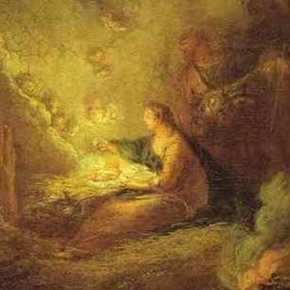
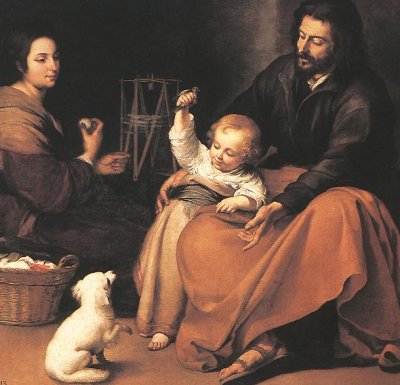
*Artwork: detail from “Birth of Christ” by Antoine Pesne (1745)

The Midnight Letter

Sermon for December 22, 2013 || Advent 4A || Matthew 1:18-25


Imagine with me a letter written by Joseph to his father on the night Joseph had the dream of the angel that today’s Gospel reading narrated.

HolyFamilyJoseph, eldest son and protégé, to Jacob, my father, mentor, and confidant: Blessings and peace to you, my mother, and my brothers and sisters.

By the time you read this letter, I will have left home. I awoke in the still hours of the night to write it, and I imagine that when I leave, the sun will be many hours from rising. I hope someday you will welcome me back into this house. I know it will not be tomorrow or the next day. But someday, I hope.

By the fact that you have found this letter on my workbench instead of finding me there, you will have concluded that I changed my mind. You are correct in that deduction. I know we agreed on my course of action. I know what you said yesterday – what you’ve been saying for weeks, really – is still the correct decision. But now, as I sit watching the swaying light of a guttering candle, as my mind empties of all the noise and my heart fills with every new possibility, I find that our agreement is not the correct decision. It is simply a correct decision. But there is another, and this is the one I choose.

I know, father, that reading those words will make you want to tear up the rest of this letter at once, but I beg you to keep reading, because I must explain myself. I need you to understand how my heart has come to change. I need you to understand that disgrace is a small price to pay to do what I feel God is calling me to do. I need you to understand how my agony has turned to joy. In the simple of act of choosing the better of two right answers, I find a weight I didn’t even know I was bearing has lifted. I feel free. I feel like I am making the choice that truly reflects the man I want to be, the man God dreams for me to be.

Let me start at the beginning. I know I came of age years ago, but until the day you entered into terms with Mary’s father and she and I got engaged, I never knew the weight of true responsibility. What I didn’t expect was to discover my duty to wed Mary deepen into the love I now have for her. Though from that first meeting, we’ve never been alone, just Mary and me – still, whenever we’re together, I feel like we’re the only two people in the world. Everything fades except her strong, sturdy, quiet presence. When I think about the prospect of life without her, all I can feel is the absence, the ragged hole her disappearance would leave.

And now I can hear in my mind your argument begin again, father. What about you duty to your family? What about your love and respect for your mother and me? What about the marriage prospects of your own brothers and sisters, your own flesh and blood, if you ruin our reputation? Believe me, I am aware of the implications of my choice, hence my decision to leave home and spare you the humiliation. Nazareth is a week’s journey from our home in Bethlehem. When Mary and I move there, we will be far enough away to keep you from public disgrace. Disavow me as your son and make my brother your heir. Then your legacy will be safe.

As for me, I will take Mary for my wife. I do this not despite her pregnancy, but because of it. I now know my life’s purpose – to take care of Mary and her child. To love them, cherish them, and provide for them, come what may. The boy – yes, it’s a boy – will call me father, but he will know who his true father is. No matter what I said to you yesterday, I now believe Mary’s story. I’ve always wanted to believe it. I had been trying to believe it since she first told me because I knew in my heart a false word has never escaped her lips. But now I truly believe.

You once said to me, father, that believing means setting your heart on something. It’s not just thinking or acknowledging something is right or true. Believing means taking all that’s precious within yourself, all that makes your blood flow and your lungs fill, all that keeps you alive, and placing it in other, worthier hands. I learned that from you, and I’ve found something worthy of my belief – the unborn child in Mary’s womb and the power who placed him there when she said “yes” to the angel.

You might be wondering what changed my mind. You had convinced me yesterday, after all. I was ready to have the hardest conversation of my life. But something told me to sleep on it, to give it another day. You know I’ve always been a heavy sleeper; I’ve never remembered a dream in my life. I didn’t think I had them, which is ironic considering whom you named me for. That Joseph could interpret dreams. He saved Egypt from famine. He saved the family who had sold him into slavery. And all because he listened to the special way God spoke to him.

Tonight I discovered I’m more like our ancestor than I imagined. I had a dream, but before you say it was “only” a dream, know that it was realer than anything I’ve ever experienced in my waking years. The angel who stood before me, the brilliance of his gown, the fire in his wings, the music in his voice – they made the real world seem dull and counterfeit by comparison. The angel gave me permission to make the choice my heart has longed to make, the choice that you and our neighbors and this society says is wrong.

Again, I can guess your mind, father. What makes you so sure of yourself? How can you discount your family and your culture so blithely?

Please know there has been nothing casual about this decision. I have been in agony since Mary first told me, and I know she has too. The decision I was going to make yesterday – to dismiss her as you wished – is correct by any measure available. But so is standing with her, remaining faithful, being true to myself and to my promises. Surely, you can see that, father. Choosing between right and wrong is simple for the most part. But choosing between right and right? That’s the harder challenge.

In making this choice, I listened to Mary, whose honesty even you once said is beyond reproach. I listened to my own heart, which lifted from agony to joy the moment I changed my mind. And I listened to God, whose power and presence has been weaving in and out of this mess from the beginning. I can do no more than try to follow where these promptings are leading me.

I hope you can see that, father. I hope when the scandal dies down, you will be able to welcome us back home. Know that you will always be welcome at our home in Nazareth. Know that Mary and I desire with all our hearts for Jesus – that’s what we’re going to call him – to meet his grandparents. My prayer for you, father, is that you will do the same soul-searching I have been doing this night by the light of this nearly spent candle. Listen to those you love. Listen to your own heart. Listen to God. And perhaps you will find that what you believe, that thing you set your heart on, has shifted without you realizing it.

This is my hope for you. In the meantime, know that Mary and I are safe. We await the coming of our son with joy (not to mention some anxiety). He’s not even born yet, and Jesus has already saved me from walking down the wrong path. Perhaps the right path will lead us all back together again someday.

With sadness and joy, I remain

Your loving son,

Joseph

Food (namely herbs and stewed rabbit) for the journey

The following post appeared Wednesday, December 9th on Episcopalcafe.com, a website to which I am a monthly contributor. Check it out here or read it below.

* * *

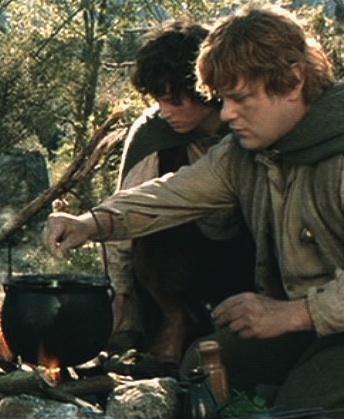
The hobbits Frodo Baggins and Samwise Gamgee arrive in a heather-strewn woodland between the River Anduin and the mountains that border the dreaded land of Mordor. After some walking around and griping about the knavish Gollum, who is their deranged hostage and guide, they sit down for a meal, as hobbits often do. They eat herbs and stewed rabbit and then…

Frodo (Elijah Wood) and Sam (Sean Astin) make stewed rabbit in The Two Towers (2002)

…I have no idea what happens next.

I’m twelve years old, and I have made it nearly two-thirds of the way through The Lord of the Rings. But I can no longer bear it, and I shelve the book. It’s just so boring. All they do is walk! They start in one place, walk for a bit, meet someone and chat, and then walk some more! I just want them to get somewhere! I want to yell, “Get to your destination, Frodo – don’t stop to eat herbs and stewed rabbit, which the author has described in painstaking detail! Just get to the mountain and be done with the ring! Enough of this walking…”

A year later, I’m thirteen (a much wiser and more mature age), and once again I pick up The Lord of the Rings. Maybe this year, I’ll finish it. I begin at the beginning, and they walk and meet folks and chat and run away from enemies and Frodo and Samwise reach the heather-strewn woodland and eat herbs and stewed rabbit and then…

…I have no idea what happens next.

My wisdom and maturity are no match for the walking. Again, I stop reading. The quest is just too long and arduous and their destination is still on the other side of the mountains and several hundred pages away.

A year later, I’m fourteen, and I pick up The Lord of the Rings again. On page 641, Frodo and Samwise sit down for a dinner of herbs and stewed rabbit and then…

…I keep reading. They find themselves in the middle of an ambush, Sam sees an oliphaunt, the hobbits are captured by people who are supposed to be on their side, and the story goes on and on. A few days later, I finish it. And I’ve read it at least eight more times since.

Finally, at fourteen, I could appreciate the journey, and let the destination take care of itself. Tolkien understood that a destination is more than a physical place. A destination is the culmination of all the shaping events of the journey that brings you to that ultimate location.

Every year, after the tryptophan has worn off, we begin just such a journey in our walks with God. While secular Christmas disgorges itself out of shipping containers every year the day after Thanksgiving, we have the opportunity to let Christmas happen only after the four weeks of Advent have run their course. Christmas is the destination. And Advent is about not arriving at your destination before you are shaped by the journey.

Have you ever had the soup du jour at a restaurant? It’s not some fancy French dish. It’s just the soup made for that particular day. Likewise, my journey happens every day. Every encounter, every decision, every road taken or not shapes me. The season of Advent gives me a dedicated four weeks to notice the shaping influence each day has on my journey with God.

On the first Sunday of Advent, we heard the psalmist pray, “ Show me your ways, O Lord, and teach me your paths…All the paths of the Lord are love and faithfulness” (25:3, 9). This Advent, I’m adopting this prayer because I’ve always had trouble not skipping to the end of the story. Every year of my childhood, I wanted to open the windows of my Advent calendar all at once. I just couldn’t wait to open tomorrow’s window tomorrow. Now, at twenty-six (a much wiser and more mature age) I pray for God to give me the patience to notice each day’s impact on my life. When I ask God to “teach me your paths,” I’m not hoping for some inside knowledge about the destination. I’m simply asking for guidance along the road.

Some time ago, I heard this illustration (the origin of which no longer resides in my brain). Have you ever noticed that headlights only show you thirty or forty yards ahead of your car on a dark night? But they still get you to your destination. Likewise, God teaches me God’s path even as I am struggling to stay on it. As I walk towards Christmas on this particular Advent journey, Christ walks a few steps ahead of me, illumining the road to his own nativity, to his own unique and wonderful expression of love and faithfulness.

Despite my opening description, my love for Tolkien’s works of fiction is deep and abiding. They taught me the lesson of Advent: don’t arrive at your destination before being shaped by the journey. I pray that, during this season of Advent, God teaches us God’s paths, which are love and faithfulness. And I pray that we may meet someday on the road, about which Tolkien’s Bilbo Baggins rhymes:

The Road goes ever on and on
Down from the door where it began.
Now far ahead the Road has gone,
And I must follow, if I can,
Pursuing it with weary feet,
Until it joins some larger way,
Where many paths and errands meet.
And whither then? I cannot say.

The bedtime story

(Sermon for Christmas Eve, 2008 || RCL || Luke 2:1-20)

Imagine with me the day after Jesus’ Ascension. His followers, including his mother Mary and Mary Magdalene, are sharing a meal and remembering all their favorite stories about the one who had died and risen again. The two Marys are sitting in a corner talking when Mary Magdalene asks Jesus’ mother to tell her something about Jesus’ childhood. Mary ponders for a moment and then begins:

As a boy, Jesus had trouble falling asleep. No, he wasn’t afraid of the dark or of monsters under his bed. He just had too much energy. Even a day full of running up hills and building rock forts and fetching water from the well couldn’t tire him out. When he couldn’t sleep, I would sing him a lullaby and run my fingers through his matted hair. Sometimes, after a few notes, he’d say, “Not tonight, Mama. Tell me the story instead.” The story. I was always glad when he asked me to tell him how he was born because, when the story remained silent in my heart, it always threatened to transform into a dream and vanish.

“Before you were born,” I would begin, “I was engaged to your father when an angel…”

Right then, he would interrupt: “You mean Joseph, Mama.” There were no secrets in Nazareth: the town was too small. Everyone knew that Joseph and I didn’t marry until after Jesus was born. Our neighbors knew the truth up to a point — that Joseph wasn’t Jesus’ father, but anything more was speculation. We didn’t want Jesus to hear some maimed version of the events. So, when he was old enough to understand, we told him that Joseph was Jesus’ father because he loved him not because he helped make him. But you know how literal children can be.

“Yes, dear, I mean Joseph. I was engaged to him when an angel from God named Gabriel came right into my room.”

Always a second interruption: “How’d you know he was an angel, Mama?” I’m convinced that he started studying Torah because I could never come up with a satisfactory answer for him. I would say, “Well, he looked like a man, but also like his feet never got dirty or his hair never needed to be combed. More than that, though: it was his voice. When he talked, I didn’t hear his words in my ears. I heard them in my heart. That’s how I knew.” Then Jesus would roll his eyes, the signal for me to continue telling the story.

“Gabriel told me that I was going to become pregnant with you and that I should name you ‘Jesus.’ Do you know what your name means?”

“Yes, Mama. It means ‘God saves.’ ” He would say it matter-of-factly, like there was no disputing such an obvious claim. Then he’d roll his eyes again, and I would continue.

“Even though Gabriel told me what was going to happen, I knew in my heart that it wouldn’t happen if I didn’t want it to. But the moment he said your name — I just knew. I said yes. After Gabriel left, I realized how much trouble I would get into if I got pregnant. I wasn’t married yet, and I thought your father (yes, Joseph) would disown me when he found out. But he was wonderful, and we got married after getting back from Bethlehem.”

Then I would tell Jesus about the journey from Nazareth to Bethlehem, leaving out the part about how uncomfortable it was to travel nearly nine months pregnant. Mary, I wouldn’t mind if that part of the story would transform into a dream and vanish.

Jesus would always sit up and lean in close when I got to the part about Bethlehem. “Because of the census, all the inns were full and we had no place to go. We were passing by a barn when my water broke. Joseph didn’t know what to do. We went into the barn, and he spread his blanket over the hay. I lay down and told him to go find a midwife. He didn’t want to leave me, but I said that the labor would last a long time and that he’d be back well before anything important happened. By some miracle, the wife of the man who owned the farm was a midwife, and she came with hot water, strips of cloth and no thought to turn us out of the barn.”

One time when I was telling the story, Jesus — he was maybe seven or eight — put his hand on my arm and said: “It was a miracle, Mama. She helped you even though she didn’t know you. I wish more people would do that.”

I remember crying after he fell asleep because his words were so true and yet so infrequently accomplished. The song I sang when I was pregnant with him came back to me that night: “God has cast down the mighty from their thrones, and has lifted up the lowly; he has filled the hungry with good things, and the rich he has sent away empty.” Was my son really the one to bring about these things, I thought?

After telling him about the midwife coming, I would get to the part where Joseph laid him in the manger. And I would hug him tight to show him what swaddling clothes felt like.

He was twelve years old the last time he asked me to tell the story. We had just gotten back from Jerusalem, and I had had the scare of my life when he wasn’t in the caravan home. I said, “Then your father… (He had stopped correcting me by that point.) Your father placed you in the manger.” When I reached to give him the swaddling hug, he stopped me. For a moment, I thought he was getting too old to hug his mother, but then he said:

“Mama. I know…I know now why I was born in that barn. It was a miracle. It all makes sense. At the temple I was reading the prophet Isaiah.” He jumped out of bed, still talking. “Right at the beginning of the scroll, Isaiah says, ‘The ox knows its owner and the donkey knows the manger of its lord; but Israel has not known me, and my people have not understood me.’ ”

He was so excited. He pulled me up and grabbed me into his own swaddling hug. “This is what I’m supposed to do. Israel, Mama! Israel will know God because of me. And not just Israel. Everyone everywhere will know God because of me. They will understand what they’re supposed to do. I will tell them to love each other and help each other, and when they do that, they will be loving God. They will be helping me. Everyone everywhere will know God when they see me. Mama!”

We held that embrace for a long time. I remember feeling his tears soaking through my dress. The words of Simeon — that old man in the temple — sprang to my lips and I whispered them into Jesus’ matted hair: “These eyes of mine have seen the Savior, whom you have prepared for all the world to see: a Light to enlighten the nations, and the glory of your people Israel.’ ”

We didn’t finish the story that night. The shepherds coming to see us – always his favorite part as a little boy – didn’t need repeating. When he slept, his countenance was different, older. Then I remembered what Simeon told me next: “A sword will pierce your own soul, also.” I wept that night, too, when I felt a premonition of the sword that wouldn’t pierce me for twenty years yet. But let’s not talk about that now, Mary. We were both there, and I still have no words even though he came back to us, thank God.

Well, I haven’t told the story of his birth to anyone since that night after we lost Jesus in the caravan. (Yes, I can tell you that one next if you like.) But first, my Mary of Magdalene, tell me a story of my son. What was he like when his mother wasn’t around? Has Israel come to know their God? Has everyone everywhere? If you don’t tell the story, it could transform into a dream and vanish. So tell me of my son. Tell me his story. And tell everyone everywhere.

Notes
*Special thanks to Raymond E. Brown, whose study An Adult Christ at Christmas unlocked this sermon for me.

Red sky in the morning…

In the Gospel, Jesus mentions that we can tell when summer is coming by the budding of the fig tree. He recognizes that we’re pretty good at figuring out what’s ahead. Arthritic knees feel the storm before it strikes. “We’ve got to talk” means Friday’s dinner date is off. Red sky in the morning, sailor take warning. If we humans are paying attention (even just a little bit), not much can slip by us.

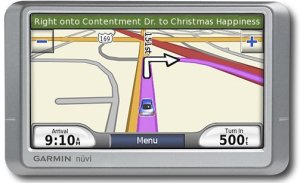
And so, I pay attention to the signs: every retail store is trying to sell you a Garmin GPS system, pop singers are taking it in turns to butcher “O Holy Night” on the radio, and astronauts aboard the International Space Station can see your neighbor’s decorations. So this is Christmas, I echo John Lennon’s hopeful lament.garmin

Now, I promise this article isn’t going to degenerate into the generic, tired outrage about consumerism during the holiday season, so stick with me for a few minutes. I’m paying attention to the signs, and all I see are discounted LCD flat screens and all I hear is another cover of “Frosty the Snowman.” Ever since the commercial sector replaced black and orange with red and green, we have been living in a winter wonderland of perpetual Christmas Eve. And I’m telling you, I could have weight-trained with the circular-laden Thanksgiving edition of the newspaper.

I’m paying attention, but the luster and volume of perpetual Christmas Eve flash brighter and shout louder than the subtle, increasingly subversive current that charges this holiday with meaning. This subtle event is, of course, the birth of an infant. Not so newsworthy, right? Indeed, the Bethlehem Gazette would have only covered the event because of the odd behavior of a bunch of shepherds.

You see, the people of Israel weren’t looking for an infant born out in the barn. They were looking for a triumphant, well-muscled, military superhero to be their messiah, to be their exterminator of all things Roman. And so they missed the signs because they were paying attention to the wrong thing. They were so busy yearning for pomp and swagger that they missed love and humility. While we don’t have to worry about the Roman Empire, we often fall in the same trap of misplaced attention. By observing some mutated version of Christmas for weeks ahead of time we fail to recognize a truly wonderful season of preparation for Christmas, which the Church has been celebrating for centuries.

Today marks the sixth day* of that season of Advent, the four weeks leading up to the celebration of the birth (or Incarnation, if you want to be technical) of Jesus Christ. During the season of Advent, we pause, we notice our ragged breath, and we take time to catch it. We prepare a place in our hearts to receive once again the love of God in the presence of Jesus Christ and wonder how we let that place get so cluttered since last year. And as we prepare to celebrate the Incarnation, we realize just how badly our society has missed the point.

This Advent, drag your eyes and ears away from all that clamors for your notice, all that sound and fury. Pay attention to the true signs of the subtle, subversive event of the presence of Christ in our midst. Your neighbor’s decorations may sparkle and glitter, but they do not shine like the light of the world. That pop singer’s quivering ornamentations might adorn “O Holy Night,” but they do nothing for a world that still lays long in sin and error pining. And that GPS system you bought on Black Friday for $89.95 might give good directions, but it won’t show you the way.

The way, the truth, the life comes. Pay attention and see the signs of Christ’s presence in our midst. And don’t just notice those signs. Be one.

Footnotes

* This post began its life as an article in my local newspaper. Today is actually the ninth day of Advent, and the article actually appeared on the seventh day — so I’m wrong across the board.